World

Francis' first visit to Bahrain to cement ties with Islam

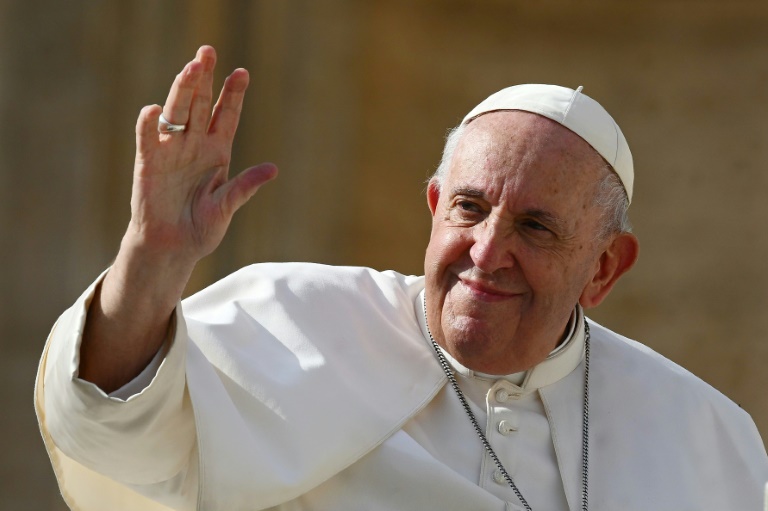
Pope Francis will become the first pontiff in history to visit Bahrain, in a trip this week that is hoped will cement ties with Islam but is also marked by accusations of human rights abuses in the Gulf state.

The Thursday-to-Sunday visit — the 39th international trip of Francis’ papacy — comes three years after his historic trip to the United Arab Emirates in 2019, where he signed a Muslim-Christian manifesto for peace.

But some human rights groups now hope Francis will press Bahrain’s Sunni leader, King Hamad bin Isa Al-Khalifa, to halt repression against Shiite Muslims, though the rights record of neighbour Qatar has lately drawn more attention ahead of the World Cup.

The Argentine pontiff, 85, has made outreach to Muslim communities a priority during his papacy, visiting Egypt in 2017 and Iraq last year while pledging high-level interfaith dialogue.

On Friday, Francis plans to meet with Sunni Islam’s highest authority, Sheikh Ahmed al-Tayeb, the grand imam of Cairo’s prestigious Al-Azhar mosque and centre of Islamic learning, at Sakhir Palace in central Bahrain.  

The two religious leaders signed a joint document in Abu Dhabi in February 2019 pledging interfaith co-existence. That visit marked the first ever by a pope to the Gulf region, where Islam was born. 

Francis will also meet with the Abu Dhabi-based Muslim Council of Elders for an “East and West” forum, with Muslim communities in the West, humanitarian crises, climate issues and Muslim-Christian relations on the agenda. 

– Religious tolerance? –

Also on Friday, the leader of the world’s 1.3 billion Catholics — expected to be confined to a wheelchair during his trip due to persistent knee pain — will lead an ecumenical prayer in Awali’s cavernous Our Lady of Arabia Cathedral, which opened its doors December.

The cathedral that seats over 2,000 people was built to serve Bahrain’s approximately 80,000 Catholics, mainly workers from southern Asia, including India and the Philippines.

Bahrain, like the United Arab Emirates, is considered a relatively tolerant Arab nation, in comparison with ultra-conservative Sunni powerhouse Saudi Arabia — repeatedly accused of abuses by rights groups. 

Saudi Arabia’s absolute monarchy does not recognise freedom of religion and bans all non-Muslim places of worship.

Still, NGOs continue to cite discrimination, repression and harassment in Bahrain by the Sunni elite against Shiites, crackdowns on opposition figures and activists, and other abuses. 

“Pope Francis should heed his own call and publicly demand that Bahrain halt all executions, abolish the death penalty, and seriously investigate torture allegations and violations of the right to a fair trial,” said a joint statement by Human Rights Watch and eight other groups released on Tuesday.

“He should also urge Bahraini officials to issue a decree reiterating the prohibition in Bahrain’s constitution and laws of all forms of torture and ill-treatment,” the groups said.

“In addition, Pope Francis should press King Hamad to free” jailed rights defenders, opposition players — many still languishing in jail after pro-democracy protests in 2011 — and journalists, while also lobbying to better protect migrant workers, the statement said.

Bahrain’s annual Formula One race has also frequently attracted criticism over the country’s human rights record and in 2011, the Grand Prix was cancelled amid a harsh crackdown.

A government spokesperson said Tuesday in a statement that Bahrain “does not tolerate discrimination” and “prides itself on its values of tolerance”.

It asserted that “no individual” is prosecuted “because of their religious or political beliefs”, but pointed to “a duty to investigate” people who “incite, promote or glorify violence or hatred”.

Looming over Francis’ visit is the World Cup later this month in nearby Qatar, which has brought scrutiny of its human rights record, particularly treatment of its low-income migrant workers, women and the LBGTQ community.

– Flocking to mass –

On Saturday, the pope will celebrate a mass in a stadium in Bahrain’s second-largest city Riffa before an expected 28,000 faithful, according to priest Charbel Fayad.

“We are happy to see many Christians from the region,” he told AFP, saying he expected worshippers from other Gulf countries.

The pope — who concludes his trip Sunday in Manama leading a prayer meeting with Catholic clergy — has visited various Muslim-majority countries during his pontificate, including also Jordan, Turkey, Bosnia-Herzegovina, Bangladesh, Morocco, and most recently in September, Kazakhstan.
Ukraine's 58th brigade in the heart of the Bakhmut mire

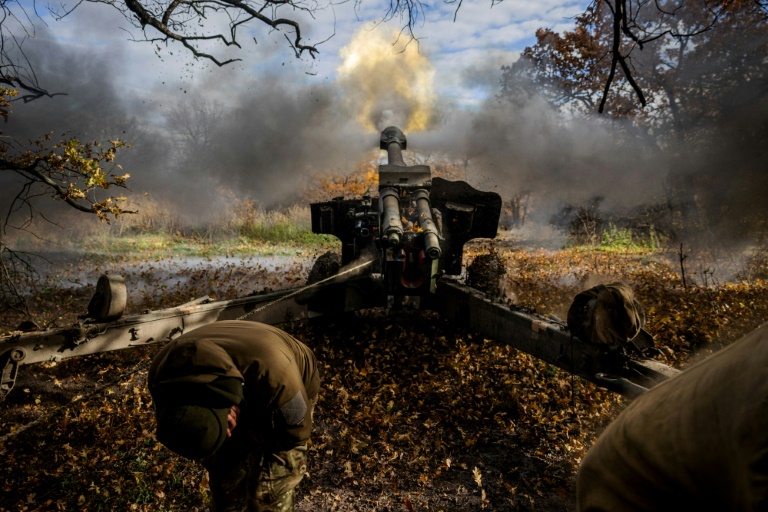
In the east Ukrainian city of Bakhmut, 15 kilometres (nine miles) from the positions held by Russian forces, an artillery unit waits for the signal.

“Ready!” The four soldiers duck and put their hands over their ears. “Fire!”

The shell shoots out of the cannon towards the Russian forces in a burst of flames and smoke.

“According to the coordinates we received, the target is infantry,” says Oleksandr, 37, between two radioed orders.

Oleksandr commands this small group of artillerymen, part of the Ukrainian army’s 58th motorised infantry brigade.

Around 30 seconds later, the 50 kilo (110-pound) “fragmentation” shell, pinched from the Russians after their retreat from a nearby town, will explode above the position held by Moscow’s troops, showering them with its payload.

A Ukrainian drone supports the operation “in real time”, monitoring the effectiveness of the strike from the old Soviet D-20 cannon in order to better calibrate the next one.

Bakhmut, in the Donbas, has been the scene of active fighting for the last four months. Since the start of the Russian invasion in February, it is said to be one of the longest and most lethal battlefields for both sides, though there is no estimate of the exact losses. 

The front here has almost not budged since the beginning of October, despite a few small gains made by one or other of the opposing forces, only to soon be lost again.

On the Russian side, Moscow is pushing hard, supported by mercenaries from the paramilitary Wagner group, sent to their death on the frontlines and dubbed “disposable soldiers” by the Ukrainians.

For their part, the Ukrainians are holding their lines as they focus on a counter-offensive in the south, while trying to limit losses in the war of attrition being waged by the Russians. 

“As the military proverb goes: the sweat of the artillery spares the blood of the infantry,” says Oleksandr, who after another lethal attack on the enemy hopes to have saved the lives of some of his comrades.

The artillery unit now has a few minutes to move before the Russian riposte. In the meantime, they open a packet of sunflower seeds and share them out to celebrate the strike.

– ‘The limousine’ – 

Just five kilometres from the Russian position in the city neighbourhoods devastated by the war, the basement of an anonymous-looking building shelters the brigade’s command post and garrison.

It is “the Monday rotation” and 15 or so new soldiers have just arrived, making their way through the underground corridors by the light on their mobile phones.

The infantry wear serious expressions. The quagmire of Bakhmut has a bad reputation. 

The 58th, whose motto is “together to victory”, fought the first part of the war on the southern Donbas front, in Pisky, before being redeployed to Bakhmut.

In the smoke-filled room, lit by candlelight when the generator is not working, a soldier sits on a chair filling ammunition, another fetches a barrel of borscht soup, while one more takes a nap in his chair, still wearing his gear. 

What awaits them? “The less we know about it, the better,” says a 25-year-old volunteer soldier with the nom-de-guerre “Bullet”. 

Above ground the morning’s bombardment is intensifying. From here, the approach towards the frontline will be by armoured vehicle.

Outside, “the limousine” has arrived.

In the BMP-1, a Soviet-era vehicle with somewhat outmoded armour and sometimes referred to as “the tomb of our brothers”, a mix of superstition and good sense prompts the soldiers to sit on the side of the vehicle not exposed to the Russian positions.

The tracks of the BMP-1 cross the river, headed to the northeast sector of Bakhmut, where the 58th brigade has the guard.

– ‘Total war’ –

One-and-a-half kilometres from the line of contact, the last covered Ukrainian position in the north east of Bakhmut sits in an old industrial park.

In this hideout, the last before the “zero line”, five soldiers are tasked daily with high-risk patrols to supply the line of contact with munitions and provide logistical support, as well as to evacuate the injured or dead. AFP is not authorised to go any further than here.

“We go out in two (armoured) vehicles. One covers the other,” says “Demon”, 29, his hair plastered to his face as he takes off his helmet. 

All the 58th’s actions are done under Russian fire and are covered by  RPG rocket-launchers aimed at the enemy.

“Our mission is to leave as quickly as possible and without losing anyone,” Demon says.

“Petrokha”, their sergeant, smokes a cigarette by the entrance to the hangar, keeping one eye on the sky in case any Russian drones might be lurking.

“It’s total war,” he says.

“Total because we’re using everything. Artillery, aviation and…” he says before his voices trails off as he gets to the last item: his men. 

“(The Russians) are pouring in human meat, men that they no longer think of as men but as munitions,” he says. “It’s 70 years since we’ve seen anything like it.” 

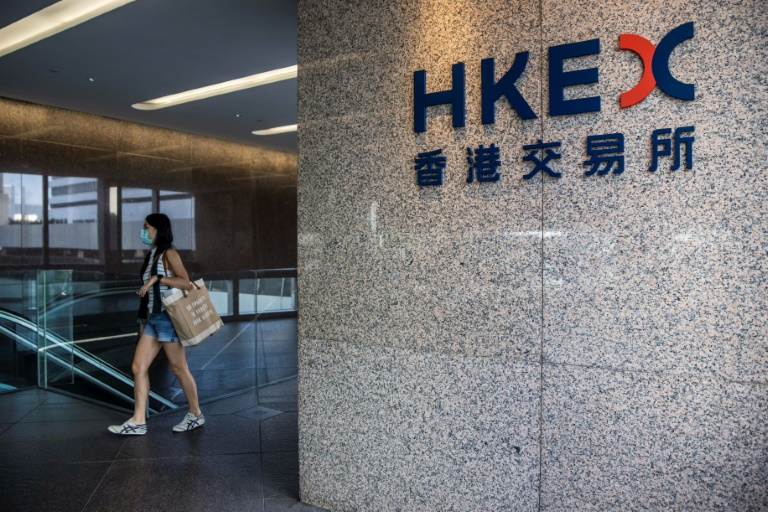
Global stocks rise on Fed optimism, China zero-Covid reports

Global stock markets rose sharply Tuesday, as traders looked ahead to the US Federal Reserve’s interest rate decision hoping it will signal a more dovish approach to fighting inflation.

The Fed is widely expected Wednesday to announce a fourth straight 75-basis-point rate hike as it tries to rein in runaway prices, leading to worries it will tip the world’s top economy into recession, sending stocks tumbling.

But recent reports have suggested officials are looking to dial down the pace of increases, which has sparked a rally in risk assets over the past week — helped by signs other central banks are also trying to take a step back.

“While a 75 basis point hike looks locked in tomorrow, the messaging is what investors are interested in,” said Craig Erlam, senior market analyst at OANDA.

The main indices in London and Paris were both up 1.6 percent in afternoon trading, with Frankfurt gaining 1.3 percent.

The Dow Jones gained 0.7 percent after opening in New York.

– Waiting game –

“The waiting game for the Fed is still on, with investors largely in the dark until the US central bank illuminates the path ahead for interest rate rises tomorrow,” said Hargreaves Lansdown analyst Susannah Streeter.

“In the interim they have been feeling their way to a more optimistic attitude, hopeful that economic indicators hinting that inflationary pressures are beginning to subside could lead to a softening in monetary policy.”

In Asia, Hong Kong led the rally following unconfirmed posts on Chinese social media saying officials were putting together a committee to discuss how to move the country away from its economically damaging zero-Covid policy.

Shares jumped more than five percent after the appearance of the unverified document, which ramped up hopes that the world’s number two economy could begin opening up again in the new year and ease the strict containment measures that have hammered productivity and markets.

However, neither Chinese state media nor government officials have suggested that the meeting actually took place, or that such a committee was established, raising questions about the veracity of the statement.

Nonetheless, Shanghai climbed more than two percent, while the yuan also rallied after recently falling to record lows against the dollar.

Sydney was also well up after the Australian central bank lifted rates by 0.25 percentage points to a near-decade high but brushed off calls for a bigger raise.

– Big earnings season –

Meanwhile positive results from multinational firms also helped lift equities.

Shares increased in London-listed oil giant BP after it reported that third-quarter profit had more than doubled on high commodity prices, to $8.2 billion.

It is the latest energy group to report bumper earnings in recent weeks after Chevron, Shell and TotalEnergies.

Also reporting Tuesday was US drugmaker Pfizer, which recorded an 83-percent surge in Covid-19 vaccine revenues in the United States in the most recent quarter.

Shares in Pfizer rose more than two percent.

Japanese conglomerate Sony raised its annual net profit and sales forecasts Tuesday, saying the weak yen had boosted sectors such as its massive global entertainment business, including PlayStation games.

And shares in British grocery delivery platform Ocado soared more than 35 percent after it announced a tie-up with South Korean conglomerate Lotte Shopping.

– Key figures around 1330 GMT –

London – FTSE 100: UP 1.6 percent at 7,204.71 points

Frankfurt – DAX: UP 1.3 percent at 13,431.58

Paris – CAC 40: UP 1.6 percent at 6,368.12

EURO STOXX 50: UP 1.6 percent at 3,674.66

New York – Dow: UP 0.7 percent at 32,952.24

Tokyo – Nikkei 225: UP 0.3 percent at 27,678.92 (close)

Hong Kong – Hang Seng Index: UP 5.2 percent at 15,455.27 (close)

Shanghai – Composite: UP 2.6 percent at 2,969.20 (close)

Euro/dollar: UP at $0.9938 from $0.9885 on Monday

Pound/dollar: UP at $1.1549 from $1.1465

Dollar/yen: DOWN at 147.25 yen from 148.72 yen

Euro/pound: DOWN at 86.05 pence from 86.20 pence

West Texas Intermediate: UP 3.0 percent at $89.15 per barrel

Brent North Sea crude: UP 2.7 percent at $95.32 per barrel

burs-rox/imm

Power, water restored in Kyiv after Russian strikes

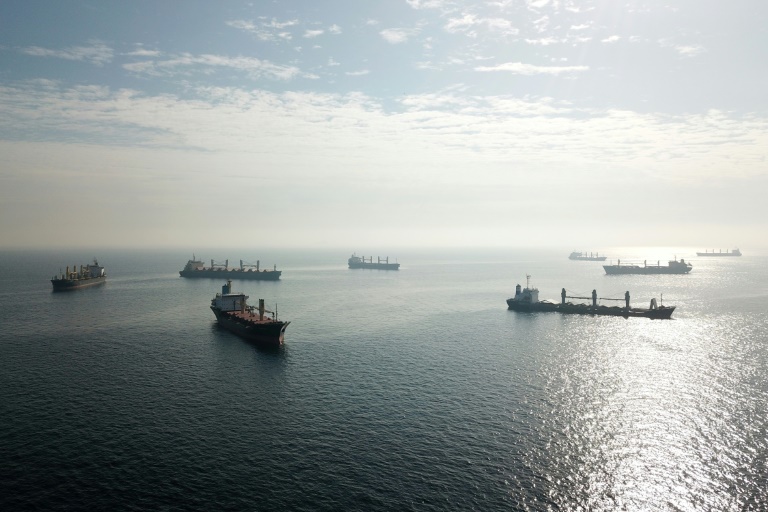
Water and power supplies were fully restored in Kyiv on Tuesday a day after Russian missile strikes, as grain exports from Ukraine continued despite Moscow pulling out of a deal to let ships through.

Russian authorities meanwhile announced that tens of thousands more civilians would be “evacuated” from the Russian-occupied southern Ukrainian region of Kherson amid a counter-offensive by Kyiv.

Ukrainian presidential adviser Oleksiy Arestovich said Monday’s bombardment was “one of the most massive shellings of our territory by the army of the Russian Federation”.

Following the strikes, aerial views showed Kyiv plunged in darkness overnight, with the only lights coming from cars on the road.

In a town near Kyiv on Monday, the powerful explosions had woken up Mila Ryabova, 39. 

Ryabova told AFP that she and her family were “worrying and talking about opportunities to move abroad, because there is a cold winter ahead. We may not have electricity, heat supply.”

Monday’s shelling had left 80 percent of the capital’s consumers without water and 350,000 homes without electricity. 

On Tuesday, Kyiv mayor Vitali Klitschko said water and electricity supplies had been “fully restored” in the capital.

Klitschko warned that there would still be planned power cuts in the city “because of the considerable deficit in the power system after the barbaric attacks of the aggressor”.

Ukrainian energy operator Ukrenergo said it would limit supplies to all consumers in central and northern regions of the country to “reduce the pressure on the network”.

– ‘Help energy sector’ –

Ukrainian President Volodymyr Zelensky spoke to his French counterpart Emmanuel Macron Tuesday.

He thanked Macron for “specific decisions on strengthening Ukraine’s defence capabilities. Specific initiatives to restore the destroyed energy infrastructure.”

EU commissioner for energy Kadri Simson arrived in Kyiv “to help scale up support to the Ukrainian energy sector”, she said on Twitter.

The Ukrainian army said Russia launched 55 cruise missiles on Monday, mainly at energy infrastructure.

In a statement Tuesday, the Russian defence ministry claimed the “massive strikes… significantly disrupted the management and logistics of the Ukrainian armed forces”.

Russia has pivoted to systematically attacking Ukrainian energy infrastructure after setbacks on the battlefield, where the Russian army is facing pushbacks on the eastern and the southern fronts.

In the south, Kyiv’s forces are preparing for fierce battles to recapture the city of Kherson and its surrounding region.

Kherson is one of the four regions — along with Zaporizhzhia, Donetsk and Lugansk — that Moscow claims to have annexed but does not fully control. 

– New ‘evacuations’ from Kherson –

Russian occupation authorities in Kherson said Tuesday that tens of thousands more people would be “evacuated” from the region amid Kyiv’s counteroffensive. 

This comes after 70,000 people already left their homes in Kherson, Moscow-installed local authorities said last week.

The Russian-backed leader of the Kherson region, Vladimir Saldo, said Tuesday new resettlements were being carried out because of the risk of a “massive missile attack” by Ukrainian forces on a local dam.

But Ukraine said that Russian “occupiers are carrying out forced displacement of the civilian population”.

“Citizens living in premises along the banks of the Dnipro river are being forcibly evicted from their homes,” the General Staff of the Ukrainian Armed Forces said on Facebook on Tuesday. 

– Grain corridor –

Also on Tuesday, three more grain-loaded cargo ships left Ukrainian ports despite Russia’s decision to suspend its participation in a deal to allow grain exports to cross the Black Sea.

Russia announced the move after accusing Kyiv of a “massive” drone attack on its fleet on Saturday, which Ukraine labelled a “false pretext”.

Turkish President Recep Tayyip Erdogan, whose country brokered the July grain export agreement along with the United Nations, is to speak with his Russian and Ukrainian counterparts in the coming days with the aim of restoring the deal.

Kremlin spokesman Dmitry Peskov said it was “risky” to continue the exports without Russia’s consent.

In his evening address Monday, President Volodymyr Zelensky said the grain deal breakdown was “clear evidence that Russia will continue to oppose itself to the entire international community”, adding it was “very important now to prevent this global destabilisation”.

Pfizer lifts 2022 forecast for Covid-19 vaccine sales as profits rise

Pfizer reported higher quarterly profits Tuesday as it lifted its full-year forecast for coronavirus vaccine sales and predicted Covid-19 would yield billions more in revenues for the forseeable future.

The big US drugmaker now expects 2022 sales of the Comirnaty Covid-19 vaccine of $34 billion, up $2 billion from the prior outlook. 

Pfizer maintained its projection of $22 billion in annual sales for its Paxlovid therapeutic for Covid-19.

More than two years into the pandemic, Chief Executive Albert Bourla predicted revenues for Covid-19 products would persist even though they are likely to fall from their 2022 levels. 

“We believe our Covid-19 franchises will remain multi-billion revenue generators for the forseeable future, which should serve as a buffer for any unforeseen challenges with other products in our portfolio,” Bourla said in prepared remarks.

The most recent quarter included an 83 percent surge in Covid-19 vaccine revenues in the United States, driven by deliveries of the latest booster shot for the Omicron BA.4/BA.5-adapted bivalent vaccine.

Overall, Pfizer reported profits of $8.6 billion in the third quarter, up six percent from the year-ago period on a six percent drop in revenues to $22.6 billion.

Bourla said Pfizer was on track to launch up to 19 new products in the next year and a half. He highlighted potential “blockbuster” products for respiratory syncytial virus (RSV), Ulcerative colitis and Migraine.

Bourla said the product pipeline should alleviate “understandable” questions about Pfizer’s growth potential in the 2025 to 2030 given the loss of some $17 billion in revenues due to patent expirations.

Shares of Pfizer rose 3.5 percent to $48.20 in pre-market trading.

Modi visits site of deadly Indian bridge collapse

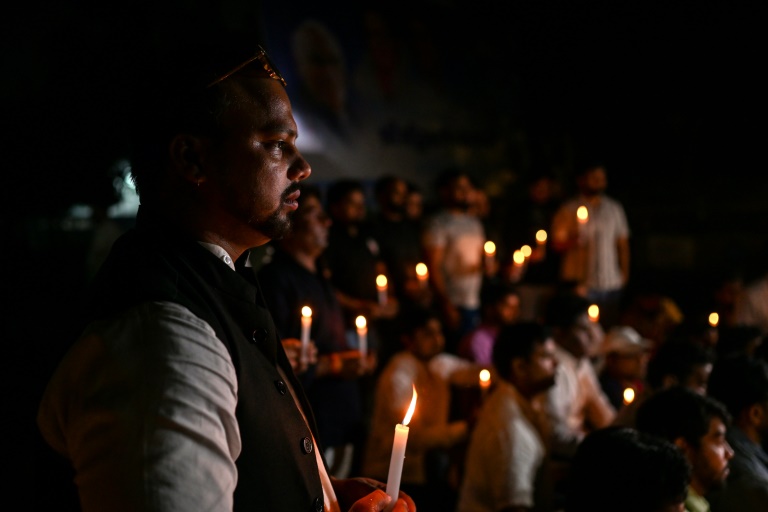
Divers searched for more bodies on Tuesday after the collapse of a newly renovated pedestrian bridge killed 134 people in western India, as Prime Minister Narendra Modi visited the disaster site.

Questions also grew about the possible cause of the catastrophe at Morbi, in Modi’s home state of Gujarat, on Sunday.

Nine people have been arrested on homicide charges over the collapse of the 150-year-old structure.

The suspension bridge was packed with people celebrating the final day of the Diwali holidays. Forty-seven children were among those killed.

Horrific CCTV footage showed the rickety structure, a popular tourist spot, loaded with people and then suddenly giving way as cables snapped.

Several hundred fell into the river while others clung desperately to the twisted remains of the bridge, screaming in the dark for help.

“I heard screams and a loud thud and then there was silence. Then slowly cries and screams,” survivor Madhvi Ben, 30, told AFP.

Ben said one of her legs was tangled in “a steel rope”, leaving her almost entirely submerged before she managed to break free and be rescued.

Morbi businessman Rafiq Gaffar, whose two nephews aged 12 and 21 died, described the scene as “mayhem”.

“People were crying and wailing. It was a scene from doomsday,” said Gaffar, 45.

“There were bodies floating on the water everywhere and people trapped on the bridge who were frantically calling for help.”

Chinese President Xi Jinping on Tuesday joined other world leaders in sending his “deep condolences”.

There were no further reports of missing people on Tuesday.

As Modi watched, rescuers in inflatable boats drove in circles trying to bring up any objects from the bottom of the river. 

“We have not called off the search operation yet as there is always this apprehension there could be victims from outside whose kin are not aware of their whereabouts and haven’t contacted us yet,” said Rahul Tripathi from Morbi police.

The bridge renovations were reportedly carried out by local firm Oreva, whose experience was limited to clocks, e-bikes and other products.

The company could not be reached immediately for comment.

– ‘Clueless’ –

Sandeepsinh Jhala, a municipal government officer in Morbi, on Monday said the bridge had not been issued with a safety certificate.

The nine people arrested on Monday on charges of culpable homicide included two Oreva managers and two sub-contractors.

Also held were two ticket collectors accused of selling too many passes — causing the bridge to be overloaded — and three security guards.

“As and when the investigation progresses, names of others associated with the Oreva Group will also be booked,” senior police official Ashok Yadav told reporters on Monday.

Auto rickshaw driver Ilyas Khan Akbar Khan Pathan, 33, lost his wife and two children aged six and three in the tragedy, as well as his sister-in-law and two nieces.

“We found the bodies around four in the morning. My daughter Mahiya had her head buried in the slush and people pulled her out using boats,” Pathan told AFP on Tuesday.

“The police and administration took almost two hours to launch the rescue operation… The authorities were clueless,” he said.

Puneet Pitroda, 35, whose brother and sister-in-law died, told AFP that the authorities were “fully responsible for the tragedy”. 

“We will never forget this night,” he said.

Israelis vote as Netanyahu seeks return to power

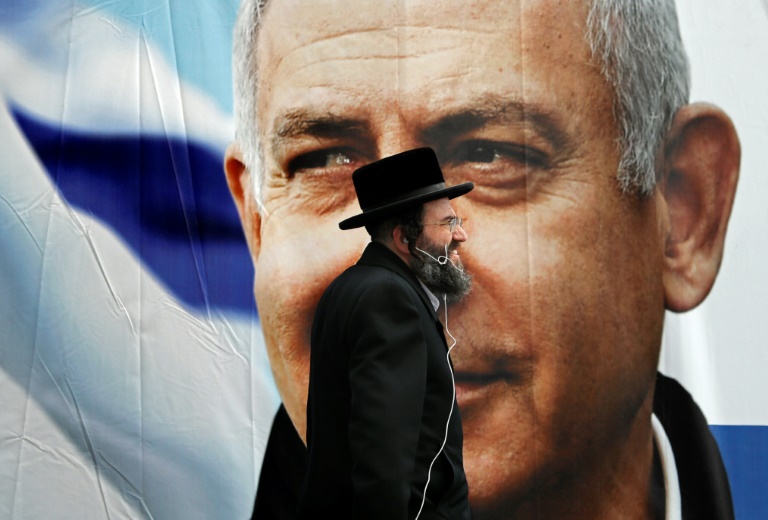
Israelis were voting Tuesday in their fifth election in less than four years, with former prime minister Benjamin Netanyahu campaigning for a comeback with help from the rising extreme-right.

The election follows the collapse of the so-called “change” coalition, which united eight disparate parties who succeeded in ousting Netanyahu last year after a record run as prime minister, but ultimately failed to achieve political stability.

“I hope we will finish the day with a smile, but it’s up to the people,” Netanyahu, who is on trial for corruption and breach of trust, said after voting.

Caretaker Prime Minister Yair Lapid, whose centrist Yesh Atid party may place second behind Netanyahu’s right-wing Likud, urged people to vote “for the future of our country”.

In a political system where a shift in just one of the 120 Knesset seats up for grabs could cement a ruling coalition — or lead to further deadlock and possible new elections — the outcome remains uncertain once more.

At a polling station in Tel Aviv, voter Amy Segal aired her frustration.

“Each year there’s a new election, there’s no political stability,” the 26-year-old told AFP.

“I feel like it doesn’t matter who you vote for, nothing will change.”

Polls close at 10:00 pm (2000 GMT), when Israeli networks will give their first results projections.

Given the razor-thin margins in the deeply divided country, turnout will be crucial. It was up this year, 28.4 percent by 12:00 pm, compared with 25.5 in the March 2021 vote, according to the Central Elections Committee.

– ‘Coalition of extremists’ –

Whoever is tapped to form a government will need support from multiple smaller parties to clinch a 61-seat majority.

Extreme-right leader Itamar Ben-Gvir may be key to helping Netanyahu return to power, as his Religious Zionism bloc has gained momentum in recent weeks and could come third in the election.

Ben-Gvir, who wants Israel to annex the entire West Bank, promised a “full right-wing government” led by Netanyahu, after voting near his settlement home.

He promised “calm in the streets” if Netanyahu names him a internal security minister, a likely unsettling prospect for Israel’s Arab citizens, with Ben-Gvir having faced dozens of charges of hate speech against Arabs.

Justice Minister Gideon Saar, a former Likud heavyweight who broke with Netanyahu and now leads his own party, warned Israel risked electing a “coalition of extremists”.

The vote is being held against a backdrop of soaring violence across Israeli-annexed east Jerusalem and the occupied West Bank.

At least 29 Palestinians and three Israelis were killed across the two territories in October, according to an AFP tally.

The Israeli military said it would shut checkpoints leading to the West Bank and closed the crossing with the blockaded Gaza Strip throughout election day.

While many candidates have cited security as a concern, none have campaigned on a platform of reviving moribund peace talks with the Palestinians.

– Divisions and despondency –

The cost of living has been a hot issue this election as Israelis, having long endured high prices, are feeling the pinch even more amid global economic turmoil linked to Russia’s invasion of Ukraine.

Lapid was the architect of the last coalition, which for the first time brought an independent Arab party into the fold and included others from the right and left.

In Tel Aviv, voter Gidi Bar Ilan said the short-lived coalition “demonstrates that we can sit together”.

“I think that it’s not possible to know what will happen… no one thought that a government of change could be formed and in the end that was the case,” said the 30-year-old.

The unlikely alliance of the last government was made possible after Mansour Abbas pulled his Raam party from a united slate with other Arab-led parties, paving the way for him to join the coalition.

Recent months have seen further divisions within the Arab bloc, which is running on three separate lists in a move expected to weaken the minority’s representation in parliament.

Such a scenario has led to despondency among many Arab-Israelis — who make up around 20 percent of the population — potentially denting their turnout.

Faris Mansour, a 54-year-old voter from mainly Arab Al-Tirah in central Israel, said Abbas’s time in the coalition had failed.

“He tried, but he didn’t bring anything. No change, no money,” Mansour said, adding that he had voted for the Balad party which rejects participation in Israeli governance.

Abbas remained optimistic Tuesday that “this process of cooperation” would continue, yielding “results for the Arab society, and for the Israeli society in general.”

bur-bs/dv

Danes vote in knife-edge election

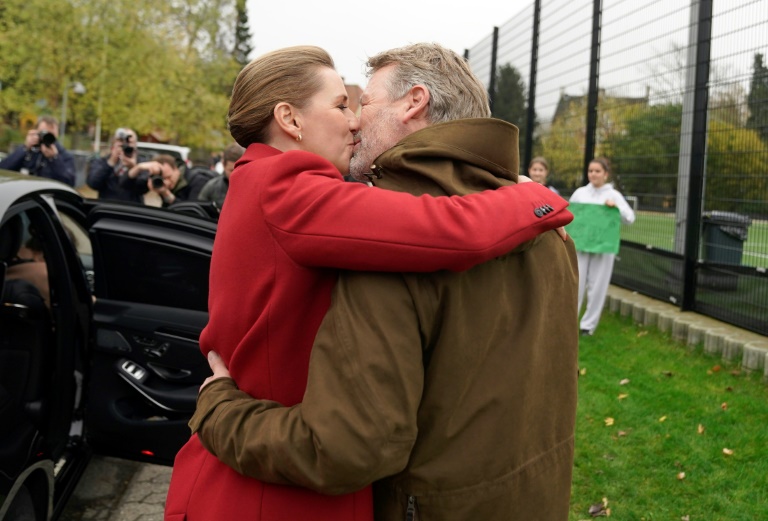
Danes voted Tuesday in a knife-edge election with Prime Minister Mette Frederiksen fighting for political survival against the right and far-right in polls that could turn a moderate ex-premier into a kingmaker.

The election was triggered by the “mink crisis” that has embroiled Denmark since the government decided in November 2020 to cull the country’s roughly 15 million minks over fears of a mutated strain of the novel coronavirus.

The decision turned out to be illegal, however, and a party propping up Frederiksen’s minority Social Democrats government threatened to topple it unless she called elections to regain the confidence of voters.

After a campaign dominated by climate concerns, inflation and healthcare, almost a quarter of voters were still undecided heading into election day, according to polls.

Grey skies covered the capital as voting took place with polling stations scheduled to close at 8:00 pm (1900 GMT) and the first results expected around 9:30 pm.

“Climate issues and psychiatry (mental health issues), but mostly climate, are the reasons behind my vote,” 46-year-old Lone Kiitgaard told AFP after casting her ballot in central Copenhagen, without disclosing who she voted for.

The latest polls gave the left-wing “red bloc”, led by Frederiksen, 49.1 percent against 42.4 percent for the “blues”, an informal liberal and conservative alliance, supported by three populist parties.

“This election could be really close and there is a risk that there will be a blue government after today,” Frederiksen admitted after voting at a badminton centre turned polling station northwest of Copenhagen.

“There is a fairly high degree of volatility with Danish voters, about 40 percent change parties,” Rune Stubager, a political science professor at Aarhus University, told AFP.

– ‘Better to be a joker’ –

With neither bloc set to gain an outright majority, governing will likely depend on support from the Moderates, a centrist party founded only this year by two-time prime minister Lars Lokke Rasmussen.

“That’s the most interesting part. If there is no majority, as seems to be the case, the Moderates are required to form a government,” said Stubager.

Both the left and the right have made repeated appeals to Lokke Rasmussen, who has campaigned on reforming the healthcare system.

Frederiksen has floated the idea of a coalition government, led by herself, and has said she is willing to discuss healthcare reforms.

Liberal Party leader Jakob Ellemann-Jensen has called for Lokke Rasmussen to align with his former colleagues on the right.

“We will… do our outmost to be the bridge, that’s the whole idea behind this,” Lokke Rasmussen told AFP after casting his ballot in central Copenhagen.

Only two months ago, the party polled at around two percent but has now soared to between 9.3 to 10 percent support.

Lokke Rasmussen, who said “it’s better to be a joker than a joke”, does not envision becoming prime minister a third time, despite being a potential kingmaker.

“That’s not in my mind,” he said.

Protective of the prosperity and social cohesion of the Nordic welfare state, Denmark championed ever stricter migration policies for over 20 years.

– Climate concerns –

Advocating a “zero refugee” policy, the Social Democrats government is working on setting up a centre to house asylum seekers in Rwanda while their applications are processed.

As most parties back the restrictive policies the issue is rarely up for debate.

Climate, on the other hand, is of great concern to Denmark’s 5.9 million inhabitants.

On Sunday, some 50,000 people, including the prime minister, gathered for the “People’s Climate March” in Copenhagen.

The left has promised a biodiversity law and the government intends to introduce a carbon tax on agriculture, a measure supported by most other parties.

On the right, the Liberal Party is betting on the development of green solutions, while the far-right “New Right” is open to the construction of nuclear power plants, of which there are none in Denmark.

In total, no fewer than 14 parties are in the running for the 179 seats in parliament.

Four seats are reserved for the overseas autonomous territories: Greenland and the Faroe Islands.

Voter turnout is traditionally high in Denmark. In the 2019 election, 84.6 percent of some 4.2 million eligible voters cast a ballot.

Germany's Scholz set for high-stakes China visit

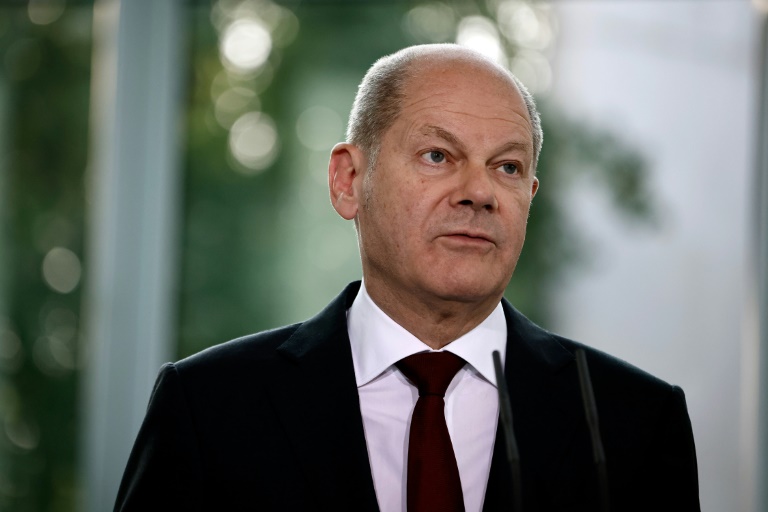
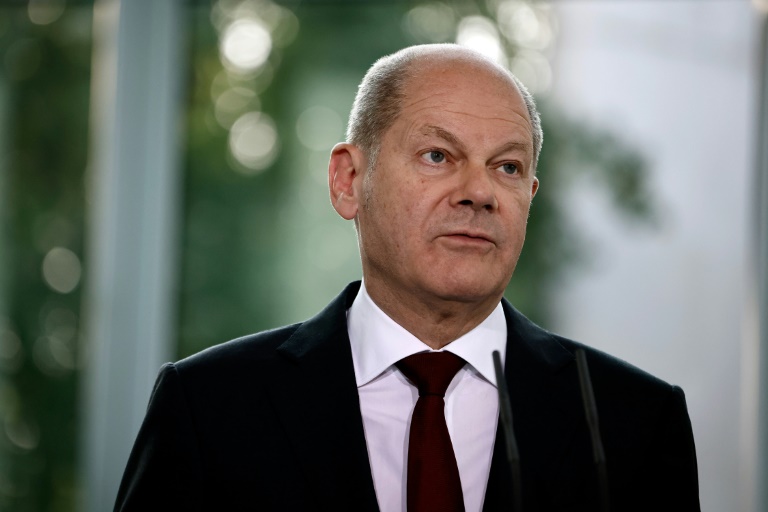
German Chancellor Olaf Scholz makes a high-stakes trip to China this week, walking a tightrope between shoring up a key economic relationship and facing heightened concerns about over-reliance on authoritarian Beijing.

Scholz, accompanied by a delegation of business executives, will be the first European Union leader to visit the world’s second-biggest economy since 2019.

During the one-day trip on Friday, he will hold talks with President Xi Jinping and Premier Li Keqiang. 

But the visit has sparked controversy, coming as Berlin reels from an over-dependence on Russian energy imports and amid surging tensions with China over issues ranging from Taiwan to alleged human rights abuses against the Uyghurs in Xinjiang.

Dolkun Isa, a Uyghur activist based in Germany and president of the World Uyghur Congress, on Tuesday slammed the planned visit and accused Scholz of deciding to “pay homage to Xi Jinping in complete disregard of human suffering”.

The decision to bring a business delegation “shows that for Germany, profit continues to trump human rights”, Isa told a press briefing in Berlin.

Even senior figures within Scholz’s coalition are raising concerns. 

Foreign Minister Annalena Baerbock said she feared mistakes made in the relationship with Russia could be repeated with China.

“We must prevent that,” Baerbock — from the Greens, a member of Scholz’s uneasy three-party ruling coalition — told broadcaster ARD at the weekend.

“I think it is extremely important that we never again make ourselves so dependent on a country that does not share our values.”

– ‘Minimise risks’ –

The sensitivity was highlighted when a row erupted last month about whether to allow Chinese shipping giant Cosco to buy a stake in a Hamburg port terminal. 

Ultimately, Scholz defied calls from six ministries to veto the sale over security concerns, instead permitting the company to acquire a reduced stake.

Ahead of the trip, Scholz’s spokesman Steffen Hebestreit stressed the chancellor was not in favour of “decoupling” from China — but also wanted to “diversify, and minimise risks”.

For now, the German and Chinese economies remain deeply intertwined.

China is a major market for German goods, particularly for auto giants Volkswagen, BMW and Mercedes-Benz, and many jobs in Europe’s top economy depend directly on the relationship.

The worsening climate has rattled the nerves of German firms with investments in China. BASF chemicals giant boss Martin Brudermueller, who will accompany Scholz, last week urged an end to “China bashing”.

Still, the timing of the trip has raised eyebrows, coming so soon after Xi Jinping secured a historic third term as China’s leader. 

“The timing is extremely unfortunate,” Heribert Dieter, from the German Institute for International and Security Affairs, told AFP. 

Xi “has just been confirmed for another five years in office, and of course Chinese politicians see the German chancellor’s visit as confirmation of their policies”, he added. 

– ‘Own path’ –

Chinese foreign ministry spokesperson Zhao Lijian on Tuesday said the aim of Scholz’s visit was to “inject new impetus into the in-depth development of the full-scale strategic partnership between China and Germany… and contribute to world peace, stability and growth”.

Scholz’s spokesman Hebestreit has insisted the trip will “cover the entire spectrum of our relations with China”, including tensions in East Asia, human rights and the war in Ukraine. 

He also said that Scholz was in close contact with international partners in Europe, as well as the United States, about the visit. 

But some may see it as further evidence of Germany going it alone to look after its own interests.

Berlin has already raised hackles among fellow EU members by unveiling a 200-billion-euro ($198 billion) fund to shield consumers and businesses from surging energy prices, rather than acting together with the rest of the bloc.

“Western allies — of course in Paris but above all in Washington — see this trip very critically,” said Dieter.

“Germany is following its own path.”

Germany's Scholz set for high-stakes China visit

German Chancellor Olaf Scholz makes a high-stakes trip to China this week, walking a tightrope between shoring up a key economic relationship and facing heightened concerns about over-reliance on authoritarian Beijing.

Scholz, accompanied by a delegation of business executives, will be the first European Union leader to visit the world’s second-biggest economy since 2019.

During the one-day trip on Friday, he will hold talks with President Xi Jinping and Premier Li Keqiang. 

But the visit has sparked controversy, coming as Berlin reels from an over-dependence on Russian energy imports and amid surging tensions with China over issues ranging from Taiwan to alleged human rights abuses against the Uyghurs in Xinjiang.

Dolkun Isa, a Uyghur activist based in Germany and president of the World Uyghur Congress, on Tuesday slammed the planned visit and accused Scholz of deciding to “pay homage to Xi Jinping in complete disregard of human suffering”.

The decision to bring a business delegation “shows that for Germany, profit continues to trump human rights”, Isa told a press briefing in Berlin.

Even senior figures within Scholz’s coalition are raising concerns. 

Foreign Minister Annalena Baerbock said she feared mistakes made in the relationship with Russia could be repeated with China.

“We must prevent that,” Baerbock — from the Greens, a member of Scholz’s uneasy three-party ruling coalition — told broadcaster ARD at the weekend.

“I think it is extremely important that we never again make ourselves so dependent on a country that does not share our values.”

– ‘Minimise risks’ –

The sensitivity was highlighted when a row erupted last month about whether to allow Chinese shipping giant Cosco to buy a stake in a Hamburg port terminal. 

Ultimately, Scholz defied calls from six ministries to veto the sale over security concerns, instead permitting the company to acquire a reduced stake.

Ahead of the trip, Scholz’s spokesman Steffen Hebestreit stressed the chancellor was not in favour of “decoupling” from China — but also wanted to “diversify, and minimise risks”.

For now, the German and Chinese economies remain deeply intertwined.

China is a major market for German goods, particularly for auto giants Volkswagen, BMW and Mercedes-Benz, and many jobs in Europe’s top economy depend directly on the relationship.

The worsening climate has rattled the nerves of German firms with investments in China. BASF chemicals giant boss Martin Brudermueller, who will accompany Scholz, last week urged an end to “China bashing”.

Still, the timing of the trip has raised eyebrows, coming so soon after Xi Jinping secured a historic third term as China’s leader. 

“The timing is extremely unfortunate,” Heribert Dieter, from the German Institute for International and Security Affairs, told AFP. 

Xi “has just been confirmed for another five years in office, and of course Chinese politicians see the German chancellor’s visit as confirmation of their policies”, he added. 

– ‘Own path’ –

Chinese foreign ministry spokesperson Zhao Lijian on Tuesday said the aim of Scholz’s visit was to “inject new impetus into the in-depth development of the full-scale strategic partnership between China and Germany… and contribute to world peace, stability and growth”.

Scholz’s spokesman Hebestreit has insisted the trip will “cover the entire spectrum of our relations with China”, including tensions in East Asia, human rights and the war in Ukraine. 

He also said that Scholz was in close contact with international partners in Europe, as well as the United States, about the visit. 

But some may see it as further evidence of Germany going it alone to look after its own interests.

Berlin has already raised hackles among fellow EU members by unveiling a 200-billion-euro ($198 billion) fund to shield consumers and businesses from surging energy prices, rather than acting together with the rest of the bloc.

“Western allies — of course in Paris but above all in Washington — see this trip very critically,” said Dieter.

“Germany is following its own path.”

Close Bitnami banner
Bitnami