World

South Korea mourns Halloween crowd surge victims

South Koreans flocked Monday to memorials honouring the 154 people killed in a crowd surge at Halloween celebrations, as authorities faced accusations that lax crowd control had caused the disaster.

Mourners wept, prayed and placed flowers at a huge official altar set up in central Seoul for victims — mostly young women — of the Saturday crush, with many railing against authorities’ failures to prevent the catastropic loss of young life.

“I am devastated by what happened, they were just trying to have a good time,” 19-year-old student Hwang Gyu-hyeon told AFP, weeping and struggling to speak clearly, as she explained how the deaths of so many people her own age had affected her.

“I pray for the victims. I can’t believe this accident happened despite the signs that were clear beforehand. Nothing was done to prepare for this crowd,” she said.

Song Jung-hee, 69, said she kept thinking about how “excited and spirited” the young victims must have been, eager to enjoy a night out without Covid restrictions for the first time in three years.

“If only there had been more police officers to keep order, this would not have happened,” she told AFP.

At a makeshift memorial outside a subway station in the popular Itaewon nightlife district, where the tragedy occurred, dozens of mourners gathered, many wiping away tears as they placed white chrysanthemum and bottles of soju on the altar.

One sign left at the memorial said: “At an age when you all were all about to blossom like flowers… My heart is broken. I pray all the souls will rest in peace in heaven.”

– Police failures? –

Calls for accountability were growing Monday in the press and online, as potential lapses of crowd control and policing emerged.

As many as 100,000 people — mostly in their teens and 20s, many wearing Halloween costumes — had poured into Itaewon’s small, winding streets, with eyewitnesses describing scant security and no crowd control.

Police said at a briefing Monday they had deployed 137 officers to the event, pointing out that the number was significantly higher than previous years.

But local reports said many of the police deployed were focused on drug use, rather than crowd control.

“This was a disaster that could have been controlled or prevented,” Lee Young-ju, a professor from the Department of Fire and Disaster at the University of Seoul, told broadcaster YTN.

“But this was not taken care of, with no one taking the responsibility in the first place.”

Online, claims also spread that police this year were not actively managing the crowd, which allowed too many people to congregate around the subway station and in the alleyway at the epicentre of the disaster.

“I’ve lived in Itaewon for 10 years and experienced Halloween every year but yesterday was by no means particularly crowded compared to previous years,” Twitter user @isakchoi312 wrote.

“Ultimately, I think the cause of the disaster was crowd control.”

On Sunday, the government had defended the policing plan.

“(The crush) was not a problem that could be solved by deploying police or firefighters in advance,” Interior Minister Lee Sang-min told a briefing.

South Korea is typically strong on crowd control, with the country’s regular protest rallies often so heavily policed that officers can outnumber participants.

Protest organisers must by law report plans to authorities in advance, but there were no such requirements for the young people flocking to the Itaewon Halloween event.

– Chaos, fear –

Tens of thousands of partygoers were packed into the downhill alleyway, no more than three metres (10 feet) wide, with eye-witnesses describing scenes of chaos, as people pushed and shoved to get through, with no police in sight to guide or control the crowd.

Witnesses described being trapped in a narrow, sloping alleyway, and scrambling to get out of the suffocating crowd as people piled on top of one another.

Most of the 154 dead, including 26 foreigners, had been identified Sunday, with the education ministry confirming Monday that at least six young teenagers were among the victims.

But the toll could rise further with at least 33 people in critical condition, officials said.

The country started a week of national mourning, with entertainment events and concerts cancelled and flags nationwide flying at half-mast.
Hong Kong to explore legalising crypto for retail investors

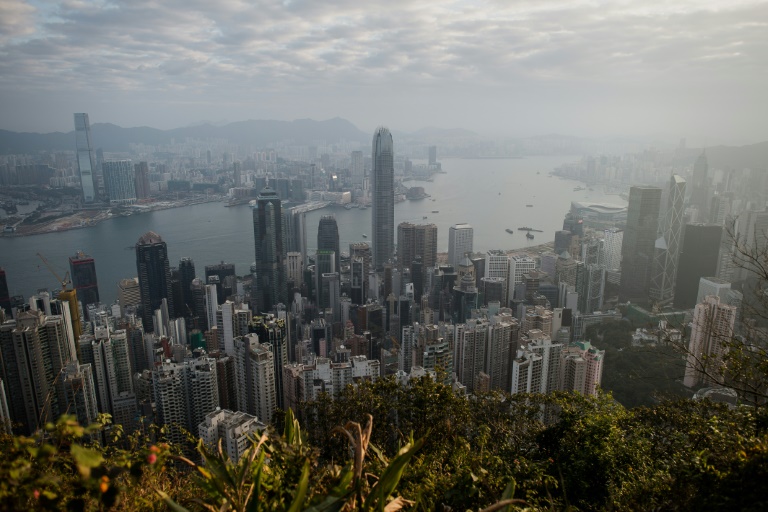
Hong Kong is “back in business” and exploring whether to legalise crypto trading by retail investors, the city’s finance chief announced Monday, kicking off a week of conferences aimed at resuscitating the Chinese hub’s image.

In contrast to mainland China where crypto has been all but banned, Hong Kong is looking to relax regulations and claw back some of the business that has left.

Years of strict pandemic controls and a political crackdown have hammered the Asian finance hub’s economy and sparked an exodus of talent that authorities say they now want to reverse.

A fintech conference opened on Monday and will be followed on Wednesday by a finance summit attended by some of the world’s top bankers.

“Hong Kong is open and inclusive towards the global community of innovators engaging in virtual asset businesses,” finance secretary Paul Chan told delegates at the fintech conference.

“In a great many ways, we are telling the world that we are back in business,” he added, in a speech that had to be delivered remotely after he caught Covid last week during an overseas trip.

In a new policy statement the government said it would launch a consultation to explore how the retail segment “may be given a suitable degree of access”. It added that Hong Kong was willing to review “property rights for tokenised assets and the legality of smart contracts”.

Currently Hong Kong restricts exchanges to clients with portfolios of at least HK$8 million ($1 million). 

Expanding permission to retail investors would allow far more regular residents to invest in cryptocurrencies and virtual assets.But that carries its own risks. 

There has been a global push to regulate the crypto market and protect investors following wild swings and a string of high-profile collapses.

Critics say crypto is an ideal tool to generate investment bubbles, hide illicit wealth and enable scams.

China, once one of the world’s largest crypto markets, banned transactions of  digital currencies in 2021.

Singapore recently strengthened regulations around retail transactions after a number of crypto exchanges imploded, including in the city state. 

Meanwhile, Japan has recently relaxed some of its more conservative rules on listing tokens.

Given its position as a gateway for China to the international markets, Hong Kong was initially something of a crypto hub.

The city then introduced a voluntary licensing regime in 2018 for big exchanges but only two were approved for permits — BC Technology and HashKey.

One of the biggest exchanges that used to be in the city, FTX, moved to the Bahamas last year.

South Korea mourns Halloween crowd surge victims

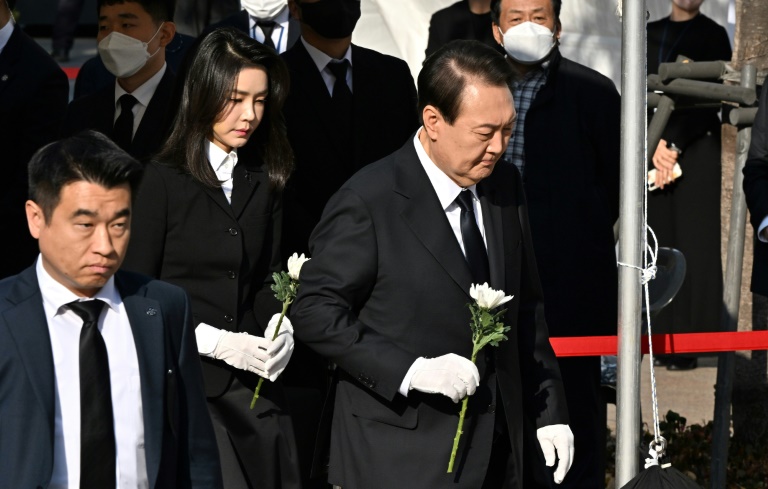
South Korean President Yoon Suk-yeol opened a memorial Monday for the 154 people killed in a crowd surge at Halloween celebrations, as authorities faced accusations that lax crowd control polices caused the disaster.

After the president and his wife laid single white flowers at the huge altar set up in central Seoul for victims — mostly young women — of the Saturday disaster, members of the public began arriving to pay their respects.

One man knelt down before the black altar, covered in neat rows of white flowers, and wept.

At a makeshift momorial outside a subway station in the popular Itaewon nightlife district, where the tragedy occurred, people also stopped to pray and lay flowers. 

Calls for accountability grew Monday in the press and online, as potential lapses of crowd control and policing emerged.

As many as 100,000 people — mostly in their teens and 20s, many wearing Halloween costumes — had poured into Itaewon’s small, winding streets, with eyewitnesses describing scant security and no crowd control.

Police said at a briefing Monday they had deployed 137 officers to the event, pointing out that number was significantly higher than previous years.

But local reports said most police deployed were focused on drug use, rather than crowd control.

“This was a disaster that could have been controlled or prevented,” Lee Young-ju, a professor from the Department of Fire and Disaster at the University of Seoul, told broadcaster YTN.

“But this was not taken care of, with no one taking the responsibility in the first place.”  

Online, claims also spread that police this year were not actively managing the crowd, which allowed too many people to congregate around the subway station and in the alleyway at the epicenter of the disaster.

“I’ve lived in Itaewon for 10 years and experienced Halloween every year but yesterday was by no means particularly crowded compared to previous years,” Twitter user @isakchoi312 wrote.

“Ultimately, I think the cause of the disaster was crowd control.”

On Sunday, the government had also defended the policing plan.

“(The crush) was not a problem that could be solved by deploying police or firefighters in advance,” Interior Minister Lee Sang-min told a briefing.

South Korea is typically strong on crowd control, with the country’s regular protest rallies often so heavily policed that officers can outnumber participants.

But protest organisers must by law report plans to authorities in advance, but there were no such requirements for the young people flocking to the Itaewon Halloween event.

– Chaos, fear –

Tens of thousands of partygoers were packed into the downhill alleyway, no more than three meters (10 feet) wide, with eye-witnesses describing scenes of chaos, as people pushed and shoved to get through, with no police in sight to guide or control the crowd.

Witnesses described being trapped in a narrow, sloping alleyway, and scrambling to get out of the suffocating crowd as people piled on top of one another.

Most of the 154 dead, including 26 foreigners, had been identified Sunday, with the education ministry confirming Monday that at least six young teenagers were among the victims.

But the toll could rise further with at least 33 people in critical condition, officials said.

The country started a week of national mourning, with entertainment events and concerts cancelled and flags nationwide flying at half mast.

Lula wins Brazil's bitter presidential vote, Bolsonaro silent

Brazilian president-elect Luiz Inacio Lula da Silva called for “peace and unity” after narrowly winning a divisive runoff election Sunday, capping a remarkable political comeback by defeating far-right incumbent Jair Bolsonaro — who has yet to accept defeat.

The victory marks a stunning turnaround for charismatic but tarnished leftist icon Lula, who left office in 2010 as the most popular president in Brazilian history, fell into disgrace when he was imprisoned for 18 months on controversial, since-quashed corruption charges, and now returns for an unprecedented third term at age 77.

All eyes will now be on how Bolsonaro and his supporters react to the result, after months of alleging — without evidence — that Brazil’s electronic voting system is plagued by fraud and that the courts, media and other institutions had conspired against his far-right movement.

“This country needs peace and unity,” Lula said to loud cheers in a victory speech in Sao Paulo.

“The challenge is immense,” he said of the job ahead of him, citing a hunger crisis, the economy, bitter political division, and deforestation in the Amazon.

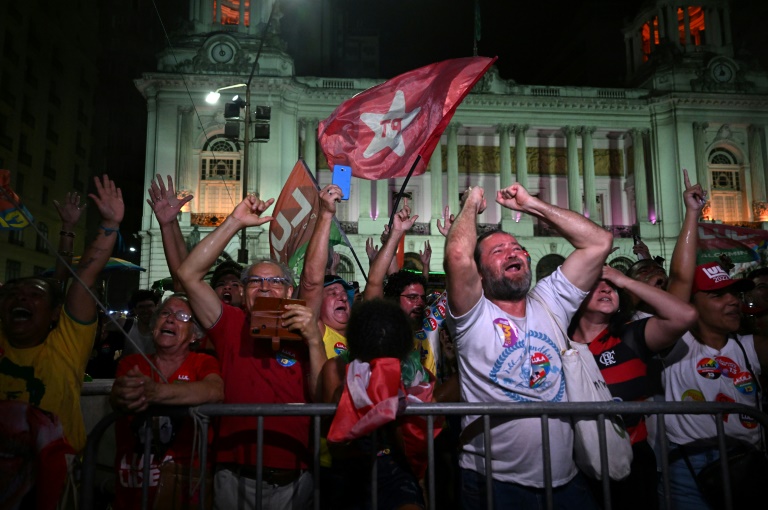
He later addressed a tightly packed crowd of hundreds of thousands of supporters who flooded the city center clad in Workers’ Party red, vowing: “democracy is back.”

– ‘He hasn’t called yet’ –

Bolsonaro, 67, was silent in the hours after the result was declared.

“Anywhere in the world, the losing president would already have called to admit defeat. He hasn’t called yet, I don’t know if he will call and concede,” Lula told the massive crowd.

Some Bolsonaro supporters, gathered in the capital Brasilia, refused to accept the results.

“The Brazilian people aren’t going to swallow a faked election and hand our nation over to a thief,” said 50-year-old teacher Ruth da Silva Barbosa. 

In the closest race since Brazil returned to democracy after its 1964-1985 dictatorship, electoral officials declared the election for Lula, who had 50.9 percent of the vote to 49.1 percent for Bolsonaro with more than 99.9 percent of polling stations reporting.

Bolsonaro, the vitriolic hardline conservative dubbed the “Tropical Trump,” meanwhile becomes the first incumbent president not to win re-election in the post-dictatorship era.

With no word from Bolsonaro, some of his key allies appeared in public to accept the results, including the speaker of the lower house of Congress, Arthur Lira, who said it was time to “extend a hand to our adversaries, debate, build bridges.”

– ‘Restore peace’ –

Congratulations for Lula poured in from US President Joe Biden, France’s Emmanuel Macron, Canada’s Justin Trudeau as well as leaders from across Latin America.

Lula supporters around the country erupted into celebration Sunday evening.

“We’ve had four years of a genocidal, hateful government,” said Lula voter Maria Clara, a 26-year-old student, at a victory party in downtown Rio.

“Today democracy won, and the possibility of dreaming of a better country again.”

In Brasilia, the tearful crowd of Bolsonaro supporters — outfitted in green and yellow, the colors of Brazil’s flag which the ex-army captain has adopted as his own — fell to their knees to pray.

Bolsonaro surged to victory four years ago on a wave of outrage with politics as usual, but came under fire for his disastrous handling of the Covid-19 pandemic — which left more than 680,000 dead in Brazil — as well as a weak economy, polarizing style and attacks on democratic institutions.

Regardless of how the incumbent reacts, Lula will face huge challenges from the day he is inaugurated on January 1.

Bolsonaro’s far-right allies scored big victories in legislative and governors’ races in the first-round election on October 2, and will be the largest force in Congress.

On Sunday, Bolsonaro’s former infrastructure minister Tarcisio de Freitas clinched the governorship of Sao Paulo, the most populous and wealthiest state in the country.

– ‘Zero deforestation’  –

In his victory speech, Lula touched on gender and racial equality and the urgent need to deal with a hunger crisis affecting 33.1 million Brazilians.

“Today we tell the world that Brazil is back,” he said, adding that the country is “ready to reclaim its place in the fight against the climate crisis, especially the Amazon.”

He vowed to “fight for zero deforestation.”

Lula inherits a deeply divided country, with a hugely difficult global economic situation that looks nothing like the commodities “super-cycle” that allowed him to lead Latin America’s biggest economy through a watershed boom in the 2000s.

Lula’s win is “one of the biggest comebacks in modern political history,” tweeted Brian Winter, editor-in-chief of Americas Quarterly.

But the president-elect will face a hostile Congress and have “a weak government,” Winter told AFP.

None of that mattered for the time being to elated Lula supporters.

“Brazil is starting to stand upright again after four years of darkness. We were going through so many problems, so much fear,” Larissa Meneses, a 34-year-old software developer, told AFP at a joyful victory party in Sao Paulo.

“Now with Lula’s victory, I really believe things will start getting better. This is a day to laugh a lot.”

China's factory activity contracts on Covid curbs

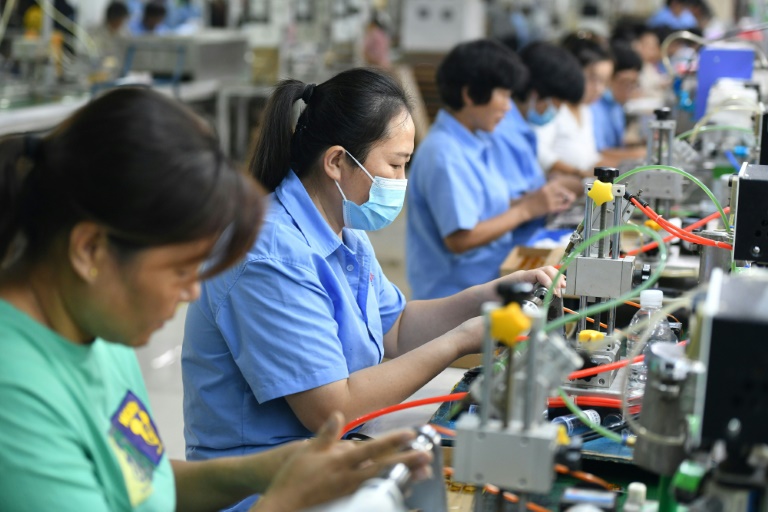
China’s factory activity shrank in October, official data showed Monday, after industries were hit by strict Covid lockdowns.

The Purchasing Managers’ Index (PMI) — a key gauge of manufacturing in the world’s second-biggest economy — came in at 49.2, down from September’s 50.1 and below the 50-point mark separating growth from contraction, according to data from the National Bureau of Statistics (NBS).

Sporadic Covid-19 lockdowns around China have dampened demand and business confidence.

The manufacturing PMI has been in contraction territory for six out of the past eight months, as sweeping Covid restrictions paralysed major industrial cities such as Shanghai, Shenzhen and Chengdu and a summer of searing heat hit production.

“In October, affected by the frequent appearance of domestic outbreaks, China’s purchasing managers’ index declined,” NBS senior statistician Zhao Qinghe said in a statement.

Zhao added that “the foundation for China’s economic recovery and development needs to be further consolidated”, noting both weakened demand and rising raw material prices.

While activity at larger businesses expanded in October, work at small and medium-sized enterprises contracted significantly, with Zhao saying “the pressure on production and operation at small and medium-sized enterprises has increased”.

The non-manufacturing PMI came in at 48.7 points in October, a sharp decline from 50.6 in September and “below a critical point”, Zhao said in the statement.

Zhao added that Covid outbreaks in October had hit the service industry especially hard, with activity in transport, accommodation and food and beverage businesses falling during a traditional peak period coinciding with week-long national holidays.

“We don’t expect the zero-Covid policy to be abandoned until 2024, which means virus disruptions will keep in-person services activity subdued,” Capital Economics analyst Zichun Huang said in a note on Monday.

“The deepening global downturn will continue to weigh on exporters. And officials are still struggling to put a floor underneath the property market,” Huang added.

Chinese leaders have set out an annual economic growth target of about 5.5 percent, but many observers think the country will struggle to hit the target, despite announcing a better-than-expected 3.9 percent expansion in the third quarter.

And officials have shown no sign that they intend to ease the country’s zero-Covid strategy, with President Xi Jinping last week promoting Li Qiang, who oversaw a debilitating two-month lockdown in Shanghai, to the second-most powerful post in the Communist Party. 

The economic slowdown has also been exacerbated by a crisis in the massive property sector, where a series of debt-laden developers have defaulted on loans.

Markets rise on rate hopes ahead of Fed decision

Most markets rose Monday ahead of a crucial Federal Reserve policy meeting later in the week, with investors hoping for a less hawkish tilt in their plans for interest rates.

A sense of relief has settled on trading floors over the past week following a report that the US central bank could take its foot off the accelerator in its push to rein in decades-high inflation.

Adding to the positive mood has been an indication that others around the world are looking at slowing down, though the excitement was tempered Friday by record inflation readings in Europe and data showing prices remained elevated.

Asian dealers were given a strong lead from Wall Street, where all three main indexes ended more than two percent higher thanks to a rally in tech firms following a strong earnings report from Apple.

Tokyo, Hong Kong, Seoul, Singapore, Taipei and Wellington all piled on more than one percent, while Sydney and Jakarta were also up.

However, Shanghai fell on concerns about China’s growth outlook as the government presses on with its zero-Covid strategy of lockdowns, with restrictions imposed in towns and cities nationwide.

Data showing activity in the factory and services sectors contracted last month highlighted the impact the measures are having on the world’s number two economy.

All eyes are on the Fed’s policy meeting, which ends Wednesday.

While it is widely expected to announce a fourth successive 75 basis point hike, traders will be poring over the post-meeting statement looking for a hint officials are open to dialling back the pace of increases.

The gathering comes as other central banks have recently indicated they are willing to ease up, with Canada raising rates less than expected last week, while authorities in Australia and Europe have taken a more dovish view.

Concerns that rapidly rising borrowing costs will send economies into a recession has hammered markets globally this year.

“There has been a succession of central bank downshifts, adding to the ‘peak hawkishness’ theme running through macro markets,” said SPI Asset Management’s Stephen Innes. “And investors are entirely focused on these U-turns as peak rates get priced in. 

“So, people don’t want to miss the stock market rally wagon, especially if the Fed conveys a similar policy downshift this week, sending the rally into overdrive as pivot procrastinators will be forced to chase.”

A better-than-expected earnings season has also provided support to global markets, easing concerns that tighter monetary policies would hammer firms’ bottom lines, though big-name tech giants have taken a blow.

National Australia Bank’s Rodrigo Catril said more than 70 percent of companies that had reported had beaten forecasts, though he added that while markets had risen over the past month, some traders remained cautious.

“Those with a positive inclination may look at October’s equity performance as a sign of a new uptrend while others would suggest we have not yet seen the worst given the lag effects from monetary policy and the prospect of still more tightening to come,” he said in a note.

– Key figures around 0230 GMT –

Tokyo – Nikkei 225: UP 1.6 percent at 27,529.33 (break)

Hong Kong – Hang Seng Index: UP 0.7 percent at 14,959.04

Shanghai – Composite: DOWN 0.8 percent at 2,891.75

Euro/dollar: DOWN at $0.9953 from $0.9967 on Friday

Pound/dollar: DOWN at $1.1601 from $1.1618 

Dollar/yen: UP at 148.00 yen from 147.46 yen

Euro/pound: UP at 85.83 pence from 85.77 pence

West Texas Intermediate: DOWN 0.6 percent at $87.36 per barrel

Brent North Sea crude: DOWN 0.9 percent at $94.87 per barrel

New York – Dow: UP 2.6 percent at 32,861.80 (close)

London – FTSE 100: DOWN 0.4 percent at 7,047.67 (close) 

Philippines storm death toll jumps to 98

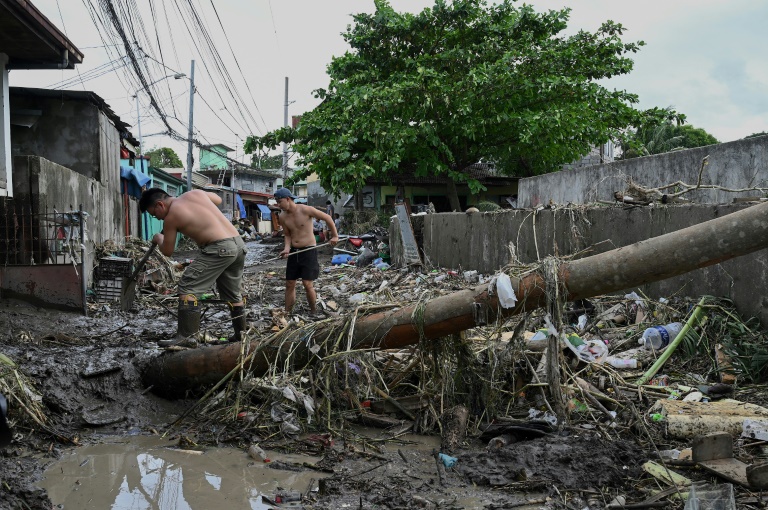
The death toll from a storm that battered the Philippines has jumped to 98, the national disaster agency said Monday, with little hope of finding survivors in the worst-hit areas.

Just over half of the fatalities were from a series of flash floods and landslides unleashed by Tropical Storm Nalgae, which destroyed villages on the southern island of Mindanao on Friday.

Mindanao is rarely hit by the 20 or so typhoons that strike the Philippines each year, but storms that do reach the region tend to be deadlier than in Luzon and central parts of the country.

“We have shifted our operation from search and rescue to retrieval operation because the chances of survival after two days are almost nil,” said Naguib Sinarimbo, civil defence chief of the Bangsamoro region in Mindanao.

The number of fatalities is likely to rise, with the national disaster agency recording 63 people still missing and scores of others injured.

The Philippine Coast Guard posted pictures on Facebook showing its personnel in devastated Kusiong village, in Maguindanao del Norte province of Mindanao, wading through thigh-high mud and water, using long pieces of timber in the search for more bodies.

Kusiong was buried by a massive landslide, which created a huge mound of debris, just below several picturesque mountain peaks. 

Meanwhile, survivors continued the heartbreaking task of once again cleaning up their sodden homes.

Residents swept muddy water from their houses and shops as their furniture and other belongings dried in the now sunny streets of Noveleta municipality, south of the capital, Manila.

“In my entire life living here, it’s the first time we experienced this kind of flooding,” said Joselito Ilano, 55, whose house was flooded by waist-high water.

“I am used to flooding here but this is just the worst, I was caught by surprise.”

Perfidia Seguendia, 71, and her family lost all their belongings except the clothes they were wearing when they fled to their neighbour’s two-storey house.

“Everything was flooded — our fridge, washing machine, motorcycle, TV, everything,” Seguendia told AFP.

“All we managed to do was to cry because we can’t really do anything about it. We weren’t able to save anything, just our lives.”

– More rain on the way –

Nalgae inundated villages, destroyed crops and knocked out power in many regions as it swept across the country.

It struck on an extended weekend for All Saints’ Day, which is on Tuesday, when millions of Filipinos travel to visit the graves of loved ones.

Scientists have warned that deadly and destructive storms are becoming more powerful as the world gets warmer because of climate change.

The state weather forecaster warned that another tropical depression was heading towards the Philippines even as Nalgae moved across the South China Sea.

The new weather system could bring more heavy rain and misery to areas badly affected by Nalgae.

Landslides and flash floods originating from largely deforested mountainsides have been among the deadliest hazards posed by storms in the Philippines in recent years.

In April, deadly landslides and flooding triggered by another tropical storm smashed farming and fishing communities in the central province of Leyte. 

Hong Kong banking summit a post-pandemic sales pitch, but is anyone buying?

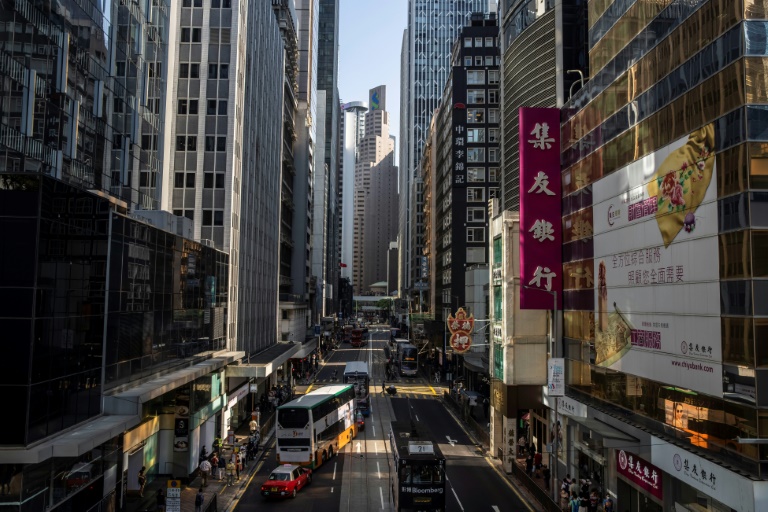
Hundreds of top bankers will arrive in Hong Kong this week to hear the government’s sales pitch that — despite lingering pandemic curbs and entrenched US-China tensions — the city is once again open for business.

The Chinese finance hub has prepared a high-profile summit, including a glitzy banquet at a newly opened art museum to woo financial bigwigs, hoping to outshine regional rivals like Singapore, London and Tokyo.

Wednesday’s gathering has come under fire from some United States lawmakers, who said Wall Street’s luminaries are “whitewashing human rights violations” with their presence and giving political cover to city leader John Lee.

Lee, who is scheduled to deliver an opening keynote speech, is among Chinese officials sanctioned by Washington for their role in cracking down on human rights in Hong Kong. 

He is, as a result, unable to hold a bank account at the financial giants whose top executives will share the stage with him this week.

“Business as usual in Hong Kong is the wrong choice for these companies,” said the leaders of the bipartisan US Congressional-Executive Commission on China.

The event still has plenty of cheerleaders from local industry, anxious to maintain Hong Kong’s standing as a global finance hub.

“We need to… paint a more positive picture about the real situation,” financial services sector lawmaker Robert Lee told AFP.

“Hong Kong is open for business. I think that message should be loud and clear.”

– Restrictions remain –

Since Lee’s administration took office in July, officials have billed the summit as a watershed moment to show that the city has left behind China’s strict zero-Covid strategy.

Hong Kong finally scrapped mandatory hotel quarantine in September. Many controls, however, remain in place — curbs that rival cities have long abandoned.

Overseas arrivals must undergo frequent testing and are unable to go to bars and restaurants for their first three days in the city.

Restrictions on various gatherings remain and masks are compulsory, including outdoors.

The finance summit is being held at the Four Seasons hotel and partial exemptions have been granted so bankers can “have meals with others in private rooms” and visit venues that would otherwise be off-limits.

Those who test positive will be permitted to skip isolation and leave by private flights if they can.

“Covid restrictions are hurting us,” said Mike Rowse, a former civil servant who promoted the city to foreign investors.

“I used to travel around the world selling Hong Kong… When you finish (that pitch) you say: ‘Come and see for yourself’. But right now you can’t say that.”

The delicate balance between convenience and pandemic control was thrown into sharp relief last week, when Hong Kong finance chief Paul Chan caught the coronavirus while abroad — potentially forcing him to skip the conference.

Citigroup CEO Jane Fraser also contracted the virus and pulled out of the event, removing one of the few senior women at a gathering otherwise dominated by men. 

Top officials have promised to keep reopening. 

But Aries Wong, an economist at Hong Kong Baptist University, said the incremental tweaks mean little to foreign firms unless controls are fully scrapped.

“There is still policy uncertainty because if the controls remain on the books, it means they can potentially be tightened if things worsen again,” Wong told AFP.

– Gateway to China –

International firms are also caught in the middle of fraying US-China trade ties and competing sanction regimes that make compliance a headache.

The former British colony has been under Beijing’s tightening grip after authorities cracked down on huge and often violent pro-democracy protests in 2019.

“China’s government has suggested that Hong Kong’s distinct status as a global economic connector remains firmly intact,” said Austin Strange, an international relations scholar at the University of Hong Kong.

“The international community is less settled on this issue, and will look to actual policies and measures… rather than take official statements at face value.”

The issue of US sanctions arose again earlier this month when Lee’s government made clear it would not follow US, European and British sanctions against Russia over Moscow’s invasion of Ukraine.

While Hong Kong’s closeness to China may be a geopolitical liability, it is also the very heart of the city’s appeal to the many banks present at the summit.

Hong Kong remains China’s prime gateway to international markets and foreign capital.

Laurence Li, the head of Hong Kong’s financial industry advisory body, said China is pushing ahead with measures to more seamlessly connect Hong Kong markets to the mainland.

“No one in the world can afford not to interact with China… Hong Kong remains the best place to participate in the mainland’s economy and growth,” Li told AFP.

Death toll from Somalia twin bombings climbs to 100

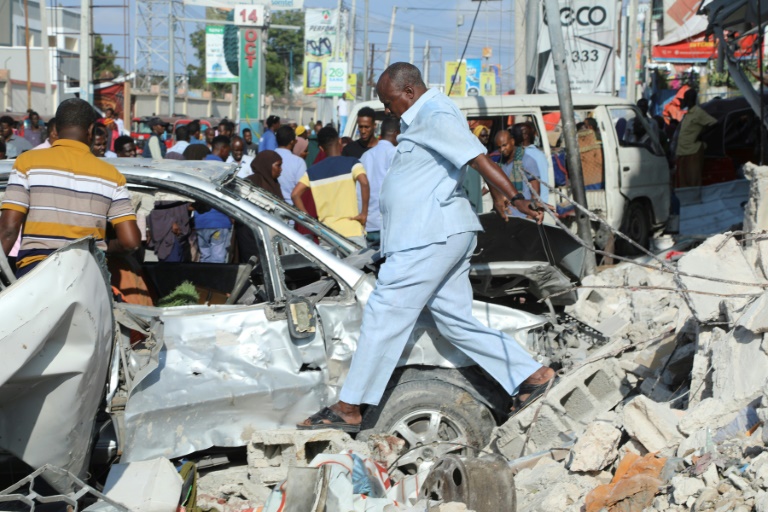
The death toll from twin car bombings in the Somali capital Mogadishu, claimed by Al-Shabaab Islamists, has risen to 100, President Hassan Sheikh Mohamud said on Sunday, drawing condemnation from the country’s international allies.

“So far, the number of people who died has reached 100 and 300 are wounded, and the number for both the death and wounded continues to increase,” he said after visiting the blast location.

Al-Shabaab, an Islamist group linked to Al-Qaeda, claimed responsibility for the attack in which two cars packed with explosives blew up minutes apart near the city’s busy Zobe intersection, followed by gunfire, saying in a statement they had targeted the country’s ministry of education.

The afternoon explosions tore through walls and shattered windows of nearby buildings, sending shrapnel flying and plumes of smoke and dust into the air.

Somalia’s allies swiftly denounced the bloody siege, with the United States, the United Nations and the African Union, as well as Turkey all issuing messages of support.

Women, children and the elderly were among the victims of the attack, police spokesman Sadik Dudishe said. 

“The ruthless terrorists killed mothers. Some of them died with their children trapped on their backs,” he said on Saturday, adding that the attackers had been stopped from killing more “innocent civilians and students”.

“I could not sleep last night because of the horrible scene,” police officer Adan Mohamed said on Sunday.

The attack took place at the same busy junction where a truck packed with explosives blew up on October 14, 2017, killing 512 people and injuring more than 290, the deadliest attack in the troubled country.

Mohamud described the incident as “historic”, saying “it is the same place, and the same innocent people involved”.

“This is not right. God willing, they will not be having an ability to do another Zobe incident,” he said, referring to Al-Shabaab.

– International condemnation –

Shop owner Mohamed Jama said he was with four men when the huge explosions hit. 

His shop, which is located next to a bank, collapsed and its windows shattered, the flying glass penetrating the flesh of the men.

“One of us had serious injuries… we bled there for a few minutes,” he told AFP in hospital.

The White House on Sunday decried the “tragic terrorist attack… and in particular its heinous targeting of the Somali Ministry of Education and first responders”.

UN chief Antonio Guterres “extends his heartfelt condolences to the families of the victims, which include United Nations staff”, his spokesperson, Stephane Dujarric, said in a statement.

The UN mission in Somalia vowed to stand “resolutely with all Somalis against terrorism.”

“These attacks underline the urgency and critical importance of the ongoing military offensive to further degrade Al-Shabaab,” AU Transition Mission in Somalia, which replaced the previous AMISOM peacekeeping force, tweeted late Saturday.

Pope Francis also offered condolences to the victims of the bloody attack.

“Let us pray for the victims of the attack in Mogadishu in which more than 100 people lost their lives, among whom (were) many children,” he said, following his traditional Angelus prayer in Saint Peter’s Square.

The World Health Organisation said it was ready to help the government treat the injured and provide trauma care to the victims.

– ‘All-out war’ –

Al-Shabaab has been seeking to overthrow the fragile foreign-backed government in Mogadishu for about 15 years.

Its fighters were driven out of the capital in 2011 by an African Union force but the group still controls swathes of countryside and continues to wage deadly strikes on civilian and military targets.

In August, the group launched a 30-hour gun and bomb attack on the popular Hayat hotel in Mogadishu, killing 21 people and wounding 117.

Mohamud, who was elected in May, vowed after the August siege to wage “all-out war” on the Islamists.

In September, he urged citizens to stay away from areas controlled by jihadists, saying the armed forces and tribal militia were ratcheting up offensives against them.

Al-Shabaab remains a potent force despite multinational efforts to degrade its leadership and boost Somalia’s own security services, with the AU trying to help them take over primary responsibility for the country’s security by the end of 2024.

But the group last week claimed responsibility for an attack on a hotel in the port city of Kismayo that killed nine people and wounded 47 others.

Somalia has been mired in chaos since the fall of president Siad Barre’s military regime in 1991.

His ousting was followed by a civil war and the ascendancy of Al-Shabaab.

As well as the insurgency, Somalia — like its neighbours in the Horn of Africa — is in the grip of the worst drought in more than 40 years. Four failed rainy seasons have wiped out livestock and crops.

The conflict-wracked nation is considered one of the most vulnerable to climate change but is particularly ill-equipped to cope with the crisis as it battles the deadly Islamist insurgency.

Greta Thunberg to skip 'greenwashing' COP27 climate summit in Egypt

Swedish climate activist Greta Thunberg said on Sunday she will skip next month’s COP27 talks in Egypt, slamming the global summit as a forum for “greenwashing”.

“I’m not going to COP27 for many reasons, but the space for civil society this year is extremely limited,” she said during a question and answer at the launch of her latest book at London’s Southbank Centre.

The 19-year-old activist had previously expressed solidarity on Twitter with “prisoners of conscience” being held in Egypt ahead of the UN’s 27th conference on climate, opening in the Red Sea resort town of Sharm el-Sheikh on November 6.

“The COPs are mainly used as an opportunity for leaders and people in power to get attention, using many different kinds of greenwashing,” she said.

The COP conferences, she added, “are not really meant to change the whole system”, but instead encourage gradual progress.

“So as it is, the COPs are not really working, unless of course we use them as an opportunity to mobilise.”

Released on Thursday, Thunberg’s “The Climate Book” includes about 100 contributions from various experts, including economist Thomas Piketty, WHO chief Tedros Adhanom Ghebreyesus and the writer Naomi Klein.

Thunberg’s royalties for the book will go to her eponymous foundation, which will distribute them to charitable organisations working on environmental issues.

The activist said she wanted the book to “be educational, which is a bit ironic since my thing is school strikes”, referring to her protests in front of the Swedish parliament starting in 2018.

Again and again on Sunday, Thunberg called for more people to get involved in climate activism, saying the time had come for “drastic changes” to the status quo.

“In order to change things, we need everyone — we need billions of activists,” she said.

Close Bitnami banner
Bitnami