World

Russia suspends participation in Ukraine grain deal

Russia on Saturday suspended its participation in a landmark agreement that allowed vital grain exports from Ukraine, blaming alleged drone attacks on Russian ships in Crimea.

Russia made the announcement after its army accused Kyiv earlier Saturday of a “massive” drone attack on its Black Sea fleet, while Britain bluntly rejected Moscow’s claims its specialists were involved.

The Turkey and UN-brokered deal to unlock grain exports signed between Russia and Ukraine in July is critical to easing the global food crisis caused by the conflict.

The agreement already allowed more than nine million tonnes of Ukrainian grain to be exported and was due to be renewed on November 19.

“In light of the terrorist act carried out by the Kyiv regime with the participation of British experts against ships of the Black Sea fleet and civilian vessels involved in the security of grain corridors, Russia suspends its participation in the implementation of the agreement on the export of agricultural products from Ukrainian ports,” the Russian defence ministry said on Telegram.

Sevastopol in Moscow-annexed Crimea, which has been targeted several times in recent months, serves as the headquarters for the fleet and a logistical hub for operations in Ukraine.

The Russian army claimed to have “destroyed” nine aerial drones and seven maritime ones, in an attack in the port early Saturday. 

Moscow’s forces alleged British “specialists”, whom they said were based in the southern Ukrainian city of Ochakiv, had helped prepare and train Kyiv to carry out the strike. 

In a further singling out of the UK — which Moscow sees as one of the most unfriendly Western countries — Russia said the same British unit was involved in explosions on the Nord Stream gas pipelines last month.

Britain strongly rebutted both claims, saying “the Russian Ministry of Defence is resorting to peddling false claims of an epic scale.”

Russia’s foreign ministry spokeswoman Maria Zakharova said Saturday Moscow would raise the blasts and the alleged drone attack at the UN Security Council.

The British defence ministry said this “invented story says more about arguments going on inside the Russian Government than it does about the West”.

Moscow’s military said ships targeted at their Crimean base were involved in a UN-brokered deal to allow the export of Ukrainian grain. 

Russia had recently criticised the deal, saying its own grain exports have suffered due to Western sanctions. 

– ‘Massive’ attack –

Mikhail Razvozhayev, the Moscow-installed governor of Sevastopol, said Saturday’s drone attack was the “most massive” the peninsula had seen. 

The city’s services were on “alert”, but he claimed no “civilian infrastructure” had been damaged. 

City authorities said that the harbour was “temporarily” closed to boats and ferries and urged people “not to panic”.

Attacks on Crimea, annexed by Moscow in 2014, have increased in recent weeks, as Kyiv presses a counter-offensive in the south to retake territory held by Moscow for months. 

Moscow-installed authorities in Kherson, just north of Crimea, have vowed to turn the city into a fortress, preparing for an inevitable assault. 

On Thursday, Razvozhayev said a thermal power station had been attacked in Balaklava, in the Sevastopol area. 

He claimed there was only minor damage and no casualties.  

In early October, Moscow’s bridge linking Crimea to the Russian mainland — personally inaugurated by President Vladimir Putin in 2018 — was damaged by a blast that Putin blamed on Ukraine. 

The Russian fleet stationed in the port had also been attacked by a drone in August.  

Russia’s allegations Saturday came as the Ukrainian army reported fighting in the Lugansk and Donetsk regions in the east, including near Bakhmut — the only area where Moscow’s forces have advanced in recent weeks.  

Pro-Russian separatists fighting alongside Moscow also announced a new prisoner exchange with Kyiv, saying 50 will return home from each side. 

Both sides were gearing up for the battle for the city of Kherson, the regional capital that fell to Moscow’s forces in the first days of their offensive.  
Somalia car bombs kill at least nine

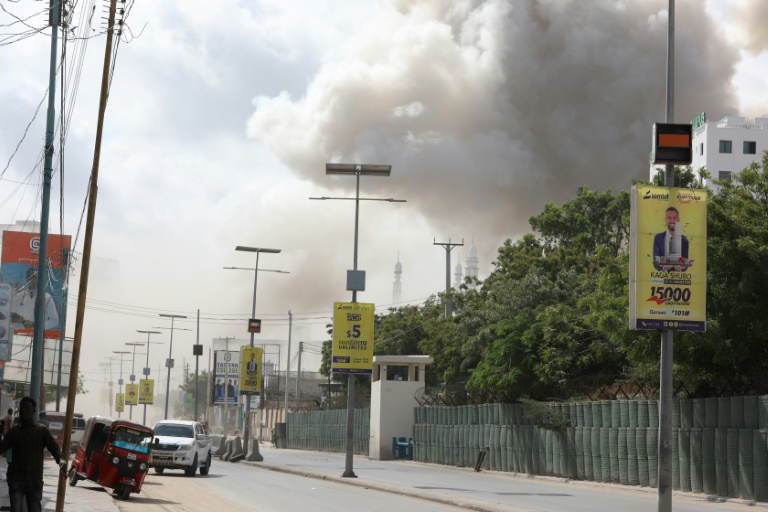
At least nine people, including children, died on Saturday in twin car bomb attacks targeting Somalia’s education ministry in the capital Mogadishu, security officers and witnesses said.

Two cars packed with explosives were detonated minutes apart near the busy Zobe junction and followed by gunfire, 

“I was among the first security officers to reach the area, I saw dead bodies of nine people most of them civilians including women and children,” said security officer Ahmed Ali, adding that dozens had been wounded.

Another security officer Yusuf Abdullahi gave a similar toll. 

Police spokesman Sadik Dudishe did not give a death toll figure but said the incident was being investigated. 

“The ruthless terrorists killed mothers. Some of them died with their children trapped on their backs,” he told reporters at a press briefing, adding the attackers had targeted “students and other civilians”.

The response by security forces had stopped the attackers from reaching their intended location, Dudishe said. 

The afternoon explosions shattered windows of nearby buildings, sent shrapnel flying and clouds of smoke and dust into the air.

Abdirahman Ise, a witness, said the road had been busy when the first blast went off. 

“I saw huge smoke in the ministry area and there is massive destruction,” another witness, Amino Salad, said. 

The attack happened at a busy junction where a truck packed with explosives blew up on October 14, 2017, killing 512 people and injuring more than 290.

There was no immediate claim of responsibility for the attack but Islamist group Al-Shabaab remains a potent force in the troubled Horn of Africa nation despite multinational efforts to degrade its leadership.

The jihadists have been seeking to overthrow the fragile foreign-backed government in Mogadishu for about 15 years.

Its fighters were driven out of the capital in 2011 by an African Union force but the group still controls swathes of countryside and has the capacity to wage deadly strikes on civilian and military targets.

They use threats of violence to collect taxes in territory under their jurisdiction.

The group last week claimed responsibility for an attack on a hotel in the port city of Kismayo that killed nine people and wounded 47 others. 

In August, the group launched a 30-hour gun and bomb attack on the popular Hayat hotel in Mogadishu, killing 21 people and wounding 117.

– ‘All-out war’ –

Somali President Hassan Sheikh Mohamud, who was elected in May, vowed after the August siege to wage “all-out war” on the Islamists.

In September he urged citizens to stay away from areas controlled by jihadists, saying the armed forces and tribal militia were ratcheting up offensives against them.

A joint US-Somali drone strike killed one of the militants’ most senior commanders on October 1.

Just hours after his death was announced, a triple bombing in the southern city of Beledweyne killed at least 30 people.

In addition to violence, Somalia — like its neighbours in the Horn of Africa — is in the grip of the worst drought in more than 40 years. Four failed rainy seasons have wiped out livestock and crops. 

The conflict-wracked nation is considered one of the most vulnerable to climate change but is particularly ill-equipped to cope with the crisis as it battles the deadly Islamist insurgency.

Hackers, abusers and regulators may vex Musk at Twitter

Elon Musk’s talk of slimming Twitter’s staff and letting people post anything allowed by law is expected to clash with the reality of fending off hackers, trolls, police and regulators, experts say.

If Musk guts Twitter staff or mass resignations hit the platform, it could mean “doom,” said Rebekah Tromble, director of the Institute for Data, Democracy and Politics at George Washington University.

“No matter Musk’s big vision, you need a highly skilled, knowledgeable workforce capable of (re)building a viable platform and responding to EU obligations,” Tromble told AFP.

Along with engineers, that includes legal and policy teams that keep user data safe and guard against dangerous posts.

“There really, truly are almost countless ways that Twitter as a company has to think about safeguarding its users,” Tromble said.

Cybersecurity issues range from lone hackers out to cause mischief to organized groups and attacks by nation states.

Then there are “bad actors” who gang up to abuse targets on Twitter in a tactic referred to as “dog piling.”

“One of my greatest fears at the moment, is that a sort of large scale firing or even large scale resignations will mean that the already imperfect system will just backslide,” Tromble said.

Losing people from teams that fight intrusive demands by police or other government agencies for Twitter user data means experience walks out the door with them, Tromble added.

– Tweet trouble –

Musk is in for a wake-up call when it comes to taking a laissez faire approach to content moderation, according to Emma Llanso of the Center for Democracy and Technology.

US law is permissive in terms of letting social media platforms decide content policies and not holding them accountable for what users post, but that could soon change, Llano said.

The US Supreme Court, in a decision with potentially far-reaching ramifications, is set to hear two cases challenging the legal immunity of internet companies from liability for content posted by their users.

The top court in the United States may well decide to roll back how much social media firms like Twitter are immune to blame for content “recommended” to users.

“There are any number of decisions content sorting algorithms must make regarding which tweets a user sees,” Llanso said.

“Does that make them recommended?”

Musk has said he wants to rely more on software and less on people for content moderation.

The Supreme Court is also to consider cases concerning whether states can dictate content rules at social media platforms.

And while there is currently strong legal footing for Musk to do as he wants with content moderation in the United States, laws are more restrictive in Europe and elsewhere.

“Many countries around the world are really looking at cracking down on the broad leeway social media services have had till now on setting content policy the way they see fit,” Llanso said.

Varying content moderation laws will also mean that Twitter has to figure out in real time what can be shown where.

With Musk at the helm for just some 24 hours, malicious characters were already testing the limits of Twitter systems, Tromble noted.

“And when hate speech, doxxing and harassment slip through the cracks, real harm occurs,” Tromble said.

“Doxxing” is the publication of private or identifying information about a person, often with malicious intent. 

Even if there aren’t legal consequences for letting Twitter turn foul, there are business consequences, said Electronic Frontier Foundation director of federal affairs, India McKinney.

“People are looking for a place to go,” McKinney said of the search by some users for an alternative to Twitter.

“It is an opportunity for someone, that’s for sure.”

Brazil rivals stage final rallies ahead of cliffhanger vote

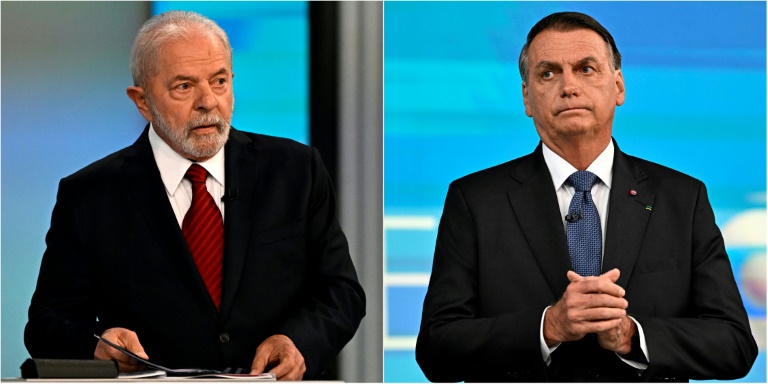
Brazil’s presidential candidates were gearing up for their final rallies Saturday in a scramble for votes on the eve of a white-knuckle election that has deeply polarized Latin America’s largest economy.

The 77-year-old charismatic leftist Luiz Inacio Lula da Silva, tarnished by graft allegations, remains a hair’s breadth ahead in the polls after a narrow first-round victory. 

But many see the race against controversial far-right incumbent Jair Bolsonaro, 67, as too close to call.

The two men came face to face for the last time Friday night in their final debate, which featured mutual accusations of lying, corruption and disastrous management.

The run-off campaign has been a dirty, gloves-off battle for every last vote between two men adored and hated in almost equal measure. 

In Belo Horizonte, the capital of key state Minas Gerais, Bolsonaro supporters gathered in the bright green and yellow colors of Brazil that they have adopted to cheer on the hardline conservative at a motorcycle rally.

“I am sure he will win,” said small business owner Fabricia Alves, 36. 

He said he supports the incumbent because he has seen the economy picking up after the Covid-19 pandemic, and “for the values” he sees as key. 

“I am against abortion and gender ideology, which is what the other party wants to impose on our country.”

Lula reiterated in Friday’s debate that he was anti-abortion — a delicate issue in socially conservative Brazil.

– ‘Whoever gets most votes, wins’ –

Bolsonaro is seeking reelection after a first term in which he was accused of mishandling the pandemic, which left more than 685,000 dead in Brazil.

His tenure was marked by vitriolic attacks on his perceived rivals, ranging from the judiciary to women and foreign leaders.

In campaign ads, Bolsonaro apologized for his occasional “slightly aggressive” tone, and he has boasted of reduced crime rates, a drop in unemployment figures and curbed inflation.

His hardline conservative fans love his focus on “God, country, family and freedom.”

On Saturday, Brazil’s electoral authorities dispatched electronic ballot boxes across the country, from cities to remote Indigenous areas in the Amazon, reported Globo News.

“We are absolutely certain that Sunday will be a day of celebration of democracy, a celebration of popular choice. I am sure that all 156 million Brazilians will respect the result of the election,” Top electoral judge Alexandre de Moraes told Brazil’s biggest network.

Bolsonaro on Friday night made one of his clearest pledges yet to respect the election result if he loses, after a campaign in which he has repeatedly attacked the voting system as fraudulent and said he would not accept the results of an “abnormal” vote.

“There isn’t the slightest doubt: whoever gets the most votes, wins. That’s democracy,” he said.

Lula will make his final appearance in Sao Paulo, Brazil’s economic powerhouse, later on Saturday.

The leftist, Brazil’s president from 2003 to 2010, is seeking a spectacular comeback, telling voters they are choosing between “democracy and barbarism, between peace and war.” 

He was the country’s most popular president when he left office, helping to lift millions out of poverty with his social welfare programs.

But he then became mired in a massive corruption scandal and was jailed for 18 months before his convictions were thrown out last year. The Supreme Court found the lead judge was biased, but Lula was never exonerated.

The dogfight has frayed nerves in the country of 215 million people, which is facing pressing issues, including hunger and economic recovery from the pandemic.

However, critical policy issues such as the economy, corruption and the stricken Amazon have taken a backseat to personal attacks. 

– Fight for undecided voters –

Bolsonaro outperformed pollsters’ predictions in the first-round vote on October 2 to finish just five points shy of Lula — 48 percent to 43 percent.

Lula now has 53 percent voter support to Bolsonaro’s 47 percent, according to a poll published Thursday by the Datafolha institute, which will release a final poll Saturday night.

Both candidates have gone all-out to win over the five percent of voters who plan to spoil their ballots, and another two percent that are undecided.”

Both candidates have fervent support, but many of Brazil’s 156 million voters will merely vote for the candidate they least detest — or spoil their ballots.

“It’s not about the political agenda that I usually identify with. I am prioritizing getting rid of one candidate rather than electing another,” Rio de Janeiro artist Karla Koehler, 35, told AFP.

Tropical storm lashes Philippines, at least 45 dead

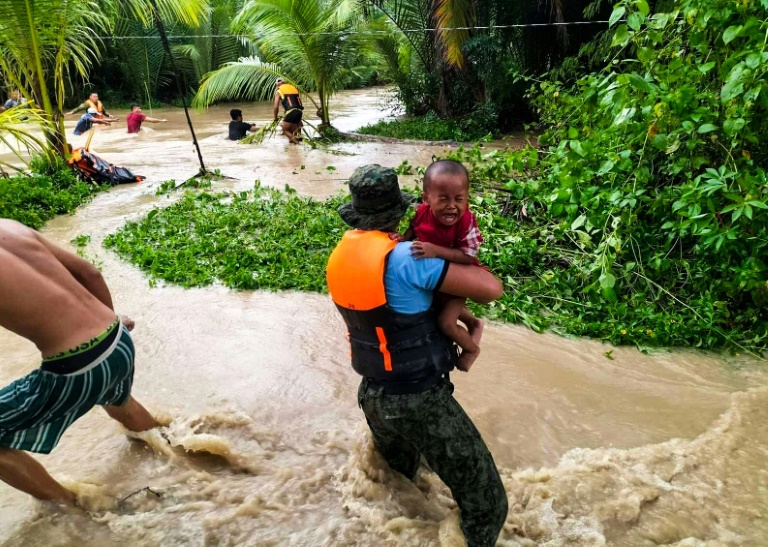
Severe Tropical Storm Nalgae pounded the Philippines on Saturday after unleashing flash floods and landslides that officials said left at least 45 people dead.

Nalgae churned across the archipelago nation’s main island of Luzon with winds of up to 95 kilometres (59 miles) an hour after making landfall on the sparsely populated eastern island of Catanduanes before dawn.

It has sparked heavy rains across the country, with areas far from the path of the storm inundated including the southern island of Mindanao, which has seen flooding and deadly landslides over the past two days.

A sharply revised official toll on Saturday put the number of deaths on Mindanao at 40, with five others killed elsewhere in the country.

At least 17 people were missing, while nearly 20,000 had been evacuated.

In the Mindanao village of Kusiong, home to around 100 people, bulldozers and backhoes attempted to remove a thick layer of limestone rock and mud after parts of a nearby mountain collapsed on Friday.

Fourteen people have so far been pulled from the debris and more are still missing in the community.

“Had she died of illness it would have been less painful,” villager Mercedes Mocadef told AFP as she stood by three bodies, one of which turned out to be the daughter of her cousin.

The dead girl’s mother was also lost in the disaster.

Landslides and flash floods originating from largely deforested mountainsides have been among the deadliest hazards posed by typhoons in the Philippines in recent years.

“It could be more than a hundred,” Lester Sinsuat, mayor in the nearby town of Datu Odin Sinsuat, told AFP when asked how many were feared dead.

Regional civil defence chief Naguib Sinarimbo said “this is already a retrieval operation because the village (Kusiong) has been buried under rock and mud for more than a day”.

– ‘Why did we fail?’ –

Philippine President Ferdinand Marcos Jr rebuked local civil defence officials in Mindanao over their preparations for the storm during a televised meeting Saturday.

“It will be important for us to look back and see why this happened. Why did we fail to evacuate them? Why do we have such a high casualty (figure)?” he said.

Mindanao is rarely hit by the 20 or so typhoons that strike the Philippines each year, but storms that do reach the region tend to be deadlier than in Luzon and central parts of the country.

The state weather service said the eye of Nalgae was expected to pass south of the capital Manila, a sprawling metropolis of more than 13 million people, in the early evening Saturday.

Photos released by the Philippine coastguard showed rescuers using an old refrigerator as a boat to pull children from a flooded community on the central island of Leyte.

The storm struck at the beginning of a long weekend in the Philippines when millions return to their hometowns to visit the graves of dead relatives.

“If it’s not necessary or important, we should avoid going out today because it is dangerous,” said national civil defence director Rafaelito Alejandro, adding that 5,000 rescue teams were on standby.

The coastguard has suspended ferry services throughout most of the country due to rough seas, stranding thousands of passengers at ports.

The civil aviation office meanwhile said it has shelved more than 100 flights.

Storms kill hundreds of people in the Philippines yearly and keep vast regions in perpetual poverty, with residents also having to grapple with frequent earthquakes, volcanic eruptions, and in some areas armed insurgencies.

Scientists have warned that storms are becoming more powerful as the world gets warmer because of climate change.

Russia says repelled Ukraine drone attack on Crimea fleet

The Russian army accused Ukraine of a “massive” drone attack on its Black Sea Fleet in Crimea on Saturday, claiming the UK helped in the strike that damaged a ship.

Sevastopol in Moscow-annexed Crimea, which has been targeted several times in recent months, serves as the headquarters for the fleet and a logistical hub for operations in Ukraine.

The Russian army claimed to have “destroyed” nine aerial drones and seven maritime ones, in an attack early Saturday in the port. 

Moscow’s forces alleged British “specialists”, whom they said were based in the southern Ukrainian city of Ochakiv, had helped prepare and train Kyiv to carry out the strike.  

In a further singling out of the UK — which Moscow sees as one of the most unfriendly Western countries — Moscow said the same British unit was involved in explosions of the Nord Stream gas pipeline last month. 

Moscow’s military said ships targeted at their Crimean base were involved in a UN-brokered deal to allow the export of Ukrainian grain. 

Russia had recently criticised the deal, saying its own grain exports have suffered due to Western sanctions. 

– ‘Massive’ attack –

Mikhail Razvozhayev, the Moscow-instaled governor of Sevastopol, said Saturday’s drone attack was the “most massive” the peninsula had seen. 

The city’s services were on “alert” but he claimed no “civilian infrastructure” had been damaged. 

He called on residents of the city not to post videos of the incident on social media.

“It should be clear to everyone that such information is much needed for Ukrainian Nazis in order to understand how the defence of our city is built,” he said.

City authorities said that the harbour was “temporarily” closed to boats and ferries and urged people “not to panic.” 

Attacks on Crimea, annexed by Moscow in 2014, have increased in recent weeks, as Kyiv presses with a counter-offensive in the south to retake lands held by Moscow for months. 

Moscow-installed authorities in Kherson, just north of Crimea, have vowed to turn the city into a fortress, preparing for an inevitable assault. 

On Thursday, Razvozhayev said a thermal power station had been attacked in Balaklava, in the Sevastopol area. 

He claimed there was only minor damage and no casualties.  

In early October, Moscow’s bridge linking Crimea to the Russian mainland — personally inaugurated by President Vladimir Putin in 2018 — was damaged by a blast that Putin blamed on Ukraine. 

The Russian fleet stationed in the port had also been attacked by a drone in August.  

Russia’s allegations Saturday came as the Ukrainian army reported fighting in the Lugansk and Donetsk regions in the east, including near Bakhmut — the only area where Moscow’s forces have advanced in recent weeks.  

Pro-Russian separatists fighting alongside Moscow also announced a new prisoner exchange with Kyiv, saying 50 will return home from each side. 

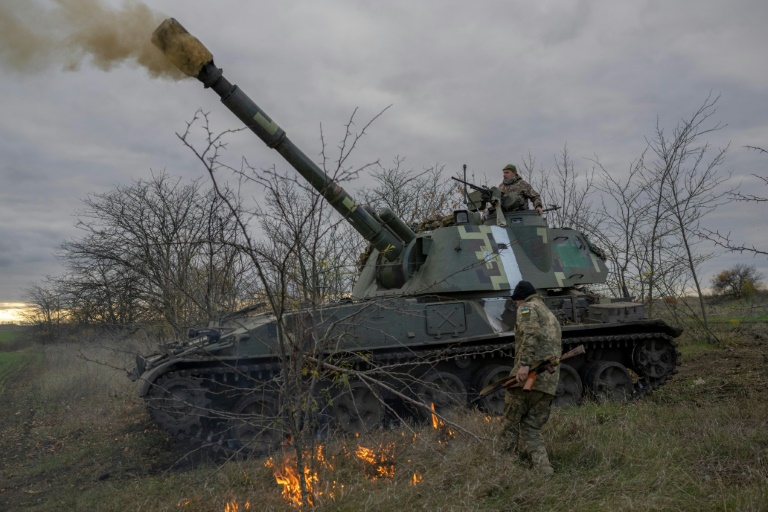
On the southern front, AFP journalists witnessed artillery battles in the village of Kobzartsi, the last settlement on the Ukrainian side before the line of contact with the Russians. 

“It can go wrong here. But we know that they suffer much more on their side than on ours,” said Ukrainian soldier in his 20s, Oleksiy. 

Both sides were gearing up for the battle for the city of Kherson, the regional capital that fell to Moscow’s forces in the first days of their offensive.  
Mega party as S.Africa crowns new Zulu king

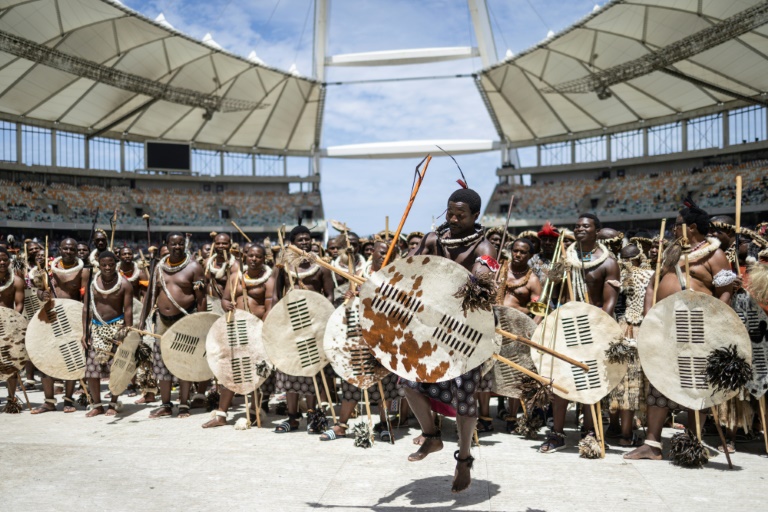
Tens of thousands of people in colourful regalia gathered at a huge soccer stadium in the coastal city of Durban on Saturday to celebrate the official coronation of South Africa’s Zulu king.

President Cyril Ramaphosa was to hand over the certificate to formally recognise the 48-year-old new ruler of the country’s richest and most influential traditional monarchy.

Misuzulu Zulu ascended the throne once held by his late father, Goodwill Zwelithini, who died in March 2021 after a diabetes-related illness.

The crowning — the first South Africa has witnessed in more than half a century — comes after a year of bitter feuding over the royal succession that has spilled into the courts.

Although the title of king does not bestow executive power, the monarchs wield great moral influence over more than 11 million Zulus, who make up nearly a fifth of South Africa’s population.

Amabutho, or royal regiments, clad in traditional skirts, faux leopard skin tops, and carrying shields and sticks chanted songs of praise for their king.

Singing and blowing whistles as they slowly and majestically glided around the pitch, women wore broad-brimmed Zulu hats and traditional wraps.

Young girls in equally brightly coloured pleated skirts and beads, excitedly danced and ululated in the 85,000-seater Moses Mabhida Stadium — which was built for the FIFA 2010 World Cup tournament.

– ‘Great day for’ Zulus –

Londolo Zungu, 49, in traditional Zulu attire was among the women at the party. “We are very happy, more than happy, we are supporting the king 100 percent,” she told AFP.

Khaya Ndwandwe, a Zulu historian, said at the stadium that recognition of the new king by government as “the real king of the Zulu people” means “now the king will be more than protected”.

“It’s a great day for the Zulu nation. It’s a day of great joy for the Zulu people, for everybody,” said Ndwandwe. 

The ceremony was given rolling live coverage on all of South Africa’s largest television stations and media outlets.

A long grey feather stuck out from the king’s hair, while a bunch of black feathers were arranged on the back of his head as he sat on a throne covered in leopard skin.   

Head of the Anglican church in South Africa Archbishop Thabo Makgoba dabbed holy oil on the king’s hands, face and head as crowds looked on.

“As you embark upon your reign as king of the nation that is recognised internationally as one of the greatest in Africa, I believe you are being called to step up and emulate the highest traditions of your ancestors,” said Makgoba.

Among the delegates were King Mswati III of Africa’s last absolute monarchy, Eswatini, who is also an uncle to the new Zulu king.

Zulu kings are descendants of King Shaka, the 19th-century leader still revered for having united a large swathe of the country as the Zulu nation, which fought bloody battles against the British colonisers.

King Zwelithini, who died after more than 50 years in charge, left six wives and at least 28 children.

Misuzulu is the first son of Zwelithini’s third wife, who he designated as regent in his will. 

The queen however died suddenly a month after Zwelithini, leaving a will naming Misuzulu as the next king — a development that did not go down well with other family members. 

The new monarch’s first name means “strengthening the Zulus” but his path to the crown has not been smooth.

A 'rumbling' in the dark: Philippine mum recounts landslide escape

As midnight approached and floodwaters rose around her, mother-of-three Chonalyn Sapi sought refuge at her local village chapel in the southern Philippines province of Maguindanao del Norte, only to find it was already filled with her neighbours.

Desperate to find shelter before tropical storm Nalgae hit, she and others ran uphill in the dark, as boulders, mud and debris rumbled down the mountain in a massive landslide that would go on to bury the nearby hamlet of Kusiong, their home.

“We didn’t sleep that night after the rain started,” Sapi, one of the few survivors of the deluge, told AFP.

“At midnight it was already mud, not water. Some ran to the school, while the others chose the church. Some were already asleep.”

Sapi said those who reached the local high school building survived, but those in the church — including two elderly relatives of hers — were buried beneath the mud.

“We did not even have a flashlight. It was really dark. We heard the rumbling of boulders rolling down the mountain. You could not mistake it for anything else,” she said.

Miraculously, she, her husband, and their two younger children were unscathed.

Soaking wet and shivering in the cold, they waited out the deluge on the hillside for three hours.

Just before dawn, the rain abated, and the family gingerly picked its way back down to the devastated village, wading through torrents of water.

Viewed through drone footage, the impact of the landslide was staggering. It created a massive mound of debris the size of about 10 football fields, just below several picturesque mountain peaks carpeted in yellow-green grass.

– Looking for bodies –

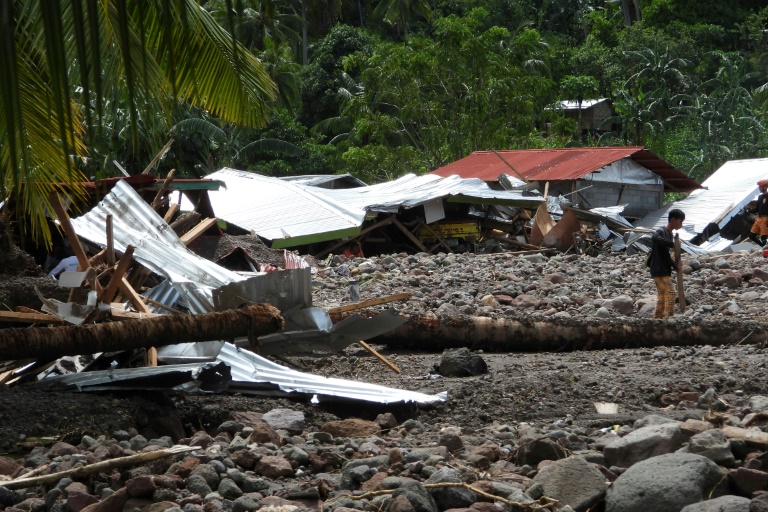
Rescuers clad in the orange vests of the local fire department and armed with shovels poked beneath the galvanised iron roofing sheets of the homes that were half-buried in the rock and mud, looking for bodies.

About 60 houses were buried, while a few others made of lighter materials were swept down towards the road below, said Lieutenant-Colonel Dennis Almorato, spokesman for an army division tasked with helping rescue efforts.

“That area is at the foot of the mountain. The heavy rain could have softened up the slopes,” Almorato told AFP.

Fourteen bodies have been recovered from the village so far. They are among 40 confirmed deaths in a series of flash floods and landslides that swept through the southern Philippines ahead of Nalgae’s landfall on Saturday.

The mayor of the nearby municipality of Datu Odin Sinsuat, Lester Sinsuat, told AFP up to 100 people could have been buried in the rubble.

Mercedes Mocadef stood guard by the body of her niece, one of three cadavers retrieved by rescuers on Saturday.

“Had she died of illness it would have been less painful,” Mocadef said, adding the dead young woman’s mother — her cousin — had also died, her body stored at a local morgue.

The women are all members of the Teduray, one of the Philippines’ many small indigenous tribes who live hardscrabble lives on the edge of society.

Sapi said they used to live along the coast, among a row of beach resorts located about half a kilometre (0.3 miles) below. The owner of that property, however, relocated them to Kusiong two years ago.

The new arrivals stripped trees on the lower slopes of the mountain to farm coconut trees and corn.

Many coconut tree trunks slid down the mountain during the landslide, crashing into their homes.

“If people offer us a new place to stay we would probably reject it,” Sapi said.

“We’ll just go live in the mountain.”

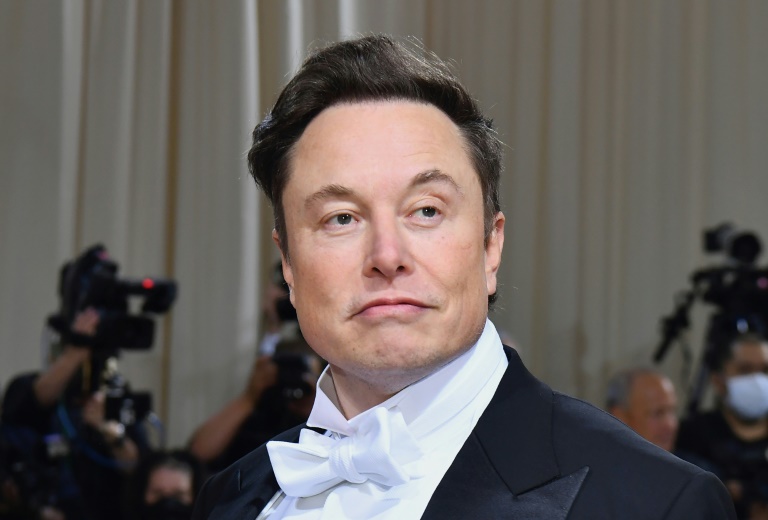
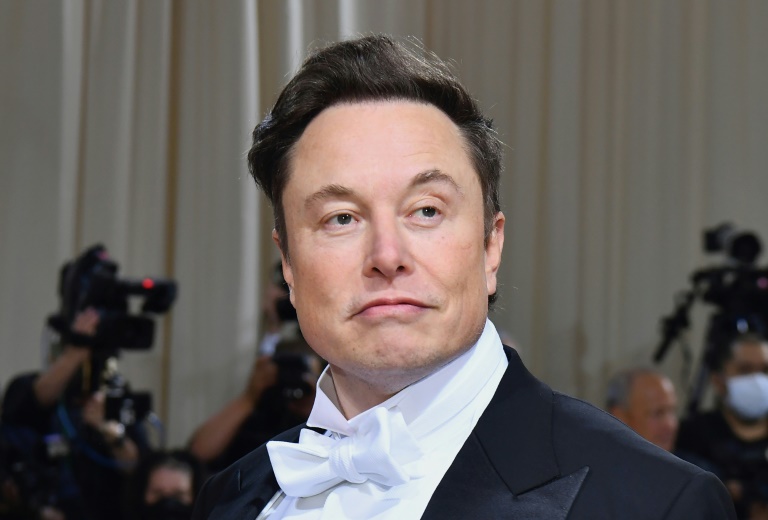
Musk seeks to soothe critics with Twitter content panel

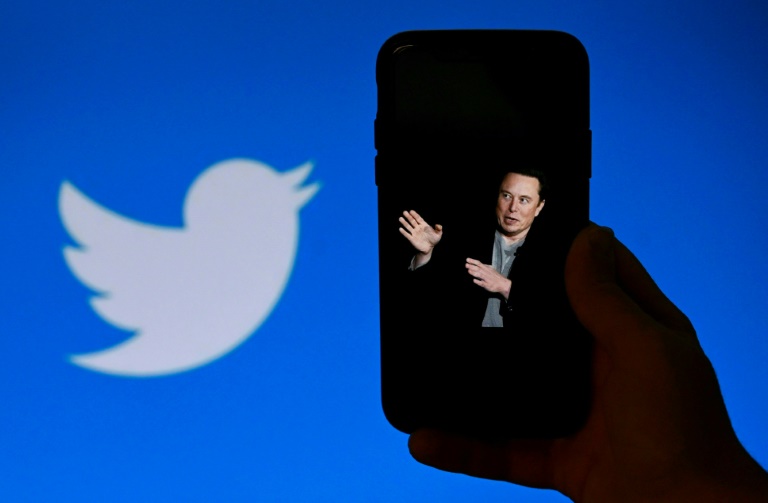
Twitter formally became the private property of Elon Musk on Friday, steering the social media giant down an uncertain path under the stewardship of one of its most vocal critics.

Scrutiny quickly turned to how the platform will operate under a self-proclaimed free-speech absolutist who some users fear will turn Twitter into a global stage for hate speech and disinformation.

In a nod to such concerns, Musk’s first policy act was to tweet that he will form a “content moderation council” embracing “widely diverse viewpoints.”

“No major content decisions or account reinstatements will happen before that council convenes,” he said.

Musk’s sealing of the on-again, off-again $44 billion deal ended a months-long soap opera of corporate chicanery, involving insults, threats and lawsuits.

“The bird is free,” tweeted the billionaire Tesla founder and space pioneer in reference to the company’s logo. “Let the good times roll.”

The deal drew contrasting reactions, with former US president Donald Trump cheering the change of leadership on a platform that had banned him, while activists warned of a surge in harassment and misinformation.

European politicians were quick to signal to Musk that the continent had regulations for social media companies.

“In Europe, the bird will fly by our rules,” tweeted Thierry Breton, the EU internal market commissioner.

Musk had vowed to dial back content moderation and was expected to clear the way for Trump to return to the platform.

The then-president was blocked over concerns he would ignite more violence like the 2021 deadly attack on the US Capitol to overturn his election loss.

Taking to his own Truth Social platform, Trump said he was “very happy that Twitter is now in sane hands” — but gave no commitment to rejoin if allowed.

Far-right users were quick to rejoice at Musk’s ownership, posting comments such as “masks don’t work” and other taunts, under the belief that moderation rules would now be relaxed.

– ‘A huge responsibility’ –

Yale University philosophy professor Jason Stanley, who has characterized Trump’s rise as a sign of mounting fascism in the United States, said he would alter his approach to posting.

“For the moment I am staying on Twitter. But I am going to try to be much more careful about what I say now that Elon Musk is in charge. Cascading hate speech targeting can destroy your week,” he said.

Right-wing political commentator Ben Shapiro said he gained 40,000 Twitter followers Friday, while the actor Mark Hamill, a liberal, said he had lost almost 6,000 followers over the last three days.

Musk reportedly fired Twitter chief executive Parag Agrawal and other senior officials — though the company did not reply to a request for comment and Agrawal still listed himself as CEO on his Twitter profile.

But Ned Segal, Twitter’s chief financial officer since 2017, announced his departure.

“At its best, (Twitter) democratizes communication and knowledge, ensuring accountability and equal distribution of info,” Segal said.

“It’s a huge responsibility for everyone that shares in the work. I wish them strength, wisdom and foresight.”

On Friday, employees filled the San Francisco headquarters. “There were more people in the office today than I’ve ever seen since Covid,” said an employee who asked to remain anonymous.

“Elon brought in teams of engineers from Tesla to do some evaluations.  

“I would be very surprised if there were not some reductions of the workforce soon.” 

Musk, who is using a combination of his own money, funds from wealthy investors and bank loans to finance the deal, has conceded he is overpaying for a company that has regularly posted eye-watering losses.

– How to monetize? –

Twitter says it has 238 million daily users — dwarfed by the likes of Facebook’s nearly two billion — and has not been able to monetize in the same way as its rivals.

But it holds an outsized influence on public debate because it is the favored platform for many companies, politicians, journalists and other public figures.

Though he has vowed that Twitter will not become a “free-for-all hellscape,” Musk reportedly plans deep staff cuts that would gut teams that oversee content.

Despite Musk posting a letter to advertisers saying he wants Twitter to be a forum where rival viewpoints can be debated in a “healthy manner”, US auto giant General Motors said Friday it has “temporarily paused” paid ads on the platform.

“We are engaging with Twitter to understand the direction of the platform under their new ownership,” said a GM spokesman. 

Media watchdog Media Matters for America sounded the alarm over the future of a Musk-led Twitter, particularly the impact on imminent US midterm elections.

The platform “is now on a glide path to becoming a supercharged engine of radicalization” and a “fever swamp of dangerous conspiracy theories, partisan chicanery, and operationalized harassment,” the organization’s head Angelo Carusone said.

Musk seeks to soothe critics with Twitter content panel

Twitter formally became the private property of Elon Musk on Friday, steering the social media giant down an uncertain path under the stewardship of one of its most vocal critics.

Scrutiny quickly turned to how the platform will operate under a self-proclaimed free-speech absolutist who some users fear will turn Twitter into a global stage for hate speech and disinformation.

In a nod to such concerns, Musk’s first policy act was to tweet that he will form a “content moderation council” embracing “widely diverse viewpoints.”

“No major content decisions or account reinstatements will happen before that council convenes,” he said.

Musk’s sealing of the on-again, off-again $44 billion deal ended a months-long soap opera of corporate chicanery, involving insults, threats and lawsuits.

“The bird is free,” tweeted the billionaire Tesla founder and space pioneer in reference to the company’s logo. “Let the good times roll.”

The deal drew contrasting reactions, with former US president Donald Trump cheering the change of leadership on a platform that had banned him, while activists warned of a surge in harassment and misinformation.

European politicians were quick to signal to Musk that the continent had regulations for social media companies.

“In Europe, the bird will fly by our rules,” tweeted Thierry Breton, the EU internal market commissioner.

Musk had vowed to dial back content moderation and was expected to clear the way for Trump to return to the platform.

The then-president was blocked over concerns he would ignite more violence like the 2021 deadly attack on the US Capitol to overturn his election loss.

Taking to his own Truth Social platform, Trump said he was “very happy that Twitter is now in sane hands” — but gave no commitment to rejoin if allowed.

Far-right users were quick to rejoice at Musk’s ownership, posting comments such as “masks don’t work” and other taunts, under the belief that moderation rules would now be relaxed.

– ‘A huge responsibility’ –

Yale University philosophy professor Jason Stanley, who has characterized Trump’s rise as a sign of mounting fascism in the United States, said he would alter his approach to posting.

“For the moment I am staying on Twitter. But I am going to try to be much more careful about what I say now that Elon Musk is in charge. Cascading hate speech targeting can destroy your week,” he said.

Right-wing political commentator Ben Shapiro said he gained 40,000 Twitter followers Friday, while the actor Mark Hamill, a liberal, said he had lost almost 6,000 followers over the last three days.

Musk reportedly fired Twitter chief executive Parag Agrawal and other senior officials — though the company did not reply to a request for comment and Agrawal still listed himself as CEO on his Twitter profile.

But Ned Segal, Twitter’s chief financial officer since 2017, announced his departure.

“At its best, (Twitter) democratizes communication and knowledge, ensuring accountability and equal distribution of info,” Segal said.

“It’s a huge responsibility for everyone that shares in the work. I wish them strength, wisdom and foresight.”

On Friday, employees filled the San Francisco headquarters. “There were more people in the office today than I’ve ever seen since Covid,” said an employee who asked to remain anonymous.

“Elon brought in teams of engineers from Tesla to do some evaluations.  

“I would be very surprised if there were not some reductions of the workforce soon.” 

Musk, who is using a combination of his own money, funds from wealthy investors and bank loans to finance the deal, has conceded he is overpaying for a company that has regularly posted eye-watering losses.

– How to monetize? –

Twitter says it has 238 million daily users — dwarfed by the likes of Facebook’s nearly two billion — and has not been able to monetize in the same way as its rivals.

But it holds an outsized influence on public debate because it is the favored platform for many companies, politicians, journalists and other public figures.

Though he has vowed that Twitter will not become a “free-for-all hellscape,” Musk reportedly plans deep staff cuts that would gut teams that oversee content.

Despite Musk posting a letter to advertisers saying he wants Twitter to be a forum where rival viewpoints can be debated in a “healthy manner”, US auto giant General Motors said Friday it has “temporarily paused” paid ads on the platform.

“We are engaging with Twitter to understand the direction of the platform under their new ownership,” said a GM spokesman. 

Media watchdog Media Matters for America sounded the alarm over the future of a Musk-led Twitter, particularly the impact on imminent US midterm elections.

The platform “is now on a glide path to becoming a supercharged engine of radicalization” and a “fever swamp of dangerous conspiracy theories, partisan chicanery, and operationalized harassment,” the organization’s head Angelo Carusone said.

Close Bitnami banner
Bitnami