World

Global warming palpable for 96% of humans: study

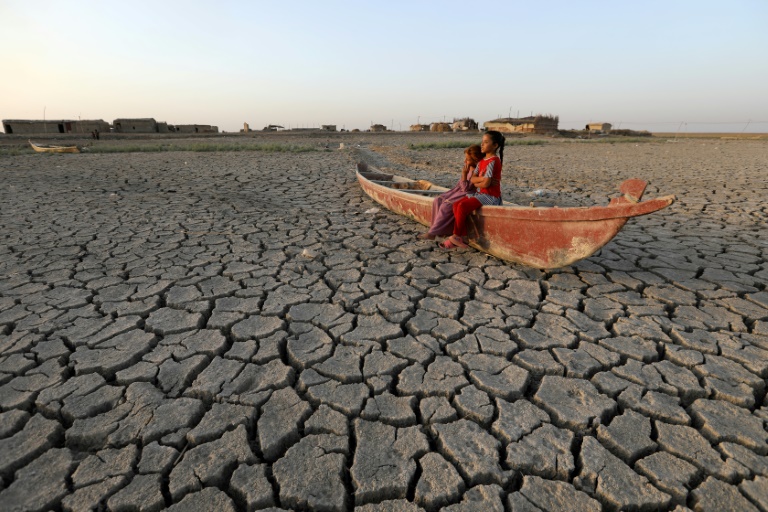
Whether they realised it or not, some 7.6 billion people — 96 percent of humanity — felt global warming’s impact on temperatures over the last 12 months, researchers have said.

But some regions felt it far more sharply and frequently than others, according to a report based on peer-reviewed methods from Climate Central, a climate science think tank.

People in tropical regions and on small islands surrounded by heat-absorbing oceans were disproportionately impacted by human-induced temperature increases to which they barely contributed.

Among the 1,021 cities analysed between September 2021 and October 2022, the capitals of Samoa and Palau in the South Pacific have been experiencing the most discernible climate fingerprints, the researchers said in the report, released on Thursday.

Spiking temperatures in these locations were commonly four to five times more likely to occur than in a hypothetical world in which global warming had never happened. 

Lagos, Mexico City and Singapore were among the most highly exposed major cities, with human-induced heat increasing health risks to millions.

Researchers at Climate Central, led by chief scientist Ben Strauss, looked for a way to bridge the gap between planetary-scale global warming — usually expressed as Earth’s average surface temperature compared to an earlier reference period — to people’s day-to-day experience.

“Diagnosing climate fingerprints lets people know that their experiences are symptoms of climate change,” Strauss told AFP. “It represents a signal and shows we must adapt.”

Using seven decades of high-resolution daily temperature data from the European Centre for Medium-range Weather Forecasts (ECMWF) and two dozen climate models, Strauss and his team created a tool — the Climate Shift Index. 

The tool calculates the likelihood that unusually warm weather at a specific location on any given day is due to climate change.

In 26 cities, for example, at least 250 of the 365 days from October 2021 saw temperature increases that were at least three times more likely due to climate change.

– ‘Unfair and tragic’ –

Most of these cities were in east Africa, Mexico, Brazil, small island states, and the Malay Archipelago — a string of some 25,000 islands belonging to Indonesia and the Philippines. 

“The effect of warming is much more noticeable in the equatorial belt because there has been historically less temperature variability there,” Strauss told AFP. 

This is why even a relatively modest rise in local temperatures brought on by global warming registers so clearly on the index, he explained. 

“Island temperatures are strongly shaped by the temperature of the ocean around them,” said Strauss, who has also mapped the projected impacts of sea level rise on coastal areas worldwide. 

“To see that small island states have essentially already lost their historical climates — even as they face losing their land from rising seas — feels very unfair and tragic.”

The urgent need for money to help vulnerable tropical nations adapt to climate impacts will be squarely on the table when nearly 200 countries meet in 10 days for United Nations climate talks in Egypt. 

Rich nations have yet to honour a decade-old pledge to ramp up climate financing for developing nations to $100 billion per year, even though the UN’s climate advisory panel, the IPCC, estimates that annual adaptation costs could hit one trillion dollars by 2050 if warming continues apace.

The map-based climate shift index tool can be found here: https://csi.climatecentral.org/csi-contour-map/tavg/2022-10-27/
New Italian government seeks to raise cash ceiling

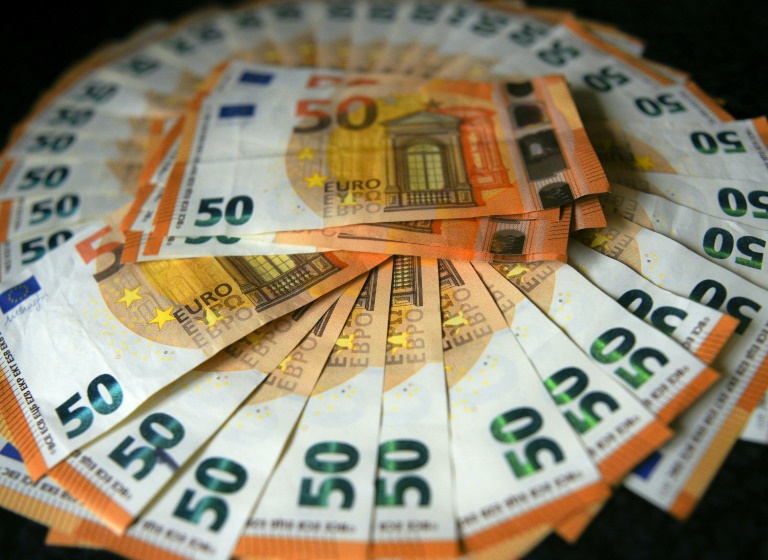
Cash is king in Italy, and the debate over limiting payments in notes and coins is heating up again under the country’s new right-wing government.

A new bill introduced this week by the League party, a member of Prime Minister Giorgia Meloni’s coalition, would raise the cash payment ceiling for Italians to 10,000 euros from 2,000 euros today.

The ceiling was already scheduled to decrease further to 1,000 euros as of January 1.

Credit card use has been steadily on the rise throughout the eurozone in recent years, but Italy has doggedly persisted in its preference for cash despite numerous incentives to encourage electronic payments.

Italians used cash for 82 percent of transactions, versus the 73 percent eurozone average, according to a 2020 study by the European Central Bank.

Defenders cite high card fees for shopkeepers and the preference among the elderly for cash.

However, critics say its use contributes to tax evasion and money laundering — two problems that have long dogged the Italian economy.

“Mafia and (tax) evaders thank you,” tweeted Andrea Orlando, labour minister under former premier Mario Draghi, about the League’s bill.

– Helps the poor –

Meloni — who has sought to reassure the EU that she will be fiscally prudent — told the Senate Wednesday she will support a higher cash ceiling, although reports suggest she will back a lower level than proposed by the League.

She denied any link between high cash limits and the shadow economy, saying the higher ceiling “helps the poor”.

Cash is preferred by low earners in the centre and south of Italy, where unemployment is higher, and among women and the self-employed, according to a Bank of Italy analysis of European Central Bank surveys published in March.

In a May report, the ECB estimated there were 13.5 million people in the eurozone with no bank account or access to financial services, arguing that cash needed to be remain accessible and accepted. 

However, an October 2021 Bank of Italy research paper found a direct correlation between the use of cash and the shadow economy, noting that restrictions on cash use “are an effective instrument to tackle tax evasion”.

– Tax evasion –

A 2016 decision to raise Italy’s ceiling from 1,000 euros to 3,000 euros to boost spending raised the share of the shadow economy by about 0.5 percentage points, the Bank of Italy report found.  

Italy’s cash ceiling has gradually been lowered over the past three decades, although it rose to a high of 12,500 euros under two governments of then-premier Silvio Berlusconi, whose Forza Italia party is also part of Meloni’s coalition.

Elsewhere in Europe, Greece has the most stringent cash limit, at 500 euros, while the ceiling rises above 10,000 euros in countries such as Malta, the Czech Republic and Croatia. 

Germany, Sweden and Ireland, among others, have no limits, but restrictions exist.

Italy’s largest business association, Confcommercio, said that as soaring inflation eats into household budgets, “it does not appear appropriate to impose new limitations on forms of payment”.

It said that lowering merchants’ credit card processing fees was a priority.

Massimo Vidiri, 51, who runs a Rome tobacco shop, said clients increasingly wanted to use credit cards, although he himself likes carrying cash.

“If something happens, like a blackout, what do I do?” he asked. “If the internet goes down throughout Italy, what do we do?”

He complained about high fees, a view shared by another shopkeeper nearby, Angelo Bruno.

Bruno, 71, denied small merchants like himself were a problem, telling AFP: “The big cases of tax evasion are the politicians, the only ones who get picked on are the little shopkeepers.”

The Bank of Italy report found that because small business owners were more susceptible to bureaucratic burdens and high taxes, they were “more prone to shifting into the shadow economy”.

Digital payments accelerated in Italy during the Covid-19 pandemic, when shops were shut and online shopping spiked.

A “cashback” scheme put in place in 2021 by then-prime minister Giuseppe Conte to encourage consumer spending and fight tax evasion through refunds on credit card purchases was considered inefficient and costly, and suspended by Draghi. 

Airlines giant IAG revenue back at pre-pandemic level

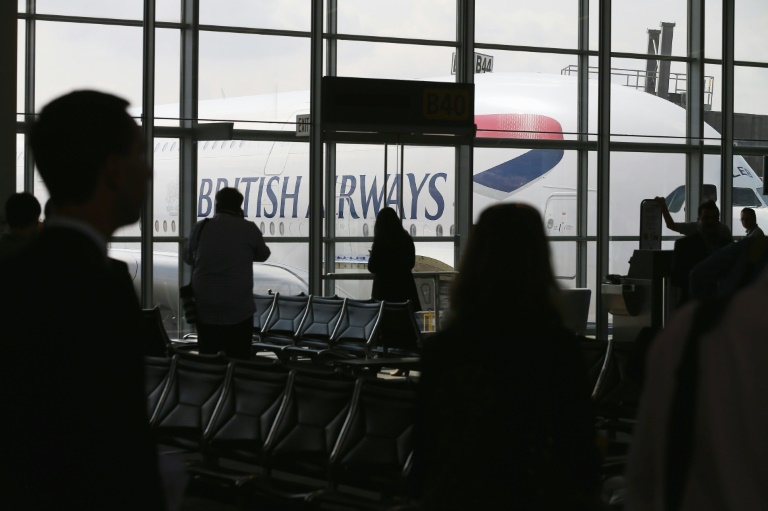
IAG, owner of British Airways and Spanish carrier Iberia, revealed Friday revenue slightly above pre-pandemic levels as it posted third-quarter profits on rebounding passenger demand.

Revenue soared to 7.3 billion euros (dollars) in the peak July-September demand period, from 2.7 billion euros in the third quarter last year, IAG said in a statement.

The latest result was almost one percent higher compared with the third quarter in 2019, or before the coronavirus pandemic grounded planes worldwide at the start of the following year.

It comes despite the group’s airlines, which include Aer Lingus and Vueling, facing higher costs, notably from soaring jet fuel prices. 

Airlines are tackling this by charging higher fares.

“While demand remains strong, we are conscious of the uncertainties in the economic outlook,” IAG chief executive Luis Gallego said in the earnings statement. 

“Leisure demand is particularly healthy and leisure revenue has recovered to pre-pandemic levels. Business travel continues to recover steadily.”

Profit after tax stood at 853 million euros in the third quarter compared with a net loss of 574 million euros one year earlier.

The second quarter had seen IAG fly back into profit for the first time since the start of the pandemic.

IAG said its third-quarter performance was impacted also by a strong dollar, while passenger capacity was 81 percent of pre-pandemic levels.

Despite the headwinds, “this is no doubt an impressive turnaround from BA’s parent company”, noted Derren Nathan, head of equity research at Hargreaves Lansdown. 

“Planes are just as full as before the pandemic but IAG is flying less of them.”

In reaction, shares in IAG were down 1.2 percent on London’s falling FTSE 100 index. 

The group had collapsed into annual losses in 2020 and 2021 as Covid ravaged global demand for international air travel, forcing BA and its peers to slash thousands of jobs.

That has left airlines and airports struggling to recruit staff. 

Japan PM announces $260 bn stimulus spending to tackle inflation

Japan will spend $260 billion on a stimulus package to cushion the economy from the impact of a weak yen and inflation, Prime Minister Fumio Kishida said Friday.

But the nation’s central bank is refusing to budge from the ultra-loose policy that has hammered the currency this year, wiping out more than 20 percent of its value against the dollar.

The government hopes the 39 trillion yen in fiscal spending will rise to 72 trillion yen when private sector investments are taken into account, Kishida said after the cabinet approved an extra budget to partly fund the relief measures.

“This… is a comprehensive economic package meant to combat inflation and revitalise the economy,” he told reporters.

“We want to protect people’s livelihoods, employment and businesses, while strengthening our economy for the future.”

Prices are rising in Japan at their fastest rate in eight years, although the three-percent inflation rate remains well below the sky-high levels seen in the United States and elsewhere.

Japan — which has one of the world’s highest debt-to-GDP ratios — has already injected hundreds of billions of dollars into its economy over the past two years to support recovery from the Covid-19 pandemic.

Friday’s package will include measures to encourage wage growth and support households with energy bills, which have spiked since Russia’s invasion of Ukraine.

It is also designed to help people and businesses affected by the plummeting yen, currently at 147 against the dollar.

Japan spent nearly $20 billion in September in an effort to curb the yen’s slide, and further expensive government interventions have reportedly taken place in recent days.

The yen’s steep falls have been driven by the widening gap between the monetary policies of the US and Japanese central banks — with the Bank of Japan keeping rates ultra-low to encourage sustainable growth, while the Federal Reserve ramps them up.

– Bank of Japan stands pat –

Following a two-day policy meeting, the BoJ said it would keep its easy-money policy, defying growing pressure to tweak its strategy as the yen drops.

Bank Governor Haruhiko Kuroda told reporters officials would stick to their guns until prices rise “in a sustainable manner”, adding there would be no change “any time soon”.

Kuroda declined to comment on suspected currency interventions in the past week, which the finance ministry has not confirmed.

But “it is extremely important that (forex rates) reflect economic fundamentals, and move in a stable manner”, he added.

“The recent depreciation of the yen is rapid and unilateral,” which is “negative for the Japanese economy”, Kuroda said.

Ahead of the BoJ meeting, UBS economists Masamichi Adachi and Go Kurihara said that a mix of continued easing by the central bank and the government’s stimulus measures would be “optimal”.

That is because Japan’s inflation is not demand-driven, but largely down to soaring energy costs, they explained in a commentary.

This view was echoed by Yoshiki Shinke, chief economist at Dai-ichi Life Research Institute.

“Japan’s economy faces weak demand due to price rises, in contrast to the United States, where demand is strong, with the Fed trying to cool down inflation,” he told AFP.

“It’s impossible that Japan would hike rates to curb inflation, for this reason.”

Ex-PM Khan begins 'long march' for early Pakistan election

Former Pakistan prime minister Imran Khan launched a so-called “long march” Friday on the capital Islamabad to demand early elections, piling pressure on a government already in crisis.

The former international cricket star was booted from office in April by a no-confidence vote after defections by some of his coalition partners, but he retains mass public support in the South Asian country.

Thousands of people are expected to join a convoy that will travel around 380 kilometres (240 miles) from Lahore to Islamabad over the next week, stopping along the way to hold rallies and gather more protesters.

“We need to rid the country of looters and thieves who are taking the country’s money for their own interests,” said Muhammad Mazhar, 36, who arrived in Lahore on Friday to take part.

“We need to save the country and change this system, so I am supporting Imran Khan.”

Security has already been tightened in the capital, with hundreds of shipping containers positioned at key intersections, ready to block marchers should they try to storm the government enclave.

Clashes erupted between Khan’s supporters and police during a similar protest in May.

– Military influence –

The march comes as the country’s ruling coalition government struggles to revive a floundering economy and deal with the aftermath of devastating floods that left a third of the country under water — and a repair bill of at least $30 billion.

Khan was voted into power in 2018 on an anti-corruption platform by an electorate tired of dynastic politics, but his mishandling of the economy — and falling out with a military accused of helping his rise — sealed his fate.

He has repeatedly rebuked the establishment for attempting to sideline him, and has dodged multiple legal challenges since his ouster.

On Thursday, the head of the country’s main intelligence service and chief of military public relations held an unprecedented press conference where they defended the institutions against Khan’s accusations they were meddling in politics.

Pakistan has been ruled by the military for much of its 75-year history, and criticism of the security establishment has long been seen as a red line.

“I am not afraid of anything including arrest,” Khan said in a video message released Thursday night.

“People want just one role of the establishment… free and fair elections as this is the only way out”.

The establishment has been under further scrutiny this week following the killing of journalist Arshad Sharif by police in Kenya, where he had fled to avoid sedition charges.

Kenyan officials say Sharif’s death was a case of mistaken identity, but it has spawned speculation of a targeted killing and the Pakistan government has ordered an official inquiry.

The funeral of Sharif — a strident critic of Pakistan’s military establishment — was attended by tens of thousands of Khan supporters chanting “Arshad, your blood will bring revolution”.

Khan has held a string of well-attended rallies demonstrating his popularity, and earlier this month won five out of six by-elections.

UK govt expected to call N.Ireland poll after deadline expires

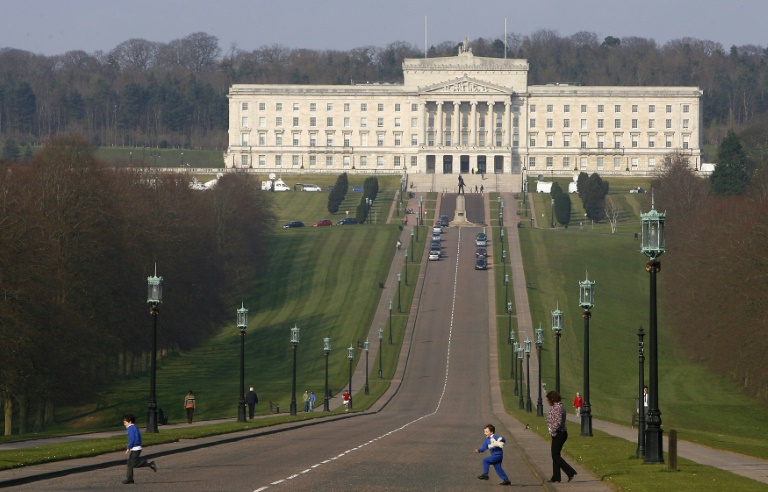
The UK government was on Friday expected to call the second election in a year in Northern Ireland after politicians failed to resolve a standoff over post-Brexit trade rules.

A deadline to resume power-sharing in Northern Ireland’s regional government passed at midnight on Friday.

British environment minister Therese Coffey said that meant an election would now “definitely happen”.

Jeffrey Donaldson, leader of the pro-UK Democratic Unionist Party, defended his party’s blocking of the restoration of power-sharing as part of its protest against the so-called Northern Ireland Protocol governing post-Brexit trade rules.

He said his party could not “nominate ministers to an executive that is required to impose a protocol that harms our economy, harms our people and prevents us getting access to medicines and other vital supplies from the rest of the United Kingdom”.

He said he stood “ready to form an executive as soon as that solution is found” but that they had been waiting for nearly three years and “we need a solution”.

The expiration of the legal cut-off point for the creation of a joint executive between pro-Ireland nationalists and pro-UK unionists came after parties made a last-ditch attempt to restart Northern Ireland’s devolved assembly. 

In an argumentative Thursday session, lawmakers briefly reconvened for the first time in months for a special sitting but failed to elect a speaker needed to form a new executive.

The DUP has boycotted the assembly since February, calling for the protocol to be overhauled or scrapped entirely.

Donaldson told reporters Thursday the party would not vote for a new speaker because insufficient action had been taken to address their demands since they collapsed the executive.

“We need to remove the rubble of the protocol that has undermined our economy, that has inhibited our ability to trade within our own country,” he said ahead of the failed vote.

– ‘Perpetual standoff’ –

New British Prime Minister Rishi Sunak had implored the parties to “get back to Stormont”, arguing that people there “deserve a fully functioning and locally elected executive”, his official spokesman said.

Chris Heaton-Harris, Britain’s Northern Ireland minister and an arch-Eurosceptic, has said repeatedly that if the deadline expired he would not hesitate to call an election on Friday, with December 15 the expected date for the new poll.

Northern Ireland has now been without a functioning government for nine months, with pro-Irish party Sinn Fein winning a historic first election in May which is seen as further complicating the political situation.

Sinn Fein leader Michelle O’Neill — who was set to become first minister if the executive was restarted — condemned the DUP’s “perpetual standoff with the public, the majority of whom they do not speak for or indeed represent”.

– Delicate balance of peace –

The DUP insists the protocol — agreed by London and Brussels as part of Britain’s 2019 Brexit deal — must be addressed first.

It claims the pact, which effectively keeps Northern Ireland in the European Union’s single market and customs union, weakens the province’s place within the United Kingdom.

Many unionists also argue it is threatening the delicate balance of peace between the pro-Irish nationalist community and those in favour of continued union with Britain.

The protocol was agreed to avoid the return of a hard land border with the Republic of Ireland, which remains an EU member.

Eliminating that hard border was a key strand of the 1998 Good Friday Agreement, which ended three decades of sectarian violence in Northern Ireland.

Britain’s Conservative government, which has had three prime ministers in two months, has urged Brussels to agree to wholesale revisions of the protocol.

London is also in the midst of passing contentious legislation to override it unilaterally.

That has sparked fears of a trade war and worsening relations with Europe when the economic landscape is already gloomy.

French October inflation highest since 1985

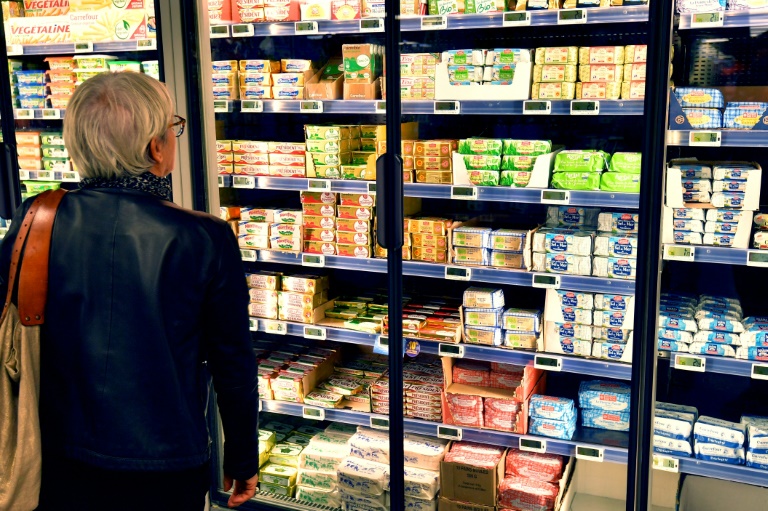
French consumer prices rose at their fastest pace since 1985 in October, official data showed Friday, driven by rising energy, food and manufactured goods prices.

Year-on-year price growth hit 6.2 percent this month, statistics authority Insee said based on preliminary data, a new increase in inflation after it slowed in August and September.

Food especially grew more expensive, at almost 12 percent, in a blow to the least well-off households who spend a larger share of their monthly budget at supermarkets.

Meanwhile energy prices added almost 20 percent, despite government interventions to limit bills for consumers that have kept overall inflation below levels seen in EU neighbours.

Russia’s war on Ukraine and the throttling of gas supplies to Europe has triggered an energy crisis on the continent — at the same moment when many of France’s vital nuclear power plants are offline for maintenance.

French inflation reached 7.1 percent year-on-year when measured using the Harmonised Index of Consumer Prices (HICP) yardstick preferred by the European Central Bank.

The Frankfurt-based ECB on Thursday announced a fresh bumper interest rate hike of 0.75 percent as it strives to bring price growth across the 19-nation eurozone under control.

“We will have further rate increases in the future,” central bank chief Christine Lagarde said. “There is still ground to cover.”

Insee will publish its final October inflation reading in mid-November.

French October inflation highest since 1985

French consumer prices rose at their fastest pace since 1985 in October, official data showed Friday, driven by rising energy, food and manufactured goods prices.

Year-on-year price growth hit 6.2 percent this month, statistics authority Insee said based on preliminary data, a new increase in inflation after it slowed in August and September.

Food especially grew more expensive, at almost 12 percent, in a blow to the least well-off households who spend a larger share of their monthly budget at supermarkets.

Meanwhile energy prices added almost 20 percent, despite government interventions to limit bills for consumers that have kept overall inflation below levels seen in EU neighbours.

Russia’s war on Ukraine and the throttling of gas supplies to Europe has triggered an energy crisis on the continent — at the same moment when many of France’s vital nuclear power plants are offline for maintenance.

French inflation reached 7.1 percent year-on-year when measured using the Harmonised Index of Consumer Prices (HICP) yardstick preferred by the European Central Bank.

The Frankfurt-based ECB on Thursday announced a fresh bumper interest rate hike of 0.75 percent as it strives to bring price growth across the 19-nation eurozone under control.

“We will have further rate increases in the future,” central bank chief Christine Lagarde said. “There is still ground to cover.”

Insee will publish its final October inflation reading in mid-November.

31 killed as storm lashes southern Philippines

Landslides and flooding killed 31 people as heavy rain from an approaching storm lashed the southern Philippines, a disaster official said Friday.

The storm unleashed flash floods carrying uprooted trees, rocks and mud overnight in mainly rural communities around Cotabato, a city of 300,000 people on Mindanao island.

Many residents were caught by surprise by the rapidly rising floodwaters, Naguib Sinarimbo, the spokesman and civil defence chief for the regional government, told AFP.

“The water started entering the houses before dawn,” Sinarimbo said, confirming that the death toll in the storm-hit areas had risen to 31 from the earlier tally of 13.

Rescuers retrieved 16 bodies from Datu Odin Sinsuat, 10 from Datu Blah Sinsuat and five from Upi town, he told reporters.

Teams in rubber boats had to rescue some residents from rooftops, Sinarimbo added.

Local filmmaker Remar Pablo told AFP he was shooting a beauty pageant in the town of Upi when the floodwaters suddenly came in after midnight and forced audience members to flee for safety.

A row of cars sat half-submerged on the street outside, his clips showed.

“We were stranded inside,” said Pablo, who eventually waded into the water to get home.

Rescuers carried a baby in a plastic tub as they waded through chest-deep water, a photo posted by the provincial police showed.

– ‘It was a shock’ –

Floodwaters have receded in several areas, but Cotabato City remained almost entirely waterlogged.

Sinarimbo said there could be more flooding on Friday because of heavy rain.

“Our focus at this time is rescue as well as setting up community kitchens for the survivors,” he said.

The army deployed its trucks to collect stranded residents in Cotabato and eight nearby towns, provincial civil defence chief Nasrullah Imam said.

“It was a shock to see municipalities which had never flooded getting hit this time,” Imam said, adding that some families were swept away when the waters hit their homes.

The heavy rainfall began late Thursday in the impoverished region, which is under Muslim self-rule after decades of separatist armed rebellion.

The state weather office in Manila said it was partly caused by Tropical Storm Nalgae, which it expects to strengthen at landfall.

Nalgae was now heading toward the northern or central sections of the Philippines, with the state weather service saying it was not ruling out a landfall on Samar island later Friday, much earlier than earlier forecast.

Nearly 5,000 people were evacuated from flood- and landslide-prone communities in these areas, the civil defence office said.

The coast guard also suspended ferry services in much of the archipelago nation where tens of thousands of people board boats each day.

An average of 20 typhoons and storms strike the Philippines each year, killing people and livestock and destroying farms, houses, roads and bridges, although the south is rarely hit.

Scientists have warned that storms are becoming more powerful as the world gets warmer because of climate change.

Iceland's thriller-loving PM pens first crime novel

Like many around the world, Iceland’s prime minister delved into her hobby during the pandemic. Now, the crime novel she co-wrote with one of Iceland’s most popular authors has just been published.

“Obviously, this is not something that I thought I would have any time to do”, 46-year-old Prime Minister Katrin Jakobsdottir told AFP at an event this week for the book’s launch.

But it was “quite liberating to be working on this project during Covid”, she said. “I don’t have any other interests, this is my interest”, she added with a laugh.

Entitled “Reykjavik”, the thriller is written with Ragnar Jonasson, bestselling author of the “Dark Iceland” series, and is set in 1986, an important year in Iceland’s modern history.

The idea that a head of government would have enough spare time to write a novel may sound absurd in most countries, but not in Iceland.

The nation of 375,000 people has a strong tradition of reading and writing literature, with one in 10 Icelanders publishing a book in their lifetime, according to statistics.

And it’s not a first for a serving prime minister either: Jakobsdottir’s predecessor David Oddsson published a novel in 1997 while he was in office.

– A ‘therapeutic genre’ –

“I think every politician needs to have something to take his or her mind from the daily business of politics”, Jakobsdottir said.

She holds a Master of Arts from the University of Iceland in Icelandic literature. Her final thesis was on the work of popular Icelandic crime writer Arnaldur Indridason.

“I have been reading crime fiction all my life, so it is kind of in my DNA”, she said. “I read fiction every day.”

Crime fiction in particular was “a little bit like psychotherapy”, she added. 

“It’s really about solving crimes and finding justice, so it’s a very therapeutic genre for me”.

The idea for Jakobsdottir and Jonasson to write a book together came about in January 2020 over lunch.

“I was a bit surprised at first that she agreed to this suggestion because she is very busy”, said Jonasson.

The two are old friends, and had served together on a jury 10 years ago to select the best crime novel translated in Iceland.

It took them two years to write their book, with Jakobsdottir’s busy agenda often setting the pace.

“We had to schedule calls and plan meetings in between when she was meeting (former British prime minister) Boris Johnson one day and (French President Emmanuel) Macron the other”, recalled Jonasson.

“It was quite surreal for me to work in this environment”, said the 46-year-old who has sold three million books worldwide.

– ‘Reminiscent of Agatha Christie’ – 

Jonasson, who is used to writing alone and having total control, said the experience of collaborating with someone else was better than he had expected.

“It was refreshing to have someone else that you had to compromise with”, he said.

“Reykjavik” tells the story of a cold case involving a teenage girl who went missing 30 years ago in Videy, a small island near the Icelandic capital. Valur, a journalist at a local tabloid, dives into the case to pick up the trail.

The events unfold in 1986, as Reykjavik celebrates its 200th anniversary, launches its first commercial radio and television stations, and hosts a historic summit between US president Ronald Reagan and Soviet leader Mikhail Gorbachev.

“We thought all of these events together would create the best background for a story”, said Jonasson. He and Jakobsdottir did a lot of research to add details to the plot, such as popular music, TV shows and movies from the time.

Jakobsdottir expects critics to be tough on her.

“I think I can deal with that. I have experience as a politician, so it’s quite okay.” 

But Egill Helgason, who has hosted the book show “Kiljan” on public broadcaster RUV for 15 years, said he found the thriller “well written and well researched”.

“It’s a very pleasant read…,” he told AFP. “Somewhat reminiscent of Agatha Christie.

“This is a mystery, not a blood-dripping horror story.”

Published in Iceland on October 25, “Reykjavik” is set to be translated into several languages. It is due out in Britain and the US in August 2023, and in France, Jonasson’s biggest market, in the autumn of 2023.

Close Bitnami banner
Bitnami