World

Bank of Japan sticks to easing despite yen pressure

The Bank of Japan stuck to its ultra-loose monetary policies Friday, even as the yen comes under pressure from aggressive tightening by the US Federal Reserve and other central banks.

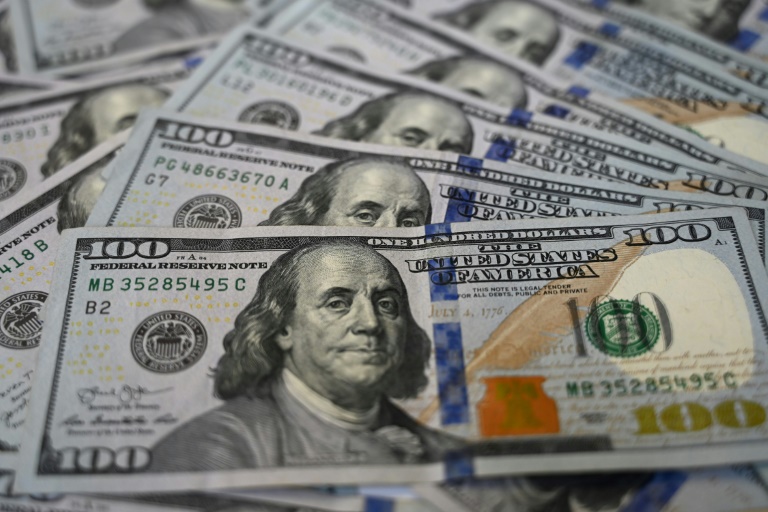
The stark contrast between Japanese and US monetary policy has caused the yen to plummet to 32-year lows against the dollar, prompting the government to intervene to prop up the currency.

In a statement after a two-day policy meeting, the BoJ said it would keep measures aimed at boosting the world’s third-largest economy, including its benchmark rate of minus 0.1 percent.

But it also raised its inflation forecast for fiscal 2022-23 to 2.9 percent, from 2.3 percent in July, driven by higher energy and food prices.

“The rate of increase is then expected to decelerate toward the middle of fiscal 2023,” as the impact of these price increases wanes, its statement said.

Bank of Japan policymakers have refused to move away from their ultra-loose stance, designed to encourage sustained price rises.

Meanwhile, the Fed and central banks in other major economies have embarked on a series of hawkish interest rate hikes in an effort to fight decades-high inflation.

This contrast has caused the yen to plummet dramatically from around 115 against the dollar before Russia’s invasion of Ukraine in February to around 146 on Friday morning.

The Japanese government spent nearly $20 billion in September in an effort to curb the yen’s slide, and further expensive interventions have reportedly taken place in recent days.

“The Bank of Japan policy meeting is a do-or-die moment for the Japanese yen,” Edward Moya, senior market analyst of Oanda, said in a note this week.

“If Japan wants to defend the yen, they might need to continue to intervene in the forex market,” or artificially influence rates through buying or selling government bonds, he added.

Japan is also on Friday expected to announce an economic stimulus package that local media said could be worth $200 billion to cushion the impact of inflation and a weak yen.

Asian markets slip as rate hopes are offset by big tech sell-off

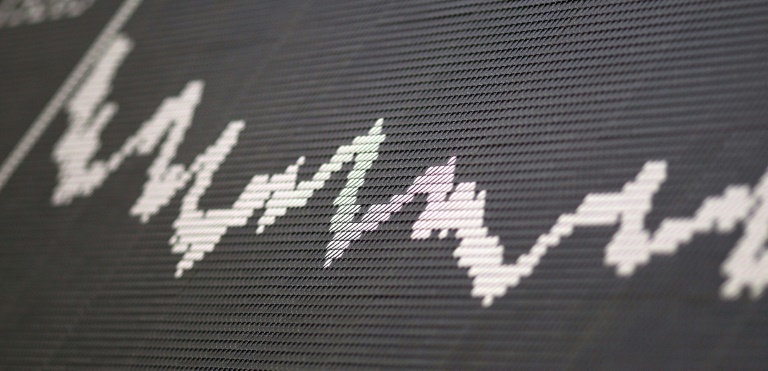
Most markets fell Friday as a weakening economy and disappointing earnings from tech giants offset signs that central banks could begin slowing their interest rate hike campaign.

After being battered for most of the year by worries that borrowing costs will continue to rise to fight inflation, traders were cheered by a report last week indicating the US Federal Reserve could take its foot off the gas soon.

That was followed by comments from policymakers hinting as much, while a string of data suggesting the world’s top economy was feeling the impact of higher rates also gave the bank room to manoeuvre.

Meanwhile, a below-expectation increase by the Bank of Canada this week and the signs the European Central Bank could take a less hawkish turn helped fuel speculation of a softer outlook for rates, helping push government bond yields down around the world.

Focus is now on the Fed’s next policy decision on Wednesday.

While it is widely tipped to announce another bumper hike, traders will be poring over the post-meeting statement for clues about its plans for December and 2023, with hopes it will indicate a slower pace.

Data showing the US economy grew more than expected was tempered by underlying figures showing, among other things, consumer spending — the key driver of growth — remained fragile.

“The notion ‘bad news is good news’ is increasingly driving price action as Fed hikes expectations are lowered in the face of weaker data,” said SPI Asset Management’s Stephen Innes.

“Bank of Canada’s surprise 50 basis point hike on Wednesday, coupled with a less hawkish forward guidance from the ECB… added to the idea that peak tightening globally has passed.”

However, Wall Street ended on a mixed note, with the Nasdaq losing more than one percent after forecast-missing earnings this week from some of the world’s biggest firms including Apple, Amazon, Facebook parent Meta and Google parent Alphabet.

“A lot went wrong for big-tech… Apple’s holiday outlook underwhelmed, inflation pain is more noticeable, and unfavourable exchange rates will hurt future sales,” said OANDA’s Edward Moya.

“The key theme across this round of mega-cap results is that an earnings slump is here as inflation cripples an already weak consumer.”

The losses filtered through to Asia where tech was again in the firing line.

They were felt particularly in Hong Kong, where the Hang Seng Index shed more than one percent — at the end of a bruising week hit by worries that Xi Jinping’s tightened grip on power in China could see more crackdowns on the sector.

There were also losses in Tokyo as investors await a fresh stimulus package local media said could be worth as much as $200 billion as the government tries to kickstart the economy and cushion the country from inflation and the weaker yen.

The yen was slightly lower against the dollar Friday, though it has bounced since hitting a fresh 32-year low last week.

– Key figures around 0230 GMT –

Tokyo – Nikkei 225: DOWN 0.4 percent at 27,248.20 (break)

Hong Kong – Hang Seng Index: DOWN 1.1 percent at 15,256.83

Shanghai – Composite: DOWN 0.9 percent at 2,956.74

Euro/dollar: UP at $0.9989 from $0.9965 on Thursday

Pound/dollar: UP at $1.1582 from $1.1567 

Dollar/yen: UP at 146.49 yen from 146.27 yen

Euro/pound: UP at 86.25 pence from 86.11 pence

West Texas Intermediate: DOWN 0.8 percent at $88.41 per barrel

Brent North Sea crude: DOWN 0.6 percent at $96.36 per barrel

New York – Dow: UP 0.6 percent at 32,033.28 (close)

London – FTSE 100: UP 0.3 percent at 7,073.69 (close)

EU strikes deal to ban combustion-engine cars by 2035

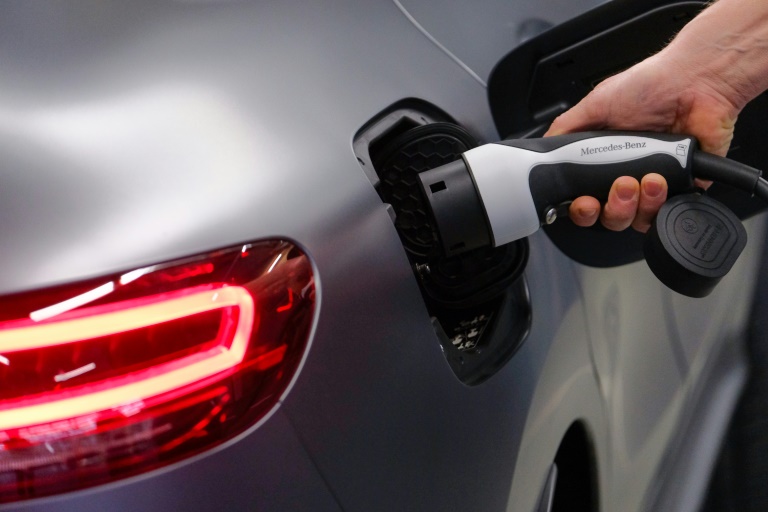
The European Union on Thursday struck an agreement on legislation to phase out new CO2-emitting vehicles by 2035, negotiators announced.

The talks between representatives of the European Council, fronting the 27 member states, and the European Parliament started Thursday and underpin the bloc’s transition towards a carbon-neutral future.

“We have just finished the negotiations on CO2 standards for cars,” tweeted French MEP Pascal Canfin, who heads the European parliament’s environment commission.

“Historic (EU) decision for the climate which definitively confirms the target of 100 percent zero emission vehicles in 2035 with intermediary phases between 2025 and 2030.”

Cars currently account for about 15 percent of all CO2 emissions in the EU, while transportation overall accounts for around a quarter.

The agreed text, based on a proposal by the EU executive in July 2021, calls for reducing CO2 emissions from new cars in Europe to zero by 2035. 

This means a de facto halt to sales of new petrol and diesel cars, light commercial vehicles and hybrids in the bloc by that date, in favour of all-electric vehicles.

European Commission chief Ursula von der Leyen praised the agreement as “a crucial milestone to reach our 2030 climate target”.

There is a waiver for “niche” manufacturers, or those producing fewer than 10,000 vehicles per year.

Sometimes called the “Ferrari amendment” as it will benefit luxury brands in particular, these vehicles are allowed to be equipped with a combustion engine until the end of 2035. 

– ‘Far-reaching’ –

BMW CEO Oliver Zipse, who is also the president of the European Automobile Manufacturers’ Association (ACEA), said the decision was “extremely far-reaching”. 

“Make no mistake, the European automobile industry is up to the challenge of providing these zero-emission cars and vans,” he said.

But more needed to be done for the industry to meet this target, added Zipse, such as having “an abundance of renewable energy, a seamless private and public charging infrastructure network, and access to raw materials”. 

The European Parliament had in June voted in favour of the 2035 ban on all vehicles with internal combustion engines.

Conservative MEPs and Germany had shown reluctance over some of the targets, fearing the costly burden they will place on EU automakers competing against global rivals with looser targets.

Currently around 12 percent of new cars sold in the European Union are electric vehicles, with its consumers shifting away from CO2-emitting models as energy costs and greener traffic regulations bite.

Meanwhile, China — the world’s biggest automobile market — wants at least half of all new cars to be electric, plug-in hybrid or hydrogen-powered by 2035.

EU strikes deal to ban combustion-engine cars by 2035

The European Union on Thursday struck an agreement on legislation to phase out new CO2-emitting vehicles by 2035, negotiators announced.

The talks between representatives of the European Council, fronting the 27 member states, and the European Parliament started Thursday and underpin the bloc’s transition towards a carbon-neutral future.

“We have just finished the negotiations on CO2 standards for cars,” tweeted French MEP Pascal Canfin, who heads the European parliament’s environment commission.

“Historic (EU) decision for the climate which definitively confirms the target of 100 percent zero emission vehicles in 2035 with intermediary phases between 2025 and 2030.”

Cars currently account for about 15 percent of all CO2 emissions in the EU, while transportation overall accounts for around a quarter.

The agreed text, based on a proposal by the EU executive in July 2021, calls for reducing CO2 emissions from new cars in Europe to zero by 2035. 

This means a de facto halt to sales of new petrol and diesel cars, light commercial vehicles and hybrids in the bloc by that date, in favour of all-electric vehicles.

European Commission chief Ursula von der Leyen praised the agreement as “a crucial milestone to reach our 2030 climate target”.

There is a waiver for “niche” manufacturers, or those producing fewer than 10,000 vehicles per year.

Sometimes called the “Ferrari amendment” as it will benefit luxury brands in particular, these vehicles are allowed to be equipped with a combustion engine until the end of 2035. 

– ‘Far-reaching’ –

BMW CEO Oliver Zipse, who is also the president of the European Automobile Manufacturers’ Association (ACEA), said the decision was “extremely far-reaching”. 

“Make no mistake, the European automobile industry is up to the challenge of providing these zero-emission cars and vans,” he said.

But more needed to be done for the industry to meet this target, added Zipse, such as having “an abundance of renewable energy, a seamless private and public charging infrastructure network, and access to raw materials”. 

The European Parliament had in June voted in favour of the 2035 ban on all vehicles with internal combustion engines.

Conservative MEPs and Germany had shown reluctance over some of the targets, fearing the costly burden they will place on EU automakers competing against global rivals with looser targets.

Currently around 12 percent of new cars sold in the European Union are electric vehicles, with its consumers shifting away from CO2-emitting models as energy costs and greener traffic regulations bite.

Meanwhile, China — the world’s biggest automobile market — wants at least half of all new cars to be electric, plug-in hybrid or hydrogen-powered by 2035.

Loans, investments and piles of his own cash: How Musk financed Twitter takeover

In looking for ways to pay for his takeover of Twitter, Elon Musk has offered up money sourced from his own personal assets, investment funds and bank loans, among others.

Here are the financing details for the deal, which was finalized Thursday.

– Musk’s own money –

At first, the Tesla head had hoped to avoid contributing any more than $15 billion of his personal money to the $44 billion deal. 

A large part of that, around $12.5 billion, was set to have come from loans backed by his shares in the electric car company — meaning he would not have had to sell those shares.

Ultimately, Musk abandoned the loan idea and put up more funding in cash. The 51-year-old ended up selling around $15.5 billion worth of Tesla shares in two waves, in April and in August. 

In the end, the South African-born billionaire will personally cough up a little more than $27 billion in cash in the transaction.

And importantly, Musk, who Forbes magazine says is worth around $220 billion, already owns 9.6 percent of Twitter in market shares. 

– Investment funds –

The total sum of the deal also includes $5.2 billion from investment groups and other large funds, including from Larry Ellison, the co-founder of software company Oracle, who wrote a $1 billion check as part of the arrangement. 

Qatar Holding, which is controlled by Qatar’s sovereign wealth fund, the Qatar Investment Authority, has also tossed capital into the pot.

And Prince Alwaleed bin Talal of Saudi Arabia transferred to Musk the nearly 35 million shares he already owned.

In exchange for their investments, the contributors will become Twitter shareholders. 

– Loans –

The rest of the money — about $13 billion worth — is backed by bank loans, including from Morgan Stanley, Bank of America, Japanese banks Mitsubishi UFJ Financial Group and Mizuho, Barclays and the French banks Societe Generale and BNP Paribas.

According to documents filed with the US Securities and Exchange Commission, Morgan Stanley’s contribution alone is about $3.5 billion. 

These loans are guaranteed by Twitter, and it is the company, not Musk himself, which will assume the financial responsibility to pay them back. 

The California company has so far struggled to generate profit and has worked at an operating loss over the first half of 2022, meaning the debt generated in the takeover could add even more financial pressure to the social media platform’s already shaky position. 

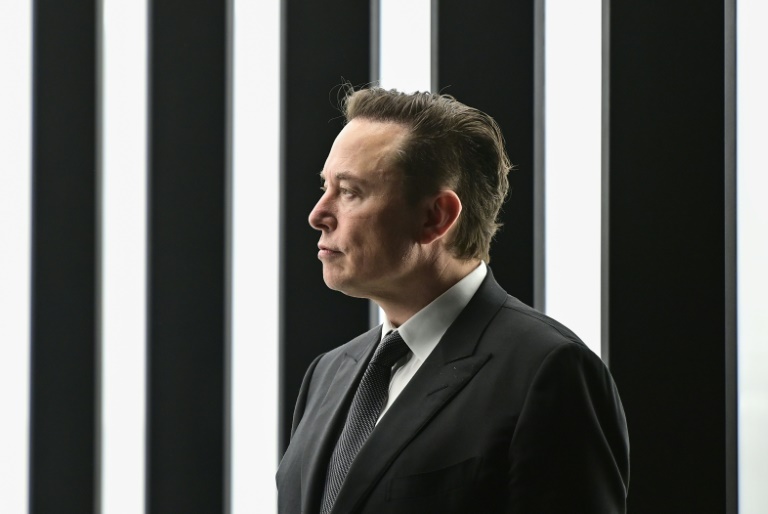
Elon Musk: tech genius, social media boss, eccentric

Elon Musk is at turns ingenious, impulsive and infuriating. He is also a corporate maverick, unafraid to tackle  myriad industries by his own rules.

After revolutionizing the auto industry, sending his own rocket to space — with his car on board — and building the world’s biggest fortune, the eccentric billionaire is the new king of social media after he took charge of Twitter on Thursday and fired its top executives.

That will give him control of the network on which the world debates, mobilizes, bickers and throws shade, Musk often first among them.

The deal will also fuel the fire over his political views, business methods, outsized personality and unconventional personal life — flames he does nothing to douse.

He is libertarian, anti-woke and promotes himself as a champion of free speech. He has been accused of being autocratic and bullying.

“The reason I acquired Twitter is because it is important to the future of civilization to have a common digital town square” for healthy debate, Musk said earlier Thursday, while insisting it could not become a “free-for-all hellscape.”

His takeover of the social media juggernaut caps a months-long roller coaster of announcements, counter-announcements and legal maneuvering — which he characteristically punctuated by firing jabs at the company on its own platform.

It is the latest corporate conquest for Musk, after online publishing and payments, space travel and electric cars.

The 51-year-old is the richest person in the world, a title he took last year from Amazon’s Jeff Bezos following the meteoric rise of Tesla, his electric automaker founded in 2003.

– Newsmaker, for better and worse –

Musk’s businesses make headlines for the right reasons: his space transport firm SpaceX is a partner in a three-way venture that sent the first fully private mission to the International Space Station.

But his empire also makes news of a less flattering kind: Tesla has faced a series of lawsuits alleging discrimination against Black workers as well as sexual harassment.

In parallel with the whiplash-inducing stream of business news, Musk’s unconventional private life also keeps the world’s eyebrows raised.

Musk has had two children with his on-again off-again partner, the musician Grimes: a son, X AE A-XII, known as X, and a girl they named Exa Dark Sideræl Musk — although the parents will mostly call her Y.

He also fathered twins with a top executive in Neuralink, a company he co-founded.

One way or another, Musk has become one of the most ubiquitous figures of the era. So how did he get where he is today?

– To Mars… and beyond? –

Born in Pretoria, on June 28, 1971, the son of an engineer father and a Canadian-born model mother, Musk left South Africa in his late teens to attend Queen’s University in Ontario.

He transferred to the University of Pennsylvania after two years and earned bachelor’s degrees in physics and business.

After graduating from the Ivy League school, Musk abandoned plans to study at Stanford University in California.

Instead, he dropped out and started Zip2, a company that made online publishing software for the media industry.

He banked his first millions before the age of 30 when he sold Zip2 to US computer maker Compaq for more than $300 million in 1999.

Musk’s next company, X.com, eventually merged with PayPal, the online payments firm bought by internet auction giant eBay for $1.5 billion in 2002.

After leaving PayPal, Musk embarked on a series of ever more ambitious ventures.

He founded SpaceX in 2002 — now serving as its chief executive officer and chief technology officer — and became the chairman of electric carmaker Tesla in 2004.

After some early crashes and near-misses, SpaceX perfected the art of landing booster engines on solid ground and ocean platforms, rendering them reusable, and late last year it sent four tourists into space, on the first ever orbital mission with no professional astronauts on board.

Musk’s jokingly-named The Boring Company is touting an ultra-fast “Hyperloop” rail transport system that would transport people at near supersonic speeds.

And he has said he wants to make humans an “interplanetary species” by establishing a colony of people living on Mars.

To this end, SpaceX is developing a prototype rocket, Starship, which it envisages carrying crew and cargo to the Moon, Mars and beyond — with Musk saying he feels confident of an orbital test this year, possibly in November.

Musk, who holds US, Canadian and South African citizenship, has been married and divorced three times — once to the Canadian author Justine Wilson and twice to actress Talulah Riley. He has nine children. A tenth child died in infancy.

Forbes estimates his current net worth at $222 billion.

Musk and Twitter: Volatile courtship ends in unlikely union

Elon Musk’s pursuit of Twitter was a melodrama from the beginning — a volatile courtship between a mercurial billionaire and an influential social media platform.

That relationship — a love-hate affair from both sides — is at last a sure thing, with Musk taking control of the company Thursday.

Here is a look at his on-off romance with the network:

– The courtship –

It all began with an expensive first date: Musk — a longtime Twitter user known for inflammatory tweets — snapped up 73.5 million shares at a cost of nearly $2.9 billion.

The purchase, which was revealed in an April 4 regulatory filing and gave him a 9.2 percent stake in the company, sent Twitter shares soaring and sparked speculation that Musk was seeking an active role in the social media company’s operations.

It also earned him a seat on the board. CEO Parag Agrawal announced the offer — in a tweet, of course — and called Musk “a passionate believer and intense critic of the service which is exactly what we need.”

But the initial attraction didn’t last: Musk opted against joining the board, and quickly launched a hostile takeover bid for the company, offering $54.20 a share, an April 13 filing showed.

Twitter in turn adopted a “poison pill” defense that would allow shareholders to buy additional stock.

– The engagement –

Then came the plans for a walk down the corporate aisle: Twitter reversed course and said on April 25 that it was selling to Musk in a deal valued at $44 billion.

Musk parted with $8.4 billion in shares in Tesla, pledged up to $21 billion from his personal fortune and got some friends to stake him a few billion.

– The breakup –

But the billionaire soon began showing signs of cold feet, saying on May 13 that the deal to buy Twitter was “temporarily on hold” pending details on spam and fake accounts on the platform.

After two months of very public fighting over the issue, he called off the deal and accused Twitter of making “misleading” statements.

The company quickly launched legal action to enforce the agreement.

– The reconciliation –

Both sides had been gearing up for a lengthy and hugely expensive showdown at the Delaware Chancery Court.

Musk had been buoyed by whistleblower revelations that portrayed the company as cavalier with its bot counting and lax on security.

Twitter, however, believed the agreement it had with Musk was airtight.

Then, earlier this month, Musk revealed — on Twitter, of course — that he had agreed to close the deal at the initially offered price, calling the acquisition an “accelerant” towards creating “X,” which he said would be “the everything app”.

He offered no further detail.

Litigation was suspended, and the court in Delaware set Friday as the deadline for sealing the deal.

– The marriage –

On Thursday, word finally arrived that the nuptials were complete: Musk had taken control of Twitter and fired its top executives, including chief executive Agrawal.

Earlier in the day Musk said that he hoped to foster “healthy” debate on the platform. A happily ever after in the making? Time will tell.

Musk had already given clues to the impending union, changing his Twitter biography to read “Chief Twit” and visiting the company’s California headquarters earlier in the week.

Musk and Twitter: Volatile courtship ends in unlikely union

Elon Musk’s pursuit of Twitter was a melodrama from the beginning — a volatile courtship between a mercurial billionaire and an influential social media platform.

That relationship — a love-hate affair from both sides — is at last a sure thing, with Musk taking control of the company Thursday.

Here is a look at his on-off romance with the network:

– The courtship –

It all began with an expensive first date: Musk — a longtime Twitter user known for inflammatory tweets — snapped up 73.5 million shares at a cost of nearly $2.9 billion.

The purchase, which was revealed in an April 4 regulatory filing and gave him a 9.2 percent stake in the company, sent Twitter shares soaring and sparked speculation that Musk was seeking an active role in the social media company’s operations.

It also earned him a seat on the board. CEO Parag Agrawal announced the offer — in a tweet, of course — and called Musk “a passionate believer and intense critic of the service which is exactly what we need.”

But the initial attraction didn’t last: Musk opted against joining the board, and quickly launched a hostile takeover bid for the company, offering $54.20 a share, an April 13 filing showed.

Twitter in turn adopted a “poison pill” defense that would allow shareholders to buy additional stock.

– The engagement –

Then came the plans for a walk down the corporate aisle: Twitter reversed course and said on April 25 that it was selling to Musk in a deal valued at $44 billion.

Musk parted with $8.4 billion in shares in Tesla, pledged up to $21 billion from his personal fortune and got some friends to stake him a few billion.

– The breakup –

But the billionaire soon began showing signs of cold feet, saying on May 13 that the deal to buy Twitter was “temporarily on hold” pending details on spam and fake accounts on the platform.

After two months of very public fighting over the issue, he called off the deal and accused Twitter of making “misleading” statements.

The company quickly launched legal action to enforce the agreement.

– The reconciliation –

Both sides had been gearing up for a lengthy and hugely expensive showdown at the Delaware Chancery Court.

Musk had been buoyed by whistleblower revelations that portrayed the company as cavalier with its bot counting and lax on security.

Twitter, however, believed the agreement it had with Musk was airtight.

Then, earlier this month, Musk revealed — on Twitter, of course — that he had agreed to close the deal at the initially offered price, calling the acquisition an “accelerant” towards creating “X,” which he said would be “the everything app”.

He offered no further detail.

Litigation was suspended, and the court in Delaware set Friday as the deadline for sealing the deal.

– The marriage –

On Thursday, word finally arrived that the nuptials were complete: Musk had taken control of Twitter and fired its top executives, including chief executive Agrawal.

Earlier in the day Musk said that he hoped to foster “healthy” debate on the platform. A happily ever after in the making? Time will tell.

Musk had already given clues to the impending union, changing his Twitter biography to read “Chief Twit” and visiting the company’s California headquarters earlier in the week.

The Amazon: a burning question absent in Brazil vote

Felipe Guimaraes leaps on and off a surfboard on the sand as he shows tourists the basics of surfing. Here, on Rio de Janeiro’s Ipanema beach, the stricken Amazon could not feel further away.

In Western capitals, the plight of the world’s largest rainforest is seen as a key issue in Brazil’s election, with much at stake for a world scrambling to curb the climate emergency.

However, fires and deforestation have taken a back seat in a dirty and divisive election campaign, and many Brazilians have bigger concerns beyond those happening in a vast area thousands of miles away.

“I dunno man, it’s so far away, but it’s obvious it is important and good to take care of” the Amazon, says bare-chested surf instructor Guimaraes, 27, adding there are more “visible issues” than the rainforest.

Many Brazilians list the economy, crime, education, and corruption as their top worries.

“The country has enormous social inequality, we are recovering from a pandemic. Today, some Brazilians are only worried about surviving one more day. Having a job, having food on the table, access to a doctor,” Daniel Costa Matos, 38, an IT analyst from the capital Brasilia, told AFP.

While he thinks the Amazon is “of extreme importance,” his biggest worry is corruption.

“The climate crisis, the problem of deforestation in the Amazon, is still far from the reality of many Brazilians,” said 36-year-old climate activist Giovanna Nader, who uses her podcast and Instagram account to sound the environmental alarm.

“We need to educate, educate, educate.”

– ‘Sometimes we feel alone’ –

For Brazil’s Indigenous community, the fight can often seem lonely, even after four years raising the alarm about violent, environmentally harmful policies they say have occurred under far-right President Jair Bolsonaro.

Most Brazilians never visit the rainforest. The capital of Amazonas, Manaus, is some 2,800 kilometers (1,739 miles) from Rio de Janeiro.

It is about the same distance between Paris and Moscow.

“What worries us a lot is that the vision of Brazilians on environmental protection … is very superficial,” says Dinamam Tuxa, executive coordinator of the Association of Brazil’s Indigenous Peoples (APIB).

“Sometimes we feel alone, that we are fighting such a powerful force that are the big corporations exploiting our territories, and that there is no engagement among the Brazilian population.”

– Personal attacks and disinformation –

Fires and deforestation are not new problems in the Amazon. However, the destruction has increased 75 percent under Bolsonaro compared to the previous decade. 

His rival, former president Luiz Inacio Lula da Silva, who also grappled with the problem, only briefly touched on the rainforest on the campaign trail, mainly when drumming up votes in the Amazon itself.

However, it has been largely absent from an election campaign marked by disinformation and extreme polarization.

“It has become a political campaign of a lot of personal attacks between the two candidates. So, I think we are seeing more a focus on … fake news than the Amazon for example,” said Karla Koehler, a 35-year-old artist sunning herself on Ipanema beach.

“I think this is a very specific election… It is about political survival” and “maintaining basic democratic rights.”

Bolsonaro’s detractors see him as a threat to democracy and the country’s future, after a term marked by Covid carnage, attacks on the judiciary and media, and warnings he would not accept an election loss.

Lula, meanwhile, is still associated by many with a massive corruption scandal that saw him jailed for 18 months before the charges were annulled on procedural grounds, without exonerating him.

Latin America’s largest country has more than 33 million people living in hunger, according to the Brazilian Network for Research on Food Security. Some 11 million people cannot read or write, according to government statistics.

The country also has one of the highest crime rates in the world, with 47,503 murders in 2021, a figure that was nevertheless the lowest recorded in a decade, according to the Brazil Forum for Public Security.

“The challenge is getting people and their leaders to understand that the environmental agenda is directly linked to factors such as hunger, housing, crime, and the economic crisis,” said Marcio Astrini, the executive secretary of the Climate Observatory, a coalition of environmental groups.

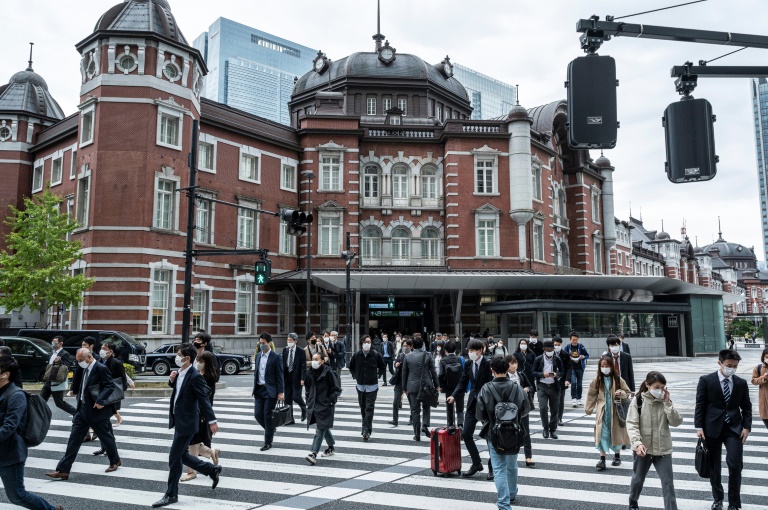
China economic slowdown to drag on Asia growth: IMF

China’s “sharp and uncharacteristic” economic slowdown is expected to drag on growth across Asia through the end of next year, the International Monetary Fund (IMF) warned Friday, darkening an already gloomy global outlook.

Worldwide economic prospects have dimmed this year as countries have faced higher living costs, tighter financial conditions and increased uncertainty following Russia’s invasion of Ukraine.

The crises have dulled the rebound from the Covid-19 pandemic, even as Asia has remained a “relative bright spot” compared with other parts of the globe, the IMF said in its Regional Economic Outlook.

But growth in the region faces headwinds from a Chinese economy weighed down by a hardline zero-Covid policy and a crisis in the property sector, the organisation said.

Earlier this month, the IMF announced it had cut its growth forecast for China to 3.2 percent in 2022, which would be the smallest expansion of the world’s second-largest economy in around four decades, excluding the first year of the pandemic.

The new report downgrades the growth forecast for Asia to four percent this year, down 0.9 percentage points from a previous outlook in April.

The organisation said it expects China’s growth to rise to 4.4 percent and Asia’s to increase to 4.3 percent next year, still “well below” the average of about 5.5 percent over the past two decades.

China’s “broad-based” slowdown “is estimated to have important spillovers to the rest of Asia through trade and financial links”, according to the IMF.

It noted that the region may also face other “persistent” headwinds in the form of tighter global monetary policy and Moscow’s invasion of Ukraine, which has caused commodities prices to spike.

– Few infections, little growth –

“Asia’s strong economic rebound early this year is losing momentum, with a weaker-than-expected second quarter,” said Krishna Srinivasan, the director of the IMF’s Asia and Pacific Department.

Much of the growth shortfall “can be explained by lower levels of investment following the pandemic”, he said, adding that many countries should act to ease overhanging corporate debt and human capital losses.

He warned that economic fragmentation, driven by geopolitical tensions and uncertainty in trade policy, “poses a significant risk to the region” and could “have adverse macroeconomic consequences in the short term”.

China is the last major economy wedded to a zero-Covid policy, imposing snap lockdowns, mandatory testing and lengthy quarantines in an effort to tamp down any outbreaks as they arise.

Around 208 million people in the country are under some form of enhanced virus restrictions, Japanese bank Nomura estimated in a note on Monday.

Further issues have plagued the massive property sector as a series of debt-laden developers have defaulted on loans while others have struggled to raise cash.

Official data on Monday showed China’s economy grew 3.9 percent year-on-year in the third quarter, a stronger-than-expected performance that was announced after Beijing announced a delay in releasing the figures during a Communist Party congress earlier this month.

Analysts still expect the country to fall well below its stated annual growth target of about 5.5 percent.

Investors fled Chinese stocks earlier this week after President Xi Jinping broke long-standing precedent to seal a third term in power, fuelling fears that virus lockdowns and other measures harmful to the economy would continue.

Close Bitnami banner
Bitnami