World

China economic slowdown to drag on Asia growth: IMF

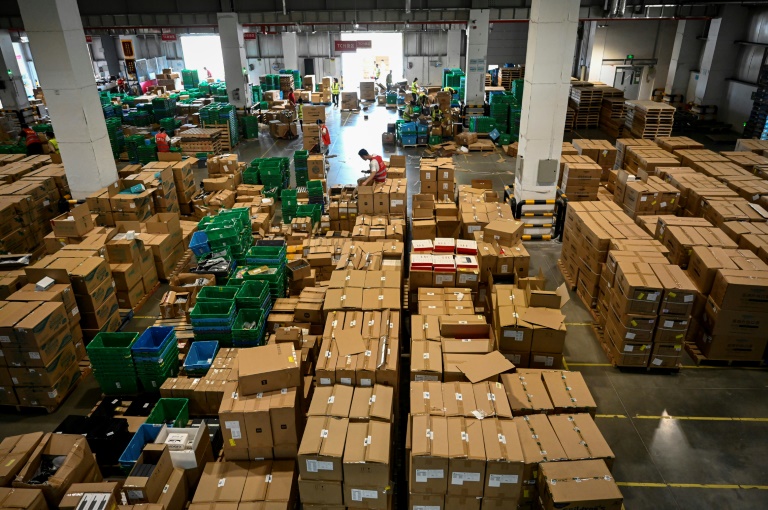
China’s “sharp and uncharacteristic” economic slowdown is expected to drag on growth across Asia through the end of next year, the International Monetary Fund (IMF) warned Friday, darkening an already gloomy global outlook.

Worldwide economic prospects have dimmed this year as countries have faced higher living costs, tighter financial conditions and increased uncertainty following Russia’s invasion of Ukraine.

The crises have dulled the rebound from the Covid-19 pandemic, even as Asia has remained a “relative bright spot” compared with other parts of the globe, the IMF said in its Regional Economic Outlook.

But growth in the region faces headwinds from a Chinese economy weighed down by a hardline zero-Covid policy and a crisis in the property sector, the organisation said.

Earlier this month, the IMF announced it had cut its growth forecast for China to 3.2 percent in 2022, which would be the smallest expansion of the world’s second-largest economy in around four decades, excluding the first year of the pandemic.

The new report downgrades the growth forecast for Asia to four percent this year, down 0.9 percentage points from a previous outlook in April.

The organisation said it expects China’s growth to rise to 4.4 percent and Asia’s to increase to 4.3 percent next year, still “well below” the average of about 5.5 percent over the past two decades.

China’s “broad-based” slowdown “is estimated to have important spillovers to the rest of Asia through trade and financial links”, according to the IMF.

It noted that the region may also face other “persistent” headwinds in the form of tighter global monetary policy and Moscow’s invasion of Ukraine, which has caused commodities prices to spike.

– Few infections, little growth –

“Asia’s strong economic rebound early this year is losing momentum, with a weaker-than-expected second quarter,” said Krishna Srinivasan, the director of the IMF’s Asia and Pacific Department.

Much of the growth shortfall “can be explained by lower levels of investment following the pandemic”, he said, adding that many countries should act to ease overhanging corporate debt and human capital losses.

He warned that economic fragmentation, driven by geopolitical tensions and uncertainty in trade policy, “poses a significant risk to the region” and could “have adverse macroeconomic consequences in the short term”.

China is the last major economy wedded to a zero-Covid policy, imposing snap lockdowns, mandatory testing and lengthy quarantines in an effort to tamp down any outbreaks as they arise.

Around 208 million people in the country are under some form of enhanced virus restrictions, Japanese bank Nomura estimated in a note on Monday.

Further issues have plagued the massive property sector as a series of debt-laden developers have defaulted on loans while others have struggled to raise cash.

Official data on Monday showed China’s economy grew 3.9 percent year-on-year in the third quarter, a stronger-than-expected performance that was announced after Beijing announced a delay in releasing the figures during a Communist Party congress earlier this month.

Analysts still expect the country to fall well below its stated annual growth target of about 5.5 percent.

Investors fled Chinese stocks earlier this week after President Xi Jinping broke long-standing precedent to seal a third term in power, fuelling fears that virus lockdowns and other measures harmful to the economy would continue.

Japan to unveil huge economic package to address inflation

Japan is on Friday expected to announce an economic stimulus package that local media said could be worth $200 billion to cushion the impact of inflation and a weak yen.

Prices are rising in the world’s third-largest economy at the highest rate in eight years, although its three-percent inflation remains below the sky-high levels seen in the United States and elsewhere.

The yen has also lost over 20 percent of its value against the dollar this year, prompting authorities to intervene at least once in recent weeks, with further moves to prop up the currency suspected though unconfirmed by the government.

Details of the stimulus spending will be announced later in the day, with public broadcaster NHK and other media outlets saying it will be more than 29 trillion yen (around $200 billion).

The plans include measures to support households with energy bills, which have spiked since Russia’s invasion of Ukraine, and to encourage wage growth.

Japan — which has one of the world’s highest debt-to-GDP ratios — has already injected hundreds of billions of dollars into its economy over the past two years to support recovery from the Covid-19 pandemic.

The main driver of the yen’s steep falls is the contrast between Japan’s longstanding monetary easing policies, designed to encourage sustainable growth, and aggressive US interest-rate hikes.

The Bank of Japan is expected to maintain its ultra-loose stance in a policy decision on Friday, despite growing pressure to tweak its strategy as the yen declines.

“It’s understandable that the government is announcing new stimulus now, because Japan’s economy faces weak demand due to price rises,” Yoshiki Shinke, chief economist at Dai-ichi Life Research Institute, told AFP.

This is “in contrast to the United States, where demand is strong, with the Fed trying to cool down inflation,” he said.

“It’s impossible that Japan would hike rates to curb inflation, for this reason,” Shinke predicted.

Apple reports solid profits, but sees greater hit from strong dollar

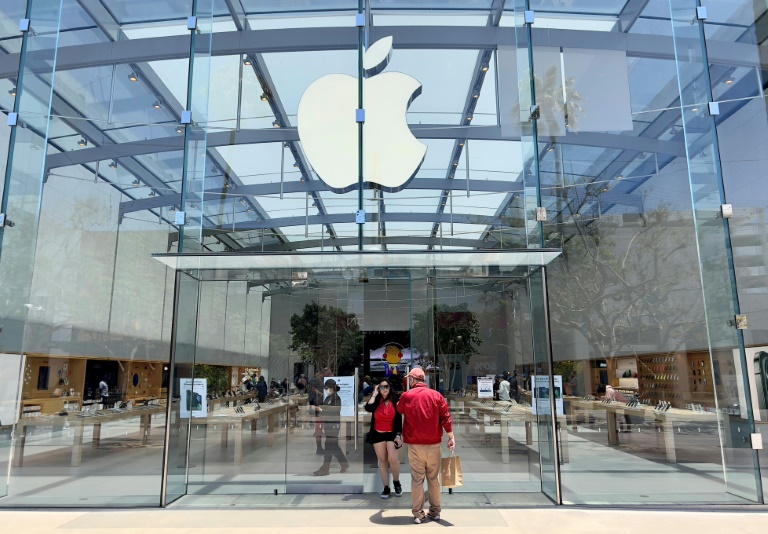
Apple reported solid profits on rising revenues Thursday, but the tech giant’s iPhone sales missed estimates as executives signaled a rising financial toll from the strong dollar.

Shares of Apple edged higher in after-hours trading, as the tech titan avoided a stumble akin to those experienced by Facebook parent Meta and Amazon, both of which have been punished by investors.

Profits edged up one percent to $20.7 billion, on an eight percent rise in revenues to $90.1 billion in Apple’s fiscal fourth quarter ending September 24. 

Results for the latest quarter “continue to demonstrate our ability to execute effectively in spite of a challenging and volatile macroeconomic backdrop,” said Apple Chief Financial Officer Luca Maestri.

Apple notched growth in most operating regions and product categories and released an earnings statement that contained no obvious red flags and showed the company still able to notch broad-based revenue growth.

Still, Apple’s smartphone revenues came in at $42.6 billion, up about 10 percent from the year-ago period, but a bit below the $43 billion projected by analysts.

The company also reported services revenue growth of just 5.0 percent compared with the year-ago period — much below the 12 percent jump in the prior quarter.

Some of the weakness in services stemmed from the impact of the strong dollar on overseas consumers, but executives also cited weakness in digital advertising and gaming, Maestri said.

While Apple avoided a specific forecast, Maestri cautioned analysts to expect revenue growth to “decelerate” in the fourth quarter, due in part to a foreign exchange hit of 10 percentage points.

Analysts described Apple’s results as respectable, but warned that the worsening consumer environment will pose challenges.

“Overall, we view the (September quarter) as a solid beat and see a good holiday selling season ahead, but do think conditions get more challenging as the iPhone 14 cycle extends given the uncertain economic conditions,” said CFRA Research analyst Angelo Zino. 

“That said, we believe Apple’s prestige brand is allowing it to successfully increase prices to consumers across all devices and services.”

Heading into earnings season, investors had expressed worries about the headwinds from the weakening global economy as central banks enact aggressive interest rate hikes to counter grinding inflation.

This week’s tech results have shown that the sector, which enjoyed outsized growth during the peak period of Covid-19, is not immune to these factors. 

Shares of Apple rose 0.7 percent to $145.87 in after-hours trading.

Meteorite that smashed into Mars shook planet, NASA says

Scientists who study Mars on Thursday revealed the remarkable Christmas gift they received from the planet last year.

On December 24, 2021, a meteorite hit Mars’ surface, triggering magnitude 4 tremors, which were detected by NASA’s InSight spacecraft  — which landed on the planet four years ago — some 2,200 miles (3,500 kilometers) away. 

The true origin of this so-called marsquake was only confirmed when the Mars Reconnaissance Orbiter (MRO) was able to take a picture of the newly formed crater created by the hit when it flew over the impact site less than 24 hours later. 

The image is impressive, showing blocks of ice that were spewed up onto the planet’s surface around the 492-foot (150-meter) wide and 70-foot (21-meter) deep hole.

The crater is the largest ever observed since the MRO began its Mars orbit 16 years ago.  

And though meteorite impacts on Mars are not rare, “we never thought we’d see anything that big,” Ingrid Daubar, who works on the InSight and MRO missions, told reporters at a press conference Thursday. 

Researchers estimate that the meteorite itself would have measured between 16 to 39 feet across. An object of that size would have disintegrated in Earth’s atmosphere before falling to the ground here. 

“It is simply the biggest meteorite impact on the ground that we have heard since science has been done with seismographs or seismometers,” said planetology professor Philippe Lognonne, who participated in two studies related to the observation published in the journal Science Thursday. 

NASA released an audio recording of the collision, which was made by speeding up the vibrations collected by the seismometer.

– ‘Useful’ ice presence –

The valuable information gathered in studying the crash will contribute to deeper knowledge of Mars’ interior and the history of how the planet was created, scientists said.

The presence of ice, in particular, is “surprising,” said Daubar, who also co-authored the two studies. 

“This is the warmest spot on Mars, the closest to the equator, we’ve ever seen water ice,” she said.

In addition to the information this discovery offers about the Martian climate, the presence of water at this latitude — and not just near the poles — could prove “really useful” for future human visitors to Mars, director of NASA’s Planetary Science Division Lori Glaze said. 

“We’d want to land the astronauts as near to the equator as possible,” she said, to take advantage of warmer temperatures. 

“That ice could be converted into water, oxygen or hydrogen,” Glaze said.

The impact was powerful enough to generate seismic waves both down to the planet’s core and across its crust horizontally, making it possible to study Mars’ internal structure — revealing that the crust on which InSight sits is less dense than the crust the waves traveled over from the crater site. 

The end of InSight’s mission — which recorded more than 1,300 marsquakes in total — could come in the next couple of months, according to Bruce Banerdt of NASA’s Jet Propulsion Lab, due to the expected accumulation of dust on the lander’s solar power panel. 

It’s “sad,” he said, while celebrating that the probe worked “marvelously” for four years. 

Amazon warns of meager holiday season sales growth

Amazon on Thursday predicted a slowdown in sales growth during the year-end holiday shopping season, sending shares in the e-commerce colossus tumbling.

Sales could grow as little as 2 percent in the final three months of this year, the company said, crimped by a strong US dollar that makes products more expensive in other countries.

Amazon shares plunged some 20 percent in after-market trades but regained some ground, down about 14 percent to $95.32 at 2130 GMT.

The company nevertheless returned to profit in the third quarter after two consecutive quarters of losses, with a net profit of $2.87 billion for the period from July to September, according to the statement issued Thursday.

Sales in the recently ended third quarter increased 15 percent to $127.1 billion, compared with $110.8 billion during the same period a year earlier, it reported.

Customer response to big Amazon sales events in the past four months has been “quite positive” and “it’s clear that particularly during these uncertain economic times, customers appreciate Amazon’s continued focus on value and convenience,” said chief executive Andy Jassy.

US tech giants that long seemed impervious to broad economic ills have seen their armor crack this year, with slowing growth and revenue eroding the faith of investors and their share prices.

While it has a lucrative AWS cloud computing unit and its Prime video offering, Amazon is a retailer at heart, noted independent tech analyst Rob Enderle of Enderle Group.

“When people are having a hard time making ends meet, retail tends to take a hit,” Enderle said.

And while founder and former chief executive Jeff Bezos was savvy about retail, “he went off to play with rockets” at his Blue Origin enterprise leaving Amazon in the hands of Jassy, known for his cloud computing prowess, the analyst added.

“Amazon is not a cloud company, it is a retail company, and a cloud computing guy is in charge,” Enderle contended.

Meta and Google parent Alphabet both saw share prices tank after disappointing quarterly earnings, as global economic woes along with competition undermined the digital ad revenue powering their money-making engines.

Even business tech stalwart Microsoft saw share prices drop after it released earnings figures showing economic conditions were also tightening budgets when it comes to customers of its cloud, software and services offerings.

Iran protest deaths mount as Tehran vows 'severe response' to shrine massacre

Iranian protesters on Thursday defied a deadly crackdown by security forces against nearly six weeks of women-led protests, as Tehran vowed to punish those behind a mass shooting that killed 15 worshippers at a shrine.

In the latest violent bid to crush demonstrations sparked by the death of Mahsa Amini in police custody last month, security forces opened fire and killed “at least eight people” since Wednesday evening, according to Amnesty International.

Iran has been gripped by its biggest protests for years since Amini died on September 16, three days after her Tehran arrest by the notorious morality police for allegedly breaching the country’s dress code for women.

“Iran’s security forces killed at least eight people since last night as they again opened fire on mourners and protesters” in at least four provinces, Amnesty said, condemning the “reckless and unlawful use of firearms”.

On Wednesday, as thousands mourned 22-year-old Amini, Iran was also rocked by an attack claimed by the Islamic State jihadist group in which, state media said, a gunman killed at least 15 people at a shrine in the southern city of Shiraz.

Ultra-conservative President Ebrahim Raisi appeared to link the two tragedies when he declared that “the intention of the enemy is to disrupt the country’s progress, and then these riots pave the ground for terrorist acts”.

Raisi vowed “a severe response” over the mass killing at the Shah Cheragh mausoleum following evening prayers.

Supreme leader Ayatollah Ali Khamenei called for united efforts against the “plot” by Iran’s enemies.

– ‘The army supports us’ –

The latest protests follow a massive ceremony Wednesday marking 40 days since Amini’s death, held in her hometown of Saqez, Kurdistan province.

Iran’s ISNA news agency said nearly 10,000 people had gathered there, but many thousands more were seen making their way in cars, on motorbikes and on foot, in videos widely shared online.

The protests sparked by Amini’s death have been led by young women who have burned their headscarves and confronted security forces.

Despite heightened security measures, columns of mourners had poured into Saqez on Wednesday, paying tribute at her grave at the end of the traditional 40-day mourning period.

The Hengaw human rights group reported that security forces shot dead at least three people during protests in the western city of Mahabad and at least two others in Baneh, also in the west.

In Mahabad, protesters returning from the funeral of another demonstrator had surrounded government buildings, the group said.

“We should not mourn for our youth, we should avenge them,” they chanted, according to the Norway-based organisation that monitors violations in Kurdish-populated areas.

Elsewhere in the city, a video posted on the Iran Wire news website showed crowds setting fire to the governor’s office.

Online monitor NetBlocks later reported a “major internet disruption” in West Azerbaijan province “with high impact to Mahabad”.

On Thursday protesters shouted “the army supports us”, and people fleeing gunfire from the Islamic Revolutionary Guard Corps sought refuge at a barracks in Saqez, Hengaw said.

It added that the Guards had “disarmed the army forces” on Wednesday, according to witnesses, but did not elaborate.

Mourners also gathered Thursday at the grave of 16-year-old Nika Shahkarami near the western city of Khorramabad, 40 days after she was killed by security forces, the US-based HRANA rights group said.

“I’ll kill, I’ll kill, whoever killed my sister,” they could be heard chanting, in a video HRANA posted on Twitter.

Footage obtained by BBC Persian and posted on Twitter by rights activists shows security forces advancing across a bridge in Khorramabad toward protesters who hurl rocks as they retreat after what sounds like gun shots ring out. 

Protests continued into the night, with rights groups and social media channel 1500tasvir, which chronicles rights violations by Iran’s security forces, posting footage of large crowds chanting in Tehran, Mashhad in Iran’s northeast and other cities.

– ‘Bloody shows’ –

Some activists behind the daily protests over Amini’s death, which have evolved into a broader campaign to end the Islamic republic founded in 1979, have raised suspicions over the timing of the Shiraz attack.

“For its survival, for distracting the protesters, for justifying killings and crackdowns, the Islamic republic always puts on such bloody shows,” one of them, Atena Daemi, tweeted.

Oslo-based group Iran Human Rights says the security forces’ crackdown on the Amini protests has cost the lives of at least 141 demonstrators, including at least 29 children.

Meanwhile, Iran’s foreign ministry summoned German ambassador Hans-Udo Muzel to protest comments by German officials which “incite riots” in the Islamic republic, IRNA reported.

On Wednesday, German Foreign Minister Annalena Baerbock said her country would tighten its rules for entry to Iran, warning “there can be no ‘business as usual’ in bilateral relations with a state that treats its own citizens with such contempt”.

burs-dv/hkb/pjm/sw/pvh

'Girl with a Pearl Earring' targeted by climate activists

Climate activists glued themselves to Johannes Vermeer’s “Girl with a Pearl Earring” at a Dutch museum on Thursday in the latest stunt targeting famous artworks, but the painting was undamaged.

Three men were arrested after the attack at The Hague’s Mauritshuis museum on the 1665 masterpiece which has inspired a bestselling novel and a Hollywood film.

The trio were Belgian, one 42-year-old and two 45-year-olds. “They remain in custody and are being questioned,” The Hague police said.

Social media images showed a man wearing a “Just Stop Oil” T-shirt gluing his head to the painting, while another glued his hand to the wall and a third emptied out a tin of what appeared to be tomato soup.

The stunt comes after activists threw soup at Vincent van Gogh’s “Sunflowers” at the National Gallery in London on October 14 and smeared mashed potato over a Claude Monet painting in Germany. 

“Art is defenceless and we strongly condemn trying to damage it for whichever cause,” the Mauritshuis said in a statement to AFP.

– ‘Not damaged’ –

The museum said the stunt took place at around 2 pm (1400 GMT) and that police were called.

“One person glued his head to the painting, which was behind glass, and the other person glued his hand to the green wall next to the painting. A third person threw an unknown substance at the painting,” it said.

The Mauritshuis added: “We have immediately inspected the painting, which was done by our restorers. Fortunately the painting… was not damaged.” 

It will be back on public display “as soon as possible”.

Dutch museums had stepped up security after the “Sunflowers” stunt and the potato attack on Monet’s $111-million “Les Meules” (Haystacks) at the Museum Barberini in Potsdam on Sunday.

Dozens of people were gathered inside the Mauritshuis waiting for news after Thursday’s incident, while security guards told them not to get too close to the other paintings, an AFP reporter said.

The entrance to the room where the “Girl with a Pearl Earring” normally hangs was blocked off by a large reproduction oil painting and a guard said it would likely be closed for the rest of the day.

Two police vans were parked outside the museum.

– ‘Beautiful and priceless’ –

A video on Twitter showed a shaven-headed activist sticking his head to the “Girl with a Pearl Earring”. Another poured a red substance from a tin over the head of the first activist.

A third man in a white “Just Stop Oil” T-shirt shouted as he glued his hand to the wall.

“How do you feel when you see something beautiful and priceless being apparently destroyed before your eyes,” he said. “This painting is protected by glass but the future of our children is not protected.”

Museum visitors shouted “shame”, “obscene” and “you’re stupid”.

“Even though I might be in favour of what they want to achieve, this is not the way to do it and I don’t think they will get much support from the public,” museum visitor Frans Smit, 59, said.

Fellow visitor Jaap de Carpentier Wolf, 56, was more sympathetic.

“I think it’s good to draw attention to the climate,” he said. “It’s changing, it’s very hot in The Hague today, so we have to do something”.

Art lovers have long been fascinated by Dutch master Vermeer’s painting of the young woman with an enigmatic look, wearing a blue and yellow turban, a pearl hanging from her ear.

It also provided inspiration for Tracy Chevalier’s 1999 novel “Girl with a Pearl Earring” which gave rise to an Oscar-nominated film starring Scarlett Johansson and Colin Firth.

Lula's lead widens slightly three days from Brazil runoff: poll

Leftist challenger Luiz Inacio Lula da Silva’s lead over far-right incumbent Jair Bolsonaro has widened slightly three days from Brazil’s polarizing presidential runoff election, according to a poll published Thursday.

Lula has 53 percent voter support to 47 percent for Bolsonaro, according to the poll from the Datafolha institute — up from a four-point gap (52 percent to 48 percent) the previous week.

The figures exclude voters who plan to cast blank or spoiled ballots — five percent of respondents, Datafolha estimates. Undecided voters represented just two percent.

The margin of error for the poll, which was based on interviews with 4,580 people from Tuesday to Thursday, was plus or minus two percentage points.

Lula, the charismatic but tarnished ex-president who led Brazil from 2003 to 2010, won the first round of the election on October 2 with 48 percent of the vote, to 43 percent for former army captain Bolsonaro.

The candidates will face off in a final debate Friday night.

Bolsonaro and his allies have attacked polling firms, accusing them of bias.

He outperformed pollsters’ expectations in the first round, triumphantly boasting afterwards: “We beat the lie.”

Lula, who turned 77 Thursday, leads among women (52 percent), the poor and working-class (61 percent), and Catholics (55 percent), according to Datafolha.

Bolsonaro, 67, leads among evangelical Christians (62 percent) and wealthier voters (59 percent).

Biden touts high-tech manufacturing resurgence ahead of midterms

President Joe Biden touted giant investments in semiconductor manufacturing Thursday in a bid to seize back the narrative for Democrats as the party best at managing the economy ahead of midterm elections.

Biden got a piece of good news before leaving the White House for Syracuse, New York: a rebound in GDP growth in the third quarter, staving off fears that the world’s biggest economy is sliding into recession.

“Things are looking good!” he said, jogging up to journalists with a beaming smile.

Biden underlined that message in Syracuse at the site of a future $100 billion Micron manufacturing plant for semiconductors — a crucial, high-tech product that Biden has prioritized as the cornerstone of a rebirth in US manufacturing.

Democrats are forecast to lose the House of Representatives and possibly also the Senate in the November 8 election. But Biden is leading a late push to attack Republicans on the economy, an area where Democrats have been on the defensive as Americans struggle under four-decades high inflation.

Numerous big investments in the semiconductor and electric vehicle sectors are taking off around the country with encouragement from incentives through multi-billion dollar bills passed under the Democratic-led Congress. 

Biden says that shows he is rebuilding the kind of blue collar communities that went for Donald Trump and the Republicans in the last few years, in part because of disillusion after decades of industries ebbing out to foreign countries.

Central New York, physically and culturally far from the glitz of New York City itself, used to be a “heartland of manufacturing,” Biden said. Now the “region is poised to lead the world in advanced manufacturing” again.

The Micron plant will “ensure that the future is made in America,” he said, and is “part of a broader story about an economy we’re building, one that works for everyone.”

In an indication of how difficult the environment is for Democrats less than two weeks before voting day, even longtime stronghold New York is creaking. Governor Kathy Hochul, who was with Biden in Syracuse, is among those finding herself in an unexpectedly tough race.

– Economy dominates –

Democrats had hoped that anger over Republican restrictions on abortion access in much of the country would fuel a backlash saving their party from a long-predicted pounding in the midterms. However, inflation and other economic concerns have returned to dominate the agenda, according to polls.

With time running out, Biden is leading an intensified campaign to paint Republicans as reckless and readying to slash social spending for the poor, while protecting the very richest.

Biden enumerated what he said was a list of achievements, ranging from low unemployment, rising exports, higher salaries, and a series of measures to lower healthcare costs, student debt and other bread-and-butter issues.

Meanwhile, “Republican friends in Congress seem to be hoping for a recession, many of them,” Biden said.

He noted that Republican leaders have opposed many of his populist measures and are also suggesting they could try to force cuts in social security by threatening to trigger a US debt default, something that would cause “chaos” and “take down the economy.”

“I can’t tell you what they’re for,” he said of the Republicans, only “what they’re against.”

Republican National Committee chairwoman Ronna McDaniel mocked the Democrats and Biden’s trip north.

“We’re less than two weeks out and Biden is parachuting into New York to save Democrats,” she said. “It will backfire. Families cannot afford Biden and Democrats’ failed economy, and voters everywhere are eager to vote Biden Democrats out of office.” 

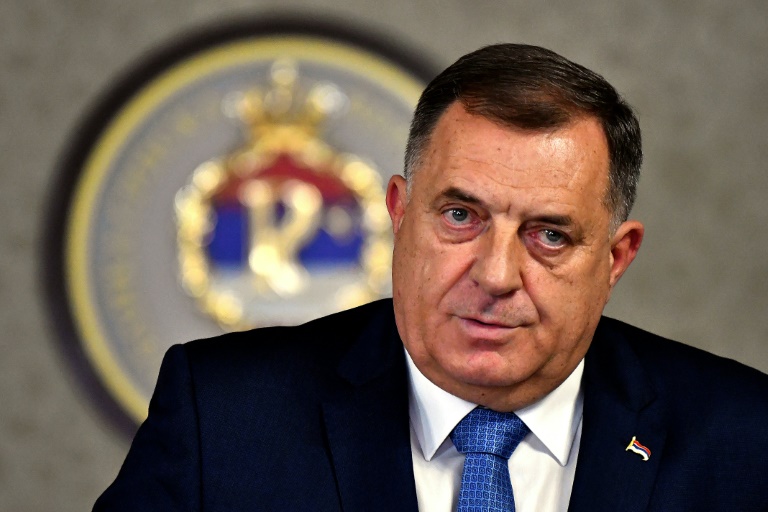
Bosnia's Dodik declared winner in disputed election

Bosnian Serb political leader Milorad Dodik was on Thursday declared the president of Bosnia’s Serb entity, election officials announced, following a recount after the opposition cried foul.

The election for the presidency of the Republika Srpska (RS), was one of several votes held on October 2 at the central level and in the two entities, the RS and the Muslim-Croat federation, that make up the Balkan country.

Bosnia has been governed by this dysfunctional administrative system created by the 1995 Dayton Agreement that succeeded in ending the 1990’s conflict, but largely failed in providing a framework for the country’s political development. 

The recount “confirmed that the candidate Milorad Dodik representing the Serb people and who was in the lead… and remained so with the greatest number of votes won,” said Suad Arnautovic, chairman of Bosnia’s central election commission.

According to the official count, Dodik won 47.06 percent of the ballots cast, securing just over 300,000 votes, while opposition candidate Jelena Trivic secured 42.84 percent of the vote.

The final figures for the race were still being compiled, according to officials, who said the opposition had a narrow window to contest their findings. 

Shortly after the electoral commission’s announcement, Dodik told reporters, “the interests of the RS” would be his priority.

“I call on all political factors to work for stability and peace, co-operation and understanding. We will need a lot of know-how to be able to understand, all together…  the difficult times that are coming,” he said.

But one opposition leader, Branislav Borenovic, announced a legal challenge to the electoral commission’s decision.

“To take such a decision is to turn a blind eye to the obvious electoral plundering. If we leave it at that… it means we are living in a dark age of democracy… and that corruption is the only winner of the elections,” Borenovic was quoted by BNTV television as saying.

Hours ahead of the electoral commission’s announcement of the result, the US embassy in Bosnia issued a barely concealed warning to Dodik.

“Any action taken toward the dissolution of Bosnia-Herzegovina would violate Dayton and carry grave consequences,” the embassy tweeted.

– Stoking tensions –

A preliminary count following the election had given Dodik victory — with the Kremlin-friendly leader winning 48 percent of the vote compared to 43 percent for Trivic.

However, on the day after the election, opposition parties accused Dodik and his party of “organised plundering of the elections” and demanded a recount.

Thursday’s announcement comes just days after Dodik rallied thousands of supporters in the RS capital Banja Luka, where the long-time leader of the country’s Serbs remained defiant he would be victorious.

The recount cements Dodik’s third term as RS president after he completed a stint in the tripartite presidency. 

For years, Dodik has been stoking tensions with frequent calls for Bosnia’s Serbs to separate even further from the country’s central institutions, earning him fresh sanctions from the United States in January. 

Running on an anti-corruption ticket, Dodik’s rival Trivic — a 39-year-old professor of economics — sought to offer an alternative to RS voters, while also trumpeting the Serbs’ desire to maintain autonomy in Bosnia. 

October’s elections saw the three established ethnic parties secure major wins. 

The lone exception was the defeat of Bakir Izetbegovic, a two-time member of the country’s tripartite presidency who also leads the main Bosniak party — the SDA.

Izetbegovic was clobbered by Denis Becirovic in a double-digit landslide win. 

Close Bitnami banner
Bitnami