World

Euro holds above dollar parity before ECB

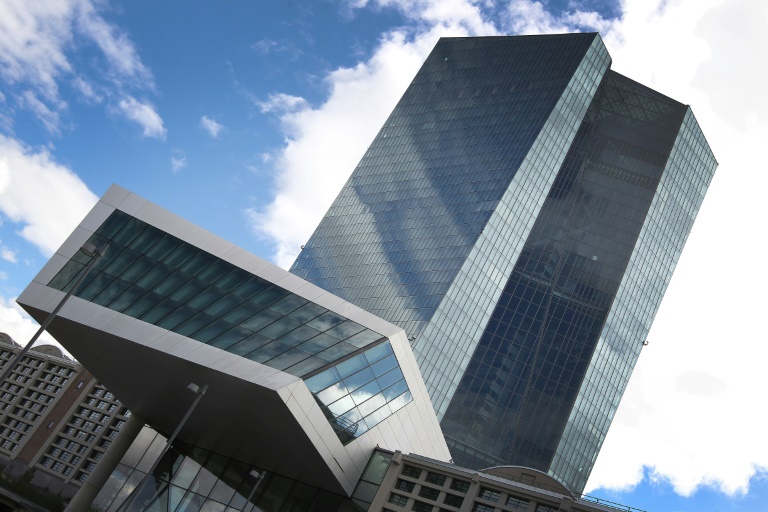
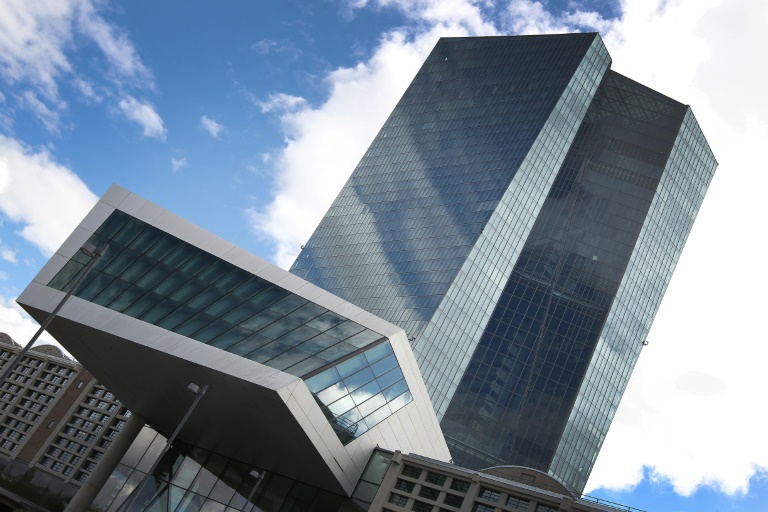
The euro held above parity with the dollar Thursday but eurozone stocks dropped as the European Central Bank prepares to announce another big hike to interest rates in the face of sky-high inflation.

The euro on Wednesday traded above one dollar for the first time since last month as the US currency slid also against the pound and yen on data showing cracks in the world’s biggest economy.

The dollar recovered some of the lost ground, however, ahead of Thursday’s key ECB decision.

“The European Central Bank will once again have to turn a blind eye on yet more recessionary signals in the eurozone, China and elsewhere as it battles to bring inflation back under control,” noted City Index market analyst Fawad Razaqzada.

“A 75-basis point rate hike appears to be a foregone conclusion, which means the reaction of the euro and European stocks will depend on more than just the rate decision itself.”

Markets will be looking for clues on the size of future ECB rate hikes in the press conference from the bank’s head Christine Lagarde, analysts said.

After a painful year for markets hit by central bank rate hikes to fight decades-high inflation, investors have taken heart from several weak US indicators — the latest on the services and real estate sectors — suggesting the economy is slowing.

That has led to speculation officials could be ready to tap the brakes on the increases, while some Fed policymakers have also raised the possibility of a slowdown.

The optimism was boosted Wednesday by news that the Bank of Canada had raised rates less than expected and signalled it is ready to wind down.

“The downshift at the Bank of Canada has further fanned the winds of a similar move by the Fed come December and comes after the (Australian central bank) slowed the pace of hikes to 25 basis points at its October meeting,” said National Australia Bank’s Taylor Nugent.

– Credit Suisse shares slide –

Traders continued to digest earnings updates from the world’s biggest companies.

Shares in Credit Suisse slumped nearly 11 percent after Switzerland’s second-biggest bank announced a string of radical measures Thursday aimed at turning around the beleaguered lender.

Credit Suisse revealed huge third quarter losses and said it would revamp its investment banking unit, slashing 9,000 jobs and raising fresh capital.

London’s benchmark FTSE 100 stocks index climbed, boosted by strong share-price gains for energy heavyweights BP and Shell following the latter’s bumper third-quarter profits on high oil and gas prices.

– Key figures around 1100 GMT –

Euro/dollar: DOWN at $1.0032 from $1.0087 on Wednesday

Pound/dollar: DOWN at $1.1562 from $1.1621 

Dollar/yen: DOWN at 146.32 yen from 146.39 yen

Euro/pound: DOWN at 86.74 pence from 86.77 pence

London – FTSE 100: UP 0.3 percent at 7,076.41 points

Frankfurt – DAX: DOWN 0.8 percent at 13,093.42

Paris – CAC 40: DOWN 0.8 percent at 6,229.06

EURO STOXX 50: DOWN 0.7 percent at 3,579.38

Tokyo – Nikkei 225: DOWN 0.3 percent at 27,345.24 (close)

Hong Kong – Hang Seng Index: UP 0.7 percent at 15,427.94 (close)

Shanghai – Composite: DOWN 0.6 percent at 2,982.90 (close)

New York – Dow: FLAT at 31,839.11 (close)

Brent North Sea crude: UP 0.6 percent at $96.24 per barrel

West Texas Intermediate: UP 0.6 percent at $88.41 per barrel
Euro holds above dollar parity before ECB

The euro held above parity with the dollar Thursday but eurozone stocks dropped as the European Central Bank prepares to announce another big hike to interest rates in the face of sky-high inflation.

The euro on Wednesday traded above one dollar for the first time since last month as the US currency slid also against the pound and yen on data showing cracks in the world’s biggest economy.

The dollar recovered some of the lost ground, however, ahead of Thursday’s key ECB decision.

“The European Central Bank will once again have to turn a blind eye on yet more recessionary signals in the eurozone, China and elsewhere as it battles to bring inflation back under control,” noted City Index market analyst Fawad Razaqzada.

“A 75-basis point rate hike appears to be a foregone conclusion, which means the reaction of the euro and European stocks will depend on more than just the rate decision itself.”

Markets will be looking for clues on the size of future ECB rate hikes in the press conference from the bank’s head Christine Lagarde, analysts said.

After a painful year for markets hit by central bank rate hikes to fight decades-high inflation, investors have taken heart from several weak US indicators — the latest on the services and real estate sectors — suggesting the economy is slowing.

That has led to speculation officials could be ready to tap the brakes on the increases, while some Fed policymakers have also raised the possibility of a slowdown.

The optimism was boosted Wednesday by news that the Bank of Canada had raised rates less than expected and signalled it is ready to wind down.

“The downshift at the Bank of Canada has further fanned the winds of a similar move by the Fed come December and comes after the (Australian central bank) slowed the pace of hikes to 25 basis points at its October meeting,” said National Australia Bank’s Taylor Nugent.

– Credit Suisse shares slide –

Traders continued to digest earnings updates from the world’s biggest companies.

Shares in Credit Suisse slumped nearly 11 percent after Switzerland’s second-biggest bank announced a string of radical measures Thursday aimed at turning around the beleaguered lender.

Credit Suisse revealed huge third quarter losses and said it would revamp its investment banking unit, slashing 9,000 jobs and raising fresh capital.

London’s benchmark FTSE 100 stocks index climbed, boosted by strong share-price gains for energy heavyweights BP and Shell following the latter’s bumper third-quarter profits on high oil and gas prices.

– Key figures around 1100 GMT –

Euro/dollar: DOWN at $1.0032 from $1.0087 on Wednesday

Pound/dollar: DOWN at $1.1562 from $1.1621 

Dollar/yen: DOWN at 146.32 yen from 146.39 yen

Euro/pound: DOWN at 86.74 pence from 86.77 pence

London – FTSE 100: UP 0.3 percent at 7,076.41 points

Frankfurt – DAX: DOWN 0.8 percent at 13,093.42

Paris – CAC 40: DOWN 0.8 percent at 6,229.06

EURO STOXX 50: DOWN 0.7 percent at 3,579.38

Tokyo – Nikkei 225: DOWN 0.3 percent at 27,345.24 (close)

Hong Kong – Hang Seng Index: UP 0.7 percent at 15,427.94 (close)

Shanghai – Composite: DOWN 0.6 percent at 2,982.90 (close)

New York – Dow: FLAT at 31,839.11 (close)

Brent North Sea crude: UP 0.6 percent at $96.24 per barrel

West Texas Intermediate: UP 0.6 percent at $88.41 per barrel
Ex-convict Samsung heir takes top job after pardon

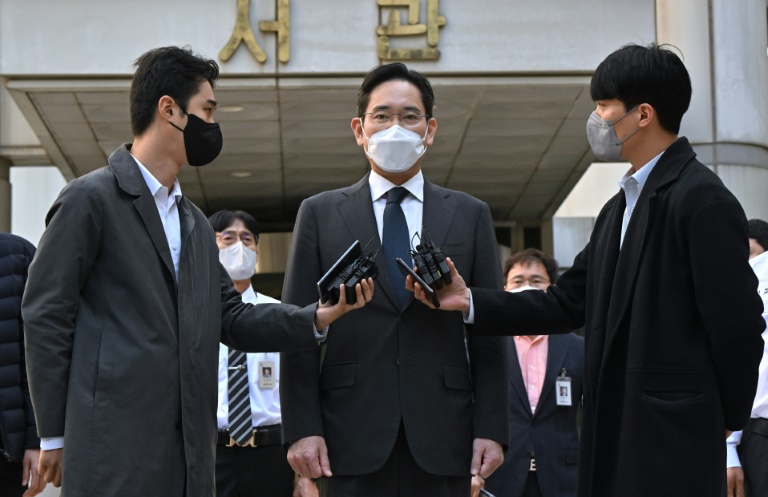
The once-disgraced heir to the sprawling Samsung empire was on Thursday named top executive of its most important business, two months after South Korea’s president pardoned him for embezzlement and corruption convictions.

The board of Samsung Electronics, one of the world’s biggest smartphone and chipmakers, confirmed Lee Jae-yong’s formal ascent — though he had already been de facto leader since his father’s heart attack in 2014.

Critics have said Lee taking the reins so soon after his year and a half in jail is yet another example in South Korea’s history of convicted business leaders getting off the hook on economic grounds.

The Samsung Electronics board promoted Lee to executive chairman to give the company “stronger accountability and business stability” due to the “current uncertain global business environment”, the company said in a statement Thursday.

Samsung is the most powerful of South Korea’s “chaebols”, family-controlled empires that dominate business, and it contributes an estimated fifth of the country’s GDP.

Lee was imprisoned after convictions for fraud and embezzlement following a sweeping investigation that also brought down President Park Geun-hye in 2017.

After serving 18 months, just over half of his original sentence, Lee was released on parole in August 2021.

He immediately returned to work at Samsung. 

In May, Lee was excused from a hearing in a separate fraud trial so he could host US President Joe Biden at a Samsung chip plant in South Korea.

Lee — who has a net worth of $7.2 billion, according to Forbes — received a presidential pardon in August 2022 with the expectation that he would “contribute to overcoming the economic crisis” in South Korea, the government said.

But critics slammed Lee’s elevation to chairman, with local civic group Solidarity for Economic Reform calling it “flawed on many fronts”. 

“It is a far cry from responsible management for him to be named Samsung Electronics’ chairman when his illegal acts brought considerable damage to the company even though he was pardoned by the president,” the group said in a statement.

– Legal woes not over –

Lee’s father Lee Kun-hee, who suffered a heart attack in 2014 and was bedridden until his death at age 78 in 2020, was credited with turning Samsung into a global tech giant.

He held the position of chairman until his death, and the post had been left vacant until the younger Lee’s promotion Thursday.

By taking his father’s old title, Lee sends a clear message that he will be “fully responsible” for Samsung’s management decisions, said Kim Dae-jong, professor of business at Sejong University in Seoul.

Samsung is trying to show its leadership is accountable, as part of a drive “to gain an upper hand in the global memory chip competition”, he told AFP.

The elder Lee was convicted twice, once in 1996 of bribing former president Roh Tae-woo, and then for embezzlement and tax evasion in a slush fund scandal in 2008.

But suspended sentences meant he never served time in jail, and he received two presidential pardons.

The elder Lee went on to spearhead his country’s successful efforts to secure the 2018 Winter Olympics.

On Thursday, Lee Jae-yong told Samsung Electronics employees he believed the company would not just survive the current global economic turmoil but emerge stronger.

“There has never been a time when we didn’t face a crisis. But depending on how we respond to it, we can turn it into an opportunity,” Lee said in a post on an internal bulletin board.

His legal woes are not over: he also faces a separate trial over accusations of accounting fraud in the 2015 merger of two Samsung firms.

Profits crash at Volvo Cars on rising material costs

Swedish automaker Volvo Cars on Thursday rising raw material costs and inflation drove down profits in the third quarter.

The group posted a net profit of 665 million kronor ($61 million) in the July-September period, a drop of 71 percent compared to 2.3 billion kronor during the same quarter a year ago.

The figure was far below analysts’ forecasts of between 2.15 and 2.19 billion kronor, according to Bloomberg and Factset. 

The company’s share price was down by around seven percent in midday trading on the Stockholm stock exchange. 

Chief executive Jim Rowan said the company was hit hard by rising raw material prices, record inflation, higher interest rates and the war in Ukraine.

“The macroeconomic uncertainties around the world weighed on our third quarter performance”, he said in a statement.

Revenue meanwhile rolled in slightly higher than analysts’ expectations, rising by 30 percent to 79.3 billion kronor, boosted by “robust” demand for the company’s SUVs. 

Analysts had predicted third quarter sales of between 78.1 and 78.7 billion kronor.

Retail sales declined however in some markets, including its main markets Europe and the United States, where the number of vehicles sold fell by 14 and 32 percent respectively.

The carmaker insisted however that its order book remained solid.

Volvo Cars, which aims to have an all-electric fleet by 2030, also reported “sharp pick-up” for its fully-electric vehicles at the end of the quarter, especially in September.

It said sales of fully-electric cars soared by 87 percent in the third quarter, accounting for seven percent of its total sales during the period. 

The company, a subsidiary of Chinese group Geely, said manufacturing output continued to improve in the third quarter, but “unforeseen factors” such as power outages and Covid-19 related lockdowns in China “slowed down the pace of normalisation”.

It expected production, wholesale and retail growth in the second half of the year.

“For the full year 2022, we expect slightly lower wholesale volumes than 2021, assuming no further major supply chain disturbances. Wholesale and retail volumes will be on similar levels”, it said.

'No trust': Clandestine world of Ukraine prisoner swaps

The five captured Russian soldiers stumbled out of the Ukrainian van with their heads covered in black balaclavas.

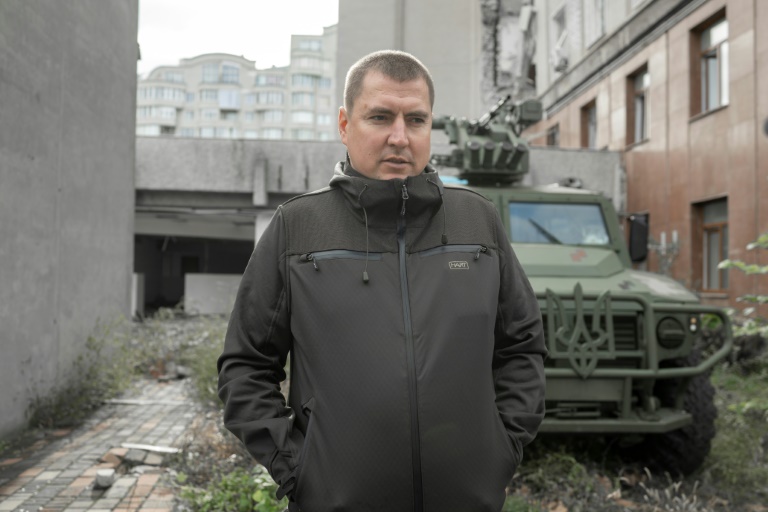
Vitaliy Danila’s hand was trembling by the time he filmed himself a few tense moments later with the dazed faces of five Ukrainian captives whose release he had just secured in return.

It was the 16th prisoner swap the regional traffic police chief had safely concluded along the southern front of the war Russia started in Ukraine eight months ago.

Each one of them could have ended in a bloodbath.

“When there is a battle and you see tanks firing and you are standing in a field conducting an exchange…” Danila said before trailing off.

The swap he filmed had occurred a day earlier and was just about to be formally announced by Ukrainian President Volodymyr Zelensky’s office.

But the towering policeman was still living the moment — and realising again how close to death he had come while bringing his total of recovered captives to 170.

“The first few times I did this, I thought this was my one-way ticket to the grave. We didn’t know who we would be meeting or if it was a trap,” he recalled at a secret location in the war-ravaged southern port of Mykolaiv.

“There is simply no trust between us at all,” he said of the soldiers conducting the actual swaps on the battlefield.

– ‘Anything can go wrong’ –

World headlines occasionally light up with news of mammoth Russian-Ukrainian exchanges that often involve high-value captives.

These have included 200 fighters who survived the Russian siege of the Azovstal steel plant in Mariupol and more than 100 women who returned from Russian captivity last week.

Less noticed are the more routine swaps of just a few prisoners — many of them gravely wounded — that the sides have been able to arrange behind the scenes.

How these occur in the middle of a war zone between two foes are a slight mystery, even to Danila himself.

“Anything can go wrong,” he said. “We just have to avoid opening fire at each other. Everyone has to come out alive.”

– Secret operation –

Danila said the first swaps were conducted in March, without formal state approval and in complete secrecy.

The Russians had just been thwarted in their attempt to seize Mykolaiv and were regrouping at a rear base.

The fighting was falling into a deadly rhythm and the captives were piling up on both sides.

The Russians made the first move.

“We got word that their side is not against an exchange. They established contact with us about a few prisoners,” he said.

“At this point, it was impossible to go through official channels. Very few people knew about it.”

He said the exchange lists are now approved by Ukraine’s GUR military intelligence directorate and the SBU security service.

But the first ones were done without any pauses in fighting at an agreed location in the very middle of the front.

“I looked at my men, we all agreed we should do this, and drove off,” Danila said.

– ‘All a lie’ –

Danila said his biggest challenge was talking to the enemy without losing his cool.

“We talk to them on the spot. We discuss the details of the exchange. All sorts of things can happen,” Danila said.

But he does not believe a word the Russians tell him and treats each exchange like a military mission.

“The way they act, pretending like they want to help and things like that — that is all a lie,” he said.

This mistrust stems in large part from the repeated targeting of civilians who were allowed to flee the war zone along established routes in the first weeks of war.

Those routes were secured along back channels similar to the ones Danila uses today.

“You have to keep your cool. No emotions,” said Danila of his mindset during the exchanges.

“Emotions can ruin everything. So everyone who takes part -– these are my guys that I know won’t take out their guns and open fire. I trust each of them with my life.”

Brewer AB InBev cheers best quarter of the year

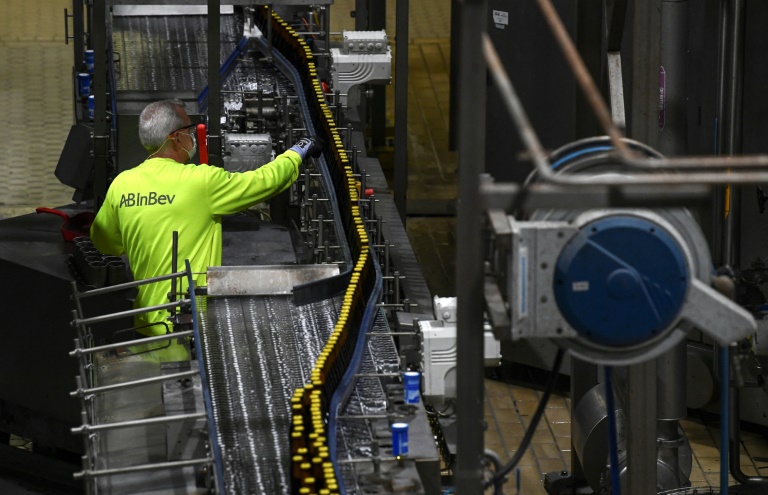
The world’s top brewer AB InBev said Thursday that it enjoyed its best quarter of the year as sales volumes rose, triggering a jump in profits.

While surging inflation has been putting pressure on consumers everywhere, the maker of Budweiser and Corona beers still managed to boost its sales volumes in the July-September quarter.

The 3.7-percent volume growth compared to the same period last year helped drive a 12.1-percent increase in sales revenue to $15.09 billion. 

The company called it the “best quarterly volume performance this year”.

Net profit soared 62 percent to $1.63 billion.

“We continue to see strong consumer demand for our portfolio and a resilient beer category as we navigate the dynamic operating environment,” chief executive Michel Doukeris said in a statement.

The Belgium-headquartered company, which also makes Beck’s and Stella Artois, boosted the lower end of its annual earnings outlook.

It now expects 2022 operating profits “to grow between 6-8 percent”.

Sales revenue should grow at a faster rate “from a healthy combination of volume and price” increases, it added.

Danske Bank sets aside nearly 2 bn euros for expected fines

Danske Bank, which is under investigation by Danish and US authorities, said Thursday it had set aside an additional 14 billion kroner (1.9 billion euros) to cover expected fines related to massive suspected money laundering via its Estonian branch.

“The discussions with US and Danish authorities related to the Estonia matter are now at a stage where Danske Bank can reliably estimate the total financial impact of a potential coordinated resolution amounting to a total of DKK 15.5 billion” or $2.1 billion, the bank’s chief executive Carsten Egeriis said in a statement.

“Our dialogue with the authorities is ongoing, and while there is still uncertainty that a resolution will be reached, we hope that a resolution will be concluded before the end of this year,” he added.

The bank had already set aside 1.5 billion kroner in 2018 when the scandal first emerged.

An investigation carried out by an outside law firm for the bank found that it could not account for the origin of more than $220 billion that flowed through its Estonian branch from 2007 to 2015, much of which was suspected to have come from Russia.

Danske Bank’s shares soared more than 10 percent after the announcement, the first time it has provided any estimate of the fines it may face. 

Russia paves way for toughening of 'LGBT propaganda' law

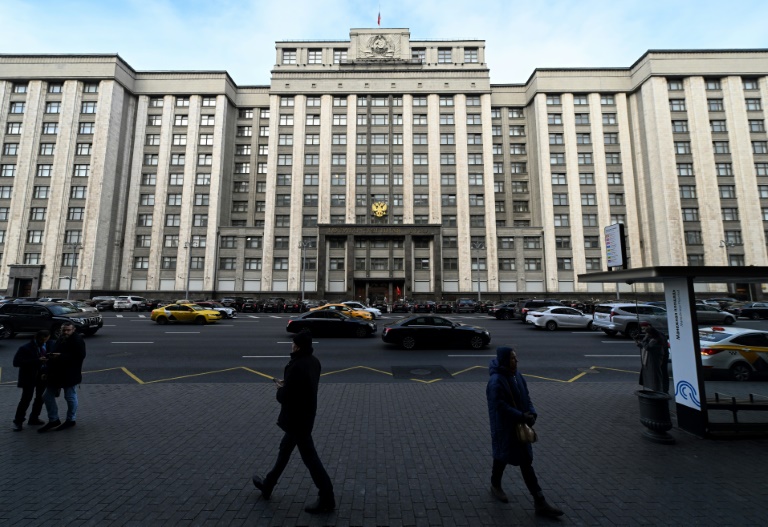
The lower house of Russia’s parliament, the Duma, approved amendments to toughen a notorious 2013 “gay propaganda” law on Thursday, as Moscow presses with a conservative drive at home while its troops battle in Ukraine.

Rights campaigners, who condemn the 2013 law, say that in effect any act or public mention of same-sex couples is being criminalised.

The Duma website said lawmakers had “unanimously” voted to ban “the propaganda of non-traditional sexual relations” to all Russian adults in a first reading. 

The bill still needs to be approved by the upper house of Russia’s parliament, the Federation Council, before it can be signed into law by President Vladimir Putin. 

The original 2013 law banned what authorities deemed as “gay propaganda” to minors, while the amendments would extend it to all Russian adults.

The new provisions set out a ban on “gay propaganda” in the media, internet, advertisement, literature and cinema.

Also included are bans on the “propaganda of paedophilia”.

The bill would outlaw the “denial of family values” and also has a clause against propaganda that could “cause minors to desire to change their sex”.

Foreigners who violate the law would face expulsion, according to its text. 

Officials had urged parliament to adopt the law, portraying it as a part of a civilisational clash with the West that has intensified since the Kremlin’s offensive in Ukraine. 

“A special military operation takes place not only on the battlefields, but also in the minds of people,” senior lawmaker Alexander Khinshtein said on social media, lauding the law’s approval. 

He called on Russia to “protect” itself from the “threat” of same-sex relationships. 

“This is for the future of our country: for the health of the nation, for demography.”

– ‘Another attempt to discriminate, humiliate’ –

Some Russian book publishers and film producers have raised censorship concerns, saying the law could even affect productions of Russian classics. 

The country’s main gay rights NGO “Set” earlier this month called for lawmakers not to adopt the bill, calling it “another attempt to discriminate and humiliate the LGBT community.”

The group called the law “absurd.” 

“The deputies assume that the capable adult population is not able to choose what they say, watch and read,” the group said in a statement. 

Putin has made social conservatism a cornerstone of his rule. 

In his speech annexing Ukrainian territories last month, he railed against families with a “parent number one and a parent number two” — apparently alluding to same-sex parenting. 

New constitutional amendments passed in a controversial vote in 2020 define marriage in Russia exclusively as the union of a man and a woman. 

In a ranking of 49 European countries, the Rainbow Europe organisation ranked Russia as fourth from the bottom in terms of tolerance of LGBTQ people. 

Iran president says Amini 'riots' pave way for attacks

Iran’s president on Thursday claimed “riots” sparked by Mahsa Amini’s death paved the way for “terrorist” attacks, a day after a gunman killed at least 15 people at a Muslim shrine.

The bloody attack in the southern city of Shiraz came as thousands of mourners paid tribute to Amini on Wednesday in her western hometown, 40 days after her death in police custody.

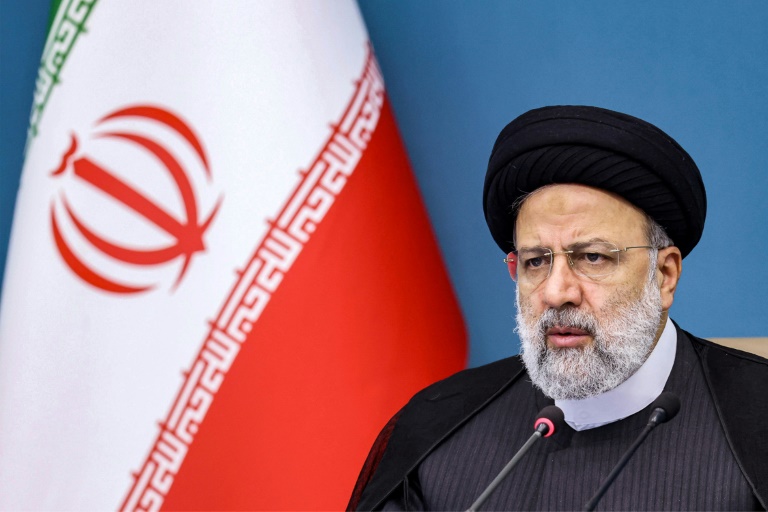
Ultra-conservative President Ebrahim Raisi appeared to link the two tragedies on Thursday, declaring that “the intention of the enemy is to disrupt the country’s progress, and then these riots pave the ground for terrorist acts”.

Raisi vowed “a severe response” over the mass killing at the Shiite Muslim Shah Cheragh mausoleum during evening prayers — an attack that was claimed by the Sunni extremist group Islamic State.

Protests have gripped Iran since Amini, a 22-year-old of Kurdish origin, died on September 16, three days after her arrest in Tehran by the notorious morality police for allegedly breaching the Islamic dress code for women.

The rallies have been led by young women who have burned their headscarves and confronted security forces, in the biggest wave of unrest to rock Iran for years.

Nearly six weeks after Amini’s death, the demonstrations show no signs of ending, fuelled by public outrage over a crackdown that has claimed the lives of other young women and girls.

Despite heightened security measures, columns of mourners had poured into Amini’s hometown of Saqez in Kurdistan province on Wednesday, paying tribute at her grave at the end of the traditional mourning period.

Mourners chanted at the Aichi cemetery outside Saqez, before many were seen heading to the governor’s office in the city centre, where Iranian media outlets said some were poised to attack an army base.

“Security forces have shot tear gas and opened fire on people in Zindan square, Saqez city,” the Hengaw rights group said, without specifying whether there were any dead or wounded.

– Kurdistan flashpoint –

After nightfall, blasts were heard as security forces fired on protesters in Marivan, Kurdistan province, in a video published by Hengaw, a Norway-based organisation.

“Death to the dictator,” chanted protesters in the nearby city of Bukan where bonfires burned in the streets, the rights group said.

Protesters also surrounded a base of the Basij militia in Sanandaj, a flashpoint city in Kurdistan province, starting fires and driving security forces back, it added.

There were similar scenes in Ilam city, near Iran’s western border with Iraq.

Iran’s ISNA news agency said the internet had been cut in Saqez for “security reasons”, and that nearly 10,000 people had gathered in the city.

But many thousands more were seen making their way in cars, on motorbikes and on foot along a highway, through fields and even across a river, in videos widely shared online.

Noisily clapping, shouting and honking car horns, mourners packed the highway linking Saqez to the cemetery eight kilometres (five miles) away, in images Hengaw said it had verified.

– ‘Severe response’ –

ISNA said some of the crowd returning from the cemetery had “intended to attack an army base”, until they were dispersed by other participants.

A police checkpoint was torched and fires burned beside a bridge in the Qavakh neighbourhood of Saqez, according to a verified video.

Some activists behind the daily protests over Amini’s death, which have evolved into a broader campaign to end the Islamic republic, have raised suspicions over the timing of the Shiraz attack.

“For its survival, for distracting the protesters, for justifying killings and crackdowns, the Islamic republic always puts on such bloody shows,” one of them, Atena Daemi, tweeted.

“The people have been fighting for 40 days non-stop to end such crimes.”

Oslo-based group Iran Human Rights says the security forces’ crackdown on the Amini protests has cost the lives of at least 141 demonstrators, including at least 29 children.

Amnesty International says the “unrelenting brutal crackdown” has killed at least 23 children.

The United States on Wednesday slapped sanctions on more than a dozen Iranian officials over the bloody response to the protests.

The White House said it was “concerned that Moscow may be advising Iran on best practices to manage protests, drawing on… extensive experience in suppressing” opponents.

burs-dv/fz

EU chief calls for closer ties to Central Asia in Kazakhstan visit

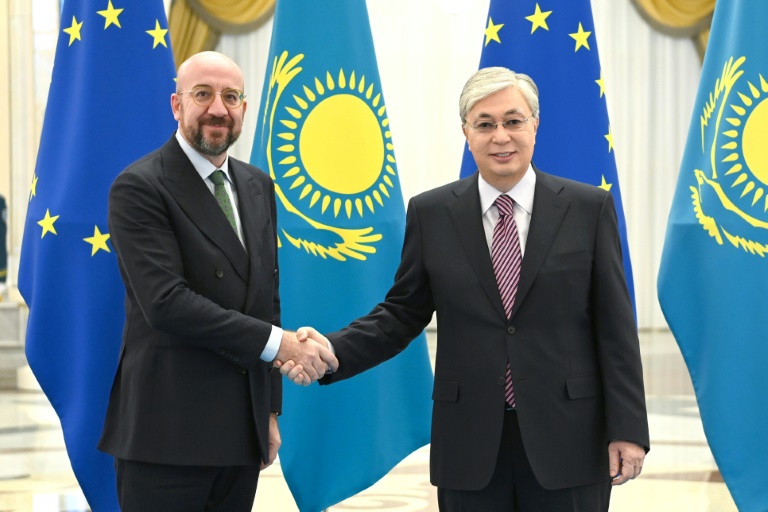
EU chief Charles Michel called on Thursday for closer ties with Central Asia on his first official visit to Kazakhstan, the main economic powerhouse in a region where Russia’s influence has come under question.

“Central Asia and Europe are coming closer together and becoming more and more connected,” Michel said at a press conference with Kazakh President Kassym-Jomart Tokayev in the capital Astana.

The head of the EU Council said Kazakhstan was a “crucial partner” and the EU hoped to “develop our cooperation”.

Michel’s visit comes eight months into Russia’s invasion of Ukraine, which has made Moscow’s former Soviet neighbours nervous and intensified the Kremlin’s clash with the West.

“My visit takes place at a difficult time for Europe and the wider region,” Michel said, condemning Moscow’s “war of aggression”. 

He is due to meet the leaders of all five Central Asian countries — Kazakhstan, Kyrgyzstan, Uzbekistan, Tajikistan and Turkmenistan — at 4:00 pm (1000 GMT). 

This is the first EU-Central Asia summit, a gathering Michel described as “much more than just a policy dialogue between two regions”.

“It’s a powerful symbol of our reinforced cooperation,” he said. 

He singled out Kazakhstan as a major trading partner for the EU and called for investment in transport infrastructure in the country, which has looked to reduce its dependence on Moscow since the latter sent troops to Ukraine. 

Michel’s visit comes two weeks after Astana hosted several summits attended by Russia — as well as by China and Turkey, who are also seeking to strengthen their influence in the region. 

Central Asian countries, traditional allies of Moscow, have trod a fine line on the Kremlin’s attack on Ukraine, neither condemning nor openly supporting it.

Tokayev even clashed with Russian President Vladimir Putin publicly in June, refusing to recognise the self-declared separatist republics controlled by pro-Moscow rebels in eastern Ukraine. 

Russia has since claimed to have annexed the regions.

Meanwhile Astana is seeking new routes for its oil exports, around three quarters of which transit Russia.

In early July, Tokayev pledged greater energy cooperation with the EU.

In a joint statement on Thursday, Tokayev and Michel said they discussed how to avoid “unintended negative impact on Kazakhstan’s economy” of EU sanctions against Russia, imposed over the Ukraine conflict.

They also discussed relocating to Kazakhstan “European manufacturing companies”, whose products are not subject to sanctions.

Rich in hydrocarbons and minerals, Kazakhstan lies at the heart of China’s massive new silk road project. 

Like Beijing, Turkey is also advancing its interest in the region, highlighting its ethno-linguistic and religious ties to Central Asia. 

Close Bitnami banner
Bitnami