World

Credit Suisse launches radical overhaul to stabilise bank

Credit Suisse announced a string of radical measures Thursday aimed at turning around the beleaguered bank following huge third quarter losses, including revamping its investment banking unit, slashing 9,000 jobs and raising fresh capital.

Switzerland’s second-biggest bank launched a strategic review aimed at putting an end to a series of scandals that have shaken the institution, saying the new plan was intended to create “a simpler, more focused and more stable bank”.

“Over 166 years, Credit Suisse has built a powerful and respected franchise but we recognise that in recent years we have become unfocused,” chairman Axel Lehmann said in a statement.

He said the reassessment of the bank’s direction included “a radical strategy and a clear execution plan to create a stronger, more resilient and more efficient bank with a firm foundation, focused on our clients and their needs”.

The Zurich-based bank revealed it was going for a “radical restructuring” of its investment bank, an accelerated cost-cutting effort, and strengthened and reallocated capital, “all of which are designed to create a new Credit Suisse”.

The bank intends to raise capital worth four billion Swiss francs ($4 billion) through issuing new shares to qualified investors, including Saudi National Bank, which has committed to invest up to 1.5 billion Swiss francs to achieve a shareholding of up to 9.9 percent.

The announcement came as the bank unveiled a third quarter net loss of 4.034 billion Swiss francs.

Credit Suisse shares slid on the announcements, opening down 7.26 percent on the Swiss stock exchange’s main SMI index at 4.417 Swiss francs.

– ‘More focused’ bank –

Credit Suisse also said it expects to run the bank with approximately 43,000 staff by the end of 2025 compared to 52,000 at the end of September, “reflecting natural attrition and targeted headcount reductions”.

The group will also reduce its cost base by 15 percent, or around 2.5 billion Swiss francs, delivering a cost base of around 14.5 billion Swiss francs in 2025. Of this, a 1.2 billion Swiss franc reduction is targeted for 2023.

Lehmann said the bank would work on improving risk management and control processes after a series of investments turned sour.

“I am convinced that this is the blueprint for success, helping rebuild trust and pride in the new Credit Suisse,” he said.

New chief executive Ulrich Koerner, who is considered a specialist in bank restructuring, has had a hundred days to diagnose the problems at Credit Suisse.

“This is a historic moment for Credit Suisse. We are radically restructuring the investment bank to help create a new bank that is simpler, more stable and with a more focused business model built around client needs,” he said.

Andreas Venditti, an analyst at Swiss investment managers Vontobel, said Koerner’s new strategic plan was “just the first step in a lengthy process to restore credibility and regain the trust” of Credit Suisse’s stakeholders.

“Resolute execution and no further mis-steps will be key and it will take time until results will begin to show,” he said, adding that the third quarter losses were “clearly worse than expected”.

Analysts at the US investment bank Jefferies said the large third quarter net loss was “another negative surprise”, adding: “The capital raise is larger than we thought it would be, and third quarter results show another quarter-on-quarter deterioration in momentum that we find concerning, though not very surprising”.

– Archegos, Greensill shocks –

Credit Suisse’s capital-guzzling investment banking arm has been the source of heavy losses which plunged Credit Suisse’s accounts into the red — eclipsing its other, more stable activities such as wealth management or its Swiss domestic banking services.

Credit Suisse’s investment bank suffered a loss of 3.7 billion Swiss francs in 2021 and backed that up with a 992 million Swiss franc loss in the first half of 2022.

It was hit by the implosion of the US fund Archegos, which cost Credit Suisse more than $5 billion.

Meanwhile its asset management branch was rocked by the bankruptcy of British financial firm Greensill, in which some $10 billion had been committed through four funds.

Credit Suisse is one of 30 banks globally deemed too big to fail, forcing it to set aside more cash to weather a crisis.

Banking experts are therefore dismissing social media rumours earlier this month of a “Lehman Brothers moment”, referencing the US bank which collapsed, triggering the 2008 financial crisis.

While many industry experts think a bankruptcy highly improbable, these rumours helped drag its share price down to a low of 3.158 Swiss francs on October 3.

Iran protests rage overnight after Mahsa Amini commemoration

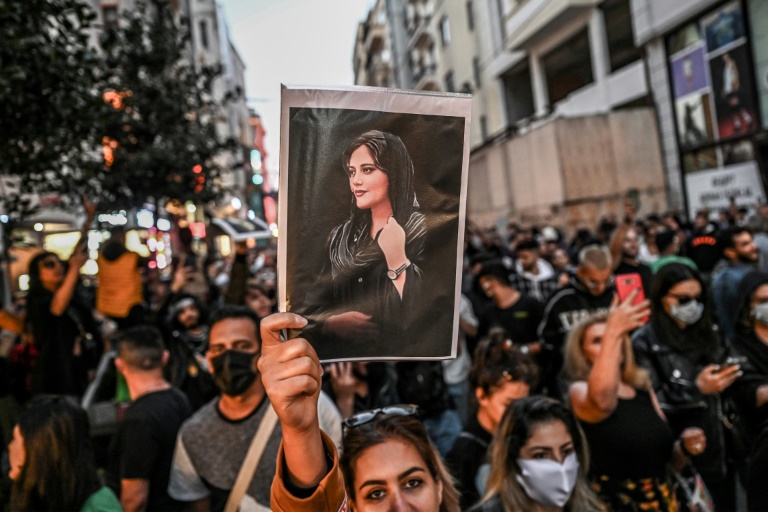
Protests raged through the night in Iran after thousands of mourners marked 40 days since the death of Mahsa Amini which sparked a wave of unrest across the Islamic republic.

Amini, a 22-year-old Iranian of Kurdish origin, died on September 16, three days after her arrest in Tehran by the notorious morality police for allegedly breaching the Islamic dress code for women.

Anger flared at her funeral last month and quickly sparked protests led by young women who have burned their headscarves and confronted security forces, in the biggest wave of unrest in Iran for years.

More than five weeks after Amini’s death, the demonstrations show no signs of ending, fuelled by public outrage over a crackdown that has claimed the lives of other young women and girls.

Despite heightened security measures, columns of mourners had poured into Saqez on Wednesday, paying tribute to Amini at her grave at the end of the traditional mourning period.

In a virally-shared picture verified by AFP, a young woman was seen standing on the roof of a car without a hijab head covering, looking into the distance at the highway packed with scores of vehicles and people.

Mourners chanted at the Aichi cemetery outside Saqez, before many were seen heading to the governor’s office in the city centre, where Iranian media outlets said some were poised to attack an army base.

“Security forces have shot tear gas and opened fire on people in Zindan square, Saqez city,” the Hengaw rights group said, without specifying whether there were any dead or wounded.

After nightfall, blasts were heard as security forces fired on protesters in Marivan, Kurdistan province, in a video published by Hengaw, a Norway-based organisation.

– Internet cut –

“Death to the dictator,” chanted protesters in the nearby city of Bukan where bonfires burned in the streets, the rights group said.

Protesters also surrounded a base of the Basij militia in Sanandaj, a flashpoint city in Kurdistan province, starting fires and driving security forces back, it added.

There were similar scenes in Ilam city, near Iran’s western border with Iraq.

Iran’s ISNA news agency said the internet had been cut in Saqez for “security reasons”, and that nearly 10,000 people had gathered in the city.

But many thousands more were seen making their way in cars, on motorbikes and on foot along a highway, through fields and even across a river, in videos widely shared online.

Noisily clapping, shouting and honking car horns, mourners packed the highway linking Saqez to the cemetery eight kilometres (five miles) away, in images Hengaw said it had verified.

ISNA said some of the crowd returning from the cemetery had “intended to attack an army base”, until they were dispersed by other participants.

A police checkpoint was torched and fires burned beside a bridge in the Qavakh neighbourhood of Saqez, according to a verified video.

“This year is the year of blood, Seyed Ali will be toppled,” a group of them chanted in footage verified by AFP, referring to Iran’s supreme leader Ayatollah Ali Khamenei.

Hengaw said workers went on strike in Saqez as well as Divandarreh, Marivan, Kamyaran and Sanandaj, and in Javanrud and Ravansar in the western province of Kermanshah.

– Fresh sanctions –

Kurdistan governor Esmail Zarei-Kousha accused Iran’s foes of being behind the unrest.

“The enemy and its media… are trying to use the 40-day anniversary of Mahsa Amini’s death as a pretext to cause new tensions but fortunately the situation in the province is completely stable,” he was quoted as saying by state news agency IRNA.

The social media channel 1500tasvir, which chronicles rights violations by Iran’s security forces, said fresh protests flared at universities in Tehran, Mashhad in Iran’s northeast, and Ahvaz in the southwest, among others.

Oslo-based group Iran Human Rights says the security forces’ crackdown on the Amini protests has claimed the lives of at least 141 demonstrators, including at least 29 children.

Amnesty International says the “unrelenting brutal crackdown” has killed at least 23 children.

The United States slapped sanctions on more than a dozen Iranian officials over the bloody response to the protests.

The White House said it was “concerned that Moscow may be advising Iran on best practices to manage protests, drawing on… extensive experience in suppressing” opponents.

Afraid of Kim's nukes? Build a bunker, South Korean professor says

If North Korea unleashes a nuclear attack on the South, architecture professor Lee Tae-goo has a plan: he’ll retreat to his purpose-built bunker and stay underground for at least two weeks to avoid radiation poisoning.

With thick concrete walls, steel-reinforced doors and an air purification system, Lee says his shelter, buried under a metre (three feet) of earth, could keep him safe from a nuclear disaster and withstand a direct hit from a conventional missile.

Built on his property in Jecheon city about 75 miles (120 kilometres) southeast of the capital Seoul, the government-funded bunker is part of a campaign by Lee to get South Koreans to take preparations for a nuclear fallout more seriously.

“Just 100 kilometres away from here we have North Korea, from which biological or nuclear missiles could fly,” Lee told AFP.

He said he was also extremely concerned about a Fukushima-style meltdown at one of South Korea’s ageing nuclear reactors.

“South Koreans have not been required to build personal shelters for ages. There’s a lack of public shelters and in many cases they’re far away,” he added.

Since the Korean War ended in 1953 with an armistice rather than a peace treaty, Seoul has remained technically at war with Pyongyang, and both sides routinely accuse each other of “provocations” that could tip them back into open conflict.

Pyongyang conducted its first nuclear test in 2006, and leader Kim Jong Un has recently ramped up work on weapons programmes banned by the UN, including staging drills it claimed simulated showering South Korea with tactical nukes.

Although Seoul’s military maintains what it calls an “utmost readiness” for an attack, Lee said most civilians have forgotten the war and are not prepared.


– ‘First-class shelters’ –


South Korea has a network of more than 17,000 bomb shelters nationwide, according to interior ministry data, with over 3,000 of them in Seoul.

The city’s subway stations double as public air raid shelters but they are not nuclear-safe.

In the 1970s, the country had a law requiring buildings over a certain size in major cities to have a basement, which would serve as a bunker in war.

But in Seoul, due to soaring property prices, most private buildings have converted those basements into parking space or the dank subterranean flats made famous by Oscar-winning movie “Parasite”.

This has Lee, a mild-mannered professor at Semyung University, concerned.

South Korea has a “first-class shelter system for the military”, he said, but “the civilian side lags far behind”.

Lee’s “model” bunker cost around 70 million won ($48,000) — excluding labour costs — to construct, which was covered by a ministry of education research grant that he applied for and won.

He said he hopes it will inspire others to follow suit, adding that he has had many enquiries about his blueprint, including from officials from South Korea’s Air Force, who inspected his bunker earlier this year.

For urban high-rise apartment dwellers, Lee recommends retro-fitting basement parking lots to double as bunkers, and says the government should nuclear-proof subway tunnels.

– Secret –

Although many in South Korea have grown numb to the constant threats from Pyongyang, there are signs that more citizens like Lee are taking matters into their own hands.

One local company, Chumdan Bunker System, started selling nuclear-proof bunkers at a Seoul showroom in 2017 — the year that Kim conducted his last nuclear test.

Chumdan’s website advertises “an underground bunker capable of withstanding nuclear explosions, radiation, chemical agents”.

But the company told AFP that while they were seeing growing interest in their products, this had not yet translated into sales growth.

“There has been an increase in online traffic to our website but the number of actual orders remain the same,” an Chamdan employee told AFP.

Lee said people who construct nuclear-proof bunkers prefer to keep them secret, fearing they will be inundated with requests from friends, family and neighbours for shelter during an emergency.

“Even when I built this bunker, all these people were telling me they’d come if the country comes under attack. But this place can only fit 12 people,” he said.

N. Ireland set for fresh elections over post-Brexit impasse

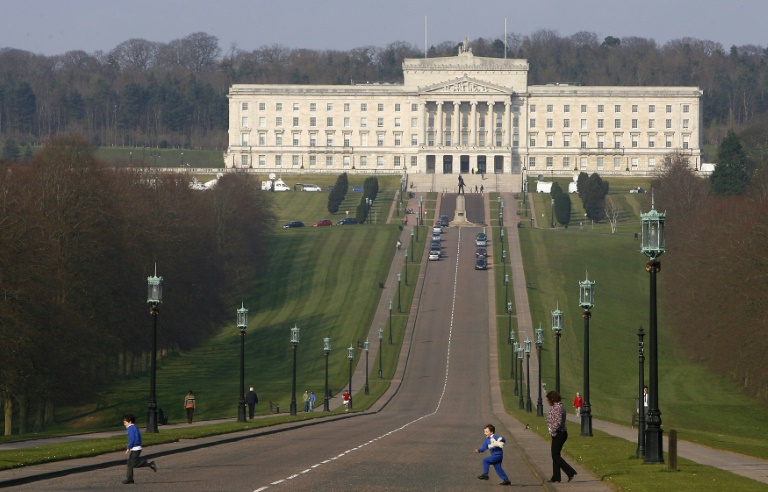
Northern Ireland on Thursday appeared headed for a second election this year, after UK government efforts to resolve months of political stalemate over its post-Brexit status failed to secure a breakthrough.

Chris Heaton-Harris, Britain’s Northern Ireland minister, has been holding talks with the political parties in a fresh bid to get them to form a new executive.

If no agreement is reached by Friday, London will be legally required to call early elections for the devolved assembly in the volatile province.

Heaton-Harris spoke to party leaders in Belfast on Wednesday “to reiterate the importance of restoring the Northern Ireland executive”, a government statement said.

“If the executive is not formed by 28 October, I will call an election,” the minister said.

“Time is running out,” he added. “People deserve an accountable devolved government.”

Northern Ireland has been without a functioning government since February, when the pro-UK Democratic Unionist Party (DUP) collapsed the executive over its staunch opposition to post-Brexit trade rules there.

It wants the so-called Northern Ireland Protocol — agreed by London and Brussels as part of Britain’s 2019 Brexit deal — overhauled or scrapped entirely. They say it weakens the province’s place within the United Kingdom.

Many unionists also argue the pact is threatening the delicate balance of peace between the pro-Irish nationalist community and those in favour of continued union with Britain.

The Brexit measures — which effectively keep Northern Ireland in the European Union’s single market and customs union — were agreed to avoid the return of a hard land border with the neighbouring Republic of Ireland, which remains an EU member.

Eliminating that hard border was a key strand of the 1998 Good Friday Agreement, which ended three decades of sectarian violence in Northern Ireland.

– Sinn Fein appeal –

Pro-Irish party Sinn Fein scored a historic first electoral victory in May, further complicating efforts to restore power sharing.

DUP leader Jeffrey Donaldson said on Wednesday he had reiterated to Heaton-Harris the need “to clear away the debris of the protocol”. An election would do little to resolve the standoff, he said.

“I don’t think it helps us to get any quicker towards the solution that we need or to get the political institutions back up and running,” he added.

Donaldson noted the party was nonetheless ready to contest a fresh ballot.

Sinn Fein leader Michelle O’Neill, who is set to become Northern Ireland’s first minister if the executive can be restarted, renewed her call for the DUP to end its boycott. 

“I appeal to those blocking an executive, to work with the rest of us and put money into people’s pockets,” she tweeted on Wednesday.

Britain’s Conservative government, which has been wracked by turmoil and had three prime ministers in two months, has urged Brussels to revise the protocol and is passing contentious legislation to rip it up.

Britain has previously threated to unilaterally modify the protocol.

That has sparked fears of a trade war and worsening relations with Europe, when the economic landscape is already gloomy.

– ‘Strong relationship’ –

Northern Ireland’s political impasse was discussed in a phone call on Wednesday between Irish premier Micheal Martin and the new British prime minister, Rishi Sunak, who only took office the previous day.

The two leaders “agreed on the vital importance of a strong relationship between the UK and Ireland”, Downing Street said.

On the Northern Ireland Protocol, Sunak stressed that he would prefer “a negotiated outcome and hoped all parties would approach the current challenges with pragmatism and goodwill”, his office said.

The British premier tweeted that he discussed with Martin “how the UK and Ireland as close neighbours and friends can work together in the coming months”.

Sunak also spoke by phone to European Commission President Ursula von der Leyen, who said on Twitter that she hopes to find “joint solutions under the protocol… that will provide stability and predictability”.

Times have changed, says Vanuatu's first woman MP in 14 years

Gloria Julia King, the first woman elected to the Vanuatu parliament in 14 years, said entering the male-dominated house shows that times have changed in the Pacific nation.

King based her campaign around creating more opportunities for women in a country where gender violence is common and they have long been disadvantaged in employment and education.

She will join the 52-member national legislature when it next sits on November 4.

“I am very honoured to be the one voice representing the women of Vanuatu … to table their concerns in parliament,” King said.

“Coming from a very traditional background, I think the main challenge was getting everyone to accept … that time has changed,” King told AFP.

According to United Nations figures, three in five women in Vanuatu have experienced violence while in a relationship. 

Women make up 40 percent of the work force in Vanuatu, a chain of 82 islands that sits halfway between Australia and Fiji in the vast South Pacific Ocean.

Marion Crawshaw, a former New Zealand diplomat with extensive Pacific experience, said King’s election to parliament was an important step.

“Vanuatu has had women in key positions in business and the public sector, but it is genuinely quite difficult for them to get elected,” she said.

An Australian government study in 2014 found women were “disadvantaged in significant ways in Vanuatu”.

“Women remain underrepresented in vocational, technical and tertiary education,” it said.

– ‘Do not give up’ –

King entered politics as an established figure in both sport and business.

She co-runs a firm selling kava, a peppery, mildly intoxicating root drink that is a key part of Pacific ceremonies, and played football for Vanuatu in her youth. 

King also acted as Vanuatu’s chef de mission at the Commonwealth Games in Birmingham this year.

She chairs the Vanuatu Women in Sports working group and founded a football development programme for youngsters.

“Sports was a separate platform that helped me preach the same message, be it women in business or women in sports,” she said.

King entered politics in August after former prime minister Bob Loughman had parliament suspended to avoid a no-confidence vote. 

Snap elections were called for mid-October, giving candidates just 10 days to campaign.

Coalition talks are under way to form the next government. Former opposition leader Ralph Regenvanu has said he is “looking forward to having a woman’s voice in parliament again”.

King said she went into politics “very open-eyed” but admitted sometimes feeling outnumbered as the only woman in intense decision-making discussions.

She won 1,618 votes to take one of the five seats in the constituency of Efate, Vanuatu’s third-largest island. 

Half a dozen other women candidates failed to secure a seat but King praised their efforts and urged them to stay motivated.

“Do not give up. Women (must) continue to support each other by lifting each other up,” she said. 

“It’s reassuring to know that women are brave enough to step up.”

Lufthansa says 'left pandemic behind', books healthy profit

German airline giant Lufthansa said Thursday it had “left the pandemic behind” as it reported a robust third-quarter net profit, and predicted strong demand in the months ahead.

Lufthansa had made huge losses when the coronavirus brought global air travel to a halt, and had to be bailed out by the German government in 2020.

But a strong rebound in demand as economies reopen has lifted the company’s fortunes faster than expected. 

From July to September, the group made a net profit of 809 million euros ($814 million), compared to a loss of 72 million euros in the same period a year earlier. 

Chief executive Carsten Spohr said the group had “left the pandemic behind and is looking optimistically into the future”.

“The desire to travel, and thus the demand for air travel, continues unabated.”

All business segments, from passenger airlines to logistics, contributed to the result, he said. 

The results extend the group’s recovery, after it reported its first net profit in August since the pandemic.

Third-quarter revenues almost doubled year-on-year to 10.1 billion euros. 

More than 33 million passengers flew with the airlines of the group in the quarter, up from 20 million in the same period a year earlier.

The group’s passenger airlines returned to profitability, with an adjusted operating profit of 709 million euros, compared with a loss a year earlier.

– More strong demand –

Lufthansa said it believes air travel demand will remain strong in the months ahead, and it expects to make an operating profit in the fourth quarter despite the usual seasonal slowdown.

The group — which includes Eurowings, Austrian, Swiss and Brussels Airlines — had already announced earlier this month it was significantly raising its earnings forecast for 2022 due to strong demand. 

It confirmed that it expected adjusted operating profits of more than one billion euros for the year.

The positive results came despite strike action by pilots and ground staff over the summer, which cost the group around 70 million euros during the July-to-September period.

Lufthansa made huge net losses of 6.7 billion euros in 2020 and 2.2 billion euros in 2021 due to the pandemic, but its finances have stabilised earlier than expected. 

The German government sold its remaining stake in Lufthansa last month, putting the airline back in private hands.

IEA sees global energy emissions peaking in 2025

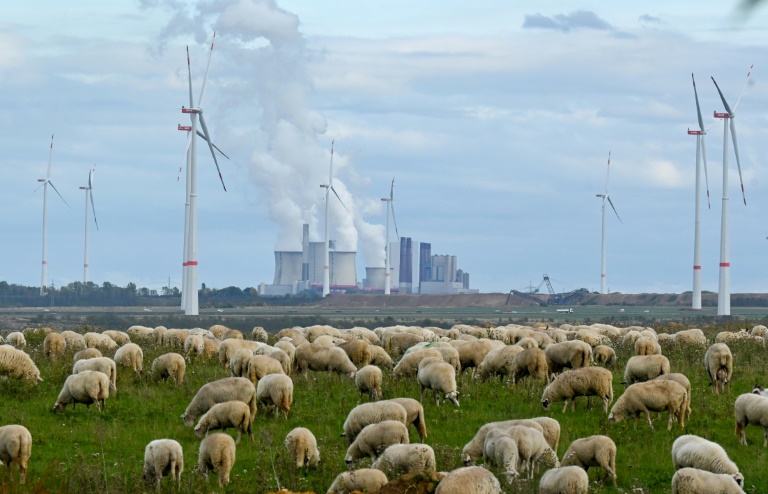
The International Energy Agency said Thursday it believes global energy emissions will peak in 2025 as surging prices due to the Russian invasion of Ukraine propel investment in renewables.

Only last year the IEA said there was “no clear peak in sight” in energy emissions, but the new higher investment in wind and solar is setting up demand for all fossil fuels to peak or plateau, leading to a drop in emissions.

“The global energy crisis triggered by Russia’s invasion of Ukraine is causing profound and long-lasting changes that have the potential to hasten the transition to a more sustainable and secure energy system,” the IEA said as it released its latest annual World Energy Outlook report.

Based on the latest measures and policies announced by governments in the face of soaring energy prices, the IEA forecasts global clean energy investment to rise by more than 50 percent from today’s levels to $2 trillion per year by 2030. 

Those measures will propel sustained gains in renewables and nuclear power.

“As a result, a high point for global emissions is reached in 2025,” the IEA said.

Global energy-related CO2 emissions are then set to fall back slowly from a high point of 37 billion tonnes per year to 32 billion tonnes by 2050, it added.

The Paris-based organisation, which advises energy-consuming nations, said that its forecast sees demand for all types of fossil fuels peaking or hitting a plateau.

Coal use, which has seen a temporary bump higher, will drop back in the next few years as more renewables come online.

Natural gas hits a plateau in the end of the decade, instead of the previous forecast of a steady rise.

Oil demand levels off in the mid-2030s and then gradually declines towards mid-century due to uptake of electric vehicles, instead of the earlier estimate of a steady increase.

Overall, the share of fossil fuels in the global energy mix in the IEA’s stated policies scenario falls from around 80 percent to just above 60 percent by 2050.

– Energy markets ‘changed’ –

“Energy markets and policies have changed as a result of Russia’s invasion of Ukraine, not just for the time being, but for decades to come,” said IEA Executive Director Fatih Birol in a statement as the report was released.

But that will still leave the world on track for a rise in global temperatures of around 2.5 degrees Celsius by the end of the century, which would likely trigger severe climate change impacts.

The IEA also has a scenario to arrive at zero net emissions in 2050, which is seen as necessary to hit the 1.5C warming target enshrined in the Paris climate pact.

That would require clean energy investments to rise to $4 trillion per year by 2030, instead of the current forecast of $2 trillion.

“The IEA, with all its expertise and authority is clear: clean energy investments must triple by 2030, and gas is a dead end,” said Laurence Tubiana, head of the European Climate Foundation and France’s former climate ambassador.

“The current European energy crisis clearly proves the dangers of gas: high price, volatility, geopolitical dependence,” she added.

IEA sees global energy emissions peaking in 2025

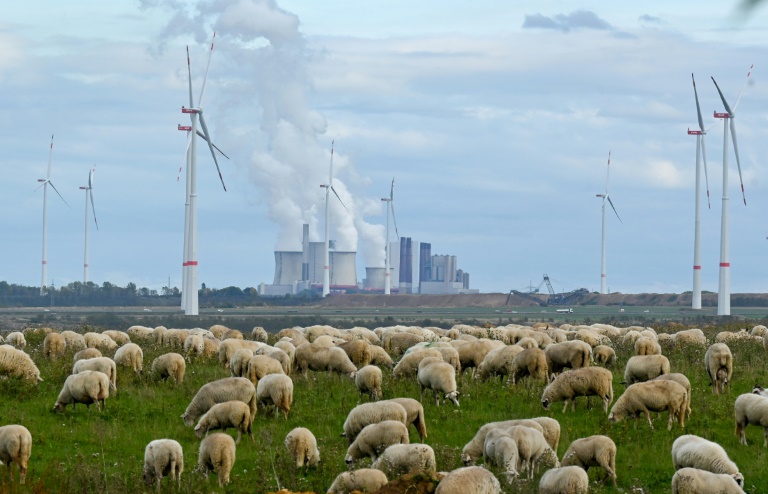
The International Energy Agency said Thursday it believes global energy emissions will peak in 2025 as surging prices due to the Russian invasion of Ukraine propel investment in renewables.

Only last year the IEA said there was “no clear peak in sight” in energy emissions, but the new higher investment in wind and solar is setting up demand for all fossil fuels to peak or plateau, leading to a drop in emissions.

“The global energy crisis triggered by Russia’s invasion of Ukraine is causing profound and long-lasting changes that have the potential to hasten the transition to a more sustainable and secure energy system,” the IEA said as it released its latest annual World Energy Outlook report.

Based on the latest measures and policies announced by governments in the face of soaring energy prices, the IEA forecasts global clean energy investment to rise by more than 50 percent from today’s levels to $2 trillion per year by 2030. 

Those measures will propel sustained gains in renewables and nuclear power.

“As a result, a high point for global emissions is reached in 2025,” the IEA said.

Global energy-related CO2 emissions are then set to fall back slowly from a high point of 37 billion tonnes per year to 32 billion tonnes by 2050, it added.

The Paris-based organisation, which advises energy-consuming nations, said that its forecast sees demand for all types of fossil fuels peaking or hitting a plateau.

Coal use, which has seen a temporary bump higher, will drop back in the next few years as more renewables come online.

Natural gas hits a plateau in the end of the decade, instead of the previous forecast of a steady rise.

Oil demand levels off in the mid-2030s and then gradually declines towards mid-century due to uptake of electric vehicles, instead of the earlier estimate of a steady increase.

Overall, the share of fossil fuels in the global energy mix in the IEA’s stated policies scenario falls from around 80 percent to just above 60 percent by 2050.

– Energy markets ‘changed’ –

“Energy markets and policies have changed as a result of Russia’s invasion of Ukraine, not just for the time being, but for decades to come,” said IEA Executive Director Fatih Birol in a statement as the report was released.

But that will still leave the world on track for a rise in global temperatures of around 2.5 degrees Celsius by the end of the century, which would likely trigger severe climate change impacts.

The IEA also has a scenario to arrive at zero net emissions in 2050, which is seen as necessary to hit the 1.5C warming target enshrined in the Paris climate pact.

That would require clean energy investments to rise to $4 trillion per year by 2030, instead of the current forecast of $2 trillion.

“The IEA, with all its expertise and authority is clear: clean energy investments must triple by 2030, and gas is a dead end,” said Laurence Tubiana, head of the European Climate Foundation and France’s former climate ambassador.

“The current European energy crisis clearly proves the dangers of gas: high price, volatility, geopolitical dependence,” she added.

Credit Suisse launches radical overhaul to stabilise bank

Credit Suisse announced a series of radical measures Thursday aimed at turning around the beleaguered bank following huge third quarter losses, including revamping its investment banking unit, 9,000 job cuts and raising fresh capital.

Switzerland’s second-biggest bank launched a strategic review aimed at putting an end to a series of scandals that have shaken the institution, saying the results were intended to create “a simpler, more focused and more stable bank”.

The Zurich-based bank revealed it was going for a “radical restructuring” of its investment bank, an accelerated cost-cutting effort, and strengthened and reallocated capital, “all of which are designed to create a new Credit Suisse”.

The bank intends to raise capital worth four billion Swiss francs ($4 billion) through the issuance of new shares to qualified investors, including Saudi National Bank, which has committed to invest up to 1.5 billion Swiss francs to achieve a shareholding of up to 9.9 percent.

“Over 166 years, Credit Suisse has built a powerful and respected franchise but we recognise that in recent years we have become unfocused,” chairman Axel Lehmann said in a statement.

He said the reassessment of the bank’s future direction included “a radical strategy and a clear execution plan to create a stronger, more resilient and more efficient bank with a firm foundation, focused on our clients and their needs”.

Lehmann said the bank will also work on further improving risk management and control processes across the entire bank, after a series of investments turned sour.

“I am convinced that this is the blueprint for success, helping rebuild trust and pride in the new Credit Suisse.”

– ‘Simpler, more stable’ bank –

Credit Suisse also said expects to run the bank with approximately 43,000 staff by the end of 2025 compared to 52,000 at the end of September, “reflecting natural attrition and targeted headcount reductions”.

The announcement came as the bank unveiled a third quarter net loss of $4.034 billion Swiss francs.

“This is a historic moment for Credit Suisse. We are radically restructuring the investment bank to help create a new bank that is simpler, more stable and with a more focused business model built around client needs,” new chief executive Ulrich Koerner said in a statement.

Koerner is considered a specialist in bank restructuring and has had a hundred days to diagnose the problems at Credit Suisse.

The announcement was keenly awaited by analysts, rating agencies, banking regulators and regular customers.

– Sluggish market –

The market backdrop to Thursday’s announcement was not particularly buoyant.

In the third quarter, high market volatility caused by Russia’s war in Ukraine, combined with recession fears, dampened demand for transactions such as debt issues, initial public offerings as well as mergers and acquisitions.

And on Tuesday, Switzerland’s biggest bank UBS, like the major US investment banks, reported a drop in income in its investment bank arm.

Credit Suisse’s capital-guzzling investment banking arm has been the source of heavy losses which plunged Credit Suisse’s accounts into the red — eclipsing its other, more stable activities such as wealth management or its Swiss domestic banking services.

Credit Suisse’s investment bank suffered a loss of 3.7 billion Swiss francs in 2021 and backed that up with a 992 million Swiss franc loss in the first half of 2022.

It was hit by the implosion of the US fund Archegos, which cost Credit Suisse more than $5 billion.

Meanwhile its asset management branch was rocked by the bankruptcy of British financial firm Greensill, in which some $10 billion had been committed through four funds.

Credit Suisse is one of 30 banks globally deemed too big to fail, forcing it to set aside more cash to weather a crisis.

Banking experts are therefore dismissing social media rumours earlier this month of a “Lehman Brothers moment”, referencing the US bank which collapsed, triggering the 2008 financial crisis.

While many industry experts think a bankruptcy highly improbable, these rumours helped drag its share price down to a low of 3.158 Swiss francs.

Credit Suisse shares closed Wednesday at 4.763 Swiss francs on the Swiss stock exchange’s main SMI index.

In eastern Ukraine, the plight of another Volodymyr Zelensky

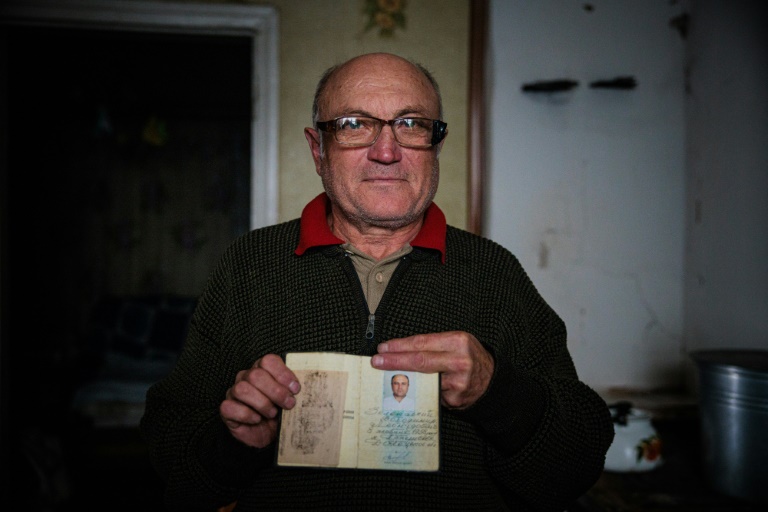
When occupying Russian forces came knocking on doors in his small village in east Ukraine in late April to check the identities of residents, 64-year-old retiree Volodymyr Zelensky was terrified.

Then, one of the Russian soldiers glanced at his passport and burst out laughing. 

“It’s okay guys, the war is over,” the soldier said. “We can go home — we got their president!”

Born in 1958 in the eastern Ukrainian city of Bakhmut, then part of the Soviet Union, to a coal miner and a construction worker, Zelensky, a namesake of the Ukrainian leader, served as a driver in the Soviet army and then worked in construction.

Since Russia invaded its neighbour in February, Zelensky, who has no known relationship to the Ukrainian president, has spent most of the war hiding from bombardment in the basement of his house.

“I had quit smoking four years before, but I started again,” Zelensky said.

AFP is not disclosing the name of his village for security reasons.

– ‘Don’t look like him’ –

His wife Valentina Zelenska, 72, evacuated to western Ukraine at the start of the war, but Zelensky refused to leave the home he purchased 20 years ago.

Here, he could finally breathe “the purest air” after years in a mining town, plant vegetables on his own plot, enjoy time on the patio, and fish in the local pond.

Zelenska returned home after Kyiv’s forces expelled the Russians from the village late last month.

But it is now being pounded by Russian artillery, and she is alarmed whenever a blast outside blows the plastic sheet on their gutted window inwards.

“She hasn’t gotten used to it,” said her husband, wearing corduroy trousers and a jumper with a zip collar.

With the help of a flashlight, he retrieved an old photo album, and found a photo of himself as a man in his 40s in khaki uniform.

“I don’t think I look like the president. Not at all,” he said.

His wife disagreed.

“But you do look like him!” she said from her stool on the other edge of the living room.

He laughed.

“Which president are you talking about? Biden?” he asked.

– ‘People can’t take it anymore’ –

His wife said Zelensky was a common last name in Ukraine, as well as in Russia.

But she admits she had never known any other Volodymyr Zelensky until Ukraine’s current leader, a former comedian, was elected president in 2019.

Zelensky, the retiree, voted for his namesake in the election.

“He presents well, he is young, intelligent,” he said.

But now Zelensky says he is disappointed that the president is not doing more to negotiate an end to the war with Russia.

“The people here can’t take it anymore,” he said. 

Like many residents of his generation in the eastern Donbas region, Zelensky considers Ukraine to be his homeland.

But the former Soviet soldier is also nostalgic for his years under the Soviet regime, which he says brought peace and prosperity to his generation.

It was the couple’s twenty-second marriage anniversary on Wednesday, and Zelensky wanted to give his wife a bunch of flowers.

But in a village ravaged by fighting and cut off from the rest of the world, there were none to be found.

Close Bitnami banner
Bitnami