World

Hong Kong finance chief contracts Covid ahead of banking summit

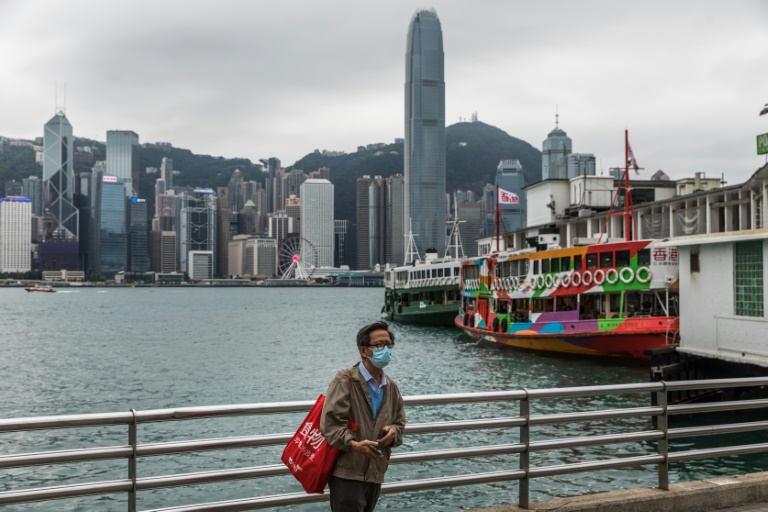
Hong Kong’s finance chief could have to miss an upcoming global banking summit in the city, after his office revealed Thursday he had tested positive for the coronavirus.

City authorities are eager for the international finance get-together to show Hong Kong is open for business, having been previously isolated by China’s zero-Covid policy.

Financial Secretary Paul Chan was scheduled to deliver speeches next Wednesday and Thursday at the conference, which is set to draw about 200 participants and the heads of 30 major financial institutions.

But it is now unclear if Chan will be able to attend.

He had been visiting Bahrain and Saudi Arabia to build trade ties and was scheduled to return Thursday.

But he tested positive under a rapid antigen test in Riyadh, his office said. 

“(Chan) has cancelled the remaining parts of the visit and will stay in Riyadh for a short while, and seek to comply with relevant health requirements and return to Hong Kong as soon as possible,” it said in a statement.

The office did not immediately respond to AFP questions about his updated itinerary.

Hong Kong has gradually relaxed its pandemic controls, including scrapping mandatory quarantine for new arrivals last month.

But it still maintains many strict curbs long abandoned by much of the world, including rival business hubs.

International arrivals must undergo multiple tests and cannot enter bars or restaurants for the first three days.

Under Hong Kong’s current rules, those who test positive for the coronavirus must isolate at home or in a hotel room, or a government isolation centre.

They may leave isolation after a week if they have tested negative on days six and seven.

Global banking chiefs will have a taste of Hong Kong’s existing pandemic curbs next week at the summit in the Four Seasons hotel, although certain rules will be relaxed.

Attendees will not be able to go to bars or restaurants during the first three days after arriving but will be able to socialise in a bubble within the hotel and attend an opening banquet at an art museum.

The event will include panel talks featuring the CEOs of Goldman Sachs, Morgan Stanley and Citigroup.

Top executives from HSBC, Standard Chartered, JPMorgan Chase and BlackRock will also attend.
Hong Kong finance chief contracts Covid ahead of banking summit

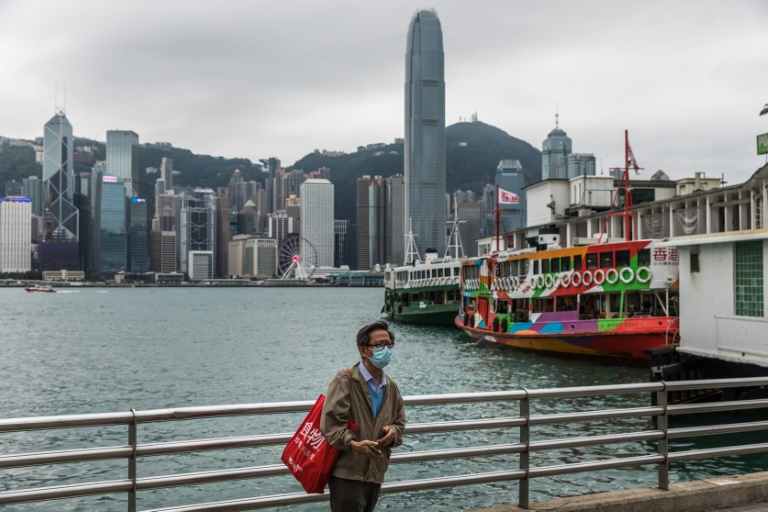
Hong Kong’s finance chief could have to miss an upcoming global banking summit in the city, after his office revealed Thursday he had tested positive for the coronavirus.

City authorities are eager for the international finance get-together to show Hong Kong is open for business, having been previously isolated by China’s zero-Covid policy.

Financial Secretary Paul Chan was scheduled to deliver speeches next Wednesday and Thursday at the conference, which is set to draw about 200 participants and the heads of 30 major financial institutions.

But it is now unclear if Chan will be able to attend.

He had been visiting Bahrain and Saudi Arabia to build trade ties and was scheduled to return Thursday.

But he tested positive under a rapid antigen test in Riyadh, his office said. 

“(Chan) has cancelled the remaining parts of the visit and will stay in Riyadh for a short while, and seek to comply with relevant health requirements and return to Hong Kong as soon as possible,” it said in a statement.

The office did not immediately respond to AFP questions about his updated itinerary.

Hong Kong has gradually relaxed its pandemic controls, including scrapping mandatory quarantine for new arrivals last month.

But it still maintains many strict curbs long abandoned by much of the world, including rival business hubs.

International arrivals must undergo multiple tests and cannot enter bars or restaurants for the first three days.

Under Hong Kong’s current rules, those who test positive for the coronavirus must isolate at home or in a hotel room, or a government isolation centre.

They may leave isolation after a week if they have tested negative on days six and seven.

Global banking chiefs will have a taste of Hong Kong’s existing pandemic curbs next week at the summit in the Four Seasons hotel, although certain rules will be relaxed.

Attendees will not be able to go to bars or restaurants during the first three days after arriving but will be able to socialise in a bubble within the hotel and attend an opening banquet at an art museum.

The event will include panel talks featuring the CEOs of Goldman Sachs, Morgan Stanley and Citigroup.

Top executives from HSBC, Standard Chartered, JPMorgan Chase and BlackRock will also attend.
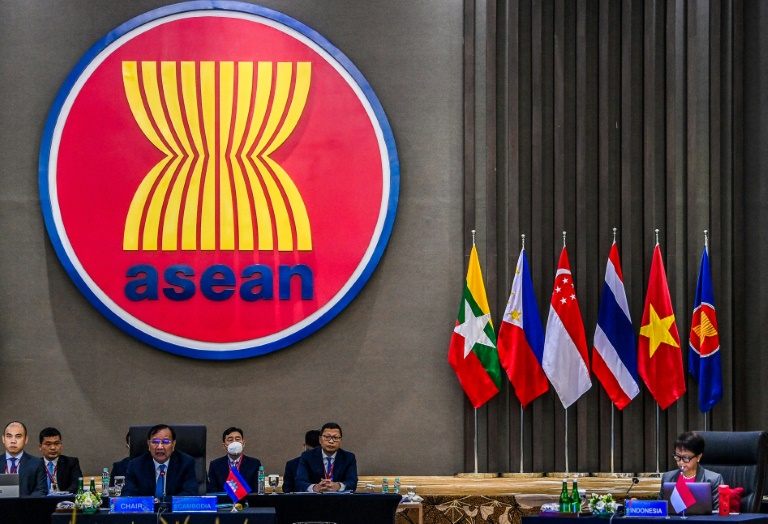
ASEAN ministers hold talks on festering Myanmar crisis

Southeast Asian foreign ministers met in Jakarta Thursday to discuss the political crisis in Myanmar ahead of November’s ASEAN leaders’ summit, without a representative from the country’s military junta.

Myanmar has been in chaos since a coup in February last year, with more than 2,300 killed in the military’s brutal crackdown on dissent, according to a local monitoring group.

The Association of Southeast Asian Nations (ASEAN) has said it is “gravely concerned” over escalating human rights abuses there, but its efforts to resolve the crisis are yet to bear fruit.

A five-point ASEAN plan from April last year would be one of the focuses of Thursday’s emergency talks at the ASEAN Secretariat in Jakarta, Indonesian Foreign Minister Retno Marsudi has said.

A foreign ministry spokesperson said Marsudi would give a news briefing about the talks, in the afternoon.

The 10-country bloc was expected to discuss progress on the plan, which called for an end to violence; increased aid; and dialogue between the military and the anti-coup movement.

“The Myanmar junta doesn’t show any desire or concrete steps for implementation (of the plan),” an Indonesian foreign ministry official told AFP last week.

Junta leader Min Aung Hlaing has not been invited to the ASEAN leaders’ summit in Cambodia next month — for the second year in a row — and Myanmar’s top diplomat Wunna Maung Lwin was excluded from ministerial talks in February and August.

A Thai foreign ministry official confirmed Myanmar did not send a representative to Thursday’s meeting.

Political prisoners have been executed in Myanmar in recent months and an air strike on a rebel-held concert in Kachin state on Sunday reportedly killed about 50 people.

The junta has said reports the air strike killed civilians were “rumours”.

The United States urged strong action at Thursday’s meeting.

Daniel Kritenbrink, the top US diplomat for East Asia, said the junta was leading “the complete destruction of all the progress made over the last decade” as the nation transitioned to democracy.

The envoy said Washington has “great respect” for ASEAN but said Secretary of State Antony Blinken, during talks in August, voiced “frustration” on the lack of progress on Myanmar.

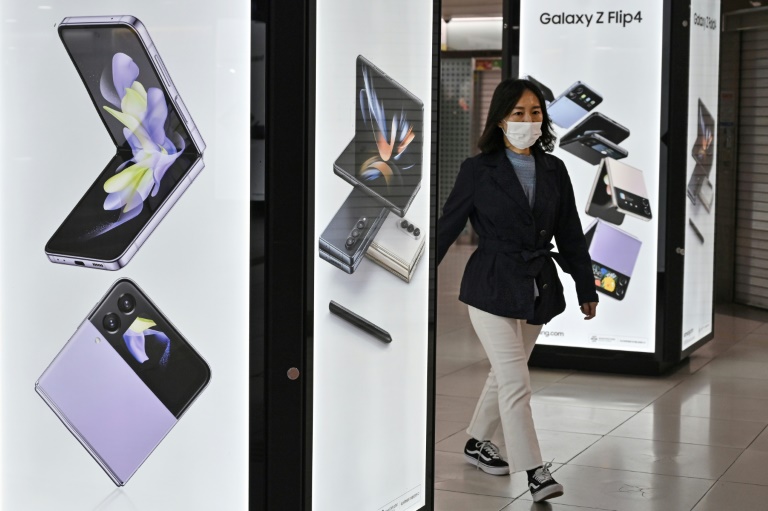
Samsung Electronics says Q3 operating profit down 31% on-year

South Korean tech giant Samsung Electronics on Thursday said its third-quarter operating profits were down 31.39 percent year on year after a global economic downturn hit demand for consumer electronics.

Earnings in its crucial memory chips division dropped, the company said in a statement, adding that “demand for consumer products remained weak”.

Operating profit for July to September 2022 fell to 10 trillion won ($7 billion), down from 15.8 trillion won for the same period last year, the company said.

The results were released the same day the company announced de facto leader Lee Jae-yong — who received a presidential pardon in August over a fraud conviction — would be promoted to chairman of Samsung Electronics.

“Our survival depends on future technologies,” Lee said in a message posted on the company’s internal forum after his promotion, Yonhap reported. “We can turn this crisis into opportunity.”

The third-quarter results are the first year-on-year decline in profit in nearly three years for Samsung Electronics, the world’s biggest smartphone maker.

But the company said it had seen an increase in sales, which were up by 3.79 percent from the same period last year to 76 trillion won.

The world’s biggest memory-chip maker is the flagship subsidiary of the giant Samsung group, by far the largest of the family-controlled empires known as chaebols that dominate business in South Korea, Asia’s fourth-largest economy.

The conglomerate is crucial to the country’s economic health — its overall turnover is equivalent to a fifth of the national gross domestic product.

Until the second quarter of this year, Samsung, along with other tech companies, significantly benefited from strong demand for electronic devices — as well as chips that power them — during the pandemic.

But the global economy is now facing multiple challenges, including soaring inflation, rising interest rates and the growing threat of a broad debt crisis.

The situation has been exacerbated by Russia’s invasion of Ukraine — which has spurred a surge in energy prices and pushed global food prices up — along with China’s adherence to a strict zero-Covid policy.

“In 2023, demand is expected to recover to some extent, but macroeconomic uncertainties are likely to persist,” Samsung Electronics said.

“In the Memory Business, after a dampened first half, demand is expected to rebound centering on servers as data center installations resume,” it added.

Analyst Park Sung-soon of Cape Investment & Securities told AFP he did not expect consumer demand for tech products to recover until the second half of 2023. 

“So the focus for Samsung will be adjusting its supply rather than relying on demand recovering anytime soon,” he said.

Samsung also said it had benefited from the strength of the US dollar against the Korean won, “resulting in an approximately 1.0 trillion won company-wide gain in operating profit compared to the previous quarter”.

– Geopolitics –

The vast majority of the world’s most advanced microchips are made by just two companies — Samsung and Taiwan’s TSMC — both of which are running at full capacity to alleviate a global shortage.

The supply of memory chips has become an issue of global geopolitical significance recently, with leading governments scrambling to secure supplies.

That was demonstrated in May when US President Joe Biden kicked off a South Korea tour by visiting Samsung’s sprawling Pyeongtaek chip plant.

Russia’s invasion of Ukraine has “further spotlighted the need to secure our critical supply chains”, Biden said at the plant, underscoring the importance of bolstering technology partnerships among “close partners who do share our values”.

Samsung employs about 20,000 people in the United States and work is under way to build a new semiconductor plant in Texas, scheduled to open in 2024.

The US also recently introduced new measures to limit China’s access to high-end semiconductors with military uses, a move that has wiped billions from chip companies’ valuations worldwide.

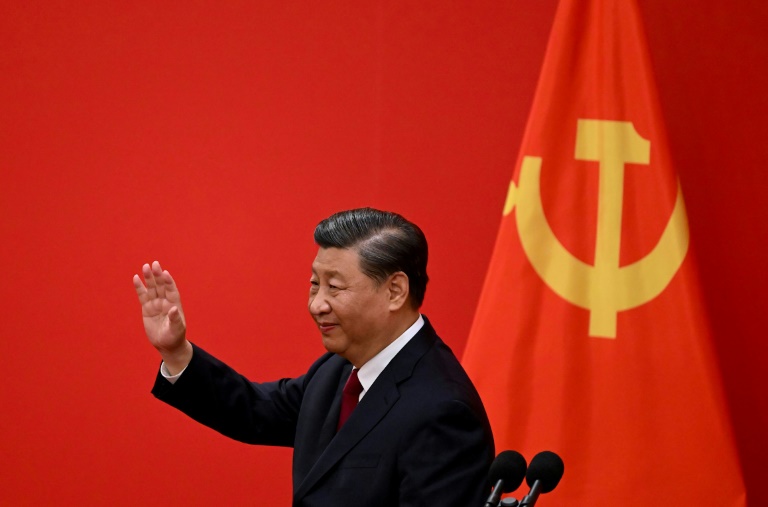
Xi says China, US must 'find ways to get along'

President Xi Jinping said China and the United States must “find ways to get along” to safeguard world peace and development, state media reported Thursday, as he embarks on his precedent-breaking third term in power.

China and the United States have butted heads in recent years on issues ranging from Beijing’s aggression towards self-governing Taiwan to its crackdown in Hong Kong and alleged rights abuses in Xinjiang.

Washington has also accused Beijing of providing diplomatic cover for Russia’s invasion of Ukraine.

Xi sealed another five years as China’s leader at the end of a twice-a-decade Communist Party Congress on Sunday.

“The world today is neither peaceful nor tranquil,” Xi wrote in a congratulatory letter to the National Committee on US-China Relations — some of his first remarks since the Congress — according to Chinese state broadcaster CCTV.

“As major powers, strengthening communication and cooperation between China and the US will help to increase global stability and certainty, and promote world peace and development,” he reportedly told the New York-based non-profit organisation.

Xi added that China was “willing to work with the US to give mutual respect, coexist peacefully… (and) find ways to get along in the new era”, the broadcaster reported. 

Doing so “will not only be good for both countries, but also benefit the world”, Xi wrote.

The Biden administration said this month that China is the only competitor to the United States “with both the intent to reshape the international order and, increasingly, the economic, diplomatic, military and technological power to advance that objective”.

Samsung Electronics says Q3 operating profit down 31% on-year

South Korean tech giant Samsung Electronics on Thursday said its third-quarter operating profits were down 31.39 percent year on year after a global economic downturn hit demand for consumer electronics.

Earnings in its crucial memory chips division dropped, the company said in a statement, adding that “demand for consumer products remained weak”.

Operating profit for July to September 2022 fell to 10 trillion won ($7 billion), down from 15.8 trillion won for the same period last year, the company said.

The results are the first year-on-year decline in profit in nearly three years for Samsung Electronics, the world’s biggest smartphone maker.

But the company said it had seen an increase in sales, which were up by 3.79 percent from the same period last year to 76 trillion won.

The world’s biggest memory-chip maker is the flagship subsidiary of the giant Samsung group, by far the largest of the family-controlled empires known as chaebols that dominate business in South Korea, Asia’s fourth-largest economy.

The conglomerate is crucial to the country’s economic health — its overall turnover is equivalent to a fifth of the national gross domestic product.

Until the second quarter of this year, Samsung, along with other tech companies, significantly benefited from strong demand for electronic devices — as well as chips that power them — during the pandemic.

But the global economy is now facing multiple challenges, including soaring inflation, rising interest rates and the growing threat of a broad debt crisis.

The situation has been exacerbated by Russia’s invasion of Ukraine — which has spurred a surge in energy prices and pushed global food prices up — along with China’s adherence to a strict zero-Covid policy.

“In 2023, demand is expected to recover to some extent, but macroeconomic uncertainties are likely to persist,” Samsung Electronics said.

“In the Memory Business, after a dampened first half, demand is expected to rebound centering on servers as data center installations resume,” it added.

Analyst Park Sung-soon of Cape Investment & Securities told AFP he did not expect consumer demand for tech products to recover until the second half of 2023. 

“So the focus for Samsung will be adjusting its supply rather than relying on demand recovering anytime soon,” he said.

Samsung also said it had benefited from the strength of the US dollar against the Korean won, “resulting in an approximately 1.0 trillion won company-wide gain in operating profit compared to the previous quarter”.

Parent company Samsung Group announced Thursday that heir and de facto leader Lee Jae-yong — who received a presidential pardon in August over a fraud conviction — would be promoted to chairman.

– Geopolitics –

The vast majority of the world’s most advanced microchips are made by just two companies — Samsung and Taiwan’s TSMC — both of which are running at full capacity to alleviate a global shortage.

The supply of memory chips has become an issue of global geopolitical significance recently, with leading governments scrambling to secure supplies.

That was demonstrated in May when US President Joe Biden kicked off a South Korea tour by visiting Samsung’s sprawling Pyeongtaek chip plant.

Russia’s invasion of Ukraine has “further spotlighted the need to secure our critical supply chains”, Biden said at the plant, underscoring the importance of bolstering technology partnerships among “close partners who do share our values”.

Samsung employs about 20,000 people in the United States and work is under way to build a new semiconductor plant in Texas, scheduled to open in 2024.

The US also recently introduced new measures to limit China’s access to high-end semiconductors with military uses, a move that has wiped billions from chip companies’ valuations worldwide.

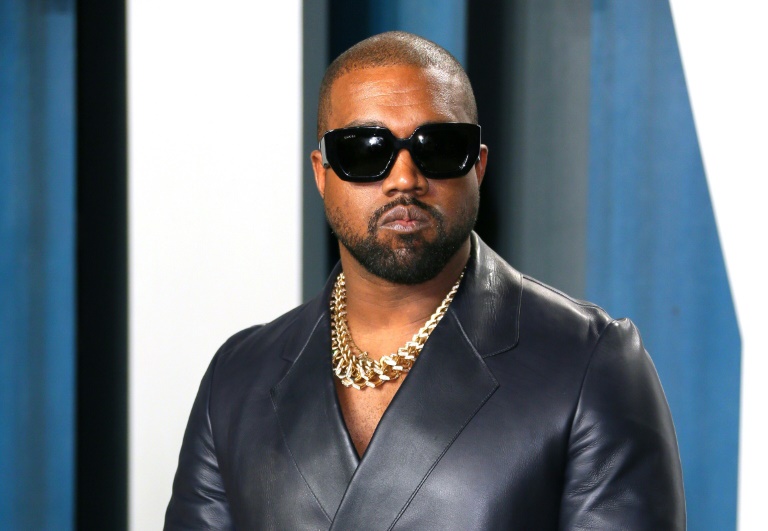
Kanye West 'escorted' out of Skechers offices

Kanye West was “escorted” by two executives out of the Skechers corporate offices after the rapper showed up uninvited, the shoe company said in a statement Wednesday.

West — known formally as Ye — has made headlines in recent weeks for racist and anti-Semitic statements that have cost him several lucrative fashion collaborations.

He arrived “unannounced and without invitation” at the Los Angeles offices, Skechers said, adding that he was “engaged in unauthorized filming.”

The hip hop star appeared at a Paris fashion show this month wearing a shirt emblazoned with “White Lives Matter,” a slogan created as a backlash to the Black Lives Matter movement.

Days later, he was locked out of Twitter and Instagram for threatening to “Go death con 3 on JEWISH PEOPLE,” using a reference to US military readiness.

“Skechers is not considering and has no intention of working with West,” the company said Wednesday.

“We condemn his recent divisive remarks and do not tolerate anti-Semitism or any other form of hate speech.”

“Considering Ye was engaged in unauthorized filming, two Skechers executives escorted him and his party from the building after a brief conversation,” it added.

German sportswear giant Adidas on Tuesday announced it was ending its partnership with West, followed later that day by American apparel company Gap, which said it was taking “immediate” steps to remove his products.

Paris-based fashion house Balenciaga ended ties with West last week.

One of Hollywood’s biggest talent agencies, CAA, said on Monday it was dropping West, while film and TV producer MRC said it was shelving an already finished documentary about the artist.

West’s ex-wife Kim Kardashian posted a message condemning hate speech on social media this week without mentioning her former husband.

West, 45, has been outspoken about his struggles with mental health issues.

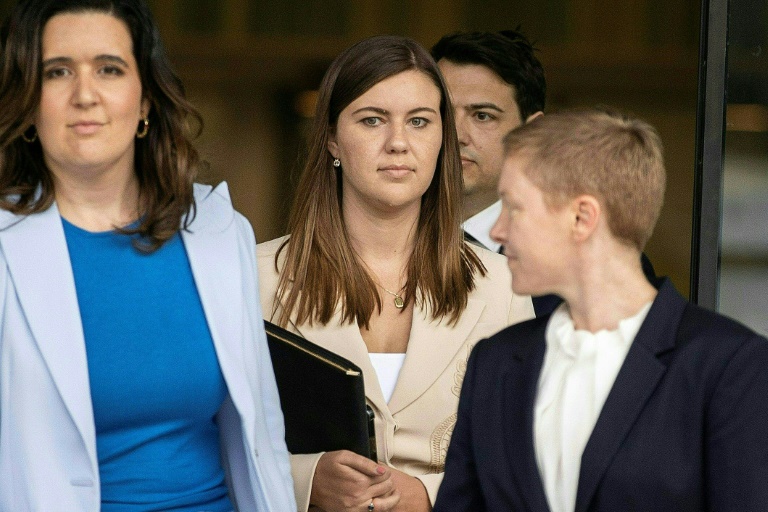
High-profile Australian rape case abruptly ends in mistrial

A high-profile rape case that ignited nationwide protests across Australia abruptly ended Thursday in a mistrial, the latest twist in a courtroom saga involving some of the country’s most senior politicians.

Brittany Higgins, 27, alleged that former conservative staffer Bruce Lehrmann, 27, raped her on a couch inside the parliamentary office of a government minister following a night of heavy drinking in March 2019.

Lehrmann denied the allegations and pleaded not guilty to one charge of sexual intercourse without consent.

The jury — comprising eight women and four men — had been deliberating for five days when Chief Justice Lucy McCallum discharged them and declared a mistrial on a technicality.

McCallum said court sheriffs found prohibited material — namely, an academic paper on sexual assault — inside the document folder of a jury member.

“Sometimes there’s a mishap which results in the miscarriage of a trial, which has happened here,” McCallum said. 

A new trial was scheduled to begin in February.

The allegations came to light in early 2021 and — fuelled by intense publicity and the global #MeToo movement — sparked a furious public backlash in Australia.

Shortly after they were aired, some 100,000 people marched in demonstrations held across the country against sexual violence.

Five separate investigations followed, collectively delivering a scathing indictment on the frequently sexist nature of Australian politics.

Justice McCallum had described the case, heard in Australia’s capital Canberra, as a “cause celebre” and had warned the jury to ignore the blizzard of publicity.

Lehrmann’s lawyers unsuccessfully tried to postpone the trial after former conservative Prime Minister Scott Morrison apologised to Higgins during a sitting of parliament.

The lawyers said the apology could jeopardise Lehrmann’s right to a fair trial. 

Two cabinet ministers in Australia’s former conservative government were called as witnesses.

They were asked whether political considerations had played a part in keeping the allegations out of the public eye. 

Senator Linda Reynolds — Higgins’s boss at the time of the alleged rape — denied coaching defence lawyers during cross examination.

Prosecutors had questioned whether Reynolds was trying to help the defence team because the allegations were politically embarrassing.

Senator Michaelia Cash — a former Attorney General — told the court it would have been “political suicide” to cover up the case. 

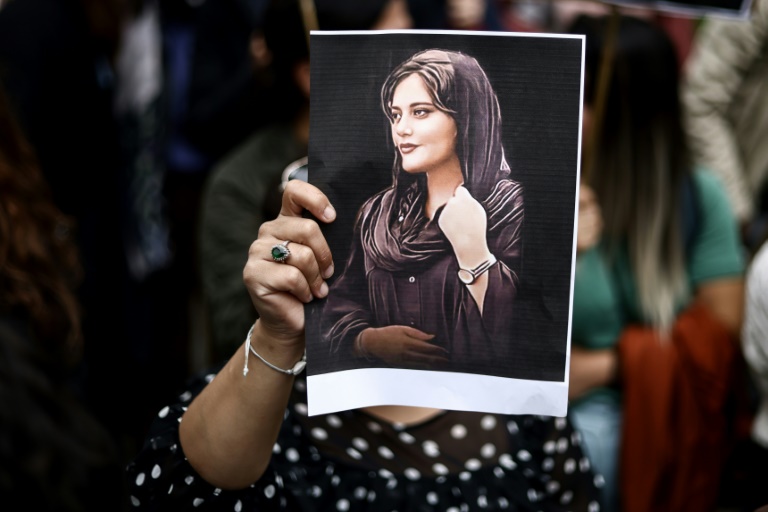
Iran security forces 'open fire' as thousands mourn Mahsa Amini

Iranian security forces opened fire on protesters who massed in their thousands Wednesday in Mahsa Amini’s hometown to mark 40 days since her death, according to a rights group and verified videos.

Amini, a 22-year-old Iranian of Kurdish origin, died on September 16, three days after her arrest in Tehran by the notorious morality police for allegedly breaching the Islamic dress code for women.

Anger flared at her funeral and quickly sparked widespread protests that saw young women lead the charge, burning their headscarves and confronting security forces, in the biggest wave of unrest in the Islamic republic for years.

Despite heightened security measures, columns of mourners had poured into Saqez in the western Kurdistan province to pay tribute to Amini at her grave at the end of the traditional mourning period.

In a viral picture of the scene verified by AFP, a young woman was seen standing on the roof of a car without a hijab head covering, looking into the distance at the highway packed with scores of vehicles and mourners.

“Death to the dictator,” mourners chanted at the Aichi cemetery outside Saqez, before many were seen heading to the governor’s office in the city centre, where Iranian media outlets said some were poised to attack an army base.

“Security forces have shot tear gas and opened fire on people in Zindan square, Saqez city,” Hengaw, a Norway-based group that monitors rights violations in Iran’s Kurdish regions, said without specifying whether there were any dead or wounded.

– ‘Year of blood’ –

Iran’s ISNA news agency said the internet had been cut in Saqez for “security reasons”, and that nearly 10,000 people had gathered in the city.

But many thousands more were seen making their way in cars, on motorbikes and on foot along a highway, through fields and even across a river, in videos widely shared online.

Noisily clapping, shouting and honking car horns, mourners packed the highway linking Saqez to the cemetery eight kilometres (five miles) away, in images that Hengaw told AFP it had verified.

ISNA said some of the crowd returning from the cemetery had “intended to attack an army base”, until they were dispersed by other participants.

A police checkpoint was torched and fires burned along a bridge in the Qavakh neighbourhood of Saqez, according to a verified video.

“This year is the year of blood, Seyed Ali will be toppled,” a group of them chanted in a video verified by AFP, referring to Iran’s supreme leader Ayatollah Ali Khamenei.

“Kurdistan, Kurdistan, the graveyard of fascists,” others were heard singing in a video shared by activists on Twitter. AFP was unable to immediately verify the footage.

Hengaw said workers went on strike in Saqez as well as Divandarreh, Marivan, Kamyaran and Sanandaj, and in Javanrud and Ravansar in the western province of Kermanshah.

The rights group said Iranian football stars Ali Daei and Hamed Lak had travelled to Saqez “to take part in the 40th day” service.

They had been staying at the Kurd Hotel but were “taken to the government guesthouse… under guard by the security forces”, it said.

Daei has previously run into trouble with authorities over his online support for the Amini protests.

– ‘Foes behind unrest’ –

Kurdistan governor Esmail Zarei-Kousha accused Iran’s foes of being behind the unrest.

“The enemy and its media… are trying to use the 40-day anniversary of Mahsa Amini’s death as a pretext to cause new tensions but fortunately the situation in the province is completely stable,” he said, quoted by state news agency IRNA.

The social media channel 1500tasvir, which chronicles rights violations by Iran’s security forces, said fresh protests flared at universities in Tehran, Mashhad in Iran’s northeast, and Ahvaz in the southwest, among others.

Oslo-based group Iran Human Rights said the security forces’ crackdown on the Amini protests has claimed the lives of at least 141 demonstrators, in an updated death toll Tuesday.

Amnesty International says the “unrelenting brutal crackdown” has killed at least 23 children, while IHR said at least 29 children have been slain.

The United States on Wednesday placed over a dozen Iranian officials on its sanctions blacklist for the crackdown, while Germany condemned Tehran for earlier sanctioning European media outlets.

The White House later said it was “concerned that Moscow may be advising Iran on best practices to manage protests, drawing on… extensive experience in suppressing” opponents.

Women foreign ministers from a dozen countries — including France, Australia, and Germany — also jointly condemned Iran’s “ongoing crackdown against protesters” on Wednesday. 

They expressed “solidarity with the courageous Iranian women engaging in their right of peaceful assembly and advocating for their human rights”, said the statement led by Canada’s Melanie Joly. 

More than five weeks after Amini’s death, the demonstrations show no signs of ending.

They have been fuelled by public outrage over the crackdown, which has claimed the lives of other young women and girls.

100 years on, nostalgia for Fascism persists in Italy

On October 28, 1922, Benito Mussolini’s Fascist blackshirts entered Rome, marking the start of a dictatorship still viewed today with some indulgence in Italy.

The centenary of the so-called March on Rome on Friday comes days after far-right leader Giorgia Meloni was named Italy’s new prime minister, renewing debate on the legacy of Fascism.

Although Meloni’s Brothers of Italy party has neo-fascist roots, in her first speech to parliament this week she insisted she had “never felt sympathy or closeness to undemocratic regimes… including Fascism”.

Yet unlike in Germany or Spain, where only a handful of extremists still revere Adolf Hitler or the Franco dictatorship, attitudes to Mussolini in Italy are more ambiguous.

As recently as 2013, then-Prime Minister Silvio Berlusconi said the racial laws against Jews were “the worst mistake of a leader, Mussolini, who in many other ways had done well”.

– Shameful racial laws –

Berlusconi, a billionaire media mogul whose right-wing Forza Italia party is back in government as part of Meloni’s coalition, is known for his outbursts.

But the sentiment is not uncommon, notes Valerio Alfonso Bruno, an analyst at the Centre for Analysis of the Radical Right in London.

“A large part of the population has never truly come to terms with Fascism,” he told AFP.

Mussolini’s authoritarian, anti-democratic regime celebrated military might and intense nationalism.

In Italy, there remains “this cult of the strong personality, the strongman, the autocrat who governs without worrying about democracy”, Bruno said.

Mussolini is praised for having provided Italy with much-needed infrastructure, from trains to highways, as well as social welfare programmes — even if many of these projects were already underway when he took office.

Few, however, defend his record on the race laws. From 1938, the regime began stripping rights from Jews, banning them from public office, forbidding intermarriage, permitting the confiscation of their property and eventually their internment.

Under Mussolini’s regime, which ran until July 1943, more than 7,000 Italian Jewish men, women and children were murdered in the Nazi death camps.

In her speech on Tuesday, Meloni called the race laws “the lowest point in Italian history, a shame that will mark our people forever”.

Berlusconi’s 2013 remarks, on the sidelines of a ceremony marking Holocaust Remembrance Day in Milan, were condemned by the centre-left and many others.

They showed “the extent to which Italy still has trouble seriously accepting its own history and its own responsibilities”, the head of the Union of Italian Jewish Communities, Renzo Gattegna, said at the time.

Gattegna’s observation is still relevant today. 

– ‘Heirs of Il Duce’ –

According to an October 2021 poll, 66 percent of 16- to 25-year-olds believe Mussolini’s Fascist regime was a dictatorship that must be condemned in part, but which also had beneficial effects.

Only 29 percent of those questioned by the Ipsos research institute, on behalf of a national association of former deportees, said Mussolini was to be entirely condemned.

And for five percent, Fascism was considered a positive form of government.

While today, statues of controversial historical figures are being removed in countries such as the United States and Britain, physical reminders of “Il Duce” remain intact throughout Italy.

An obelisk inscribed with the words “Mussolini Dux” still sits a stone’s throw from the Olympic stadium in Rome, with no note of context.

Portraits of the dictator still adorn the walls of some government ministries.

And while a post-war law bans the apology for — or justification of — Fascism, it is not enforced. Websites flourish online praising the memory of the “ventennio,” the two decades Mussolini was in power.

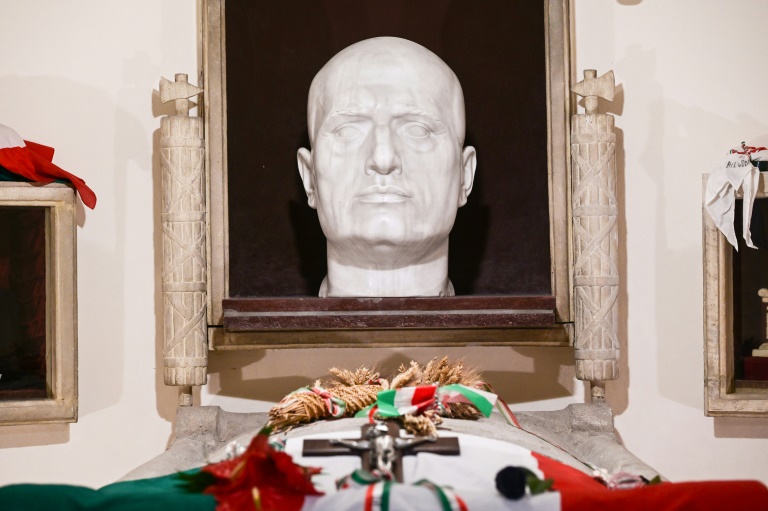
In Predappio, a small town in northern Italy where Mussolini was born and buried, his tomb in the family chapel attracts tens of thousands of visitors each year.

“This memory is certainly tolerated, not just in Predappio,” said analyst Bruno. And in recent years, he added, this tolerance of Fascism had increased.

“We are all heirs of Il Duce,” said Ignazio La Russa, a member of Meloni’s Brothers of Italy party. Recently elected speaker of the Senate, he was speaking on television only last month. 

La Russa, who collects Fascist memorabilia including busts of Mussolini, had days earlier been forced to condemn his brother for giving the fascist salute at the funeral of a far-right activist.

Close Bitnami banner
Bitnami