World

'Overpaying' Musk on deadline to close Twitter deal

Elon Musk looks set to meet a Friday deadline to seal his on-again, off-again deal to buy Twitter, avoiding a trial over the $44 billion contract that he admits is overpriced.

After he sought to terminate the sale, Twitter filed a lawsuit to hold Musk to the agreement he inked in April to purchase the social media giant.

With a trial looming, the unpredictable billionaire capitulated and revived his takeover plan.

Musk signaled the deal was on track Wednesday by changing his Twitter profile to “Chief Twit” and posting a video of himself walking into the company’s California headquarters carrying a sink.

“Let that sink in!” he quipped.

“I think on Friday, we’ll get an announcement that says that Elon Musk has purchased Twitter,” University of California, Berkeley, law professor Adam Badawi told AFP.

Musk, the world’s richest man, has reportedly been lining up financing since Delaware Judge Kathaleen McCormick paused litigation on October 6.

If the buyout doesn’t close by the end of the business day, the judge will likely “bring the hammer down” and head quickly to trial, Badawi added.

Musk tried to step back from the Twitter deal soon after his unsolicited offer was accepted, and said in July he was canceling the contract because he was misled by Twitter over the number of fake “bot” accounts — allegations rejected by the company.

Twitter, in turn, sought to prove Musk, the head of the Tesla electric vehicle company, was contriving excuses to walk away simply because he changed his mind.

“I’m excited about the Twitter situation,” Musk said during a recent Tesla earnings call.

“I think it’s an asset that has just sort of languished for a long time but has incredible potential, although obviously myself and the other investors are overpaying for Twitter right now.”

– Twitter free-for-all? –

While pitching the deal to investors, Musk said he planned to get rid of nearly three-quarters of Twitter’s workers, according to a Washington Post report.

That report came as a shock in the Twitter workplace, where some employees who would prefer not to work for Musk have already left, said a worker who asked to remain anonymous in order to speak more freely.

“But a portion of people, including me, are willing to give him the benefit of the doubt for now,” the employee said of Musk.

“The more I hear about him the less I like him, but I do find it quite funny that he brought a sink to the headquarters just to make a joke.”

Musk’s stewardship of the site has sparked worry from activists who fear he could open the gates to more abusive and misinformative posts.

He has vowed to dial content moderation back to a bare minimum, and is expected to clear the way for former US president Donald Trump to return to the platform.

The then-president was blocked due to concerns he would ignite more violence like the deadly attack on the Capitol in Washington to overturn his election loss.

Once the deal is complete, Musk will essentially be handed the keys to Twitter and be in charge of the often-divisive global platform.

“The existing board of Twitter is probably going to get fired; Musk will put in directors who are friendly to him, he will put in management,” said Badawi.

He doubted Musk will want to be chief executive since he already runs Tesla, SpaceX, Neuralink and the Boring Company.

Trump now posts on his own, much-smaller, platform Truth Social, and has vowed not to return to Twitter even after Musk takes over.

The former president, who is considering another run at the White House in 2024, has 4.18 million followers at Truth Social, compared to the 88.8 million he had on Twitter.

'Overpaying' Musk on deadline to close Twitter deal

Elon Musk looks set to meet a Friday deadline to seal his on-again, off-again deal to buy Twitter, avoiding a trial over the $44 billion contract that he admits is overpriced.

After he sought to terminate the sale, Twitter filed a lawsuit to hold Musk to the agreement he inked in April to purchase the social media giant.

With a trial looming, the unpredictable billionaire capitulated and revived his takeover plan.

Musk signaled the deal was on track Wednesday by changing his Twitter profile to “Chief Twit” and posting a video of himself walking into the company’s California headquarters carrying a sink.

“Let that sink in!” he quipped.

“I think on Friday, we’ll get an announcement that says that Elon Musk has purchased Twitter,” University of California, Berkeley, law professor Adam Badawi told AFP.

Musk, the world’s richest man, has reportedly been lining up financing since Delaware Judge Kathaleen McCormick paused litigation on October 6.

If the buyout doesn’t close by the end of the business day, the judge will likely “bring the hammer down” and head quickly to trial, Badawi added.

Musk tried to step back from the Twitter deal soon after his unsolicited offer was accepted, and said in July he was canceling the contract because he was misled by Twitter over the number of fake “bot” accounts — allegations rejected by the company.

Twitter, in turn, sought to prove Musk, the head of the Tesla electric vehicle company, was contriving excuses to walk away simply because he changed his mind.

“I’m excited about the Twitter situation,” Musk said during a recent Tesla earnings call.

“I think it’s an asset that has just sort of languished for a long time but has incredible potential, although obviously myself and the other investors are overpaying for Twitter right now.”

– Twitter free-for-all? –

While pitching the deal to investors, Musk said he planned to get rid of nearly three-quarters of Twitter’s workers, according to a Washington Post report.

That report came as a shock in the Twitter workplace, where some employees who would prefer not to work for Musk have already left, said a worker who asked to remain anonymous in order to speak more freely.

“But a portion of people, including me, are willing to give him the benefit of the doubt for now,” the employee said of Musk.

“The more I hear about him the less I like him, but I do find it quite funny that he brought a sink to the headquarters just to make a joke.”

Musk’s stewardship of the site has sparked worry from activists who fear he could open the gates to more abusive and misinformative posts.

He has vowed to dial content moderation back to a bare minimum, and is expected to clear the way for former US president Donald Trump to return to the platform.

The then-president was blocked due to concerns he would ignite more violence like the deadly attack on the Capitol in Washington to overturn his election loss.

Once the deal is complete, Musk will essentially be handed the keys to Twitter and be in charge of the often-divisive global platform.

“The existing board of Twitter is probably going to get fired; Musk will put in directors who are friendly to him, he will put in management,” said Badawi.

He doubted Musk will want to be chief executive since he already runs Tesla, SpaceX, Neuralink and the Boring Company.

Trump now posts on his own, much-smaller, platform Truth Social, and has vowed not to return to Twitter even after Musk takes over.

The former president, who is considering another run at the White House in 2024, has 4.18 million followers at Truth Social, compared to the 88.8 million he had on Twitter.
ECB poised for bumper rate hike despite recession gloom

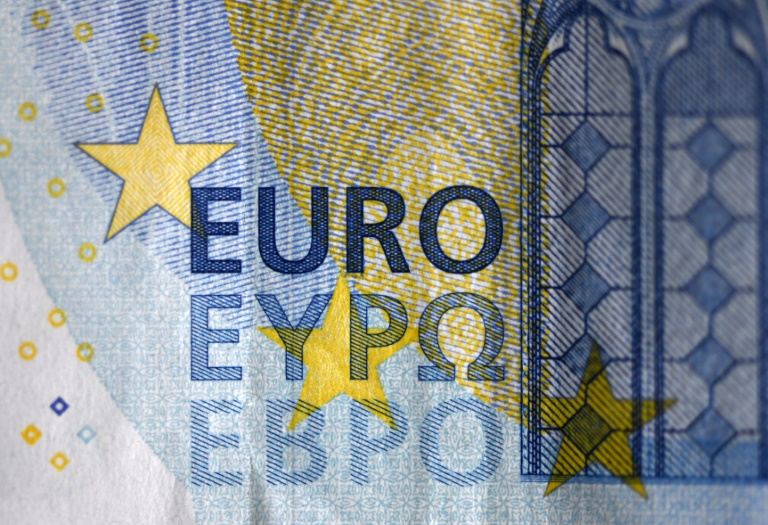
The European Central Bank is expected to roll out another super-size rate hike Thursday to combat runaway inflation, despite concerns higher borrowing costs could deepen the pain of a looming eurozone recession.

The ECB’s 25-member governing council is likely to lift its key interest rates by 75 basis points for the second consecutive time, economists say.

The Frankfurt institution is under pressure to rein in record-high inflation, driven by surging food and especially energy prices in the wake of Russia’s war in Ukraine.

Eurozone inflation stood at just under 10 percent in September, nearly five times the ECB’s two-percent target.

ECB president Christine Lagarde warned recently that inflation was “far too high” and more action was required to prevent price shocks from becoming “entrenched”.

Like other central banks, the ECB is fighting back with a series of rate hikes intended to dampen demand by making credit more expensive for households and businesses — at the risk of triggering an economic downturn.

“The 75 basis point rate hike looks like a done deal,” said ING economist Carsten Brzeski.

“The ECB has turned a blind eye on recession risks,” he added.

– Political pushback –

The outlook for the eurozone economy has darkened in recent weeks as the 19-nation region grapples with the fallout from the Ukraine war, soaring tensions with Moscow and pandemic-induced global supply chain woes.

If Russia completely cuts off gas flows to Europe, the eurozone economy could shrink by nearly one percent in 2023, ECB vice-president Luis de Guindos has warned.

That scenario has become more likely after Russia in late August shut down the crucial Nord Stream 1 pipeline to Europe’s economic powerhouse Germany.

The German economy is already forecast to shrink by 0.4 percent next year.

As European governments race to unveil multi-billion-euro support measures to help citizens through a cost-of-living crisis this winter, the ECB’s monetary policy tightening has come under scrutiny.

Italian Prime Minister Giorgia Meloni this week slammed the ECB’s “rash choice” to keep hiking rates, saying it created “further difficulties for member states that have elevated public debt”, Bloomberg News reported.

French President Emmanuel Macron has also expressed “concern” that the ECB was “shattering demand” in Europe.

The ECB has already increased rates twice since July, ending over a decade of ultra-low and even negative interest rates.

Lagarde has repeatedly urged governments not to fall into the trap of spending so much that they end up boosting inflation and working against the ECB.

In the United States inflation has been fuelled not by energy costs but by pandemic-era stimulus spending. 

The Federal Reserve has hiked rates faster and more aggressively, leaving the ECB open to criticism that it was slow to jump into action.

– Balance sheet in focus –

The ECB is also expected to use this week’s meeting to discuss bringing other monetary policy levers in line with its inflation-busting efforts.

Policymakers are likely to announce changes to the 2.1 trillion euros (dollars) in super cheap, long-term loans (TLTROs) offered to banks in recent years to help the eurozone through several crises — sometimes at negative rates.

As a consequence of the rate hikes, lenders can now make an easy profit by parking their excess TLTRO cash at the ECB and pocketing the new, higher deposit rate — prompting policymakers to look for ways to incentivise early repayment of the loans.

The ECB may also ponder how best to shrink the five-trillion-euros worth of bonds on its balance sheet, after years of hoovering up government and corporate debt to drive up stubbornly low inflation.

But given the uncertain outlook and the risk of rattling financial markets, analysts say the start of any “quantitative tightening” — letting the bonds mature or actively selling them — is some way off.

“The recent events in the UK, which forced the Bank of England into a major U-turn on bond purchases, could be viewed as a useful reminder that any aggressive withdrawal of liquidity risks being highly disruptive for the bond market and the transmission of monetary policy,” said Ducrozet.

'Guayakill': Ecuadoran port city torn apart by gangs

Entire neighborhoods run by gangs, prison bloodbaths and police overwhelmed by criminal firepower: Drug trafficking has transformed the Ecuadoran city of Guayaquil into a den of violence.

The port city of 2.8 million people, which on Saturday hosts the final of the Copa Libertadores competition, has witnessed scenes of incredible barbarity in recent years.

Hundreds of inmates have been killed — many beheaded or incinerated — in numerous prison battles, and civilians have increasingly gotten caught up in the gang war rocking the city rebaptized “Guayakill” by inhabitants.

So far this year, the commercial heart of Ecuador has seen 1,200 murders — 60 percent more than in 2021 according to official data.

Since last year, almost 400 inmates have died in several cities, most of them in Guayaquil, which has also been hit by a spate of car bombs and shocking scenes of bodies dangling from bridges.

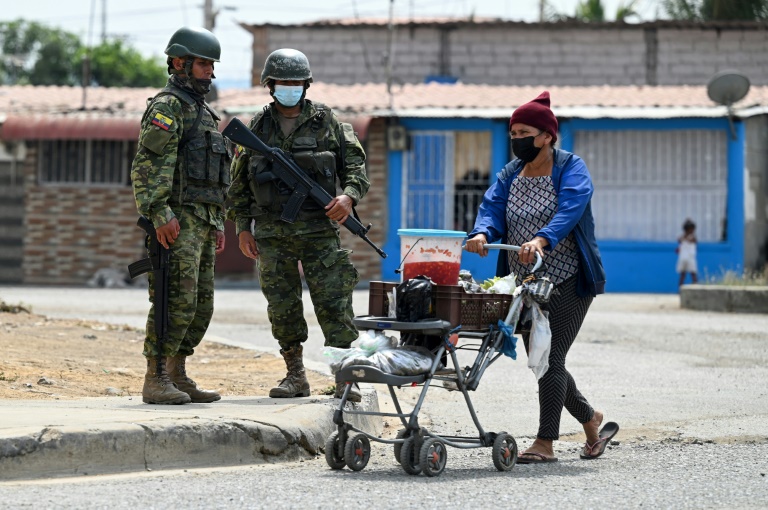
And despite the government declaring states of emergency to allow for troop deployment and boosting police numbers in Guayaquil by over 1,000 to nearly 10,000, some fear it is a losing battle.

“We used to confront small arms… revolvers. But now on the streets we face American (automatic) rifles, grenades, explosive devices,” police forensics official Luis Alfonso Merino told AFP.

“The violence has grown enormously.”

– Rifles, grenades –

Once a relatively peaceful neighbor of major cocaine producers Colombia and Peru, Ecuador was long merely part of the drug transit route.

But recently, traffickers with suspected links to Mexican cartels such as Sinaloa, the Gulf Clan and Los Zetas have been expanding their domestic presence — fighting over the fast-growing local market and access to the port of Guayaquil for exports to Europe and the United States.

The city’s prisons, where gangs also battle it out for supremacy, are emblematic of the fast-declining security situation.

In one of the deadliest riots in Latin American history, 122 people were slaughtered at the infamous Guayas 1 penitentiary in September last year in an hours-long rampage by inmates wielding guns, machetes and explosives.

“The State does not govern the prisons,” Billy Navarrete of the CDH human rights NGO told AFP.

Instead, they are under the control of “criminal organizations with the complicity of law enforcement agents who allow, tolerate and enrich themselves with arms trafficking,” he said.

The government has announced it was stepping up enforcement. In 2021, it reported a record haul of 210 tons of drugs.

So far this year, the figure stands at 160 tons.

In a 2019 report, Ecuadoran intelligence said there were at least 26 criminal gangs fighting for control of the lucrative drug market, but officials have since said the number is likely higher. 

And according to operations chief Major Robinson Sanchez in Guayaquil, the gangs are “better armed than the police.”

– Wolves vs Eagles –

At the entrance to Socio Vivienda II, an impoverished housing development and one of the most dangerous places in Guayaquil, police and soldiers stand guard.

Two dozen others in black uniforms, bulletproof vests and balaclavas patrol the narrow streets on motorcycles.

Some 24,000 people live in Socio Vivienda’s three sectors in the crossfire of the gang war that has resulted in several public shootouts since 2019 and forced school closures in recent weeks.

The gangs go by names such as Lobos (Wolves) and Tiguerones. The Aguilas (Eagles) are based higher up on the hill.

When the groups first started going head to head, the community itself erected metal gates at the ends of streets to prevent gang members from moving freely about.

But police removed these for ease of access, and now “the bullets zoom from one end to the other,” said a community leader, 45, who spoke on condition of anonymity in an atmosphere of fear.

– ‘Zombies’ and sentinels –

Patrolling officers stop at a house in Socio Vivienda and enter by force.

They find no drugs, only three youngsters with “Tigueron” tattooed onto their arms. It is not enough to detain them.

The gangs use children as young as 10 as sentinels or informants, residents and police say. 

As they “rise” in the organization, they earn the right to get tattooed — but not without having committed a crime. 

On the streets, it is common to see doped-up consumers of “H” — a heroin residue sold for 25 cents per gram. They are known locally as “zombies.”

The community leader told AFP that luxury vehicles moved in and out freely, transporting drugs right under the noses of police.

And as fearful families leave the neighborhood, gang members immediately “move in” to their homes, he added.

So far this year in Socio Vivienda II alone, records show 252 killings, up from 66 in 2021.

On the weekend preceding Saturday’s Libertadores clash between Brazilian teams Flamengo and Athletico Paranaense, 21 murders were reported in Guayaquil.

Some 50,000 foreign fans are expected to turn out for Saturday’s final.

Credit Suisse chief unveils master plan to fix bank's woes

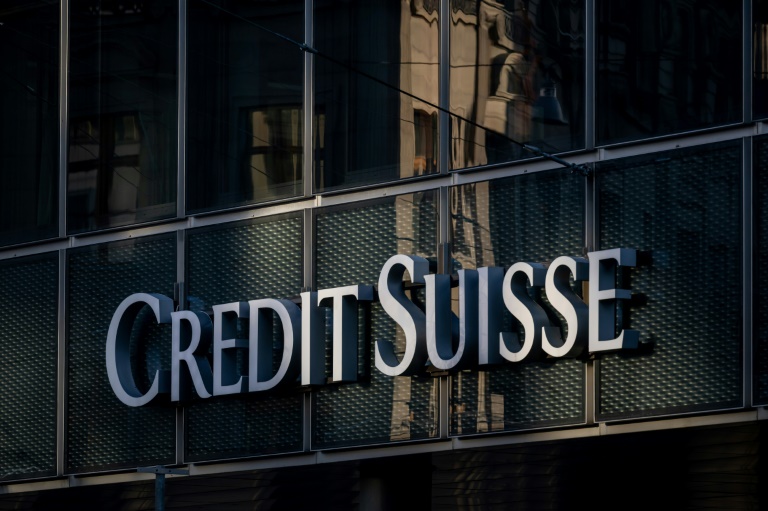
New Credit Suisse chief executive Ulrich Koerner is set to unveil his strategic master plan on Thursday, aimed at turning around the beleaguered bank following a string of scandals.

Analysts, rating agencies, banking regulators and regular customers will all be fixed on the roadmap rolled out by Koerner, who is considered a specialist in bank restructuring and has had a hundred days to diagnose the problems at Switzerland’s second-biggest bank.

Speculation in the build-up to Thursday’s announcement has concentrated on whether thousands of job cuts will be announced, or if a capital increase or disposals to finance the restructuring are on the cards.

The amount of capital that the bank could need is estimated at between four and nine billion Swiss francs ($4-9 billion), according to various specialists in the sector.

“We think the group may need to raise between six and nine billion Swiss francs before disposals to execute a credible restructuring plan,” said Barclays analysts.

The bank could sell assets in order to wait for better conditions to launch a capital increase, according to Flora Bocahut, an analyst at the US investment bank Jefferies.

“Strategic changes need to happen,” she said, as the bank, due to its losses, will eventually no longer achieve its medium-term solvency objectives.

Rumours are swirling around securitised products that make it possible to transform illiquid assets into securities that can be sold on the financial markets.

According to The Wall Street Journal business newspaper, the bank is about to seal their sale despite it being a very profitable business.

– Sluggish market –

The market context is not particularly buoyant.

On Tuesday, Switzerland’s biggest bank UBS, like the major US investment banks, reported a drop in income in its investment bank arm.

In the third quarter, high market volatility caused by Russia’s war in Ukraine, combined with recession fears, dampened demand for transactions such as debt issues, initial public offerings or mergers and acquisitions.

“The fast-deteriorating economic environment and recent market turbulence may complicate the execution of management’s restructuring plans,” the rating agency Standard and Poor’s warned in early October.

– Business woes –

The markets will be watching out for Koerner’s plans on Credit Suisse’s investment banking arm. Investors have been calling for reform for several years.

The capital-guzzling branch was the source of heavy losses that plunged Credit Suisse’s accounts into the red, eclipsing its other, more stable activities such as wealth management or its Swiss domestic banking services.

Credit Suisse’s investment bank suffered a loss of 3.7 billion Swiss francs in 2021 and backed that up with a 992 million Swiss franc loss in the first half of 2022.

It was hit by the implosion of the US fund Archegos, which cost Credit Suisse more than $5 billion.

Meanwhile its asset management branch was rocked by the bankruptcy of British financial firm Greensill, in which some $10 billion had been committed through four funds.

– Share price plunge –

In October 2021, Credit Suisse was also fined $475 million by the US and British authorities for its loans to state-owned companies in Mozambique, at the heart of a corruption case.

The bank already went through a major restructuring under Tidjane Thiam, its chief executive from 2015 to early 2020.

Credit Suisse is one of 30 banks globally deemed too big to fail, forcing it to set aside more cash to weather a crisis.

Banking experts are therefore dismissing social media rumours earlier this month of a “Lehman Brothers moment”, referencing the US bank which collapsed, triggering the 2008 financial crisis.

While many industry experts think a bankruptcy highly improbable, these rumours helped drag its share price down to a low of 3.158 Swiss francs.

Credit Suisse shares closed Wednesday at 4.763 Swiss francs on the Swiss stock exchange’s main SMI index.

Russia undertakes nuclear drills as fighting heavy near Bakhmut

Russia’s strategic forces carried out drills Wednesday, including a test launch of a ballistic missile from a submarine, further stoking concerns that a nuclear weapon could be deployed in the Ukraine war.

Russian President Vladimir Putin surveyed the drills carried out by his nuclear-capable forces as Moscow persisted in claiming, without offering evidence, that Kyiv was developing a “dirty bomb.”

On Monday the Russian foreign ministry posted photographs of ostensible nuclear materials on social media it said depicted “Ukraine’s capacities to create the ‘dirty bomb.'”

But on Wednesday Slovenia said the photo came from its own nuclear waste management agency and dated to 2010.

According to Dragan Barbutovski, an advisor of Slovenian Prime Minister Robert Golob, it depicted smoke detectors.

– Heavy fighting on main fronts – 

Ukraine President Volodymyr Zelensky said fighting remained intense in the eastern Donbas region near Bakhmut, a town Russia’s elite Wagner troops have made a concerted push to seize.

“The situation on the front line hasn’t changed significantly,” Zelensky said in his daily address to the nation. “The fiercest battles are in the Donetsk region, towards Bakhmut and Avdiyivka.”

In the main southern front, Russians were apparently fortifying their positions in Kherson city as civilians were evacuating the region. 

At least 70,000 people have left their homes in Kherson province in the space of a week, a Moscow-installed official, Vladimir Saldo, told a regional TV channel.

Pro-Kremlin authorities have sought to move residents to the Russian-controlled areas on the left bank of the Dnipro river, as Ukraine troops are expected to make a bid for the main urban area on the right bank.

Saldo banned entry to the right bank area of the region for a period of seven days “due to the tense situation on the contact line.”  

“The Russians do appear to be digging in to defend that region,” said Pentagon spokesman Pat Ryder on Tuesday.

– Submarine missile launch –

Western officials downplayed the Kremlin’s war games, a regular event for which Moscow gave foreign counterparts advance warning.

“Under the leadership of… Vladimir Putin, a training session was held with ground, sea and air strategic deterrence forces, during which practical launches of ballistic and cruise missiles took place,” the Kremlin said in a statement.

Russian state-run media ran footage of a submarine crew preparing the launch of a Sineva ballistic missile from the Barents Sea in the Arctic.

The drills also included launching test missiles from the Kamchatka peninsula in the Russian Far East. 

In calls to Chinese and Indian correspondents, Russia’s Defence Minister Sergei Shoigu continued to press his allegations that Ukraine planned to detonate “dirty bomb” — a crude, small weapon filled with radioactive, biological or chemical materials — which it would blame on Russia.

Indian Defense Minister Rajnath Singh said that in his call with Shoigu, he “pointed out that the nuclear option should not be resorted to by any side as the prospect of the usage of nuclear or radiological weapons goes against the basic tenets of humanity.”

– Cultural damage studied  – 

Meanwhile the UN culture agency UNESCO said it is using before-and-after satellite imagery to monitor the cultural destruction inflicted by Russia’s war in Ukraine, and would make its tracking platform public soon.

UNESCO said it had verified damage to 207 cultural sites in Ukraine since the Russian invasion began on February 24, including religious sites, museums, buildings of historical and or artistic interest, monuments and libraries.

“Our conclusion is it’s bad, and it may continue to get even worse,” UNESCO’s cultural and emergencies director Krista Pikkat told reporters at a briefing in Geneva.

“Cultural heritage is very often collateral damage during wars but sometimes it’s specifically targeted as it’s the essence of the identity of countries,” said Pikkat.

Earlier this month, Zelensky requested that UNESCO add the historic port city of Odessa to its World Heritage List in a bid to protect it from Russian air strikes.

UNESCO is working with the Odessa authorities to make sure that its main monuments and cultural sites are marked with a blue shield — the emblem used during armed conflicts to denote cultural property that should be protected.

Ford reports loss as it ends VW-backed autonomous driving venture

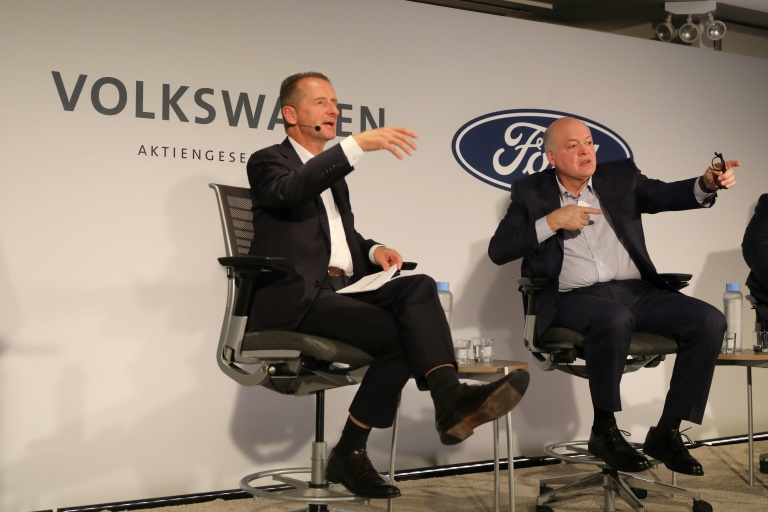
Ford announced Wednesday it is ending an autonomous driving program with Volkswagen, resulting in quarterly loss, as the auto giants retreat from a joint venture that had sought to revolutionize transport.

The Michigan auto titan recorded a $2.7 billion impairment in the third quarter on the dissolution of Argo AI program, which Ford first began supporting in 2017 and which VW later joined in 2019, in the hopes of quickly attaining full autonomy that did not require any driver engagement.

In a parallel move, Volkswagen said it was also ending its investment in Argo AI to focus on different autonomous and automated driving ventures.

The Argo AI initiative had sought to develop and commercialize Level 4-capable autonomy, which would not need a driver and would enable a rider to nap while traveling.

But with such a product more than five years away and requiring billions in investment, Ford opted to focus its investment on more attainable breakthroughs that CEO Jim Farley said could still provide drivers with more time, “the most valuable commodity in modern life.”

The impairment meant Ford reported a loss of $827 million compared with profits of $1.8 billion in the year-ago period. Revenues rose 10.4 percent to $39.4 billion. 

Ford also lowered some of its full-year financial projections, citing difficulties with suppliers. 

Farley said its focus would be on technological leaps in Level 2 and Level 3 autonomy.

“It’s mission-critical for Ford to develop great and differentiated L2+ and L3 applications that at the same time make transportation even safer,” Farley said.

“We’re optimistic about a future for (Level 4), but profitable, fully autonomous vehicles at scale are a long way off and we won’t necessarily have to create that technology ourselves.” 

Ford said when it announced its initial $1 billion investment in Argo AI in 2017, it hoped to bring Level 4 technology to market by 2021.

According to JD Power, Level 3 represents “conditional driving automation,” that employs driver assistance systems and artificial intelligence to make decisions.

While people inside the auto do not need to supervise the technology, “a human driver must be present, alert, and able to take control of the vehicle at any time, especially in the case of an emergency due to system failure,” according to JD Power.

By contrast, Level 4 autonomy “does not require any human interaction in the vehicle’s operation because it is programmed to stop itself in the event of system failure,” according to JD Power. “Since a human driver is never needed, a Level 4 vehicle may not have a steering wheel and pedals.”

Ford shares fell 1.1 percent to $12.68 in after-hours trading.

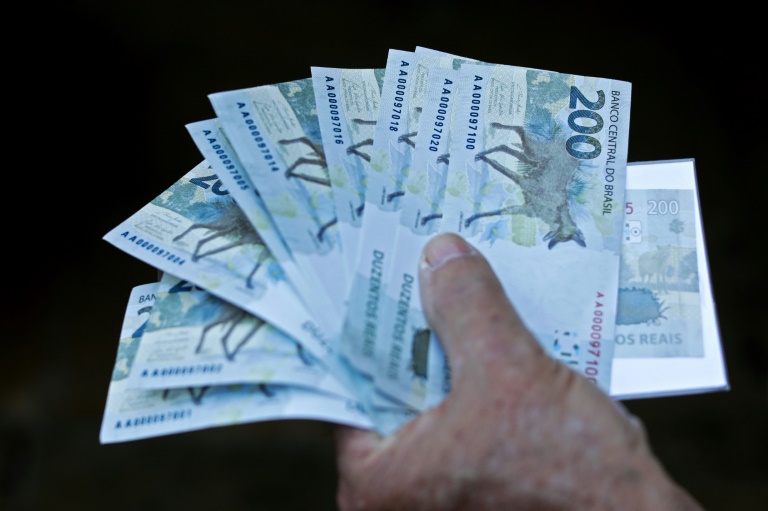
Brazil's central bank holds 13.75% interest rate amid 'high' inflation

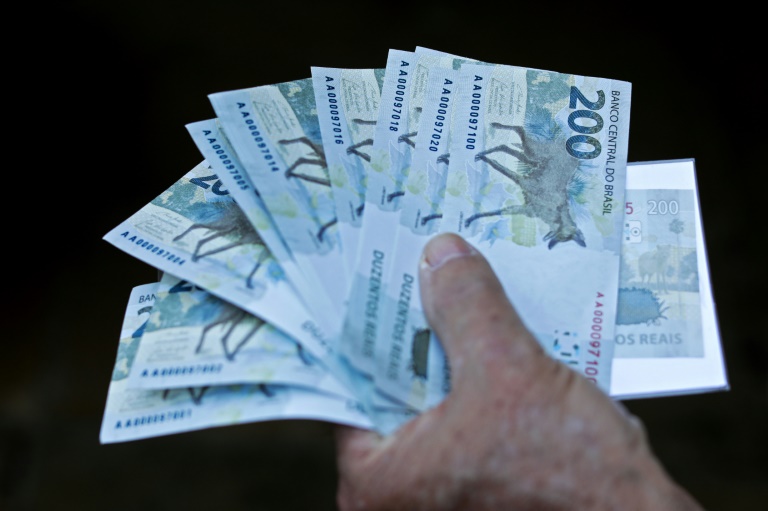
Brazil’s central bank held its benchmark interest rate at 13.75% on Wednesday, remarking that inflation “remains high” despite receding for three months in a row, just four days before a presidential election.

It is the second meeting in a row that the bank’s monetary policy committee left the Selic interest rate unchanged after putting the brakes on 12 straight increases.

In a statement, the monetary committee said it remained “vigilant” and that the high interest rate level would be maintained “as long as it takes to control inflation.”

The committee did not rule out a “resumption of the cycle of increases” if prices do not lower “as expected.” For now, “inflation remains high” despite dropping for several months.

The decision comes as the country braces for a divisive second-round presidential election between far-right President Jair Bolsonaro and leftist former leader Luiz Inacio Lula da Silva on Sunday.

The interest rate decision was in line with market forecasts, which were reflected in a survey of more than a hundred consultants and financial institutions by the Valor economic newspaper.

The benchmark interest rate has remained at the same level since August, when the committee applied the last increase of half a percentage point.

Haunted by a history of hyperinflation, Brazil was among the first countries to start raising interest rates after the monetary easing of the coronavirus pandemic when the Selic stood at a record low of two percent.

Since March 2021, the central bank had rapidly raised its key rate from an all-time low of two percent, including three whopping hikes of 1.5 percentage points from October 2021 to February 2022.

The long period of high inflation in Latin America’s largest economy has been fueled by rising global food and oil prices spurred on by the war between Russia and Ukraine.

– Slowing inflation –

This trend has slowed in recent months. 

The consumer price index was negative in July (-0.68 percent), August (-0.36 percent) and September (-0.29 percent). 

Annual inflation stood at 7.17 percent in September, prior to the first round of the presidential elections on October 2.

The successive declines reduced market forecasts, and inflation is now expected to lower to 5.60 percent by the end of the year, almost half of what was initially projected, according to a survey released by the central bank (BCB) this week. 

Bolsonaro has highlighted the “unprecedented deflation” during his campaign.

He is currently polling 45 percent to Lula’s 49 percent ahead of the second round, according to Datafolha polling data published Friday.

Economists warn, however, that the negative trend is not yet established and that price increases are still a latent threat.

By keeping the Selic at the current high level, the monetary committee hopes that 2023 inflation will lower to the 3.25 percent target set by the central bank.

Only then can they begin cutting rates, analysts say.

Analysts have warned about the impact of high interest rates on GDP, which is projected to grow 2.76 percent by the end of this year, far from the stagnation that was expected in early 2022, according to the BCB Focus survey.

Brazil is easing up on its interest rate as the US Federal Reserve and European Central Bank have shifted into full-on tightening to curb inflation.

Brazil's central bank holds 13.75% interest rate amid 'high' inflation

Brazil’s central bank held its benchmark interest rate at 13.75% on Wednesday, remarking that inflation “remains high” despite receding for three months in a row, just four days before a presidential election.

It is the second meeting in a row that the bank’s monetary policy committee left the Selic interest rate unchanged after putting the brakes on 12 straight increases.

In a statement, the monetary committee said it remained “vigilant” and that the high interest rate level would be maintained “as long as it takes to control inflation.”

The committee did not rule out a “resumption of the cycle of increases” if prices do not lower “as expected.” For now, “inflation remains high” despite dropping for several months.

The decision comes as the country braces for a divisive second-round presidential election between far-right President Jair Bolsonaro and leftist former leader Luiz Inacio Lula da Silva on Sunday.

The interest rate decision was in line with market forecasts, which were reflected in a survey of more than a hundred consultants and financial institutions by the Valor economic newspaper.

The benchmark interest rate has remained at the same level since August, when the committee applied the last increase of half a percentage point.

Haunted by a history of hyperinflation, Brazil was among the first countries to start raising interest rates after the monetary easing of the coronavirus pandemic when the Selic stood at a record low of two percent.

Since March 2021, the central bank had rapidly raised its key rate from an all-time low of two percent, including three whopping hikes of 1.5 percentage points from October 2021 to February 2022.

The long period of high inflation in Latin America’s largest economy has been fueled by rising global food and oil prices spurred on by the war between Russia and Ukraine.

– Slowing inflation –

This trend has slowed in recent months. 

The consumer price index was negative in July (-0.68 percent), August (-0.36 percent) and September (-0.29 percent). 

Annual inflation stood at 7.17 percent in September, prior to the first round of the presidential elections on October 2.

The successive declines reduced market forecasts, and inflation is now expected to lower to 5.60 percent by the end of the year, almost half of what was initially projected, according to a survey released by the central bank (BCB) this week. 

Bolsonaro has highlighted the “unprecedented deflation” during his campaign.

He is currently polling 45 percent to Lula’s 49 percent ahead of the second round, according to Datafolha polling data published Friday.

Economists warn, however, that the negative trend is not yet established and that price increases are still a latent threat.

By keeping the Selic at the current high level, the monetary committee hopes that 2023 inflation will lower to the 3.25 percent target set by the central bank.

Only then can they begin cutting rates, analysts say.

Analysts have warned about the impact of high interest rates on GDP, which is projected to grow 2.76 percent by the end of this year, far from the stagnation that was expected in early 2022, according to the BCB Focus survey.

Brazil is easing up on its interest rate as the US Federal Reserve and European Central Bank have shifted into full-on tightening to curb inflation.

UN satellite analysis tracks Ukraine cultural damage

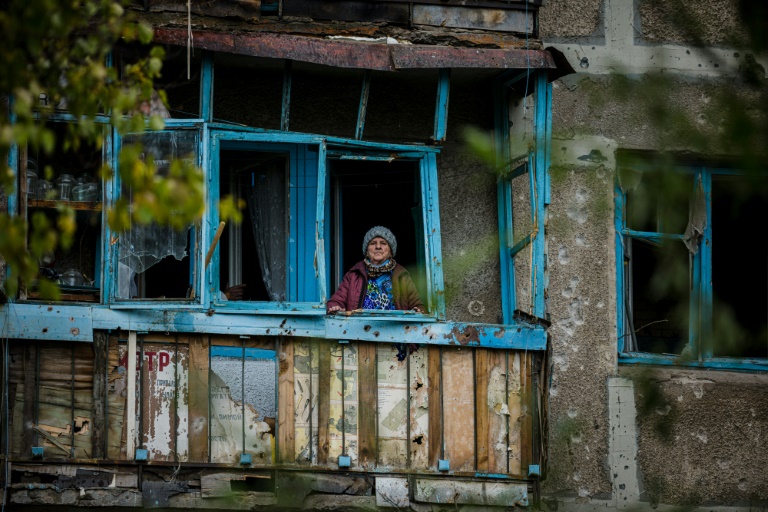
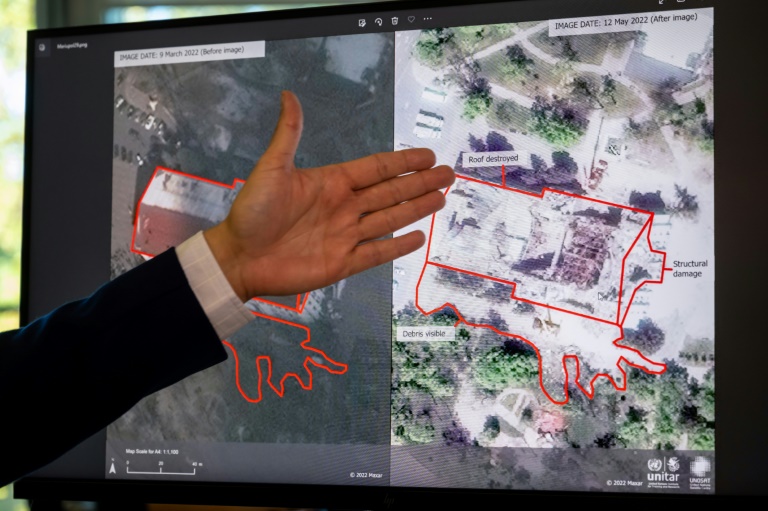
The United Nations is using before-and-after satellite imagery to monitor the cultural destruction inflicted by Russia’s war in Ukraine, announcing Wednesday it will launch its tracking platform publicly within weeks.

The UN’s culture agency UNESCO said it had verified damage to 207 cultural sites in Ukraine since the Russian invasion began on February 24.

They include 88 religious sites, 15 museums, 76 buildings of historical and or artistic interest, 18 monuments and 10 libraries.

The worst-affected regions are in eastern Ukraine and around the capital, with Donetsk region having 59 verified damaged cultural sites, followed by Kharkiv with 51, Kyiv with 30 and Luhansk with 25.

“Our conclusion is it’s bad, and it may continue to get even worse,” UNESCO’s cultural and emergencies director Krista Pikkat told reporters at a briefing in Geneva.

“Cultural heritage is very often collateral damage during wars but sometimes it’s specifically targeted as it’s the essence of the identity of countries.”

– Hi-res imagery –

UNESCO — the UN Educational, Scientific and Cultural Organization — has joined forces with the UN Satellite Centre UNOSAT to produce the platform.

Based on reports from the field, UNESCO sends a list of potentially damaged sites to UNOSAT. It then asks for satellite images from commercial suppliers.

UNESCO pays for the very high resolution images bought from Maxar and Airbus, costing around 10 euros ($10) per square kilometre.

A small team of UNOSAT experts study the difference in before-and-after pictures.

“We conduct daily analysis on Ukraine using satellite images in order to have a better understanding of the situation on the ground,” Manuel Fiol, the senior imagery analyst, told AFP.

The team matches up the images, analyses the degree of damage and is able to give a time window in which the damage took place.

Whether an image can be obtained depends on the weather, with the Ukraine work expected to be harder during the coming winter, as cloud cover sets in, while snow can blanket a site.

The affected locations are marked on a map and the platform has a searchable database. The platform does not attribute blame for the damage.

“We are not in the business of saying who did what and why,” said Pikkat.

“Our primary responsibility is to make sure that we have information available about the sites and the situation they’re in, to be ready for recovery,” she told AFP.

“But we know that in previous circumstances this documentation has been used also by the country authorities if they want to look into allegations of war crimes.”

– World heritage sites –

Pikkat said the platform was a pilot experiment to see how UNESCO could usefully compile such information, and in the longer term, potentially widen its scope beyond Ukraine and have it as a real-time, interactive tool for experts to work with.

So far in the war, none of the seven world heritage sites in Ukraine have been damaged.

Earlier this month, Ukrainian President Volodymyr Zelensky officially requested that UNESCO add the historic port city of Odessa to its World Heritage List in a bid to protect it from Russian air strikes.

UNESCO is working with the Odessa authorities to make sure that its main monuments and cultural sites are marked with a blue shield — the emblem used during armed conflicts to denote cultural property that should be protected.

UNESCO is also working with museums and collections in Ukraine to try to combat the threat of looting — a common problem in war.

The agency has been discussing with Kyiv the possibility of removing cultural heritage items from the country for the duration of the war, but Pikkat acknowledged that it was a “difficult call”, with the first move being to evacuate collections to safer parts of Ukraine.

Close Bitnami banner
Bitnami