World

Greeks turn to firewood to heat homes amid energy crisis

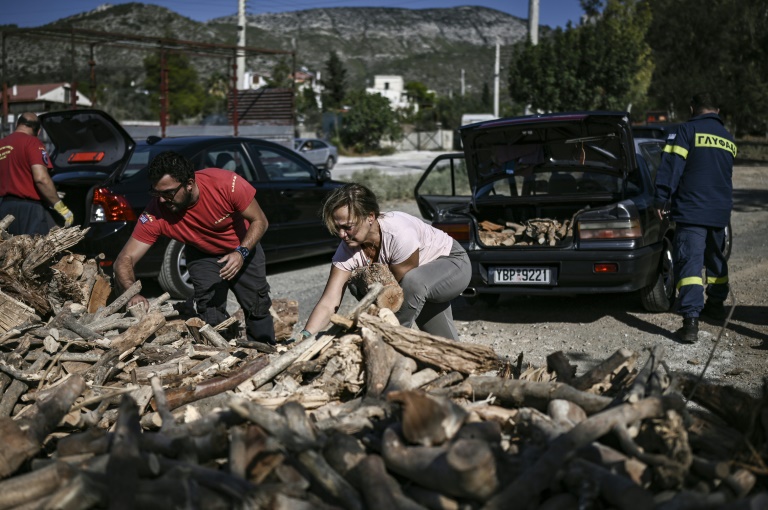
Residents of the Athens suburb of Glyfada who are struggling to heat their homes as energy prices soar now have an option — free firewood from the local council.

“We need it… especially in this difficult year,” says Yiannis Dimitrakopoulos, a 75-year-old pensioner queuing for logs. 

Dozens of people wait patiently in their cars for their turn. 

“We try to get as much wood as we can. We have a fuel oil central heating system but you never know,” says Erofili Generali, a teacher in her 50s.

She looks on while her husband fills the boot of their car with wood collected from local forests and parks.

Although temperatures in Glyfada remain fairly mild during the winter season, the inhabitants of this fashionable southern suburb, nicknamed the Athens Riviera, still need to heat their homes somewhat in winter. 

– Fuel oil and gas heating –

When natural gas prices more than quadrupled in September, many began to wonder how they would afford it.

Many Greeks are still recovering from the financial impact of the county’s decade-long economic crisis, and with inflation running at more than 10 percent for the last six months, the price of food and essential goods has shot up.

In Glyfada, which has a population of around 90,000, homes are mainly equipped with central heating systems that use fuel oil or, increasingly, natural gas.

“We feel betrayed about these exorbitant natural gas prices,” says Dimitrakopoulos.

He recalls how the Greek government has heavily promoted gas for heating in recent years.

Some homes in the area do have fireplaces, although these are not used as the main source of heating.

So the council has stepped in to help with free firewood.

“Many trees came down in a snowstorm in January, so we decided not to recycle the wood into industrial fuel like we used to,” explains Annie Kafka, Glyfada’s deputy civil protection officer.  

Instead, the wood was chopped up so the council could “offer it to households because of the energy crisis”.

Launched at the beginning of October, firewood distribution usually takes place twice a week. 

Approximately 3,000 households have already benefitted from the initiative. 

Meanwhile, demand is exploding. Some 14,000 people have registered on the council’s website, according to Kafka.

Households are notified by SMS when they can come and fill up their car boots. “Vulnerable families obviously have priority,” Kafka says.

– Air pollution –

In September, the council in Zografou, an eastern suburb of Athens, launched a similar initiative.

“The demand from our residents was impressive,” said local councillor Dimosthenis Bouloukos.

But in the country’s densely populated capital, the initiative has not been welcomed with the same enthusiasm, mainly due to environmental concerns.

“Burning wood adds significantly to air pollution, especially in big cities like Athens that already suffer from nitrogen oxide emissions,” explains Petros Varelidis, head of the Natural Environment and Climate Change Agency.

During Greece’s financial crisis, which lasted from 2008 to 2018, a large number of the city’s residents resorted to firewood to heat their homes as they could no longer afford fuel oil or gas.

As a result, Greece’s main cities found themselves shrouded in choking smog. 

But while Glyfada’s residents are aware of the environmental damage caused by burning wood, they argue that there is no other way, given the tough economic times that lie ahead.

“It’s a form of recycling, even if it is harmful,” says Dimitrakopoulos. “This year it’s justifiable.” 
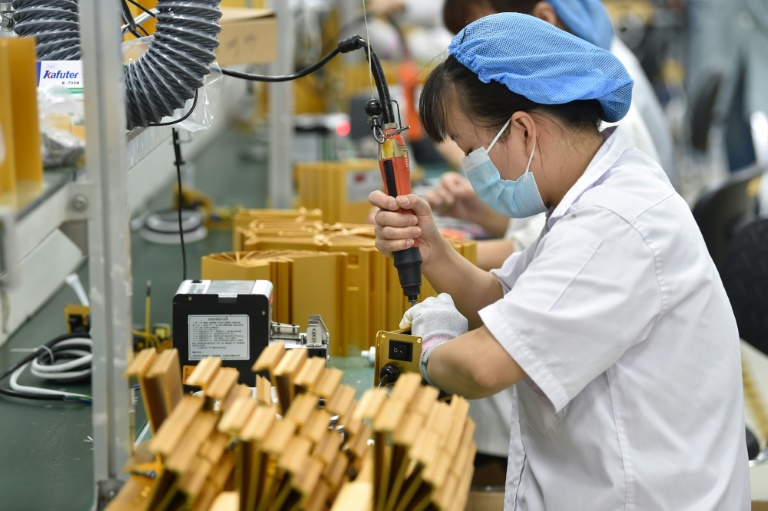
China fiscal deficit balloons to nearly $1 trillion as economy cools

China’s fiscal deficit ballooned to an all-time high of nearly $1 trillion in the first nine months of the year, analysis of government data by Bloomberg showed, as a real estate crisis and tax rebates to boost a cooling economy emptied government coffers.

The budget shortfall for all levels of government from January to September was 7.16 trillion yuan ($980 billion), according to an analysis based on data released by Beijing’s Ministry of Finance on Tuesday — almost three times the 2.6 trillion shortfall over the same period last year.

Overall government revenue dropped 6.6 percent to 15.3 trillion yuan from January to September as the government dolled out more tax rebates to businesses, according to the finance ministry.

Fiscal expenditure then rose 6.2 percent to 19.04 trillion yuan in the first nine months, following a government-driven infrastructure push to boost growth and create employment.

China’s economy grew 3.9 percent year-on-year in the third quarter, data showed this week, beating expectations.

But President Xi Jinping’s re-election to a historic third term as leader of the Communist Party spooked investors Monday, with China’s currency slumping and stocks in Hong Kong nosediving to their lowest level since the global financial crisis.

China is also battling an unprecedented crisis in its real estate sector, which makes up more than a quarter of the country’s GDP when combined with construction.

In October, second-hand home prices fell by the highest month-on-month rate since 2014.

“The housing market is still stuck in a downward spiral, global demand is set to cool further, and the weak renminbi is constraining the central bank’s ability to provide policy support,” Julian Evans-Pritchard from Capital Economics wrote in a research note.

Consumer demand has also been dampened by sudden lockdowns and strict travel restrictions under Beijing’s strict zero-Covid policy.

China is the last of the world’s major economies still sticking to a zero-Covid strategy.

“There is no clear sign of a significant easing of the zero-Covid strategy,” Ting Lu, chief China economist at Nomura, said, adding that at least 207 million people were under some form of lockdown across 28 cities in China earlier this week.

“The actual economic recovery momentum is not strong,” he added.

N. Korea nuclear test would meet 'unprecedented' response: US, Japan, S. Korea

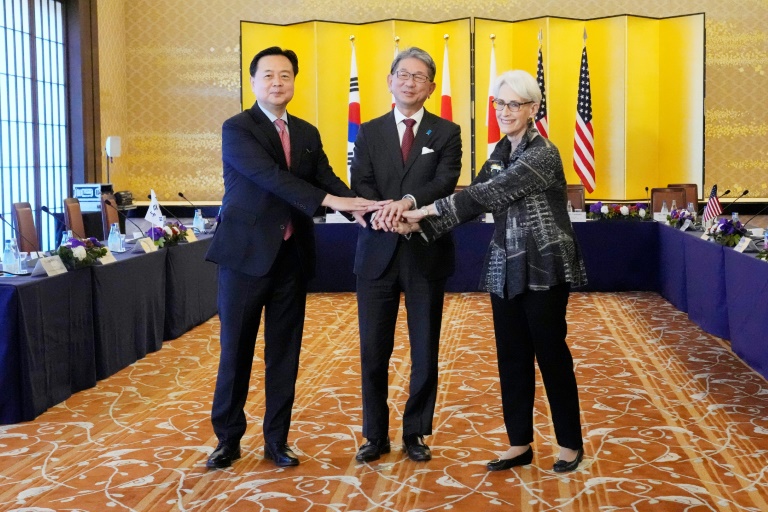
The United States, Japan and South Korea warned Wednesday that a North Korean nuclear test would warrant an “unprecedentedly strong response”, vowing unity after a blitz of missile launches from the hermit state.

Following talks in Tokyo, the three nations’ deputy foreign ministers said they would ramp up their deterrence in the region.

“We agreed to further strengthen cooperation … so that North Korea can immediately stop its illegal activities and return to denuclearisation talks,” said South Korea’s Cho Hyun-dong.

“The three countries agreed on the need for an unprecedentedly strong response if North Korea proceeds with its seventh nuclear test,” he told reporters.

Seoul and Washington have repeatedly warned that Pyongyang could be close to testing an atomic bomb for the first time since 2017, after a flurry of ballistic missile launches.

One missile flew over Japan last month, and North Korea has separately claimed to have carried out tactical nuclear drills.

“All of this behaviour is reckless and deeply destabilising,” said US Deputy Secretary of State Wendy Sherman, urging North Korea to “refrain from further provocations”.

Last month, the North’s leader Kim Jong Un declared the country an “irreversible” nuclear power, effectively ending negotiations over his banned arms programmes.

Kim met three times with Biden’s predecessor Donald Trump, reducing tensions but resulting in no lasting agreement, and the country has shown little interest in taking up US President Joe Biden’s offer of working-level talks.

Japan’s Vice-Minister for Foreign Affairs Takeo Mori said North Korea’s “intensifying nuclear and missile activities… are a clear and serious challenge to the international community”.

“We agreed to ramp up the deterrence in our region with a view towards the denuclearisation of North Korea,” he said.

The trio said they had also discussed a wide range of issues including the war in Ukraine, China and Taiwan.

But Mori and Cho said there had been no discussion of bilateral relations between Japan and South Korea, which have long been strained.

Hong Kong arrests two in $446 million money-laundering case

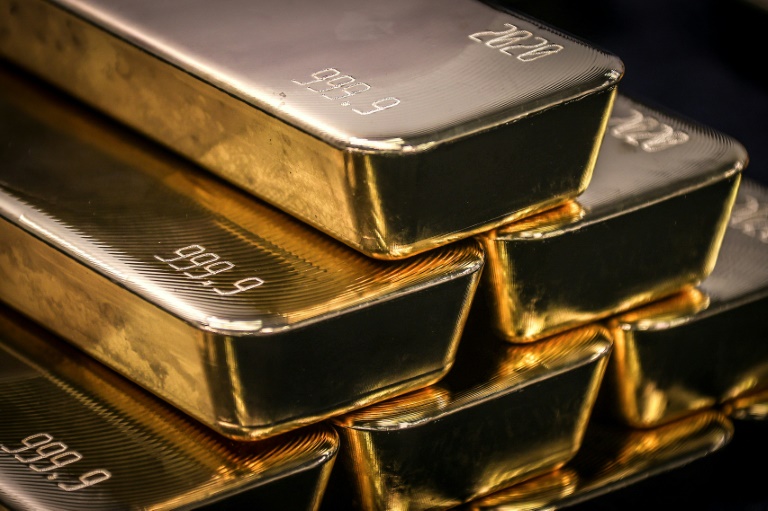
Hong Kong authorities have arrested two men for laundering funds worth HK$3.5 billion ($446 million) by reselling precious metals, one of the city’s largest money-laundering cases, officials said Wednesday.

The two were involved in a scheme selling around eight tonnes of precious metals — mostly gold and palladium — between 2020 and 2021 for returns “incommensurate” with their backgrounds, customs official Rita Li said at a press conference.

It was a record for money-laundering cases busted by Hong Kong Customs, Li said, although the police have cracked larger cases.

Precious metals can be bought and sold anonymously in Hong Kong and are attractive to criminals because of their high value, small size and ease of transportation, Li added. 

“Unlawful elements can easily use proceeds from crime to buy precious metals and then resell them, or conduct multi-layer transactions, to launder money,” she said.

The two men used company accounts to receive large sums from precious metal trading firms and jewellery stores, then quickly transferred the funds to shell companies or accounts abroad, authorities said.

The suspects — believed to be linked to a crime syndicate — were arrested for money laundering last Friday and are on bail pending investigation.

Authorities say they are investigating the origins of the precious metals and will not rule out further arrests.

Last month, four suspected Hong Kong gang members were arrested for laundering $52 million over a two-year period.

Hong Kong arrests two in $446 million money-laundering case

Hong Kong authorities have arrested two men for laundering funds worth HK$3.5 billion ($446 million) by reselling precious metals, one of the city’s largest money-laundering cases, officials said Wednesday.

The two were involved in a scheme selling around eight tonnes of precious metals — mostly gold and palladium — between 2020 and 2021 for returns “incommensurate” with their backgrounds, customs official Rita Li said at a press conference.

It was a record for money-laundering cases busted by Hong Kong Customs, Li said, although the police have cracked larger cases.

Precious metals can be bought and sold anonymously in Hong Kong and are attractive to criminals because of their high value, small size and ease of transportation, Li added. 

“Unlawful elements can easily use proceeds from crime to buy precious metals and then resell them, or conduct multi-layer transactions, to launder money,” she said.

The two men used company accounts to receive large sums from precious metal trading firms and jewellery stores, then quickly transferred the funds to shell companies or accounts abroad, authorities said.

The suspects — believed to be linked to a crime syndicate — were arrested for money laundering last Friday and are on bail pending investigation.

Authorities say they are investigating the origins of the precious metals and will not rule out further arrests.

Last month, four suspected Hong Kong gang members were arrested for laundering $52 million over a two-year period.

Australia admits cyber defences 'inadequate' as medical hack hits millions

Hackers accessed millions of medical records at one of Australia’s largest private health insurers, the company said Wednesday, prompting the government to admit the nation’s cyber safeguards were “inadequate”.

This was the latest in a series of hacks targeting millions of people that have brought Australian companies’ lax approach to cyber security into sharp relief.

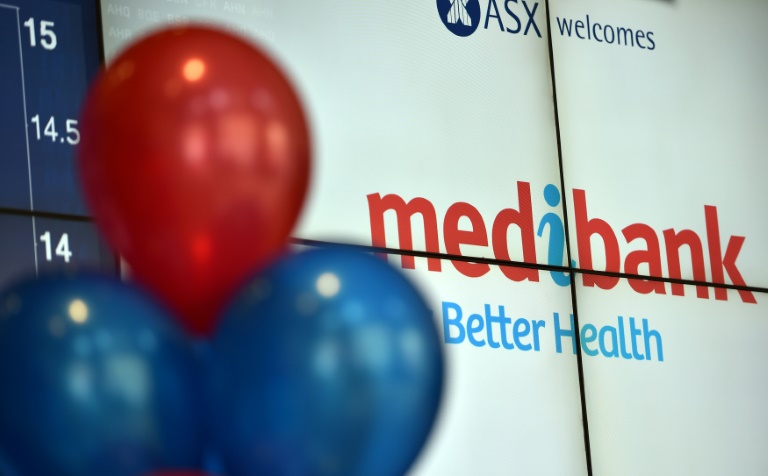
Medibank chief executive David Koczkar said information about each of the company’s 3.9 million policy holders — some 15 percent of Australia’s population — had been compromised.

“Our investigation has now established that this criminal has accessed all our private health insurance customers’ personal data and significant amounts of their health claims data,” he said in a statement to the Australian stock exchange.

“This is a terrible crime. This is a crime designed to cause maximum harm to the most vulnerable members of our community.”

The cyber attack was revealed last week, but it was not known until now how many people were impacted.

The hackers have previously threatened to leak the data, starting with 1,000 famous Australians, unless Medibank pays a ransom.

Medibank on Wednesday also confirmed it was not insured against cyber attacks, estimating the hack could cost the company as much as Au$35 million (US$22 million).

The Medibank hack followed an attack on telecom company Optus last month that exposed the personal information of some nine million Australians — almost a third of the population.

The Optus attack was one of the largest data breaches in Australian history.

– ‘Inadequate’ –

Australia’s Attorney-General Mark Dreyfus has previously accused companies of stockpiling sensitive customer data they did not need. 

Firms currently face paltry fines — Au$2.2 million — for failing to protect customer data. 

Dreyfus last week said these fines would be ratcheted up to Au$50 million. 

“Unfortunately, significant privacy breaches in recent weeks have shown existing safeguards are inadequate,” he said. 

“It’s not enough for a penalty for a major data breach to be seen as the cost of doing business.”

Home Affairs Minister Clare O’Neil on Tuesday said the fallout from the Medibank hack was “potentially irreparable”.

“One of the reasons why the government is so worried about this is because of the nature of the data,” she told Australia’s parliament. 

“When it comes to the personal health information of Australians, the damage here is potentially irreparable.”

O’Neil has previously described hacking as a “dog act” — an Australian phrase reserved for something especially shameful or despicable. 

Australia admits cyber defences 'inadequate' as medical hack hits millions

Hackers accessed millions of medical records at one of Australia’s largest private health insurers, the company said Wednesday, prompting the government to admit the nation’s cyber safeguards were “inadequate”.

This was the latest in a series of hacks targeting millions of people that have brought Australian companies’ lax approach to cyber security into sharp relief.

Medibank chief executive David Koczkar said information about each of the company’s 3.9 million policy holders — some 15 percent of Australia’s population — had been compromised.

“Our investigation has now established that this criminal has accessed all our private health insurance customers’ personal data and significant amounts of their health claims data,” he said in a statement to the Australian stock exchange.

“This is a terrible crime. This is a crime designed to cause maximum harm to the most vulnerable members of our community.”

The cyber attack was revealed last week, but it was not known until now how many people were impacted.

The hackers have previously threatened to leak the data, starting with 1,000 famous Australians, unless Medibank pays a ransom.

Medibank on Wednesday also confirmed it was not insured against cyber attacks, estimating the hack could cost the company as much as Au$35 million (US$22 million).

The Medibank hack followed an attack on telecom company Optus last month that exposed the personal information of some nine million Australians — almost a third of the population.

The Optus attack was one of the largest data breaches in Australian history.

– ‘Inadequate’ –

Australia’s Attorney-General Mark Dreyfus has previously accused companies of stockpiling sensitive customer data they did not need. 

Firms currently face paltry fines — Au$2.2 million — for failing to protect customer data. 

Dreyfus last week said these fines would be ratcheted up to Au$50 million. 

“Unfortunately, significant privacy breaches in recent weeks have shown existing safeguards are inadequate,” he said. 

“It’s not enough for a penalty for a major data breach to be seen as the cost of doing business.”

Home Affairs Minister Clare O’Neil on Tuesday said the fallout from the Medibank hack was “potentially irreparable”.

“One of the reasons why the government is so worried about this is because of the nature of the data,” she told Australia’s parliament. 

“When it comes to the personal health information of Australians, the damage here is potentially irreparable.”

O’Neil has previously described hacking as a “dog act” — an Australian phrase reserved for something especially shameful or despicable. 

Asian markets rally with Wall St on rate hope, healthy earnings

Asian stocks rose Wednesday to build on another strong performance in New York following more healthy earnings from big-name firms while hopes for a slowdown in Federal Reserve rate hikes spread cheer.

Hong Kong and Shanghai were among the best performers after China’s central bank and forex officials pledged support for the country’s equities, bonds and yuan, helping investors bounce back from Monday’s rout.

The mood across trading floors has been generally positive this week after a report Friday suggested the Fed could begin discussing applying the brakes on its monetary tightening campaign aimed at fighting decades-high inflation.

That came as some bank officials hinted they could be open to the prospect of hiking by less than the 75 basis points seen after the past three meetings.

And while a similar move is expected next month, there are flickers of hope that the pace could slow in December or next year.

Adding to that optimism was data indicating the higher borrowing costs were having an impact on the world’s biggest economy, with house prices falling, consumer confidence at a three-month low and weakness in the factory sector.

“A few economic reports all told a similar story… that the economy is weakening,” said OANDA’s Edward Moya. “A weakening economy will bring down inflation and that is good news for long-term investors looking to get back into equities.”

All three main indexes on Wall Street rallied, with the Nasdaq up more than two percent, helped by a drop in Treasury yields.

Investors also welcomed another round of better-than-expected profits, this time from Coca-Cola and General Motors. However, after-hours big misses from Microsoft, Texas Instruments and Google parent Alphabet soured the mood a little among tech investors.

Still, Asian markets were well up, led by Hong Kong’s jump of more than two percent while Shanghai climbed one percent.

– China concerns –

The rally in Hong Kong came after it collapsed more than six percent Monday on concerns over Chinese President Xi Jinping’s plans after he strengthened his grip on power and put in top jobs loyalists who backed his economically painful zero-Covid strategy.

Helping the buying was China’s central bank and forex regulator saying they would maintain the development of stock and bond markets, and that the yuan would be “basically stable”.

The currency sank against the dollar Tuesday, with the onshore yuan hitting a 15-year low and the offshore unit at its lowest level since being allowed to trade overseas in 2010. Both clawed back some of their losses on Wednesday.

The remarks, however, were in response to the end of the Communist Party’s twice-a-decade gathering in Beijing rather than in reaction to the markets selloff, Bloomberg News reported.

Elsewhere, Tokyo and Singapore each rose more than one percent while Sydney, Seoul, Wellington, Taipei, Manila and Jakarta were also up.

The prospect of a slowdown in US rate hikes helped weaken the dollar, which has surged against most currencies this year.

The yen, which touched a fresh 32-year low of 151.95 per dollar Friday, was back just above 148, while the euro is hovering just below $1.0 ahead of the European Central Bank’s policy meeting this week that is expected to end with another big rate hike.

And the pound was also holding above $1.14 after former finance minister Rishi Sunak took over as UK prime minister, giving a much-needed sense of stability to markets after weeks of upheaval fuelled by predecessor Liz Truss’s debt-fuelled tax-cutting budget last month.

– Key figures around 0300 GMT –

Tokyo – Nikkei 225: UP 1.20 percent at 27,577.15 (break)

Hong Kong – Hang Seng Index: UP 2.2 percent at 15,492.01

Shanghai – Composite: UP 1.0 percent at 3,007.38

Pound/dollar: DOWN at $1.1460 from $1.1478 on Monday

Dollar/yen: UP at 148.32 yen from 147.92 yen

Euro/dollar: DOWN at $0.9953 from $0.9971

Euro/pound: UP at 86.89 pence from 86.85 pence

West Texas Intermediate: DOWN 0.5 percent at $84.93 per barrel

Brent North Sea crude: DOWN 0.7 percent at $92.84 per barrel

New York – Dow: UP 1.1 percent at 31,836.74 (close)

London – FTSE 100: FLAT at 7,013.48 (close) 

Israel's cost of living crisis becomes election issue

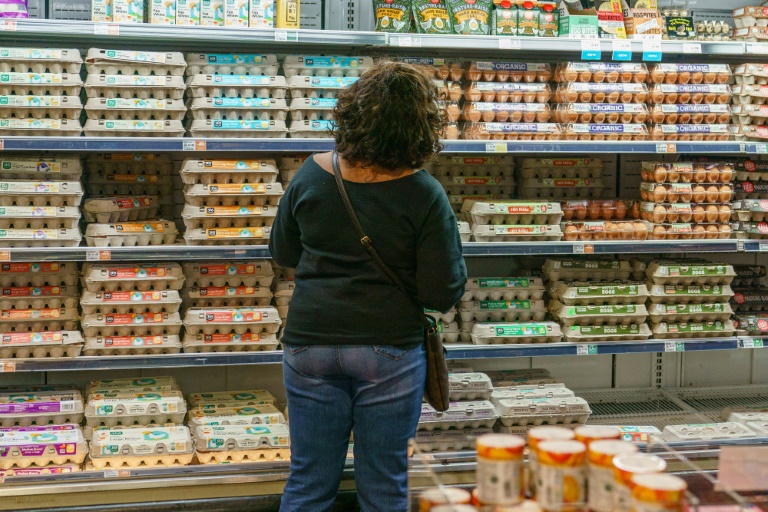
With her tattooed arms bare and her head uncovered, Talia looks somewhat out of place shopping at a Jerusalem discount supermarket that caters to modestly dressed ultra-Orthodox Jews. 

“I have no choice but to come here,” the 32-year-old nurse told AFP, asking not to be fully named as she discusses her family’s financial struggles at a time food prices are surging in Israel.

She worries about being able to feed her two children even though she and her husband, who repairs household appliances, “work like crazy”, including night shifts for her and weekend jobs for him. 

“We can’t do it anymore,” she said in frustration as she filled her cart with packets of pasta while avoiding the pricier items.

It’s a familiar problem for millions of Israelis who have endured soaring consumer prices for years, failing to fully benefit from an era of rapid economic growth driven by a high-tech boom.

Much of the world has endured rapid inflation since Russia’s war in Ukraine started early this year, driving up energy and food prices everywhere.

But in Israel — where 400 grammes of canned tuna can each cost around 30 shekels (about $8.50) — the problem has been acute for years, blamed in part on the strong shekel which makes imports more expensive.

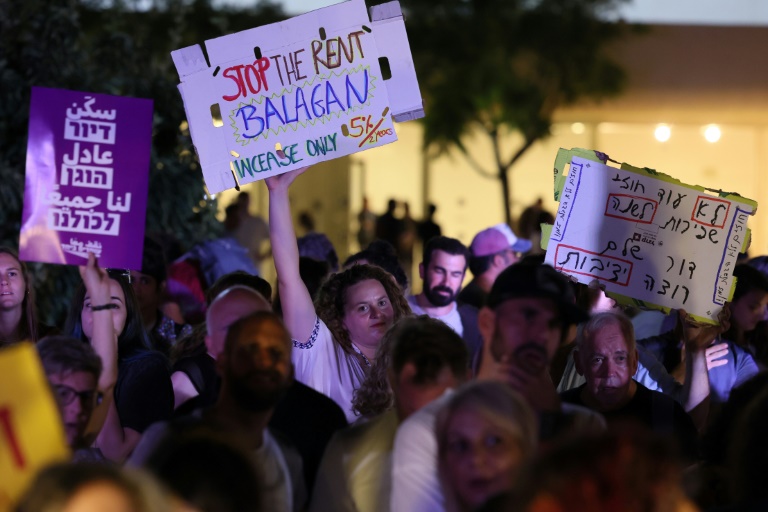
Tel Aviv, with its soaring property prices, was ranked the world’s most expensive city by The Economist magazine last year, and simmering rage over costs and income inequality is especially widespread. 

– ‘Hardly coping’ –

Israel, with its turbulent politics, heads back to the polls next Tuesday, for the fifth general election in less than four years. 

Historically, Israeli voting patterns have been shaped by religious and ethnic affiliation and, most importantly, views on the Palestinian conflict.

But this time, ahead of the November 1 vote, the cost-of-living crisis has become a major issue for the candidates, including Prime Minister Yair Lapid and opposition leader Benjamin Netanyahu.

Both have promised action to redress the problem as inflation hit a decade-high this month of 4.6 percent year-on-year according to the Central Bureau of Statistics, though without offering too many specifics. 

Rami Levy, the owner of a popular supermarket chain that bills itself as low-cost, told AFP that his sales are up 15 percent over the past year as middle class earners have increasingly sought cheaper food. 

“With prices rising, people who used to be able to afford to shop closer to home are coming to us because they know it’s cheaper,” said Levy, whose chain of eponymous stores are spread across Israel and West Bank settlements. 

One Rami Levy shopper was Ayelet Benshoshan, who strolled the aisles beneath bold coloured signs offering discounts on cucumbers, meat and canned tuna. 

“We have always been careful, but now there are things that we have simply stopped buying,” she said, explaining that she has cut out “candy, crackers, cream desserts and certain cornflakes at more than 20 shekels (about $6) a packet”.

With five children at home, she said she and her husband, a maintenance worker, are “hardly” coping. 

“I’m making more and more things at home, especially bread and cakes, to avoid buying them.”

– ‘Skipping meals’ –

Aron Troen, who teaches at the Hebrew University of Jerusalem’s School of Public Health, stressed that even middle class families are facing food security pressures and that healthy eating has become less affordable. 

“When there is rapid inflation in food prices and wages don’t keep pace, the middle class have to spend more, not only on food but on rent, transportation, gas and education,” he told AFP.

He noted that many families face “difficulty getting healthy food… People start by changing what they eat, then the quality of what they eat and then they start skipping meals or only feeding their children.”

Israel’s social security agency estimates that in 2021 more than 20 percent of the population was food insecure, a term the UN defines as lacking regular access to safe and nutritious food. 

Israel’s largest non-government group combating poverty and food insecurity, Latet, has put that figure at 30 percent for last year. 

Only days before the election, Benshoshan voiced hope that politicians would make middle class hardships a focus in future. 

“I would like them to think of us, ordinary citizens, who work hard and whose salaries have not increased, who have children, who pay our taxes, who have done our civil or military service,” she said. 

“We deserve an easier life… We are the middle class that is really starting to fall apart. I hope they will listen to us.”

Britain's Sunak to face opposition in parliament for first time as PM

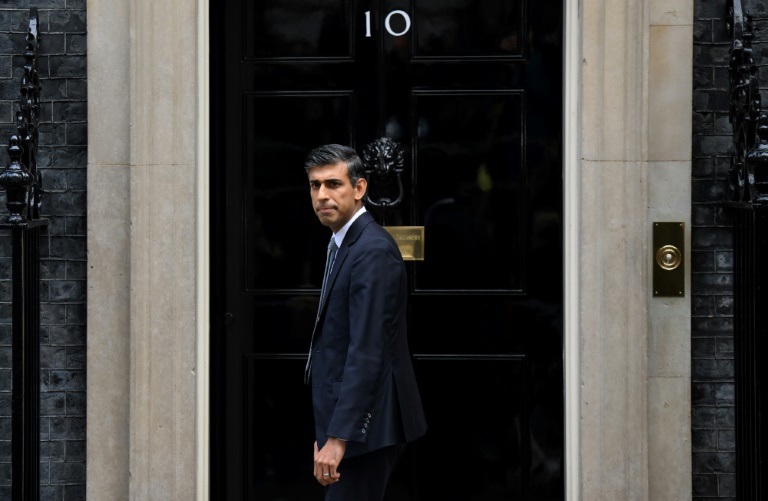
Rishi Sunak will on Wednesday face off against opposition lawmakers for the first time as British prime minister, in a likely raucous parliamentary session following weeks of political turmoil. 

It comes after he took power Tuesday as the first UK leader of colour, vowing to repair the damage wrought by outgoing leader Liz Truss through her disastrous budget, which sparked economic carnage.

Pledging also to unite his fractured Conservatives, and an increasingly unimpressed country, Sunak began his tenure by re-appointing a host of ministers from his predecessor’s top team.

The former finance minister retained Jeremy Hunt as chancellor of the exchequer, bidding to keep markets on side after he stabilised the situation with his initial appointment nearly two weeks ago.

He also kept Truss’s foreign, defence, trade and culture ministers, among others, as well as controversially bringing back recently fired Home Secretary Suella Braverman.

The line-up “reflects a unified party and a cabinet with significant experience, ensuring that at this uncertain time there is continuity at the heart of government”, a Downing Street source said.

The largely same-look cabinet could hold an inaugural meeting Wednesday before Sunak heads to the House of Commons for his first weekly “Prime Minister’s Questions”, when he will battle Labour leader Keir Starmer and other opposition lawmakers.

They will undoubtedly seek to capitalise on weeks of chaos at the top of government, and reiterate demands for a general election following the selection — by Conservative MPs — of their third leader in two months.

“The Tories have crashed the economy, with low wages, high prices and a cost-of-living crisis,” Starmer said Tuesday, in a taste of the attack-lines to come. 

“The public needs a fresh start and a say on Britain’s future.”

– ‘Difficult decisions’ –

Truss left office as the UK’s shortest-serving premier in history, replaced by its youngest since 1812 and first Hindu leader.

Sunak, 42, triumphed in a 96-hour Tory leadership contest after rival contender Penny Mordaunt failed to secure enough nominations from Tory lawmakers and Boris Johnson dramatically aborted an audacious comeback bid.

Truss and Johnson offered their support — though Johnson, who privately blamed his ex-minister for toppling him in July, is thought to be fuming and still harbouring hopes of an eventual Downing Street return.

Addressing the nation outside Number 10 shortly after his appointment by King Charles III, Sunak conceded the country faced “profound economic crisis”. 

“I will place economic stability and confidence at the heart of this government’s agenda,” he said, adding: “This will mean difficult decisions to come.”

In an apparent bid for better domestic unity, Sunak held immediate calls with the devolved leaders of Scotland and Wales — something Truss failed to do in her seven-week tenure.

In his first call with a foreign leader, Sunak told Ukrainian President Volodymyr Zelensky Britain would continue its “steadfast support” following Russia’s invasion.

He also spoke to US President Joe Biden, who had earlier hailed the appointment of the first British-Indian prime minister as “groundbreaking”.

“President Biden said that the UK remains America’s closest ally, and the Prime Minister agreed on the huge strength of the relationship,” Sunak’s office said of their discussions.

European leaders offered their own congratulations, while Irish premier Micheal Martin reminded Sunak of their “shared responsibility” to safeguard peace in Northern Ireland following tensions under Johnson and Truss.

Sunak is unlikely to enjoy much, if any, of a political honeymoon, as he inherits an array of problems.

Markets — and opposition parties — are eagerly awaiting an October 31 Halloween fiscal statement from Hunt, which is likely to contain curbs on public spending to meet tens of billions of pounds in budget shortfalls. 

It will be accompanied by much-scrutinised independent assessments of the government’s sums.

Labour and others are expected to keep demanding a snap election — not due until January 2025 at the latest — given Sunak is the second prime minister in succession without a direct mandate from the electorate.

Opposition parties have no way to force one, unless dozens of Conservative MPs agree, which appears unlikely as a flurry of polls show Labour with its largest lead in decades.

Close Bitnami banner
Bitnami