World

'Make it stop!' Brazilians fed up with long, dirty election campaign

Marcelo feels it is making him sick. Alexia has stopped chatting to her neighbors and Luciene is desperate for it to end: Brazil’s lengthy and nasty election duel has left many voters fed up.

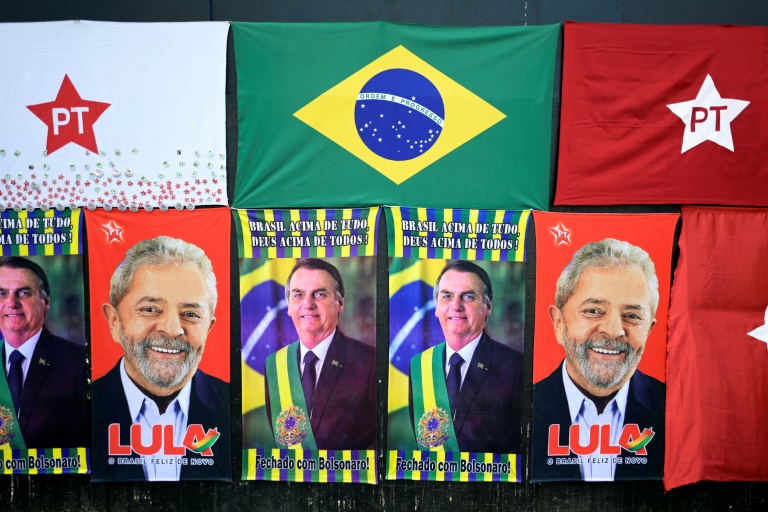
Latin America’s largest nation is four days from deciding whether to re-elect far-right President Jair Bolsonaro or leftist former leader Luiz Inacio Lula da Silva, who is leading a very tight race.

The two men, both tarnished but with fervent supporters, are locked in a fierce battle for the four percent of voters who plan to spoil their vote and the one percent who remain undecided.

The candidates have flooded the media and social media with their presence, and the election has dominated conversation for months.

“I am getting sick because there is a lot of disagreement,” said 51-year-old Marcelo Brandao Viana, a Bolsonaro supporter who laments a campaign “overloaded” with “fake news” and attacks between the rival parties.

“I am living this 24 hours a day, and it is horrible,” the bank receptionist told AFP. Nevertheless, he cannot resist looking at his WhatsApp groups during his lunch break outside a mall in the capital Brasilia.

Meanwhile, on Copacabana beach in Rio de Janeiro, 65-year-old Jose Guilherme Araujo sits on a beach chair in a tight, bright green swimsuit bearing the Brazilian flag as he tries to escape the electoral noise.

“I feel exhausted. I am fed up,” the lawyer told AFP, adding he plans to spoil his ballot.

“The main television channels are only talking about the election. It is horrible. I try to watch cable to escape the subject.”

– Don’t talk about politics –

A final showdown between Bolsonaro and Lula had been on the cards since last year when the leftist former president had longstanding corruption charges overturned for procedural reasons, and was freed from prison, without being exonerated.

Many Brazilians feel the election campaign began then, long before voting season, especially because both candidates draw strong measures of adoration and hatred.

In Sao Paulo, Alexia Ebert put her apartment building WhatsApp group on mute after it became an endless thread of political information and disinformation.

“I couldn’t take it anymore,” said the 22-year-old student.

Some, like Aline Tescer, a 35-year-old from Sao Paulo, said that any policy proposals for the next four years are conspicuous by their absence.

“I see myself the same as in the last election. It is always the same things, the same accusations, and I feel I have no choice in who to vote for.”

Luciene Soares, a businesswoman from Brasilia, feels “disappointed” by the “disrespect” instigated by Bolsonaro.

“People are afraid. I prefer not to say who I am voting for because one is afraid of people’s reactions. I don’t talk about politics because it creates problems,” said the 48-year-old.

“Among friends and family, we say: ‘God! Make it stop.'”

– Anesthetised electorate –

This fatigue has not shown up in weekly election polls, but experts have picked it up on the streets and online, in this country which has 171.5 million users (80 percent of the population) on social media, according to a study carried out by the Hootsuite and We Are Social agencies.

The constant bombardment of information “ends up anaesthetizing the electorate” and “tiring them out”, said Amaro Grassi, a sociologist with the Getulio Vargas thinktank.

“The permanent presence of campaign content is not new in this election, but has become much more accentuated,” he added.

Grassi remarks that most Brazilians just want to get back to their normal lives and “turn the page” on the bruising campaign.

“Today, politics has even become a topic of conversation on gossip sites,” said Sao Paulo resident Iamylle Kauane, on a visit to Rio.

This 21-year-old social assistant is waiting for the elections to end “to return to normalcy.”

Nevertheless, some are indefatigable.

“I don’t feel tired,” said Leandro Albino Oliveira, 36, selling hats on a Rio beach.

“We will not rest until our president is re-elected.”
Iran tensions rise in protests ahead of Mahsa Amini ceremony

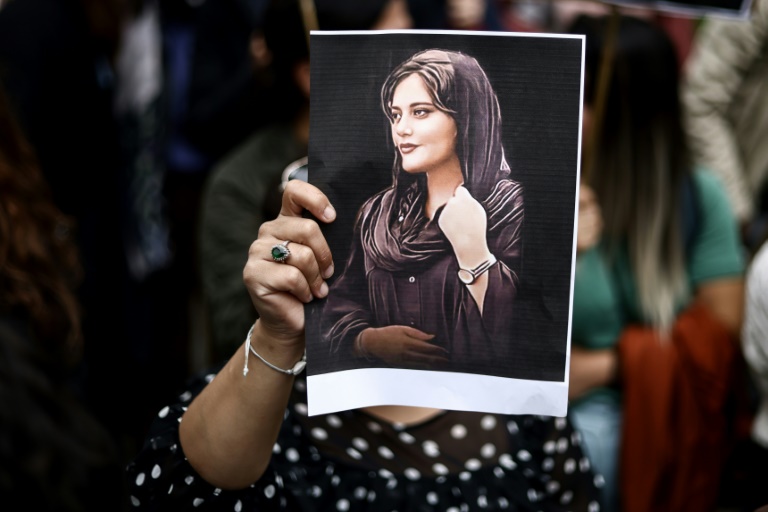
Iranian students protested Tuesday at multiple universities, defying a bloody crackdown as tensions mount on the eve of planned ceremonies marking 40 days since Mahsa Amini’s death. 

“A student may die but will not accept humiliation,” they chanted at Shahid Chamran University of Ahvaz, in the southwestern province of Khuzestan, in an online video verified by AFP.

Young women and schoolgirls have been at the forefront of protests sparked by Amini’s death last month, after her arrest for an alleged breach of the Islamic republic’s strict dress code for women.

The 22-year-old Iranian of Kurdish origin died three days after being taken into custody by the notorious morality police on September 13 while visiting Tehran with her younger brother.

Activists said the security services had warned Amini’s family against holding a ceremony and not to ask people to visit her grave Wednesday in Kurdistan province, otherwise “they should worry for their son’s life”.

Wednesday marks 40 days since Amini’s death and the end of the traditional mourning period in Iran.

State news agency IRNA published a statement it said was from the family, saying that “considering the circumstances and in order to avoid any unfortunate problem, we will not hold a ceremony marking the 40th day”.

Activists said the statement was made under pressure and that tributes were nonetheless expected at Amini’s grave.

– ‘Attacked, strip-searched, beaten’ –

Online videos showed students protesting Tuesday at Beheshti University and the Khaje Nasir Toosi University of Technology, both in Tehran, as well as Shahid Chamran University of Ahvaz.

The fresh demonstrations came after activists accused security forces of beating schoolgirls at the Shahid Sadr girls vocational school in Tehran on Monday.

“Students of the Sadr high school in Tehran have been attacked, strip-searched and beaten up,” said the 1500tasvir social media channel.

At least one student, 16-year-old Sana Soleimani, was hospitalised, said 1500tasvir, which chronicles rights violations by Iran’s security forces.

“Parents later protested in front of the school. Security forces attacked the neighbourhood and shot at people’s houses,” it added.

The education ministry said a dispute erupted between schoolgirls and their parents and school staff after the principal demanded they comply with rules over the use of mobile phones.

“The death of a student in this confrontation is strongly denied,” a ministry spokesman said, quoted by Iran’s ISNA news agency.

Families were seen clamouring for information outside the school in Tehran’s Salsabil neighbourhood, in an online video verified by AFP.

And in western Kurdistan province, videos posted online by independent rights group Hengaw showed authorities on Tuesday evening patrolling roads leading into Saqqez, Amini’s hometown.

The group, which monitors rights violations in Kurdistan, also tweeted that Iranian football stars Ali Daei and Hamed Lak were in Saqqez as they “want to take part in the 40th day funeral” and were staying at the Kurd Hotel. 

But they “had been taken to the government guesthouse… under guard by the security forces”, Hengaw said.

Daei has previously run into trouble with authorities over his online support for the Amini protests.

Unverified footage posted by Oslo-based Iran Human Rights group showed people gathering outside the Kurd Hotel in Saqqez “in their night protests”.

– Top official heckled –

Such reports have fuelled further anger over the crackdown that Iran Human Rights said, in an updated toll Tuesday, had cost the lives of at least 141 protesters.

Deadly unrest has hit not only Kurdistan — but also the city of Zahedan in the far southeast. IHR said 93 people were killed in demonstrations that erupted on September 30 over the reported rape of a teenage girl by a police commander.

Iran’s Tasnim news agency said unidentified gunmen killed two Revolutionary Guards in Zahedan Tuesday, taking to eight the number of security personnel killed in Sistan-Baluchistan.

Despite what rights group Amnesty International has called an “unrelenting brutal crackdown”, young women and men were again seen protesting in online videos on Tuesday.

“Death to the dictator” and “Death to the Revolutionary Guards”, women chanted in Tehran metro stations, in videos shared on Twitter.

Students heckled the spokesman for ultraconservative President Ebrahim Raisi as he addressed Tehran’s Khaje Nasir University, in a video published by the reformist paper Hammihan.

“Spokesman, get lost!” and “We don’t want a corrupt system, we don’t want a murderer”, they shouted at Ali Bahadori Jahromi.

Teachers observed a strike around the country Sunday and Monday over the crackdown, and another work stoppage was said to be under way in Kurdistan on Tuesday.

Amnesty says the crackdown has cost the lives of at least 23 children, while IHR said Tuesday at least 29 children have been killed.

There has also been a campaign of mass arrests of protesters and their supporters, including academics, journalists and even pop stars.

State media said Tuesday that more than 210 people were charged in connection with the protests in Kurdistan, Qazvin and Isfahan.

IRNA said 105 people were charged over protests in Khuzestan, citing the local judicial authorities.

Russia rejects US basketballer's appeal of 'traumatic' sentence

A Russian court on Tuesday rejected an appeal from US basketball star Brittney Griner of her nine-year prison term on drug charges, dismissing her plea for the “traumatic” sentence to be reduced.

The court in Krasnogorsk near Moscow ruled to leave Griner’s August verdict “without change” in the case that came amid fierce tensions between Moscow and Washington over Russia’s military offensive in Ukraine.

US President Joe Biden’s administration dismissed the ruling as “another sham judicial proceeding” that will keep Griner “wrongfully detained under intolerable circumstances” and vowed to continue pressing for her release.

“The President has demonstrated that he is willing to go to extraordinary lengths and make tough decisions to bring Americans home,” US National Security advisor Jake Sullivan said in a statement.

Griner, a star in the Women’s National Basketball Association in the US, had pleaded by video link from her detention centre just outside the Russian capital for the sentence to be cut.

“I really hope that the court will adjust this sentence because it has been very, very stressful and very traumatic,” Griner said.

The 32-year-old was handed nine years in prison in August for possessing vape cartridges with a small quantity of cannabis oil, after she was arrested at a Moscow airport in February.

Speaking slowly so her words could be translated into Russian, Griner asked the court for leniency given that the amount of cannabis found was “barely over the significant amount”.

“I don’t understand the first court’s decision to give one year less than the max when I’ve been here almost eight months and people with more severe crimes have gotten less than what I was given,” she said. 

“So I just beg that the court… reassess my sentence.”

– Not expecting ‘miracles’ –

Griner’s lawyers said they were disappointed by Tuesday’s decision as it goes against standard legal practice.

“Other defendants in similar criminal cases receive punishment in the form of a suspended sentence or a jail term not exceeding six years,” Maria Blagovolina and Alexander Boykov said in a statement.

“Thus, Brittney Griner remains one of the most severely punished defendants in Russia.”

The lawyers said Griner is doing fine physically and that she spoke to her family last week on her birthday, but Tuesday’s decision was hard for Griner to take.

“She had some hopes and these hopes vanished today,” Blagovolina told reports outside the court house.

WNBA commissioner Cathy Engelbert said the ruling “was not unexpected and Brittney Griner remains wrongly detained.”

“It is time to bring this case to an end and bring BG home.”

Griner’s lawyers hope to speak to her later this week about whether she wants to continue appealing the verdict in higher courts.

When she was arrested, the two-time Olympic basketball gold medallist and Women’s NBA champion had been in Russia to play for the professional Yekaterinburg team, during her off-season from the Phoenix Mercury Women’s National Basketball Association side.

She pleaded guilty to the charges, but said she did not intend to break the law or use the banned substance in Russia.

Griner had testified that she had permission from a US doctor to use medicinal cannabis to relieve pain from her many injuries, and had never failed a drug test.

The use of medical marijuana is not allowed in Russia.

In August, Moscow said it was ready to discuss a prisoner swap for Griner, but there has been no apparent progress.

Reports have suggested that Griner and another American jailed in Russia, Paul Whelan — a former US marine arrested in December 2018 and accused of spying — could be traded for Viktor Bout, a Russian arms trafficker serving 25 years in jail on a 2012 conviction.

Force firms to reveal their impact on nature: major businesses

Businesses must be compelled to reveal their impact on nature, more than 300 firms said in an open letter to world leaders published on Wednesday ahead of crunch United Nations negotiations to halt catastrophic biodiversity loss.  

Consumer goods group Unilever, furniture maker IKEA and India’s Tata Steel were among a slew of high profile corporations calling for stricter measures to impel firms to act, amid growing alarm over the devastation being wrought upon the natural world. 

“We need governments globally to transform the rules of the economic game and require business to act now,” the Business for Nature coalition said.

It said its open letter had been signed by some 330 companies with combined revenues of more than $1.5 trillion. 

International efforts to protect the world’s natural life support systems — including air, food and water — are set to conclude in Canada in December. Negotiators are hammering out a global framework to “live in harmony with nature” by 2050, with key benchmarks in 2030.

While businesses are beginning to report on their carbon emissions and climate impacts — albeit with some facing accusations of “greenwashing” — few firms give details on biodiversity.

The businesses that signed on to the statement said they wanted clarity from policymakers. 

“This statement shows the extensive support from major businesses for an ambitious global deal for nature, with clear goals to drive collective business and finance action,” said Andre Hoffmann, the vice-chairman of Roche Holdings.  

“The political certainty will accelerate the necessary changes to our business models. We stand ready to do everything in our power to shift to a society where nature, people and business thrive.”

In March, a report by central banks found that financial institutions and businesses were underestimating the risks of biodiversity loss and destroying the natural assets they depend on.

The new statement calls on heads of state to sign up to a target of mandatory requirements for large firms to assess and disclose their impacts and dependency on biodiversity by the end of this decade. 

The task “won’t be easy but it must happen” the firms said, urging measures to ensure that the UN targets aim to both reduce negative impacts and encourage positive ones.  

“The current rate of global economic activity is more than the planet can cope with,” said Steve Waygood, the chief responsible investment officer at Aviva Investors, which also signed the Business for Nature statement.  

“If nature was a current account, then we would be heavily overdrawn. This is bad for the environment and bad for long term growth.”

Many hope the UN deal, when finalised, will be as ambitious in its goals to protect life on Earth as the Paris Agreement was for climate change — even if the United States is not a party to UN efforts to conserve nature.  

One landmark proposal on the table is the protection of 30 percent of wild land and oceans by 2030. 

Another key focus of negotiations are harmful subsidies for things like fossil fuels, agriculture and fishing that can result in environmental destruction and encourage unsustainable levels of production and consumption.  

These amount to as much as $1.8 trillion every year, or two percent of global gross domestic product, Business for Nature has estimated. 

The world failed to meet almost all of a previous set of targets on nature in the decade to 2020.

Force firms to reveal their impact on nature: major businesses

Businesses must be compelled to reveal their impact on nature, more than 300 firms said in an open letter to world leaders published on Wednesday ahead of crunch United Nations negotiations to halt catastrophic biodiversity loss.  

Consumer goods group Unilever, furniture maker IKEA and India’s Tata Steel were among a slew of high profile corporations calling for stricter measures to impel firms to act, amid growing alarm over the devastation being wrought upon the natural world. 

“We need governments globally to transform the rules of the economic game and require business to act now,” the Business for Nature coalition said.

It said its open letter had been signed by some 330 companies with combined revenues of more than $1.5 trillion. 

International efforts to protect the world’s natural life support systems — including air, food and water — are set to conclude in Canada in December. Negotiators are hammering out a global framework to “live in harmony with nature” by 2050, with key benchmarks in 2030.

While businesses are beginning to report on their carbon emissions and climate impacts — albeit with some facing accusations of “greenwashing” — few firms give details on biodiversity.

The businesses that signed on to the statement said they wanted clarity from policymakers. 

“This statement shows the extensive support from major businesses for an ambitious global deal for nature, with clear goals to drive collective business and finance action,” said Andre Hoffmann, the vice-chairman of Roche Holdings.  

“The political certainty will accelerate the necessary changes to our business models. We stand ready to do everything in our power to shift to a society where nature, people and business thrive.”

In March, a report by central banks found that financial institutions and businesses were underestimating the risks of biodiversity loss and destroying the natural assets they depend on.

The new statement calls on heads of state to sign up to a target of mandatory requirements for large firms to assess and disclose their impacts and dependency on biodiversity by the end of this decade. 

The task “won’t be easy but it must happen” the firms said, urging measures to ensure that the UN targets aim to both reduce negative impacts and encourage positive ones.  

“The current rate of global economic activity is more than the planet can cope with,” said Steve Waygood, the chief responsible investment officer at Aviva Investors, which also signed the Business for Nature statement.  

“If nature was a current account, then we would be heavily overdrawn. This is bad for the environment and bad for long term growth.”

Many hope the UN deal, when finalised, will be as ambitious in its goals to protect life on Earth as the Paris Agreement was for climate change — even if the United States is not a party to UN efforts to conserve nature.  

One landmark proposal on the table is the protection of 30 percent of wild land and oceans by 2030. 

Another key focus of negotiations are harmful subsidies for things like fossil fuels, agriculture and fishing that can result in environmental destruction and encourage unsustainable levels of production and consumption.  

These amount to as much as $1.8 trillion every year, or two percent of global gross domestic product, Business for Nature has estimated. 

The world failed to meet almost all of a previous set of targets on nature in the decade to 2020.

Google's money churning ad engine sputters in rough economy

Google parent Alphabet on Tuesday reported quarterly earnings that fell short of market expectations as belts tightened in the digital ad market that drives its revenue.

Alphabet said it made a profit of $14 billion in the third quarter on ad revenue that grew just 6 percent to $69 billion when compared with the same period of last year.

Aside from one period at the start of the Covid pandemic, that would mark the weakest revenue growth at Alphabet for any quarter since 2014.

“When Google stumbles, it’s a bad omen for digital advertising at large,” said Insider Intelligence analyst Evelyn Mitchell.

“This disappointing quarter for Google signifies hard times ahead if market conditions continue to deteriorate.”

Alphabet shares slipped 6.8 percent to $97.35 in after-market trades that followed the release of the earnings report.

Google’s foundation in advertising on its heavily used search engine does give it an advantage, however, over other ad-reliant tech firms such as Meta, Snap and Twitter, the analyst added.

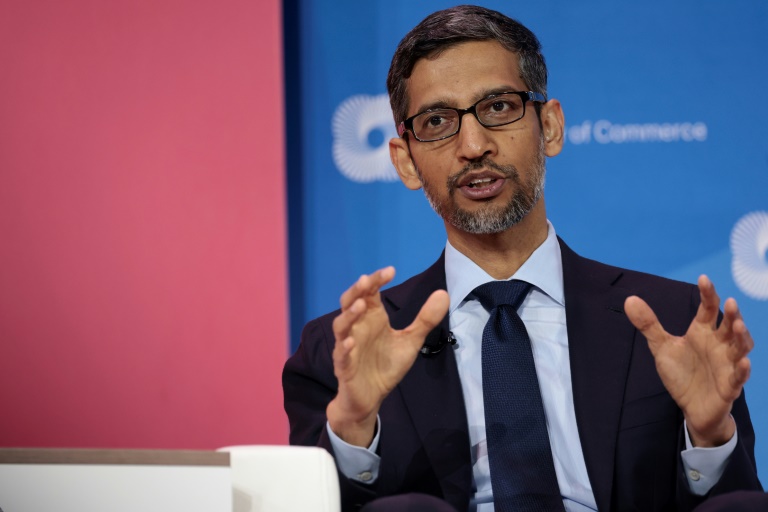
“Over time, we’ve had periods of extraordinary growth and then there are periods I viewed as a moment where you take the time to optimize the company to make sure we are set up for the next decade of growth ahead,” Alphabet and Google chief Sundar Pichai said on an earnings call.

“I view this as one of those moments.”

Alphabet chief financial officer Ruth Porat said the financial results in the quarter showed “healthy fundamental growth in Search and momentum in Cloud” computing revenue, but suffered from foreign exchange rates given the strong US dollar.

“We’re working to realign resources to fuel our highest growth priorities,” Porat said.

Big tech firms are grappling with multiple challenges, from inflation to the war in Ukraine, putting pressure on earnings.

Alphabet recruited throughout the pandemic, but announced a slowdown in hiring as ad revenue growth cooled this year.

“Within this slower headcount growth next year we will continue hiring for critical roles, particularly focused on top engineering and technical talent,” Porat said.

Many other tech companies have decided to lay off staff, including Netflix and Twitter, or slow the pace of hiring, such as Microsoft and Snap. 

– YouTube squeeze? –

Worsening the financial situation for Alphabet is the fact that Google tends not to aggressively promote advertising on its platform with tactics such as trying to convince businesses that online marketing is a smart move during tough economic times, said independent tech analyst Rob Enderle of Enderle Group.

“They don’t like the idea of making their money off advertising, so they don’t treat the market very well,” Enderle contended.

“Now, you are seeing the adverse impact of not taking your revenue source seriously.”

The earnings report also showed that ad revenue at YouTube was slightly lower than it was in the same quarter a year earlier, despite a hot trend of people watching video on-demand on the internet.

“Overall, I feel YouTube remains in a really good position to continue to benefit from the streaming boom,” chief business officer Philipp Schindler said during an earnings call.

However, Alphabet noticed a “pullback in spending” by advertisers at YouTube in the quarter, Schindler told analysts.

“They have a ton of competition in video, and TikTok is probably hitting YouTube pretty hard,” Enderle said.

Netflix last week reported that it gained subscribers in the recent quarter, calming investor fears that the streaming giant was losing paying customers.

The company said it ended the third quarter with slightly more than 223 million subscribers worldwide, up some 2.4 million, after seeing subscriber ranks ebb during the first half of the year.

The turn-around in subscriber growth comes as Netflix is poised to debut a subscription option subsidized by ads in November across a dozen countries.

Rival streaming platform Disney+ is to launch ad-subsidized subscriptions in December.

Ethiopia peace talks open in South Africa

The first formal peace talks between the warring sides in the brutal two-year conflict in Ethiopia’s Tigray region opened in South Africa on Tuesday.

Led by the African Union (AU), the negotiations in Pretoria follow a fierce surge in fighting in recent weeks that has alarmed the international community and triggered fears for civilians caught in the crossfire.

They “have been convened to find a peaceful and sustainable solution to the devastating conflict,” South African President Cyril Ramaphosa’s spokesman Vincent Magwenya told reporters, adding that they would run until October 30.

South Africa hopes “the talks will proceed constructively and result in a successful outcome that leads to peace for all the people of our dear sister country,” he said.

The dialogue between negotiators from the Ethiopian government of Prime Minister Abiy Ahmed and the regional authorities in war-stricken Tigray was launched almost two months to the day since fighting resumed, shattering a five-month truce.

The international community has been calling for an immediate ceasefire, humanitarian access to Tigray where many face hunger, and a withdrawal of Eritrean forces, whose return to the conflict has raised fears of renewed atrocities against civilians. 

“There is no military solution to this conflict, and these talks represent the most promising way to achieve lasting peace and prosperity for all Ethiopians,”  US Secretary of State Antony Blinken said in a statement welcoming the negotiations.

The dialogue is being facilitated by AU Horn of Africa envoy and former Nigerian president Olusegun Obasanjo, along with Kenya’s former leader Uhuru Kenyatta and South Africa’s ex-vice president Phumzile Mlambo-Ngcuka, with a US envoy, Mike Hammer, participating.

AU Commission chair Moussa Faki Mahamat welcomed the launch of the eagerly-awaited process.

He said he was “encouraged by the early demonstration of commitment to peace by the parties” and reiterated the AU’s continued support for a process “to silence the guns towards a united, stable, peaceful and resilient Ethiopia.”

UN High Commissioner for Refugees, Filippo Grandi, implored the rivals to seize the opportunity for peace in the face of the “very worrying” humanitarian situation.

“Please government, please TPLF, for the sake of your own people, come to a positive conclusion or at least open up a channel for peace,” he told reporters in Nairobi.

The Ethiopian government and the rebel Tigray People’s Liberation Front (TPLF) have yet to comment.

– Communications blackout –

Diplomatic pressure has ratcheted up in recent weeks to end a war which has left millions in need of humanitarian aid and, according to a US estimate, as many as half a million dead.

The talks come as federal forces and their allies in the Eritrean army appear to be gaining the upper hand, seizing a string of towns in Tigray including the strategic city of Shire in offensives that have sent civilians fleeing.

It is impossible to verify developments on the battleground as Tigray — a region of six million people — is largely cut off by a communications blackout and access to northern Ethiopia is severely restricted.

An initial AU effort to bring the two sides to the negotiating table earlier this month failed, with diplomats suggesting logistical issues and a lack of preparedness were to blame.

The Pretoria dialogue represents the first publicly announced talks between the rivals, although a Western official has confirmed that secret contacts had taken place organised by the United States in the Seychelles and twice in Djibouti.

Abiy first sent troops into Tigray in November 2020, promising a quick victory over the northern region’s dissident leaders, the TPLF, after what he said were attacks by the group on federal army camps.

The move followed long-running tensions with the TPLF, which had dominated Ethiopia’s ruling coalition before Abiy came to power in 2018 and sidelined the party.

– Amnesty appeal –

In a rare comment on the conflict last week, Abiy — who won the 2019 Nobel Peace Prize for his rapprochement with Eritrea — said the war “would end and peace will prevail”.

But on Monday, Tigray’s leader Debretsion Gebremichael issued a defiant statement saying: “The Tigray army has the capacity to defeat our enemies totally.”

Amnesty International on Monday urged rival forces to protect civilians in the face of intensifying hostilities.

In a statement, the watchdog charged that air strikes on Tigray’s capital Mekele and the town of Adi Daero in August and September had “killed hundreds of civilians including children.”

Zelensky asks donors for $38 bn as Russia shells Bakhmut

Ukrainian President Volodymyr Zelensky on Tuesday asked the international community to cover an expected budget deficit of $38 billion next year for his war-torn country, with Moscow’s invasion badly hitting the economy.

Russian shelling meanwhile pummeled the eastern Donbas town of Bakhmut, where AFP journalists saw smoke rising from fierce battles between Russian forces and Ukraine troops trying to keep them at bay.

At the United Nations Security Council, Moscow called for action on its claim that Ukraine is preparing to detonate a nuclear “dirty bomb” to blame on Russia.

Such a scheme is “very dangerous but will be profitable for the Zelensky regime to remain in power,” Russia’s deputy UN ambassador Dmitry Polyanskiy.

But Western diplomats rejected the allegation, first made on Sunday by Russian Defense Minister Sergei Shoigu.

James Kariuki, the British ambassador to the United Nations, called it “transparently false.”

“We have seen and heard no new evidence during this private meeting” of the Security Council, he said. “Ukraine has been clear, it’s got nothing to hide.”

Meanwhile US President Joe Biden issued a new warning over Russia’s nuclear talk.

“Russia would be making an incredibly serious mistake were it to use a tactical nuclear weapon,” he said.

– ‘New Marshall Plan’ –

International support for Kyiv was in the balance Tuesday. 

At an international reconstruction conference in Berlin, Zelensky urged European leaders to offer greater financial support for his country more than eight months Russian troops invaded.

“At this very conference we need to make a decision on assistance to cover next year’s budget deficit for Ukraine,” Zelensky said via video-link.

“It’s a very significant amount of money, a $38 billion deficit,” he added.

German Chancellor Olaf Scholz said that rebuilding Ukraine requires “a new Marshall Plan for the 21st century — a generational task that must begin now.”

– Support from Italy, UK reconfirmed –

Late Tuesday, Zelensky called new British Prime Minister Rishi Sunak to reaffirm ties.

He said on Twitter that the two had an “excellent conversation” and “agreed to write a new chapter in Ukraine-UK relations.”

“But the story is the same — full support in the face of Russian aggression,” Zelensky said.

Downing Street said Sunak had assured Zelensky of Britain’s “steadfast support.”

In Italy, new Prime Minister Giorgia Meloni reaffirmed the support of her far-right government for Ukraine amid worries Italy could tilt toward Moscow.

“Italy is fully part of Europe and the Western world,” Meloni said in her first speech as prime minister. 

The country  would “continue to be a reliable partner of NATO in supporting Ukraine,” she said.

– Democratic doubts in US? –

But in Washington, the progressive faction of Democrats sparked turmoil when they released a letter on Monday that urged Biden to seek a negotiated settlement with Russia to end the war, and suggested they had limited patience with spending to support Kyiv’s war effort.

“The alternative to diplomacy is protracted war, with both its attendant certainties and catastrophic and unknowable risks,” said the letter signed by 30 Democrats.

Coming after the Republican House leader also suggested the US was giving too much money to Ukraine, the letter sparked fears that Washington’s all-important support could be weakening.

But on Tuesday the Democrats suddenly revoked the letter. They said it was drafted more than three months ago when the battlefield situation was different, and released in error.

Pramila Jayapal, chair of the Congressional Progressive Caucus, stressed that the Democrats had supported every US package of military, social and economic aid for Ukraine since the war began.

“Every war ends with diplomacy, and this one will too, after Ukrainian victory,” she wrote.

– Battle for Bakhmut –

In eastern Ukraine, Kyiv’s troops said they were holding back the weeks-long push by Russia’s elite Wagner force for the wine-making and salt-mining town of Bakhmut in the Donetsk region.

The US-based Institute for the Study of War said that battlefield information indicated that Russian forces have been losing ground, with Ukrainians recapturing a cement plant on the eastern outskirts of the town.

As smoke rose through the rain over Bakhmut Tuesday and a Ukrainian missile appeared to bring down a Russian drone, a 28-year-old soldier, who would not be identified, claimed Ukraine’s forces had made gains overnight.

Seven civilians were killed and three injured in Bakhmut a day earlier, the regional governor said.

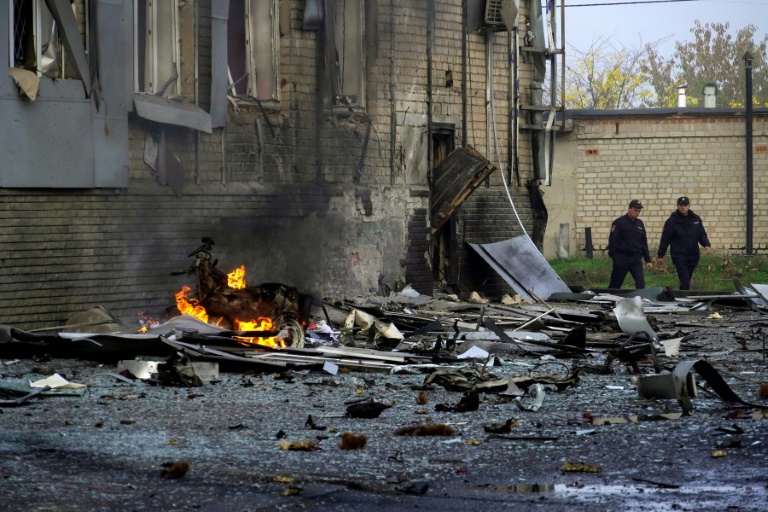
In a residential area of the Bakhmut, AFP journalists saw blood stains on the ground in the wake of what residents said was a fatal attack the day before.

“I found a body here without a head. I’m in shock,” said 58-year-old Sergii, adding: “It was a man. He was just walking on the street.”

US charges Ukrainian 'Raccoon Infostealer' with cybercrimes

A Ukrainian man has been charged with computer fraud for allegedly infecting millions of computers with malware in a cybercrime operation known as “Raccoon Infostealer,” the US Justice Department said Tuesday.

Mark Sokolovsky, 26, is being held in the Netherlands and the United States is seeking his extradition, the department said in a statement.

It said Raccoon Infostealer malware was leased to cybercriminals for $200 a month, payable in cryptocurrency.

The malware was then installed on the computers of unsuspecting victims and used to steal personal data such as log-in credentials and financial information, the department said.

It said the FBI and law enforcement partners in Italy and the Netherlands dismantled the digital infrastructure supporting “Raccoon Infostealer” in March 2022, when Sokolovsky was arrested.

The Justice Department said the FBI has identified more than 50 million unique credentials and forms of identification such as email addresses and credit card numbers in the stolen data from millions of potential victims around the world.

“This case highlights the importance of the international cooperation that the Department of Justice and our partners use to dismantle modern cyber threats,” Deputy Attorney General Lisa Monaco said.

“As reflected in the number of potential victims and global breadth of this attack, cyber threats do not respect borders, which makes international cooperation all the more critical,” Monaco said.

Sokolovsky is charged with computer fraud, wire fraud, money laundering and identity theft. He faces up to 20 years in prison for the wire fraud and money laundering charges.

The Justice Department said Sokolovsky is appealing a September 2022 decision by the Amsterdam District Court granting his extradition to the United States.

In Ukraine's blitzed Bakhmut, residents accustomed to death

Elderly people quietly cycle under bombardment, and children ride scooters on sidewalks that vibrate from artillery fire.

Bakhmut, a ghost town in eastern Ukraine torn apart by four months of brutal battles with invading Russian forces, has seen so much destruction that its few remaining residents have grown accustomed to death.

As Russian troops aided by paramilitaries from the shadowy Wagner group exchange fire with Ukrainian forces on a daily basis, locals say they have learned to live under constant fire.

Sergiy, a 56-year-old resident, said he no longer even raises his head when Russian missiles whistle past above.

“It happened just like that. One day we got used to it,” he told AFP, clad in a tracksuit and slippers.

“At first, each boom scared us, but we got used to it,” he said, declining to give his last name.

On the wet pavement near his house, the blood of one of Sergiy’s neighbours was still visible among the green and yellow autumn leaves.

He was one of seven people killed in bombardment on Monday.

Bakhmut, once a quiet town of some 70,000 people, is now a shadow of its former self, with no electricity, water or phone connection.

Survivors dressed day and night in their winter clothes, cluster together to cut wood for heating and to cook meals over fire outside their apartment buildings.

– ‘I can’t stay anymore’ –

Several thousand people remain on the Ukraine-controlled side of Bakhmut, according to local officials. It’s unclear how many have stayed in the occupied part of town.

When a mortar shell hit an apartment building on Monday, Sergiy ran to take shelter under a porch.

But a fellow local was not spared.

“We came out and saw this man lying here with his chest open and without a head,” Sergiy said coldly. “We can’t even know who it was, he was there like a piece of meat.”

Zoya Timoshenka, a 73-year-old retiree, lives on the first floor of the bombed-out building.

“Be careful, there’s lots of glass here,” she told AFP journalists as she led them to what remained of her flat.

Icy wind and autumn drizzle blew through a gaping hole in the wall where the window once stood between embroidered curtains.

After Monday’s attack, Timoshenka had finally decided to leave.

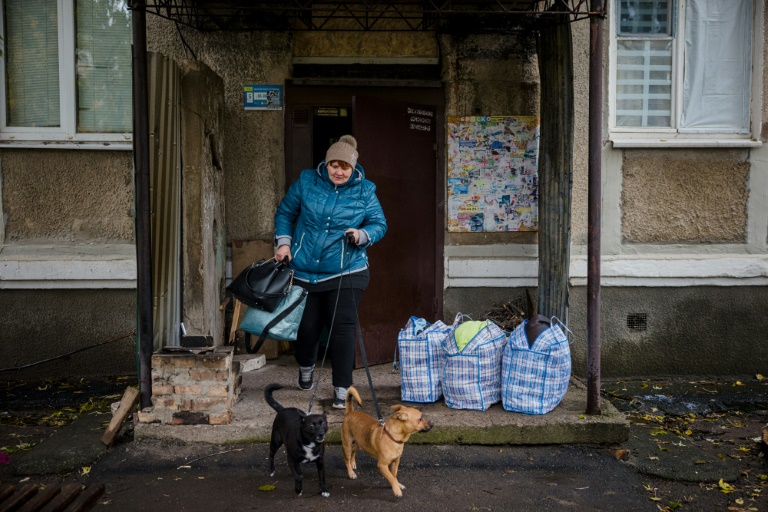
Her daughter-in-law, Natalya Timoshenka, said both would evacuate to the city of Dnipro some 250 kilometres (155 miles) further west.

“With what happened yesterday, with this man killed downstairs, I can’t stay anymore,” said the 48-year-old.

Her retired mother-in-law had packed her entire life into three shopping bags.

“If we stay here, we don’t have 36,000 options: Either we are buried under the rubble, or we lose an arm or a leg, or we die,” said the elder Timoshenka, before boarding a yellow evacuation bus.

Close Bitnami banner
Bitnami