World

Far-right Meloni seeks to reassure in first speech as Italy PM

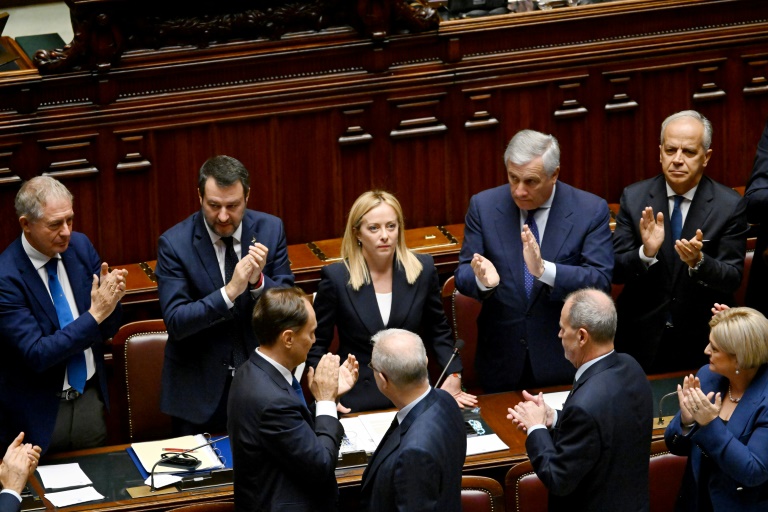
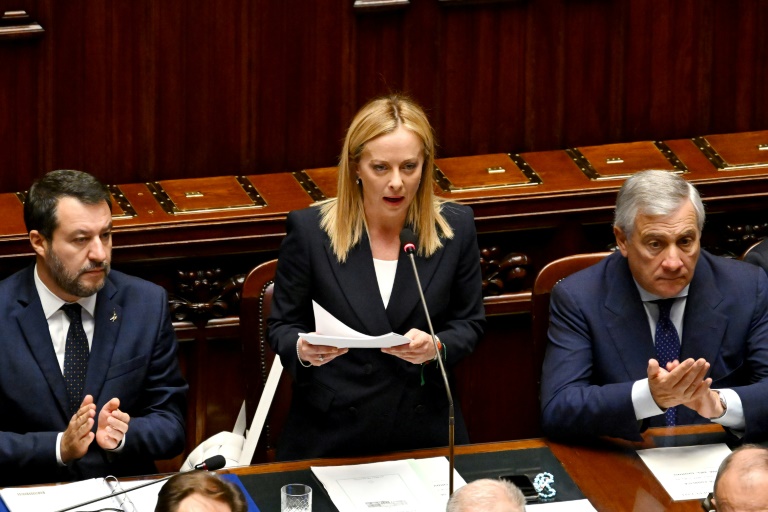
New Italian Prime Minister Giorgia Meloni outlined her programme for government on Tuesday, reaffirming her support for the EU, NATO and Ukraine and presenting herself as a steady hand to guide her country through turbulent times.

One month after her far-right Brothers of Italy party won general elections, Meloni used her inaugural speech to parliament to seek to allay concerns she will guide the eurozone’s third largest economy down a radical new path.

“Italy is fully part of Europe and the Western world,” the 45-year-old told the lower house, adding that it would “continue to be a reliable partner of NATO in supporting Ukraine.”

Meloni, who was sworn in as Italy’s first woman premier on Saturday, denied accusations she will restrict civil rights and said she had “never felt sympathy or closeness to undemocratic regimes… including Fascism.”

The prospect of a Eurosceptic, populist government in Italy — a founding member of NATO and the European Union — had sparked concern among its allies, particularly in Brussels.

Meloni strongly backs EU sanctions against Russia for its war in Ukraine, but her coalition ally Silvio Berlusconi last week was recorded defending his old friend, Russian President Vladimir Putin.

Italy was heavily dependent on Russian gas before the war and is currently battling soaring inflation, fuelled by sky-high energy bills, which risks sparking a recession next year.

On Tuesday, Meloni said the country was “in the midst of a storm.”

She said her priority was to help businesses and households cope and to continue find new sources of energy, saying she would not give in to “Putin’s blackmail.”

The new government won a vote of confidence in the lower house of parliament after Meloni’s speech, which will be followed by another in the Senate on Wednesday.

The votes are largely procedural as she has a comfortable majority in parliament thanks to her coalition with Berlusconi’s Forza Italia party and Matteo Salvini’s far-right League.

– Traditional conservative –

In a speech lasting more than an hour, Meloni promised to cut taxes for businesses and families while simplifying bureaucracy to encourage investment, and also announced a one-off tax amnesty.

She said “lasting and structural growth” was the answer to reducing Italy’s debt — forecast to be 145 percent of gross domestic product this year, the highest ratio in the eurozone after Greece.

But Giuseppe Conte, former premier and leader of the opposition Five Star Movement, accused her of “empty rhetoric”, saying there were no concrete solutions to the cost-of-living crisis.

Meloni also warned that help for energy bills would “drain” much of the available funds and other unspecified spending projects would have to be postponed.

Lorenzo Codogno, a political analyst and former head economist at Italy’s treasury, said her speech suggested she would lead “more of a traditional conservative government than a radical far-right spin-off”.

He noted she said Italy will fully respect EU budget rules, even if she will work to try to change them.

Key to Italy’s future growth is almost 200 billion euros ($197 billion) in grants and loans from the EU’s post-pandemic recovery fund, which depend on Rome implementing major reforms, from criminal justice to public administration.

Meloni said the money was “an extraordinary opportunity to modernise Italy”, but said she would seek “adjustments” to the plan to take into account the rising cost of energy and raw materials.

– Underdog –

Meloni’s party, which has neo-fascist roots, had never before been in power and her own government experience is limited to serving as youth minister under Berlusconi in the 2000s.

“I am what the British would call an ‘underdog’,” she said Tuesday, saying she intended to “defy all predictions”.

In a bid to reassure investors, she has appointed as economy minister Giancarlo Giorgetti, a relatively moderate member of the League who was economic development minister in Mario Draghi’s outgoing government.

Roberto Cingolani, who served as energy minister and helped reduce Italy’s reliance on Russian gas from 40 percent to 10 percent since the Ukraine war began, will also stay on as an adviser.

However tensions within her coalition had led many commentators to predict it may go the way of many others in Italy, which has had almost 70 governments since 1946.

Salvini — the new deputy prime minister who is also in charge of infrastructure and transport — risked upstaging Meloni’s speech by setting out his own programme for government on Monday.

In a series of tweets, the League leader committed himself among other policies to building a long discussed — and hugely costly — bridge between mainland Italy and Sicily, which he said would create 100,000 jobs.

Adidas cuts ties with Kanye West over anti-Semitic remarks

German sportswear giant Adidas said Tuesday it was ending its partnership with Kanye West after a series of anti-Semitic outbursts by the controversial rapper.

Recent comments by West — now known formally as Ye — were “unacceptable, hateful and dangerous”, Adidas said in a statement. 

“After a thorough review, the company has taken the decision to terminate the partnership with Ye immediately”.

Adidas said it would “end production” of the highly successful “Yeezy” line designed together with West and “stop all payments to Ye and his companies”.

The abrupt end to the collaboration between the sports outfitter and rapper would slash Adidas’s net income in 2022 by “up to 250 million euros ($246 million)”, the company estimated.

Adidas’s decision to dump the artist was “overdue”, said Josef Schuster of the Central Council of Jews in Germany.

“For weeks, West has caused worldwide furore with his anti-Semitic remarks,” Schuster said, adding that the rapper’s comments had become “intolerable”.

– T-shirt statement –

Adidas began a review of its relationship with West earlier this month after he appeared at a Paris fashion show wearing a shirt emblazoned with “White Lives Matter”, a slogan created as a backlash to the Black Lives Matter movement.

Days later he was locked out of Twitter and Instagram for threatening to “Go death con 3 on JEWISH PEOPLE”, using a reference to US military readiness.

Comments made by West “violate the company’s values of diversity and inclusion, mutual respect and fairness”, Adidas said Tuesday.

The artist was associated with rival sportswear company Nike for years but broke away in 2013, lending his name to Adidas as they launched their first Yeezy shoe together in 2015 — a partnership that went on to make him a billionaire.

Along with Beyonce, Stella McCartney and Pharrell Williams, West’s has been one of the top names used by Adidas to boost sales, especially online.

Adidas’s announcement was followed later Tuesday by US company Gap, which said it was taking “immediate steps to remove Yeezy Gap product from our stores” in addition to shutting down YeezyGap.com.

West and Gap had announced in September that they planned to end their partnership, although Gap said at the time it planned to release several co-branded products already in development.

Paris-based fashion house Balenciaga also ended ties with the rapper last week, saying it “no longer (has) any relationship nor any plans for future projects related to this artist”.

One of Hollywood’s biggest talent agencies, CAA, said on Monday it was dropping West, while film and TV producer MRC said it was shelving an already-finished documentary about the artist.

– Inflammatory remarks –

Adidas’s decision would stop West from “using the company’s immense platform to amplify his hateful ideology about Jews”, the World Jewish Congress said in a statement.

The German group’s “delayed move” in response to the anti-Semitic comments had come after “massive public outcry”, the WJC said.

Rights campaigners and entertainment world figures had heaped pressure on Adidas to stop working with the rapper.

“Those who continue to do business with West are giving his misguided hate an audience”, wrote Hollywood super-agent Ari Emanuel in the Financial Times.

“There should be no tolerance anywhere for West’s anti-Semitism.”

West’s ex-wife Kim Kardashian also appeared to join the pile-on, without mentioning the father of her children by name.

“Hate speech is never OK or excusable,” she wrote Monday on Twitter and Instagram.

“I stand together with the Jewish community and call on the terrible violence and hateful rhetoric towards them to come to an immediate end.”

Adidas fell on the Frankfurt Stock Exchange following its announcement, finishing 3.2 percent lower.

Ethiopia peace talks open in South Africa

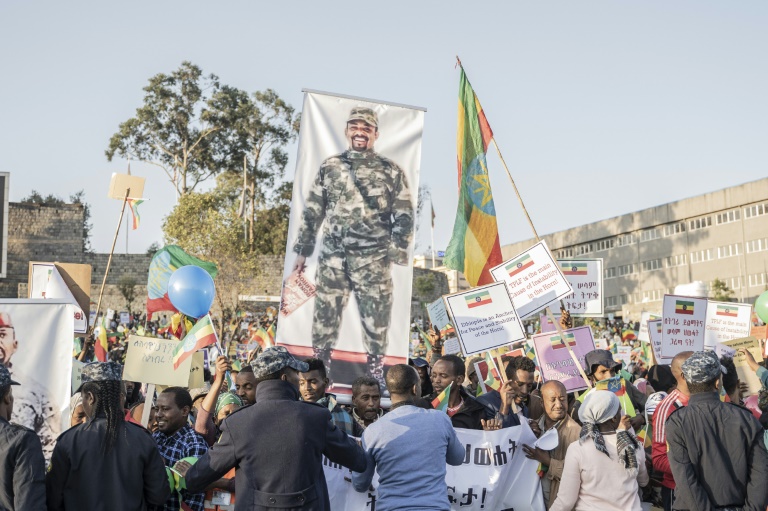
The first formal peace talks between the warring sides in the brutal two-year conflict in Ethiopia’s Tigray region opened in South Africa on Tuesday.

Led by the African Union (AU), the negotiations in Pretoria follow a fierce surge in fighting in recent weeks that has alarmed the international community and triggered fears for civilians caught in the crossfire.

They “have been convened to find a peaceful and sustainable solution to the devastating conflict,” South African President Cyril Ramaphosa’s spokesman Vincent Magwenya told reporters, adding that they would run until October 30.

South Africa hopes “the talks will proceed constructively and result in a successful outcome that leads to peace for all the people of our dear sister country,” he said.

The dialogue between negotiators from the Ethiopian government of Prime Minister Abiy Ahmed and the regional authorities in war-stricken Tigray was launched almost two months to the day since fighting resumed, shattering a five-month truce.

The international community has been calling for an immediate ceasefire, humanitarian access to Tigray where many face hunger, and a withdrawal of Eritrean forces, whose return to the conflict has raised fears of renewed atrocities against civilians. 

The dialogue is being facilitated by AU Horn of Africa envoy and former Nigerian president Olusegun Obasanjo, along with Kenya’s former leader Uhuru Kenyatta and South Africa’s ex-vice president Phumzile Mlambo-Ngcuka.

AU Commission chair Moussa Faki Mahamat welcomed the launch of the eagerly-awaited process.

He said he was “encouraged by the early demonstration of commitment to peace by the parties” and reiterated the AU’s continued support for a process “to silence the guns towards a united, stable, peaceful and resilient Ethiopia.”

UN High Commissioner for Refugees, Filippo Grandi, implored the rivals to seize the opportunity for peace in the face of the “very worrying” humanitarian situation.

“Please government, please TPLF, for the sake of your own people, come to a positive conclusion or at least open up a channel for peace,” he told reporters in Nairobi.

The Ethiopian government and the rebel Tigray People’s Liberation Front (TPLF) have yet to comment.

– Communications blackout –

Diplomatic pressure has ratcheted up in recent weeks to end a war which has left millions in need of humanitarian aid and, according to a US estimate, as many as half a million dead.

The talks come as federal forces and their allies in the Eritrean army appear to be gaining the upper hand, seizing a string of towns in Tigray including the strategic city of Shire in offensives that have sent civilians fleeing.

It is impossible to verify developments on the battleground as Tigray — a region of six million people — is largely cut off by a communications blackout and access to northern Ethiopia is severely restricted.

An initial AU effort to bring the two sides to the negotiating table earlier this month failed, with diplomats suggesting logistical issues and a lack of preparedness were to blame.

The Pretoria dialogue represents the first publicly announced talks between the rivals, although a Western official has confirmed that secret contacts had taken place organised by the United States in the Seychelles and twice in Djibouti.

Abiy first sent troops into Tigray in November 2020, promising a quick victory over the northern region’s dissident leaders, the TPLF, after what he said were attacks by the group on federal army camps.

The move followed long-running tensions with the TPLF, which had dominated Ethiopia’s ruling coalition before Abiy came to power in 2018 and sidelined the party.

– Amnesty appeal –

In a rare comment on the conflict last week, Abiy — who won the 2019 Nobel Peace Prize for his rapprochement with Eritrea — said the war “would end and peace will prevail”.

But on Monday, Tigray’s leader Debretsion Gebremichael issued a defiant statement saying: “The Tigray army has the capacity to defeat our enemies totally.”

Amnesty International on Monday urged rival forces to protect civilians in the face of intensifying hostilities.

In a statement, the watchdog charged that air strikes on Tigray’s capital Mekele and the town of Adi Daero in August and September had “killed hundreds of civilians including children.” 

It also claimed — without giving sources — that the Eritrean army had in September “extrajudicially executed” at least 40 people, including Eritrean refugees, in the northwestern Tigrayan town of Sheraro.

Strong 6.4-magnitude quake rocks northern Philippines

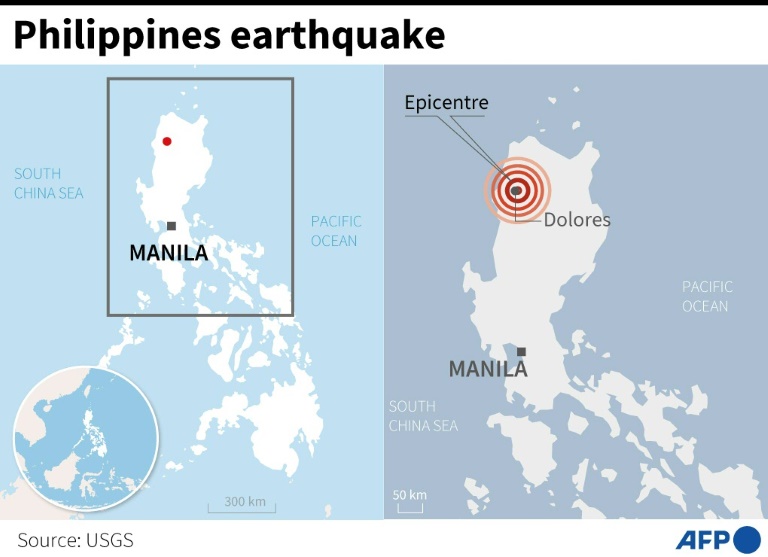
A 6.4-magnitude earthquake rocked the northern Philippines late Tuesday, the US Geological Service said, sending panicked residents out into the streets with local officials warning about the potential for damage.

“We are expecting damage here,” seismologist Charm Villamil told reporters following the quake, which struck around 10:59 pm (1459 GMT) near the upland town of Dolores.

She said the impact on buildings would depend on their structural integrity as well as the characteristics of the ground where they were built.

The civil defence office in Abra province, where Dolores is located, told AFP there were no immediate reports of casualties, but the extent of the damage would not be known until morning.

The quake, which occurred at a relatively shallow depth of 15.2 kilometres (9.4 miles), was felt as far away as the capital Manila, more than 330 kilometres to the south.

Reached by phone, Dolores police patrolman Jeffrey Blanes told AFP that “buildings were shaking so people ran outside.”

“We are unable to make a thorough assessment of the impact now because it is nighttime and we are also thinking about our people’s safety,” rescuer Joel de Leon told AFP by phone.

In the city of Batac, about 60 kilometres north of Dolores, patients and staff were evacuated from the 200-bed Mariano Marcos Memorial Hospital as structural experts checked the building for possible damage, staff said.

In July, a 7.0-magnitude quake also in the mountainous Abra province triggered landslides and ground fissures, killing 11 people and injuring several hundred others, according to the official count.

Quakes are a daily occurrence in the Philippines, which sits along the Pacific “Ring of Fire”, an arc of intense seismic as well as volcanic activity that stretches from Japan through Southeast Asia and across the Pacific basin.

The nation’s civil defence office regularly holds drills simulating earthquake scenarios along active fault lines.

In October 2013, a 7.1-magnitude earthquake struck the central island of Bohol, killing more than 200 people.

That powerful quake altered the island’s landscape and a “ground rupture” pushed up a stretch of earth by up to three metres, creating a wall of rock above the epicentre.

Sunak's cabinet: the ministers still serving in UK govt

Rishi Sunak unveiled his top team of ministers on Wednesday, hours after taking office as Britain’s first prime minister of colour vowing stability. 

Here are the most senior members of his cabinet:

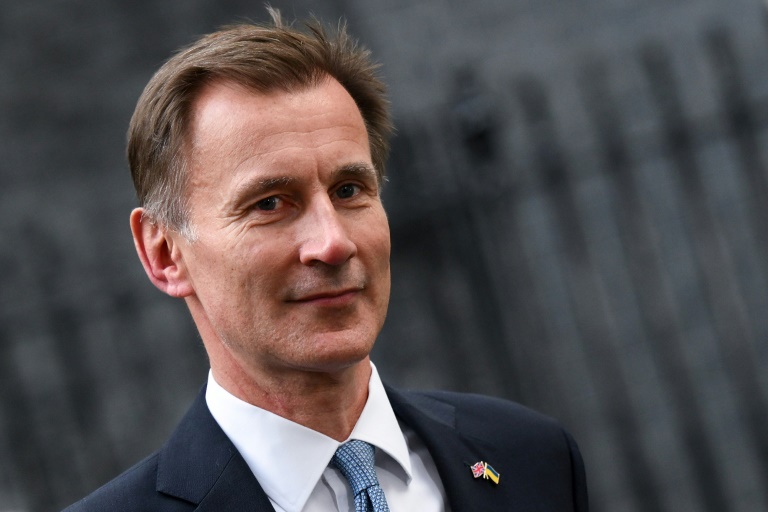
– Finance minister: Jeremy Hunt

A mild-mannered political survivor, Hunt remains in the role that ex-leader Liz Truss appointed him to 11 days ago as she tried to save her doomed premiership.

The 55-year-old has so far managed to calm markets severely roiled by her disastrous budget last month, but will require all of his considerable experience to keep stabilising the volatile situation.

A health minister under David Cameron and foreign minister under Theresa May, he found himself on the sidelines after Boris Johnson defeated him to become party leader in 2019.

After another failed leadership attempt this year following Johnson’s demise, Hunt now suddenly finds himself at the heart of the economic and political storm that has engulfed the country.

Like Sunak, he has warned of difficult decisions on public spending ahead of delivering the government’s much-anticipated medium-term fiscal plans on October 31.

– Foreign Secretary: James Cleverly

Britain’s first top diplomat of colour, Cleverly is another holdover from Truss.

Considered a low-profile pick to succeed her in the global-facing role last month, he was a loyal lieutenant with some diplomatic experience.

A mixed-race army reservist with the actual rank of lieutenant colonel, he spent two years as a junior foreign minister following a stint before that in the department handling Brexit.

The 53-year-old supported an audacious, eventually aborted, comeback bid by Johnson at the weekend, but was seemingly forgiven by Sunak.

Little known in the UK outside Westminster, Cleverly was first elected to parliament in 2015 after serving in London’s devolved assembly from 2007 and becoming an ally of then-mayor Johnson.

– Interior minister: Suella Braverman

A darling of Britain’s Conservative right for her attacks on “woke” politics and other hardline positions, Braverman makes an astonishing return just days after she quit the same role under Truss.

The 42-year-old claimed to have resigned over using her personal email to send an official document to a colleague, but also said she had “serious concerns” about Truss’s government breaking manifesto promises.

She then backed Sunak for leader.

Attorney general for the last year of Johnson’s time, she had worked as a lawyer before becoming an MP in 2015.

Finding a solution to the thorny political issue of illegal migration, which ultimately scuppered predecessor Priti Patel, will remain Braverman’s top priority.

The government is currently embroiled in a legal battle to implement its plan to send migrants illegally crossing the Channel to Rwanda, which she vehemently supports.

She has contrasted Channel migrants’ illegal entry to her own family’s experience.

Braverman’s parents, who are of Indian origin, emigrated legally to Britain in the 1960s from Kenya and Mauritius.

– Defence Secretary: Ben Wallace

A veteran in the role compared to the flux seen in other departments, Wallace has headed the ministry since July 2019.

A security minister before that, he has been widely credited for helping lead Britain’s response to Russia’s illegal invasion of Ukraine.

Wallace has been aided in the role by having previously served in the army as an officer in the Scots Guards and heading up a parliamentary group for relations with Iran.

A popular figure with the party’s grassroots, he has regularly topped polls of their preferences for a new Conservative leader amid the political tumult of recent months.

Despite that, the 48 year-old has never stood to lead the Tories, repeatedly insisting he prefers his current job.

– Penny Mordaunt

Sunak’s latest leadership rival, Mordaunt remains as Leader of the House of Commons, a post which oversees government business in parliament.

Mordaunt withdrew from the Tory leader contest after failing to secure enough Tory MPs’ support minutes before a Monday lunchtime deadline, and may have paid a political price for failing to fold earlier.

Neither a promotion nor demotion, the non-move may disappoint the ambitious centrist, who had been tipped for more senior roles such as foreign secretary.

The 49-year-old has held several senior posts in UK government, and even appeared on a celebrity reality television show, but is still little known beyond Westminster and her ruling Conservatives.

Zelensky asks donors for $38 bn as Russia shells Bakhmut

Ukrainian President Volodymyr Zelensky on Tuesday asked the international community to cover an expected budget deficit of $38 billion next year for his war-torn country, with Moscow’s invasion badly hitting the economy.

Fatal Russian shelling meanwhile was pummelling the eastern Donbas city of Bakhmut, where AFP journalists saw smoke rising from fierce battles between Moscow’s forces and Ukraine’s army trying to keep them at bay.

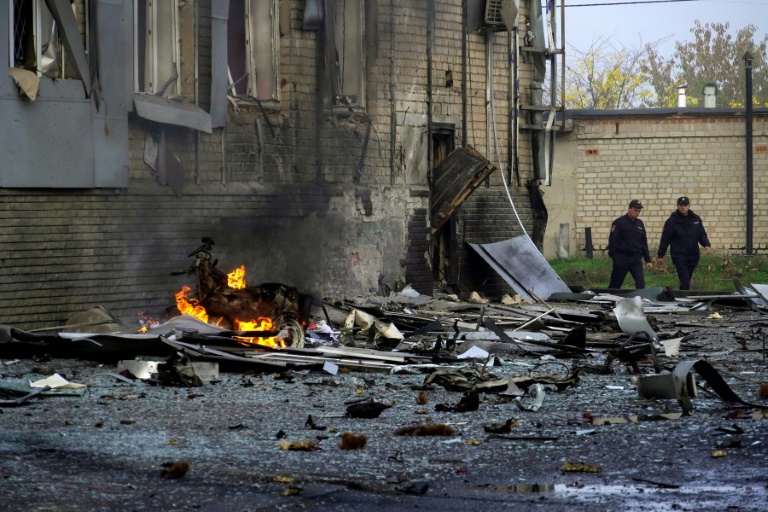
And pro-Russian authorities in the southern Ukraine city of Melitopol, now controlled by Moscow’s forces, said a car bomb had exploded near the offices of a local media outlet wounding six people.

At an international reconstruction conference for Ukraine in Berlin, Zelensky urged European leaders to offer greater financial support for his country more than eight months after Vladimir Putin sent Russian troops into Ukraine.

“At this very conference we need to make a decision on assistance to cover next year’s budget deficit for Ukraine,” Zelensky said via video-link.

“It’s a very significant amount of money, a $38 billion deficit,” he added.

German Chancellor Olaf Scholz said that rebuilding Ukraine would be a “generational task” that must start immediately, even as Russia’s invasion rages on.

“What is at stake here is nothing less than creating a new Marshall Plan for the 21st century — a generational task that must begin now,” Scholz said.

– ‘I’m in shock’ –

Russian forces, after being pushed back from Kyiv early in the invasion and the northeastern Kharkiv region, have set their sight on wresting territory in Donbas, an eastern industrial zone.

In Bakhmut, a town Russians have been eyeing for weeks, an AFP journalist saw smoke rising despite heavy rain and a Ukrainian missile shooting down a Russian drone.

A 28-year-old soldier , who declined to give his name to AFP over security concerns, claimed Ukraine’s forces had made gains in the region overnight, without giving details.

Seven civilians were killed and three injured in the wine-making and salt-mining town a day earlier, the regional governor said Tuesday.

Three bodies of civilians killed earlier were also discovered in two places in the region, which has been at the centre of intense fighting with the Russian army for months, said Governor Pavlo Kyrylenko. 

In a residential area of the Bakhmut, AFP journalists saw blood stains on the ground in the wake of what residents said was a fatal attack the day before.

“I found a body here without a head. I’m in shock,” said 58-year-old Sergii, adding: “It was a man. He was just walking on the street”.

Donetsk, the eastern region where Bakhmut is located, is one of the four Ukrainian regions that Russian President Vladimir Putin claims to have annexed, and where martial law has been imposed.

Ukrainian forces have however been largely holding back Moscow’s weeks-long push for Bakhmut and in the southern Kherson region are moving closer towards its main city there.

The Russian-backed authorities there said Tuesday that more than 22,000 residents had fled from the town and nearby settlements over to the left bank of the Dnipro river following calls to evade Ukraine’s advance.

– Car blast in Russian-held city –

On the road to Kherson from Ukraine-controlled territory, two old friends who worked as truck drivers before the war were sitting in a trench. 

“We go up this road under fire and come back down this road under fire,” one of the men, a 51-year-old, grumbled.

The wilted sunflower fields around him offered nowhere to hide from the Russian bombs and missiles that the men were expecting to start falling any minute.

A 25-mile (40-kilometre) road running from government-held Mykolaiv to Russian-occupied Kherson will form the backbone of Ukraine’s push to regain access to the Sea of Azov and cut Russia’s land link with Crimea.

Further east, in Melitopol, Russian-backed authorities said the car bomb had left six injured near the offices of the ZaMedia group, with images showing a grey building block with windows ripped off and burning debris on the ground.

There was no confirmation or denial from Kyiv its forces were responsible for the explosion.

The exiled Ukrainian authorities in Melitopol said on social media: “This is what the heating in the buildings of collaborators and propagandists should look like! And it will become hotter”.

Officials in Kyiv have taken to social media to hint at official Ukrainian backing for previous attacks in Moscow-controlled regions, including a blast earlier this month on the only bridge connecting Russia with the annexed Crimean peninsula.

South Sudan VP rejects ouster from ruling party

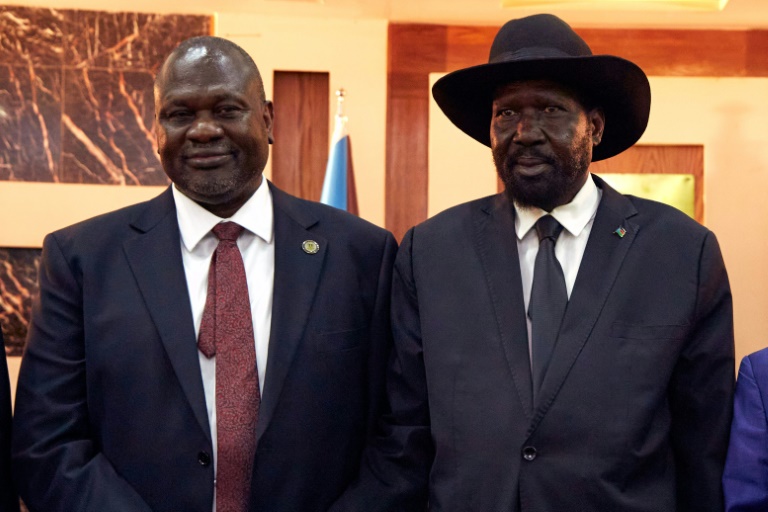
South Sudan’s vice president, Riek Machar, has rejected a move to kick him out of the ruling party, a sign of renewed political tensions that could put pressure on the country’s rocky peace process.

The world’s youngest nation has lurched from crisis to crisis since it proclaimed independence from Sudan in July 2011, and is held together by a fragile unity government between historic foes President Salva Kiir and Machar. 

Highlighting the continued friction between the two men, a meeting chaired by Kiir last week ousted Machar from the governing Sudan People’s Liberation Movement (SPLM).

But Machar on Monday rejected the decision to strip both him and SPLM secretary general Pagan Amum of party membership, as well as leadership roles.

“No faction can dismiss any member of the other factions from SPLM,” Machar’s wing of the party, the Sudan People’s Liberation Movement in Opposition (SPLM/A-IO), said in a statement. 

Kiir and Machar were on the same side in the push for independence from Khartoum but ethnic and political rivalries drove them apart.

The SPLM was founded as the political wing of the Sudan People’s Liberation Army (SPLA), which led the fight for South Sudan’s independence.

But it splintered into different factions after civil war erupted in December 2013.

Tension between Kiir and Machar has often descended into deadly violence despite numerous pledges to silence their guns.

In April, they agreed on the creation of a unified armed forces command, one of several deadlocked issues holding up implementation of the 2018 pact to end the country’s five-year conflict. 

Former rebels from the rival camps were integrated into the country’s army in August, ending years of deadlock between the two men and renewing hope of lasting peace.

The ceremony came weeks after the country’s leaders — appointed to run a transitional government — announced that they would remain in power two years beyond an agreed deadline, sparking international concern.

The transition period was meant to conclude with elections in December this year, but the government has so far failed to meet core provisions of the 2018 deal, including drafting a constitution.

One of the poorest nations on the planet despite large oil reserves, South Sudan has spent almost half of its life as a nation at war. 

Almost 400,000 people died in the civil war before Kiir and Machar signed a peace deal in 2018 and formed a unity government.

Since then, the country has battled flooding, hunger, violence and political bickering as the promises of the peace agreement have failed to materialise.

The United Nations has repeatedly criticised South Sudan’s leadership for its role in stoking violence, cracking down on political freedoms and plundering public coffers.

Italy commissioner approves contested gas terminal

A state-appointed commissioner gave the green light Tuesday to a contested new liquefied natural gas (LNG) terminal considered crucial to Italy’s plan to wean itself off Russian gas.

Its approval came as new Prime Minister Giorgia Meloni told parliament her government’s priority would be helping businesses and households cope with sky-high energy bills and investing in alternative energy sources.

The floating storage and regasification unit will be set up in the port of Piombino in Tuscany, Commissioner Eugenio Giani told a press conference in Florence, despite opposition from environmental activists and locals.

The Golar Tundra, owned by Italian gas group Snam, is expected to be operational by the end of March and will allow gas to be easily transported to the country’s heavily industrialised north.

The project was a key part of former prime minister Mario Draghi’s plan to reduce Italy’s reliance on Russian gas following the invasion of Ukraine.

His energy minister Roberto Cingolani, who is staying on in an advisory role to help Meloni, said earlier this month that the Piombino terminal is “essential to national security”.

This was echoed by the head of Italian energy giant Eni, Claudio Descalzi, who said Italy “absolutely needs” the unit to stave off a crisis in 2023, which is set to be “a much more complex year”.

The terminal will mean “lower energy bills for 60 million Italians” as well as “the ability to… have gas more easily without depending on Russia,” Commissioner Giani said Tuesday.

– ‘Unfeasible’ –

But unions, local citizens and even Piombino’s mayor have said it will pose health and safety risks for locals and tourists who travel between the port city and the island of Elba, a popular holiday destination.

And environmental associations have warned the terminal, which will receive LNG and transforms it back into natural gas, will slow down Italy’s transition to renewable energy.

Greenpeace Italy has slammed the project as based on “incomplete assessments, superficial considerations and unfeasible timelines”.

Simone Tagliapietra, adjunct professor of energy, climate and environmental policy at the Johns Hopkins University – SAIS Europe, told AFP that regasification units “do not have a particular environmental impact”, nor would this one constitute “an eyesore”.

The Piombino unit is not only “fundamental for Italy” but also an energy source “diversification that benefits the whole of Europe”, he said.

Giani said the terminal would remain in the port for three years, after which it would be moved elsewhere.

Piombino mayor Francesco Ferrari has said he will appeal against the decision.

Before the war in Ukraine, Italy imported 95 percent of the gas it consumed.

Forty percent of that came from Russia, a figure that has since dropped to 10 percent after Draghi took steps to boost gas from other producers, while also accelerating a shift towards renewable energy.

Battling the cold in the trenches of eastern Ukraine

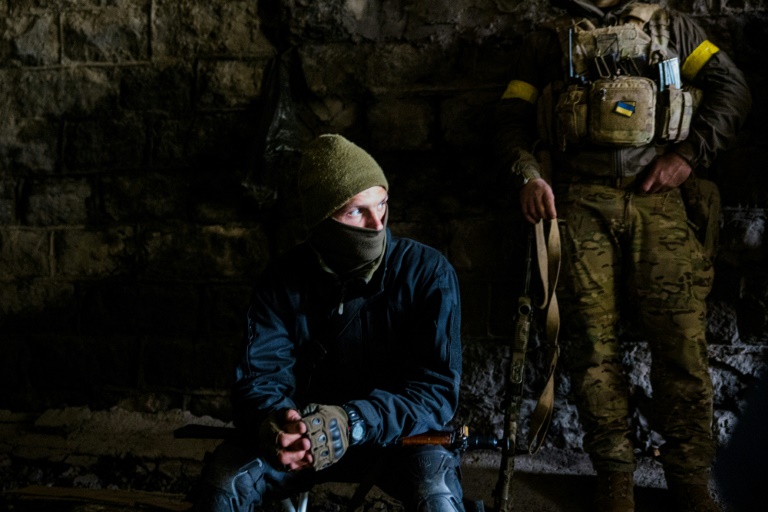
With “tactical socks”, NATO standard sleeping bags and even a sauna, a unit of soldiers from Ukraine’s 5th brigade is preparing for winter in a trench on the eastern front.

“Winter in Donbas is hell. It is a steppe climate with icy nights and temperatures can go down to minus 30 degrees Celsius (minus 22 Fahrenheit),” said one of the soldiers, Yury Syrotiuk.

“There is no forest, the wind blows through everywhere. I was here in 2014 and it was unbearable,” the 46-year-old said.

This part of the front has remained relatively static in the conflict but Russian forces are just 700 metres away and there is frequent artillery fire.

Still, life goes on in the maze of trenches.

The unit of soldiers and their cat John are deployed in the trenches for a week at a time before they are rotated out.

Following an internet tutorial, they have built a sauna that can also function as a hammam one metre (three feet) underground.

The sauna measures just two square metres and is heated by a wood-fired stove.

The opening and the insides are covered in silver-coloured insulating material.

An ammunition crate by the entrance acts as changing room for the soldiers who enter the sauna naked and wash themselves inside.

Water or snow in a bucket creates the steam.

“After living in the mud, you come out like a new person,” said Syrotiuk, a bearded former local official from the capital Kyiv who has been at the front since February.

– Fear of ‘trench foot’ –

The underground camp, which is covered in camouflage netting, is a sea of mud that sticks to the soles of soldiers’ boots.

Before entering the trench used for living quarters and the kitchen, soldiers have to wash their boots on a metal tube.

Inside, the most valued object is the “burzhuyka” — a small wood-fired stove with a chimney which keeps everyone warm.

Soldiers put their hands near it and then place them between their chests and their bullet proof vests to warm their bodies.

The other home comfort is a gas heater used to make piping hot tea and coffee.

Before entering the insulated sleeping area, where soldiers lie down on wooden crates, everyone has to remove their boots.

A plastic thermometer decorated with pink flowers shows 22 degrees Celsius inside, while outside it is 5 degrees on an autumn morning.

The unit commander, who goes by “Losha”, said the soldiers have received sleeping bags from volunteers that are supposed to be good up to minus 30 degrees Celsius.

“With these you can sleep in the snow,” he said.

The soldiers have also been sent raincoats, special underwear including leggings and “tactical socks” to avoid “trench foot” — a bane for soldiers in the First World War.

“But what warms us up even more than socks or NATO standard sleeping bags, are the words, the calls and the little drawings of our loved ones,” Syrotiuk said, smiling.

Saudi blasts release of oil reserves 'to manipulate markets'

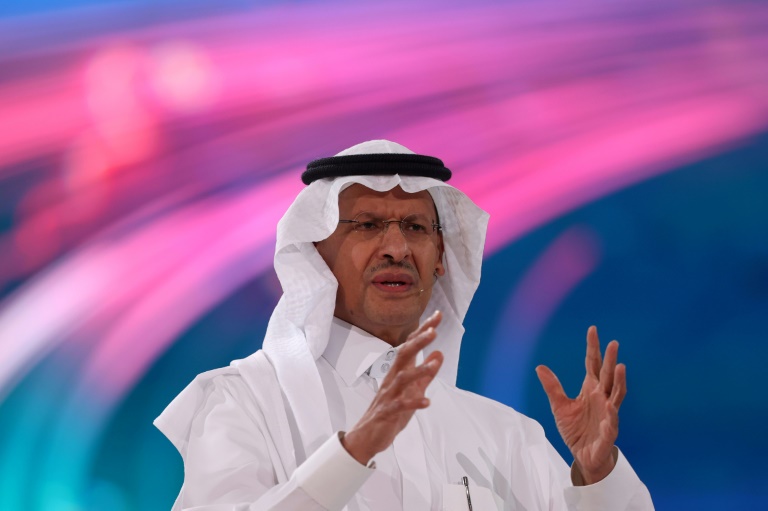
Saudi Arabia’s energy minister on Tuesday blasted the release of emergency oil stocks as an attempt to “manipulate markets”, the latest apparent salvo in a spat with Washington over oil production.

“People are depleting their emergency stocks, had depleted it, used it as a mechanism to manipulate markets while its profound purpose was to mitigate shortage of supply,” Prince Abdulaziz bin Salman told an investor conference in the Saudi capital.

“However, it is my profound duty to make it clear to the world that losing emergency stock may become painful in the months to come.”

Prince Abdulaziz did not single out the United States in his comments about emergency stocks, but last week US President Joe Biden announced he was putting the final 15 million barrels on the market from a record release of US strategic reserves.

That tranche was to complete a 180-million-barrel release authorised in the spring, in response to price hikes linked to Russia’s invasion of Ukraine.

It also came on the heels of a decision by the OPEC+ oil cartel, which Riyadh co-leads with Moscow, to cut oil production by two million barrels a day from November.

The cartel’s decision has drawn intense criticism from the White House, which has said it amounted to “aligning with Russia” in the Ukraine war.

Prince Abdulaziz pushed back against that assessment on Tuesday.

“I keep listening, are you with us or against us? Is there any room for, ‘We are for Saudi Arabia and for the people of Saudi Arabia’?” he said to applause.

Asked about getting the decades-old partnership between Riyadh and Washington back on track, he said: “I think we as Saudi Arabia decided to be the maturer guys and let the dice fall.”

Speaking on an earlier panel, Saudi investment minister Khalid al-Falih described the dust-up as “unwarranted” and temporary.

“If you look at the relationship with the people side, the corporate side, the education system, you look at our institutions working together, we are very close, and we will get over this recent spat that I think was unwarranted,” he said.

JPMorgan Chief Executive Jamie Dimon also said he was optimistic that bilateral ties would eventually improve.

“Saudi Arabia and the US have been allies for the last 75 years… They’ll work it through,” he said. 

“These countries will remain allies going forward.”

– Davos in the Desert –

Hundreds of CEOs and finance moguls are in Riyadh for the three-day Future Investment Initiative (FII), a Davos-style investment conference that analysts say will highlight Saudi Arabia’s geopolitical muscle despite strained ties with Washington.

The FII, often referred to as “Davos in the Desert”, was launched in 2017 as an economic coming-out party for the world’s largest crude exporter, which is trying to diversify away from oil under Crown Prince Mohammed bin Salman.

The 37-year-old who is first in line to the throne “takes a very hands-on approach” to projects associated with his Vision 2030 reform agenda, said Kristin Diwan of the Arab Gulf States Institute in Washington.

“Ultimately those attending will know that they will need his approval or those of his confidants to work in the kingdom,” she said.

Up to 400 American CEOs are expected to participate in the conference, though unlike in previous years there is no representation from the US government.

The event’s organiser told AFP last week that American officials had not been invited.

“Saudi Arabia needs to attract American investment, technology, and popular interest to succeed,” Diwan said.

“It still remains to be seen if this broader engagement can be maintained if the political mood in the United States turns hostile toward Saudi Arabia.”

Close Bitnami banner
Bitnami