World

11 pupils die in blaze at Ugandan school for blind

Eleven pupils at a school for the blind in Uganda have burnt to death after a fire tore through a dormitory as they were sleeping in the early hours of Tuesday.

The youngsters were trapped inside and unable to escape because the windows of the building had been made burglar-proof, a government minister told AFP.

The disaster occurred at about 1 am (2200 GMT Monday) at the Salama School for the Blind in the district of Mukono, east of the capital Kampala.

“The pupils were burnt beyond recognition and we are going to do a DNA test to establish their identities,” Mukono district security head and presidential representative, Fatuma Ndibasa, told AFP.

She said the dormitory that caught fire was housing 21 girls. “But three managed to escape, 11 died and six are admitted with serious injuries, one other girl had minor injuries.”

Earlier, one grieving father had told AFP he had lost his son in the blaze.

School headmaster Francis Kirube, who is also blind, said some disadvantaged boys at the school had been sleeping in a room next to the dorm, so the authorities were still trying to determine the identity of those who had died.

“Unfortunately we have discovered the windows of the dormitory where they were sleeping, the windows were burglar-proofed against a government directive. So the pupils could not escape the fire and got burnt,” the minister for people with disabilities, Hellen Grace Asamo told AFP.

– ‘Crime scene’ –

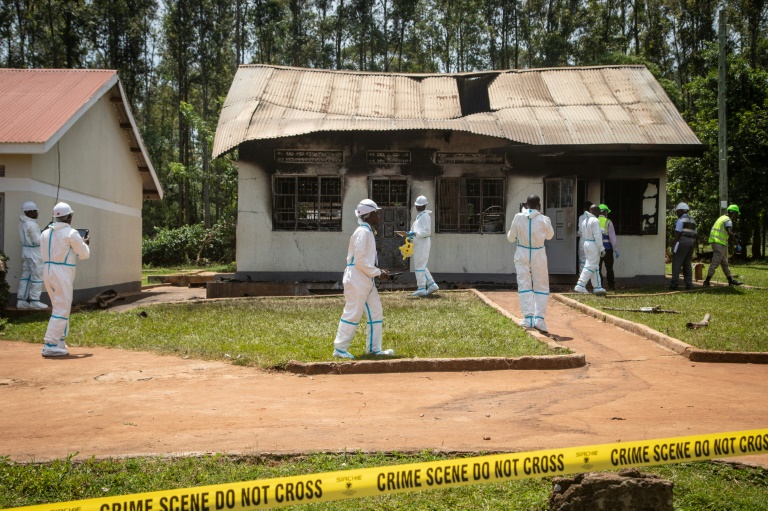
AFP images showed a charred but still largely intact building where the fire had broken out, its window frames and door blackened and the corrugated roof damaged.  

Forensic teams were seen in white protective gear at the school, while grieving parents gathered nearby, comforting each other.

Internal Affairs Minister General Kahinda Otafiire told AFP that the school had been cordoned off as a “crime scene” and vowed that there would be a full investigation.

“As government we shall go to the root cause of the fire and if there are any culprits they will be apprehended and the law will take its course,” he added.

Princess Anne, the sister of King Charles III, had been due to visit the school during her trip this week to Uganda, which marked its 60th anniversary of independence from Britain earlier this month.

A trader in Mukono, Richard Muhimba, told AFP earlier that he had lost his son in the blaze, saying: “No words can explain the pain I am going through. 

“I visited my child on Saturday, he was in good health and in less than three days he is gone… Please give me time to go through this pain,” said Muhimba, before hanging up.

A friend told AFP that the child was aged 15 and that Muhimba was a father of five. 

The headmaster said that although Salama largely catered to blind girls between the ages of six to about 14, the school had taken on some disadvantaged boys from the local community and that some were sleeping in a next door room.

The East African nation has suffered a string of deadly school fires in recent years.

In November 2018, 11 boys perished and another 20 suffered severe burns in a suspected arson attack at a boarding school in southern Uganda.

In April 2008, 18 schoolgirls burned to death along with one adult when a fire engulfed their dormitory at a junior school near the Ugandan capital. 

In March 2006, at least 13 children were killed and several hurt when fire razed an Islamic school in western Uganda. In July the same year, six children died in a similar fire in the east.
Berlin summit tackles 'generational task' of rebuilding Ukraine

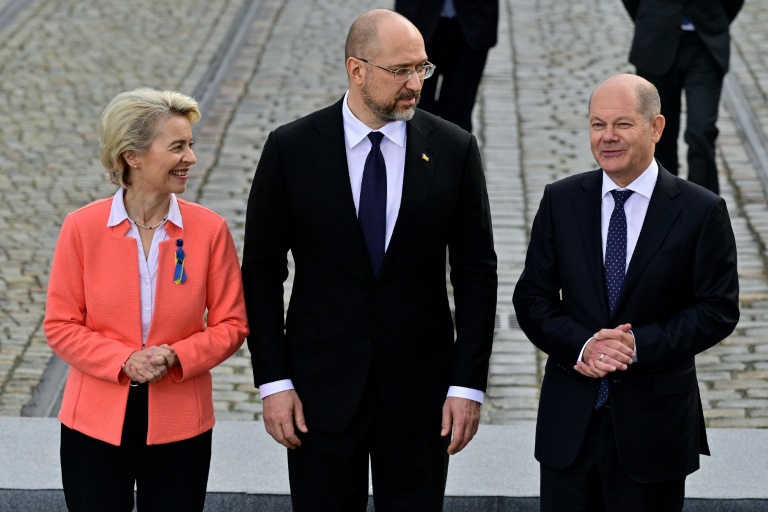
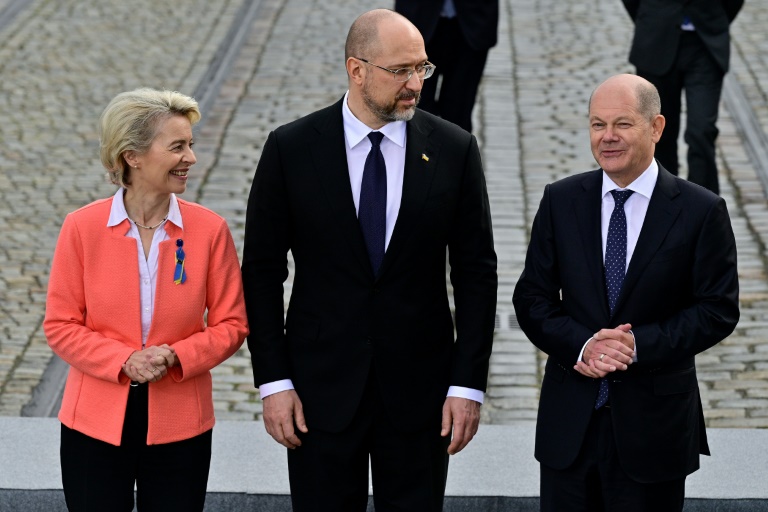
German Chancellor Olaf Scholz said on Tuesday that rebuilding Ukraine was a “generational task” as experts gathered for an international reconstruction conference for Ukraine in Berlin.

Scholz as current head of the G7 club of wealthy nations said Ukraine could count on the support of the international community for decades to come as it seeks to repair and upgrade essential infrastructure.

“What is at stake here is nothing less than creating a new Marshall Plan for the 21st century — a generational task that must begin now,” Scholz said as he opened the conference.

Rebuilding Ukraine marks a “challenge for generations”, Scholz said, but one that also provided a chance to modernise its roads, bridges, schools, hospitals and transport links.

The chancellor also stressed that Ukraine should be reconstructed with its hoped-for accession to the EU in mind.

“The European Union’s commitment to Ukraine as a future member is one of the most consequential geopolitical decisions of our times,” he said.

Speaking at the same event, European Commission chief Ursula von der Leyen called the scale of destruction in the war-ravaged country “staggering”, with the World Bank estimating the toll of the damage at 350 billion euros ($345 billion). 

“This is for sure more than one country or one union can provide alone,” she said. “We need all hands on deck.”

– Budget hole –

Ukrainian President Volodymyr Zelensky was also addressing the one-day conference, which brought together international organisations and private sector representatives as well as political leaders.

He appealed to international supporters to cover his country’s $38-billion budget hole for 2023, saying such assistance was essential if Ukraine is to get back on its feet.

“At this very conference we need to make a decision on assistance to cover the next year’s budget deficit for Ukraine,” he said, speaking to the event via video link.

“It’s a very significant amount of money.”

His prime minister Denys Shmyhal said funding was urgently needed “to help us survive this winter to save the people from humanitarian catastrophe”.

He said alleviating the crisis would also “save the European continent from the migration wave, from the immigration tsunami” that has already seen millions of Ukrainians fleeing to the EU.

– ‘To be or not to be’ –

Speaking during a panel session at the event, Ukraine’s communities minister Oleksiy Chernyshov said reconstruction work should begin as soon as possible.

“It is clear we should start it immediately” to build a country that will lure back those who have fled the war, he said.

“We need to act now,” Werner Hoyer, president of the European Investment Bank, added. “The later we start, the higher the bill will be one day.”

“It is now that energy is needed. It is now that basic services for the population should be delivered. It is now that transport links should work or be reestablished. And it is now that businesses working under unimaginable conditions should be supported,” Hoyer said.

Polish Prime Minister Mateusz Morawiecki urged Europe to stand strong against Russia as the war grinds on, warning against attempts to seek an end to the fighting at any cost.

“The policy of appeasing Russia is bankrupt and everyone who is still trying to enact it drags Europe down,” he said.

Quoting Shakespeare, Morawiecki said it was a moment of truth for Europe to stand up for its purpose and values. 

“The world only deals with strong players — Europe must prove its strength. It is our ‘to be or not to be’ moment,” he said.

Berlin summit tackles 'generational task' of rebuilding Ukraine

German Chancellor Olaf Scholz said on Tuesday that rebuilding Ukraine was a “generational task” as experts gathered for an international reconstruction conference for Ukraine in Berlin.

Scholz as current head of the G7 club of wealthy nations said Ukraine could count on the support of the international community for decades to come as it seeks to repair and upgrade essential infrastructure.

“What is at stake here is nothing less than creating a new Marshall Plan for the 21st century — a generational task that must begin now,” Scholz said as he opened the conference.

Rebuilding Ukraine marks a “challenge for generations”, Scholz said, but one that also provided a chance to modernise its roads, bridges, schools, hospitals and transport links.

The chancellor also stressed that Ukraine should be reconstructed with its hoped-for accession to the EU in mind.

“The European Union’s commitment to Ukraine as a future member is one of the most consequential geopolitical decisions of our times,” he said.

Speaking at the same event, European Commission chief Ursula von der Leyen called the scale of destruction in the war-ravaged country “staggering”, with the World Bank estimating the toll of the damage at 350 billion euros ($345 billion). 

“This is for sure more than one country or one union can provide alone,” she said. “We need all hands on deck.”

– Budget hole –

Ukrainian President Volodymyr Zelensky was also addressing the one-day conference, which brought together international organisations and private sector representatives as well as political leaders.

He appealed to international supporters to cover his country’s $38-billion budget hole for 2023, saying such assistance was essential if Ukraine is to get back on its feet.

“At this very conference we need to make a decision on assistance to cover the next year’s budget deficit for Ukraine,” he said, speaking to the event via video link.

“It’s a very significant amount of money.”

His prime minister Denys Shmyhal said funding was urgently needed “to help us survive this winter to save the people from humanitarian catastrophe”.

He said alleviating the crisis would also “save the European continent from the migration wave, from the immigration tsunami” that has already seen millions of Ukrainians fleeing to the EU.

– ‘To be or not to be’ –

Speaking during a panel session at the event, Ukraine’s communities minister Oleksiy Chernyshov said reconstruction work should begin as soon as possible.

“It is clear we should start it immediately” to build a country that will lure back those who have fled the war, he said.

“We need to act now,” Werner Hoyer, president of the European Investment Bank, added. “The later we start, the higher the bill will be one day.”

“It is now that energy is needed. It is now that basic services for the population should be delivered. It is now that transport links should work or be reestablished. And it is now that businesses working under unimaginable conditions should be supported,” Hoyer said.

Polish Prime Minister Mateusz Morawiecki urged Europe to stand strong against Russia as the war grinds on, warning against attempts to seek an end to the fighting at any cost.

“The policy of appeasing Russia is bankrupt and everyone who is still trying to enact it drags Europe down,” he said.

Quoting Shakespeare, Morawiecki said it was a moment of truth for Europe to stand up for its purpose and values. 

“The world only deals with strong players — Europe must prove its strength. It is our ‘to be or not to be’ moment,” he said.

Pound bounds higher on new PM, stocks rise

The pound shot higher Tuesday as former finance chief Rishi Sunak became Britain’s prime minister, while stocks mostly rose as bond yields slid.

Sunak on Tuesday promised to bring economic stability after the turmoil that forced predecessor Liz Truss out of Downing Street.

“Right now our country is facing a profound economic crisis,” he told the nation in a televised address.

He vowed to place “economic stability and confidence at the heart of this government’s agenda”, and kept Jeremy Hunt on as finance minister.

His reassuring message resonated on bond markets, where the yields on British government bonds, or gilts, fell. Rising bond yields had helped push Sunak’s predecessor Liz Truss out of office.

“UK gilt yields have continued to track lower, as Rishi Sunak’s journey to Downing Street further improves market sentiment after a tumultuous month,” said Joshua Mahony, senior market analyst at online trading platform IG.

“With yields falling into a one-month low, we are seeing markets provide a clear vote of confidence that Sunak will manage to avoid the kind of missteps taken by his predecessor,” he added.

The pound was up 1.9 percent at $1.489 in late European trading.

A strong pound is not good for many multinational firms listed on London’s blue-chip FTSE 100 index, which ended the day down half a point.

Frankfurt stocks rose 0.9 percent and Paris jumped 1.9 percent. 

Lower US bond yields also helped Wall Street, which was solidly higher in late morning trading.

Some market support also came from reports suggesting the Federal Reserve could slow its pace of interest rate hikes.

The central bank’s policy of ramping up US borrowing costs to fight decades-high inflation has hammered global markets this year as investors worry that they will send the economy into recession.

“Investors are getting more confident that inflation will soften as the consumer rethinks massive purchases,” said Edward Moya, analyst at Oanda trading group.

Consumer confidence in the United States weakened more than anticipated in October, reinforcing hopes that the Fed could slow down or pause its interest rate hikes.

“Fed rate hike expectations will remain volatile, but expectations are growing that a weaker economy will let the Fed pause their tightening after the February policy meeting,” said Moya.

Investors also had quarterly earnings reports to wade through, with better-than-expected quarterly numbers from Coca-Cola and GM helping boost sentiment.

General Motors climbed 3.3 percent as the US automaker confirmed its full-year financial forecast despite a “challenging environment”, saying that consumer demand remained strong.

Third-quarter profits rose 37 percent to $3.3 billion on soaring revenues.

Shares in Coca-Cola gained 1.6 percent as the drinks giant posted double-digit gains in revenue and profits.

Earlier Tuesday, US tech giant Meta resolved a major WhatsApp outage that prevented its popular service from connecting or sending messages.

Meta shares rose 4.1 percent.

In commodities trading meanwhile, European gas prices wobbled around 100 euros per megawatt hour, while the drop in the dollar helped global oil prices edge higher.

In Asian equities trading, Hong Kong steadied after the previous session’s rout triggered by China President Xi Jinping tightening his grip on power.

– Key figures around 1530 GMT –

New York – Dow: UP 0.8 percent at 31,742.28 points

EURO STOXX 50: UP 1.6 percent at 3,585.58

London – FTSE 100: FLAT at 7,013.48 (close) 

Frankfurt – DAX: UP 0.9 percent at 13,052.96 (close)

Paris – CAC 40: UP 1.9 percent at 6,250.55 (close)

Tokyo – Nikkei 225: UP 1.0 percent at 27,250.28 (close)

Hong Kong – Hang Seng Index: DOWN 0.1 percent at 15,165.59 (close)

Shanghai – Composite: FLAT at 2,976.28 (close)

Pound/dollar: UP at $1.1489 from $1.1281 on Monday

Dollar/yen: DOWN at 147.63 yen from 148.95 yen

Euro/dollar: UP at $0.9976 from $0.9876

Euro/pound: DOWN at 86.80 pence from 87.56 pence

West Texas Intermediate: UP 0.6 percent at $85.09 per barrel

Brent North Sea crude: UP 0.2 percent at $93.45 per barrel

burs-rl/cdw

Far-right Meloni seeks to reassure in first speech as Italy PM

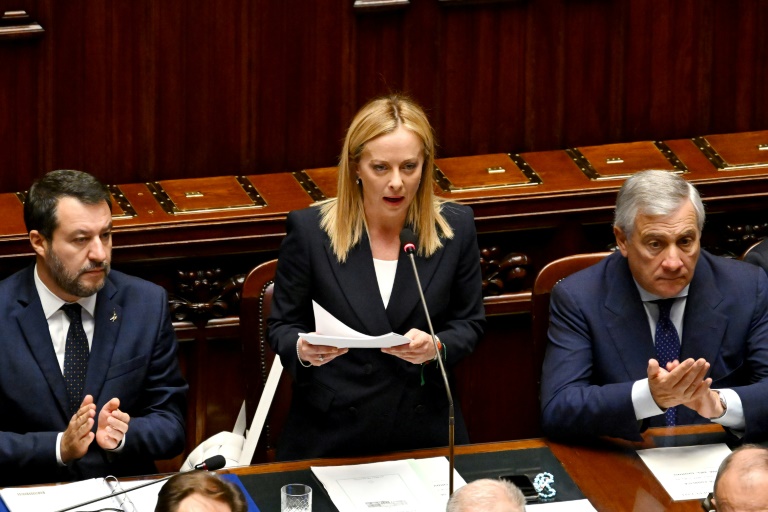
New Italian Prime Minister Giorgia Meloni outlined her programme for government on Tuesday, reaffirming her support for the EU, NATO and Ukraine and presenting herself as a steady hand to guide her country through turbulent times.

One month after her far-right Brothers of Italy party won general elections, Meloni used her inaugural speech to parliament to seek to allay concerns she will guide the eurozone’s third largest economy down a radical new path.

“Italy is fully part of Europe and the Western world,” the 45-year-old told the lower house, adding that it would “continue to be a reliable partner of NATO in supporting Ukraine”.

Meloni, who was sworn in as Italy’s first woman premier on Saturday, denied accusations she will restrict civil rights and said she had “never felt sympathy or closeness to undemocratic regimes… including Fascism”.

The prospect of a Eurosceptic, populist government in Italy — a founding member of NATO and the European Union — had sparked concern among its allies, particularly in Brussels.

Meloni strongly backs EU sanctions against Russia for its war in Ukraine, but her coalition ally Silvio Berlusconi last week was recorded defending his old friend, Russian President Vladimir Putin.

Italy was heavily dependent on Russian gas before the war and is currently battling soaring inflation, fuelled by sky-high energy bills, which risks sparking a recession next year.

On Tuesday, Meloni said the country was “in the midst of a storm”.

She said her priority was to help businesses and households cope and to continue find new sources of energy, saying she would not give in to “Putin’s blackmail”.

Lawmakers will hold a vote of confidence in Meloni’s government on Tuesday evening, followed by another in the Senate on Wednesday.

The votes are largely procedural as she has a comfortable majority in parliament thanks to her coalition with Berlusconi’s Forza Italia party and Matteo Salvini’s far-right League.

– Traditional conservative –

In a speech lasting more than an hour, Meloni promised to cut taxes for businesses and families while simplifying bureaucracy to encourage investment, and also announced a one-off tax amnesty.

She said “lasting and structural growth” was the answer to reducing Italy’s debt — forecast to be 145 percent of gross domestic product this year, the highest ratio in the eurozone after Greece.

But Giuseppe Conte, former premier and leader of the opposition Five Star Movement, accused her of “empty rhetoric”, saying there were no concrete solutions to the cost-of-living crisis.

Meloni also warned that help for energy bills would “drain” much of the available funds and other unspecified spending projects would have to be postponed.

Lorenzo Codogno, a political analyst and former head economist at Italy’s treasury, said her speech suggested she would lead “more of a traditional conservative government than a radical far-right spin-off”.

He noted she said Italy will fully respect EU budget rules, even if she will work to try to change them.

Key to Italy’s future growth is almost 200 billion euros ($197 billion) in grants and loans from the EU’s post-pandemic recovery fund, which depend on Rome implementing major reforms, from criminal justice to public administration.

Meloni said the money was “an extraordinary opportunity to modernise Italy”, but said she would seek “adjustments” to the plan to take into account the rising cost of energy and raw materials.

– Underdog –

Meloni’s party, which has neo-fascist roots, had never before been in power and her own government experience is limited to serving as youth minister under Berlusconi in the 2000s.

“I am what the British would call an ‘underdog’,” she said Tuesday, saying she intended to “defy all predictions”.

In a bid to reassure investors, she has appointed as economy minister Giancarlo Giorgetti, a relatively moderate member of the League who was economic development minister in Mario Draghi’s outgoing government.

Roberto Cingolani, who served as energy minister and helped reduce Italy’s reliance on Russian gas from 40 percent to 10 percent since the Ukraine war began, will also stay on as an adviser.

However tensions within her coalition had led many commentators to predict it may go the way of many others in Italy, which has had almost 70 governments since 1946.

Salvini — the new deputy prime minister who is also in charge of infrastructure and transport — risked upstaging Meloni’s speech by setting out his own programme for government on Monday.

In a series of tweets, the League leader committed himself among other policies to building a long discussed — and hugely costly — bridge between mainland Italy and Sicily, which he said would create 100,000 jobs.

New UK PM Sunak unveils top team as historic tenure begins

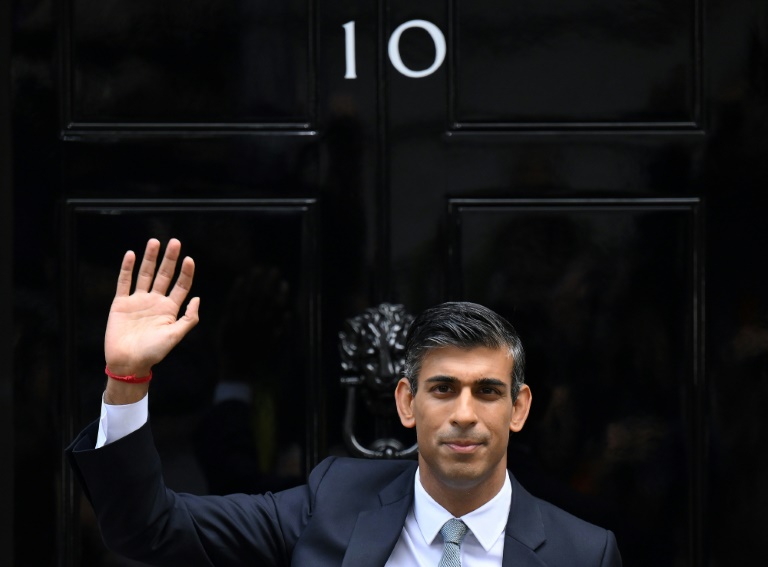
Rishi Sunak on Tuesday became Britain’s third prime minister this year and the first person of colour to lead the former imperial power, vowing to overcome economic crisis provoked by the “mistakes” of Liz Truss’s calamitous 49-day tenure.

In his first order of business, Sunak retained Jeremy Hunt as chancellor of the exchequer, bidding to keep financial markets on side after Truss’s budget plans shocked investors.

Sunak, a practising Hindu who at 42 is Britain’s youngest leader since 1812, became the ruling Conservatives’ new leader on Monday after a prior stint as chancellor himself.

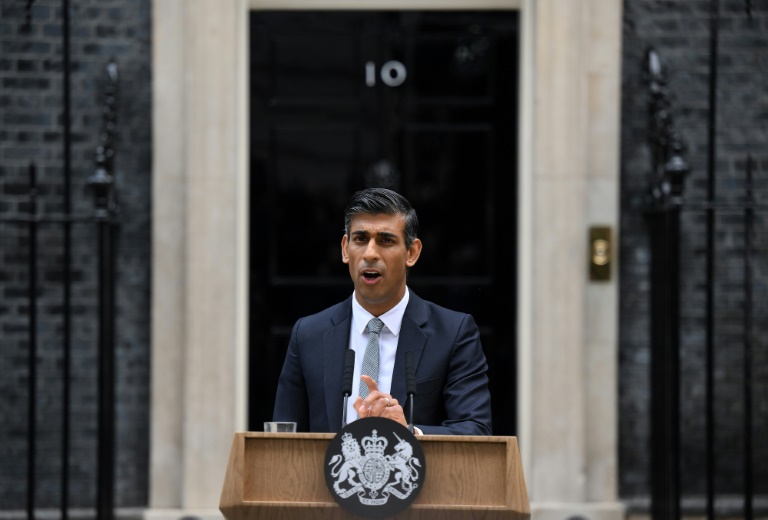
Addressing the nation in Downing Street Tuesday shortly after his appointment by King Charles III, Sunak said the country faced “profound economic crisis”. 

“I will unite our country — not with words, but with action,” Sunak said, capping the latest extraordinary twist in UK politics following Boris Johnson’s demise in July.

– ‘Mistakes’ –

Departing shortly before, Truss wished him “every success” — and said she remained “more convinced than ever” that Britain needed to be “bold” in confronting the challenges it faced.

Sunak countered that though she was motivated by a well-intentioned desire to kick-start growth, her tax-cutting measures were “mistakes nonetheless”. 

“And I have been elected as leader of my party and your prime minister in part to fix them,” he said.

“And that work begins immediately. I will place economic stability and confidence at the heart of this government’s agenda,” he added, helping to drive the pound more than one percent higher against the dollar Tuesday.

Sunak’s appointment followed rival contender Penny Mordaunt failing to secure enough nominations from Tory MPs, and Johnson dramatically aborting a comeback attempt late on Sunday.

Breaking his silence, Johnson offered his “full and wholehearted support” to Sunak — having privately blamed his ex-minister for toppling him in July.

Sunak in turn praised Johnson, and vowed to build on the election-winning promises that earned the Conservatives a big victory in 2019, despite their dismal standing in polling today against the opposition Labour party.

But Sunak also issued a coded reminder of the many scandals that brought Johnson down, vowing his own premiership would offer “integrity, professionalism and accountability at every level”.

In other cabinet appointments, Sunak retained James Cleverly as foreign secretary, and brought close ally Dominic Raab back as deputy prime minister and justice secretary. He also retained Ben Wallace in the defence brief.

– ‘Groundbreaking’ –

In his Downing Street speech, Sunak pledged unstinting support for Ukraine even while warning of “difficult” budget choices ahead.

US President Joe Biden called the appointment of the first British-Indian prime minister “groundbreaking” and “pretty outstanding”.

“Together, I look forward to enhancing our cooperation on issues critical to global security and prosperity, including continuing our strong support for Ukraine,” Biden said in a tweet.

European leaders offered their own congratulations, while Irish premier Micheal Martin reminded Sunak of their “shared responsibility” to safeguard peace in Northern Ireland following tensions under Johnson and Truss.

Labour leader Keir Starmer praised Sunak on “making history as the first British-Asian PM”. 

But he added: “The Tories have crashed the economy, with low wages, high prices and a cost-of-living crisis. The public needs a fresh start and a say on Britain’s future.” 

Sunak has rebuffed opposition calls for a snap general election after becoming the latest leader who lacks a direct mandate from the electorate, but he promised to govern on the basis of the 2019 manifesto.

Pollster Ipsos said that 62 percent of British voters want an election by the end of the year.

– ‘Unite or die’ –

Britain’s Conservative-supporting media hailed the appointment of Sunak, a wealthy descendant of immigrants from India and East Africa. 

“The force is with you, Rishi,” ran The Sun’s headline, playing on his love of “Star Wars” films. 

But the left-leaning Guardian highlighted Sunak’s warning to Conservative MPs that the party must “unite or die”.

Truss left office as the UK’s shortest-serving premier in history, after her disastrous tax-slashing budget sparked economic and political turmoil.

The 47-year-old announced her resignation last Thursday, admitting she could not deliver her mandate from Conservative members — who had chosen her over Sunak in the summer to replace Johnson.

Iain Duncan Smith, a former Conservative leader, said MPs now understood the “existential threat” facing the Tories, and that they needed to unite or accept being “out of power for a long time”.

Coca-Cola sees more consumer shifts due to inflation as profits jump

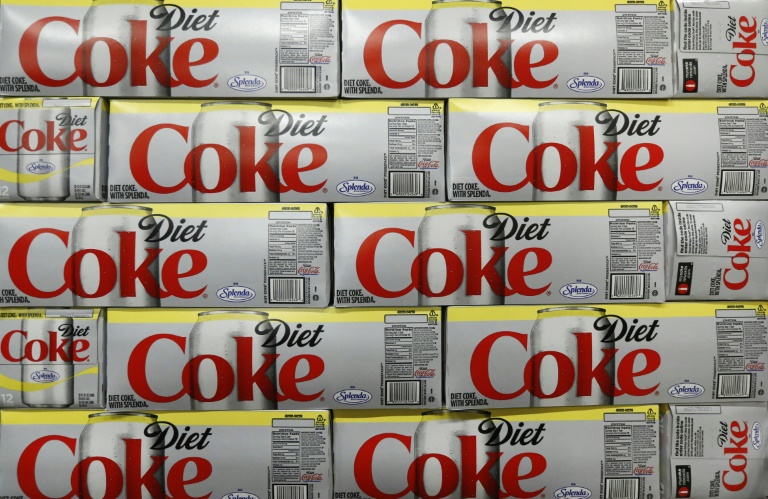
Coca-Cola reported a jump in profits Tuesday due in part to price increases but said some consumers are beginning to pull back due to inflation.

The soda giant, which has benefited in recent quarters from the return of pro sports, movie theater sales and other outing-oriented sales as Covid-19 restrictions ebb, again cited this trend as a positive for its results, lifting some of its full-year projections following the better-than-expected results.

Profits rose 14 percent to $2.8 billion on a 10 percent jump in revenues to $11.1 billion.

The company’s unit case volumes rose by four percent, while pricing/mix jumped 12 percent. The “price/mix” category refers not only to retail prices, but also to the mix of goods sold and the geographic and distribution channels.

Compared with the year-ago period, price/mix rose 19 percent in Europe/Middle East/Africa, 15 percent in North America, four percent in Asia Pacific and 12 percent in Latin America.

Chief Executive James Quincey, who has previously described the negative impact on sales due to price hikes as modest compared with historic norms, said the latest batch of results suggested somewhat greater pain among consumers.

“We’re seeing some changes in consumer behavior,” Quincey said on a conference call with analysts.

“It would seem to us that Europe is probably the most obvious example,” with more consumers now buying at discount retailers, a trend seen to a lesser extent in the United States.

“Clearly the impact of inflation running ahead of wages is starting to come through now that the summer is over and back to school has happened,” he said.

Shares rose 0.9 percent to $58.06 in mid-morning trading.

Russia rejects US basketballer's appeal of 'traumatic' sentence

A Russian court on Tuesday rejected an appeal from US basketball star Brittney Griner of her nine-year prison term on drug charges, ignoring her plea for the “traumatic” sentence to be reduced.

The court in Krasnogorsk near Moscow ruled to leave Griner’s August verdict “without change” in the case that came amid fierce tensions between Moscow and Washington over Russia’s military offensive in Ukraine.

US President Joe Biden’s administration dismissed the ruling as “another sham judicial proceeding” that will keep Griner “wrongfully detained under intolerable circumstances” and vowed to continue pressing for her release.

“The President has demonstrated that he is willing to go to extraordinary lengths and make tough decisions to bring Americans home,” US National Security advisor Jake Sullivan said in a statement.

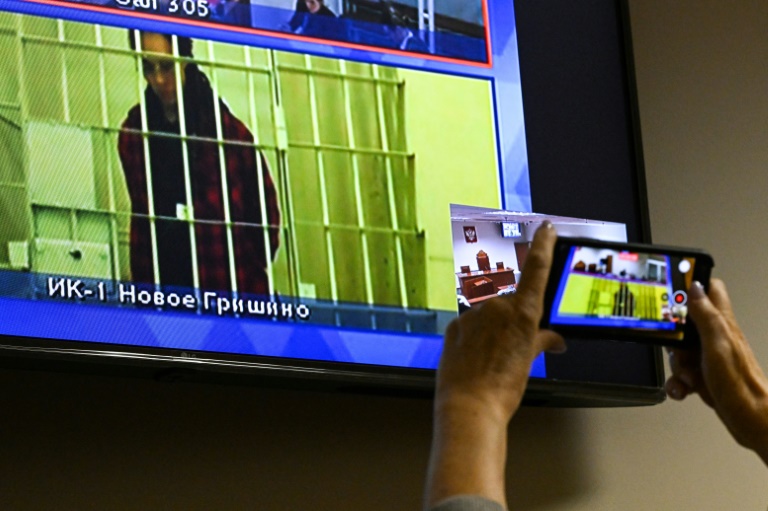
Griner had pleaded by video link from her detention centre just outside the Russian capital for the sentence to be cut.

“I really hope that the court will adjust this sentence because it has been very, very stressful and very traumatic,” Griner said.

The 32-year-old was handed nine years in prison in August for possessing vape cartridges with a small quantity of cannabis oil, after she was arrested at a Moscow airport in February.

Speaking slowly so her words could be translated into Russian, Griner asked the court for leniency given that the amount of cannabis found was “barely over the significant amount”.

“I don’t understand the first court’s decision to give one year less than the max when I’ve been here almost eight months and people with more severe crimes have gotten less than what I was given,” she said. 

“So I just beg that the court… reassess my sentence.”

– Not expecting ‘miracles’ –

Griner’s lawyers said they were disappointed by Tuesday’s decision as it goes against standard legal practice.

“Other defendants in similar criminal cases receive punishment in the form of a suspended sentence or a jail term not exceeding six years,” Maria Blagovolina and Alexander Boykov said in a statement.

“Thus, Brittney Griner remains one of the most severely punished defendants in Russia.”

The lawyers said Griner is doing fine physically and that she spoke to her family last week on her birthday, but Tuesday’s decision was hard for Griner to take.

“She had some hopes and these hopes vanished today,” Blagovolina told reports outside the court house.

The lawyers hope to speak to Griner later this week about whether she wants to continue appealing the verdict in higher courts.

When she was arrested, the two-time Olympic basketball gold medallist and Women’s NBA champion had been in Russia to play for the professional Yekaterinburg team, during her off-season from the Phoenix Mercury Women’s National Basketball Association side.

She pleaded guilty to the charges, but said she did not intend to break the law or use the banned substance in Russia.

Griner had testified that she had permission from a US doctor to use medicinal cannabis to relieve pain from her many injuries, and had never failed a drug test.

The use of medical marijuana is not allowed in Russia.

In August, Moscow said it was ready to discuss a prisoner swap for Griner, but there has been no apparent progress.

Reports have suggested that Griner and another American jailed in Russia, Paul Whelan — a former US marine arrested in December 2018 and accused of spying — could be traded for Viktor Bout, a Russian arms trafficker serving 25 years in jail on a 2012 conviction.

Ethiopia peace talks open in South Africa

Peace talks between the warring sides in the brutal two-year-old conflict in Ethiopia’s Tigray region opened in Pretoria on Tuesday, the South African presidency announced.

Led by the African Union (AU), the talks follow a fierce surge in fighting in recent weeks that has alarmed the international community and triggered fears for civilians caught in the crossfire.

They “have been convened to find a peaceful and sustainable solution to the devastating conflict,” Vincent Magwenya, spokesman for South African President Cyril Ramaphosa, told reporters, adding that they would run until October 30.

South Africa hopes “the talks will proceed constructively and result in a successful outcome that leads to peace for all the people of our dear sister country,” he said.

The dialogue between negotiators from the Ethiopian government of Prime Minister Abiy Ahmed and the regional authorities in war-stricken Tigray was launched almost two months to the day since fighting resumed in August, shattering a five-month truce.

They are being facilitated by AU Horn of Africa envoy and Nigeria’s former president Olusegun Obasanjo, supported by Kenya’s former leader Uhuru Kenyatta and South Africa’s ex-vice president Phumzile Mlambo-Ngcuka, said Magwenya.

There was no immediate comment from the AU, the Ethiopian government or the rebel Tigray People’s Liberation Front (TPLF) about the launch of the eagerly-expected process. 

– ‘Peace will prevail’ –

Diplomatic pressure has ratcheted up in recent weeks to silence the guns in a war which has left millions in need of humanitarian aid and, according to a US estimate, as many as half a million dead.

The talks come as federal forces and their allies in the Eritrean army appear to be gaining the upper hand on the ground, seizing a string of towns in Tigray including the strategic city of Tigray in offensives that have sent civilians fleeing.

It is impossible to verify developments on the battleground as Tigray — a region of six million people — is largely cut off by a communications blackout and access to northern Ethiopia is severely restricted.

An initial AU effort to bring the two sides to the negotiating table earlier this month failed, with diplomats suggesting logistical issues and a lack of preparedness were to blame.

The Pretoria dialogue represents the first publicly announced talks between the rivals, although a Western official has confirmed that previous secret contacts took place organised by the United States in the Seychelles and twice in Djibouti.

Abiy first sent troops into Tigray in November 2020, promising a quick victory over the northern region’s dissident leaders, the TPLF, after what he said were attacks by the group on federal army camps.

The move followed long-running tensions with the TPLF, which had dominated Ethiopia’s ruling coalition before Abiy came to power in 2018 and sidelined the party.

In a rare comment on the conflict last week, Abiy — who won the 2019 Nobel Peace Prize for his rapprochement with Eritrea — said the war “would end and peace will prevail.”

But on Monday, Tigray’s leader Debretsion Gebremichael issued a defiant statement saying: “The Tigray army has the capacity to defeat our enemies totally.”

– ‘Civilians are afraid’ –

The international community has been calling for an immediate ceasefire, humanitarian access to Tigray and a withdrawal of Eritrean forces, whose return to the conflict has raised fears of renewed atrocities against civilians. 

Amnesty International on Monday urged the rivals to protect civilians in the face of intensifying hostilities as government forces capture towns in Tigray.

“Tigrayan civilians are afraid that the widespread abuses, such as unlawful killings, sexual violence and systematic attacks, that were rampant when the Ethiopian National Defence Forces (ENDF) and its allied forces were in control of these areas from November 2020 to June 2021, might happen again,” said Muleya Mwananyanda, Amnesty’s director for East and Southern Africa.

The Amnesty statement charged that air strikes on Tigray’s capital Mekele and the town of Adi Daero in August and September had “killed hundreds of civilians including children.” 

It also claimed — without giving sources — that the Eritrean army had in September “extrajudicially executed” at least 40 people, including Eritrean refugees, in the northwestern Tigrayan town of Sheraro.

Adidas cuts ties with Kanye West over anti-Semitic remarks

German sportswear giant Adidas said Tuesday it was ending its partnership with Kanye West after a series of anti-Semitic outbursts by the controversial rapper.

Recent comments by West — known formally as Ye — were “unacceptable, hateful and dangerous”, Adidas said in a statement. 

“After a thorough review, the company has taken the decision to terminate the partnership with Ye immediately.”

Adidas said it would “end production” of the highly successful “Yeezy” line designed together with West and “stop all payments to Ye and his companies”.

The abrupt end to the collaboration between the sports outfitter and rapper would slash Adidas’s net income in 2022 by “up to 250 million euros ($246 million)”, it estimated.

Adidas’s decision to dump the artist was “overdue”, said Josef Schuster of the Central Council of Jews in Germany.

“For weeks, West has caused worldwide furore with his anti-Semitic remarks,” Schuster said, adding that the rapper’s comments had become “intolerable”.

– T-shirt statement –

Adidas began a review of its relationship with West earlier this month after he appeared at a fashion show in Paris wearing a shirt with the slogan “White Lives Matter.”

The phrase is a dog whistle to right-wing groups in the United States and a reaction to the Black Lives Matter movement.

Days later he was locked out of Twitter and Instagram for threatening to “Go death con 3 on JEWISH PEOPLE.”

Comments made by West “violate the company’s values of diversity and inclusion, mutual respect and fairness”, Adidas said Tuesday.

The artist was associated with rival sportswear company Nike for years but broke away in 2013, lending his name to Adidas as they launched their first Yeezy shoe together in 2015 — a partnership that went on to make him a billionaire. 

Along with Beyonce, Stella McCartney and Pharrell Williams, West’s has been one of the top names used by Adidas to boost sales, especially online.

Adidas is the latest brand to part ways with West following his recent outbursts. Paris-based fashion house Balenciaga ended ties with the rapper last week, saying it “no longer (has) any relationship nor any plans for future projects related to this artist.”

One of Hollywood’s biggest talent agencies, CAA, also said Monday it was dropping West, while film and TV producer MRC said it was shelving an already-finished documentary about the artist.

– Inflammatory remarks –

Adidas’s decision would stop West from “using the company’s immense platform to amplify his hateful ideology about Jews”, the World Jewish Congress said in a statement.

The German group’s “delayed move” in response to the anti-Semitic comments had come after “massive public outcry heavily”, the WJC said.

Rights campaigners and entertainment world figures had heaped pressure on Adidas to stop working with the rapper.

“Those who continue to do business with West are giving his misguided hate an audience,” Ari Emanuel, CEO of entertainment agency Endeavor, wrote in the Financial Times. 

“There should be no tolerance anywhere for West’s anti-Semitism.”

West’s ex-wife Kim Kardashian also appeared to join the pile-on, without mentioning the father of her children by name.

“Hate speech is never OK or excusable,” she wrote on Twitter and Instagram on Monday.

“I stand together with the Jewish community and call on the terrible violence and hateful rhetoric towards them to come to an immediate end.”

Adidas fell sharply on the Frankfurt Stock Exchange following its announcement, with shares down almost eight percent at 95.88 euros in afternoon trading.

Close Bitnami banner
Bitnami