World

Stocks mixed on earnings; pound up on new PM

Stock markets were mixed Tuesday as traders reacted to earnings reports, while Hong Kong steadied after the previous session’s rout triggered by China President Xi Jinping tightening his grip on power.

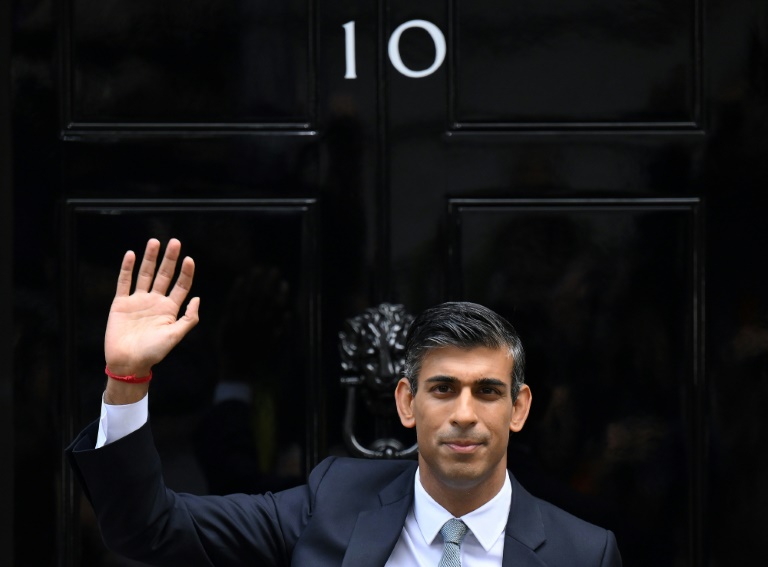
The pound climbed more than one percent as markets welcomed the appointment of former finance chief Rishi Sunak as Britain’s prime minister.

Sunak on Tuesday promised to bring economic stability after the turmoil that forced predecessor Liz Truss out of Downing Street.

“Right now our country is facing a profound economic crisis,” he told the nation in a televised address.

He vowed to place “economic stability and confidence at the heart of this government’s agenda”.

“This will mean difficult decisions to come,” Sunak added.

Some market support came from reports suggesting the Federal Reserve could slow its pace of interest rate hikes.

The central bank’s policy of ramping up US borrowing costs to fight decades-high inflation has hammered global markets this year as investors worry that they will send the economy into recession.

“Investors are getting more confident that inflation will soften as the consumer rethinks massive purchases,” said Edward Moya, analyst at Oanda trading group.

“Fed rate hike expectations will remain volatile, but expectations are growing that a weaker economy will let the Fed pause their tightening after the February policy meeting.”

It comes as investors pore over earnings updates from some of the world’s biggest companies.

Shares in HSBC slumped 6.3 percent after the banking giant warned on bad loans owing to global economic headwinds.

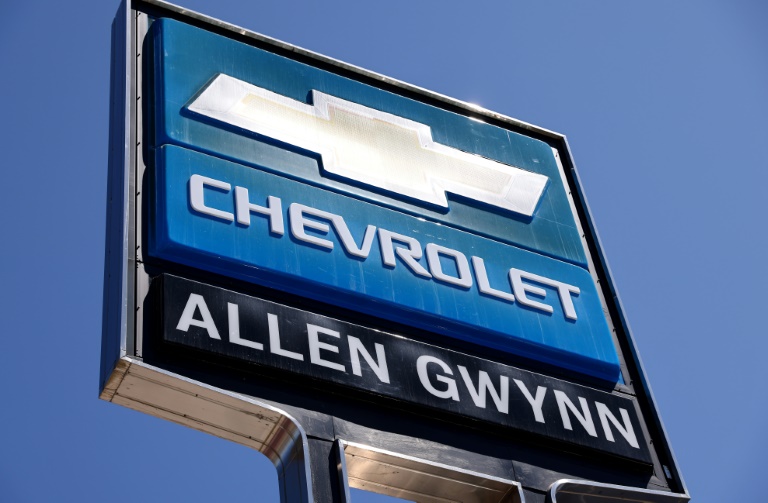
Elsewhere, shares in General Motors climbed 2.0 percent as the US automaker confirmed its full-year financial forecast despite a “challenging environment”, saying that consumer demand remained strong.

Third-quarter profits rose 37 percent to $3.3 billion on soaring revenues.

Shares in UPS and Coca-Cola were also trading higher after releasing earnings reports.

“Their gains are generating some offsetting support, yet there is a big earnings shadow that is hanging over the market and likely keeping investor enthusiasm in check this morning after the market’s big run,” said market analyst Patrick O’Hare at Briefing.com.

“That shadow is the earnings reports that will be heard after today’s close from Microsoft, Alphabet, and Visa,” he added, companies which outweigh those that reported today by market capitalisation several times over.

The Dow dipped 0.2 percent as Wall Street opened for trading, but both the S&P 500 and tech-heavy Nasdaq Composite moved higher.

Earlier Tuesday, US tech giant Meta resolved a major WhatsApp outage that prevented its popular service from connecting or sending messages.

Meta shares rose 2.8 percent.

In commodities trading meanwhile, European gas prices nudged back above 100 euros per megawatt hour, and global oil prices also edged higher.

– Key figures around 1330 GMT –

London – FTSE 100: DOWN 0.6 percent at 6,971.91 points

Frankfurt – DAX: DOWN 0.3 percent at 12,896.77

Paris – CAC 40: UP 0.7 percent at 6,173.20

EURO STOXX 50: UP 0.3 percent at 3,536.88

New York – Dow: DOWN 0.2 percent at 31,450.92

Tokyo – Nikkei 225: UP 1.0 percent at 27,250.28 (close)

Hong Kong – Hang Seng Index: DOWN 0.1 percent at 15,165.59 (close)

Shanghai – Composite: FLAT at 2,976.28 (close)

Pound/dollar: UP at $1.1423 from $1.1281 on Monday

Dollar/yen: DOWN at 148.05 yen from 148.95 yen

Euro/dollar: UP at $0.9931 from $0.9876

Euro/pound: DOWN at 86.91 pence from 87.56 pence

West Texas Intermediate: UP 0.4 percent at $84.94 per barrel

Brent North Sea crude: UP less than 0.1 percent at $93.33. per barrel

burs-rl/gw
Battling the cold in the trenches of eastern Ukraine

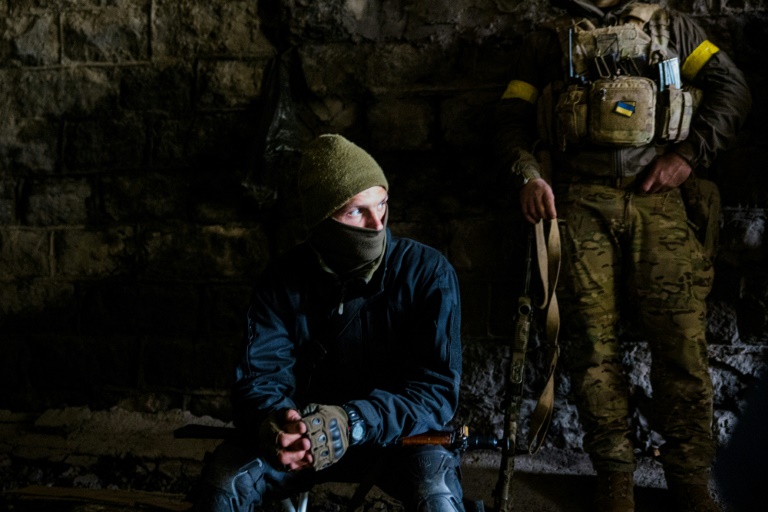
With “tactical socks”, NATO standard sleeping bags and even a sauna, a unit of soldiers from Ukraine’s 5th brigade is preparing for winter in a trench on the eastern front.

“Winter in Donbas is hell. It is a steppe climate with icy nights and temperatures can go down to minus 30 degrees Celsius (minus 22 Fahrenheit),” said one of the soldiers, Yury Syrotiuk.

“There is no forest, the wind blows through everywhere. I was here in 2014 and it was unbearable,” the 46-year-old said.

This part of the front has remained relatively static in the conflict but Russian forces are just 700 metres away  away and there is frequent artillery fire.

Still, life goes on in the maze of trenches.

The unit of soldiers and their cat John are deployed in the trenches for a week at a time before they are rotated out.

Following an internet tutorial, they have built a sauna that can also function as a hammam one metre (three feet) underground.

The sauna measures just two square metres and is heated by a wood-fired stove.

The opening and the insides are covered in silver-coloured insulating material.

An ammunition crate by the entrance acts as changing room for the soldiers who enter the sauna naked and wash themselves inside.

Water or snow in a bucket creates the steam.

“After living in the mud, you come out like a new person,” said Syrotiuk, a bearded former local official from the capital Kyiv who has been at the front since February.

– Fear of ‘trench foot’ –

The underground camp, which is covered in camouflage netting, is a sea of mud that sticks to the soles of soldiers’ boots.

Before entering the trench used for living quarters and the kitchen, soldiers have to wash their boots on a metal tube.

Inside, the most valued object is the “burzhuyka” — a small wood-fired stove with a chimney which keeps everyone warm.

Soldiers put their hands near it and then place them between their chests and their bullet proof vests to warm their bodies.

The other home comfort is a gas heater used to make piping hot tea and coffee.

Before entering the insulated sleeping area, where soldiers lie down on wooden crates, everyone has to remove their boots.

A plastic thermometer decorated with pink flowers shows 22 degrees Celsius inside, while outside it is 5 degrees on an autumn morning.

The unit commander, who goes by “Losha”, said the soldiers have received sleeping bags from volunteers that are supposed to be good up to minus 30 degrees Celsius.

“With these you can sleep in the snow,” he said.

The soldiers have also been sent raincoats, special underwear including leggings and “tactical socks” to avoid “trench foot” — a bane for soldiers in the First World War.

“But what warms us up even more than socks or NATO standard sleeping bags, are the words, the calls and the little drawings of our loved ones,” Syrotiuk said, smiling.

GM confirms profit forecast despite 'challenging' environment

General Motors confirmed its full-year financial forecast Tuesday, lifting shares as it reported strong consumer demand in spite of a “challenging” environment with grinding inflation.

The big US automaker scored a 37 percent jump in third-quarter profits to $3.3 billion, bolstered by strong vehicle pricing in a market with historically low auto inventories. 

Revenues jumped 56 percent to $41.9 billion, a quarterly record.

GM Chief Financial Officer Paul Jacobson acknowledged rising worries about the drag from inflation on economic growth, but said the company was still seeing robust demand for its products.

“We haven’t seen any direct impact on our products. Pricing remains strong, demand remains strong for our product,” Jacobson said on a conference call with reporters.

“I think we can’t ignore what others are saying out there and what others are seeing out there,” he said. “So we’re going to continue to be agile, with both our cost investments as well as  our production.

“But we continue to see that strong demand so the best we can do is be prepared for it.” 

GM benefited from increased auto deliveries worldwide, including in North America where it shipped around 75 percent of the partially-built autos from the prior quarter that had been suspended due to shortages of key materials.

Like other automakers, GM’s operations have been constrained by limits on components, especially semiconductors.

The Detroit-based company pointed to “improvements” in the supply chain and semiconductor availability, but said it still faced “commodity and logistic challenges,” according to its earnings presentation.

“I wouldn’t say we’re completely out of it yet,” GM Chief Executive Officer Mary Barra said of the semiconductor issue. “It’s more volatile than I would expect at this point. But we’re continuing to work through the different challenges and quarter by quarter, we’re seeing it improve.”

In an interview with CNBC, Barra said GM was better positioned for a potential recession than in the past because inventories — while elevated compared with a few months ago — remain lower than historical averages.

“We have the ability right now because inventories are so low to really monitor the situation,” Barra said, adding that “we’re much better prepared to manage if we do move into a recession or have challenges from a demand-side perspective.”

The results translated into higher-than-expected profits per share, but revenues slightly lagged analyst expectations.

Shares rose 3.1 percent to $37.04 in pre-market trading.

Berlin-Paris ties under strain as EU faces harsh tests

Signs are growing that the crucial partnership between Germany and France is stumbling, experts say, just as Russia’s invasion of Ukraine and soaring energy costs place extreme stress on the EU.

Amid disagreements over energy, foreign policy, arms procurement and more, a joint cabinet meeting has been pushed back to January, while a parliamentary gathering of French, German and Polish MPs was cancelled at the weekend.

There have always been “difficult moments” in the relationship, said France’s former ambassador to China, Britain and Russia, Sylvie Bermann.

“But we’re clearly in a period of crisis, and the Franco-German relationship seems more strained than ever,” she said.

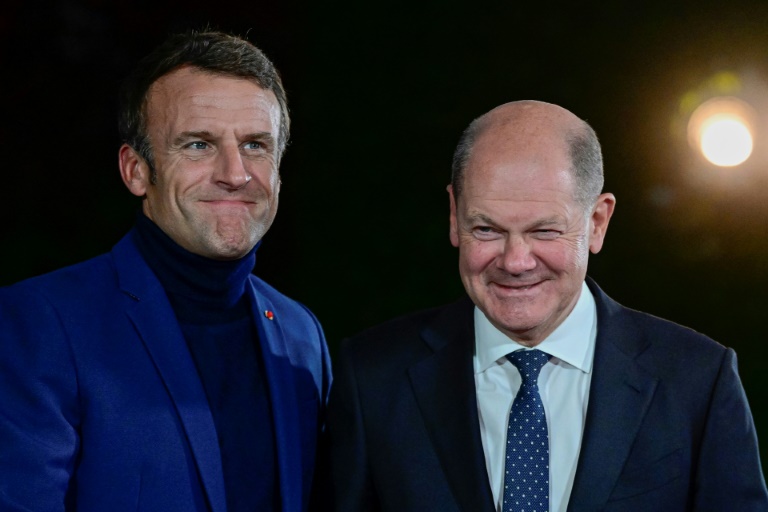
It did not help that the Ukraine war erupted when German Chancellor Olaf Scholz had barely taken office, with insiders saying French President Emmanuel Macron’s relationship with him is nothing like as warm as with former chancellor Angela Merkel, with whom he exchanged text messages daily.

Scholz and Macron are set to meet one-on-one in Paris on Wednesday following last week’s gathering of European leaders.

“There’s a necessary learning process” as Germany’s three-party governing coalition finds its feet, said Alexandre Robinet-Borgomano, a German politics expert at French think-tank Institut Montaigne.

“In future, the German government will have to build compromises with more dialogue, more connection with its European partners,” he added.

– Energy dust-up –

The Berlin-Paris axis has been the foundation of EU compromise for decades, and the bloc’s two biggest and wealthiest countries are still more critical since Britain’s departure.

Europe’s economic heavyweight Germany has sowed discord with plans for a national 200-billion-euro ($197-billion) energy subsidy, rather than an EU-wide agreement to cap prices.

“I don’t think it’s good for Germany or for Europe if it isolates itself,” Macron said last week of the plans, which smaller countries fear could drive up prices for them.

Ironically, the complaints from France and elsewhere come as Germany appears to be caving to long-standing demands, analyst Robinet-Borgomano said.

France has spent 10 years “firstly rebuking (Germany) for not spending enough on defence, for not having a strategic or geopolitical vision, and second rebuking it for staying stuck in austerity policy and spending no money”, he pointed out.

That’s “exactly what we’re complaining about today”, Robinet-Borgomano added.

Berlin “is investing more to stimulate growth and domestic demand, it’s taking on a leadership role and is building European defence” with massive new spending following Russia’s assault on Ukraine.

The energy subsidy dust-up was brushed under the carpet with an agreement for an energy price “roadmap” at last week’s EU summit.

France has also snubbed Germany’s pleas to build a new overland gas pipeline — known as MidCat — from import terminals in Spain and Portugal to European networks.

Instead, Macron last week announced an undersea pipeline from Barcelona to Marseille, with no timetable for completion or details of its funding.

– War means business –

Meanwhile in defence — a field where France and Germany have striven to display unity — differences have also been forced to the surface.

Paris has stayed out of a Germany-led plan for an anti-missile shield stretching across much of Europe, which has so far brought 14 countries including Britain, Belgium and the Netherlands on board.

One Macron adviser said France fears a “restart of the arms race in Europe”, and will stick to its own air defence systems.

Analyst Robinet-Borgomano suggested that Paris was in fact annoyed that the shield would use US- and Israeli-made equipment rather than a French-Italian alternative.

France “ought to have pushed for interoperability between systems to ensure European sovereignty, we can see that it’s about competing for leadership in European defence”, he said.

A still thornier issue is a plan to develop a German-French-Spanish next-generation fighter jet known as the Future Combat Air System (FCAS).

Contracts for the next phase of development on the plane, supposed to replace existing fleets of French Rafales and German and Spanish Eurofighters by 2040, have not yet been signed.

“There’s political agreement, but it’s jammed at the level of the companies,” one senior French official said.

French manufacturer Dassault “is afraid of losing its market position” if forced to work with competitor Airbus, they added.

Ethiopia peace talks open in South Africa

Peace talks between the warring sides in the brutal two-year-old conflict in Ethiopia’s Tigray region opened in Pretoria on Tuesday, the South African presidency announced.

The negotiations, led by the African Union (AU), follow a fierce surge in fighting in recent weeks that has alarmed the international community and triggered fears for civilians caught in the crossfire.

“South Africa is hosting peace talks to end the conflict in the Tigray region,” Vincent Magwenya, spokesman for President Cyril Ramaphosa, told reporters.

The talks “have been convened to find a peaceful and sustainable solution to the devastating conflict,” he said, adding that they would run until October 30.

South Africa hopes “the talks will proceed constructively and result in a successful outcome that leads to peace for all the people of our dear sister country,” he said.

The talks between negotiators from the Ethiopian government of Prime Minister Abiy Ahmed and the regional authorities in war-stricken Tigray have been launched almost two months to the day since fighting resumed in August, shattering a five-month truce.

They are being facilitated by AU Horn of Africa envoy and Nigeria’s former president Olusegun Obasanjo, supported by Kenya’s former leader Uhuru Kenyatta and South Africa’s ex-vice president Phumzile Mlambo-Ngcuka, said Magwenya.

Diplomatic pressure has been mounting in recent weeks to silence the guns in a war which has left millions in need of humanitarian aid and, according to a US estimate, as many as half a million dead.

The talks come as federal government forces and their allies in the Eritrean army appear to be gaining the upper hand on the ground, seizing a string of towns in Tigray in offensives that have sent civilians fleeing.

An initial effort by the AU to bring the two sides to the negotiating table earlier this month failed, with diplomats suggesting logistical issues and a lack of preparedness were to blame.

The South Africa talks are the first public parley between the rivals, although a Western official has confirmed that previous secret contacts took place organised by the United States in the Seychelles and twice in Djibouti.

Abiy first sent troops into Tigray in November 2020, promising a quick victory over the northern region’s dissident leaders, the Tigray People’s Liberation Front (TPLF), after what he said were attacks by the group on federal army camps.

The move followed long-running tensions with the TPLF, which had dominated Ethiopia’s ruling coalition before Abiy came to power in 2018 and sidelined the party.

In a rare comment on the conflict last week, Abiy — who won the 2019 Nobel Peace Prize for his rapprochement with Eritrea — said the war “would end and peace will prevail”.

But on Monday, the head of the rebel region, Debretsion Gebremichael, issued a defiant statement saying: “The Tigray army has the capacity to defeat our enemies totally.”

The international community has been calling for an immediate cessation of hostilities, humanitarian access to Tigray and a withdrawal of Eritrean forces, whose return to the battlefield has raised fears of renewed atrocities against civilians. 

Children among 11 killed in fire at Uganda blind school

Eleven people, mostly children, have perished in a blaze that tore through a dormitory at a school for the blind in Uganda in the early hours of Tuesday as pupils were sleeping.

“The cause of the fire is currently unknown but so far 11 deaths as a result of the fire have been confirmed while six are in critical conditions and admitted (to hospital),” the Uganda Police Force said on Twitter.

The disaster occurred at about 1 am (2200 GMT Monday) at the Salama School for the Blind in the Mukono district, east of the capital Kampala.

Police said an investigation had been launched into the cause of the inferno and more details would be released later.

“Most of the dead are children at the school and our sympathies go to the parents,” Internal Affairs Minister General Kahinda Otafiire told AFP. 

He said the school has been cordoned off as a “crime scene” and vowed that there would be a full investigation.

“As government we shall go to the root cause of the fire and if there are any culprits they will be apprehended and the law will take its course,” he added.

The school’s headmaster Francis Kirube, who is also blind, told AFP the flames swept through the dormitory as the pupils slept.

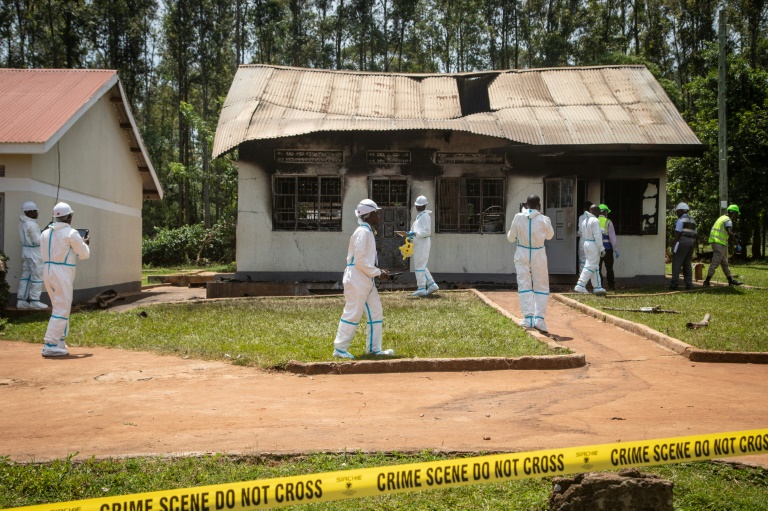
AFP images showed a charred but still largely intact building where the fire broke out, its window frames and door blackened and the corrugated roof damaged.  

Forensic teams were seen in white protective gear at the school, while grieving parents gathered nearby.

– ‘He is gone’ –

Richard Muhimba, the distraught father of one of the dead children, told AFP: “No words can explain the pain I am going through. 

“I visited my child on Saturday, he was in good health and in less than three days he is gone… Please give me time to go through this pain,” said Muhimba, before hanging up.

A friend told AFP that the child was aged 15 and that Muhimba was a father of five. 

Salama was built in April 1999 by the local government in Mukono and caters for children and young adults between the ages of six to 25.

Princess Anne, the sister of King Charles III, had been due to visit the school during her trip this week to Uganda, which marked its 60th anniversary of independence from Britain earlier this month.

The East African nation has suffered a string of deadly school fires in recent years.

In November 2018, 11 boys perished and another 20 suffered severe burns in a suspected arson attack at a boarding school in southern Uganda.

In April 2008, 18 schoolgirls burned to death along with one adult when a fire engulfed their dormitory at a junior school near the Ugandan capital. 

In March 2006, at least 13 children were killed and several hurt when fire razed an Islamic school in western Uganda. In July the same year, six children died in a similar fire in the east.

Germany eyes reduced China stake in Hamburg port to end row

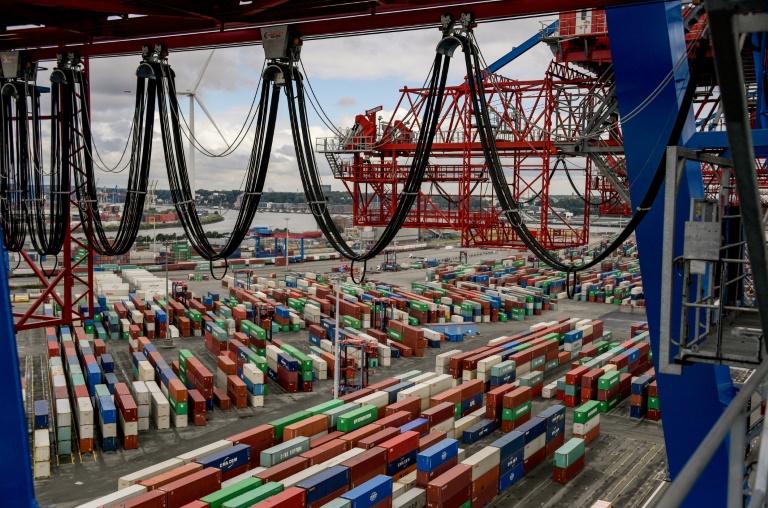
Germany’s government is eyeing a compromise that would allow a Chinese firm to take a smaller-than-planned stake in a Hamburg container terminal, after Chancellor Olaf Scholz rejected banning the sale outright.

Chinese shipping giant Cosco had sought a 35-percent stake and the deal would have automatically gone ahead despite opposition from several German ministries if an “emergency solution” was not found this week, a government source told AFP.

Under the proposed compromise, the government would greenlight a 24.9-percent sale, a big enough reduction to deprive China’s state-owned Cosco of any voting rights.

The fate of the Tollerort terminal at Hamburg’s port, Europe’s third busiest, has sparked fierce debate in Germany.

Badly burnt by its over-reliance on Russian energy, Germany has become increasingly wary of allowing foreign powers to gain hold of critical infrastructure.

Six German ministries, including the economy, defence and foreign offices, wanted to veto the Cosco deal, while former Hamburg mayor Scholz supported the sale.

“The emergency solution would prevent a strategic participation and reduce it to a purely financial participation,” the source said.

“Of course, this does not solve the actual concerns,” the source said, adding that the six ministries would still have preferred an outright ban.

The port controversy is the latest dispute to rattle Scholz’s three-way coalition government between his Social Democrats, the left-leaning Greens and the liberal FDP.

A standoff between the Greens and the FDP on whether to keep Germany’s nuclear plants operational for longer in Europe’s powerhouse economy only ended when Scholz stepped in earlier this month and pulled rank.

Scholz ordered all three remaining plants to stay online until mid-April to help counter a shortfall in Russian energy imports — including the Emsland plant the Greens had wanted to see decommissioned. 

The FDP meanwhile had hoped to keep all three plants running until 2024.

– EU concerns –

The Greens and the FDP were united however in their opposition to Cosco’s participation in Hamburg’s port.

“This is neither good for our economy nor for our security,” Green party co-leader Omid Nouripour told German media last week.

Michael Kruse, head of the FDP in Hamburg, called the project “dangerous”. 

The proposed sale has sent alarm bills ringing in Brussels too.

The European Commission warned Germany months ago against Chinese investment in Hamburg, a source close to the matter told AFP at the weekend.

The commission was worried that sensitive information about activity in the port could be relayed to China’s government, the source said.

Chinese firms already hold stakes in other European ports but the EU’s stance against Beijing has hardened since then.

Germany too has in recent years taken a closer look at Chinese investment in sensitive technologies and other areas, and reserves the right to veto acquisitions.

Scholz is due to visit China in early November, the first European Union leader to make the trip since November 2019.

Despite growing concerns at home and abroad about economic dependence on China, Scholz has repeatedly insisted that Germany should maintain strong business relations with the Asian giant.

“We do not have to decouple ourselves from some countries, we must continue doing business with individual countries — and I will say explicitly, also with China,” Scholz recently said.

China is a top trading partner for Germany, especially for its flagship automotive industry.

HSBC profits slide on bank impairment charges

Global bank giant HSBC on Tuesday announced tumbling profits for the third quarter on impairment charges linked to a weak economic outlook and its upcoming sale of French retail operations.

The London-headquartered bank’s share price was down nearly seven percent in early afternoon deals, making it the biggest faller on the British capital’s FTSE 100 index.

HSBC also announced a boardroom shake-up with the appointment of a new chief financial officer, as the Asia-focused lender faces headwinds in China and global recession prospects.

Net profit slumped 46 percent to $1.91 billion in June-September compared with the third quarter last year. Pre-tax profit slumped 40 percent, HSBC added in a statement.

The bank was hit by a $2.4-billion write-off from the planned disposal of its French business next year, offsetting gains made by soaring interest rates.

HSBC has meanwhile set aside provisions totalling $1.1 billion for loans expected to sour.  

“Macroeconomic headwinds, including higher inflation and a weaker outlook, continue to weigh on the global economy,” it said. 

The bank specifically cited global uncertainty sparked by Russia’s invasion of Ukraine, the fall of the British pound and China’s troubled real estate sector.

Stripping out the one-off hits, adjusted pre-tax profit jumped 18 percent to $6.5 billion, beating analyst expectations.

The bank’s net interest income, measuring what it makes from lending minus interest paid on deposits, came in at $8.6 billion — its best third quarter in more than eight years.

– China strains –

“We retained a tight grip on costs, despite inflationary pressures, and remain on track to achieve our cost targets for 2022 and 2023,” said chief executive Noel Quinn.

In a call with media, he welcomed stability returning to UK markets as former finance chief Rishi Sunak replaced Liz Truss as prime minister.

“It’s been a challenging few weeks. I am glad to see the market has stabilised.”

The bank announced its own shake-up, with HSBC senior executive Georges Elhedery next year stepping up as chief financial officer, replacing Ewen Stevenson who departs the group.

Senior HSBC executives are next week expected in Hong Kong for a bank summit after the city recently lifted mandatory quarantine for all international arrivals. 

It comes after Chinese leader Xi Jinping tightened his grip on power by securing a third five-year term in office, handing top jobs to a number of loyalists who back his strict zero-Covid strategy.

The policy of lockdowns and other strict measures have been a major cause of the country’s economic woes and the prospect of more upheaval has sent chills through trading floors.

HSBC has vowed to accelerate a multi-year pivot to Asia and the Middle East, with ambitions to lead Asia’s wealth management market.

But the lender is under pressure from Chinese financial giant and major shareholder Ping An to spin off its Asian operations to unlock shareholder value amid tensions between China and Western powers.

HSBC, which has rejected the calls, added Tuesday that it was “exploring the potential sale” of its Canadian division.

In midday deals, HSBC shares were down almost 7.0 percent at 442.45 pence.

“Rising interest rates may be good news for banks but it’s all the other stuff which is causing them headaches right now,” noted AJ Bell financial analyst Danni Hewson.

“Concern about the impact of a slowing economy on bad debts and growth in the loan book is being exacerbated at HSBC by the departure of well-respected finance director Ewen Stevenson and the deteriorating situation in China.”

She added that “Stevenson’s departure may also make HSBC more vulnerable to pressure from its largest shareholder Ping An to break up the bank.”

Jihadist raids spark new exodus in Mozambique

Even the exhaustion from walking 40 kilometres, fleeing jihadists who had attacked her village, could not mask the trauma on Maria Lourenco’s face.

An indelible image was imprinted on her mind.

“They beheaded two men and put their heads in a basin,” she told AFP.

“Then they handed over the heads to the wife of one of the victims to present to the authorities,” she said.

“I saw their heads.”

Her village in the Katapua area in Cabo Delgado province, the epicentre of a five-year-old jihadist insurgency in northern Mozambique, came under attack last weekend.

The 60-year-old grandmother fled on foot to the town of Chiure, 25 miles away, with her eight daughters and grandchildren.

Wearing blue flip-flops and clutching an improvised walking stick, she was standing in the town square waiting for her daughter-in-law to take her to the provincial capital Pemba.

The family’s terrifying experience underscores how Mozambique’s jihadist nightmare remains very far from over, despite military gains last year.

The insurgency erupted in October 2017 when fighters — since proclaimed to be affiliated to the Islamic State group — attacked coastal areas in northern Cabo Delgado, close to the Tanzanian border.

Bloody assaults on villages were followed in 2020 with the capture of the port of Mocimboa da Praia — a key part of a huge scheme to develop liquefied natural gas in the region.

In 2021, as Mozambique’s military floundered, Rwanda and the country’s neighbours deployed more than 3,000 troops, helping to push the militants out of their strongholds.

But the jihadists are now making incursions into the previously untouched south of Cabo Delgado and spilling over into neighbouring Nampula and Niassa provinces.

The insurgency has so far claimed more than 4,300 lives, and around a million people have fled their homes.

– ‘Evildoers’ –

An AFP correspondent in Chiure, a town with a population of around 100,000, saw around 500 people who had been uprooted from Katapua since the weekend.

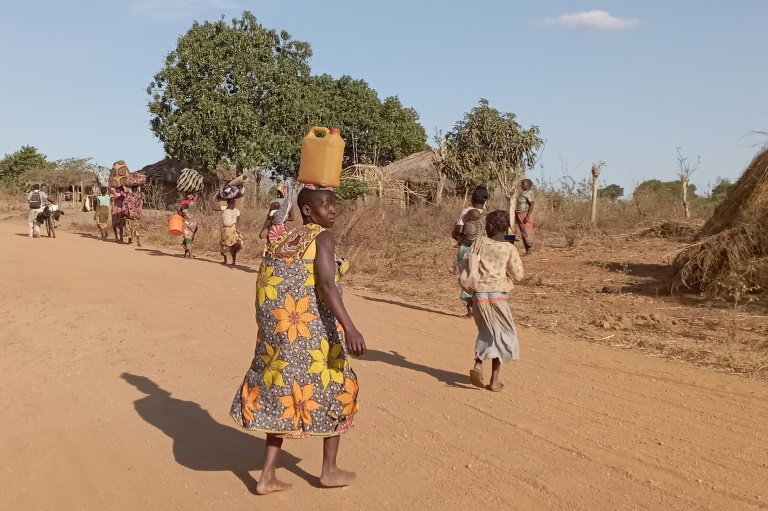
They congregated in front of the town’s main square. Many had slept rough in the open. Others sheltered on shop verandahs watching over a few belongings tied in large sheets, and foam mattresses that they had managed to carry.

Along the dusty road connecting Chiure to Katapua, several women, men and children trekked on foot, their belongings balanced on heads, or on bicycles.

“Many arrived during the early hours exhausted and complaining of pain,” said Consolta Paulo, a nurse in Chiure. 

Villagers reported new raids in Katapua on Monday.

“The evildoers went on the rampage in the village and burned a chapel,” Katapua’s administrative head, Xavier Jamal, told AFP by phone. 

He said it appeared the attackers were the same group which last week had raided on ruby mine near Montepuez.

London-listed ruby mining giant Gemfields halted operations at its Montepuez mine following the attack at a neighbouring site.

Jamal appealed to villagers not to flee, insisting the military “are on the ground, controlling the situation”.

But locals have little trust in Mozambique’s ill-trained and under-equipped forces.

Elias Mario, 36, a peasant farmer, fled Katapua with his wife and two children. He stood next to his bicycle, his shoulders slumped despondently.

“I brought my family here, but we still don’t know where we’re going,” he said.

Stocks mostly retreat on mixed earnings; pound up on new PM

Stock markets mostly fell Tuesday as traders reacted to mixed earnings, while Hong Kong steadied after the previous session’s rout triggered by China President Xi Jinping tightening his grip on power.

The pound climbed as markets welcomed the appointment of former finance chief Rishi Sunak as Britain’s prime minister.

Sunak on Tuesday promised to bring economic stability after the turmoil that forced predecessor Liz Truss out of Downing Street.

“Right now our country is facing a profound economic crisis,” he told the nation in a televised address.

He vowed to place “economic stability and confidence at the heart of this government’s agenda”.

“This will mean difficult decisions to come,” Sunak added.

In commodities trading meanwhile, oil and European gas prices slid further on weaker demand expectations.

Some market support came from reports suggesting the Federal Reserve could slow its pace of interest rate hikes.

The central bank’s policy of ramping up US borrowing costs to fight decades-high inflation has hammered global markets this year as investors worry that they will send the economy into recession.

“Investors are getting more confident that inflation will soften as the consumer rethinks massive purchases,” said Edward Moya, analyst at Oanda trading group.

“Fed rate hike expectations will remain volatile, but expectations are growing that a weaker economy will let the Fed pause their tightening after the February policy meeting.”

It comes as investors pore over earnings updates from some of the world’s biggest companies.

Shares in HSBC slumped 7.5 percent after the banking giant warned on bad loans owing to global economic headwinds.

Elsewhere, General Motors confirmed its full-year financial forecast despite a “challenging environment”, saying that consumer demand remained strong.

The big US automaker scored third-quarter profits of $3.3 billion on soaring revenues.

Earlier Tuesday, US tech giant Meta resolved a major WhatsApp outage that prevented its popular service from connecting or sending messages.

– Key figures around 1115 GMT –

London – FTSE 100: DOWN 0.8 percent at 6,961.25 points

Frankfurt – DAX: DOWN 0.9 percent at 12,820.86

Paris – CAC 40: UP 0.2 percent at 6,145.10

EURO STOXX 50: DOWN 0.1 percent at 3,523.07

Tokyo – Nikkei 225: UP 1.0 percent at 27,250.28 (close)

Hong Kong – Hang Seng Index: DOWN 0.1 percent at 15,165.59 (close)

Shanghai – Composite: FLAT at 2,976.28 (close)

New York – Dow: UP 1.3 percent at 31,499.62 (close)

Pound/dollar: UP at $1.1328 from $1.1281 on Monday

Dollar/yen: DOWN at 148.92 yen from 148.95 yen

Euro/dollar: DOWN at $0.9854 from $0.9876

Euro/pound: DOWN at 87.01 pence from 87.56 pence

West Texas Intermediate: DOWN 1.4 percent at $83.39 per barrel

Brent North Sea crude: DOWN 1.4 percent at $91.94 per barrel

burs/bcp/rl

Close Bitnami banner
Bitnami