World

Post-Diwali Delhi wakes to toxic firecracker smog

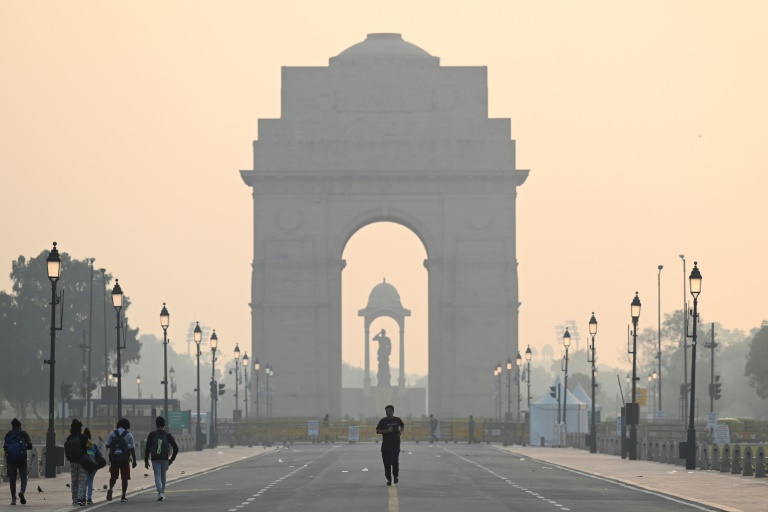
New Delhi woke to toxic smog on Tuesday after Diwali revellers defied a firecracker ban and risked jail to celebrate the annual Hindu festival.

According to international monitoring company IQAir, harmful PM 2.5 particles surged to 350 on the air quality index — more than three times the reading a day earlier.

The reading for the particulates — so tiny they can penetrate deep into the lungs and enter the bloodstream — is more than 23 times the recommended daily maximum set by the World Health Organization.

The PM 2.5 reading had eased to around 145 by mid-morning, still nearly 10 times the WHO limit.

A report by IQAir in 2020 found that 22 of the world’s 30 most polluted cities were in India. 

New Delhi imposed a ban on the sale and use of firecrackers last month and announced that those flouting the ban could face up to six months in jail.

Many of the Indian capital’s roughly 20 million residents were still able to get hold of firecrackers, setting them alight into the early hours.

However, broadcaster NDTV reported that Delhi’s pollution levels after Monday’s Diwali celebrations year were the lowest in four years. The festival fell relatively early this year in mild weather.

Delhi chief minister Arvind Kejriwal said residents were “working hard” and that there had been encouraging results. 

“But there is still a long way to go,” he tweeted early Tuesday. 

Diwali is celebrated at roughly the same time when farmers in neighbouring states burn stubble after their harvest.

Firecracker smoke combines in winter with farm fires and industrial and vehicular emissions to form a toxic cocktail that is blamed for huge numbers of premature deaths.

A Lancet report in 2020 said almost 17,500 people died in Delhi in 2019 because of air pollution.

Across South Asia, the average person would live five years longer if levels of fine particulate matter met WHO standards, according to a June study from the University of Chicago’s Energy Policy Institute.

Tents for asylum seekers stir debate in Austria

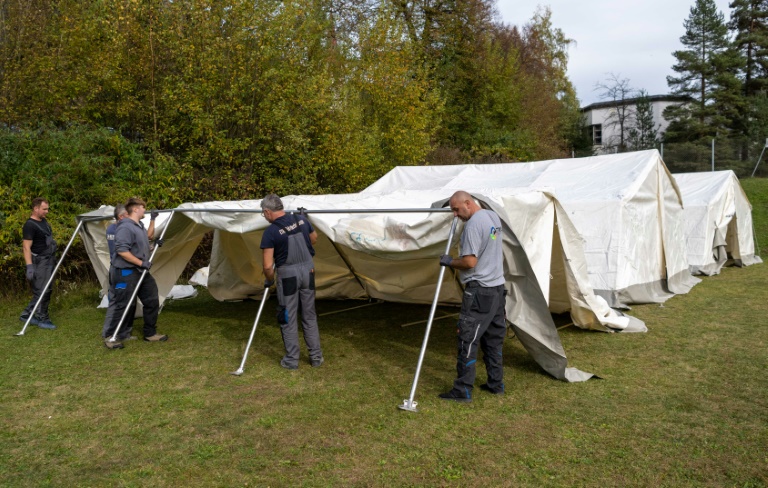
The white tents that Austria is using to house asylum seekers in a handful of towns have drawn rebuke from refugees’ defenders and critics alike, while stirring memories of the 2015 migrant crisis.

Arrivals in the Alpine EU nation are increasing — but unlike seven years ago, it’s due in part to stricter border controls implemented by the conservative-led government.

Now that federal shelters are full, authorities have erected 40 tents, each housing up to eight people, at three points near Austria’s border with Germany and two others near Slovenia.

That move has sparked fear, political positioning and accusations of inhumane treatment.

Tens of thousands of people sought asylum in Austria, a country of nine million, in 2015 with images like packed train stations leading to a surge in popularity of anti-immigration politicians.

At present, Austria has tripled capacity this year to host 8,000 people in government housing but all beds have been taken, authorities noted, making it necessary to set up tents.

“These are short-time emergency measures to increase our capacities on a day-to-day basis,” Thomas Fussenegger, a spokesman for the federal agency in charge, told AFP.

– ‘Inhumane’ –

According to authorities, hundreds of people have been intercepted daily in recent weeks after crossing into Austria.

Even though most continue on to nations further west, those who arrive must apply for asylum to avoid being expelled.

The government has also stepped up border controls — which has increased the official tally of arrivals.

Between January and September, more than 70,000 people applied for asylum in Austria compared to some 40,000 people for all of 2021.

In 2015, almost 90,000 people applied for asylum, according to ministry statistics.

In addition, Austria is supporting tens of thousands of Ukrainians who have fled the war in their home country. Under a special arrangement, they do not need to apply for asylum.

Like in previous years, those applying in Austria are mainly from conflict-torn Syria and Afghanistan, but Indians, Tunisians and other nationals have arrived as well. 

European Union member states have blamed Serbia’s visa-waiver policy for attracting a broader group of migrants and serving as a springboard to enter the bloc.

In early October, Austria’s conservative chancellor, Karl Nehammer, met Hungary’s nationalist prime minister Viktor Orban and Serbian President Aleksandar Vucic to discuss working together more closely to stop the flow of migrants.

The appearance of the tents since mid-October has provoked strong, mostly critical reactions in Austria.

Prominent refugee support groups published an open letter to the government last week urging authorities to work together better on asylum seeker housing.

“Refugees in Austria are having to live in tents again. Nobody wants that and this inhumane accommodation is absolutely avoidable,” they said.

A 19-year-old from Syria, Khaled, told Die Presse daily in the small town of Sankt Georgen im Attergau in western Austria: “It is cold at night… We are freezing here.” 

– Far-right politics –

In Sankt Georgen im Attergau, 17 tents have not exactly been welcomed.

The conservative mayor, Aigner Ferdinand, echoed the refugee defence groups, objecting to the tents because they were “inhumane… especially at this time of year”, with winter on its way.

But he also noted the “fear” expressed by some locals at seeing groups of young men arriving.

These words sound similar notes as the debates in recent years in Germany after the arrival of nearly a million Syrians fleeing the war as well as Afghans or Iraqis. 

The opposition far-right Freedom Party (FPOe) wants the country to stop accepting asylum seekers altogether.

“You have knowingly led our country into the same kind of disaster that we saw in 2015 and that will only get worse,” FPOe leader Herbert Kickl argued. 

While the party is currently weakened, it held power from 2017 to 2019, in tandem with the conservatives of the young chancellor Sebastian Kurz, in the wake of the migration crisis.p

Credit Suisse banking on restructure revamp

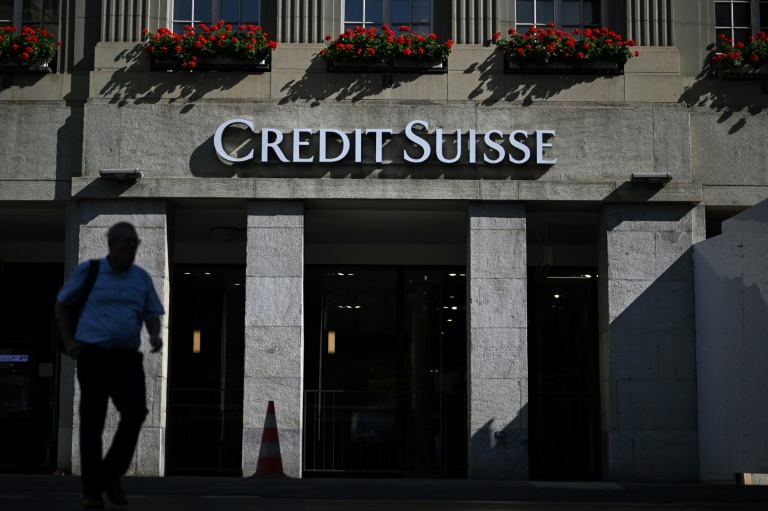
New Credit Suisse chief executive Ulrich Koerner, faced with trying to turn around the beleaguered bank following multiple scandals, is set to unveil his strategic road map on Thursday.

The pressure is on for Switzerland’s second-biggest bank after investors saw their money go up in smoke due to the collapse in share prices.

And the fragile economic outlook, recent market turbulence and rising interest rates could further complicate Koerner’s task as he reveals his restructuring plan.

– Pillar of Swiss banking –

With a turnover of nearly 22.7 billion Swiss francs ($22.65 billion) in 2021, Credit Suisse is second only to UBS in Swiss banking. 

But unlike its competitor which earned a net profit of $7.4 billion, Credit Suisse suffered a loss of 1.6 billion francs.

Founded in 1856 by Alfred Escher, the pioneer of Swiss railways, the bank then called Schweizerische Kreditanstalt grew to be a pillar of Swiss finance.

It financed the construction of the Gotthard tunnel, the development of large industrial companies and also insurance giants, including Swiss Life and the reinsurer Swiss Re.

The Zurich-based bank is a force on the international stage, especially since it took over the US investment bank First Boston in 1990. Present in some 40 countries, it employs 51,410 people worldwide.

– Too big to fail? –

Credit Suisse is one of 30 banks globally deemed too big to fail, forcing it to set aside more cash to weather a crisis.

At the end of June, its CET1 ratio — which compares a bank’s capital to its risk-weighted assets — stood at 13.5 percent: slightly less than HSBC Holdings but bigger than BNP Paribas, the two largest banks in Europe for which regulatory requirements are even higher.

Banking experts are therefore dismissing social media rumours earlier this month of a “Lehman Brothers moment”, referencing the US bank which collapsed, triggering the 2008 financial crisis.

“The bank will go through difficult times,” Carlo Lombardini, a lawyer and professor of banking law at the University of Lausanne, told AFP, but “not because of a solvency risk or liquidities”.

Credit Suisse already went through a major restructuring under Tidjane Thiam, its chief executive from 2015 to early 2020.

The objective was to relieve the investment bank of its most volatile activities and to strengthen wealth management, through capital increases of six billion and then four billion Swiss francs.

In November 2021, another reorganisation was launched after a series of scandals that tarnished its reputation.

– Four divisions –

Since then, Credit Suisse’s activities have been split into four divisions: wealth management, asset management, Swiss banking, and its investment banking arm.

Wealth management — specialising in investments for rich clients — and Swiss banking — encompassing retail banking and other domestic activities — are considered the most stable.

In the first half of 2022, wealth management, which makes up 30 percent of the bank’s income, suffered 1.4 billion Swiss francs in capital withdrawals, mainly from European and Middle Eastern clients.

Swiss banking, which represents about a quarter of Credit Suisse’s turnover, was the only division to see its income increase.

The asset management branch was rocked by the bankruptcy of British financial firm Greensill, in which some $10 billion had been committed through four funds.

Meanwhile investment banking was hit by the implosion of the US fund Archegos, which cost Credit Suisse more than $5 billion.

While asset management accounted for only about eight percent of Credit Suisse’s revenue in the first half of the year, investment banking contributed 37 percent.

In the first six months, the investment banking division, which is active in fields including debt issues and mergers and acquisitions, racked up losses of 992 million Swiss francs after a loss of 3.7 billion francs in 2021.

Investors have long called for reform of the division, believing that it does not have the heft to take on the big US banks.

In 2011, the Ethos foundation, which represents pension funds in Switzerland, firmly opposed an issue of convertible bonds aimed at strengthening the branch, judging the investment banking arm too capital intensive.

Credit Suisse banking on restructure revamp

New Credit Suisse chief executive Ulrich Koerner, faced with trying to turn around the beleaguered bank following multiple scandals, is set to unveil his strategic road map on Thursday.

The pressure is on for Switzerland’s second-biggest bank after investors saw their money go up in smoke due to the collapse in share prices.

And the fragile economic outlook, recent market turbulence and rising interest rates could further complicate Koerner’s task as he reveals his restructuring plan.

– Pillar of Swiss banking –

With a turnover of nearly 22.7 billion Swiss francs ($22.65 billion) in 2021, Credit Suisse is second only to UBS in Swiss banking. 

But unlike its competitor which earned a net profit of $7.4 billion, Credit Suisse suffered a loss of 1.6 billion francs.

Founded in 1856 by Alfred Escher, the pioneer of Swiss railways, the bank then called Schweizerische Kreditanstalt grew to be a pillar of Swiss finance.

It financed the construction of the Gotthard tunnel, the development of large industrial companies and also insurance giants, including Swiss Life and the reinsurer Swiss Re.

The Zurich-based bank is a force on the international stage, especially since it took over the US investment bank First Boston in 1990. Present in some 40 countries, it employs 51,410 people worldwide.

– Too big to fail? –

Credit Suisse is one of 30 banks globally deemed too big to fail, forcing it to set aside more cash to weather a crisis.

At the end of June, its CET1 ratio — which compares a bank’s capital to its risk-weighted assets — stood at 13.5 percent: slightly less than HSBC Holdings but bigger than BNP Paribas, the two largest banks in Europe for which regulatory requirements are even higher.

Banking experts are therefore dismissing social media rumours earlier this month of a “Lehman Brothers moment”, referencing the US bank which collapsed, triggering the 2008 financial crisis.

“The bank will go through difficult times,” Carlo Lombardini, a lawyer and professor of banking law at the University of Lausanne, told AFP, but “not because of a solvency risk or liquidities”.

Credit Suisse already went through a major restructuring under Tidjane Thiam, its chief executive from 2015 to early 2020.

The objective was to relieve the investment bank of its most volatile activities and to strengthen wealth management, through capital increases of six billion and then four billion Swiss francs.

In November 2021, another reorganisation was launched after a series of scandals that tarnished its reputation.

– Four divisions –

Since then, Credit Suisse’s activities have been split into four divisions: wealth management, asset management, Swiss banking, and its investment banking arm.

Wealth management — specialising in investments for rich clients — and Swiss banking — encompassing retail banking and other domestic activities — are considered the most stable.

In the first half of 2022, wealth management, which makes up 30 percent of the bank’s income, suffered 1.4 billion Swiss francs in capital withdrawals, mainly from European and Middle Eastern clients.

Swiss banking, which represents about a quarter of Credit Suisse’s turnover, was the only division to see its income increase.

The asset management branch was rocked by the bankruptcy of British financial firm Greensill, in which some $10 billion had been committed through four funds.

Meanwhile investment banking was hit by the implosion of the US fund Archegos, which cost Credit Suisse more than $5 billion.

While asset management accounted for only about eight percent of Credit Suisse’s revenue in the first half of the year, investment banking contributed 37 percent.

In the first six months, the investment banking division, which is active in fields including debt issues and mergers and acquisitions, racked up losses of 992 million Swiss francs after a loss of 3.7 billion francs in 2021.

Investors have long called for reform of the division, believing that it does not have the heft to take on the big US banks.

In 2011, the Ethos foundation, which represents pension funds in Switzerland, firmly opposed an issue of convertible bonds aimed at strengthening the branch, judging the investment banking arm too capital intensive.

Activists see red over Iceland's blood mares

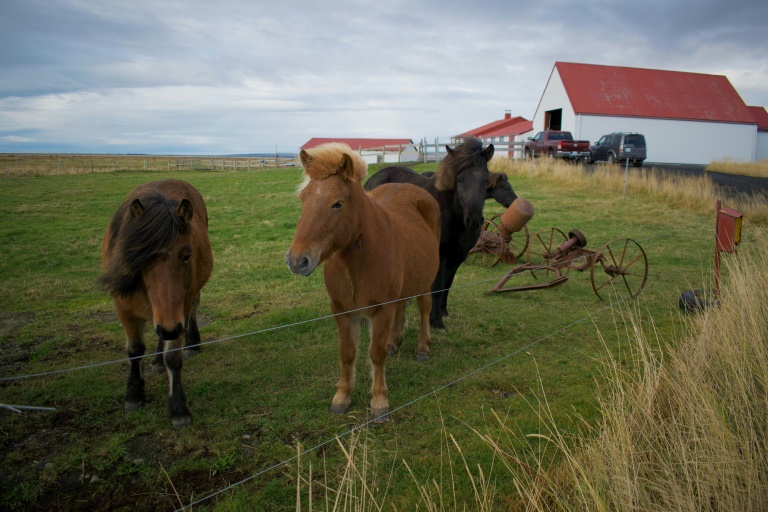
On an autumn day on a lush green prairie, more than a dozen pregnant mares are waiting to be bled for the last time this year.

This “blood farm” near Selfoss in southern Iceland is collecting blood from pregnant horses raised for the sole purpose of extracting a special hormone used in the veterinary industry.

The practice has had animal welfare groups up in arms ever since a shocking video of horses in Iceland being maltreated emerged on YouTube a year ago. 

People working in the industry now insist on anonymity when speaking to the media.

“There is no way we can make the public understand completely this kind of farming”, says the 56-year-old owner of the farm near Selfoss.

“The public in general is too sensitive”.

At farms like this one, several litres of blood are collected from each horse in order to extract the PMSG hormone (Pregnant mare serum gonadotropin), also known as eCG, produced naturally by pregnant mares.

Sold by the veterinary industry, farmers use the hormone to improve the fertility of other livestock like cows, ewes and sows around the world.

The foals are meanwhile usually sent to the slaughterhouse. 

Iceland is one of the rare countries — and the only one in Europe — to carry out the controversial practice, along with Argentina and Uruguay, and to a lesser extent Russia, Mongolia and China.

The video published last year showed farmhands beating and prodding horses with sticks, dogs sometimes biting horses, and the horses weakened after giving blood. 

Some of the horses could be seen collapsing from exhaustion after struggling against the restraints in their boxes. 

The video caused a shockwave, both abroad and in Iceland.

– Lucrative business –

At the farm near Selfoss, the mares stand in single file in a special wooden structure, waiting patiently for their turn to enter a box. 

Planks are placed around their legs to prevent them from moving and a halter is put on their head to hold it up.

“The horses … can get stressed, agitated. All these restraints are basically to protect them” so they don’t get hurt in the box, said a 29-year-old Polish veterinarian, also speaking on condition of anonymity.

A local anaesthetic is first administered, then a large needle is injected into the jugular vein. Only a certified veterinarian is authorised to carry out the procedure.

The halter “allows us to see the vein properly because we need to know exactly where it is”, he added.

Up to five litres of blood are drawn from each mare in just a few minutes, in an operation they undergo weekly for eight weeks.

The blood collection, carried out from the end of July until early October, is profitable: the 56-year-old running the operation near Selfoss — who also works as an attorney — makes up to 10 million kronur ($70,000) a year from the business.

“In many cases, the mares show signs of short-term discomfort during the blood collection”, says Sigridur Bjornsdottir, a horse specialist at the Icelandic Food and Veterinary Authority (MAST).

But “this is not considered a serious change (of their condition) unless the symptoms are severe, extended, or the mare shows signs of chronic stress”.

In 2021, Iceland had 119 blood farms and almost 5,400 mares raised for the sole purpose of giving blood, a figure that has more than tripled in the past decade.

The PMSG hormone is turned into a powder by Icelandic biotech group Isteka, the biggest producer in Europe handling around 170 tonnes of blood per year. 

– ‘Noble’ cause? –

The figure is likely to be lower this year, after the controversial video prompted some farmers to quit the business amid concerns about animal welfare activists.

“Farmers were severely hit and shocked by the video”, said Isteka managing director Arnthor Gudlaugsson.

While he acknowledged there were problematic cases, Gudlaugsson said the video, filmed with a hidden camera, was designed “to give an overly negative description of the process”.

The video did lead to a police investigation and the farms featured were identified. 

MAST inspected all of Iceland’s blood farms this summer and “no serious deviations” were observed, and none were ordered to shut down.

The scandal has also sparked debate in Iceland, where most inhabitants learned about the practice for the first time even though it has been going on since 1979.

“This makes us think about where we stand in our ethics”, the vice chair of Animal Welfare Iceland, Rosa Lif Darradottir, told AFP.

“To make a fertility drug that is used on farm animals … to enhance their fertility beyond their natural capacity, just so that we can have a stable flow of cheap pork … The cause is not noble”, she said.

Opponents also criticise the amount of blood collected. 

“It’s purely and simply maltreatment of animals and we have a word for that: animal cruelty”, said opposition MP Inga Saeland, who has repeatedly proposed a ban on the practice, to no avail.

Stricter regulations did, however, enter into force in August, giving authorities more power to monitor the industry and “assess its future” over the next three years. 

Black South Africans break into once white-only wine industry

Winemaking was a profession most South African parents could never have envisioned for their children. 

But Black South Africans are today managing to break through multiple barriers into the renowned industry, transforming a landscape that was historically white. 

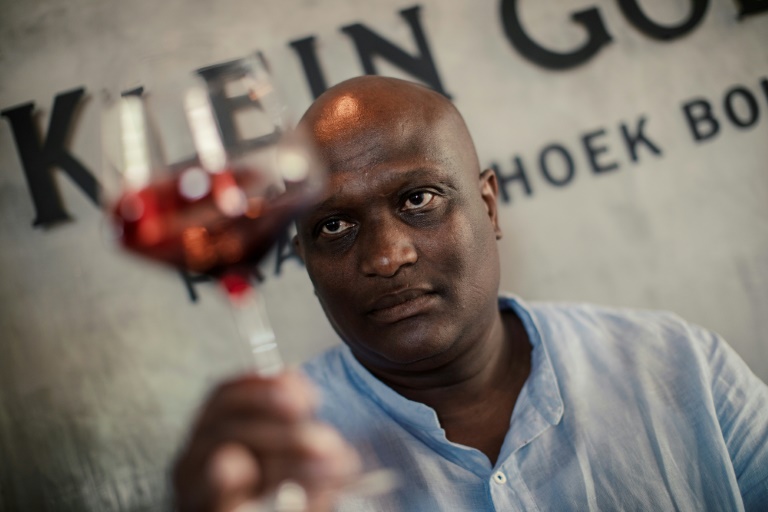
Paul Siguqa, 41, bought Klein Goederust farm (Afrikaans for “a little good rest”) after saving up for 15 years.

His mother had for 37 years worked at a farm in South Africa’s Cape winelands under the white minority apartheid regime.  

“If you grow up on a farm as children of farm labourers — black farm labourers — you are raised to be the next crop of labour for that farmer,” said Siguqa.

He finally purchased the “rundown” farm in 2019, renovated it and opened last year.

“If we want to see change in an industry, we need to be the change,” he told AFP after inspecting his flowering grape crop at the farm in Franschhoek (French corner), a region dotted with centuries-old vineyards.

The rise of entrepreneurs of colour has been slow and still faces serious obstacles, including lack of access to land and capital. As a result an industry push is underway to try to accelerate the pace of change.

“Nobody’s getting nowhere slowly,” said Wendy Petersen, manager at SA Wine Industry Transformation Unit which organises grants and internships for startups. Often the resources are not enough and have to be spread thinly among the candidates.

To help them grow, the organisation has launched the Wine Arc tasting room, in South Africa’s wine producing hub Stellenbosch, to promote budding producers.

Among the brands featured there is Carmen Stevens Wines, which became South Africa’s first fully black-owned winery when launched in 2011 and released its first vintage in 2014.

– ‘Land, biggest barrier’ –

“The difficult part of winemaking is selling this product, is getting this product to somebody’s table and somebody coming back and saying ‘I want more’,” Stevens said.

The 51-year-old is an unlikely winemaker, having grown up in the Cape Flats — an area marred by poverty and gangsters. 

Her mother, a factory worker, would buy her Mills & Boon fiction novels, many set in vineyards and involving wine.

South Africa was still under the racially segregated apartheid regime when Stevens made her first attempt to study winemaking in 1991. After being repeatedly refused, she was accepted at a college in 1993.

Her perseverance has paid off. This year she took home three gold medals at a South African wine and spirits award event for her sauvignon blanc and newly-released rose named after her mother Julie.

But like many black-owned brands, she procures her grapes from farmers in the region, not yet having her own land to cultivate.

Land access is “the biggest barrier for black people participating in the wine industry,” Siguqa says.

“That’s very political,” because historically the majority of black people, who make up about 80 percent of the population, don’t have access to land.

Black people “are competing, with old inter-generational, white rands” as well as with foreign buyers that are purchasing prime land… You are competing with the US dollars, with the pound and the euro,” said Siguqa.

The first vineyards were established in the 1600s by French Huguenots.

Since then, land has passed down through generations and when sales do occur, it has often been to neighbours, leaving little opportunity for newcomers to enter the market, said Maryna Calow, of the Wines of South Africa industry group.

But for those non-white operators who have broken the barriers into the industry, it’s been a bittersweet journey so far — having taken so long to achieve and, once in, the pressure to not fail.

“We’ve been free for 28 years and one would have wanted to see a lot more black people participating in the industry,” said Siguqa, wine bottles lined up on a table next to him.

Originally established in 1905  his farm this month scooped an award in Cape Town for offering an authentic South African experience.

Out of the hundreds of winemakers in the country, Africa’s top wine producer, only just over 80 brands are black-owned, according to Petersen.

'We don't eat lithium': S. America longs for benefits of metal boon

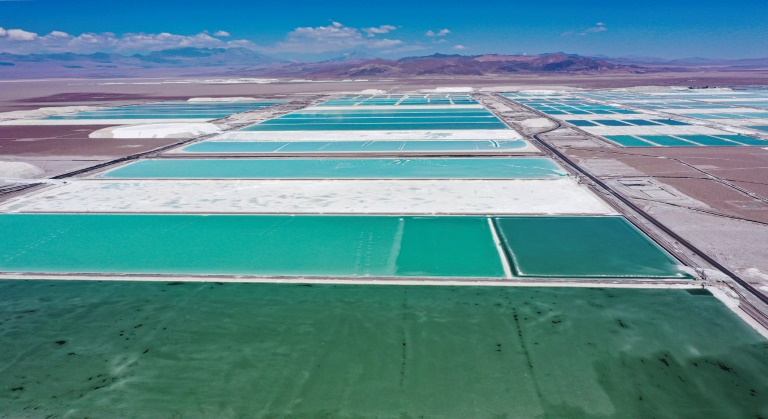
The turquoise glimmer of open-air pools contrasts sharply with the dazzling white of salt flats in Latin America’s “lithium triangle,” where hope resides for a better life fueled by a metal bonanza.

A key component of batteries used in electric cars, demand has exploded for lithium — the “white gold” found in Chile, Argentina and Bolivia in quantities larger than anywhere else in the world.

And as the world seeks to move away from fossil fuels, lithium production — and prices — have skyrocketed, as have the expectations of communities near lithium plants, many of whom live in poverty.

But there are growing concerns about the impact on groundwater sources in regions already prone to extended droughts, with recent evidence of tree and flamingo die-offs.

And there are scant signs to date of benefits trickling down.

“We don’t eat lithium, nor batteries. We do drink water,” said Veronica Chavez, 48, president of the Santuario de Tres Pozos Indigenous community near the town of Salinas Grandes in Argentina’s lithium heartland.

A poster that meets visitors to Salinas Grandes reads: “No to lithium, yes to water and life.”

Lithium extraction requires millions of liters of water per plant per day.

Unlike in Australia — the world’s top lithium producer that extracts the metal from rock — in South America it is derived from salars, or salt flats, where saltwater containing the metal is brought from underground briny lakes to the surface to evaporate.

– Soaring prices –

About 56 percent of the world’s 89 million tons of identified lithium resources are found in the South American triangle, according to the US Geological Survey (USGS).

The world average price rose from $5,700 per ton in November 2020 to $60,500 in September this year. 

Chile hosts the westernmost corner of the lithium triangle in its Atacama desert, which contributed 26 percent of global production in 2021, according to the USGS.

The country started lithium extraction in 1984 and has been a leader in the field partly because of low rainfall levels and high solar radiation that speeds up the evaporation process.

But Chilean law has made it difficult for companies to gain concessions from the government since the dictatorship of Augusto Pinochet declared the metal a “strategic resource” for its potential use in nuclear bombs.

Only two companies have permits to exploit the metal — Chile’s SQM and American Albemarle, which pay up to 40 percent of their sales in tax.

In the first quarter of this year, lithium’s contribution to the public coffers surpassed those of Chile’s mainstay metal, copper, for the first time, according to government records.

Yet, the environmental costs are starting to stack up, and locals fear there is worse to come.

This year, a study in the journal Proceedings of the Royal Society B found a link between lithium mining and a decline in two flamingo species in the Salar de Atacama.

“The development of technologies to slow climate change has been identified as a global imperative. Nonetheless, such ‘green’ technologies can potentially have negative impacts on biodiversity,” said the study.

In 2013, an inspection at the SQM site — which reported using nearly 400,000 liters of water per hour in 2022 — found that a third of carob trees in the area had died.

A later study pointed to water scarcity as a possible cause.

“We want to know, for sure, what has been the real impact of the extraction of groundwater,” said Claudia Perez, 49, a resident of the nearby San Pedro river valley.

She was not against lithium, said Perez, provided there are measures to “minimize the negative impact on people.”

– ‘Leave us alone’ – 

Across the Andes in Argentina, the salt lakes of Jujuy host the world’s second-largest lithium resources along with the neighboring provinces of Salta and Catamarca.

With few restrictions on extraction and a low tax of only 3.0 percent, Argentina has become the world’s fourth-biggest lithium producer from two mines.

With dozens of new projects in the works with the involvement of US, Chinese, French, South Korean and local companies, Argentina has said it hopes to exceed Chilean production by 2030.

But not everyone is sold on the idea.

“It is not, as they say, that they (lithium companies) are going to save the planet… Rather it is us who have to give our lives to save the planet,” said Chavez, of Santuario de Tres Pozos in Jujuy province.

A neighbor, 47-year-old street food seller Barbara Quipildor added fiercely: “I want them to leave us alone, in peace. I don’t want lithium… My concern is the future of my children’s children.”

– Will locals benefit? –

About 300 kilometers (190 miles) north of Jujuy, the salar of Uyuni in Bolivia holds more lithium than anywhere else — a quarter of global resources, according to the USGS.

Half of the residents in the region — which is also rich in silver and tin — live in poverty, household surveys show.

The country’s former leftist president Evo Morales nationalized hydrocarbons and other resources such as lithium towards the start of his 2006-2019 mandate and vowed Bolivia would set the metal’s global price.

In Rio Grande, a small town near the Yacimientos de Litio Bolivianos (YLB) lithium plant, Morales’ plans were met with excitement.

In 2014 Donny Ali, a lawyer now aged 34, opened a hotel with the expectation of an economic boom. 

He called it Lithium.

“We were expecting major industrial technological development and more than anything, better living conditions,” he told AFP. “It didn’t happen.”

Hoping to boost the struggling lithium sector, the government opened it up to private hands in 2018, though domestic legislation has not yet denationalized the resource, and no private extraction has yet begun. 

“Some think that Bolivia will ‘miss the boat’ of lithium,” said economist Juan Carlos Zuleta. “I don’t think that’s going to happen.”

The real question, he said, is: when the boat comes, “will lithium extraction benefit Bolivians?”

The three countries are now looking towards battery manufacturing — possibly even building electric cars — as a way to turn the natural lithium bounty into a modern-day industrial revolution.

“There is a concrete possibility for Latin America to become the next China,” said Zuleta.

In the meantime, the Hotel Lithium stands empty.

'We don't eat lithium': S. America longs for benefits of metal boon

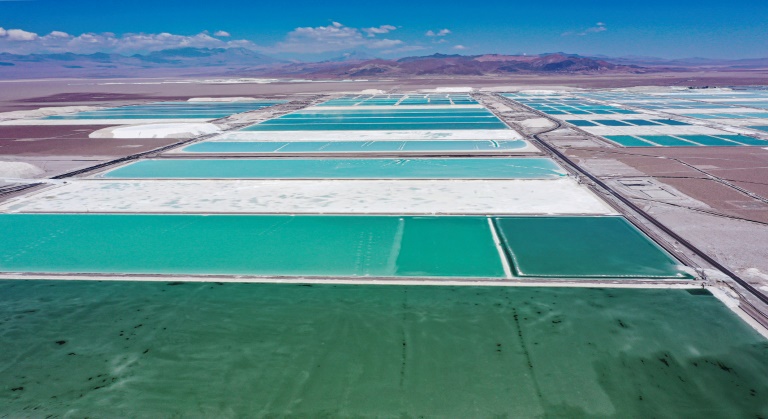
The turquoise glimmer of open-air pools contrasts sharply with the dazzling white of salt flats in Latin America’s “lithium triangle,” where hope resides for a better life fueled by a metal bonanza.

A key component of batteries used in electric cars, demand has exploded for lithium — the “white gold” found in Chile, Argentina and Bolivia in quantities larger than anywhere else in the world.

And as the world seeks to move away from fossil fuels, lithium production — and prices — have skyrocketed, as have the expectations of communities near lithium plants, many of whom live in poverty.

But there are growing concerns about the impact on groundwater sources in regions already prone to extended droughts, with recent evidence of tree and flamingo die-offs.

And there are scant signs to date of benefits trickling down.

“We don’t eat lithium, nor batteries. We do drink water,” said Veronica Chavez, 48, president of the Santuario de Tres Pozos Indigenous community near the town of Salinas Grandes in Argentina’s lithium heartland.

A poster that meets visitors to Salinas Grandes reads: “No to lithium, yes to water and life.”

Lithium extraction requires millions of liters of water per plant per day.

Unlike in Australia — the world’s top lithium producer that extracts the metal from rock — in South America it is derived from salars, or salt flats, where saltwater containing the metal is brought from underground briny lakes to the surface to evaporate.

– Soaring prices –

About 56 percent of the world’s 89 million tons of identified lithium resources are found in the South American triangle, according to the US Geological Survey (USGS).

The world average price rose from $5,700 per ton in November 2020 to $60,500 in September this year. 

Chile hosts the westernmost corner of the lithium triangle in its Atacama desert, which contributed 26 percent of global production in 2021, according to the USGS.

The country started lithium extraction in 1984 and has been a leader in the field partly because of low rainfall levels and high solar radiation that speeds up the evaporation process.

But Chilean law has made it difficult for companies to gain concessions from the government since the dictatorship of Augusto Pinochet declared the metal a “strategic resource” for its potential use in nuclear bombs.

Only two companies have permits to exploit the metal — Chile’s SQM and American Albemarle, which pay up to 40 percent of their sales in tax.

In the first quarter of this year, lithium’s contribution to the public coffers surpassed those of Chile’s mainstay metal, copper, for the first time, according to government records.

Yet, the environmental costs are starting to stack up, and locals fear there is worse to come.

This year, a study in the journal Proceedings of the Royal Society B found a link between lithium mining and a decline in two flamingo species in the Salar de Atacama.

“The development of technologies to slow climate change has been identified as a global imperative. Nonetheless, such ‘green’ technologies can potentially have negative impacts on biodiversity,” said the study.

In 2013, an inspection at the SQM site — which reported using nearly 400,000 liters of water per hour in 2022 — found that a third of carob trees in the area had died.

A later study pointed to water scarcity as a possible cause.

“We want to know, for sure, what has been the real impact of the extraction of groundwater,” said Claudia Perez, 49, a resident of the nearby San Pedro river valley.

She was not against lithium, said Perez, provided there are measures to “minimize the negative impact on people.”

– ‘Leave us alone’ – 

Across the Andes in Argentina, the salt lakes of Jujuy host the world’s second-largest lithium resources along with the neighboring provinces of Salta and Catamarca.

With few restrictions on extraction and a low tax of only 3.0 percent, Argentina has become the world’s fourth-biggest lithium producer from two mines.

With dozens of new projects in the works with the involvement of US, Chinese, French, South Korean and local companies, Argentina has said it hopes to exceed Chilean production by 2030.

But not everyone is sold on the idea.

“It is not, as they say, that they (lithium companies) are going to save the planet… Rather it is us who have to give our lives to save the planet,” said Chavez, of Santuario de Tres Pozos in Jujuy province.

A neighbor, 47-year-old street food seller Barbara Quipildor added fiercely: “I want them to leave us alone, in peace. I don’t want lithium… My concern is the future of my children’s children.”

– Will locals benefit? –

About 300 kilometers (190 miles) north of Jujuy, the salar of Uyuni in Bolivia holds more lithium than anywhere else — a quarter of global resources, according to the USGS.

Half of the residents in the region — which is also rich in silver and tin — live in poverty, household surveys show.

The country’s former leftist president Evo Morales nationalized hydrocarbons and other resources such as lithium towards the start of his 2006-2019 mandate and vowed Bolivia would set the metal’s global price.

In Rio Grande, a small town near the Yacimientos de Litio Bolivianos (YLB) lithium plant, Morales’ plans were met with excitement.

In 2014 Donny Ali, a lawyer now aged 34, opened a hotel with the expectation of an economic boom. 

He called it Lithium.

“We were expecting major industrial technological development and more than anything, better living conditions,” he told AFP. “It didn’t happen.”

Hoping to boost the struggling lithium sector, the government opened it up to private hands in 2018, though domestic legislation has not yet denationalized the resource, and no private extraction has yet begun. 

“Some think that Bolivia will ‘miss the boat’ of lithium,” said economist Juan Carlos Zuleta. “I don’t think that’s going to happen.”

The real question, he said, is: when the boat comes, “will lithium extraction benefit Bolivians?”

The three countries are now looking towards battery manufacturing — possibly even building electric cars — as a way to turn the natural lithium bounty into a modern-day industrial revolution.

“There is a concrete possibility for Latin America to become the next China,” said Zuleta.

In the meantime, the Hotel Lithium stands empty.
China's yuan hits 15-year low after Xi extends rule

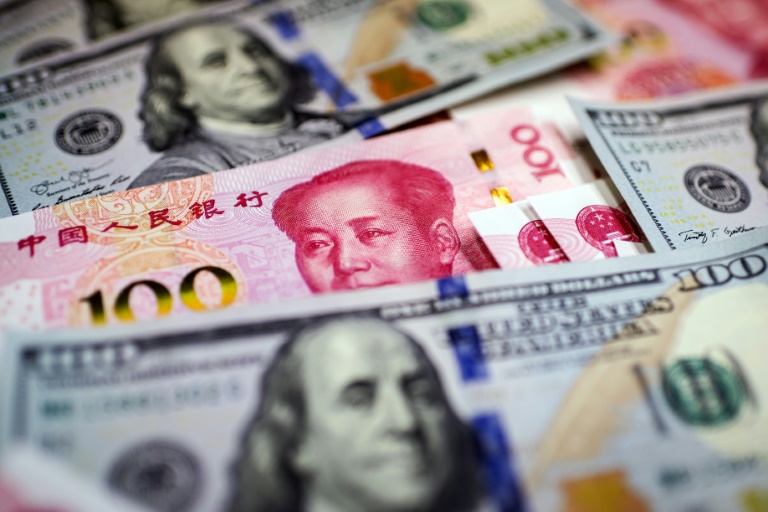
China’s yuan hit a 15-year low against the US dollar on Tuesday, with investors spooked after President Xi Jinping gained complete dominance over the Communist Party at a key meeting last week.

The onshore yuan fell as much as 0.6 percent to 7.3084 per dollar, its weakest level since December 2007 and close to the lower limit of the trading band set by the central bank on Tuesday.

The offshore yuan — which is circulated outside mainland China and is more freely traded than currency in the domestic market  — fell to 7.3735 against the dollar, the weakest since clearing banks in Hong Kong were given the go-ahead to open renminbi accounts freely in 2010.

China’s currency has taken a hit, along with other major currencies, as the Federal Reserve’s hawkish tone sends investors piling into the dollar.

The announcement over the weekend that Xi had secured a third term as party leader, stacking leadership positions with proteges and allies, raised fears among investors that Chinese authorities would continue zero-Covid lockdowns and other policies that have hammered the economy.

The yuan, along with Hong Kong-listed Chinese stocks plummeted on Monday, despite the announcement of better-than-expected growth in the third quarter the same day.

One of the most pressing concerns is Xi’s zero-Covid policy, which continues to put tens of millions of people under rolling lockdowns that also shutter factories. 

China is the last of the world’s major economies to hew to the strategy, with Xi insisting in his speech to mark the end of the Chinese Communist Party Congress on Saturday that the country’s Covid response has been a success.

China is also battling an unprecedented crisis in its real estate sector — which makes up more than a quarter of the country’s GDP when combined with construction. 

Following years of explosive growth fuelled by easy access to loans, Xi oversaw a crackdown on excessive debt.

Property sales are now falling across the country, leaving many developers struggling and some owners refusing to pay their mortgages for unfinished homes.

But Yuting Shao, a strategist at State Street Global Markets, told Bloomberg News “the market reaction is a little bit overblown”.

“You still have to wait for more policy detail plans in the future,” she said.

HSBC profits fall on French retail impairment charge

HSBC on Tuesday said pre-tax profit slipped more than 40 percent in the third quarter, with the bank citing an impairment on the planned disposal of its retail banking operations in France.

However results were better than analyst estimates and were boosted by rising interest rates making lending more profitable.

The Asia-focused giant said pre-tax profit fell by $2.3 billion to $3.1 billion on year while net profit dropped 46 percent to $1.91 billion.

In a statement to the Hong Kong stock exchange, HSBC said it was looking to offload its French retail arm “as part of our actions to simplify our operations” in Europe adding that it hoped the sale would go through in the second half of 2023.

While reclassifying the French division the bank “recognised an impairment of $2.4 billion”, which impacted the third-quarter figures. 

But adjusted pre-tax profit rose 18 percent to $6.5 billion, beating Bloomberg News analyst estimates.

The bank’s net interest income, which measures what it makes from lending minus interest paid on deposits and is a key measure of profitability, came in at $8.6 billion, its best third quarter in more than eight years.

International banks face a mixed bag. 

Rising interest rates make lending more profitable but at the same time much of the world is staring at a pronounced downturn. 

“Macroeconomic headwinds, including higher inflation and a weaker outlook, continue to weigh on the global economy,” HSBC said, adding it had set aside more provisions against bad loans and had expected credit losses of $1.1 billion for July-September.  

The bank specifically cited global uncertainty sparked by Russia’s invasion of Ukraine, the fall of the pound in Britain and the grim condition of China’s real estate sector.

– Hong Kong and China –

But chief executive Noel Quinn said the bank was focused on delivering a returns target of at least 12 percent for next year as well as keeping costs down.

“We retained a tight grip on costs, despite inflationary pressures, and remain on track to achieve our cost targets for 2022 and 2023,” he said in the earnings report.

HSBC is headquartered in London but makes the vast majority of its profits in Asia, especially China and Hong Kong.

The lender is under pressure from Ping An, which has a 9.2 percent stake, to spin off its Asian operations, in a bid to unlock shareholder value amid tensions between China and the west.

So far HSBC’s leadership have rejected those calls.

Senior executives from the bank are expected to be in Hong Kong next week for a bankers’ summit that is being hosted by the city, which only last month lifted mandatory quarantine for all international arrivals. 

Over the weekend Chinese leader Xi Jinping tightened his grip on power by securing a third five-year term in office, handing top jobs to a number of loyalists who back his strict zero-Covid strategy.

The policy of lockdowns and other strict measures has been a major cause of the country’s economic woes and the prospect of more upheaval has sent chills through trading floors.

HSBC has vowed to accelerate a multi-year pivot to Asia and the Middle East, with ambitions to lead Asia’s wealth management market.

The bank said it would invest $6 billion in Hong Kong, China and Singapore and hire more than 5,000 wealth advisers — while slashing 35,000 jobs and cutting less profitable operations in other markets including France and the United States.

In Tuesday’s earnings report HSBC said it was “exploring the potential sale” of its Canadian division.

Close Bitnami banner
Bitnami