World

China economy grows, but Xi's new power spooks investors

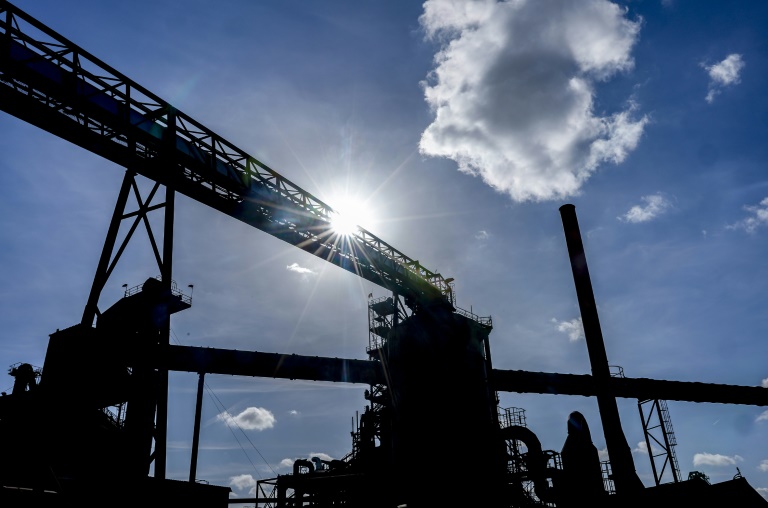
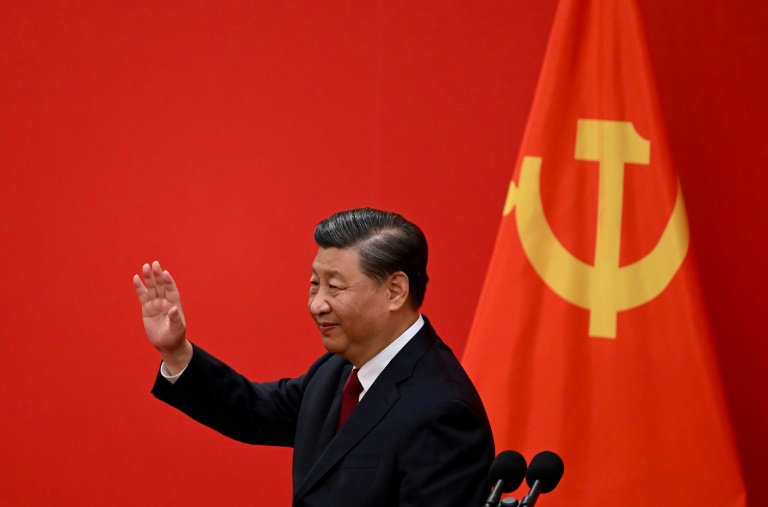
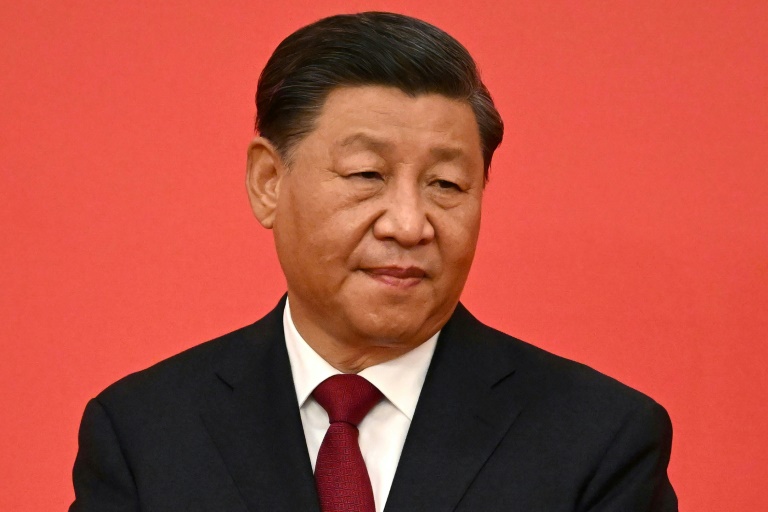
China’s economy grew at a faster pace than forecast in the third quarter, official data showed Monday, but investors reacted with alarm to President Xi Jinping’s sweeping new powers over the ruling Communist Party.

Xi secured an expected third term as leader at a party Congress over the weekend, but surprised observers by stacking leadership positions with proteges and allies. 

After delaying the release of economic data last week, the government announced Monday that the economy grew 3.9 percent year-on-year in the third quarter.

China had been expected to announce some of its weakest quarterly growth figures since 2020, with the world’s second-biggest economy hobbled by Covid-19 restrictions and a real estate crisis.

But investors instead focused on the political developments, which raised fears Xi and his allies would continue with gruelling virus lockdowns and other policies that have punished the economy.

China’s currency slumped and stocks nosedived in Hong Kong to their lowest level since the global financial crisis.

On Monday, the onshore yuan dipped more than 0.4 percent to 7.2633 per dollar — its weakest since January 2008.

The Hang Seng China Enterprises Index, a gauge of Chinese stocks listed in Hong Kong, closed down by more than 7 percent — the worst showing after any Communist Party Congress since the start of the index in 1994.

“The market is concerned that with so many Xi supporters elected, Xi’s unfettered ability to enact policies that are not market friendly is now cemented,” said Justin Tang, head of Asian research at United First Partners.

One of the most pressing concerns is Xi’s zero-Covid policy, which continues to put tens of millions of people under rolling lockdowns that also shutter factories. 

China is the last of the world’s major economies to hew to the strategy.  

“There is no clear sign of a significant easing of the zero-Covid strategy,” Nomura’s Ting Lu said, noting that, if anything, the opposite had happened. 

In a speech to close the Congress on Saturday, Xi insisted China’s Covid response has been a success. 

And he promoted Li Qiang, the architect of a two-month lockdown in Shanghai that crippled the financial hub’s economy, to the second most powerful post in the Communist Party.

Tech firms were among the worst hit by Monday’s sell-off, which comes after Xi’s crackdown on the sector scythed firms’ profits and wiped billions off their valuations.

E-commerce giants Alibaba and JD.com tanked more than 10 percent each, while Tencent lost more than eight percent. 

China is also battling an unprecedented crisis in its real estate sector — which makes up more than a quarter of the country’s GDP when combined with construction. 

Following years of explosive growth fuelled by easy access to loans, Xi oversaw a crackdown on excessive debt.

Property sales are now falling across the country, leaving many developers struggling and some owners refusing to pay their mortgages for unfinished homes.

Still, the economic data released on Monday gave some cause for optimism.

The third-quarter growth was higher than the 2.5 percent predicted by a panel of experts surveyed by AFP.

“Many economic indicators have actually recovered reasonably well from the mass lockdowns of March and April,” according to analyst Thomas Gatley of Gavekal Dragonomics.

Car sales held strong in September, driven by strong demand for electric clean vehicles.

August exports increased 7.1 percent compared with the previous year, and Beijing has invested in infrastructure to support activity.

In the second quarter of the year, growth had collapsed to 0.4 percent on-year, the worst performance since 2020. 

The country posted 4.8 percent growth in the first quarter of 2022.

Many economists continue to think China will struggle to attain its 2022 growth target of around 5.5 percent, and the International Monetary Fund has lowered its GDP growth forecast to 3.2 percent for 2022 and 4.4 percent for next year.

— Bloomberg News contributed to this story —
China economy grows, but Xi's new power spooks investors

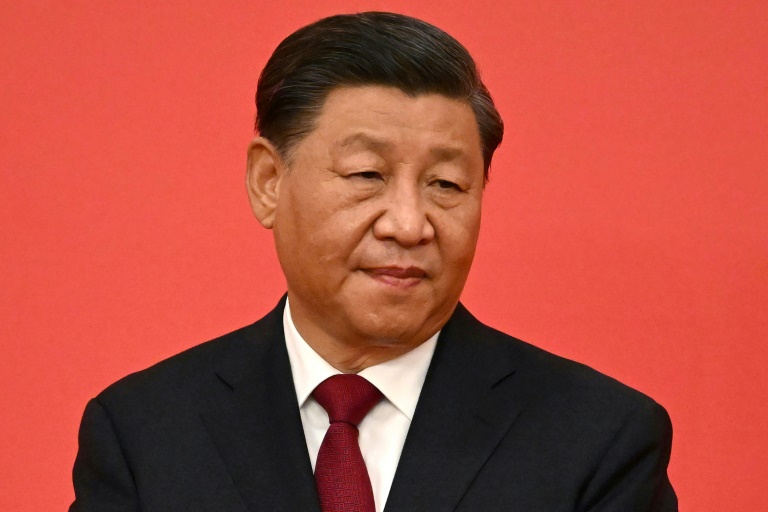
China’s economy grew at a faster pace than forecast in the third quarter, official data showed Monday, but investors reacted with alarm to President Xi Jinping’s sweeping new powers over the ruling Communist Party.

Xi secured an expected third term as leader at a party Congress over the weekend, but surprised observers by stacking leadership positions with proteges and allies. 

After delaying the release of economic data last week, the government announced Monday that the economy grew 3.9 percent year-on-year in the third quarter.

China had been expected to announce some of its weakest quarterly growth figures since 2020, with the world’s second-biggest economy hobbled by Covid-19 restrictions and a real estate crisis.

But investors instead focused on the political developments, which raised fears Xi and his allies would continue with gruelling virus lockdowns and other policies that have punished the economy.

China’s currency slumped and stocks nosedived in Hong Kong to their lowest level since the global financial crisis.

On Monday, the onshore yuan dipped more than 0.4 percent to 7.2633 per dollar — its weakest since January 2008.

The Hang Seng China Enterprises Index, a gauge of Chinese stocks listed in Hong Kong, closed down by more than 7 percent — the worst showing after any Communist Party Congress since the start of the index in 1994.

“The market is concerned that with so many Xi supporters elected, Xi’s unfettered ability to enact policies that are not market friendly is now cemented,” said Justin Tang, head of Asian research at United First Partners.

One of the most pressing concerns is Xi’s zero-Covid policy, which continues to put tens of millions of people under rolling lockdowns that also shutter factories. 

China is the last of the world’s major economies to hew to the strategy.  

“There is no clear sign of a significant easing of the zero-Covid strategy,” Nomura’s Ting Lu said, noting that, if anything, the opposite had happened. 

In a speech to close the Congress on Saturday, Xi insisted China’s Covid response has been a success. 

And he promoted Li Qiang, the architect of a two-month lockdown in Shanghai that crippled the financial hub’s economy, to the second most powerful post in the Communist Party.

Tech firms were among the worst hit by Monday’s sell-off, which comes after Xi’s crackdown on the sector scythed firms’ profits and wiped billions off their valuations.

E-commerce giants Alibaba and JD.com tanked more than 10 percent each, while Tencent lost more than eight percent. 

China is also battling an unprecedented crisis in its real estate sector — which makes up more than a quarter of the country’s GDP when combined with construction. 

Following years of explosive growth fuelled by easy access to loans, Xi oversaw a crackdown on excessive debt.

Property sales are now falling across the country, leaving many developers struggling and some owners refusing to pay their mortgages for unfinished homes.

Still, the economic data released on Monday gave some cause for optimism.

The third-quarter growth was higher than the 2.5 percent predicted by a panel of experts surveyed by AFP.

“Many economic indicators have actually recovered reasonably well from the mass lockdowns of March and April,” according to analyst Thomas Gatley of Gavekal Dragonomics.

Car sales held strong in September, driven by strong demand for electric clean vehicles.

August exports increased 7.1 percent compared with the previous year, and Beijing has invested in infrastructure to support activity.

In the second quarter of the year, growth had collapsed to 0.4 percent on-year, the worst performance since 2020. 

The country posted 4.8 percent growth in the first quarter of 2022.

Many economists continue to think China will struggle to attain its 2022 growth target of around 5.5 percent, and the International Monetary Fund has lowered its GDP growth forecast to 3.2 percent for 2022 and 4.4 percent for next year.

— Bloomberg News contributed to this story —
New PM inherits UK economy in crisis

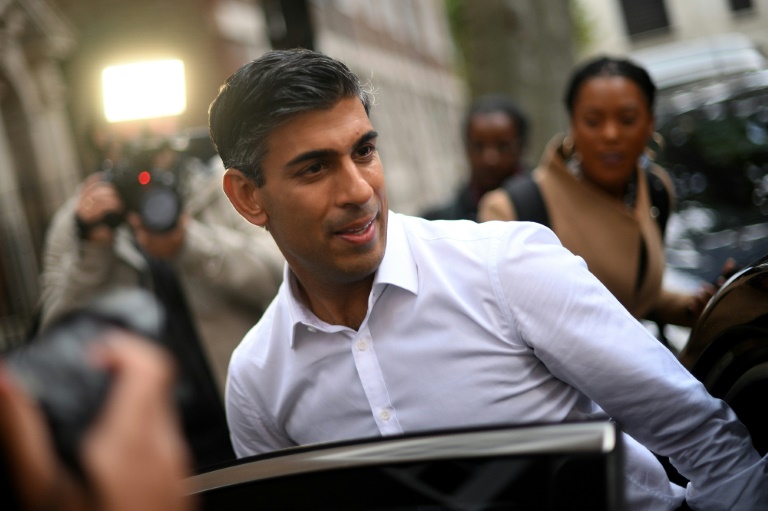
Britain’s new prime minister, set to be former finance minister Rishi Sunak, inherits a UK economy that was headed for recession even before the recent turmoil triggered by Liz Truss.

Outgoing Prime Minister Truss resigned after her budget of tax cuts funded by debt sent shockwaves through markets, crashing the pound.

That caused the government to U-turn on most of its budget, including scaling back a cap on soaring energy bills that have contributed heavily to a cost-of-living crisis for tens of millions of Britons.

Data Monday showed Britain’s economic downturn has worsened in October, with private-sector output at a 21-month low.

“October’s flash PMI data showed the pace of economic decline gathering momentum after the recent political and financial market upheavals,” noted Chris Williamson, chief business economist at S&P Global Market Intelligence that helped compile the figures.

“The heightened political and economic uncertainty has caused business activity to fall at a rate not seen since the global financial crisis in 2009 if pandemic lockdown months are excluded.”

Williamson added that upcoming data would likely show Britain already in recession.

The S&P Global/ CIPS flash UK composite purchasing managers index stood at 47.2 in October, below September’s level of 49.1.

A figure under 50 indicates a contraction.

The UK is not alone, however, with separate S&P data pointing to “impending recession” in Germany, Europe’s biggest economy.

– ‘Sunak stability’ –

Truss resigned last Thursday after just 44 days as prime minister. She had succeeded Boris Johnson on September 6 after a weeks-long campaign against Tory rival Sunak.

The former chancellor of the exchequer had warned in the battle to succeed Johnson that tax cuts promised by Truss when government debt had already soared on Covid interventions was the wrong policy to pursue.

He was proved right as the budget sent the pound crashing to a record-low close to parity with the dollar and triggered yields on government bonds to soar.

With Sunak seen as bringing stability to markets, sterling rose and yields fell Monday.

“Investors clearly hope Sunak will stabilise the economy and the political situation — though it’s hard to work out at this point which is the harder task,” said AJ Bell financial analyst Danni Hewson.

“As well as the recovery in sterling and the reduced cost of government borrowing (as yields drop), Sunak will be pleased to see European gas prices” falling.

However, with UK inflation at a 40-year high above 10 percent, the Bank of England is set to unveil another bumper interest-rate hike at a regular policy meeting next week.

This will heap further pressure on borrowers, including home owners who have seen mortgage rates surge in the wake of the government’s costly budget.

Aid slowly reaches Nigerian flood victims

Along a highway engulfed by dark waters, Nigeria residents load dozens of boats full of food to bring assistance to the victims of the country’s worst floods in a decade. 

Waiting by the waterside, past the many half-submerged trucks, Bolaji Phillips looks on next to his vehicle, which is filled with cassava flour, rice and noodles.

“My wife and I consulted and decided to withdraw our savings, the little we have, to do something for the people,” the 40-year-old said.

Aid is slowly coming to southern Nigeria after the biggest floods since 2012 killed more than 600 people and affected nearly three million others, according to official figures.

Many have fled their homes, including to overcrowded displacement camps. The others, completely cut off from the world, remain in communities swallowed by the waters.

Efforts now focus on passing the damaged and partly impassable highway linking Rivers and Bayelsa states — among the two most devastated regions.

Near the town of Ahoada, volunteers and NGOs are doing vital work until official aid slowly reaches the most destitute.

“The damage is enormous. The government has not done much so far. We are totally alone,” said Winner Written, a 32-year-old entrepreneur among those helping out. 

“We are just individuals trying to help one another.”

– “Suffering” –

Over the weekend, volunteers loaded precious fuel in yellow jerrycans onto the boats heading to flooded villages.

Rivers State authorities have allocated one billion naira ($2.3 million) to help victims, especially around Ahouda, one of the worst hit.

The United States said it has donated $1 million in humanitarian aid.

Rescue officials said they have started delivering 12,000 tonnes of food across the country after the aid was approved by President Muhammadu Buhari. 

But on the ground, few have seen the results of these efforts so far. 

Supplying food is almost impossible, hampered by strong currents or waters that are strewn with obstacles or choked with vegetation, and aid coordination is hindered by lack of mobile coverage in remote areas.

In a black tank top, Jeremy Ogboka, 35, lends a hand on a section of the half-flooded highway. 

“Right here, one of the speedboats capsized. Luckily, we saved them all,” he said. 

“We help as we can but nobody pays us. So many people are suffering. It’s been two weeks the road is blocked.”  

Using two speedboats the Nigerian navy in the area has provided security and transport for facilitating humanitarian aid.

A rescue mission headed this weekend to the remote areas ferrying members of National Emergency Management Agency (NEMA) and sailors to bring aid and evacuate those they could. 

– “Humanitarian crisis” –

Guided by young people who know the route to the ravaged communities, the motorboats sink into the heavy vegetation, struggling against the currents. 

After half an hour of laborious progress, the remains of a village appeared. No sign of life. 

Seated at the front of the vessel, the second lieutenant in charge kept his hand on his assault rifle. 

“This is a volatile region. Two months ago, we arrested many kidnappers, criminals and acquired many rifles,” he said. 

All around, almost everything is submerged. The roofs and the panel of a school protrude, the only signs of a semblance of life now submerged.

Boat engines bog in the leaves as the current tugs at the vessel, making it impossible to advance to a flooded village where some victims requiring medical care managed to call NEMA.

Eventually, the rescue mission is aborted.

In addition to aggravating food insecurity — farmland and crops were devastated — the deadly floods have caused an outbreak of cholera, according to the NGO International Rescue Committee (IRC). 

In 2012, particularly deadly floods ravaged Nigeria, but residents said this year’s disaster was becoming much worse. 

“Nothing has been done after to minimise the impact of the floods,” said Opuwill Ayitu, a 40-year-old volunteer. “A humanitarian crisis is looming.” 

Eurozone contracts further as Germany heads for recession

Germany, the EU’s top economy and Europe’s export powerhouse, looks headed for imminent recession, according to a closely watched survey Monday that pointed to a deepening eurozone contraction.

There are “growing signs of an impending recession in the eurozone’s largest economy,” S&P Global Market Intelligence said as it released its eurozone purchasing managers’ index for October.

The PMI for the 19-nation area fell to 47.1, down from 48.1 a month earlier — its fourth consecutive drop and that fastest decline in nearly two years — as soaring inflation and high energy prices bit deeper.

In Germany, the PMI dropped to 44.1, from 45.7 in September.

A reading below 50 signals an economic contraction.

The downward pressure on eurozone economic activity underlined the woes thrown up by Russia’s war in Ukraine, which has crimped energy supplies.

Germany’s reading was the lowest since initial business shutdowns in Germany when the Covid-19 pandemic hit.

Both manufacturing and services in Germany were showing accelerated rates of shrinkage, though that had yet to feed through into jobs-shedding, the survey showed.

German businesses were “deeply pessimistic” about the year-ahead outlook.

In France, the second-biggest economy in the EU, the economy was stagnating, with a PMI of 50 compared with 51.2 in September.

Although France is suffering less than other countries in Europe from inflation, rising prices are still putting pressure on consumers, leading to a severe fall in factory orders.

Across the eurozone, the PMI indicated that factory output had dropped for the fifth consecutive month, at a rate unseen since the worst of the pandemic.

Supply congestion and shortages had eased a bit, against a backdrop of flagging demand. While input demand had slumped, rising energy bills and wage pressure kept costs high.

A eurozone-wide recession “is looking increasingly inevitable,” S&P Global Market Intelligence chief business economist Chris Williamson said.

“The region’s energy crisis remains a major concern and a drag on activity, especially in energy intensive sectors.”

– ECB rate decision –

The PMI data came ahead of a Thursday meeting of the European Central Bank’s governing board that is expected to deliver a big interest rate cut in a bid to cool inflation.

Inflation in the 19-nation eurozone stood at nearly 10 percent in September, five times the ECB’s target of two percent.

The German economy, whose energy-hungry industries relied heavily on Russian gas before the war, is now forecast to shrink by 0.4 percent in 2023.

Higher interest rates typically mean putting a dampener on business activity, as credit becomes more expensive and consumer spending decreases.

The EU is struggling to find ways to mitigate energy prices. 

A summit last week agreed on a number of measures, but a key one, of capping wholesale gas prices, was kicked into future deliberations by Germany, which fears gas supplies being diverted to more lucrative markets in Asia.

Berlin has unholstered a massive 200-billion-euro ($197-billion) plan to shield German consumers from high energy prices, triggering unease among EU partners at its go-it-alone approach that risks distorting the single market.

At the summit German Chancellor Olaf Scholz reluctantly agreed to have the bloc look further at the price cap measure but only after an impact analysis.

The International Monetary Fund on Sunday said that downturns in parts of Europe could turn into “deeper recessions” across the continent.

Government support to tackle energy costs and inflation would “only partly” offset those strains, it said.

The IMF already predicted that Germany and Italy would slip into recession next year.

Philips to cut 4,000 jobs as recall losses deepen

Dutch medical device manufacturer Philips said Monday it will slash 4,000 jobs after a massive financial hit for a recall of faulty sleep respirators pushed it into loss.

The 1.3-billion-euro ($1.28 billion) write-down for the defective machines pushed the firm, which currently has nearly 80,000 employees worldwide, into a net loss of the same amount.

Philips is negotiating with US authorities over a final settlement on the faulty devices that put users with sleep apnea at risk of inhaling toxic foam, and faces a number of lawsuits.

“We do face multiple challenges,” said new chief executive Roy Jakobs, who only took over earlier this month, adding that the firm had to take “immediate steps” to cut costs.

“This includes the difficult but necessary decision to immediately reduce our workforce by around 4,000 roles globally… a decision we do not take lightly,” he said in a call with investors.

The job losses would mainly be in the United States, the Netherlands, India and China, he said.

Shares in Philips dropped 0.75 percent on the Amsterdam stock exchange in morning trading. 

The firm’s previous CEO Frans van Houten stepped down earlier this month after leading the company’s transition from a consumer electronics to medical device manufacturer over the past 12 years.

Dutchman Jakobs admitted that Amsterdam-based Philips had to “rebuild trust” and had not “lived up to… expectations” of its shareholders in recent years.

“These initial actions are needed to start turning the company around in order to realise Philips’ profitable growth potential and create value for all our stakeholders,” Jakobs said.

– ‘Class-action lawsuits’ –

Philips first announced a recall in June 2021 after sound-dampening foam on some of its sleep respirators was found to degrade under certain conditions.

The issue put users at risk of inhaling or swallowing pieces of debris with what the firm called “possible toxic and carcinogenic effects”.

It has since produced four million replacement devices and repair kits, it said.

But Philips now faces a US Department of Justice investigation and has been in negotiation with US authorities over a proposed financial settlement since July 2022. 

The firm said it also faces “several class-action lawsuits and individual personal injury claims”.

Philips had already set aside 900 million euros over the faulty respirators and had warned two weeks ago it would take the 1.3-billion-euro charge this quarter for the problem.

But it says it cannot give a final overall figure for the respirator issue “given the uncertain nature and timing of the relevant events.”

Philips expects to make another 300 million euros in charges in coming quarters as it proceeds with the restructuring, although it expects those measures will lead to savings of a similar amount.

The company posted a net profit of three billion euros in the third quarter last year, but that was boosted from the sale of its domestic appliances business.

Sales came in at 4.3 billion euros in the July-September period, a drop of five percent on a comparable basis from the same time last year due to supply chain problems.

This was partly because of “operational and supply challenges, inflationary pressures, the Covid situation in China and the Russia-Ukraine war”, the company said.

Philips currently employs nearly 80,000 people in 100 countries.

It started off as a lighting company more than 100 years ago but has undergone major changes in recent years, focusing in particular on remote healthcare.

Credit Suisse to pay 238 mn euros to settle French fraud probe

Credit Suisse has agreed to pay 238 million euros ($234 million) to avoid prosecution on French money laundering and tax fraud charges, according to a settlement approved Monday by a Paris court.

The settlement will see Switzerland’s second-largest bank pay a fine of 123 million euros and pay an additional 115 million euros in damages and interest to the French state.

Credit Suisse said it had reached the settlement “to resolve a legacy matter in relation to an investigation into historical cross-border private-banking services.”

It added that “the settlement does not comprise a recognition of criminal liability.”

French financial prosecutors opened a probe in 2016 and found that 5,000 French nationals had undeclared Credit Suisse accounts that were hiding two billion euros, according to the court.

The judge presiding over the settlement said that Credit Suisse bankers had prospected for clients in high-end French restaurants and hotels, avoiding the bank’s offices in the country.

Prosecutor Francois-Xavier Dulin said the settlement took into account “the systematic character, lengthy period and creation of tools to hide” its prospecting of French clients between 2005 and 2012.

He said Credit Suisse had created offshore entities to aid clients to avoid declaring certain assets to French authorities.

Prosecutors added the settlement also took into account the bank’s current cooperation and the corrective measures it undertook.

“The bank is pleased to resolve this matter, which marks another important step in the proactive resolution of litigation and legacy issues,” Credit Suisse said in its statement.

UK's Sunak poised to become PM as Johnson quits race

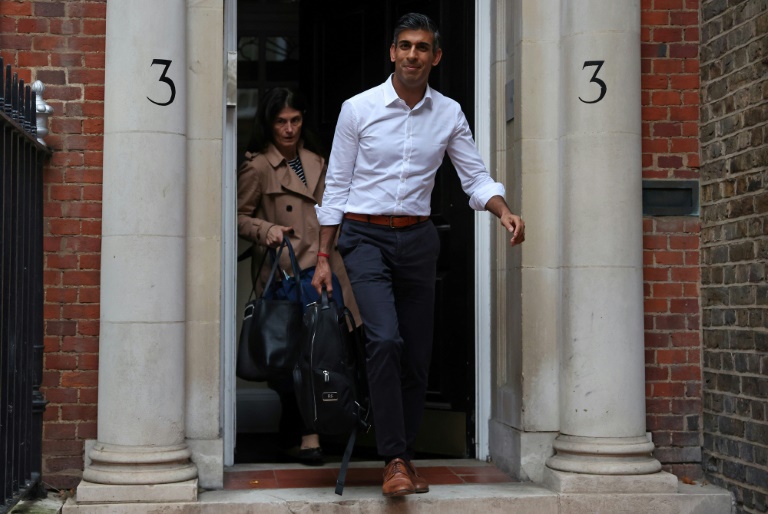
British Conservative Rishi Sunak was on Monday poised to become prime minister and the country’s first leader of colour, after a dramatic decision by Boris Johnson to abandon an audacious political comeback.

Just weeks after failing in a first attempt to lead the ruling Tories, Sunak could cap a stunning reversal in fortunes by winning the leadership as early as Monday afternoon, following ex-premier Johnson’s unexpected move late Sunday.

The contest, triggered by outgoing leader Liz Truss’s resignation on Thursday, requires candidates to secure the support of at least 100 Conservative MPs by 2:00 pm (1300 GMT) on Monday.

Sunak, a wealthy Hindu descendant of immigrants from India and East Africa, had crossed that threshold by Friday night, ahead of declaring his candidacy on Sunday and amassing nearly 150 public nominations from Tory lawmakers.

Johnson’s withdrawal from the race — before he had even formally announced his candidacy — left cabinet member Penny Mordaunt the only other declared contender.

But Sunak supporters were quick Monday to stress that the former finance minister was not assuming he had the leadership “in the bag”.

“He’s speaking to colleagues this morning, he’s working very hard to attract those supporters who were perhaps with Boris Johnson previously,” said interior minister Grant Shapps.

Mordaunt is expected to come under growing pressure to abandon her leadership bid and end the contest quickly as Britain grapples with multiple crises.

If the 49-year-old resists and is able to garner 100 nominations, the race will be decided by the party’s roughly 170,000 members in an online vote, with the result announced on Friday.

First, however, the Tories’ 357 MPs would hold an “indicative” ballot — from 3:30 pm to 5:30 pm on Monday — to show members which candidate commands the most support within the fractious parliamentary party.

Just two months ago, the members selected Truss over Sunak, who had more support among MPs. Mordaunt is popular with the grassroots.

– ‘Dire straits’ –

The Tories were forced into their second leadership contest since the summer due to Truss’s resignation after only 44 days following the disastrous market response to her tax-slashing mini-budget.

She had replaced Johnson in early September following another government revolt over a slew of scandals, most notably the “Partygate” controversy involving Covid lockdown-breaching parties.

Johnson’s attempt to make an immediate return to Downing Street had raised the prospect of months of disarray and disunity within the ruling Conservatives.

Critical backbench Tory MPs warned there could be a wave of resignations under Johnson’s renewed leadership, which might have led to the general election demanded by opposition parties. It is not due for at least two years.

The Brexit figurehead had cut short a Caribbean holiday to return to Britain on Saturday.

But in a sign of his diminished political standing, he abruptly conceded late Sunday, admitting “you can’t govern effectively unless you have a united party in parliament”. 

“I believe I have much to offer but I am afraid that this is simply not the right time,” Johnson said, while insisting he had secured the 100 nominations needed to progress in the current contest.

Sunak was quick to pay tribute to Johnson, tweeting: “I truly hope he continues to contribute to public life at home and abroad.”

Mordaunt added on Monday that Johnson had “put country before self”.

“He worked to secure the mandate and the majority we now enjoy. We should put it to good use,” she wrote.

– ‘Unifying’ –

Sunak and Johnson had held talks late into Saturday night, reports said — thought to be their first face-to-face since a political falling out erupted in the summer.

But hopes they would somehow form a unity ticket were swiftly dashed by Sunak announcing his candidacy 12 hours later.

The ex-leader also reportedly spoke on Sunday to Mordaunt, who was said to have rebuffed his calls to back him.

She appears intent on remaining in the now two-person race.

“Penny is the person best positioned to unify the party, she’s got support from all wings of the party,” said Conservative MP Damian Green on Monday.

The main Labour opposition, which has opened up huge poll leads after Truss’s government saw the Conservatives’ popularity plummet, is demanding a general election.

“Tory MPs are set to hand Rishi Sunak the keys to No 10 (the prime minister’s official residence) without him saying a single word about how he’d govern,” tweeted Angela Rayner, deputy leader of the main opposition Labour Party.

Under the UK electoral system, there is no requirement for a general election if the leader of the party in power changes. 

'Jealous lover': Fury at Putin near Ukraine front

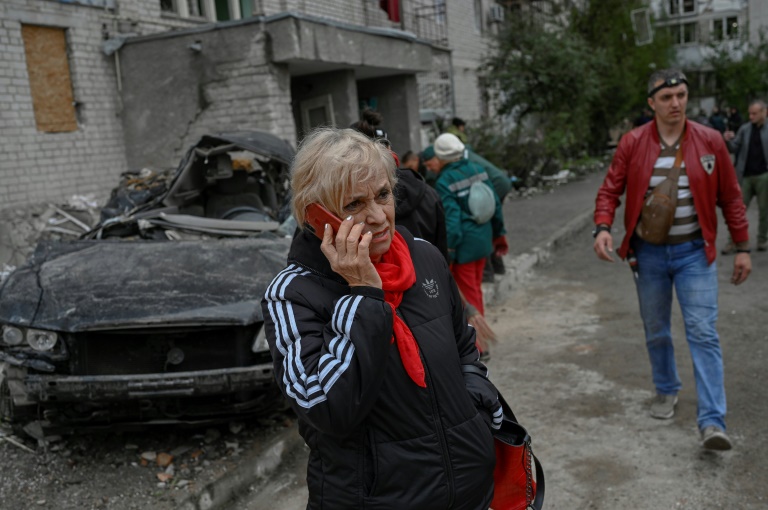
The cracked kitchen clock still showed the moment the first Russian missile vaporised the courtyard of a Soviet-era high-rise facing Ukraine’s southern front.

The second S-300 blew in a minute later at 1:44 am. Gennadiy Gerulo had already fallen out of bed by that point and realised that much of his old way of life was gone.

The pudgy engineer stared out his shattered kitchen window a few hours later and saw the strikes against his riverside port town of Mykolaiv as a sign that victory was nigh.

“He is like a jealous lover,” the 50-year-old said of Russian President Vladimir Putin.

“He is saying that if he can’t have Ukraine, no one can.”

Southern Ukrainian cities such as Mykolaiv will play a crucial role in the next stage of the gruelling war Putin began exactly eight months ago.

A blistering Ukrainian counteroffensive that forced the Russians out of lands they seized in the more industrial north has reached the agricultural south.

And cities such as Mykolaiv and Kryvyi Rig about three hours’ drive to the northeast provide Ukrainians with two staging grounds from which to launch their next attack.

– ‘Wounded animal’ –

The latest wave of missiles injured four people and redoubled Svetlana Tishevska’s conviction that Ukraine was on the right track.

Kremlin-installed leaders are already evacuating the nearby city of Kherson -– the only regional capital the Russians managed to control in the entire war.

A Ukrainian victory there would cut off the land bridge the Kremlin established from Russia to the Crimea peninsula it grabbed in 2014.

It would also give back important access to the Sea of Azov and leave Putin with little to show from a campaign that has turned him into an international pariah.

Tishevska expressed almost the exact same thoughts as Gerulo while clearing rubble from her stairwell a few floors further down.

“He is like a wounded animal,” she said of Putin.

“He is destroying himself and wants to take down others with him.”

The supporting wall of Tishevska’s apartment tower had cracked and the facade of a smaller building on the opposite side of the courtyard had partially collapsed.

Few residents expected to live in either building again.

“I understand that victory is drawing near,” the 50-year-old said amid the devastation.

– Trail of destruction –

The trail of destruction created by Putin’s retreating forces is engendering hostility toward Moscow in places where many prefer to speak Russian and have family on the opposite side of the frontier.

Russian-speaking Gerulo said he felt “nothing but hatred, pure hatred for these people who call themselves our brothers”.

The overwhelming majority of the attacks strike Mykolaiv and surrounding cities after midnight or when people wake and head out for the first time.

The timing puzzles many. Some think Russia may be trying to demoralise Ukrainians by depriving them of sleep.

“The Russians want to wear us down and spark civil unrest. They want us to force our government to give up,” Gerulo said.

“They know no other way.”

Mykolaiv became Putin’s target in the first weeks of the invasion.

The Russians were making sweeping gains and taking aim at the neighbouring Black Sea port of Odessa — a cultural capital that Putin mentioned when he first went to war.

Mykolaiv is suffering for a second time as Putin’s troops beat their retreat.

– Bravado and fear –

Academic and part-time charity worker Lyudmila Falko sounded almost cheerful as she searched the remains of her daughter’s ruined flat.

“These suicide drones and missiles, these are his last acts,” the slight 60-year-old said with a firm nod.

“Children are dying, old people are dying because he is in the throes of agony.”

But this bravado — both passionate and clearly shared by many — is tinged with a nagging fear that bubbles up without warning in the middle of conversations.

“I have been afraid from the very first day of war,” Gerulo said while still staring out his kitchen window.

“To be honest, I still do not fully grasp what is going on.”

Most markets up on rate hopes but China fear casts shadow

Most markets rose Monday on hopes the Federal Reserve would soon slow its pace of interest rate hikes, though the mood was darkened by worries over the China outlook after President Xi Jinping tightened his grip on power.

The yen weakened against the dollar after a short rally as speculation swirled that Japanese authorities had stepped into forex markets again to support their currency for a second time in as many sessions.

Tokyo, Sydney, Seoul and Taipei led gains after a strong performance in New York that was sparked by a report the Fed could begin to take its foot off the pedal in its rate hike campaign.

The Wall Street Journal said some officials were keen to discuss a slowdown when they meet next month.

Markets have been hammered this year by fears that moves by the Fed and other central banks to fight decades-high inflation will spark a recession.

Officials had been expected to lift rates 75 basis points for a fourth successive time next month, while bets were increasing on another such move in December.

“The mere suggestion of the Fed stepping down from 75 basis points to a 50 basis point incremental rate hike in December produced a fierce rally in US equities, partial reversal of the recent surge in US Treasury yields and smart about-turn in the US dollar,” said National Australia Bank’s Ray Attrill.

But while most equity markets across the region were well up, Chinese markets were hammered by the reshuffle at the top of government. Hong Kong fell more than six percent and Shanghai was two percent down.

– Zero-Covid worries –

Xi, who was at the weekend given a third five-year term as leader, handed key positions to loyalists who back his strategy of fighting Covid outbreaks with lockdowns and other strict measures.

The policy has been blamed for the sharp drop in growth in the world’s number two economy, and while data showed Monday that it expanded more than forecast in the third quarter, traders remain on edge.

In a speech to close the Congress on Saturday, Xi insisted his zero-Covid policy had been a success.

And he promoted Li Qiang, the architect of a two-month lockdown in Shanghai that crippled the financial hub’s economy, to the second most powerful post in the Communist Party.

“The market is concerned that with so many Xi supporters elected, Xi’s unfettered ability to enact policies that are not market friendly is now cemented,” Justin Tang of United First Partners said.

Tech firms were among the worst hit in the Hong Kong selloff, hammered in recent years by Xi’s crackdown on the sector that has scythed firms’ profits and wiped billions off their valuations.

E-commerce giants Alibaba and JD.com each saw double-digit losses, as did Tencent. The Hang Seng tech index was close to 10 percent down.

The onshore yuan dipped as much as 0.4 percent to 7.2552 to the dollar — its weakest since January 2008.

Investor worries about China also weighed on oil markets with both main contracts in retreat as the prospect of more possible lockdowns hitting demand expectations.

On currency markets, the yen was hovering just above 149 to the dollar, having strengthened to 145.65 earlier amid talk that authorities had intervened to support the unit.

Observers said officials likely stepped in on Friday after the dollar soared to a fresh 32-year high of 151.93 yen. That came after warnings from the finance ministry that it was keeping tabs on movements, and follows a similar move last month.

“Whilst the (finance ministry) has since declined to comment on whether they intervened, such action has not come without multiple warnings from officials,” said Matt Simpson at City Index.

“The MoF last week said they will deal with speculators ‘severely’ and the strong price reaction on Friday suggests they did just that.

“Price action has also been erratic in Monday’s Asian session, which points to another probable intervention.”

The pound rose after former UK prime minister Boris Johnson said he would not stand for the Conservative leadership again, after the resignation of Liz Truss last week.

His decision leaves his former finance minister Rishi Sunak the favourite to take the reins and become the country’s third premier this year.

The choice of the less-controversial Sunak could provide a little stability in Westminster after weeks of turmoil sparked by Truss’s debt-fuelled mini-budget that hammered the pound and sent shivers through markets.

London slipped in the morning, though Paris and Frankfurt rose even as data showed further weakness in the eurozone economy.

– Key figures around 0810 GMT –

Tokyo – Nikkei 225: UP 0.3 percent at 26,974.90 (close)

Hong Kong – Hang Seng Index: DOWN 6.4 percent at 15,180.69 (close)

Shanghai – Composite: DOWN 2.0 percent at 2,977.56 (close)

London – FTSE 100: DOWN 0.3 percent at 6,946.36

Pound/dollar: UP at $1.1330 from $1.1258 on Friday

Dollar/yen: UP at 149.15 yen from 147.65 yen

Euro/dollar: DOWN at $0.9841 from $0.9863

Euro/pound: DOWN at 86.88 pence from 87.26 pence

West Texas Intermediate: DOWN 1.5 percent at $83.81 per barrel

Brent North Sea crude: DOWN 1.3 percent at $92.27 per barrel

New York – Dow: UP 2.5 percent at 31,082.56 (close)

Close Bitnami banner
Bitnami