World

What to expect from Xi's next five years in power

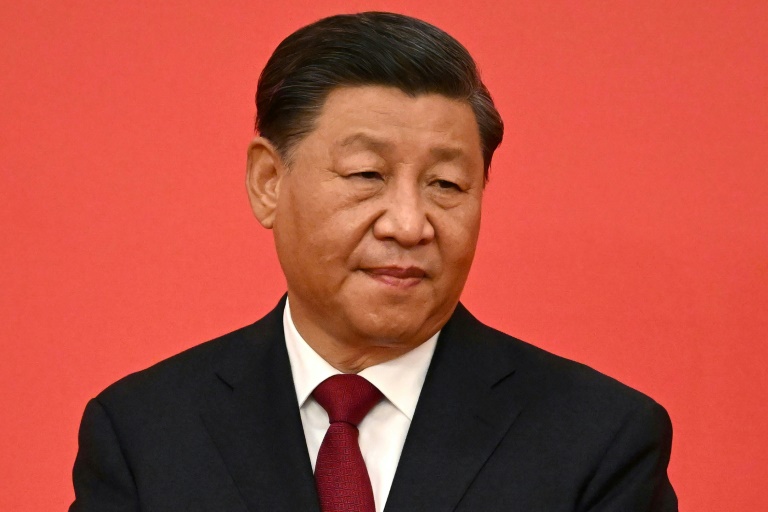
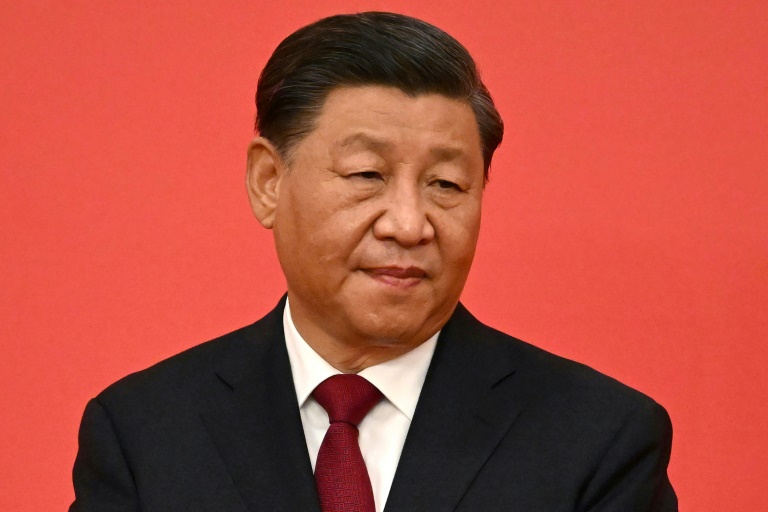
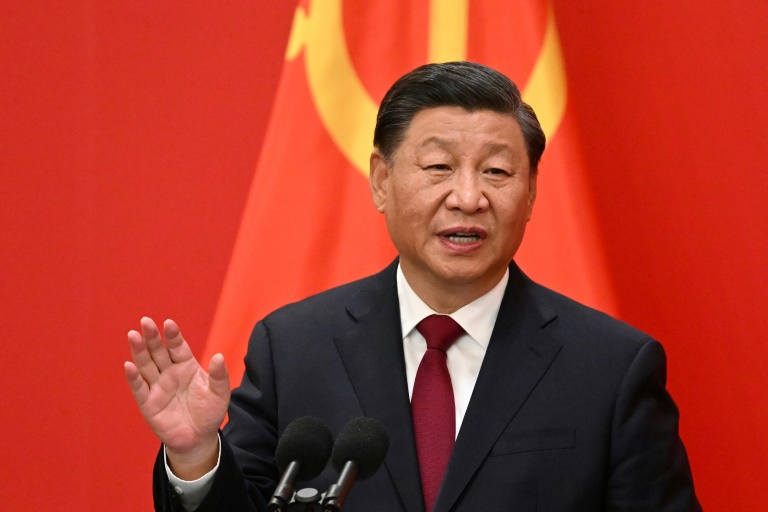
Chinese leader Xi Jinping has emerged from a five-year congress with even more power over the ruling Communist Party. AFP examines how Xi is expected to handle the key issues facing the country.

– Slowing economy –

China’s slowing economy will likely dominate Xi’s next five years in power but his decision to pack the Communist Party’s top leadership with loyalists has stoked concerns about him prioritising ideology at the expense of growth.

After decades of high growth, China’s economy is running out of steam, with analysts widely expecting the country will struggle to attain its 2022 growth target of around 5.5 percent.

And Xi’s move suggests the days of liberal reformers steering the world’s second largest economy have come to an end.

While past decades saw China’s private sector grow rich on easy credit and hefty profits, Xi’s next term may see Beijing revert to more old-school economic management, with a fresh focus on shoring up heavy industry and a continuation of a crackdown on big tech. 

Xi has thrown his weight behind the development of a more consumption-driven economy — a policy known as “dual circulation” — and has sought to address China’s yawning wealth gap under the banner of “common prosperity”. 

With the United States promising to prioritise maintaining “an enduring competitive edge” against China as the two superpowers battle for dominance over technology, Beijing may find itself under growing pressure internationally as growth slows at home.

– Tensions over Taiwan –

After years of ratcheting up tensions with Taiwan, an increasingly emboldened Xi could decide the time is right to fulfil Beijing’s longstanding ambition of retaking the self-ruled democratic island.

US officials have argued that the world is closer than ever to seeing a conflict over the island — and that China could invade as soon as this year.

China has made a “fundamental decision that the status quo was no longer acceptable, and that Beijing was determined to pursue reunification on a much faster timeline,” US Secretary of State Antony Blinken said this month.

Beijing insists its policy towards Taiwan has not changed, but the rhetoric and actions towards the island have become more pronounced.

The Communist Party for the first time enshrined its opposition to Taiwanese independence in its constitution at its just-ended congress which handed Xi a third term in power.

But any move to invade Taiwan would wreak havoc with global supply chains — the island is a major supply of semiconductors, an essential component of nearly all modern electronics, from smartphones to kitchen appliances and cars.

It would also provoke outrage from the West, deepening China’s isolation, bring Beijing and Washington closer than ever to direct military confrontation, and snuff out Taiwan’s hard-earned democratic freedoms.

– Zero Covid –

Xi will also need to decide the future of China’s strict zero-Covid policy — and whether the country is now ready to open up to the outside world after two years of closed borders and strict quarantines.

The policy is dragging on the economy, with officials this week blaming the epidemic for rising unemployment.

“Consumption is unlikely to recover to pre-Covid level with the current scale of Covid control,” said Dan Wang, chief economist at Hang Seng Bank China.

And with Covid rules in China’s semi-autonomous territory of Hong Kong slowly being relaxed in a bid to attract more international capital, Xi could decide the economic costs outweigh the benefits of keeping controls tight.

But the Chinese leader’s speech to the party faithful last week gave no sign that the rigid policy — which has forced millions into lockdowns over just handfuls of cases as the rest of the world learns to live with the virus — would relent anytime soon. 

And with the success of the zero-Covid policy so entwined with Xi’s legitimacy, it appears unlikely that a relaxation will take place anytime soon — no matter the cost to the economy. 

– Human rights –

China under Xi has seen the almost-total eradication of civil society, with scores of activists having fled the country and opposition to the government all but snuffed out. 

And in the far-western region of Xinjiang, rights groups say more than a million Uyghurs and other Muslim minorities are detained in what the United States and lawmakers in Western countries have said amounts to genocide.

The situation looks unlikely to improve under the next five years as Xi’s power grows increasingly impossible to challenge and the leadership digs in its heels against international pressure.

Xi’s next term will likely see him “continue his profound assault on human rights across the country and around the globe,” Sophie Richardson at Human Rights Watch wrote. 
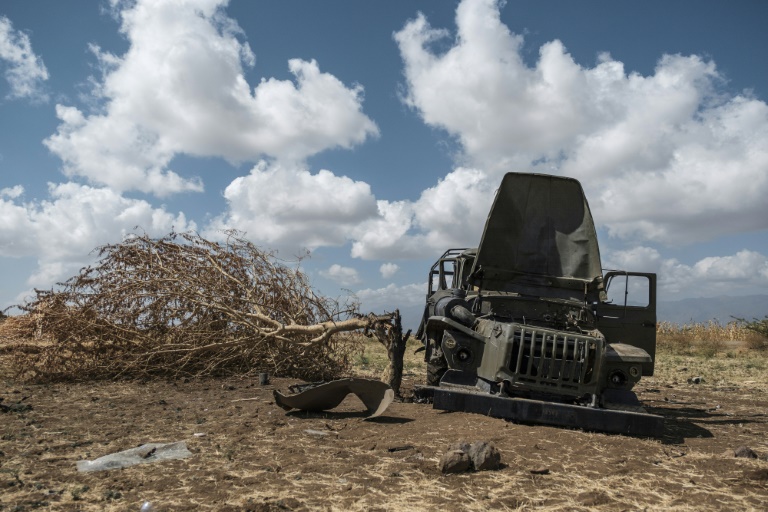
Ethiopia rivals gear up for South Africa peace talks

Negotiators from the Ethiopian government and Tigrayan rebel authorities were readying Monday for peace talks in South Africa aimed at finding a peaceful solution to the country’s brutal two-year war.

The African Union-led negotiations have been flagged to start on Monday, after a surge in fighting in the north of Ethiopia in recent weeks that has triggered alarm in the international community.

Kindeya Gebrehiwot, a spokesman for the rebel authorities in Tigray, announced their delegation’s arrival in South Africa in a statement on Twitter late Sunday.  

“Pressing: immediate cessation of hostilities, unfettered humanitarian access & withdrawal of Eritrean forces. There can’t be a military solution!” he added.

Addis Ababa said in a statement its delegation had left for South Africa on Monday morning, adding: “The government of Ethiopia views the talks as an opportunity to peacefully resolve the conflict.”

But it also announced that its forces “have continued taking control of major urban centres in the past few days”, without identifying them.

Fighting resumed in August, shattering a five-month truce, and has seen the return of the Eritrean army to the battlefield in support of Ethiopian forces and their regional allies.

Last week, the government vowed to take control of airports and other federal sites in Tigray from the rebels as Ethiopian and Eritrean troops seized towns in the war-torn region, sending civilians fleeing.

Diplomatic pressure has been mounting for an end to the conflict in Africa’s second most populous country that has left millions in need of humanitarian aid, and according to the United States, as many as half a million dead.

– ‘Peace will prevail’ –

Abiy, who sent troops into Tigray in November 2020 promising a quick victory over the northern region’s dissident leaders, had said last week the war “would end and peace will prevail”.

“Ethiopia will be peaceful, we will not continue fighting indefinitely,” the Nobel Peace Prize winner said Thursday.

“I hope the day when we will stand with our Tigrayan brothers to work together for development is near.”

International calls for a ceasefire and a withdrawal of Eritrean troops have grown since the AU failed earlier this month to bring the warring sides to the negotiating table.

The return to the battlefield in August halted desperately-needed aid into Tigray, a region of six million that lacks food, medicine and other life-saving essentials as well as basic services.

Tigray has been under a communications blackout for over a year, and independent reporting from the region has been heavily curtailed.

– Risk of ‘further mass atrocities’ – 

The UN Security Council held a closed-door meeting on Friday to discuss the spiralling conflict and growing fears for civilians caught in the crossfire.

The US envoy to the United Nations, Linda Thomas-Greenfield, said after the talks that thousands of Ethiopian, Eritrean and Tigrayan forces were engaged in active combat. 

“The scale of the fighting and deaths rival what we’re seeing in Ukraine, and innocent civilians are being caught in the crossfire,” she said. 

“Over two years of conflict, as many as half a million — half a million -– people have died, and the United States is deeply concerned about the potential for further mass atrocities.” 

The AU’s Peace and Security Council, its foremost conflict resolution body, also met for the first time Friday since the fighting resumed in August.

In a statement, the 15-member council welcomed “the mutual commitments to genuinely participate in the peace process” and hoped for a “fruitful outcome”.

The AU’s mediation team for the talks was to include Horn of Africa envoy Olusegun Obasanjo, South Africa’s former deputy president Phumzile Mlambo-Ngcuka and former Kenyan president Uhuru Kenyatta.

The conflict began two years ago when Abiy sent troops into Tigray, accusing the Tigray People’s Liberation Front (TPLF), the region’s ruling party which resisted central authority, of attacking army camps.

The TPLF dominated Ethiopia’s ruling political alliance for decades before Abiy took power in 2018 and sidelined the party.

Heat, then floods ruin Pakistani farmers' livelihoods

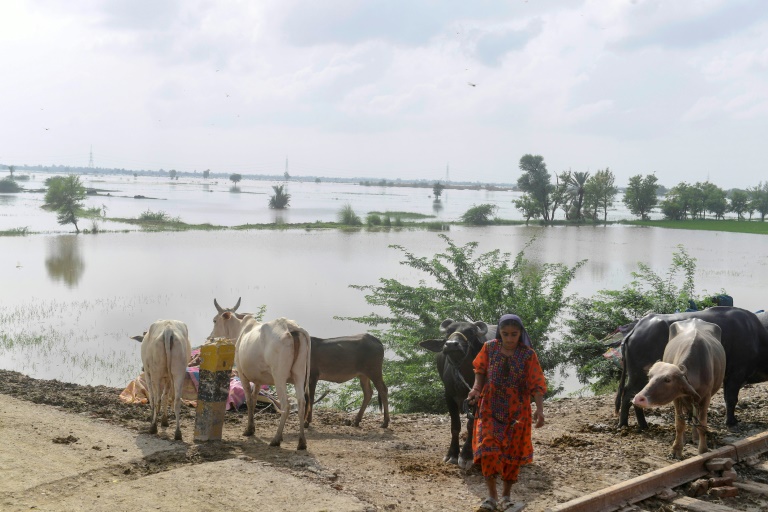
Generations of Rahim Buksh’s ancestors have laboured in the rice paddies and wheat fields surrounding Pakistan’s hottest city, no strangers to intense summers or monsoon rains.

But this year Jacobabad lurched from record heatwaves in May to an unprecedented deluge of rain in August that drowned crops.

The floods forced tens of thousands of people to flee for makeshift camps and relatives’ homes, leaving them doubting the future of farm work despite their deep connection to the land.

“We would move to the cities and take up manual labour work if somebody helped us to get out of here,” said Buksh, whose mud-brick home was flooded, like much of the surrounding farmland.

Even before the destruction, Jacobabad and dozens of nearby villages were crippled by poor infrastructure.

Most of the district’s million-plus population are itinerant farm workers, earning a daily wage tending crops for major landowners.

Poverty, debt and the unequal distribution of land have made their livelihoods precarious, but the rise of extreme weather events linked to climate change has deepened the insecurity.

This year’s crops were first scorched by temperatures that reached 51 degrees Celsius (124 Fahrenheit) in May, only to be drenched by monsoon rains that affected a third of the country –- a scale never seen in Pakistan.

We have to live with it all,” said 25-year-old Zamira, who fled with her husband and children to a makeshift camp. “It will be months before we can work again. We’re abandoned.”

The agriculture sector is by far the biggest employer in Pakistan, accounting for more than 40 percent of the labour force, the majority being women.

Community NGO worker Jan Odhano, who has provided emergency relief to victims of both the heatwave and floods, said the “double disasters” left farm workers desperate for a way out.

“They think can get work in the big cities more easily. Men can work in the factories,” he told AFP, adding that a wider range of work opportunities are also available to women.

– ‘No work left’ –

Many of the flood-displaced in southern Sindh province have sought shelter in urban centres, including tens of thousands recorded at relief camps and many more in the homes of relatives or rental properties.

With homes and livelihoods washed away, some are expected to abandon their rural lives, heaping pressure on already-swelling cities grappling with a long-term “major crisis of urban governance”, according to Nausheen H. Anwar, a professor of urban planning in Karachi.

“We are not prepared for what’s going to happen,” she said of migration due to climate change. “These flows are going to be inevitable.”

Muhammad Hanif, 20, has had enough after seeing his livestock perish and crops wrecked.

“It is unliveable here. There is no work left. We will have to go to Karachi.”

The standard of living in the southern megacity of more than 25 million is little better for impoverished arrivals.

Pakistan’s economic capital suffers from poorly maintained roads, crippled drainage and sewerage systems, water distribution in the grip of mafias, electricity shortages, and inadequate housing.

Migrants often live in shanty towns working as street vendors or daily wage labourers.

“We really need to put more focus on cities and their governance systems,” Anwar said. “Rural is important, but so is the urban, and they’re both interlinked.” 

Between six and nine million Pakistanis are set to be dragged into poverty as a result of this year’s cataclysmic monsoon flooding that has sent food prices soaring and is estimated to cost at least $30 billion in loss and damage, according to government estimates

Even before the deluge, Pakistan’s economy was struggling, with soaring inflation, a plunging rupee, and dwindling foreign exchange reserves.

Calls are growing from the government and activists for richer and more industrialised nations with larger carbon footprints to offer debt relief to Pakistan as a form of climate justice.

Demands for the largest emitters to take financial responsibility for the climate chaos impacting poorer nations is expected to dominate a UN summit next month. 

– Where to start? –

Pakistan, the world’s fifth most populous country, is on the frontline of climate change, despite being responsible for just 0.8 percent of global emissions.

Studies have found climate change has intensified the heatwaves –- making them hotter, earlier, and more frequent.

This year intense temperatures wiped out three million tons of wheat crops, led to livestock deaths, caused forest fires and impacted human productivity.

The monsoon was also far heavier than usual, destroying 9.4 million acres of crops and orchards.

“The climate change ministry should be as important as the foreign ministry or finance ministry,” climate scientist Fahad Saeed said.

As well as emergency relief, the country needs technical support, investment in green energy and early warning systems to prepare for the next cycle of extreme weather events.

In places like Jacobabad, faced with a multitude of climate disasters, it’s “very difficult to decide where to start from,” he said.

Addressing climate inequality and boosting resilience means a bottom-up approach that involves farmers and the poor in policymaking, Saeed added.

During the heatwaves in Jacobabad, 10-year-old Noor Muhammad endured searing temperatures to attend school, watching as friends fainted in classrooms with no electricity or cold water.

Just months later, he and his family sought shelter in the same building –- repurposed to help flood victims.

“We’re helpless,” he told AFP.

“I only want to complete my exams so I can become a police officer.”

French girl, 12, laid to rest after 'evil' murder

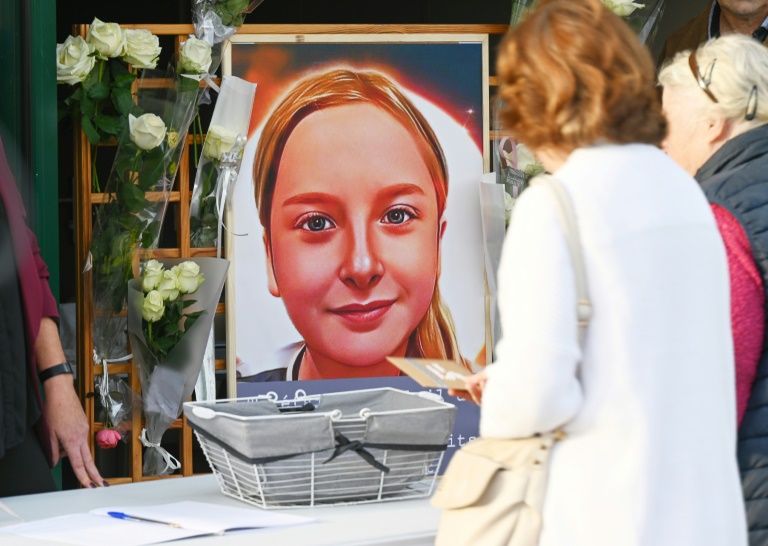
A 12-year-old girl whose murder shocked France and also sparked a bitter political controversy was to be laid to rest on Monday, with an Algerian woman already targeted by an expulsion order charged with the killing.

The murder and brutal assault of the girl known as Lola was branded as “evil” by President Emmanuel Macron after her body was found earlier this month stuffed into in a trunk in Paris.

But it also prompted right-wing and far-right critics to accuse his government of not doing enough to prevent illegal migration, with ministers hitting back that such rebukes were inappropriate at this time.

The family of Lola have urged that squabbles be set aside and the young girl be laid to rest in “respect and dignity” when her funeral takes place later Monday in the town of Lillers, in her home region in northern France.

The funeral mass is open to the public but the family wants the burial in the cemetery to be strictly private. Interior Minister Gerald Darmanin, a close ally of Macron, is taking part.

“I want that Lola’s parents have the possibility to live,” said the bishop of Arras Olivier Leborgne who will lead the ceremony. “I hope that people are very sober, discreet and very respectful,” he told France 3 TV.

Just 500 people can attend inside the church but, given the expected presence of thousands of people, loudspeakers will be set up to allow them to follow the ceremony outside.

– ‘Extreme evil’ –

Macron had on Friday spoken of the “atrociousness of the crime” which he described as an act of “extreme evil”.

He praised the “dignified” behaviour of her family who he said deserved “first and foremost the respect and affection of the nation.”

But the profile of the suspect, a woman named only as Dahbia B., an Algerian who was the subject of an expulsion order, has prompted stinging criticism from the right and one of the most bitter political debates since Macron’s re-election in May.

She had overstayed a student visa and had failed to comply with a notice issued in August to leave France within 30 days.

On Monday, the 24-year-old was charged with the rape and murder of a minor aged under 15 along with torture and abuse.

The woman has confessed she had then “committed harm of a sexual nature and other violent acts against (Lola) that caused her death, and hid her body in the trunk,” prosecutors said.

According to the autopsy, the young girl died due to “cardio-respiratory failure with signs of asphyxia and cervical compression”.

The investigation will now focus on whether the suspect was suffering from a psychiatric disorder at the time of the killing and can face criminal responsiblity for the murder.

– ‘Honour the memory’ –

Eric Ciotti, MP from the right-wing Republicans (LR) party, denounced a “criminal migratory laxism” while extreme-right figure and candidate in the May polls Eric Zemmour even used the term “francocide” to describe the killing.

The far-right National Rally (RN) observed a minute of silence in parliament with the head of its MPs Marine Le Pen insisting on the need for “answers” from the government.

Her parents, who met with Macron last week, on Friday pleaded with politicians to stop exploiting their daughter’s murder, after her photo was displayed at a far-right demonstration in Paris the day before.

In a statement sent to AFP on Friday, they called for an immediate end to “any use of the name and image of their child for political ends” so they could “honour the memory of their child in peace, respect and dignity”.

Police also opened an investigation after one of their officers, gave graphic details of the case in an interview with the television station BFMTV. The interview, filmed so as to conceal his identity, was broadcast Friday.

eva-cs-sba-sjw/jmm

HRW reports LGBTQ jail beatings before Qatar World Cup

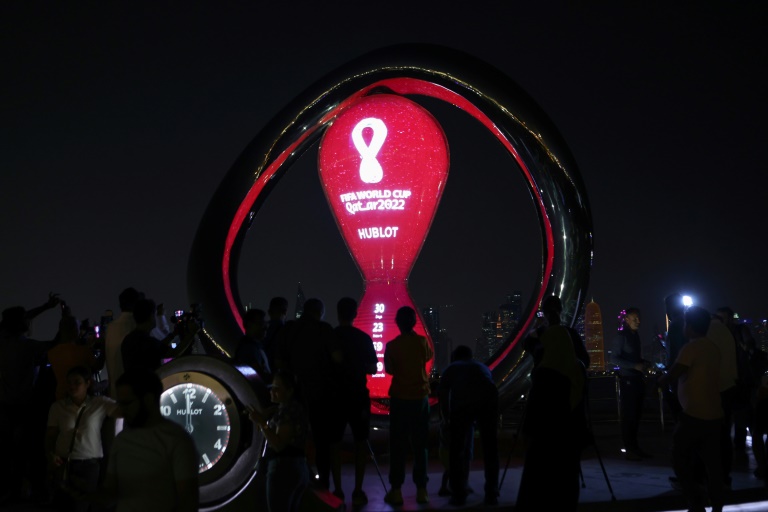
Police in Qatar have arbitrarily detained and abused members of the LGBTQ community ahead of the World Cup next month, Human Rights Watch said in a report released on Monday.

The Gulf state, where homosexuality is illegal, strongly denied that anyone has been detained because of their sexual orientation and condemned the rights group’s reporting.

HRW said it had “documented six cases of severe and repeated beatings and five cases of sexual harassment in police custody between 2019 and 2022”.

The most recent case was in September, the US-based rights group said.

Four transgender women, one bisexual woman and one gay man all told how members of the interior ministry’s Preventive Security Department detained them in an underground prison in Doha.

There “they verbally harassed and subjected detainees to physical abuse, ranging from slapping to kicking and punching until they bled”, HRW said.

“One woman said she lost consciousness. Security officers also inflicted verbal abuse, extracted forced confessions, and denied detainees access to legal counsel, family, and medical care.”

One Qatari bisexual woman said she was beaten until she “lost consciousness several times”.

The report added that a Qatari transgender woman told how she was held once for two months in an underground cell and once for six weeks.

“They beat me every day and shaved my hair. They also made me take off my shirt and took a picture of my breasts,” she said.

She said she had suffered from depression and was afraid to go out in public since.

In all cases, the detainees were forced to unlock their phones and had contact information on other LGBTQ people taken, HRW said.

Sex outside marriage and homosexual sex are both illegal in the conservative Muslim state, and can be punished by up to seven years in prison.

But none of those detained said they had been charged.

– ‘Categorically false’ –

HRW said the six appeared to have been held under a 2002 law that allows for up to six months’ detention without charge if “‘there exist well-founded reasons to believe that the defendant may have committed a crime’, including ‘violating public morality'”.

A Qatar government official said the allegations were “categorically and unequivocally false”.

“Qatar does not tolerate discrimination against anyone, and our policies and procedures are underpinned by a commitment to human rights for all.”

The official said the government has held talks with HRW and other critical groups, but the latest “claims were not brought to our attention until they were first reported in the media. If Human Rights Watch had contacted us, we would have been able to disprove the allegations.”

The official insisted that no “conversion centres” operate in the country, though it does have a rehabilitation clinic that supports individuals suffering from behavioural conditions such as substance dependence, eating disorders and mood disorders.

The official said HRW’s move to “release demonstrably false information… compromises their self-proclaimed commitment to reporting the truth”.

The rights group called on the government in Doha to “put an end to security force ill-treatment against LGBTQ people, including by halting any government-sponsored programs aimed at conversion practices”.

HRW also urged FIFA, football’s world body, to press Qatar to launch reforms that protect LGBTQ people.

Qatar’s World Cup organisers have stepped up assurances in recent weeks that all fans would be “welcome” at the World Cup.

FIFA has said that LGBTQ rainbow flags would be allowed in and around stadiums.

England’s Harry Kane is one of several captains of European teams who have said they will wear “OneLove” arm bands at World Cup games to highlight rights concerns.

China economy grows, but Xi's new power spooks investors

China’s economy grew at a faster pace than forecast in the third quarter, official data showed Monday, but investors reacted with alarm to President Xi Jinping’s sweeping new powers over the ruling Communist Party.

Xi as expected secured a third term as leader at a party Congress over the weekend, but surprised observers with his complete stacking of other leadership positions with proteges and allies. 

After delaying the release of economic data last week so it would not conflict with the Congress, the government announced Monday the economy grew 3.9 percent year-on-year in the third quarter.

China had been expected to announce some of its weakest quarterly growth figures since 2020, with the world’s second-biggest economy hobbled by Covid restrictions and a real estate crisis.

But investors instead focused on the political developments, which raised fears Xi and his allies would continue with gruelling Covid lockdowns and other policies that have punished the economy.

The currency of the world’s second-largest economy slumped and the country’s stocks nosedived in Hong Kong to their lowest level since the global financial crisis.

On Monday the onshore yuan dipped as much as 0.4 percent to 7.2552 per dollar — its weakest since January 2008 — and the Hang Seng China Enterprises Index, a gauge of Chinese stocks listed in Hong Kong, plunged more than 5 percent.

That put it on track for the worst showing after any Communist Party Congress since the start of the index in 1994.

“The market is concerned that with so many Xi supporters elected, Xi’s unfettered ability to enact policies that are not market friendly is now cemented,” said Justin Tang, head of Asian research at United First Partners.

One of the most pressing concerns is Xi’s zero-Covid policy, which continues to see tens of millions of people endure rolling lockdowns that also shutter factories. 

China is the last of the world’s major economies to continue following the strategy.  

“There is no clear sign of a significant easing of the zero-Covid strategy,” Nomura’s Ting Lu said, noting that, if anything, the opposite had happened. 

In a speech to close the Congress on Saturday, Xi insisted his zero-Covid policy had been a success. 

And he promoted Li Qiang, the architect of a two-month lockdown in Shanghai that crippled the financial hub’s economy, to the second most powerful post in the Communist Party.

Tech firms were among the worst hit in Monday’s sell-off, having been hammered in recent years by Xi’s crackdown on the sector that has scythed firms’ profits and wiped billions off their valuations.

E-commerce giants Alibaba and JD.com tanked more than 10 percent each, while Tencent lost more than eight percent. 

China is also battling an unprecedented crisis in its real estate sector — which makes up more than a quarter of the country’s GDP when combined with construction. 

Following years of explosive growth fuelled by easy access to loans, Xi oversaw a crackdown on excessive debt that began in 2020.

Property sales are now falling across the country, leaving many developers struggling and some owners refusing to pay their mortgages for unfinished homes.

Still, the economic data released on Monday gave some cause for optimism.

The third-quarter growth was higher than the 2.5 percent predicted by a panel of experts surveyed by AFP.

“Many economic indicators have actually recovered reasonably well from the mass lockdowns of March and April,” according to analyst Thomas Gatley of Gavekal Dragonomics.

Car sales held strong in September, driven by strong demand for electric clean vehicles.

August exports increased 7.1 percent compared with the previous year, and Beijing has invested in infrastructure to support activity.

In the second quarter of the year, growth had collapsed to 0.4 percent on-year, the worst performance since 2020. 

The country posted 4.8 percent growth in the first quarter of 2022.

Many economists continue to think China will struggle to attain its 2022 growth target of around 5.5 percent, and the International Monetary Fund has lowered its GDP growth forecast to 3.2 percent for 2022 and 4.4 percent for next year.

— Bloomberg News contributed to this story —

China economy grows, but Xi's new power spooks investors

China’s economy grew at a faster pace than forecast in the third quarter, official data showed Monday, but investors reacted with alarm to President Xi Jinping’s sweeping new powers over the ruling Communist Party.

Xi as expected secured a third term as leader at a party Congress over the weekend, but surprised observers with his complete stacking of other leadership positions with proteges and allies. 

After delaying the release of economic data last week so it would not conflict with the Congress, the government announced Monday the economy grew 3.9 percent year-on-year in the third quarter.

China had been expected to announce some of its weakest quarterly growth figures since 2020, with the world’s second-biggest economy hobbled by Covid restrictions and a real estate crisis.

But investors instead focused on the political developments, which raised fears Xi and his allies would continue with gruelling Covid lockdowns and other policies that have punished the economy.

The currency of the world’s second-largest economy slumped and the country’s stocks nosedived in Hong Kong to their lowest level since the global financial crisis.

On Monday the onshore yuan dipped as much as 0.4 percent to 7.2552 per dollar — its weakest since January 2008 — and the Hang Seng China Enterprises Index, a gauge of Chinese stocks listed in Hong Kong, plunged more than 5 percent.

That put it on track for the worst showing after any Communist Party Congress since the start of the index in 1994.

“The market is concerned that with so many Xi supporters elected, Xi’s unfettered ability to enact policies that are not market friendly is now cemented,” said Justin Tang, head of Asian research at United First Partners.

One of the most pressing concerns is Xi’s zero-Covid policy, which continues to see tens of millions of people endure rolling lockdowns that also shutter factories. 

China is the last of the world’s major economies to continue following the strategy.  

“There is no clear sign of a significant easing of the zero-Covid strategy,” Nomura’s Ting Lu said, noting that, if anything, the opposite had happened. 

In a speech to close the Congress on Saturday, Xi insisted his zero-Covid policy had been a success. 

And he promoted Li Qiang, the architect of a two-month lockdown in Shanghai that crippled the financial hub’s economy, to the second most powerful post in the Communist Party.

Tech firms were among the worst hit in Monday’s sell-off, having been hammered in recent years by Xi’s crackdown on the sector that has scythed firms’ profits and wiped billions off their valuations.

E-commerce giants Alibaba and JD.com tanked more than 10 percent each, while Tencent lost more than eight percent. 

China is also battling an unprecedented crisis in its real estate sector — which makes up more than a quarter of the country’s GDP when combined with construction. 

Following years of explosive growth fuelled by easy access to loans, Xi oversaw a crackdown on excessive debt that began in 2020.

Property sales are now falling across the country, leaving many developers struggling and some owners refusing to pay their mortgages for unfinished homes.

Still, the economic data released on Monday gave some cause for optimism.

The third-quarter growth was higher than the 2.5 percent predicted by a panel of experts surveyed by AFP.

“Many economic indicators have actually recovered reasonably well from the mass lockdowns of March and April,” according to analyst Thomas Gatley of Gavekal Dragonomics.

Car sales held strong in September, driven by strong demand for electric clean vehicles.

August exports increased 7.1 percent compared with the previous year, and Beijing has invested in infrastructure to support activity.

In the second quarter of the year, growth had collapsed to 0.4 percent on-year, the worst performance since 2020. 

The country posted 4.8 percent growth in the first quarter of 2022.

Many economists continue to think China will struggle to attain its 2022 growth target of around 5.5 percent, and the International Monetary Fund has lowered its GDP growth forecast to 3.2 percent for 2022 and 4.4 percent for next year.

— Bloomberg News contributed to this story —

'Even if no one cares': Russia's lone liberal lawyer

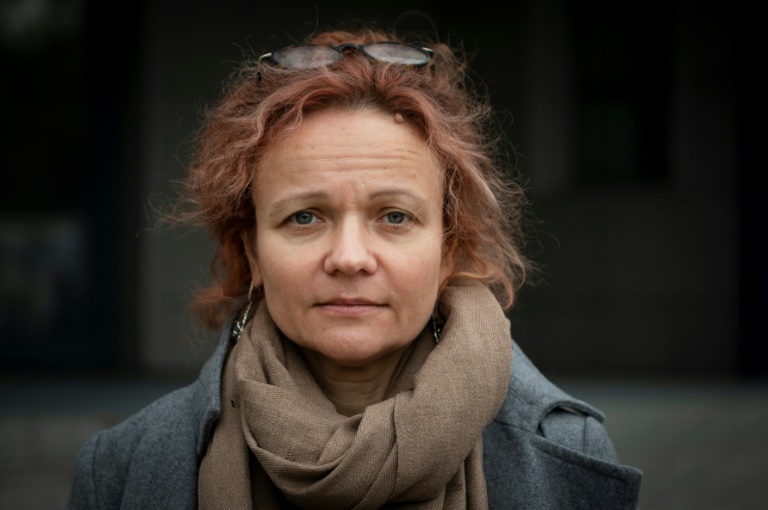
In a Moscow court, lawyer Maria Eismont is looking on stunned at a losing battle: her client, a student accused of defaming Russia’s military, is being called a “liar” and part of an anti-Russian “sect”.

It’s a typical courtroom scene in Russia. The defendant is isolated in a cage guarded by a policeman wearing a balaclava. The judge sits back as a witness unleashes the diatribe against him.

The country’s judicial system was heavily weighted against critics of the Kremlin even before Moscow sent troops to Ukraine in February. But that balance has tipped even further in the months since.

And 47-year-old Eismont is among the last opposition-leaning figures in the country to witness that space for criticism getting smaller and smaller.

“What we’re listening to is a very strange kind of lecture — a pontification,” she says, standing to object to the testimony.

“It’s got nothing to do with the case at all,” she tells the judge.

The witness, 62-year-old Lyudmila Grigoryeva, is a professor at the country’s most prestigious university, where the defendant was enrolled.

And she is adamant that 23-year-old Dmitry Ivanov shared fake news about the army in Ukraine and joined in “illegal anti-Russian actions”.

With Eismont’s interruption dismissed, Grigoryeva jumps to it again, her voice echoing louder while the clerk’s keyboard clatters.

– Kremlin line ‘de-facto true’ –

“He backs people who hate Russia. He defends the scum of society… If you don’t like something, shut your mouth!” she shouts, pointing at Ivanov.

The former student of maths and cybernetics was charged in June and is facing up to 10 years in jail for “disseminating false information” about the Russian army. 

The case is connected to a channel on the Telegram social media app that he created, which is critical of the government, and still run by several peers at Moscow State University.

“Have you been to Mariupol or Bucha?” Eismont asks the witness, naming cities in Ukraine where Russian troops are accused of carrying out atrocities.

“No, but I have relatives in Donetsk,” Grigoryeva replies, referring to a pro-Moscow stronghold controlled by Russian forces.

“And I know what happens in Ukraine thanks to them and thanks to the defence ministry. These are two independent sources and they corroborate each other,” Grigoryeva tells Eismont.

Exasperated after the hearing, Eismont bemoans to AFP that the army’s narrative of events in Ukraine is taken often in Russia as “de-facto true”.

Before she became a lawyer in 2018, the mother-of-three worked as a journalist for two decades mainly in Russia and Africa.

– ‘An awful war’ –

But the five short years since have been tainted by a historic crackdown on opposition figures in Russia and, with it, the exile of high-profile liberal lawyers willing to defend them.

A key moment came in March with punitive new legislation criminalising the spread of information about the military deemed false by authorities.

Some of the few outspoken politicians who remained have been rounded up. And with many of her colleagues also gone, Eismont is left to take their cases.

During a recent visit to Moscow’s infamous Butyrka prison to see opposition figure Ilya Yashin — detained in June for criticising the Ukraine offensive — she explained how the conflict has hit home.

“Our lives has been completely turned upside down,” she said. 

“This awful war is going on. We cry. We’re demoralised. We see this tragedy every day… and yet the system stays the same” she told AFP in perfect French.

She said that proving a person in Russia is innocent has been impossible “for a long time”.

Russian authorities have made a habit of isolating jailed critics, sequestering them from lawyers, family and the press.

And Eismont in turn has gained a reputation for fighting authorities for access — and at the same time for supporting families emotionally.

“Look who’s here!” Eismont said, turning as Yashin’s parents arrived to see their son.

– ‘People to help here’ –

“She’s like a therapist” said 62-year-old Valery Yashin, the opposition figure’s father. 

“She’s calmed us much as was possible. She’s helped us. She’s really helped us,” he emphasised — a feat, given that his son is facing a decade behind bars.

Later, AFP journalists caught up with Eismont at a central Moscow restaurant, where she was sipping wine. 

She mentioned that since the conflict started, she has hosted more than 70 Ukrainian refugees transiting through Russia.

Has she considered following them — or her now exiled liberal colleagues?

“I have people to help here,” she explained. 

That, she said, is her motivation — even if the people she defends almost always lose. Winning or losing — that’s not the point.

“I’m not playing at a casino,” she said.

To explain, she gave an analogy. She told the story of an airport employee who for years maintained a runway in a village in Russia’s barren north.

Out of the blue one day, she said, a plane in distress made an emergency landing. The airport worker’s careful and determined efforts had saved dozens of lives.

“We need to be ready for something to go right,” Eismont explained.

“We need to keep demanding that people’s rights are respected, even if no one cares. Because when justice is restored in Russia, we’ll need these skills again.”

HRW reports LGBTQ jail beatings before Qatar World Cup

Police in Qatar have arbitrarily detained and abused members of the LGBTQ community ahead of the World Cup next month, Human Rights Watch said in a report released on Monday.

Homosexuality is illegal in the Gulf state which has come under intense scrutiny over its rights record before the tournament that is expected to attract at least one million foreign fans.

HRW said it had “documented six cases of severe and repeated beatings and five cases of sexual harassment in police custody between 2019 and 2022”.

The most recent case was in September, the US-based rights group said.

Four transgender women, one bisexual woman and one gay man all told how members of the interior ministry’s Preventive Security Department detained them in an underground prison in Doha.

There “they verbally harassed and subjected detainees to physical abuse, ranging from slapping to kicking and punching until they bled”, HRW said.

“One woman said she lost consciousness. Security officers also inflicted verbal abuse, extracted forced confessions, and denied detainees access to legal counsel, family, and medical care.”

One Qatari bisexual woman said she was beaten until she “lost consciousness several times”.

The report added that a Qatari transgender woman told how she was held once for two months in an underground cell and once for six weeks.

“They beat me every day and shaved my hair. They also made me take off my shirt and took a picture of my breasts,” she said.

She said she had suffered from depression and was afraid to go out in public since.

In all cases, the detainees were forced to unlock their phones and had contact information on other LGBTQ people taken, HRW said.

Sex outside marriage and homosexual sex are both illegal in the conservative Muslim state, and can be punished by up to seven years in prison.

But none of those detained said they had been charged.

HRW said the six appeared to have been held under a 2002 law that allows for up to six months’ detention without charge if “‘there exist well-founded reasons to believe that the defendant may have committed a crime,’ including ‘violating public morality’.”

A Qatar government official said the allegations were “categorically and unequivocally false”.

“Qatar does not tolerate discrimination against anyone, and our policies and procedures are underpinned by a commitment to human rights for all.”

The official said the government has held talks with HRW and other critical groups, but the latest “claims were not brought to our attention until they were first reported in the media. If Human Rights Watch had contacted us, we would have been able to disprove the allegations.”

The official said the lack of notice given by HRW “compromises their self-proclaimed commitment to reporting the truth.”

The rights group called on the government in Doha to “put an end to security force ill-treatment against LGBT people, including by halting any government-sponsored programs aimed at conversion practices”.

The Qatari official insisted that no “conversion centres” operate in the country, though it does have a rehabilitation clinic that supports individuals suffering from behavioural conditions such as substance dependence, eating disorders and mood disorders.

HRW called on FIFA, football’s world body, to press Qatar to launch reforms that protect LGBT people.

Qatar’s World Cup organisers have stepped up assurances in recent weeks that all fans would be “welcome” at the World Cup.

FIFA has said that LGBTQ rainbow flags would be allowed in and around stadiums.

England’s Harry Kane is one of several captains of European teams who have said they will wear “OneLove” arm bands at World Cup games to highlight rights concerns.

UN suspends Australia anti-torture mission after inspectors barred

The United Nations has abruptly suspended its anti-torture mission to Australia after inspectors were barred from several jails, with a key oversight body condemning on Monday the “embarrassing debacle”.

Tasked with touring facilities under a voluntary agreement to prevent cruelty to detainees, the inspectors said they made the “drastic” decision after they were refused entry at “several” jails and detention facilities.

Lead inspector Aisha Muhammad, a Supreme Court judge in the Maldives, said Australia was in “clear breach” of its international obligations.

“Despite our numerous efforts to explain our preventative mandate, this was clearly not understood,” she said.

Only three other countries — Rwanda, Azerbaijan and Ukraine — have had anti-torture inspectors suspend or postpone missions.

Australia ratified the Optional Protocol to the Convention against Torture (OPCAT) in 2017, committing to reforms safeguarding detainees and making facilities subject to inspection. 

Former prison inspector Steven Caruana coordinated the domestic body responsible for tracking Australia’s implementation of the convention.

“There can really be no excuse as to why the delegation was hindered,” he told AFP on Monday. 

“Australia has had almost five years to prepare for this visit. Australia will now have to answer for this embarrassing debacle in front of the United Nations Committee against Torture.” 

– Allegations of rights abuses –

Australia’s refusal to welcome the inspectors boiled down to a funding dispute between the federal and state governments.

The federal government ratified the convention, but individual states and territories were responsible for putting it into action.

New South Wales and Queensland — eastern states with roughly half Australia’s population between them — have hamstrung the process, saying they needed more funding to put the convention into practice.

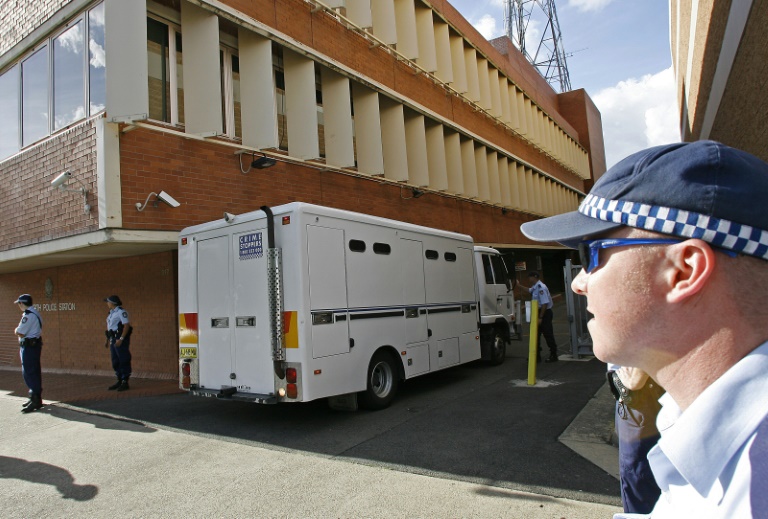
New South Wales last week blocked UN inspectors from a small courthouse jail, the UN delegation said.

Queensland refused to let inspectors visit inpatient units at mental health facilities, according to the Queensland Health department.

The UN delegation said it had “been prevented from visiting several places where people are detained… and was not given all the relevant information and documentation it had requested”. 

Australia’s prisons, youth detention centres, and immigration compounds have been plagued by persistent allegations of human rights abuses, particularly against Aboriginal communities.

Criminology professor Lorana Bartels said there was a clear need for greater scrutiny.

“Clearly, there are issues with the management of correctional facilities in Australia,” she told AFP. 

“This demonstrates a real lack of understanding and respect for these processes.” 

Australia has until January 2023 to meet its obligations. 

There are no penalties for missing the deadline, but Australia could be placed on a non-compliance list of countries with significant human rights concerns.

Close Bitnami banner
Bitnami