World

Major Hurricane Roslyn approaches Mexico's Pacific coast

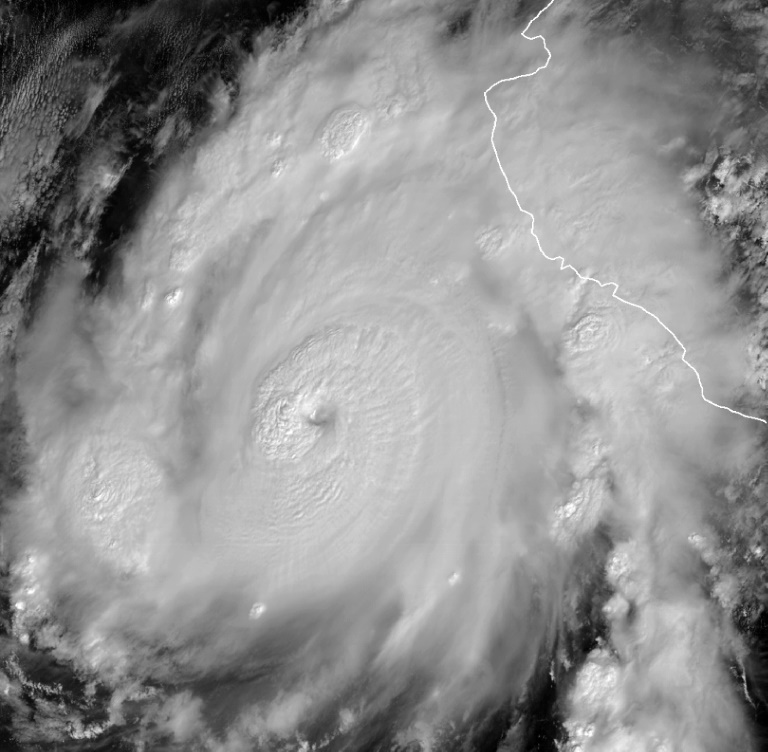
Communities along the west coast of Mexico prepared Saturday for Hurricane Roslyn, a major Category 4 storm, as the US National Hurricane Center warned of potentially damaging winds, dangerous storm surge and flash flooding.

The storm was about 90 miles (145 kilometers) southwest of Cabo Corrientes, with maximum sustained winds of 130 miles per hour, and was moving north at about 10 miles per hour, the NHC said in its 1200 GMT update.

It is forecast to slam into the coast of Nayarit state on Sunday morning at or near major hurricane strength, the NHC said.

“Although some weakening could occur tonight, Roslyn is expected to be at or near major hurricane strength when it makes landfall on Sunday,” the NHC said.

“On the forecast track, the center of Roslyn will approach the coast of west-central Mexico, likely making landfall along the coast of the Mexican state of Nayarit Sunday morning.”

Both the NHC and the Meteorological Service of Mexico warned of flash flooding and landslides caused by the storm. 

“A dangerous storm surge is expected to produce significant coastal flooding near and to the east of where the center makes landfall,” the NHC said.

Authorities have declared a precautionary alert in the Pacific coast states of Jalisco, Colima, Nayarit and Sinaloa.

Victor Hugo Roldan, director of civil protection in Jalisco state, told reporters that several hundred people had been evacuated from the town of La Huerta, close to the hurricane’s expected path. 

Most went to relatives’ homes, while some went to shelters, he said.

– ‘Heed every warning’ –

Jalisco, which is slated to get up to 10 inches (25 centimeters) of rain in some spots, has set up shelters in the cities of Cabo Corrientes, La Huerta and the tourist resort of Puerto Vallarta. 

Businesses in the resort town began to close Saturday afternoon on officials’ recommendations.

Residents rushed to make last-minute preparations, though by late Saturday afternoon some tourists were still lounging on the beach or unsuccessfully searching for open bars and restaurants. 

For 59-year-old shopping mall manager Graciano Pena, the memory of 2002’s Hurricane Kenna, which made landfall as a damaging Category 4 and left four dead, is still fresh.

“After that experience, we heed every warning and make preparations ahead of time,” he said. 

Other coastal states were also preparing shelters.

Forecasts suggest Roslyn could make landfall near San Blas, a town of about 40,000 with several fishing communities.

Tropical cyclones hit Mexico every year on both its Pacific and Atlantic coasts, usually between May and November.

At the end of May, Agatha, the first Pacific storm of the season, hit the coast of the state of Oaxaca (south), where heavy rain in mountainous towns killed 11 people.

Back in October 1997, Hurricane Pauline struck Mexico’s Pacific coast as a Category 4 storm, leaving more than 200 dead.
Growing 'Davos in the Desert' a sign of Saudi clout

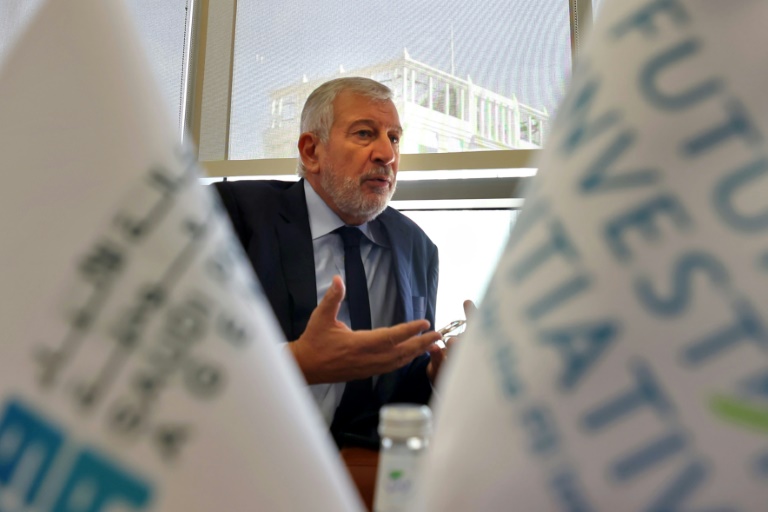
Hundreds of CEOs and finance moguls are expected in Riyadh from Tuesday for a Davos-style investment conference that analysts say will highlight Saudi Arabia’s geopolitical muscle despite strained ties with the US.

The Future Investment Initiative (FII) was launched in 2017 as an economic coming-out party for the world’s largest crude exporter, which is trying to diversify away from oil under Crown Prince Mohammed bin Salman.

The following year’s edition, however, was largely overshadowed by the killing several weeks prior of journalist Jamal Khashoggi, and many would-be delegates from outside the region stayed away.

Attendance picked up in 2019, even if some executives sought to fly under the radar, flipping their name cards behind their coats or hiding them behind their ties, underscoring fears of a reputational cost for doing business in the kingdom.

This year’s FII, often referred to as “Davos in the Desert”, comes after a months-long process of re-engagement with the West by Prince Mohammed, who US intelligence agents determined approved the operation against Khashoggi –- a charge Riyadh denies.

The kingdom’s de facto ruler has received visits this year from then-UK prime minister Boris Johnson, French President Emmanuel Macron and even US President Joe Biden, who had previously vowed to make Saudi Arabia a “pariah”.

The meetings underline the kingdom’s growing clout amid an energy crisis resulting from Russia’s invasion of Ukraine.

The same can be said for the lineup at FII, which runs Tuesday to Thursday, of more than 6,000 delegates and 500 speakers, 200 more than the previous high.

“The combination of the war in Ukraine, the energy crisis and oil price rises has given Saudi Arabia a greater level of geopolitical and economic influence this year relative to every previous FII bar the first one in 2017,” said Kristian Ulrichsen, a research fellow at the Baker Institute at Rice University.

– No ‘agenda’ –

The FII Institute, which organises the conference, has tried to establish an identity that goes beyond being a pet project of Prince Mohammed. 

That effort has involved setting up an investment arm and holding events in London and New York in addition to the flagship event in Riyadh.

At a press conference previewing the upcoming gathering, FII Institute CEO Richard Attias stressed that FII was not a conference about Saudi Arabia, but rather “an international conference happening in Saudi Arabia, showing that Riyadh and the kingdom is definitely becoming a global hub”.

Participants include business leaders from Latin American countries that in past years have had no representation, as well as “a huge delegation from China” with more than 80 Chinese CEOs, Attias said.

Attias, the former executive producer of the World Economic Forum in Davos, told AFP in an interview he did not believe delegates feared a reputational cost for attending.

“I think we have really established the fact that we are an independent body. We don’t have any agenda. We are here to help,” he said.

“I am very happy that many business leaders think like me. We are not ignoring the issues in the world. No one is ignoring that,” said Attias.

“But it is not by boycotting any platform that you will solve a problem in the world.”

– US-Saudi spat –

Despite Attias’s desire to keep politics out of the conference, global turmoil may well intrude as Saudi Arabia navigates a sensitive spat with the United States over oil production cuts approved earlier this month by OPEC+, the cartel that Riyadh leads with Moscow.

The White House has said the move amounted to “aligning with Russia” in the Ukraine war, a claim Saudi officials have strenuously rejected, saying it was motivated by economics, not politics.

FII has typically drawn US government officials, notably former treasury secretary Steven Mnuchin in 2017 and, last year, Don Graves, deputy commerce secretary under Biden.

This year, however, US officials were not invited, something Attias said reflected a broader push to keep the focus on business leaders rather than politicians.

He noted that up to 400 American CEOs are expected to participate.

The US embassy in Riyadh has not responded to requests for comment about American official participation.

Ulrichsen, from the Baker Institute, said he was not surprised the US private sector would be well represented despite the ongoing bilateral tensions.

“I can imagine CEOs will make the judgement that if Biden himself can go to Saudi Arabia after the Khashoggi murder then so can they,” he said.

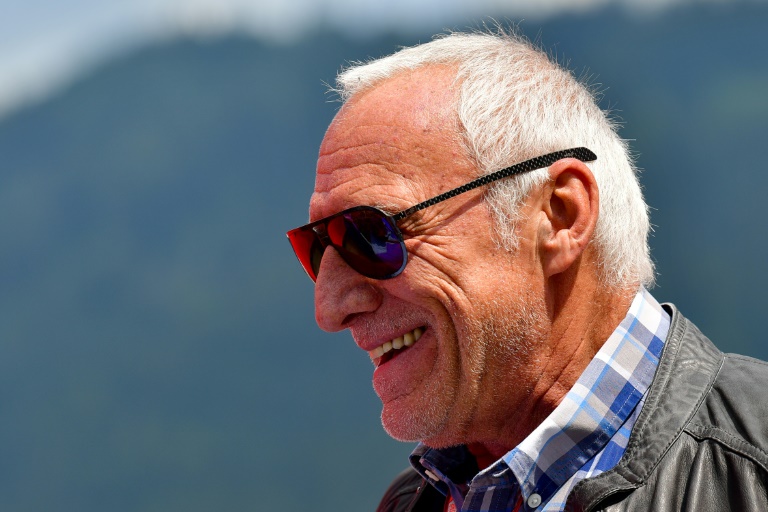
Red Bull founder Dietrich Mateschitz dead at 78

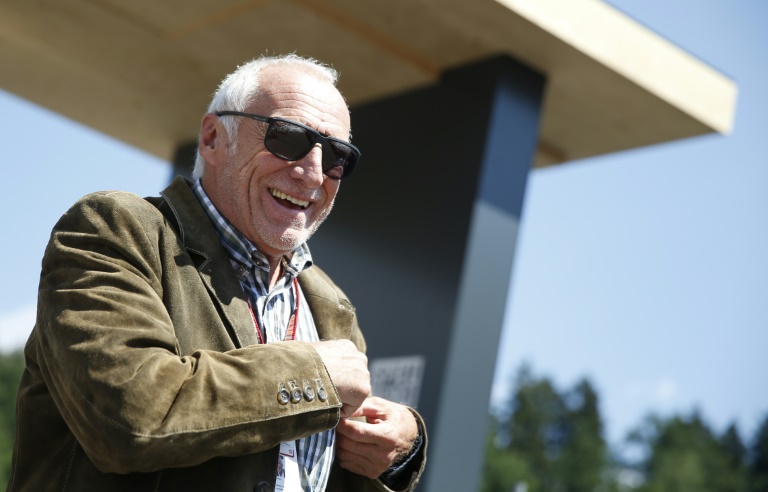
Red Bull founder Dietrich Mateschitz, who made the energy drink a global phenomenon and forged a title-winning Formula One team and a sports empire, died on Saturday aged 78, the company said.

Red Bull expressed both its “sadness” at the Austrian billionaire’s death and “gratitude for what he accomplished”.

Mateschitz, a reclusive man who rarely gave interviews, took a sweet drink that was already popular in Asia and adapted it for the Western market with huge success.

He was named as Austria’s richest person by Forbes in 2022 with an estimated net worth of $27.4 billion.

Mateschitz invested heavily in sport to give his brand global exposure. 

Besides its involvement in Formula One — the team’s Dutch driver Max Verstappen is the world champion for the second consecutive year — Red Bull bought the football club of the Austrian city of Salzburg in 2005, then Leipzig in Germany.

Both clubs have enjoyed trophy-winning success thanks to the brand’s substantial investment.

Red Bull have also branched out into extreme sports, sponsoring events such as air acrobatics and cliff diving.

The head of the Red Bull Formula One team, Christian Horner, said “thankfully” Mateschitz lived to see Verstappen clinch his second title by winning the Japanese Grand Prix two weeks ago.

Horner described Mateschitz as the “backbone of all we do”.

“It is very, very sad,” said Horner, speaking at the United States Grand Prix in Austin, Texas. “A great man, one of few of a kind, for what he achieved and he has done for many people around the world and across so many sports.”

Horner told Sky Sports F1 that Mateschitz “proved you can make a difference. He was a passionate supporter and the backbone of all we do. A remarkable man and inspirational individual.”

– ‘Visionary entrepreneur’ –

Formula One chief executive Stefano Domenicali described Mateschitz as “a hugely respected and much-loved member of the Formula One family”.

The Italian said: “He was an incredible visionary entrepreneur and a man who helped to transform our sport and created the Red Bull brand that is known all around the world.”

Mateschitz’s legacy, the Red Bull energy drink, was born during one of his many business trips as marketing director of a German cosmetics company when he was served a sweet beverage common in Asia in a luxury bar in Hong Kong.

He was immediately fond of it and was impressed by the drink’s apparent ability to help him overcome his jet lag.

He decided to partner with the beverage’s developer Thai businessman Chaleo Yoovidhya and the two men founded Red Bull in 1984.

Based in Fuschl-am-See, the drink slowly but surely won over Western taste buds and the brand developed globally thanks to clever marketing and the tie-ins with sport.

Red Bull entered F1 by taking a 60 percent share in the Swiss-based Sauber team, before the two parted company following a row over the choice of drivers.

Three years later, Red Bull bought the failing Jaguar team from owner Ford and rebranded it.

It soon developed into a leading force, becoming the fastest team in F1 by 2009.

Red Bull won their first drivers’ and constructors’ titles with German driver Sebastian Vettel at the wheel in 2010.

Bolivian protest over census date turns deadly

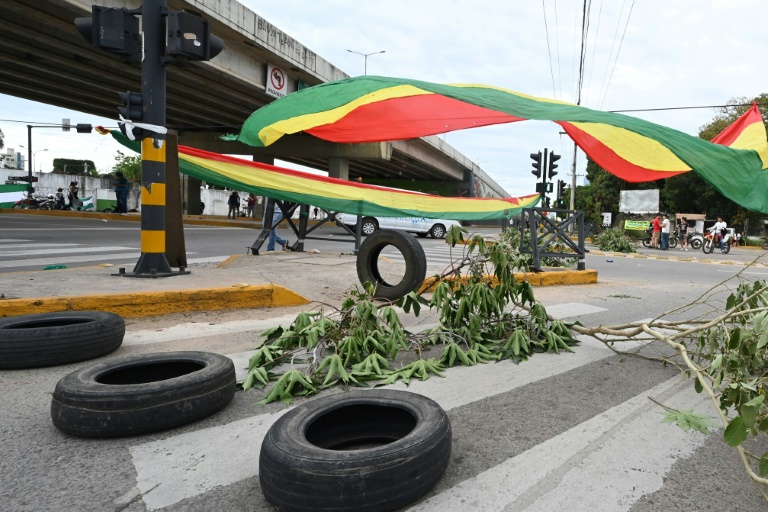
Bolivian government supporters and protesters who want the 2024 national census brought forward by a year clashed Saturday in the country’s economic hub of Santa Cruz, leaving one person dead.

The protests were part of a strike called in Santa Cruz.

Skirmishes broke out starting early in the morning as government backers and detractors came out armed with stones, sticks and explosives in Puerto Quijarro, a city of some 20,000 bordering Brazil, according to images broadcast on social media. 

A man who was trying to stop anti-government protestors from blocking a bridge in Puerto Quijarro was reportedly attacked with sticks and admitted to a city hospital, where he died. 

“We condemn the violence exercised during a civic strike that caused the irreparable loss of a human life in Puerto Quijarro,” said leftist President Luis Arce. 

Though the census is scheduled to be taken in 2024, some want it brought forward to next year, so that the booming Santa Cruz area’s influence in the legislature will be reflected sooner. 

“We need more resources. This department, Santa Cruz, is very large and the resources are very limited, for health, education,” Claudia Lopez, a 35-year-old shopkeeper, told AFP.

The conservative-leaning lowland city of two million residents has a bustling business core and farming on the outskirts, in contrast to the dry Andean highland city of La Paz, the country’s seat of government, which is heavily influenced by Quechua and Aymara Indigenous people. 

Many streets in Santa Cruz — usually packed — were blocked off and empty Saturday.

Dietrich Mateschitz: Low-profile Austrian behind Red Bull empire

Austrian billionaire Dietrich Mateschitz, who died Saturday at the age of 78, built a sports and media empire around his Red Bull energy drink, ensuring its global fame and wide-reaching legacy.

Mateschitz achieved huge wealth by taking a drink already popular in Asia and adapting it to Western tastes.

He was named as the Alpine EU member’s richest person by Forbes in 2022 with an estimated net worth of $27.4 billion.

– From cans to riches –

Born in 1944 in the southern province of Styria into a family of teachers, “Didi” studied economics in Vienna.

After his studies, he started out as a salesman marketing detergents for Unilever, but quickly achieved success in business and later became the marketing director of German cosmetics company Blendax.

His legacy — the Red Bull energy drink — was born during one of his many business trips when at a luxury hotel bar in Hong Kong he was served a sweet beverage common in Asia.

Immediately fond of it — and with the drink reportedly helping him overcome his jet lag — he decided to partner up with the beverage’s developer Thai businessman Chaleo Yoovidhya.

The two men founded Red Bull in 1984. Based in Fuschl-am-See in a verdant Alpine valley, the brand slowly but surely conquered Western taste buds.

Today Red Bull employs more than 13,000 people in 172 countries and sells nearly 10 billion cans a year, creating a turnover of around 8 billion euros.

As a marketing whizz, Mateschitz was obsessed with his brand’s image, massively investing into it and seeking to boost it by sponsoring extreme sports, driving its commercial success.

Red Bull did not leave any opportunities unexploited: Besides forays into music and aviation, the company sponsors athletes, including Austrian record-setting skydiver Felix Baumgartner, and has gradually penetrated the world of mainstream sports.

Besides its involvement in Formula One, Red Bull bought the football club of the Austrian city of Salzburg in 2005 followed by Leipzig in Germany, which has become one of the Bundesliga’s leading clubs thanks to the company’s investment.

In his drive to create the event, but control the message, Mateschitz also founded Media House in Austria in 2007, providing various digital entertainment and thousands of hours of images to interested broadcasters.

He used his riches to buy the paradise island of Laucala in Fiji besides several other properties in his native Austria.

– Behind the scenes –

For all its public events, Red Bull itself has blocked scrutiny.

In 2021, Austrian magazine Dossier published an investigation on Red Bull lobbying that aimed to dampen down criticism that energy drinks when consumed too much can be harmful to health.

Very little is also known about Mateschitz’s private life.

Known for dressing casually — preferably in jeans and sunglasses — he hardly ever gave interviews to journalists and managed to keep a low profile throughout his life.

In a rare interview with the Austrian daily Kleine Zeitung in 2017, the billionaire criticised the lack of control over migration in Europe, sparking a backlash from those advocating open borders.  

His media, notably his Servus TV, has also been criticised for biased reporting, particularly for trivialising the Covid-19 pandemic.

He never married. His son, Mark Mateschitz, was born in 1993. 

Far-right Meloni sworn in as Italy's first woman PM

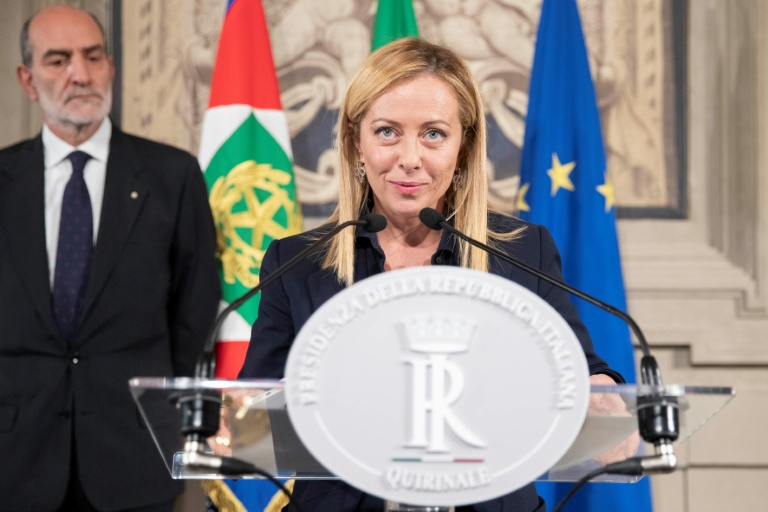
Far-right leader Giorgia Meloni was sworn in as Italian prime minister on Saturday, promising to work closely with her international partners, despite the divergent views of her coalition allies.

The first woman to head an Italian government, Meloni took the oath before President Sergio Mattarella at the Quirinal Palace in Rome, once home to popes and kings of Italy.

“Ready to work with NATO, that is more than a military alliance: a bulwark of common values we’ll never stop standing for,” she tweeted in response to a message of congratulations from its Secretary General Jens Stoltenberg.

And she was equally positive in her response to congratulations from Ukraine’s President Volodymyr Zelensky.

“Italy is and will always be on the side of the brave people of Ukraine that is fighting for its freedom and for a rightful peace.”

Her post-fascist Brothers of Italy party — eurosceptic and anti-immigration — won the September 25 legislative polls, but needed outside support to form a government.

But her pledge to work closely with NATO and back Ukraine contrasted with the stances of her partners in her coalition government, who are both considered close to Russia.

Matteo Salvini, leader of the far-right League, is a long-time fan of President Vladimir Putin. So, too, is former premier Silvio Berlusconi, leader of Forza Italia.

Berlusconi was this week heard in a leaked recording talking about his warm ties with Moscow and appearing to blame Russia’s war in Ukraine on Zelensky.

– Salvini as deputy –

Meloni’s appointment is an historic event for the eurozone’s third largest economy and for Brothers of Italy, which has never been in government.

It won 26 percent of the vote last month, compared to eight and nine percent respectively for Forza Italia and the far-right League.

Meloni’s 24-strong cabinet, including six women, suggests a desire to reassure Italy’s partners. She appointed Giancarlo Giorgetti as economy minister, who served under the previous government of Mario Draghi.

Giorgetti, a former minister of economic development, is considered one of the more moderate, pro-Europe members of Salvini’s League.

Meloni also named ex-European Parliament president Antonio Tajani, of Forza Italia, as foreign minister and deputy prime minister.

Salvini will serve as deputy prime minister and minister of infrastructure and transport, which will likely disappoint Salvini.

He wanted the role of interior minister, a post he previously held between 2018 and 2019. That went instead to a technocrat, Rome prefect Matteo Piantedosi.

A formal ceremony for the handover of power from Draghi to Meloni will take place on Sunday before the premier leads the first cabinet meeting.

– ‘Constructive cooperation’ –

European Commission chief Ursula von der Leyen congratulated Meloni.

“I count on and look forward to constructive cooperation with the new government on the challenges we face together,” she tweeted on Saturday. European Parliament speaker Roberta Metsola tweeted in Italian that “Europe needs Italy”.

Von der Leyen and Meloni later held telephone talks, which the Commission chief described as “good”, adding: “We will work together to address the critical challenges of our time, from Ukraine to energy.”

US President Joe Biden congratulated Meloni and called Italy a “vital NATO ally and close partner”.

Germany’s Chancellor Olaf Scholz also congratulated her on Twitter in English, adding: “I look forward to continue working closely together with Italy in EU, NATO and G7.”

Hungarian Prime Minister Viktor Orban said it was a “big day for the European Right”.

The talks to form a government had been overshadowed by disagreements with her two would-be coalition partners.

Italian news media made much of the recorded comments by Berlusconi praising Putin, remarks he insists have been taken out of context.

Salvini, too, is a long-time fan of Russian President Vladimir Putin and has criticised Western sanctions on Russia.

Despite her eurosceptic stance however, Meloni has been firm in her support for Ukraine, in line with the rest of the European Union and the United States.

But the tensions with her coalition partners are already raising questions as to whether she will be able to maintain a parliamentary majority in Italy’s notoriously volatile parliamenary system.

– Challenges ahead –

Meloni’s coalition wants to renegotiate Italy’s portion of the EU’s post-Covid recovery fund. 

It argues the almost 200 billion euros ($197 billion) it expects to receive should take into account the current energy crisis, exacerbated by Moscow’s invasion of Ukraine, which has hit supplies of Russian gas to Europe.

But the funds are tied to a series of reforms only just begun by Draghi’s government, and analysts say Meloni has limited room for manoeuvre.

Meloni had campaigned on a platform of “God, country and family”, sparking fears of a regression on rights in the Catholic-majority country.

UK's Johnson, Sunak meet amid private battle for Tory leadership

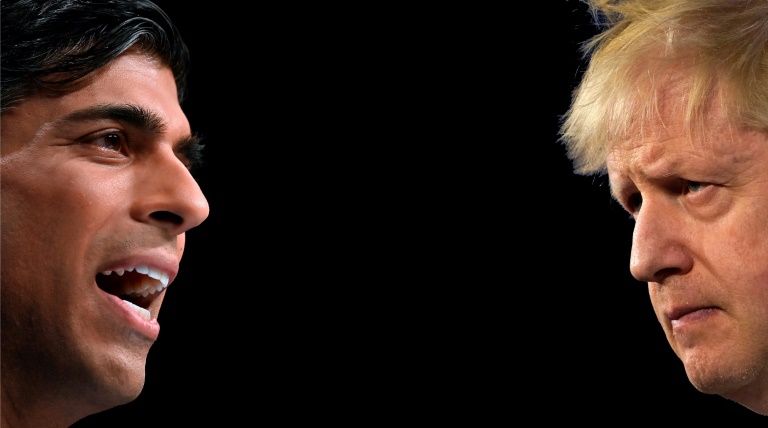
Conservative rivals Boris Johnson and Rishi Sunak held face-to-face talks late Saturday, reports said, as the feuding pair who once headed Britain’s government were poised to battle for the leadership of their fractured ruling party.

Former prime minister Johnson, who returned from a Caribbean holiday earlier in the day aiming to launch an audacious political comeback just weeks after leaving office, met ex-finance minister Sunak to discuss the race, the BBC and others reported. 

Both are yet to declare they will run to replace outgoing leader Liz Truss, who announced Thursday she would stand down — just 44 tempestuous days into her tenure.

It is thought to be their first in-person discussions in months, following a spectacular falling out after Sunak’s July resignation helped trigger the government mutiny that ultimately prompted Johnson’s ousting.

Few details have emerged about what The Sun dubbed a “secret summit” and the Sunday Times said was ongoing at close to 10:00 pm (2100 GMT). The Sunday Telegraph reported they were set to discuss “agreeing to a joint ticket” to avoid a Tory “civil war”.

That implausible scenario comes as Sunak races ahead in the count of Conservative MP nominations to be the next leader, with the 42-year-old easily securing the 100 minimum threshold set by the party to contest the UK’s top job.

He has the public backing of 128 Tory lawmakers, compared to Johnson’s 53 and 23 for cabinet member Penny Mordaunt, who was the first to formally declare, on Friday.

Johnson cut short a luxury stay in the Dominican Republic to join the seemingly three-way tussle, with allies saying he was “up for it”.

The divisive 58-year-old Brexit architect only relinquished power in early September, two months after announcing his resignation following a government revolt over a slew of scandals.

– ‘Unpredictability’ –

The Tories have now been forced into a second, this time expedited, leadership contest since the summer after Truss resigned following her disastrous tax-slashing mini-budget sparked economic and political turmoil.

In a sign of the toll from the tumult, ratings agency Moody’s said Friday it had downgraded Britain’s outlook, blaming in part “heightened unpredictability in policy making”.

Meanwhile, the pound — which hit a record low against the dollar in the mini-budget’s immediate aftermath, but had since rallied — slumped.

Johnson’s apparent bid to reclaim power has already been decried by opposition politicians, and even some in his own fractured ruling party who are demanding stability and unity.

“It is simply not right to risk repeating the chaos (and) confusion of the last year,” said David Frost, a right-wing formerly loyal minister appointed to the House of Lords by Johnson.

“We must move on,” he urged the Tories, adding they “must get behind a capable leader who can deliver a Conservative programme” who he identified as ex-finance minister Sunak.

Dominic Raab — Johnson’s deputy prime minister — echoed the comments, telling Sky News an imminent parliamentary inquiry into the “Partygate” scandal that dogged his former boss could prove too distracting.

Veteran backbencher Roger Gale has also warned that Johnson could face a wave of resignations from MPs refusing to serve under him again.

Meanwhile in a major coup for Sunak, trade minister Kemi Badenoch, an influential right-winger, said in a Sunday Times article that “he would be a great leader during a time of crisis”.

– ‘Hogwash’ –

The accelerated contest will see the Conservatives’ 357 MPs hold a vote Monday on any candidates with the 100 nominations, before a possible online ballot of party members later in the week if two remain.

Tory MP James Duddridge, a key Johnson ally who confirmed Friday the ex-leader was intent on standing, said Saturday that he had now secured the support of 100 colleagues.

But the claim was met with scepticism by other Conservatives, with one MP telling the BBC it was “hogwash”.  

Johnson has nonetheless been endorsed by several Tory heavyweights, including on Saturday ex-interior minister Priti Patel.

Meanwhile, posting a photo of Johnson on the phone to his Facebook, backbench Conservative MP Lee Anderson revealed he was backing him after “a long chat about everything past and present”.

“My inbox is full of BBB (bring back Boris),” he said, referring to an acronym and hashtag used by his supporters. 

Although he remains popular with party members who could decide the contest, polling shows he is broadly disliked by the electorate, with a YouGov survey finding 52 percent opposed his comeback.

Another poll also found three in five voters now want an early general election, in line with demands from opposition parties, as Britons struggle with a worsening cost-of-living crisis.

Leave 'immediately', pro-Russian officials tell Kherson residents

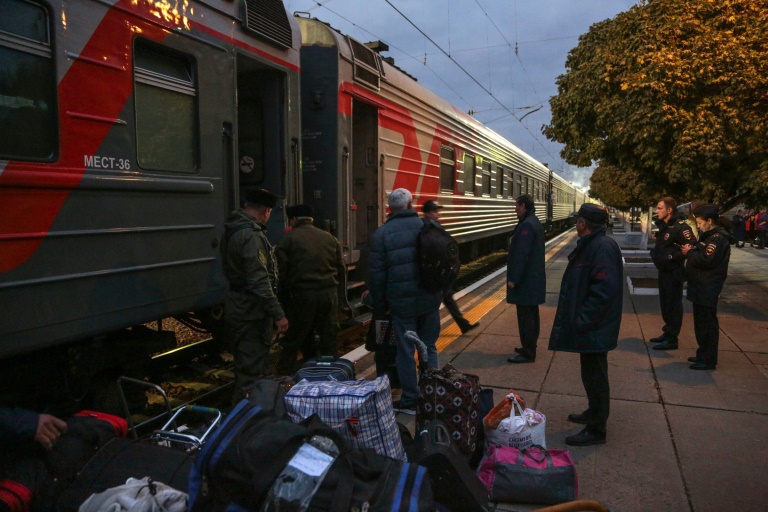
Pro-Russian authorities on Saturday urged residents in the southern Kherson region, which Moscow claims to have annexed, to leave the main city “immediately” in the face of Kyiv’s advancing counter-offensive.

The call came as President Volodymyr Zelensky said Russia had launched 36 rockets overnight in a “massive attack” on Ukraine, following reported strikes on energy infrastructure that resulted in power outages across the country.

And Japanese Prime Minister Fumio Kishida became the latest world leader to reproach Moscow for its talk of using nuclear weapons.

Kyiv’s forces have been advancing along the west bank of the Dnipro river, towards the Kherson region’s eponymous main city.

Kherson was the first major city to fall to Moscow’s troops, and retaking it would be a major prize in Ukraine’s counter-offensive.

In recent days, Russia has been moving residents in the region — which Moscow claims to have annexed in September — east to Russia, in efforts Kyiv has denounced as “deportations”.

“Due to the tense situation on the front, the increased danger of mass shelling of the city and the threat of terrorist attacks, all civilians must immediately leave the city and cross to the left bank” of the Dnipro river, the region’s pro-Russian authorities announced on social media.

A Moscow-installed official in Kherson, Kirill Stremousov, told Russian news agency Interfax on Saturday that around 25,000 people had made the crossing.

Sergiy Khlan, the Ukrainian deputy head of the Kherson region, said Russians were removing property and documents from banks and the passport office as they withdrew.

Ukraine’s general staff said Moscow’s forces had abandoned two more settlements in Kherson and were evacuating medical personnel from a third, accusing them of looting local civilians.

– A ‘serious threat’ –

Earlier Saturday, Japan’s Kishida denounced Moscow’s comments regarding the possible use of nuclear weapons in the Ukraine conflict.

“Russia’s act of threatening the use of nuclear weapons is a serious threat to the peace and security of the international community and absolutely unacceptable,” he said.

The 77-year period of no nuclear weapons use “must not be ended”, said Kishida, speaking in Australia.

Since Russia invaded Ukraine in February, Putin has made several thinly veiled threats about his willingness to deploy tactical nuclear weapons.

Earlier this month, the European Union foreign policy chief Josep Borrell warned that the Russian army would be “annihilated” if Russia launched such an attack.

Washington has also warned Moscow of “catastrophic” consequences should they use such weapons.

Japan is the only country ever to have been hit with nuclear weapons: the US atomic bomb dropped on Hiroshima on August 6, 1945, which killed 140,000 people, and the second US bomb on Nagasaki, three days later, which killed 74,000 people.

– Air defence ‘highest priority’ –

In his evening address Saturday, Zelensky said Ukraine was working with international partners to extend sanctions to “all Russian propagandists, so-called ‘opinion leaders’ and show business representatives who support or justify terror”.

Russian media workers and celebrities who had backed Russia’s invasion “should receive a full package of individual sanctions so that they can’t do anything around the world at all”, he added.

Foreign Minister Dmytro Kuleba said that he had had his first call with Italy’s newly appointed foreign minister Antonio Tajani.

Wishing him success, Kuleba stressed that Ukraine’s “highest priority” was to “swiftly receive air defence systems”.

Russian air strikes on energy facilities across the country have left more than a million households in Ukraine without electricity, the deputy head of the Ukrainian presidency Kyrylo Tymoshenko said earlier on Saturday.

Fresh strikes targeted energy infrastructure in Ukraine’s west, Ukraine’s energy operator Ukrenergo said on social media, and officials in several regions of the war-scarred country reported power outages.

“These are vile strikes on critical objects,” Zelensky said earlier Saturday. “The world can and must stop this terror.”

Power outages were reported in other parts of the country and local officials repeated calls to reduce energy use. Some parts of Ukraine have already cut their electricity use by up to 20 percent, according to Ukrenergo.

In the Russian Belgorod region bordering Ukraine, at least two civilians were killed in strikes on Saturday, according to the local governor Vyacheslav Gladkov.

Nearly 15,000 people were left without electricity, he added.

Russia last week reported a “considerable increase” in Ukrainian fire into its territory, saying attacks had largely concentrated on Belgorod region and neighbouring regions of Bryansk and Kursk.

Palestinian shot dead and Israeli stabbed in Jerusalem

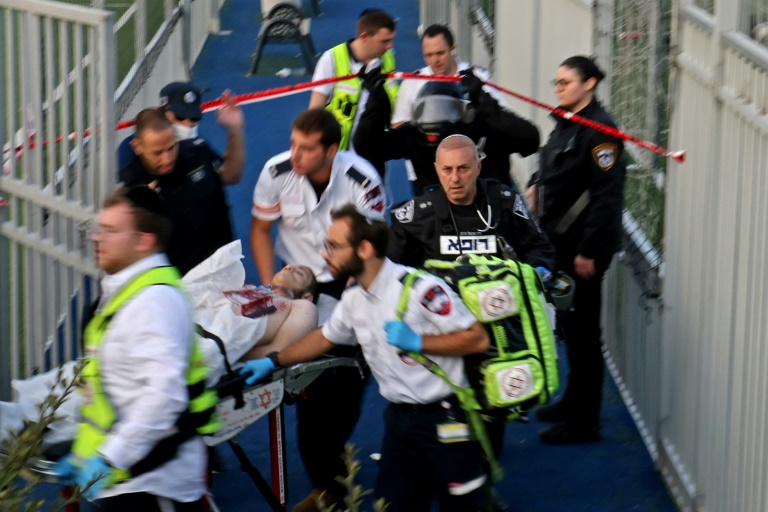
Soldiers shot dead a Palestinian in the occupied West Bank on Saturday, hours after a knife attack in east Jerusalem left an Israeli man in a serious condition.

The Palestinian health ministry said Rabi Arafah Rabi, 32, was hit by “a bullet to the head” at a checkpoint southeast of the city of Qalqilya.

An Israeli military spokesman said soldiers fired on a car containing three suspects near Qaliqilya as the vehicle sped off after hitting a soldier when they tried to stop it for inspection.

“The soldiers fired toward the vehicle,” the spokesman said. 

“The soldier did not need medical treatment. We are aware of reports regarding a hit. The incident is under review.”

Violence in the Israeli-Palestinian conflict has surged in recent months, amid an uptick in anti-Israeli attacks and near daily raids by Israeli forces in the occupied West Bank.

Earlier on Saturday, police said officers “neutralised” a Palestinian stabbing suspect in Israeli-annexed east Jerusalem after an attack that left an Israeli man in serious condition.

Police said the man was stabbed in the back.

Israeli media said the stabbing victim was a religious Jew in his 20s.

“His condition is serious but stable,” said a statement from Jerusalem’s Shaarei Tsedek hospital.

“The suspect stabbed a passer-by with a knife and fled” the scene north of the Old City, police said.

They said the suspect, who is 16, was later found at a football pitch in the Sheikh Jarrah district of east Jerusalem, not far from the scene of the stabbing.

Police said he tried to run off when he saw officers coming, but an officer gave chase.

At one stage he turned to the police officer “with an object in his hand, the officer feared for his life… shot at him and neutralised” him.

The suspect’s condition is not known but police said they had detained both his father and his brother for questioning.

More than 115 Palestinian fighters and civilians have been killed this year, the heaviest toll in the West Bank for nearly seven years, according to the United Nations.

Israel seized east Jerusalem in the Six-Day War of 1967 and later annexed it in a move not recognised by most of the international community.

Some 200,000 Israelis live in the sector as well as 300,000 Palestinians.

Around 475,000 Israelis now live in settlements across the West Bank, alongside some 2.8 million Palestinians, who in different areas of the territory are subject to Israeli military rule or live under limited Palestinian governance.

On Friday, the Palestinian health ministry said a Palestinian was killed overnight in clashes with soldiers in the flashpoint West Bank city of Jenin, and three other Palestinians were wounded in the clashes.

Iranians strike as Mahsa Amini protests enter sixth week

Shopkeepers and factory workers went on strike in Iran on Saturday as women-led nationwide protests sparked by the death in custody of Mahsa Amini entered a sixth week, activists said.

The death of 22-year-old Amini, after her arrest for allegedly breaching Iran’s strict dress code for women, has fuelled the biggest protests seen in the Islamic republic for years.

Young women have led the charge, removing their headscarves, chanting anti-government slogans and confronting the security forces, despite a crackdown that human rights groups say has killed at least 122 people.

Activists issued a call for fresh demonstrations as Iran’s working week began on Saturday, but it was difficult to gauge the turnout because of curbs on internet access.

“On Saturday… We will be together for freedom,” activist Atena Daemi said in a Twitter post that bore an image of a bare-headed woman raising her fist.

Iran’s deputy interior minister Majid Mirahmadi told state media the protests were in their “final days”.

“There are various gatherings in some universities, which are decreasing every day, and the riots are going through their final days,” he said.

The 1500tasvir social media channel told AFP there were “strikes in a couple of cities including Sanandaj, Bukan and Saqez”, while adding it was difficult to see evidence of them online as “the internet connection is too slow”.

Saqez, in the western province of Kurdistan, is Amini’s home town, where anger flared at her burial last month, helping trigger the protest movement.

Verified footage spread on social media showed dozens of students holding Iranian flags and chanting outside one of Iran’s largest campuses, Shahid Beheshti University in Tehran.

Some female students among them did not wear the mandatory headscarf.

In northwestern Iran, dozens of students clapped and chanted slogans during a protest at the Tabriz University of Medical Sciences, verified footage showed.

– ‘Operatives, oligarchs, lobbyists’ –

Iran accused its arch enemy the United States of seeking to use the protests to gain concessions in talks aimed at restoring the 2015 nuclear agreement.

“The Americans continue to exchange messages with us, but they are trying to fan the flames of what has been going on inside Iran in recent days,” said Foreign Minister Hossein Amir-Abdollahian.

The organisers of a mass rally in Berlin in solidarity with the Iranian protesters called on “democratic governments… to STOP negotiating with the criminal state called the Islamic republic”.

In a statement, the Iranians for Justice and Human Rights group also called for the expulsion of Iran’s ambassadors.

“We are not asking you to interfere in Iran, wage war or sanction Iran’s people,” it said.

“We want you to impose targeted sanctions on the leaders, operatives, oligarchs and lobbyists of the Islamic republic.”

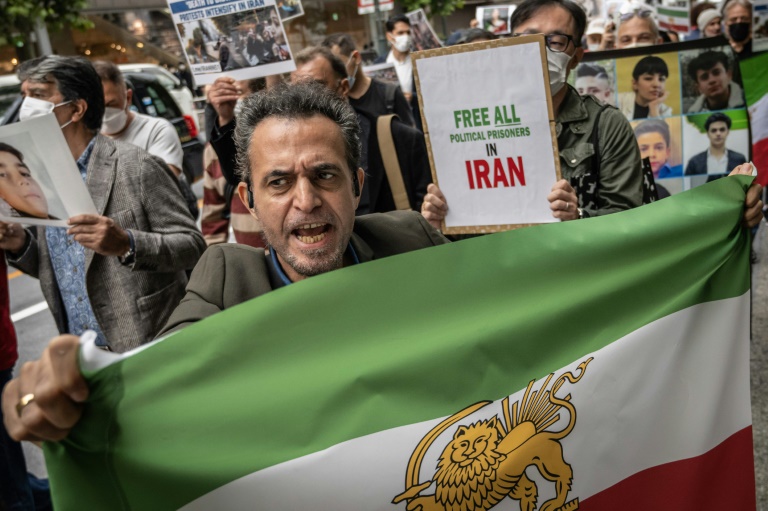
The Berlin rally, which police said drew more than 80,000 people, was one of a number of demonstrations around the world, including in Australia and Japan.

– ‘Oppression’ in schools –

A teachers’ union in Iran has called for a nationwide strike on Sunday and Monday over the crackdown that rights group Amnesty International says has cost the lives of at least 23 children.

The Co-ordinating Council of Teachers Syndicates said the “sit-in” would be in response to “systematic oppression” by the security forces at schools.

Activists have also accused the authorities of a campaign of mass arrests and travel bans to quell the protests, with athletes, celebrities and journalists caught up in the dragnet.

Overnight an Iranian climber, who was reportedly placed under house arrest for competing abroad last weekend without a headscarf, thanked her supporters on Instagram.

Elnaz Rekabi, 33, wore only a headband in an event at the Asian Championships in Seoul, in what many saw as gesture of solidarity with the Amini protests.

“I sincerely thank all those who came to the airport for welcoming me, I love you,” Rekabi said in her first social media comments since returning on Wednesday to a hero’s welcome.

The BBC and London-based Iran International television said on Friday that Rekabi had been placed under house arrest. Her phone had reportedly been seized from her before she flew home.

On Friday, the New York-based Center for Human Rights in Iran called on the International Federation of Sport Climbing to do more to protect Rekabi and all Iranian athletes.

burs-dv/kir/srm

Close Bitnami banner
Bitnami