World

Bolsonaro says will accept defeat if 'nothing abnormal' in Brazil vote

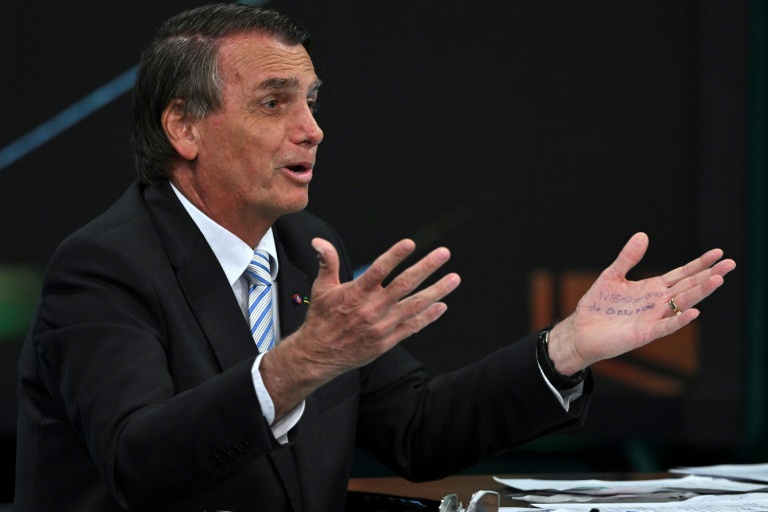
Brazil’s far-right President Jair Bolsonaro said Friday he would accept possible defeat in the second round of the presidential election on October 30 provided “nothing abnormal” occurs during the vote.

“Today, everyone says that my acceptance (among the people) is much greater than that of my opponent (ex-president Luiz Inacio Lula da Silva). But let’s leave it to the polls … let’s leave this question with the electoral transparency commission,” Bolsonaro said in an interview on SBT when asked if he would accept the result in the event of a defeat.

“If the transparency commission, in which the armed forces also participate, shows nothing abnormal, there is no reason to doubt the outcome of the elections,” said the former army captain who has on several occasions and without proof raised the possibility of “fraud” at the electronic ballot box.

He had gone so far as to threaten not to recognize the results if he lost to his leftwing rival.

Lula was for months the big favorite in opinion polls, with a 21-point lead over Bolsonaro in May, according to the Datafolha institute.

But Bolsonaro surprised in the first round on October 2, winning 43 percent of the vote, only five points behind Lula, a much smaller gap than polls had predicted.

In the final stretch of the campaign, Bolsonaro has reduced his attacks on electronic voting and turned on polling firms, which he accused of “lying” to favor his main opponent.

The polls still put Lula in the lead, with 49 percent against 45 percent for Bolsonaro, according to Datafolha, with one percent undecided and four percent indicating they will cast blank votes.

Bolsonaro’s interview replaced what should have been the second face-to-face debate between the two candidates, after Lula decided not to take part because of “incompatibility with his campaign agenda,” according to the organizers.

A spate of drownings: Classes help Black Americans learn to swim

Ten-year-old Aiden Reed had reason to be a little nervous as he dipped into a swimming pool in Washington.

“I almost drowned,” the young African American recalled of an incident at another pool when a lifeguard had to rescue him.

Since then, Aiden has found the courage to face his fears and go back in the pool for lessons with Swim Up, a nonprofit group that offers free classes.

Out of nine new swimmers on a recent October afternoon, eight were African American, a vulnerable group for drowning. In the United States, the drowning rate for Black children ages five to nine is 2.6 times higher than that of white children, according to the Centers for Disease Control and Prevention.

For Black children ages 10-14, drowning rates are 3.6 times higher, the CDC says.

Some 64 percent of Black children know little or nothing about swimming, compared to 40 percent of white children, according to USA Swimming, a national federation.

A tragedy in August 2010 brutally illustrated the situation. During a barbecue with friends in Shreveport, Louisiana, DeKendrix Warner, a Black teenager, waded into shallow water in the Red River.

He didn’t know how to swim. Neither did the six friends and cousins who went in to try to save him. Warner slipped and plunged into a pool of much deeper water. A passerby jumped in and saved him but the six others had also followed him into the deep water. Family members on shore, who couldn’t swim, watched helplessly.

DeKendrix survived, but the six teenagers, aged 13 to 18, all drowned.

– Closed swimming pools –

In the United States, there is no federal requirement to teach swimming in schools. The reason so many Black children don’t know how to swim, though, is rooted in the history of slavery and racial inequality, according to activists and historians.

“Enslaved Africans could escape slavery with swimming skills,” said Ebony Rosemond, executive director of Black Kids Swim, an organization that helps African American youth learn to swim.

“It was in the best interest of those who owned humans to make sure that they didn’t have the skill, or that they were too afraid to jump into the water,” she said.

After the abolition of slavery in 1865, white supremacists terrorized African Americans, “lynching them, brutalizing them, and hanging their bodies near bodies of water,” Rosemond added.

With the civil rights movement came desegregation. Courts ordered cities to open their public pools to Black people. But many, especially in the South, chose to close them instead, said historian Jeff Wiltse of the University of Montana, author of “A Social History of Swimming Pools in America.”

Such racial discrimination “severely restricted Black Americans’ access” to pools, he summarized in a 2014 article. “Swimming never became integral to Black Americans’ recreation and sports culture and was not passed down from generation to generation.” 

– ‘It’s cold!’ –

Today, many initiatives are trying to correct this, like Swim Up.

Mary Bergstrom, a cofounder, handed out caps and swim shorts to kids one recent afternoon. “Get in the water,” she urged. One of them jumped in and yelled, “It’s cold!”

The kids learn skills step by step. First, they float on their backs, then kick their feet to move forward, arms outstretched, guided by Bergstrom, a lawyer and former competitive swimmer.

Aiden, his fear of the water a thing of the past, floats easily. One of his distracted buddies forgets to breathe, and Bergstrom gently pats his head to get him to take a breath of air.

“We are almost at 100 kids that we’ve kind of taught to swim or kind of got them over their fear of the water,” Bergstrom said.

“Eventually our goal is to… put this into schools, and it can be burden-free on families. You can make it a part of the curriculum, and you can make a difference,” she said.

Not far from the pool is Howard University, the only historically Black university in the United States with a competitive swim team, whose swimmers sometimes give lessons to Swim Up youth.

On October 1, they entered Burr Gymnasium to thunderous applause as they took on rival Georgetown. About 1,200 people were attending the event, which was designed by their coach, Nick Askew, to raise the profile of Black swimmers.

“We can create a fan experience like none other, the fact that we can also back it up with some amazing swims… is one of the things… a lot of people will grab on to, and make them more encouraged to touch the water, to learn how to swim,” Askew told AFP.

The Howard Bisons held their own, although both the male and female teams lost to their Georgetown competitors. 

Niles Rankin, a 21-year-old competitive swimmer at Howard, said coach Askew has a goal for his athletes.

“He wanted us to get our name out there to kind of be like, I guess, a symbol for other Black swimmers,” he said. 

“You can do it… You can be a Black swimmer.”

Japanese, Australia PMs eye new security pact

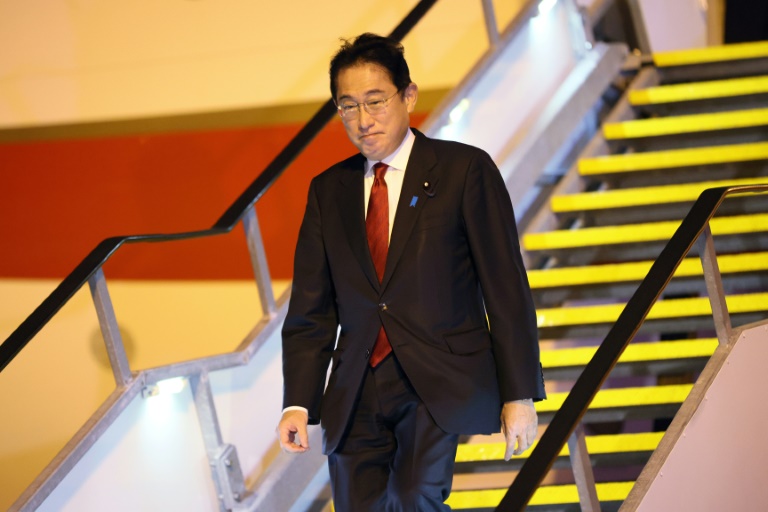
Japanese Prime Minister Fumio Kishida visited Australia on Saturday, where he is expected to ink a revamped security deal with his Australian counterpart to address China’s rapidly growing military clout.

Kishida met Anthony Albanese for talks to finalise an agreement to share more sensitive intelligence and deepen military cooperation.

“The Japan and Australian relationship on security issues has built up for many years,” a Japanese foreign ministry official said ahead of the meeting in the western city of Perth.

“We hope that this visit will be an opportunity to further deepen security cooperation.”

It is the first visit of a Japanese prime minister to Australia since 2018.

The two Pacific nations are expected to focus on sharing intelligence — particularly signals and geospatial intelligence gleaned from electronic eavesdropping and high-tech satellites.

Neither country has extensive foreign spy networks or armies of human assets overseas — Japan has no foreign spy agency equivalent to America’s CIA, Britain’s MI6 or even Australia’s much smaller agency ASIO.

But according to expert Bryce Wakefield, both Australia and Japan have sophisticated signals intelligence capabilities — a form of information gathering by intercepting communications.

Wakefield, director of the Australian Institute of International Affairs, said the agreement could be a model for Japan to develop deeper security ties with countries like Britain.

There have long been rumours about Japan and Australia cooperating on intelligence behind the scenes.

This accord will deepen and codify that partnership, but it is also being seen as another small step toward Japan joining the powerful Five Eyes intelligence-sharing alliance between Australia, Britain, Canada, New Zealand and the United States.

It is “an epoch-making event that Japan can share SIGINT (signals intelligence) with a foreign nation except for the United States,” Ken Kotani, an expert in the history of Japanese intelligence at Nihon University, told AFP.

But hurdles remain.

Closer cooperation has been hampered by longstanding concerns about Japan’s ability to handle sensitive confidential material and transmit it securely.

For now, Australia will likely be forced to scrub any intelligence passed to Japan for information gleaned from the Five Eyes network.

– China top of mind – 

Prime ministers Kishida and Albanese are also expected to vow more military and energy cooperation.

Japan is a major buyer of Australian gas and has made a series of big bets on hydrogen energy produced in Australia, as it tries to ease a lack of domestic energy production and dependence on fossil fuels.

“Japan imports 40 percent of its LNG from Australia. So it’s very important for Japan to have a stable relationship with Australia, from the aspect of energy,” the Japanese official said.

Saturday’s deal is expected to update a 2007 accord, which was agreed upon when Beijing was much weaker militarily and much less bellicose in its dealings with the world. 

Since Xi Jinping came to power, Beijing’s military has become much stronger and its posturing more aggressive.

During Xi’s decade-long rule, China has built the world’s largest navy, revamped the globe’s biggest standing army, and amassed a nuclear and ballistic arsenal to trouble any foe.

Rival colors and hand signs… A gang war? No, Brazil's elections

To some, rival colors and hand signs might evoke a gang war.

But in Brazil, the battles of red against yellow or “pistol” gesture versus upturned thumb and forefinger are part of another kind of violent, fratricidal clash: politics.

As the South American giant gets set to vote on October 30 in a polarizing presidential runoff between far-right incumbent Jair Bolsonaro and leftist challenger Luiz Inacio Lula da Silva, AFP revisits some of the colorful images and symbols that have marked the campaign.

– Red sea –

Red is the historic color of the Workers’ Party (PT), which Lula co-founded in 1980, and the ex-metalworker’s campaign rallies have looked like giant seas of it.

From T-shirts to flags to sunglasses to towels laid out on Rio de Janeiro’s iconic beaches, there is no end of red gear on display by fans of the former president (2003-2010) — often with a white PT star in the middle.

Some accessories feature recent photos of 76-year-old Lula, others a younger, thicker-bearded version from his rabble-rousing union leader days. But the background is nearly always red.

Like an angered bull, Bolsonaro has charged, attacking Lula and his allies as “communists.”

“Your flag has always been red — with a hammer and sickle,” he cracks.

– Waving the flag – 

Bolsonaro has adopted the green and yellow of Brazil’s flag as his colors.

Conservatives first started wearing yellow and green en masse during street protests in 2015 against former president Dilma Rousseff, Lula’s hand-picked successor.

But Bolsonaro, 67, has made them his own — as well as the national football team’s yellow jersey, which he urged supporters to wear to the polls in the first-round election on October 2.

“Today, the people identify the flag with me, with our candidates to lead Brazil — with good people,” the incumbent said last month.

Hammering home the message, some vendors sell versions of the flag with Bolsonaro’s face in place of the star-spangled blue disc in the middle, his campaign slogan written beneath: “Brazil above everything, God above everyone.”

Lula has called to “rescue” the flag from “that fascist.”

“Green and yellow belong to all of us,” he says.

– Pistol vs. ‘L’ –

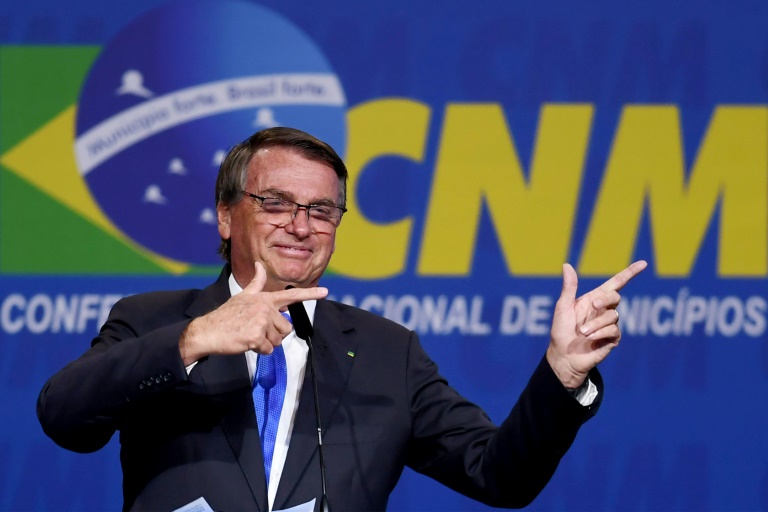
Bolsonaro’s trademark gesture since the 2018 campaign that swept him to power has been a pistol sign with outstretched thumb and forefinger — a reference to the ex-army captain’s pledge to ease restrictions on guns so “good citizens” can defend themselves from crime.

Under his policies, firearm ownership in Brazil has quintupled.

Opponents, who criticize the gesture as violent, have literally turned it on its head, upturning the pistol to make an “L” for Lula — reviving a gesture the veteran leftist’s supporters have been using since his first presidential campaign in 1989.

Videos of pro-Lula celebrities such as legendary singer Caetano Veloso and ex-footballer Rai flashing the gesture have gone viral online.

– Car campaign –

Some voters have also gotten their cars in on the act, going far beyond the traditional bumper stickers.

One elaborate decal set features a life-size image of Bolsonaro in the front window and Lula in the back, behind bars in a prisoner’s uniform — a reference to the corruption allegations that dog the ex-president.

Provocative, sensationalist and humorous content born online is reshaping the “rigid” rules of how campaigns were run in the past, says political analyst Alana Fontenelle of the University of Brasilia.

“The language of the internet is transcending to the offline world,” she told AFP.

China's Communist Party Congress to end with Xi set for third term

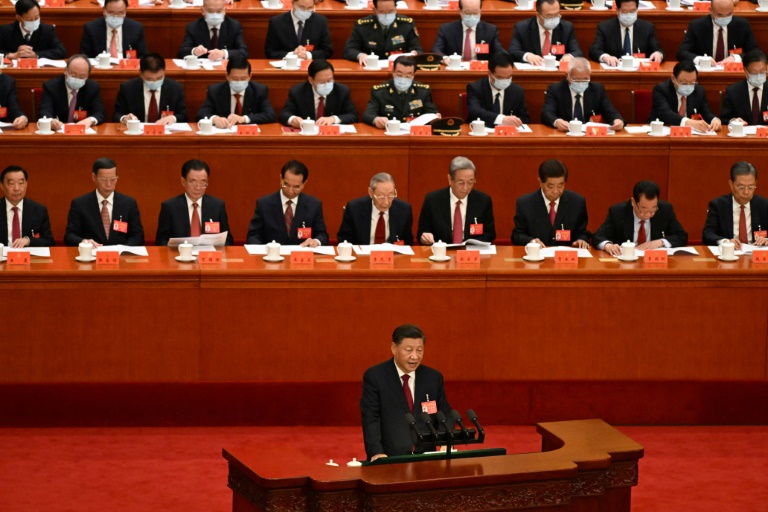
China’s five-yearly Communist Party Congress began its closing session Saturday morning, with President Xi Jinping likely to seal an unprecedented third term in power.

The closing ceremony later at Beijing’s Great Hall of the People tops off a week of largely rubber-stamp meetings among 2,300 party delegates, who will approve a reshuffle of the party’s top leadership likely to have been determined well in advance. 

Xi is widely expected to be unveiled as general secretary on Sunday, shortly after the first meeting of the newly elected Central Committee, a 200-member body of the party’s most senior officials.

This will allow Xi to sail through to a third term as China’s president, due to be announced during the government’s annual legislative sessions in March.

Xi previously abolished the presidential two-term limit in 2018, paving the way for him to rule indefinitely. 

The weekend will also see the new Central Committee approve a reshuffled 25-member Politburo, as well as a Politburo Standing Committee — China’s apex of power — of around seven people, which analysts expect to be stacked with Xi allies.

At Sunday’s Congress opening ceremony, Xi delivered a 105-minute “work report” lauding the party’s achievements and glossing over domestic problems such as the stalling economy and the damage wrought by his harsh zero-Covid policy. 

Heavy on ideological rhetoric and light on policy, a defiant Xi also urged Communist Party members to steel themselves against numerous challenges including a hardening geopolitical climate.

“We must… be ready to withstand high winds, choppy waters and even dangerous storms,” he said. 

“Confronted with drastic changes in the international landscape, especially external attempts to blackmail, contain, (and) blockade… China, we have put our national interests first.”

Security was also a main focus of the speech, in which Xi lauded Hong Kong’s transition from “chaos to governance” and vowed to “never commit to abandoning the use of force” to seize the self-ruled island of Taiwan.

The work report “is a carefully scripted drama through which the power of the Party, its leader, and its ideas are meant to be elevated and amplified”, wrote David Bandurski, editor of the University of Hong Kong’s China Media Project.

– Power grab –

The Congress this week is likely to further cement Xi’s position as China’s most powerful leader since Mao Zedong, with analysts predicting he is virtually certain to be reappointed for a third term in power.

But some key questions remain unresolved, including whether Xi, 69, will appoint a potential successor to the Politburo Standing Committee and whether a pithier form of his signature political philosophy will be enshrined in the charter of the 96-million-strong party.

The latter would make Xi Jinping Thought “the latest, 21st-century rendition of Marxism (and) the state ideology of China”, said Steve Tsang, director of the SOAS China Institute at the University of London.

“Xi’s power will be akin to that of the dictator of China, and there will be next to no scope for anyone to advise him to attempt course correction,” Tsang told AFP.

“This will increase the risk of policy mistakes being made, as everything will depend on Xi getting it right.”

Trump ordered to testify in Capitol assault probe

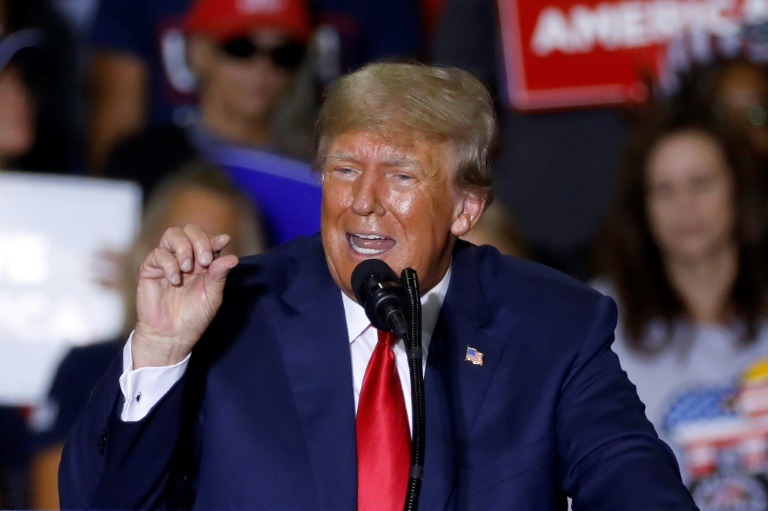
Lawmakers probing the 2021 attack on the US Capitol subpoenaed former president Donald Trump Friday to testify on his involvement in the violence, in a major escalation of their sprawling inquiry.

The summons came after the House panel of seven Democrats and two Republicans voted unanimously last week to compel Trump’s appearance before investigators.

It requires the 76-year-old Republican to produce documents by November 4 and to appear for a deposition beginning on or around November 14 — the Monday after the crucial November 8 midterm elections.

“As demonstrated in our hearings, we have assembled overwhelming evidence, including from dozens of your former appointees and staff, that you personally orchestrated and oversaw a multi-part effort to overturn the 2020 presidential election and to obstruct the peaceful transition of power,” the committee told Trump in a letter.

Trump, who urged his supporters to “fight like hell” in a fiery speech near the White House on January 6, 2021, was impeached for inciting the mob to storm Congress later that day to halt the peaceful transfer of power to Joe Biden.

The letter accuses Trump of bidding to overturn the election despite knowing claims of fraud had been overwhelmingly rejected by more than 60 courts and refuted by his campaign staff and senior advisers.

“In short, you were at the center of the first and only effort by any US president to overturn an election and obstruct the peaceful transition of power, ultimately culminating in a bloody attack on our own Capitol and on the Congress itself,” it added.

Without confirming Trump had received the subpoena, his lawyer David Warrington said his team would “review and analyze” the document and “respond as appropriate to this unprecedented action.”

Biden weighed in on the matter later Friday during an interview with MSNBC, saying it “would make sense” for Trump to comply with the subpoena.

– Aggressive escalation –

Subpoenas from the panel have proved difficult to enforce, with former White House aide Steve Bannon the only target convicted of contempt of Congress for refusing to comply.

Bannon was sentenced to four months in prison on Friday, although he remains out on bail pending an appeal.

Trump is notorious for his ability to run down the clock on congressional investigations and legal action, and it remains highly unlikely that he would agree to give evidence.

The subpoena expires in any case with the new congressional term in January. Republicans are expected to win back the House of Representatives in November’s elections, and plan to immediately end the investigation.

But the move marks an aggressive escalation of the probe, which has issued more than 100 subpoenas and interviewed more than 1,000 people since its launch in 2021.

While no sitting president has ever been forced to testify before Congress, lawmakers have summoned several former presidents to discuss their conduct in office.

Trump’s compliance would mean testifying under oath and could result in being charged with perjury were he to lie.

If he refuses to comply, the full House can hold him in criminal contempt in a vote recommending him for prosecution, as it did with Bannon. 

– ‘Clear and present’ danger –

The panel unveiled reams of evidence across eight summer hearings on the former president’s involvement in a complex series of connected schemes to overturn the 2020 election.

Witness testimony provided stunning examples of Trump and his allies pressuring election officials and trying to get lawfully cast votes nullified in swing states, and of Trump’s inertia amid the mob uprising.

The committee also pressed its position that Trump — who continues to be a wellspring of disinformation about the 2020 presidential election — remains a “clear and present” threat to democracy.

Lawmakers plan to release a final report by the end of the year.

The committee has not announced whether it will make direct criminal referrals over the Capitol attack, although the move would amount to little more than a gesture as the Justice Department is already investigating.

The list of records that Trump is required to produce includes all of his communications on the day of the insurrection, as well as various categories of messages in the weeks leading up to the riot.  

Investigators specifically mention Signal, suggesting the committee has determined that Trump used the encrypted communications app while participating in the plot. 

The software allows users to have messages delete automatically within any time period selected.

The requested documents include any Signal communications between Trump and far-right militias such as the Oath Keepers and Proud Boys.

European countries urge UN probe of Iran drones in Ukraine

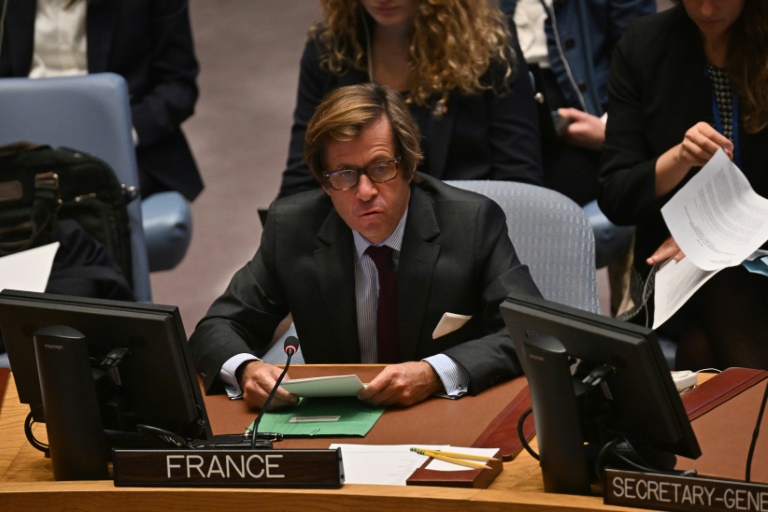
France, Britain and Germany called Friday in a letter to the United Nations for an “impartial” investigation into Iranian drones the West says Russia is using in the war in Ukraine.

“We would welcome an investigation by the UN Secretariat team responsible for monitoring the implementation of UNSCR 2231,” the UN ambassadors of the three countries wrote.

UN Security Council Resolution 2231 endorsed the international agreement that provided for sanctions relief in exchange for curbs on Iran’s nuclear program — a deal that was later scrapped by then-US president Donald Trump.

In their letter, which was addressed to the Security Council and Secretary-General Antonio Guterres, the ambassadors said they would “stand ready to support the work of the Secretariat in conducting its technical and impartial investigation.” 

They added that they were “deeply concerned by the transfer of unmanned aerial vehicles (UAVs) from Iran to Russia in violation” of the resolution.

“These UAVs are being used by Russia in its war of aggression against Ukraine in attacks against civilian infrastructure and cities across Ukraine, leading to the death of innocent civilians,” they wrote.

French ambassador to the UN Nicolas de Riviere called on Iran “to immediately cease all forms of support to Russia’s aggression on Ukraine.” 

Western countries have accused Iran of supplying drones that Moscow is using to carry out strikes in Ukraine, and the White House said Thursday that Iranian personnel were on the ground in Crimea helping Russian forces conduct drone attacks.

However Russia’s UN envoy, Vassily Nebenzia, called the charges “another fake (news) about the alleged supplies to Russia… We reject any attempts to involve the UN secretariat in this dirty undertaking.”

Iran also strongly rejected the drone allegations at the United Nations earlier in the week.

Guinea junta agrees return to civilian rule in 2 years

Guinea’s ruling junta has agreed to restore civilian rule in two years, after facing sanctions over its original plan for a three-year transfer of power, the West African bloc ECOWAS said Friday.

West African leaders had last month suspended Guinea from the bloc and imposed sanctions on a number of individuals following a military coup.

“In a dynamic compromise, experts from ECOWAS and Guinea have jointly developed a consolidated chronogram (timetable) for a transition spread over 24 months,” ECOWAS said in a report following a technical mission to the country published on social media by the junta.

The country’s military leader, Colonel Mamady Doumbouya, said in an address broadcast on state television that the timetable would take effect from January 1, 2023.

Leaders from the Economic Community of West African States must approve the timetable before it is officially implemented, with the bloc due to hold a summit before the end of the year.

The bloc had given the junta one month to present a “reasonable and acceptable” timetable for the return to civilian rule, an ultimatum that theoretically expires this weekend.

Diplomatic links between the two sides have remained and Guinean authorities have reiterated their readiness to cooperate with ECOWAS, which had dispatched its mission to Conakry to work out a compromise schedule.

– Acceptable –

The poor but mineral-rich West African state has been under a military government since a September 2021 coup that ousted president Alpha Conde after more than 10 years in power.

Colonel Doumbouya has since appointed himself president and vowed to restore civilian rule within three years.

Several West African officials have indicated that a two-year transition period would be acceptable.

A similar timeframe was agreed between ECOWAS and the junta in neighbouring Mali after months of wrangling.

Under the terms of that agreement, reached in July, the Malian military was to hand over power in March 2024. By that time, they would have been in power for more than three-and-a-half years since overthrowing the elected civilian president in August 2020.

In recent years, ECOWAS has witnessed a succession of military coups in West Africa, in 2020 and 2021 in Mali, in 2021 in Guinea and twice this year in Burkina Faso.

In the face of military authorities, the bloc has duly increased its summits and country missions while ramping up pressure to shorten the transitional periods back to civilian rule.

– Four dead in clashes –

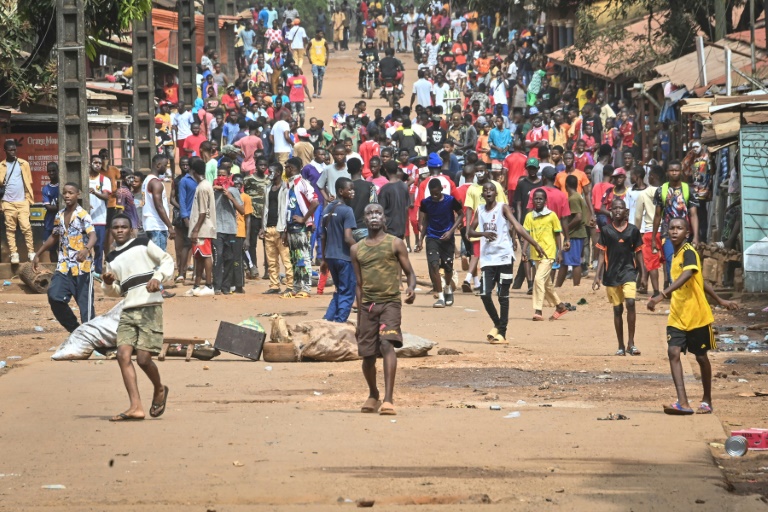
The transition compromise was reached after demonstrations broke out Thursday in the capital Conakry, with young protesters clashing with security forces and opposition group the National Front for the Defence of the Constitution claiming four civilians had been killed.

The FNDC — outlawed by the junta — had called for the protests to demand a quick return to a civilian-led government and the release of all prisoners detained for political reasons.

In response, Guinea’s top prosecutor on Friday called for a crackdown on the organisers and participants of a giant anti-government protest in which he said six security personnel had been wounded while the opposition said four civilians had been killed.

The FNDC identified three of the people killed as Thierno Bella Diallo, Boubacar Diallo and Thierno Moussa Barry. It said 20 people suffered gunshot wounds while many others were arrested.

Justice Minister Alphonse Charles Wright confirmed their deaths in a statement on Friday, but said the causes “remain to be clarified by autopsy”. 

He ordered prosecutions, without commenting on the alleged perpetrators. 

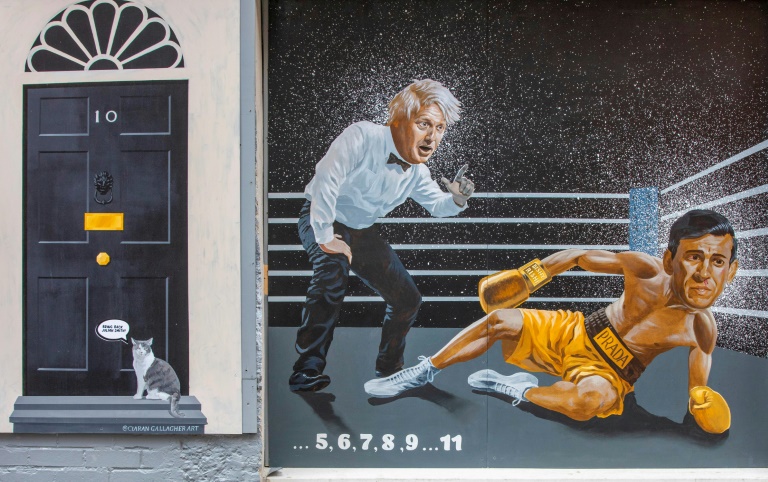
UK's Sunak qualifies for PM race as Johnson eyes comeback

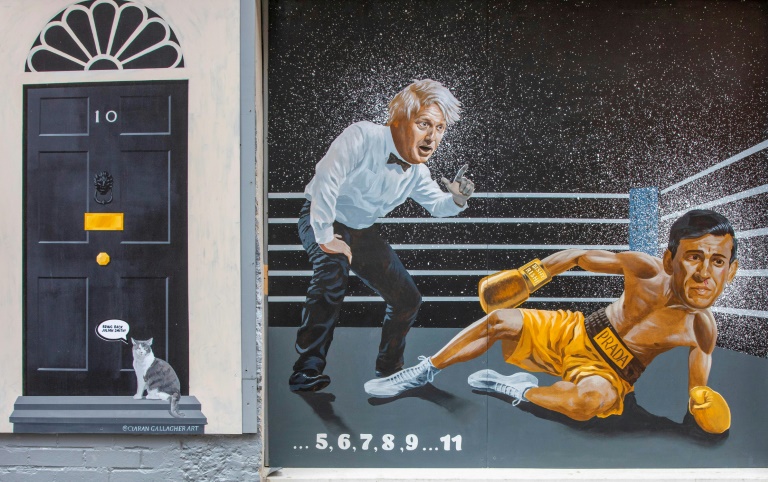
British Conservative politician Rishi Sunak late Friday reached the minimum threshold to run for party leader, as former prime minister Boris Johnson targeted an audacious comeback.

Cabinet member Penny Mordaunt became the first to formally declare her candidacy, after the UK’s ruling party was forced into a second leadership contest following the dramatic resignation of Prime Minister Liz Truss.

“Honoured to be the 100th Tory MP to support #Ready4Rishi,” senior backbencher Tobias Ellwood tweeted, as other backers of Sunak also said he had crossed the barrier.

Sunak will automatically become party leader and prime minister if his opponents fail also to win 100 nominations from their fellow Tory MPs.

Security minister Tom Tugendhat, who ran for leader himself after Johnson was toppled in July, issued a thinly veiled appeal to the scandal-tainted ex-leader to stay out of the race.

“This is no time for political games, for settling scores, or for looking backwards,” Tugendhat said as he also endorsed Sunak late Friday.

Neither Sunak nor Johnson has publicly declared they are running.

But Johnson cut short a Caribbean holiday to take part in the accelerated contest, which will see Tory MPs hold a vote on Monday before a possible online ballot for party members next week.

James Duddridge, one of Johnson’s closest allies in parliament, said he had been in contact with his old boss via WhatsApp.

“He said… ‘We are going to do this. I’m up for it’,” the MP said, as a Sky News reporter posted a photograph apparently showing Johnson on a flight home from the Dominican Republic.

– ‘Fresh start’ –

The Sunak and Johnson camps are reportedly seeking talks to see if there is scope for a unity deal — although there is plenty of bad blood since the former prime minister’s defenestration.

Mordaunt, who just missed out on making the final runoff after Johnson quit, said she was running for “a fresh start, a united party and leadership in the national interest”.

But polling company YouGov found that three in five voters now want an early general election, in line with demands from opposition parties, as Britons struggle with a worsening cost-of-living crisis.

Labour and other parties argue only an election can end the months of political chaos, sparked when Johnson was himself forced out after non-stop personal and political scandal.

In the resultant contest, Truss won the support of just over 80,000 Tory party members, defeating Sunak, who correctly warned that her right-wing programme of debt-fuelled tax cuts would crash the economy.

Truss announced on Thursday she was quitting after just 44 tempestuous days in office.

– ‘Questions to answer’ –

Political website Guido Fawkes, which is running a rolling spreadsheet of Tory MPs’ declared support, had Sunak on 103, Johnson on 68 and Mordaunt on 25 by late Friday.

Defence Secretary Ben Wallace, a favourite of the Tory grassroots, told reporters he was not standing himself. “At the moment, I’m leaning towards Boris Johnson,” he said.

But Wallace added that Johnson still had “some questions to answer” over the multiple scandals, which resulted in a yet-to-launch investigation in the House of Commons.

If found guilty of lying to the Commons over the “Partygate” scandal — lockdown-breaching revels held in Downing Street — Johnson could be suspended or even expelled from parliament.

As a result of such controversies, Johnson left Number 10 with dismal poll ratings, and other Tories were aghast at the prospect of his coming back.

Veteran backbencher Roger Gale warned that Johnson could face a wave of resignations from MPs refusing to serve under him as leader.

– ‘Backstabber’ –

Johnson’s ambiguous appeal was underlined by a YouGov poll that found 52 percent of voters opposed to his return.

In Sunak’s constituency in Yorkshire, northern England, 58-year-old farmer Elaine Stones said the party had made a mistake in electing Truss instead of him. 

“He’s honest, reliable and he should have been voted in last time,” she told AFP. 

But retiree Maureen Ward called Sunak a “backstabber” who helped to topple Johnson. 

“He wielded the knife and once you do that, you can’t be trusted,” she said.

UK's Sunak qualifies for PM race as Johnson eyes comeback

British Conservative politician Rishi Sunak late Friday reached the minimum threshold to run for party leader, as former prime minister Boris Johnson targeted an audacious comeback.

Cabinet member Penny Mordaunt became the first to formally declare her candidacy, after the UK’s ruling party was forced into a second leadership contest following the dramatic resignation of Prime Minister Liz Truss.

“Honoured to be the 100th Tory MP to support #Ready4Rishi,” senior backbencher Tobias Ellwood tweeted, as other backers of Sunak also said he had crossed the barrier.

Sunak will automatically become party leader and prime minister if his opponents fail also to win 100 nominations from their fellow Tory MPs.

Security minister Tom Tugendhat, who ran for leader himself after Johnson was toppled in July, issued a thinly veiled appeal to the scandal-tainted ex-leader to stay out of the race.

“This is no time for political games, for settling scores, or for looking backwards,” Tugendhat said as he also endorsed Sunak late Friday.

Neither Sunak nor Johnson has publicly declared they are running.

But Johnson cut short a Caribbean holiday to take part in the accelerated contest, which will see Tory MPs hold a vote on Monday before a possible online ballot for party members next week.

James Duddridge, one of Johnson’s closest allies in parliament, said he had been in contact with his old boss via WhatsApp.

“He said… ‘We are going to do this. I’m up for it’,” the MP said, as a Sky News reporter posted a photograph apparently showing Johnson on a flight home from the Dominican Republic.

– ‘Fresh start’ –

The Sunak and Johnson camps are reportedly seeking talks to see if there is scope for a unity deal — although there is plenty of bad blood since the former prime minister’s defenestration.

Mordaunt, who just missed out on making the final runoff after Johnson quit, said she was running for “a fresh start, a united party and leadership in the national interest”.

But polling company YouGov found that three in five voters now want an early general election, in line with demands from opposition parties, as Britons struggle with a worsening cost-of-living crisis.

Labour and other parties argue only an election can end the months of political chaos, sparked when Johnson was himself forced out after non-stop personal and political scandal.

In the resultant contest, Truss won the support of just over 80,000 Tory party members, defeating Sunak, who correctly warned that her right-wing programme of debt-fuelled tax cuts would crash the economy.

Truss announced on Thursday she was quitting after just 44 tempestuous days in office.

– ‘Questions to answer’ –

Political website Guido Fawkes, which is running a rolling spreadsheet of Tory MPs’ declared support, had Sunak on 103, Johnson on 68 and Mordaunt on 25 by late Friday.

Defence Secretary Ben Wallace, a favourite of the Tory grassroots, told reporters he was not standing himself. “At the moment, I’m leaning towards Boris Johnson,” he said.

But Wallace added that Johnson still had “some questions to answer” over the multiple scandals, which resulted in a yet-to-launch investigation in the House of Commons.

If found guilty of lying to the Commons over the “Partygate” scandal — lockdown-breaching revels held in Downing Street — Johnson could be suspended or even expelled from parliament.

As a result of such controversies, Johnson left Number 10 with dismal poll ratings, and other Tories were aghast at the prospect of his coming back.

Veteran backbencher Roger Gale warned that Johnson could face a wave of resignations from MPs refusing to serve under him as leader.

– ‘Backstabber’ –

Johnson’s ambiguous appeal was underlined by a YouGov poll that found 52 percent of voters opposed to his return.

In Sunak’s constituency in Yorkshire, northern England, 58-year-old farmer Elaine Stones said the party had made a mistake in electing Truss instead of him. 

“He’s honest, reliable and he should have been voted in last time,” she told AFP. 

But retiree Maureen Ward called Sunak a “backstabber” who helped to topple Johnson. 

“He wielded the knife and once you do that, you can’t be trusted,” she said.

Close Bitnami banner
Bitnami