World

Putin visits military draft training centre

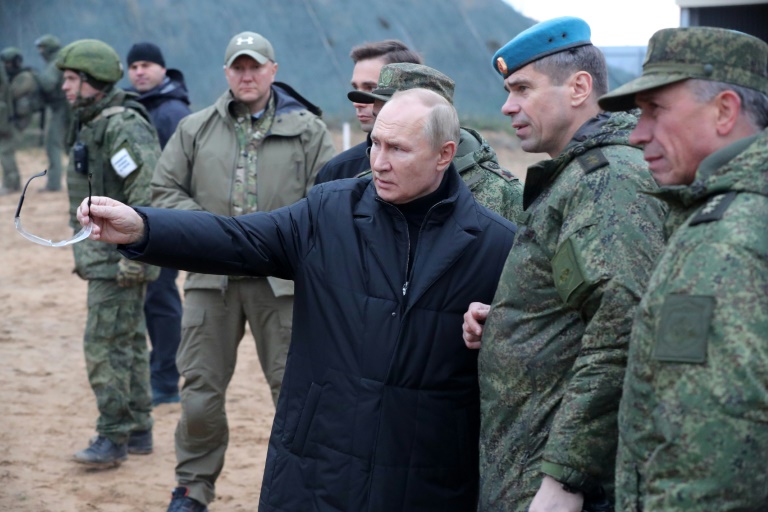
President Vladimir Putin on Thursday visited a training centre for mobilised Russians for the first time since announcing a partial military call-up on September 21. 

State television showed Putin visiting a shooting centre in the Ryazan region, southeast of Moscow, dressed in black, shooting a newly developed sniper rifle and hugging military men.

Wearing ear protectors and safety glasses, Putin fired several shots from a Russian SVD sniper rifle, lying under a camouflage net. 

Putin then appeared to start leaving but turned back and asked one of the soldiers:

“What kind of family do you have?”

“A daughter. Five years old,” the mobilised soldier answered. 

Putin hugged him and wished him “good luck.”

Military officials also showed Putin what mobilised men are equipped with, presenting him with a line of men, some of them with their rucksacks open to show what they are carrying. 

“Turn around in a circle,” one commander said to a soldier to show the Russian leader the men were adequately equipped. 

“These are exceptional boots,” he added, as Defence Minister Sergei Shoigu who accompanied Putin, inspected the footwear.

“Everything to fulfil the tasks,” the commander said. 

The visit comes after reports that mobilised men are badly equipped, leading to some discontent.

Russian state-run news agencies said the commander-in-chief also “observed practical exercises” including fire drills, engineering and medical trainings. 

Shoigu, by Putin’s side during the visit, gave him an update on the training of those called up in the draft, news agencies said.

More than 200,000 people have been conscripted into the Russian army since Putin announced the mobilisation drive, the defence ministry said.

Russia’s mobilisation is aimed at propping up Moscow’s forces in Ukraine after a series of military setbacks.

UK's PM Truss quits, Tories vow new leader next week

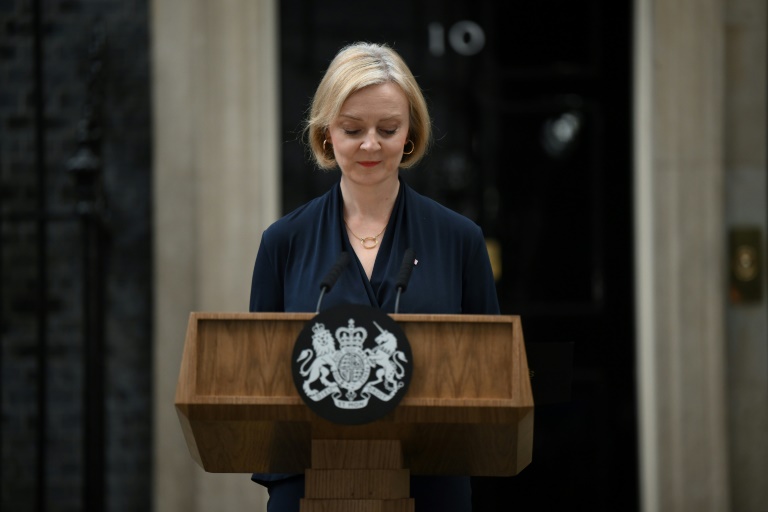
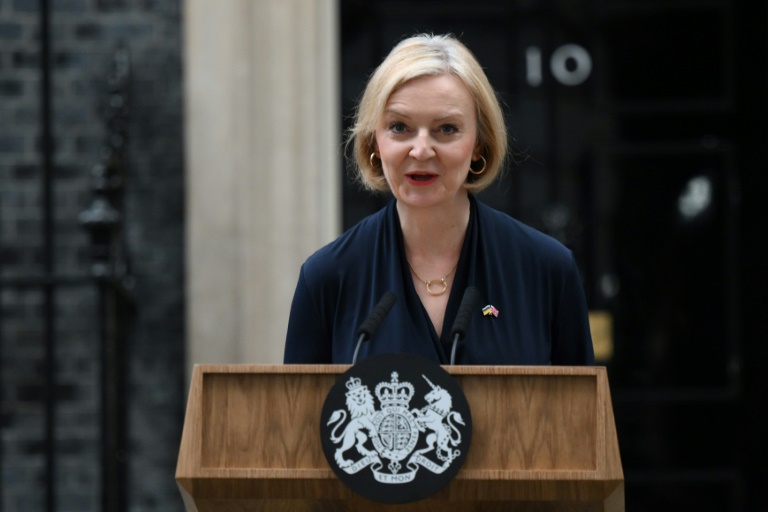
British Prime Minister Liz Truss on Thursday announced her resignation just six crisis-filled weeks after taking office, becoming the shortest-lived premier in UK history.

Her Conservative party detailed a rapid process to elect a new leader on October 28, setting a high bar of 100 nominations among its MPs for candidates — which might block any comeback by former premier Boris Johnson.

The race will be effectively limited to three candidates at the start, before the 357 Tory MPs vote on their preferred candidate on Monday.

Party members will then get an online vote, in an accelerated timetable that avoids the drawn-out contest in which Truss defeated Rishi Sunak over the summer following Johnson’s own resignation.

Truss admitted she “cannot deliver the mandate” on which she was elected by the members, after her right-wing platform of tax cuts disintegrated and as many Conservative MPs revolted.

Labour leader Keir Starmer, whose opposition party has surged in opinion polls on the back of Truss’s short, eventful tenure, demanded a general election “now”.

“This is not just a soap opera at the top of the Tory party,” he said, warning of “huge damage” to the UK economy, although the pound surged against the dollar after Truss’s dramatic announcement.

– Sunak the favourite –

Speaking outside 10 Downing Street, Truss said she would stay on as prime minister until a successor was chosen to serve as Tory leader.

“We’ve agreed that there will be a leadership election to be completed within the next week,” she said, after senior backbench MP Graham Brady told her the game was up.

“This will ensure that we remain on a path to deliver our fiscal plan and maintain our country’s economic stability and national security.”

The new leader will be in place in time for new finance minister Jeremy Hunt to deliver a crucial budget statement on October 31.

Hunt has already thrown out nearly all of debt-fuelled Truss’s tax promises, which Sunak had warned would bring about higher inflation and market turmoil.

Sunak’s warnings were vindicated, and the former finance minister quickly emerged as the bookmakers’ favourite. But he remains held in deep suspicion by Johnson loyalists.

Johnson himself was eyeing a comeback, the Times and Telegraph newspapers reported, despite remaining deeply unpopular with many Tory MPs and the electorate for the many scandals that brought him down.

“Time to come back,” trade minister James Duddridge, Johnson’s former parliamentary aide, tweeted with the hashtag #bringbackboris.

“Few issues at the office that need addressing.”

Another potential runner is senior cabinet member Penny Mordaunt, who narrowly failed to make the Truss-Sunak runoff this summer.

– Tory rebellion –

The end for Truss came after a key minister resigned and many Tory MPs rebelled over an important vote in chaotic scenes at the House of Commons late Wednesday.

By Thursday morning, more than a dozen Conservative MPs had publicly urged Truss to resign, after her tax-cutting plans caused a market meltdown during an already severe cost-of-living crisis.

Many more were reported to have submitted letters to Brady calling for Truss to be removed, although party rules would have forbidden another leadership campaign for 12 months.

“The prime minister acknowledges yesterday was a difficult day and she recognises the public wanted to see the government focusing less on politics and more on delivering their priorities,” her official spokesman told reporters.

Barely two hours later, she quit, and will fall well short of Tory predecessor George Canning who served 118 days as prime minister in 1827 before dying in office.

– Russia not impressed –

Amid Russia’s war in Ukraine and growing economic problems, Britain’s allies have been observing the tumult with concern, with political instability recurrent since the country voted in 2016 to quit the European Union.

US President Joe Biden vowed to “continue our close cooperation with the UK government” on shared challenges including Ukraine.

“It is important that Great Britain regains political stability very quickly, and that is all I wish,” French President Emmanuel Macron said.

Irish premier Micheal Martin said the need to resolve post-Brexit tensions in Northern Ireland was “ever more urgent” under Truss’s successor.

For its part, the Russian foreign ministry said Britain has “never known such a disgrace as prime minister”.

Events reached a head after what right-wing tabloid The Sun called “a day of extraordinary mayhem” on Wednesday.

Interior minister Suella Braverman left, apparently at Truss’s demand after she sent a government document in a personal email.

But Braverman, an arch right-winger who enjoys strong support among the Tory membership, used her resignation message to attack Truss in blistering terms.

There then followed farcical scenes in parliament as many Tory MPs rebelled against the government’s demand that they drop the party’s manifesto commitment to maintain a ban on fracking.

UK's PM Truss quits, Tories vow new leader next week

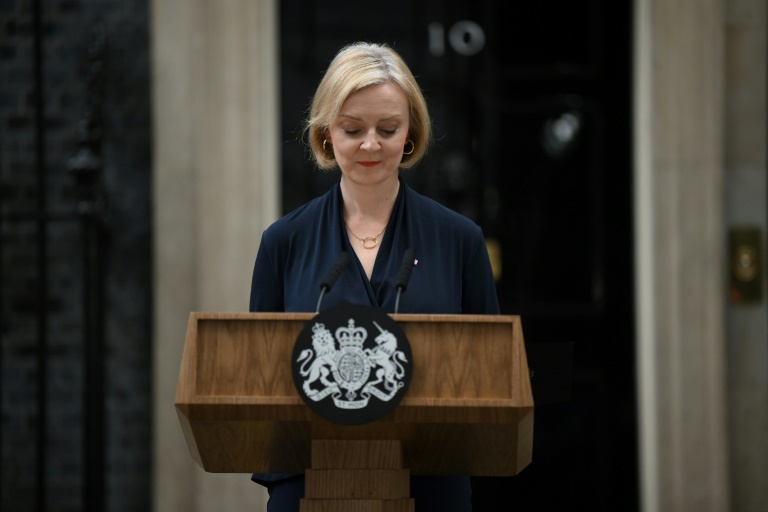
British Prime Minister Liz Truss on Thursday announced her resignation just six crisis-filled weeks after taking office, becoming the shortest-lived premier in UK history.

Her Conservative party detailed a rapid process to elect a new leader on October 28, setting a high bar of 100 nominations among its MPs for candidates — which might block any comeback by former premier Boris Johnson.

The race will be effectively limited to three candidates at the start, before the 357 Tory MPs vote on their preferred candidate on Monday.

Party members will then get an online vote, in an accelerated timetable that avoids the drawn-out contest in which Truss defeated Rishi Sunak over the summer following Johnson’s own resignation.

Truss admitted she “cannot deliver the mandate” on which she was elected by the members, after her right-wing platform of tax cuts disintegrated and as many Conservative MPs revolted.

Labour leader Keir Starmer, whose opposition party has surged in opinion polls on the back of Truss’s short, eventful tenure, demanded a general election “now”.

“This is not just a soap opera at the top of the Tory party,” he said, warning of “huge damage” to the UK economy, although the pound surged against the dollar after Truss’s dramatic announcement.

– Sunak the favourite –

Speaking outside 10 Downing Street, Truss said she would stay on as prime minister until a successor was chosen to serve as Tory leader.

“We’ve agreed that there will be a leadership election to be completed within the next week,” she said, after senior backbench MP Graham Brady told her the game was up.

“This will ensure that we remain on a path to deliver our fiscal plan and maintain our country’s economic stability and national security.”

The new leader will be in place in time for new finance minister Jeremy Hunt to deliver a crucial budget statement on October 31.

Hunt has already thrown out nearly all of debt-fuelled Truss’s tax promises, which Sunak had warned would bring about higher inflation and market turmoil.

Sunak’s warnings were vindicated, and the former finance minister quickly emerged as the bookmakers’ favourite. But he remains held in deep suspicion by Johnson loyalists.

Johnson himself was eyeing a comeback, the Times and Telegraph newspapers reported, despite remaining deeply unpopular with many Tory MPs and the electorate for the many scandals that brought him down.

“Time to come back,” trade minister James Duddridge, Johnson’s former parliamentary aide, tweeted with the hashtag #bringbackboris.

“Few issues at the office that need addressing.”

Another potential runner is senior cabinet member Penny Mordaunt, who narrowly failed to make the Truss-Sunak runoff this summer.

– Tory rebellion –

The end for Truss came after a key minister resigned and many Tory MPs rebelled over an important vote in chaotic scenes at the House of Commons late Wednesday.

By Thursday morning, more than a dozen Conservative MPs had publicly urged Truss to resign, after her tax-cutting plans caused a market meltdown during an already severe cost-of-living crisis.

Many more were reported to have submitted letters to Brady calling for Truss to be removed, although party rules would have forbidden another leadership campaign for 12 months.

“The prime minister acknowledges yesterday was a difficult day and she recognises the public wanted to see the government focusing less on politics and more on delivering their priorities,” her official spokesman told reporters.

Barely two hours later, she quit, and will fall well short of Tory predecessor George Canning who served 118 days as prime minister in 1827 before dying in office.

– Russia not impressed –

Amid Russia’s war in Ukraine and growing economic problems, Britain’s allies have been observing the tumult with concern, with political instability recurrent since the country voted in 2016 to quit the European Union.

US President Joe Biden vowed to “continue our close cooperation with the UK government” on shared challenges including Ukraine.

“It is important that Great Britain regains political stability very quickly, and that is all I wish,” French President Emmanuel Macron said.

Irish premier Micheal Martin said the need to resolve post-Brexit tensions in Northern Ireland was “ever more urgent” under Truss’s successor.

For its part, the Russian foreign ministry said Britain has “never known such a disgrace as prime minister”.

Events reached a head after what right-wing tabloid The Sun called “a day of extraordinary mayhem” on Wednesday.

Interior minister Suella Braverman left, apparently at Truss’s demand after she sent a government document in a personal email.

But Braverman, an arch right-winger who enjoys strong support among the Tory membership, used her resignation message to attack Truss in blistering terms.

There then followed farcical scenes in parliament as many Tory MPs rebelled against the government’s demand that they drop the party’s manifesto commitment to maintain a ban on fracking.

Blasting crackdown but eyeing deal, West in quandary over Iran

Waging brutal repression at home and allegedly helping Russia in its war against Ukraine, Iran is becoming an unsolvable challenge for Western powers eager to avoid a new nuclear power in the Middle East.

“We’re in a delicate situation and an obvious impasse,” a French diplomat admitted before Wednesday’s UN Security Council meeting on suspected Iranian drone use by Russian forces.

Despite Tehran’s new support for an increasingly isolated Moscow, the United States and the European Union still hope to revive the 2015 deal aimed at curtailing Iran’s nuclear programme — even though the prospect is dimming.

“Iran’s repression at home and aggression in Ukraine have increased the political cost for and decreased the appetite of the West to grant Tehran sanctions relief,” said analyst Ali Vaez of the International Crisis Group.

“But the West has no good options, as the only thing worse than a repressive regime that kills its own people is a nuclear armed one that does so.”

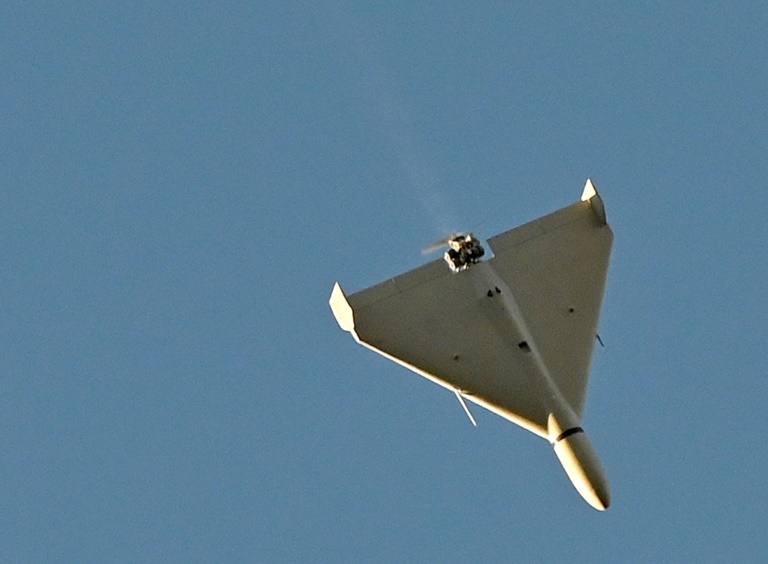
Iran has denied supplying Russia with cheap kamikaze drones that have targeted Ukraine for weeks, though European and American officials say they have clear evidence, and on Thursday the European Union slapped new sanctions on the Islamic republic.

Experts say the West is walking a fine line, recognising the need to punish Tehran but not wanting to escalate tensions to a breaking point.

“The Iranian government denies the arms shipments to limit the damage with the West,” said Clement Therme, of the Paris-based Iranian Studies Institute.

But he said officials have tacitly confirmed the shipments, noting comments by supreme leader Ayatollah Ali Khamenei on Thursday mocking those who doubted the existence of Iranian drones just a few years ago.

– ‘New world order’ –

The 2015 agreement, known formally as the Joint Comprehensive Plan of Action (JCPOA), gave Iran sanctions relief in return for restricting its nuclear programme.

It has been in tatters since then-president Donald Trump withdrew the United States from it in 2018, but on-off talks have taken place since 2021 in a bid to revive it.

Iran’s crackdown on the most intense anti-government protests in years, sparked by the death of 22-year-old Mahsa Amini in police custody last month, further limits the West’s options.

“The bloody repression and the rapprochement between Tehran and Moscow pose a serious problem for the West,” stifling any hope of a new nuclear deal, said Farid Vahid of the Jean-Jaures Foundation, a French think-tank.

“Today it’s completely unimaginable to see an American official and an Iranian official sign an agreement.”

Despite decades of mutual distrust between Russia and Iran, both countries now see common interests in resisting Western powers and their crippling sanctions.

“The Islamic republic is betting on a new world order and the end of Western dominance,” Vahid said.

“It’s very ideological and does not at all match the aspirations of Iranian society, but it’s the reality.”

Vaez agreed that the Iran-Russia axis “has morphed from a tactical partnership into a strategic relationship.”

Tehran fears “Russia’s weakening in Ukraine will deprive Iran of the only great power it can rely on,” he said, and wouldn’t let that happen “at any cost”.

– ‘No plan B’ –

Iran, also accused of planning to provide Russia with surface-to-surface missiles, could also see it as a chance to modernise its own military.

Several experts say Iran is hoping to receive Russian Sukhoi SU-35 combat jets and S-400 anti-missile systems, which could increase its prospects of intervening in conflicts across the Middle East.

Washington and the EU consider Iran’s weapons shipment to Russia a violation of the UN resolution endorsing the 2015 nuclear deal, but have no appetite to push Tehran farther away from the negotiating table.

“Iran has really become a pariah, and the Russians, who have access to its top leadership, are no longer interested in helping the Americans bring back” the nuclear accord, Therme said.

“Diplomacy is destined to fail.”

But for Vahid, that’s a position Western nations are unable to take.

“If we accept the JCPOA is dead, what do we do?” he said.

“Nobody has a plan B, and nobody wants to embark on a new military adventure in the Middle East.”

Russia's 'no risk' Ukraine strategy: pummeling the power grid

After a series of humiliating battlefield defeats in Ukraine, Moscow is trying out a new tactic it hopes will swing the tide of the war: bombarding power stations just as winter sets in.

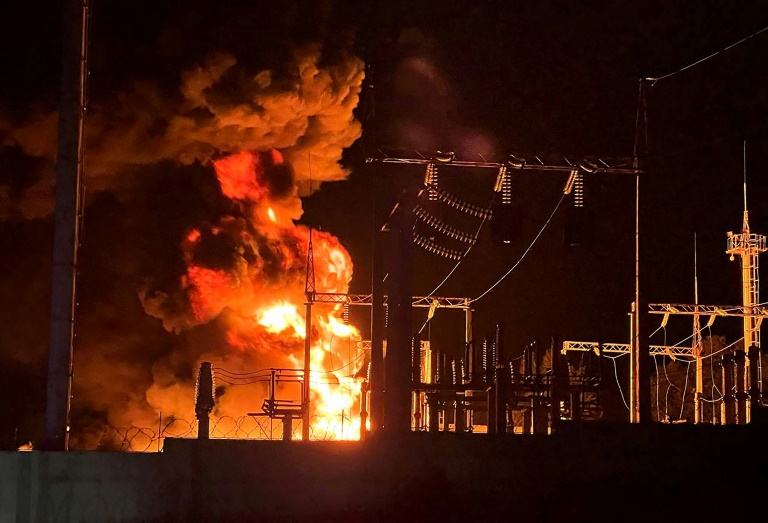
Since the start of this month, Russian forces have fired salvo after salvo of cruise missiles and launched hundreds of Iranian-made suicide drones at energy facilities, crippling some 40 percent of Ukraine’s grid, says Kyiv.

And after weeks of soul-searching in Moscow in the wake of major military setbacks in east and southern Ukraine, there are smiles back on the faces of the Kremlin’s cheerleaders on state-orchestrated media.

“It’s impossible to survive when there is no heating, no water, no water treatment facilities and no lights,” pro-Kremlin lawmaker Andrey Gurulev said this week, after the latest barrage on power plants across Ukraine.

“We’re sorry for everyone — we love everyone — but we’ve been pushed to this. We’ve got no other options,” star Kremlin propagandist and show host Olga Skabeyeva said.

Some observers go even further.

“This should have been done the first day, not after eight months,” Moscow-based military analyst Alexander Khramchikhin told AFP.

“The advantage of this kind of approach is that it paralyses both the economy, and, to a large extent, the armed forces,” Khramchikhin said.

There is “no risk” to Russia, he added.

– ‘Hate them more’ –

The impact of Russia’s volley aimed at energy facilities has been far-reaching.

The emergency services warned this week that more than 4,000 towns, villages and cities had experienced outages. 

The presidency has described the situation as “critical” and on Thursday officials rolled out nationwide restrictions on electricity use.

“Even small savings … will help stabilise the operation of the national energy grid,” Kyiv mayor Vitali Klitschko said, urging businesses to limit consumption. 

Regions including Ivano-Frankivsk, Lviv and Chernivtsi in western Ukraine have introduced schedules to limit energy consumption.

For now, Ukrainians appear to be ready to shoulder the burden.

In the central city of Dnipro, one resident told AFP she was as hardened against Moscow as ever after a Russian strike hit the thermal station on Tuesday.

“It’s not going to change our attitude. Maybe we will only hate them more,” Olga, who declined to give her last name, told AFP.

Russia’s pivot to systematically attacking Ukraine power stations comes after a series of defeats in Ukraine.

In the early stages of the campaign it failed in its bid to take the capital Kyiv. Later, it was pushed back from the besieged second-city of Kharkiv, and now its forces are being beaten in the south and in the eastern Donbas region.

– ‘Break Ukrainian morale’ –

Analysts say these setbacks are behind the change in tactics.

“The situation on the front is especially unfavourable to the Russians, so they resort to an asymmetric approach” by targeting energy infrastructures, Ukrainian expert Mykola Bielieskov told AFP.

The strikes also come after General Sergey Surovikin, a veteran of Moscow’s wars with a ruthless reputation, took over on October 8 with the task of turning the tide of the conflict.

“Surovikin is famous for this type of operation in Syria — destroying cities,” Mykhailo Samus, Director of New Geopolitics Research Network, told AFP.

“He’s trying to show Putin he’s ready to do the same in Kyiv — trying to break Ukrainian morale, exhaust Ukrainian air defences, destroy energy infrastructure before winter and create social problems for Ukrainians in cities with millions of people,” Samus said. 

It is hard to say if, ultimately, the strategy would succeed, said Bielieskov. “This depends on the intensity of the strikes and on (Ukrainian) countermeasures.”

Kyiv’s western allies are responding to President Volodymyr Zelensky’s appeals for more sophisticated air defence systems.

According to some analysts, Russian munitions capable of accurately hitting power stations from a distance are running low. That raises the possibility of less accurate, more indiscriminate strikes.

Back in Dnipro, Olga insisted that no matter how brutal the Russian strikes became, her resolve would not be shaken.

“I would rather sit in cold, with no water and electricity than be in Russia,” she said.

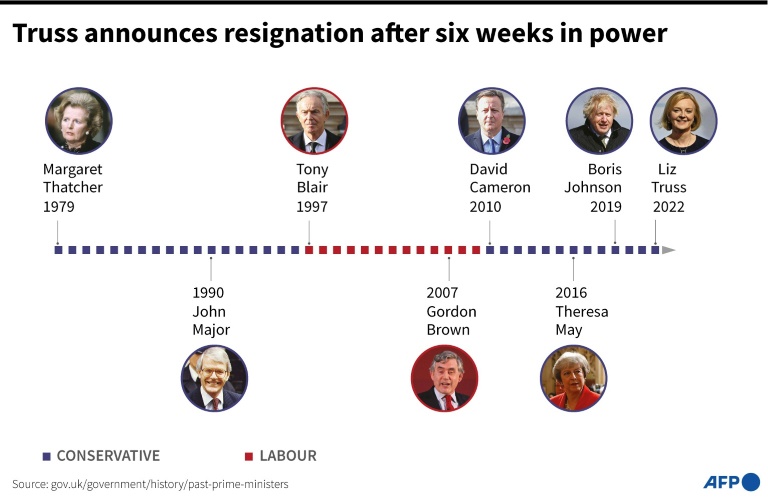
From Truss to Brown: Britain's shortest-serving PMs

British Prime Minister Liz Truss, who announced her resignation on Thursday after just six weeks in power, goes down as the shortest-serving premier in the last 100 years.

AFP looks at the five leaders who have had the shortest stint in 10 Downing Street over the past century: 

– Liz Truss: 44 days – 

Former foreign minister Truss took office on September 6 in the wake of a party revolt against former Conservative leader Boris Johnson.

Britain’s third female prime minister beat Johnson’s former finance chief Rishi Sunak for the top job on a platform of sweeping tax cuts that won over the Tory rank-and-file.

But the mini-budget unveiled by her finance minister Kwasi Kwarteng, which promises tax cuts for all, including top earners, to be funded by massive borrowing, caused market chaos.

With the pound taking a battering, Truss and Kwarteng were forced into a U-turn. 

Truss later fired Kwarteng but by then she had been mortally weakened and when her interior minister quit and growing number of Tory MPs revolted she fell on her sword.

– Andrew Bonar Law: 209 days –

The Canadian-born son of a Scottish clergyman, who ruled for less than a year in 1922-1923, was the shortest-serving British prime minister of the 20th century.

The Conservative Party leader occupied senior positions in David Lloyd George’s cabinet during World War I but later withdrew the Tories’ support from the charismatic Liberal premier.

Lloyd George was forced to resign and Bonar Law, who lost his two eldest sons in World War I, succeeded him.

After 209 days the man dubbed the “forgotten” British premier himself stepped aside due to ill health and died six months later.

– Alec Douglas-Home: 363 days –

Alec Douglas-Home became prime minister in October 1963 after being asked by the ailing prime minister Harold MacMillan to replace him.

Douglas-Home, who was from a major Scottish aristocratic family, led the country for a year before the Conservatives were beaten into opposition in October 1964 by Harold Wilson’s Labour Party. He later served as an acclaimed foreign secretary under Edward Heath.

– Anthony Eden: 1 year 279 days –

Anthony Eden was a much-feted foreign minister under wartime leader Winston Churchill but had much less success in the top job.

He served three times as Britain’s top diplomat, in the 1930s, 1940s and 1950s but by the time he got his chance to lead, after Churchill resigned in 1955, he was suffering from ill health. 

His handling of the Suez crisis in 1956 proved his downfall, with the Anglo-French attack on Egypt over its nationalisation of the canal drawing widespread condemnation.

Eden never recovered politically from the fiasco and resigned on January 9, 1957. 

– Gordon Brown: 2 years 319 days – 

Brown was a star finance minister under Labour prime minister Tony Blair from 1997 to 2007.

But after spending a decade as leader-in-waiting the dour Scot struggled to connect with the public when he became premier. 

While campaigning in the 2010 election he tripped up badly after being caught on a live television microphone as describing a widowed pensioner he had just met as “bigoted”.

Labour lost the election and Brown quit.

– Others –

In the 18th and 19th centuries, British prime ministers often spent less than a year in office.

The Duke of Devonshire lasted only 225 days in 1756-57 while the 2nd Earl of Shelburne managed 265 days in 1782-83.

In the 19th century, the Duke of Wellington served a mere 22 days during his second term as prime minister in 1834. 

Finland plans fence on Russia border, dividing East and West

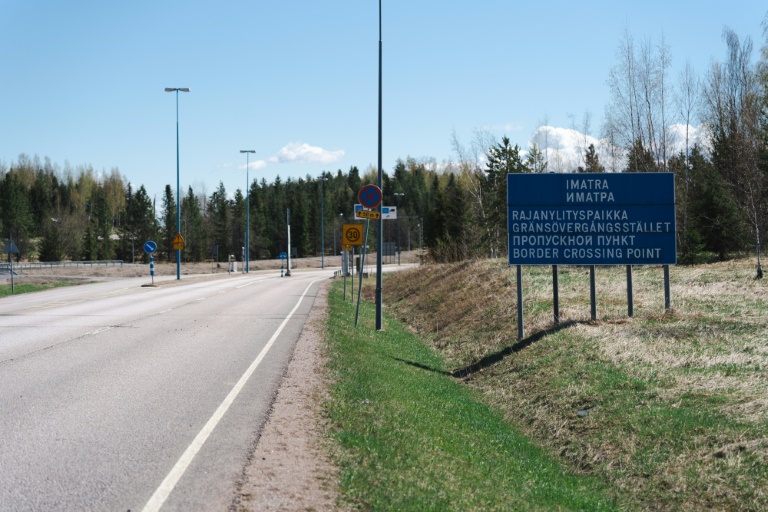
More than 30 years after the fall of the Iron Curtain, Finland plans to erect a barbed-wire fence on its border with Russia dividing East and West, following the war in Ukraine.

The prospective NATO member this week announced broad parliamentary support to replace its wooden fences, designed mainly to stop livestock from wandering across the 1,300-kilometre (800-mile) border, with sturdier barriers to keep Russians and migrants out.

“Hopefully the work can start as quickly as possible,” Prime Minister Sanna Marin told reporters in Helsinki.

Finland saw an influx of Russians in September following President Vladimir Putin’s mobilisation order, before it clamped down and heavily restricted their entry.

Estonia, Latvia and Poland have also either started or plan to beef up their borders with Russia.

The Finnish border guard says it is necessary to build between 130 and 260 kilometres (80-160 miles) of barriers in areas deemed most critical, particularly in southeastern Finland where most border traffic takes place.

In contrast to the livestock barriers, the new fence proposed on Europe’s longest border with Russia is a tall, sturdy metal fence with barbed wire on top and a road running next to it.

The project, estimated to cost hundreds of millions of euros, will start with the construction of a pilot fence a few kilometres long, with the full fence due to be completed in three to four years.

– End of ‘pragmatism’ –

The new barrier would not cover the entire border, most of which is difficult forested terrain far from populated areas, but would help detect large border movements and concentrate migrants to smaller, more easily managed areas.

While Marin has political support for the project, experts have questioned its aims.

“I think the fence shows an emotional reaction to the war,” professor Olga Davydova-Minguet, an expert on Russia and border issues, told AFP.

The Finnish border has great symbolic value as a boundary between the East and West, but it has been “a very pragmatic and practical border”, said Jussi Laine, professor of human geography at the University of Eastern Finland.

“Children may have been going to school on the Finnish side, with the parents living on the other side”, he told AFP.

With projects like electronic visas and new railway connections between eastern Finland and Saint Petersburg, there had been a push since the 1990s to make the Russia-Finland border a “normal European border”.

“That meant that in people’s everyday lives the border’s significance would disappear,” Laine explained.

These pragmatic ambitions explained in part why Finland was slow to restrict border traffic, compared to the Baltic countries.

“Finland has long marketed itself in the EU as an expert on Russia”.

An initial November 2021 proposal from the opposition centre-right to build a proper fence was dismissed as populism.

But the situation “radically changed” with Putin’s war in Ukraine, Laine explained.

Five months after Russia’s invasion, Finland in July amended its Border Guard Act to allow for the construction of stronger fences, the closure of border crossings and concentrating asylum seekers at specific points in the event of a large-scale crossover attempt.

That came amid concerns of “hybrid threats” where migrants could be used to exert political pressure — as in the 2021 migrant crisis on the Belarus-EU border.

But when Putin’s military mobilisation in September led to a doubling of the number of Russians crossing the border, plans for the new fence gained momentum.

The Finnish border guard has said it is preparing for “difficult developments” as the situation evolves.

“It is possible that when travel is restricted, attempts at illegal border crossings will increase,” a spokesman said.

– More harm than good? –

The border fence construction may enjoy broad political consensus, but it has been harshly criticised by researchers.

“The harms are alarmingly greater than the benefits”, Laine said.

Besides being a very expensive solution to a “relatively small number of migrants”, research suggests that building barriers creates greater risks for migrants while “stopping only very few people”.

“In short, people die. Fences don’t solve problems,” Laine emphasised, noting that some migrants could venture into more hazardous terrain to cross into Finland.

And while a new fence may facilitate the Border Guard’s work, making crossings more difficult fuels human trafficking, he added.

Laine believed the fence discussion — originally proposed to deter migrants — got confused with condemning Russia’s aggression in Ukraine and explained the sudden change in political opinion.

“The fence has a symbolic value. It is not based on rational analysis but on emotions”, he said.

Some have also stressed the psychological effect of increasing Finns’ sense of security.

But Davydova-Minguet argued the fence also “reinforces the image of the Russians as a scary source of threats”.

“The fence is creating the impression that there is a danger beyond the border from which we have to separate ourselves”.

Austria president urges reforms after fresh graft revelations

Austria’s president on Thursday called for wide-ranging reforms of the country’s political culture following fresh revelations over a graft scandal, which led then-chancellor Sebastian Kurz to resign last year.

Austrian politics has been rocked by a series of corruption scandals with Kurz’s resignation in 2021 marking a spectacular fall for a politician who had been hailed as the “Wunderkind” of Europe’s conservatives.

In statements to federal prosecutors leaked to media and reported on Tuesday, Thomas Schmid, a former senior official of the Austrian finance ministry and close aide of the ex-chancellor, incriminated Kurz and his conservative People’s Party (OeVP) by accusing them of misappropriating public money to pay for polls, which were skewed to boost Kurz’s image.

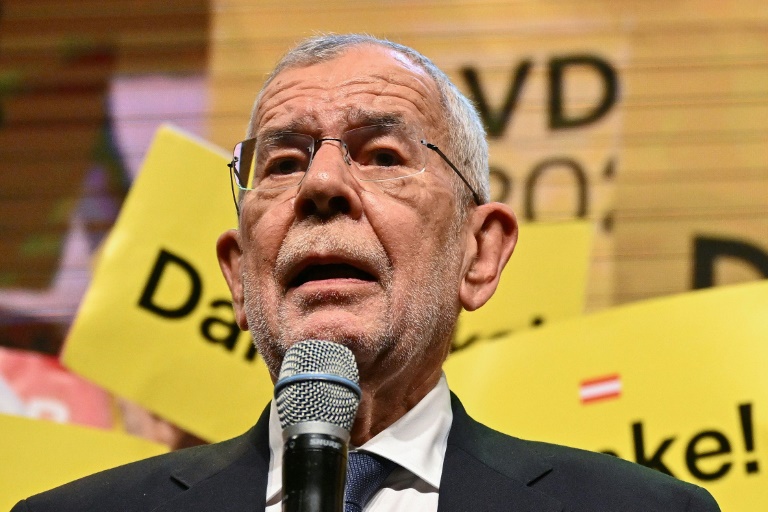
“We need a complete overhaul,” President Alexander Van der Bellen said in a televised address on Thursday, alluding to Austria’s political culture being repeatedly tainted by corruption. 

“A transparent, comprehensible and, above all, perceptible general restructuring… is needed.”

“This is about democracy in our home country and trust in democracy, which is once again being massively shaken,” he added, calling corruption “a paralysing poison”.

According to Van der Bellen, new legislative elections are not justified at the moment.

Schmid, himself implicated in the major corruption scandal, had approached federal prosecutors in April, requesting to be a key witness, the state economic crime and corruption prosecutor (WKStA) said on Tuesday.

Since June, Schmid has been interrogated for “15 full days” by the federal prosecutors, they said.

– ‘Order from Kurz’ –

According to the testimony, Kurz allegedly knew that the polls aimed at helping him win the OeVP’s chairmanship and the chancellor’s office were funded by the Austrian finance ministry.

“Yes, he was aware of that… I only implemented this tool because I received the order from Kurz”, Schmid said referring to the commissioned polls.  

“I promoted Kurz and the OeVP through the federal ministry of finance, used the resources of it to support the advancement of the OeVP under Sebastian Kurz,” Schmid added.

Schmid alleged Kurz also asked him to make a statement to exonerate Kurz of all blame.

Kurz had countered his former ally’s “false accusations” by supplying to the WKStA a recording of a phone conservation between the two of them.

Kurz has announced that he would take legal action against Schmid.

The current scandal erupted in October 2021 when prosecutors ordered raids at the chancellery and the finance ministry while investigating allegations that Kurz’s inner circle used public money to pay for favourable polls.

Prosecutors also suspect that in return for the polls, and fawning coverage of Kurz, tabloid Oesterreich received lucrative public adverts.

Kurz resigned in October and left politics in December, with his former interior minister now running the country.

Thai regulators approve controversial telecom merger

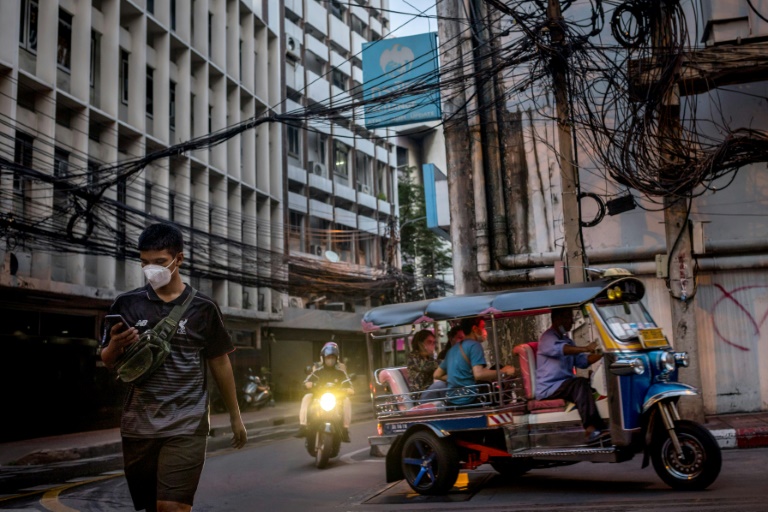
Thailand’s telecom regulator on Thursday approved the merger of Telenor’s Thai arm and a local rival that would create the kingdom’s biggest mobile services provider, despite concerns about competition and consumer harm.

Norwegian giant Telenor and Thai conglomerate Charoen Pokphand (CP) declared their plan to combine their respective mobile units — Dtac and True — last year.

That would create Thailand’s biggest mobile company with more than 51 percent of the market share — and critics say that would effectively result in a duopoly with AIS, which has 47 percent of the market.

While approving the merger, the National Broadcasting and Telecommunications Commission said in a statement that it had placed special conditions, including a price ceiling and rules on frequency sharing.

Telenor and CP said last year that they would each own 33.3 percent of the merged company, with the rest listed on the Thai stock exchange. China Mobile holds an 18 percent stake in CP’s True.

Opponents of the deal have warned that allowing it to go ahead would result in much higher prices for consumers.

“Several studies have suggested that if the merger gets a green light, the general public will be badly affected,” Thailand Development Research Institute president Somkiat Tangkitvanich said in a statement.

The Thailand Consumer Council expressed disappointment at the NBTC’s decision, and said it would seek an emergency hearing from an administrative court to try to stop the merger.

Former NBTC commissioner Supinya Klangnarong — a prominent campaigner against the merger — also flagged civil rights concerns.

“This deal would not only affect us in terms of pricing but it goes further by reflecting on our civil rights and freedom. In the context of Thailand, most capitalists are associated with politicians,” Supinya told AFP.

Active in Northern Europe and Southeast Asia, Telenor is also finalising the merger of its subsidiary in Malaysia, DiGi, with Celcom, controlled by Malaysian group Axiata.

Telenor exited Myanmar following the military coup there last year.

Pound, London stocks climb after Truss resignation

The London stock market and the pound bounced on Thursday after British Prime Minister Liz Truss announced her resignation following disastrous policies that rocked the markets for weeks.

The pound briefly surged more than one percent against the dollar to $1.1336 after Truss ended six tumultuous weeks in power — but analysts said gains were pared by the ongoing uncertainty.

The FTSE 100 index closed up 0.3 percent while the country’s borrowing costs eased on the news, as the yield on 30-year government bonds, known as gilts, fell to 3.90 percent.

“Sterling and gilts rallied as the sorry reign of Liz Truss came to an end,” said Markets.com analyst Neil Wilson.

“After a flurry of activity we are seeing retracement of these initial moves as markets realise that there’s still huge uncertainty about whether the Tory party can survive in power.”

Wilson warned the government’s “economic policies were already dead in the water so the market doesn’t have a huge amount of genuine new information to move on.”

The government had teetered on the brink of collapse after the resignation of home secretary Suella Braverman Wednesday.

On Thursday, Truss announced that she “cannot deliver the mandate on which I was elected.”

It comes days after the sacking of finance minister Kwasi Kwarteng and the dismembering of her government’s debt-fuelled budget that had sparked chronic markets turmoil.

“Although the resignation of Liz Truss as Prime Minister leaves the UK without a leader when it faces huge economic, fiscal and financial market challenges, the markets appear to be relieved,” said Paul Dales, chief UK economist at Capital Economics.

The recovery seen Thursday was due to “the markets… further pricing out the risk premium that the Truss government generated.”

There was still plenty of caution towards the UK.

“While this has brought about a brief respite to the political risk premium it’s hard to see how any replacement will be able to coalesce around any form of unity of policy in this dumpster fire of a government,” said Michael Hewson, chief market analyst at CMC Markets.

– Strong dollar, China fears –

Elsewhere, US and European markets rose a day after losses over persistent concerns over soaring inflation, interest rate hikes and looming recessions.

Wall Street stocks were buoyed by generally solid corporate earnings.

The haven dollar soared above 150 yen for the first time since 1990 before falling back slightly — stoking speculation that Japanese authorities could intervene again to support the battered currency.

The greenback also rallied to a record high at 7.2790 against the offshore yuan, with the US unit boosted by the Federal Reserve’s aggressive interest rate hikes.

Asian markets finished the day in the red, with selling also fuelled by concerns about the Chinese economy as Covid cases spike in the country and leaders stick to lockdown strategies.

A decision to delay the release of China’s third-quarter economic growth data this week added to unease.

Oil extended Wednesday’s rally that came in reaction to a drop in US petroleum stockpiles, and despite President Joe Biden’s decision to release 15 million barrels from US strategic reserves.

– Key figures around 1530 GMT –

New York – Dow: UP 0.9 percent at 30,700.29 points

EURO STOXX 50: UP 0.5 percent at 3,488.64

London – FTSE 100: UP 0.3 percent at 6,943.91 (close) 

Frankfurt – DAX: UP 0.2 percent at 12,767.41 (close)

Paris – CAC 40: UP 0.8 percent at 6,086.90 (close)

Tokyo – Nikkei 225: DOWN 0.9 percent at 27,006.96 (close)

Hong Kong – Hang Seng Index: DOWN 1.4 percent at 16,280.22 (close)

Shanghai – Composite: DOWN 0.3 percent at 3,035.05 (close)

Pound/dollar: UP at $1.1299 from $1.1219 on Wednesday

Dollar/yen: DOWN at 149.75 yen from 149.90 yen

Euro/dollar: UP at $0.9826 from $0.9773 

Euro/pound: DOWN at 86.96 pence from 87.11 pence

Brent North Sea crude: UP 1.0 percent at $93.36 per barrel

West Texas Intermediate: UP 1.2 percent at $85.58 per barrel

burs-rox/rl

Close Bitnami banner
Bitnami