World

Italy holds govt talks as Meloni coalition spars over Ukraine

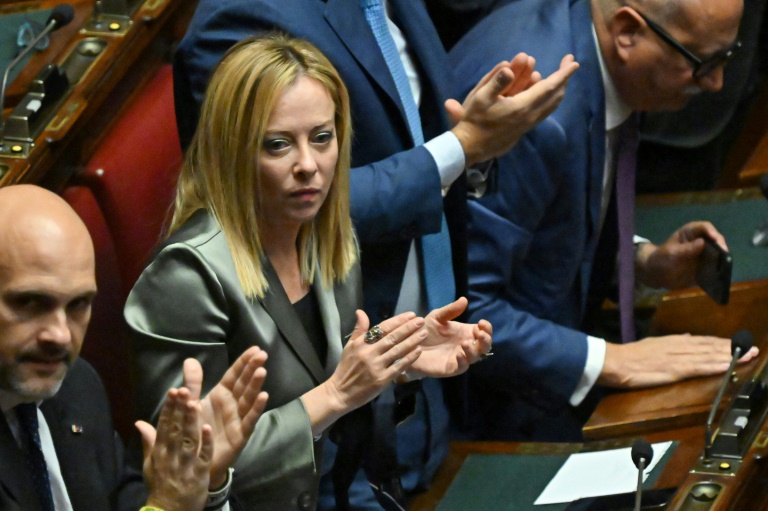
Italy’s president began consultations Thursday to form a new government following the victory of far-right leader Giorgia Meloni in elections last month, even as friction over Ukraine threatened the unity of her coalition.

Meloni, 45, is expected to be named Italy’s first woman prime minister following two days of cross-party talks, after her post-fascist Brothers of Italy party won a historic victory in September 25 polls.

But the consultation process has been overshadowed by the leak of a recording of ex-premier Silvio Berlusconi — whose Forza Italia party is part of Meloni’s coalition — talking about his warm ties with Moscow and appearing to blame the war in Ukraine on its president, Volodymyr Zelensky.

Meloni, whose anti-immigration, nationalistic party is Eurosceptic but who strongly backs Ukraine and sanctions against Russia, issued a statement late Wednesday to make her position clear.

“I intend to lead a government with a clear and unequivocal foreign policy line,” she said, after more than 24 hours of silence over the leak.

“Italy is fully, and with its head held high, part of Europe and the Atlantic Alliance.”

She issued a warning to her allies, who also include Matteo Salvini of the far-right League party, a long-time fan of Russian President Vladimir Putin who has criticised sanctions.

“Anyone who does not agree with this cornerstone will not be able to be part of the government, even at the cost of not forming a government,” Meloni said.

Berlusconi, 86, also said in a statement that his personal and political position “do not deviate from that of the Italian government (and) the European Union” on Ukraine.

But the tensions only add to concerns that Meloni’s coalition, held together by the need for a parliamentary majority, will struggle to maintain unity in the months and years ahead.

– Vodka present –

Berlusconi’s allies insist his comments in the recording, from a meeting with lawmakers earlier this week, were taken out of context.

The billionaire media mogul described a rekindling of relations with long-time friend Putin, who he said sent him 20 bottles of vodka and a “very sweet letter” for his birthday.

Berlusconi’s Forza Italia party said the anecdote was an old one, although in the same recording he also expressed concerns about Italy arming Ukraine. 

In Brussels for an EU summit on Thursday, outgoing Prime Minister Mario Draghi highlighted the importance of Italy supporting its traditional allies.

“Membership of the EU and NATO are cornerstones of our foreign policy… within these alliances, Italy must be the protagonist,” he said.

– Swearing-in soon

Meloni’s appointment is all but certain after the election result, a historic change for the eurozone’s third largest economy and for Brothers of Italy, which has never been in government.

But tradition dictates that President Sergio Mattarella will only name her after holding formal talks with all parties in parliament.

The newly elected speaker of the Senate, Brothers of Italy veteran Ignazio La Russa, was first to arrive at the Quirinale presidential palace in Rome, once home to popes over centuries.

Then came the speaker of the lower house of parliament, followed by smaller parties and representatives from the main party in the opposition, the centre-left Democratic Party.

On Friday morning, Meloni will join representatives of her coalition to visit Mattarella, with speculation she could be asked to form a government as early as that afternoon.

If she confirms she is able to govern with her allies, she could be sworn in with her ministers over the weekend, with a vote of confidence in parliament next week.

However, the process of allocating the top jobs has been fraught, with Berlusconi and Salvini — whose parties won just eight and nine percent, respectively, in the elections, well below Meloni’s 26 percent — angling for influence.

Berlusconi ally Antonio Tajani, a former president of the European Parliament, is widely tipped to become foreign minister.

Meanwhile, League veteran Giancarlo Giorgetti is expected to be named economy minister, tasked with formulating a response to soaring inflation and a looming energy crisis in debt-laden Italy.
Ukraine curbs energy use, warns of threat from Belarus

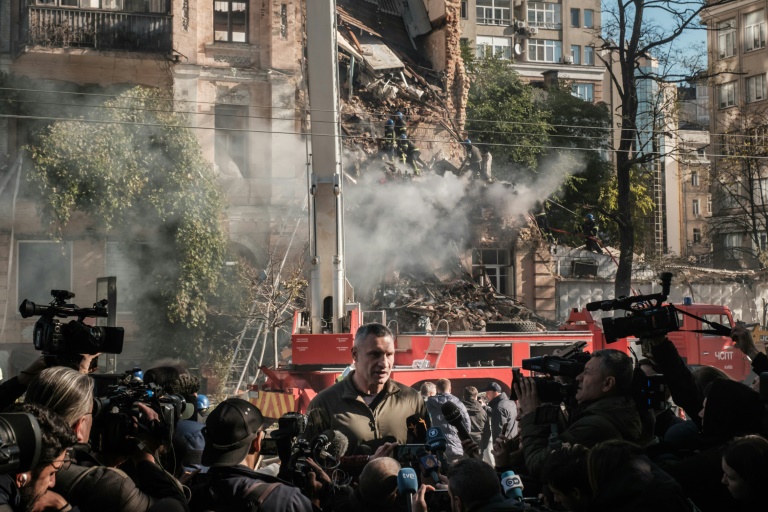
Ukraine began curbing electricity consumption on Thursday as it raced to repair infrastructure destroyed by Russian bombing as winter approaches.

Energy-saving measures were put in place across the country after Russian missile and drone strikes destroyed at least 30 percent of the country’s power stations in a week.

Ukraine also warned of a “growing” threat of a new Russian offensive from Belarus, after Minsk and Moscow last week announced a joint force to defend Belarusian borders.

Following blackouts in parts of the capital Kyiv overnight, the city’s mayor Vitali Klitschko urged businesses to limit screens and signage lights “as much as possible”.

“Even small savings and a reduction in electricity consumption in every home will help stabilise the operation of the national energy system,” he said on social media.

Ukrainians have responded defiantly to the attacks.

“It’s not going to change our attitude, maybe we will only hate them more,” said Olga, a resident of Dnipro in central Ukraine who declined to give her last name.

“I would rather sit in the cold, with no water and electricity than be in Russia,” she said.

– Sanctions on Iranian drones –

Russia invaded Ukraine in February and quickly seized more than 20 percent of the country but has lost ground after a series of battlefield defeats in recent weeks.

Moscow has retaliated by annexing the areas it holds and launching a wave of strikes on energy facilities, including with what Kyiv and Western powers said are Iranian drones.

Russia and Iran have denied the use of such drones in Ukraine, but the EU on Thursday imposed sanctions on three Iranian generals and an arms firm accused of supplying them.

“This is our clear response to the Iranian regime providing Russia with drones, which it uses to murder innocent Ukrainian citizens,” Czech Prime Minister Petr Fiala tweeted.

German Chancellor Olaf Scholz said Russia’s “scorched earth” attacks only strengthened the Western alliance against Moscow.

Russian President Vladimir Putin on Thursday visited a training centre for mobilised troops south-east of Moscow where he embraced soldiers and fired a gun.

– Northern front threat –

Ukraine meanwhile warned that Russian aviation units were deploying in bases in Belarus on the border with Ukraine.

“The threat of resuming the offensive on the northern front by the armed forces of the Russian Federation is growing,” Oleksiy Gromov, deputy chief of the Ukrainian General Staff, said during a briefing.

Russia used Belarus as a staging point for its assault on northern Ukraine towards the capital Kyiv which was repelled in March.

But Gromov said any new offensive could aim more towards western Ukraine “to cut the main logistical arteries for the supply of weapons and military equipment to Ukraine”.

Belarus says its new joint force with Russia will involve up to 9,000 Russian soldiers and around 170 tanks being sent to Belarus but has insisted its aims are only defensive.

Ukraine is unconvinced and President Volodymyr Zelensky accused Moscow of “trying to directly draw Belarus into this war” at a recent G7 meeting.

– ‘Equivalent of deportation’ –

Putin on Wednesday declared martial law in four annexed territories of Ukraine and heightened security in Russian regions on the border.

The move came after Kremlin proxies in the Russian-occupied Kherson region in southern Ukraine said they were leaving the area in the face of a Ukrainian counter-offensive.

The region’s main city, also called Kherson, has been in Moscow’s hands since the earliest days of the invasion.

Russian-installed officials said Thursday that around 15,000 people have also been pulled from the area so far.

Oleksiy Danilov, secretary of Ukraine’s National Security and Defense Council, denounced Moscow’s move as criminal.

“Putin’s martial law in the annexed regions of Ukraine is preparation for the mass deportation of the Ukrainian population to depressed areas of Russia in order to change the ethnic composition of the occupied territory,” Danilov said.

Pro-Russian officials in the town of Oleshky across the Dnieper said residents from Kherson city were already arriving.

Russia’s Rossiya 24 TV showed images of people waiting to board ferries, unable to use bridges damaged by Ukraine.

– ‘We deserve it’ –

Ukraine’s resilience has won plaudits internationally and the European Parliament on Wednesday awarded the annual Sakharov Prize for human rights to “brave” Ukrainians.

The award was welcomed by Natalya Boykiv, an engineer, walking in Kyiv city centre.

“We deserve it,” they said.

“The world should see who Ukrainians are. Thanks to this we attract the world’s attention,” the 24-year-old added.

Meanwhile, in parts of Ukraine recently recaptured from Russian forces, repairs were under way before the onset of winter. Many residents there are still depending on humanitarian aid.

“Apart from this, nothing is working,” said Ivan Zakharchenko, a 70-year-old resident of Izyum queueing for aid in the square where Zelensky celebrated the town’s liberation just over a month ago.

EU leaders clash over how to tackle energy prices

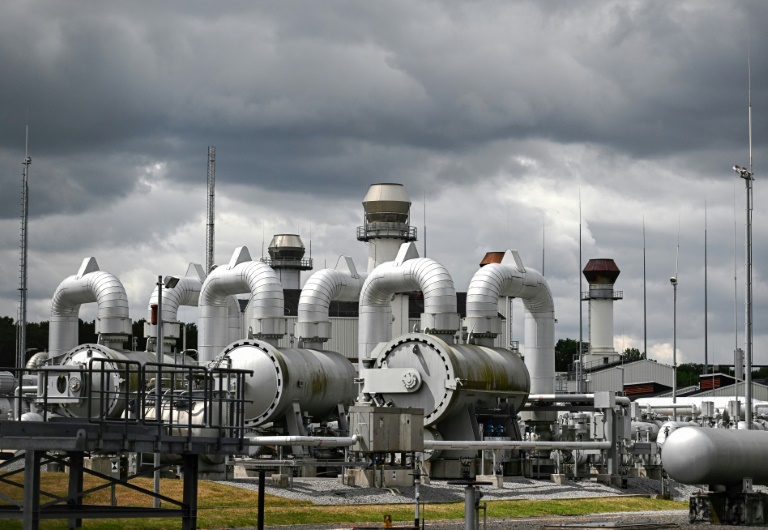
EU leaders clashed over how to ride out Europe’s energy shock Thursday, with France and Germany at loggerheads over imposing a cap on gas prices pushed skywards by the war in Ukraine.

The bloc’s 27 member states have been squabbling for months over measures to lower energy bills, and a Brussels summit began in a chilly mood.

Countries such as Italy are pushing hard for a swift and ambitious cap on prices, in the teeth of opposition from Germany, the EU’s biggest economy.

There is huge political pressure to act, with strikes and protests over the cost of living spreading across Europe — notably in France and Belgium — and businesses fearing bankruptcy.

Berlin risks finding itself isolated in the debate, with countries furious that the German government won’t back a gas cap and for going it alone in helping its citizens pay for high prices with a 200-billion-euro ($196-billion) spending bonanza.

German Chancellor Olaf Scholz shot back at his critics as he arrived for the talks saying that it was “quite clear that Germany has acted in solidarity” with his EU partners.

French President Emmanuel Macron warned against Berlin standing alone as the talks began.

“Our role is to do everything to ensure that there is European unity and that Germany is part of it,” Macron said.

On the table for leaders are proposals by the European Commission, the EU’s executive arm, that try to satisfy the diverging views.

But these have already been dismissed as timid by those wanting a clear ceiling on gas prices despite the opposing view — championed by Germany, but also Denmark and the Netherlands — that this would choke off supply or encourage consumption.

The push for a common approach has been further hampered by Franco-German discord which burst into the open Wednesday when they delayed a regular meeting between cabinet ministers.

Breakthroughs are difficult when the EU’s biggest powers do not see eye to eye and Macron and Scholz met ahead of the summit in a bid to find common ground.

In a sign of a possible easing of tensions, France on the sidelines of the summit agreed to build a green energy pipeline linking the Spain and Portugal to the rest of Europe.

Berlin is seeking an alternative to Russian gas supply it has relied on for decades, but it was not clear whether the new plan would satisfy them.

– ‘No cap’ –

The commission’s proposals include an idea to allow joint purchases by the EU energy giants in order to command cheaper prices to replenish reserves.

Another proposal is to give the EU’s executive arm the power to establish a pricing “corridor” on Europe’s main gas index to intervene when prices get out of control.

The EU leaders were expected to haggle for hours over the commission’s proposals, with some countries seeking something much more far-reaching than what is on offer.

But Scholz on Thursday again rejected any attempt by the EU to cap prices on gas imports, saying it “carries the risk that producers will then sell their gas elsewhere.”

However, Scholz welcomed the European Commission’s proposal for joint purchases in the EU.

A big problem in Europe is the link between gas and electricity prices. Under EU rules, a gas price index helps set the price of electric power across the continent, even if sourced from nuclear energy, renewables or coal.

But the index has skyrocketed since Ukraine was invaded by Russia, the country that supplied 40 percent of the EU’s gas imports before the war.

Several countries — including France with its nuclear power plants — are calling for an exception to the gas price mechanism while the commission draws up a new system that better reflects market reality.

This was already granted to Spain and Portugal earlier this year, giving them freer rein to keep electricity prices lower despite surging prices.

UK's PM Truss quits, Tories vow new leader next week

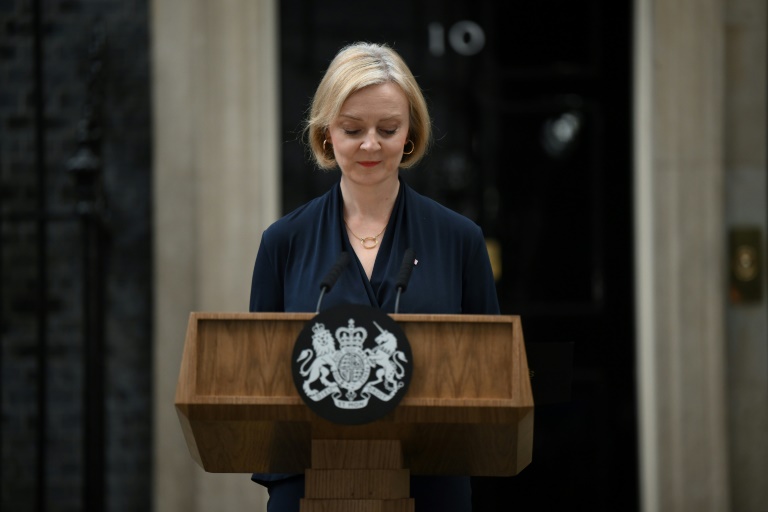
British Prime Minister Liz Truss on Thursday announced her resignation just six crisis-filled weeks after taking office, becoming the shortest-lived premier in UK history.

The Conservative party vowed a rapid election to have a new leader chosen by October 28, avoiding the drawn-out contest in which Truss defeated Rishi Sunak over the summer following Boris Johnson’s own resignation.

Truss admitted she “cannot deliver the mandate” on which she was elected, after her right-wing platform of tax cuts disintegrated and as many Conservative MPs revolted.

Labour leader Keir Starmer, whose opposition party has surged in opinion polls on the back of Truss’s short, eventful tenure, demanded a general election “now”.

“This is not just a soap opera at the top of the Tory party,” he said, warning of “huge damage” to the UK economy, although the pound surged against the dollar after Truss’s dramatic announcement.

Speaking outside 10 Downing Street, Truss said she would stay on as prime minister until a successor is chosen to serve as Tory leader.

“We’ve agreed that there will be a leadership election to be completed within the next week,” she said, after senior backbench MP Graham Brady told her the game was up.

“This will ensure that we remain on a path to deliver our fiscal plan and maintain our country’s economic stability and national security.”

Without going into details, Brady told reporters that the new leader would be in place by Friday next week, in time for finance minister Jeremy Hunt to deliver a crucial budget statement on October 31.

Brady’s statement suggested the party could find a way of bypassing the Tory rank and file who elected Truss, in the face of warnings by Sunak that her debt-fuelled programme threatened higher inflation and market turmoil.

– Sunak the favourite –

Sunak’s warnings were vindicated, and the former finance minister quickly emerged as the bookmakers’ favourite. But he remains held in deep suspicion by Johnson loyalists.

Johnson himself was eyeing a comeback, the Times and Telegraph newspapers reported, despite remaining deeply unpopular with the electorate for the many scandals that brought him down.

“Time to come back,” trade minister James Duddridge, Johnson’s former parliamentary aide, tweeted with the hashtag #bringbackboris.

“Few issues at the office that need addressing.”

Another potential runner is senior cabinet member Penny Mordaunt, who narrowly failed to make the Truss-Sunak runoff this summer.

The end for Truss came after a key minister resigned and many Tory MPs rebelled over an important vote in chaotic scenes at the House of Commons late Wednesday.

By Thursday morning, more than a dozen Conservative MPs had publicly urged Truss to resign, after her tax-cutting plans caused a market meltdown during an already severe cost-of-living crisis.

Many more were reported to have submitted letters to Brady calling for Truss to be removed, although party rules would have forbidden another leadership campaign for 12 months.

“The prime minister acknowledges yesterday was a difficult day and she recognises the public wanted to see the government focusing less on politics and more on delivering their priorities,” her official spokesman told reporters.

Barely two hours later, she quit, and will fall well short of Tory predecessor George Canning who served 118 days as prime minister in 1827 before dying in office.

– Russia not impressed –

Amid Russia’s war in Ukraine and growing economic problems, Britain’s allies have been observing the tumult with concern, with political instability recurrent since the country voted in 2016 to quit the European Union.

US President Joe Biden vowed to “continue our close cooperation with the UK government” on shared challenges including Ukraine.

“It is important that Great Britain regains political stability very quickly, and that is all I wish,” French President Emmanuel Macron said.

Irish premier Micheal Martin said the need to resolve post-Brexit tensions in Northern Ireland was “ever more urgent” under Truss’s successor.

For its part, the Russian foreign ministry said Britain has “never known such a disgrace as prime minister”.

Events reached a head after what right-wing tabloid The Sun called “a day of extraordinary mayhem” on Wednesday.

Interior minister Suella Braverman left, apparently at Truss’s demand after she sent a government document in a personal email.

But Braverman, an arch right-winger who enjoys strong support among the Tory membership, used her resignation message to attack Truss in blistering terms.

There then followed farcical scenes in parliament as many Tory MPs rebelled against the government’s demand that they drop the party’s manifesto commitment to maintain a ban on fracking.

Accusations swirled of heavy-handed efforts to whip MPs into line, some of whom later briefed the media that it was the nail in the coffin of the Truss premiership.

Food crisis looms in Nigeria as floods destroy crops

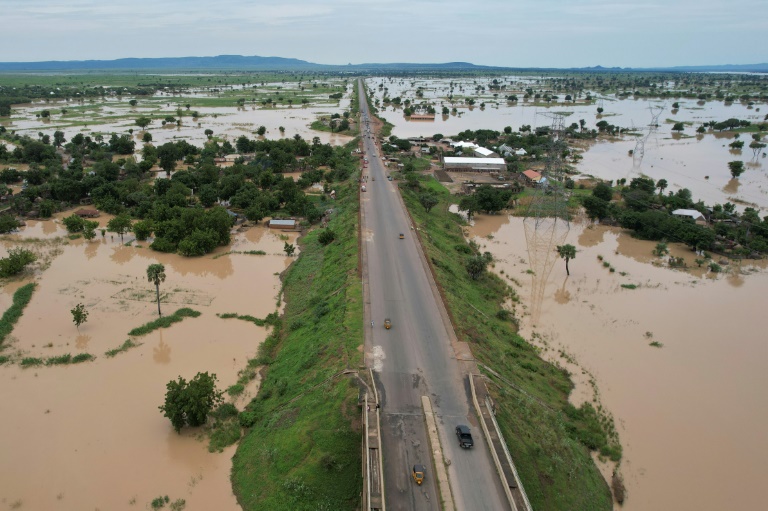
Usman Musa had spent more than $1,300 on his 10-hectare rice farm in Nigeria’s Kogi state, now submerged by the country’s worst floods in a decade.

In a wooden canoe, the 38-year-old father of four paddled his way through the murky waters, passing by his and relatives’ houses, the local hospital and school. 

Only the roofs were visible.

Across Africa’s most populous country, communities and crops of sorghum, maize, rice and vegetables are under water, with farmers and aid workers warning of a possible food crisis.

The country, home to more than 200 million people, was already grappling with high inflation and worrying levels of food insecurity.

Now the situation will worsen, with nearly 110,000 hectares (272,000 acres) of farmland completely destroyed by flooding since August according to the latest government figures.

“Flooding is still ongoing but we can safely say that between 60 to 75 percent of the yield we expected is going to be lost,” Kabir Ibrahim, president of All Farmers Association of Nigeria, told AFP this week.

“It’s monumental. So many people are crying.”

More than 600 people have died and 1.3 million others were forced to leave their homes according to the latest figures given by the Minister of Humanitarian Affairs Sadiya Umar Farouq.

– Risk of hunger –

Floods are not uncommon in Nigeria during the rainy season from May to November but they have been extreme this year.

Officials and residents blame climate change but also poor planning and the release of excessive water from dams, a process that is meant to ease pressure.

“If you don’t open the water through the spillways, then dams will break,” said Ibrahim, and then “it would be like Pakistan. All of Nigeria would be under water like Pakistan.”

Farmers were warned ahead of time but it wasn’t enough. 

“We used the predictions and avoided planting along flood-prone areas,” said Ibrahim, “but now you can see that the devastation is all over.”

As a result, Ibrahim, whose organisation represents 20 million farmers, believes “there will be more hardship towards the end of the year and beginning of next year.”

Food inflation year-on-year was already at 23.3 percent last month, in part because of ripple effects on the import-dependent country from the coronavirus pandemic and the Russia-Ukraine war.

Rampant insecurity with gunmen repeatedly attacking rural communities also forced many farmers to abandon their fields.

The World Food Programme and the UN’s Food and Agriculture Organization (FAO) said last month that Nigeria was among six countries facing a high risk of catastrophic levels of hunger, even before the floods. 

Now, “the impact of the floods on food production is a real threat to the country and could lead to a major food crisis,” said Hussaini Abdu, Nigeria director of the CARE charity.

The FAO representative in Nigeria, Fred Kafeero, said he was “deeply concerned” as food supplies were expected to be low “due to anticipated reduction in household production”.

The aid official said the floods were also affecting livestock and had increased the risk of vector-borne disease outbreaks such as cholera.

– Preventive measures –

The floods have not just destroyed farmlands, they have also prevented the transport of trucks and damaged roads and bridges, further pressuring the food supply.

“We were hoping inflation would get a break with the (upcoming) harvest but now with the floods, it puts a big question mark on our forecast on inflation,” said Ari Aisen, the IMF’s Resident Representative for Nigeria.

“It looks very serious but it’s difficult to judge at this point,” he told AFP, adding that while it was early to assess, “there is an upside risk for inflation, for food price increases.”

The last massive floods in Nigeria in 2012 cost nearly $17 billion, according to the World Bank.

While immediate assistance is now needed, the International Monetary Fund said it would be less costly to invest in preventive measures and policies.

Countries should invest to “help populations adapt to these types (of) events rather than using resources after the fact,” said Aisen. 

But in the meantime, the government said it was ramping up support to affected communities.

President Muhammadu Buhari approved the release of 12,000 metric tons of assorted grains from a national strategic reserve stock.

But farmers are not sure it will be enough.

Buhari restricted the import of rice in 2015, to increase local production and self-sufficiency.

For Ibrahim, resuming those imports “should not be ruled out, if the situation becomes dire”.

Weather forecast agencies have warned there could be more floods until the end of November.

European Space Agency to launch two missions on SpaceX rockets

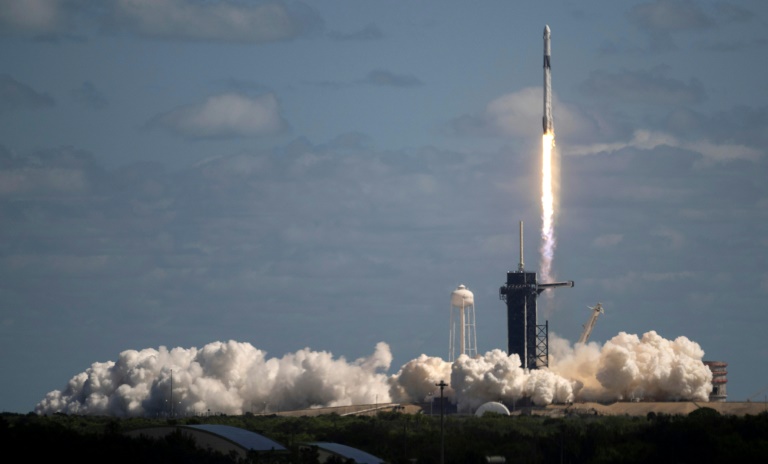
The European Space Agency announced Thursday it will use SpaceX’s Falcon 9 rockets to launch two scientific missions because of delays to its own Ariane 6 rocket and the cancellation of flights on Russia’s Soyuz launchers. 

The ESA’s space telescope Euclid had been planned to launch next year on a Soyuz rocket, but in February Russia pulled out in response to European sanctions over Moscow’s war in Ukraine. 

Euclid, which aims to better understand the mysteries of dark energy and dark matter, will now instead catch a ride into space on the Falcon 9 rocket of billionaire Elon Musk’s US company SpaceX.

The ESA’s Hera mission, which will probe the Didymos asteroid that NASA successfully knocked off course in September by smashing the DART spacecraft into it, will launch on a Falcon 9 in late 2024, ESA director general Josef Aschbacher said.

The use of other launchers was “a temporary measure” for the ESA due to the “drop out of Soyuz in particular,” but also over the Ariane 6 delay, Aschbacher told a press conference.

The ESA previously used a Falcon 9 to launch European-developed radar altimeter satellite Sentinel-6 Michael Freilich in 2020.

The European-Japanese EarthCARE observation satellite had also been planning to reach space on a Soyuz rocket, but will instead take the ESA’s lighter new Vega-C launcher in early 2024, Aschbacher said. 

Tensions over the war in Ukraine also led to a long postponement for the once joint European-Russian ExoMars mission. It had been scheduled to launch last month using a Soyuz rocket to put European rover Rosalind Franklin on Mars to drill for signs of life.

David Parker, the ESA’s director of human and robotic exploration, said a 2028 ExoMars launch date would be proposed to the agency’s 22 members states at a ministerial council in late November. 

“It is exactly one month since we would have been at the launch, which was scheduled for September 20,” he told the press conference.

“But now we will have to wait — if the ministers desire to go forward with the project — until launch in 2028, with a landing in 2030,” he said.

– Ariane 6 delayed again –

Thursday’s announcement came a day after the ESA revealed that Ariane 6’s maiden flight had been delayed again, and will now launch in the last quarter of next year.

Originally planned for 2020, the inaugural flight of the Ariane 6 has previously been postponed by the Covid-19 pandemic as well as development difficulties.

The replacement for the highly successful Ariane 5 is hoped to eventually take over the ESA’s Soyuz missions. Once in operation it is likely to compete with SpaceX rockets, particularly when it comes to sending small satellites into the sky. 

Some 18,500 satellites weighing less than 500 kilogrammes are expected to be launched into space over the next decade, according to advisory firm Euroconsult.

Progress has made in recent days on the Ariane 6, including a test of the new upper stage of the rocket’s engine at a German space site in Lampoldshausen.

Aschbacher said the first 45-second firing test was “extremely successful,” calling it an “important milestone”.

A test model of Ariane 6 was also recently successfully assembled on the launchpad of Europe’s spaceport in French Guiana’s Kourou. 

European Space Agency to launch two missions on SpaceX rockets

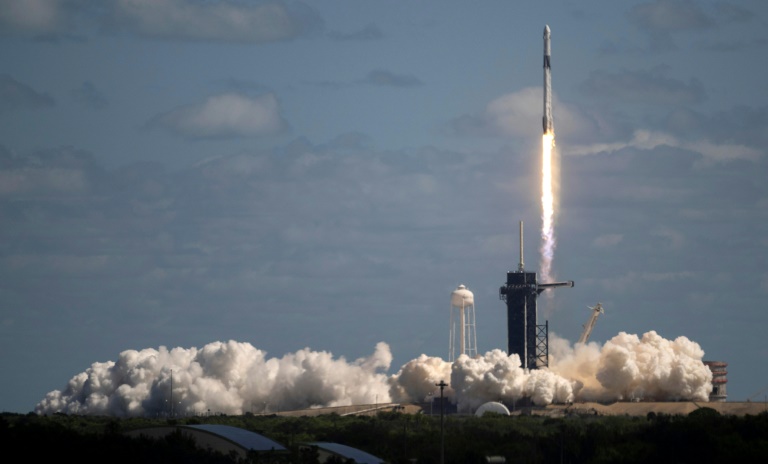
The European Space Agency announced Thursday it will use SpaceX’s Falcon 9 rockets to launch two scientific missions because of delays to its own Ariane 6 rocket and the cancellation of flights on Russia’s Soyuz launchers. 

The ESA’s space telescope Euclid had been planned to launch next year on a Soyuz rocket, but in February Russia pulled out in response to European sanctions over Moscow’s war in Ukraine. 

Euclid, which aims to better understand the mysteries of dark energy and dark matter, will now instead catch a ride into space on the Falcon 9 rocket of billionaire Elon Musk’s US company SpaceX.

The ESA’s Hera mission, which will probe the Didymos asteroid that NASA successfully knocked off course in September by smashing the DART spacecraft into it, will launch on a Falcon 9 in late 2024, ESA director general Josef Aschbacher said.

The use of other launchers was “a temporary measure” for the ESA due to the “drop out of Soyuz in particular,” but also over the Ariane 6 delay, Aschbacher told a press conference.

The ESA previously used a Falcon 9 to launch European-developed radar altimeter satellite Sentinel-6 Michael Freilich in 2020.

The European-Japanese EarthCARE observation satellite had also been planning to reach space on a Soyuz rocket, but will instead take the ESA’s lighter new Vega-C launcher in early 2024, Aschbacher said. 

Tensions over the war in Ukraine also led to a long postponement for the once joint European-Russian ExoMars mission. It had been scheduled to launch last month using a Soyuz rocket to put European rover Rosalind Franklin on Mars to drill for signs of life.

David Parker, the ESA’s director of human and robotic exploration, said a 2028 ExoMars launch date would be proposed to the agency’s 22 members states at a ministerial council in late November. 

“It is exactly one month since we would have been at the launch, which was scheduled for September 20,” he told the press conference.

“But now we will have to wait — if the ministers desire to go forward with the project — until launch in 2028, with a landing in 2030,” he said.

– Ariane 6 delayed again –

Thursday’s announcement came a day after the ESA revealed that Ariane 6’s maiden flight had been delayed again, and will now launch in the last quarter of next year.

Originally planned for 2020, the inaugural flight of the Ariane 6 has previously been postponed by the Covid-19 pandemic as well as development difficulties.

The replacement for the highly successful Ariane 5 is hoped to eventually take over the ESA’s Soyuz missions. Once in operation it is likely to compete with SpaceX rockets, particularly when it comes to sending small satellites into the sky. 

Some 18,500 satellites weighing less than 500 kilogrammes are expected to be launched into space over the next decade, according to advisory firm Euroconsult.

Progress has made in recent days on the Ariane 6, including a test of the new upper stage of the rocket’s engine at a German space site in Lampoldshausen.

Aschbacher said the first 45-second firing test was “extremely successful,” calling it an “important milestone”.

A test model of Ariane 6 was also recently successfully assembled on the launchpad of Europe’s spaceport in French Guiana’s Kourou. 

Regional body to discuss Peru political crisis

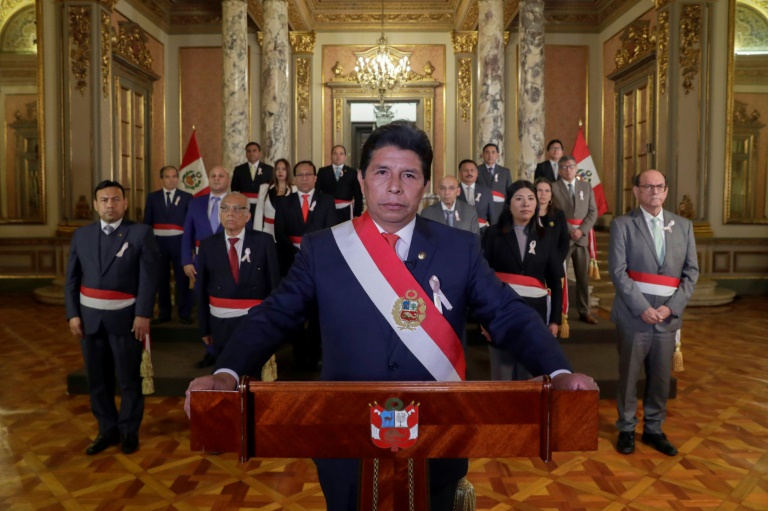
The Organization of American States will hold a special meeting Thursday on the political crisis in Peru, where President Pedro Castillo faces several investigations he denounces as a “coup d’etat.”

The embattled Castillo announced late Wednesday he had sought the regional body’s help to foster a national dialogue in a bid to prevent “a serious alteration of the democratic order in Peru.”

Addressing the nation live on TV, the president said he had asked the 35-member OAS to invoke its “democratic charter,” which sets out the body’s mission “to promote and consolidate representative democracy.”

He is relying in particular on Article 17, which allows a member state to request assistance “for the strengthening and preservation of its democratic system” if it fears this to be at risk.

A formal request was presented to the OAS last week, and the body said in a statement that a “special meeting” on Peru would be held in Washington at 1830 GMT on Thursday.

Castillo, a former rural school teacher, has been under nonstop fire since unexpectedly taking power from Peru’s traditional political elite in elections last year. 

He has survived two impeachment attempts since taking office in July 2021 and is the target of six criminal investigations for alleged graft and plagiarizing his university thesis.

In addition to these, Peru’s attorney general last week filed a constitutional complaint accusing Castillo of heading a criminal organization involving his family and allies.

The complaint — the first of its kind against a sitting president — must be examined by parliament, and unlike a criminal case, can lead to Castillo’s suspension. Fewer votes are required than for impeachment.

Castillo, serving a five-year term that ends in 2026, cannot be criminally tried while in office.

In recent months, police have raided the presidential palace in Lima, where Castillo resides, as well as his private home in rural Peru in search of evidence to back the corruption claims.

Politically weak, Castillo was denied permission by Peru’s rightwing-dominated Congress in August to attend the inauguration of fellow leftist Gustavo Petro in Colombia, more recently also to visit the Vatican and Belgium.

On Wednesday, Castillo accused “the money sectors, the traditional politicians who have always thrived on corruption” of being behind the “coup” attempt against him.

“I am not corrupt,” he insisted on Twitter.

Peru is no stranger to instability: it had three different presidents in five days in 2020, and five presidents and three legislatures since 2016.

But six open investigations into a sitting president is unprecedented. 

The OAS said it would hear a presentation Thursday by Foreign Minister Cesar Landa — the fifth in the post since Castillo took over.

Finland plans fence on Russia border, dividing East and West

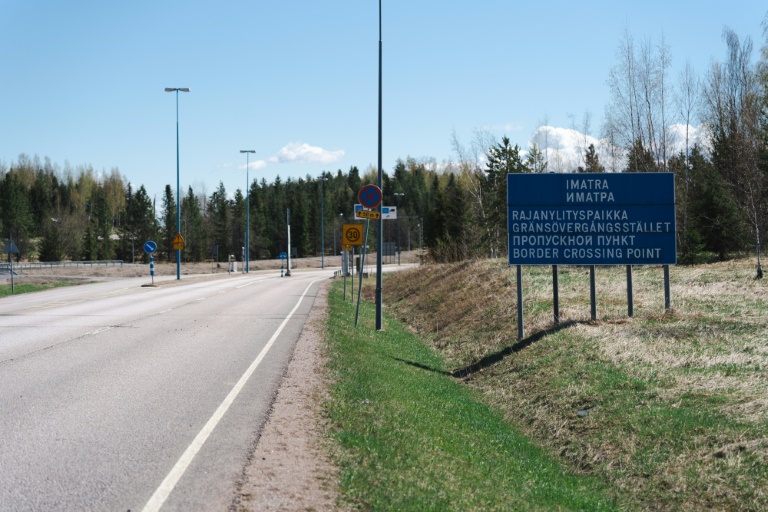
More than 30 years after the fall of the Iron Curtain, Finland plans to erect a barbed-wire fence on its border with Russia dividing East and West, following the war in Ukraine.

The prospective NATO member this week announced broad parliamentary support to replace its wooden fences, designed mainly to stop livestock from wandering across the 1,300-kilometre (800-mile) border, with sturdier barriers to keep Russians and migrants out.

“Hopefully the work can start as quickly as possible,” Prime Minister Sanna Marin told reporters in Helsinki.

Finland saw an influx of Russians in September following President Vladimir Putin’s mobilisation order, before it clamped down and heavily restricted their entry.

The Finnish border guard says it is necessary to build between 130 and 260 kilometres (80-160 miles) of barriers in areas deemed most critical, particularly in southeastern Finland where most border traffic takes place.

In contrast to the livestock barriers, the new fence proposed on Europe’s longest border with Russia is a tall, sturdy metal fence with barbed wire on top and a road running next to it.

The project, estimated to cost hundreds of millions of euros, will start with the construction of a pilot fence a few kilometres long, with the full fence due to be completed in three to four years.

– End of ‘pragmatism’ –

The new barrier would not cover the entire border, most of which is difficult forested terrain far from populated areas, but would help detect large border movements and concentrate migrants to smaller, more easily managed areas.

While Marin has political support for the project, experts have questioned its aims.

“I think the fence shows an emotional reaction to the war,” professor Olga Davydova-Minguet, an expert on Russia and border issues, told AFP.

The Finnish border has great symbolic value as a boundary between the East and West, but it has been “a very pragmatic and practical border”, said Jussi Laine, professor of human geography at the University of Eastern Finland.

“Children may have been going to school on the Finnish side, with the parents living on the other side”, he told AFP.

With projects like electronic visas and new railway connections between eastern Finland and Saint Petersburg, there had been a push since the 1990s to make the Russia-Finland border a “normal European border”.

“That meant that in people’s everyday lives the border’s significance would disappear,” Laine explained.

These pragmatic ambitions explained in part why Finland was slow to restrict border traffic, compared to the Baltic countries.

“Finland has long marketed itself in the EU as an expert on Russia”.

An initial November 2021 proposal from the opposition centre-right to build a proper fence was dismissed as populism.

But the situation “radically changed” with Putin’s war in Ukraine, Laine explained.

Five months after Russia’s invasion, Finland in July amended its Border Guard Act to allow for the construction of stronger fences, the closure of border crossings and concentrating asylum seekers at specific points in the event of a large-scale crossover attempt.

That came amid concerns of “hybrid threats” where migrants could be used to exert political pressure — as in the 2021 migrant crisis on the Belarus-EU border.

But when Putin’s military mobilisation in September led to a doubling of the number of Russians crossing the border, plans for the new fence gained momentum.

The Finnish border guard has said it is preparing for “difficult developments” as the situation evolves.

“It is possible that when travel is restricted, attempts at illegal border crossings will increase,” a spokesman said.

– More harm than good? –

The border fence construction may enjoy broad political consensus, but it has been harshly criticised by researchers.

“The harms are alarmingly greater than the benefits”, Laine said.

Besides being a very expensive solution to a “relatively small number of migrants”, research suggests that building barriers creates greater risks for migrants while “stopping only very few people”.

“In short, people die. Fences don’t solve problems,” Laine emphasised, noting that some migrants could venture into more hazardous terrain to cross into Finland.

And while a new fence may facilitate the Border Guard’s work, there is “clear research” that making crossings more difficult fuels human trafficking, he added.

Laine believed the fence discussion — originally proposed to deter Russia from sending migrants to exert political pressure — got confused with condemning Russia’s aggression in Ukraine and explained the sudden change in political opinion.

“The fence has a symbolic value. It is not based on rational analysis but on emotions”, he said.

Some have also stressed the psychological effect of increasing Finns’ sense of security.

But Davydova-Minguet argued the fence also “reinforces the image of the Russians as a scary source of threats”.

“The fence is creating the impression that there is a danger beyond the border from which we have to separate ourselves”.

Europe's police keep wary eye on threat from 3D-printed guns

A growing number of seizures of guns made at home from 3D-printed parts are raising alarm bells for European police over an emerging threat.

For now, interest among far-right activists may be limited, say analysts — and fears of a society awash with print-it-yourself weapons remain far-fetched.

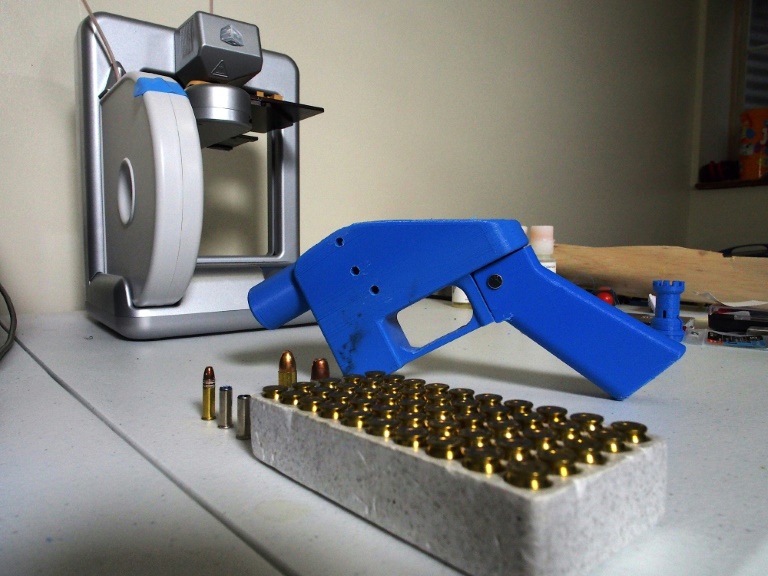
But homemade guns have become more widespread since 2013, when a US weapons enthusiast first showed off a mostly 3D-printed pistol and shared its design online.

Only in September, Icelandic police said they had arrested four people suspected of planning a “terrorist attack”, confiscating several 3D-printed semi-automatic weapons.

The same month, Spanish authorities discovered an illegal gun-making workshop of a man in his forties in the Basque Country.

That find followed two other such cases in the country in 2021.

Police in Spain’s Canary Islands found white supremacist literature and manuals on urban guerrilla warfare alongside two 3D printers.

And in the northwestern city of A Coruna, police discovered a man close to completing a scratch-built assault rifle.

“Rapidly evolving advanced technology may cause this to emerge as a more significant threat in the near future,” said Ina Mihaylova, a spokeswoman for European police agency Europol.

While traditional weapons are easily traceable thanks to their serial numbers and proof marks, these “home-printed” models are less easy for the authorities to track.

– Focus on far-right –

For the moment, “there is still a big difference between the quality of the professionally manufactured weapons available on the criminal market and 3D-printed/self-made weapons,” Mihaylova said.

“3D-printed firearms entirely made out of plastics usually cannot resist the pressure from live-firing ammunition,” she added. They require barrels, chambers or firing pins made of metal.

But Christian Goblas, a ballistics expert at France’s University of Rouen, said “3D metallic printing” could become affordable in the next decade — which could make self-made weapons more durable and reliable.

With its 3D parts and metal firing pin, the 2013 “Liberator” pistol showed off in 2013 by self-described “crypto-anarchist” Cody Wilson aped a crude single-shot weapon of the same name air-dropped to French resistance fighters during World War II.

Wilson posted instructions for the weapon online, sparking alarm in the United States with its already lax gun control and history of deadly mass shootings.

Since then, 3D printers have become cheaper, and more blueprints have been posted on the so-called Dark Web.

Rajan Basra, a senior research fellow at the London-based International Centre for the Study of Radicalisation (ICSR), nevertheless said 3D-weapon printing remained mostly a curiosity for firearms fans or libertarians.

Even in countries with tough gun restrictions, there are better options for people seeking a firearm: In France, you can get a Kalashnikov assault rifle on the black market for between 500 and 1,500 euros ($485-$1460).

To a lesser degree, DIY guns are also attractive to “terrorists”, far-right militants and gangsters, Basra added.

Eleven out of 12 recent seizures in Europe implicated far-right activists, he pointed out.

– Not ‘the future of terrorism’ –

One of the highest-profile uses of weapons with 3D-printed parts came in Germany in 2019.

A gunman killed two people in the eastern city of Halle after failing to break into a synagogue. Before the attack, he had posted a racist, misogynistic and anti-Semitic manifesto online.

A video the attacker made of his rampage showed him repeatedly struggling with weapon jams.

“At least I’ve demonstrated how useless improvised weapons are,” he could be heard saying at one point.

Blyth Crawford, another researcher at the ICSR, said the attack was an exceptional case.

In online discussions among some far-right extremists, “3D printed firearms are not yet regarded as a serious alternative to regular guns for carrying out a mass shooting, as they are regarded as comparatively untested,” she said.

Jacob Ware, a counter-terrorism researcher at the Council on Foreign Relations, agreed that not all such extremists were enthusiastic about the labour-intensive way of making a gun.

For some, it was “fundamentally game-changing in opening new doors for terrorists without access to firearms”.

But others mocked the technology “as only relevant for those who have failed to stockpile weaponry in preparation for… government tyranny”.

Extremists might see other new technologies such as drones as more promising for their ends.

“3D printing is unlikely to be the future of terrorism for now,” Ware said.

However, “legal systems should be getting ahead… to ensure gun control regulations are not circumvented before it is too late”, he added.

burs-al/ah/tgb/jj

Close Bitnami banner
Bitnami