World

Tigray peace talks in South Africa on October 24: Ethiopia govt

The Ethiopian government said Thursday that it would participate in peace talks next week led by the African Union to try to resolve the nearly two-year war in Tigray. 

International calls for a halt to violence in northern Ethiopia have mounted since an AU bid failed earlier this month to bring the warring sides to the negotiating table.

“AUC (African Union Commission) has informed us that the Peace Talks is set for 24 Oct, 2022 to be held in South Africa. We have reconfirmed our commitment to participate,” Prime Minister Abiy Ahmed’s national security adviser Redwan Hussein posted on Twitter.

When asked by AFP if they would attend the talks, Tigray People’s Liberation Front (TPLF) spokesman Getachew Reda said in a message: “We have already announced that we will take part in an AU-led process.”

Earlier this month the government and TPLF leaders agreed to join talks to be mediated by AU envoy Olusegun Obasanjo, South Africa’s former deputy president Phumzile Mlambo-Ngcuka and former Kenyan president Uhuru Kenyatta.

But the meeting in South Africa never took place, with logistical problems blamed.

Fighting has since spiralled.

The government this week vowed to seize airports and other federal sites from rebel control as part of “defensive measures”.

Ethiopian forces and their Eritrean allies say they have captured a string of towns in the embattled region, which has been largely under rebel control since mid-2021.

Their advance has stoked fears for civilians, aid workers and displaced people caught in the crossfire.

– ‘Staggering’ toll –

Witnesses had reported heavy shelling of civilian centres like Shire, a town where an International Rescue Committee aid worker was among three people killed last week before its capture by pro-government forces.

A humanitarian source said a World Food Programme (WFP) warehouse storing non-food items and fuel had been looted in Shire, where there were also reports of civilians being abused.

“We hear about a lot of women having been raped,” said the source, who spoke on condition of anonymity.

A spokesperson for WFP said they were trying to verify reports that the warehouse had been looted.

The UN warned this week that the situation in Tigray was spiralling out of control and inflicting an “utterly staggering” toll on civilians.

Tigray and its six million people are virtually cut off from the outside world, facing dire shortages of fuel, food and medicines and lacking basic services, including communications and electricity.

An estimated two million people have been driven from their homes in northern Ethiopia and millions more are in need of aid, according to UN figures. Reports of widespread atrocities include massacres and rape. 

The death toll remains unknown. 

The conflict began on November 4 2020 when Nobel Peace laureate Abiy sent troops into Tigray after accusing the TPLF of attacking federal army camps. 

The TPLF dominated Ethiopia’s ruling political alliance for decades before Abiy took power in 2018 and sidelined the party.
Stocks mostly slide on strong dollar

Asian and European equities mostly slid Thursday after overnight Wall Street losses, while the dollar jumped as surging inflation, interest rate hikes and recession fears returned to the fore.

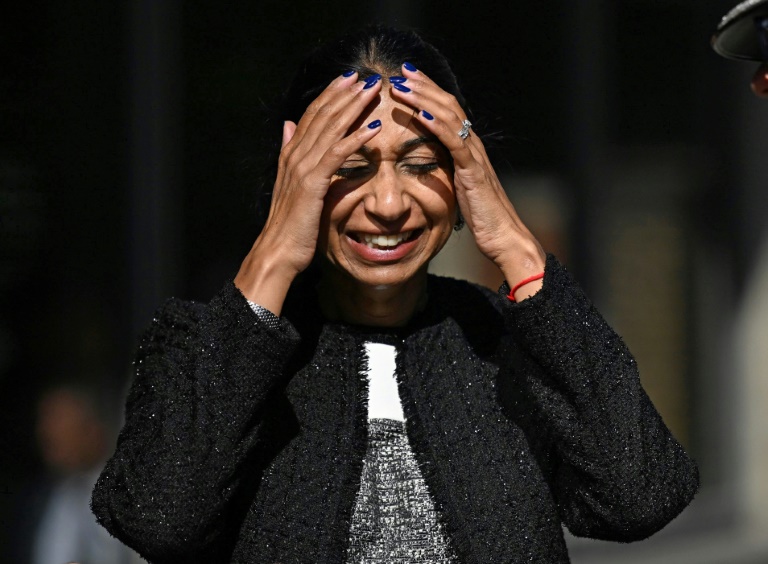
London stocks also dipped and the pound ducked under $1.12, as British Prime Minister Liz Truss’s government teetered on the brink of collapse after the resignation of home secretary Suella Braverman.

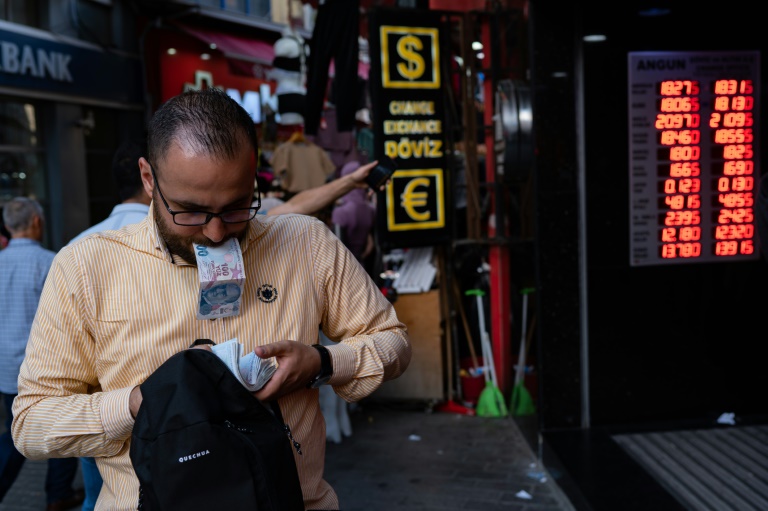
The haven dollar meanwhile soared above 150 yen for the first time since 1990, stoking speculation that Japanese authorities could intervene again to support the battered currency.

The greenback also rallied to a record high at 7.2790 against the offshore yuan, with the US unit boosted by the Federal Reserve’s aggressive interest rate hikes.

– Risk rally fades –

“It looks like the latest risk rally is fading before it really got started,” IG analyst Chris Beauchamp told AFP.

“Markets are worrying about how the rising dollar will begin to break other economies, as it negates their efforts to control inflation by driving their currencies lower while making it more expensive to borrow for a host of emerging market nations.”

He added that disappointing earnings at electric carmaker Tesla “have soured what was a passably good start to the reporting season”.

The unease on trading floors, and concerns that runaway inflation is showing no sign of easing, also sent investors back into the safety of the dollar.

Added to the gloom, Truss looks to be doomed after only six weeks in charge, with her own Conservative MPs calling for her to quit and moves apparently afoot to remove her.

A parliament vote on banning fracking descended into chaos late Wednesday, prompting talk that it was the final nail in the coffin of her premiership.

– ‘Further UK turbulence likely’ –

That came days after the sacking of finance minister Kwasi Kwarteng and the dismembering of the Truss government’s debt-fuelled budget that had sparked chronic markets turmoil.

“The UK was already facing immense challenges from high inflation, rapidly rising interest rates and an economy already probably in recession,” OANDA analyst Craig Erlam told AFP.

“The last thing it needed was an incompetent and unstable government to complete the set,” he said.

“The pound and UK bond yields … both remain vulnerable as the economy finds itself facing enormous headwinds — and the government is on the brink of collapse. Further turbulence looks likely.”

After Wall Street’s drop, markets across Asia were also deep in the red.

Selling was also fuelled by concerns about the Chinese economy as Covid cases spike in the country and leaders stick to lockdown strategies.

A decision to delay the release of China’s third-quarter economic growth data this week added to the unease among investors.

Oil extended Wednesday’s rally that came in reaction to a drop in US petroleum stockpiles, and despite President Joe Biden’s decision to release 15 million barrels from US strategic reserves.

– Key figures around 1040 GMT –

London – FTSE 100: DOWN 0.3 percent at 6,907.59 points

Frankfurt – DAX: DOWN 0.8 percent at 12,643.00

Paris – CAC 40: FLAT at 6,039.51

EURO STOXX 50: DOWN 0.5 percent at 3,455.42

Tokyo – Nikkei 225: DOWN 0.9 percent at 27,006.96 (close)

Hong Kong – Hang Seng Index: DOWN 1.4 percent at 16,280.22 (close)

Shanghai – Composite: DOWN 0.3 percent at 3,035.05 (close)

New York – Dow: DOWN 0.3 percent at 30,423.81 (close)

Pound/dollar: DOWN at $1.1216 from $1.1219 on Wednesday

Dollar/yen: DOWN at 149.78 yen from 149.90 yen

Euro/dollar: UP at $0.9806 from $0.9773 

Euro/pound: UP at 87.39 pence from 87.11 pence

Brent North Sea crude: UP 1.5 percent at $93.77 per barrel

West Texas Intermediate: UP 2.0 percent at $87.24 per barrel

burs-rfj/rl

Turkish central bank cuts rates for third month

Turkey’s central bank on Thursday cut its policy rate for the third consecutive month despite plunging lira and an annual inflation rate that has soared over 83 percent. 

The central bank said it was cutting its one-week repo rate to 10.5 percent from 12 percent, with a surge in consumer prices it said was “driven by the lagged and indirect effects of rising energy costs” caused by Russia’s war on Ukraine. 

The decision comes right after President Recep Tayyip Erdogan said the central bank would keep cutting rates every month for “as long as I am in power”. 

Erdogan wants interest rates to lower down to single digits by the end of the year as he prioritises economic growth eight months before a general election — which could promise to be the closest since he came to power nearly two decades ago. 

Turkish decision makers have insisted on following this unconventional economic model at the expense of an astronomical inflation.

Erdogan, a vocal opponent of higher borrowing costs, has called high interest rates his “biggest enemy”. 

Earlier this month he vowed that while he remained in power, “the interest will continue to come down with each passing day, each passing week, each passing month.”

As a result, Turkish lira keeps losing its value against the US dollar and is down 28 percent since January.   

“Erdogan’s economic re-election strategy is clear… use money from Russia and (the) Gulf to fund FX intervention to defend the lira, cut policy rates as far as possible to get credit and growth going,” BlueBay Asset Management analyst Timothy Ash said. 

The powerful Turkish leader has responded to the economic crisis by an overhaul of his foreign policy and repairing ties with his former rivals in the Arab world, including oil-rich Saudi Arabia. 

Additional trade-focussed deals with Russia have helped shore up Turkey’s dwindling foreign currency reserves and potentially given Erdogan enough breathing room to ride out the economic storm until the June election.

However, Washington has been warning Turkish companies and banks trading with Russia for several months they could face possible sanctions.

US assistant secretary for terrorist financing and financial crimes Elizabeth Rosenberg traveled to Ankara and Istanbul this week, the Department of the Treasury said. 

Rosenberg’s meetings “affirmed the importance of close partnership between the United States and Turkey in addressing the risks caused by sanctions evasion and other illicit financial activities.”

Surovikin: The ruthless face of Russia's campaign in Ukraine

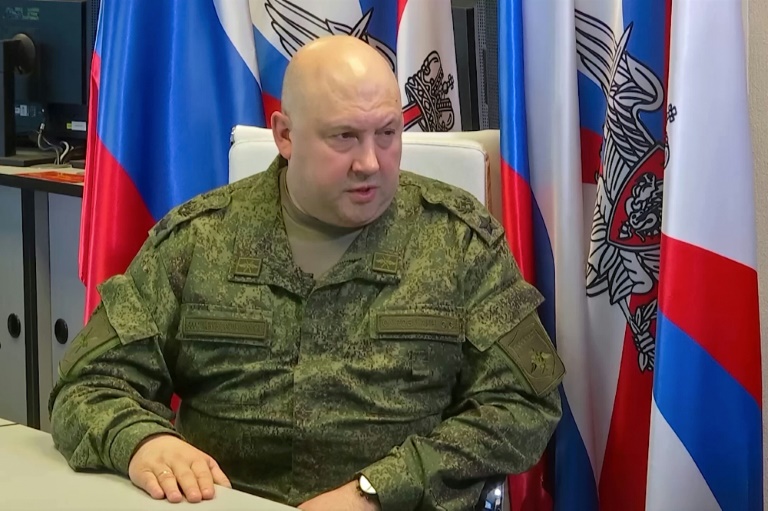
With his shaved head and uncompromising scowl, General Sergey Surovikin has become the face of Russia’s “special military operation” in Ukraine in just a few days.

A veteran of Moscow’s wars since the Soviet invasion of Afghanistan, Surovikin has a ruthless reputation and is the man behind the massive bombing campaign on Ukraine.

Dubbed “General Armageddon” in Western media, the 56-year-old was named commander of Russia’s forces in Ukraine on October 8.

His task is to turn the tide after a series of battlefield defeats that have forced Russian forces to retreat on several fronts.

While the army has remained silent about its setbacks on the ground, he appeared on Russian state television on Tuesday.

Dressed in military uniform and surrounded by Russian flags, Surovikin said of operations in Ukraine that the “situation is tense”.

“We will not exclude taking the most difficult decisions,” he said.

– ‘Ruthless commander’ –

Born in Siberia, Surovikin fought in Afghanistan in the 1980s, after which he was involved in the hardliner coup in 1991 that heralded the fall of the Soviet Union.

He went on to fight in the second Chechen war in the 2000s and the Syrian campaign in 2015.

“He is very well known. The military talk a lot about him. He has a reputation for being a crazy, traumatised, ruthless commander,” a Russian military expert told AFP on condition of anonymity for fear of reprisals.

President Vladimir “Putin adores him. In Syria, he kicked officers out of the general staff to go and head up assaults,” he said.

Vasily Kashin, an expert in geopolitics at Moscow’s Higher School of Economics, said he had “managerial and strategic qualities”.

“It is clear that Russian leaders consider Surovikin as the commander best able to head up such a major military effort,” he said.

Independent analyst Alexander Khramchikhin noted that Surovikin previously headed up Russian forces in southern Ukraine which were the ones that had “succeeded the most”.

“It is the only requirement in the current situation,” he said.

The change of strategy is already noticeable.

Two days after Surovikin’s nomination, the Russian army unleashed a wave of drone and missile attacks on Ukrainian infrastructure targets, causing electricity blackouts and water outages in several cities.

The bombings have continued and promise a harsh winter, with Ukrainian officials urging people to limit their electricity use.

– Prison sentences –

Before Ukraine, Surovikin was one of the commanders of Russian forces in Syria.

Human Rights Watch in 2020 said he was among the Russian officers “who may bear command responsibility” for violations, including attacks on schools and hospitals.

In Russia he is known above all for his role in the failed coup in 1991.

He was imprisoned after troops under his command killed three pro-democracy protesters but was freed a few months later.

“The second time he was jailed was at the end of the 1990s for illegal arms trading but the sentence was suspended on appeal,” said the expert who requested anonymity.

Surovikin’s reputation has earned the respect of those seeking a tougher line in Ukraine.

Chechen leader Ramzan Kadyrov, who has been critical of the Russian military, said he was “100 percent satisfied” with the appointment.

Russian opposition figure Leonid Volkov accused Surovikin of being a “legendary thief” who got rich through illegal logging.

“He is a businessman, not a general,” he wrote on Twitter.

Surovikin will be judged for his capacity to reverse Russia’s fortunes in Ukraine and deal with the problems and mistakes that have piled up since the assault began in February.

Given recent Ukrainian advances on the southern front, he faces a particular tough challenge in the coming days — give up the occupied city of Kherson or stay and fight.

Tigray peace talks in South Africa on October 24: Ethiopia govt

The Ethiopian government said Thursday that peace talks on the nearly two-year-old war in Tigray would start in South Africa next week.

International calls for a halt to escalating violence in northern Ethiopia have been mounting since a failed bid by the African Union earlier this month to bring the warring sides to the negotiating table.

“AUC (African Union Commission) has informed us that the Peace Talks is set for 24 Oct, 2022 to be held in South Africa. We have reconfirmed our commitment to participate,” Prime Minister Abiy Ahmed’s national security adviser Redwan Hussein posted on Twitter.

“However, we are dismayed that some are bent on preempting the peace talks & spreading false allegations against the defensive measures.”

A spokesman for the Tigray People’s Liberation Front (TPLF) was not immediately available for comment.

The government and TPLF leaders had agreed to join talks this month that would to be mediated by AU envoy Olusegun Obasanjo, South Africa’s former deputy president Phumzile Mlambo-Ngcuka and former Kenyan president Uhuru Kenyatta.

But the meeting in South Africa never took place, with logistical problems blamed.

Fighting meanwhile has spiralled.

The government this week vowed to seize airports and other federal sites from rebel control as part of “defensive measures”.

Ethiopian forces and their Eritrean allies say they have captured a string of towns in the embattled region, which has been largely under rebel control since mid 2021.

– Fear for civilians –

Their armies’ advance has stoked fears for civilians, aid workers and displaced people caught in the crossfire.

Witnesses had reported heavy shelling of civilian centres like Shire, a town where an International Rescue Committee aid worker was among three people killed last week.

The UN this week that the situation was spiralling out of control and inflicting an “utterly staggering” toll on civilians.

Tigray and its six million people are virtually cut off from the outside world, facing dire shortages of fuel, food and medicines and lacking basic services, including communications and electricity.

An estimated two million people have been driven from their homes in northern Ethiopia and millions more are in need of aid, according to UN figures, with reports of widespread atrocities including massacres and rape. 

The death toll remains unknown. 

The conflict began on November 4 2020 when Abiy — a Nobel Peace Prize winner — sent troops into Tigray after accusing the TPLF of attacking federal army camps. 

The TPLF had dominated Ethiopia’s ruling political alliance for decades before Abiy took power in 2018 and sidelined the party.
UK PM on brink as political chaos deepens

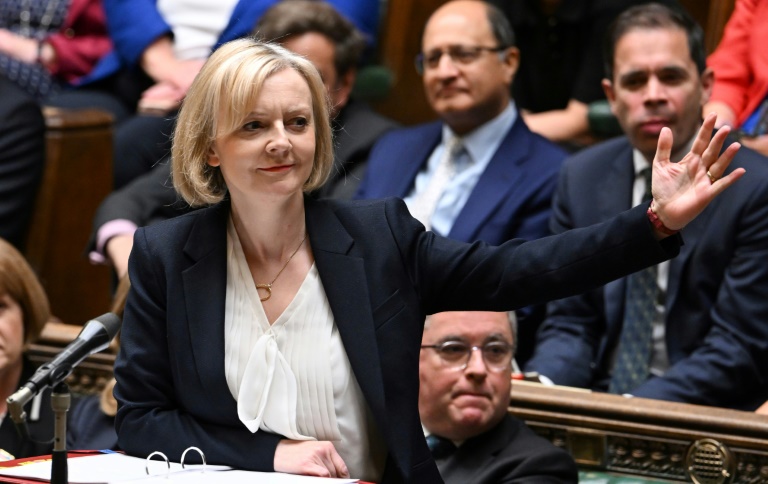
Embattled British Prime Minister Liz Truss on Thursday faced more calls from her own party to step down after a key minister quit and lawmakers rebelled during “a day of extraordinary mayhem”.

Truss is being urged to resign just six weeks into office after a forced U-turn on disastrous tax cuts that caused a market meltdown during an already severe cost-of-living crisis.

Right-wing broadsheet The Times reported the prime minister was “clinging to power”, and cited a Truss supporter in her cabinet as saying: “It’s terminal.”

Its tabloid sister paper The Sun ran the front page headline “Broken”, saying Truss’s “authority is in tatters after a day of extraordinary mayhem”.

Conservative peer Ed Vaizey said the “only way out of this mess is for Liz Truss to stand down and for somebody to be appointed as prime minister by Conservative MPs.”

The party could avoid a lengthy leadership contest by consolidating around a single replacement, but Truss has shown no sign of being willing to resign.

If she resigned this would lead to a Tory leadership contest that could be shortened if Tory MPs could agree on a single replacement. Otherwise the MPs could unite to trigger a no-confidence vote.

– ‘Must leave’ –

The fresh calls came a day after Truss’s interior minister Suella Braverman left following just six weeks in office, ostensibly for sending an official document in a personal email but using her resignation message to attack Truss.

Her sacking was the second reshuffle this month after Truss sacked close ally Kwasi Kwarteng over the tax cut debacle, replacing him with Jeremy Hunt, who swiftly reversed almost all the policy announcements.

The Daily Telegraph reported that Braverman left after a “heated face-to-face row” with Truss and Hunt “over their demands to soften her stance on immigration”.

Truss appointed Grant Shapps to replace Braverman though had previously fired him as transport secretary when she took office. He had supported her rival for the leadership, Rishi Sunak.

Braverman, seen as a hardliner on immigration, said she had resigned over a “technical infringement” of government rules.

“I have made a mistake; I accept responsibility; I resign,” she wrote in her resignation letter, while adding she had “serious concerns” that Truss was breaking manifesto promises.

Truss has faced widespread criticism for failing to step down herself, after forcing Kwarteng to take the blame for the botched budget of September 23, which sent markets into freefall.

“Pretending we haven’t made mistakes, carrying on as if everyone can’t see we’ve made them, and hoping things will magically come right is not serious politics,” Braverman wrote, clearly hinting at Truss’s own behaviour.

– ‘Not a quitter’ –

Braverman’s resignation message came hours after Truss sought to dispel doubts over her leadership with a combative appearance in parliament.

Truss faced harsh putdowns from opposition Labour leader Keir Starmer as she took part in her first Prime Minister’s Questions since humiliating U-turns on tax cuts.

Starmer asked the House of Commons: “What’s the point of a prime minister whose promises don’t even last a week?” as opposition MPs jeered and booed Truss and her own party’s MPs remained silent.

Truss insisted that she would not stand down, saying: “I am a fighter and not a quitter”.

Later on Wednesday there were chaotic scenes in parliament as the opposition proposed a debate on Truss’s controversial decision to resume fracking — drilling onshore for gas.

Opposition Labour MPs alleged that Conservative MPs were physically forced to vote against the proposals by the whips who enforce party discipline while dozens failed to vote along party lines.

Opposition leader Starmer was set Thursday to make a speech at the conference of the TUC trade union federation.

Polls show Truss’s personal and party ratings have plummeted, with YouGov saying Tuesday that she had become the most unpopular leader it has ever tracked.

A separate survey of Conservative members found that less than two months after electing her as party leader and prime minister, a majority now think she should go.

Izyum races to rebuild and forget Russian occupation

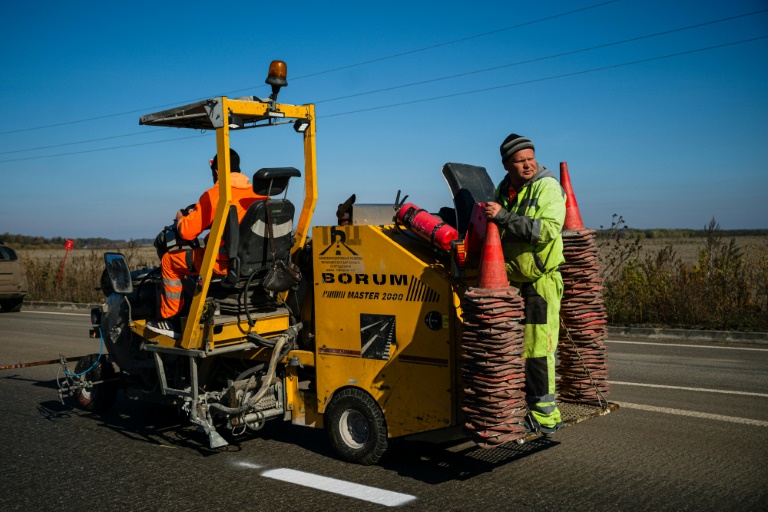
Apart from the blown-up tanks and plants singed by seven months of war, the road leading to Izyum — once nicknamed “highway to hell” — could be a normal road in Europe.

The asphalt paving machine has been past and the bomb craters have been filled in.

A team of workers in orange reflector vests has painted white lines on the road surface to indicate where it is safe to pass a vehicle.

Five weeks after the re-capture of this small but strategic town in eastern Ukraine, a new battle for reconstruction is taking place.

An army of construction machinery and builders is busy rebuilding what is left of the infrastructure and erasing any sign of Russian occupation as quickly as possible.

Ukrainians have started by making use of what Russian forces left in their wake — like the remains of a pontoon bridge on a tank marked with the letter “Z” lying in the Donets River.

“We’re going to recycle every piece, re-shape them and use them here or somewhere else that we need it,” said Lieutenant Denys Ponomarenko, a 27-year-old military engineer.

At the entrance to the city, a board with the yellow and blue colours of the Ukrainian flag carries the message: “Friends, you are free!”

And now Izyum is coming out of its long isolation.

Roads and rail links are working again and the 4G mobile phone network was partially restored a few days ago.

But essential services like water, gas and electricity were devastated, leaving residents dependent on humanitarian aid, according to the United Nations.

Out of a pre-war population of 46,000 inhabitants, only 8,000-9,000 people remain.

– ‘Doing what we can’ –

In the city’s central square, which President Volodymyr Zelensky visited on September 14 to raise the Ukrainian flag once again, a queue has formed of people hoping for aid.

“Apart from this, nothing is working,” said Ivan Zakharchenko, a 70-year-old resident, who said he hopes buses will be restored so he can go and get his pacemaker checked.

Nearby, a worker on a telescoping ladder is nailing chipboards to the empty windows of the church, which was built in 1648, that same year as the town’s fortress.

“The restoration of the church is a symbol of the restoration of the town,” said Semyon, 48, the local Orthodox priest.

The rest of the town is largely in ruins.

“I have some water at my house but I live on the third floor and the pressure is very weak. I also have electricity but we have no gas or heating and we do not know if we’ll have any for the winter,” said one resident, 47-year-old Nadiya Nesterenko.

“My daughter lives above me on the 5th floor and she still has a missile stuck in her roof. And her kitchen and bathroom are open to the elements,” she said.

“Nobody has come to take it away. We have seen nobody,” Nesterenko said.

Izyum mayor Valery Marchenko told AFP that local officials were focused on repairing damaged apartments “to heat them this winter”.

He said they were being helped by “volunteers” but admitted no major reconstruction work could begin before spring.

“We are doing what we can,” he said.

EU leaders fight for common ground on energy prices

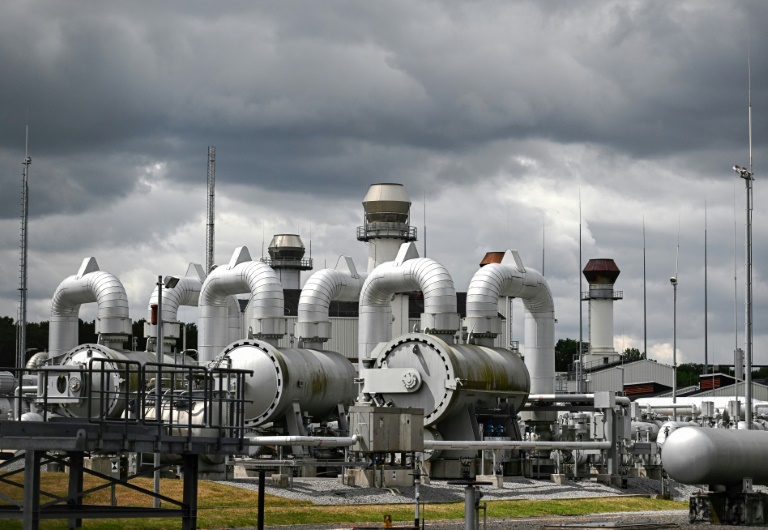
EU leaders are set for tough talks on how to handle Europe’s energy shock Thursday, with capitals at loggerheads over imposing a cap on gas prices pushed skywards by the war in Ukraine.

The bloc’s 27 member states have been squabbling for months over measures to lower energy bills, and will arrive at their Brussels summit in a chilly mood.

Countries such as Italy are pushing hard for a swift and ambitious cap on prices, in the teeth of opposition from Germany, the EU’s biggest economy.

The political pressure to act is huge with strikes and protests over the cost of living spreading across Europe – notably in France and Belgium – and businesses fearing bankruptcy because of the high bills.

If this summit does not result in a “clear political signal that we…no longer tolerate high gas prices”, it will be “Europe’s failure”, Belgian Prime Minister Alexander De Croo said on Monday.

The European Commission, the EU’s executive arm, has tried to satisfy the diverging views with a series of proposals that it hopes will help Europeans pay for their heating as winter approaches.

But these have been dismissed as timid by those wanting a clear ceiling on gas prices despite the opposing view – championed by Germany, but also Denmark and the Netherlands – that this would choke off supply or encourage consumption.

The push for a common approach has been further hampered by discord between France and Germany, which burst into the open Wednesday when they delayed a regular meeting between cabinet ministers.

Breakthroughs in the EU are difficult to achieve when the bloc’s biggest powers do not see eye to eye and French President Emmanuel Macron and Chancellor Olaf Scholz were set to meet ahead of the summit to mend ties.

“There has been a lot of progress, but no fundamental breakthrough,” a senior EU diplomat involved in the negotiations said ahead of the two-day summit.

“Priorities differ: Germany has chosen security of supply because it can afford the high prices, but many countries cannot keep up with the cost,” the diplomat added.

– ‘Slow and painstaking’ –

The Commission’s proposals include an idea to allow joint purchases by the EU energy giants in order to command cheaper prices to replenish reserves.

Another proposal is to give the Commission the power to establish a pricing “corridor” on Europe’s main gas index to intervene when prices get out of control.

Meeting in Brussels, the EU leaders will haggle over the Commission’s proposals, with some countries seeking something much more far-reaching than what is on offer.

But German Chancellor Olaf Scholz on Thursday again rejected any attempt by the EU to cap prices on gas imports saying it “carries the risk that producers will then sell their gas elsewhere.”

However, Scholz welcomed the European Commission’s proposal for joint purchases in the EU.

A big problem in Europe is the link between gas and electricity prices. Under EU rules, a gas price index helps set the price of electric power across the continent, even if sourced from nuclear energy, renewables or coal.

But the index has skyrocketed since Ukraine was invaded by Russia, the country that supplied 40 percent of the EU’s gas imports before the war.

Several countries – including nuclear powered France – are calling for an exception to the gas price mechanism while the commission draws up a new system that better reflects market reality.

This was already granted to Spain and Portugal earlier this year, giving them freer rein to keep electricity prices lower despite surging prices.

“We should not have to ask the Commission four times for the same thing in order to have a proposal,” Spain’s Ecological Transition Minister Teresa Ribera told AFP ahead of the summit.

“It is frustrating to see how slow and painstaking Europe’s response to the challenge we face is,” Ribera said.

Cambodia PM Hun Sen vows to crush exiled opposition figure

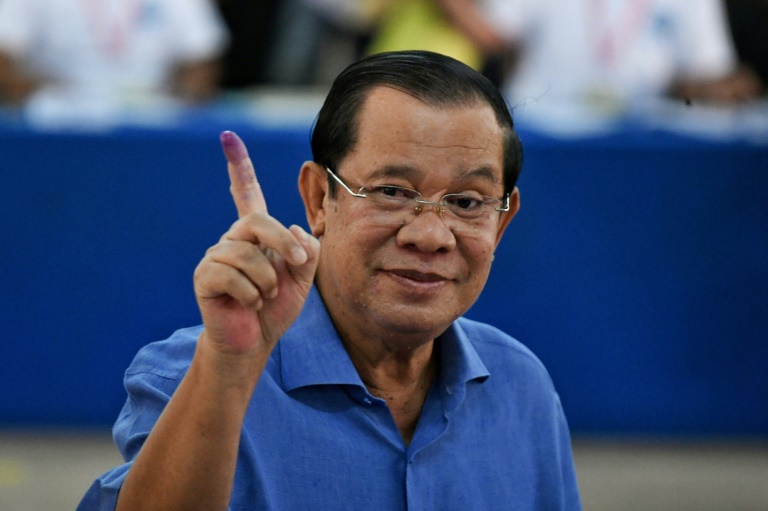
Cambodian Prime Minister Hun Sen said Thursday he would “isolate and finish” exiled opposition figure Sam Rainsy, as the strongman continues to squeeze political challengers ahead of next year’s national election.

Hun Sen — who has ruled the kingdom for 37 years — is running for office again and has backed his eldest son Hun Manet to succeed him.

Stepping up the rhetoric against his long-term foe, Hun Sen told reporters on Thursday he would “eliminate the extremist ideology of three-generation traitor” Rainsy to preserve the country’s peace.

Hun Sen also said he would “isolate and finish” 73-year-old Rainsy, who had appealed on Sunday to the Cambodian people and army to liberate the country from the ruler’s family.

Hun Sen warned any political party with links to the politician would face dissolution, and that people who offer him assistance could face repercussions.

His latest comments come a day after a Cambodian court sentenced Rainsy — who has taken refuge in France, where he is a dual national — to life imprisonment for allegedly attempting to cede territory to a foreign entity.

Rainsy is the co-founder of the banned Cambodia National Rescue Party (CNRP), which was dissolved ahead of 2018’s widely criticised elections.

Rights groups say 70-year-old Hun Sen — Asia’s longest-serving leader — has wound back democratic freedoms and used the courts to stifle opponents, jailing scores of opposition figures and activists.

And earlier this month a court in France cleared Rainsy in a defamation case brought by Hun Sen.

Cambodia will come under the international spotlight next month when it hosts an ASEAN summit in Phnom Penh. 

At a meeting of ASEAN foreign ministers in August, US Secretary of State Antony Blinken expressed concerns about the kingdom’s ailing democracy.

First-ever licencing deal struck for cancer drug

Pharmaceutical giant Novartis has signed a licensing agreement increasing access to a vital leukaemia treatment, a UN-backed public health organisation said Thursday, marking the first-ever such agreement for a cancer drug.

The deal will give selected manufacturers the opportunity to develop, manufacture and supply generic versions of nilotinib, a twice-daily oral medication used to treat chronic myeloid leukaemia (CML).

“Access to high-quality cancer medicines is a crucial component of the global health response to the cancer burden,” said Charles Gore, head of the Medicines Patent Pool, the United Nations-backed public health organisation working to increase access to life-saving medicines in poorer countries.

While the remaining patent period for nilotinib was “relatively short”, he said the licencing deal set “a vital precedent that I hope other companies will follow”, Gore said in a statement.

Novartis president of global health and sustainability Lutz Hegemann said the company was “proud to be pioneering this new licensing model with MPP”.

The drug is listed on the World Health Organization’s List of Essential Medicines for the treatment of adults and children over the age of one suffering from CML.

Zeba Aziz, a medical oncologist at Hameed Latif Hospital in Lahore, Pakistan, said nilotinib offers an alternative to people who are resistant or intolerant to imatinib, the first-line treatment for CML — about 20 percent of those who contract the disease.

“I am glad more people in (low and middle-income countries) will have access to this essential cancer medicine,” she said in the statement.

The licence includes seven middle-income countries: Egypt, Guatemala, Indonesia, Morocco, Pakistan, the Philippines and Tunisia, where patents on the product are pending or in force, MPP said.

The Access to Oncology Medicines (ATOM) Coalition welcomed the deal.

“This is a first for cancer treatment anywhere and demonstrates that the combined efforts of the private and public sectors can pave the way to help save millions of lives,” ATOM co-chair Anil D-Cruz said in a separate statement.

Close Bitnami banner
Bitnami