World

Crisis-hit Sudan faces biggest threat yet: climate change

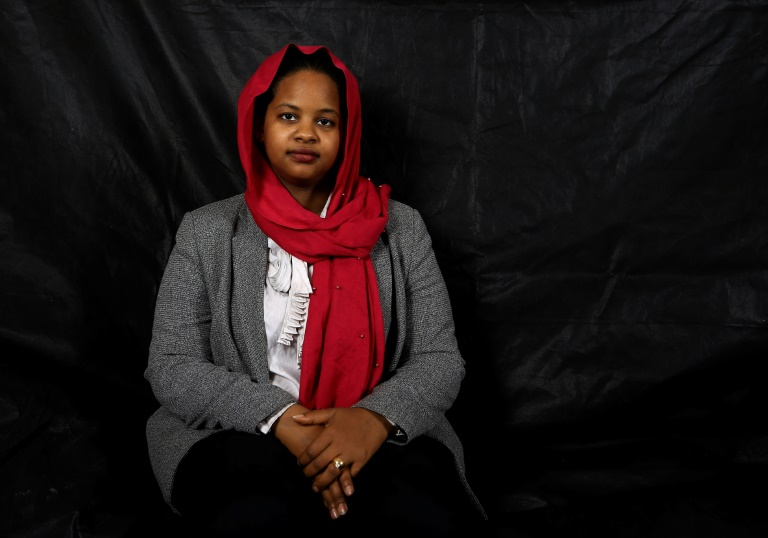
Conflict, coups, dire poverty: Sudan is reeling from multiple crises, but environmental activist Nisreen Elsaim warns a bigger problem dwarfs them all — climate change.

A determined climate campaigner for nearly a decade, both at home and on the world stage, she speaks passionately of the growing threat a heating planet poses to her northeast African nation.

“Climate change needs to be prioritised in Sudan,” 27-year-old Elsaim said, speaking weeks before the COP27 climate conference starts in neighbouring Egypt.

Elsaim — who joined the protests which toppled longtime president Omar al-Bashir in 2019 and now favours a return to civilian rule following a military coup in 2021 — argues that urgent environmental action must go hand in hand with political change.

Sudan is the world’s fifth most vulnerable country to the impacts of climate change, according to a 2020 ranking in the Global Adaptation Index, compiled by the Notre Dame University in the United States.

“There has also been a noticeable increase in temperature,” said Elsaim about her arid country. “There is no winter anymore.”

The war-ravaged nation has been hit hard in recent years by erratic weather patterns — harsh droughts and boiling temperatures followed by torrential rains.

Severe floods that wreck property, infrastructure and crops have killed more than 145 people this year, Sudanese authorities say.

– ‘Ecological crisis’ –

Egypt, which borders Sudan to the north, will from November 6 host the 27th Conference of the Parties to the UN Framework Convention on Climate Change.

For Elsaim, named chair of the UN Youth Advisory Group on Climate Change in 2020, it is an opportunity to ring the alarm bell on the climate impacts her youthful country faces — 62 percent of Sudan’s 45 million people are aged under 30, according to UN figures.

Sudan is already struggling from what experts and activists say is the results of shifting weather patterns: worsening conflicts over scarce land and water resources.

Increasing demands on dwindling natural resources has fuelled inter-ethnic conflicts, including the 2003 war that erupted in the arid western region of Darfur.

“Such conflicts are caused primarily by scarcity,” said Elsaim, who has a degree in physics and a masters in renewable energy from the University of Khartoum.

“And the reason for said scarcity is climate change.”

In Darfur, the war pitched ethnic African minority rebels against the Arab-dominated government of hardline president Bashir, who responded by unleashing the notorious Janjaweed militia.

The war in Darfur would leave about 300,000 people killed and 2.5 million displaced, according to the United Nations.

Then UN secretary-general Ban Ki-moon, writing in The Washington Post in 2007, argued that “amid the diverse social and political causes, the Darfur conflict began as an ecological crisis, arising at least in part from climate change”.

– ‘Threat multiplier’ –

Linking the heating planet to conflict is complex: the International Crisis Group calls climate change “a threat multiplier”, that increases “food insecurity, water scarcity and resource competition, while disrupting livelihoods and spurring migration”.

Organisations such as the International Committee of the Red Cross note that climate change “exacerbates existing social and economic factors that may lead to conflict”, while at the same time, insecurity can “limit people’s ability to cope with climate shocks”.

Sudan also remains gripped by regular protests following the October 2021 military coup led by army chief Abdel Fattah al-Burhan that upended a post-Bashir transition to civilian rule.

Elsaim says the authorities have given little attention to climate change.

As COP27 approaches, she remains committed to doing what she can to make change — even while admitting progress from previous climate summits she has attended has been “very small”.

“Though the small progress will not save us,” she said, “it’s still better than nothing.”
Asian markets drop and dollar rises as inflation, rate fears return

Asian equities tumbled Thursday, tracking a sell-off on Wall Street, while the dollar regained its strength as surging inflation, interest rate hikes and recession fears returned to the fore.

The positive start of the week, helped by forecast-beating earnings and a major UK government policy U-turn, gave way to the downbeat mood that has characterised markets all year as traders contemplated an extended period of uncertainty.

News that UK inflation bounced back above 10 percent in September highlighted the struggle central banks have in bringing prices down, despite lifting borrowing costs in recent months.

That came after a similarly glum reading out of New Zealand earlier in the week and helped push up government bond yields around the world, indicating higher interest rates.

The unease on trading floors, and concerns that prices are showing no sign of easing, also sent investors back into the safety of the dollar, adding more inflationary pressure outside the United States and dragging on stock markets.

“As is often the case, rising US yields and the strong US dollar are the sledgehammers pounding global equities lower,” said SPI Asset Management’s Stephen Innes. 

After Wall Street’s drop, markets across Asia were deep in the red, with selling also fuelled by concerns about the Chinese economy as Covid cases spike in the country and leaders stick to their zero-Covid lockdown strategies.

A decision to delay the release of third-quarter growth data this week added to the unease among investors.

Hong Kong led losses, shedding almost three percent, while Tokyo, Sydney, Seoul, Wellington and Taipei were all off at least one percent.

Shanghai, Singapore and Manila were also in the red.

The losses wiped out most of the gains enjoyed at the start of the week, even as positive earnings reports came in from Netflix and top Wall Street banks, with Ellen Hazen of F.L.Putnam Investment Management warning worse could be yet to come.

“As we look at third-quarter results, we think there are going to be more misses than the market is currently expecting,” she told Bloomberg Radio.

“If you look at GDP for this year, it keeps getting revised downward and it’s really hard for companies to keep growing their earnings in the face of that.”

Forex traders remain on alert as the dollar comes within a whisker of 150 yen, with Japanese authorities saying they are keeping a close watch on the market and are ready to step in to support the beleaguered currency.

– Pound troubles –

The pound was also back under pressure, having bounced Monday after Britain’s new finance minister Jeremy Hunt reversed virtually all of Prime Minister Liz Truss’s debt-fuelled, tax-cutting mini-budget that hammered financial markets.

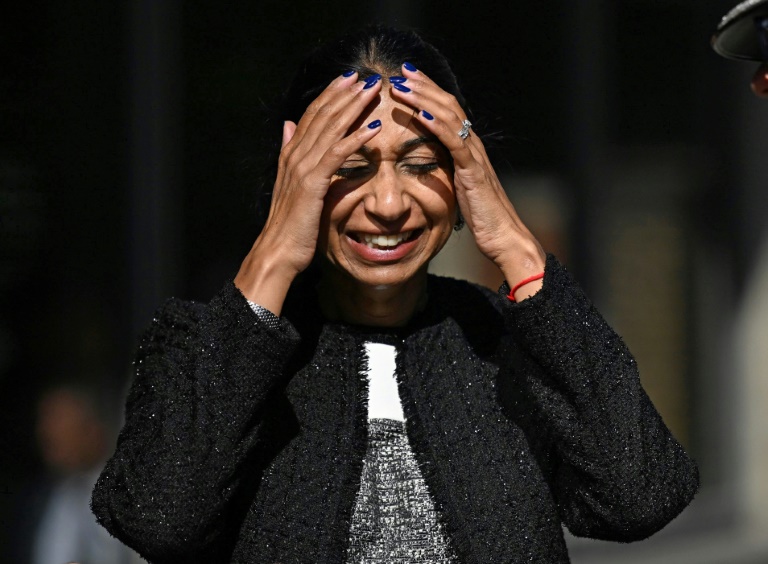
Sterling was back around $1.12 — down from more than $1.14 Tuesday — as the government was plunged into a fresh crisis following the resignation of Home Secretary Suella Braverman.

That came days after the sacking of Hunt’s predecessor Kwasi Kwarteng and has left Truss’s premiership on a knife edge.

Oil prices were mixed after rallying Wednesday in reaction to a drop in US petroleum stockpiles, and despite President Joe Biden’s decision to release 15 million barrels from US strategic reserves.

The crude was the last batch to be released from the 180 barrels pledged by Biden earlier this year aimed at bringing costs down.

But Innes added: “Markets will mostly ignore further releases from the Strategic Petroleum Reserves — prices are elevated because of the medium- and longer-term gap between supply and demand resulting from years of oil industry swoon and the resulting low capital expenditure.

“So, the impact of additional… releases will likely have diminishing returns with (reserves) at a multi-decade low.”

– Key figures around 0230 GMT –

Tokyo – Nikkei 225: DOWN 1.1 percent at 26,954.15 (break)

Hong Kong – Hang Seng Index: DOWN 2.9 percent at 16,042.75

Shanghai – Composite: DOWN 0.8 percent at 3,021.04

Pound/dollar: DOWN at $1.1200 from $1.1219 on Wednesday

Dollar/yen: UP at 149.93 yen from 149.88 yen

Euro/dollar: DOWN at $0.9758 from $0.9778 

Euro/pound: UP at 87.12 pence from 87.10 pence

West Texas Intermediate: UP 0.6 percent at $86.03 per barrel

Brent North Sea crude: DOWN 0.1 percent at $92.29 per barrel

New York – Dow: DOWN 0.3 percent at 30,423.81 (close)

London – FTSE 100: DOWN 0.2 percent at 6,924.99 (close)

Ukraine restricts electricity use after Russian strikes

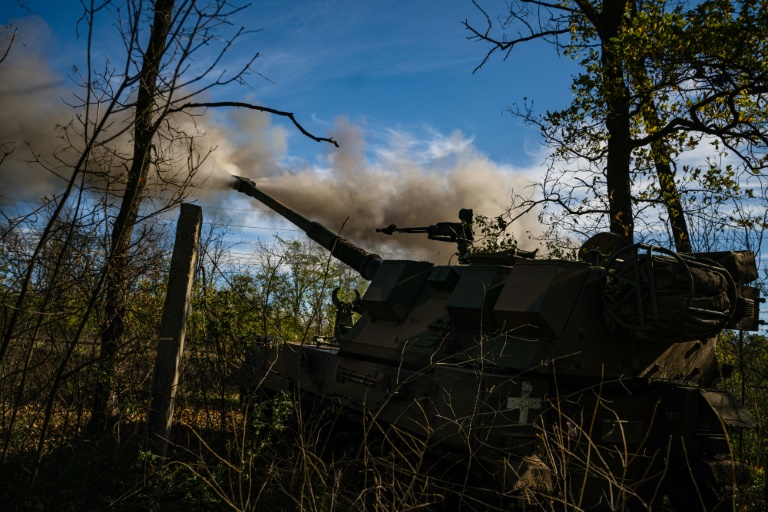
Ukraine has urged residents to drastically restrict their electricity consumption starting Thursday to cope with the destruction of power stations by the Russian army as winter approaches. 

Ukrainian President Volodymyr Zelensky said after a meeting with energy companies that they were preparing “for all possible scenarios with a view to winter”, as Kyiv accused Moscow of orchestrating a “mass deportation” of civilians from the occupied region of Kherson.

Russian President Vladimir Putin imposed martial law on Wednesday in four areas recently annexed by the Kremlin, with his forces raining down munitions across Ukraine, including on Kyiv and the country’s west, which had previously been spared the brunt of the onslaught.

In an evening address, Zelensky warned that “Russian terror will be directed at energy facilities”, and urged the country to conserve electricity starting at 7 am (0400 GMT) on Thursday.

He added that the government was “working on the creation of mobile power supply points for critical infrastructure in cities and villages”.

Kyiv mayor Vitaliy Klitschko asked residents of the capital not to turn on major electrical appliances, saying “even a small saving and reduction of electricity consumption in each residence will help to stabilise the national energy system’s operation”.

Ukraine said it had downed “several Russian rockets” over Kyiv in the third consecutive day of attacks on the capital, with Zelensky saying 10 Iranian-made drones aimed at the city had also been destroyed Wednesday.

– Creating ‘panic’ –

A Ukrainian representative called the push by Russia to evacuate Kherson the “equivalent of deportation”. The city has been in Moscow’s hands since the earliest days of the invasion.

Putin’s “aim is to create a kind of panic in Kherson and an image (to fuel) propaganda”, Sergiy Khlan said, adding that Ukrainian forces were still pushing their counter-offensive southward. 

He said the Russians were using the evacuations as a pretext to justify “their withdrawal from Kherson and more generally from the right bank” of the Dnieper River.

Oleksiy Danilov, secretary of Ukraine’s National Security and Defense Council, criticised Moscow’s move as criminal.

“Putin’s martial law in the annexed regions of Ukraine is preparation for the mass deportation of the Ukrainian population to depressed areas of Russia in order to change the ethnic composition of the occupied territory,” Danilov said.

Pro-Russian officials in the town of Oleshky across the Dnieper said residents from Kherson city were already arriving.

Russia’s Rossiya 24 TV showed images of people waiting to board ferries, unable to use bridges damaged by Ukraine.

Vladimir Saldo, the Kherson region’s Moscow-installed head, told Russian state television that the city’s administration would relocate east of the Dnieper.

– Sakharov Prize –

With developments on the ground gathering pace, Putin’s introduction of military rule in the Moscow-controlled territories also gives additional power to authorities in southern Russian regions bordering Ukraine to quash dissent.

“We are working on solving very complex large-scale tasks to ensure security and protect the future of Russia,” Putin said.

Local officials said they were planning to move up to 60,000 civilians from Kherson over roughly six days.

Separately, the secretary of Russia’s National Security Council Nikolay Patrushev said around five million people from Russian-held parts of Ukraine had “found shelter” in Russia.

Ukraine’s resilience has won plaudits internationally and the European Parliament on Wednesday awarded the annual Sakharov Prize for human rights to “brave” Ukrainians.

Zelensky tweeted in response: “Ukrainians prove dedication to the values of freedom, democracy every day on the battlefield.”

Meanwhile, in parts of Ukraine recently recaptured from Russian forces, repairs were under way before the onset of winter, with many residents still depending on humanitarian aid.

“Apart from this, nothing is working,” said Ivan Zakharchenko, a 70-year-old resident of Izyum queueing for aid in the square where Zelensky celebrated the town’s liberation just over a month ago.

– Nuclear plant staff detained –

Ukraine has recaptured occupied eastern territory in recent weeks. Its advance in the south, while far slower, has been gaining momentum.

There have been some advances on the Russian side too, with Moscow reporting Tuesday its troops had retaken territory in eastern Kharkiv region. 

Russia’s Wagner mercenary group said it was working on building a “multi-level and layered defence” in the Lugansk region.

Russian forces, meanwhile, continue to occupy the Zaporizhzhia nuclear power plant.

Petro Kotin, head of Ukraine’s nuclear energy agency Energoatom, told AFP Wednesday that Russian forces were currently holding about 50 plant employees.

– EU to sanction Iran –

Russia’s strikes following Ukrainian battlefield gains have demolished large parts of Ukraine’s power grid ahead of winter.

The government has warned of the risk of blackouts, saying about 30 percent of Ukraine’s power stations have been destroyed. 

After strikes Monday and Tuesday, multiple explosions were heard in central Kyiv on Wednesday.

Kyiv and Western allies have accused Moscow of using Iranian-made drones, with Ukraine saying it has successfully shot down 233 of them since mid-September.

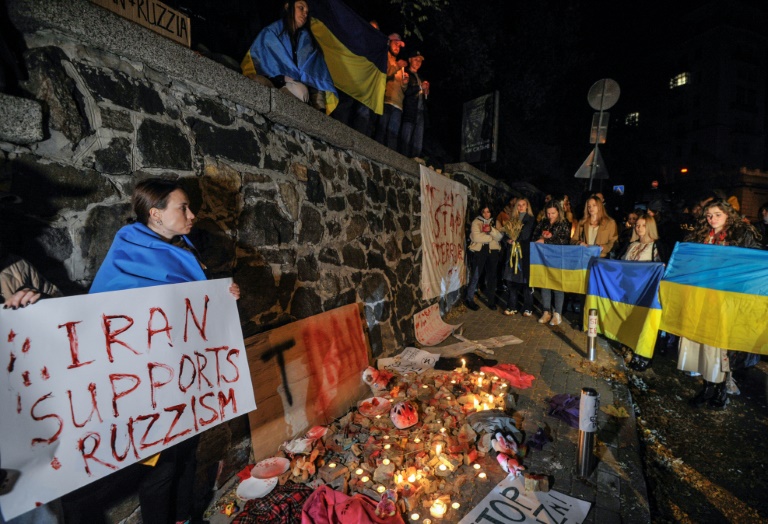
The Kremlin and Iran have denied this, but EU foreign policy spokeswoman Nabila Massrali said the EU had “sufficient evidence” and would prepare fresh sanctions on Iran.

Russia, Iran defiant as West presses sanctions over drones in Ukraine

Russia on Wednesday warned the United Nations not to probe alleged strikes by Iranian-made drones in Ukraine, joining Tehran in denying the weapons’ origin as the European Union prepared new sanctions.

The United States, France and Britain called a closed-door Security Council meeting on the alleged sale of drones to Russia, which they described as a violation of UN arms restrictions on Iran.

The European Union and United States both said they had evidence that Iran supplied the Shahed-136s, low-cost drones that explode on landing and are blamed for five deaths Monday in the capital Kyiv as well as for the destruction of civilian infrastructure.

Ukraine, which has moved to sever diplomatic relations with Tehran, says its military has shot down more than 220 Iranian drones in little more than a month and pictures have surfaced that appear to show an Iranian link. 

But Russian diplomat Dmitry Polyanskiy denounced the “baseless accusations and conspiracy theories,” citing as evidence that the Russian word for geraniums was written on the drones, formally known as unmanned aerial vehicles.

“The UAVs used by the Russian army in Ukraine are manufactured in Russia,” Polyanskiy told reporters outside the Security Council.

“I would recommend that you do not underestimate the technological capabilities of the Russian drone industry.”

But he warned against any UN probe on the ground in Ukraine as part of enforcement of the existing sanctions on Iran.

“The team doesn’t have this mandate to conduct investigations; it is not part of the sanctions committee. So this would be absolutely unprofessional and political,” he said.

If the UN Secretariat or Secretary-General Antonio Guterres still go ahead, “we will have to reassess our collaboration with them, which is hardly in anyone’s interest,” Polyanskiy said.

Iran’s UN envoy, Amir Saeid Iravani, also rejected the “unfounded and unsubstantiated claims” on the drone transfers and said that Tehran, which has abstained in votes on the Ukraine war, wanted a “peaceful resolution” of the war.

The alleged arms transfers come as Iran is facing growing pressure over its crackdown on the biggest protests in years, which were sparked by the death of Mahsa Amini, a 22-year-old detained by the clerical state’s notorious “morality police.”

– ‘Swift and firm’ response –

The European Union is expected to approve sanctions over the drones ahead of a summit Thursday in Brussels.

A list seen by AFP showed the 27-nation bloc planned sanctions on three senior military officials, including General Mohammad Hossein Bagheri, the chief of staff of Iran’s armed forces, as well as drone maker Shahed Aviation Industries, an aerospace company linked to the powerful Revolutionary Guards.

Nabila Massrali, spokeswoman for EU foreign policy chief Josep Borrell, said the bloc had “gathered our own evidence” and would prepare “a clear, swift and firm EU response.”

The United States has charged that the drones violated UN Security Council Resolution 2231 of 2015 that blessed a now moribund nuclear deal.

The resolution’s ban on Iran’s conventional arms sales expired in 2020, despite attempts by the then-US administration of Donald Trump.

The United States has not spelled out the purported violation but Resolution 2231 still bars through October 2023 any transfers that could benefit nuclear-capable ballistic missiles.

State Department spokesman Ned Price said the US has “abundant evidence” of Iranian drone shipments to Russia even “as Iran continues to lie” about the transfers. Price said the US and its allies “will not hesitate to use our sanctions” on any nation involved in the transfers.

Iran’s crackdown on protesters has already led to new Western sanctions over human rights and put on the back burner efforts by US President Joe Biden to restore the 2015 nuclear deal, from which Trump pulled the United States.

Western officials have highlighted the Iranian drones as evidence that Russia, historically one of the world’s largest arms exporters, has seen its arsenal badly depleted from losses on the battlefield.

The United States has released intelligence saying that the Iranian drones have frequently malfunctioned and that Russia has also turned to North Korea, although China has reportedly rebuffed calls to send weapons.

Estonian Defense Minister Hanno Pevkur, on a visit to Washington, said Russia was relying on drones both because of low supplies and due to Ukraine’s success in the skies.

The Russians “understand that in air, they don’t have supremacy at the moment because there is air defense from the Ukrainian side. They’ve lost many airplanes already,” Pevkur told reporters.

Reliving the Cuban missile crisis: 'We were going to be incinerated'

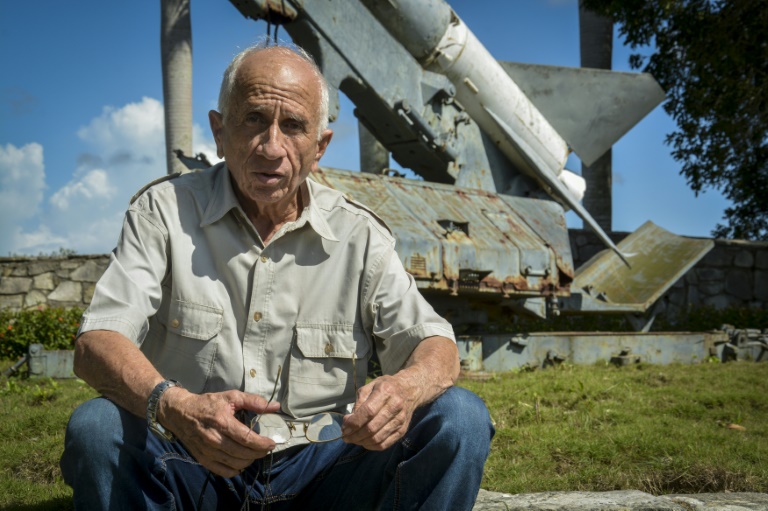
Oscar Larralde vividly remembers hearing the explosions that downed an American spy plane over Cuba in 1962; his island nation was in the eye of a nuclear standoff between the United States and Soviet Union.

The then-17-year-old bank employee-turned-enlisted soldier was convinced the moment spelled his country’s doom.

“We were going to be incinerated,” he recalled thinking at the time. 

As nuclear threats swirl again around Russia’s invasion of Ukraine, the retired colonel hails the diplomacy that staved off full-blown war 60 years ago, and hopes reason will prevail once again.

In 1962, Larralde was deployed to the eastern port city of Banes in communist Cuba’s Holguin province.

On October 27, he was walking on a remote beach when he heard a roar unlike anything he had ever heard before, and felt two explosions high over his head, “very loud, very strong.”

“I didn’t know what it was,” the former soldier recalled.

He later learned it was two Soviet surface-to-air missiles, one of which downed a US U-2 spy plane, killing pilot Major Rudolf Anderson — at age 35, the only casualty of the so-called Cuban missile crisis.

“An officer told us that a Soviet-operated anti-aircraft group had shot down a Yankee plane,” Larralde told AFP.

“The reaction of the fighters in that first line of defense — because we were the first ones who would clash with the Yankees — was of enthusiasm, of joy,” he recalled.

“We had made our sovereignty prevail. They were intruding planes violating” Cuban airspace, added Larralde.

But celebration soon turned to fear of the fallout “when the Yankees found out.”

– ‘A difficult time’ –

Two weeks before Anderson’s death, US reconnaissance aircraft had taken photographs of Soviet work on missile launch sites on Cuba — within range of American shores.

Then-president John F. Kennedy warned Soviet leader Nikita Khrushchev the United States would attack unless the missiles were withdrawn.

Kennedy ordered a naval blockade of Cuba and mobilized 140,000 troops, while Fidel Castro put 400,000 of his own people on alert, anticipating a military invasion.

Then Anderson was shot down.

Even as some in the Pentagon urged Kennedy to strike, diplomacy won the day, and on October 28 — the day after the downing of the plane —  Khrushchev agreed to remove the missiles in exchange for a US pledge not to invade Cuba.

“At a very difficult time, the USSR and United States managed to negotiate and find a solution to the conflict,” Larralde told AFP at a rusty launch platform bearing a spent Soviet missile converted into a monument at La Anita, near Banes.

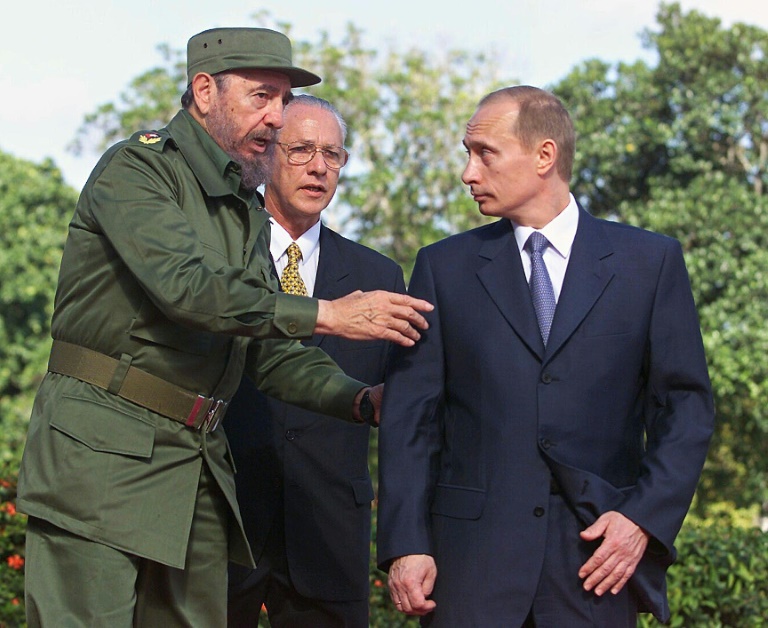
Six decades later, Russian President Vladimir Putin’s threats against the West in his war on ex-Soviet neighbor Ukraine has brought back fearful memories of the last time the world teetered on the brink of nuclear war.

“I don’t think it will come to that, but I do think we are in more danger than at any time, in many ways even more than in 1962,” said Hal Klepak, a strategy expert at the Royal Military College of Canada. 

For Cuban ex-diplomat Carlos Alzugaray, the big fear today, like 60 years ago, is that things can “escalate by mistake. That someone makes the mistake of hitting a nuclear site… and then it escalates from there.”

But Larralde is hopeful that this time, like the last, peace will prevail.

“It is important to negotiate to ensure world peace, or humanity will continue to be caught up in the possibility of a new nuclear conflict,” he reflected.

60 years after Cuba crisis, nuclear war suddenly thinkable again

For 60 years, the Cuban missile crisis has loomed both as a frightening lesson on how close the world came to nuclear doomsday — and how skillful leadership averted it.

With Russian President Vladimir Putin brandishing the nuclear option in Ukraine, the threat has come roaring back, but this time, experts are less certain of a way to end it.

US President Joe Biden in early October warned bluntly that the world risked nuclear destruction for the first time since 1962, saying that Putin was “not joking” about the use of the ultra-destructive weapons as his military is “significantly underperforming” in its invasion of Ukraine.

Biden said he was looking to provide “off-ramps” to Putin. But there is no sign Putin is eager to take one.

“I think this situation, more than any since 1962, could escalate to the use of nuclear weapons,” said George Perkovich, vice president for studies at the Carnegie Endowment for International Peace.

“I’ve been working in this field for 40 years and this is the most challenging situation because you have a nuclear-armed state, Russia, whose leader has defined a situation as an existential one.”

Unlike in 1962, the world is now facing a number of nuclear flashpoints with signs North Korea is gearing up for another atomic test, tensions still on low-boil between nuclear-armed India and Pakistan and Iran ramping up nuclear work.

But Ukraine poses unique dangers as the conflict pits the world’s two largest nuclear powers against each other. Any Russian strike would be expected to involve tactical nuclear weapons — targeted on the battlefield and not fired between continents — but Biden himself has warned it is difficult not to “end up with Armageddon” once a nuclear weapon is used.

Putin, who has questioned Ukraine’s historical legitimacy, has proclaimed the annexation of four regions and suggested that either an attack on the annexed “Russian” territory or direct Western intervention could lead Russia to use a nuclear weapon.

– Bigger stakes? –

The brutal war that has already gone on for eight months is substantively different than the Cuban crisis, where the question was how to prevent a Cold War confrontation over the discovery of Soviet nuclear weapons on the island from turning hot.

US president John F. Kennedy, in one of his taped deliberations pored over by historians, said that European allies thought Washington was “demented” by its fixation on Cuba, some 90 miles (140 kilometers) from Florida with a long history of US intervention.

“Ukraine is significantly more important to America’s allies than Cuba was,” said Marc Selverstone, a Cold War historian at the University of Virginia.

“Putin seems to be willing to rearrange the borders of Europe, and that’s terrifying to Europeans.”

Soviet leader Nikita Khrushchev’s motives, while broad, were less rigid than Putin’s, with Moscow in part seeking to close a missile gap with the United States and gain leverage with the West over divided Berlin.

Political stakes were high for Kennedy, who was embarrassed by the failed CIA Bay of Pigs invasion a year earlier to oust communist revolutionary Fidel Castro and was days away from congressional elections.

But Kennedy rejected advice for air strikes and imposed a naval “quarantine” against further Soviet shipments — avoiding the term blockade, which would have been an act of war.

Moscow withdrew after Kennedy promised not to invade Cuba and, quietly, to pull US nuclear missiles from Turkey.

“For Kennedy, the most important thing was to lessen the chance for a nuclear exchange,” Selverstone said.

“I don’t know if that’s foremost in Vladimir Putin’s mind right now. In fact, he seems to be to be upping the ante.”

– ‘Raising their red lines’ –

Both in 1962 and now, the nuclear powers faced an added layer of uncertainty from allies on the ground.

On October 27, 1962, just as Khrushchev and Kennedy were exchanging messages, a US U-2 spy plane was shot down over Cuba, killing a US pilot.

Kennedy ignored calls to retaliate, surmising — correctly, the historical record proved — that the order to fire came not from the Soviets but from Cuba. 

Khrushchev announced a deal the next day, with his son later writing that he feared the situation was spiraling out of control.

In Ukraine, President Volodymyr Zelensky has vowed to build on momentum and win back all land occupied by Russia.

The United States has shipped billions of dollars in weapons to Ukraine but Biden has stopped short of sending missiles that could strike into Russia, saying he will not risk “World War III.”

“Zelensky and Putin have both taken maximalist positions, raising their red lines, whereas in 1962, Kennedy and Khrushchev were lowering them,” Selverstone said.

Perkovich said that Biden, for whom he worked when he was a senator, was as calm and historically well-versed as any US president in handling a crisis.

But he said that 2022 is also a different era. In 1962, Russia agreed to keep Kennedy’s agreement to pull US missiles from Turkey a secret, mindful of the political risks for the president.

“Many crises in history get resolved through secret diplomacy,” Perkovich said.

“Can you imagine now in this media age, with open-source intelligence and social media, keeping a deal secret like that?”

EU leaders struggle for common ground on energy prices

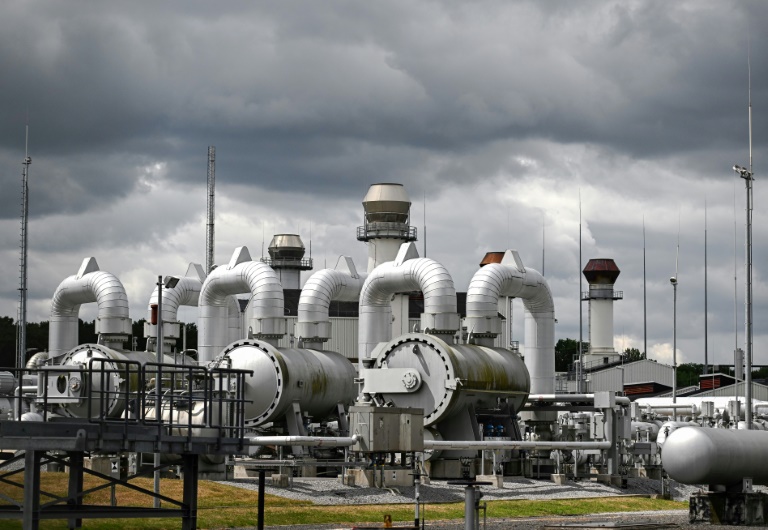
EU leaders will debate how to handle Europe’s energy shock Thursday, with capitals at loggerheads over imposing a cap on gas prices pushed skywards by the war in Ukraine.

The bloc’s 27 member states have been squabbling for months over measures to lower energy bills, and will arrive at their Brussels summit in a dark mood.

Countries such as Italy are pushing hard for a swift and ambitious cap on prices, in the teeth of opposition from Germany, the EU’s biggest economy.

“Seven months of delay has brought us a recession,” Italian Prime Minister Mario Draghi told his counterparts at a summit earlier this month, according to an official with knowledge of the matter.

The European Commission, the EU’s executive arm, has tried to satisfy the diverging views with a series of proposals that it hopes will help Europeans pay for their heating as winter approaches.

The push for a common approach has been further hampered by discord between France and Germany, which burst into the open Wednesday when they delayed a regular meeting between cabinet ministers.

Breakthroughs in the EU are difficult to achieve when the bloc’s biggest powers do not see eye to eye.

“There has been a lot of progress, but no fundamental breakthrough,” a senior EU diplomat involved in the negotiations said ahead of the two-day summit.

“Priorities differ: Germany has chosen security of supply because it can afford the high prices, but many countries cannot keep up with the cost,” the diplomat added.

The Commission’s proposals include an idea to allow joint purchases by the EU energy giants in order to command cheaper prices to replenish reserves.

– ‘Slow and painstaking’ –

Another proposal is to give the Commission the power to establish a pricing “corridor” on Europe’s main gas index to intervene when prices get out of control.

Meeting in Brussels, the EU leaders will haggle over the Commission’s proposals, with some countries seeking something much more far-reaching than what is on offer.

“We should not have to ask the Commission four times for the same thing in order to have a proposal,” Spain’s Ecological Transition Minister Teresa Ribera told AFP ahead of the summit.

“It is frustrating to see how slow and painstaking Europe’s response to the challenge we face is,” Ribera said.

A big problem is the link in Europe between gas and electricity prices. Under EU rules, a gas price index helps set the price of electric power across the continent.

But the index has skyrocketed since Ukraine was invaded by Russia, the country that supplied 40 percent of the EU’s gas imports before the war.

Several countries are calling for an exception to the gas price mechanism.

This was already granted to Spain and Portugal earlier this year, giving them freer rein to keep electricity prices lower despite surging prices.

Germany opposes this idea, arguing that cheaper gas will dissuade users from cutting back on their energy use.

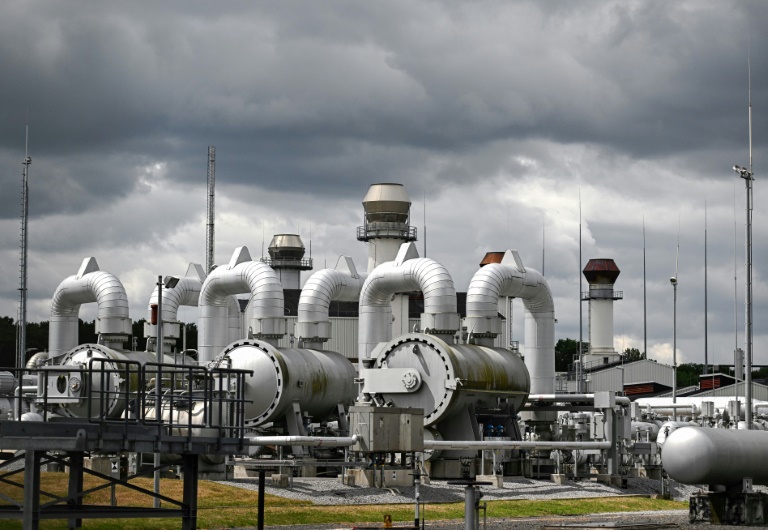
EU leaders struggle for common ground on energy prices

EU leaders will debate how to handle Europe’s energy shock Thursday, with capitals at loggerheads over imposing a cap on gas prices pushed skywards by the war in Ukraine.

The bloc’s 27 member states have been squabbling for months over measures to lower energy bills, and will arrive at their Brussels summit in a dark mood.

Countries such as Italy are pushing hard for a swift and ambitious cap on prices, in the teeth of opposition from Germany, the EU’s biggest economy.

“Seven months of delay has brought us a recession,” Italian Prime Minister Mario Draghi told his counterparts at a summit earlier this month, according to an official with knowledge of the matter.

The European Commission, the EU’s executive arm, has tried to satisfy the diverging views with a series of proposals that it hopes will help Europeans pay for their heating as winter approaches.

The push for a common approach has been further hampered by discord between France and Germany, which burst into the open Wednesday when they delayed a regular meeting between cabinet ministers.

Breakthroughs in the EU are difficult to achieve when the bloc’s biggest powers do not see eye to eye.

“There has been a lot of progress, but no fundamental breakthrough,” a senior EU diplomat involved in the negotiations said ahead of the two-day summit.

“Priorities differ: Germany has chosen security of supply because it can afford the high prices, but many countries cannot keep up with the cost,” the diplomat added.

The Commission’s proposals include an idea to allow joint purchases by the EU energy giants in order to command cheaper prices to replenish reserves.

– ‘Slow and painstaking’ –

Another proposal is to give the Commission the power to establish a pricing “corridor” on Europe’s main gas index to intervene when prices get out of control.

Meeting in Brussels, the EU leaders will haggle over the Commission’s proposals, with some countries seeking something much more far-reaching than what is on offer.

“We should not have to ask the Commission four times for the same thing in order to have a proposal,” Spain’s Ecological Transition Minister Teresa Ribera told AFP ahead of the summit.

“It is frustrating to see how slow and painstaking Europe’s response to the challenge we face is,” Ribera said.

A big problem is the link in Europe between gas and electricity prices. Under EU rules, a gas price index helps set the price of electric power across the continent.

But the index has skyrocketed since Ukraine was invaded by Russia, the country that supplied 40 percent of the EU’s gas imports before the war.

Several countries are calling for an exception to the gas price mechanism.

This was already granted to Spain and Portugal earlier this year, giving them freer rein to keep electricity prices lower despite surging prices.

Germany opposes this idea, arguing that cheaper gas will dissuade users from cutting back on their energy use.

Politics and football: Brazil election edition

Many dribble around the question, but the few Brazilian footballers who have taken sides in the country’s polarizing presidential election have mostly backed far-right incumbent Jair Bolsonaro.

Here is a rundown of where the heroes of the “beautiful game” stand in football-mad Brazil’s presidential derby, which pits Bolsonaro against veteran leftist Luiz Inacio Lula da Silva in an October 30 runoff.

– Neymar with Bolsonaro –

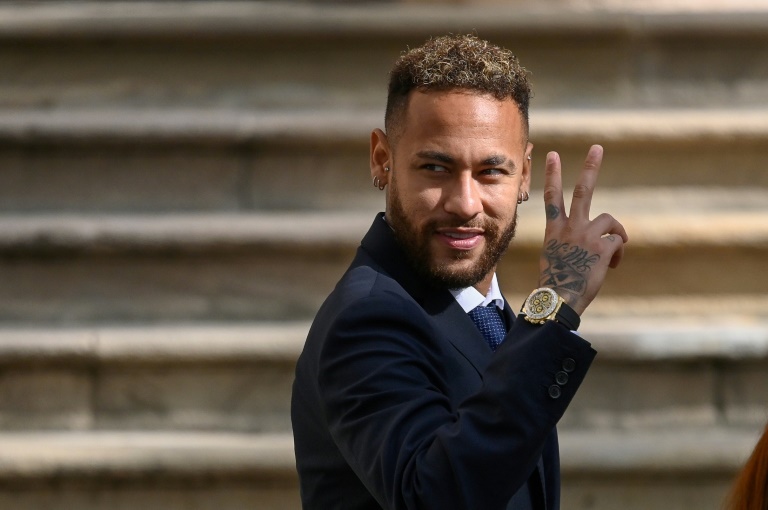
Bolsonaro won the biggest endorsement yet from the football world when Paris Saint-Germain and national team superstar Neymar gave him his backing.

Neymar, 30, posted a video on TikTok of himself rocking out to a pro-Bolsonaro electronic dance song three days before the October 2 first-round election.

Lula fired back this week, alleging the player was motivated by a tax debt pardon from Bolsonaro.

Others backing the incumbent include…

Current players:

– Lucas Moura (Tottenham Hotspur)

– Felipe Melo (Fluminense)

Former players:

– 1994 World Cup champion Romario (Barcelona, Miami, among others), now a Senator allied with Bolsonaro

– 2002 World Cup champion Rivaldo (Barcelona, among others)

– 2002 World Cup champion Marcos (Palmeiras)

– National team veteran Robinho (Real Madrid, AC Milan, among others), who has been sentenced to nine years in prison for rape by an Italian court

Sports historian Joao Malaia says footballers are particularly keen on Bolsonaro’s ultra-liberal economic policies and rhetoric.

“It’s very much about individual success and the ability to overcome all difficulties, which aligns with footballers’ trajectories,” he says.

– Veterans with Lula –

Just one current player has publicly backed Lula: 2020 Tokyo Olympic champion Paulinho (Bayer Leverkusen).

Veterans backing the ex-president include:

– 1994 World Cup champion Rai (Botafogo, Sao Paulo, Paris Saint-Germain), who flashed an “L” for Lula at the Ballon d’Or gala Monday

– National team veteran Walter Casagrande (Corinthians, Porto, among others), now a popular football pundit

– National team veteran and free kick master Juninho Pernambucano (Lyon, New York, among others)

– Ex-national team coach Vanderlei Luxemburgo (1998-2000)

– Silent majority –

Few others have taken sides.

Malaia says Brazilian footballers have sometimes paid a heavy price for political activism.

“There’s a maxim in Brazil: football and politics don’t mix,” he says.

One example: retired forward Reinaldo (Atletico Mineiro), who claims he was benched at the 1978 World Cup for celebrating a goal with a Black Power salute.

Sports marketing expert Rafael Zanette says politics can also negatively impact players’ chances at contracts with clubs and sponsors.

“A guy who takes political stances sets off alarm bells,” he says.

The notable exception was the pro-democracy movement in the 1980s at Sao Paulo side Corinthians during Brazil’s military dictatorship (1964-1985).

Its leaders included Casagrande and Rai’s late brother Socrates.

Brazil jersey hostage to politics a month from World Cup

Every four years, there is an explosion of green and yellow in Julio Cesar Freitas’s neighborhood as locals cover the streets in the colors of the Brazilian flag.

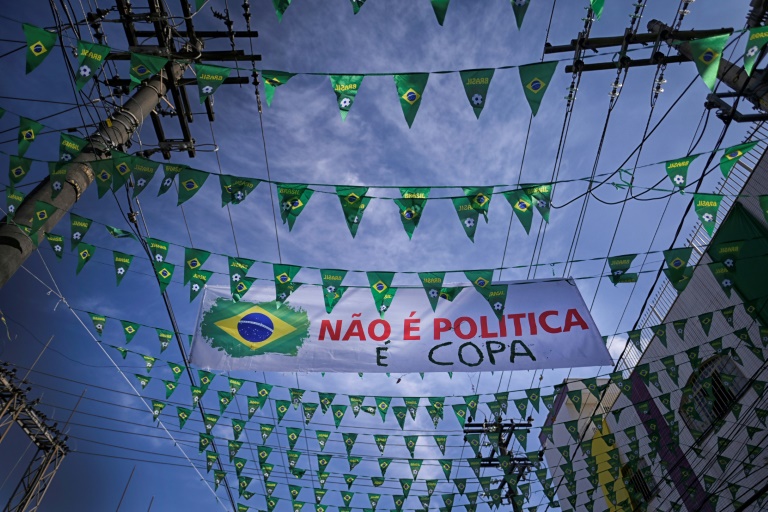
But this year, Freitas felt compelled to add an explanation alongside the sea of decorations outside his family’s construction supply shop: “It’s not politics, it’s the World Cup.”

Football-mad Brazil is famously passionate about the World Cup, which it has won more than any other country — five times. But this year, the signs of football fever have taken on a different meaning.

Battling to win reelection in an October 30 runoff against veteran leftist Luiz Inacio Lula da Silva, far-right President Jair Bolsonaro has adopted the flag and the national football team’s jersey as symbols of his own.

Bolsonaro regularly sports the colors of the flag, his rallies are drenched in yellow and green, and he urged supporters to wear the national team Selecao’s iconic jersey to vote in the first-round election on October 2, in which he finished a closer-than-predicted five percentage points behind Lula.

With Brazilians bitterly divided by the elections, yellow and green have become politicized — sometimes dampening outward displays of World Cup fever in Brazil, whose team head to Qatar as favorites ahead of the November 20 kickoff.

The unease is visible in Freitas’s neighborhood, Caicara, in the southeastern city of Belo Horizonte.

The city organizes a decoration contest for every World Cup.

Freitas, whose family has been taking part since 1994, says there were negative reactions this year in the politically divided community after they hung their decorations two weeks ago — rows upon rows of mini triangular flags strung across the street.

Two days later, they added the above-mentioned sign.

“Unfortunately, the World Cup coincided with the elections this year. I had to put up the sign so people would know the decorations aren’t about supporting any candidate,” says Freitas, 26.

“I could see people were upset,” he says.

But after adding the sign, “people who had been angry with us about it started praising us instead.”

– ‘Losing our identity’ –

Elsewhere, many restaurants and bars have postponed putting up their usual World Cup-themed decorations.

“Everyone is on edge. As a business owner, I don’t want any trouble,” Sao Paulo bar owner Decio Lemos told newspaper O Globo.

“We bought Brazil jerseys for the staff to wear, but we’re not going to start using them yet.”

The Brazilian flag and Selecao jersey first became widespread conservative symbols in 2015, during protests against leftist ex-president Dilma Rousseff, Lula’s hand-picked successor.

The trend has only increased under Bolsonaro, despite efforts by the Brazilian Football Confederation (CBF) to keep the jersey apolitical.

Before the first-round election, Nike, which sponsors the Selecao, barred online shoppers from ordering customized Brazil jerseys with candidates’ names on the back.

“People are dragging (the jersey) into politics. It’s making us lose the identity of the shirt and the flag,” Brazil and Tottenham Hotspur striker Richarlison said recently.

Many Brazilians have taken to keeping their yellow jerseys in the closet, for fear of being harassed or attacked.

To Bolsonaro backers, however, it is a proud symbol of his motto, “Our flag will never be red” — the color of Lula’s Workers’ Party.

– To the ‘rescue’ –

Lula, for his part, has vowed to “rescue” the flag and jersey from “that fascist” Bolsonaro — a rallying cry supported by the likes of pop superstar Anitta.

But glowing memories of Pele, Ronaldo and Ronaldinho aside, Brazilians’ interest in the Selecao has been declining for years.

Fifty-one percent say they are not interested in the World Cup, according to an August survey.

Ticket sales and TV audiences for the team’s matches have been declining.

Experts say the politicization of the jersey plays a part, but also the team’s humiliating 7-1 elimination by Germany on home soil in the 2014 World Cup and the fact so many young talents leave for Europe, lessening the connection with fans back home.

But sports historian Joao Malaia predicts the negativity and divisions will dissipate when the tournament starts.

“Once it’s kickoff time, most people will forget all about it,” he says.

“They’ll want Brazil to win.”

Close Bitnami banner
Bitnami