World

Tokyo Olympics bribery scandal widens with mascot allegations

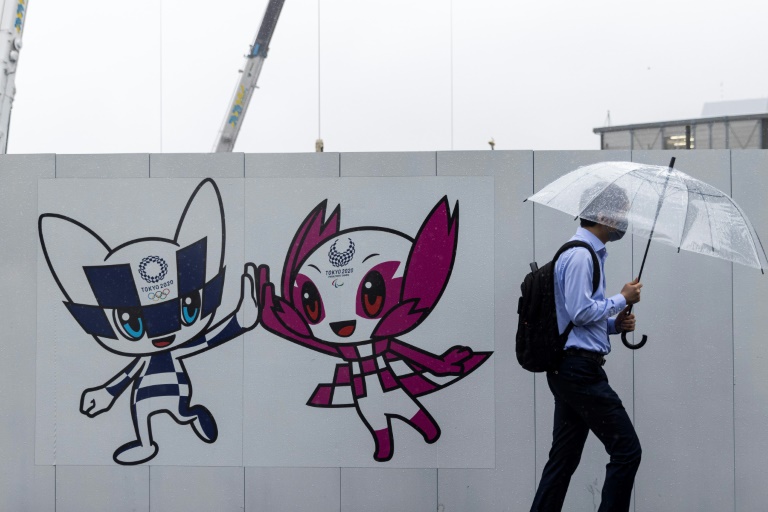
A corruption scandal surrounding the Tokyo Olympics widened on Wednesday as a former Games executive was re-arrested on suspicion of taking bribes from two firms, one of which reportedly sold official mascot toys.

Prosecution documents seen by AFP accused former Tokyo 2020 board member Haruyuki Takahashi of accepting 54 million yen ($360,000) in bribes from a major advertising firm and a merchandise company.

It was the fourth time the 78-year-old has been arrested over the scandal, following allegations that he received a similar amount from a suit retailer that was an official partner of last year’s pandemic-delayed event.

Prosecutors alleged that Takahashi helped advertising giant ADK Holdings with a sponsorship contract and received 47 million yen “knowing it was meant to be thank-you money”.

They also accused him of accepting seven million yen from a merchandise firm, which Japanese media named as Sun Arrow and said was licensed to sell soft toys of the cute Games mascots.

Three other people including ADK president Shinichi Ueno were also arrested on Wednesday.

ADK Holdings said it was “extremely regrettable that we find ourselves in this situation, and we would like to apologise for the enormous trouble” caused by the arrests.

“Since the investigation remains ongoing, we will refrain from disclosing details,” it said, adding it would fully cooperate with authorities “to help resolve the case”.

The latest arrest of Takahashi — a former advertising executive who served on the Tokyo 2020 board from June 2014 — reportedly brought the total sum of the bribes he allegedly pocketed to 196 million yen.

He has previously been accused of taking bribes from publishing giant Kadokawa and another advertising agency, Daiko.

The ballooning saga is not the first time questions have been raised over impropriety around the Tokyo Games.

The former head of Japan’s Olympic Committee, Tsunekazu Takeda, stepped down in 2019 after French prosecutors launched an investigation into corruption allegations linked to Tokyo’s Olympic bid.

Hong Kong to 'trawl world for talent' in reboot attempt

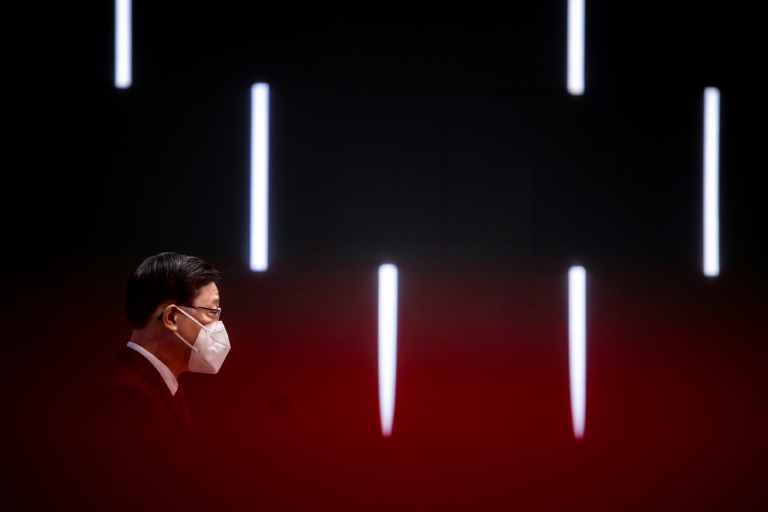
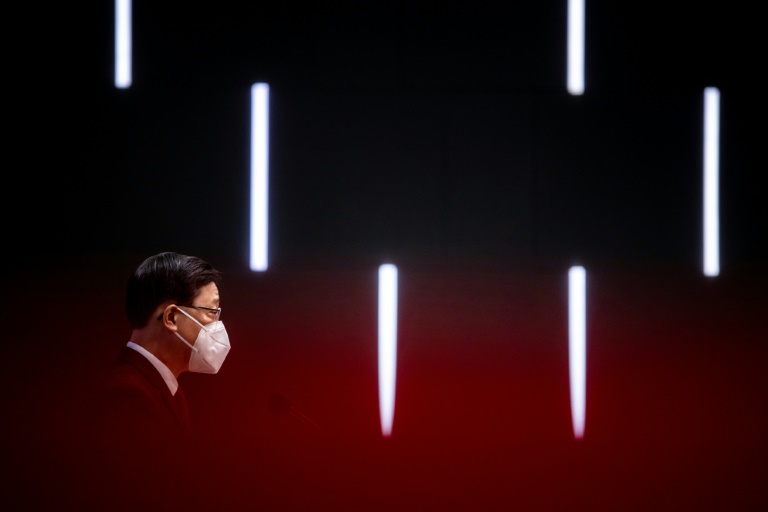
Hong Kong’s leader unveiled plans to resuscitate the business hub’s fortunes on Wednesday, hoping to lure back international expertise after an exodus of talent — but he vowed no let-up in a political crackdown that has transformed the city.

John Lee, a Beijing-anointed former security chief, gave a debut policy speech that prioritised the revival of an economy mired in recession and maintaining security while recognising that many had left a city that serves as a gateway to China.

“Over the past two years, the local workforce shrank by about 140,000,” he said. “Apart from actively nurturing and retaining local talent, the government will proactively trawl the world for talent.”

The former British colony has lately undergone its most tumultuous period since its 1997 handover to China. 

Huge and sometimes violent democracy protests three years ago were followed by a sweeping clampdown on dissent as well as some of the world’s strictest coronavirus pandemic rules, many of which remained in place long after rivals reopened.

The city, which only scrapped mandatory quarantine for international arrivals last month, has seen its deficit soar while the border with the Chinese mainland remains all but closed because of Beijing’s strict zero-Covid rules.

– Talent office –

Lee’s speech offered his blueprint for reversing that downturn, including a talent scouting office, a HK$30 billion ($3.8 billion) co-investment fund to attract overseas businesses and rules to make it easier to hire foreigners.

The city will give preferential treatment to “top talent”, described as people who earn HK$2.5 million or more annually and graduates from the top 100 universities around the world who have relevant work experience.

Even with investor-friendly measures, rebooting Hong Kong will be tough.

Lee took office in July at a time of rising global interest rates, fears for China’s zero-Covid economy, uncertainty sparked by Russia’s Ukraine invasion and dents in Hong Kong’s business-friendly reputation.

The reaction from investors and analysts was lukewarm. 

Hong Kong’s stock exchange, which has lost more than a quarter of its value since the start of the year, closed down 2.38 percent on Wednesday.

“The government still lacks the sense of crisis and understanding of the actual situation,” public affairs commentator Derek Yuen told AFP, saying Lee’s policy focused more on Hong Kong being a gateway to China and less on being a truly international business hub.  

“(Officials) may be aware of the competition from within the region like Singapore but they don’t understand what makes other countries tick,” he added.

Baptist University political scientist Kenneth Chan said there was little to reassure foreign talent about Hong Kong’s core values.

“For a lot of people who are looking at Hong Kong… it’s a new era with a lot of uncertain elements, mostly political elements. They have to think very carefully before making the move and commit,” he told AFP.

– ‘Stability is the prerequisite’ –

After nearly three years, Hong Kong is gradually moving away from its version of China’s zero-Covid policy, which failed to keep out the virus and has left the city internationally cut off.

Authorities have axed the unpopular hotel quarantine for incoming travellers and loosened some social-distancing rules.

But the pace of reopening still lags behind regional rivals such as Singapore — which has gone on its own charm offensive to lure talent and has roared back as a global transport hub.

Overseas arrivals to Hong Kong, for example, cannot enter bars and restaurants for the first three days and Lee’s speech gave no details on a clear timeline to lifting all virus curbs. 

Lee did stress that the government would press ahead with more national security legislation and possible new rules on “false information”. 

“The development of Hong Kong allows no delay. Social stability is the prerequisite for our development, and we have to get rid of any interference,” he said.

Beijing imposed a sweeping national security law on Hong Kong in 2020 after democracy protests the year before, flipping the city’s once outspoken vibe.

Most prominent local democracy activists either are in jail, are awaiting trial or have fled overseas while schools have been ordered to turn students into Chinese patriots.

Lee’s policy speech — which lasted two hours and 45 minutes — also included major infrastructure projects to boost the economy and plans to deliver more housing in a city with one of the world’s least affordable property markets, something successive Hong Kong administrations have failed to tackle.

Hong Kong to 'trawl world for talent' in reboot attempt

Hong Kong’s leader unveiled plans to resuscitate the business hub’s fortunes on Wednesday, hoping to lure back international expertise after an exodus of talent — but he vowed no let-up in a political crackdown that has transformed the city.

John Lee, a Beijing-anointed former security chief, gave a debut policy speech that prioritised the revival of an economy mired in recession and maintaining security while recognising that many had left a city that serves as a gateway to China.

“Over the past two years, the local workforce shrank by about 140,000,” he said. “Apart from actively nurturing and retaining local talent, the government will proactively trawl the world for talent.”

The former British colony has lately undergone its most tumultuous period since its 1997 handover to China. 

Huge and sometimes violent democracy protests three years ago were followed by a sweeping clampdown on dissent as well as some of the world’s strictest coronavirus pandemic rules, many of which remained in place long after rivals reopened.

The city, which only scrapped mandatory quarantine for international arrivals last month, has seen its deficit soar while the border with the Chinese mainland remains all but closed because of Beijing’s strict zero-Covid rules.

– Talent office –

Lee’s speech offered his blueprint for reversing that downturn, including a talent scouting office, a HK$30 billion ($3.8 billion) co-investment fund to attract overseas businesses and rules to make it easier to hire foreigners.

The city will give preferential treatment to “top talent”, described as people who earn HK$2.5 million or more annually and graduates from the top 100 universities around the world who have relevant work experience.

Even with investor-friendly measures, rebooting Hong Kong will be tough.

Lee took office in July at a time of rising global interest rates, fears for China’s zero-Covid economy, uncertainty sparked by Russia’s Ukraine invasion and dents in Hong Kong’s business-friendly reputation.

The reaction from investors and analysts was lukewarm. 

Hong Kong’s stock exchange, which has lost more than a quarter of its value since the start of the year, closed down 2.38 percent on Wednesday.

“The government still lacks the sense of crisis and understanding of the actual situation,” public affairs commentator Derek Yuen told AFP, saying Lee’s policy focused more on Hong Kong being a gateway to China and less on being a truly international business hub.  

“(Officials) may be aware of the competition from within the region like Singapore but they don’t understand what makes other countries tick,” he added.

Baptist University political scientist Kenneth Chan said there was little to reassure foreign talent about Hong Kong’s core values.

“For a lot of people who are looking at Hong Kong… it’s a new era with a lot of uncertain elements, mostly political elements. They have to think very carefully before making the move and commit,” he told AFP.

– ‘Stability is the prerequisite’ –

After nearly three years, Hong Kong is gradually moving away from its version of China’s zero-Covid policy, which failed to keep out the virus and has left the city internationally cut off.

Authorities have axed the unpopular hotel quarantine for incoming travellers and loosened some social-distancing rules.

But the pace of reopening still lags behind regional rivals such as Singapore — which has gone on its own charm offensive to lure talent and has roared back as a global transport hub.

Overseas arrivals to Hong Kong, for example, cannot enter bars and restaurants for the first three days and Lee’s speech gave no details on a clear timeline to lifting all virus curbs. 

Lee did stress that the government would press ahead with more national security legislation and possible new rules on “false information”. 

“The development of Hong Kong allows no delay. Social stability is the prerequisite for our development, and we have to get rid of any interference,” he said.

Beijing imposed a sweeping national security law on Hong Kong in 2020 after democracy protests the year before, flipping the city’s once outspoken vibe.

Most prominent local democracy activists either are in jail, are awaiting trial or have fled overseas while schools have been ordered to turn students into Chinese patriots.

Lee’s policy speech — which lasted two hours and 45 minutes — also included major infrastructure projects to boost the economy and plans to deliver more housing in a city with one of the world’s least affordable property markets, something successive Hong Kong administrations have failed to tackle.

Markets mixed as traders struggle to keep rally's momentum

Investors battled to push markets higher again Wednesday following another healthy run-up on Wall Street boosted by more positive earnings results that raised hopes for the reporting season.

However, while there is a more upbeat mood on trading floors for now, analysts warned that the current rally could soon turn as central banks press on with interest rate hikes aimed at fighting multi-decade-high inflation.

In a sign of the uphill struggle in the battle against prices, the closely watched UK consumer price index jumped back above 10 percent last month owing to soaring food costs.

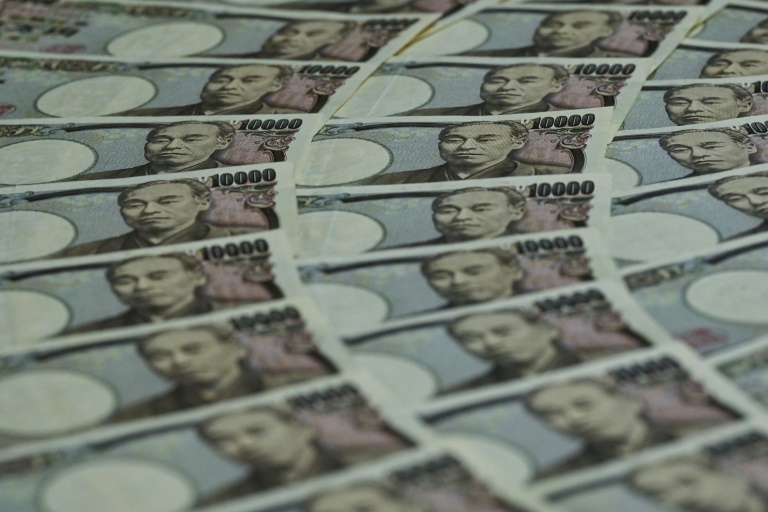
Forex traders were also keeping tabs on the yen as it edges closer to 150 per dollar, with Japanese officials holding off a second intervention in as many months but saying they are ready to act when necessary.

All three main indexes in New York enjoyed back-to-back gains as investors were heartened by forecast-beating results from Goldman Sachs and Johnson & Johnson.

They came on the heels of better-than-expected reports from banking giants Citi, JP Morgan and Wells Fargo.

Traders were given an extra boost by news that Netflix gained more than two million subscribers in July-September, easing worries about the impact of rising borrowing costs on consumers.

“Earnings season offers investors the opportunity to focus more on the actual earnings power of corporate America, and less on the machinations of the backward-looking economic data stream,” Art Hogan, a strategist at B. Riley, said.

“A better-than-feared earnings season may well be the catalyst the market needs to see a break in the steady grind lower.”

Still, Asian markets were mixed, with Hong Kong tanking as investors were left unimpressed with city leader John Lee’s first policy speech, which laid out plans to boost the economy but also saw a vow not to let up on a security crackdown.

There were also losses in Shanghai, Seoul, Taipei and Bangkok, though Tokyo, Sydney, Singapore, Wellington, Mumbai, Manila and Jakarta rose.

London edged down after the inflation reading and ahead of a keenly awaited Prime Minister’s Questions in parliament, the first since Liz Truss’s new finance minister tore up her controversial mini-budget that hammered markets last month.

The pound fell back below $1.13 as European trade began, having rallied in the previous two days on the government U-turn.

Paris and Frankfurt also dipped, while US futures rose.

– Dollar closes on 150 yen –

SPI Asset Management’s Stephen Innes warned there were still plenty of issues keeping a cap on equities including sticky inflation, weak sentiment, hawkish central banks, the Ukraine war, China’s economic woes and “a non-stop drum beat of recessionary rhetoric from vocal market participants”.

“The key to equity markets is (Federal Reserve) certainty, and that is the crucial turn on the road before the rates markets can settle back into a groove and Treasury volatility can decline,” he added.

“But for that to happen, the US data needs to roll over. Given the much-hotter-than-expected inflation data, the Fed may do the opposite of what the market wants — turning volatility up again.”

On currency markets, eyes were on Tokyo as the yen hovers just below 149.50 per dollar, with finance minister Shunichi Suzuki saying “we’ll respond appropriately against excessive moves”.

The unit is much weaker than the 145.90 level it touched last month before authorities stepped in, and analysts said they would likely act before it passes 150.

The yen has plunged more than 20 percent against the dollar as the Bank of Japan refuses to lift interest rates — citing a need to boost the economy — even as the Fed announces a series of bumper increases.

“If dollar-yen rises past the symbolic 150 level, price action will naturally accelerate, so they probably want to halt it before then or buy time,” said Yuji Saito of Credit Agricole CIB. 

Crude rose on renewed supply worries, having slumped Tuesday on bets that President Joe Biden would order the release of more barrels from US emergency reserves in order to keep fuel prices subdued heading into the winter and mid-term elections.

– Key figures around 0810 GMT –

Tokyo – Nikkei 225: UP 0.4 percent at 27,257.38 (close)

Hong Kong – Hang Seng Index: DOWN 2.4 percent at 16,511.28 (close)

Shanghai – Composite: DOWN 1.2 percent at 3,044.38 (close)

London – FTSE 100: DOWN 0.3 percent at 6,918.50

Pound/dollar: DOWN at $1.1290 from $1.1332 on Tuesday

Dollar/yen: UP at 149.35 yen from 149.21 yen

Euro/dollar: DOWN at $0.9836 from $0.9862 

Euro/pound: UP at 87.14 pence from 87.01 pence

West Texas Intermediate: UP 0.7 percent at $83.36 per barrel

Brent North Sea crude: UP 0.1 percent at $90.12 per barrel

New York – Dow: UP 1.1 percent at 30,523.80 (close)

Brazil challenger Lula says Neymar supports Bolsonaro over debt woes

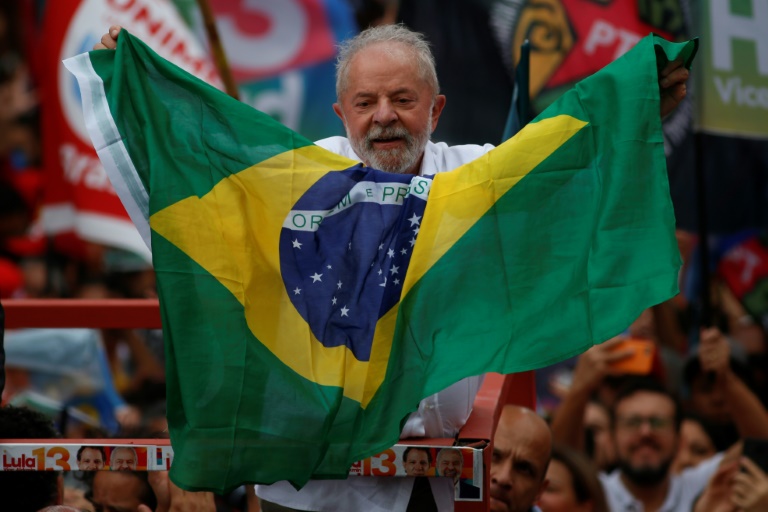
Brazilian presidential candidate Lula da Silva criticised football star Neymar’s support of far-right incumbent Jair Bolsonaro, accusing the player of being motivated by a debt “pardon”. 

Last month, Neymar endorsed hardline conservative Bolsonaro as he fights to win reelection in his October 30 runoff battle against leftist ex-leader Lula.

“Neymar has the right to choose whoever he wants to be president. I think he is afraid that if I win the election I will find out what Bolsonaro pardoned from his income tax debt,” Lula said in a YouTube interview on Tuesday.

“I think that’s why he’s afraid of me,” Lula added, laughing, when asked about Neymar’s support for the president.

Expectations of a close contest have pushed both sides to intensify their attacks before the runoff, with Lula the frontrunner after the first-round election on October 2.

“Obviously, Bolsonaro made a deal with (Neymar’s) father. He now has an income tax problem in Spain,” Lula said, alluding to a favorable ruling the player obtained in a tax evasion trial in Brazil, as well as the charges he faces in Barcelona for alleged irregularities in his 2013 club transfer. 

Lula added that it was ultimately a problem for the country’s tax collection agency, and not him.

This week, Lula secured the backing of another football legend. 

Former Brazilian player and Paris Saint-Germain star Rai gave Lula a silent shout-out at a gala awards ceremony in Paris, mentioning his country’s elections before flashing an “L” sign with his right hand.

Lula has 53 percent of the vote heading into the October 30 runoff, to 47 percent for Bolsonaro, according to a poll released Friday by the Datafolha institute.

UK inflation returns above 10 percent

British inflation jumped back above 10 percent in September on soaring food prices, official data showed Wednesday, with the country gripped by a cost-of-living crisis bedevilling the government.

The Consumer Prices Index accelerated to 10.1 percent on an annual basis, up from 9.9 percent in August, the Office for National Statistics said in a statement.

The September rate matched the level in July and is the highest in 40 years as a result also of sky-high energy bills.

“I understand that families across the country are struggling with rising prices and higher energy bills,” Britain’s new finance minister Jeremy Hunt said in a separate statement.

“This government will prioritise help for the most vulnerable while delivering wider economic stability and driving long-term growth that will help everyone.”

The government has been rocked by chaos in markets in the wake a budget that pledged tax cuts that would have been funded by state debt.

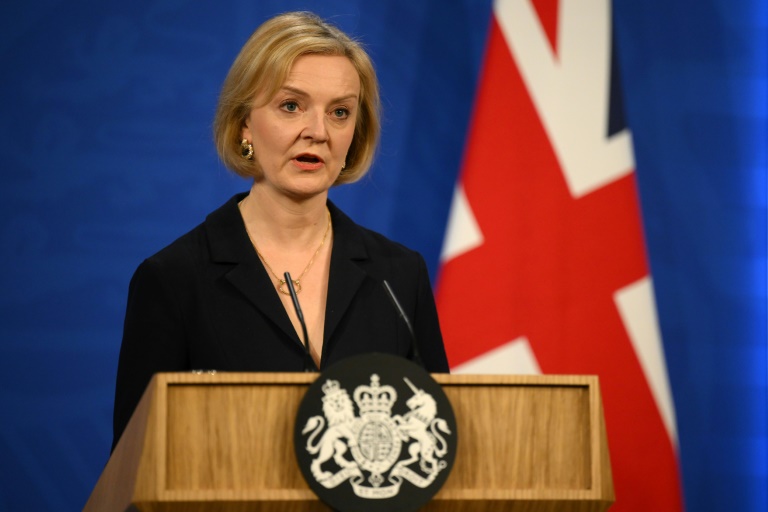
Most of those measures have since been reversed, leaving Prime Minister Liz Truss fighting to save her job.

Following widespread criticism over the budget, Truss sacked Hunt’s predecessor, Kwasi Kwarteng, after less than six weeks in the role.

Analysts said Wednesday’s data would put pressure on the Bank of England to keep raising its main interest rate by sizeable amounts.

Capital Economics noted that the BoE could hike its rate by as much as one percentage point to 3.25 percent at its next meeting in November.

– ‘Most pressing problem’ –

Victoria Scholar, head of investment at Interactive Investor, said inflation was “the most pressing economic problem facing the Bank of England as well as the government. 

“Without price stability, the cost-of-living crisis will continue to weigh on the economy by squeezing household budgets and dampening business margins.”

In a bid to help households, the government has capped domestic energy bills until April. However, the original plan was for a cap until late 2024, which Truss pulled earlier this week.

Markets were left spooked that a budget of tax cuts and a costly energy-price cap would add massively to British debt that had already ballooned on government support during the Covid pandemic.

Her budget sent the pound plunging to a record-low against the dollar and caused yields on government bonds to soar — forcing Truss into a huge budget U-turn that has calmed markets.

Following Wednesday’s data, the pound was down against the dollar and euro, while London’s FTSE 100 shares index steadied at the open.

burs/bcp/lth

Iranian greeted as hero after competing without hijab

An Iranian climber who caused a sensation by competing at an event abroad without a hijab was on Wednesday given a hero’s welcome on her return to Tehran by supporters who raucously applauded her action.

With Iran still shaken by women-led protests over the death of Mahsa Amini one month ago, Elnaz Rekabi flew back to a Tehran airport after the competition in South Korea.

In an Instagram post and comments at the airport, Rekabi has apologised over what happened and insisted her hijab — which all Iranian women including athletes must wear — had accidentally slipped off.

But activists fear her comments have been made under duress under pressure from the Iranian authorities who were likely infuriated by her actions.

“Elnaz is a hero,” chanted dozens of supporters who gathered outside the Imam Khomeini International Airport terminal, clapping their hands and brandishing mobile phones to record the moment.

They continued to chant and applaud as a van and vehicle — one of which they presumed was carrying the climber — drive out of the airport through a sea of people clapping above their heads.

It was unclear where she was headed. Some of the women present were themselves not wearing hijab.

“A hero’s welcome — including by women without the forced-hijab — outside Tehran airport for-pro climber Elnaz Rekabi. Concerns for her safety remain,” said the New York-based Center for Human Rights in Iran (CHRI).

– ‘State propaganda’? –

Inside the airport terminal dressed in a black hoodie and baseball cap, Rekabi was greeted by family members, before addressing state media with a mask pulled down on her face.

“Due to the atmosphere prevailing in the finals of the competition and the unexpected call for me to start my run, I got tangled with my technical equipment and… that caused me to remain unaware of the hijab that I should have observed,” she said.

“I returned to Iran peacefully, in perfect health and according to the predetermined plan. I apologise to the people of Iran because of the tensions created,” she said, adding she had “no plan to say goodbye to the national team.”

Her comments were similar to those made on Tuesday in an Instagram post, in which she apologised for “concerns” caused and insisted her bare-headed appearance had been “unintentional”.

But the Islamic republic has been repeatedly accused by activists of coercing people into making statements of contrition on television or social media.

The British actress of Iranian origin Nazanin Boniadi, who is an ambassador for Amnesty International in the UK, tweeted that it was clear Rekabi had been “being forced to make this statement by authorities that constantly use forced and televised confessions.”

Observers “should not be swayed by state propaganda”, said the CHRI.

– UN ‘closely following’ –

Unconfirmed reports had already suggested she had been pressured by Iranian officials in South Korea.

BBC Persian quoted an unnamed source as saying friends had been unable to contact her and the team had left their hotel in Seoul on Monday, two days before the scheduled departure date.

Meanwhile news website Iran Wire said the head of Iran’s climbing federation had “tricked” her into entering the Iranian embassy in Seoul and the federation chief had promised her safe passage to Iran if she handed over her phone and passport.

The Iranian embassy in Seoul, however, issued a statement to AFP denying “all the fake, false news and disinformation regarding” her situation.

The spokesperson for the UN office of the high commissioner for human rights, Ravina Shamdasani, said the UN was “closely following” the case and concerns were being raised with the Iranian authorities.

The incident took place at the Asian Championships in sports climbing in Seoul on Sunday.

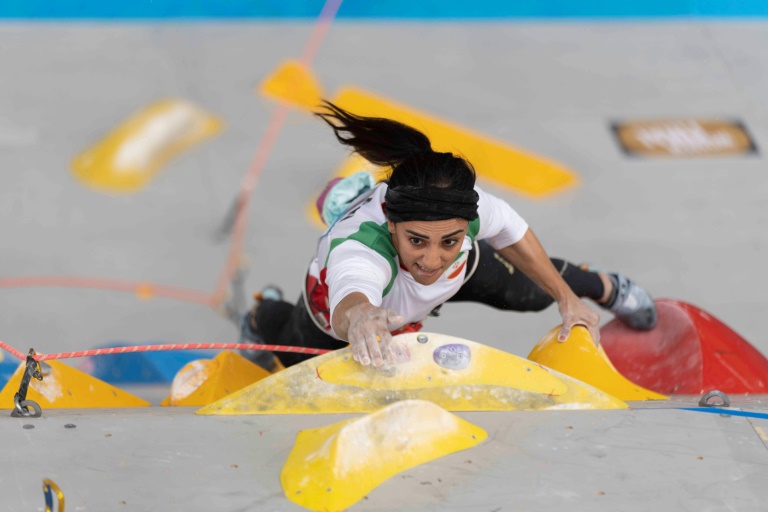
In the initial bouldering discipline her head was covered with a bandana but in the later lead climbing, scaling a high wall with a rope, she wore only a headband, the stream posted by the International Federation of Sport Climbing showed.

Crowd welcomes home Iranian climber who competed without hijab

A cheering crowd welcomed home Iranian sports climber Elnaz Rekabi at a Tehran airport Wednesday, after she competed in South Korea without a hijab, media in the Islamic republic reported.

Rekabi wore only a headband during the Asian Championships in Seoul on Sunday, in what was seen by some a gesture of solidarity with month-long protests in Iran over the death of Mahsa Amini after her arrest for allegedly violating the Islamic dress rules.

The move was a breach of the Islamic republic’s mandatory dress rules of compulsory headscarf for women which also apply to all female athletes when competing abroad.

Rekabi, 33, was seen arriving at Imam Khomeini International Airport early on Wednesday, in a video broadcast by state news agency IRNA.

Dozens of people welcomed her, cheering and clapping loudly as she emerged outside, according to a video posted online by the reformist Shargh newspaper.

They surrounded a white van and car with her and other members of her team apparently on board.

Dressed in a black hoodie and baseball cap, Rekabi was greeted by family members, before addressing state media with a mask pulled down on her face.

“Due to the atmosphere prevailing in the finals of the competition and the unexpected call for me to start my run, I got tangled with my technical equipment and… that caused me to remain unaware of the hijab that I should have observed,” she said.

“I returned to Iran peacefully, in perfect health and according to the predetermined plan. I apologise to the people of Iran because of the tensions created,” she said, adding she had “no plan to say goodbye to the national team.”

Her comments were similar to a statement she gave Tuesday on Instagram, in which she apologsied for “concerns” caused and insisted her bare-headed appearance had been “unintentional”.

Rights groups outside of Iran had expressed concerns over her situation following reports her friends had been unable to contact her.

The Iranian embassy in Seoul, however, issued a statement to AFP denying “all the fake, false news and disinformation regarding” her situation and adding Rekabi had left South Korea along with her teammates on Tuesday.

In the initial bouldering discipline her head was covered with a bandana but in the later lead climbing, scaling a high wall with a rope, she wore only a headband, the stream posted by the International Federation of Sport Climbing showed.

It came as Iran is gripped by protests over the death of 22-year-old Amini, with many women taking part in the demonstrations, removing their head coverings on the streets or at universities and schools.

The street violence has led to dozens of deaths, mostly among protesters but also among the security forces, and hundreds of demonstrators have been arrested.

Hong Kong to 'trawl world for talent' in reboot attempt

Hong Kong’s leader unveiled plans to resuscitate the business hub’s fortunes on Wednesday, hoping to lure back international expertise after an exodus of talent — but he vowed no let up in a political crackdown that has transformed the city.

John Lee, a Beijing-anointed former security chief, gave a debut policy speech that prioritised the revival of an economy mired in recession and maintaining security while recognising that tens of thousands of people had left a city that serves as a gateway to China and a regional business hub.

“Over the past two years, the local workforce shrank by about 140,000,” he said. “Apart from actively nurturing and retaining local talent, the government will proactively trawl the world for talent.”

The former British colony has lately undergone its most tumultuous period since its 1997 handover to China. 

Huge and sometimes violent democracy protests three years ago were followed by a sweeping clampdown on dissent as well as some of the world’s strictest coronavirus pandemic rules, many of which remained in place long after rivals reopened.

The city, which only scrapped mandatory quarantine for international arrivals last month, has seen its deficit soar while the border with the Chinese mainland remains all but closed because of Beijing’s strict zero-Covid rules.

– Talent office –

Lee’s speech offered his blueprint for reversing that downturn, including a new talent scouting office, a HK$30 billion ($3.8 billion) fund to attract overseas businesses and new rules to make it easier to hire foreigners in 13 key professions.

The city will give preferential treatment to “top talent”, described as people who earn HK$2.5 million or more annually and graduates from the top 100 universities around the world who have relevant work experience.

Even with investor-friendly measures, rebooting Hong Kong will be tough.

Lee took office in July at a time of rising global interest rates, fears for China’s zero-Covid economy, uncertainty sparked by Russia’s Ukraine invasion and dents in Hong Kong’s business-friendly reputation.

Hong Kong’s stock exchange has lost more than a quarter of its value since the start of the year, one of the region’s worst performers. It was down 1.2 percent in Wednesday morning trade.

– ‘Stability is the prerequisite’ –

After nearly three years, the city is gradually moving away from its version of China’s zero-Covid policy, which failed to keep out the virus and has left the city internationally cut-off.

Authorities have axed the unpopular hotel quarantine for incoming travellers and loosened some social-distancing rules. 

But the pace of reopening still lags regional rivals such as Singapore — which has gone on its own charm offensive to lure talent and has roared back as a global transport hub.

Lee stressed that the government would press ahead with further national security legislation and possible new rules on “false information”. 

“The development of Hong Kong allows no delay. Social stability is the prerequisite for our development, and we have to get rid of any interference,” Lee said.

Many departing residents have cited the ongoing political crackdown as a primary reason for leaving.

Beijing imposed a sweeping national security law on Hong Kong in 2020 after democracy protests the year before, flipping the city’s once outspoken vibe and eradicating most dissent.

Most prominent local democracy activists either are in jail, are awaiting trial or have fled overseas while schools have been ordered to turn students into Chinese patriots.

Lee’s policy speech — which lasted two hours and 45 minutes — also included major infrastructure projects to boost the economy and plans to deliver more housing in a city with one of the world’s least affordable property markets, something successive Hong Kong administrations have failed to tackle.

Hong Kong to 'trawl world for talent' in reboot attempt

Hong Kong’s leader unveiled plans to resuscitate the business hub’s fortunes on Wednesday, hoping to lure back international expertise after an exodus of talent — but he vowed no let up in a political crackdown that has transformed the city.

John Lee, a Beijing-anointed former security chief, gave a debut policy speech that prioritised the revival of an economy mired in recession and maintaining security while recognising that tens of thousands of people had left a city that serves as a gateway to China and a regional business hub.

“Over the past two years, the local workforce shrank by about 140,000,” he said. “Apart from actively nurturing and retaining local talent, the government will proactively trawl the world for talent.”

The former British colony has lately undergone its most tumultuous period since its 1997 handover to China. 

Huge and sometimes violent democracy protests three years ago were followed by a sweeping clampdown on dissent as well as some of the world’s strictest coronavirus pandemic rules, many of which remained in place long after rivals reopened.

The city, which only scrapped mandatory quarantine for international arrivals last month, has seen its deficit soar while the border with the Chinese mainland remains all but closed because of Beijing’s strict zero-Covid rules.

– Talent office –

Lee’s speech offered his blueprint for reversing that downturn, including a new talent scouting office, a HK$30 billion ($3.8 billion) fund to attract overseas businesses and new rules to make it easier to hire foreigners in 13 key professions.

The city will give preferential treatment to “top talent”, described as people who earn HK$2.5 million or more annually and graduates from the top 100 universities around the world who have relevant work experience.

Even with investor-friendly measures, rebooting Hong Kong will be tough.

Lee took office in July at a time of rising global interest rates, fears for China’s zero-Covid economy, uncertainty sparked by Russia’s Ukraine invasion and dents in Hong Kong’s business-friendly reputation.

Hong Kong’s stock exchange has lost more than a quarter of its value since the start of the year, one of the region’s worst performers. It was down 1.2 percent in Wednesday morning trade.

– ‘Stability is the prerequisite’ –

After nearly three years, the city is gradually moving away from its version of China’s zero-Covid policy, which failed to keep out the virus and has left the city internationally cut-off.

Authorities have axed the unpopular hotel quarantine for incoming travellers and loosened some social-distancing rules. 

But the pace of reopening still lags regional rivals such as Singapore — which has gone on its own charm offensive to lure talent and has roared back as a global transport hub.

Lee stressed that the government would press ahead with further national security legislation and possible new rules on “false information”. 

“The development of Hong Kong allows no delay. Social stability is the prerequisite for our development, and we have to get rid of any interference,” Lee said.

Many departing residents have cited the ongoing political crackdown as a primary reason for leaving.

Beijing imposed a sweeping national security law on Hong Kong in 2020 after democracy protests the year before, flipping the city’s once outspoken vibe and eradicating most dissent.

Most prominent local democracy activists either are in jail, are awaiting trial or have fled overseas while schools have been ordered to turn students into Chinese patriots.

Lee’s policy speech — which lasted two hours and 45 minutes — also included major infrastructure projects to boost the economy and plans to deliver more housing in a city with one of the world’s least affordable property markets, something successive Hong Kong administrations have failed to tackle.

Close Bitnami banner
Bitnami