World

Divided loyalties in Ukraine city as Russia presses assault

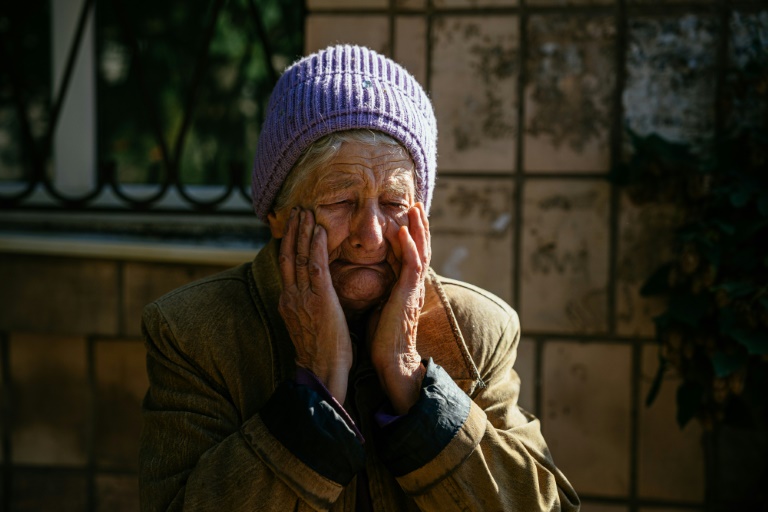
Patriotic messages stating the fact that “Bakhmut is Ukraine” are scrawled on monuments all around this frontline city.

But not everybody agrees that it should be so.

The subject is up for debate at the local market, where the city’s few remaining residents stock up on food and clothes for the winter to the sounds of artillery.

One shopper, Yulia, said she believed Ukrainian forces bombed cities that were about to be captured by Russia — repeating a conspiracy theory popular on social media.

“I don’t understand why Ukraine is destroying cities,” said the 46-year-old, who declined to give her surname saying that she was afraid of reprisals for her views.

“I’ve heard that Ukraine is doing this to itself to ensure that Russia does not get anything,” said Yulia, leaving the market as the bombing came closer and closer.

She recognised that Russia was responsible for the assault on her country but said it was up to the Ukrainians now to lay down their arms in order to bring peace.

Bakhmut is located in eastern Ukraine’s industrial Donbas region, where Russia-backed rebels started a conflict in 2014 and loyalties are often very divided.

Social media groups created by local residents in Bakhmut, which had 70,000 residents before the war, contain posts that criticise the Ukrainian army’s actions but stop short of actively supporting Russia.

– ‘Wrong side of the line’ –

In the nearby city of Kramatorsk, the main Telegram group used by local residents — “I Love Kramatorsk” — messages praising Russian strikes on Kyiv can get hundreds of likes as well as dozens of negative comments.

Selling cakes from a stall, Lesya, 46, said that before the war began she had a flourishing textile business with 16 employees — some of whom were “separatists”.

“Some of them escaped to Russia thinking they will be able to come back here afterwards” if Bakhmut falls, she said, adding that they had been “drugged” by Russian state propaganda.

“Me, I’m a normal Ukrainian with a son in the Ukrainian army,” said Lesya.

“But for them I’m a Banderovka” — a reference to Ukrainian nationalist hero Stepan Bandera, who fought alongside the Nazis against the Soviet Union in World War II.

Some inhabitants of Donbas accept or support the idea of Moscow gaining control in the hope of ending the conflict or because of family ties in Russia or because they identify with President Vladimir Putin’s rhetoric about a “Russian world”.

In a devastated part of Bakhmut, where many buildings are gutted, neighbours go and charge their phones in a shop run by Oksana and Oleksandr where there is a generator.

One day, as the artillery battle between Russian and Ukrainian forces raged outside, the couple sat watching a Soviet-era film called “Mimino” with two friends from the Russian-held city of Donetsk — 100 kilometres (62 miles) to the south.

“For me the question is not to know whether I’m on the wrong side of the line or not,” Oksana said.

“It’s the Ukrainian army that is on the wrong side of the line. We did not ask them for anything and we certainly did not ask them to come and defend us.”

Brazil's Bolsonaro apologizes amid 'pedophilia' row

Brazilian President Jair Bolsonaro apologized Tuesday after his visit to a group of teenagers he implied were sex workers drew accusations of “pedophilia” from opponents.

Fighting for re-election in an October 30 runoff against veteran leftist Luiz Inacio Lula da Silva, the far-right president has been swept up in a firestorm over his remarks about the underage Venezuelan girls, whom he called “very pretty”.

“If my words, which were taken out of context in bad faith, were somehow misinterpreted or caused discomfort to our Venezuelan sisters, I apologize,” Bolsonaro said in a video posted online.

“My commitment has always been to better welcome and assist all people fleeing dictatorships anywhere in the world,” he added, flanked by his wife and Venezuelan opposition leader Juan Guaido’s representative in Brazil.

Bolsonaro recognizes Guaido as Venezuela’s legitimate leader, rather than socialist President Nicolas Maduro.

The controversy erupted Friday when Bolsonaro spoke in a YouTube interview about visiting the home of “three or four very pretty 14- or 15-year-olds” last year in a poor Brasilia neighborhood.

“There was a vibe between us. I turned around. ‘Can I come in your house?’ I went inside. There were 15 or 20 girls (in the house), all Venezuelans aged 14, 15, getting ready on a Saturday. Why? To earn a living,” he said.

The anecdote appeared intended as one of Bolsonaro’s frequent warnings that Brazil will suffer the same fate as crisis-torn Venezuela if it elects Lula.

But Bolsonaro found himself on the defensive after Lula allies attacked the comments as “depraved” and the hashtag #Bolsonaropedofilo (Bolsonaro pedophile) went viral online.

His campaign succeeded Sunday in a petition to electoral authorities to ban an attack ad based on excerpts from the interview.

But Bolsonaro said the preceding day had been “the most terrible of my life.”

– Repeated anecdote –

In an interview on Tuesday, Lula said Bolsonaro’s behavior “is that of a pedophile.”

“He realized it, that’s why he got scared and tried to explain himself as quickly as possible,” Lula said.

After Bolsonaro’s apology, at least two other videos in which the president had told the same anecdote about the girls were shared online.

Rosangela da Silva, Lula’s wife, tweeted an excerpt of another interview with Bolsonaro a month ago in which he insinuated that the girls were prostitutes.

In May, Bolsonaro also relayed the anecdote during an event broadcast on public television. 

“Is that what we want for our daughters and granddaughters?” he said.

Bolsonaro, who vehemently rejects the opposition’s criticisms, said in Tuesday’s video that his former women’s minister, Damares Alves, had “almost immediately” investigated the girls’ case and found they were not in fact prostitutes.

He said Alves and First Lady Michelle Bolsonaro had visited the girls Tuesday and “found they were rebuilding their lives (and) even helping other Venezuelan refugees find jobs and integrate” in Brazil, which hosts an estimated 260,000 Venezuelan refugees, migrants and asylum seekers.

Newspaper Folha de Sao Paulo reported that the Venezuelan teens and their mothers had refused a request from Bolsonaro’s campaign to record a video on the president’s behalf.

Surfers, miners fight over South Africa's white beaches

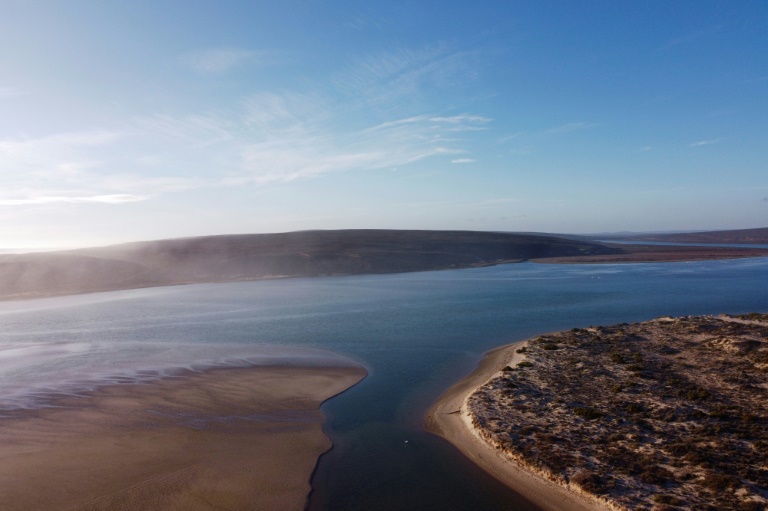
To those who live here, it’s like a little piece of heaven, boasting pink flamingos, white beaches and blue ocean waters.

Yet this stretch of South Africa’s west coast has also become a battleground, pitching mining firms against environmentalists fearful that one of nature’s last wild treasures is being bulldozed away.

Diamonds, zircon and other minerals have long been extracted in the sandy coastline near the Olifants river, which flows into the Atlantic about 300 kilometres (180 miles) north of Cape Town. 

But plans to expand the mining have angered surfers, animal lovers and residents in this remote, sparsely populated region — and they are pushing back with lawsuits and petitions. 

“It’s one of the last frontiers of the South African coastline where you can go and sort of lose yourself,” said surfer Mike Schlebach, 45, co-founder of a green campaign group, Protect the West Coast.

Mining companies say they bring much-needed jobs to the area and insist they abide by environmental rules. 

But locals contend the excavation, in which sand is extracted from beaches and the seabed and sifted for valuable minerals, is scaring off fish and tourists alike — and shrinking rather than broadening employment opportunities.

“If we are going to have sea mining, beach mining, land mining… where is the public going to have access to the coast?” questioned Suzanne Du Plessis, 61, a local resident and campaigner. 

– Dolphins, seals and excavators – 

From off-shore diamond prospecting to the construction of a new harbour, several projects threaten to scar the area, a biodiversity hotspot home to dolphins, seals and succulent plants, according to Protect the West Coast. 

Campaigners secured a small victory in June, when the operator of a mineral sand mine that had gained government approval to expand its activities to 10 more beaches, committed to additional environmental checks. 

This came on the back of a lawsuit brought by the Centre of Environment Rights (CER), another environmental group, that was settled out of court by the mine operator, Australian-owned Minerals Commodities. 

But activists remain wary. 

“CER is entitled to go back to court should the mine not comply with the provisions of the agreement,” said CER’s lawyer Zahra Omar.

The mine has already asked for more time to put together its biodiversity management plan, she said.

Minerals Commodities legal counsel Fletcher Hancock said the company was committed to conducting its operations “in an environmentally sustainable and responsible way.”

Activists and locals feel the government has left them to fend for themselves. 

Two government ministries in charge of mineral resources and environmental affairs did not respond to requests for comment. 

– Smaller catch –

In Doringbaai, a small town a few kilometres south of the Olifants estuary, a once-pristine beach where people used to walk their dogs and enjoy the sunset to the sound of crashing waves is now being torn up by heavy machinery.

Resident Peter Owies, 54, said locals were blindsided when mining started earlier this year.

“It was quite a surprise and shock to us,” he said. 

A meeting requested by the community to discuss the mining plans was never held, with the required consultation happening only online, said Du Plessis, the campaigner. 

Preston Goliath, a 46-year-old fisherman, said his catch had dwindled after the mining work began and the same is true for dozens of others. 

“Because they were pumping for diamonds… the fish moved away and our richest (fisheries) bank is now empty,” said Goliath.

Some residents want the beach mining to stop.

But mine owner Trans Hex said all its environmental papers are in order, adding it has held mining rights for the area since 1991.

With dozens more mining permits waiting for approval, Schlebach of Protect the West Coast said he hoped the government would rethink its strategy for the region.

“There’s a whole array of new industries that could have a profoundly positive effect on the people that live on that coastline like algae farming,” Schlebach said. 

“We’ve got to show them that there’s a much better way.

Activists here are optimistic, emboldened by victories scored elsewhere by environmentalists.

On September 1, activists claimed victory in a court case against energy giant Shell — despite the government’s support of the company — resulting in the ban of seismic exploration off the touristic Indian Ocean coast.

Silent no more: Nepal's wartime rape survivors demand recognition

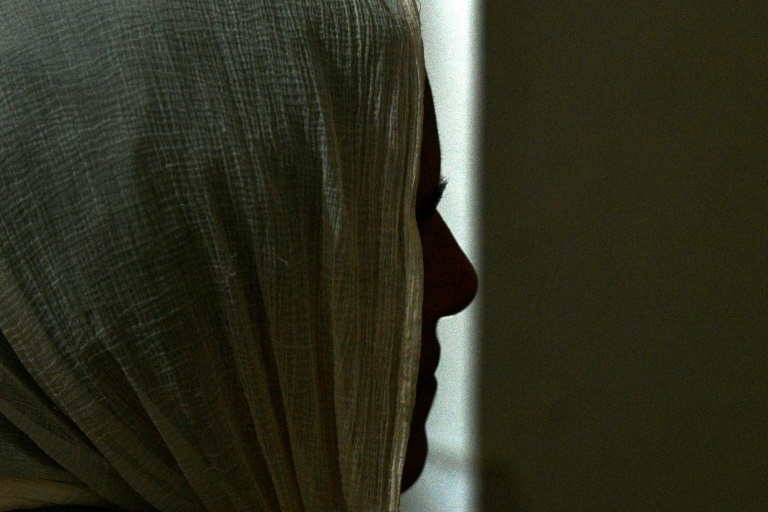
Beaten and raped by police officers as a child, Mira was among the many victims of sexual violence during Nepal’s civil war — and is now one of the few to recount her ordeal.

Guerrilla attacks and forced disappearances were daily facts of life on both sides of the Himalayan republic’s decade-long Maoist insurgency.

The conflict ended in 2006 with a peace deal that brought the rebels into government and promised justice for those who had suffered in the fighting.

But 16 years after the war ended, civilian courts have handed down just two convictions for civil war-era crimes, while rape survivors are frustrated that their traumas have been met with official indifference.

After years of waiting for redress, they are now sharing their experiences in a demand for recognition. 

“They have failed to even mention our cases,” Mira, who asked to use a pseudonym, told AFP. “The least they could do is recognise that these incidents happened.”

Mira was just 12 years old in 1999 when she was arrested for participating in a cultural outreach programme run by the Maoist rebels. 

She spent months in custody, during which she said she suffered repeated rapes at the hands of officers who also beat her mercilessly.

“I was beyond recognition — my face was swollen, my body was swollen,” she said. “My womb keeps hurting, my body keeps hurting, I still have to take medicines.”

More than 17,000 people were killed and many thousands more were forced to flee their homes before the 2006 peace deal. 

The settlement included the promise of impartial investigations of wartime atrocities. 

But it did not include provisions for survivors of sexual violence, who were less willing to report their experiences, and who were also left out of an interim compensation scheme for conflict victims. 

“Incidents of rape had taken place during the 10-year war. The government must admit this, and address this,” Devi Khadka, coordinator of the National Organisation of Conflict Rape Victims, told AFP.

The civil war had just begun in 1997 when Khadka, then a teenager, was herself raped by security forces in custody, she said. 

She joined the Maoist insurgency, rising steadily through the ranks, and has served in parliament, but battled depression for years. 

“I stayed silent for a long time, for many reasons. But no one else spoke up. I felt I had to raise my voice for all of us,” she said.

– ‘How will we punish them?’ –

Nepali society traditionally ties chastity to the honour of women and their households, and the stigma of rape often compels victims to keep silent. 

Already suffering from physical and mental trauma, those that do come forward are often ostracised by their families and struggle to support themselves.

“What we need is support for our livelihood, for our health and for our children’s future,” said Reenu, who was raped by Maoist soldiers during the conflict.

She added that the immediate needs of victims were a bigger priority than bringing perpetrators to justice. 

“Many women don’t even know who wronged them, so how will we punish them?” she asked.

Nepal’s two transitional justice commissions began operations in 2015 but have failed to resolve a single case, despite receiving over 60,000 complaints of murders, torture and unexplained disappearances.

More than 300 cases of rape and sexual violence have been registered by the commission, but activists say the formal reports are a small fraction of the true total.

Survivors are reluctant to come forward because the government has failed to “create a secure environment” for them to do so, said Mandira Sharma, a senior legal adviser for the International Commission of Jurists.

“But these are serious crimes,” she told AFP. “The state is obligated to take action against the perpetrator.”

– ‘Scared to give us justice’ –

Critics say Nepal’s truth and reconciliation process has been poorly designed from the outset and plagued by chronic funding shortfalls. 

It also lacks political support to proceed, with former Maoist rebels and political leaders among those blamed for presiding over wartime atrocities now in government ranks. 

The finance minister in June announced a financial support programme for wartime survivors of sexual violence — the first compensation of its kind.

But months after the announcement, not a single victim has received any money.

“The older this conflict gets, the more problems for women like me,” a 33-year-old woman who said she was raped by security forces as a teenager told AFP.

“The government is aware that women and children suffered sexual violence in the war,” she said. “But it is scared to give us justice. What if their own people need to be punished?”

Fresh protests to mark anniversary of Chile revolt

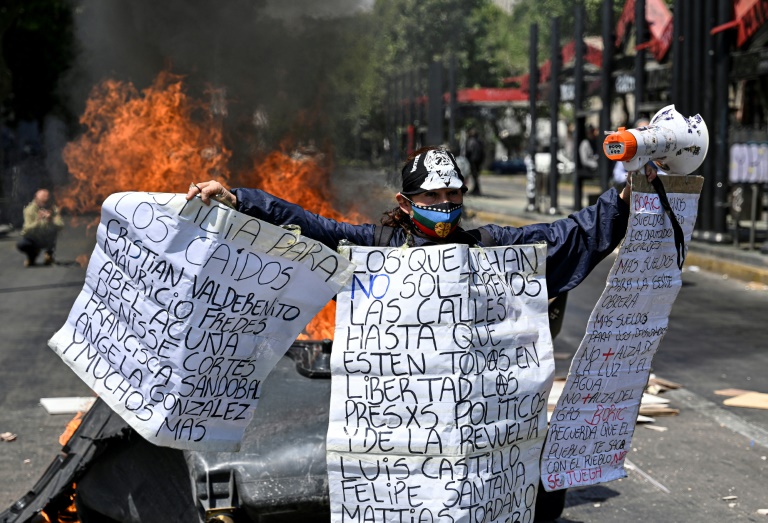
Clashes broke out in the Chilean capital Santiago Tuesday as hundreds of protesters, mainly students, erected burning barricades to mark three years since a social uprising they say has not yet yielded the desired societal change.

Demonstrators wearing goggles and facemasks as protection against tear gas stopped car traffic on the central Alameda avenue, and several metro stations were shuttered. 

Police deployed 25,000 officers to keep the peace, and used water cannon and tear gas to disperse trouble-making demonstrators in at least one venue.

Some 2,300 people demonstrated across the country, including several hundred in the capital, a much lower turnout than in the past two years, but marked by incidents in Santiago including the torching of a truck and the theft of two buses, police said. 

“There were around 50 arrests, 13 police officers were injured and some 700 people committed crimes” across the country, said Deputy Interior Minister Manuel Monsalve.

Many shops closed early, or did not open at all, while schools sent pupils home early. 

“We have gained nothing” in the three years since the movement began, said Andrea Valdebenito, a 43-year-old social worker who was among those gathered. 

The protests came exactly three years after the start of a mass revolt against a rise in metro fares in 2019 that quickly escalated into a general clamor for better conditions and social equality. 

The government suspended the price hike but protests continued, and dozens were killed over months of clashes. Hundreds of people were injured. 

The demonstrations kickstarted reforms that included the government’s agreement to the drafting of a new constitution to replace the one inherited from the military dictatorship of Augusto Pinochet and perceived as market-friendly.

Last December, Chile elected a leftist president in Gabriel Boric, who supported the constitution-writing process. 

But last month, nearly two-thirds of voters rejected the proposed draft despite the new revolutionary mood, amid concerns that parts of the document were too far-reaching.

A constitutional provision to legalize abortion was a key stumbling block in the conservative, majority-Catholic country.

Boric, a former student leader who had supported the 2019 protests, on Tuesday called for a new social dialogue to give shape to much-needed social reform.

The 2019 uprising, he said, “was an expression of pain and fractures in our society that politics, of which we are a part, has failed to interpret or answer.”  

Boric came to office with promises of turning the deeply unequal country into a greener, more egalitarian “welfare state.”

He admitted that his government has “still not carried out the reforms” to improve “the social rights of Chileans.”

Asian markets mixed as traders struggle to keep rally's momentum

Asian investors battled to push markets higher again Wednesday following another healthy run-up on Wall Street boosted by more positive earnings results that raised hopes for the reporting season.

However, while there is a more upbeat mood on trading floors for now, analysts warned that the current rally could soon turn as central banks press on with their interest rate hikes aimed at fighting multi-decade-high inflation.

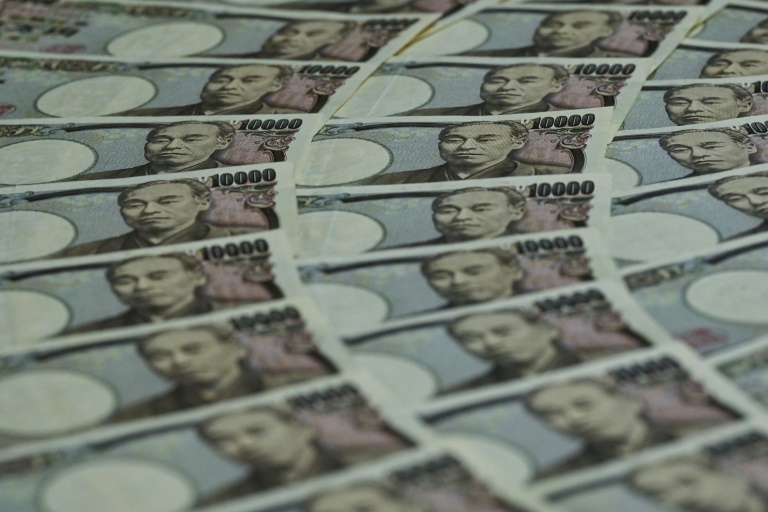
Forex traders were also keeping tabs on the yen as it edges closer to 150 per dollar, with Japanese officials holding off a second intervention in as many months but saying they are ready to act when necessary.

All three main indexes in New York enjoyed back-to-back gains as investors were heartened by forecast-beating results from Goldman Sachs and Johnson & Johnson.

They came on the heels of better-than-expected reports from banking giants Citi, JP Morgan and Wells Fargo.

Traders were given an extra boost by news that Netflix gained more than two million subscribers in July-September, easing worries about the impact of rising borrowing costs on consumers.

“Earnings season offers investors the opportunity to focus more on the actual earnings power of corporate America, and less on the machinations of the backward-looking economic data stream,” Art Hogan, a strategist at B. Riley, said.

“A better-than-feared earnings season may well be the catalyst the market needs to see a break in the steady grind lower.”

Still, Asian markets were mixed in early trade, with profit-takers weighing on Hong Kong after a healthy three-day run-up, while there were also losses in Shanghai, Taipei, Manila and Jakarta.

Tokyo, Sydney, Seoul, Singapore and Wellington rose.

– ‘Volatility up’ –

SPI Asset Management’s Stephen Innes warned there were still plenty of issues keeping a cap on equities including sticky inflation, weak sentiment, hawkish central banks, the Ukraine war, China’s economic woes and “a non-stop drum beat of recessionary rhetoric from vocal market participants”.

“The key to equity markets is (Federal Reserve) certainty, and that is the crucial turn on the road before the rates markets can settle back into a groove and Treasury volatility can decline,” he added.

“But for that to happen, the US data needs to roll over. Given the much hotter-than-expected inflation data, the Fed may do the opposite of what the market wants — turning volatility up again.”

On currency markets, eyes were now on Tokyo as the yen hovers just above 149 per dollar, with finance minister Shunichi Suzuki saying “we’ll respond appropriately against excessive moves”.

The unit is much weaker than the 145.90 level it touched last month before authorities stepped in, and analysts said they would likely act before it passes 150.

“If dollar-yen rises past the symbolic 150 level, price action will naturally accelerate, so they probably want to halt it before then or buy time,” said Yuji Saito of Credit Agricole CIB. 

Crude rose on renewed supply worries, having slumped Tuesday on bets that US President Joe Biden will order the release of more barrels from emergency reserves in order to keep fuel prices subdued heading into the winter and mid-term elections.

– Key figures around 0230 GMT –

Tokyo – Nikkei 225: UP 0.7 percent at 27,353.87 (break)

Hong Kong – Hang Seng Index: DOWN 0.8 percent at 16,781.79

Shanghai – Composite: DOWN 0.4 percent at 3,067.39

Pound/dollar: UP at $1.1344 from $1.1332 on Tuesday

Dollar/yen: DOWN at 149.17 yen from 149.21 yen

Euro/dollar: DOWN at $0.9859 from $0.9862 

Euro/pound: UP at 86.92 pence from 87.01 pence

West Texas Intermediate: UP 1.5 percent at $84.02 per barrel

Brent North Sea crude: UP 0.9 percent at $90.82 per barrel

New York – Dow: UP 1.1 percent at 30,523.80 (close)

London – FTSE 100: UP 0.2 percent at 6,936.74 (close)

'Close the windows': Lebanon power plant sparks cancer fears

After losing four relatives to respiratory illness, Zeina Matar fled her hometown north of Lebanon’s capital where she says a decaying power plant generates little electricity but very deadly pollution.

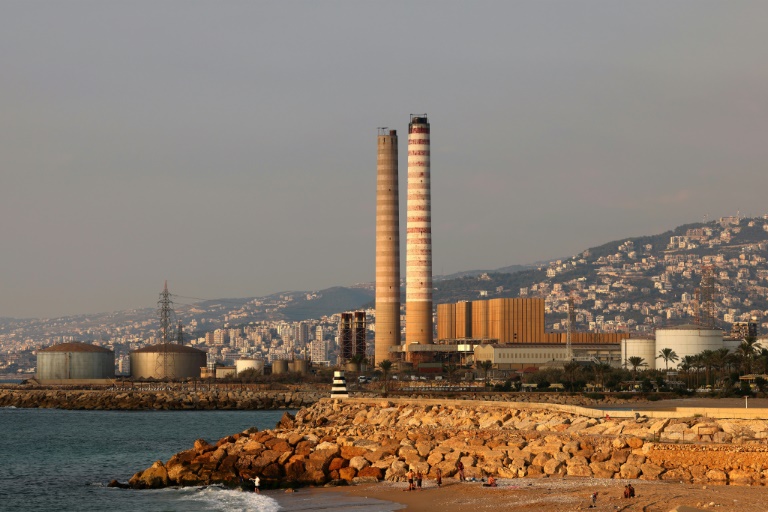
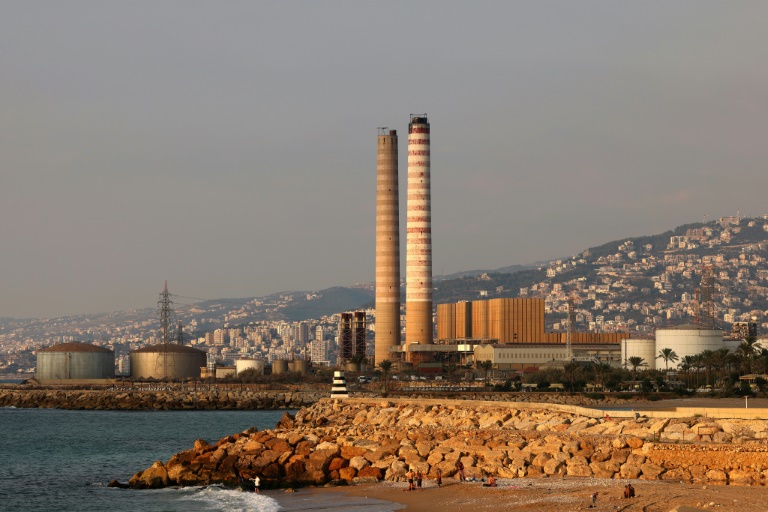
Thick black smoke sometimes billows from its red-and-white chimneys, leaving a grey haze in the air above the Zouk Mikael industrial district where the toxins remain trapped by a nearby mountain chain.

Zeina, aged 40, says she lost her younger sister and a cousin to pulmonary fibrosis and that two of her uncles died of lung cancer years earlier.

They all lived near the plant where, experts and residents believe, air pollution means people are more likely to develop cancer and respiratory disease than anywhere else in the crisis-torn country.

“We could die tomorrow,” said Zeina, who has relocated to Lebanon’s south to escape the plant’s emissions.

A Greenpeace study found that the surrounding Jounieh area ranked fifth in the Arab world and 23rd globally for cities most contaminated by nitrogen dioxide, a dangerous pollutant released when fuel is burnt.

The environmental group’s 2018 study singled out the Zouk plant, built in the 1940s, as well as cars on a busy motorway and privately owned electricity generators as the main causes of pollution.

The walls of Zeina’s balconies in her old Zouk Mikael home are blackened by the smoke, and laundry she used to hang outside would be damaged by toxic chemicals emanating from the plant, she said. 

“Whenever they refill the station with fuel oil, we would close the windows,” Zeina said. “The smell is unbearable.”

– Doctor says ‘I fled’ –

Lebanon’s economy has been in free-fall since a financial crisis hit late in 2019, with authorities now barely able to afford more than an hour of mains electricity a day.

The Zouk Mikael plant, one of the country’s largest, now runs at minimum capacity when it operates at all, but still its emissions are causing high rates of pulmonary disease, experts warn.

Among them is Paul Makhlouf, a lung doctor at the Notre Dame du Liban Hospital in Jounieh, who said he abandoned his local apartment after noticing a rise in respiratory disease among patients. 

In 2014, he found that lung ailments had increased by three percent in patients living near the plant compared to the previous year, an annual rise he estimates has now doubled.

“When I saw the results, I moved from there,” he said. “I fled.”

Makhlouf mainly blames the type of fuel burnt at the Zouk Mikael plant, which he says is rich in sulphide and nitric oxide — carcinogenic chemicals that affect the respiratory system and the skin.

Compounding the problem, he said, is the fact the seaside plant is located at a low altitude, with heavy smoke trapped in the densely-populated area by nearby mountains that overlook the Mediterranean.

– ‘Under black cloud’ –

Pictures went viral online last month of thick black smoke again billowing from the Zouk plant as it burnt low-quality fuel oil to produce just one hour of power that day.

The energy ministry said the plant had been forced to use heavy fuel to “keep supplying the airport, hospitals and other vital institutions” with electricity.

Since then, the plant has mostly operated at night.

“Sometimes, we wake up to a loud noise in the middle of the night” when the station kicks into action and burns fuel oil, said Zeina’s 80-year-old aunt Samia, who still lives near the plant. 

Elie Beaino, who heads the Zouk municipality, said a second plant, built without authorisation in 2014, runs somewhat more cleanly on higher-quality fuel or gas, but that it has stopped working as its operators cannot afford those higher-quality hydrocarbons.

“Most residents want the power plants to close down,” he said.

Lawmaker Najat Saliba, an atmospheric chemist, said residents near Zouk are at least seven times more likely to develop cancer than those of Beirut, citing a 2018 study she helped author for the American University of Beirut. 

She said the heavy fuel oil it uses releases harmful chemicals. “The solution is to import quality fuel oil and gas,” she said, adding however that Lebanon cannot afford those fuels.

“We have two options today,” she said. “To switch the lights off at the airport and in hospitals, or to sit under a black cloud in Zouk.”

'Close the windows': Lebanon power plant sparks cancer fears

After losing four relatives to respiratory illness, Zeina Matar fled her hometown north of Lebanon’s capital where she says a decaying power plant generates little electricity but very deadly pollution.

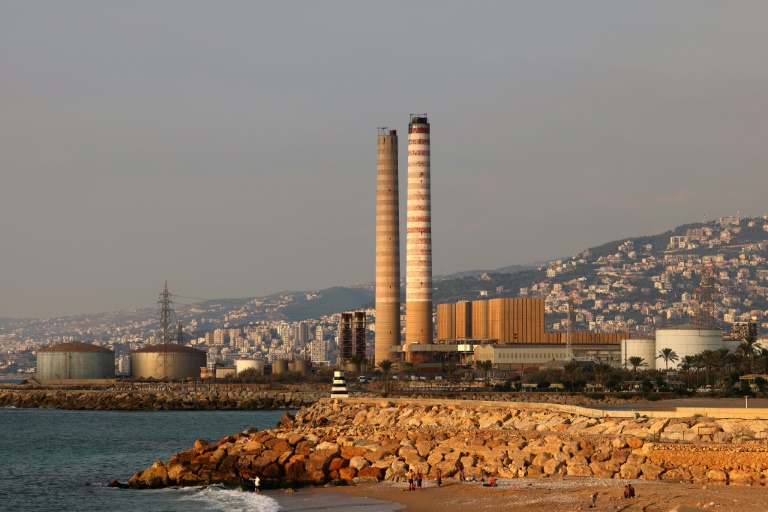
Thick black smoke sometimes billows from its red-and-white chimneys, leaving a grey haze in the air above the Zouk Mikael industrial district where the toxins remain trapped by a nearby mountain chain.

Zeina, aged 40, says she lost her younger sister and a cousin to pulmonary fibrosis and that two of her uncles died of lung cancer years earlier.

They all lived near the plant where, experts and residents believe, air pollution means people are more likely to develop cancer and respiratory disease than anywhere else in the crisis-torn country.

“We could die tomorrow,” said Zeina, who has relocated to Lebanon’s south to escape the plant’s emissions.

A Greenpeace study found that the surrounding Jounieh area ranked fifth in the Arab world and 23rd globally for cities most contaminated by nitrogen dioxide, a dangerous pollutant released when fuel is burnt.

The environmental group’s 2018 study singled out the Zouk plant, built in the 1940s, as well as cars on a busy motorway and privately owned electricity generators as the main causes of pollution.

The walls of Zeina’s balconies in her old Zouk Mikael home are blackened by the smoke, and laundry she used to hang outside would be damaged by toxic chemicals emanating from the plant, she said. 

“Whenever they refill the station with fuel oil, we would close the windows,” Zeina said. “The smell is unbearable.”

– Doctor says ‘I fled’ –

Lebanon’s economy has been in free-fall since a financial crisis hit late in 2019, with authorities now barely able to afford more than an hour of mains electricity a day.

The Zouk Mikael plant, one of the country’s largest, now runs at minimum capacity when it operates at all, but still its emissions are causing high rates of pulmonary disease, experts warn.

Among them is Paul Makhlouf, a lung doctor at the Notre Dame du Liban Hospital in Jounieh, who said he abandoned his local apartment after noticing a rise in respiratory disease among patients. 

In 2014, he found that lung ailments had increased by three percent in patients living near the plant compared to the previous year, an annual rise he estimates has now doubled.

“When I saw the results, I moved from there,” he said. “I fled.”

Makhlouf mainly blames the type of fuel burnt at the Zouk Mikael plant, which he says is rich in sulphide and nitric oxide — carcinogenic chemicals that affect the respiratory system and the skin.

Compounding the problem, he said, is the fact the seaside plant is located at a low altitude, with heavy smoke trapped in the densely-populated area by nearby mountains that overlook the Mediterranean.

– ‘Under black cloud’ –

Pictures went viral online last month of thick black smoke again billowing from the Zouk plant as it burnt low-quality fuel oil to produce just one hour of power that day.

The energy ministry said the plant had been forced to use heavy fuel to “keep supplying the airport, hospitals and other vital institutions” with electricity.

Since then, the plant has mostly operated at night.

“Sometimes, we wake up to a loud noise in the middle of the night” when the station kicks into action and burns fuel oil, said Zeina’s 80-year-old aunt Samia, who still lives near the plant. 

Elie Beaino, who heads the Zouk municipality, said a second plant, built without authorisation in 2014, runs somewhat more cleanly on higher-quality fuel or gas, but that it has stopped working as its operators cannot afford those higher-quality hydrocarbons.

“Most residents want the power plants to close down,” he said.

Lawmaker Najat Saliba, an atmospheric chemist, said residents near Zouk are at least seven times more likely to develop cancer than those of Beirut, citing a 2018 study she helped author for the American University of Beirut. 

She said the heavy fuel oil it uses releases harmful chemicals. “The solution is to import quality fuel oil and gas,” she said, adding however that Lebanon cannot afford those fuels.

“We have two options today,” she said. “To switch the lights off at the airport and in hospitals, or to sit under a black cloud in Zouk.”

'Close the windows': Lebanon power plant sparks cancer fears

After losing four relatives to respiratory illness, Zeina Matar fled her hometown north of Lebanon’s capital where she says a decaying power plant generates little electricity but very deadly pollution.

Thick black smoke sometimes billows from its red-and-white chimneys, leaving a grey haze in the air above the Zouk Mikael industrial district where the toxins remain trapped by a nearby mountain chain.

Zeina, aged 40, says she lost her younger sister and a cousin to pulmonary fibrosis and that two of her uncles died of lung cancer years earlier.

They all lived near the plant where, experts and residents believe, air pollution means people are more likely to develop cancer and respiratory disease than anywhere else in the crisis-torn country.

“We could die tomorrow,” said Zeina, who has relocated to Lebanon’s south to escape the plant’s emissions.

A Greenpeace study found that the surrounding Jounieh area ranked fifth in the Arab world and 23rd globally for cities most contaminated by nitrogen dioxide, a dangerous pollutant released when fuel is burnt.

The environmental group’s 2018 study singled out the Zouk plant, built in the 1940s, as well as cars on a busy motorway and privately owned electricity generators as the main causes of pollution.

The walls of Zeina’s balconies in her old Zouk Mikael home are blackened by the smoke, and laundry she used to hang outside would be damaged by toxic chemicals emanating from the plant, she said. 

“Whenever they refill the station with fuel oil, we would close the windows,” Zeina said. “The smell is unbearable.”

– Doctor says ‘I fled’ –

Lebanon’s economy has been in free-fall since a financial crisis hit late in 2019, with authorities now barely able to afford more than an hour of mains electricity a day.

The Zouk Mikael plant, one of the country’s largest, now runs at minimum capacity when it operates at all, but still its emissions are causing high rates of pulmonary disease, experts warn.

Among them is Paul Makhlouf, a lung doctor at the Notre Dame du Liban Hospital in Jounieh, who said he abandoned his local apartment after noticing a rise in respiratory disease among patients. 

In 2014, he found that lung ailments had increased by three percent in patients living near the plant compared to the previous year, an annual rise he estimates has now doubled.

“When I saw the results, I moved from there,” he said. “I fled.”

Makhlouf mainly blames the type of fuel burnt at the Zouk Mikael plant, which he says is rich in sulphide and nitric oxide — carcinogenic chemicals that affect the respiratory system and the skin.

Compounding the problem, he said, is the fact the seaside plant is located at a low altitude, with heavy smoke trapped in the densely-populated area by nearby mountains that overlook the Mediterranean.

– ‘Under black cloud’ –

Pictures went viral online last month of thick black smoke again billowing from the Zouk plant as it burnt low-quality fuel oil to produce just one hour of power that day.

The energy ministry said the plant had been forced to use heavy fuel to “keep supplying the airport, hospitals and other vital institutions” with electricity.

Since then, the plant has mostly operated at night.

“Sometimes, we wake up to a loud noise in the middle of the night” when the station kicks into action and burns fuel oil, said Zeina’s 80-year-old aunt Samia, who still lives near the plant. 

Elie Beaino, who heads the Zouk municipality, said a second plant, built without authorisation in 2014, runs somewhat more cleanly on higher-quality fuel or gas, but that it has stopped working as its operators cannot afford those higher-quality hydrocarbons.

“Most residents want the power plants to close down,” he said.

Lawmaker Najat Saliba, an atmospheric chemist, said residents near Zouk are at least seven times more likely to develop cancer than those of Beirut, citing a 2018 study she helped author for the American University of Beirut. 

She said the heavy fuel oil it uses releases harmful chemicals. “The solution is to import quality fuel oil and gas,” she said, adding however that Lebanon cannot afford those fuels.

“We have two options today,” she said. “To switch the lights off at the airport and in hospitals, or to sit under a black cloud in Zouk.”

Cholera cases on the rise in Haiti

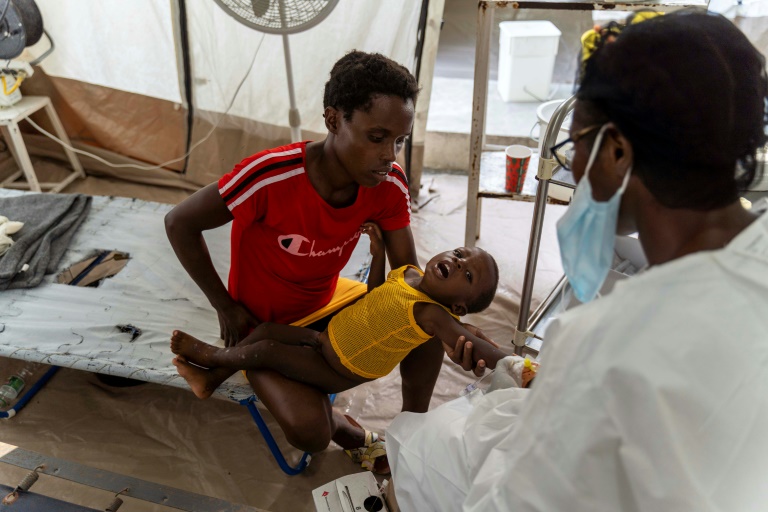
Cholera cases are rising in Haiti, according to Health Ministry figures obtained by AFP on Tuesday, fueling fears of a new disaster in a country already deep in a humanitarian and security crisis. 

As of Monday, 606 suspected cases and 66 confirmed cases had been identified, according to a ministry report. 

That constitutes an increase of 222 new suspected cases between October 13 and 17. In addition, 22 deaths were recorded in medical facilities. 

Suspected cases have also been recorded in new regions of the impoverished Caribbean country, in particular in the central region. 

One of the epicenters of the disease is the civilian prison in Port-au-Prince, with 271 suspected cases, 12 confirmed and 14 people dead, the ministry report said. 

The new assessment came a day after a meeting at the United Nations where the Security Council discussed deploying a special international force to Haiti to deal with the humanitarian and security crisis.

Secretary-General Antonio Guterres described the situation as “absolutely nightmarish,” with criminal gangs blockading the country’s main oil terminal.

Speaking at the United Nations, Haitian Foreign Minister Jean Victor Geneus said he had “the delicate mission of bringing before the Security Council the cry of distress of an entire suffering people and of saying loudly and intelligibly that the Haitians don’t live, they survive.” 

While the number of cholera cases continues to rise, protests have resumed in Port-au-Prince and around the country to demand the resignation of Prime Minister Ariel Henry. 

A demonstration of several hundred people was dispersed on Monday with tear gas not far from the US embassy. 

Haiti suffered a cholera epidemic between 2010 and 2019 that was accidentally introduced by UN peacekeeping troops and killed more than 10,000 people.

Close Bitnami banner
Bitnami