World

In Brazil, Bolsonaro's far-right echoes Trump's

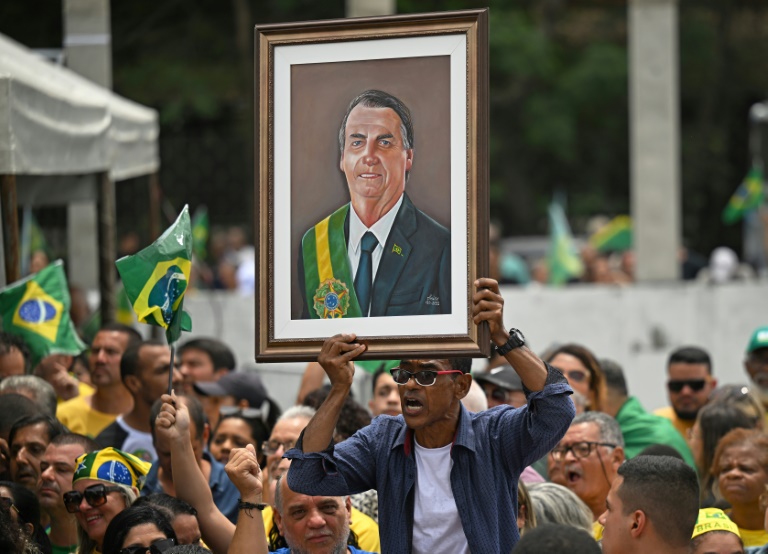
“Bolsonarismo,” the Brazilian far-right movement built around President Jair Bolsonaro, shares much in common with ultra-conservatives in power in Europe — Hungary, Poland and soon Italy — but is closer to Donald Trump and the US alt-right.

Whether or not Bolsonaro wins his uphill fight for re-election against veteran leftist Luiz Inacio Lula da Silva in Brazil’s October 30 runoff, the far-right’s arrival in power in Brazil, as elsewhere, is linked to deep social upheaval, analysts say.

“All these far-right movements are rooted in an economic and social crisis that is growing worse by the year: rising inequality, declining income for the working and middle classes,” says Christophe Ventura, a Latin America specialist at the French Institute for International and Strategic Affairs (IRIS).

“That has triggered the rise of widespread mistrust.”

The response, he says, has followed a similar pattern internationally: a rejection of “rotten and incompetent” traditional politicians in favor of “virtuous citizens and a more authoritarian government” to right the wrongs unleashed by globalization and free trade — blamed for all ills.

In Europe, Italy’s Fratelli d’Italia, Hungary’s Fidesz, Poland’s Law and Justice party, the Sweden Democrats and France’s Rassemblement National and Reconquete all “accuse immigrants of causing every crisis and want to close the borders,” says Geraldo Monteiro, head of the Brazilian Center for Democracy Studies and Research at Rio de Janeiro State University (UERJ).

The Brazilian context is different: no longer a major immigration destination, “immigrants aren’t a big subject,” and Islamophobia and anti-Semitism are less prevalent than in Europe, says Monteiro.

Bolsonarismo’s version of “national solidarity” is instead a battle of “good people” versus the “corrupt.”

Internal enemies include the LGBT community, Indigenous peoples, environmental and human-rights activists, the media, academics and the cultural elite — all lumped together with Lula and the “communist” left.

– Strong men –

As with far-right movements everywhere, Bolsonarismo’s Holy Trinity is God, country and family.

The latter, say true believers, is under threat from gay marriage, abortion and “gender ideology.”

Whereas conservative Catholics are the core of the European far-right, in Brazil, it is the powerful, fast-growing Evangelical movement.

Bolsonaro’s movement is also more military in nature than its European cousins, says Monteiro.

He says Brazil “still carries the memory of the military dictatorship” (1964-1985) — fondly, in ex-army captain Bolsonaro’s case — and the president has actively courted military support, naming generals to powerful posts in his administration.

He has also energetically promoted gun ownership, signing a raft of legislation and decrees intended to help “good people” defend themselves and their property — a viewpoint that “doesn’t exist in Europe,” says Ventura.

“The primary reference point” for Bolsonaro’s far-right has been Donald Trump’s United States, he adds, drawing parallels with the American alt-right and Tea Party movements.

It is a brand of populism in which “the leader is the direct representative of the people,” says Mayra Goulart, a political scientist at Rio de Janeiro Federal University (UFRJ).

Anything supporters perceive as interfering with that direct democracy — political parties, institutions, the media — comes under attack.

Like the US alt-right, Bolsonaro’s movement has attacked Brazil’s democratic institutions as enemies of the people, notably the Supreme Court and the supposedly fraud-plagued election system.

Many observers fear a Brazilian version of Trump supporters’ attack on the US Capitol if Bolsonaro loses on October 30.

Like Trump — who recently gave him a glowing endorsement — Bolsonaro regularly insults journalists and attacks the “fake news” media.

He prefers to communicate directly with supporters on social media — which is inundated with “alternative truth” and conspiracy theories.

– Hate speech –

Trump’s influence is also visible in Bolsonaro’s climate-change skepticism and resistance to expert advice on handling Covid-19.

The US and Brazilian movements also share a “pro-market, pro-business discourse,” says Goulart.

Free speech is upheld as an absolute right — unfiltered hate speech and disinformation included.

Both Trump and Bolsonaro ran as political outsiders and achieved “unexpected” victories, says Monteiro.

And both “easily draw thousands of supporters into the streets.”
Full-scale Noah's Ark — a showcase for US creationists

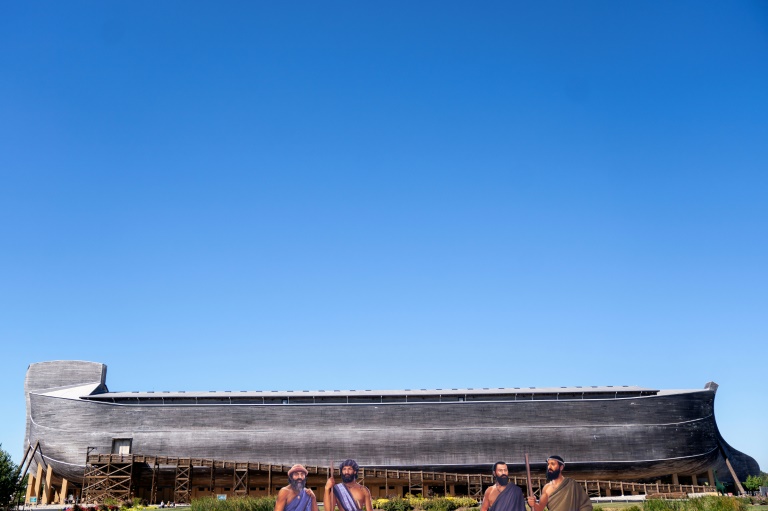
A full-sized model of Noah’s Ark sitting in rural Kentucky promotes a worldview that draws visitors from across the United States — that the theory of evolution is false.

The Ark Encounter and the associated Creation Museum espouse the belief that God literally created the Earth in six days around 4,000 BC.

Evangelical Christians flock to see the spectacular staging and sharp denunciations of scientific facts such as that dinosaurs became extinct about 65 million years ago.

Visitors also reflect America’s divided politics as the country heads into midterm elections, with creationists often aligned with the Republican Party on issues such as abortion and gay rights.

“Dinosaurs are often used by evolutionists to proclaim their worldview. So we’ve taken the dinosaurs back, if you will,” said Mark Looy, cofounder of the ark amusement park and the museum.

Standing a few steps from a model of an allosaurus skeleton, Looy said the site offers a different view of dinosaurs — that “most of them perished during the flood about 4,500 years ago.”

The museum opened in 2007 in Petersburg, Kentucky, financed by a donation campaign and supported by Answers in Genesis, a group that believes in strict creationism.

The Ark Encounter opened in 2016 about 70 kilometers (45 miles) away in Williamstown, and contains a replica of Noah’s Ark in keeping with its supposed Biblical measurements — 150 meters (510 feet) long, 15 meters (51 feet) high, and 25 meters (85 feet) wide.

– Bible ‘more than a story’ –

A combo ticket to the two sites costs $85, and Looys says more than a million people a year browse the exhibits — and also enjoy attractions such as zip-lining and a petting zoo 

Most visitors are committed to the cause.

“My husband and I… believe the Earth is about 6,000 years old,” said Suzanne Swindle, a 37-year-old executive from Atlanta who came to show her four-year-old daughter that the Bible “is more than just a story.”

However, she does not deny that species “adapt to their environment,” one of the pillars of Charles Darwin’s theory of evolution.

Similarly, Mike Barrington, a 70-year-old former veteran who lives in Louisiana, calls himself a creationist, but he adds that the exhibit’s explanation of dinosaurs “is new to me.”

Such contradictions are mirrored in the polls. According to a 2019 Gallup survey, 40 percent of Americans believe God created man less than 10,000 years ago.

But other polls ask subtler questions with more options and find about 15 percent reject the theory of evolution, said Adam Laats, a historian at Binghamton University in New York and author of the book “Creationism USA.”

Calling oneself a creationist in the United States is more “an identifying mark of a much broader cultural divide,” he said.

“Someone would go and say, ‘Oh, I guess I’m a creationist because I don’t like pornography, I don’t want abortion rights, and I don’t want LGBTQ rights.'”

Laats said decades of conflict over which institutions in the United States are trustworthy — ranging from justice and politics to science and the media — has created “radically different ideas about truth and reality.”

– Election issues –

The themes are at the heart of key midterm elections on November 8 and Laats sees “a correlation between the most archetypal MAGA (Donald Trump) conservatives and the most ardent museum-type creationists.”

At the two sites, “you’d find mostly Republicans,” Mark Looy said, and while the attractions must stay away from endorsing candidates, “we don’t shy away from some of the hot button issues of the day.”

In one clear example, a dummy video game at the museum reflects a binary reading of the world.

Two camps confront each other: “Man’s world,” associated with “abortion” or “gay marriage,” versus “God’s word,” synonymous with “marriage” and “sanctity of life.”

The mix of religion, activism and entertainment is also evident at the museum’s Garden of Eden.

After strolling through a bucolic landscape with Adam and Eve, visitors arrive in a screening room with projected black and white photos of the Holocaust, drug addicts and the terrorist attacks of September 11, 2001. 

To reinforce the message, big letters spell out: “Rejection of God’s word led to corruption.”

Peggy Mast, a 74-year-old woman from Kansas, agrees.

For her, “chaos reigns” in America, where “people are now committing anarchy with the acceptance of the administration of our government.”

So the museum is “a wonderful place to reaffirm the very things that we know about God,” she added.

Amazon workers reject union in latest US warehouse vote

Workers at an Amazon warehouse in the state of New York voted decisively against establishing a union, US officials announced Tuesday, dealing a setback to the fledgling labor drive at the e-commerce behemoth.

The tally was 406 against Amazon Labor Union’s (ALU) proposal and 206 in support of the organization, said a spokeswoman for the National Labor Relations Board.

The election marks the second straight defeat for the ALU, which surged to prominence in April following its upset win at a large Staten Island warehouse that voted to become Amazon’s first US facility to unionize.

ALU president Christian Smalls dismissed the vote at the Amazon facility near the city of Albany in New York state as unfair.

“It was a sham election where workers were subjected to intimidation and retaliation on a daily basis and even the workers who volunteered to be election observers were faced with threats of termination,” Small said in a statement.

Smalls said he was “proud of the brave workers in upstate New York who stood up in the face of a vicious anti-union campaign to challenge a trillion-dollar corporation.”

“We will continue to empower all workers to give them the right to unionize. You miss 100% of the shots you don’t take!” he added on Twitter.

Amazon, which has continued to contest its defeat in the first Staten Island vote, said it was pleased with Tuesday’s outcome.

“We’re glad that our team in Albany was able to have their voices heard, and that they chose to keep the direct relationship with Amazon as we think that this is the best arrangement for both our employees and customers,” said spokesperson Kelly Nantel. 

The elections at Amazon have come amid a wave of labor drives at consumer-facing companies, including Starbucks, Apple, REI and Chipotle, all of which have voted to unionize one or more store or restaurant. 

But Amazon’s initial victory in Staten Island, a New York borough, was on a much bigger scale, providing a jolt to the US labor movement while propelling Smalls and other ALU leaders to prominence. 

Smalls, a former Staten Island Amazon worker, and other current and ex-employees established the group  2021, denouncing Amazon’s rigid workforce practices during the pandemic and arguing a union was the way towards better pay and benefits.

But after prevailing in the 8,000 employee JFK8 warehouse, the ALU had also lost a second election in May at the smaller LDJ5 warehouse, which is also in Staten Island.

Besides trying to spread the ALU to new Amazon sites, the union’s leadership is also facing barriers in getting Amazon to come to the bargaining table to recognize the union and negotiate a contract.

Amazon has refused to accept the election outcome in the first Staten Island vote, citing alleged improprieties.

Last month, a National Labor Relations Board official rejected Amazon’s claims as groundless after a 24-day hearing.

But Amazon has said it plans to appeal that decision.

In Iraq, divorce rates soar even as stigma persists for women

Just a year into her marriage, Manal became one of the tens of thousands of Iraqis every year who divorce in a deeply conservative nation where break-up rates have risen.

For Manal, like many other women, the reason was clear — her husband’s financial dependence on his family’s business meant that “he couldn’t take any decisions of his own”.

The 33-year-old was divorced eight years ago from her ex-husband, who is also her cousin and who worked for his father’s appliance shop.

Not only did he depend on his family for money, but the couple also cohabited with her in-laws.

“He wasn’t financially independent, which caused family problems,” she said.

Her reasoning echoes that of tens of thousands of Iraqis, according to data published by the country’s Supreme Judicial Council.

Iraqi authorities cite wider economic difficulties, early marriages and infidelity encouraged by new technologies as other key drivers of divorce rates. 

More than 73,000 divorces were pronounced in 2021 by the courts in the country of 42 million people, largely the same as the number in 2018.

This is up from an average of just below 51,700 per year over the period 2004 to 2014, a decade that saw one in five marriages end in divorce, according to the council’s website.

– ‘It’s better to divorce’ –

A study published by the Supreme Judicial Council on the causes of divorce cites “living with the spouse’s family, leading in many cases to negative interference in the relationship”, in tandem with “the spouse’s financial dependence on his family”.

It also cites difficulties finding employment and “infidelities due to the internet”.

Premature — often child — marriages are also a driver of divorce. A total of 4,092 adolescent girls were divorced in the two years to the end of 2021.

Veteran feminist Hanaa Edwar also pointed to “financial pressure on families” as a cause.

“This creates a psychological burden and problems,” she said.

And Iraq was not spared the surge in domestic violence that came with the coronavirus pandemic — though Edwar salutes women for increasingly finding the courage to leave.

“There is an awareness among women that if violence persists in their lives and their children’s lives, then it’s better to divorce.”

But in a deeply patriarchal society like Iraq, a divorced man and a divorced woman are not equal.

On top of the often arduous battle to gain custody over their children, women are frequently exposed to “sexual harassment” by men who believe they have the right to make sexual advances towards divorced women, Edwar lamented.

Some families even refuse to allow divorced women to work or go out freely, for fear of the “stigma” and what people will say.

“As for men — socially, everything is acceptable. Today, he divorces, tomorrow he remarries.”

– ‘You should wait’ –

But statistics show that this has left many women undeterred.

“Courts have registered a rise in divorces, particularly over the past decade,” a magistrate was quoted as saying in 2019 on the judicial council’s website.

A social worker who sifts through divorce cases filed in courts so as to try to re-establish common ground between couples likewise acknowledges that “divorce has become much more common”.

Speaking on condition of anonymity at a Baghdad court, she said that “only in 10 percent of cases are we able to find a solution” and abandon the divorce proceedings.

Manal now lives back in her parents’ home and works for a feminist organisation. Her nine-year-old son Adam sees his father from time to time.

Despite the letdown of her first marriage, she has not written off the possibility of remarrying, but says conditions must be met.

A future husband would have to accept her son, for one, but also her professional ambitions.

Her advice to younger generations of women about to embark on their matrimonial journey is simple: “guarantee your economic independence and don’t get married too young.

“You should wait, marriage shouldn’t be the sole ambition in life.”

Netflix subscriber numbers re-ignite after chilly start to year

Netflix on Tuesday reported that it gained more than 2 million subscribers in the recent quarter, calming investor fears that the streaming giant was losing paying customers.

The company said it ended the third quarter with slightly more than 223 million subscribers worldwide, up some 2.4 million, after seeing subscriber ranks ebb during the first half of the year.

Netflix shares shot up more than 14 percent in after hours trading to $275 on the earnings news.

“Well, thank God we’re done with shrinking quarters,” Netflix co-chief executive said during an earnings call.

“We’re back to the positivity; we’ve got to pick up the momentum.”

The turn-around in subscriber growth comes as Netflix is poised to debut a subscription option subsidized by ads in November across a dozen countries.

The new “Basic with Ads” subscriptions will be priced at $6.99 in the United States — three dollars less than a no-ads basic option, Netflix chief operating officer Greg Peters said in a briefing.

“The timing is great because we really are at this pivotal moment in the entertainment industry and evolution of that industry,” Peters said.

“Now streaming has surpassed both broadcast and cable for total TV time in the United States.”

Netflix is working with Microsoft on its ad-supported tier, and teams at both companies will likely need to be bulked up to handle the huge demand by advertisers, Peters said.

“We’re turning some folks away right now because we just don’t have the marketing capacity to serve everyone,” Peters said

After having shunned advertising since it started its streaming service, Netflix acquiesced as competition in the market intensifies and as consumers recoil from soaring inflation.

Rival streaming platform Disney+ is to launch ad-subsidized subscriptions in December.

With the launch of cheaper, ad-supported subscriptions, Netflix and Disney+ are expected to bite into the revenue of traditional television channels.

“In directly acknowledging competition and using advertising, Netflix is adapting to the streaming landscape’s new normal,” said Insider Intelligence principal analyst Ross Benes.

– Covid ‘logjam’ –

Netflix expects to add another 4.5 million subscribers in the final quarter of this year.

“Although international growth continues, the US video streaming market is hitting its ceiling for subscribers,” said Third Bridge analyst Jamie Lumley.

“After periods of rapid expansion and extraordinary spending, Netflix, Disney and their competitive set will soon be forced to focus on improving margins and cutting back on content spending.”

Netflix said in a letter to shareholders that it believes its competitors have been losing money as they invest heavily to win audiences.

Netflix reported a quarterly profit of $1.4 billion on revenue of $7.9 billion — a net income slightly less than in the same period a year ago when it brought in more money.

Netflix plans to hold steady with spending some $17 billion a year on content, said co-chief executive Ted Sarandos.

“I feel better and better about that $17 billion of content spend, because what we have to do is be better at getting more impact per billion dollars spent than anybody else,” Serranos said.

“Big shows that folks engaged with and talk about drive a lot of growth.”

Peters noted hits such as “Stranger Things” and “Extraordinary Attorney Woo” and pending releases of keenly anticipated films such as “Glass Onion: A Knives Out Mystery.”

Netflix is also working to smooth out the show release rhythm that was disrupted by the pandemic, according to executives.

“Covid got a lot of content jammed up,” Sarandos said.

“It will take several years to completely unwind the Covid logjam.”

Host Qatar's World Cup 'carbon neutral' claims under fire

Organisers have promised a carbon neutral World Cup next month in Qatar but environmental groups are warning that the tournament will be far more polluting than advertised.

Hassan al-Thawadi, secretary general of Qatar 2022, said organisers will achieve net-zero emissions for the tournament as a whole “by measuring, mitigating and offsetting all our greenhouse gas emissions”.

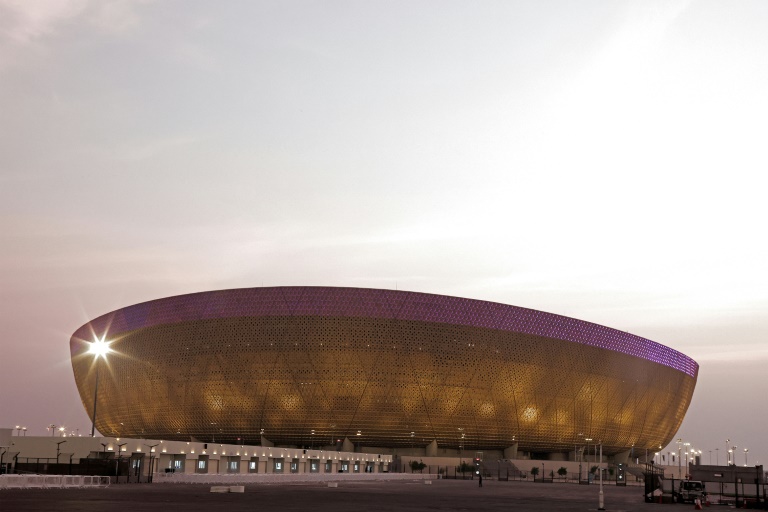
This promise has failed to convince sceptics, however. Former Manchester United ace Eric Cantona recently slammed what he called an “ecological aberration”, pointing to the carbon footprint of what will be eight air-conditioned stadiums.

Julien Jreissati, programme director of Greenpeace Middle East, has accused organisers of “window dressing”, insisting that claims of net-zero emissions from the tournament “could be considered greenwashing/sportswashing”.

Gilles Dufrasne, a researcher for Carbon Market Watch and author of a report into Qatar 2022’s climate credentials, said that carbon neutrality claims were “misleading and dishonest about the true climate impact that the event will have.”

Organisers of football’s marquee event said it will generate 3.6 million tonnes of CO2 equivalent, compared with 2.1 million generated by the previous edition, in Russia in 2018.

The vast majority of these emissions, some 95 percent, are indirect from things like transport, infrastructure building and housing. 

But Carbon Market Watch says that the hosts’ estimate is incomplete. It says that Qatar has underestimated the footprint of constructing eight new stadiums, for example, by a factor of eight, generating 1.6 million tonnes of CO2 instead of the 200,000 tonnes disclosed.

Some of this difference can be explained by methodology. Qatar deems that most of the new stadiums will be used well after the tournament is over, meaning that their environmental impact shouldn’t be tied specifically to one event.

Carbon Market Watch differs, pointing out that banking on continued use of eight massive sporting venues in a country of just 2.4 million inhabitants is risky.

– ‘Huge error’ –

Stadium air conditioning in Qatar, contrary to popular belief, is expected to only contribute a minimal amount to the tournament’s climate impact.

“It’s relatively minimal compared to total emissions from constructing stadiums or from air transport,” said Dufrasne.

Given the vast amounts of infrastructure Qatar has had to build in order to accommodate the world’s largest sporting event, some experts believe the tiny Gulf nation was destined to struggle to keep emissions down.

“The huge error was made in December 2010 at the moment the World Cup wasn’t awarded to a country that already had all the infrastructure,” said Giles Pache, a specialist in logistics at France’s Aix-Marseille University, referring to the United States, which missed out on FIFA voting to Qatar.

“In Qatar we were starting with nothing, hosting a global event built on sand,” said Pache. 

“The US was really well equipped” in terms of stadiums and hotels, he said.

To achieve carbon neutrality, tournament organisers have promised that emissions will be offset in the form of carbon credits. These, in theory, balance out the emissions produced by saving emissions elsewhere in the world. 

With Qatar, organisers are working on renewable energy projects in Turkey as part of this scheme.

Jreissati said these carbon credits constituted a “distraction”. 

“They give the impression that a solution that doesn’t necessitate efforts to reduce greenhouse gas emissions through ambitious political decisions is possible,” he said.

“We need to reduce emissions at source as soon as possible.”

For future tournaments Dufrasne said he hoped for a “systemic reflection” in how World Cups are organised. 

This could include extending the gaps between tournaments or hosting global versions of the event.

“Hold matches across the world, playing in stadiums that are closest to the two teams playing,” he suggested.

Russia announces civilian evacuation from key Ukraine city

Russia announced the evacuation of civilians from a key southern Ukrainian city Tuesday as it acknowledged the situation for its troops on the ground in Ukraine was “tense” in the face of a counter-offensive.

Ukrainian officials, meanwhile, scrambled to rebuild damaged energy facilities across the country following a series of deadly Russian strikes and President Volodymyr Zelensky charged that Moscow’s purported use of Iranian-made drones in the attacks highlighted its “military and political bankruptcy”.

Russian General Sergey Surovikin, who has been in charge of recent operations in Ukraine, said the army was preparing to evacuate civilians from the city of Kherson, which is part of the four regions in Ukraine that Moscow recently claimed to have annexed. 

Kherson was the first city to fall to Russian forces after the Kremlin launched its invasion on February 24, but Ukrainian troops have been pushing increasingly closer to the city in recent weeks as part of a successful counter-offensive.

“The Russian army will above all ensure the safe evacuation of the population” of Kherson, Surovikin told state television Rossiya 24, describing the situation as “very difficult” both for civilians and Russian soldiers.

“The enemy is not abandoning its attempts to attack Russian troop positions,” he added.

And Vladimir Saldo, the Kremlin-appointed head of the Kherson region, announced on Telegram “an organized relocation of civilians” from several of the region’s municipalities to the left bank of the Dnipro river.

– ‘Critical’ across country

Ukraine warned of an emerging “critical” risk to its power grid after repeated Russian bombardments had destroyed one third of the country’s power facilities as winter approaches, according to the presidency.

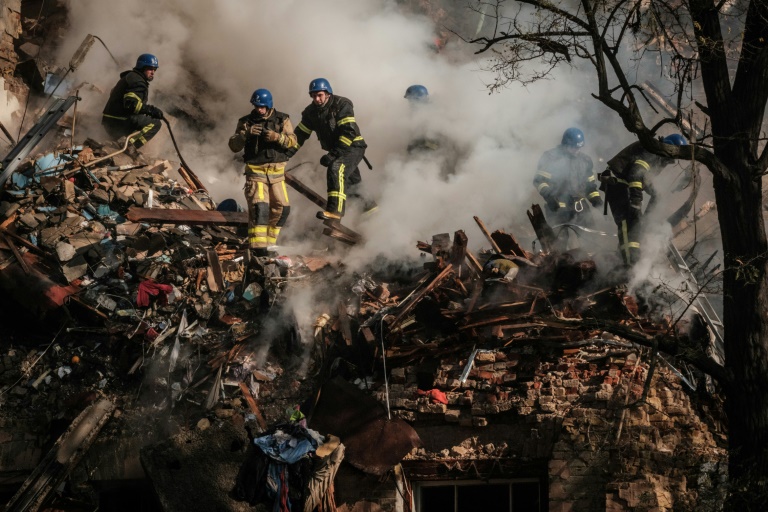
Russian attacks rocked energy facilities in Kyiv and urban centres across Ukraine, causing blackouts and disrupting water supplies. Kyiv Mayor Vitali Klitschko said three people had been killed in Tuesday’s strikes.

“The situation is critical now across the country. It’s necessary for the whole country to prepare for electricity, water and heating outages,” Kyrylo Tymoshenko, deputy head of the Ukrainian president’s office, told Ukrainian television.

Drones also bombarded Kyiv on Monday, leaving five dead, officials said, in what the presidency described as an attack of Russian desperation after a string of battlefield losses.

Kyiv and its Western allies have accused Moscow of using Iranian-made drones in the strikes, a move Zelensky portrayed as a sign of Russia’s failure.

“The very fact of Russia’s appeal to Iran for such assistance is the Kremlin’s recognition of its military and political bankruptcy,” Zelensky said in his daily address.

– Hospitals on back-up power –

Many towns and cities in the Zhytomyr region, west of Kyiv, and parts of the city of Dnipro in central Ukraine were without electricity, leaving some hospitals to operate on backup power.

National emergency services said that after 10 days of strikes on energy facilities, over 1,100 towns and villages in nine regions had been left without power and more than 70 people were killed and 290 injured.

Kyiv on Tuesday also accused the Red Cross of “inaction” over its prisoners held by Russia, saying a lack of visits to detained soldiers and civilians meant they were vulnerable to being tortured.

And Ukraine’s state nuclear energy agency charged that Russia had detained two senior employees at the Russian-controlled Zaporizhzhia nuclear power plant in southern Ukraine and the UN nuclear watchdog asked to help secure their release.

Russian forces earlier on Tuesday claimed to have retaken territory from Ukrainian troops in the eastern Kharkiv region. It was Moscow’s first announced capture of a village there since being nearly entirely pushed out of the region last month.

– Kremlin denies Iran drone use –

Tehran said it was ready for talks with Kyiv to clarify “baseless” claims that Iran is providing Russia with weapons and drones for its Ukraine war.

Following the wave of kamikaze drone attacks against Kyiv, Foreign Minister Dmytro Kuleba said Ukraine should cut diplomatic ties with Iran.

The Kremlin said Tuesday it had no knowledge of its army using Iranian drones in Ukraine.

“Russian tech is being used,” Kremlin spokesman Dmitry Peskov said, referring other questions to the defence ministry.

The defence ministry did, however, confirm strikes on energy facilities over the past 24 hours, saying it had used long-range and precision weapons.

Meanwhile, Russian Foreign Minister Sergei Lavrov said Moscow could reduce its diplomatic presence in Western countries, blaming relations with Europe and Washington as well as Russia’s need to build ties elsewhere.

On Tuesday, Russian investigators said initial indications suggest the crash of a military plane into a residential building near Ukraine was due to a technical malfunction.

Russia can rebuild military in 2-4 years: Estonia

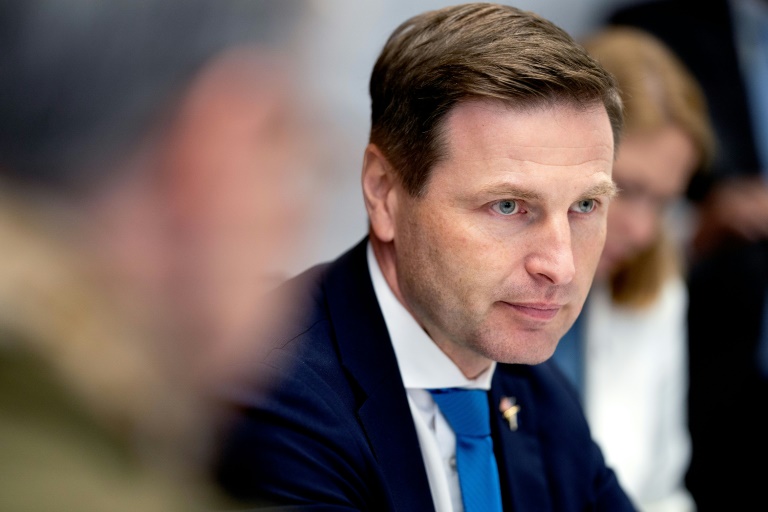
Russia will likely need two to four years to rebuild its military to the strength before the Ukraine war, Estonia’s defense minister said Tuesday, urging continued pressure to keep Moscow in check.

On a visit to Washington, Defense Minister Hanno Pevkur predicted a long war and urged the West to stand with Ukrainians until they achieve victory for “the free world.”

As Russia turns to suspected Iranian kamikaze drones to attack Ukraine, Pevkur said he has heard accounts that Moscow’s arsenal has been so drained that it is using its S-300 air defense system as ordinary missiles and that Russian shells have exploded in the air because they are too old.

“What more or less the consensus is is that it takes two to four years for Russia to restore some capabilities or even the same capabilities they had” before the war, he told a roundtable with State Department and Pentagon correspondents.

He said that Western sanctions had especially hurt production of airplanes and maintenance of helicopters by depriving Russia of key components.

“When we can find new ways on how to impact Russia with the sanctions, for sure we need to do that,” Pevkur said.

Pevkur, who met US Defense Secretary Lloyd Austin, warned that Russia still had the capacity to conduct attacks, including on NATO members such as Estonia.

However, he played down the possibility of a nuclear strike, an option threatened by Russian President Vladimir Putin as he proclaimed the annexation of Ukrainian territory.

Russia has already “put the fear onto Ukraine” with its conventional attacks, Pevkur said.

“I don’t see any positive, additional added value to Russia” of a nuclear strike, he said.

“The only thing — what can happen is that they would lose their silent supporters like China or some others because of that.”

The Pentagon said in a statement after the meeting that Austin “commended Estonia for its forward-leaning support to Ukraine” and had “reaffirmed the US commitment to deterring Russian aggression against NATO allies.” 

Most Salvadorans think making Bitcoin legal tender was 'failure'

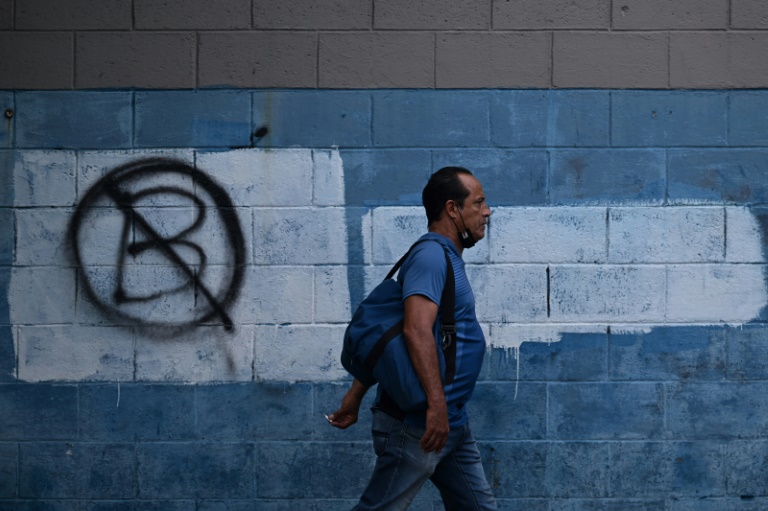
More than a year after Bitcoin became legal tender in El Salvador, a new poll Tuesday showed most people in the country consider the controversial move by President Nayib Bukele as a “failure.”

According to the poll by the University of Central America (UCA), 75.6 percent of respondents said they never used cryptocurrency in 2022, and 77 percent consider its adoption 14 months ago as legal tender, alongside the dollar, “to have been a failure.”

Bitcoin, whose value has tumbled over the past year, “is the government’s most unpopular measure, the most criticized and the most frowned upon,” said UCA rector Andreu Oliva, commenting on the results of the study.

Bukele’s idea was to promote crypto money transfers from some three million Salvadorans living overseas, mainly in the United States, to their relatives back home, thereby saving on bank charges. 

The president’s decision was a strategic one, given that these remittances make up more than a quarter of El Salvador’s gross domestic product. 

But according to data from the Salvadoran Central Bank in early September, a year after the introduction of Bitcoin, “less than two percent” of remittances from emigrants were made using the cryptocurrency.

In September 2021, Bitcoin was hovering around $45,000. By November it soared to $68,000, but after a steep drop it is currently trading below $20,000.

Taking advantage of the plummeting prices, Bukele bought 80 Bitcoin with public funds in July, bringing El Salvador’s total reserves to 2,381 units.

According to the UCA study, 77 percent of Salvadorans believe their president “should not continue to spend public money to buy Bitcoin.” 

The survey also looked into an emergency regime in place since March as part of the “war” on gangs decreed by Bukele, which led to the arrest of 55,000 suspected members of criminal gangs, the dreaded “maras.”

The population still overwhelmingly approves of it, at 75.9 percent, but that figure was down nine points from May, when it was 84.8 percent.

Climate change may boost Arctic 'virus spillover' risk

A warming climate could bring viruses in the Arctic into contact with new environments and hosts, increasing the risk of “viral spillover”, according to research published Wednesday.

Viruses need hosts like humans, animals, plants or fungi to replicate and spread, and occasionally they can jump to a new one that lacks immunity, as seen during the Covid-19 pandemic.

Scientists in Canada wanted to investigate how climate change might affect spillover risk by examining samples from the Arctic landscape of Lake Hazen.

It is the largest lake in the world entirely north of the Arctic Circle, and “was truly unlike any other place I’ve been”, researcher Graham Colby, now a medical student at University of Toronto, told AFP.

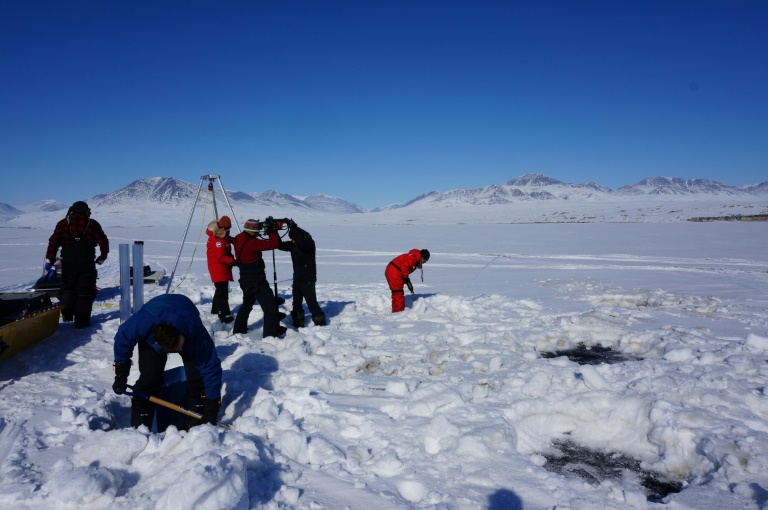
The team sampled soil that becomes a riverbed for melted glacier water in the summer, as well as the lakebed itself — which required clearing snow and drilling through two metres of ice, even in May when the research was carried out.

They used ropes and a snowmobile to lift the lake sediment through almost 300 metres (980 feet) of water, and samples were then sequenced for DNA and RNA, the genetic blueprints and messengers of life.

“This enabled us to know what viruses are in a given environment, and what potential hosts are also present,” said Stephane Aris-Brosou, an associate professor in the University of Ottawa’s biology department, who led the work.

But to find out how likely they were to jump hosts, the team needed to examine the equivalent of each virus and host’s family tree.

“Basically what we tried to do is measure how similar these trees are,” said Audree Lemieux, first author of the research.

Similar genealogies suggest a virus has evolved along with its host, but differences suggest spillover.

And if a virus has jumped hosts once, it is more likely to do so again.

– ‘Very unpredictable’ –

The analysis found pronounced differences between viruses and hosts in the lakebed, “which is directly correlated to the risk of spillover,” said Aris-Brosou.

The difference was less stark in the riverbeds, which the researchers theorise is because water erodes the topsoil, removing organisms and limiting interactions between viruses and potential new hosts.

Those instead wash into the lake, which has seen “dramatic change” in recent years, the study says, as increased water from melting glaciers deposits more sediment.

“That’s going to bring together hosts and viruses that would not normally encounter each other,” Lemieux said.

The authors of the research, published in the Proceedings of the Royal Society B: Biological Sciences journal, caution they are neither forecasting an actual spillover nor a pandemic.

“The likelihood of dramatic events remains very low,” Lemieux said.

They also warn more work is needed to clarify how big the difference between viruses and hosts needs to be to create serious spillover risk.

But they argue that warming weather could increase risks further if new potential hosts move into previously inhospitable regions.

“It could be anything from ticks to mosquitoes to certain animals, to bacteria and viruses themselves,” said Lemieux.

“It’s really unpredictable… and the effect of spillover itself is very unpredictable, it can range from benign to an actual pandemic.”

The team wants more research and surveillance work in the region to understand the risks.

“Obviously we’ve seen in the past two years what the effects of spillover can be,” said Lemieux.

Close Bitnami banner
Bitnami