World

Warming waters 'key culprit' in Alaska crab mass die-off

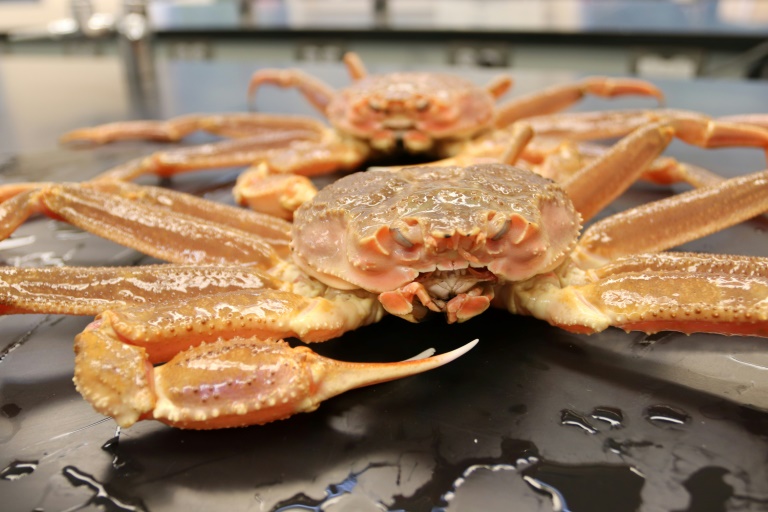
Climate change is a prime suspect in a mass die-off of Alaska’s snow crabs, experts say, after the state took the unprecedented step of canceling their harvest this season to save the species.

According to an annual survey of the Bering Sea floor carried out by the National Oceanic and Atmospheric Administration, estimates for the crustaceans’ total numbers fell to about 1.9 billion in 2022, down from 11.7 billion in 2018, or a reduction of about 84 percent.

For the first time ever, the Alaska Department of Fish and Game announced the Bering Sea snow crab season will remain closed for 2022-23, saying in a statement efforts must turn to “conservation and rebuilding given the condition of the stock.”

The species is also found in the more northward Chukchi and Beaufort Seas, but they do not grow to fishable sizes there.

Erin Fedewa, a marine biologist with the Alaska Fisheries Science Center, told AFP the shocking numbers seen today were the result of heatwaves in 2018 and 2019. 

The “cold water habitat that they need was virtually absent, which suggests that temperature is really the key culprit in this population decline,” she said.

Historically an abundant resource in the Bering Sea, their loss is considered a bellwether of ecological disruption.

There are thought to be several ways that warmer temperatures have depleted the species.

Studies have pointed toward a higher prevalence of Bitter Crab Disease as the temperature heats up. 

The crustaceans, named for their love of cold water, are also under greater metabolic stress in warmer waters, meaning they need more energy to stay alive.

“A working hypothesis right now is that the crabs starved, they couldn’t keep up with metabolic demands,” said Fedewa.

Young snow crabs in particular need low temperatures to hide out from their major predator, Pacific cod, and temperatures in regions where juveniles typically reside jumped from 1.5 degrees Celsius in 2017 to 3.5 Celsius in 2018 (35 degrees Fahrenheit to 38 degrees Fahrenheit) — with studies indicating 3C might be an important threshold.

– Overfishing not blamed –

More research is underway and findings should be published soon, but in the meantime, “everything really points to climate change,” Fedewa said.

“These are truly unprecedented and troubling times for Alaska’s iconic crab fisheries and for the hard-working fishermen and communities that depend on them,” Jamie Goen, executive director of Alaska Bering Sea Crabbers said in a statement, lamenting that second and third generation crab-fishing families “will go out of business.”

The industry was also hit by the cancellation of Bristol Bay red king crab fishing for the second year in a row.

Fedewa also noted that overfishing isn’t a big factor in the population collapse of snow crabs. 

Fishing removes only large adult males, she said, “and we’ve seen these declines across all sizes of snow crab, which really suggest some bottom-up environmental driver is at play.”

Male Alaska snow crabs can reach six inches (15 centimeters) in shell width, but females seldom grow larger than three inches, according to NOAA.

In some good news, this year’s survey saw significant increases in the immature crabs compared to last year — but it will take four or five years before the males among them grow to fishable size.

Following the heatwave years, temperatures have returned to normal, and “the hope is that leaving crabs untouched will allow them to reproduce, there’ll be no mortalities, and we can just let the stock try to recover,” said Fedewa. 

A hope that is pinned on no further heatwaves.
US confirms Saudi sentencing of American over tweets

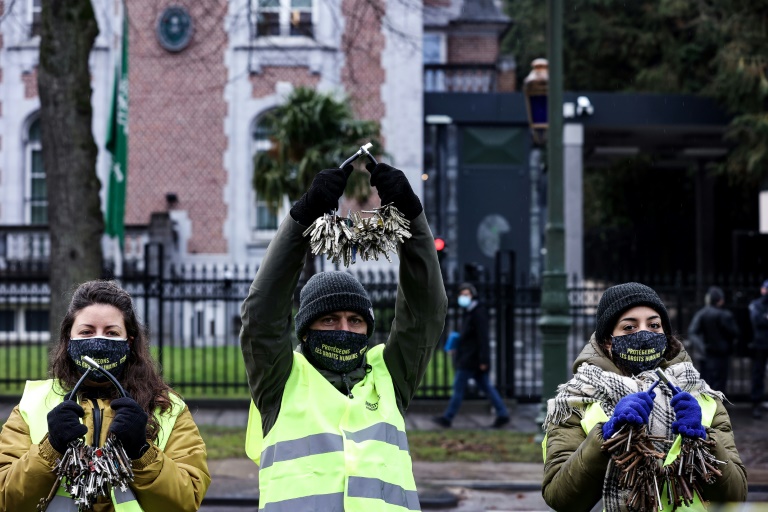
The United States said Tuesday it was raising with Saudi Arabia a prison sentence handed to a US citizen over tweets critical of the kingdom, another source of tension between the historic allies. 

The State Department confirmed the detention of Saad Ibrahim Almadi, a US citizen of Saudi origin, and said the United States brought up his case starting in December and as recently as Monday.

Almadi was sentenced to 16 years in prison for the tweets, his son Ibrahim confirmed to AFP.

“We have consistently and intensively raised our concerns regarding the case at senior levels of the Saudi government, both through channels in Riyadh and Washington,” State Department spokesman Vedant Patel told reporters.

“Exercising freedom of expression should never be criminalized,” he said.

The Washington Post reported that Almadi, who lives in Florida and had gone to visit family, was detained in November at the airport regarding 14 tweets he wrote over the previous seven years.

The newspaper, quoting the son Ibrahim, said that Almadi, who is 72, was sentenced on October 3 to 16 years in prison with a travel ban of another 16 years after that.

The son told the newspaper that his father had expressed only “mild” opinions with tweets mentioning corruption in Saudi Arabia and the killing of Jamal Khashoggi, the US-based columnist who was dismembered in 2018 after being lured into the kingdom’s Istanbul consulate.

Almadi was charged in part with supporting and funding terrorism and trying to destabilize the kingdom, said his son, who confirmed the Post’s reporting to AFP.

The State Department said no US representative was present at the sentencing as Saudi Arabia originally gave a later date for the hearing before moving it up.

“We did not hear back from the Saudi government until after the October 3 date” of the sentencing, Patel said, without confirming the details of the decision.

The death of Khashoggi, who wrote for The Washington Post, triggered outrage in Washington although then president Donald Trump boasted of saving the powerful crown prince, Mohammed Bin Salman, from major repercussions.

President Joe Biden declassified intelligence that showed that the crown prince ordered the killing and vowed to get tougher, including over Saudi Arabia’s deadly offensive in Yemen.

Biden in July nonetheless traveled to Saudi Arabia and was photographed in a fist-bump with the crown prince on a trip seen as seeking the kingdom’s help to lower gas prices by pumping more oil.

But OPEC+, led by Saudi Arabia, on October 5 announced a major cut in production just ahead of US congressional elections, outraging Biden who vowed consequences.

Saudi Arabia has long faced criticism over human rights. Blogger and rights activist Raif Badawi served 10 years in prison through March and was publicly lashed 50 times for charges over content on his website.

US confirms Saudi sentencing of American over tweets

The United States said Tuesday it was raising with Saudi Arabia a prison sentence handed to a US citizen over tweets critical of the kingdom, another source of tension between the historic allies. 

The State Department confirmed the detention of Saad Ibrahim Almadi, a US citizen of Saudi origin, and said the United States brought up his case starting in December and as recently as Monday.

Almadi was sentenced to 16 years in prison for the tweets, his son Ibrahim confirmed to AFP.

“We have consistently and intensively raised our concerns regarding the case at senior levels of the Saudi government, both through channels in Riyadh and Washington,” State Department spokesman Vedant Patel told reporters.

“Exercising freedom of expression should never be criminalized,” he said.

The Washington Post reported that Almadi, who lives in Florida and had gone to visit family, was detained in November at the airport regarding 14 tweets he wrote over the previous seven years.

The newspaper, quoting the son Ibrahim, said that Almadi, who is 72, was sentenced on October 3 to 16 years in prison with a travel ban of another 16 years after that.

The son told the newspaper that his father had expressed only “mild” opinions with tweets mentioning corruption in Saudi Arabia and the killing of Jamal Khashoggi, the US-based columnist who was dismembered in 2018 after being lured into the kingdom’s Istanbul consulate.

Almadi was charged in part with supporting and funding terrorism and trying to destabilize the kingdom, said his son, who confirmed the Post’s reporting to AFP.

The State Department said no US representative was present at the sentencing as Saudi Arabia originally gave a later date for the hearing before moving it up.

“We did not hear back from the Saudi government until after the October 3 date” of the sentencing, Patel said, without confirming the details of the decision.

The death of Khashoggi, who wrote for The Washington Post, triggered outrage in Washington although then president Donald Trump boasted of saving the powerful crown prince, Mohammed Bin Salman, from major repercussions.

President Joe Biden declassified intelligence that showed that the crown prince ordered the killing and vowed to get tougher, including over Saudi Arabia’s deadly offensive in Yemen.

Biden in July nonetheless traveled to Saudi Arabia and was photographed in a fist-bump with the crown prince on a trip seen as seeking the kingdom’s help to lower gas prices by pumping more oil.

But OPEC+, led by Saudi Arabia, on October 5 announced a major cut in production just ahead of US congressional elections, outraging Biden who vowed consequences.

Saudi Arabia has long faced criticism over human rights. Blogger and rights activist Raif Badawi served 10 years in prison through March and was publicly lashed 50 times for charges over content on his website.

United Airlines bullish on air travel despite inflation

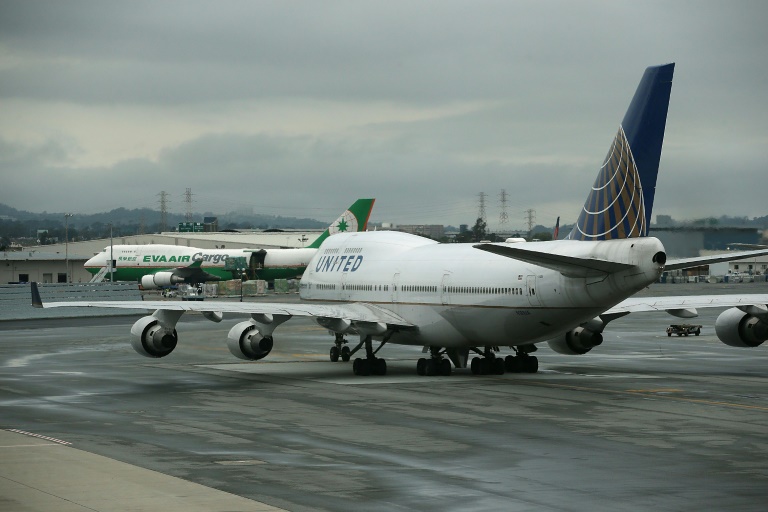
United Airlines reported strong third-quarter results Tuesday and said it does not expect inflation and other macroeconomic headwinds to derail the travel industry’s comeback.

The major US carrier improved in key revenue benchmarks compared with the comparable pre-pandemic 2019 stretch, making the period “by most metrics, the best operational quarter in our history,” as Chief Executive Officer Scott Kirby put it.

Compared with the 2019 quarter, United had about 10 percent fewer passengers and also about 10 percent lower seat capacity in the just-finished quarter.

But revenues were about 13 percent higher, thanks to lofty ticket prices in the wake of torrid consumer demand.

“Despite growing concerns about an economic slowdown, the ongoing COVID recovery trends at United continue to prevail and we remain optimistic that we’ll continue to deliver strong financial results in the fourth quarter, 2023 and beyond,” Kirby said.

Profits for the quarter ending September 30 were $942 million, about double the year-ago level, with revenues jumping 66 percent to $12.9 billion.

United pointed to three “durable” industry-wide trends that it expects to override economic headwinds: continuing pent-up travel demand after the coronavirus pandemic; the beneficial impact of hybrid work on travel demand; and “external supply challenges” that will limit industry supply.

Shares of United jumped 7.1 percent to $39.88 in after-hours trading.

London rapper Little Simz wins prestigious Mercury Prize

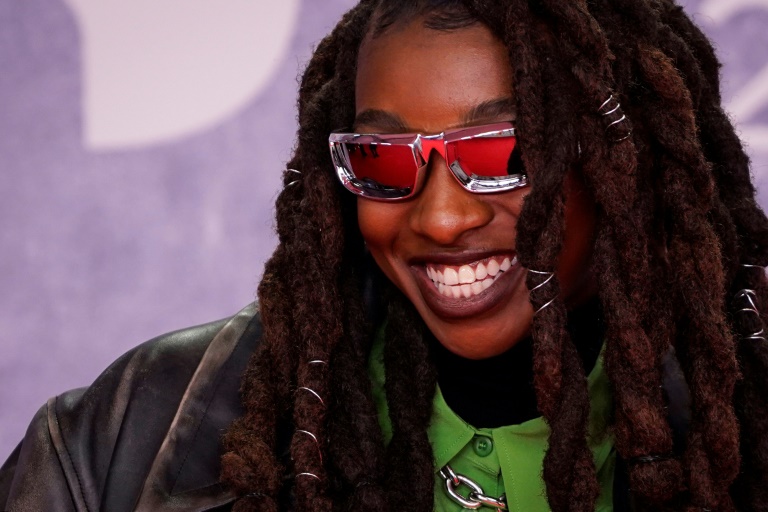
London rapper Little Simz on Tuesday won Britain’s prestigious Mercury Prize for album “Sometimes I Might Be Introvert”, beating off competition from “One Direction” singer Harry Styles, among others. 

The 28-year-old said she was “very, very overwhelmed” as she picked up the £25,000 (28,700 euros, $28,300) prize at the London ceremony, and paid tribute to her brother and collaborator Inflo.

“We created this album together, there were times in the studio I didn’t know if I was going to finish this record, I was feeling all the emotions and really going through it and he stuck by me and pushed me to deliver,” she said.

The artist, real name Simbiatu ‘Simbi’ Abisola Abiola Ajikawo, explores personal and political themes on her fourth album.

She told the Guardian outlet that the album expressed her feeling of “being this introverted person that has all these crazy thoughts and ideas and theories in my head and not always feeling like I’m able to express it if it’s not through my art”.

The award ceremony at the legendary Apollo venue in Hammersmith, west London was broadcast by the BBC, and featured performances by all of the acts, although Styles had to pre-record his.

– Critical seal of approval –

Created in 1992 as an alternative to the more mainstream Brit Awards, the prize is seen as a seal of critical approval and a springboard to wider fame.

But Styles, already a global superstar, also made the final cut for his album “Harry’s House”, the fastest-selling UK album of 2022 so far.

Brit Award winner Sam Fender was another high-profile artist on the shortlist for his second album “Seventeen Going Under”, which tackles the issue of social deprivation in his native North East England.

Recognising the best British or Irish album of the last 12 months, the Mercury has previously gone to acts like Pulp, Arctic Monkeys and PJ Harvey.

Also included in this year’s 12-artist shortlist were art pop singer Self Esteem, previously of indie band Slow Club, for her album “Prioritise Please”, a celebration of femininity.

Folk singer Gwenno, whose album “Tresor” is sung mostly in Cornish also made the list, along with indie duo Wet Leg, post-metallers Nova Twins and Scottish jazz act Fergus McCreadie.

McCreadie told BBC Radio 6 Music: “It is great to be part of that for Scottish music, to have this recognition, hopefully it can embolden musicians in Scotland.”

Guitarist Bernard Butler, who won the second ever Mercury Prize with iconic indie band Suede in 1993, reappeared on the shortlist again, this time for his collaboration with actress Jessie Buckley.

The shortlist was completed by post-punk act Yard Act, soul singer Joy Crookes and rapper Kojey Radical.

Last year’s winner was Arlo Parks, for her debut album “Collapsed In Sunbeams”.

Stock markets climb on bright US earnings and UK policy U-turns

Major global equities rose Tuesday, with sentiment boosted by upbeat US earnings and relief over the demise of the new British government’s controversial fiscal plan.

Analysts pointed to better-than-expected reports from Goldman Sachs and Johnson & Johnson as a positive driver for stocks, along with shifting investor sentiment.

On Wall Street, both the Dow and S&P 500 climbed more than one percent following a day of strong trading in Asia and Europe.

“Better-than-expected US earnings reports sparked a rally on Wall Street with positive momentum reverberating across European equities,” Interactive Investor analyst Victoria Scholar told AFP.

US industrial production also picked up more than anticipated in September, according to official data Tuesday, bouncing back after a dip in August.

But Craig Erlam, senior market analyst at OANDA, warned the upbeat investor sentiment might not last, saying there was a “strong feeling of a bear market rally about trading over the course of the last week.”

“From the post-US-inflation rebound to what has now been a strong start to the week — in part driven by the UK’s decision to no longer shoot itself in the foot — nothing about this screams sustainable.”

Companies in the S&P 500 are expected to see earnings growth of just 1.6 percent, the lowest rate in two years, according to Factset.

– UK turbulence –

Frankfurt stocks closed up one percent on Tuesday as a key survey showed German investor confidence climbed slightly in October, but remained at a low level.

London gains were muted after the Bank of England poured cold water on a newspaper report that it could delay the sale of government bonds again to help maintain market stability.

A BoE spokesperson described the Financial Times story as “inaccurate”.

The British pound retreated slightly after jumping Monday above $1.14 as the UK government sensationally ripped up its controversial debt-fuelled budget.

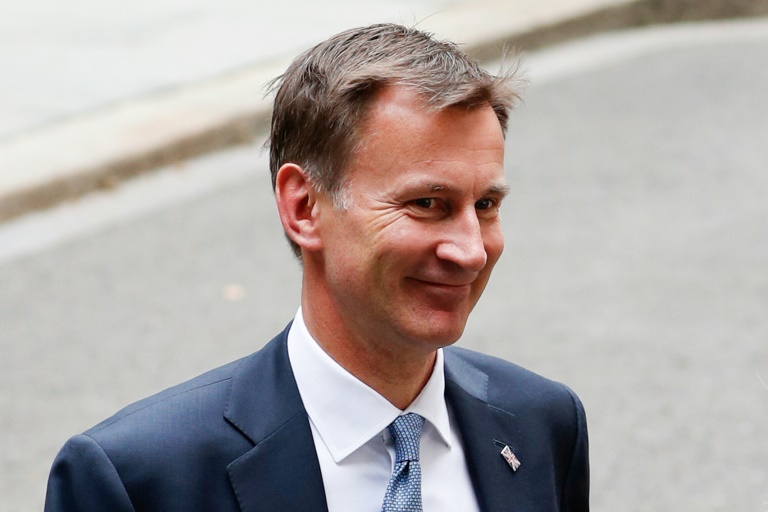
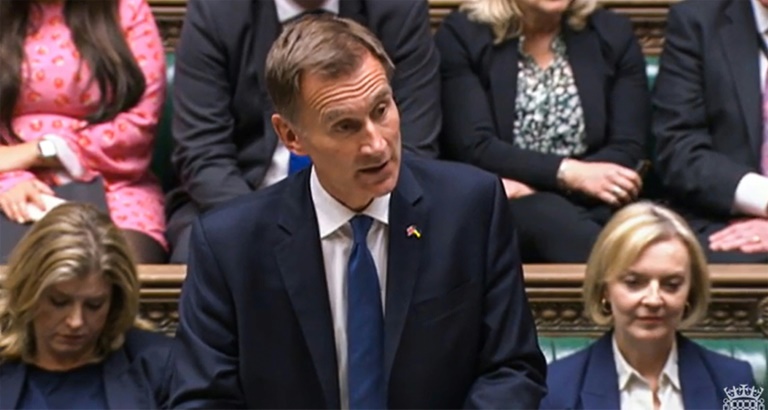
After a volatile few weeks during which the pound hit a record low, new finance minister Jeremy Hunt sought Monday to reassure investors as he scrapped tax cuts and warned of tough spending cuts.

Monday’s move, which dealt a blow to Prime Minister Liz Truss’s authority, sent sterling up as much as two percent at one point and the cost of government borrowing tumbled, while the FTSE 100 jumped.

“Investors continue to monitor the political and economic turbulence surrounding the UK,” noted XTB analyst Walid Koudmani.

Markets in China fluctuated a day after authorities delayed the release of third-quarter economic figures, which analysts said were likely to show the weakest growth since the pandemic owing to Covid-19 lockdowns.

The decision comes as the Communist Party holds a key gathering at which President Xi Jinping is expected to be handed a third term.

Oil prices slumped Tuesday in response on the expectation that the United States will draw more barrels than expected from its strategic reserves heading into the winter season.

– Key figures around 2030 GMT –

New York – Dow: UP 1.1 percent at 30,523.80 (close)

New York – S&P 500: UP 1.1 percent at 3,719.98 (close)

New York – Nasdaq: UP 0.9 percent at 10,772.40 (close)

London – FTSE 100: UP 0.2 percent at 6,936.74 (close)

Frankfurt – DAX: UP 0.9 percent at 12,765.61 (close)

Paris – CAC 40: UP 0.4 percent at 6,067.00 (close)

EURO STOXX 50: UP 0.6 percent at 3,463.83  (close)

Tokyo – Nikkei 225: UP 1.4 percent at 27,156.14 (close)

Hong Kong – Hang Seng Index: UP 1.8 percent at 16,914.58 (close)

Shanghai – Composite: DOWN 0.1 percent at 3,080.96 (close)

Pound/dollar: DOWN at $1.1332 from $1.1358 on Monday

Dollar/yen: UP at  149.21 yen from 149.04 yen

Euro/dollar: UP at $0.9862 from $0.9841 

Euro/pound: UP at 87.01 pence from 86.64 pence

Brent North Sea crude: DOWN 1.7 percent at $90.03 per barrel

West Texas Intermediate: DOWN 3.1 percent at $82.82 per barrel

burs-jmb/bgs

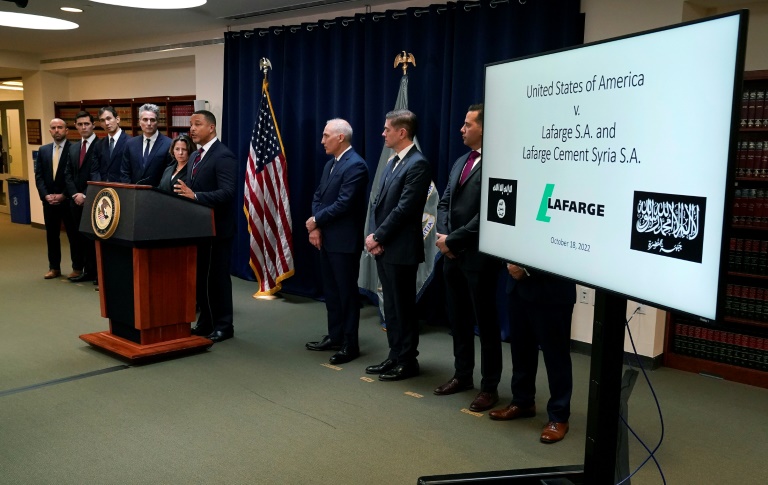
Cement giant Lafarge fined $778 mn for working with Islamic State in Syria

French cement giant Lafarge SA was slapped with a $778 million fine Tuesday for making millions in payments to the Islamic State and another jihadist group to build its business in Syria.

The US Justice Department said the company and its Syrian subsidiary actively sought the Islamic State (IS) group’s help to squeeze out competitors when the radical Islamists controlled large parts of Syria and Iraq in 2013-2014, operating an effective “revenue sharing agreement” with them.

It also paid access and protection money to associates of IS and the similarly radical Al-Nusrah Front, ultimately earning some $70 million in revenues during the period, with a Lafarge executive saying the cooperation was “to share the cake.”

Lafarge agreed to the fine and to plead guilty to one count of conspiring to provide material support to US-designated foreign terrorist organizations, the first time a corporation has faced the charge.

– ‘Unthinkable choice’ –

US officials said Lafarge, now owned by Swiss giant Holcim Group, made itself a handmaiden to terror for profits.

“In the midst of a civil war, Lafarge made the unthinkable choice to put money into the hands of ISIS, one of the world’s most barbaric terrorist organizations, so that it could continue selling cement,” US prosecutor Breon Peace said, using another acronym for IS.

“This unprecedented charge and resolution reflect the extraordinary crimes committed and demonstrates that corporations that take actions in contravention of our national security interests in violation of the law will be held to account,” Peace said.

In a statement, Lafarge said the company and its defunct subsidiary Lafarge Cement Syria “have accepted responsibility for the actions of the individual executives involved.”

“We deeply regret that this conduct occurred and have worked with the US Department of Justice to resolve this matter.”

Holcim, which took over Lafarge in 2015 without knowledge of the Syria business dealings, said it had been cleared of any wrongdoing by US authorities.

“None of the conduct involved Holcim, which has never operated in Syria, or any Lafarge operations or employees in the United States,” it said.

Holcim shares traded in Switzerland were suspended temporarily when the announcement was made but ended the day up 2.8 percent at 42.82 Swiss francs ($43.07). 

– Millions in payments –

Lafarge began operating a 680 million euro ($670 million) cement plant in  northern Syria in 2010, the year IS swept the region with a brutal campaign to establish its extremist “caliphate.”

That sparked a counter-offensive by the Iraq military and Syrian Kurdish forces backed by the US-led international coalition in the region.

The US designated IS and Al-Nusrah terror organizations, threatening tough penalties against anyone working with them.

Rather than withdraw like other companies, Lafarge kept working to market its cement, the Justice Department said.

From 2013 to 2104, it paid IS and Al-Nusrah around $5.9 million, some for raw materials, some as payments based on the volume of cement sold and some simply as monthly “donations.”

Lafarge paid another $1.1 million to intermediaries between the two groups.

It also worked out a deal with IS to make it harder for cheaper Turkish cement suppliers to sell their goods in the same area, allowing Lafarge to keep its prices higher.

– Sharing ‘the cake’ –

Company executives knew of the arrangement, the Justice Department said.

In 2014, a senior supervisory official who reported directly to Lafarge’s chief executive wrote to officials in the Syria subsidiary about negotiations with IS.

“We have to maintain the principle that we are ready to share the ‘cake,’ if there is a ‘cake,'” he wrote, defining cake as “profit.” 

Lafarge “negotiated and made unlawful payments at a time when these groups were gaining territory and brutalizing innocent civilians in Syria and elsewhere and were actively plotting against Americans,” said US Assistant Attorney General Matthew Olsen.

Lafarge still faces charges in France for complicity in crimes against humanity.

In May, a French appeals court approved the charge, opening the door for a trial of the company and eight executives, including former CEO Bruno Lafont.

Lafarge continues to fight that case, but now faces the possibility of the introduction of evidence from the US prosecution.

Unlike in the United States, it does not have the option of negotiating a settlement, which is disallowed under French anti-terrorism statutes.

Gold mining threatens 'forest giraffe' in DR Congo

Gold mining in a Democratic Republic of Congo national park is threatening the okapi, a stripy-legged relative of the giraffe, civil society groups warned on Tuesday.

They called for a halt to the “rapidly expanding” mining operation in the Okapi Wildlife Reserve, a UNESCO World Heritage Site in the northeast of the country.

The endangered okapi, also called the forest giraffe, is only found in this region of the DRC.

NGOs, lawyers and scientists urged the government to revoke a mining concession and protect the “unique forest ecosystem and the local communities that depend on it”.

“If the DRC government acts now, this unique World Heritage Site can still be saved”, they said in a statement from the Congolese Alert Network for the Environment and Human Rights (ACEDH) organisation.

“These miners are literally eating the reserve out of its wildlife by hunting these animals for food,” said Gabriel Nenungo, a coordinator of geologists in Ituri province.

“There is almost no wildlife left around the mine itself, and wildlife numbers are massively reduced around mining towns. There have even been cases of armed actors trafficking okapi skins and elephant ivory in and around the mines.”

The wildlife reserve is spread over nearly 14,000 square kilometres (5,400 square miles) and houses several endangered species.

UK PM Truss battles to stay in power after tax reforms trashed

Britain’s Liz Truss on Tuesday battled to salvage her position as prime minister, after market turmoil at her tax-slashing plans forced a series of humiliating U-turns that have put her job in jeopardy.

The beleaguered leader — only six weeks into her tenure — met senior ministers for their weekly cabinet, the day after new chancellor of the exchequer Jeremy Hunt announced almost all her debt-fuelled tax cuts would be reversed.

Truss reiterated her government “had gone too far and too fast” in its mini-budget unveiled last month, her office said, as she bids to stabilise weeks of economic and political tumult sparked by the package.

Hunt — who replaced her sacked ally Kwasi Kwarteng last Friday — urged ministers “to look at finding ways to save taxpayers’ money,” ahead of detailing the government’s revised medium-term fiscal plans on Halloween.

“The cabinet are fully supportive of the prime minister and it was an effective and in-depth discussion,” Truss’s spokesman told reporters, denying there were any calls for the embattled premier to resign.

But even Conservative MPs are publicly joining opposition lawmakers in declaring her position untenable, with the 47-year-old’s credibility seemingly in tatters.

Less than two months after electing her Tory leader, a new YouGov poll of the party’s membership found a stunning reversal in her fortunes, with a majority now saying she should go.

The pollster also found she was the most unpopular leader it has ever tracked, scoring a net favourability of -70.

“Unprecedented unpopularity,” tweeted YouGov’s Patrick English.

– Spending cuts –

The government’s September 23 mini-budget sent bond yields spiking and the pound collapsing to a record dollar-low on fears of rocketing UK debt.

Truss had already staged two embarrassing U-turns, scrapping tax cuts for the richest earners and on company profits, before then firing close friend Kwarteng.

On Monday, his replacement Hunt announced that not only would the remaining tax curbs be reversed, but a previously two-year cap on consumer energy bills would now be limited to six months.

He estimated all the changes would raise about £32 billion ($36 billion) per year, after economists estimated the government faced a £60-billion black hole. Hunt also warned of tough spending cuts.

His interventions sent the British pound soaring against the dollar and euro, while bond yields dipped.

The International Monetary Fund said in a statement Tuesday that recent announcements by UK authorities “signal commitment to fiscal discipline” and help align policies in the fight against inflation.

At its annual meetings last week, the IMF had urged London to maintain “coherent and consistent” policies.

Truss sought to draw a line under the largely self-inflicted crisis by apologising in a BBC interview Monday — but she insisted she would remain in office.

It followed a day branded farcical by critics, in which she failed to turn up to an urgent question tabled by the leader of the main Labour opposition in parliament, instead sending cabinet colleague Penny Mordaunt.

She is set to return to the House of Commons on Wednesday for a session of Prime Minister’s Questions seen as a crucial, possibly last, opportunity to reassert her authority.

– ‘Ghost PM’ –

Following Monday’s performance, The Sun tabloid branded Truss “the Ghost PM”, while left-wing tabloid The Mirror called the situation a “catastrophic humiliation”.

Even The Daily Telegraph, typically loyal to Conservatives, questioned her future. 

“It’s hard to conceive of a more serious political and economic crisis in recent times than that which Britain now faces,” its editorial said.

The paper added she faced “the ignominy” of becoming the country’s second shortest-serving prime minister in history.

Under current party rules, she cannot be challenged internally through a no-confidence vote in the first year, but speculation is rife they could be changed to allow for a ballot.

Conservative MP Roger Gale said Monday Hunt had become “de facto prime minister”, as several MPs publicly urged her to resign.

“I think her position is untenable,” Conservative MP Charles Walker told Sky News.

Armed forces minister James Heappey said Tuesday that Truss had “owned” her mistake but cautioned that she could not repeat such errors.

“Given how skittish our politics are… I don’t think that there’s the opportunity to make any more mistakes,” he told Sky News.

Cement giant Lafarge fined $778 mn for working with Islamic State in Syria

French cement giant Lafarge SA was slapped with a $778 million fine Tuesday for making millions in payments to the Islamic State and another jihadist group to build its business in Syria.

The US Justice Department said the company and its Syrian subsidiary actively sought the Islamic State (IS) group’s help to squeeze out competitors when the radical Islamists controlled large parts of Syria and Iraq in 2013-2014, operating an effective “revenue sharing agreement” with them.

It also paid access and protection money to associates of IS and the similarly radical Al-Nusrah Front, ultimately earning some $70 million in revenues during the period, with a Lafarge executive saying the cooperation was “to share the cake.”

Lafarge agreed to the fine and to plead guilty to one count of conspiring to provide material support to US-designated foreign terrorist organizations, the first time a corporation has faced the charge.

– ‘Unthinkable choice’ –

US officials said the company, now owned by Swiss giant Holcim Group, made itself a handmaiden to terror for profits.

“In the midst of a civil war, Lafarge made the unthinkable choice to put money into the hands of ISIS, one of the world’s most barbaric terrorist organizations, so that it could continue selling cement,” Justice Department prosecutor Breon Peace said, using another acronym for IS.

“This unprecedented charge and resolution reflect the extraordinary crimes committed and demonstrates that corporations that take actions in contravention of our national security interests in violation of the law will be held to account,” Peace said.

In a statement, Lafarge said the company and its defunct subsidiary Lafarge Cement Syria “have accepted responsibility for the actions of the individual executives involved.”

“We deeply regret that this conduct occurred and have worked with the US Department of Justice to resolve this matter.”

Holcim, which took over Lafarge in 2015 without knowledge of the Syria business dealings, said it had been cleared of any wrongdoing by US authorities.

“None of the conduct involved Holcim, which has never operated in Syria, or any Lafarge operations or employees in the United States,” it said in a separate statement.

– Millions in payments –

Lafarge began operating a 680 million euro ($670 million) cement plant in the Jalabiyeh region of Northern Syria in 2010, the year IS swept the region with a brutal campaign to establish its extremist “califate.”

That sparked a counter-offensive by the Iraq military and Syrian Kurdish forces backed by the US-led international coalition in the region.

The US designated IS and Al-Nusrah terror organizations, threatening tough penalties against anyone who worked with them.

Rather than withdraw like other companies, Lafarge kept working to market its cement, the Justice Department said.

From 2013 to 2104, it paid IS and Al-Nusrah around $5.9 million, some for raw materials, some as payments based on the volume of cement sold and some simply as monthly “donations,” the department said.

Lafarge paid another $1.1 million to intermediaries facilitating business with the two groups.

The firm also worked out a deal with IS to make it harder for cheaper Turkish cement suppliers to sell their goods in the same area, effectively allowing Lafarge to keep its prices higher, according to US authorities.

– Sharing ‘the cake’ –

Company executives knew of the arrangement, the Justice Department said.

In 2014, a senior supervisory official who reported directly to Lafarge’s chief executive wrote to officials in the Syria subsidiary about negotiations with IS.

“We have to maintain the principle that we are ready to share the ‘cake,’ if there is a ‘cake,'” he wrote, defining cake as “profit.” 

Lafarge “negotiated and made unlawful payments at a time when these groups were gaining territory and brutalizing innocent civilians in Syria and elsewhere and were actively plotting against Americans,” said US Assistant Attorney General Matthew Olsen in a New York press conference.

Lafarge still faces trial in France on a charge of complicity in crimes against humanity.

In May, a French appeals court approved the charge, opening the door for a trial of the company and eight executives, including former CEO Bruno Lafont.

Lafarge continues to fight that case.

Rights activists hope the case will serve as a bellwether for prosecuting multinationals accused of turning a blind eye to human rights violations as they operate in war-torn countries.

Close Bitnami banner
Bitnami