World

Protesters march in Paris as French refinery strikes continue

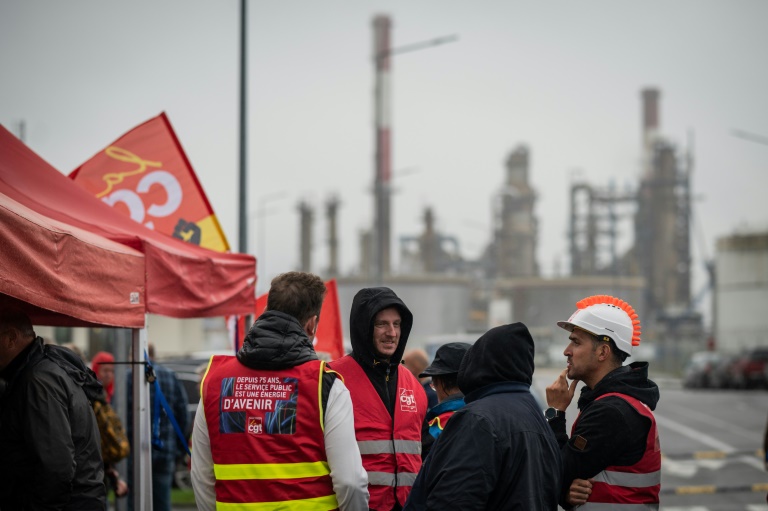
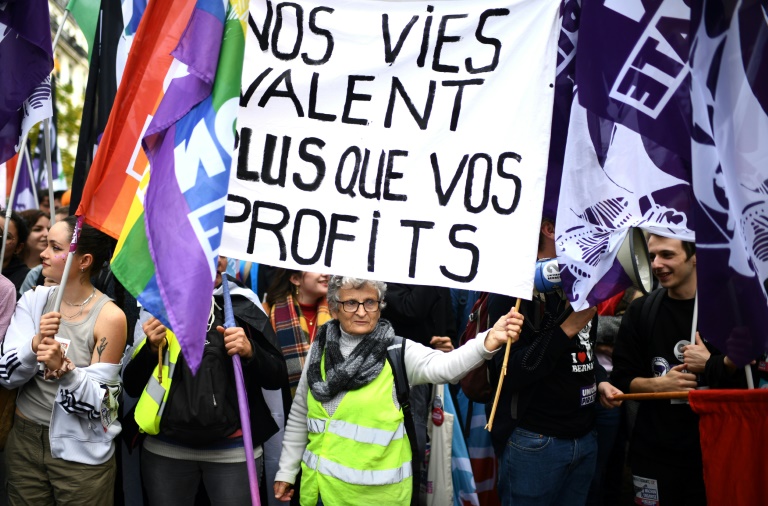
Three weeks into a refinery strike that has caused fuel shortages across the country, tens of thousands of protesters marched in Paris on Sunday, adding to a growing picture of defiance and anger about inflation.

The demonstration against the rising cost of living on Sunday was called by the left-wing political opposition and led by the head of the France Unbowed (LFI) party, Jean-Luc Melenchon.

Some protesters wore yellow florescent vests, the symbol of often violent anti-government protests in 2018 which shook the pro-business centrist government of President Emmanuel Macron.

Opponents of Macron are hoping to build on the momentum created by the refinery standoff which began at the end of September.

“We’re going to have a week the likes of which we don’t see very often,” Melenchon said Sunday while speaking on a truck in the middle of the crowd. 

“Everything is coming together. We are starting it with this march, which is an immense success.”

Several French unions, but not all, have announced a national day of strikes on Tuesday that is expected to affect road transport, trains and the public sector.  

Organisers claimed 140,000 people attended Sunday’s march against the rising cost of living and alleged government inaction against climate change. 

Police had predicted around 30,000 people would attend, and will release their own estimate later.

The strikes and protests are being closely watched by the government which is aiming to push through a highly controversial change to the pensions system in the next few months. 

Macron, who won re-election in April, has pledged to push back the retirement age from 62, with the reform scheduled before the end of the winter.

“I’m really worried,” one ruling party MP told AFP last week on condition of anonymity. “We need to find a route between the need for reforms and the fact that people are riled up and tired.” 

– ‘Unacceptable’ –

Four of France’s seven refineries — all belonging to Paris-based energy group TotalEnergies — remained blocked on Sunday.

The French company announced on Friday that it had reached a pay deal with the two largest unions representing staff at its refineries, raising hopes of an end to the standoff. 

But the hardline CGT union has refused to accept it, with its members continuing to maintain picket lines.

Budget Minister Gabriel Attal denounced the continuation of the strike on Sunday as “unacceptable”, while business lobby group Medef said “150 people” were “taking the country hostage.”

“Of course there’s a right to strike, but at some point the country needs to be able to work,” Attal told French media.

Staff at two other refineries owned by the US group Esso-ExxonMobil returned to work at the end of last week, but operations there will need at least a fortnight to return to normal, the company said.

Around a third of petrol stations across the country have supply problems, meaning drivers are often waiting hours to refuel.

Many companies have cut back on travel and deliveries, while even emergency service vehicles face shortages.

The huge profits made by energy groups due to record fuel prices have led to some sympathy for employees pushing for higher wages. 

But one poll by the BVA polling group released Friday suggested that only 37 percent of people supported the stoppages.

Sunday’s protest march through Paris was called by Melenchon’s party and is backed by its coalition allies — the Greens, Socialists and Communists.

Recent Nobel literature laureate Annie Ernaux and another 60 figures from the arts and public life had also called for people to join the march in a joint letter.

A police source said there were fears that anarchist groups would be present, which could lead to clashes that regularly mar French protests.

“The organiser has been warned of these fears,” said the official.
UK's embattled Truss told: 'The game is up'

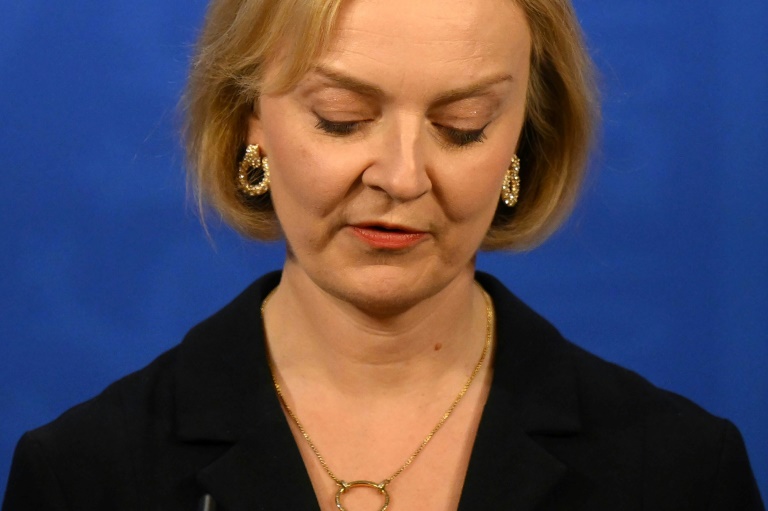
Britain’s Prime Minister Liz Truss on Sunday vied to reboot her economic programme, but Conservative critics warned the party faces electoral oblivion under her crippled leadership.

With even US President Joe Biden joining in attacks on her libertarian platform, Truss admitted it had been a “wrench” to fire her friend Kwasi Kwarteng as chancellor of the exchequer on Friday.

But writing in the Sun on Sunday newspaper, she said: “We cannot pave the way to a low-tax, high-growth economy without maintaining the confidence of the markets in our commitment to sound money.” 

That confidence was jeopardised on September 23 when Kwarteng and Truss unveiled a right-wing programme, inspired by 1980s US president Ronald Reagan, of £45 billion ($50 billion) in tax cuts financed exclusively by higher debt.

Markets tanked in response, driving up borrowing costs for millions of Britons, and the Conservatives’ poll ratings have similarly slumped, leading to open warfare in the governing party mere weeks after Truss succeeded Boris Johnson.

“I think the game is up, and it’s now a question as to how the succession is managed,” senior Tory MP Crispin Blunt said on Channel 4.

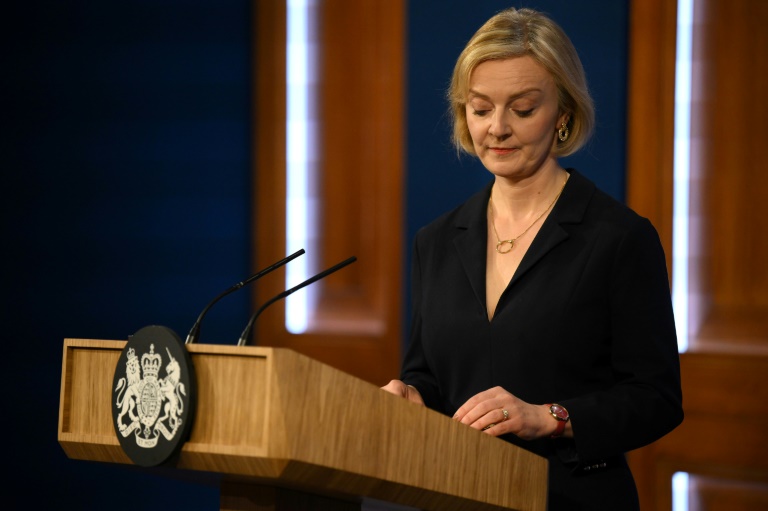
Truss has been forced into a screeching policy U-turn which cost Kwarteng his job. But she depressed the bond markets even more with a painful press conference on Friday, and the government was nervously awaiting the resumption of trading on Monday.

Bidding to placate investors, Kwarteng’s replacement Jeremy Hunt is now warning that taxes may in fact have to rise, and is pressing for spending restraint by his cabinet colleagues even as Britons endure a cost-of-living crisis.

Hunt met the prime minister at her country retreat on Sunday to thrash out a new budget plan which he is due to deliver on October 31, effectively demolishing the “Trussonomics” programme that brought her to power.

– Who’s in charge? –

“It’s going to be very, very difficult, and I think we have to be honest with people about that,” Hunt told the BBC — prompting a warning from trade unions of concerted strike action if he enforces painful cuts.

Hunt said he was “not taking anything off the table”, but also defended Truss.

“She’s been willing to do that most difficult of things in politics, and that is to change tack,” he said, adding: “The prime minister’s in charge.” 

But many questioned that verdict. “Truss has become a pointless prime minister — an empty vessel with no policies or power,” the Sunday Times editorialised.

The Treasury declined to confirm reports that Hunt plans to delay a planned cut to the basic rate of income tax, removing yet another headline measure announced by the new government last month.

Up to 100 letters expressing no confidence in Truss have been submitted by Tory MPs, the Sunday Times and Sunday Express said.

Opponents were said to be coalescing around Truss’s defeated leadership rival Rishi Sunak and another one-time foe, Penny Mordaunt, for a possible “unity ticket” to rebuild the stricken Tories.

Defence Secretary Ben Wallace could be another compromise candidate for leader, the Sunday Mirror reported.

– ‘Libertarian jihadists’ –

Tory MP Robert Halfon, who supported Sunak, likened Truss and Kwarteng to “libertarian jihadists” who had indulged in “ultra free-market experiments”.

“Of course, colleagues are unhappy with what is going on, with haemorrhaging in the opinion polls,” he told Sky News. “It’s inevitable that colleagues are… talking to see what can be done about it.”

Fellow Tory Alicia Kearns, newly elected as chair of the powerful foreign affairs committee in the House of Commons, also questioned Truss’s prospects for survival.

“We’ve had questions around our moral competency (under Johnson),” she told Times Radio. “We’ve now got questions around our fiscal competency.”

But Johnson loyalists — still seething at Sunak’s perceived disloyalty towards the scandal-tainted former leader — warned against a coronation that cuts out Tory grassroots members.

Any new leader would face strong pressure to call an early general election, and the opposition Labour party has streaked far ahead in the polls.

Justin Welby, the Archbishop of Canterbury, echoed Biden’s critique of Truss’s “trickle-down” economics.

In an interview with the Guardian newspaper, the spiritual head of the Anglican Church said he was “deeply sceptical” that tax cuts for the rich would benefit anyone else.

UK's embattled Truss told: 'The game is up'

Britain’s Prime Minister Liz Truss on Sunday vied to reboot her economic programme, but Conservative critics warned the party faces electoral oblivion under her crippled leadership.

With even US President Joe Biden joining in attacks on her libertarian platform, Truss admitted it had been a “wrench” to fire her friend Kwasi Kwarteng as chancellor of the exchequer on Friday.

But writing in the Sun on Sunday newspaper, she said: “We cannot pave the way to a low-tax, high-growth economy without maintaining the confidence of the markets in our commitment to sound money.” 

That confidence was jeopardised on September 23 when Kwarteng and Truss unveiled a right-wing programme, inspired by 1980s US president Ronald Reagan, of £45 billion ($50 billion) in tax cuts financed exclusively by higher debt.

Markets tanked in response, driving up borrowing costs for millions of Britons, and the Conservatives’ poll ratings have similarly slumped, leading to open warfare in the governing party mere weeks after Truss succeeded Boris Johnson.

“I think the game is up, and it’s now a question as to how the succession is managed,” senior Tory MP Crispin Blunt said on Channel 4.

Truss has been forced into a screeching policy U-turn which cost Kwarteng his job. But she depressed the bond markets even more with a painful press conference on Friday, and the government was nervously awaiting the resumption of trading on Monday.

Bidding to placate investors, Kwarteng’s replacement Jeremy Hunt is now warning that taxes may in fact have to rise, and is pressing for spending restraint by his cabinet colleagues even as Britons endure a cost-of-living crisis.

Hunt met the prime minister at her country retreat on Sunday to thrash out a new budget plan which he is due to deliver on October 31, effectively demolishing the “Trussonomics” programme that brought her to power.

– Who’s in charge? –

“It’s going to be very, very difficult, and I think we have to be honest with people about that,” Hunt told the BBC — prompting a warning from trade unions of concerted strike action if he enforces painful cuts.

Hunt said he was “not taking anything off the table”, but also defended Truss.

“She’s been willing to do that most difficult of things in politics, and that is to change tack,” he said, adding: “The prime minister’s in charge.” 

But many questioned that verdict. “Truss has become a pointless prime minister — an empty vessel with no policies or power,” the Sunday Times editorialised.

The Treasury declined to confirm reports that Hunt plans to delay a planned cut to the basic rate of income tax, removing yet another headline measure announced by the new government last month.

Up to 100 letters expressing no confidence in Truss have been submitted by Tory MPs, the Sunday Times and Sunday Express said.

Opponents were said to be coalescing around Truss’s defeated leadership rival Rishi Sunak and another one-time foe, Penny Mordaunt, for a possible “unity ticket” to rebuild the stricken Tories.

Defence Secretary Ben Wallace could be another compromise candidate for leader, the Sunday Mirror reported.

– ‘Libertarian jihadists’ –

Tory MP Robert Halfon, who supported Sunak, likened Truss and Kwarteng to “libertarian jihadists” who had indulged in “ultra free-market experiments”.

“Of course, colleagues are unhappy with what is going on, with haemorrhaging in the opinion polls,” he told Sky News. “It’s inevitable that colleagues are… talking to see what can be done about it.”

Fellow Tory Alicia Kearns, newly elected as chair of the powerful foreign affairs committee in the House of Commons, also questioned Truss’s prospects for survival.

“We’ve had questions around our moral competency (under Johnson),” she told Times Radio. “We’ve now got questions around our fiscal competency.”

But Johnson loyalists — still seething at Sunak’s perceived disloyalty towards the scandal-tainted former leader — warned against a coronation that cuts out Tory grassroots members.

Any new leader would face strong pressure to call an early general election, and the opposition Labour party has streaked far ahead in the polls.

Justin Welby, the Archbishop of Canterbury, echoed Biden’s critique of Truss’s “trickle-down” economics.

In an interview with the Guardian newspaper, the spiritual head of the Anglican Church said he was “deeply sceptical” that tax cuts for the rich would benefit anyone else.

'They were all young': Turkish village mourns miners killed in blast

Sitting on the stairs of his house overlooking the Black Sea, the father of a dead miner accepts condolences from relatives and neighbours. His scarred Turkish village lost three of its young men in this Friday’s mining disaster.

Three out of 41 miners killed in the coal mine explosion in the town of Amasra on Friday were from Ahatlar, a village on its outskirts, where funeral services were held on Sunday. 

“My son is gone. I am falling apart, this is ruining me,” said grieving Kemal Yildirim, father of Saban, who was in his early 20s when he died.

“Friends gave me the sad news. We hurried to the pit on Friday. He was one of the last remaining ones to be pulled out at 7 am the next day,” he said. 

The young miner’s pregnant wife is expecting twins. He was employed by the state-owned Turkish Hard Coal Enterprises’ mine in 2019 after graduating from university. 

A relative hung flags outside the house. Shoes piled up on the doormat, and women covering their heads with scarves packed into a room, while men waited under a blue canvas outside, protected from the rain. 

Hundreds of people from neighbouring villages also gathered outside the house as an imam led the funeral service. Saban’s wife hugged the coffin, which was covered with a Turkish flag.

“Take me, not him,” said the grieving father, so moved he could barely breathe.

Officials said 28 miners were wounded and 58 survived following the blast, which according to preliminary findings was caused by firedamp — a term referring to a build-up of methane gas. 

-‘Gas smell’-

Saban had told his wife “the mine had been smelling of gas inside for 10 days,” his father said. “He was going to take an annual vacation.”

“His dream was to raise his children. I am devastated,” he said.

The sister of another miner killed in the explosion said he too had smelt gas.

Her brief exchange with President Recep Tayyip Erdogan on Saturday was caught by cameras.

Erdogan attended funerals in nearby villages after arriving at the mine together with ministers and rescuers. 

In the village of Makaraci, which lost four men, a tearful sister told Erdogan: “President, my brother knew, he said there was a gas leak 10, 15 days ago. He said ‘they will explode us soon’. How come it’s negligence? He said ‘they will explode us here’… He knew it”. 

Erdogan, after a moment of silence, was heard answering: “Sorry for your loss, may Allah give patience.”

– ‘Mine martyrs’ –

The government has described the dead as “mine martyrs”. 

Mevlut Ozgun, a relative of the Yildirim family, said the three from Ahatlar were “all young sons”.

“They had been miners for only three or four years,” he told AFP outside the house. 

“It’s dangerous, causes diseases in the future but what could have they done? That was how they (made) their living.” 

Erdogan sparked controversy on Saturday when he linked the killings to destiny. 

“We are people who believe in the plan of destiny,” he told reporters, surrounded by rescue workers. Such accidents “will always be, we need to know that too.”

His comments sparked anger among his opponents, and triggered protests in Istanbul with a few demonstrators saying “it was not an accident but a massacre”. 

Opposition leader Kemal Kilicdaroglu, who also attended funerals in Amasra, said the state was obliged to ensure the safety of its people. 

“In which century we are living? Why (do) the mine accidents happen only in Turkey?” he said.

Emin Koramaz, who leads the Union of Chambers of Turkish Engineers and Architects, said on Twitter: “If you send miners hundreds of metres underground without taking the necessary precautions, without inspection and without creating safe conditions, you cannot call it an accident”.

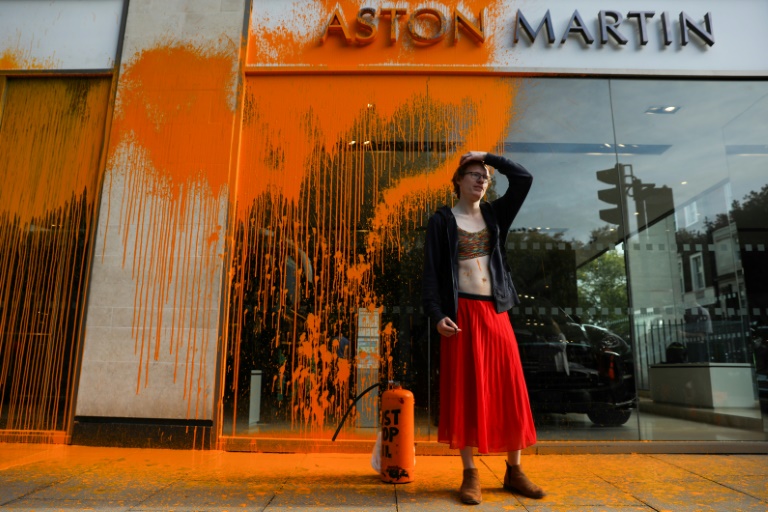
Aston Martin showroom hit as UK vows action on climate protests

Climate activists on Sunday sprayed orange paint over an Aston Martin showroom in central London, as the government vowed new powers for police to halt an intensifying wave of “direct action” protests.

Members of the group Just Stop Oil also staged a sit-in protest on Park Lane where the sports carmaker’s store is located in an exclusive area of the British capital.

The action came after two Just Stop Oil activists hurled tomato soup over one of Vincent van Gogh’s “Sunflowers” paintings at London’s National Gallery on Friday.

Another spray-painting protest by the same group on Friday targeted the headquarters of London’s Metropolitan Police, who arrested 28 demonstrators.

Then on Saturday, Animal Rebellion protesters poured milk onto shop floors and displays at high-end retailers across Britain including Harrods in London, demanding the world end cattle farming.

Home Secretary Suella Braverman said she was introducing stronger legislation this week to counter citizen protests by groups such as Just Stop Oil and Extinction Rebellion.

Under the plan, the government would be able to apply for legal injunctions to outlaw such protests ahead of time, and make it easier for police to protect “essential” goods, services and infrastructure.

“I will not bend to protestors attempting to hold the British public to ransom,” the hardline Braverman said in a statement.

“This serious and dangerous disruption, let alone the vandalism, is not a freedom of expression, nor a human right. It must stop.” 

But outside the Aston Martin showroom, 19-year-old pregnant mother Chloe Thomas said she was fighting to protect the next generations of humanity.

“How do I explain to my daughter in the years to come where the animals went, where the culture went, where the beauty went, why there are no bees and why I can’t put food in her tummy?” she said.

Just Stop Oil has stepped up its campaign since the new UK government of Prime Minister Liz Truss vowed to allow new drilling for offshore fossil fuels, to counter a surge in energy prices triggered by Russia’s war in Ukraine.

UK's Truss struggles to salvage premiership

Britain’s Prime Minister Liz Truss insisted on her commitment to economic discipline but Conservative critics stepped up warnings Sunday that the party faces electoral oblivion under her crippled leadership.

With even US President Joe Biden joining in attacks on her libertarian platform, Truss admitted it had been a “wrench” to fire her friend Kwasi Kwarteng as chancellor of the exchequer on Friday.

But writing in the Sun on Sunday newspaper, she said: “We cannot pave the way to a low-tax, high-growth economy without maintaining the confidence of the markets in our commitment to sound money.” 

That confidence was jeopardised on September 23 when Kwarteng and Truss unveiled a right-wing programme, inspired by 1980s US president Ronald Reagan, of £45 billion ($50 billion) in tax cuts financed exclusively by higher debt.

Markets tanked in response, driving up borrowing costs for millions of Britons, and the Conservatives’ poll ratings have similarly slumped, leading to open warfare in the governing party mere weeks after Truss succeeded Boris Johnson.

She has been forced into a screeching policy U-turn, but depressed the markets even more with a painful press conference on Friday.

Kwarteng’s replacement Jeremy Hunt is now warning that taxes may in fact have to rise, while pressing for spending restraint by his cabinet colleagues even as Britons endure a cost-of-living crisis.

The new chancellor met Truss at the prime minister’s country retreat on Sunday to thrash out a new budget plan which he is due to deliver on October 31, effectively demolishing the programme that brought her to power.

“It’s going to be very, very difficult, and I think we have to be honest with people about that,” Hunt said in a BBC television interview — prompting a warning from trade unions of concerted strike action if he enforces painful cuts.

– Who’s in charge? –

Hunt defended Truss. “She’s been willing to do that most difficult of things in politics, and that is to change tack,” he said, adding: “The prime minister’s in charge.” 

But many questioned that verdict. “Truss has become a pointless prime minister — an empty vessel with no policies or power,” the Sunday Times editorialised.

The Treasury declined to confirm reports that Hunt plans to delay a planned cut to the basic rate of income tax, removing yet another headline measure announced by the new government last month.

Up to 100 letters expressing no confidence in Truss have been submitted by Tory MPs, the Sunday Times and Sunday Express said.

Opponents were said to be coalescing around Truss’s defeated leadership rival Rishi Sunak and another one-time foe, Penny Mordaunt, for a possible “unity ticket” to rebuild the stricken Tories.

Defence Secretary Ben Wallace could be another compromise candidate for leader, the Sunday Mirror reported.

– ‘Libertarian jihadists’ –

“I worry that over the past few weeks, the government has looked like libertarian jihadists and treated the whole country as kind of laboratory mice in which to carry out ultra, ultra free-market experiments,” Tory MP Robert Halfon, who supported Sunak, told Sky News.

“Of course, colleagues are unhappy with what is going on, with haemorrhaging in the opinion polls,” he said. “It’s inevitable that colleagues are… talking to see what can be done about it.”

Fellow Tory Alicia Kearns, newly elected as chair of the powerful foreign affairs committee in the House of Commons, also questioned Truss’s prospects for survival.

“It’s a very difficult one,” she told Times Radio. “We’ve had questions around our moral competency (under Johnson). We’ve now got questions around our fiscal competency.”

But Johnson loyalists — still seething at Sunak’s perceived disloyalty towards the scandal-tainted former leader — warned against a coronation that cuts out Tory grassroots members.

Any new leader would face strong pressure to call an early general election, and the opposition Labour party has streaked far ahead in the polls.

The coming week could be key for Truss, starting with the first reactions on bond and currency markets when trading resumes Monday, and as her restive members of parliament reconvene in Westminster.

Hunt at least has won important endorsement for his fiscal approach from Bank of England governor Andrew Bailey, who had to stage costly interventions to calm the bond markets leading up to Friday.

UK's Truss struggles to salvage premiership

Britain’s Prime Minister Liz Truss insisted on her commitment to economic discipline but Conservative critics stepped up warnings Sunday that the party faces electoral oblivion under her crippled leadership.

With even US President Joe Biden joining in attacks on her libertarian platform, Truss admitted it had been a “wrench” to fire her friend Kwasi Kwarteng as chancellor of the exchequer on Friday.

But writing in the Sun on Sunday newspaper, she said: “We cannot pave the way to a low-tax, high-growth economy without maintaining the confidence of the markets in our commitment to sound money.” 

That confidence was jeopardised on September 23 when Kwarteng and Truss unveiled a right-wing programme, inspired by 1980s US president Ronald Reagan, of £45 billion ($50 billion) in tax cuts financed exclusively by higher debt.

Markets tanked in response, driving up borrowing costs for millions of Britons, and the Conservatives’ poll ratings have similarly slumped, leading to open warfare in the governing party mere weeks after Truss succeeded Boris Johnson.

She has been forced into a screeching policy U-turn, but depressed the markets even more with a painful press conference on Friday.

Kwarteng’s replacement Jeremy Hunt is now warning that taxes may in fact have to rise, while pressing for spending restraint by his cabinet colleagues even as Britons endure a cost-of-living crisis.

The new chancellor met Truss at the prime minister’s country retreat on Sunday to thrash out a new budget plan which he is due to deliver on October 31, effectively demolishing the programme that brought her to power.

“It’s going to be very, very difficult, and I think we have to be honest with people about that,” Hunt said in a BBC television interview — prompting a warning from trade unions of concerted strike action if he enforces painful cuts.

– Who’s in charge? –

Hunt defended Truss. “She’s been willing to do that most difficult of things in politics, and that is to change tack,” he said, adding: “The prime minister’s in charge.” 

But many questioned that verdict. “Truss has become a pointless prime minister — an empty vessel with no policies or power,” the Sunday Times editorialised.

The Treasury declined to confirm reports that Hunt plans to delay a planned cut to the basic rate of income tax, removing yet another headline measure announced by the new government last month.

Up to 100 letters expressing no confidence in Truss have been submitted by Tory MPs, the Sunday Times and Sunday Express said.

Opponents were said to be coalescing around Truss’s defeated leadership rival Rishi Sunak and another one-time foe, Penny Mordaunt, for a possible “unity ticket” to rebuild the stricken Tories.

Defence Secretary Ben Wallace could be another compromise candidate for leader, the Sunday Mirror reported.

– ‘Libertarian jihadists’ –

“I worry that over the past few weeks, the government has looked like libertarian jihadists and treated the whole country as kind of laboratory mice in which to carry out ultra, ultra free-market experiments,” Tory MP Robert Halfon, who supported Sunak, told Sky News.

“Of course, colleagues are unhappy with what is going on, with haemorrhaging in the opinion polls,” he said. “It’s inevitable that colleagues are… talking to see what can be done about it.”

Fellow Tory Alicia Kearns, newly elected as chair of the powerful foreign affairs committee in the House of Commons, also questioned Truss’s prospects for survival.

“It’s a very difficult one,” she told Times Radio. “We’ve had questions around our moral competency (under Johnson). We’ve now got questions around our fiscal competency.”

But Johnson loyalists — still seething at Sunak’s perceived disloyalty towards the scandal-tainted former leader — warned against a coronation that cuts out Tory grassroots members.

Any new leader would face strong pressure to call an early general election, and the opposition Labour party has streaked far ahead in the polls.

The coming week could be key for Truss, starting with the first reactions on bond and currency markets when trading resumes Monday, and as her restive members of parliament reconvene in Westminster.

Hunt at least has won important endorsement for his fiscal approach from Bank of England governor Andrew Bailey, who had to stage costly interventions to calm the bond markets leading up to Friday.

AU calls on Ethiopia rivals to 'recommit' to peace

The African Union on Sunday called on the warring parties in Ethiopia’s conflict to “recommit” to peace talks, as violence intensifies in the embattled Tigray region. 

The city of Shire in northwest Tigray has been bombarded for several days in a joint offensive by Ethiopian and Eritrean troops, with civilian casualties reported in the push against rebels from the war-torn region.

The International Rescue Committee, an aid organisation delivering relief to stricken Tigray, announced on Saturday that one of its staff was among three civilians killed in an attack in Shire.

UN chief Antonio Guterres has joined the United States and other Western powers in expressing grave concern over the worsening violence and its impact on civilians, and called on both sides to negotiate peace.

Prime Minister Abiy Ahmed’s government, and the Tigrayan authorities, have accepted an AU invitation to talk, but negotiations scheduled to start last weekend in South Africa failed to take place.

AU Commission chair Moussa Faki Mahamat said the escalating violence was of “grave concern”.

“The Chairperson urges the Parties to recommit to dialogue as per their agreement to direct talks to be convened in South Africa by a high-level team led by the AU High Representative for the Horn of Africa, and supported by the international community,” he said in a statement issued on Sunday, but dated Saturday.

Talks were to be mediated by the bloc’s Horn of Africa envoy Olusegun Obasanjo, South Africa’s former deputy president Phumzile Mlambo-Ngcuka and former Kenyan president Uhuru Kenyatta. 

Diplomats suggested logistical issues were partly to blame for the much-anticipated meeting not going ahead.

The latest fighting came as US special envoy Mike Hammer arrived in Addis Ababa to push for an end to nearly two years of war between Ethiopia, its allies, and rebels led by the Tigray People’s Liberation Front (TPLF).

Fighting resumed in August after a five-month lull, dimming hopes of settling a conflict that has killed untold numbers of civilians, and been marked by atrocities by all sides.

The return to war also halted desperately-needed aid into Tigray, where the UN says millions of people have been forced from their homes, and hundreds of thousands are close to famine.

The conflict erupted in November 2020 when Abiy — a Nobel Peace Prize winner — sent troops to topple the TPLF, the ruling party in Tigray he accused of staging attacks on army camps.

The TPLF dominated Ethiopia’s ruling coalition for decades before Abiy came to power in 2018.

Pope urges UN reform after Ukraine war, Covid 'limits'

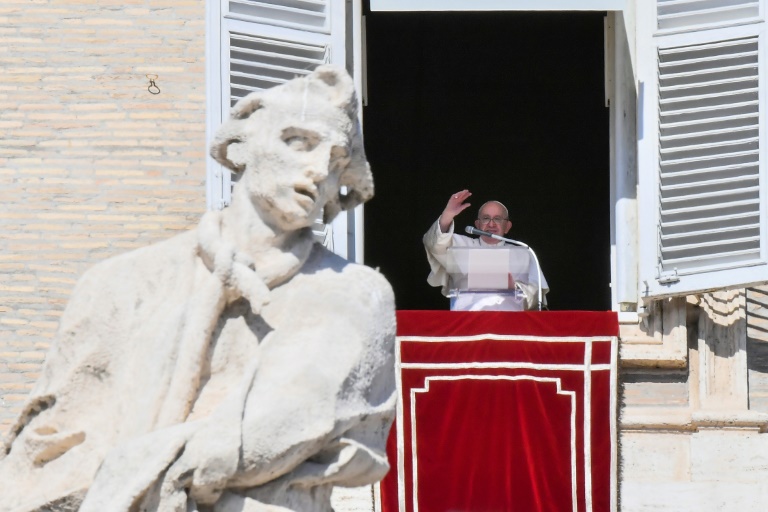
Pope Francis said the need to reform the United Nations was “more than obvious” after the Covid-19 pandemic and the Ukraine war exposed its limits, in an extract of his new book published Sunday.

The Argentine pontiff said Russia’s February invasion of Ukraine highlighted the need to ensure the current multilateral structure — especially the UN Security Council — finds “more agile and effective ways of resolving conflicts”.

“In wartime, it is essential to affirm that we need more multilateralism and a better multilateralism,” but the UN is no longer fit for “new realities”, he added in an extract published by La Stampa daily.

The organisation was founded to prevent the horrors of two World Wars from happening again, but although the threat represented by those conflicts was still alive, “today’s world is no longer the same”, said Francis.

“The necessity of these reforms became more than obvious after the pandemic” when the current multilateral system “showed all its limits”, he added.

Francis denounced the unequal distribution of vaccines as a “glaring example” of the law of the strongest prevailing over solidarity.

The 85-year-old advocated “organic reforms” aimed at allowing international organisations to rediscover their essential purpose of “serving the human family” and said international institutions must be the result of the “widest possible consensus”.

The pope also proposed guaranteeing food, health, economic and social rights on which international institutions would base their decisions.

Francis’s new book, “I ask you in the name of God: Ten prayers for a future of hope”, is due to come out in Italy Tuesday.

Protesters set to march in Paris as French refinery strikes continue

Three weeks into a refinery strike that has caused fuel shortages across the country, thousands of protesters are set to march in Paris on Sunday, adding to a growing picture of defiance and anger about inflation.

The demonstration on Sunday has been called by left-wing political parties, backed by hundreds of associations, which are seeking to build on the momentum created by the refinery standoff.

“You can see that this movement is starting to spread,” the parliamentary head of the left-wing France Unbowed party, Mathilde Panot, told franceinfo radio.

“You can see it in the nuclear sector. Truck drivers have announced a stoppage on Tuesday, and lots of other sectors are starting to join them,” she added.

Several French unions, but not all, have announced a national day of strikes on Tuesday that is expected to affect road transport, trains and the public sector.  

French energy giant TotalEnergies said last Friday that it had reached a pay deal with the two largest unions representing staff at its four refineries, raising hopes of an end to the standoff. 

But the famously militant CGT union has refused to accept it, with its members continuing to maintain picket lines.

– ‘Unacceptable’ –

Budget Minister Gabriel Attal denounced the continuation of the strike on Sunday as “unacceptable”.

“Of course there’s a right to strike, but at some point the country needs to be able to work,” he told French media.

Staff at two other refineries owned by the US group Esso-ExxonMobil returned to work at the end of last week, but operations there will need two-to-three weeks to return to normal, the company said.

Around a third of petrol stations around the country have supply problems, particularly those around Paris and in the north, meaning drivers are often waiting hours to re-fuel.

Many companies have cut back on travel and deliveries, while even emergency service vehicles are facing supply problems.

Last week, the government invoked emergency powers to compel some striking fuel depot workers to return to their jobs in order to release fuel stocks stuck inside blockaded facilities.

This incensed the CGT, which said the move was evidence of the “dictatorship” of French President Emmanuel Macron.

The huge profits by energy groups due to record fuel prices has led to some sympathy for employees pushing for higher wages. 

But one poll by the BVA polling group released Friday, suggested that only 37 percent of people supported the stoppages.

– Pension reform –

Sunday’s protest march through Paris was called by France Unbowed party and is backed by its coalition allies — the Greens, Socialists and Communists.

Recently named Nobel literature prize winner Annie Ernaux and another 60 figures from the arts and public life also called for people to join the march in a joint letter last week.

The main objective is to draw attention to the plight of workers struggling with higher costs — French inflation is around 6.0 percent — as well as denounce inaction on climate change. 

Police are expecting around 30,000 people to attend, with one source saying they feared problems from anarchist groups which regularly clash with security forces on the sidelines of French protests.

“The organiser has been warned of these fears,” said the official.
The scale of the protests and strikes in the coming months could have an impact on the government’s ability to push through a highly controversial change to the pensions system. 

Macron, who won re-election in April, has pledged to push back the retirement age from 62 to bring France into line with its European peers.

But the idea is fiercely opposed by trade unions and leftwing parties. 

Close Bitnami banner
Bitnami