World

Paris police ready for living costs protest as fuel strike drags on

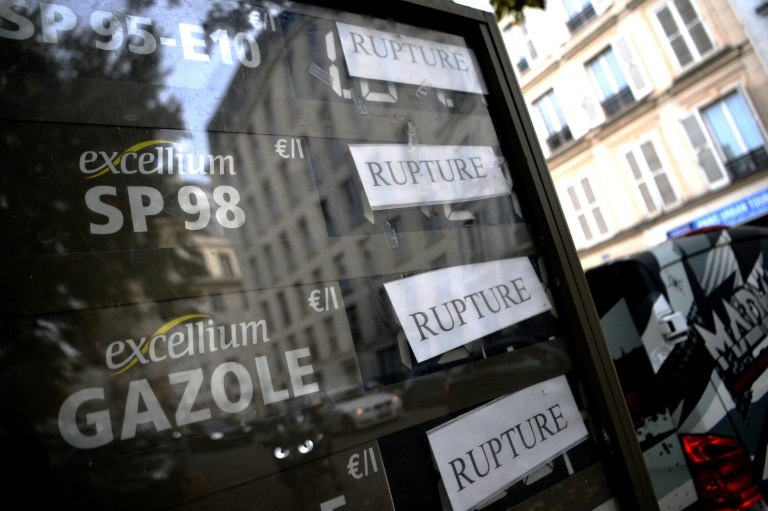
Nearly three weeks into a strike that has forced filling stations across France to close, police in Paris were preparing for protests Sunday against soaring living costs.

Left-wing opponents of President Emmanuel Macron’s administration have organised the demonstration, which they say is also in protest against government inaction over climate change.

Jean-Luc Melenchon, leader of the left-wing France Unbowed (LFI) party, had planned the march well before the current strike, but organisers are hoping to pick up some of the momentum from the current industrial unrest.

“The rise in prices is unbearable,” LFI deputy Manon Aubry said. “It is the greatest loss of purchasing power in 40 years.”

It is time the billions that the big companies were reaping in profits were passed down to those struggling to make ends meet, she added.

Police are expecting around 30,000 people to attend, with one source saying they feared problems from hard-left troublemakers. “The organiser has been warned of these fears,” said the official.

– More protests –

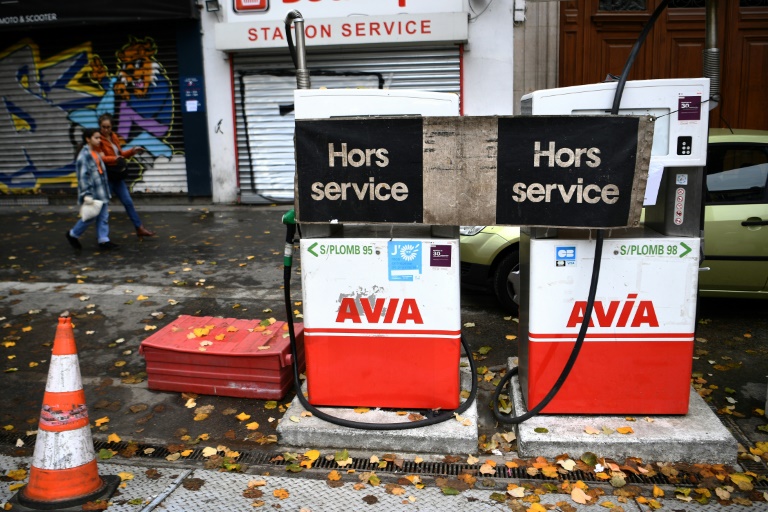
The dispute at French refineries and fuel depots has forced many filling stations to close and had a knock-on effect across all sectors of the economy.

According to government figures issued Saturday to French broadcaster BFMTV, 27.3 percent of filling stations were short of at least one product: in the Paris region, that rose to 39.9 percent.

Four of France’s seven refineries and one fuel depot are still out of action after striking members of the hard-left CGT union rejected a pay offer from the hydrocarbon industry leader that other unions accepted.

They are furious that Macron’s government used requisitioning powers this week to force some strikers back to open fuel depots, a move that has so far been upheld by the courts.

But the union risks stoking resentment in a country where three-quarters of workers rely on personal vehicles for their jobs. One poll by BVA released Friday, suggested that public support for the strike was at just 37 percent.

The CGT is pushing for a 10-percent pay rise for staff at TotalEnergies, backdated to the beginning of the year.

It argues the French group can more than afford it, citing TotalEnergies’ net profit of $5.7 billion in the April-June period as energy prices soared with the war in Ukraine, and its payout of billions of euros in dividends to shareholders.

The union has extended its strike action, which started on September 26, up to Tuesday, when it has also called a broader strike involving public transport nationwide.

The CGT walked out of talks with the French group last week, even as other unions representing a majority of workers accepted a deal for a smaller pay hike.

Prime Minister Elisabeth Borne is due to appear on primetime television Sunday evening to discuss the petrol shortage.

China will 'never commit to abandoning the use of force' on Taiwan: Xi

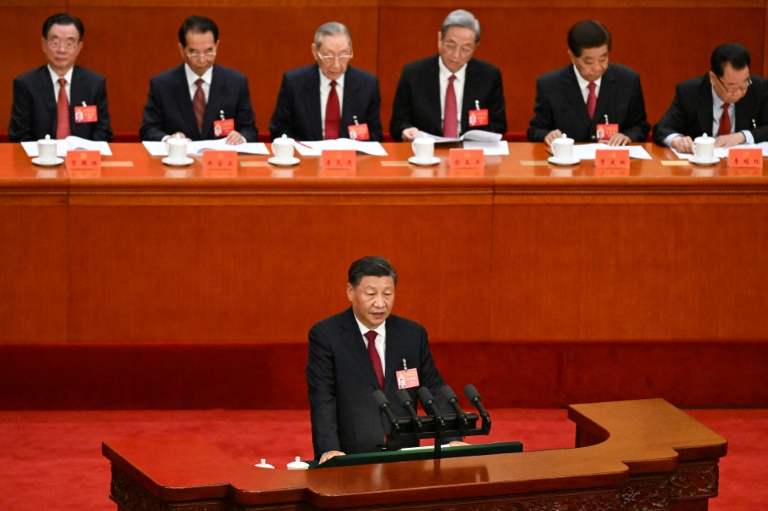
President Xi Jinping on Sunday vowed China would “never commit to abandoning the use of force” when it comes to the issue of Taiwan, in a speech marking the beginning of the Communist Party Congress in Beijing. 

“Resolving the Taiwan issue is a matter for Chinese people themselves, and must be resolved by Chinese people alone. We will adhere to striving for the prospect of a peaceful reunification with the greatest sincerity and greatest efforts, but will never commit to abandoning the use of force, and reserve the option to take all necessary measures,” Xi told Communist Party delegates at Beijing’s Great Hall of the People. 

China sees self-ruled, democratic Taiwan as part of its territory, to be reclaimed one day by military intervention if necessary. 

“The historical wheels of national reunification and national rejuvenation are rolling forward,” Xi added. “Reunification of the motherland must be achieved and will be achieved.”

Xi condemned “separatism and interference” on the matter.  

He also hailed Hong Kong’s transition from “chaos to governance”, after the imposition of a national security law in 2020 that has quashed dissent in the once outspoken city. 

“The situation in Hong Kong has achieved a major transition from chaos to governance,” he said. 

New UK finance minister tears up tottering PM's agenda

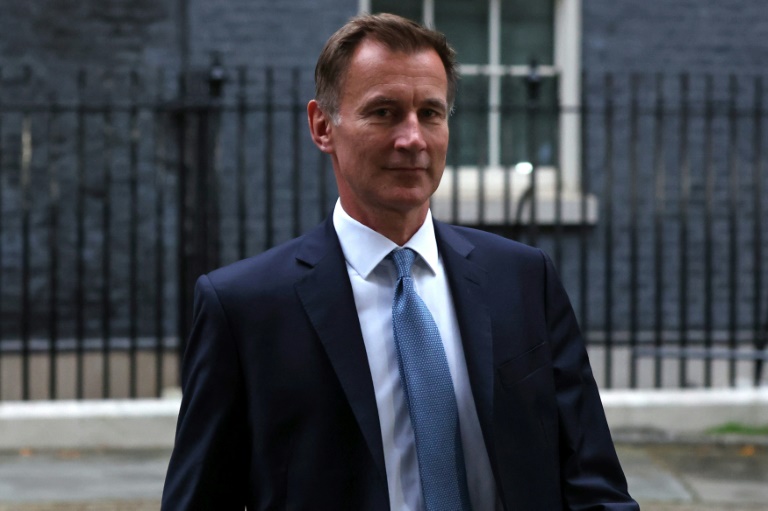
Britain’s new finance minister Jeremy Hunt warned Saturday of looming tax hikes as he dramatically reversed course on right-wing Prime Minister Liz Truss’s radical programme of economic reform.

Senior Conservative members of parliament were reportedly plotting to unseat Truss, possibly within days, aghast at the party’s collapse in opinion polls since she replaced Boris Johnson on September 6.

“Hunt takes full control as plotters circle wounded PM”, The Sunday Times headlined, while The Observer said: “Tories in talks to oust Truss”.

The Times and Telegraph newspapers reported that Hunt was planning to delay a planned cut on the basic rate of income tax, enforcing yet another humiliating climbdown on Truss after she sacked Kwasi Kwarteng as chancellor of the exchequer.

In crisis talks Sunday at the prime minister’s country retreat, Hunt and Truss were set to thrash out a new budget plan that he is due to deliver on October 31, just over a month after Kwarteng’s botched attempt to drive through a slew of unfunded tax cuts.

“There were mistakes,” acknowledged Hunt, whom one ally called the government’s new “chief executive” — with Truss relegated to the role of back-seat chairwoman.

Hunt said Kwarteng and Truss had erred on September 23 in trying to cut taxes for the highest earners, and tried to “fly blind” in presenting their plan without independent forecasts from the Office for Budget Responsibility.

“The prime minister’s recognised that, that’s why I’m here,” Hunt told Sky News.

In one of his first acts on taking office Friday, the new chancellor spoke to Bank of England governor Andrew Bailey, who has had to stage costly interventions to calm febrile bond markets.

Briefing reporters in Washington, Bailey said on Saturday: “I can tell you there is a very clear and immediate meeting of minds on the importance of stability and (fiscal) sustainability.”

US President Joe Biden said Saturday he thought the abandoned tax cut reform was a “mistake”.

“I think that the idea of cutting taxes on the super-wealthy at a time when… I disagreed with the policy, but that’s up to Great Britain to make that judgment, not me,” he said.

Tax cuts were the centrepiece of the ill-starred budget announced by Kwarteng and Truss. 

But they were financed through billions in extra borrowing, causing panic on financial markets at the prospect of higher inflation, which has already left British households in the grip of a cost-of-living crisis.

– ‘Clinging on’ –

“We will have some very difficult decisions ahead,” Hunt said, warning that “all government departments” face spending curbs including welfare, health and defence. 

“And some taxes will not be cut as quickly as people want. Some taxes will go up.”

Soon after Hunt’s upcoming fiscal statement, the Bank of England will hold its next rate-setting meeting on November 3.

In a separate speech Saturday, Bailey warned anew that the central bank would “not hesitate” to raise rates to keep soaring inflation under control, and said a “stronger response” than previously expected may have to come.

Truss dismissed Kwarteng hours after he had rushed home early from international finance meetings in Washington, and she staged another U-turn in acquiescing to a significant rise in profits tax levied on companies.

At a subsequent Downing Street news conference, the prime minister took only four questions, glancing nervously around the room and delivering terse replies before abruptly leaving after just over eight minutes. 

“Robotic, hesitant, tone-deaf, defiant and still utterly convinced of the purity and necessity of her mission, Liz Truss killed off her political career in a matter of minutes,” Times columnist Jenni Russell wrote.

Asked why she herself should not resign, Truss said she was “absolutely determined to see through what I have promised” — but her comments only served to depress the pound and bond markets further.

Former Conservative leader William Hague said Truss’s premiership now “hangs by a thread”, as the Sunday newspapers recounted bitter infighting among party factions.

Up to 100 letters expressing no confidence in Truss have been submitted by Tory MPs, the Sunday Times said, with opponents said to be coalescing around her defeated leadership rival Rishi Sunak and another one-time foe, Penny Mordaunt.

But with the opposition Labour party surging in the polls, Welsh Secretary Robert Buckland warned his restive colleagues against “throwing another prime minister to the wolves”.

Labour leader Keir Starmer accused Truss of “clinging on”, and demanded an early general election.

“The Tories no longer have a mandate from the British people,” he tweeted, after Truss became prime minister through the votes of some 80,000 Conservative members — less than 0.2 percent of the UK electorate.

New UK finance minister tears up tottering PM's agenda

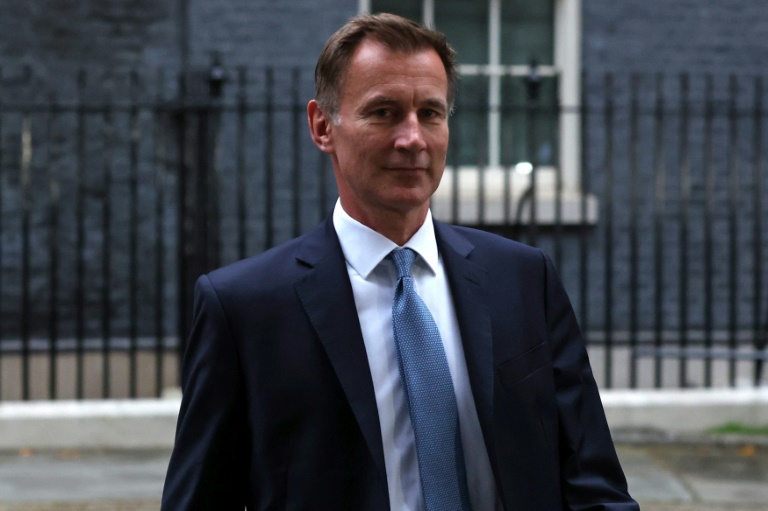
Britain’s new finance minister Jeremy Hunt warned Saturday of looming tax hikes as he dramatically reversed course on right-wing Prime Minister Liz Truss’s radical programme of economic reform.

Senior Conservative members of parliament were reportedly plotting to unseat Truss, possibly within days, aghast at the party’s collapse in opinion polls since she replaced Boris Johnson on September 6.

“Hunt takes full control as plotters circle wounded PM”, The Sunday Times headlined, while The Observer said: “Tories in talks to oust Truss”.

The Times and Telegraph newspapers reported that Hunt was planning to delay a planned cut on the basic rate of income tax, enforcing yet another humiliating climbdown on Truss after she sacked Kwasi Kwarteng as chancellor of the exchequer.

In crisis talks Sunday at the prime minister’s country retreat, Hunt and Truss were set to thrash out a new budget plan that he is due to deliver on October 31, just over a month after Kwarteng’s botched attempt to drive through a slew of unfunded tax cuts.

“There were mistakes,” acknowledged Hunt, whom one ally called the government’s new “chief executive” — with Truss relegated to the role of back-seat chairwoman.

Hunt said Kwarteng and Truss had erred on September 23 in trying to cut taxes for the highest earners, and tried to “fly blind” in presenting their plan without independent forecasts from the Office for Budget Responsibility.

“The prime minister’s recognised that, that’s why I’m here,” Hunt told Sky News.

In one of his first acts on taking office Friday, the new chancellor spoke to Bank of England governor Andrew Bailey, who has had to stage costly interventions to calm febrile bond markets.

Briefing reporters in Washington, Bailey said on Saturday: “I can tell you there is a very clear and immediate meeting of minds on the importance of stability and (fiscal) sustainability.”

US President Joe Biden said Saturday he thought the abandoned tax cut reform was a “mistake”.

“I think that the idea of cutting taxes on the super-wealthy at a time when… I disagreed with the policy, but that’s up to Great Britain to make that judgment, not me,” he said.

Tax cuts were the centrepiece of the ill-starred budget announced by Kwarteng and Truss. 

But they were financed through billions in extra borrowing, causing panic on financial markets at the prospect of higher inflation, which has already left British households in the grip of a cost-of-living crisis.

– ‘Clinging on’ –

“We will have some very difficult decisions ahead,” Hunt said, warning that “all government departments” face spending curbs including welfare, health and defence. 

“And some taxes will not be cut as quickly as people want. Some taxes will go up.”

Soon after Hunt’s upcoming fiscal statement, the Bank of England will hold its next rate-setting meeting on November 3.

In a separate speech Saturday, Bailey warned anew that the central bank would “not hesitate” to raise rates to keep soaring inflation under control, and said a “stronger response” than previously expected may have to come.

Truss dismissed Kwarteng hours after he had rushed home early from international finance meetings in Washington, and she staged another U-turn in acquiescing to a significant rise in profits tax levied on companies.

At a subsequent Downing Street news conference, the prime minister took only four questions, glancing nervously around the room and delivering terse replies before abruptly leaving after just over eight minutes. 

“Robotic, hesitant, tone-deaf, defiant and still utterly convinced of the purity and necessity of her mission, Liz Truss killed off her political career in a matter of minutes,” Times columnist Jenni Russell wrote.

Asked why she herself should not resign, Truss said she was “absolutely determined to see through what I have promised” — but her comments only served to depress the pound and bond markets further.

Former Conservative leader William Hague said Truss’s premiership now “hangs by a thread”, as the Sunday newspapers recounted bitter infighting among party factions.

Up to 100 letters expressing no confidence in Truss have been submitted by Tory MPs, the Sunday Times said, with opponents said to be coalescing around her defeated leadership rival Rishi Sunak and another one-time foe, Penny Mordaunt.

But with the opposition Labour party surging in the polls, Welsh Secretary Robert Buckland warned his restive colleagues against “throwing another prime minister to the wolves”.

Labour leader Keir Starmer accused Truss of “clinging on”, and demanded an early general election.

“The Tories no longer have a mandate from the British people,” he tweeted, after Truss became prime minister through the votes of some 80,000 Conservative members — less than 0.2 percent of the UK electorate.

China's Communist Party Congress opens to endorse Xi's rule

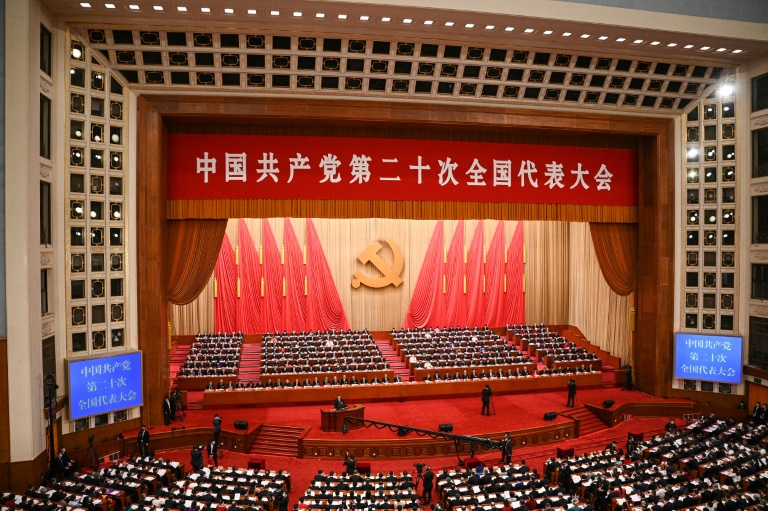
Chinese President Xi Jinping on Sunday hailed the Communist Party’s rule and defended its Covid policies as he opened a five-yearly Congress at which thousands of hand-picked delegates are set to rubber stamp his bid to rule for a historic third term.

Xi walked onstage to thunderous applause from the roughly 2,300 delegates who had gathered at Beijing’s Great Hall of the People for the event.

In his opening address the leader hailed the Chinese Communist Party (CCP) and said the Congress was taking place at a “critical moment” for the country. 

At the start of what is expected to be a lengthy speech, Xi also insisted China’s Covid policies — which are still placing heavy curbs on people’s lives — were for their safety.

He said the policies had “protected people’s safety and health to the highest degree and achieved significant positive results”. 

Xi also focused on two of China’s most sensitive security and sovereignty issues at the start of speech — in relation to Hong Kong, after democracy protests were crushed there, and Taiwan. 

Xi lauded Hong Kong’s transition from “chaos to governance”, while vowing a “major struggle against separatism and interference” in the self-ruled island of Taiwan.

Should everything go to plan for Xi, the 69-year-old will be reconfirmed as the party’s general secretary after the week-long meeting, cementing his position as China’s most powerful leader since Mao Zedong.

If picked as party leader for another five-year term as expected, Xi is almost certain to be elected president at the annual meeting of China’s National People’s Congress in March.

– Tight security –

A heavy police presence was in place around Beijing early Sunday as authorities prepared for the week-long Congress. 

A fleet of buses whisked journalists and other attendees to a virtually empty Tiananmen Square and into the Great Hall of the People.

Participants navigated a string of security checks before entering the hall, where a giant hammer-and-sickle emblem hung over the stage on which top leaders are due to be seated.

“Long live the great, glorious and correct Chinese Communist Party,” blared one of the bright red banners adorning the hall.

The delegates’ main task is to endorse Xi’s unprecedented campaign to rule for three terms.

Xi and the party’s other top brass are likely to be unveiled on October 23, the day after the Congress closes.

In the highly choreographed, mostly closed-door conclave, the delegates will also pick members of the party’s roughly 200-member Central Committee, which in turn selects the 25-person Politburo and its all-powerful Standing Committee — the country’s highest leadership body.

– Rare protest –

An editorial in the state-run People’s Daily on Sunday said the Congress will “plan out the goals, tasks and major policies for the development of the party and the country for the next five years or even longer”.

One of the key issues will revolve around whether or not to maintain the strict zero-Covid strategy to combat the coronavirus pandemic.

The policy has strengthened social control over Chinese citizens, whose every move is now computer-registered, in a country already criticised internationally for human rights violations.

While state media this week hammered home the notion that “lying flat” in the face of the virus would be “irresponsible”, zero-Covid has caused widespread hardship and pulled the handbrake on China’s economy. 

The country’s near-closure to the rest of the world and repeated lockdowns have stifled the economic growth rate, which this year is set to be China’s weakest in four decades, excluding 2020 when the global economy was hammered by the emergence of the coronavirus.

In the lead-up to the Congress, China’s internet censors removed virtually all references to reports of a rare protest in Beijing that involved banners denouncing Xi and the country’s Covid policies.

Video footage and photos shared on social media on Thursday appeared to show a protester draping two hand-painted banners on the side of a bridge with slogans criticising the Communist Party’s policies.

Fire, clashes at Iran's Evin prison amid Mahsa Amini protests

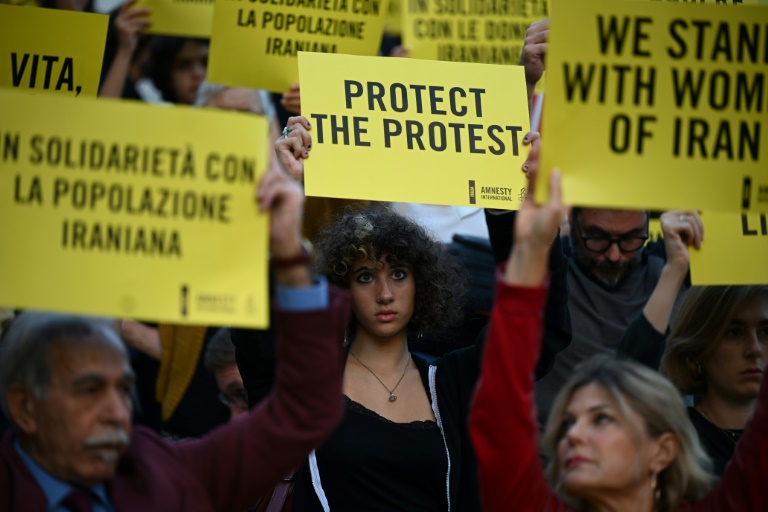
A fire and clashes erupted at Tehran’s notorious Evin prison Saturday night as the protest movement sparked by Mahsa Amini’s death in custody entered a fifth week.

The facility in northern Tehran is infamous for the ill-treatment of political prisoners and also holds foreign detainees. Hundreds of those detained during the demonstrations over Amini’s death have reportedly been sent there.

Flames and a plume of smoke could be seen billowing into the night sky, and the sound of what appeared to be gunfire could be heard in video footage shared on Twitter by the Oslo-based Iran Human Rights.

“A fire is spreading in Evin prison” and an “explosion was heard” from the facility, the 1500tasvir social media channel, which monitors protests and police violations, said on Twitter.

Chants of “Death to the dictator” — one of the main slogans of a month-long protest movement that has flared over the death of Amini — could be heard in the background of the video.

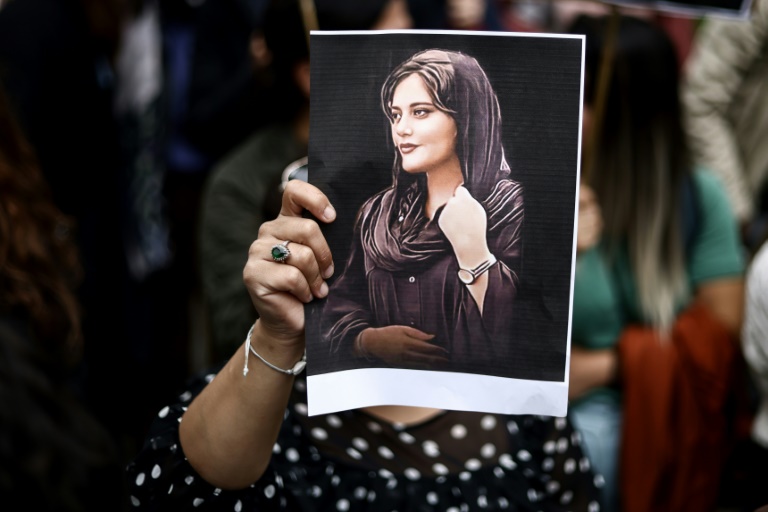
Amini, 22, died on September 16, three days after falling into a coma following her arrest by Iran’s notorious morality police over an alleged breach of the Islamic republic’s strict dress code for women.

Iranian state media said early Sunday that the fire caused during “riots and clashes” at the prison had been extinguished.

Citing a Tehran prosecutor, the IRNA news agency said the situation was now calm and that the clashes had “nothing to do with the recent unrest in the country”. IRNA earlier reported at least eight injured at the jail.

– Families’ concern –

Evin prison holds foreign inmates including French-Iranian academic Fariba Adelkhah and US citizen Siamak Namazi, whose family said he was taken back into custody this week after a temporary release.

Reacting to reports of the fire, Namazi’s family said in a statement to AFP shared by their lawyer that they were “deeply concerned” and had not heard from him.

They urged Iran’s authorities to grant him “immediate” means to contact his family and to grant him a furlough “as he clearly isn’t safe in Evin Prison.”  

The sister of another US citizen held at Evin, businessman Emad Shargi, said his family was “numb with worry” in a Twitter post.

Australian academic Kylie Moore-Gilbert, who was held in Evin for most of her 800-plus days behind bars in Iran, said she had heard all the women political prisoners were safe.

“I recently received word from two different family members of political prisoners currently inside,” Moore-Gilbert, who was released in November 2020, told AFP early Sunday.

“They assure me that all of the women within the female political prisoner ward of Evin are safe and unharmed.”

US State Department spokesman Ned Price said Washington was monitoring the incident “with urgency”, warning that Iran was “fully responsible for the safety of our wrongfully detained citizens” and calling for their quick release. 

Award-winning dissident Iranian filmmaker Jafar Panahi and reformist politician Mostafa Tajzadeh are also reportedly held at Evin.

– ‘Mullahs must get lost’ –

Rights groups reported protests in solidarity with Evin detainees in Tehran late into the night, after angry demonstrators had taken to streets across Iran on Saturday despite internet cuts.

Young women have been at the forefront of the current wave of street protests, the biggest seen in the country for years.

“Guns, tanks, fireworks; the mullahs must get lost,” women without hijabs chanted at a gathering at Tehran’s Shariati Technical and Vocational College, in a video widely shared online.

Scores of jeering and whistling protesters hurled projectiles at security forces near a landmark roundabout in Hamedan city, west of Tehran, in footage verified by AFP.

Despite what online monitor NetBlocks called a “major disruption to internet traffic”, protesters were also seen pouring onto the streets of the northwestern city of Ardabil in videos shared on Twitter.

Shopkeepers went on strike in Amini’s hometown of Saqez, in Kurdistan province, and Mahabad in West Azerbaijan, said 1500tasvir.

There had been an appeal for a huge turnout for protests on Saturday under the slogan “The beginning of the end!”

“We have to be present in the squares, because the best VPN these days is the street,” activists declared, referring to virtual private networks used to skirt internet restrictions.

– ‘Riots’ –

At least 108 people have been killed in the Amini protests, and at least 93 more have died in separate clashes in Zahedan, capital of the southeastern province of Sistan-Baluchestan, according to Iran Human Rights.

The unrest has continued despite what Amnesty International has called an “unrelenting brutal crackdown” that has included an “all-out attack on child protesters” — leading to the deaths of at least 23 minors.

A Revolutionary Guards commander said Saturday that three members of its Basij militia had been killed and 850 wounded in Tehran since the start of the “sedition”, state news agency IRNA said.

The crackdown has drawn international condemnation and sanctions against Iran from Britain, Canada and the United States.

European Union countries agreed this week to level new sanctions, and the move is due to be endorsed at the bloc’s foreign ministers meeting in Luxembourg on Monday.

Iran’s supreme leader has accused the country’s enemies, including the United States and Israel, of fomenting the “riots”.

In response to the protests, the clerical state’s security forces have also launched a campaign of mass arrests of artists, dissidents, journalists and athletes.

burs-sw/sst/mtp/cwl

Mexico: the promised land for migrants… from the US

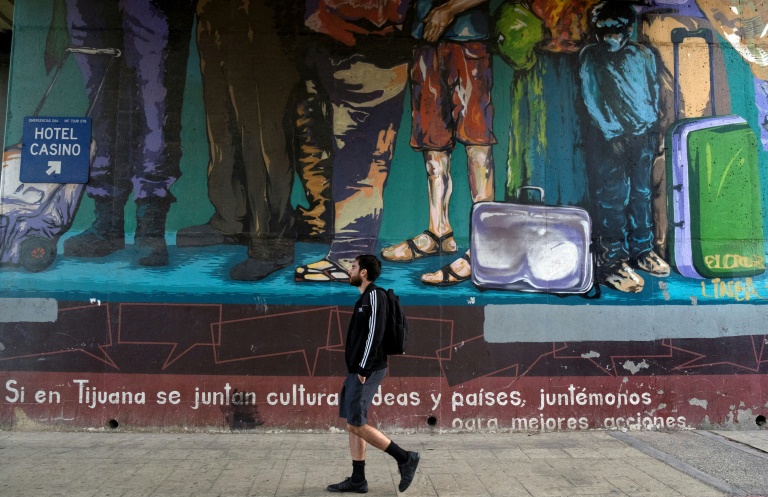
While many migrants risk their lives chasing the American dream, Gabriel Zarate fled the rising cost of living in California and moved to the Mexican border city of Tijuana.

The 38-year-old Chilean American now crosses over to work in San Diego as an English teacher during the day and returns home in the evening to Mexico.

“One of the biggest reasons is the cost of living in Tijuana. It’s significantly cheaper than in California,” Zarate said.

Also, he added: “I love Mexican people and food.”

His neighbor and fellow English teacher Mike Rachfal also made the move from San Diego, where he used to pay $1,275 a month to rent a studio.

“Here it’s about half that,” the 36-year-old said.

The cheaper rents can be a sensitive subject in Mexico, where wages are much lower than in the United States and people are also facing increasing living costs.

Tijuana is one of the cities with the fastest-rising real estate prices in Mexico —  up 10.7 percent in the first quarter of 2022 from a year earlier, according to the state-owned Federal Mortgage Society.

The average price of properties bought by US citizens is around $270,000 — “three times lower than what the same property would cost in the United States,” said Ruth Sastre, president of the local realtors association.

– Construction boom –

In Tijuana, a bustling city with a reputation for gang violence, new apartment buildings are springing up with “For Sale” signs in English and prices in dollars.

With more than 1,000 murders in the city already this year, security is an important consideration, but Zarate said that “in general I feel fine in Tijuana, especially downtown or around the border.”

“It’s like any big city. There will always be places rougher or more complicated than others,” he added. 

It is a similar story just south of Tijuana in Rosarito on the Pacific coast.

Following a real estate boom that began a decade ago, up to around 12,000 people from the United States now live in the resort city, said Jesus Rincon Vargas, president of the local construction industry association.

In total around 1.6 million US citizens are estimated to live in Mexico, according to their country’s embassy, which does not keep official records.

They can stay for up to six months with a tourist visa, or apply for residency.

– ‘Friendly culture’ –

Along with the lifestyle and cost of living, the relatively relaxed immigration rules are part of the appeal for remote workers flocking to Mexico, notably the capital.

Brian McDonald, a 34-year-old software developer from the US state of Oklahoma, has spent more than a year in the Latin American country, lured by its budding technology scene.

“Mexico City seems like it’s kind of a gateway for expanding companies and I like working with start-ups,” he said.

“It’s a very friendly culture,” McDonald added.

Office-sharing company WeWork has seen a “significant influx of digital nomads” in districts of Mexico City popular with foreigners, said spokeswoman Cristina Sancen.

“Mexico City has an incomparable climate. For foreigners, it’s definitely a cheaper city. It’s also a cosmopolitan and highly developed city with start-ups and corporations,” she added.

Some foreigners working for US firms are also choosing to base themselves south of the border.

Kirsty Hall, 23, from Scotland, picked Mexico City as a remote working location while helping to set up a San Francisco-based tech start-up.

“I can walk everywhere here. I can cycle. Today I roller-skated to work. Public transport is awesome and it’s very cheap. People are very welcoming too,” Hall said.

The influx of foreigners has divided opinion among residents of the capital, some of whom see the city’s popularity as one of the reasons behind gentrification and rising rents.

“I heard there’s some prejudice towards digital nomads within Mexico City but I haven’t experienced it personally,” said Blazej Mosinski, 23, from Poland, who is doing a San Francisco internship remotely “purely for financial reasons.”

Other challenges of working remotely in Mexico include slower internet speeds than in US technology hubs and safety concerns.

“I was robbed by the police two weeks ago, just walking home,” McDonald said.

But “the rest — the good food, the cost of living — offsets all of those things,” he added.

Iran protests: how far can they go?

On an early autumn day in Tehran, the morality police arrested in a city park a 22-year-old Iranian woman who was in the capital on a family visit, bundled her into a van and drove her to the police station.

The detention of Mahsa Amini on September 13 set in motion a chain of events that one month on has left Iran’s clerical leadership under supreme leader Ayatollah Ali Khamenei, 83, facing one of its biggest challenges since the 1979 Islamic Revolution but whose final outcome remains far from certain.

Amini’s arrest was an ordeal shared by hundreds of women every year who are deemed to have fallen foul of the Islamic republic’s strict dress rules imposed after the fall of the shah.

But less than two hours after her arrest and transfer to the Vozara detention centre, Amini was in a coma. Rushed to Kasra hospital, she was pronounced dead on September 16. Her family and lawyers believe she was dealt a fatal blow to the head in custody.

Protests started outside the hospital on September 16 after the announcement of her death. Her funeral in her home province of Kurdistan on September 17 turned into a protest action with the movement spreading nationwide.

One month on, Iran’s leadership is still facing what has proven to be the most enduring, taboo-breaking and multifaceted protest movement in the Islamic republic’s history as well as the first driven by women.

The leaderless protest movement as yet shows no sign of dwindling, with protests not just on the streets but at universities, schools and even oil refineries.

But the regime is also willing to use levers of repression extending to lethal force, internet shutdowns and mass arrests.

While the protests could mark “the beginning of the end of the Islamic republic” they would need to be sustained and find some kind of leadership structure, said Cornelius Adebahr, nonresident fellow at Carnegie Europe.

“It just takes a lot more than continued street protests and calls for sanctions for positive change to set in,” he said.

– ‘Overthrow outright’ –

The protests built on existing disenchantment over economic hardship and corruption that had already caused demonstrations in the past.

They have taken place in Tehran, the northern hub of Tabriz, the historic cities of Isfahan and Shiraz, the pilgrimage city of Mashhad that is Khamenei’s home region, and the Caspian Sea provinces.

Iran has seen protest waves in recent years — notably in 2009 over disputed election results and in 2019 over a sudden energy price hike — but none that have so blatantly challenged the foundations of the Islamic republic set up in 1979 by Ayatollah Ruhollah Khomeini.

“The uprising started as a response to the restrictions on women’s dress and behaviour in public… but has evolved into a campaign to overthrow the regime outright,” said the US-based Soufan Center think-tank.

Anti-regime slogans such as “Death to the dictator” are not entirely new in Iran but never have they been used so frequently.

Women have removed and even burned headscarves. Images of Khamenei and icons of the regime, like late Revolutionary Guards commander Qasem Soleimani, have been defaced or set on fire.

Videos have shown protesters pushing back against security forces, evading arrest, burning police cars and on occasion even setting up roadblocks.

The deaths of young women in the protests such as Nika Shahkarami and Sarina Esmailzadeh, both 16, whose families say were killed by the security forces, have created new protest icons along with Amini.

The protests have also smashed any notion of Iranian politics as a battle between so-called reformist and conservative elements working within the system and also switched international attention away from talks with Iranian leaders on the nuclear programme.

“The protesters have changed the dominant discourse by mandating for a real change. They say no to the entire political regime,” said Shadi Sadr, director of the Justice for Iran UK-based NGO.

She said the current protests were “much larger in scale and lasted much longer” than in 2019 when fewer cities were involved, including Tehran, and protesters mainly came from lower social classes.

It’s “time to think beyond the Islamic republic”, said Roham Alvandi, an associate professor of London School of Economics, declaring that “reform is dead”.

– Precedents ‘not encouraging’ –

But as in 2009 and 2019, the authorities have also resorted to force, with Oslo-based group Iran Human Rights saying the authorities have killed at least 108 people in the Mahsa Amini protest wave across Iran.

In addition, at least 93 have been killed in a crackdown on protests in the southeastern city of Zahedan that were sparked by the reported rape of a teenage girl by a police chief.

According to Amnesty International, the protests are being “brutally quashed”, with live ammunition and metal pellets fired on protesters at close range.

Meanwhile, the persecution of protesters and those opposing the regime has been remorseless, with dozens of prominent activists, journalists, lawyers and even athletes rounded up and most still in jail.

After the Arab Spring, few anti-government uprisings worldwide have succeeded in defeating authoritarian regimes.

Syrian President Bashar al-Assad remains in power over a decade after the start of the civil war that began with the uprising against his rule.

Belarus leader Alexander Lukashenko in 2020 faced unprecedented mass protests following an election opponents said was rigged but stayed in power after keeping support from the security forces and Russia.

“Examples from the past decade of attempts to topple a ruthless dictator… aren’t particularly encouraging,” said Adebahr.

“Precisely because of the anti-system slogans chanted at these marches, the Iranian regime is determined to not budge an inch,” he said.

Russia says 11 killed in 'terrorist' attack at military site

Russia said two gunmen from an ex-Soviet state on Saturday attacked a military training ground killing 11 people who had volunteered to fight in Ukraine and wounding 15 others.

Russia’s defence ministry said the attack in the Belgorod region, which borders Ukraine, happened during a firearms training session.

Russia launched what it calls a special military operation in Ukraine at the end of February. Last month Russian President Vladimir Putin ordered a mobilisation of 300,000 Russians who had previously done compulsory military service.

“On October 15, two citizens of a CIS country committed an act of terror at a training range of the Western military district in the Belgorod region,” the state news agencies quoted the ministry as saying.

“As a result, 11 people were fatally wounded. Another 15 people suffered injuries of varying gravity and were taken to medical facilities.”

The two attackers “were killed in retaliatory fire”, the ministry added.

The CIS, or Commonwealth of Independent States, was formed between republics that were part of the Soviet Union.

More than 200,000 people have been conscripted into the Russian armed forces since the announcement of partial mobilisation on September 21. 

The draft announcement sparked protests and several attacks on recruitment offices. 

– Fierce fighting –

Ukrainian President Volodymyr Zelensky meanwhile said Saturday that his troops were facing a “most difficult” situation near the eastern town of Bakhmut, which has been under attack from the Russian army for weeks.

Ukraine is clawing back territory in both the east and south, occupied by Russia for months, but is facing a tough challenge in some areas.

“A very severe situation persists in the Donetsk and Lugansk regions” Zelensky said, referring to two regions Russia says its has annexed.

“The most difficult is near Bakhmut, like in previous days. We are still holding our positions,” he said.

Russian troops have for weeks been pummelling Bakhmut, a wine-making and salt-mining city that used to be populated by 70,000 people, in the hope of capturing the city.

Zelensky also said that Russia’s total losses were now approaching 65,000.

One soldier, just back from the front line, told AFP they had been fighting for four days non-stop.

“Out of the 13 guys in my group, we lost two soldiers, and five got evacuated,” said the 50-year-old soldier, “Poliak”, from the 93rd brigade.

“For days I didn’t sleep, didn’t eat, didn’t drink except coffee,” he added. 

France meanwhile said it would train up to 2,000 Ukrainian soldiers on its soil.

Minister for the Armed Forces Sebastien Lecornu said France would also provide Ukraine with Crotale air-defence systems “to allow them to defend their skies”.

– Repeated strikes –

Saturday’s attack in the Belgorod training ground is the latest in a series of incidents to have hit the Russian region.

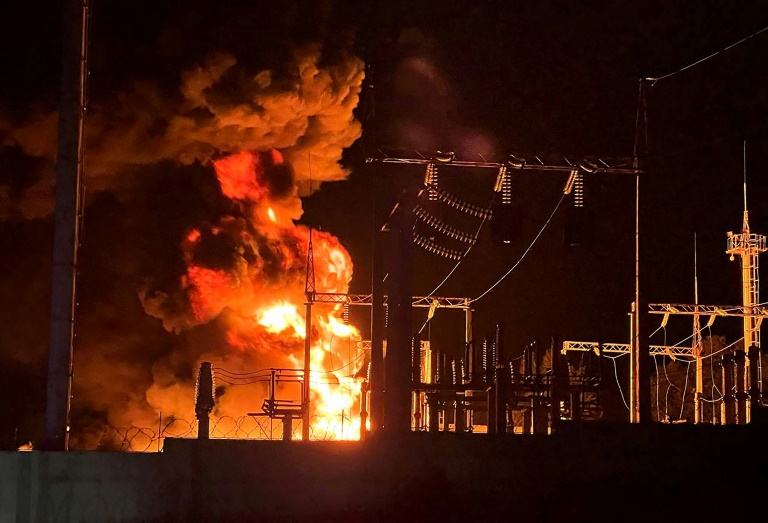
Earlier Saturday, Vyacheslav Gladkov, the governor of Belgorod, said an oil depot was on fire after having been shelled. He posted a photo showing flames and plumes of black smoke rising above a building.

Last week Russia complained of an increase in artillery and missile strikes on its territory bordering Ukraine.

And on Friday the authorities said that a Ukrainian strike had set fire to a power station in the regional capital, also called Belgorod, causing power cuts. 

This came a day after a rocket gutted the top floor of an apartment building in the city of Belgorod, without causing injuries.

A munition depot in the region was also destroyed on Thursday. 

Earlier in the week, Russian officials said Ukrainian strikes had knocked out power in the town of Shebekino in the same region. A 74-year-old woman died and several others were wounded in the town.

Strikes persist at TotalEnergies refineries, fuel depot in France

French refinery and fuel depot workers at five sites owned by oil giant TotalEnergies have extended their strike, union leaders said Saturday, compounding concern over petrol supply ahead of wider protests early next week.

Four of France’s seven refineries and one fuel depot were out of action after striking members of the hard-left CGT union rejected a pay offer from the hydrocarbon industry leader that other unions accepted.

Operations had resumed earlier this week at two other refineries run by Esso-ExxonMobil, however, after workers reached a deal with management.

The strike action has forced many filling stations to close and had a knock-on effect across all sectors of the economy.

President Emmanuel Macron’s government used requisitioning powers this week to force some strikers back to open fuel depots, a move that infuriated unions but has so far been upheld in the courts.

The CGT, which launched the industrial action three weeks ago, said on Saturday that workers at three TotalEnergies sites had decided to extend the stoppage.

Employees at the two others, including France’s largest refinery near the northwestern city of Le Havre, had already decided to stay out.

– Protest in Paris –

On Sunday, left-wing opponents of Macron will hold a march and rally in Paris to campaign against the rising cost of living.

Jean-Luc Melenchon, leader of the left-wing France Unbowed (LFI) party, had planned the march well before the current strike, but organisers are hoping to pick up some of the momentum from the current industrial unrest.

“The rise in prices is unbearable,” LFI deputy Manon Aubry told broadcaster LFI. “It is the greatest loss of purchasing power in 40 years.”

It is time the billions that the big companies were reaping in profits were passed down to those struggling to make ends meet, she added.

Police are expecting around 30,000 people to attend, with one source saying they feared problems from hard-left troublemakers. “The organiser has been warned of these fears,” said the official.

– More protests, strikes –

The CGT meanwhile has extended its strike action up to Tuesday, when it has also called a broader strike involving public transport nationwide.

The union risks stoking resentment in a country where three-quarters of workers rely on personal vehicles for their jobs, with public support for the strike at just 37 percent in a BVA poll released Friday.

The CGT is pushing for a 10-percent pay rise for staff at TotalEnergies, retroactive for all of 2022.

It says the French group can more than afford it, citing TotalEnergies’ net profit of $5.7 billion in the April-June period as energy prices soared with the war in Ukraine, and its payout of billions of euros in dividends to shareholders.

The CGT walked out of talks with the French group, even as other unions representing a majority of workers accepted a deal for a smaller pay hike.

TotalEnergies on Saturday urged employees to resume work, “in view of the signing of a majority deal on salaries” with two other unions.

Esso-ExxonMobil has said it would take two to three weeks to relaunch production at its refineries.

Prime Minister Elisabeth Borne is due to appear on primetime television Sunday evening to discuss the petrol shortage.

Close Bitnami banner
Bitnami