World

'Challenging' year for Ikea, 10,000 layoffs in Russia

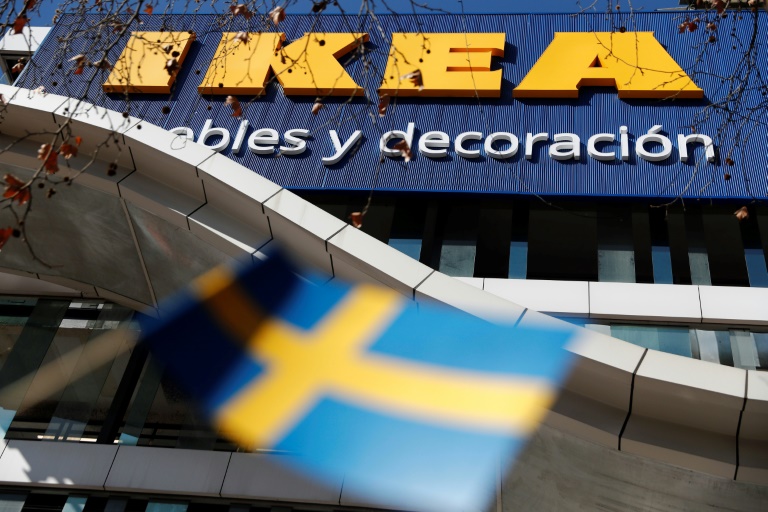
Swedish furniture giant Ikea posted a six percent rise in full-year sales on Thursday, in what it described as a “challenging” year due to inflation and scaling back in Russia.

Following Russia’s invasion of Ukraine, Ikea closed its 17 shops and halted production in the country, where it was one of the largest Western employers before the war with 15,000 employees.

According to Dutch holding company Inter Ikea’s CEO Jon Abrahamsson Ring, a “substantial reduction” of employees had already been carried out.

The 2022 fiscal year “was a challenging year for the world, of course with all the things going on around us with pandemics but also very steep increasing inflation,” Abrahamsson Ring told AFP.

Jesper Brodin, the CEO of Ingka, a holding company that manages most of Ikea’s stores, told AFP that they “had to say goodbye” to around 10,000 staff out of the 12,000 retail employees in Ikea’s Russian stores.

Before the war, the Russian market represented about four to five percent of the group’s sales.

Total sales from the international furniture behemoth’s hundreds of shops came in at 44.6 billion euros ($43.4 billion) for the period September 2021-August 2022, Inter Ikea said in a statement.

However it meanwhile noted that “sales have grown in money, but sales quantities have not kept up. In addition, supply chain shortages made it difficult to keep Ikea shelves full.”

Excluding currency effects, revenue growth was lower at 3.5 percent.

“We had to increase our prices across the whole of Ikea,” Abrahamsson Ring said.

– Price rises –

The chief executive explained that the operations had been hurt by supply constraints — especially in Asia — plus increased prices for raw materials and the situation in Russia.

In December 2021, as the current wave of inflation began rearing its head, Ikea announced an average increase of  nine percent in its prices.

Raising prices was “against our mission, but we were forced,” Abrahamsson Ring said, adding that while they did not want to raise prices more they “can’t exclude it.”

The furniture giant — which in recent years has started launching new smaller stores close to the city centre — had a total of 474 stores at the end of August, compared to 458 a year earlier, despite the closures in Russia, the company said.

During the year, Ikea also opened its first store in South America, in the Chilean capital Santiago.

Brodin meanwhile said that on the supply front “there was a much improved situation” in recent months, “even if we’re not back to normal.”

“By the end of the (fiscal year) we actually had double digit growth, we hadn’t seen that in a long time,” Brodin told AFP.

Founded in 1943 in southern Sweden by the late Ingvar Kamprad, Ikea is not listed on any stock exchange and is therefore not obliged to communicate its financial results. 

Following accusations of a lack of financial transparency and tax optimisation schemes, the group started publishing partial results in 2010.

Weak pound is major draw at London's Frieze art fair

As the global art world descends on London’s Frieze fair this week, the current low value of the UK pound makes buying art in Britain particularly attractive for overseas collectors and dealers.

The prestigious fair opened Wednesday at full power after a difficult couple of years, experts on the sector said.

The bustling showcase goes ahead after the 2020 event was cancelled due to the pandemic and last year’s fair was hit by related travel restrictions that barred many buyers.

“This year I feel it’s 100 percent geared up”, said Daniela Duppen, an art dealer and adviser who has worked in London since 2008. 

Thousands of visitors poured into the fair, which runs till Sunday with 160 galleries running stalls in tents in Regent’s Park, central London.

For aficionados, Frieze offers a chance to buy a painting, a sculpture or other work of art that has been previously shown in some of the world’s top galleries.

It also draws international buyers.

“At the moment if you’re coming from America it’s very affordable to buy here because of the pound weakness,” added Duppen.

While Britons are clobbered with a severe cost of living crisis and near double-digit inflation, the new government last month caused panic in markets by announcing massive tax cuts without a clear way to fund them. 

As a result, the pound sterling hit a historic low and has struggled to recover, while the US dollar has benefited from being seen as a safe haven during the war in Ukraine.

– ‘Good timing’ –

“Of course this year it’s more affordable for us to buy in London”, said Robert, an American collector walking the fair’s aisles Wednesday.

“I think many Americans are thinking ‘let’s buy now’ when they may not have done the same in another context. It’s good timing for business,” said the former banker from Chicago, who asked not to use his full name.

“I’ve actually seen a lot of galleries switch the artwork prices to USD,” said Olivia Davis, an art consultant based in Los Angeles who had travelled for the London fair.

“Perhaps they can raise prices in US dollar terms and still have the same demand from American buyers,” she added.

After two years of pandemic, the galleries are feeling the pinch and counting on a big event like Frieze to bounce back.

“For galleries it’s the week of the year. They have no option but to sell,” said Louisa, an art student who works part-time at a small London gallery. 

She said galleries have to pay enormous sums for a stand, and there is “a lot of pressure to make it profitable.”

Davis predicted that at art sales this week — which accompany the fair at top London auction houses Sotheby’s, Christie’s and Phillips — there will be “a lot of American buyers taking advantage of the weakness in the GB pound.” 

Frieze “is a very big part of the art world”, stressed Davis, calling it “a great meeting point for collectors, gallerists and artists from all over the world”.

It comes a week before Art Basel holds a major new art fair in the French capital called Paris+, but she said less experienced collectors see Frieze as a safer bet.

“Paris+ is smaller and better for more seasoned collectors. Frieze is better for new collectors as it’s big and established”, Davis said.

London has recently lost its spot as the second largest art market in the world to China, behind the United States. 

But it still retains cachet for collectors.

“London is the place to be when you love art,” said the US collector Robert. 

“During Frieze you have dinners all over the city, parties everywhere. It’s exhausting, but there is nothing like Frieze.”

India's Infosys plans $1 bn buyback on strong profits

Indian outsourcing behemoth Infosys approved a $1 billion share buyback on Thursday after strong quarterly profits that reflected sustained demand for digital services.

Tech companies have benefited from higher digital services demand since the pandemic, and India’s second-largest IT company has kept a robust balance sheet despite labour competition driving up sector salaries. 

Net profit rose 11 percent year-on-year to 60.21 billion rupees ($731.4 million) in the September quarter.

Revenues were up 23.4 percent for the same period, helped by strong demand in North America and Europe.

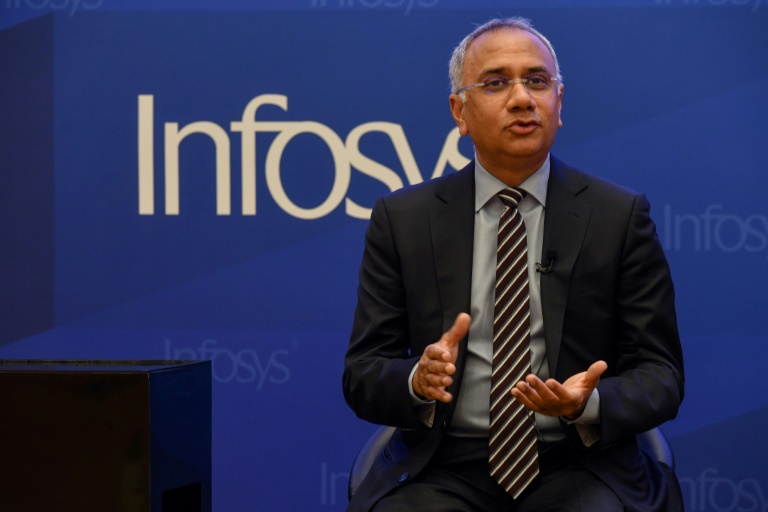
“While concerns around the economic outlook persist, our demand pipeline is strong as clients remain confident in our ability to deliver the value they seek,” chief executive Salil Parekh said in a statement.

The Bangalore-headquartered company reported large deals of $2.7 billion for the quarter, its best result in nearly two years and up $1 billion from the June quarter.

Its board approved plans to buy back shares worth 93 billion rupees ($1.13 billion) at 1,850 rupees per share, a 30 percent premium to Thursday’s closing price.

Chief financial officer Nilanjan Roy said the board had approved an open market share buyback of 93 billion rupees ($1.14 billion) in its meeting before the results announcement.

Infosys also reported a marginally lower employee attrition rate — a key metric for IT companies — compared to the previous quarter.

Competition for employees has increasingly driven up salaries and weighed on operating margins of Indian technology companies.

“While supply side challenges are gradually abating as reflected in the reducing attrition rates, they continue to exert pressure on our cost structure,” Roy said.

Infosys is India’s second-largest information technology company and earns more than 60 percent of its revenues from North American markets.

It was at the forefront of an outsourcing boom that saw India become a back office to the world as Western firms subcontracted work to a skilled English-speaking workforce.

Shares in Infosys closed 0.64 percent lower in Mumbai ahead of the earnings announcement.

Europe heading for warmer-than-average winter: forecaster

Europe faces a higher-than-usual chance of a cold blast of weather before the end of the year, but the winter overall is likely to be warmer than average, the continent’s long-range weather forecaster said Thursday.

Temperatures this winter will be crucial for homeowners worried about the record cost of heating their homes, and for European policymakers seeking to avoid energy rationing due to cuts in Russian gas supplies. 

“We see the winter as being warmer than usual,” said Carlo Buontempo, director of the Copernicus Climate Change Service that produces seasonal forecasts for the European Centre for Medium-Range Weather Forecasts (ECMWF).

“Nevertheless there is a still a significant chance of a block situation, which can lead to cold temperatures and low wind over Europe,” he told AFP as the service issued a monthly update to its forecasts.

A so-called block or blocking pattern in the winter can bring stable, often wind-free weather accompanied by freezing temperatures.

“This was looking more likely in November, but there now looks like a pronounced probability of a cold outbreak in December,” Buontempo added.

The ECMWF produces weather modelling with data from a range of national weather services around Europe.

Its forecasts are based on indicators such as ocean and atmospheric temperatures, as well as wind speeds in the stratosphere, but do not have the accuracy of short-range reports.

The models provide the “best information possible, to give a hint, to guide our decisions”, Buontempo said. 

The European winter was expected to be warmer than usual because of the “La Nina” global weather phenomenon, which is related to cooling surface temperatures in the central and eastern equatorial Pacific Ocean.

“We know that in a La Nina year, the latter part of the European winter tends to favour westerly winds, so warm and wet,” Buontempo said.

The agency will update its winter season forecast next month when it will have greater confidence because “all the drivers for the winter will be more active”, he said.

Independent energy experts expect Europe to be able to withstand Russia’s gas cuts this winter, providing temperatures stay in line with or above the long-term average.

Governments have almost filled their strategic gas reserves and consumers are being urged to reduce their consumption.

The International Energy Agency, a Paris-based energy consultancy, believes temperatures over winter around 10 percent below the average would put strain on the European gas system.

It has also said a late cold spell, when gas stocks are expected to be low, could be the “Achilles heel of European gas supply security”.

Europe heading for warmer-than-average winter: forecaster

Europe faces a higher-than-usual chance of a cold blast of weather before the end of the year, but the winter overall is likely to be warmer than average, the continent’s long-range weather forecaster said Thursday.

Temperatures this winter will be crucial for homeowners worried about the record cost of heating their homes, and for European policymakers seeking to avoid energy rationing due to cuts in Russian gas supplies. 

“We see the winter as being warmer than usual,” said Carlo Buontempo, director of the Copernicus Climate Change Service that produces seasonal forecasts for the European Centre for Medium-Range Weather Forecasts (ECMWF).

“Nevertheless there is a still a significant chance of a block situation, which can lead to cold temperatures and low wind over Europe,” he told AFP as the service issued a monthly update to its forecasts.

A so-called block or blocking pattern in the winter can bring stable, often wind-free weather accompanied by freezing temperatures.

“This was looking more likely in November, but there now looks like a pronounced probability of a cold outbreak in December,” Buontempo added.

The ECMWF produces weather modelling with data from a range of national weather services around Europe.

Its forecasts are based on indicators such as ocean and atmospheric temperatures, as well as wind speeds in the stratosphere, but do not have the accuracy of short-range reports.

The models provide the “best information possible, to give a hint, to guide our decisions”, Buontempo said. 

The European winter was expected to be warmer than usual because of the “La Nina” global weather phenomenon, which is related to cooling surface temperatures in the central and eastern equatorial Pacific Ocean.

“We know that in a La Nina year, the latter part of the European winter tends to favour westerly winds, so warm and wet,” Buontempo said.

The agency will update its winter season forecast next month when it will have greater confidence because “all the drivers for the winter will be more active”, he said.

Independent energy experts expect Europe to be able to withstand Russia’s gas cuts this winter, providing temperatures stay in line with or above the long-term average.

Governments have almost filled their strategic gas reserves and consumers are being urged to reduce their consumption.

The International Energy Agency, a Paris-based energy consultancy, believes temperatures over winter around 10 percent below the average would put strain on the European gas system.

It has also said a late cold spell, when gas stocks are expected to be low, could be the “Achilles heel of European gas supply security”.

Easyjet warns of another annual loss

British airline EasyJet on Thursday warned of a third annual loss in a row, as sector-wide disruption and a strong dollar offset a recovery from the pandemic.

Pre-tax losses are expected to be between £170 million and £190 million ($190 million and $210 million) for its financial year that just ended, EasyJet said in an update.

That would however mark a significant improvement after the carrier had plunged deeper into the red in 2020 and 2021 on Covid fallout.

EasyJet on Thursday flagged a £75-million hit on costs “from operational issues experienced across the industry” in its financial year to the end of September.

The carrier also highlighted a £64-million charge on foreign exchange movements.

Nevertheless, EasyJet enjoyed a fourth-quarter summer bounceback with operating profit of up to £545 million.

It also stressed resilient demand for its current first quarter, despite Britain’s cost-of-living crisis.

The group expects demand during October and Christmas to return to pre-pandemic levels.

“Demand is continuing,” chief executive Johan Lundgren told reporters on a conference call.

“Despite the difficulties that households will have, we still know that holidays and travel is on the top of the list when people prioritise what they want to do with their disposable income.”

EasyJet, based in Luton north of London, releases full annual results on November 29.

The Covid pandemic ravaged global aviation, grounding planes worldwide and forcing airlines to slash thousands of jobs in 2020.

Demand has recovered sharply after most lockdowns were lifted. However, airlines and airports are struggling to recruit sufficient staff after having had axed so many positions.

La Liga win injunction to freeze 50 million euros of beIN assets

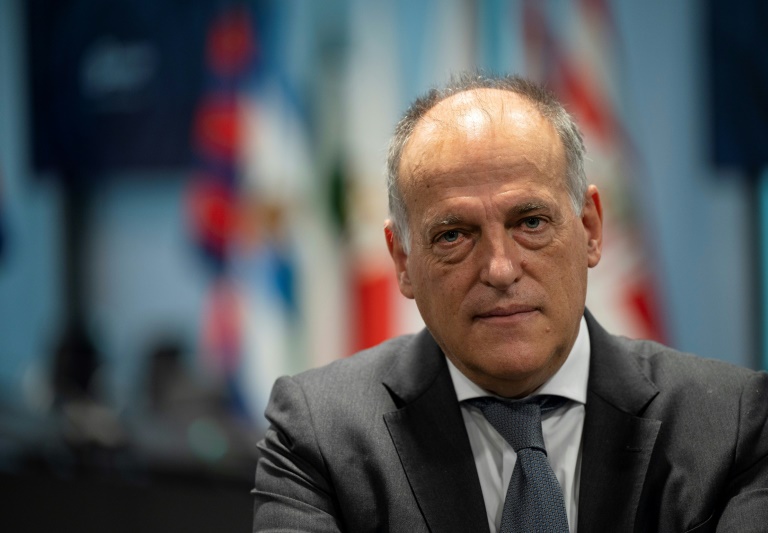
Spain’s top football division, La Liga, has taken out a court injunction against the beIN Media Group to freeze 50 million euros ($48.5 million) of their assets after non-payment for television rights.

The dispute is widely seen as the latest salvo in a feud between La Liga’s outspoken president Javier Tebas and beIN Group Chairman Nasser Al-Khelaifi, who is also the president of Qatari-owned Paris Saint-Germain.

The two men have been at loggerheads on a range of issues over the past few years.

A Spanish court placed a temporary hold on the 50 million euros pending a full hearing on the case, according to court documents issued on Monday that AFP has seen.

A La Liga spokesperson confirmed the Spanish league had sought legal remedies “to guarantee the payment of the amounts owed from the contracts for international TV rights following non-payment by beIN.”

The media group broadcasts La Liga football across three continents and in 35 countries, including France, Hong Kong and New Zealand, paying La Liga an estimated 1.5 billion euros over the past five years.

“BeIN is one of the leading media groups in world sport and entertainment. Our reputation is founded on decades of significant investment, best-in-class broadcasting, long-term and trusted relationships with rights-holders, and a track record of payment,” a beIN Media Group spokesperson told AFP.

“We will not discuss publicly the private discussions we’ve been having with La Liga, or any rights-holder for that matter, regarding specific contracts. That is not how business should be conducted, certainly not by professional and dignified institutions.

“If we ran our operations reacting to certain executives’ comments on others within the sports industry, we wouldn’t be in business.”

Al-Khelaifi has become an increasingly powerful presence in the world of football as president of the European Club Association (ECA). Both he and Tebas are on UEFA’s Executive Committee.

Tebas condemned PSG and Premier League side Manchester City in June this year for violating Financial Fair Play rules, and has often railed against “state-owned” clubs for “financial doping”. PSG are owned by a Qatari investment fund.

La Liga protested against PSG signing Kylian Mbappe to a new contract in the summer, with the player turning down Real Madrid, by filing a complaint against them in a French court. 

At the time, Tebas described the new Mbappe deal as “an insult to football”.

At a La Liga event in May, Tebas attacked Al-Khelaifi for having too many conflicts of interest given his multiple positions in football. 

“He wears a lot of hats, there’s too many conflicts of interest and this cannot be,” said Tebas.

“It can’t happen in football in 2022. A leading actor like him cannot be in these organisations and preside over a TV channel that buys (the rights to) La Liga, the Champions League, (and) internationals.”

WWII munitions hinder Nord Stream pipeline probe

Investigations into the suspected sabotage of the Nord Stream gas pipelines linking Russia with Europe are “progressing well”, despite World War II munitions on the seabed, Denmark said Thursday.

“It’s a zone marked by the presence of munitions — used or not — from World War II,” Danish Defence Minister Morten Bodskov told reporters on the sidelines of a meeting of the NATO defence alliance in Brussels.

“There’s a lot of stuff at the bottom of the sea, so it’s not so easy.”

“But the work is continuing and going well,” he added.

The two Nord Stream pipelines were damaged by four explosions under the Baltic Sea at the end of September, causing major gas leaks.

Sweden has announced that preliminary underwater inspections backed up suspicions of probable sabotage.

“With Sweden and Germany, Denmark is carrying out an inquiry which is progressing well,” the minister said.

“What we discover will of course be made public.”

With fingers being pointed at Russia for the sabotage, Moscow demanded to be part of the investigations into the explosions which happened in international waters, but Copenhagen and Stockholm refused.

Russia’s ambassador to Copenhagen said the credibility of the inquiry was undermined by Moscow’s absence.

But Sweden’s outgoing Prime Minister Magdalena Andersson told Moscow to open its own investigation.

Both Moscow and Washington have denied responsibility for the gas leaks.

WWII munitions hinder Nord Stream pipeline probe

Investigations into the suspected sabotage of the Nord Stream gas pipelines linking Russia with Europe are “progressing well”, despite World War II munitions on the seabed, Denmark said Thursday.

“It’s a zone marked by the presence of munitions — used or not — from World War II,” Danish Defence Minister Morten Bodskov told reporters on the sidelines of a meeting of the NATO defence alliance in Brussels.

“There’s a lot of stuff at the bottom of the sea, so it’s not so easy.”

“But the work is continuing and going well,” he added.

The two Nord Stream pipelines were damaged by four explosions under the Baltic Sea at the end of September, causing major gas leaks.

Sweden has announced that preliminary underwater inspections backed up suspicions of probable sabotage.

“With Sweden and Germany, Denmark is carrying out an inquiry which is progressing well,” the minister said.

“What we discover will of course be made public.”

With fingers being pointed at Russia for the sabotage, Moscow demanded to be part of the investigations into the explosions which happened in international waters, but Copenhagen and Stockholm refused.

Russia’s ambassador to Copenhagen said the credibility of the inquiry was undermined by Moscow’s absence.

But Sweden’s outgoing Prime Minister Magdalena Andersson told Moscow to open its own investigation.

Both Moscow and Washington have denied responsibility for the gas leaks.

British PM faces fresh political woes after meeting with MPs

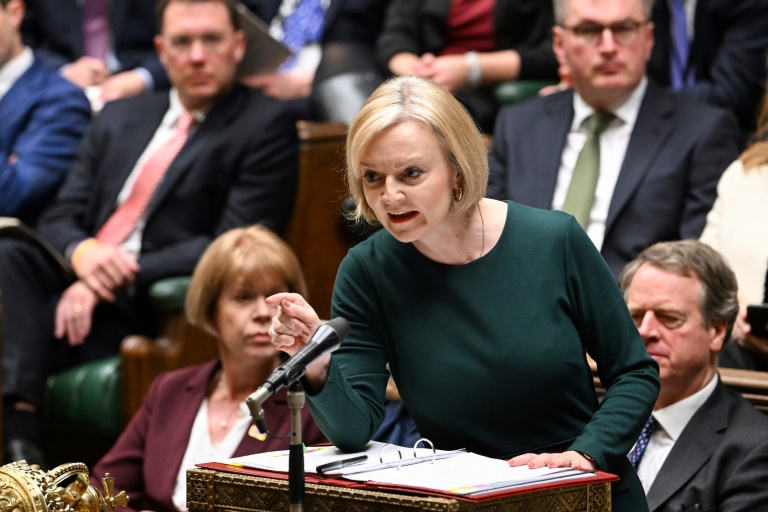
Embattled British Prime Minister Liz Truss faced fresh woes on Thursday after a prominent Conservative party insider said some of her own MPs were considering pushing for two of her former rivals to replace her.

“All sorts of different people are talking about all sorts of different things because the Conservative backbenchers are casting around for a possible replacement for (finance minister) Kwasi Kwarteng, even for a possible replacement for Liz Truss,” Paul Goodman told the BBC.

The former Tory MP, who is editor of the influential ConservativeHome blog, said that less than 40 days into her premiership “all sorts of names are being thrown about” to replace the beleaguered leader.

They included former finance minister Rishi Sunak, who stood against Truss for the leadership of the Tory Party and “even Boris Johnson”, who she replaced as premier and party leader early last month.

“One idea doing the rounds is that Penny Mordaunt and Rishi Sunak, who, after all, between them got pretty much two-thirds of the votes of MPs (in the leadership contest), come to some kind of arrangement and essentially take over.”

Mordaunt, a former defence minister, also stood against Truss, and is currently a member of her government.

– Austerity fears –

Truss on Wednesday appeared in parliament for the first time since her government’s controversial September 23 mini-budget prompted weeks of economic upheaval.

She told MPs she was “absolutely” committed to pledges made before she became leader to maintain current spending.

But with currency, bond and other markets spooked by the extra borrowing earmarked to pay for the mini-budget’s tax cuts, fears have grown that she will slash government department budgets, returning to the unpopular austerity policy of a decade ago.

Goodman, however, said he was “beginning to wonder whether or not ministers and Conservative MPs are capable of putting together a package of public spending cuts on the scale required”.

“And if they do, whether they’re going to be acceptable to the markets, or whether the markets are now going to demand the withdrawal, in effect, of the mini-budget, or most of it, that Kwasi Kwarteng announced only very recently.”

He said a small number of individual MPs had in recent days demanded government U-turns on Truss’s tax cutting policies.

“I don’t really know if they’re a majority or not, but if I’m right then we will see the government have great difficulty in getting this package of cuts together.”

Foreign Secretary James Cleverly on Thursday insisted the government would stick with Kwarteng’s mini-budget.

“It was about making sure that taxes for 30 million people were reduced a little bit and those are really strong principles. I think we should absolutely stick with those.

“All those things are really key for the growth agenda the prime minister has put forward,” he said.

His comments followed a meeting of Truss and members of her party on Wednesday.

Truss is the Conservative Party’s fourth leader in seven years.

Johnson was forced to quit in July after dozens of resignations from his government in protest at a series of scandals.

Close Bitnami banner
Bitnami