World

Europe heading for unusually warm winter: forecaster

Europe faces a higher-than-usual chance of a cold blast of weather before the end of the year, but the winter overall is likely to be warmer than average, the continent’s long-range weather forecaster said Thursday.

Temperatures this winter will be crucial for homeowners worried about the record cost of heating their homes, and for European policymakers seeking to avoid energy rationing due to cuts in Russian gas supplies. 

“We see the winter as being warmer than usual,” said Carlo Buontempo, director of the Copernicus Climate Change Service that produces seasonal forecasts for the European Centre for Medium-Range Weather Forecasts (ECMWF).

“Nevertheless there is a still a significant chance of a block situation, which can lead to cold temperatures and low wind over Europe,” he told AFP as the service issued a monthly update to its forecasts.

A so-called block or blocking pattern in the winter can bring stable, often wind-free weather accompanied by freezing temperatures.

“This was looking more likely in November, but there now looks like a pronounced probability of a cold outbreak in December,” Buontempo said.

The ECMWF produces weather modelling with data from a range of national weather services around Europe.

Its forecasts are based on indicators such as ocean and atmospheric temperatures, as well as wind speeds in the stratosphere, but do not have the accuracy of short-range reports.

The models provide the “best information possible, to give a hint, to guide our decisions”, Buontempo said. 

The European winter was expected to be warmer than usual because of the “La Nina” global weather phenomenon, which is related to cooling surface temperatures in the central and eastern equatorial Pacific Ocean.

“We know that in a La Nina year, the latter part of the European winter tends to favour westerly winds, so warm and wet,” Buontempo said.

The agency will update its winter season forecast next month when it will have greater confidence because “all the drivers for the winter will be more active”, he said.

Europe heading for unusually warm winter: forecaster

Europe faces a higher-than-usual chance of a cold blast of weather before the end of the year, but the winter overall is likely to be warmer than average, the continent’s long-range weather forecaster said Thursday.

Temperatures this winter will be crucial for homeowners worried about the record cost of heating their homes, and for European policymakers seeking to avoid energy rationing due to cuts in Russian gas supplies. 

“We see the winter as being warmer than usual,” said Carlo Buontempo, director of the Copernicus Climate Change Service that produces seasonal forecasts for the European Centre for Medium-Range Weather Forecasts (ECMWF).

“Nevertheless there is a still a significant chance of a block situation, which can lead to cold temperatures and low wind over Europe,” he told AFP as the service issued a monthly update to its forecasts.

A so-called block or blocking pattern in the winter can bring stable, often wind-free weather accompanied by freezing temperatures.

“This was looking more likely in November, but there now looks like a pronounced probability of a cold outbreak in December,” Buontempo said.

The ECMWF produces weather modelling with data from a range of national weather services around Europe.

Its forecasts are based on indicators such as ocean and atmospheric temperatures, as well as wind speeds in the stratosphere, but do not have the accuracy of short-range reports.

The models provide the “best information possible, to give a hint, to guide our decisions”, Buontempo said. 

The European winter was expected to be warmer than usual because of the “La Nina” global weather phenomenon, which is related to cooling surface temperatures in the central and eastern equatorial Pacific Ocean.

“We know that in a La Nina year, the latter part of the European winter tends to favour westerly winds, so warm and wet,” Buontempo said.

The agency will update its winter season forecast next month when it will have greater confidence because “all the drivers for the winter will be more active”, he said.

Asian markets drop as traders brace for key US inflation data

Equities fell in Asia and the dollar maintained its strength Thursday ahead of the release of US inflation data that could determine the pace of Federal Reserve interest rate hikes.

The release of the September report comes a day after minutes from the central bank’s latest policy meeting showed officials determined to win their battle against runaway prices by ramping up borrowing costs, though they did note the risk to the economy that posed.

Investors are growing increasingly worried that the strict monetary tightening campaign — including three bumper rate hikes in succession — will plunge the United States into recession.

While there are hopes for signs of a slowdown, traders have taken to the sidelines in case of more volatility.

On Wednesday, figures showed wholesale inflation rose a forecast-beating 0.4 percent.

After another day of losses on Wall Street, Asia was again in the red with Hong Kong, Singapore and Seoul off more than one percent.

Tokyo, Shanghai, Mumbai, Wellington and Taipei were also off.

London and Paris fell but Frankfurt edged up.

“The big rise in core prices would appear to suggest that inflation is likely to be much stickier over the next few months that markets had originally been hoping,” said CMC Markets analyst Michael Hewson.

This, he added, was “adding to the risk we could see the Federal Reserve not only be much more aggressive on rate hikes, but keep those rates higher for longer”.

Minutes from the Fed’s September meeting suggested it will press on with a fourth straight 0.75 percentage-point hike next month, with policymakers noting a slowdown of growth and the jobs market would be “required” to tame inflation, adding that prices remained “unacceptably high”.

They also pointed out that prices had “not yet responded” to the previous tightening.

Bank officials had for months stuck to a line that they will continue ramping up rates and hold them until they were satisfied they have slain inflation.

But the minutes said “several participants noted that, particularly in the current highly uncertain global economic and financial environment, it would be important to calibrate the pace of further policy tightening with the aim of mitigating the risk of significant adverse effects on the economic outlook”.

However, they said the cost of not doing enough to tackle prices outweighed the cost of doing too much.

– Dollar still king –

“The Fed remains purposefully driven to tighten monetary policy further into restrictive territory given the rather gradual cooling of economic activity and slow inflation response,” said Gregory Daco, at Ernst & Young.

But added that “the balance of risks is rapidly shifting”.

“Elevated global economic and financial market uncertainty will make it essential for the Fed to calibrate its policy response.”

They expect to lift rates to around 4.6 percent in 2023, according to the median estimate — from the current 3-3.25 percent.

Expectations for even more tightening kept the dollar elevated across the board, and it hit a fresh 24-year high near 147 yen, more than one yen above the point at which Japanese authorities last month intervened to protect the currency.

Still, sterling held most of the gains it enjoyed Wednesday fuelled by expectations the Bank of England will unveil a huge rate hike next month in the wake of volatility in UK financial markets.

The crisis in London saw the yield on 30-year government bonds bounce above five percent, while that on 10-year bonds hit 4.64 percent, the highest since 2008 during the global financial crisis.

The UK government’s increased borrowing costs are a reflection of market unease regarding the affordability of upcoming tax cuts aimed at supporting Britain’s recession-threatened economy.

Oil prices edged up after dropping Wednesday in response to a report from the industry-funded American Petroleum Institute indicating a huge jump in US stockpiles, suggesting weakening demand.

Meanwhile, OPEC trimmed its estimate for growth in demand this year and next by half a million barrels a day.

A drop in the past few days has eaten into last week’s gains that came in response to a decision by OPEC and other producers to slash output by two million barrels a day. 

– Key figures around 0810 GMT –

Tokyo – Nikkei 225: DOWN 0.6 percent at 26,237.42 (close)

Hong Kong – Hang Seng Index: DOWN 1.9 percent at 16,389.11 (close)

Shanghai – Composite: DOWN 0.3 percent at 3,016.36 (close)

London – FTSE 100: DOWN 0.5 percent at 6,793.63

Pound/dollar: DOWN at $1.1090 from $1.1101 Wednesday

Dollar/yen: UP at 146.83 yen from 146.86 yen

Euro/dollar: DOWN at $0.9704 from $0.9707

Euro/pound: UP at 87.54 pence from 87.41 pence

West Texas Intermediate: UP 0.6 percent at $87.77 per barrel

Brent North Sea crude: UP 0.8 percent at $93.20 per barrel

New York – Dow: DOWN 0.1 percent at 29,210.85 (close)

Western allies vow to get air defence to Ukraine 'as fast as can'

International backers of Ukraine vowed on Wednesday to deliver new air defences “as fast as we can”, as Kyiv pressed them to bolster protection against Russia’s missile blitz.

A US-led group of some 50 countries held talks at NATO headquarters in Brussels with the focus on air defences after Russian President Vladimir Putin unleashed a barrage across Ukraine following a blast at a bridge to the annexed Crimea peninsula. 

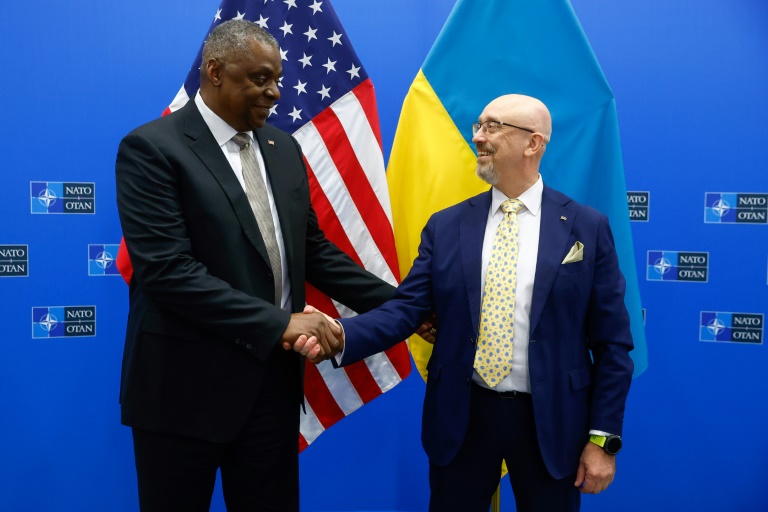
Ukrainian Defence Minister Oleksiy Reznikov said just three words when asked what he hoped for from the meeting: “Air defence systems.”

Western allies have scrambled to work out how to supply more advanced systems to Ukraine as diplomats admit they have precious few to spare.

“The systems will be provided, as fast as we can physically get them there,” United States Defence Secretary Lloyd Austin said after the meeting, without giving details on any new pledges.  

“We’re going to provide systems that we have available … We’re also going to try to provide additional munitions to the existing systems that the Ukrainian forces are using.”

A first Iris-T medium-range system has arrived in Ukraine after Germany decided to ship it before even giving it to its own troops. 

The United States has also said it is looking to expedite the delivery of its NASAMS anti-missile and anti-drone system to Kyiv and a first batch of two is expected in the coming weeks. 

Deliveries of a further six units could take far longer as they need to be manufactured and US sources said Washington is eyeing the possibility of trying to get Cold War-era Hawk systems to Ukraine in the meantime. 

“There’s other systems out there throughout the world that are available,” US top general Mark Milley said. 

“The task will be to bring those together, get them deployed.”

– ‘Pivotal moment’ –

Ukraine’s President Volodymyr Zelensky had called on G7 leaders on Tuesday to help establish an “air shield” over his country more than seven months into the war against Moscow. 

Austin said that the resolve of Ukraine’s allies to support Kyiv had been “heightened by the deliberate cruelty of Russia’s new barrage against Ukraine’s cities”. 

“Those assaults on targets with no military purpose again revealed the malice of Putin’s war of choice,” he said. 

NATO defence ministers, who will meet on Thursday, are pushing for ways to bolster their overall weapons stockpiles as the war in Ukraine has depleted their shelves.

NATO members have supplied weaponry worth billions of dollars to help fight Russia’s more than seven-month invasion of Ukraine and have vowed to keep supplies flowing as Kyiv pushes to recapture occupied territories. 

“Allies have provided support to Ukraine by reducing NATO stocks, or ammunition, or weapons. This has been the right thing to do, but of course, we need to address how to refill those stocks,” Stoltenberg said. 

“I expect that the ministers will agree to review our guidelines for stocks and also to engage more with industry.”

The NATO chief said the meeting in Brussels comes at a “pivotal moment” as Putin has followed up battlefield losses by annexing seized territory and issuing veiled nuclear threats. 

Western powers say they have seen no change in Moscow’s nuclear posture that would suggest it is getting ready to launch a strike. They have warned Moscow against deploying any small, tactical atomic bomb in Ukraine.

“There would be a sharp response — almost certainly drawing a physical response from many allies, and potentially from NATO itself,” a senior NATO official said. 

Italy parliament meets in step towards new government

Italy’s parliament meets for the first time Thursday since the far-right won elections last month, a key step in the process of forming a government.

Giorgia Meloni’s Brothers of Italy party, which has neo-fascist roots, secured a historic 26 percent of the vote in September 25 polls.

But she can only form a government with her fractious allies, Matteo Salvini, head of the far-right League, and Silvio Berlusconi, founder of right-wing Forza Italia.

The three leaders have been tussling over the formation of a cabinet able to manage the myriad of challenges facing the eurozone’s third-largest economy, notably soaring inflation and an energy crisis linked to the war in Ukraine.

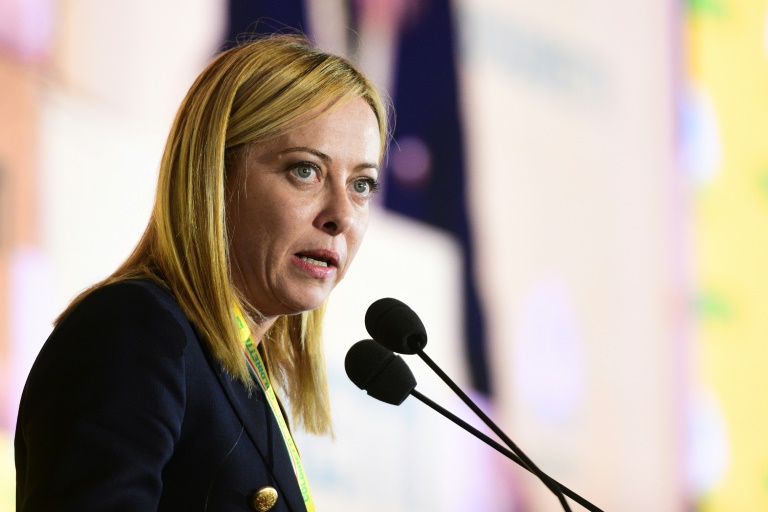
“We cannot waste any time, the situation in Italy is not easy,” Meloni said Wednesday ahead of talks with Salvini and Berlusconi, whose parties secured nine and eight percent of the vote respectively.

Members of the Senate and lower house will Thursday begin voting for new speakers, a process likely involving several rounds, potentially lasting into Friday.

The speakers will then take part in discussions with President Sergio Mattarella on who should lead the next government.

– ‘High tension’ –

The secret ballots were a “first test” in an atmosphere of “high tension” between the allied leaders, the Corriere della Sera newspaper said Thursday.

Whether or not Meloni, Salvini and Berlusconi’s parties voted in concert “will be indicative of their compactness”, it said.

The Stampa daily said the right was in “chaos”, while the Repubblica warned the three leaders were “unprepared” for government. 

Meloni will almost certainly be nominated prime minister — the first woman to take the job in Italy — but must agree with her allies on ministerial appointments and a programme for government before Mattarella confirms the position.

Meloni has said little in public since her election win, although she has taken to social media to dismiss media speculation about her ministerial picks.

Brothers of Italy has no experience of government — it won just four percent of the vote in 2018 general elections — but she has sought to reassure investors she can handle the pressure.

No firm name has yet to emerge for finance minister, the most important government post after prime minister as debt-laden Italy grapples with sky-high prices weighing heavily on households and businesses.

Italy has also been racing to reduce its dependence on gas from Russia, which the West has accused of deliberately shutting off supplies as part of the stand-off over the war in Ukraine.

The International Monetary Fund this week predicted the pressures would push Italy into recession next year, alongside Germany.

China's Xi on course for historic third term at zero-Covid Congress

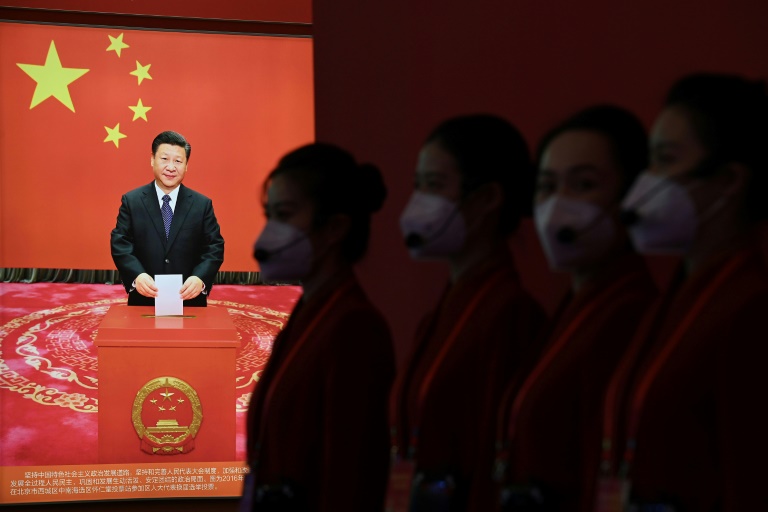
China’s 20th Communist Party Congress, which begins on Sunday, is expected to deliver President Xi Jinping a historic third term in control of a country his zero-Covid policy has closed off from much of the rest of the world.

Should everything go to plan, by the end of the twice-in-a-decade meeting, the 69-year-old will be reconfirmed as the party’s general secretary, cementing his position as China’s most powerful leader since Mao Zedong.

Security has been stepped up around Beijing’s Tiananmen Square, where on Sunday almost 2,300 delegates from every province in China will gather at the imposing Great Hall of the People.

And as Xi continues to insist the country sticks to its policy of containing and eliminating the coronavirus within its borders, the Congress will take place under strict health protocols.

In a highly choreographed, mostly closed-door conclave, the participants will pick members of the party’s around 200-member Central Committee, which in turn selects the 25-person Politburo and its all-powerful Standing Committee — the country’s highest leadership body.

But in reality, “everything has been played out in advance, because the congress does not take place until the factions have agreed”, sinologist Jean-Philippe Beja told AFP.

Critics say Xi has also eliminated any potential political rivals in recent years, especially through his long-running campaign against corruption.

The speech Xi makes on the first day will give an assessment of the previous term but also a roadmap for the next five years, for both party and country.

At the 2017 Congress, Xi promised a new era of socialism with Chinese characteristics and promised Beijing would engage with the world. 

“Openness brings progress, while self-seclusion leaves one behind,” he said. “China will not close its door to the world; we will only become more and more open.” 

– Covid curbs – 

But five years later, China has done the opposite. 

As the rest of the world has gradually returned to pre-pandemic norms, Beijing has stuck to a hardline zero-Covid policy characterised by travel restrictions, obligatory quarantines, and repeated lockdowns. 

As well as causing widespread hardship for Chinese citizens, the strategy has also spooked the business community. 

Economic growth has stalled at a time when other long-running problems, such as the real estate downturn, are coming to a head. 

“Beijing’s zero-Covid policy has discouraged much-needed investment and failed to win the hearts and minds of young Chinese, who have suffered the most economically and socially,” said Yu Jie at the Asia-Pacific programme at think tank Chatham House. 

“Many Chinese worry about seeing a return to a period of isolation” not seen in China since before the country’s opening up in the late 1970s, sinologist Beja told AFP. 

China’s relations with the United States have also soured further over the last five years, and Xi’s more assertive foreign policy has sparked disputes everywhere from India to Australia and Canada.

Western countries have pushed back against the increasingly aggressive rhetoric deployed against the self-ruled island of Taiwan, which Beijing sees as its territory to be taken by force if necessary.

They have also accused China of widespread human rights abuses, particularly in the western region of Xinjiang.

“President Xi’s precedent-breaking third term bodes ill for human rights in China and around the world,” said Yaqiu Wang, senior China researcher at Human Rights Watch. 

– Political guesswork –

With 96.7 million members, China’s Communist Party is one of the world’s largest political organisations, but its inner workings remain largely opaque.

Observers can only guess at the future composition of the Standing Committee. 

Since the 1990s, Politburo members have generally retired after two terms — but a third term for Xi would break that precedent, meaning even less than usual can be divined about the next crop of leaders. 

The choice of people who will surround Xi will be crucial, said Steve Tsang, director of the SOAS China Institute. 

“I think Xi will be careful in sending a clear message that no one elevated to the Politburo Standing Committee will be a successor at the 21st Congress,” he said. 

The Politburo lineup will be revealed the day after the meeting ends. 

If, as expected, Xi Jinping stays on as general secretary, he will then be confirmed as president for another term at the annual meeting of China’s National People’s Congress next March.

Though the 20th Party Congress will only guarantee one more five-year term, many think he will stay in power for much longer. 

“The uncertainty is absolute,” said political scientist Jean-Pierre Cabestan. 

“But given the promotion of Xi Jinping Thought, the restoration of the personality cult, the importance of his power at the heart of the party’s leadership, this suggests someone who will stay in power for a long time, maybe for life.”

Romania's epic trail hopes to revive rural Transylvania

Europe has a new epic trail to rival the Camino to Santiago de Compostela in Spain.

The Via Transilvanica across Romania is so long it took its founder Alin Useriu nearly two months to walk to celebrate its official opening this week.

The 52-year-old first had the idea for the 1,400-km (870-mile) way through the wilds of Transylvania four years ago.

Useriu wanted to create something similar to the ancient pilgrim route to Santiago or the vast American Pacific Crest Trail.

Little did he know then that more than 10,000 people would help turn that dream into reality, volunteering to mark out the route through the Carpathians and some of the most spectacular landscape on the continent.

“My only goal was to revitalise rural areas, and all the friends I talked to were thrilled about the project,” he told AFP.

– Rural exodus –

Romanians have embraced the idea with gusto.

“This is the first project since the revolution (of 1989) which really brings us together, which allows us to discover landscapes and people that we would not have otherwise,” said mud-splattered Sergiu Paca, who AFP met cycling the route in the isolated village of Sapartoc near Sighisoara.

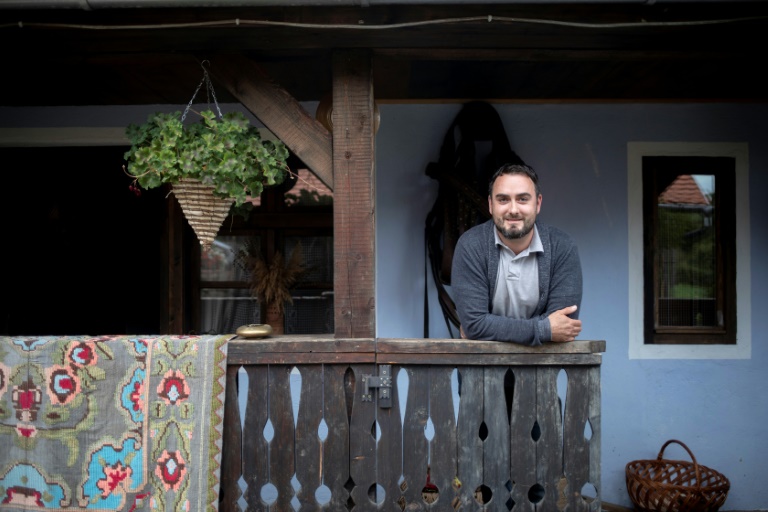
Nearby, Radu Moldovan has transformed one of the deserted old village homes into a pretty guesthouse.

“We wanted to put into practice all the beautiful theories we had learned at university and be a living example,” said the farmer who trained in environmental issues and rural development.

“I could not have dreamed of better for Sapartoc,” said the 35-year-old, hoping it will be a major boost to the village of 22 souls. 

Despite strong economic growth, Romania has seen an exodus of young people from rural areas, with some of the country’s most beautiful regions suffering the heaviest depopulation.

In Archita, another village on the route, truffle farmer Gheorghe Silian — who sports a traditional felt hat — also hoped the trail would help bring life back to the region. 

“I moved back here after several years in Italy,” said the 58-year-old, one of millions of Romanians who emigrated to Western Europe in search of a better life after the collapse of communism.

– First baby in 47 years –

“For the past three years (after the trail was laid out) tourists have reappeared, coming here for a meal or to rest for the night,” he said as he surveyed his oak and almond trees.

“It also means I can sell them my truffle-based products and my palinka,” the local plum brandy.

The eco-tourism the trail hopes to encourage is also about preserving local architecture and traditions.

Not that Useriu sees much danger of mass tourism of the kind seen on Romania’s Black Sea beaches.

“We have set the maximum traffic at 300,000 people per year, and we are far from it yet,” he said. 

But already Useriu’s dream of the trail helping to revitalise mountain villages seems to be bearing fruit.

“My wife gave birth to our son a few months ago — the first birth in the village of Sapartoc for 47 years!” said Moldovan.

'Everything has collapsed': Russia's draft tanks small businesses

In his brand new co-working space in Chelyabinsk, a city in central Russia, entrepreneur Maxim Novikov is counting the empty seats.

The space is usually overflowing with designers, programmers and young Russians working on their start-ups.

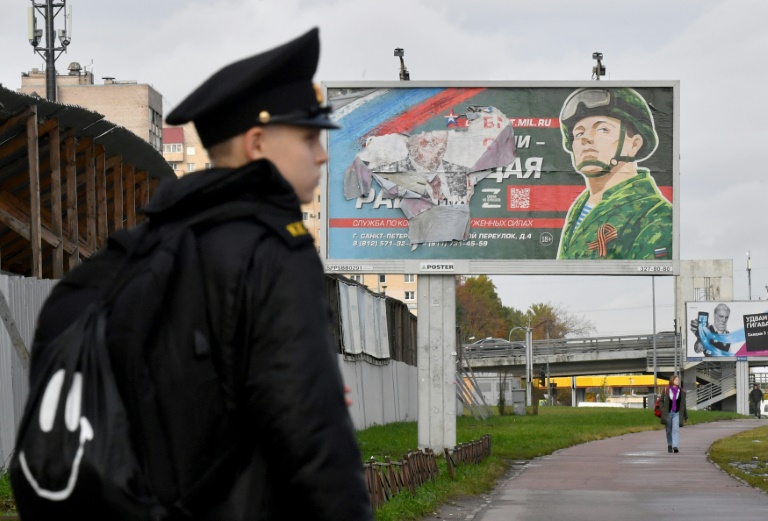
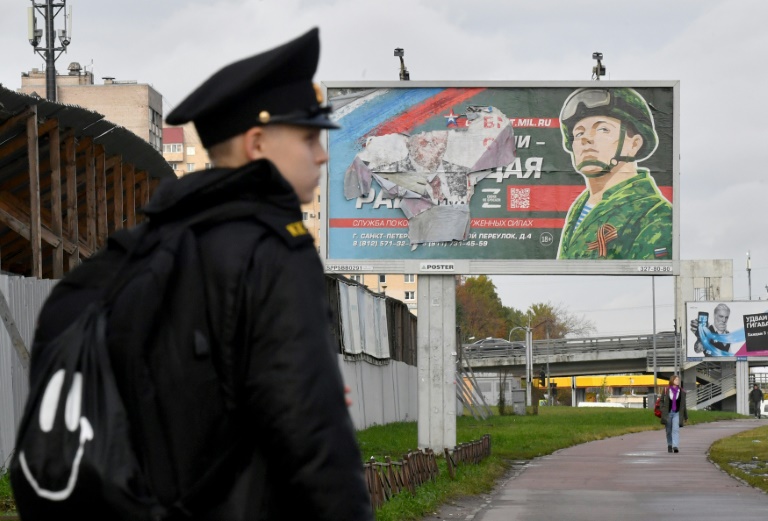
But since President Vladimir Putin announced a mobilisation of hundreds of thousands of young Russian men last month, the 33-year-old has lost much of his clientele.

“Many have stopped coming,” he told AFP by phone.

Instead, they are filling the depleted ranks of Russia’s army or they are among the tens of thousands of others who have fled south for neighbouring Kazakhstan.

The Kremlin’s mobilisation has brought uncertainty and chaos to businesses already hard-hit by sanctions and still recovering from the fallout of the pandemic.

In the last three weeks, a little more than half of the 77 spots in Novikov’s co-working place were occupied.

He has “no idea” if the people who fled or were drafted will keep paying subscription fees, which cost between 70 and 130 dollars.

And now Novikov is worried about his loans.

“Turnover has already dropped by more than 40 percent this year,” Novikov, an architecture graduate, said. 

“I wanted to buy a third space but for the moment it is not possible to take the risk.” 

 – ‘Projects on hold’ – 

But he is far from the only business owner in Russia who is growing more nervous over the workforce vacuum.

“It means projects are being put on hold and private companies will be afraid to invest,” said Natalia Zubarevich, an economist at Moscow State University.

Russia’s economy has already been battered this year by unprecedented Western sanctions in response to Putin’s decision to send troops to Ukraine on February 24.

But Zubarevich said mobilisation was an “additional aggravating factor.”

She added she was not surprised young men from the provinces were joining the army, attracted by monthly payouts that are sometimes almost as much as their annual salaries. 

Meanwhile, in glitzy central Moscow, 45-year-old Yelena Irisova is distraught at seeing her company, which produces luxury leather bags, stop production.

She employs around ten people in the small business. 

But two of her craftsmen left the company in recent weeks — one fearing mobilisation, another to help her daughter whose husband had been sent to the front.

“After September 21, everything collapsed,” Irisova said. “Our sales fell threefold — from 10 to three orders a day.”

She says her savings will keep her going “a month or two, but not more.”

– Almost no orders – 

No Russian business seems unscathed.

Katerina Iberika, 39, who owns a pastry shop specialising in birthday cakes in Moscow, is also facing ruin. 

Her five employees are women with exemptions from mobilisation. But it’s the low morale among the public that’s endangering her business. 

“Cancellations of orders for big events started two days before mobilisation,” Iberika told AFP.

Now she gets nearly no orders at all, except for “very small” ones. 

She is considering leaving Russia.

In increased isolation — and hit by sanctions and mobilisation — an anxious Russian society is watching its spending closely. 

“People are looking to put their money aside,” Sofya Donets, chief economist for Russia at Renaissance Capital, said.

“They’re not going to overspend.”

Some industries have been harder hit than others by a sudden lack of men. 

Employers have sounded the alarm in recent days, asking the government for exemptions from mobilisation, in particular for small and medium-sized companies.

Russia’s economic development ministry told AFP that it had drawn up a list of measures for these “problematic issues”.

It said it had facilitated grants and micro credits. 

“A mobilised entrepreneur will be able to suspend the fulfilment of obligations” to pay the loans back, the ministry said.

Analyst Sofya Donets expects “more intervention and state aid” to calm the effects of mobilisation. 

Especially since Russian coffers continue to fill up thanks to its energy exports.

'Everything has collapsed': Russia's draft tanks small businesses

In his brand new co-working space in Chelyabinsk, a city in central Russia, entrepreneur Maxim Novikov is counting the empty seats.

The space is usually overflowing with designers, programmers and young Russians working on their start-ups.

But since President Vladimir Putin announced a mobilisation of hundreds of thousands of young Russian men last month, the 33-year-old has lost much of his clientele.

“Many have stopped coming,” he told AFP by phone.

Instead, they are filling the depleted ranks of Russia’s army or they are among the tens of thousands of others who have fled south for neighbouring Kazakhstan.

The Kremlin’s mobilisation has brought uncertainty and chaos to businesses already hard-hit by sanctions and still recovering from the fallout of the pandemic.

In the last three weeks, a little more than half of the 77 spots in Novikov’s co-working place were occupied.

He has “no idea” if the people who fled or were drafted will keep paying subscription fees, which cost between 70 and 130 dollars.

And now Novikov is worried about his loans.

“Turnover has already dropped by more than 40 percent this year,” Novikov, an architecture graduate, said. 

“I wanted to buy a third space but for the moment it is not possible to take the risk.” 

 – ‘Projects on hold’ – 

But he is far from the only business owner in Russia who is growing more nervous over the workforce vacuum.

“It means projects are being put on hold and private companies will be afraid to invest,” said Natalia Zubarevich, an economist at Moscow State University.

Russia’s economy has already been battered this year by unprecedented Western sanctions in response to Putin’s decision to send troops to Ukraine on February 24.

But Zubarevich said mobilisation was an “additional aggravating factor.”

She added she was not surprised young men from the provinces were joining the army, attracted by monthly payouts that are sometimes almost as much as their annual salaries. 

Meanwhile, in glitzy central Moscow, 45-year-old Yelena Irisova is distraught at seeing her company, which produces luxury leather bags, stop production.

She employs around ten people in the small business. 

But two of her craftsmen left the company in recent weeks — one fearing mobilisation, another to help her daughter whose husband had been sent to the front.

“After September 21, everything collapsed,” Irisova said. “Our sales fell threefold — from 10 to three orders a day.”

She says her savings will keep her going “a month or two, but not more.”

– Almost no orders – 

No Russian business seems unscathed.

Katerina Iberika, 39, who owns a pastry shop specialising in birthday cakes in Moscow, is also facing ruin. 

Her five employees are women with exemptions from mobilisation. But it’s the low morale among the public that’s endangering her business. 

“Cancellations of orders for big events started two days before mobilisation,” Iberika told AFP.

Now she gets nearly no orders at all, except for “very small” ones. 

She is considering leaving Russia.

In increased isolation — and hit by sanctions and mobilisation — an anxious Russian society is watching its spending closely. 

“People are looking to put their money aside,” Sofya Donets, chief economist for Russia at Renaissance Capital, said.

“They’re not going to overspend.”

Some industries have been harder hit than others by a sudden lack of men. 

Employers have sounded the alarm in recent days, asking the government for exemptions from mobilisation, in particular for small and medium-sized companies.

Russia’s economic development ministry told AFP that it had drawn up a list of measures for these “problematic issues”.

It said it had facilitated grants and micro credits. 

“A mobilised entrepreneur will be able to suspend the fulfilment of obligations” to pay the loans back, the ministry said.

Analyst Sofya Donets expects “more intervention and state aid” to calm the effects of mobilisation. 

Especially since Russian coffers continue to fill up thanks to its energy exports.

Russian Orthodox Church gets warm welcome in Orban's Hungary

Despite his staunch support of Moscow’s invasion of Ukraine, Patriarch Kirill, the leader of Russia’s Orthodox church, has so far escaped European Union sanctions — thanks to the support of Hungarian leader Viktor Orban.

Anxious to defend “Christian values”, Orban’s nationalist government has sought to strengthen ties with the Patriarch of Moscow, who last week assured Russian leader Vladimir Putin that “God put you in power”.

Orban has showered the church with state funds even though just 14,000 of Hungary’s nearly 10 million people are Orthodox.

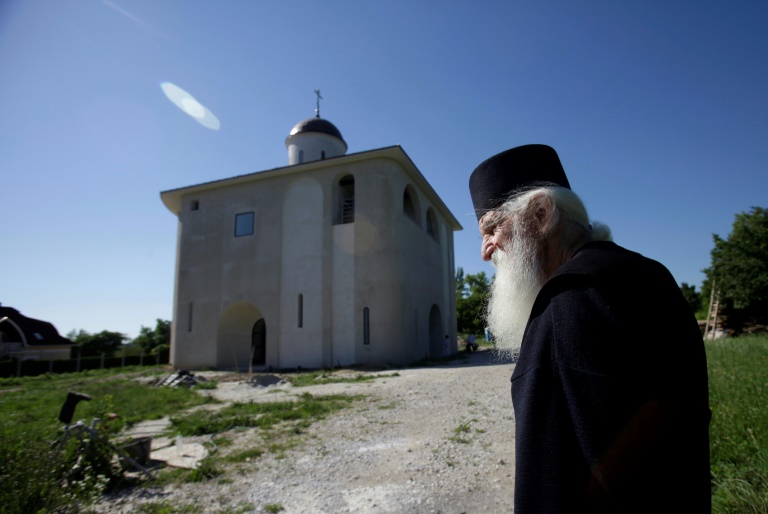
In the spa town of Heviz in western Hungary, mass is already being celebrated in a new Russian Orthodox church even though it is not yet finished.

Despite the rough concrete floor when AFP visited in June, the faithful have nothing but praise for Orban.

“He understands what is important. Hungary is a model of Orthodox-Catholic relations,” said Russian businessman Alexei Yazikov, 61, from Mytishchi near Moscow, who regularly visits Hungary.

Priest Nikolai Kim said his parish was “immensely grateful” to the generosity of the Hungarian government in supporting the one-million-euro ($1 million) chapel, which sits beside the shores of a small lake.

“Thanks to them we (have) built such a wonderful church… But it is not only us, our small parish, who feel this gratitude, it is the whole Russian Church,” he told AFP.

– ‘Moscow connection’ –

Patriarch Kirill made headlines last week when he said Putin’s reign had been mandated by God as he wished the Russian leader a happy 70th birthday.

The EU stopped short of blacklisting Kirill in June after Hungary objected to sanctions on “religious freedom” grounds.

Orban had earlier earned praise from Kirill after winning a fourth straight term in office in April’s elections, with the patriarch calling him “one of the few European politicians who makes a remarkable effort to uphold Christian values.”

“Orban has made this big pitch that Hungary is a Christian country, and his link with Russia is an aspect of that,” said author and journalist Jonathan Luxmoore of The Church Times newspaper. 

“His idea is that if the liberal western neighbours aren’t going to uphold traditional Christian values then at least Hungary can do it,” he told AFP.  

More than half of Hungarians identify as Christian, with Catholics making up the bulk and Protestants numbering about 13 percent of the population. 

But Orban — who comes from a Calvinist background — says an alliance with Orthodoxy can be a buttress against waning Christianity in the West under Pope Francis, who has been attacked by pro-Orban media for being too liberal and even “anti-Christian” for supporting migrants.

Orban, the self-styled defender of “Christian Europe” from migration, believes he is fighting a “battle… for the soul of Europe”.

“We cannot win this battle without Orthodoxy,” he said last month, after receiving an award from Serbian Patriarch Porfirije for his efforts to protect Christianity.

Hungarian government officials responsible for religious affairs declined to speak to AFP.

According to Janos Reichert, a Hungarian religious affairs journalist, Orban’s support for Russian Orthodoxy “is important for the Moscow connection”. 

“He has an eastern-style mentality that has dismantled western-style separation of church and state in Hungary,” he said. 

– Stalled plans – 

Still, the war in Ukraine has frustrated his approach on the ground.

Orban’s government agreed to allocate 2.4 billion forints (5.7 million euros) for the renovation of three Russian Orthodox churches in 2016 and the construction of the new one in Heviz.

But work on the Heviz church has stalled as funds in the now-sanctioned Russian bank Sberbank are blocked, according to Svyatoslav Bulakh, a priest in the main Russian Orthodox church in Budapest.

“If Sberbank pays back this money, which has been blocked, then we can step further, but we don’t know when it can happen,” he told AFP this week.

Russian tourists thronged Heviz’s spas until the coronavirus pandemic hit in 2020.

And they have not returned in large numbers with direct flicks between Russia and Hungary cut since the start of the invasion of Ukraine. 

Close Bitnami banner
Bitnami