World

Finland hopes new nuclear reactor eases energy crunch

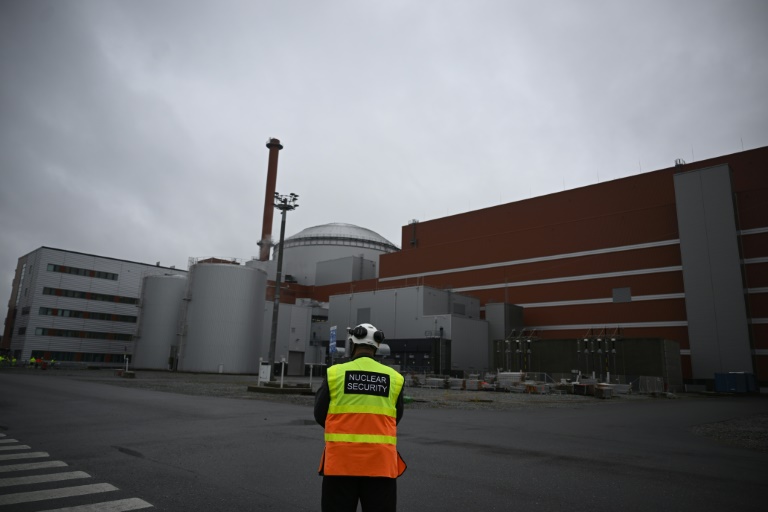
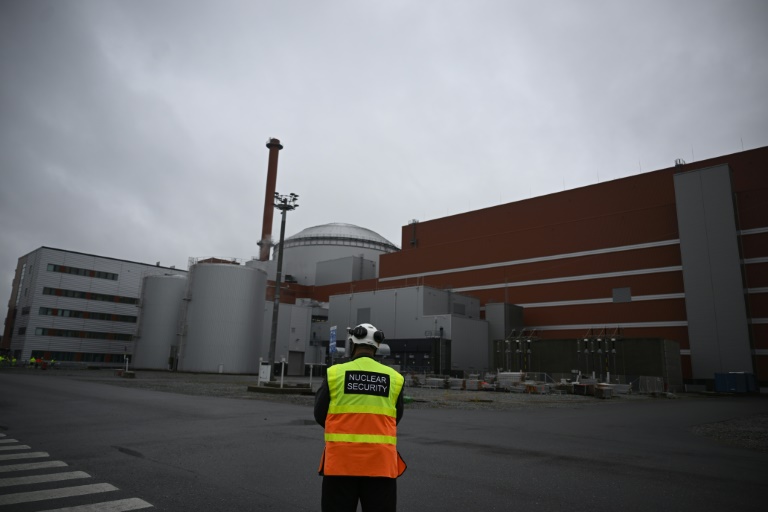
After over a decade of delays, the deafening sound of Finland’s new Olkiluoto 3 nuclear reactor finally running its turbine at full power was welcomed with joy — and relief.

The Nordic country is hoping the plant will be able to ease the coming winter’s challenges as Europe battles soaring energy prices following Russia’s invasion of Ukraine.

“It has taken a lot of perseverance and years of hard work to get to this point, so we feel pretty good at the moment,” Johanna Aho, a spokeswoman for the plant’s operator TVO, told AFP.

The almost 300-degree Celsius (572 F) steam gushing from the reactor turns the over 60-meter-long turbine up to 25 times every second, making a visit to the turbine island in protective gear feel as hot as one of Finland’s ubiquitous saunas.

More than 12 years behind schedule, on September 30, Olkiluoto 3 reached full power for the first time since construction began in 2005. 

With a power level of 1,600 megawatts, the reactor, located on Finland’s southwestern coast, is now the most powerful in Europe and the third most powerful in the world.

Around 10 full power tests remain for the unit — during which it will periodically stop producing electricity for several days or even weeks — before normal operation starts in December.

– Support for nuclear –

When the new unit reached full power on September 30, TVO said the Olkiluoto plant accounted for around 40 percent of Finland’s electricity production, with the Olkiluoto 1 and 2 reactors together producing approximately 21 percent and the new OL3 alone around 19 percent.

“That’s a lot of electricity and it’s the kind of steady, predictable and stable electricity production that nuclear power provides,” Aho said.

In recent years, support for nuclear energy has grown in Finland, spurred by concern over climate change.

A May poll by trade association Finnish Energy showed 60 percent of Finns supported nuclear power, a record high.

But after Finnish group Fennovoima in May terminated a nuclear power project with Russia’s Rosatom, citing risks linked to the war in Ukraine, there are no other nuclear reactor projects in the pipeline.

Finland gets around 50 to 60 percent of its electricity from hydro, wind, solar and biomass, with fossil fuels and peat comprising roughly 10 percent.

– French were ‘unprepared’ –

Olkiluoto 3 was meant to be up and running already in 2009, six years after TVO announced a deal with France’s Areva and Germany’s Siemens for the reactor’s construction.

But the project quickly ran into issues.

In 2006, TVO announced that “delays in the construction work and in manufacturing of the main coolant lines” had pushed the reactor’s starting date back to 2010-2011.

And when the Finnish nuclear safety agency STUK by 2009 required hundreds of improvements to be made due to “problems with the construction”, the partners started casting blame.

TVO demanded 2.4 billion euros in compensation from Siemens and Areva for the setbacks. The two in turn demanded 1.0 billion euros from TVO, arguing that the project had encountered “more rigorous security requirements” than initially foreseen.

Areva meanwhile accused STUK of being slow to approve documents, to which STUK responded by saying the consortium had been “unprepared”.

“The French did not understand at first the Finnish system, that no important device can be built before the plan is approved,” Jukka Laaksonen from STUK told AFP at the time.

After years of litigation and even more delays, Areva and TVO settled their disputes in November 2018, with the French agreeing to pay 450 million euros ($554 million) in compensation.

– Model plagued by delays –

Design work on the EPR began in 1992 with the objective of creating a next-generation reactor with added safety features that could win over public opinion which was highly sceptical of nuclear power following the Chernobyl catastrophe of 1986.

But the complex design has caused delays and problems.

Like Olkiluoto, France’s EPR which began construction in 2007 has been plagued by delays and is still not finished.

In Britain, the construction of an EPR at Hinkley Point in southwest England is also running behind schedule.

China launched two EPR reactors in the Taishan power plant in Guangdong province by 2019, but one was shut for over a year for repairs following damaged fuel pellets and a build-up of gasses in the closed cooling circuit.
Finland hopes new nuclear reactor eases energy crunch

After over a decade of delays, the deafening sound of Finland’s new Olkiluoto 3 nuclear reactor finally running its turbine at full power was welcomed with joy — and relief.

The Nordic country is hoping the plant will be able to ease the coming winter’s challenges as Europe battles soaring energy prices following Russia’s invasion of Ukraine.

“It has taken a lot of perseverance and years of hard work to get to this point, so we feel pretty good at the moment,” Johanna Aho, a spokeswoman for the plant’s operator TVO, told AFP.

The almost 300-degree Celsius (572 F) steam gushing from the reactor turns the over 60-meter-long turbine up to 25 times every second, making a visit to the turbine island in protective gear feel as hot as one of Finland’s ubiquitous saunas.

More than 12 years behind schedule, on September 30, Olkiluoto 3 reached full power for the first time since construction began in 2005. 

With a power level of 1,600 megawatts, the reactor, located on Finland’s southwestern coast, is now the most powerful in Europe and the third most powerful in the world.

Around 10 full power tests remain for the unit — during which it will periodically stop producing electricity for several days or even weeks — before normal operation starts in December.

– Support for nuclear –

When the new unit reached full power on September 30, TVO said the Olkiluoto plant accounted for around 40 percent of Finland’s electricity production, with the Olkiluoto 1 and 2 reactors together producing approximately 21 percent and the new OL3 alone around 19 percent.

“That’s a lot of electricity and it’s the kind of steady, predictable and stable electricity production that nuclear power provides,” Aho said.

In recent years, support for nuclear energy has grown in Finland, spurred by concern over climate change.

A May poll by trade association Finnish Energy showed 60 percent of Finns supported nuclear power, a record high.

But after Finnish group Fennovoima in May terminated a nuclear power project with Russia’s Rosatom, citing risks linked to the war in Ukraine, there are no other nuclear reactor projects in the pipeline.

Finland gets around 50 to 60 percent of its electricity from hydro, wind, solar and biomass, with fossil fuels and peat comprising roughly 10 percent.

– French were ‘unprepared’ –

Olkiluoto 3 was meant to be up and running already in 2009, six years after TVO announced a deal with France’s Areva and Germany’s Siemens for the reactor’s construction.

But the project quickly ran into issues.

In 2006, TVO announced that “delays in the construction work and in manufacturing of the main coolant lines” had pushed the reactor’s starting date back to 2010-2011.

And when the Finnish nuclear safety agency STUK by 2009 required hundreds of improvements to be made due to “problems with the construction”, the partners started casting blame.

TVO demanded 2.4 billion euros in compensation from Siemens and Areva for the setbacks. The two in turn demanded 1.0 billion euros from TVO, arguing that the project had encountered “more rigorous security requirements” than initially foreseen.

Areva meanwhile accused STUK of being slow to approve documents, to which STUK responded by saying the consortium had been “unprepared”.

“The French did not understand at first the Finnish system, that no important device can be built before the plan is approved,” Jukka Laaksonen from STUK told AFP at the time.

After years of litigation and even more delays, Areva and TVO settled their disputes in November 2018, with the French agreeing to pay 450 million euros ($554 million) in compensation.

– Model plagued by delays –

Design work on the EPR began in 1992 with the objective of creating a next-generation reactor with added safety features that could win over public opinion which was highly sceptical of nuclear power following the Chernobyl catastrophe of 1986.

But the complex design has caused delays and problems.

Like Olkiluoto, France’s EPR which began construction in 2007 has been plagued by delays and is still not finished.

In Britain, the construction of an EPR at Hinkley Point in southwest England is also running behind schedule.

China launched two EPR reactors in the Taishan power plant in Guangdong province by 2019, but one was shut for over a year for repairs following damaged fuel pellets and a build-up of gasses in the closed cooling circuit.
Ukraine claims new gains, welcomes Western air defence pledge

Ukraine said Wednesday it had reclaimed more territory in the south and welcomed a Western pledge to deliver air defence systems to Kyiv “as fast as we can” after days of intense Russian missile strikes.

A US-led group of around 50 countries held talks at the NATO headquarters in Brussels and vowed to deliver new anti-missile systems to Kyiv.

Ukraine is reeling from Russian attacks that have left scores dead and wounded as well as villages and towns without power and hot water across the country.

“The systems will be provided, as fast as we can physically get them there,” US Defense Secretary Lloyd Austin said after the meeting, without giving details.

In a further show of Western solidarity, the G7 vowed to “stand with Ukraine for as long as it takes”, while International Monetary Fund chief Kristalina Georgieva pledged financial help for the sake of “moving with you in the direction of a strong Ukraine”.

Ukrainian President Volodymyr Zelensky, who has described the Russian missile attacks as an act of terrorism and has pressed the West for an “air shield”, welcomed the promised anti-missile systems.

“The more audacious and cruel Russian terror becomes, the more obvious it is to the world that helping Ukraine to protect the sky is one of the most important humanitarian tasks for Europe today,” Zelensky said in his daily address to the nation.

– ‘Come back to the table’ –

As Ukraine faces a barrage of Russian aerial assaults, Britain on Thursday said it would supply drones and, for the first time, rockets capable of shooting down cruise missiles.

“The AMRAAM rockets… will be provided in the coming weeks for use with the NASAMS air defence systems pledged by the US,” the British defence ministry said in a statement.

In an interview, French President Emmanuel Macron also promised air defences.

“We’re going to deliver… radars, systems and missiles to protect them from these attacks,” Macron said, adding that France was also negotiating to send another six Caesar mobile artillery units.

It was not immediately clear whether the weapons promised by Macron were part of the commitment made in Brussels or separate.

Macron also called on Russian President Vladimir Putin to resume negotiations with Kyiv.

“Today, first of all, Vladimir Putin must stop this war, respect Ukraine’s territorial integrity and come back to the table for talks,” Macron told broadcaster France 2.

The United Nations General Assembly voted overwhelmingly on Wednesday to condemn Russia’s annexation of parts of Ukraine, sending what US President Joe Biden said was a “clear message” that Moscow could not erase a sovereign state.

– ‘Under the rubble’ –

Since Monday, Russia has pummelled Ukraine with missiles, damaging energy facilities nationwide in attacks that Putin said were retaliation for last week’s deadly explosion at a Crimean bridge. 

That blast ripped through a road and rail link Moscow uses to transport military equipment.

In the early hours Thursday, Russia struck the Ukrainian capital region with Iranian-made “kamikaze drones”, according to an official. 

“Another attack by kamikaze drones on critical infrastructure facilities,” said Kyrylo Tymoshenko, deputy head of the Ukrainian president’s office, without further details.

Earlier, a bombing blitz smashed into the Black Sea port city of Mykolaiv, obliterating the top floors of a five-storey residential building.

“(The) rest is under the rubble. Rescuers are working on the spot,” Mykolaiv Mayor Oleksandr Senkevych wrote on Telegram.

And in the town of Avdiivka, Russian strikes killed at least eight people at a market, according to the Ukraine-appointed chief of the region.

The Russian military meanwhile said it had fended off Ukrainian attacks in the eastern Donetsk, Lugansk and Kharkiv regions.

But in the latest setback for Putin, Kyiv said Wednesday that it had retaken five more settlements in the southern region of Kherson — one of the four territories Moscow said it annexed in September.

For Ukrainians trapped on the frontline, fears over the relentless exchange of fire are now compounded by the prospect of a winter without power or water.

“Firewood… how can I get it?” said Oleksandra Pylypenko from the eastern town of Bakhmut.

“I don’t know how we’ll survive.”

– ‘Need more artillery’ –

Some of the anti-aircraft defence systems pledged by Western allies began arriving in Ukraine this week.

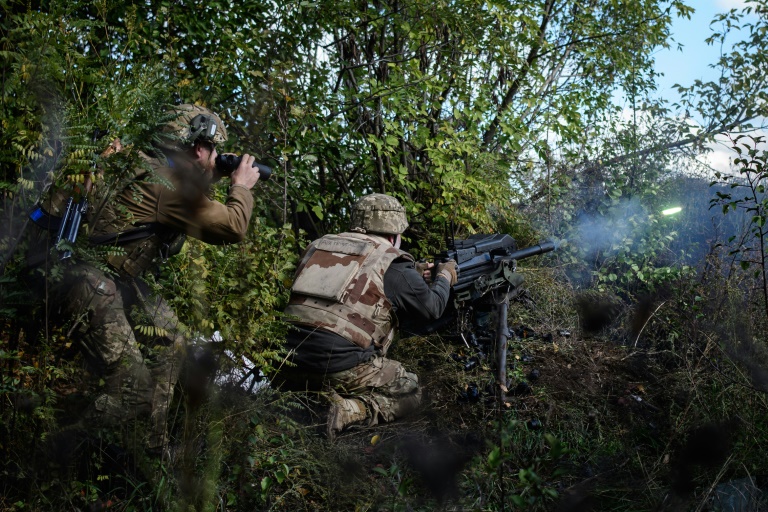
On the frontline in Donetsk, Western weapons have helped boost Ukrainian morale and the abilities of Kyiv’s forces.

“We definitely need more artillery,” said an officer who gave his name as “Sergiy” with Ukraine’s 5th Regiment on a hill overlooking Russian-held Gorlivka in Donetsk.

“When it comes to artillery, they still have an advantage so we can’t return fire equally,” he added. 

“We are firing more precisely now, but with fewer strikes.”

With Russia’s bombing blitz escalating fear of an atomic disaster, UN nuclear agency chief Rafael Grossi arrived in Kyiv for talks on setting up a nuclear safety and protection zone around Ukraine’s Russian-held Zaporizhzhia plant.

Five things to know about China's Communist Party Congress

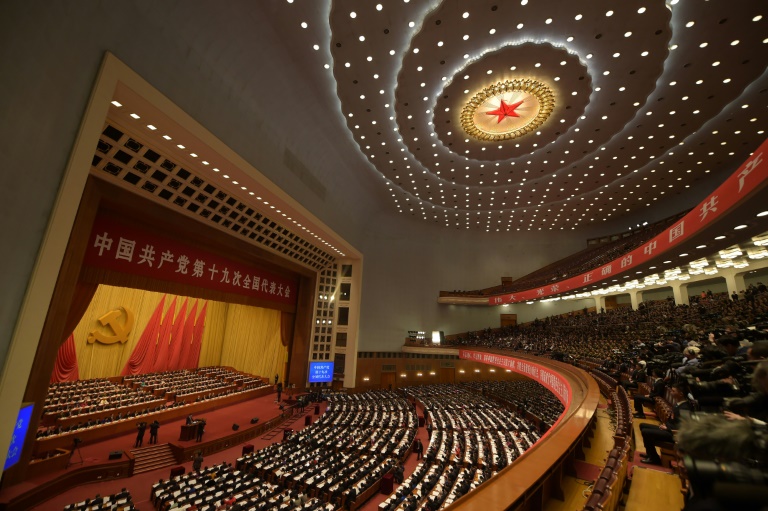
China’s Communist Party will on Sunday open its 20th Party Congress, the country’s most important political meeting, which is held once every five years.

Here are five questions and answers about the opaque process that will see major leadership changes expected to bolster President Xi Jinping’s authority and grant him a landmark third term.

What’s the meeting for?

The CCP, which has ruled China since 1949, has held 19 congresses to fill its leadership ranks since it was founded in 1921.

This year, about 2,300 delegates from across the country will descend on Beijing in a highly choreographed event to pick members of the Central Committee, which is made up of around 200 people.

It will “provide important clues about which leaders may be in line for top posts, and the amount of turnover within the Central Committee — generally around 60 percent — may signal how aggressively Xi intends to reshuffle”, wrote Christopher K. Johnson, senior fellow at the Asia Society Policy Institute.

The committee will select members for the 25-person Politburo and its all-powerful Standing Committee — the country’s highest leadership body and apex of power, currently comprising just seven people.

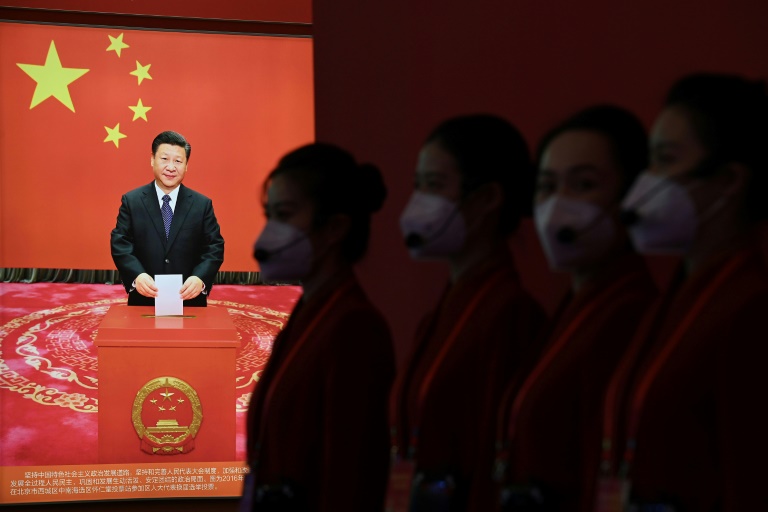
Xi is all but certain to begin an unprecedented third five-year term as party general secretary.

In 2018, he abolished the presidential two-term limit, set by former leader Deng Xiaoping in the 1980s to avoid another Mao Zedong-style dictatorship.

Who’s on the Standing Committee?

The current Standing Committee consists of Xi, Premier Li Keqiang, Li Zhanshu, Wang Yang, Wang Huning, Zhao Leji and Han Zheng.

These career bureaucrats who rose through the party ranks over decades call the shots in the world’s most populous country, each getting one vote on key policy decisions.

But Xi reigns supreme, setting the agenda for their frequent secret meetings.

A sweeping anti-corruption campaign since Xi came to power has brought down former ministers and Politburo members, weakening party factions and eliminating rivals.

“Xi has made important tweaks to selecting the delegates and the pool of senior leaders. These changes overturn earlier conventions designed to foster greater transparency and open competition,” wrote Johnson.

Who’s leaving? 

Since 2002, Standing Committee members aged 68 or above have stepped down, abiding by the unwritten retirement age first employed by former president Jiang Zemin to dump an ageing rival.

If the informal rule is upheld, but as expected does not apply to Xi, two out of seven members will step down — leaving Xi, 69, Li Keqiang, 67, Zhao, 65, Wang Yang, 67, and Wang Huning, also 67.

Li announced in March that he will retire as premier, but it is unclear whether he — or some of the others below 68 — will stay on the Standing Committee. 

Another nine of the Politburo’s 25 members are also due to retire, leaving a number of Xi’s close allies likely to be promoted to top posts.

Will a successor to Xi emerge? 

Xi has scrapped China’s two-term presidential limit and discarded several other party norms, such as indicating a successor by his second term.

This further consolidates his personal power and raises uncertainties about how long he plans to rule, making potential successors vie for his approval.

He has already installed close allies in top positions this year, such as the new minister for public security Wang Xiaohong, 65.

Shanghai party chief and Xi ally Li Qiang has retained his post despite a controversial two-month Covid lockdown in the key city.

Will Xi reign supreme?

Analysts expect Xi to reinforce his stature as China’s most powerful ruler since Mao.

Party propaganda has gone into overdrive since last autumn to bolster Xi’s legacy, diminish the achievements of his predecessors and further enshrine him in the highest echelons of Communist Party mythology.

Each Chinese leader since Mao has had one of his personal political philosophies or ideas codified in the state constitution.

Xi’s political ideology was included in 2018 and analysts say he will be looking to shorten the clunky “Xi Jinping Thought on Socialism with Chinese Characteristics for a New Era” to the pithier “Xi Jinping Thought” — putting him on a par with Mao.

China's Xi on course for historic third term at zero-Covid Congress

China’s 20th Communist Party Congress, which begins on Sunday, is expected to deliver President Xi Jinping a historic third term in control of a country his zero-Covid policy has closed off from much of the rest of the world.

Should everything go to plan, by the end of the twice-in-a-decade meeting, the 69-year-old will be reconfirmed as the party’s general secretary, cementing his position as China’s most powerful leader since Mao Zedong.

Security has been stepped up around Beijing’s Tiananmen Square, where on Sunday almost 2,300 delegates from every province in China will gather at the imposing Great Hall of the People.

And as Xi continues to insist the country sticks to its policy of containing and eliminating the coronavirus within its borders, the Congress will take place under strict health protocols.

In a highly choreographed, mostly closed-door conclave, the participants will pick members of the party’s around 200-member Central Committee, which in turn selects the 25-person Politburo and its all-powerful Standing Committee — the country’s highest leadership body.

But in reality, “everything has been played out in advance, because the congress does not take place until the factions have agreed”, sinologist Jean-Philippe Beja told AFP.

Critics say Xi has also eliminated any potential political rivals in recent years, especially through his long-running campaign against corruption.

The speech Xi makes on the first day will give an assessment of the previous term but also a roadmap for the next five years, for both party and country.

At the 2017 Congress, Xi promised a new era of socialism with Chinese characteristics and promised Beijing would engage with the world. 

“Openness brings progress, while self-seclusion leaves one behind,” he said. “China will not close its door to the world; we will only become more and more open.” 

– Covid curbs – 

But five years later, China has done the opposite. 

As the rest of the world has gradually returned to pre-pandemic norms, Beijing has stuck to a hardline zero-Covid policy characterised by travel restrictions, obligatory quarantines, and repeated lockdowns. 

As well as causing widespread hardship for Chinese citizens, the strategy has also spooked the business community. 

Economic growth has stalled at a time when other long-running problems, such as the real estate downturn, are coming to a head. 

“Beijing’s zero-Covid policy has discouraged much-needed investment and failed to win the hearts and minds of young Chinese, who have suffered the most economically and socially,” said Yu Jie at the Asia-Pacific programme at think tank Chatham House. 

“Many Chinese worry about seeing a return to a period of isolation” not seen in China since before the country’s opening up in the late 1970s, sinologist Beja told AFP. 

China’s relations with the United States have also soured further over the last five years, and Xi’s more assertive foreign policy has sparked disputes everywhere from India to Australia and Canada.

Western countries have pushed back against the increasingly aggressive rhetoric deployed against the self-ruled island of Taiwan, which Beijing sees as its territory to be taken by force if necessary.

They have also accused China of widespread human rights abuses, particularly in the western region of Xinjiang.

“President Xi’s precedent-breaking third term bodes ill for human rights in China and around the world,” said Yaqiu Wang, senior China researcher at Human Rights Watch. 

– Political guesswork –

With 96.7 million members, China’s Communist Party is one of the world’s largest political organisations, but its inner workings remain largely opaque.

Observers can only guess at the future composition of the Standing Committee. 

Since the 1990s, Politburo members have generally retired after two terms — but a third term for Xi would break that precedent, meaning even less than usual can be divined about the next crop of leaders. 

The choice of people who will surround Xi will be crucial, said Steve Tsang, director of the SOAS China Institute. 

“I think Xi will be careful in sending a clear message that no one elevated to the Politburo Standing Committee will be a successor at the 21st Congress,” he said. 

The Politburo lineup will be revealed the day after the meeting ends. 

If, as expected, Xi Jinping stays on as general secretary, he will then be confirmed as president for another term at the annual meeting of China’s National People’s Congress next March.

Though the 20th Party Congress will only guarantee one more five-year term, many think he will stay in power for much longer. 

“The uncertainty is absolute,” said political scientist Jean-Pierre Cabestan. 

“But given the promotion of Xi Jinping Thought, the restoration of the personality cult, the importance of his power at the heart of the party’s leadership, this suggests someone who will stay in power for a long time, maybe for life.”

Septet of PMs do battle in snap Vanuatu poll

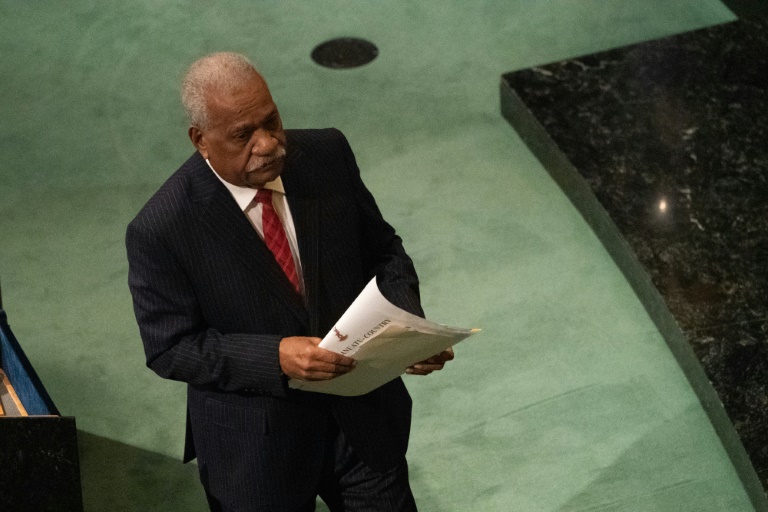
Vanuatu held a snap general election Thursday, with six former prime ministers and crisis-hit incumbent Bob Loughman battling for votes in the Pacific archipelago nation.

After a campaign lasting just 10 days, ballots will be cast by up to 302,307 registered voters across some 80 isles straddling the Tropic of Capricorn.

The election was called two years earlier than expected after Loughman had parliament suspended to avoid a no-confidence vote that he may have lost.

A public holiday was declared for election day, but Edward Kaltamat, chairman of Vanuatu’s Electoral office, told AFP turnout is expected to be low.

“With how the snap election came to be, the electoral office, candidates and voters were not ready,” Kaltamat said. “Many living abroad had to rush to fill in proxy applications.”

To campaign in such a short window, politicians turned to social media sites TikTok and Facebook to get their message across. 

Australia lent a military plane, two helicopters and a sea vessel to transport ballot papers.

“Judging from past elections, turnout is very low which is a disregard for how costly an election is,” said Kaltamat, who is overseeing voting.

“The current snap elections have disrupted the electoral cycle,” he said, adding his office was “struggling to deal” with election activities.

As the incumbent, Loughman and his Vanua’aku Pati may have a head start on challengers, but a few of his political rivals have name recognition of their own.

Half of Vanuatu’s former prime ministers are listed as candidates, though not all of them are considered serious contenders to form a government.

Seven women are also trying to crack Vanuatu’s all-male parliament. 

The group includes tech CEO Celine Bareus, who is running as an independent and drew sizable crowds to campaign events ahead of polling day.

The vote comes at a difficult time for the usually stable Melanesian nation.

Loughman’s dissolution of parliament sparked a political crisis, with opposition leader Ralph Regenvanu — who is not a former prime minister — launching a bitter legal challenge.

Vanuatu’s Supreme Court backed the government by ruling the dissolution was within the constitution.

The country’s tourism-fuelled economy was badly hit by pandemic travel restrictions and both China and the United States are vying for influence across the South Pacific.

With a caretaker government in operation, Vanuatu had no leader to send to Washington for last month’s meeting of Pacific leaders hosted by Joe Biden, instead sending ambassador Odo Tevi.

Mideast petrolheads hope eSports takes them to the track

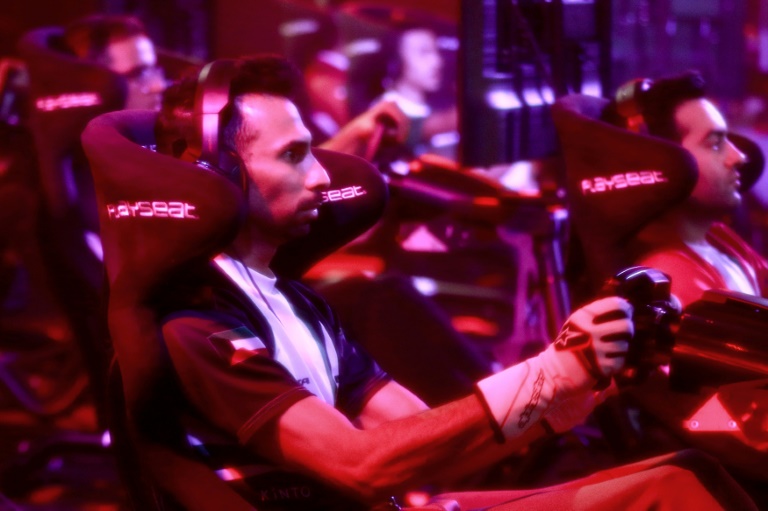
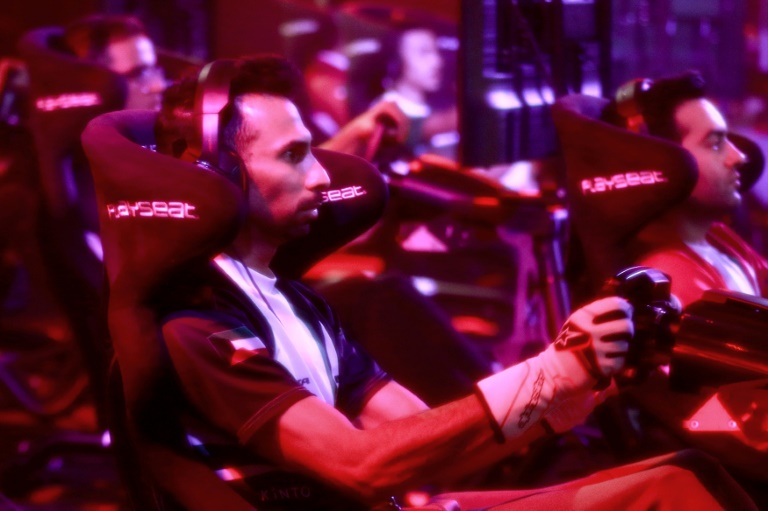
Virtual cars whizz by with engines roaring, as 26 drivers vie for the top spot at an online tournament in Jordan — many dreaming one day of transitioning to real racers.

Professional racing requires not only talent, but also support from well-established teams and sponsors who can help cover the hefty costs that go into acquiring and maintaining race cars.

Young people in the Middle East and elsewhere with a passion for the sport have instead been opting for a far more affordable and accessible alternative followed by millions of fans — eSports.

The dimly lit event hall in Jordan’s capital was buzzing with excitement this weekend, as the racers at the Toyota Gazoo Middle East and North Africa eSports Cup assumed positions behind simulators, representing 13 countries across the region.

“It’s a great experience,” said the youngest competitor, 16-year-old Khaled Dashti of Kuwait, encouraging others “to give this kind of racing a try”.

Dashti said he would love to swap computer games for the driving wheel. 

“My dream is to go into GT racing,” he said. “As these games evolve, there will be more opportunities”, he added.

– ‘Sport of the future’ –

One racer who has made the transition is Japan’s Yusuke Tomibayashi, a former eSports champion who now competes at Super GT300 races.

At the race in Amman, he said he was “amazed” to see how quickly virtual racing was taking hold in the Middle East.

There as part of a marketing push to illustrate the link between the virtual and real-life sport, he played against Lebanon’s Karl Etyemezian — and lost.

Since the 1980s, virtual simulators have given players the chance to feel the rush of driving a race car.

Today, Tomibayashi said the starkest difference is that virtual racing cannot convey how gravity affects real-life drivers as they take the track corners.

Accidents happen and teams must stop to change tires and refuel like the real thing — save for risks and the smell of fuel and burning rubber.

“It’s not only the drivers who get an adrenaline rush, but also the crowd,” said Fawaz Dahdal, 28, watching the tournament for the second year in a row.

“It is no longer just a game,” he said. “It’s the sport of the future.”

The races were projected live on a big screen, accompanied by live commentary and shouts of support from a crowd of some 500 fans — with many more watching from home.

“eGames take up a lot of my children’s time,” said Rana Alyan, who took her son Bakr, 11, to watch the tournament. “But they only practise after they finish their homework.”

– Millions watching –

The racers in Amman were playing “Gran Turismo”, endorsed since 2018 and sponsored by the International Automobile Federation (FIA).

Nadim Haddad, head of Jordan Motorsport’s eSports department and a member of the FIA eSports Commission, said that Covid lockdowns “contributed to the spread of digital games.”

After a national championship organised in 2020, players moved on to a regional cup, he explained.

The first Middle Eastern cup last year drew around 13.8 million viewers online, about 70 percent aged between 18-34, according to figures shared by digital strategy firm APEX.

Over a million people watched the cup from the United Arab Emirates alone.

Applause rang through the hall in Amman as Oman’s Mohammed al-Barwani, 34, was declared the winner of this year’s tournament on Saturday, qualifying him for the world grand finals.

“I wasn’t expecting this victory,” Barwani said.

While some of his rivals had accidents, he also attributed his success to a strategy of conserving fuel and tyres.

“We didn’t make any mistakes,” he said.

Barwani said his goal now is to get into drifting — a motorsport which involves deliberately oversteering the car to slip, skid and spin.

“I started my journey on simulators,” he said. “If I get a change in real-life races, I won’t miss it.”

Mideast petrolheads hope eSports takes them to the track

Virtual cars whizz by with engines roaring, as 26 drivers vie for the top spot at an online tournament in Jordan — many dreaming one day of transitioning to real racers.

Professional racing requires not only talent, but also support from well-established teams and sponsors who can help cover the hefty costs that go into acquiring and maintaining race cars.

Young people in the Middle East and elsewhere with a passion for the sport have instead been opting for a far more affordable and accessible alternative followed by millions of fans — eSports.

The dimly lit event hall in Jordan’s capital was buzzing with excitement this weekend, as the racers at the Toyota Gazoo Middle East and North Africa eSports Cup assumed positions behind simulators, representing 13 countries across the region.

“It’s a great experience,” said the youngest competitor, 16-year-old Khaled Dashti of Kuwait, encouraging others “to give this kind of racing a try”.

Dashti said he would love to swap computer games for the driving wheel. 

“My dream is to go into GT racing,” he said. “As these games evolve, there will be more opportunities”, he added.

– ‘Sport of the future’ –

One racer who has made the transition is Japan’s Yusuke Tomibayashi, a former eSports champion who now competes at Super GT300 races.

At the race in Amman, he said he was “amazed” to see how quickly virtual racing was taking hold in the Middle East.

There as part of a marketing push to illustrate the link between the virtual and real-life sport, he played against Lebanon’s Karl Etyemezian — and lost.

Since the 1980s, virtual simulators have given players the chance to feel the rush of driving a race car.

Today, Tomibayashi said the starkest difference is that virtual racing cannot convey how gravity affects real-life drivers as they take the track corners.

Accidents happen and teams must stop to change tires and refuel like the real thing — save for risks and the smell of fuel and burning rubber.

“It’s not only the drivers who get an adrenaline rush, but also the crowd,” said Fawaz Dahdal, 28, watching the tournament for the second year in a row.

“It is no longer just a game,” he said. “It’s the sport of the future.”

The races were projected live on a big screen, accompanied by live commentary and shouts of support from a crowd of some 500 fans — with many more watching from home.

“eGames take up a lot of my children’s time,” said Rana Alyan, who took her son Bakr, 11, to watch the tournament. “But they only practise after they finish their homework.”

– Millions watching –

The racers in Amman were playing “Gran Turismo”, endorsed since 2018 and sponsored by the International Automobile Federation (FIA).

Nadim Haddad, head of Jordan Motorsport’s eSports department and a member of the FIA eSports Commission, said that Covid lockdowns “contributed to the spread of digital games.”

After a national championship organised in 2020, players moved on to a regional cup, he explained.

The first Middle Eastern cup last year drew around 13.8 million viewers online, about 70 percent aged between 18-34, according to figures shared by digital strategy firm APEX.

Over a million people watched the cup from the United Arab Emirates alone.

Applause rang through the hall in Amman as Oman’s Mohammed al-Barwani, 34, was declared the winner of this year’s tournament on Saturday, qualifying him for the world grand finals.

“I wasn’t expecting this victory,” Barwani said.

While some of his rivals had accidents, he also attributed his success to a strategy of conserving fuel and tyres.

“We didn’t make any mistakes,” he said.

Barwani said his goal now is to get into drifting — a motorsport which involves deliberately oversteering the car to slip, skid and spin.

“I started my journey on simulators,” he said. “If I get a change in real-life races, I won’t miss it.”

Crisis-hit Iraq makes latest bid to elect president

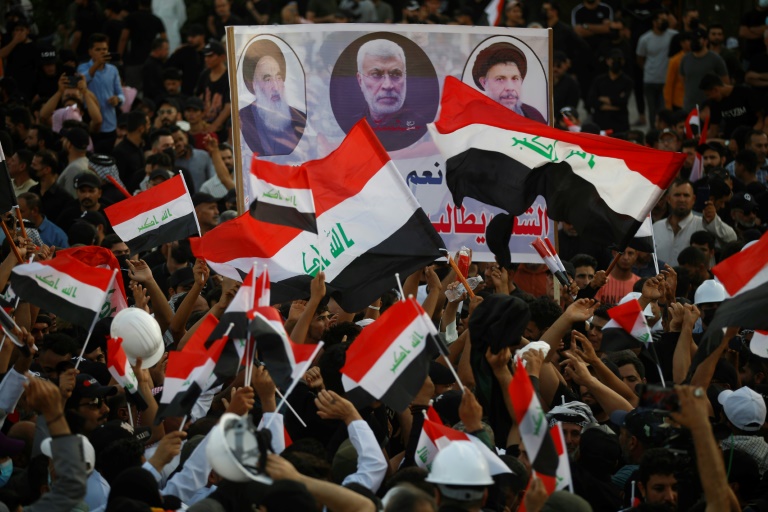
Lawmakers in crisis-hit Iraq meet Thursday for their fourth attempt this year to elect a state president and break a year-long gridlock marred by deadly violence that has deepened economic woes.

Oil-rich Iraq has yet to form a new government after general elections more than a year ago that were brought forward by a wave of mass protests against endemic corruption, rampant unemployment and decaying infrastructure.

This week, the United Nations mission said that “the protracted crisis is breeding further instability” in the war-scarred country, warning of “divisive politics, generating bitter public disillusion”.

Parliament is due to convene from 11:00 am (0800 GMT) in Baghdad’s Green Zone, the capital’s fortified government and diplomatic district that was recently the site of large protest camps set up by rival factions.

Lawmakers in the past three failed attempts to elect a new head of state, in February and March, did not even reach the required two-thirds threshold — 220 out of 329 — for a quorum.

Democratic institutions built since the 2003 US-led invasion that toppled dictator Saddam Hussein remain fragile, and neighbouring Iran wields major influence.

For the past year, Iraq has not only been without a new government, but also without a state budget, locking up billions in oil revenues and obstructing much-needed reforms and infrastructure projects.

– 30 candidates, three front runners –

Iraq’s rival Shiite Muslim political factions have been vying for influence and the right to select a new premier and form a government, with Prime Minister Mustafa al-Kadhemi left in charge in a caretaker capacity.

On one hand is the fiery cleric Moqtada Sadr, who wants parliament dissolved and new elections.

On the other sits the Coordination Framework, an alliance of pro-Iran Shiite factions — including former paramilitaries — that wants a new government before fresh elections are held.

The standoff has seen both sides set up protest camps, and at times has sparked deadly street clashes in Baghdad.

Tensions boiled over on August 29 when more than 30 Sadr supporters were killed in battles between Iran-backed factions and the army.

The largely honorific post of Iraqi president is traditionally reserved for a Kurd.

It generally goes to the Patriotic Union of Kurdistan (PUK), while the Kurdistan Democratic Party (KDP) keeps control over the affairs of autonomous Kurdistan in northern Iraq.

However, the KDP is also eyeing the presidency and could present its own candidate.

“It is still not clear that the Kurdish parties have come to an agreement on a president,” said Hamzeh Hadad, a visiting fellow at the European Council on Foreign Relations think tank.

Among the 30 candidates, top contenders include the incumbent, President Barham Saleh of the PUK, aged 61, and current Kurdistan Interior Minister Rebar Ahmed of the KDP, aged 54.

Abdel Latif Rashid, aged 78, a former water resources minister and ex-PUK leader running as an independent, has been suggested as a potential consensus candidate.

But the race remains open.

“Any president, that is not the strongest candidate of either the two main Kurdish parties will struggle to make a mark in Baghdad,” said analyst Lahib Higel from the International Crisis Group.

– Next step, new PM –

Once elected, the president will appoint a prime minister -– chosen by the largest coalition in parliament –- who will then begin arduous negotiations to choose their cabinet.

“What is expected is that whoever is chosen, will designate a prime minister right away to form a government,” said Hadad.

Key runners for prime minister are the Coordination Framework’s candidate, former minister Mohammed Shia al-Sudani, 52.

Hadad believes Sudani is the most likely to be premier, but noted that “anything can change in Iraqi politics till the last minute”.

The pro-Iran Coordination Framework draws together the Fatah alliance and lawmakers from the party of Sadr’s longtime foe, former prime minister Nuri al-Maliki.

When Sudani was proposed in July, it sparked mass protests outraged Sadr supporters, who breached the Green Zone and stormed parliament.

'Everything has collapsed': Russia's draft tanks small businesses

In his brand new co-working space in Chelyabinsk, a city in central Russia, entrepreneur Maxim Novikov is counting the empty seats.

The space is usually overflowing with designers, programmers and young Russians working on their start-ups.

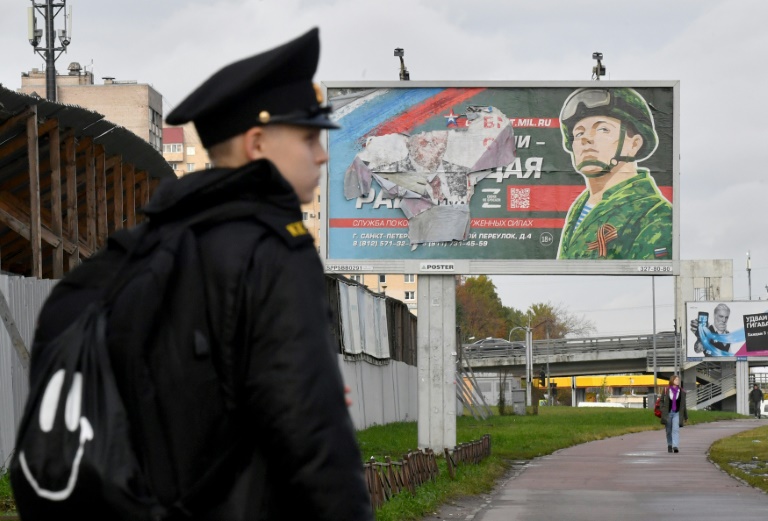
But since President Vladimir Putin announced a mobilisation of hundreds of thousands of young Russian men last month, the 33-year-old has lost much of his clientele.

“Many have stopped coming,” he told AFP by phone.

Instead, they are filling the depleted ranks of Russia’s army or they are among the tens of thousands of others who have fled south for neighbouring Kazakhstan.

The Kremlin’s mobilisation has brought uncertainty and chaos to businesses already hard-hit by sanctions and still recovering from the fallout of the pandemic.

In the last three weeks, a little more than half of the 77 spots in Novikov’s co-working place were occupied.

He has “no idea” if the people who fled or were drafted will keep paying subscription fees, which cost between 70 and 130 dollars.

And now Novikov is worried about his loans.

“Turnover has already dropped by more than 40 percent this year,” Novikov, an architecture graduate, said. 

“I wanted to buy a third space but for the moment it is not possible to take the risk.” 

 – ‘Projects on hold’ – 

But he is far from the only business owner in Russia who is growing more nervous over the workforce vacuum.

“It means projects are being put on hold and private companies will be afraid to invest,” said Natalia Zubarevich, an economist at Moscow State University.

Russia’s economy has already been battered this year by unprecedented Western sanctions in response to Putin’s decision to send troops to Ukraine on February 24.

But Zubarevich said mobilisation was an “additional aggravating factor.”

She added she was not surprised young men from the provinces were joining the army, attracted by monthly payouts that are sometimes almost as much as their annual salaries. 

Meanwhile, in glitzy central Moscow, 45-year-old Yelena Irisova is distraught at seeing her company, which produces luxury leather bags, stop production.

She employs around ten people in the small business. 

But two of her craftsmen left the company in recent weeks — one fearing mobilisation, another to help her daughter whose husband had been sent to the front.

“After September 21, everything collapsed,” Irisova said. “Our sales fell threefold — from 10 to three orders a day.”

She says her savings will keep her going “a month or two, but not more.”

– Almost no orders – 

No Russian business seems unscathed.

Katerina Iberika, 39, who owns a pastry shop specialising in birthday cakes in Moscow, is also facing ruin. 

Her five employees are women with exemptions from mobilisation. But it’s the low morale among the public that’s endangering her business. 

“Cancellations of orders for big events started two days before mobilisation,” Iberika told AFP.

Now she gets nearly no orders at all, except for “very small” ones. 

She is considering leaving Russia.

In increased isolation — and hit by sanctions and mobilisation — an anxious Russian society is watching its spending closely. 

“People are looking to put their money aside,” Sofya Donets, chief economist for Russia at Renaissance Capital, said.

“They’re not going to overspend.”

Some industries have been harder hit than others by a sudden lack of men. 

Employers have sounded the alarm in recent days, asking the government for exemptions from mobilisation, in particular for small and medium-sized companies.

Russia’s economic development ministry told AFP that it had drawn up a list of measures for these “problematic issues”.

It said it had facilitated grants and micro credits. 

“A mobilised entrepreneur will be able to suspend the fulfilment of obligations” to pay the loans back, the ministry said.

Analyst Sofya Donets expects “more intervention and state aid” to calm the effects of mobilisation. 

Especially since Russian coffers continue to fill up thanks to its energy exports.

Close Bitnami banner
Bitnami