World

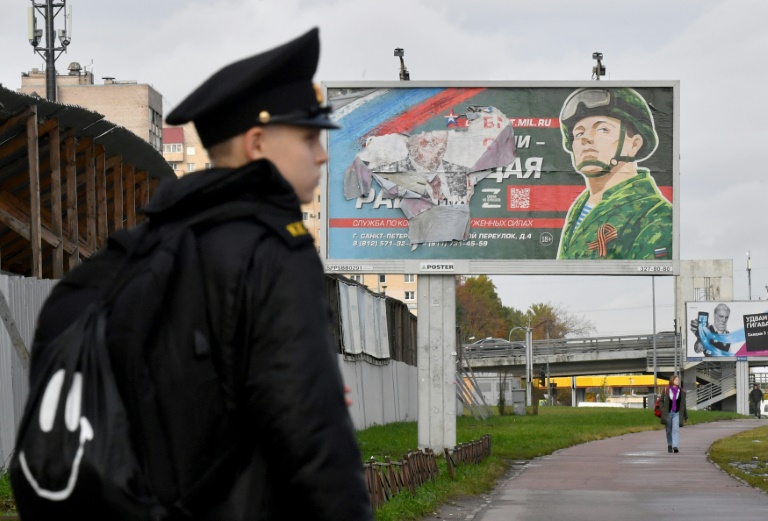
'Everything has collapsed': Russia's draft tanks small businesses

In his brand new co-working space in Chelyabinsk, a city in central Russia, entrepreneur Maxim Novikov is counting the empty seats.

The space is usually overflowing with designers, programmers and young Russians working on their start-ups.

But since President Vladimir Putin announced a mobilisation of hundreds of thousands of young Russian men last month, the 33-year-old has lost much of his clientele.

“Many have stopped coming,” he told AFP by phone.

Instead, they are filling the depleted ranks of Russia’s army or they are among the tens of thousands of others who have fled south for neighbouring Kazakhstan.

The Kremlin’s mobilisation has brought uncertainty and chaos to businesses already hard-hit by sanctions and still recovering from the fallout of the pandemic.

In the last three weeks, a little more than half of the 77 spots in Novikov’s co-working place were occupied.

He has “no idea” if the people who fled or were drafted will keep paying subscription fees, which cost between 70 and 130 dollars.

And now Novikov is worried about his loans.

“Turnover has already dropped by more than 40 percent this year,” Novikov, an architecture graduate, said. 

“I wanted to buy a third space but for the moment it is not possible to take the risk.” 

 – ‘Projects on hold’ – 

But he is far from the only business owner in Russia who is growing more nervous over the workforce vacuum.

“It means projects are being put on hold and private companies will be afraid to invest,” said Natalia Zubarevich, an economist at Moscow State University.

Russia’s economy has already been battered this year by unprecedented Western sanctions in response to Putin’s decision to send troops to Ukraine on February 24.

But Zubarevich said mobilisation was an “additional aggravating factor.”

She added she was not surprised young men from the provinces were joining the army, attracted by monthly payouts that are sometimes almost as much as their annual salaries. 

Meanwhile, in glitzy central Moscow, 45-year-old Yelena Irisova is distraught at seeing her company, which produces luxury leather bags, stop production.

She employs around ten people in the small business. 

But two of her craftsmen left the company in recent weeks — one fearing mobilisation, another to help her daughter whose husband had been sent to the front.

“After September 21, everything collapsed,” Irisova said. “Our sales fell threefold — from 10 to three orders a day.”

She says her savings will keep her going “a month or two, but not more.”

– Almost no orders – 

No Russian business seems unscathed.

Katerina Iberika, 39, who owns a pastry shop specialising in birthday cakes in Moscow, is also facing ruin. 

Her five employees are women with exemptions from mobilisation. But it’s the low morale among the public that’s endangering her business. 

“Cancellations of orders for big events started two days before mobilisation,” Iberika told AFP.

Now she gets nearly no orders at all, except for “very small” ones. 

She is considering leaving Russia.

In increased isolation — and hit by sanctions and mobilisation — an anxious Russian society is watching its spending closely. 

“People are looking to put their money aside,” Sofya Donets, chief economist for Russia at Renaissance Capital, said.

“They’re not going to overspend.”

Some industries have been harder hit than others by a sudden lack of men. 

Employers have sounded the alarm in recent days, asking the government for exemptions from mobilisation, in particular for small and medium-sized companies.

Russia’s economic development ministry told AFP that it had drawn up a list of measures for these “problematic issues”.

It said it had facilitated grants and micro credits. 

“A mobilised entrepreneur will be able to suspend the fulfilment of obligations” to pay the loans back, the ministry said.

Analyst Sofya Donets expects “more intervention and state aid” to calm the effects of mobilisation. 

Especially since Russian coffers continue to fill up thanks to its energy exports.

Sudan schools crisis threatens grim future for children

It’s the start of a new school term in Sudan, yet nine-year-old Zahra Hussein stays home helping with household chores, forced to drop out as her family’s money grows ever tighter.

Zahra quit primary school a year ago after she had just started third grade in a rundown school building with old classrooms, cracked walls, broken desks and toilets with little running water.

Until then, she had attended school regularly, aced her exams and most recently, came top of her class.

“I had come third in my class in first grade,” the young girl told AFP at her home in the village of Ed Moussa in Sudan’s eastern state of Kassala. “My father doesn’t have money anymore … so he pulled me out of school.”

Zahra is one of nearly seven million children in Sudan who no longer go to school, a victim of what aid agencies have warned is a “generational catastrophe”. 

Sudan is already one of the world’s poorest countries, plagued by political instability, droughts, hunger and conflict, with an adult literacy rate of only around 60 percent according to the World Bank.

Sudan’s children have for years faced mounting difficulties gaining access to proper education, especially in rural areas.

Families struggling with severe economic hardship were already pulling their children out of school under the three-decade rule of president Omar al-Bashir, who was ousted in April 2019. 

More turmoil followed and Sudan has been reeling from the crippling aftermath of last year’s military coup led by army chief Abdel Fattah al-Burhan that derailed a transition installed after Bashir’s ouster.

Deepening political and economic crises, recurrent ethnic conflicts and prolonged school closures during the Covid-19 pandemic have compounded the education crisis.

Hundreds of teachers have repeatedly gone on strike against worsening living conditions.

On top of the political and economic instability, devastating floods this year damaged more than 600 schools, delaying the start of the academic year from July until October.

– No school, no meals –

Sudan was listed as the second worst — after Afghanistan — in a 2022 Risk Education Index, which ranked 100 countries on the vulnerability of their school systems.

“The education system in Sudan is very fragile and crippled with many underlying factors”, from poor infrastructure to the quality of education, according to Arshad Malik, Save the Children’s country director in Sudan.

“Out of 12.4 million in-school children, seven out of ten 10-year-olds are unable to read and understand a simple sentence,” he said.

For children such as Zahra, Sudan’s rundown school system still offers a way of getting ahead in life.

“I would go back to school right away if we found the money to buy meals or copybooks,” she said. 

Schools in Sudan had offered free lunches for pupils in some rural areas, providing an incentive for struggling families to send their children.

For many, the school meals — including lentils, vegetables and biscuits — were often the only food they would get during the day.

Sudan is already struggling with food shortages that have left a record 15 million people — around one-third of the population — facing “acute food insecurity”.

In the nearby village of Wad Sharifai, schools stopped providing meals two years ago, severely impacting attendance, said a teacher there, Mohamed Taha. 

Othman Abubakr, a day labourer who has nine children, says he could no longer afford to pay for the food, commute and school supplies for all his children. 

“If meals were still available in school … it could have helped,” said Abubakr, who has kept only two of his children in school.

“Now, the children can help bring money home.”  

– ‘Dire need’  –

Abdalla Ibrahim, who owns a coffee shop in Golsa, has several of his seven children either working with him or at a bakery.

Ohaj Soliman, a 43-year-old day labourer, says “putting the children to work is not good … but we have been forced to”.

Girls are especially vulnerable, warned a report last month by the United Nations children’s agency UNICEF and Save the Children. 

Sudanese girls are more likely to be married off early or taken out of school to do household chores, said Save the Children’s Malik.

He estimates around four out of 10 girls have dropped out of school in Sudan, in comparison to three out of 10 boys. 

Malik warned that, if no action is taken, the likely result is “more poverty and inequality”.

Parents who pulled their children out of school are bracing for an uncertain future.

“I know it’s the biggest disaster to leave children uneducated,” said Abubakr. “But we are in dire need.”

Wildlife populations plunge 69% since 1970: WWF

Wild populations of monitored animal species have plummeted nearly 70 percent in the last 50 years, according to a landmark assessment released Thursday that highlights “devastating” losses to nature due to human activity.

Featuring data from 32,000 populations of more than 5,000 species of mammals, birds, amphibians, reptiles and fish, the WWF Living Planet Index shows accelerating falls across the globe.

In biodiversity-rich regions such as Latin America and the Caribbean, the figure for animal population loss is as high as 94 percent.

Globally, the report found that monitored animal populations had fallen 69 percent since 1970.

Marco Lambertini, director general of WWF International, said his organisation was “extremely worried” by the new data. 

“(It shows) a devastating fall in wildlife populations, in particular in tropical regions that are home to some of the most biodiverse landscapes in the world,” he said.

Mark Wright, director of science at WWF, said the figures were “truly frightening”, particularly for Latin America.

“Latin America is renowned for his biodiversity of course, it’s really important for lots of other things as well,” he said. 

“It’s super important for regulating the climate. We estimate currently there’s something like 150 to 200 billion tonnes of carbon wrapped up in the forests of the Amazon.”

That is equivalent to 550 to 740 billion tonnes of CO2, or 10 to 15 times more than annual greenhouse gas emissions at current rates.

The index found that freshwater species had declined more than those found in any other habitat, with an 83-percent population fall since 1970.

The report found that the main drivers of wildlife loss are habitat degradation due to development and farming, exploitation, the introduction of invasive species, pollution, climate change and disease. 

Lambertini said the world needed to rethink its harmful and wasteful agricultural practices before the global food chain collapsed.

“Food systems today are responsible for over 80 percent of deforestation on land, and if you look at the ocean and freshwater they are also driving a collapse of fishery stocks and populations in those habitats,” he said.

With world leaders due to convene in Montreal for the COP15 biodiversity summit in December, the report authors called for an international, binding commitment to protect nature, similar to the 2015 Paris Agreement on climate change.

– ‘Need to act now’ –

The Living Planet Report argues that increasing conservation and restoration efforts, producing and consuming food more sustainably, and rapidly and deeply decarbonising all sectors can alleviate the twin crises of climate change and biodiversity loss. 

It also calls for governments to properly factor into policymaking the value of services rendered by nature, such as food, medicine and water supply. 

“We need to stress the fact that nature loss is not just a moral issue of our duty to protect the rest of the world. It is actually an issue of material value, an issue of security for humanity as well,” said Lambertini.

Some areas experienced more population loss than others — Europe, for example, saw a wildlife population decline of 18 percent.

“But that also masks historic, very extreme losses of biodiversity,” said Andrew Terry, director of conservation at the Zoological Society of London, which helped compile the data. 

“We know that we’re coming out of (a) low point in the state of biodiversity in the northern hemisphere.”

In Africa, where 70 percent of livelihoods rely on nature in some form, the report showed a two-thirds fall in wildlife populations since 1970.

Alice Ruhweza, Africa regional director at WWF, said the assessment showed how there was a “huge human cost” when nature is lost.

She said young people in particular were concerned about wildlife preservation, and would push governments to implement greater protective measures. 

“We have a young, entrepreneurial and increasingly educated population that is showing more awareness around issues of nature,” said Ruhweza. 

“So the potential for transformative change is really significant. But the time is running short, and we need to act now.”

Ukraine claims new gains, welcomes Western air defence pledge

Ukraine said Wednesday it had reclaimed more territory in the south and welcomed a Western pledge to deliver air defence systems to Kyiv “as fast as we can” after days of intense Russian missile strikes. 

A US-led group of around 50 countries held talks at the NATO headquarters in Brussels and vowed to deliver new anti-missile systems to Kyiv.

Ukraine is reeling from Russian attacks that have left scores dead and wounded as well as villages and towns without power and hot water across the country.

“The systems will be provided, as fast as we can physically get them there,” US Defense Secretary Lloyd Austin said after the meeting, without giving details.

In a further show of Western solidarity, the G7 vowed to “stand with Ukraine for as long as it takes”, while International Monetary Fund chief Kristalina Georgieva pledged financial help for the sake of “moving with you in the direction of a strong Ukraine”.

Ukrainian President Volodymyr Zelensky, who has described the Russian missile attacks as an act of terrorism and has pressed the West for an “air shield”, welcomed the promised anti-missile systems.

“The more audacious and cruel Russian terror becomes, the more obvious it is to the world that helping Ukraine to protect the sky is one of the most important humanitarian tasks for Europe today,” Zelensky said in his daily address to the nation.

– ‘Come back to the table’ –

As Ukraine faces a barrage of Russian aerial assaults, Britain on Thursday said it would supply drones and, for the first time, rockets capable of shooting down cruise missiles.

“The AMRAAM rockets… will be provided in the coming weeks for use with the NASAMS air defence systems pledged by the US,” the British defence ministry said in a statement.

In an interview, French President Emmanuel Macron also promised air defences.

“We’re going to deliver… radars, systems and missiles to protect them from these attacks,” Macron said, adding that France was also negotiating to send another six Caesar mobile artillery units.

It was not immediately clear whether the weapons promised by Macron were part of the commitment made in Brussels or separate.

Macron also called on Russian President Vladimir Putin to resume diplomatic negotiations with Kyiv.

“Today, first of all, Vladimir Putin must stop this war, respect Ukraine’s territorial integrity and come back to the table for talks,” Macron told broadcaster France 2.

The United Nations General Assembly voted overwhelmingly on Wednesday to condemn Russia’s annexation of parts of Ukraine, sending what US President Joe Biden said was a “clear message” that Moscow could not erase a sovereign state.

– ‘Under the rubble’ –

Since Monday, Russia has pummelled Ukraine with missiles, damaging energy facilities nationwide in attacks that Putin said were retaliation for last week’s deadly explosion at a Crimean bridge. 

That blast ripped through a road and rail link Moscow uses to transport its military equipment.

Just after 1:00 am Thursday (22:00 GMT), the bombing blitz targeted the Black Sea port of Mykolaiv, obliterating the top floors of a five-storey residential building, according to the mayor.

“(The) rest is under the rubble. Rescuers are working on the spot,” Oleksandr Senkevych wrote on Telegram.

And in the town of Avdiivka, Russian strikes killed at least eight people at a market, according to the Ukraine-appointed chief of the region.

The Russian military meanwhile said it has fended off Ukrainian attacks in the eastern Donetsk, Lugansk and Kharkiv regions.

But in the latest setback for Putin, Kyiv said Wednesday that it has retaken five more settlements in the southern region of Kherson — one of the four territories Moscow said it annexed in September.

For Ukrainians trapped on the frontline, fears over the relentless exchange of fire are now compounded by the prospect of a winter without power or water.

“Firewood… how can I get it?” said Oleksandra Pylypenko from the eastern town of Bakhmut.

“I don’t know how we’ll survive.”

– ‘Need more artillery’ –

Some of the anti-aircraft defence systems pledged by Western allies began arriving in Ukraine this week.

On the frontline in Donetsk, Western weapons have helped boost Ukrainian morale and the abilities of Kyiv’s forces.

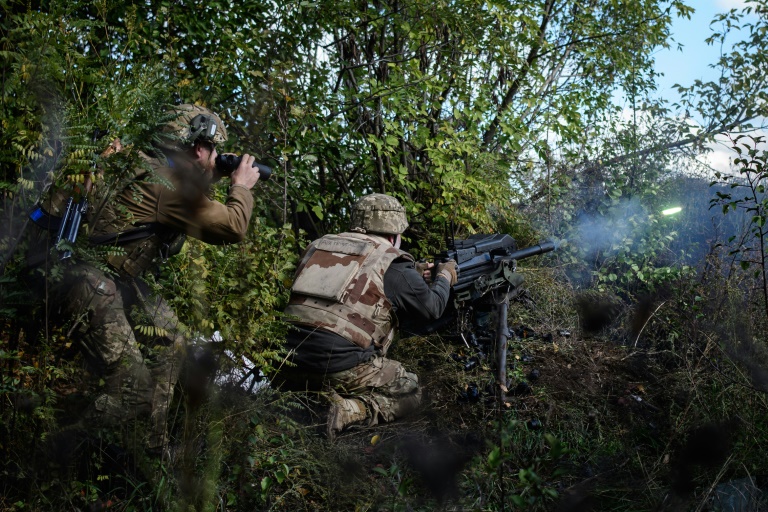
“We definitely need more artillery,” said an officer who gave his name as “Sergiy” with Ukraine’s 5th Regiment on a hill overlooking Russian-held Gorlivka in Donetsk.

“When it comes to artillery, they still have an advantage so we can’t return fire equally,” he added. 

“We are firing more precisely now, but with fewer strikes.”

With Russia’s bombing blitz escalating nuclear fears, UN nuclear agency chief Rafael Grossi arrived in Kyiv for talks on setting up a nuclear safety and protection zone around Ukraine’s Russian-held Zaporizhzhia plant.

Asian markets drop as traders brace for key US inflation data

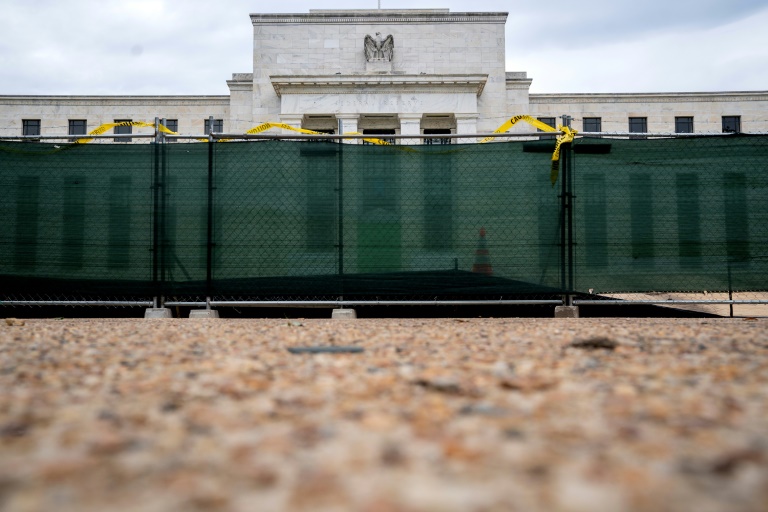
Equities fell in Asia and the dollar maintained its strength Thursday ahead of the release of crucial US inflation data that could determine the pace of Federal Reserve interest rate hikes.

The release of the September report comes a day after minutes from the central bank’s latest policy meeting showed officials determined to win their battle against runaway prices by ramping up borrowing costs, though they did note the risk to the economy that posed.

Investors are growing increasingly worried that the strict monetary tightening campaign — including three bumper rate hikes in succession — will plunge the United States into recession.

While there are hopes for signs of a slowdown, traders have taken to the sidelines in case of more volatility.

On Wednesday, figures showed wholesale inflation rose a forecast-beating 0.4 percent.

After another day of losses on Wall Street, Asia was again in the red with traders in Hong Kong, Tokyo, Shanghai, Singapore, Seoul, Wellington, Taipei and Manila selling.

“The Fed needs data to start finding an off-ramp,” Carol Schleif, of BMO Family Office, told Bloomberg Television.

“That’s a tough market to be in. Until we get a bunch more data, markets will have to figure out how to find their footing.”

Minutes from the Fed’s September meeting suggested it will press on with a fourth straight 0.75 percentage-point hike next month, with policymakers noting a slowdown of growth and the jobs market would be “required” to tame inflation, adding that prices remained “unacceptably high”.

They also pointed out that prices had “not yet responded” to the previous tightening.

Bank officials had for months stuck to a line that they will continue ramping up rates and hold them until they were satisfied they have slain inflation.

But the minutes said “several participants noted that, particularly in the current highly uncertain global economic and financial environment, it would be important to calibrate the pace of further policy tightening with the aim of mitigating the risk of significant adverse effects on the economic outlook”.

However, they said the cost of not doing enough to tackle prices outweighed the cost of doing too much.

– Dollar still king –

“The Fed remains purposefully driven to tighten monetary policy further into restrictive territory given the rather gradual cooling of economic activity and slow inflation response,” said Gregory Daco, at Ernst & Young.

But added that “the balance of risks is rapidly shifting”.

“Elevated global economic and financial market uncertainty will make it essential for the Fed to calibrate its policy response.”

They expect to lift rates to around 4.6 percent in 2023, according to the median estimate — from the current 3-3.25 percent.

Expectations for even more tightening kept the dollar elevated across the board, and it hit a fresh 24-year high near 147 yen, more than one yen above the point at which Japanese authorities last month intervened to protect the currency.

Still, sterling held most of the gains it enjoyed Wednesday fuelled by expectations the Bank of England will unveil a huge rate hike next month in the wake of volatility in UK financial markets.

The crisis in London saw the yield on 30-year government bonds bounce above five percent, while that on 10-year bonds hit 4.64 percent, the highest since 2008 in the midst of the global financial crisis.

The UK government’s increased borrowing costs are a reflection of market unease regarding the affordability of upcoming tax cuts aimed at supporting Britain’s recession-threatened economy.

Oil prices were broadly flat after another drop Wednesday following a report from the industry-funded American Petroleum Institute indicating a huge jump in US stockpiles, suggesting weakening demand.

Meanwhile, OPEC trimmed its estimate for growth in demand this year and next by half a million barrels a day.

A drop in the past few days has eaten into last week’s gains that came in response to a decision by OPEC and other producers to slash output by two million barrels a day. 

– Key figures around 0230 GMT –

Tokyo – Nikkei 225: DOWN 0.5 percent at 26,260.25 (break)

Hong Kong – Hang Seng Index: DOWN 1.1 percent at 16,507.45

Shanghai – Composite: DOWN 0.3 percent at 3,018.07

Pound/dollar: DOWN at $1.1086 from $1.1101 Wednesday

Dollar/yen: UP at 146.90 yen from 146.86 yen

Euro/dollar: DOWN at $0.9701 from $0.9707

Euro/pound: UP at 87.50 pence from 87.41 pence

West Texas Intermediate: DOWN 0.2 percent at $87.08 per barrel

Brent North Sea crude: FLAT at $92.42 per barrel

New York – Dow: DOWN 0.1 percent at 29,210.85 (close)

London – FTSE 100: DOWN 0.9 percent at 6,826.15 (close) 

Human brain cells implanted in rats offer research gold mine

Scientists have successfully implanted and integrated human brain cells into newborn rats, creating a new way to study complex psychiatric disorders such as schizophrenia and autism, and perhaps eventually test treatments.

Studying how these conditions develop is incredibly difficult — animals do not experience them like people, and humans cannot simply be opened up for research.

Scientists can assemble small sections of human brain tissue made from stem cells in petri dishes, and have already done so with more than a dozen brain regions.

But in dishes, “neurons don’t grow to the size which a human neuron in an actual human brain would grow,” said Sergiu Pasca, the study’s lead author and professor of psychiatry and behavioural sciences at Stanford University.

And isolated from a body, they cannot tell us what symptoms a defect will cause.

To overcome those limitations, researchers implanted the groupings of human brain cells, called organoids, into the brains of young rats.

The rats’ age was important: human neurons have been implanted into adult rats before, but an animal’s brain stops developing at a certain age, limiting how well implanted cells can integrate.

“By transplanting them at these early stages, we found that these organoids can grow relatively large, they become vascularised (receive nutrients) by the rat, and they can cover about a third of a rat’s (brain) hemisphere,” Pasca said.

– Blue light ‘reward’ –

To test how well the human neurons integrated with the rat brains and bodies, air was puffed across the animals’ whiskers, which prompted electrical activity in the human neurons.

That showed an input connection — external stimulation of the rat’s body was processed by the human tissue in the brain.

The scientists then tested the reverse: could the human neurons send signals back to the rat’s body?

They implanted human brain cells altered to respond to blue light, and then trained the rats to expect a “reward” of water from a spout when blue light shone on the neurons via a cable in the animals’ skulls.

After two weeks, pulsing the blue light sent the rats scrambling to the spout, according to the research published Wednesday in the journal Nature.

The team has now used the technique to show that organoids developed from patients with Timothy syndrome grow more slowly and display less electrical activity than those from healthy people.

Tara Spires-Jones, a professor at the University of Edinburgh’s UK Dementia Research Institute, said the work “has the potential to advance what we know about human brain development and neurodevelopmental disorders”.

But she noted the human neurons “did not replicate all of the important features of the human developing brain” and more research is needed to ensure the technique is a “robust model”.

– Ethical debates –

Spires-Jones, who was not involved in the research, also pointed out potential ethical questions, “including whether these rats will have more human-like thinking and consciousness”.

Pasca said careful observations of the rats suggested the brain implants did not change them, or cause pain.

“There are no alterations to the rats’ behaviour or the rats’ well-being… there are no augmentations of functions,” he said.

He argued that limitations on how deeply human neurons integrate with the rat brain provide “natural barriers” that stop the animal from becoming too human.

Rat brains develop much faster than human ones, “so there’s only so much that the rat cortex can integrate,” he said.

But in species closer to humans, those barriers might no longer exist, and Pasca said he would not support using the technique in primates for now.

He believes though that there is a “moral imperative” to find ways to better study and treat psychiatric disorders.

“Certainly the more human these models are becoming, the more uncomfortable we feel,” he said.

But “human psychiatric disorders are to a large extent uniquely human. So we’re going to have to think very carefully… how far we want to go with some of these models moving forward.”

North Korea says it has tested and deployed 'tactical nuke' cruise missiles

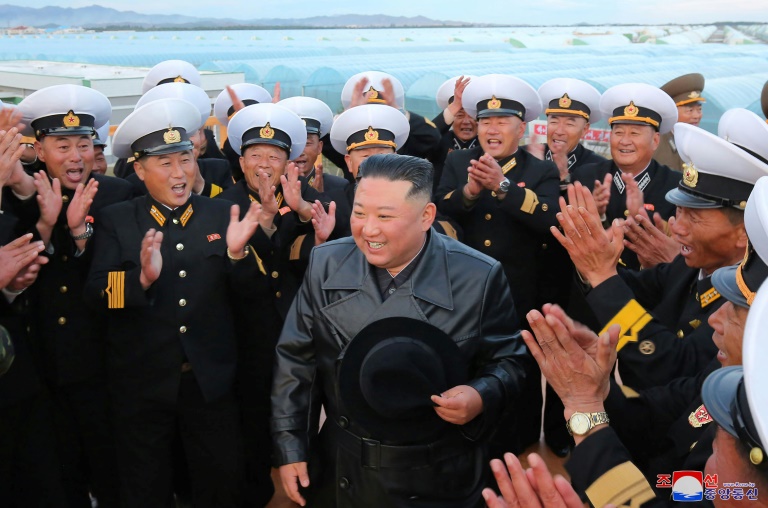
Kim Jong Un supervised the launch of two long-range cruise missiles, state media said Thursday, adding that the weapons were equipped to carry tactical nukes and had already been deployed to North Korean army units.

Pyongyang has conducted a blitz of ballistic missile tests recently which it described as tactical nuclear drills that simulated taking out airports and military facilities across South Korea.

Analysts warned the isolated regime had completed preparations for another nuclear test.

The cruise missiles — which travel at much lower altitudes than ballistic missiles, making them harder to detect and intercept — travelled 2,000 kilometres (1,240 miles) over the sea Wednesday before hitting their targets, the Korean Central News Agency said.

Kim expressed “great satisfaction” with the tests for improving combat efficiency of the cruise missiles, which KCNA said have already been “deployed at the units of the Korean People’s Army for the operation of tactical nukes.”

Kim said the country’s nuclear combat forces were at “full preparedness for actual war” and said that the tests were another warning to the country’s enemies.

North Korea must “continue to expand the operational sphere of the nuclear strategic armed forces to resolutely deter any crucial military crisis and war crisis,” the report added.

“Kim Jong Un stressed that we should focus all efforts on the endless and accelerating development of the national nuclear combat armed forces,” it said.

Pyongyang is not technically banned by the UN from testing cruise missiles, but all ballistic missile launches violate sanctions and are typically flagged by Seoul or Tokyo. Neither alerted the Wednesday test.

Kim made acquiring tactical nukes — smaller, lighter weapons designed for battlefield use — a top priority at a key party congress in January 2021, and this year vowed to develop North Korea’s nuclear forces at the fastest possible speed.

“The latest test means the North is operating tactical nuclear capability on cruise missiles, which are harder to detect for their low-altitude flight,” Hong Min of the Korea Institute for National Unification told AFP. 

“It is a testament to Pyongyang’s capability to mount nuclear warheads,” he said, adding that cruise missiles can also have irregular flight paths making them harder to intercept. 

– Military drills –

The country revised its nuclear laws last month to allow preemptive strikes, with Kim declaring North Korea an “irreversible” nuclear power — effectively ending the possibility of negotiations over its arsenal.

Since then, Seoul, Tokyo and Washington have ramped up combined military exercises, including deploying a nuclear-powered US aircraft carrier to the area twice, infuriating Pyongyang, which sees such drills as rehearsals for invasion.

In response, North Korea “decided to organise military drills under the simulation of an actual war” that gamed out hitting South Korea’s ports, airports and military command facilities, KCNA said Monday.

North Korean army units involved in “the operation of tactical nukes staged military drills from September 25 to October 9 in order to check and assess the war deterrent and nuclear counterattack capability”, the agency said.

Kim oversaw these tests as well, it said.

This report also said that North Korea’s October 4 missile launch, which flew over Japan and prompted rare evacuation warnings, involved a “new-type ground-to-ground intermediate-range ballistic missile”.

The volley of KCNA statements about the country’s recent tests — which are unusual, as state media no longer routinely comments on launches — indicates Pyongyang is concerned about the recent US-led joint drills, analysts say.

Fledgling union efforts at Amazon, Starbucks dig in for long fight

Recent unionization drives at Starbucks and Amazon have lifted morale in the US labor movement, but organizers have yet to transform election victories into material change.

Moreover, some union backers such as Will Westlake have paid a price for their activism.

Formerly a Starbucks barista in Buffalo, New York, where the initial union votes took place in December 2021, Westlake was fired earlier this month — ostensibly for not removing a suicide prevention badge from his apron, which he has viewed as an expression of his solidarity with the movement.

But Westlake thinks his firing was payback for his union activism.

“I was number 123” on the list of Starbucks employees to lose their jobs as the campaign has spread to some 250 cafes nationwide, said Westlake.

Starbucks declined to comment on allegations from Starbucks Workers United that the company fired workers for union activism.

But such reprisals at US companies are “pretty routine in this country,” said Ruth Milkman, a sociologist at CUNY in New York.

– Young activists –

Milkman counts herself among the experts in labor relations who have been surprised at the spread of the union drives to a growing slate of corporations, including Apple, REI, Chipotle and Trader Joe’s — companies that union organizers have not in the past viewed as fertile to their efforts.

“This was kind of a different moment,” said Milkman of a period defined by a labor shortage, the pandemic and “a young labor force frustrated by their limited labor market options.” 

US officials have seen a 53 percent jump in the number of union elections over the last year, according to the National Labor Relations Board.

But that increase takes place against the backdrop of a longtime decline in organized labor since the 1980s, with fewer than 10 percent of private-sector employees now unionized.

While union backers have won some high-profile election victories over the last year, in many cases, the successful votes have taken place at small establishments, such as an individual Starbucks cafe.

What’s more, “winning the election is actually the easy part,” said Cedric de Leon, a sociologist at the University of Massachusetts at Amherst.

“The hard part is to negotiate the contract,” he said. “And there is nothing the government can really do to force the employers to negotiate in good faith.”

While two Starbucks cafes in Buffalo voted to unionize last December, the first meeting with management on the contract will take place only this month.

The outlook is even murkier at the Staten Island, New York warehouse that in April became the first Amazon site in the United States to unionize.

But Amazon is contesting the vote, alleging improprieties. 

Commenting on a union election now taking place at an upstate New York warehouse, an Amazon spokesman said this week that the company will continue to fight the Staten Island election outcome because “we don’t believe it represents what the majority of our team wants.”

– Culture of intimidation –

Under the Biden administration, the NLRB has for its part cracked down on some anti-union conduct by big corporations, as with a complaint earlier this month against Apple after the company prevented the distribution of union fliers in a break room.

In August, a US judge ordered Starbucks to reinstate seven employees that the NLRB found were unlawfully fired by the coffee giant.

Such moves by companies represent an effort to instill in workers “a culture of fear and intimidation,” said de Leon, noting that support from President Joe Biden and other political leaders will not be enough to make real change.

But “250 Starbucks going out on a nationwide strike, that could be decisive,” he said.

The recent wave of union campaigns has come amid a tight labor market in a period of elevated consumer demand. A recession would alter some of those dynamics, although de Leon notes that previous economically weak periods such as the 1930s and 1970s have boosted unions.

Westlake said he is determined to hold companies like Starbucks to account.

“They are hoping that the public won’t care enough and that in two or three years, they will be able to fire all the union leaders and crush the union,” said Westlake, who has filed a complaint with the NLRB over his dismissal.

Chaos agent Kanye West crosses line with bigoted remarks

Kanye West has long been one of the entertainment industry’s most polarizing figures, but his recent actions including anti-Semitic comments and white supremacist messaging have alienated fans and business partners alike. 

It’s another problematic turn for the rapper and fashion mogul once hailed as an artistic genius, but whose stubborn contrarianism has seen him start conflating hate speech with free speech.

The latest controversies — which erupted during Paris fashion week and after an interview with Fox News — add to his reputation as a chaos agent, one that has tarnished his musical and fashion talent.

The 45-year-old West, who in the past has unironically compared himself to Michelangelo, broke out in 2004 with “The College Dropout,” building a masterful music career that saw him imbue rap with soul and electronic elements to create his lush albums.

His mercurial ways drew some critics but for years his celebrity earned him a pass.

At times his comments garnered him praise for his honesty: in 2005, he called out George W. Bush’s handling of Hurricane Katrina, delivering an urgent plea for help during a televised fundraising concert before saying “George Bush doesn’t care about Black people.”

But in the decades that followed his musings grew increasingly bombastic and controversial.

After the rollercoaster rollout of his album “The Life of Pablo,” West, who has talked openly about struggling with bipolar disorder, suffered a mental breakdown, disappearing from the public eye.

In late 2016 he reemerged, strolling into Trump Tower to meet the then president-elect.

He made waves as a rare celebrity to support the Republican billionaire, whose four years in the White House were mired with repeated accusations of racism and sexism.

In 2018, West met with Trump in Washington for a surreal tete-a-tete that included a hug between the two and an on-camera rant.

And during the 2020 election West, who later legally changed his name to Ye, his longtime nickname, launched his own unsuccessful bid for the American presidency as an independent candidate of the Birthday Party.

– ‘Attention addict’ –

Since then West has been crossing line after line.

At Paris’ most recent fashion week he sported a shirt allying with white supremacist rhetoric. Days later his Instagram and Twitter accounts were restricted over anti-Semitic posts.

The American Jewish Committee (AJC) hit out at West for having “fomented hatred of Jews,” while many other celebrities decried his words and urged him to stop.

“Kanye West should figure out how to make a point without using anti-Semitism,” the AJC organization said.

The artist’s already controversial Fox News interview grew even more so after Vice released unaired footage including West comments that were steeped in racist conspiracy theories.

This week, a producer behind the series “The Shop: Uninterrupted” with NBA superstar LeBron James said they were pulling an episode that would have featured West, saying he used the platform to “reiterate more hate speech and extremely dangerous stereotypes.”

He unceremoniously scrapped his partnership with Gap, and German sportswear giant Adidas said it was reconsidering their collaboration that’s been dogged by tensions.

These are only the latest shock-value moves from the rapper who has long fed media cycles with provocation.

Earlier this year, West was banned from posting on Instagram for 24 hours after violating the social network’s harassment policy amid his acrimonious divorce from reality star Kim Kardashian, with whom he has four children.

While in the past some analysts have allowed West benefit of the doubt due to his mental illness, the consensus this time around has emphasized that psychiatric episodes are not an excuse for bigoted behavior.

In the opinion pages of The New York Times, columnist Charles Blow dubbed the artist “a brooding, narcissistic attention addict and praise junkie.”

“He attends his torture. He curates and employs it. Some of it may come naturally, but some is manufactured, to enlarge the legend.”

Meet the feisty woman kingmaker in Brazil's presidential runoff

A feisty and little-known woman senator has emerged as kingmaker in Brazil’s very close presidential runoff.

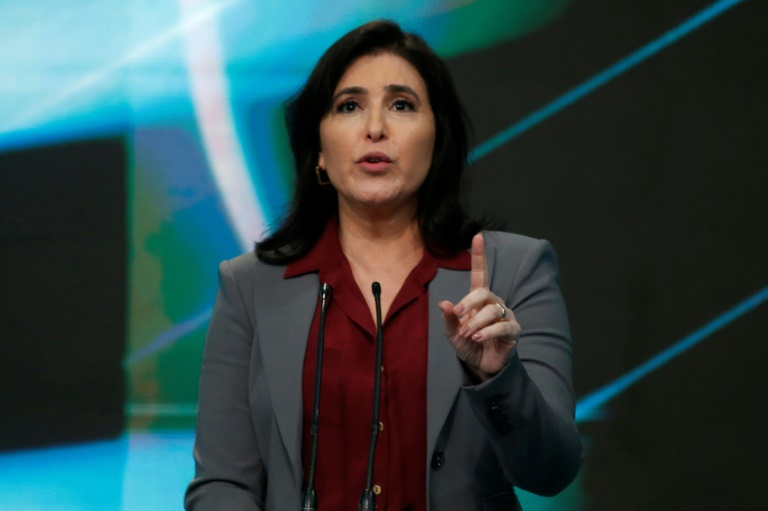
Many Brazilians saw Simone Tebet, a lawyer and university professor, for the first time when she took stage the night of August 29 for the campaign’s first televised debate, standing alongside rightwing President Jair Bolsonaro and leftist icon and ex-president Luiz Inacio Lula da Silva. 

And in a surprise, Tebet made a strong impression. 

When Bolsonaro at one point insulted a woman journalist asking questions at the debate, the senator leapt to her defense, pointing at the president with her index finger and saying in a firm voice: “I am not afraid of him.”

Tebet, 52, finished third in the first round voting with four percent of the votes, far behind Lula, who took 48 percent, and Bolsonaro with 43 percent.

But her share of the pie amounts to 4.9 million votes — and the difference between the two frontrunners was 6.1 million.

Instantly, Tebet became the candidate to woo. And she endorsed Lula.

– ‘Third option’ –

Tebet’s candidacy was organized by centrist parties and supported by part of the Brazilian establishment as a way to temper the polarization generated by the far-right president Bolsonaro and the leftist hero of the working class and poor, Lula, of the Workers Party.

Tebet is from the city of Tres Lagoas, which has a population of 125,000, and she was its mayor from 2005 to 2010. It is in the west-central state of Mato Grosso do Sul, where the economy is based on agribusiness.

Tebet is married to a politician from her state and they have two daughters. She is Catholic and describes herself as feminist.   

Tebet played a prominent role on a congressional committee that in 2021 investigated the government’s handling of the coronavirus pandemic. And while on this panel, she clashed loudly with Bolsonaro allies. 

Tebet was also the first woman to preside over the Brazilian senate’s Constitution and Justice Committee, considered the chamber’s most important panel.

But her biggest jump to notoriety came with her presidential candidacy, which was promoted as a third way between the right and left.

Tebet managed “to fill a lagoon that was empty,” said Marco Antonio Teixeira, a professor of political science at the Getulio Vargas Foundation in Sao Paulo.

She succeeded because “she billed herself as an actual third option, strong in her criticisms of Bolsonaro and of the Workers Party in a balanced way, not simply seeking confrontation,” said Teixeira.

In the presidential debates, she challenged Bolsonaro and urged him to show respect for women; the president has a penchant for making remarks seen as sexist.

This helped Tebet grab third place from center-left candidate Ciro Gomes, who polls had predicted would take that spot.

– Conservative and close to agribusiness –

Up through the midway point of Bolsonaro’s term, Tebet supported his government in 86 percent of the votes taken in the Senate, including one that extended gun-carrying rights to land outside rural properties, according to investigative news outlet Agencia Publica. 

Tebet owns three rural estates, one of which sits on land claimed by Indigenous people in Mato Grosso do Sul.

She broke with Bolsonaro after she joined the congressional commission that probed the pandemic, which killed more than 680,000 people in Brazil.

During the campaign for the first round of presidential voting, Tebet promised to bring transparency to huge amounts of money administered by Congress, boost spending on science and technology, and provide scholarships for students at the intermediate level of education to head off school dropouts.

Now, as analysts say Lula has to veer toward the center to win new supporters, Tebet — who has said Brazil is conservative and not ready, say, to legalize abortion — is an important person to have on your side.

Last week, she formally endorsed Lula in the runoff on October 30, while denying that this gesture meant she has given up on creating a third path in Brazilian politics.

Tebet’s party, however, called the Brazilian Democratic Movement, chose to remain neutral in the race between Bolsonaro and Lula.

“What is at stake is bigger than each of us,” she said.

Tebet said she would vote for Lula because of his “commitment to democracy and the constitution,” which she said she does not see in Bolsonaro.

But she criticized Lula, credited with bringing millions of people out of poverty during his rule from 2003 to 2010, for not really “looking in the rear view mirror” and making new proposals for how he would govern if he regains power.

“Tebet has a way of speaking with agribusiness and women that is much more direct than Lula,” said Teixeira.

She can lure for Lula centrist voters tired of the tensions born of Bolsonaro-Lula polarization, he added.

Brazilian press reports have suggested Tebet could become a minister in Lula’s government if he wins. Tebet has denied being interested in such a job.

Close Bitnami banner
Bitnami