World

Striking French refinery workers defy government threats

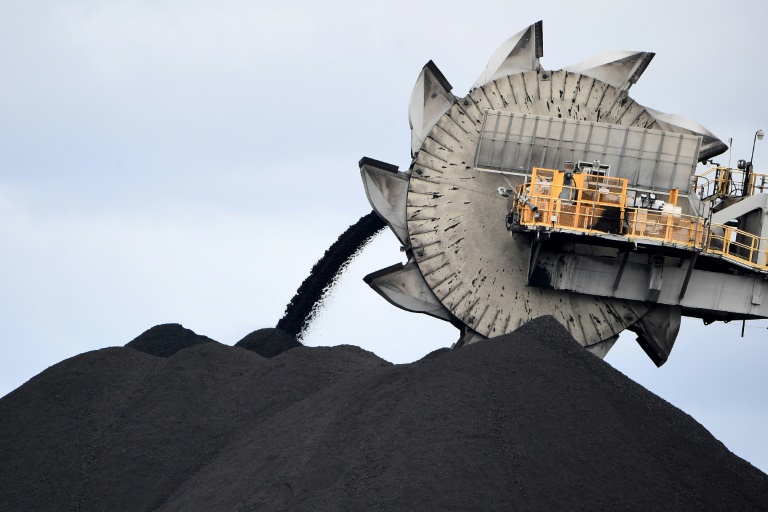
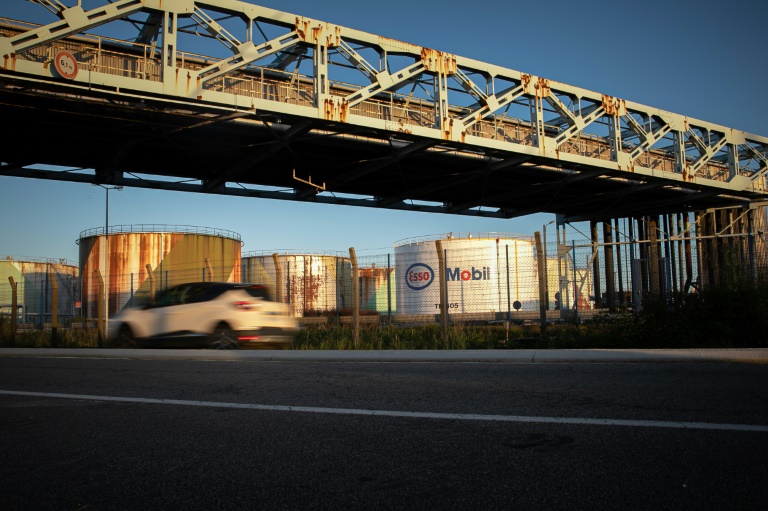
Striking French fuel refinery workers voted Wednesday to continue their stoppages and blockades, defying the government which began ordering some of them back to work in a bid to get supplies flowing.

Industrial action to demand pay rises has paralysed six out of seven fuel refineries in France, leading to shortages of petrol and diesel exacerbated by panic-buying from drivers.

Having previously threatened to use emergency powers enabling them to order essential workers back to the job, the government announced Wednesday that it would put them into use as the strikes entered their third week.

Personnel at a fuel depot at the Gravenchon-Port-Jerome refinery in northwest France, owned by US giant ExxonMobil, would be the first to be requisitioned, an official at the energy ministry told AFP. 

“Faced with the continuation of the strike by some of the personnel at Port-Jerome in Normandy, the government is launching the requisitioning of essential workers at the depot,” the official said.

Workers who refuse the summons will risk fines or jail time.

The right-wing government of former president Nicolas Sarkozy invoked the same powers in 2010 to break a refinery strike.

– Growing frustration –

The hard-left CGT union that is leading the stoppages had said Tuesday that any requisitioning would be “not necessary and illegal”, raising the spectre of legal challenges.

It called requisitioning the “choice of violence”, adding that it would lead the union to suspend “its participation in meetings with the government and business leaders during this period”.

Until now, the government had been reluctant to inflame the conflict but was also aware of growing frustration and economic damage caused by drivers spending hours to fill up.

“Petrol is too important for us. It’s been a nightmare for a week,” Santiago, a delivery driver, told AFP in Paris. 

The crisis comes at a time of high energy prices and inflation, while TotalEnergies’ bumper profits have also caused anger, leading to calls for the group to face a windfall tax.

The CGT wants a 10-percent pay hike for staff at TotalEnergies. 

The stand-off could add impetus to a march planned by left-wing political parties on Sunday against the policies of President Emmanuel Macron and the high cost of living. 

“I hope this is the spark that begins a general strike,” leading Greens party MP, Sandrine Rousseau, told Franceinfo radio Wednesday. 

Macron is looking to push through a highly contentious pension reform by the end of the winter despite warnings from some allies about the risk of strikes and demonstrations.

Labour unions and left-wing political parties have vowed to try to block the reform, which would see the pension age raised to 64 or 65 for most people, from 62 currently.

Myanmar junta courts prolong Japanese journalist, Suu Kyi jail terms

Myanmar’s junta on Wednesday jailed a Japanese journalist arrested while filming an anti-coup protest for three more years for violating immigration law, a diplomatic source told AFP.

The jailing came the same day a closed junta court sentenced ousted leader Aung San Suu Kyi to another six years in prison for corruption, according to a source with knowledge of the case, taking the Nobel laureate’s total jail time to 26 years.

Toru Kubota, 26, who was detained in July and jailed for seven years last week, was sentenced to an additional “three years imprisonment”, a diplomatic source at Japan’s embassy said, citing the journalist’s lawyer.

Myanmar’s junta has clamped down on press freedoms, arresting reporters and photographers, as well as revoking broadcasting licences during its crackdown o dissent since seizing power last year.

Kubota, who was detained near an anti-government rally in commercial hub Yangon along with two Myanmar citizens, appeared in good health at the hearing on Wednesday, the source said, citing his lawyer.

According to a profile on FilmFreeway, Kubota has previously made documentaries on Myanmar’s Muslim Rohingya minority and “refugees and ethnic issues in Myanmar”.

Kubota is the fifth foreign journalist to be detained in Myanmar, after US citizens Nathan Maung and Danny Fenster, Robert Bociaga of Poland and Yuki Kitazumi of Japan — all of whom were later freed and deported.

Before the verdict was announced, junta spokesman Zaw Min Tun told AFP that Kubota “would not be deported at this moment,” without giving details.

– ‘Sham trial’ –

Suu Kyi, 77, has been detained since the generals toppled her government in a coup on February 1 of last year, ending the Southeast Asian country’s brief period of democracy.

She has since been convicted on a clutch of charges, including violating the official secrets act, electoral fraud and illegally possessing walkie-talkies.

In the latest case, Suu Kyi was “sentenced to three years imprisonment each for two corruption cases” in which she had been accused of taking bribes from a businessman, the source said.

The terms will be served concurrently, the source added.

The businessman, Maung Weik, appeared in a video televised by a military broadcaster last year claiming he had given Suu Kyi $550,000 over several years. 

Maung Weik — who was convicted of drug trafficking in 2008 — also said he had donated money to senior figures in Suu Kyi’s government for the good of his business.

Suu Kyi — who denies all charges against her — appeared in good health and will appeal, the source added.

She is currently on trial for five other corruption charges. Each carries a maximum 15 years in prison. 

A spokesperson for Amnesty International on Wednesday slammed the trial as a sham that “cannot be taken seriously”.

A junta spokesman did not respond to a request for comment.

Journalists have been barred from attending the court hearings and Suu Kyi’s lawyers have been banned from speaking to the media.

In June, she was transferred from house arrest to a prison in the capital Naypyidaw, where her trials are being held in a courthouse inside the prison compound.

Myanmar has been in turmoil since the military seized power, sparking widespread armed resistance.

The junta has responded with a crackdown that rights groups say includes razing villages, mass extrajudicial killings and airstrikes on civilians.

More than one million people have been displaced since the coup, according to the United Nations children’s agency.

According to a local monitoring group, more than 2,300 people have been killed and over 15,000 arrested since the military seized power.

Sterling swings as BoE confirms end of market support

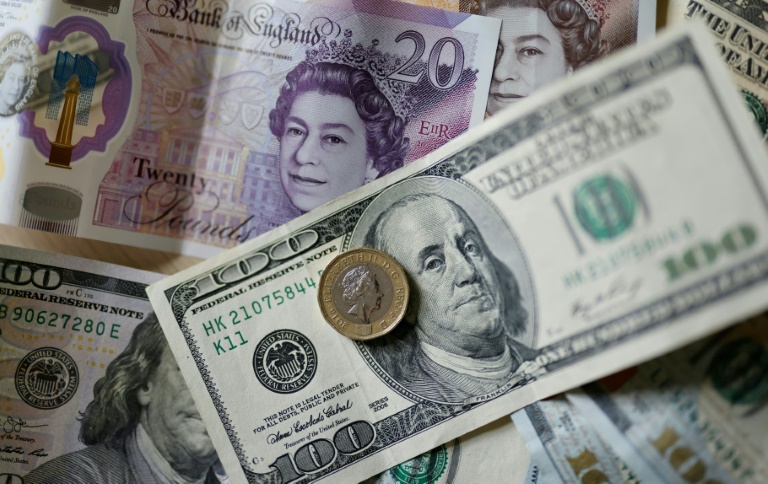
The pound swung between gains and losses Wednesday after the Bank of England confirmed it will end its support for financial markets at the end of the week.

The news dealt a blow to investors who had been buoyed by a report that the BoE had pledged to lenders it would continue to provide cash if needed after Friday’s deadline.

Asian stocks and the pound started the day under pressure after the UK central bank on Tuesday warned markets it would end to a near two-week programme of support aimed at quelling volatility sparked by the government’s debt-fuelled tax-cutting mini-budget.

Later in the day, there was a spark of optimism that it would act as a backstop after the report in the Financial Times saying it had tried to reassure banks. 

However, the mood changed again as the European day began after BoE officials said the Friday deadline remained.

Sterling moved in a wide range in Asia on the news, from a low of $1.0924 to a high of $1.1057.

Equities in Asia also saw big moves, with markets ending mixed.

Hong Kong endured a three percent swing between gains and losses before ending in the red, while Singapore, Wellington, Taipei and Jakarta were also down.

However, Shanghai, Sydney, Seoul, Manila, Mumbai and Bangkok edged up and Tokyo was flat.

The FTSE in London was also down, with sentiment also dampened by news that the UK economy unexpectedly shrank in August.

“Stepping away as the buyer of last resort is not great for risk or sterling,” said SPI Asset Management’s Stephen Innes after Tuesday’s BoE announcement.

“At the end of the day, UK economic issues, fiscal irresponsibility, and a hawkish Fed will linger. So do not be surprised by a pickup in pound volatility and for a continued move lower as well.”

– Range of crises –

Investors are struggling to find some solace as they navigate a range of crises that threaten the global economy, from soaring prices and bumper interest rate hikes to the Ukraine war and China’s Covid-induced growth slowdown.

The gloom was summed up by the International Monetary Fund, which on Tuesday highlighted the risks of inflation and the conflict in Europe as it slashed its global growth forecast and warned: “For many people 2023 will feel like a recession”.

Later, US President Joe Biden admitted there was a chance the country could suffer a “slight” recession.

Investors are now nervously looking ahead to Thursday’s US inflation report, with observers warning that a strong reading could spark another rout.

Still, analysts said the Fed would not likely take a single positive reading as a reason to slow down its pace of rate hikes as it lasers in on bringing inflation down from four-decade highs.

“I don’t see any imbalances yet that would cause a pivot from the Fed,” said Citigroup’s Veronica Clark on Bloomberg Television.

“The Fed will pay attention to global financial stability concerns, a strong dollar is part of that, but it’s ultimately going to be domestic conditions and what the Fed is seeing on inflation.”

The yen clawed back losses against the dollar, having fallen to a new 24-year low and breaking the level touched last week when Tokyo stepped into the market to support the Japanese unit.

Recession fears and China’s Covid-linked economic woes also kept oil prices in check, after they surged last week on an outsized OPEC output cut, with many warning that demand will plunge as people refrain from spending.

– Key figures around 0810 GMT –

Tokyo – Nikkei 225: FLAT at 26,396.83 (close)

Hong Kong – Hang Seng Index: DOWN 0.8 percent at 16,701.03 (close)

Shanghai – Composite: UP 1.5 percent at 3,025.51 (close)

London – FTSE 100: DOWN 0.2 percent at 6,873.21 (close)

Pound/dollar: DOWN at $1.0970 from $1.0972 Tuesday

Dollar/yen: UP at 146.22 yen from 145.83 yen

Euro/dollar: UP at $0.9711 from $0.9709

Euro/pound: UP at 88.48 pence from 88.46 pence

West Texas Intermediate: UP 0.1 percent at $89.43 per barrel

Brent North Sea crude: UP 0.4 percent at $94.65 per barrel

New York – Dow: UP 0.1 percent at 29,239.19 (close)

Thailand promises tougher gun control after nursery attack

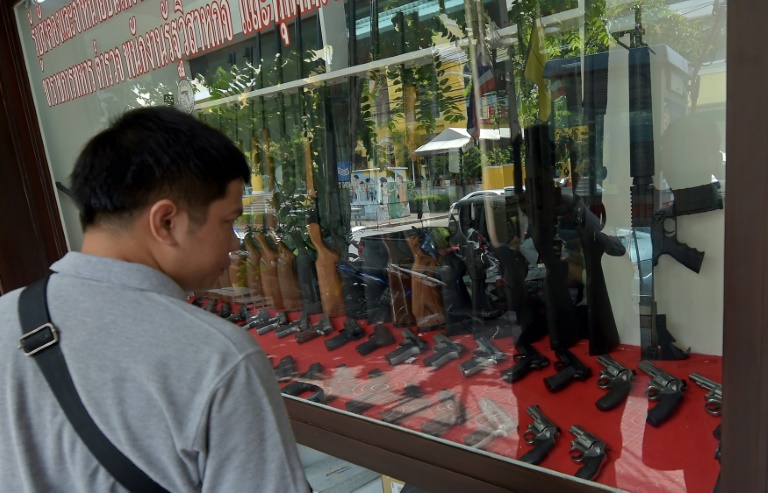
Thailand will toughen its gun possession and drug laws, the interior ministry said Wednesday, following the nursery massacre of 36 people — including 24 children — in the kingdom’s worst mass killing.

The country was left reeling after an ex-police officer forced his way into a small nursery in northeastern Na Klang last week, murdering 24 children and their teacher before killing his wife, their child and himself.

The attack was carried out with a knife and a legally acquired gun, and while Thailand has a huge number of firearms in circulation — one estimate suggesting there are as many as one in seven firearms per person — mass shootings are rare.

Interior minister Anupong Paojinda said Wednesday the government would require tougher qualifications for new gun owners, as well as ramping up checks on existing firearm holders.

“Our new qualification will include mental health reports, we will be examining whether we need proof from doctors,” he told a press conference, without giving further details.

Gun applicants are already required to undergo a background check and must present a valid reason for ownership — such as hunting or self-defence.

“For example, if officials want to possess a gun, their supervisors have to ratify that that individual has no record of alcohol abuse or bad temper,” Anupong said.

Village leaders or local officials will play a role in granting the tougher gun licenses, he said. 

Currently gun owners do not have to reapply for licenses during the lifetime of a firearm.

But now approved gun holders will have to undergo a review every three to five years, Anupong said. 

“Because as time changes, people change,” he explained.

Parliament will also discuss an exemption penalty for illegal gun holders, Anupong said, adding that individuals will be able to hand unauthorised firearms to authorities without facing prosecution– though he did not indicate when they must do so by.

Those who still possess illegal weapons will face harsh penalties, he said.

Anupong added that his ministry would work with police and the health department to increase drug screening and awareness, as well as encouraging addicts into rehabilitation.

“If everyone in town knows that drugs exist but local authorities don’t, they will be transferred,” he said.

The nursery attacker, 34-year-old sacked police sergeant Panya Khamrab, was dismissed from his post earlier this year on a drugs charge, with locals saying they suspected he was a methamphetamine addict.

However, preliminary tests found he did not have any drugs in his system at the time of the assault.

Japanese rocket launch fails in blow for space agency

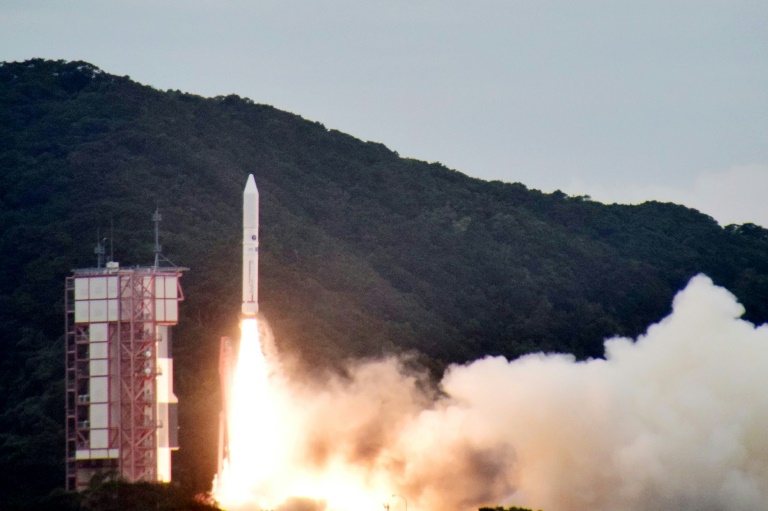
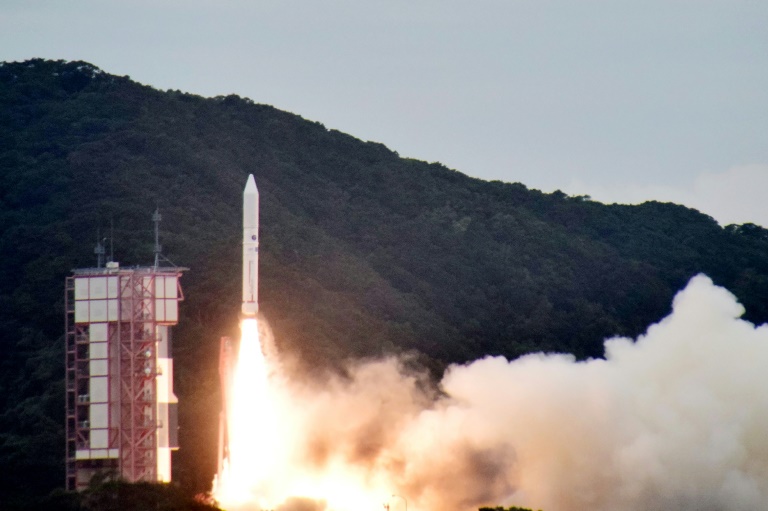
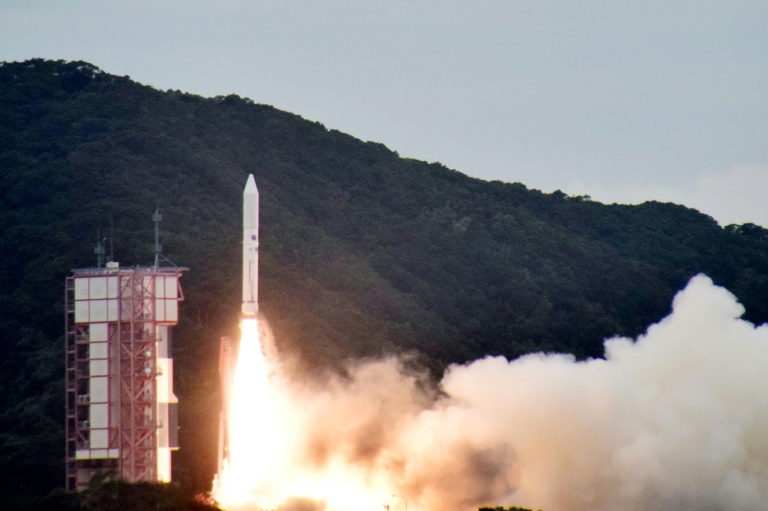
The launch of a Japanese rocket taking satellites into orbit to demonstrate new technologies failed after blast-off on Wednesday because of a positioning problem, the country’s space agency said.

It was Japan’s first failed launch in nearly two decades, and the only one for an Epsilon rocket, a solid-fuel model that has flown five successful missions since its 2013 debut.

The unmanned craft took off from Uchinoura Space Center in the southern Kagoshima region, with its lift-off livestreamed by the Japan Aerospace Exploration Agency (JAXA).

But a self-destruct signal was sent to the rocket less than 10 minutes later because of “positioning abnormalities”, said Yasuhiro Funo of JAXA, who led the project.

The livestream was halted and presenters wearing hard-hats told viewers there had been a problem with the launch.

Funo explained at a press conference that a technical issue was detected before the third — and final — stage of the launch, just as the last powerful booster was about to be ignited.

“We ordered the rocket’s destruction because if we cannot send it into the orbit that we planned, we don’t know where it will go,” he said, leading to safety concerns about where the machinery could fall.

After the mission was aborted, the rocket’s parts were assumed to have landed in the sea east of the Philippines, he added.

Japan’s last failed space launch was of a pair of spy satellites to monitor North Korea in 2003, and the only other time JAXA has sent a destroy order to a rocket was in 1999.

– ‘Pulsed-plasma thruster’ –

The 26-metre (85-foot) Epsilon-6 rocket had been carrying a box-shaped satellite due to orbit Earth for at least a year to carry out experiments, as well as eight micro-satellites.

Researchers and private companies had engineered new technologies to be tried out in space as part of the agency’s third Innovative Satellite Technology Demonstration programme.

Their gadgetry ranged from a “pulsed-plasma thruster” to an experiment in “harvesting energy with (a) lightweight integrated origami structure”, according to a JAXA fact sheet.

JAXA describes Epsilon as “a solid-fuel rocket designed to lower the threshold to space… and usher in an age in which everyone can make active use of space”.

It is smaller than the country’s previous liquid-fuelled model, and a successor to the solid-fuel M-5 rocket that was retired in 2006 due to its high cost.

JAXA president Hiroshi Yamakawa apologised for Wednesday’s failure, saying the agency was “terribly sorry that we couldn’t meet the Japanese people’s expectations”.

“We will pour efforts into finding out the cause and will take counter-measures” to prevent a recurrence, Yamakawa said.

Japan’s space programme is one of the world’s largest, and last week JAXA astronaut Koichi Wakata flew to the International Space Station as part of the Crew-5 mission.

JAXA has also been in the spotlight after its mission to the asteroid Ryugu by a space probe named Hayabusa-2, which collected pristine material from the celestial body that is now being analysed for clues to the origins of life.

Japanese rocket launch fails in blow for space agency

The launch of a Japanese rocket taking satellites into orbit to demonstrate new technologies failed after blast-off on Wednesday because of a positioning problem, the country’s space agency said.

It was Japan’s first failed launch in nearly two decades, and the only one for an Epsilon rocket, a solid-fuel model that has flown five successful missions since its 2013 debut.

The unmanned craft took off from Uchinoura Space Center in the southern Kagoshima region, with its lift-off livestreamed by the Japan Aerospace Exploration Agency (JAXA).

But a self-destruct signal was sent to the rocket less than 10 minutes later because of “positioning abnormalities”, said Yasuhiro Funo of JAXA, who led the project.

The livestream was halted and presenters wearing hard-hats told viewers there had been a problem with the launch.

Funo explained at a press conference that a technical issue was detected before the third — and final — stage of the launch, just as the last powerful booster was about to be ignited.

“We ordered the rocket’s destruction because if we cannot send it into the orbit that we planned, we don’t know where it will go,” he said, leading to safety concerns about where the machinery could fall.

After the mission was aborted, the rocket’s parts were assumed to have landed in the sea east of the Philippines, he added.

Japan’s last failed space launch was of a pair of spy satellites to monitor North Korea in 2003, and the only other time JAXA has sent a destroy order to a rocket was in 1999.

– ‘Pulsed-plasma thruster’ –

The 26-metre (85-foot) Epsilon-6 rocket had been carrying a box-shaped satellite due to orbit Earth for at least a year to carry out experiments, as well as eight micro-satellites.

Researchers and private companies had engineered new technologies to be tried out in space as part of the agency’s third Innovative Satellite Technology Demonstration programme.

Their gadgetry ranged from a “pulsed-plasma thruster” to an experiment in “harvesting energy with (a) lightweight integrated origami structure”, according to a JAXA fact sheet.

JAXA describes Epsilon as “a solid-fuel rocket designed to lower the threshold to space… and usher in an age in which everyone can make active use of space”.

It is smaller than the country’s previous liquid-fuelled model, and a successor to the solid-fuel M-5 rocket that was retired in 2006 due to its high cost.

JAXA president Hiroshi Yamakawa apologised for Wednesday’s failure, saying the agency was “terribly sorry that we couldn’t meet the Japanese people’s expectations”.

“We will pour efforts into finding out the cause and will take counter-measures” to prevent a recurrence, Yamakawa said.

Japan’s space programme is one of the world’s largest, and last week JAXA astronaut Koichi Wakata flew to the International Space Station as part of the Crew-5 mission.

JAXA has also been in the spotlight after its mission to the asteroid Ryugu by a space probe named Hayabusa-2, which collected pristine material from the celestial body that is now being analysed for clues to the origins of life.

Japanese rocket launch fails in blow for space agency

The launch of a Japanese rocket taking satellites into orbit to demonstrate new technologies failed after blast-off on Wednesday because of a positioning problem, the country’s space agency said.

It was Japan’s first failed launch in nearly two decades, and the only one for an Epsilon rocket, a solid-fuel model that has flown five successful missions since its 2013 debut.

The unmanned craft took off from Uchinoura Space Center in the southern Kagoshima region, with its lift-off livestreamed by the Japan Aerospace Exploration Agency (JAXA).

But a self-destruct signal was sent to the rocket less than 10 minutes later because of “positioning abnormalities”, said Yasuhiro Funo of JAXA, who led the project.

The livestream was halted and presenters wearing hard-hats told viewers there had been a problem with the launch.

Funo explained at a press conference that a technical issue was detected before the third — and final — stage of the launch, just as the last powerful booster was about to be ignited.

“We ordered the rocket’s destruction because if we cannot send it into the orbit that we planned, we don’t know where it will go,” he said, leading to safety concerns about where the machinery could fall.

After the mission was aborted, the rocket’s parts were assumed to have landed in the sea east of the Philippines, he added.

Japan’s last failed space launch was of a pair of spy satellites to monitor North Korea in 2003, and the only other time JAXA has sent a destroy order to a rocket was in 1999.

– ‘Pulsed-plasma thruster’ –

The 26-metre (85-foot) Epsilon-6 rocket had been carrying a box-shaped satellite due to orbit Earth for at least a year to carry out experiments, as well as eight micro-satellites.

Researchers and private companies had engineered new technologies to be tried out in space as part of the agency’s third Innovative Satellite Technology Demonstration programme.

Their gadgetry ranged from a “pulsed-plasma thruster” to an experiment in “harvesting energy with (a) lightweight integrated origami structure”, according to a JAXA fact sheet.

JAXA describes Epsilon as “a solid-fuel rocket designed to lower the threshold to space… and usher in an age in which everyone can make active use of space”.

It is smaller than the country’s previous liquid-fuelled model, and a successor to the solid-fuel M-5 rocket that was retired in 2006 due to its high cost.

JAXA president Hiroshi Yamakawa apologised for Wednesday’s failure, saying the agency was “terribly sorry that we couldn’t meet the Japanese people’s expectations”.

“We will pour efforts into finding out the cause and will take counter-measures” to prevent a recurrence, Yamakawa said.

Japan’s space programme is one of the world’s largest, and last week JAXA astronaut Koichi Wakata flew to the International Space Station as part of the Crew-5 mission.

JAXA has also been in the spotlight after its mission to the asteroid Ryugu by a space probe named Hayabusa-2, which collected pristine material from the celestial body that is now being analysed for clues to the origins of life.

Climate unease leaves Aussie mines scrambling for staff

Australia’s world-beating mining firms are flush with cash and desperate for staff but green-minded workers are shunning the high-paying sector, causing serious staff shortages, the government warned Wednesday.

Australia’s Resources Minister Madeleine King — who oversees the more than US$200 billion-a-year industry — said the mining sector was “stretched” and badly needs to reform and shake its sooty image.

“There is a major problem in attracting and retaining skilled workers,” she told business people in mineral-rich Western Australia.

“A big barrier to attracting these workers is the attitude many young Australians hold towards the resources industry.”

Despite miners paying far more than comparable sectors, King said enrolments in relevant degrees were “dwindling”.

She urged the likes of Rio Tinto and BHP to “get more creative” in attracting young people, suggesting the industry turn “Minecraft-crazed kids” into the real-life miners of tomorrow.

A failure to attract new talent could risk an industry that, she said, “underpins our enviable standard of living”.

Heaving iron ore, coal and other mineral goodies out of the Earth’s lithosphere has been the mainstay of Australia’s economy for decades, helping to avoid numerous crises and recessions.

The country is the world’s largest exporter of iron ore — the main component in steel — and ships out vast amounts of coal, gas, lithium, gold, zinc, diamonds and other resources.

But this year the Australian Resources and Energy Employer Association warned the sector needed an extra 24,000 new workers over the next five years.

It recently described the lack of plant engineers, geologists, drillers, earthmover operators and other staff as “crippling”.

But critics say the industry needs more than an image makeover.

Mining firms have been at the centre of a string of scandals over vast amounts of Earth-warming emissions, allegations of rampant sexual harassment and the recent blowing up of a series of 46,000-year-old Aboriginal rock shelters.

King said sceptics should be reminded that mining was essential for developing green technologies.

“Without the resources sector, there is no net zero,” she said.

Climate unease leaves Aussie mines scrambling for staff

Australia’s world-beating mining firms are flush with cash and desperate for staff but green-minded workers are shunning the high-paying sector, causing serious staff shortages, the government warned Wednesday.

Australia’s Resources Minister Madeleine King — who oversees the more than US$200 billion-a-year industry — said the mining sector was “stretched” and badly needs to reform and shake its sooty image.

“There is a major problem in attracting and retaining skilled workers,” she told business people in mineral-rich Western Australia.

“A big barrier to attracting these workers is the attitude many young Australians hold towards the resources industry.”

Despite miners paying far more than comparable sectors, King said enrolments in relevant degrees were “dwindling”.

She urged the likes of Rio Tinto and BHP to “get more creative” in attracting young people, suggesting the industry turn “Minecraft-crazed kids” into the real-life miners of tomorrow.

A failure to attract new talent could risk an industry that, she said, “underpins our enviable standard of living”.

Heaving iron ore, coal and other mineral goodies out of the Earth’s lithosphere has been the mainstay of Australia’s economy for decades, helping to avoid numerous crises and recessions.

The country is the world’s largest exporter of iron ore — the main component in steel — and ships out vast amounts of coal, gas, lithium, gold, zinc, diamonds and other resources.

But this year the Australian Resources and Energy Employer Association warned the sector needed an extra 24,000 new workers over the next five years.

It recently described the lack of plant engineers, geologists, drillers, earthmover operators and other staff as “crippling”.

But critics say the industry needs more than an image makeover.

Mining firms have been at the centre of a string of scandals over vast amounts of Earth-warming emissions, allegations of rampant sexual harassment and the recent blowing up of a series of 46,000-year-old Aboriginal rock shelters.

King said sceptics should be reminded that mining was essential for developing green technologies.

“Without the resources sector, there is no net zero,” she said.

Prince, Andy Warhol feature in Supreme Court copyright case

Pop music and art converge on the US Supreme Court on Wednesday as it hears whether a photographer should be compensated for a picture she took of Prince used in a work by Andy Warhol.

The case, Andy Warhol Foundation for the Visual Arts v. Goldsmith, could have far-reaching implications for US copyright law and the art world.

It stems from a black-and-white picture taken in 1981 by celebrity photographer Lynn Goldsmith of Prince, a then up-and-coming young musician from Minneapolis.

In 1984, as Prince’s “Purple Rain” album was taking off, Vanity Fair asked Warhol to provide an image to accompany a story on the musician in the glossy magazine.

Warhol used one of Goldsmith’s photographs to produce a silk screen print image of Prince with a purple face in the familiar brightly colored style the artist made famous with his portraits of Marilyn Monroe.

Goldsmith received credit as the photographer and was paid $400 for the rights for one-time use.

After Prince died in 2016, The Andy Warhol Foundation, set up after the artist’s death in 1987, licensed another image of the musician made by Warhol from the Goldsmith photo to Vanity Fair publisher Conde Nast.

That portrait — Warhol had actually made 16 in total — featured Prince with an orange face rather than a purple face.

Conde Nast paid the Foundation a $10,250 licensing fee.

Goldsmith did not receive anything and is claiming that her copyright on the original photo was infringed.

“This time, no credit or payment to Goldsmith,” her lawyers said in a brief. “Copyright law cannot possibly prescribe one rule for purple silkscreens and another for orange ones.”

– Split rulings –

The Warhol Foundation countered by arguing that Warhol’s “Prince Series” is “transformative” is and therefore not infringing on any copyright.

“Goldsmith is asking for something remarkable here,” the Foundation said in its brief.

“She wants the Court to hold that the works of Andy Warhol — universally recognized as a creative genius who pioneered the twentieth century Pop Art movement — are not transformative, and therefore are illegal.”

Two lower courts issued split rulings, sending the case to the Supreme Court.

In 2019, a US District Court judge in Manhattan ruled in favor of the Warhol Foundation.

“The Prince Series works can reasonably be perceived to have transformed Prince from a vulnerable, uncomfortable person to an iconic, larger-than-life figure,” the judge said.

“The humanity Prince embodies in Goldsmith’s photograph is gone,” the judge said. “Moreover, each Prince series work is immediately recognizable as a ‘Warhol’ rather than as a photograph of Prince.”

An appeals court disagreed last year, however, saying “the district judge should not assume the role of art critic and seek to ascertain the intent behind or meaning of the works at issue.”

What counts, the court said, is whether the new work “remains both recognizably deriving from, and retaining the essential elements of, its source material.

It said the Warhol series “retains the essential elements of the Goldsmith photograph without significantly adding to or altering those elements.”

After hearing oral arguments on Wednesday, the nine judges on the Supreme Court will decide whether Warhol’s work is transformative, and deserving of protection, or infringing.

They will issue their ruling by June 30.

Close Bitnami banner
Bitnami