World

Israel hails 'historic' sea border deal with Lebanon

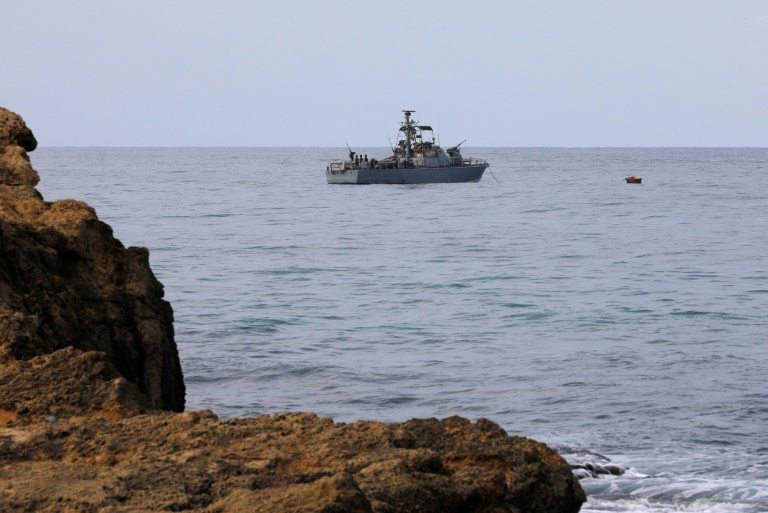
Israel said Tuesday it has reached a US-brokered agreement with Lebanon to settle their long-disputed maritime border, hailing a “historic achievement” that potentially unlocks significant offshore gas production for both countries.  

Negotiations between the neighbouring countries, which are still technically at war, had suffered repeated setbacks since their launch in 2020 but gained momentum in recent weeks with both sides eyeing revenue from potentially rich Mediterranean gas fields.

US envoy Amos Hochstein floated a proposed final agreement earlier this month that was accepted by Israel, but Lebanon sought some adjustments. 

Israel said last week it intended to reject the changes sought by Lebanon, even if that made a deal impossible, but negotiations continued, culminating in what both sides described as acceptable final terms. 

“Israel and Lebanon have reached an historic agreement settling the maritime dispute,” said a statement from Israel Prime Minister Yair Lapid’s office, in which he hailed “an historic achievement that will strengthen Israel’s security”.

Lebanon’s presidency said the proposed final text submitted by Hochstein was “satisfactory to Lebanon” and voiced hope that “the agreement on the demarcation will be announced as soon as possible”.

Lebanon’s chief negotiator, Elias Bou Saab, said that “today we have come to a solution that satisfies both parties.”

A major source of friction at the talks was the Karish gas field, which Israel insisted fell entirely within its waters and was not a subject of negotiation. 

Lebanon reportedly claimed part of the field and Hezbollah, the powerful Iran-backed militant group that holds huge sway in Lebanon, threatened attacks if Israel began production at Karish. 

Israel has said production would begin at Karish as soon as possible, regardless of Lebanon’s demands. 

– Israel election issue –

On Sunday, London-listed firm Energean began testing the pipeline linking Karish to the Israeli coast, a key step before production can begin.

The US text has not been made public but under terms leaked to the press all of the Karish field would fall under Israeli control, while another potential gas field, Qana, would be divided but its exploitation would be under Lebanon’s control.

French company Total would be licensed to search for gas in the Qana field, and Israel would receive a share of future revenues.

Bou Saab said Lebanon will “get its full rights from the Qana field”, and Israel might receive compensation through Total. There will be no direct partnership in gas exploration or exploitation between the two enemy states, he said.

The Israeli premier has said his government is committed to exporting more gas to Europe to help replace Russian deliveries hit by the war in Ukraine. 

But Israel’s November 1 general election has overshadowed the recent phases of the negotiations. 

Right-wing opposition leader Benjamin Netanyahu, charged that Lapid had “capitulated” to Hezbollah by moving forward with an agreement. 

It is not clear if Netanyahu, who remains determined to reclaim the premiership he held from 2009-2021, has seen the deal’s proposed terms.

But he has vowed that the hawkish government he hopes to form next month with his far-right and religious allies will not be bound by any agreement with Lebanon.
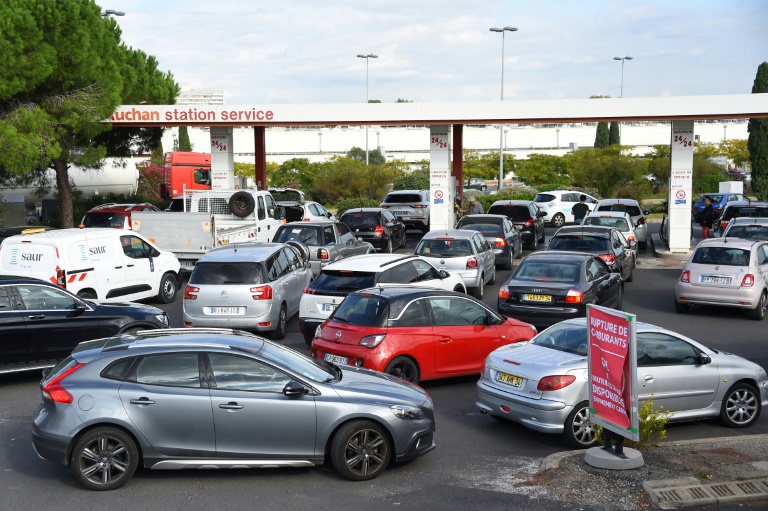
France threatens to break refinery blockades in strike standoff

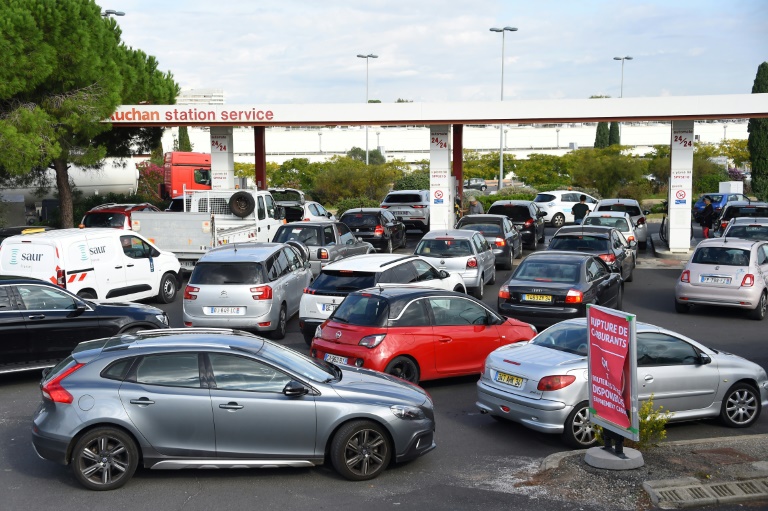
The French government on Tuesday threatened to forcibly break blockades of refineries and oil depots, which have been paralysed by striking workers, as motorists continued to besiege petrol stations in the hope of filling their tanks.

Around a third of France’s service stations were still low on, or out of, petrol as strike action at energy giant TotalEnergies and other oil majors entered its third week and wage talks stalled.

Government ministers and President Emmanuel Macron have urged a negotiated resolution to the crisis, but on Tuesday government spokesman Olivier Veran threatened force to end the blockades which have paralysed several of France’s refineries and oil depots.

If blockades were not ended “immediately”, Veran told the RTL broadcaster, “we will step in, which means we could intervene to lift them”.

The government could then “requisition qualified personnel” to ensure that the situation can go “back to normal”, he said.

He said ongoing action by the hard-left CGT union at TotalEnergies installations was “excessive and out of line”.

The oil giant’s management “is right to demand that blockades be lifted before there can be negotiations”, Veran said.

Also on Tuesday, Finance Minister Bruno Le Maire called breaking up the blockades “the only solution”.

Once access to refineries and depots was free, it would take around two weeks for the fuel situation to return to normal, Veran said.

But stoppages continued at several refineries, including at France’s biggest near Le Havre in the north of the country, after strikers at TotalEnergies Tuesday voted to extend their action.

“We are still waiting for details from management on what they want to negotiate on,” Eric Sellini, coordinator for the CGT union at the oil major, told AFP.

– ‘What a mess’ –

Unions at the French branch of Esso-ExxonMobil on Tuesday also renewed their strike call, rejecting a pay offer by management.

Motorists formed long queues outside petrol stations from early Tuesday. In central Paris, traffic slowed as waiting cars blocked roads, cycle paths and pedestrian crossings, hoping to be served before the pumps went dry.

Many used social media to exchange tips. One post in a Facebook group Monday said that a local BP service station would be resupplied “at 2:30 pm”. Another replied: “It’s now 2:37 pm and they’re out of diesel.” 

Another user reacted: “What a mess.”

The petrol crisis comes at a time of high energy prices and inflation that are sapping French households’ purchasing power.

The left-wing opposition coalition Nupes has called for a “March against a high cost of living” in Paris and elsewhere on Sunday.

At the weekend, several prominent French people came out in support of the initiative, including this year’s winner of the Nobel Prize for Literature, Annie Ernaux.

Opposition politicians on the left were quick to criticise the government’s hardening stance Tuesday.

“With this government, when dialogue stalls, it’s threats for the wage earners and caresses for the bosses. And yet, it’s management that let the situation deteriorate,” tweeted Manuel Bompard, a deputy for the leftwing LFI party.

“They act as if ordinary people don’t matter,” said fellow LFI member Francois Ruffin.

Jordan Bardella, president of the farright RN party, said the government had failed to anticipate the crisis, adding that “super profits at Total and the salary of the chairman” made worker demands “not unreasonable”.

But Gilles Platret, vice president of the conservative LR party, backed the government’s tougher stance, saying strikers were “taking an entire country hostage”.

TotalEnergies posted a profit of $5.7 billion in the second quarter of the year, more than double the year-earlier figure.

CEO Patrick Pouyanne’s total compensation package was 5.9 million euros ($5.7 million) in 2021, up 52 percent from the previous year’s, according to the group’s annual report.

burs-jh/tgb/rox

France threatens to break refinery blockades in strike standoff

The French government on Tuesday threatened to forcibly break blockades of refineries and oil depots, which have been paralysed by striking workers, as motorists continued to besiege petrol stations in the hope of filling their tanks.

Around a third of France’s service stations were still low on, or out of, petrol as strike action at energy giant TotalEnergies and other oil majors entered its third week and wage talks stalled.

Government ministers and President Emmanuel Macron have urged a negotiated resolution to the crisis, but on Tuesday government spokesman Olivier Veran threatened force to end the blockades which have paralysed several of France’s refineries and oil depots.

If blockades were not ended “immediately”, Veran told the RTL broadcaster, “we will step in, which means we could intervene to lift them”.

The government could then “requisition qualified personnel” to ensure that the situation can go “back to normal”, he said.

He said ongoing action by the hard-left CGT union at TotalEnergies installations was “excessive and out of line”.

The oil giant’s management “is right to demand that blockades be lifted before there can be negotiations”, Veran said.

Also on Tuesday, Finance Minister Bruno Le Maire called breaking up the blockades “the only solution”.

Once access to refineries and depots was free, it would take around two weeks for the fuel situation to return to normal, Veran said.

But stoppages continued at several refineries, including at France’s biggest near Le Havre in the north of the country, after strikers at TotalEnergies Tuesday voted to extend their action.

“We are still waiting for details from management on what they want to negotiate on,” Eric Sellini, coordinator for the CGT union at the oil major, told AFP.

– ‘What a mess’ –

Unions at the French branch of Esso-ExxonMobil on Tuesday also renewed their strike call, rejecting a pay offer by management.

Motorists formed long queues outside petrol stations from early Tuesday. In central Paris, traffic slowed as waiting cars blocked roads, cycle paths and pedestrian crossings, hoping to be served before the pumps went dry.

Many used social media to exchange tips. One post in a Facebook group Monday said that a local BP service station would be resupplied “at 2:30 pm”. Another replied: “It’s now 2:37 pm and they’re out of diesel.” 

Another user reacted: “What a mess.”

The petrol crisis comes at a time of high energy prices and inflation that are sapping French households’ purchasing power.

The left-wing opposition coalition Nupes has called for a “March against a high cost of living” in Paris and elsewhere on Sunday.

At the weekend, several prominent French people came out in support of the initiative, including this year’s winner of the Nobel Prize for Literature, Annie Ernaux.

Opposition politicians on the left were quick to criticise the government’s hardening stance Tuesday.

“With this government, when dialogue stalls, it’s threats for the wage earners and caresses for the bosses. And yet, it’s management that let the situation deteriorate,” tweeted Manuel Bompard, a deputy for the leftwing LFI party.

“They act as if ordinary people don’t matter,” said fellow LFI member Francois Ruffin.

Jordan Bardella, president of the farright RN party, said the government had failed to anticipate the crisis, adding that “super profits at Total and the salary of the chairman” made worker demands “not unreasonable”.

But Gilles Platret, vice president of the conservative LR party, backed the government’s tougher stance, saying strikers were “taking an entire country hostage”.

TotalEnergies posted a profit of $5.7 billion in the second quarter of the year, more than double the year-earlier figure.

CEO Patrick Pouyanne’s total compensation package was 5.9 million euros ($5.7 million) in 2021, up 52 percent from the previous year’s, according to the group’s annual report.

burs-jh/tgb/rox

Alarm grows over Iran protest crackdown in Kurdish city

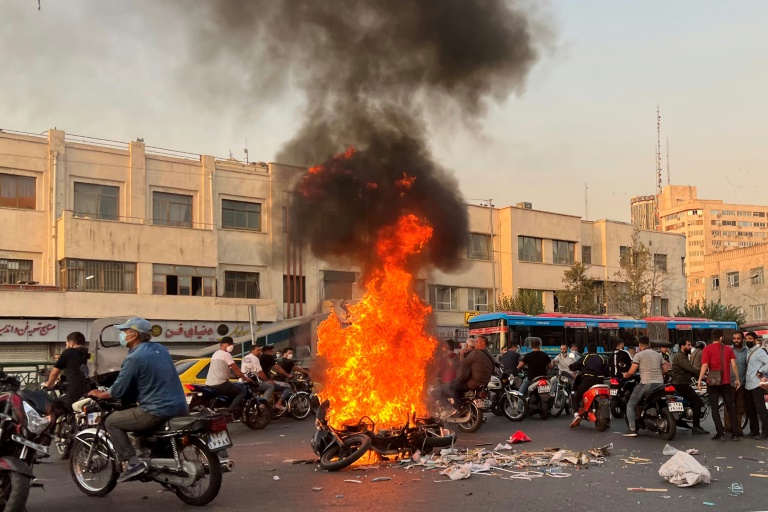
Rights groups voiced alarm Tuesday over the extent of an Iranian crackdown on a Kurdish-populated city that has become a hub for protests, as oil refinery workers pressed strikes in a new tactic.

Iran’s clerical authorities have been shaken by over three weeks of protests that erupted after the death of Mahsa Amini, a 22-year old Iranian of Kurdish origin, who had been arrested by the notorious morality police.

Despite the use of brutal force by the authorities that activists say has left dozens dead, and led to hundreds of arrests, there is so far no sign of the protest movement coming to an end.

Protests have been especially intense in the city of Sanandaj in the western province of Kurdistan, Amini’s home region, where rights groups fear heavy casualties and accuse authorities of resorting to shelling of neighbourhoods.

The Norway-based Hengaw rights groups said an Iranian warplane had arrived at the city’s airport overnight and buses carrying special forces were on their way to the city from elsewhere in Iran.

It warned locals were having problems sending video evidence of events due to internet restrictions but said a seven-year-old had been killed on Sunday night. AFP could not immediately verify the claims.

Amnesty International said it was “alarmed by the crackdown on protests in Sanandaj amid reports of security forces using firearms and firing teargas indiscriminately, including into people’s homes.”

“Iranian authorities continue to disrupt internet and mobile networks to hide their crimes,” it said in a statement.

– ‘All together!’ –

The New-York based Center for Human Rights in Iran said there was a risk of a similar situation in Sistan-Baluchistan province in the southeast where activists say over 90 people have been killed since September 30.

“The ruthless killings of civilians by security forces in Kurdistan province, on the heels of the massacre in Sistan-Baluchistan province, are likely preludes to severe state violence to come,” said its director Hadi Ghaemi.

Analysts have said these protests are proving particularly challenging for the authorities under supreme leader Ayatollah Ali Khamenei, 83, due to their duration and multi-faceted nature ranging from street demonstrations to individual acts of defiance.

In a new development on Monday, protests spread to Iran’s oil refineries with videos showing striking workers burning tyres and blocking roads outside the Asalouyeh petrochemical plant in the southwest.

They could also be heard shouting slogans including “Death to the dictator” and “Don’t be scared, we are all together!”.

Similar actions were reported at other facilities including Abadan in the west where the Oslo-based NGO Iran Human Rights (IHR) said a strike was already in progress on Tuesday.

University campuses and even school classrooms have also seen regular protests, with students at the Amir Kabir University of Technology in Tehran on Monday shown chanting anti-regime slogans.

In a video shared by the 1500tasvir social media channel that monitors protests and police violations, students at the Tehran Art University were shown spelling out the Persian word for blood — “khun” — in a human chain.

– ‘Vain effort to silence’ –

The crackdown on the protests sparked by Amini’s death on September 16 has claimed at least 95 lives, according to IHR.

Activists say that among those who died in the protests are two teenage girls, Nika Shakarami and Sarina Esmailzadeh, whose families say were killed by security forces after being detained. Authorities insist they died in falls.

Another 90 people were killed by the security forces in Iran’s far southeastern city of Zahedan from September 30 after the protests sparked by the alleged rape of a teenage girl by a police chief in the Sistan-Baluchistan province, said IHR, citing the UK-based Baluch Activists Campaign.

UNICEF executive director Catherine Russel said “we are extremely concerned by continuing reports of children and adolescents being killed, injured and detained amid the ongoing public unrest in Iran.”

The crackdown has prompted international condemnation with US National Security Advisor Jake Sullivan telling Iran the “world is watching” and “will hold responsible those using violence in a vain effort to silence” protesters.

The UK on Monday said it had imposed sanctions on Iran’s morality police, the unit which arrested Amini and enforces strict dress rules for women including the compulsory headscarf.

Iran said it has summoned the British ambassador to protest against the “baseless” sanctions.

French Foreign Minister Catherine Colonna said on Tuesday that five French citizens are currently being held in Iran, in comments implying that one of the nine foreigners Iran has said it is holding over links to the protests is French.

G7 to hold crisis talks on Russia's bombing blitz in Ukraine

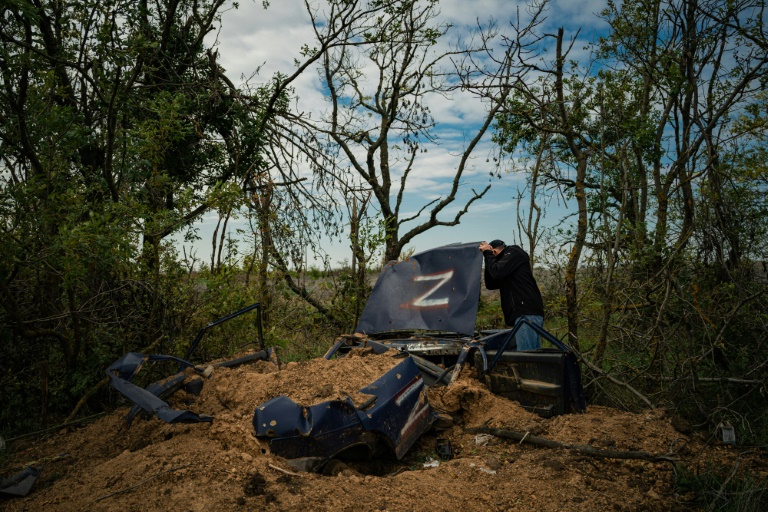
The United States and other G7 powers will hold crisis talks Tuesday on Russia’s recent bombing blitz across Ukraine that Kyiv’s allies said was a mark of desperation and a turning point in the war.

Their meeting comes a day after Russian missiles rocked the Ukrainian capital for the first time in months. A defiant President Volodymyr Zelensky responded by warning Moscow that his country “cannot be intimidated”.

Moscow’s forces rained more than 80 missiles on cities across Ukraine on Monday, according to Kyiv.

Ukraine’s emergency services said on Tuesday that the overall toll had risen to 19 dead and more than 100 people wounded.

The United Nations said on Tuesday the wave of attacks may have violated the laws of war and would amount to war crimes if civilians were deliberately targeted.

“These strikes may have violated the principles of the conduct of hostilities under international humanitarian law,” Ravina Shamdasani, a spokeswoman for the UN human rights office, told reporters in Geneva, adding that intentionally targeting civilians and civilian objects, “amounts to a war crime”.

Monday’s mass barrage came in apparent retaliation for an explosion on Saturday that damaged a key bridge linking Russia to Crimea, a peninsula Moscow annexed from Ukraine in 2014.

Russian President Vladimir Putin blamed Ukraine for the bridge blast and warned of “severe” responses to any further attacks.

Ukrainian Foreign Minister Dmytro Kuleba said the strikes on Monday showed Moscow was “desperate” after a spate of embarrassing military setbacks.

Turkey on Tuesday called for a viable ceasefire between Russia and Ukraine “as soon as possible”.

Speaking in a televised interview, Turkish Foreign Minister Mevlut Cavusoglu also called for a “just peace” based on Ukraine’s territorial integrity. 

Ukrainian officials said Russia had fired another four missiles into the county on Tuesday, all of which were shot down by air defences.

At an urgent meeting of the UN General Assembly on Monday — called to debate Moscow’s declared annexation of four partly occupied Ukrainian regions — Ukrainian ambassador Sergiy Kyslytsya branded Russia a “terrorist state”, noting his own immediate family had come under attack on Monday.

“Unfortunately, you can hardly call for a stable and sane peace as long as an unstable and insane dictatorship exists in your vicinity,” he said. 

– ‘Stay the course’ –

Zelensky and G7 leaders were set to convene via video link at 2:00 pm (1200 GMT) on Tuesday to discuss the latest Russian attacks.

The office of UK Prime Minister Liz Truss said she would use the gathering “to urge fellow leaders to stay the course”.

“Nobody wants peace more than Ukraine. And for our part, we must not waver one iota in our resolve to help them win it.”

German government spokesman Steffen Hebestreit told reporters on Monday that Chancellor Olaf Scholz had spoken with Zelensky and assured him “of the solidarity of Germany and the other G7 states”.

French President Emmanuel Macron convened his defence and foreign affairs ministers over the strikes, which he said signalled “a profound change in the nature of this war”.

US President Joe Biden condemned Monday’s attacks in stark terms, saying they demonstrated “the utter brutality” of Putin’s “illegal war”.

In a statement, the White House said Biden had spoken to Zelensky and had pledged to furnish Ukraine with “advanced air defence systems”. 

Ahead of Monday’s General Assembly session, UN Secretary-General Antonio Guterres condemned the latest attacks as an “unacceptable escalation of the war”, his spokesman said.

Though Russia’s UN representative Vasily Nebenzya did not directly address the missile strikes at the session, he defended his country’s annexation of Ukrainian regions, saying the aim was “to protect our brothers and sisters in eastern Ukraine”.

– ‘In an instant… it’s death’ –

Putin meanwhile was due to meet the head of the UN’s nuclear energy watchdog, Rafael Grossi, in Saint Petersburg on Tuesday to discuss the Russian-controlled nuclear plant in the Ukrainian region of Zaporizhzhia.

Moscow recently said it had transferred control of the plant to Russia and fighting around the facility for months has raised fears of a nuclear accident.

And on Wednesday, Putin was to meet Turkish leader President Recep Tayyip Erdogan at a summit in the Kazakh capital Astana, a Turkish official told AFP.

Residents across Ukraine expressed shock and rage after Monday’s barrage.

In Dnipro, Ukraine serviceman Maxim was on leave from the front lines for the first time in six months to celebrate his wife’s birthday when Russian missiles slammed into the central Ukrainian city, damaging their home.

“We are fighting on the front exactly to protect these places” far from enemy lines, he said. “But they still manage to hit them.”

The strike, he said, had made him more determined than ever to repel the Russian forces in northeastern Ukraine.

Since Russia launched its invasion on February 24, more than 7.6 million Ukrainians have become refugees in other European states, while another nearly seven million people have been displaced within the country.

Monday’s missile strikes prompted a fresh warning from the UN High Commissioner for Refugees that more people could soon be forced to flee their homes.

Winter power shortages won't worry off-grid Swiss valley

While people across Europe are being urged to save energy this coming winter to avert power shortages, Switzerland’s Bavona Valley is unfazed, having never been plugged into the power network.

Located in the Italian-speaking Ticino region of southern Switzerland, the remote, glacially-carved valley following the Bavona river is one of the steepest in the Alps.

But there are 12 hamlets made up of stone dwellings scattered along the rugged valley which are home to a few dozen inhabitants for most of the year, except in winter when fewer than 10 stay on.

Eleven of the hamlets are not connected to the power grid, despite the area producing lots of electricity thanks to dams located high up near the mountain tops.

They were built after World War II to provide electricity for the German-speaking region of Switzerland over on the northern side of the Alps, said Romano Dado, a former local councillor in Cevio, the village at the lower end of the valley on which the hamlets depend.

Bringing power down into the valley would have required transformers, but “the people here didn’t have the money for that,” he told AFP. Only the last hamlet at the very top of the valley could afford this luxury.

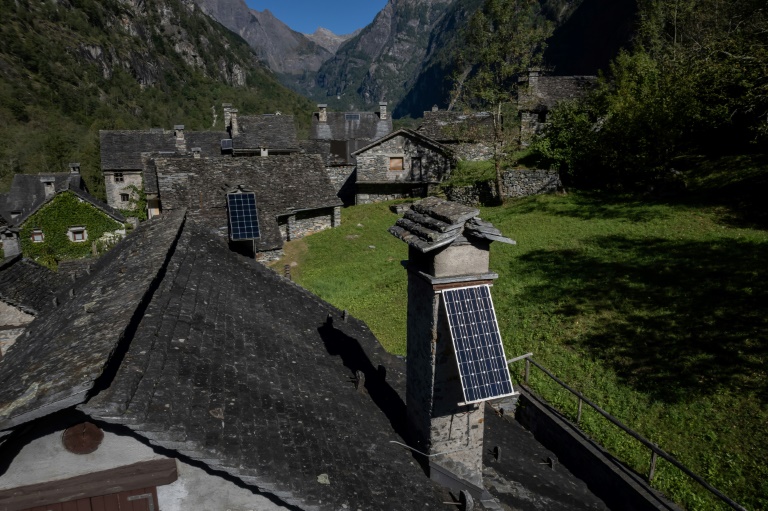
As the decades passed, the valley’s population shrank from around 500 to fewer than 50 now, according to Dado, and the inhabitants learned to get by without being on the electricity grid, making do with their fireplaces and installing solar panels on the roofs from as early as the 1980s.

– Oil lamps and candles –

Residents also use gas canisters, candles and oil lamps. To wash their clothes, “we go to the river, as always”, said Tiziano Dado, Romano’s stonemason brother.

The narrow valley, around 10 kilometres long (six miles) and flanked by towering slopes reaching more than 2,500 metres in altitude, has seen sometimes-fatal avalanches, floods and landslides throughout the centuries.

Seasonal migration to the summer pastures persisted in the area until the 1970s. 

Families went up the valley with their animals from March until the end of December, coming back down for Christmas, said Sonia Fornera, from Orrizonti Alpini, a group of experts in Alpine history and culture.

“It was a hard life but a simple life,” said Bice Tonini, 88, warming herself by the fireplace in her house.

Despite her age, she continues to live there from spring to October thanks to her solar panels.

“There is so much wastage of electricity” in modern society, she lamented.

At night, there are no street lights to prevent her from admiring the stars — and she enjoys the nightly show far more than watching television, which is a rare sight in the valley.

– Museum or dream? –

“We are used to living in a very simple way and we’re not afraid of making savings” in terms of energy, said Ivo Dado, 81, who proudly had solar panels installed in 1987.

The former farmer — no immediate relation to the Dado brothers — is delighted that some cities are giving up on their traditional festive illuminations this December.

“This Christmas will be as before, with less light. It will be beautiful again!” he said.

This sparing attitude towards electricity is not to everyone’s taste.

“Solar panels are a partial solution,” Martino Giovanettina, a writer and owner of one of the few restaurants in the valley, told AFP.

He believes the lack of electricity, plus the stringent rules for renovating old buildings, are contributing to depopulating the valley, turning it into an open-air “museum” of the past, instead of orientating towards tourism, as neighbouring valleys have done.

The Bavona Valley has no set-up for tourists at all, apart from a cable car from the last hamlet up to the dams, and the parking of motorhomes is banned.

Doris Femminis, a 2020 Swiss Prize for Literature winner, grew up in the valley and raised goats there during her 20s. Now she recounts the story of the Bavona Valley in her books.

Now living in the Jura mountains in western Switzerland, she returns every two months to this “wonderful place of one’s childhood”.

“In Switzerland, we like the idea of still having a corner of wild nature,” she said, but acknowledged that such places are not suited to modern life.

“It’s a place of the past,” she told AFP.

“Nobody wants to live there anymore; it’s just a dream.”

Equities drop on recession fears as inflation data looms

Markets mostly fell Tuesday as investors grow increasingly fearful that more big interest rate hikes will tip economies into deep recessions, with the mood also darkened by the worsening Ukraine war and worries over China’s outlook.

With the focus on inflation, analysts said consumer price index data released later this week will be crucial to the direction of risk assets — another big reading could spark a fresh equity selloff and surge in the dollar.

Investors had hoped that a series of bumper rate increases by the US Federal Reserve this year would begin to drag on the economy and slow runaway prices, allowing policymakers to slow down their pace of monetary tightening.

But a forecast-beating jobs report on Friday highlighted the tough work the central bank has in bringing inflation down from four-decade highs, and many observers warn a recession is virtually inevitable.

World Bank chief David Malpass said there was a “real danger” of a global contraction next year, adding that the surge in the dollar was weakening the developing nations’ currencies and pushing their debt to “burdensome” levels.

And JP Morgan boss Jamie Dimon told CNBC that while the US economy was holding up now, it faced several headwinds including rising rates, surging inflation, Fed tightening and the Ukraine war.

He added that he saw a US recession in six to nine months, and that the S&P 500 could fall another 20 percent.

Barings strategist Christopher Smart said: “It’s little wonder investors enter the week in a dreary mood, especially with headlines from Ukraine signalling a further escalation in geopolitical tensions.

“Of course, markets are meant to look ahead, but it’s hard not to see the next few quarters bringing more of the same.”

After another round of losses in New York, Asia again struggled.

Chip manufacturers globally took a pounding from new US export controls aimed at restricting China’s ability to buy and make high-end chips with military applications.

The Philadelphia Stock Exchange Semiconductor Index saw its lowest close since late 2020, while Bloomberg News reported that $240 billion had been slashed from companies’ market values worldwide.

– ‘Volatility ahead’ –

Taipei led the losses in Asia — diving more than four percent — as chip giant TSMC plunged 8.3 percent, while a hefty selloff in Samsung Electronics dragged Seoul down 1.6 percent. Tokyo was also sharply lower owing to a hit to tech firms.

All three markets had been closed Monday and were reacting to Friday’s US announcement for the first time.

Hong Kong fell more than two percent to below 17,000 points for the first time since late 2011, while Sydney, Singapore, Mumbai, Bangkok and Jakarta were also lower.

Shanghai, Wellington and Manila edged up slightly on bargain-buying.

London, Paris and Frankfurt also fell at the open.

“There is growing pessimism in the markets now and with some big data points to come from the US this week, not to mention the start of earnings season… investors should probably brace for more volatility ahead,” said OANDA’s Craig Erlam.

There was a glimmer of optimism for investors in comments from Fed vice chair Lael Brainard, who appeared to hint at a more cautious tone for policy as the hikes already announced work through the economy.

But SPI Asset Management’s Stephen Innes said traders were likely to be guarded in their reaction to the remarks.

“With the market in ‘fool me once, shame on me, fool me twice, shame on you’ mode, investors should be 100 percent defensive, erring to classical risk-off strategies as local conversations defer to risk-off,” he said in a commentary.

On currency markets, the dollar remained king as the United States lead the monetary tightening drive, and eyes are on the reaction in Tokyo as the yen drops towards the 145.90 level that last month saw massive government intervention.

The pound was also still under pressure, despite the Bank of England unveiling fresh measures to calm markets rocked by a UK budget, saying it would extend purchases of government bonds.

The news came as official data revealed British unemployment fell to a near 50-year low at 3.5 percent, although wages continue to be eroded by sky-high inflation.

– Key figures around 0810 GMT –

Tokyo – Nikkei 225: DOWN 2.6 percent at 26,401.25 (close)

Hong Kong – Hang Seng Index: DOWN 2.2 percent at 16,832.36 (close)

Shanghai – Composite: UP 0.2 percent at 2,979.79 (close)

London – FTSE 100: DOWN 0.8 percent at 6,902.56

Pound/dollar: DOWN at $1.1020 from $1.1059 on Monday

Euro/dollar: DOWN at $0.9699 from $0.9708

Euro/pound: UP at 88.00 pence from 87.76 pence

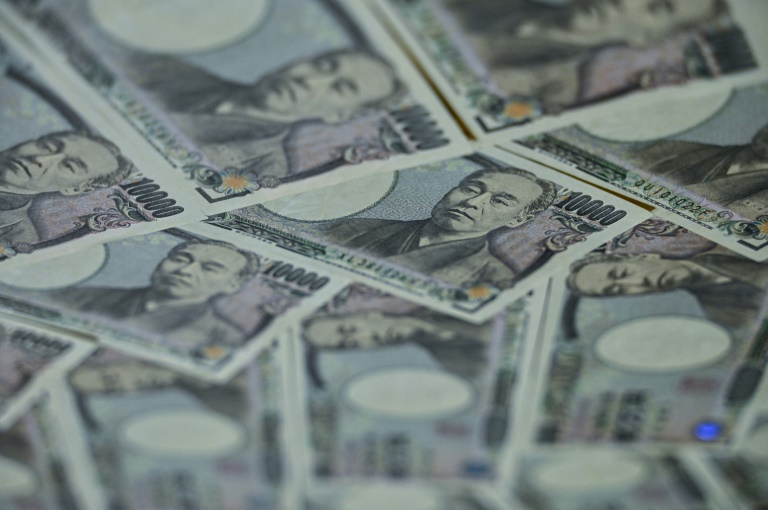
Dollar/yen: DOWN at 145.62 yen from 145.72 yen

West Texas Intermediate: DOWN 0.2 percent at $90.91 per barrel

Brent North Sea crude: DOWN 0.1 percent at $96.11 per barrel

New York – Dow: DOWN 0.3 percent at 29,202.88 (close)

Families gather for mass cremation of Thai nursery victims

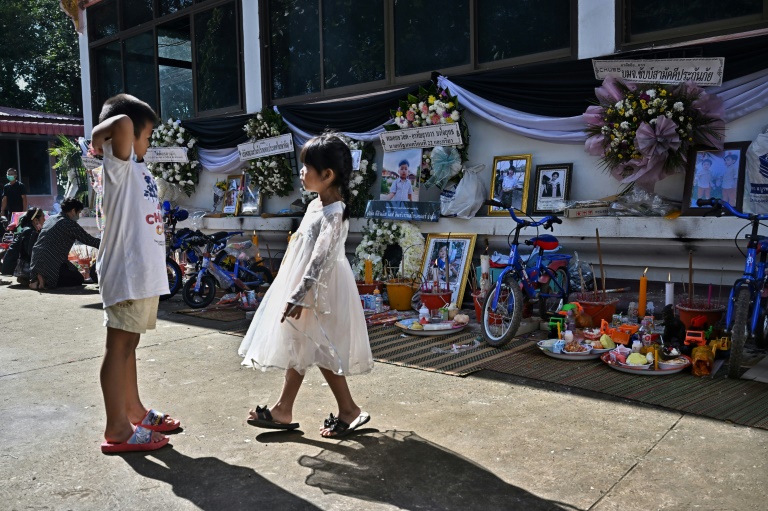
Devastated families in Thailand gathered Tuesday for the cremation of their loved ones, killed in a nursery massacre that claimed 36 lives — including 24 children.

The kingdom has been stunned by the tragedy in northeastern Na Klang province, one of the worst mass killings in its history, with flags at half-mast and King Maha Vajiralongkorn visiting the families of the victims.

At Wat Rat Samakee temple in Na Klang, chanting monks began the ceremony as the exhausted and grieving close-knit rural community prepared to say a final goodbye to 19 of those killed.

“An incident like this shouldn’t have happened,” said Thanakorn Nueangmatcha, 39, ahead of the funeral at the temple.

“They were only children.”

Other victims of the attack — perpetrated by a former police officer, who went on to kill his wife and her child before taking his own life — will be cremated at other temples in the area.

At Wat Rat Samakee, incense and the fading scent of hundreds of flower bouquets hung in the air as volunteers continued to prepare the adjacent area for the cremations.

The funerals, sponsored by the royal household, will end three days of rites that began Saturday.

Tuesday’s mass ceremony is highly unusual — bodies are normally cremated alone — but the area’s small local temples have been overwhelmed by the number of victims.

Temporary furnaces have also been set up at other nearby temples, local media reported.

– ‘The old way’ –

The reeling community came together on Monday once again as volunteers, soldiers, and officials mixed cement and spread gravel to prepare a field inside the temple complex for the cremations.

They were working to build the pyres in the style of Thailand’s northeast, said Maemon Meeyuan, a grandmother of one of the victims.

“We’re doing it the old way,” she told AFP Monday.

Prime Minister Prayut Chan-o-Cha has ordered an investigation, with police stating that they intend to interview some 180 witnesses.

The attacker, 34-year-old former police sergeant Panya Khramrab, was dismissed from his post earlier this year on a drugs charge with locals claiming they suspected he was a methamphetamine addict.

However, preliminary tests found he did not have drugs in his system at the time of the assault.

At the temple ahead of the funeral, 75-year-old Komma Charoenchai said he was “still shocked” by the nursery assault.

But he said the community must “let the authorities handle the matter.”

France threatens to break refinery blockades in strike standoff

The French government on Tuesday threatened to forcibly break blockades of refineries and oil depots, which have been paralysed by striking workers, as motorists continued to besiege petrol stations in the hope of filling their tanks.

Around a third of France’s service stations were still low on, or out of, petrol as strike action at energy giant TotalEnergies and other oil majors entered its third week and wage negotiations were stalling.

Government ministers and President Emmanuel Macron have urged a negotiated resolution to the crisis, but on Tuesday government spokesman Olivier Veran threatened force to end the blockades which have paralysed several of France’s refineries and oil depots.

If strikers failed to reestablish access “immediately”, Veran told the RTL broadcaster, “we will step in, which means we could intervene to lift them”.

The government could then “requisition qualified personnel” to ensure that the situation can go “back to normal”, he said.

He said ongoing action by the hard-left CGT union at TotalEnergies installations was “excessive and out of line”.

The oil giant’s management “is right to demand that blockades be lifted before there can be negotiations”, Veran said.

Once access to refineries and depots was free, it would take around two weeks for the fuel situation to be back to normal, Veran said.

Stoppages continued at several refineries Tuesday, including at France’s biggest near Le Havre in the north of the country after the CGT renewed its strike call and widened strike action to more than a dozen service stations along French motorways.

Unions at the French branch of Esso-ExxonMobil on Tuesday also renewed their strike call, rejecting a pay offer by management.

Motorists formed long queues outside petrol stations early Tuesday. In central Paris, traffic slowed as waiting cars blocked roads, cycling paths and pedestrian crossings, hoping to be served before the pumps went dry.

Many used social media to exchange tips. One post in a Facebook group Monday said that a local BP service station would be resupplied “at 2:30 pm”. Another replied: “It’s now 2:37 pm and they’re out of diesel.” Another user reacted: “What a mess.”

The petrol crisis comes at a time of high energy prices and inflation that are sapping French households’ purchasing power.

The left-wing opposition coalition Nupes has called for a “March against a high cost of living” in Paris and elsewhere on Sunday.

At the weekend, several prominent French people came out in support of the initiative, including this year’s winner of the Nobel Prize for Literature, Annie Ernaux.

burs-jh/

Silicon Valley billionaire Milner renounces Russian citizenship

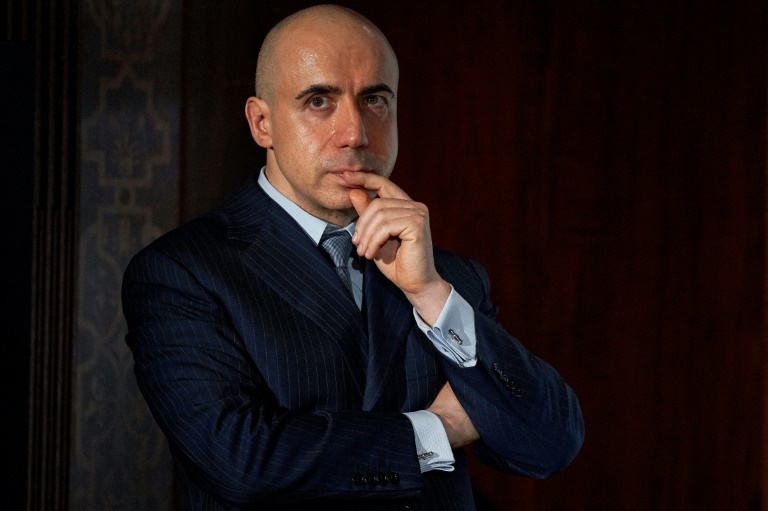
Billionaire Silicon Valley investor Yuri Milner said Monday he had renounced his Russian citizenship.

“My family and I left Russia for good in 2014, after the Russian annexation of Crimea. And this summer, we officially completed the process of renouncing our Russian citizenship,” the Moscow-born Milner tweeted.

Milner, founder of the internet investment firm DST Global and one of the original investors in Facebook, has been an Israeli citizen since 1999, DST Global said in a fact sheet on its website.

The venture capitalist and physicist has no assets in Russia and 97 percent of his wealth was created elsewhere, it said.

“Yuri has never met Vladimir Putin, either individually or in a group,” it said.

Milner’s non-profit Breakthrough Prize Foundation has condemned the Russian invasion of Ukraine.

“As the terrible war in Ukraine continues, with casualties and atrocities mounting, the Breakthrough Prize Foundation strongly condemns Russia’s invasion of Ukraine and its unprovoked and brutal assaults against the civilian population,” it said in a statement in March.

Milner’s foundations have donated at least $11 million to help refugees from Ukraine and scientists forced to flee the country, according to DST Global.

Milner and the late British cosmologist Stephen Hawking in 2016 announced an ambitious space initiative for a mission to Alpha Centauri, the nearest star system to Earth, using tiny light-propelled, ultra-light space vehicles, or “nanocraft”.

The pair also teamed up to launch a massive search for intelligent extraterrestrial life in a $100-million, 10-year project to scan the heavens, funded by Milner. 

Close Bitnami banner
Bitnami