World

BoE widens action on 'UK financial stability' fears

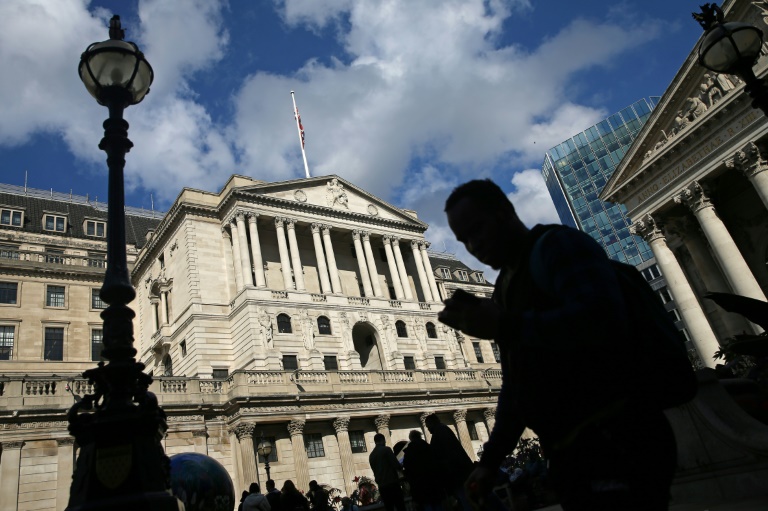
The Bank of England on Tuesday unveiled yet more measures aimed at calming markets rocked by a UK budget as it warned over risks to the nation’s financial stability.

The week had already seen action taken by the BoE and UK government aimed at bringing calm to bond markets in particular as state borrowing soars.

The moves are a response to soaring UK bond yields and after the pound tumbled to a record low against the dollar since the government of new Prime Minister Liz Truss unveiled debt-fuelled tax cuts in a budget last month.

A day after it launched a temporary facility aimed at easing liquidity pressures, the central bank Tuesday said it was widening the scope of daily purchases of UK government bonds, or gilts, until Friday.

In a statement, the BoE said the latest action would “act as a further backstop to restore orderly market conditions”. 

It noted that “the beginning of this week has seen a further significant repricing of UK government debt, particularly index-linked gilts”, which the central bank will now purchase under its wider operation of bond purchases.

“Dysfunction in this market, and the prospect of self-reinforcing ‘fire sale’ dynamics pose a material risk to UK financial stability,” it added.

In more positive news, official data Tuesday revealed British unemployment fell to a near 50-year low at 3.5 percent.

Wages, however, continue to be eroded by sky-high inflation.

The British government on Monday brought forward key economic forecasts to Halloween, hoping not to spook markets further.

Finance minister Kwasi Kwarteng will unveil debt-reduction plans and independent economic predictions on October 31 rather than in late November.

It comes after Chancellor of the Exchequer Kwarteng was already forced to axe a tax cut for the richest earners, in the face of outrage as millions of Britons face a cost-of-living crisis with UK inflation around 10 percent.

– ‘Painful cuts’ –

Britain meanwhile faces “big and painful” cuts in public spending to fix state finances should it decide against more U-turns over tax cuts, a leading think tank warned Tuesday.

“With a weaker economy, getting government finances on a sustainable path without cancelling tax cuts could force… big and painful spending cuts,” the Institute for Fiscal Studies said in a study.

Reducing debt “through spending cuts alone, without actually specifying which budgets would be cut, risks stretching credulity to breaking point”, it added.

The budget was widely criticised, including by the International Monetary Fund, over fears that government debt would balloon to pay for the tax cuts, including on salaries of all UK workers.

Fitch last week lowered the outlook on its credit rating for British government debt to negative from stable.

The BoE has piled on further pressure by hiking its main interest rate to a 14-year high of 2.25 percent in a bid to cool inflation — and is expected to go even stronger on tightening next month.

This in turn has seen retail banks ramp up interest rates on mortgages, with analysts predicting heavy price falls for property.
New Zealand outlines plans to tax livestock burps, farts

New Zealand on Tuesday unveiled plans to tax the greenhouse gas emissions from farm animals, in a controversial proposal designed to tackle climate change.

Prime Minister Jacinda Ardern said the levy would be the first of its kind in the world.

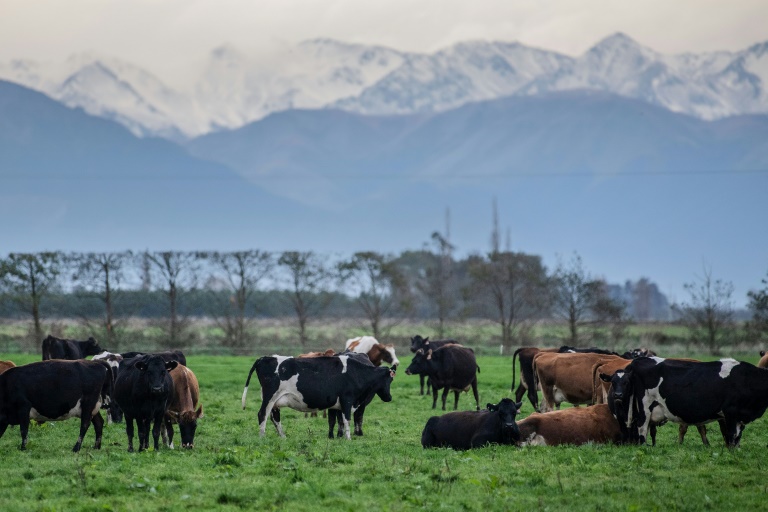
Gases naturally emitted by New Zealand’s 6.2 million cows are among the country’s biggest environmental problems.

The scheme would see farmers pay for gas emissions from their animals, such as methane gas in the farts and burps from cows, and nitrous oxide in the urine of livestock.

Ardern told farmers they should be able to recoup the cost by charging more for climate-friendly products.

She said the “pragmatic proposal” would reduce agricultural emissions while making produce more sustainable by enhancing New Zealand’s “export brand”.

The government hopes to sign off the proposal by next year and the tax could be introduced in just three years’ time.

But with New Zealand going to the polls in the next 15 months, the proposal could cost Ardern rural votes as farmers quickly condemned the plan.

Andrew Hoggard, president of the Federated Farmers lobby group, said the scheme would “rip the guts out of small-town New Zealand”.

He argued the tax could push farmers into growing trees on fields currently used to rear livestock.

Beef + Lamb New Zealand, representing the country’s sheep and cattle farmers, said the plan failed to take into account rural measures already in place to counter greenhouse gases.

“New Zealand farmers have more than 1.4 million hectares of native forest on their land which is absorbing carbon,” said chairman Andrew Morrison.

“It’s only fair this is appropriately recognised in any framework from day one.”

Asian chipmakers plunge after US unveils China export controls

Chipmakers plunged in Asian trade Tuesday over new US measures to limit China’s access to high-end semiconductors with military uses, a move that wiped billions from companies’ valuations worldwide.

The announcement on Friday marked the latest volley in a long-running standoff between the two superpowers that has seen them face off over a range of issues including technology, trade, Hong Kong, Taiwan and human rights.

The US Department of Commerce said the measures include export restrictions on some chips used in supercomputing, and toughen requirements on the sale of semiconductor equipment.

The decision hammered chip manufacturers, with the Philadelphia Stock Exchange Semiconductor Index seeing its lowest close since late 2020, while Bloomberg News reported that $240 billion had been slashed from companies’ market values globally.

Taipei, Seoul and Tokyo markets were closed for holidays on Monday, and when trading resumed Tuesday, chipmakers sank.

Taipei-listed firms were among the worst hit with the Taiex stock index shedding more than four percent.

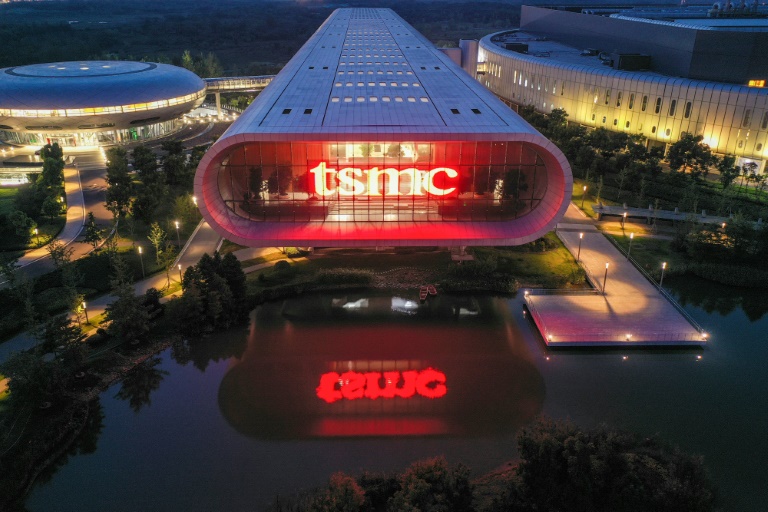
Taiwan Semiconductor Manufacturing Co. shed 8.3 percent and ASE Technology plunged nine percent, while United Microelectronics shed seven percent.

South Korean tech titan Samsung Electronics, a major semiconductor maker, fell more than one percent in Seoul where DB Hitek was off more than three percent.

And in Tokyo, Renesas Electronics shed almost six percent, with Tokyo Electron losing a similar amount.

The US measures are likely to complicate Beijing’s push to further its own semiconductor industry and develop advanced military systems.

They came days ahead of a major Communist Party congress in China at which President Xi Jinping is expected to secure a historic third term.

The rules were also announced just days after the Pentagon added 13 more Chinese firms including drone manufacturer DJI and surveillance firm Zhejiang Dahua Technology to a blacklist of Chinese military-linked companies.

“With the latest measure, it would become difficult for China to manufacture and develop semiconductors because most semiconductor equipment is dominated by the US and its allies,” said Chae Minsook, of Korea Investment & Securities.

“It is impossible to maintain the chip industry without adopting advanced equipment.”

Israel says close to 'historic' maritime deal with Lebanon

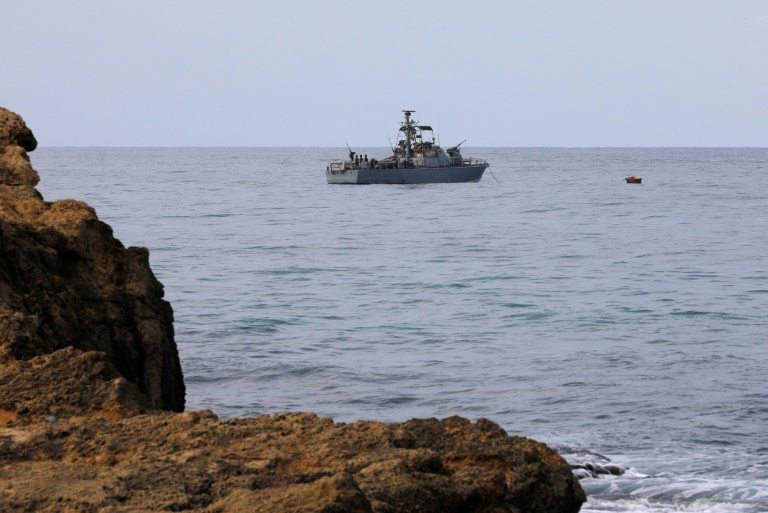
Israel said Tuesday it was close to a “historic” deal with Lebanon to resolve a long-running dispute over their border in Mediterranean waters that boast rich gas reserves, after a US-drafted proposal met Israeli “demands”.

An agreement between the neighbouring countries, which remain technically at war, could mark a major step towards unlocking offshore gas production for both countries. 

The talks have been brokered by US envoy Amos Hochstein who has sought to settle longstanding competing claims.

Hochstein submitted an initial set of proposed final terms to Israel and Lebanon earlier this month. 

Israel welcomed Hochstein’s first draft, but Lebanon sought amendments. Israel said it planned to reject the Lebanese changes.   

Negotiations continued over recent days and Israel said Hochstein’s latest draft had brought a deal within reach. 

“All our demands were met, the changes that we asked for were corrected,” Israel’s national security adviser and lead negotiator at the talks, Eyal Hulata, said in a statement. 

“We protected Israel’s security interests and are on our way to a historic agreement,” he added. 

A Lebanese source with knowledge of the negotiations told AFP that the latest US draft “includes most of Lebanon’s demands, or positions, and fulfils them.”

Hochstein sent his proposal to Lebanon’s chief negotiator, deputy speaker Elias Bou Saab, late Monday and top officials were set to discuss them on Tuesday, added the source, who requested anonymity while discussing the negotiations.  

The countries reopened negotiations on their maritime border in 2020, but the process has faced repeated roadblocks. 

A major source of friction was the Karish gas field, which Israel insisted fell entirely within its waters and was not a subject of negotiation. 

Lebanon reportedly claimed part of the field and Hezbollah, the powerful Iran-backed Shiite group that holds huge sway in Lebanon, threatened attacks if Israel began production at Karish. 

Israel has said production would begin at Karish as soon as possible, regardless of Lebanon’s demands. 

– ‘Israeli election’ –

On Sunday, London-listed firm Energean began testing the pipeline linking Karish to the Israeli coast, a key step before production can begin. 

Under the terms of the US draft leaked to the press, all of Karish would fall under Israeli control, while Qana, another potential gas field, would be divided but its exploitation would be under Lebanon’s control.

French company Total would be licensed to search for gas in the Qana field, and Israel would receive a share of future revenues.

Israeli Prime Minister Yair Lapid has said his government is committed to exporting more gas to Europe to help replace Russian deliveries hit by the war in Ukraine. 

But Israel’s November 1 general election has overshadowed the recent phases of the negotiations. 

Right-wing opposition leader Benjamin Netanyahu, charged that Lapid had “capitulated” to Lebanese militant group Hezbollah, which plays a leading role in the country’s politics, by moving forward with an agreement. 

It is not clear if Netanyahu, who remains determined to reclaim the premiership he held from 2009-2021, has seen the deal’s proposed terms.

But he has nevertheless vowed that the hawkish government he hopes to form next month with his far-right and religious allies will not be bound by any agreement with Lebanon.

'Dream come true': Japan reopens to tourists

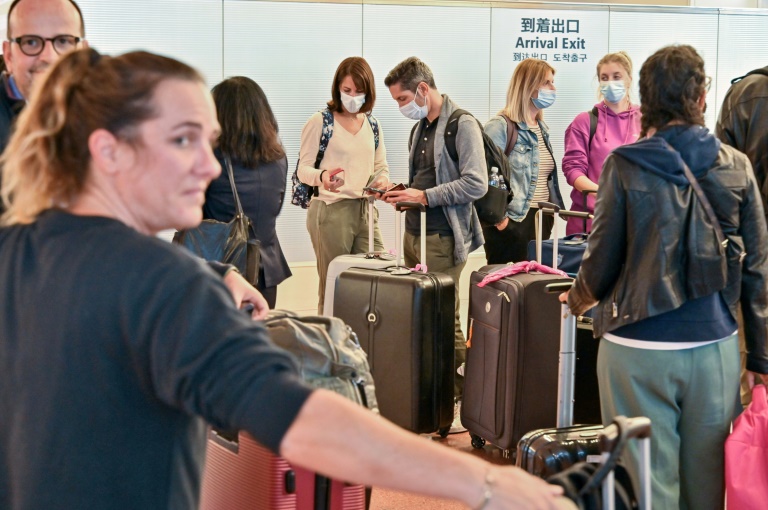
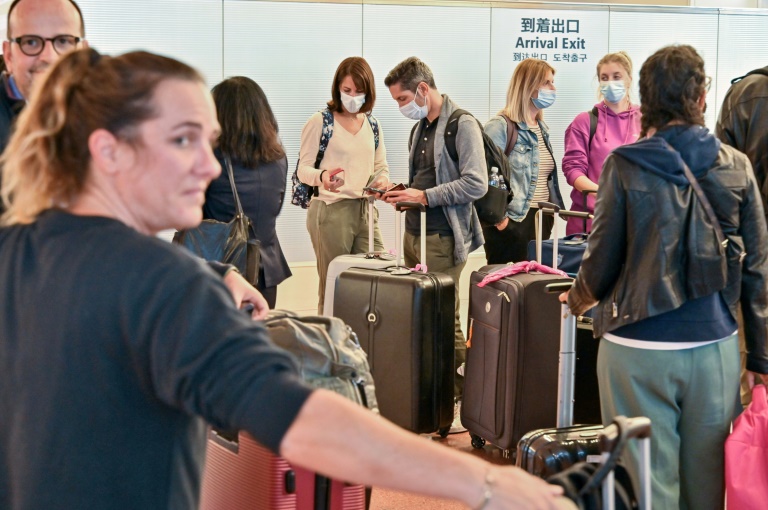
Japan reopened its doors to tourists Tuesday after two-and-a-half years of tough Covid-19 restrictions, with officials hoping an influx of travellers enticed by a weak yen will boost the economy.

By mid-morning, tourists from Israel, France and Britain were already pouring in, including Chris Irwin, 38, on his first trip to Japan.

“We have always wanted to come to Japan, and it seemed like the stars just aligned,” said Irwin, who arrived at Haneda airport from Britain with his wife.

Adi Bromshtine, a 69-year-old retiree from Israel, said she had been “planning before Covid and waiting and waiting” for the chance to visit Japan.

“It’s a long, long dream come true,” she told AFP.

Japan slammed its borders shut early in the pandemic, at one point even barring foreign residents from returning, and has only recently begun cautiously reopening.

In June, it began allowing tourists to visit in groups accompanied by guides, a requirement that was further relaxed to include self-guided package tours.

From Tuesday, visa-free entry resumed for travellers from 68 countries and territories.

Japan also lifted a cap on the number of arrivals and ended the package tour requirement.

Tourists must still present either proof of vaccination or a negative coronavirus test taken three days before departure.

In 2019, a record 31.9 million foreign visitors came to Japan, putting the country on track for its goal of 40 million by 2020, when Tokyo was supposed to host the Summer Olympics.

But in 2021, the figure plummeted to just 250,000.

– Demand soaring –

In Japan, tourists will find a country that is still adhering to many of the health guidelines that helped it keep pandemic deaths to around 45,500, far lower than many other developed economies.

Masks are ubiquitous, and though not mandated by law, parliament is set to pass legislation allowing hotels to deny service to customers who refuse to wear one or flout other health rules.

Masks are worn not only indoors and on public transport, but outdoors as well, despite the government saying they are not necessary outside in uncrowded settings.

There is hand sanitiser at the entrance of most businesses, and plastic dividers are still often used in restaurants.

Many arriving tourists seemed unfazed by the rules though.

“We’re more excited to see Japan than we will be annoyed by the masks, so we’ll be fine with it,” said British traveller Irwin.

Another major change for tourists will be the weakness of the yen, which is hovering around 145 to the dollar, a level not seen for two decades.

The government has already had to intervene once to prop up the currency, and government spokesman Hirokazu Matsuno on Tuesday said officials are hoping rebounding tourism “will lead to recovery after the Covid pandemic and the revitalisation of communities.”

There is certainly no shortage of demand, according to Antoine Chanthavong, of Paris-based travel agency Destination Japan.

Since the reopening announcement, “we’ve been absolutely drowning, we don’t have enough time to deal with all the requests,” he told AFP.

Japanese carrier ANA has said reservations for international flights to the country surged five-fold after the reopening was announced.

For now, tickets are not coming cheap, with fuel prices soaring and airlines forced to take circuitous routes to avoid Russian airspace.

Itay Galili, a 22-year-old student arriving from Israel, said he wasn’t put off by the cost.

“As soon as I heard it was going to reopen on the 11th, I started planning. Tickets were expensive… but no price (is) too heavy,” he told AFP.

For all the rebound in demand though, there is little expectation that tourist numbers will quickly reach their 2019 levels.

Before the pandemic, travellers from Hong Kong and mainland China made up 37 percent of all foreign visitors to Japan, and 44 percent of tourism income.

But tough Covid restrictions in China make it unlikely visitors from there will be flocking back to Japan anytime soon.

'Dream come true': Japan reopens to tourists

Japan reopened its doors to tourists Tuesday after two-and-a-half years of tough Covid-19 restrictions, with officials hoping an influx of travellers enticed by a weak yen will boost the economy.

By mid-morning, tourists from Israel, France and Britain were already pouring in, including Chris Irwin, 38, on his first trip to Japan.

“We have always wanted to come to Japan, and it seemed like the stars just aligned,” said Irwin, who arrived at Haneda airport from Britain with his wife.

Adi Bromshtine, a 69-year-old retiree from Israel, said she had been “planning before Covid and waiting and waiting” for the chance to visit Japan.

“It’s a long, long dream come true,” she told AFP.

Japan slammed its borders shut early in the pandemic, at one point even barring foreign residents from returning, and has only recently begun cautiously reopening.

In June, it began allowing tourists to visit in groups accompanied by guides, a requirement that was further relaxed to include self-guided package tours.

From Tuesday, visa-free entry resumed for travellers from 68 countries and territories.

Japan also lifted a cap on the number of arrivals and ended the package tour requirement.

Tourists must still present either proof of vaccination or a negative coronavirus test taken three days before departure.

In 2019, a record 31.9 million foreign visitors came to Japan, putting the country on track for its goal of 40 million by 2020, when Tokyo was supposed to host the Summer Olympics.

But in 2021, the figure plummeted to just 250,000.

– Demand soaring –

In Japan, tourists will find a country that is still adhering to many of the health guidelines that helped it keep pandemic deaths to around 45,500, far lower than many other developed economies.

Masks are ubiquitous, and though not mandated by law, parliament is set to pass legislation allowing hotels to deny service to customers who refuse to wear one or flout other health rules.

Masks are worn not only indoors and on public transport, but outdoors as well, despite the government saying they are not necessary outside in uncrowded settings.

There is hand sanitiser at the entrance of most businesses, and plastic dividers are still often used in restaurants.

Many arriving tourists seemed unfazed by the rules though.

“We’re more excited to see Japan than we will be annoyed by the masks, so we’ll be fine with it,” said British traveller Irwin.

Another major change for tourists will be the weakness of the yen, which is hovering around 145 to the dollar, a level not seen for two decades.

The government has already had to intervene once to prop up the currency, and government spokesman Hirokazu Matsuno on Tuesday said officials are hoping rebounding tourism “will lead to recovery after the Covid pandemic and the revitalisation of communities.”

There is certainly no shortage of demand, according to Antoine Chanthavong, of Paris-based travel agency Destination Japan.

Since the reopening announcement, “we’ve been absolutely drowning, we don’t have enough time to deal with all the requests,” he told AFP.

Japanese carrier ANA has said reservations for international flights to the country surged five-fold after the reopening was announced.

For now, tickets are not coming cheap, with fuel prices soaring and airlines forced to take circuitous routes to avoid Russian airspace.

Itay Galili, a 22-year-old student arriving from Israel, said he wasn’t put off by the cost.

“As soon as I heard it was going to reopen on the 11th, I started planning. Tickets were expensive… but no price (is) too heavy,” he told AFP.

For all the rebound in demand though, there is little expectation that tourist numbers will quickly reach their 2019 levels.

Before the pandemic, travellers from Hong Kong and mainland China made up 37 percent of all foreign visitors to Japan, and 44 percent of tourism income.

But tough Covid restrictions in China make it unlikely visitors from there will be flocking back to Japan anytime soon.

US Supreme Court to hear case of Texas man on death row

The US Supreme Court will hear an appeal Tuesday from a Texas man on death row who maintains his innocence and whose case has drawn the attention of celebrities, lawmakers and millions of Americans.

Rodney Reed, 54, an African-American man, was convicted by an all-white jury in 1998 of the rape and murder of Stacey Stites, a 19-year-old white woman.

Traces of his sperm were found on the victim’s body, but Reed insists he is innocent of the 1996 murder and that he and Stites had a secret consensual relationship.

The conservative-dominated Supreme Court will not be examining Reed’s conviction during oral arguments on Tuesday, but a narrow technical question having to do with procedural issues.

The nine-member court’s ruling, which will be delivered before June 30, could allow Reed’s case to be reopened — or pave the way for his execution by lethal injection.

Reed’s supporters believe that evidence gathered after the trial points to another suspect, Stites’s fiance Jimmy Fennell, a disgraced police officer who later served a 10-year prison sentence for a kidnapping and rape committed while on duty.

A fellow inmate says Fennell confessed to him that he had killed Stites because she was sleeping with a Black man.

Fennell has denied any involvement in Stites’s murder, but police initially considered him a suspect.

Texas prosecutors claimed during Reed’s trial that he had sexually assaulted several other women before Stites’s murder.

His execution was stayed just five days before it was to be carried out in 2019 following a campaign that included reality star Kim Kardashian, the singers Rihanna and Beyonce, and Texas lawmakers including Republican Senator Ted Cruz.

Two petitions seeking to halt Reed’s execution that circulated on the internet drew more than 3.5 million signatures.

– DNA testing of murder weapon –

To prove his innocence, Reed asked the Texas authorities in 2014 to conduct new DNA analysis on the murder weapon, a belt that was used to strangle Stites.

His appeals for DNA testing were repeatedly denied by the Texas Court of Criminal Appeals, so Reed turned to the federal courts.

But they refused to intervene on the grounds the request came too late, after the two-year window allowed to challenge a state court ruling in federal court had closed.

The question before the Supreme Court is, when does the window open?

Texas says it begins from the first state court decision. Reed maintains it is from the last one.

Reed’s attorneys are also arguing that imposing a statute of limitations on when DNA testing can be conducted is unconstitutional.

G7 to hold crisis talks on Russia's bombing blitz in Ukraine

The United States and other G7 powers will hold crisis talks Tuesday on Russia’s recent bombing blitz across Ukraine, with Britain’s Liz Truss expected to insist they “must not waver one iota” in their support for Kyiv.

The meeting comes a day after Russian missiles rocked the Ukrainian capital for the first time in months, with President Volodymyr Zelensky warning Moscow that his country “cannot be intimidated”.

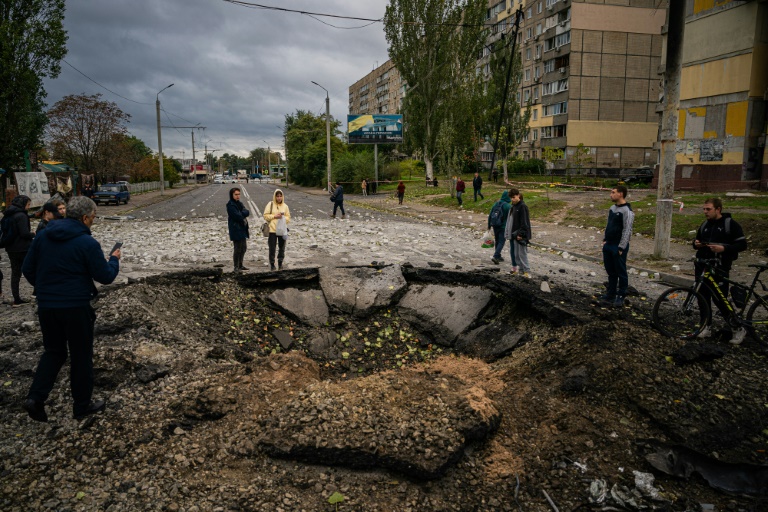
Russian forces rained more than 80 missiles on cities across Ukraine on Monday, according to Kyiv, in apparent retaliation for an explosion that damaged a key bridge linking the Crimean peninsula to Russia.

Ukrainian Foreign Minister Dmytro Kuleba said the strikes showed Moscow was “desperate” after a spate of embarrassing military setbacks, as Russian President Vladimir Putin warned of “severe” responses to any further attacks.

At an urgent meeting of the United Nations General Assembly on Monday — called to debate Moscow’s declared annexation of four partly occupied Ukrainian regions — Ukrainian ambassador Sergiy Kyslytsya branded Russia a “terrorist state”, noting his own immediate family had come under attack on Monday.

“Unfortunately, you can hardly call for a stable and sane peace as long as an unstable and insane dictatorship exists in your vicinity,” he said, telling member states at least 14 civilians were killed and 97 wounded in the strikes.

– ‘Stay the course’ –

Zelensky and G7 leaders are set to convene Tuesday to discuss the latest Russian attacks.

Truss’s office said the British prime minister, who succeeded Boris Johnson just over a month ago, would use the call “to urge fellow leaders to stay the course”.

“The overwhelming international support for Ukraine’s struggle stands in stark opposition to the isolation of Russia on the international stage,” she is expected to say.

“Nobody wants peace more than Ukraine. And for our part, we must not waver one iota in our resolve to help them win it.”

German government spokesman Steffen Hebestreit told reporters Monday that Chancellor Olaf Scholz had spoken with Zelensky and assured him “of the solidarity of Germany and the other G7 states”.

French President Emmanuel Macron met with his defence and foreign affairs ministers over the strikes, which he said signalled “a profound change in the nature of this war”.

US President Joe Biden condemned Monday’s attacks in stark terms, saying they “demonstrate the utter brutality” of Putin’s “illegal war”.

In a statement, the White House said Biden had spoken to Zelensky and had pledged to furnish Ukraine with “advanced air defence systems”. 

Ahead of Monday’s General Assembly session, UN Secretary-General Antonio Guterres described the latest attacks as an “unacceptable escalation of the war”, his spokesman said.

Though Russian representative Vasily Nebenzya did not directly address the missile strikes at the session, he defended his country’s annexation of Ukrainian regions, saying the aim was “to protect our brothers and sisters in eastern Ukraine”.

– ‘In an instant… it’s death’ –

Residents across Ukraine expressed shock and rage after Monday’s barrage.

Ivan Poliakov, 22, was so angry he struggled for words as he tried to describe one of the strikes on Kyiv.

“I saw children and women cry,” he told AFP. “I love Kyiv. The people are good, they are courageous. But in an instant… it’s death.”

In Dnipro, soldier Maxim was on leave from the front lines for the first time in six months to celebrate his wife’s birthday when Russian missiles slammed into the central Ukrainian city, damaging their home.

“We are fighting on the front exactly to protect these places” far from enemy lines, he said. “But they still manage to hit them.”

The strike, he said, had made him more determined than ever to push back the Russians in northeast Ukraine.

Since Russia launched its invasion on February 24, more than 7.6 million Ukrainian refugees have been recorded across Europe, while another nearly seven million people have been displaced within the country.

Monday’s missile strikes prompted a fresh warning from the UN’s refugee chief that more people could soon be forced to flee their homes.

“The bombing of civilians, of houses… of non-military infrastructure in an indiscriminate manner in many cities across Ukraine, means the war is becoming harder and more difficult for civilians,” UN High Commissioner for Refugees Filippo Grandi told journalists in Geneva.

“I fear that the events of these last hours will provoke more displacements.”

Neighbors, rescuers search for missing after Venezuela landslide

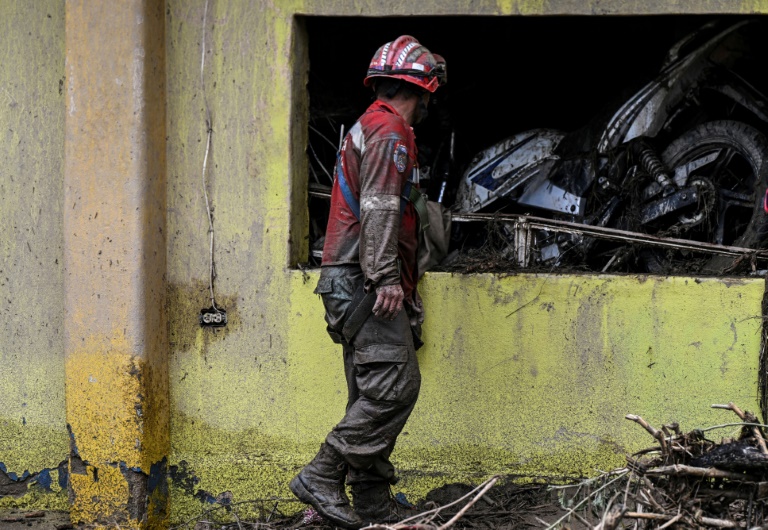
Neighbors helped rescue teams comb through mud and debris Monday for signs of dozens of people missing after a landslide swept through a town in Venezuela, killing at least 36.

More than 3,000 rescuers were deployed in Las Tejerias, some 50 kilometers (31 miles) from the capital Caracas, after Venezuela’s worst natural disaster in decades.

“Unfortunately, we have 36 people dead at the moment and 56 people missing,” Interior Minister Remigio Ceballos said on Twitter.

And the toll was likely to rise, as a civil protection official warned it would be “difficult” to find more survivors.

“It has been two days already, if they did not die of blows from branches and stones carried by the river, they died of hypothermia,” the official told AFP, on condition of anonymity.

“Las Tejerias will never be the same,” said survivor Isaac Castillo, 45, a merchant in the town of some 54,000 people nestled in the mountains.

“We are leaving because recovering from this is impossible.”

Unusually heavy rains caused a major river and several streams to overflow on Saturday, causing a torrent of mud that swept away cars, parts of homes, businesses and telephone wires, and felled massive trees.

“As much rain fell in eight hours as normally falls in a month,” Vice President Delcy Rodriguez said, as she blamed the “climate crisis.”

Experts say the storm was aggravated by the seasonal La Nina weather system gripping the region, as well as the effects of Hurricane Julia, which also claimed at least 26 lives in Central America and caused extensive damage from Panama to Guatemala on Sunday.

Residents of Las Tejerias used picks, shovels and any tools they could find to dig through a thick bank of mud deposited on the town Saturday.

Firefighters used chainsaws to clear a path through knocked-down trees that had been carried into the town.

But even amid the intense rescue efforts, one firefighter said they are now “guided by the smell” of decomposition.

“Today it smells in several houses,” he said.

“It came too fast, we had no time,” resident Carlos Camejo, 60, said of the mudslide.

Carmen Melendez, 55, told AFP, “The town is lost, Las Tejerias is lost,” as she waited desperately for news on the whereabouts of a missing relative.

– Safety on the roof –

But President Nicolas Maduro, who visited the area on Monday, insisted the town would be rebuilt. 

“We take with us the pain, the clamor, the despair, the tears of the people, but they must know that Las Tejerias will rise like the phoenix, Las Tejerias will be reborn,” he said, vowing to rebuild “each and every one” of the homes and businesses destroyed. 

Rodriguez, his vice president, said 317 homes were “completely destroyed” and 757 damaged by the mudslide.

Authorities erected shelters for the displaced in Maracay, capital of the affected Aragua province.

Maduro on Sunday decreed three days of national mourning.

Crews of workers with heavy machinery worked to clear the debris-covered roads, while residents battled to clean out meters of mud dumped inside their homes.

Las Tejerias resident Jose Santiago spent 40 minutes clinging to a TV antenna on the roof of his home as a torrent of mud swept through it.

“The river caught me and I couldn’t find anything to do besides climb a roof and grab onto an antenna,” said the 65-year-old, who barely escaped with his life.

Further afield, at least 26 people died across Central America when storm Julia raced across the region on Sunday.

Five army soldiers on deployment in El Salvador died after a wall collapsed on them as they were seeking shelter from the storm, which killed a total of 10 people in the country and forced some 1,000 people to seek temporary shelter.

In Honduras, Wilmer Wood, mayor of the eastern town of Brus Laguna, said two people died when Julia capsized a boat. One more person was missing.

And in Guatemala, 14 people died, eight of them in the indigenous municipality of Santa Eulalia, in the west of the country, after their house collapsed due to a landslide. Two people were missing after being swept away by floodwater.

Nicaragua’s Vice President Rosario Murillo said Julia had affected some 7,500 people, flooding 3,000 homes and damaging the roofs of another 2,000.

Julia made landfall Sunday as a Category 1 hurricane and gradually dissipated until it was downgraded to a tropical depression on Monday as it churned toward Mexico.

At the end of 2020, hurricanes Eta and Iota killed at least 200 people in Central America and caused millions of dollars in losses.

Scientists say climate change warms the surface layers of the oceans, causing more powerful, and wetter, storms and hurricanes.

Neighbors, rescuers search for missing after Venezuela landslide

Neighbors helped rescue teams comb through mud and debris Monday for signs of dozens of people missing after a landslide swept through a town in Venezuela, killing at least 36.

More than 3,000 rescuers were deployed in Las Tejerias, some 50 kilometers (31 miles) from the capital Caracas, after Venezuela’s worst natural disaster in decades.

“Unfortunately, we have 36 people dead at the moment and 56 people missing,” Interior Minister Remigio Ceballos said on Twitter.

And the toll was likely to rise, as a civil protection official warned it would be “difficult” to find more survivors.

“It has been two days already, if they did not die of blows from branches and stones carried by the river, they died of hypothermia,” the official told AFP, on condition of anonymity.

“Las Tejerias will never be the same,” said survivor Isaac Castillo, 45, a merchant in the town of some 54,000 people nestled in the mountains.

“We are leaving because recovering from this is impossible.”

Unusually heavy rains caused a major river and several streams to overflow on Saturday, causing a torrent of mud that swept away cars, parts of homes, businesses and telephone wires, and felled massive trees.

“As much rain fell in eight hours as normally falls in a month,” Vice President Delcy Rodriguez said, as she blamed the “climate crisis.”

Experts say the storm was aggravated by the seasonal La Nina weather system gripping the region, as well as the effects of Hurricane Julia, which also claimed at least 26 lives in Central America and caused extensive damage from Panama to Guatemala on Sunday.

Residents of Las Tejerias used picks, shovels and any tools they could find to dig through a thick bank of mud deposited on the town Saturday.

Firefighters used chainsaws to clear a path through knocked-down trees that had been carried into the town.

But even amid the intense rescue efforts, one firefighter said they are now “guided by the smell” of decomposition.

“Today it smells in several houses,” he said.

“It came too fast, we had no time,” resident Carlos Camejo, 60, said of the mudslide.

Carmen Melendez, 55, told AFP, “The town is lost, Las Tejerias is lost,” as she waited desperately for news on the whereabouts of a missing relative.

– Safety on the roof –

But President Nicolas Maduro, who visited the area on Monday, insisted the town would be rebuilt. 

“We take with us the pain, the clamor, the despair, the tears of the people, but they must know that Las Tejerias will rise like the phoenix, Las Tejerias will be reborn,” he said, vowing to rebuild “each and every one” of the homes and businesses destroyed. 

Rodriguez, his vice president, said 317 homes were “completely destroyed” and 757 damaged by the mudslide.

Authorities erected shelters for the displaced in Maracay, capital of the affected Aragua province.

Maduro on Sunday decreed three days of national mourning.

Crews of workers with heavy machinery worked to clear the debris-covered roads, while residents battled to clean out meters of mud dumped inside their homes.

Las Tejerias resident Jose Santiago spent 40 minutes clinging to a TV antenna on the roof of his home as a torrent of mud swept through it.

“The river caught me and I couldn’t find anything to do besides climb a roof and grab onto an antenna,” said the 65-year-old, who barely escaped with his life.

Further afield, at least 26 people died across Central America when storm Julia raced across the region on Sunday.

Five army soldiers on deployment in El Salvador died after a wall collapsed on them as they were seeking shelter from the storm, which killed a total of 10 people in the country and forced some 1,000 people to seek temporary shelter.

In Honduras, Wilmer Wood, mayor of the eastern town of Brus Laguna, said two people died when Julia capsized a boat. One more person was missing.

And in Guatemala, 14 people died, eight of them in the indigenous municipality of Santa Eulalia, in the west of the country, after their house collapsed due to a landslide. Two people were missing after being swept away by floodwater.

Nicaragua’s Vice President Rosario Murillo said Julia had affected some 7,500 people, flooding 3,000 homes and damaging the roofs of another 2,000.

Julia made landfall Sunday as a Category 1 hurricane and gradually dissipated until it was downgraded to a tropical depression on Monday as it churned toward Mexico.

At the end of 2020, hurricanes Eta and Iota killed at least 200 people in Central America and caused millions of dollars in losses.

Scientists say climate change warms the surface layers of the oceans, causing more powerful, and wetter, storms and hurricanes.

Close Bitnami banner
Bitnami