World

Asian chipmakers plunge after US unveils China export controls

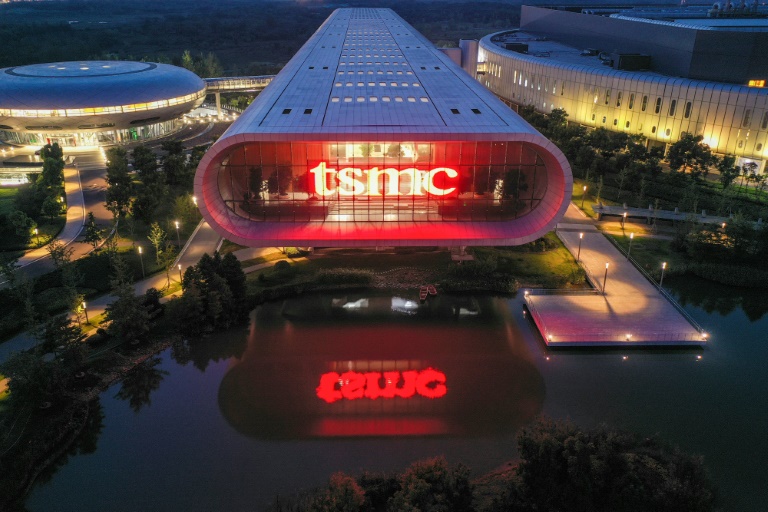
Chipmakers plunged in Asian trade Tuesday over new US measures to limit China’s access to high-end semiconductors with military uses, a move that wiped billions from companies’ valuations worldwide.

The announcement on Friday marked the latest volley in a long-running standoff between the two superpowers that has seen them face off over a range of issues including technology, trade, Hong Kong, Taiwan and human rights.

The US Department of Commerce said the measures include export restrictions on some chips used in supercomputing, and toughen requirements on the sale of semiconductor equipment.

The decision hammered chip manufacturers, with the Philadelphia Stock Exchange Semiconductor Index seeing its lowest close since late 2020, while Bloomberg News reported that $240 billion had been slashed from companies’ market values globally.

Taipei, Seoul and Tokyo markets were closed for holidays on Monday, and when trading resumed Tuesday, chipmakers sank.

Taipei-listed firms were among the worst hit.

Taiwan Semiconductor Manufacturing Co. and ASE Technology each plunged around eight percent, while United Microelectronics shed more than six percent.

South Korean tech titan Samsung Electronics, a major semiconductor maker, dived around three percent in Seoul where DB Hitek was off four percent.

And in Tokyo, Renesas Electronics shed almost six percent, with Tokyo Electron losing a similar amount.

The US measures are likely to complicate Beijing’s push to further its own semiconductor industry and develop advanced military systems.

They came days ahead of a major Communist Party congress in China at which President Xi Jinping is expected to secure a historic third term.

The rules were also announced just days after the Pentagon added 13 more Chinese firms including drone manufacturer DJI and surveillance firm Zhejiang Dahua Technology to a blacklist of Chinese military-linked companies.

“With the latest measure, it would become difficult for China to manufacture and develop semiconductors because most semiconductor equipment is dominated by the US and its allies,” said Chae Minsook, of Korea Investment & Securities.

“It is impossible to maintain the chip industry without adopting advanced equipment.”
Hong Kong leader says he 'laughs off' US sanctions

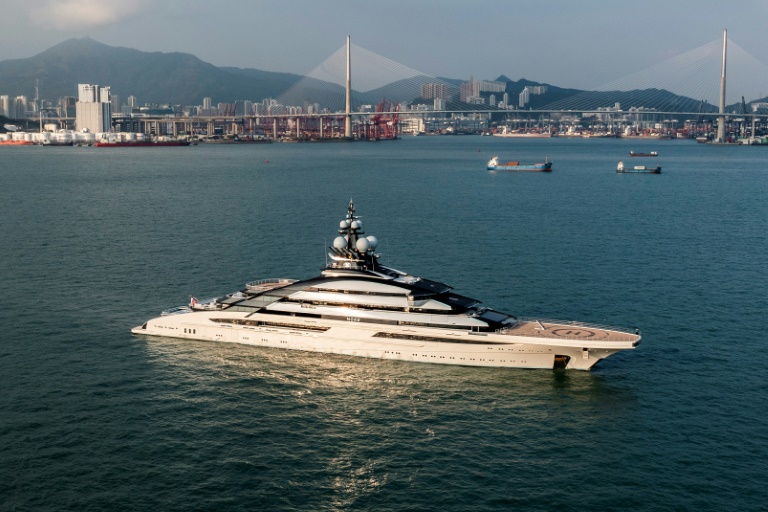
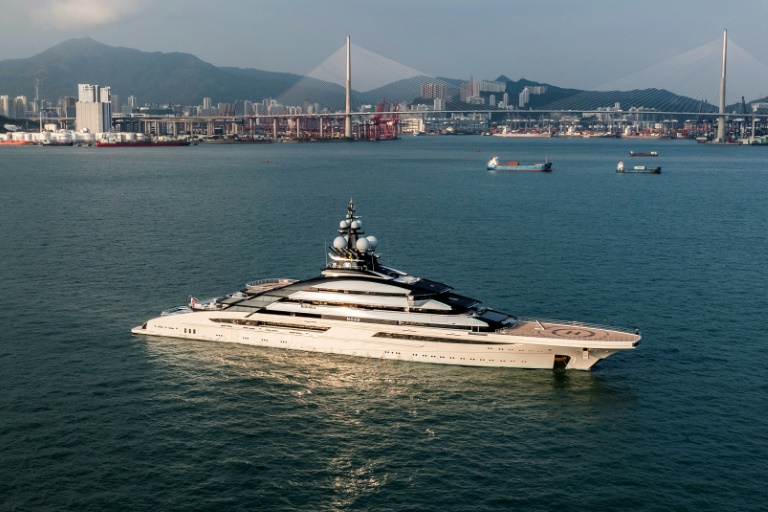
Hong Kong’s leader laughed off US sanctions against him Tuesday as he defended his government’s decision not to act against a superyacht reportedly owned by a Kremlin ally.

The Nord — a $500 million luxury vessel linked to Russian billionaire Alexei Mordashov — arrived in the Chinese territory’s waters last week.

Mordashov is among the oligarchs close to Russian President Vladimir Putin who have been targeted by Western sanctions following Moscow’s invasion of Ukraine.

On Saturday the United States warned Hong Kong could damage its business hub reputation after the city said it would not enforce sanctions on the superyacht.

Hong Kong chief executive John Lee himself is one of multiple Chinese officials sanctioned by the United States in 2020 for their roles in cracking down on political freedoms in the city.

Banks and other companies risk losing access to the US-dominated global markets if they do business with sanctioned officials, with Lee’s predecessor revealing she had to take most of her salary in cash as a result.

When asked about the impact of US sanctions against him on Tuesday, Lee told reporters: “It is a very barbaric act and I am not going to comment on the effect of such barbaric act.” 

“We will just laugh off the so-called sanctions.”

Some sanctioned oligarchs have had their luxury yachts seized in places such as Spain and Fiji, but Hong Kong said Friday that while it implements UN sanctions, it cannot enforce those imposed “unilaterally” by countries or blocs.

Lee repeated that argument on Tuesday, describing US and European sanctions as having “no legal basis”.

“We will comply with any UN resolution on sanctions because Hong Kong has the legal basis to enforce it,” he said.

But he added: “We cannot and will not do anything that has no legal basis”. 

Hong Kong leader says he 'laughs off' US sanctions

Hong Kong’s leader laughed off US sanctions against him Tuesday as he defended his government’s decision not to act against a superyacht reportedly owned by a Kremlin ally.

The Nord — a $500 million luxury vessel linked to Russian billionaire Alexei Mordashov — arrived in the Chinese territory’s waters last week.

Mordashov is among the oligarchs close to Russian President Vladimir Putin who have been targeted by Western sanctions following Moscow’s invasion of Ukraine.

On Saturday the United States warned Hong Kong could damage its business hub reputation after the city said it would not enforce sanctions on the superyacht.

Hong Kong chief executive John Lee himself is one of multiple Chinese officials sanctioned by the United States in 2020 for their roles in cracking down on political freedoms in the city.

Banks and other companies risk losing access to the US-dominated global markets if they do business with sanctioned officials, with Lee’s predecessor revealing she had to take most of her salary in cash as a result.

When asked about the impact of US sanctions against him on Tuesday, Lee told reporters: “It is a very barbaric act and I am not going to comment on the effect of such barbaric act.” 

“We will just laugh off the so-called sanctions.”

Some sanctioned oligarchs have had their luxury yachts seized in places such as Spain and Fiji, but Hong Kong said Friday that while it implements UN sanctions, it cannot enforce those imposed “unilaterally” by countries or blocs.

Lee repeated that argument on Tuesday, describing US and European sanctions as having “no legal basis”.

“We will comply with any UN resolution on sanctions because Hong Kong has the legal basis to enforce it,” he said.

But he added: “We cannot and will not do anything that has no legal basis”. 

The Andes crash and cannibalism tale that stunned the world 50 years ago

On October 13, 1972, a plane carrying an amateur Uruguayan rugby team, along with relatives and supporters, to an away match in Chile crashed in the Andes with 45 people on board.

Sixteen young men managed to survive for 72 days, at sub-zero temperatures and with very little food, before two of them found help after a 10-day trek across the mountains in waist-deep snow.

The so-called “Miracle of the Andes” gained global notoriety when the survivors, who were devout Catholics, admitted they had eaten parts of their dead companions’ bodies to stay alive.

AFP reporters in Chile and Uruguay covered the dramatic events, which were recounted in “Alive”, a best-selling book that was later made into a movie.

Here is how it unfolded:

– The crash –

On the evening of October 13, 1973, a chartered military plane carrying the Old Christians rugby team from the Argentinian city of Mendoza to the Chilean capital Santiago disappears from radars near the Chilean city of Curico.

Aircraft from Chile, Argentina and Uruguay search for the plane but fail to spot the white fuselage against the snow.

After eight days, the search is called off. 

– ‘Come rescue us’ – 

Two months later, on December 22, 1972, the world is stunned by news that there are survivors, two of whom, Nando Parrado and Roberto Canessa, made it out of the mountains on foot to find help.

“They spot a muleteer while following a river that winds around the foot of the mountains. Exhausted, they throw a stone across the water to him, with a message scrawled on a piece of paper attached to it, and then began praying while waiting to be rescued,” AFP reported.

The message reads: “I come from a plane that fell in the mountains. I am Uruguayan. We have been walking for 10 days… In the plane, there are 14 injured people. We have to get out of here quickly, and we don’t know how. We don’t have any food. We are weak. When will you come and fetch us? Please, we cannot even walk. Where are we?” 

The muleteer arranges for them to be rescued and help also comes quickly for their severely malnourished companions, who are plucked from the mountain by helicopter over two days.

– Donkey grass  –

The men relate the plane getting lost in the mountains and then clipping a ridge before barreling down a glacier and landing in a snow bank, killing 13 people, including the pilot and co-pilot, and injuring several others who died later.

They describe the scramble to survive at an altitude of nearly 4,000 meters, living in the fuselage and scrounging in the snow for roots and an herb nicknamed “donkey grass” after their food supplies ran out.

They also recount the deaths of several survivors in an avalanche.

“We are witnessing a miracle the likes of which the world has never seen,” Cesar Charlone, Uruguay’s charge d’affaires in Chile declares.

– Last Supper – 

By December 24, rumors are swirling that the men resorted to cannibalism to avoid starving, which is confirmed two days later by the head of the Chilean rescue operation.

Chile’s La Segunda newspaper cites an unnamed survivor as saying: “We took the terrible decision: in order to survive we would have to overcome all hurdles, whether religious or biological.”

On December 29, the survivors issue a joint statement in Montevideo declaring that, after their food ran out: “We said to ourselves: if Jesus, during the Last Supper, shared his body and blood among the apostles, are we not to understand that we should do the same?”

The men, who are acclaimed as heroes, are absolved of any wrongdoing by the Catholic Church in Uruguay and Pope John Paul II and return to their daily lives.

Canessa became a cardiologist and in 2020 again helped save lives by building ventilators for Covid-19 patients.

“When I saw that around the world people were dying from a lack of air, it reminded me of the mountain, when I saw my friends who couldn’t breathe anymore, and I said: No, this can’t happen to me again,” he told AFP.

'Alive': Uruguay plane crash survivors savor life 50 years on

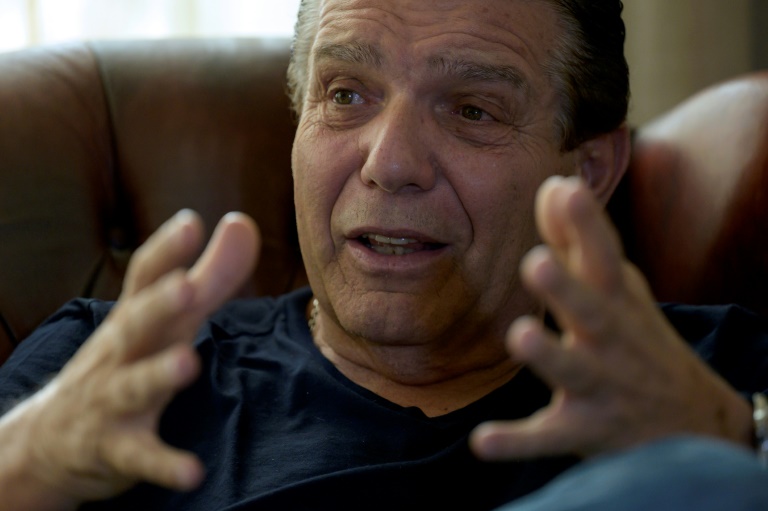
The first night was the worst, Roy Harley recalls of the ten weeks he and other survivors of a plane crash 50 years ago managed to cling to life on an Andean glacier without food or shelter, and very little reason for hope.

Of the plane’s 45 occupants, 16 made it home from the 72-day ordeal that became known as the “Miracle of the Andes.”

The only way to survive was to eat the flesh of the dead. But for Harley, a retired engineer now aged 70, that was not the worst of the nightmare made famous by the 1993 film “Alive.”

After the initial shock of their plane crashing into the Andes mountains on that fateful Friday the 13th of October 1972, Harley and 31 other survivors found themselves in the pitch dark in minus 30 degrees Celsius (-22 Fahrenheit) at an altitude of some 3,500 meters.

Many of them not yet 20 — the plane was flying an amateur Uruguayan rugby team and family members to a match in Chile — none were dressed for the cold. 

Several were badly injured. 

Those who could squeezed into what remained of the fuselage between dead bodies and the screams of the wounded. 

“That night, I experienced hell,” Harley told AFP.

“At my feet was a boy who was missing a part of his face and… choking on blood.

“I didn’t have the courage to reach out to him, to hold his hand, to comfort him. I was afraid. I was very afraid.”

By morning, four more were dead, and so started a seemingly relentless torment that would eventually whittle the number of survivors down to 16.

– ‘No words’ – 

There were too many dark moments to list.

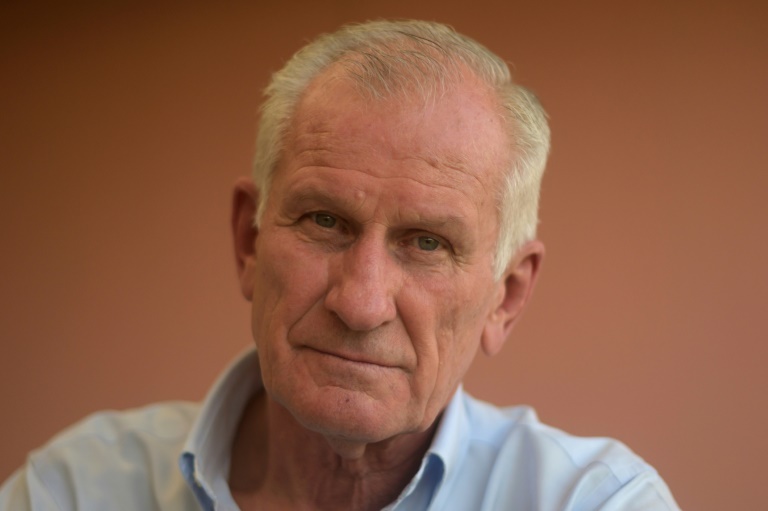
“I don’t have words to describe how cold it was,” said Harley’s former rugby teammate, fellow survivor and friend Carlos Paez, 68. “We were so cold, it was so difficult, that I have no words to describe it.”

Many times they thought it was the end.

On Day 10, the survivors heard on the plane radio that the search for them had been called off. 

“One of the most painful things was… to realize that the world was going on without us,” said Paez, who today travels the world as a motivational speaker.

But it was also the jolt the survivors needed to take matters into their own hands and start trying to find a way off the glacier, he recalled.

Another tribulation was having to broach the topic of anthropophagy — the eating of human flesh.

There was barely any food on the plane that was to have made a short flight from Mendoza in Argentina, where it had a stopover, to Santiago, Chile.

There was no sustenance to be found anywhere in the desolate, ice-covered landscape, and soon the survivors were starving.

A majority voted “yes” to eating their dead friends.

“We had tried to eat leather, we tried to eat cigarettes, we tried to eat toothpaste,” Harley recalled at Paez’s home in Montevideo.

“We were dying. When you have this choice: to die or to use the only thing you have… we did what we did in order to live.”

On Day 16, disaster struck yet again.

An avalanche buried the mangled fuselage, the survivors’ only shelter, as they slept. 

Eight were killed, leaving only 19 of the original 32 crash survivors. Three more would die in the coming days.

“The avalanche was as if God had stabbed us in the back,” said Paez.

– ‘We are lucky’ –

Displaying incredible ingenuity and tenacity, the survivors learnt, with no tools, to use plane debris to fashion bonnets, mittens, snow shoes, quilts and dark glasses against snow blindness.

They found a way to melt ice and snow for drinking water in spite of the sub-zero temperatures.

And finally, help did arrive.

In a last, desperate effort that almost cost them their lives, survivors Roberto Canessa and Fernando Parrado walked for 10 days into the unknown, hostile terrain, guided by nothing but instinct.

Finally, they came to a river and spotted men on horseback on the other side.

Over the noise of the water they could not make themselves heard, but the next day one of the men was back with a piece of paper wrapped around a stone that he threw to the pair.

On it, Parrado wrote a plea for help that started with the words: “I come from a plane that fell in the mountains.”

The next day, the first helicopters came.

When he had boarded the ill-fated Uruguay Air Force plane for Chile, Harley weighed 84 kilograms. By the time he was rescued, there were a mere 37 kilograms on his 1.8-meter (5.9-foot) frame.

On average, the survivors lost 29 kilograms, according to Andes 1972 Museum records.

Harley and Paez insist they are not victims; their tale is one of resilience and teamwork.

“An extraordinary story starring ordinary people,” said Paez.

“In the end, life triumphed.”

Asian markets swing on recession fears as inflation data looms

Most markets fluctuated in Asian trade Tuesday as traders grow increasingly fearful that more big interest rate hikes will tip economies into deep recessions, with the mood also darkened by the worsening Ukraine war and worries over China’s outlook.

With the focus on inflation, analysts said consumer price index data released later this week will be crucial to the direction of risk assets — another big reading could spark a fresh equity selloff and surge in the dollar.

Investors had hoped that a series of bumper rate increases by the US Federal Reserve this year would begin to drag on the economy and slow runaway prices, allowing policymakers to slow down their pace of monetary tightening.

But a forecast-beating jobs report on Friday highlighted the tough work the central bank has in bringing inflation down from four-decade highs, and many observers warn a recession is virtually inevitable.

World Bank chief David Malpass said there was a “real danger” of a global contraction next year, adding that the surge in the dollar was weakening the developing nations’ currencies and pushing their debt to “burdensome” levels.

And JP Morgan boss Jamie Dimon told CNBC that while the US economy was holding up now, it faced several headwinds including rising rates, surging inflation, Fed tightening and the Ukraine war.

He added that he saw a US recession in six to nine months, and that the S&P 500 could fall another 20 percent.

Barings strategist Christopher Smart said: “It’s little wonder investors enter the week in a dreary mood, especially with headlines from Ukraine signalling a further escalation in geopolitical tensions.

“Of course, markets are meant to look ahead, but it’s hard not to see the next few quarters bringing more of the same.”

After another round of losses in New York, Asia again struggled.

Tokyo shed more than two percent as traders returned from a long weekend to play catch-up with Monday’s retreat, while Hong Kong was hit again by hefty selling in tech firms, dropping the Hang Seng Index below 17,000 points for the first time since late 2011.

Seoul was off more than two percent, while Taipei tanked as semiconductor firms including TSMC were hammered by new US export controls aimed at restricting China’s ability to buy and make high-end chips with military applications. Jakarta was also down.

Still, bargain-buyers helped push gains in Shanghai, Singapore, Wellington and Manila. Sydney was flat.

There was a glimmer of optimism for investors in comments from Fed vice chair Lael Brainard, who appeared to hint at a more cautious tone for policy as the hikes already announced work through the economy.

But SPI Asset Management’s Stephen Innes said traders were likely to be guarded in their reaction to the remarks.

“With the market in ‘fool me once, shame on me, fool me twice, shame on you’ mode, investors should be 100 percent defensive, erring to classical risk-off strategies as local conversations defer to risk-off,” he said in a commentary.

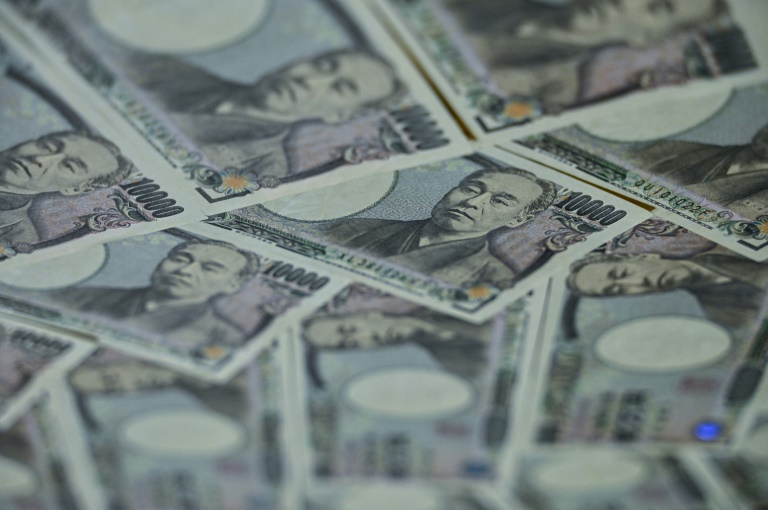
On currency markets, the dollar remained king as the United States lead the monetary tightening drive, and eyes are on the reaction in Tokyo as the yen drops towards the 145.90 level that last month saw massive government intervention.

– Key figures around 0300 GMT –

Tokyo – Nikkei 225: DOWN 2.3 percent at 26,480.97 (break)

Hong Kong – Hang Seng Index: DOWN 1.3 percent at 16,985.14

Shanghai – Composite: UP 0.1 percent at 2,976.98

Pound/dollar: DOWN at $1.1048 from $1.1059 on Monday

Euro/dollar: DOWN at $0.9690 from $0.9708

Euro/pound: DOWN at 87.71 pence from 87.76 pence

Dollar/yen: DOWN at 145.67 yen from 145.72 yen

West Texas Intermediate: DOWN 0.3 percent at $90.84 per barrel

Brent North Sea crude: DOWN 0.2 percent at $96.00 per barrel

New York – Dow: DOWN 0.3 percent at 29,202.88 (close)

London – FTSE 100: DOWN 0.5 percent at 6,959.31 (close) 

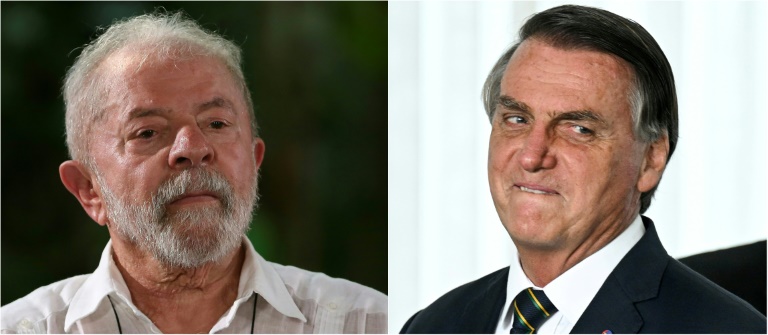
'Drunkard,' 'redneck,' a few of the milder insults in Brazil runoff

President Jair Bolsonaro has called his election opponent Luiz Inacio Lula da Silva a “thief” and a “drunkard.” Lula counters that the Brazilian leader is a “butcher,” and a “redneck.”

The insults are flying between the two candidates before the second round of presidential elections.

Here is a timeline of some of the put-downs:

– Bolsonaro on Lula: ‘swindler’ –

“I talk dirty, but I’m not a thief,” Bolsonaro said at a September 7 campaign event on Copacabana Beach in Rio de Janeiro, referring to Lula’s 2017 conviction on charges of accepting bribes for public contracts while president. A Supreme Court judge annulled the conviction last year.

“Liar, ex-convict, traitor,” Bolsonaro said of Lula in the last televised debate on TV Globo on September 28.

“If you put a drunkard to run Brazil… who has a trail of corruption, of debauchery, toward the Brazilian family, of attacks on priests and pastors, on the armed forces, on the police, do you think it will work?” Bolsonaro said at a news conference on October 7 at his official residence in Brasilia.

“He is a great liar, a swindler, a corrupt person, a lawless bandit… Lula has surpassed Al Capone. Poor Al Capone, he was just a pickpocket next to Lula,” Bolsonaro said on October 9 in an interview with the Pilhado channel on YouTube.

– Lula on Bolsonaro: ‘Jester’ –

“This butcher who rules this country is not received by anyone and no one wants to visit this country. He is a denialist who doesn’t believe in things,” Lula said during a campaign event in Campina Grande, Paraiba, on August 2.

“Bolsonaro is a hostage of the national congress… Bolsonaro looks like the court jester,” Lula said on August 25 on the TV Globo evening newscast.

“Bolsonaro’s event looked like a Ku Klux Klan meeting. The only thing missing was the hood,” Lula said on September 8 at a meeting on the outskirts of Rio de Janeiro. “There were no black people, no brown people, no poor people.”

“We are facing a man without soul, without heart, a man who did not have the sensibility to shed a single tear for any of the more than 680,000 victims of Covid,” Lula said on October 7 in Sao Paulo. Brazil, a country of 210 million, was one of the hardest-hit nations in the world.

“That’s what he is, a little ignorant. That rough way of being, that redneck way from the countryside of Sao Paulo, you know?” Lula said on September 22 on the nightly Ratinho TV program. 

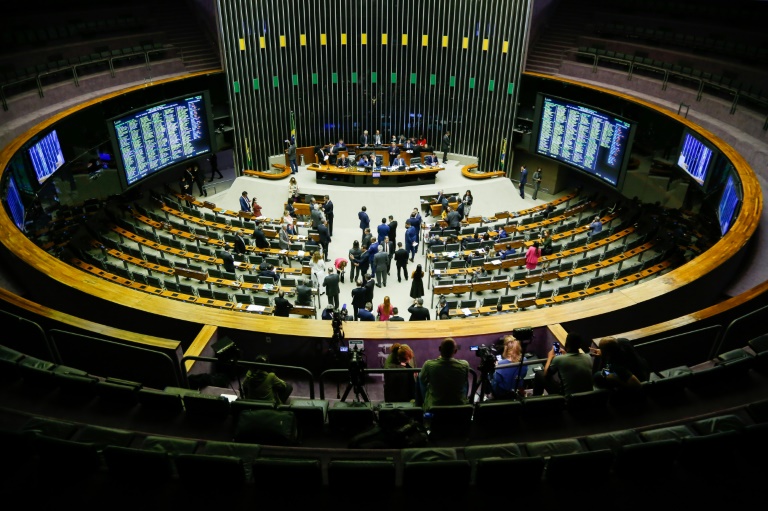
If victorious, Lula will have to battle 'hostile' Congress

Brazil’s new right-leaning Congress risks making life difficult for leftist Luiz Inacio Lula da Silva should he win a third presidential term in elections this month, analysts say.

For far-right incumbent Jair Bolsonaro, however, it is a boon — whether he wins or loses.

Bolsonaro, 67, exceeded polling predictions by coming a closer-than-expected second to Lula, 76, in a first election round on October 2.

The two men will face off in a deeply polarized second round on October 30.

Though still trailing frontrunner Lula, Bolsonaro emerged strong from the first round in more ways than one: his Liberal Party (PL) did well in legislative elections held on the same day, and will be the biggest single party in Congress when its new term starts in February.

In the lower house, or Chamber of Deputies, the PL will have the largest representation of any party since 1998, with 99 out of the 513 seats — a 23 seat bump.

With other allied parties, a right-wing Bolsonaro bloc would have almost 190 lawmakers, or more than a third, in the deeply fragmented house where more than 20 parties are represented from all sides of the political spectrum.

In the 81-seat Senate, the PL boosted its presence by six seats to 13, and all of Brazil’s right-wing parties together now control 53 percent of the higher chamber.

“It is a conservative, liberal, center-right Congress,” crowed Chamber of Deputies president, Arthur Lira, who has thrown his support behind Bolsonaro for the second round.

– ‘Quite hostile’ –

What does this mean in case of a Lula victory?

“Congress and the Senate will be quite hostile to Lula because the right grew — it is not just the right, it is the far right, the more radical right that grew,” Getulio Vargas Foundation (FGV) analyst Oliver Stuenkel told AFP.

The new Congress, he said, “will try to complicate Lula’s life,” likely blocking his reform agenda that includes increasing taxes on the rich and new labor laws more favorable to workers.

And in a further distraction, impeachment attempts are likely to start already “on day one,” said Stuenkel.

Lula served two terms from 2003 to 2010, leaving as the most popular president in Brazilian history with approval ratings nearing 90 percent.

But this time, getting allies to pass his program will be “more difficult,” said Sergio Praca, a political scientist also at FGV.

The only hope for Lula would be, as he did last time, to ally leftist parties in Congress — about 120 lawmakers in all — with the center, which holds about 240.

The “Centrao,” which groups a handful of conservative but pragmatic parties, has dominated Brazilian politics for decades, and any president hoping to get things done has had to forge alliances with it.

But its cooperation is not free: these centrist parties exchange their support for influential political posts or handouts for their electoral fiefdoms.

And they can withdraw it at the drop of a hat, as Lula’s successor Dilma Rousseff learned when she was impeached in 2016 after being abandoned by her centrist allies.

– Pressure on the judiciary –

In its current form, the Congress is primed for pushing through a conservative agenda if Bolsonaro is reelected to a second term.

Bolsonaro has successfully sold himself as the representative of Brazil’s “Bibles, bullets and beef” electoral base — Evangelical Christians, security hardliners and the powerful agribusiness sector.

With a second term, he would also be in a position to appoint two judges to Brazil’s Supreme Court in 2023, shifting the balance of power in an institution that could be the final arbiter in several criminal pursuits against him.

Bolsonaro could also use his increased influence on the Senate to push for the removal of unfriendly judges.

“The major risk to democracy in a second Bolsonaro term would be his increased capacity to put pressure on the judiciary,” said Stuenkel.

But even if he loses the October 30 runoff, Bolsonaro would likely benefit from the new Congress.

With the Congress as it stands, “he has every chance of being protected,” from criminal prosecution, said Carolina Botelho, a researcher in political communication at the Rio de Janeiro State University.

Iran students, workers defy protest crackdown

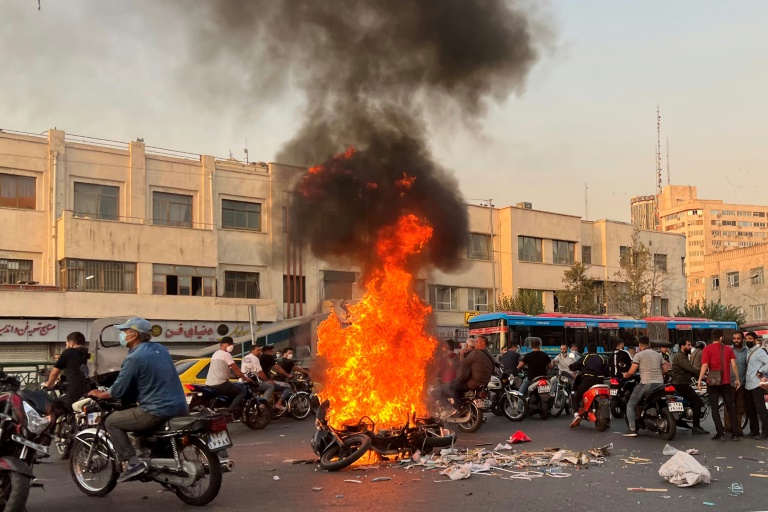
Iranian protesters remained defiant Monday with students staging sit-ins and some industrial workers going on strike despite a crackdown activists say has left dozens dead and hundreds more imprisoned.

Videos posted on social media indicated that protests flared at various points in the capital and other cities over recent days, with women burning headscarves and shouting slogans against the Islamic republic.

Kurdish rights group Hengaw accused the authorities of using heavy weaponry, including “shelling” on neighbourhoods and “machine gun fire”, in the northwestern city of Sanandaj — claims which could not be independently confirmed amid widespread internet blocks.

Gunshots were also heard in Amini’s home town of Saqqez, said the Norway-based group.

The unrest erupted more than three weeks ago over the death of Mahsa Amini, 22, an Iranian woman of Kurdish origin who died following her arrest by the notorious Tehran morality police who enforce the strict dress rules on women including compulsory headscarves.

Activists say she was beaten in custody, while the authorities in Iran have released a medical report blaming a pre-existing condition.

The protests have channelled anger among some Iranian women over the compulsory headscarf, but have also seen slogans shouted against the Islamic system created by late revolutionary leader Ayatollah Ruhollah Khomeini after the ousting of the shah in 1979.

Oslo-based non-government group Iran Human Rights (IHR) shared images of a sit-in protest at the northern Gilan university and of high school girls in the northern town of Mahabad removing their headscarves.

It also posted a video which it said showed a large crowd of students outside Tehran polytechnic on Monday denouncing the “poverty and corruption” in Iran and shouting “death to this tyranny”.

– Workers on strike –

Footage shared on social media, including by news site Iran Wire, said students at Tehran women’s university Al-Zahra shouted criticism of the regime during a visit Saturday by President Ebrahim Raisi.

Students at universities including Tehran Azad also painted their hands red to evoke the crackdown by the authorities on the protests, images showed.

Analysts say that the multi-faceted nature of the protests — ranging from street marches to student strikes to individual actions of defiance — has complicated the state’s attempts to quell the movement.

This could make the protests an even bigger challenge to the authorities under supreme leader Ayatollah Ali Khamenei, 83, than the November 2019 protests against energy price hikes that were bloodily put down.

One viral video was said to show a woman bare-headed in defiance of the dress code, in a street in the northwestern city of Kermanshah with outstretched arms and offering “free hugs” to passers-by.

There have also been signs of labour unrest. Videos broadcast by Persian media based outside Iran showed striking workers burning tyres outside the Asalouyeh petrochemical plant in the southwest, with reports of strikes at other refineries too.

– ‘Chaos and disorder’ –

In an act of cyber defiance, the hacking group Edalat-e Ali (Ali’s Justice) had posted an image during the main state TV evening news on Saturday of Khamenei in crosshairs and being consumed by flames.

The crackdown on the protests sparked by Amini’s death has claimed at least 95 lives according to IHR.

Another 90 people were killed by the security forces in Iran’s far southeastern city of Zahedan from September 30 after protests sparked by the alleged rape of a teenage girl by a police chief in the Sistan-Baluchistan province, said IHR, citing the UK-based Baluch Activists Campaign.

State media have said 24 members of the security forces have been killed overall, including in the Zahedan unrest.

Foreign ministry spokesman Nasser Kanani warned Monday the government would “not stand with its hands tied in the face of chaos and disorder”.

Campaign groups including IHR have also pointed to videos showing brutality by the security forces, including a defenceless protester beaten by baton-wielding police while taking cover in a building.

US National Security Advisor Jake Sullivan said the “world is watching”, in a post on Twitter Monday.

“Over the weekend, innocent protestors including a young girl were shot dead,” Sullivan added. “The President of Iran compared protestors to ‘flies.'”

Activists also accuse the authorities of a campaign of mass arrests and travel bans to quell the protests, with celebrities caught up in the dragnet.

Ali Daei, once the world’s top international goalscorer in men’s football, had his passport confiscated on returning to Tehran from abroad after bitterly criticising the Islamic republic on social media, Iranian media reported.

Daei told AFP on Monday the passport was returned to him “after two or three days”.

UK's top court to assess legal basis for new Scottish independence vote

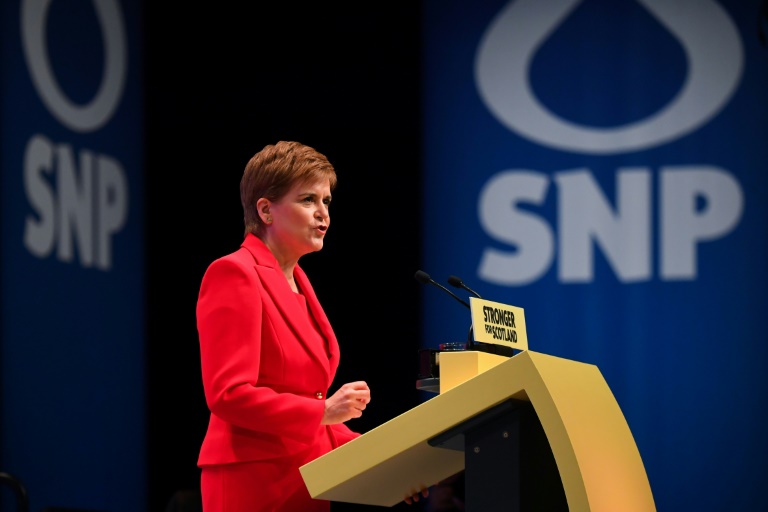
The UK Supreme Court will on Tuesday consider the legality of Scottish moves to hold a new referendum on independence next year without the consent of the government in London.

First Minister Nicola Sturgeon’s nationalist government in Edinburgh wants a fresh vote on the question: “Should Scotland be an independent country?”

On Monday, she told her Scottish National Party’s annual conference the hearing would not have been necessary if the UK government in Westminster respected Scottish democracy.

“But Westminster has no such respect. That means this issue was always destined to end up in court sooner or later — better, in my view, that it is sooner,” she said.

“If the court decides in the way we hope it does, on 19th October next year there will be an independence referendum.”

The Supreme Court hearings — initiated by Scotland’s top legal adviser — will see senior lawyers wrangle over the powers of the devolved parliament in Edinburgh versus Westminster.

The SNP fought the 2021 Scottish parliamentary elections on a promise to hold a legally valid referendum after the Covid crisis subsided. 

It now wants to go ahead but the UK government, which has to give approval under the Scotland Act 1998, has not given permission.

New UK Prime Minister Liz Truss in a television interview this month reiterated her view that the last referendum in 2014 was a once-in-a-generation event.

“I’m very clear there shouldn’t be another referendum before that generation is up,” she added.

– ‘Never give up’ –

Opinion polls now indicate that voters in Scotland are near evenly divided over the question of independence.

The last referendum in 2014 saw 55 percent of Scots vote “no” to breaking away.

But this came before Brexit, which most in Scotland voted against, and the parliamentary election, which saw a majority of pro-independence lawmakers elected for the first time.

The Scottish government wants to be able to create its own legal framework for another vote, arguing that the “right to self-determination is a fundamental and inalienable right”.

But the UK government argues that Scotland cannot act unilaterally in a “reserved” matter concerning the constitutional make-up of the United Kingdom as a whole, where the government in London holds sway.

To get around this, the SNP-led government wants to hold an “advisory referendum” to test support, without immediate change.

The Supreme Court hears cases of the greatest public or constitutional importance affecting the whole population, ruling on points of law.

Five judges including Supreme Court President Robert Reed, will begin two days of hearings at 10:30 am (0930 GMT) on Tuesday.

They will examine the legal validity of a referendum bill proposed by the SNP that sets a referendum date of October 19, 2023, with a ruling at a later date.

“The court is unlikely to rule in favour of the SNP –- but those in favour of the Union should not see this as a defining victory,” wrote Akash Paun of the Institute for Government think-tank.

If thwarted in court, the party plans to make the next general election, due by January 2025 at the latest, a de facto referendum, campaigning on a single issue.

Sturgeon on Monday said a legal defeat would leave the Scottish government “a very simple choice: put our case for independence to the people in an election or give up on Scottish democracy”. 

“I will never give up on Scottish democracy,” she added.

Close Bitnami banner
Bitnami