World

'Dream come true': Japan reopens to tourists

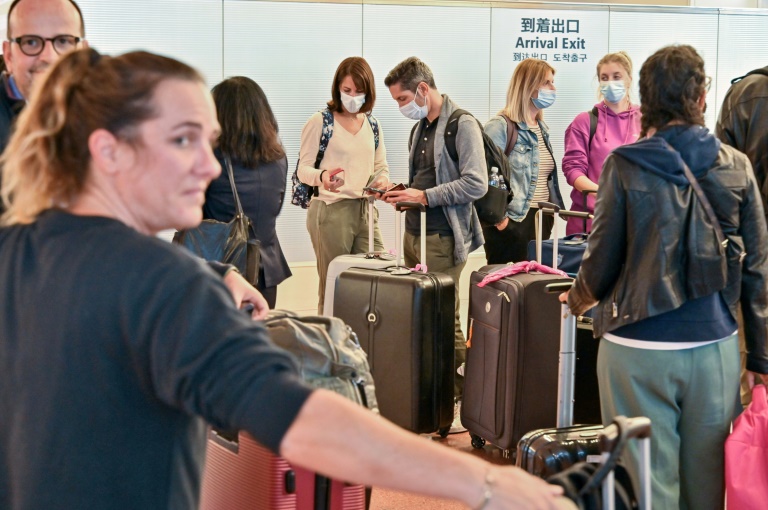
Japan reopened its doors to tourists Tuesday after two-and-a-half years of tough Covid restrictions, with officials hoping an influx of travellers enticed by a weak yen will boost the economy.

By mid-morning, tourists from Israel, France and Britain were already pouring in.

“It’s a long, long dream come true,” said 69-year-old Adi Bromshtine, a retiree arriving at Tokyo’s Haneda airport from Israel.

“We were planning before Covid and waiting and waiting,” she told AFP.

Itay Galili, a 22-year-old student also arriving from Israel, said he had been closely monitoring the news for word of the border reopening.

“As soon as I heard it’s going to reopen on the 11th, I started planning. Tickets were expensive… but no price (is) too heavy,” he told AFP.

Japan slammed its borders shut early in the pandemic, at one point even barring foreign residents from returning, and has only recently begun cautiously reopening.

In June, it began allowing tourists to visit in groups accompanied by guides, a requirement that was further relaxed to include self-guided package tours.

From Tuesday, visa-free entry resumed for travellers from 68 countries and territories.

Japan is also lifting a cap on the number of arrivals and ending the package tour requirement.

Some rules remain, with tourists required to present either proof of vaccination or a negative coronavirus test taken three days before departure.

Before Covid, Japan’s government was on track to achieve a goal of 40 million visitors by 2020, the year Tokyo was supposed to host the Summer Olympics.

Japan received a record 31.9 million foreign visitors in 2019, but that plummeted to just 250,000 in 2021.

– Demand soaring –

In Japan, tourists will find a country that is still adhering to many of the health guidelines that helped it to keep pandemic deaths to around 45,500, lower than many other developed economies.

Masks are ubiquitous, and though not mandated by law, parliament is set to pass legislation allowing hotels to deny service to customers who refuse to wear one or observe other health rules.

Masks are worn not only indoors and on public transport, but even outdoors, despite the government saying they are not necessary outside in uncrowded settings.

Hand sanitiser is placed at the entrance of most businesses, while plastic dividers are also often used in restaurants.

Another major change for tourists will be the weakness of the yen, which is hovering around 145 to the dollar, a level not seen for two decades.

The government has already had to intervene once to prop up the currency, and Prime Minister Fumio Kishida cited the yen’s weakness as a factor he hoped would draw tourists when he announced the reopening.

There is certainly no shortage of demand, according to travel agents.

Since the September announcement of the planned reopening, “we’ve been absolutely drowning, we don’t have enough time to deal with all the requests,” said Antoine Chanthavong, of Paris-based travel agency Destination Japan.

Still, for now at least, tickets are not coming cheap, with fuel prices soaring and airlines forced to take circuitous routes to avoid Russian airspace.

And for all the rebound in demand, there is little expectation that tourist numbers will soon reach their 2019 levels.

Before the pandemic, travellers from Hong Kong and China made up 37 percent of all foreign visitors to Japan, and 44 percent of tourism income.

But tough Covid restrictions in China make it unlikely visitors from there will be flocking back to Japan anytime soon.
'Dream come true': Japan reopens to tourists

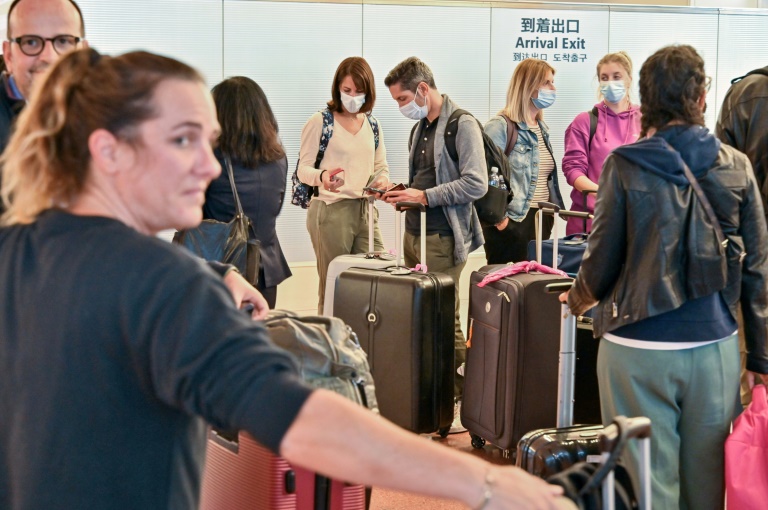
Japan reopened its doors to tourists Tuesday after two-and-a-half years of tough Covid restrictions, with officials hoping an influx of travellers enticed by a weak yen will boost the economy.

By mid-morning, tourists from Israel, France and Britain were already pouring in.

“It’s a long, long dream come true,” said 69-year-old Adi Bromshtine, a retiree arriving at Tokyo’s Haneda airport from Israel.

“We were planning before Covid and waiting and waiting,” she told AFP.

Itay Galili, a 22-year-old student also arriving from Israel, said he had been closely monitoring the news for word of the border reopening.

“As soon as I heard it’s going to reopen on the 11th, I started planning. Tickets were expensive… but no price (is) too heavy,” he told AFP.

Japan slammed its borders shut early in the pandemic, at one point even barring foreign residents from returning, and has only recently begun cautiously reopening.

In June, it began allowing tourists to visit in groups accompanied by guides, a requirement that was further relaxed to include self-guided package tours.

From Tuesday, visa-free entry resumed for travellers from 68 countries and territories.

Japan is also lifting a cap on the number of arrivals and ending the package tour requirement.

Some rules remain, with tourists required to present either proof of vaccination or a negative coronavirus test taken three days before departure.

Before Covid, Japan’s government was on track to achieve a goal of 40 million visitors by 2020, the year Tokyo was supposed to host the Summer Olympics.

Japan received a record 31.9 million foreign visitors in 2019, but that plummeted to just 250,000 in 2021.

– Demand soaring –

In Japan, tourists will find a country that is still adhering to many of the health guidelines that helped it to keep pandemic deaths to around 45,500, lower than many other developed economies.

Masks are ubiquitous, and though not mandated by law, parliament is set to pass legislation allowing hotels to deny service to customers who refuse to wear one or observe other health rules.

Masks are worn not only indoors and on public transport, but even outdoors, despite the government saying they are not necessary outside in uncrowded settings.

Hand sanitiser is placed at the entrance of most businesses, while plastic dividers are also often used in restaurants.

Another major change for tourists will be the weakness of the yen, which is hovering around 145 to the dollar, a level not seen for two decades.

The government has already had to intervene once to prop up the currency, and Prime Minister Fumio Kishida cited the yen’s weakness as a factor he hoped would draw tourists when he announced the reopening.

There is certainly no shortage of demand, according to travel agents.

Since the September announcement of the planned reopening, “we’ve been absolutely drowning, we don’t have enough time to deal with all the requests,” said Antoine Chanthavong, of Paris-based travel agency Destination Japan.

Still, for now at least, tickets are not coming cheap, with fuel prices soaring and airlines forced to take circuitous routes to avoid Russian airspace.

And for all the rebound in demand, there is little expectation that tourist numbers will soon reach their 2019 levels.

Before the pandemic, travellers from Hong Kong and China made up 37 percent of all foreign visitors to Japan, and 44 percent of tourism income.

But tough Covid restrictions in China make it unlikely visitors from there will be flocking back to Japan anytime soon.
Neighbors, rescuers search for missing after Venezuela landslide

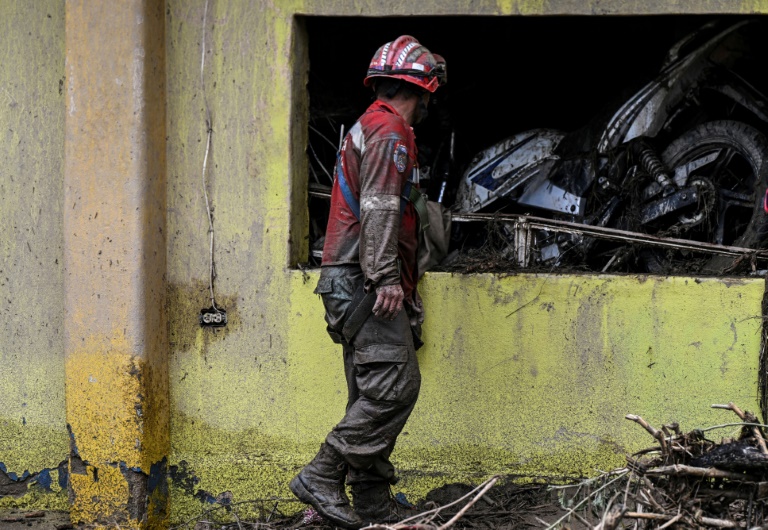
Neighbors helped rescue teams comb through mud and debris Monday for signs of dozens of people missing after a landslide swept through a town in Venezuela, killing at least 36.

More than 3,000 rescuers were deployed in Las Tejerias, some 50 kilometers (31 miles) from the capital Caracas, after Venezuela’s worst natural disaster in decades.

“Unfortunately, we have 36 people dead at the moment and 56 people missing,” Interior Minister Remigio Ceballos said on Twitter.

“Las Tejerias will never be the same,” said survivor Isaac Castillo, 45, a merchant in the town of some 54,000 people nestled in the mountains.

“We are leaving because recovering from this is impossible.”

Unusually heavy rains caused a major river and several streams to overflow on Saturday, causing a torrent of mud that swept away cars, parts of homes, businesses and telephone wires, and felled massive trees.

“As much rain fell in eight hours as normally falls in a month,” Vice President Delcy Rodriguez said, as she blamed the “climate crisis.”

Experts say the storm was aggravated by the seasonal La Nina weather system gripping the region, as well as the effects of Hurricane Julia, which also claimed at least 26 lives in Central America and caused extensive damage from Panama to Guatemala on Sunday.

Residents of Las Tejerias used picks, shovels and any tools they could find to dig through a thick bank of mud deposited on the town Saturday.

Firefighters used chainsaws to clear a path through knocked-down trees that had been carried into the town.

“It came too fast, we had no time,” resident Carlos Camejo, 60, said of the mudslide.

Carmen Melendez, 55, told AFP, “The town is lost, Las Tejerias is lost,” as she waited desperately for news on the whereabouts of a missing relative.

– Safety on the roof –

But President Nicolas Maduro, who visited the area on Monday, insisted the town would be rebuilt. 

“We take with us the pain, the clamor, the despair, the tears of the people, but they must know that Las Tejerias will rise like the phoenix, Las Tejerias will be reborn,” he said, vowing to rebuild “each and every one” of the homes and businesses destroyed. 

Rodriguez, his vice president, said 317 homes were “completely destroyed” and 757 damaged by the mudslide.

Authorities erected shelters for the displaced in Maracay, capital of the affected Aragua province.

Maduro on Sunday decreed three days of national mourning.

Crews of workers with heavy machinery worked to clear the debris-covered roads, while residents battled to clean out meters of mud dumped inside their homes.

Las Tejerias resident Jose Santiago spent 40 minutes clinging to a TV antenna on the roof of his home as a torrent of mud swept through it.

“The river caught me and I couldn’t find anything to do besides climb a roof and grab onto an antenna,” said the 65-year-old, who barely escaped with his life.

Further afield, at least 26 people died  across Central America when storm Julia raced across the region on Sunday.

Five army soldiers on deployment in El Salvador died after a wall collapsed on them as they were seeking shelter from the storm, which killed a total of 10 people in the country and forced some 1,000 people to seek temporary shelter.

In Honduras, Wilmer Wood, mayor of the eastern town of Brus Laguna, said two people died when Julia capsized a boat. One more person was missing.

And in Guatemala, 14 people died, eight of them in the indigenous municipality of Santa Eulalia, in the west of the country, after their house collapsed due to a landslide. Two people were missing after being swept away by floodwater.

Nicaragua’s Vice President Rosario Murillo said Julia had affected some 7,500 people, flooding 3,000 homes and damaging the roofs of another 2,000.

Julia made landfall Sunday as a Category 1 hurricane and gradually dissipated until it was downgraded to a tropical depression on Monday as it churned toward Mexico.

At the end of 2020, hurricanes Eta and Iota killed at least 200 people in Central America and caused millions of dollars in losses. 

Scientists say climate change warms the surface layers of the oceans, causing more powerful, and wetter, storms and hurricanes.

Neighbors, rescuers search for missing after Venezuela landslide

Neighbors helped rescue teams comb through mud and debris Monday for signs of dozens of people missing after a landslide swept through a town in Venezuela, killing at least 36.

More than 3,000 rescuers were deployed in Las Tejerias, some 50 kilometers (31 miles) from the capital Caracas, after Venezuela’s worst natural disaster in decades.

“Unfortunately, we have 36 people dead at the moment and 56 people missing,” Interior Minister Remigio Ceballos said on Twitter.

“Las Tejerias will never be the same,” said survivor Isaac Castillo, 45, a merchant in the town of some 54,000 people nestled in the mountains.

“We are leaving because recovering from this is impossible.”

Unusually heavy rains caused a major river and several streams to overflow on Saturday, causing a torrent of mud that swept away cars, parts of homes, businesses and telephone wires, and felled massive trees.

“As much rain fell in eight hours as normally falls in a month,” Vice President Delcy Rodriguez said, as she blamed the “climate crisis.”

Experts say the storm was aggravated by the seasonal La Nina weather system gripping the region, as well as the effects of Hurricane Julia, which also claimed at least 26 lives in Central America and caused extensive damage from Panama to Guatemala on Sunday.

Residents of Las Tejerias used picks, shovels and any tools they could find to dig through a thick bank of mud deposited on the town Saturday.

Firefighters used chainsaws to clear a path through knocked-down trees that had been carried into the town.

“It came too fast, we had no time,” resident Carlos Camejo, 60, said of the mudslide.

Carmen Melendez, 55, told AFP, “The town is lost, Las Tejerias is lost,” as she waited desperately for news on the whereabouts of a missing relative.

– Safety on the roof –

But President Nicolas Maduro, who visited the area on Monday, insisted the town would be rebuilt. 

“We take with us the pain, the clamor, the despair, the tears of the people, but they must know that Las Tejerias will rise like the phoenix, Las Tejerias will be reborn,” he said, vowing to rebuild “each and every one” of the homes and businesses destroyed. 

Rodriguez, his vice president, said 317 homes were “completely destroyed” and 757 damaged by the mudslide.

Authorities erected shelters for the displaced in Maracay, capital of the affected Aragua province.

Maduro on Sunday decreed three days of national mourning.

Crews of workers with heavy machinery worked to clear the debris-covered roads, while residents battled to clean out meters of mud dumped inside their homes.

Las Tejerias resident Jose Santiago spent 40 minutes clinging to a TV antenna on the roof of his home as a torrent of mud swept through it.

“The river caught me and I couldn’t find anything to do besides climb a roof and grab onto an antenna,” said the 65-year-old, who barely escaped with his life.

Further afield, at least 26 people died  across Central America when storm Julia raced across the region on Sunday.

Five army soldiers on deployment in El Salvador died after a wall collapsed on them as they were seeking shelter from the storm, which killed a total of 10 people in the country and forced some 1,000 people to seek temporary shelter.

In Honduras, Wilmer Wood, mayor of the eastern town of Brus Laguna, said two people died when Julia capsized a boat. One more person was missing.

And in Guatemala, 14 people died, eight of them in the indigenous municipality of Santa Eulalia, in the west of the country, after their house collapsed due to a landslide. Two people were missing after being swept away by floodwater.

Nicaragua’s Vice President Rosario Murillo said Julia had affected some 7,500 people, flooding 3,000 homes and damaging the roofs of another 2,000.

Julia made landfall Sunday as a Category 1 hurricane and gradually dissipated until it was downgraded to a tropical depression on Monday as it churned toward Mexico.

At the end of 2020, hurricanes Eta and Iota killed at least 200 people in Central America and caused millions of dollars in losses. 

Scientists say climate change warms the surface layers of the oceans, causing more powerful, and wetter, storms and hurricanes.

Climate refugees flee as Bangladesh villages washed away

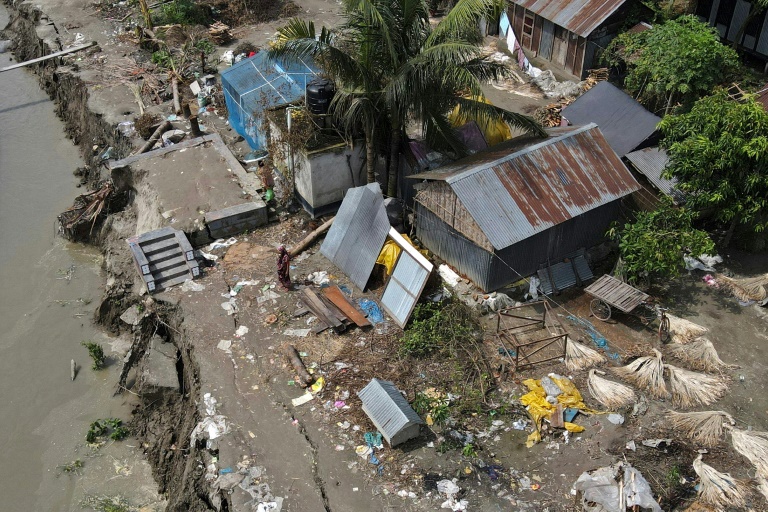
For generations Paban Baroi’s family guarded a temple to Shiva, the Hindu god of destruction, until Bangladesh’s mighty Padma river wreaked havoc of its own, wiping out the shrine, their home, and 200 other houses in their village.

The 70-year-old and his neighbours are among thousands in the country who will be rendered destitute this year as surging waters and eroding lands reshape the landscape — a phenomenon made worse by climate change.

One day in September, the waterway abruptly changed course and a swathe of the tight-knit community in Baroi’s village vanished as the very land on which it stood was washed away.

“The river current was so powerful,” he told AFP. “Many of us have been living under the open sky for the last few days.”

Baroi’s family were hereditary custodians of the temple in Bangla Bazar, on the outskirts of the capital Dhaka, the site of an annual festival that long drew Hindu faithful and friends from its majority-Muslim population.

The ceremonies were staged even through some of the country’s worst catastrophes, including sectarian violence that accompanied the end of the British colonial era and a brutal 1971 independence war that saw an exodus of persecuted Hindus to neighbouring India.

But next year’s festivities could be cancelled for the first time in more than a century — as by then many of the usual participants will have been forced to move away.

“It has been a thriving community of carpenters, fishermen, farmers and traders,” Sohrab Hossain Pir, a councillor for the village, told AFP.

“But now everything is going into the river.”

Bangladesh is a delta country crisscrossed by more than 200 waterways, each connected to the Ganges and Brahmaputra rivers that course from the Himalayas and through the South Asian subcontinent.

Periodic flooding that inundates homes, markets and schools has always been a fact of life for the tens of millions of farmers and fishermen who crowd the rivers’ banks — some of the most densely populated areas of the Bangladeshi countryside.

But scientists say climate change has increased the severity and frequency of the phenomenon, with more erratic rainfall causing more cyclones and flash floods.

– ‘Clearly climate change’ –

This year Bangladesh saw record flooding that killed more than 100 people and cut off seven million others, with relief efforts continuing for months.

The impact is expected to worsen significantly in the coming decades, just as rising sea levels threaten to displace tens of millions of people along the low-lying Bangladeshi coastline and inundate its most fertile farmlands with salt water.

Bangladesh is already rated by the UN and civil society groups as one of the countries most affected by extreme weather events since the turn of the century, with entire inland villages wiped from the map.

Around 1,800 hectares (4,500 acres) of land will be eroded by rivers in Bangladesh this year and the homes of at least 10,000 people will disappear, according to the state-funded Centre for Environmental and Geographic Information Services (CEGIS).

“These erosion events are clearly as a result of climate change,” Ian Fry, the UN special rapporteur on climate change, told reporters when he visited in September.

Residents of disappeared villages often seek a new life in the slums of Dhaka, a sprawling city of 22 million that has doubled in size since the turn of the century on the back of urban migration.

“Many of these people have been displaced by climate change-related reasons,” Fry said in a statement that highlighted endemic child malnutrition, a lack of safe drinking water and high rates of human trafficking. 

– ‘Where will we go?’ –

Bangladesh will present a national plan to help manage increasing natural disasters and extreme weather calamities triggered by climate change at November’s COP27 climate summit in Egypt.

That includes keeping river erosion to around 1,000 hectares per year — still the size of a large international airport.

At the summit, Dhaka will appeal to leaders of developed nations for urgent funding — it estimates a staggering $230 billion is needed by 2050 to mitigate the impact of climate change on the country.

“It is clear to me the burden of the climate change should not be carried by Bangladesh alone,” said Fry, adding that richer nations with higher levels of historical emissions should help foot the bill.

“For too long, countries have denied their responsibility for the sufferings they have caused,” he said. “They should be paying for this.”

In Bangla Bazar, Baroi and his family were yet to find shelter a week after losing their home, while some of his neighbours took refuge in cowsheds.

Those that still have a roof over their heads fretted over where they will turn when the Padma swallows more land.

“I don’t want to go anywhere,” Baroi said. “But if the river devours the entire village, what will happen? Where will we go?”

Top Democrat urges US block on weapons sales to Riyadh

A powerful US senator called Monday for Washington to freeze all cooperation with Saudi Arabia over its decision to “underwrite” Russia’s war in Ukraine by slashing oil production.

Riyadh, Moscow and other top oil producers agreed last week to a deep cut in production to boost crude prices, in a move denounced by the United States as a concession to Moscow that would hurt the global economy.

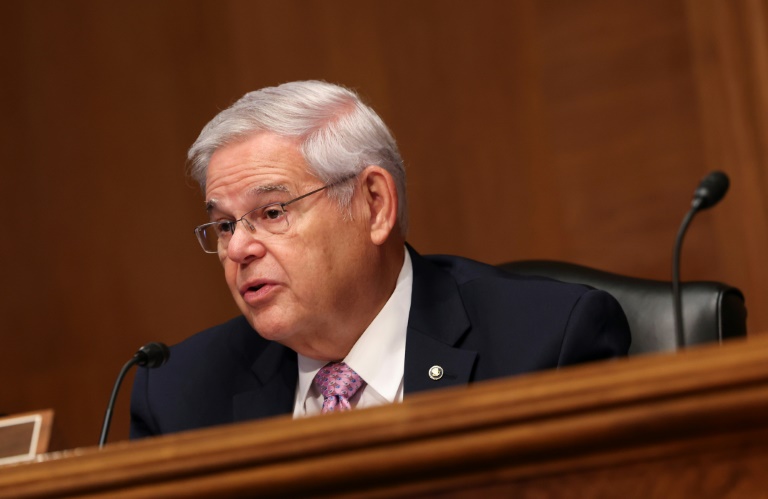
“There simply is no room to play both sides of this conflict — either you support the rest of the free world in trying to stop a war criminal from violently wiping off an entire country off of the map, or you support him,” Bob Menendez, who chairs the powerful Senate Foreign Relations Committee, said in a statement.

“The Kingdom of Saudi Arabia chose the latter in a terrible decision driven by economic self-interest.” 

The 13-nation, Saudi-led OPEC cartel and its 10 allies headed by Russia agreed to reduce output by two million barrels a day from November —  raising fears that oil prices could soar.

Saudi Arabia said OPEC’s priority was “to maintain a sustainable oil market” but its move drew a swift rebuke from the Washington, which is leading efforts to isolate major energy producer Russia over its invasion of Ukraine.

“The United States must immediately freeze all aspects of our cooperation with Saudi Arabia, including any arms sales and security cooperation beyond what is absolutely necessary to defend US personnel and interests,” Menendez said.

“As chairman of the Senate Foreign Relations Committee, I will not green-light any cooperation with Riyadh until the kingdom reassesses its position with respect to the war in Ukraine. Enough is enough.”

An outspoken critic of Riyadh, Menendez has been at the forefront of the campaign to sanction Saudi royalty over the 2018 murder of Washington Post columnist Jamal Khashoggi, which US intelligence concluded was ordered by de facto leader Mohammed bin Salman.

He is the latest in a string of lawmakers calling for a rethink on the US-Saudi relationship but is able to wield considerably more influence than most in his drive to impose increased scrutiny on arms sales.

When former president Donald Trump issued an emergency declaration to bypass Congress in approving a weapons deal with Riyadh in 2019, Menendez jammed up the process by refusing to acknowledge the White House’s notification of the sale until he had received answers about his concerns about use of US-made weaponry in Yemen.

“I am horrified by Russia’s depraved and desperate escalation against civilian infrastructure across Ukraine — including in Kyiv,” he said.

“I pledge to use all means at my disposal to accelerate support for the people of Ukraine and to starve Russia’s war machine.” 

Ukraine denounces Russia as 'terrorist state' in UN meeting

Ukraine denounced Russia as a “terrorist state” at an urgent United Nations General Assembly meeting Monday following its neighbor’s latest attacks, as Western powers sought to underscore Moscow’s isolation.

The UN called the debate to discuss Russia’s declared annexation of four partly occupied Ukrainian regions, but the debate was overshadowed by strikes on Kyiv and other cities in one of the most punishing assaults on Ukraine in months.

“Russia has proven once again that this is a terrorist state that must be deterred in the strongest possible ways,” said Sergiy Kyslytsya, Ukraine’s ambassador to the UN in his opening remarks, adding his own immediate family had come under attack.

“Unfortunately, you can hardly call for a stable and sane peace as long as an unstable and insane dictatorship exists in your vicinity,” he added, telling member states at least 14 civilians were killed and 97 wounded in the attacks.

Responding, Vasily Nebenzya of Russia did not directly address the missile strikes, but defended his country’s annexation of Ukrainian regions.

“We are being accused when we are trying to protect our brothers and sisters in eastern Ukraine,” he said.

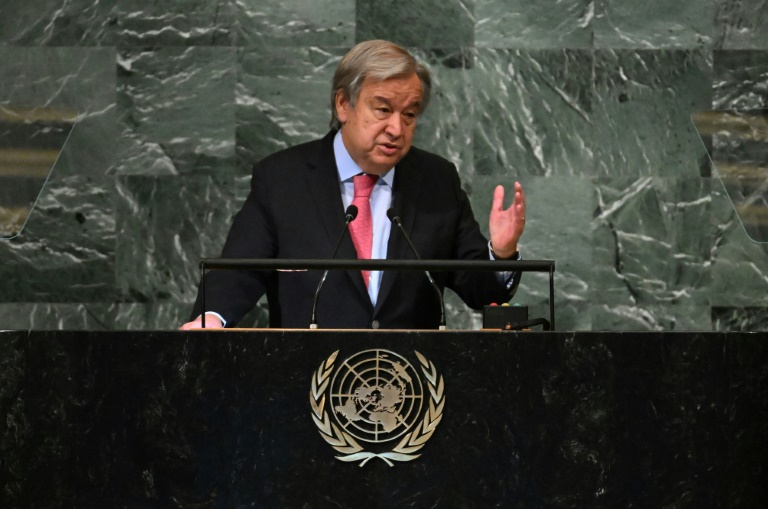
Ahead of the General Assembly session, and with tensions at a boiling point, UN chief Antonio Guterres described Russia’s attacks as an “unacceptable escalation of the war,” his spokesman said.

US President Joe Biden, meanwhile, condemned the strikes in stark terms, saying they “demonstrate the utter brutality” of Putin’s “illegal war.”

Russian President Vladimir Putin vowed even more “severe” retaliation after the recent explosion that damaged a key bridge in Moscow-annexed Crimea.

– ‘Illegal annexations’ –

The decision to bring the annexation matter before the General Assembly, where the 193 UN members have one vote each — and no one wields veto power — was taken after Russia used its veto in a Security Council meeting September 30 to block a similar proposal.

The vote is expected no sooner than Wednesday.

“We do not and will never recognise the illegal so-called ‘referenda’ that Russia has engineered as a pretext for this further violation of Ukraine’s independence,” said Silvio Gonzato, a representative of the European Union, which helped draft the text.

The resolution condemns Russia’s “attempted illegal annexations” of the Ukrainian regions of Donetsk, Luhansk, Zaporizhzhia and Kherson following “so-called referendums,” and it stresses these actions have “no validity under international law.”

It calls on all states, international organizations and agencies not to recognize the annexations, and demands the immediate withdrawal of Russian troops from Ukraine.

In response to the resolution, Russia had written to all member states in a letter attacking “Western delegations” whose actions “have nothing to do with protection of international law and the principles of the UN Charter.”

Nebenzya said that given the circumstances, the General Assembly should vote by secret ballot — a highly unusual procedure normally reserved for matters like electing the rotating members of the Security Council.

– ‘A bit of desperation’ –

But Albania tabled a resolution against a secret ballot, winning with 107 votes in favor, 13 against, and 39 abstentions. Russia lost a subsequent appeal to the motion.

Guterres himself has bluntly denounced the annexations as being “against everything the international community is meant to stand for,” he said. 

“It has no place in the modern world. It must not be accepted.”

During last month’s Security Council vote, no other country sided with Russia, though four delegations — China, India, Brazil and Gabon — abstained.

Some developing countries have complained the West is devoting all its attention to Ukraine, and others might be tempted to join them this week.

The vote will provide a clear picture of exactly how isolated Russia has become. Given the high stakes, backers of the draft are going all out to win over potential abstentionists. 

On Monday, Ukrainian diplomat Dmytro Kuleba issued a plea to African nations, telling them: “Neutrality will only encourage Russia to continue its aggression and malign activities across the world, including in Africa.”

Dollar extends 2022 surge as market awaits key US inflation data

The dollar extended its banner run of 2022 on Monday, pushing higher following the latest solid US jobs data as equities retreated in both New York and Europe.

The US currency, which has already struck multi-year highs against the euro and other leading currencies, rose as investors bet that the latest round of US employment data released Friday will confirm a Federal Reserve plan to continue aggressively hiking interest rates.

This week’s calendar includes the latest US consumer price index data, which will give an updated reading on inflation that has prompted a 180-degree turn from the Fed’s easy-money policies to a streak of significant interest rate hikes.

“Inflation remaining stubbornly elevated would threaten to upset the market apple cart and buoy the dollar,” said a note from Joe Manimbo of Convera.

Analysts said Monday’s gains by the greenback also reflected the worsening Russia-Ukraine conflict, which has bolstered the dollar’s standing as a “refuge” investment.

US stocks finished a choppy session lower, joining European bourses in retreating.

This week’s calendar also includes retail sales for September, as well earnings from Delta Air Lines, JPMorgan and others. 

Investors are cautious ahead of the earnings period, with rising costs expected to cut into corporate profits. 

Analysts now project the S&P 500 companies scored an earnings increase of 2.9 percent per share, down from the 10.5 percent that had been forecast in June, according to CFRA Research.

“We’re seeing mild risk aversion in the markets at the start of the week, perhaps some apprehension ahead of what could be a big few days for the US,” said market analyst Craig Erlam at OANDA.

Elsewhere the pound won little support from Britain ramping up efforts to calm markets after a heavily criticised budget.

In what was seen as coordinated action, the government brought forward the release date of key economic forecasts and the Bank of England boosted liquidity.

“With the pound remaining weak and (UK) government borrowing costs inching up again towards worrying levels, the UK government and the Bank of England have launched a two-pronged attempt to calm markets,” noted Susannah Streeter, senior investment and markets analyst at Hargreaves Lansdown.

Oil prices meanwhile fell after the biggest weekly gain since March that followed last week’s decision by OPEC and allied producers led by Russia to slash crude output by two million barrels per day.

The drop Monday came also on demand concerns caused by China’s Covid flare-ups and more weak data out of Beijing owing to lockdowns.

– Key figures around 2030 GMT –

New York – Dow: DOWN 0.3 percent at 29,202.88 (close)

New York – S&P 500: DOWN 0.8 percent at 3,612.39 (close)

New York – Nasdaq: DOWN 1.0 percent at 10,542.10 (close)

London – FTSE 100: DOWN 0.5 percent at 6,959.31 (close) 

Frankfurt – DAX: FLAT at 12,272.94 (close)

Paris – CAC 40: DOWN 0.5 percent at 5,840.55 (close)

EURO STOXX 50: DOWN 0.6 percent at 3,356.88 (close)

Hong Kong – Hang Seng Index: DOWN 3.0 percent at 17,216.66 (close) 

Shanghai – Composite: DOWN 1.7 percent at 2,974.15 (close)

Tokyo – Nikkei 225: Closed for a holiday

Pound/dollar: DOWN at $1.1059 from $1.1086 on Friday

Euro/dollar: DOWN at $0.9708 from $0.9745

Euro/pound: DOWN at 87.76 pence from 87.90 pence

Dollar/yen: UP at 145.72 yen from 145.25 yen

West Texas Intermediate: DOWN 1.6 percent at $91.13 per barrel

Brent North Sea crude: DOWN 1.8 percent at $96.19 per barrel

burs-jmb/bfm

US trio, including ex-Fed chief Bernanke, win economics Nobel

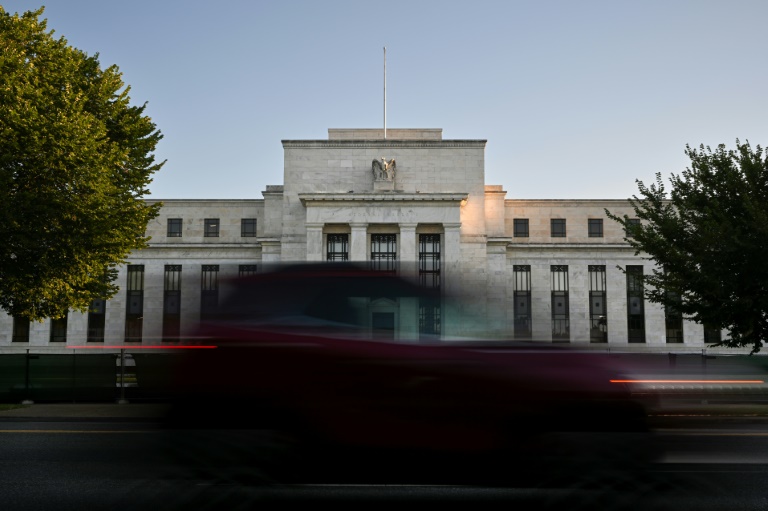
A US trio including ex-Federal Reserve chief Ben Bernanke, who played a key role battling the 2008 financial crisis, won the economics Nobel on Monday for research on banks in times of turmoil.

Bernanke, together with Douglas Diamond and Philip Dybvig, were honoured for having “significantly improved our understanding of the role of banks in the economy, particularly during financial crises, as well as how to regulate financial markets”, the jury said.

Bernanke, 68, has been both credited for spurring recovery after the 2008 recession and pilloried by critics for doing little to avert it, allowing investment bank Lehman Brothers to collapse.

He received the award for his analysis, conducted in the early 1980s, of the Great Depression in the 1930s, the worst economic crisis in modern history.

In particular, Bernanke showed “how failing banks played a decisive role in the global depression,” making the downturn “not only deep, but also long-lasting,” the Nobel jury noted.

In his role as chief of the central bank, Bernanke “was able to put knowledge from research into policy” during the financial crisis of 2008-2009, the Nobel Committee said.

Bernanke has been hailed for the Fed’s unorthodox response of slashing interest rates and flooding the financial system with liquidity.

He told a press conference Monday that he and his Fed colleagues were determined to prevent a financial system meltdown at the time: “I strongly believed that if that happened, that would bring down the rest of the economy.”

But Bernanke added that today’s situation is nothing like “the dire straits” 14 years ago, adding that banks are better prepared for challenges now.

– Bank runs –

Diamond, a professor at the University of Chicago born in 1953, and Dybvig, 67, a professor at Washington University in St Louis, were honoured for showing how “banks offer an optimal solution” for channelling savings to investments by acting as an intermediary.

The pair also showed how these institutions were vulnerable to so called bank runs, where a large number of savers simultaneously withdraw their money leading to the bank’s collapse.

The committee added that this dangerous dynamic can be avoided by governments providing deposit insurance and giving banks a lifeline by becoming a lender of last resort.

“In a nutshell, the theory says that banks can be tremendously useful but they are only guaranteed to be stable if they are properly regulated”, Tore Ellingsen, chair of the prize committee, said.

Diamond, speaking to reporters after the announcement, reflected Monday on the decision by US authorities not to bail out Lehman Brothers, as they later did other financial institutions.

The bank’s collapse sent shockwaves through financial markets when it filed for bankruptcy in September 2008.

“It would have been better to find a more accommodating way, a less unstable way and unexpected way to resolve Lehman Brothers,” Diamond said, stressing there were questions about what regulators were legally able to do.

“Had they found a way, I think the world would have had less of a severe crisis than it did,” Diamond said.

Asked about economic problems today, Dybvig told AFP he was “optimistic” these do not necessarily point to a financial crisis with a meltdown in the banking sector.

– Few women –

Of all the Nobels, the economics prize has the fewest number of female winners: just two since it was first awarded in 1969, Elinor Ostrom in 2009 and Esther Duflo in 2019.

This year, only two women were among the 12 individuals and two organisations honoured, Carolyn Bertozzi in chemistry and Annie Ernaux for literature.

Hans Ellegren, secretary general of the Royal Swedish Academy of Sciences, told AFP that since the science prizes generally honour research dating back decades, laureates who win “now reflect what the scientific community looked like back then.”

He said in the last five years, four women had been awarded the chemistry prize and two had received the physics prize, which has been a male-dominated field.

The economics prize, created by the Swedish central bank in 1968, was the only award not included when scientist Alfred Nobel created the prestigious awards in his 1895 will.

But like the other prizes it comes with a gold medal and an award sum of 10 million Swedish kronor (around $900,000).

The winners will receive the prize from King Carl XVI Gustaf at a formal ceremony in Stockholm on December 10, the anniversary of the 1896 death of scientist Alfred Nobel. 

US trio, including ex-Fed chief Bernanke, win economics Nobel

A US trio including ex-Federal Reserve chief Ben Bernanke, who played a key role battling the 2008 financial crisis, won the economics Nobel on Monday for research on banks in times of turmoil.

Bernanke, together with Douglas Diamond and Philip Dybvig, were honoured for having “significantly improved our understanding of the role of banks in the economy, particularly during financial crises, as well as how to regulate financial markets”, the jury said.

Bernanke, 68, has been both credited for spurring recovery after the 2008 recession and pilloried by critics for doing little to avert it, allowing investment bank Lehman Brothers to collapse.

He received the award for his analysis, conducted in the early 1980s, of the Great Depression in the 1930s, the worst economic crisis in modern history.

In particular, Bernanke showed “how failing banks played a decisive role in the global depression,” making the downturn “not only deep, but also long-lasting,” the Nobel jury noted.

In his role as chief of the central bank, Bernanke “was able to put knowledge from research into policy” during the financial crisis of 2008-2009, the Nobel Committee said.

Bernanke has been hailed for the Fed’s unorthodox response of slashing interest rates and flooding the financial system with liquidity.

He told a press conference Monday that he and his Fed colleagues were determined to prevent a financial system meltdown at the time: “I strongly believed that if that happened, that would bring down the rest of the economy.”

But Bernanke added that today’s situation is nothing like “the dire straits” 14 years ago, adding that banks are better prepared for challenges now.

– Bank runs –

Diamond, a professor at the University of Chicago born in 1953, and Dybvig, 67, a professor at Washington University in St Louis, were honoured for showing how “banks offer an optimal solution” for channelling savings to investments by acting as an intermediary.

The pair also showed how these institutions were vulnerable to so called bank runs, where a large number of savers simultaneously withdraw their money leading to the bank’s collapse.

The committee added that this dangerous dynamic can be avoided by governments providing deposit insurance and giving banks a lifeline by becoming a lender of last resort.

“In a nutshell, the theory says that banks can be tremendously useful but they are only guaranteed to be stable if they are properly regulated”, Tore Ellingsen, chair of the prize committee, said.

Diamond, speaking to reporters after the announcement, reflected Monday on the decision by US authorities not to bail out Lehman Brothers, as they later did other financial institutions.

The bank’s collapse sent shockwaves through financial markets when it filed for bankruptcy in September 2008.

“It would have been better to find a more accommodating way, a less unstable way and unexpected way to resolve Lehman Brothers,” Diamond said, stressing there were questions about what regulators were legally able to do.

“Had they found a way, I think the world would have had less of a severe crisis than it did,” Diamond said.

Asked about economic problems today, Dybvig told AFP he was “optimistic” these do not necessarily point to a financial crisis with a meltdown in the banking sector.

– Few women –

Of all the Nobels, the economics prize has the fewest number of female winners: just two since it was first awarded in 1969, Elinor Ostrom in 2009 and Esther Duflo in 2019.

This year, only two women were among the 12 individuals and two organisations honoured, Carolyn Bertozzi in chemistry and Annie Ernaux for literature.

Hans Ellegren, secretary general of the Royal Swedish Academy of Sciences, told AFP that since the science prizes generally honour research dating back decades, laureates who win “now reflect what the scientific community looked like back then.”

He said in the last five years, four women had been awarded the chemistry prize and two had received the physics prize, which has been a male-dominated field.

The economics prize, created by the Swedish central bank in 1968, was the only award not included when scientist Alfred Nobel created the prestigious awards in his 1895 will.

But like the other prizes it comes with a gold medal and an award sum of 10 million Swedish kronor (around $900,000).

The winners will receive the prize from King Carl XVI Gustaf at a formal ceremony in Stockholm on December 10, the anniversary of the 1896 death of scientist Alfred Nobel. 

Close Bitnami banner
Bitnami