World

Iran state TV hacked with image of supreme leader in crosshairs

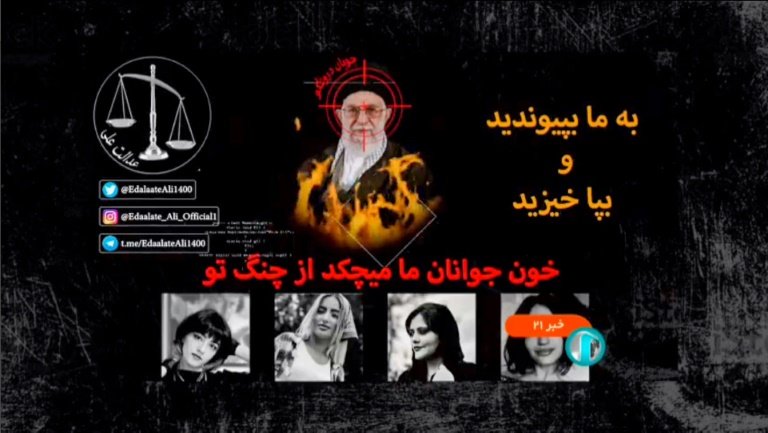
Hackers supporting Iran’s wave of women-led protests interrupted a state TV news broadcast with an image of gun-sight crosshairs and flames over an image of supreme leader Ayatollah Ali Khamenei, in footage widely shared online on Sunday.

In other anti-regime messages, activists have spray-painted “Death to Khamenei” and “The Police are the Murderers of the People” on billboards in Tehran.

“The blood of our youths is on your hands,” read an on-screen message that flashed up briefly during the TV broadcast Saturday evening, as street protests sparked by the death of Mahsa Amini, 22, again rocked Tehran and other cities.

“Police forces used tear gas to disperse the crowds in dozens of locations in Tehran,” state news agency IRNA reported, adding that the demonstrators “chanted slogans and set fire to and damaged public property, including a police booth”.

Anger has flared since the death of Amini on September 16, three days after she was arrested by the notorious morality police for an alleged breach of the Islamic republic’s strict dress code for women.

“Join us and rise up,” read another message in the TV hack claimed by the group Edalat-e Ali (Ali’s Justice).

It also posted pictures of Amini and three other women killed in the crackdown that has claimed at least 95 lives according to Norway-based group Iran Human Rights.

Another 90 people were killed in Iran’s far southeast, in unrest on September 30 sparked by the alleged rape of a teenage girl by a police chief in Sistan-Baluchestan province, said IHR, citing the UK-based Baluch Activists Campaign.

One Islamic Revolutionary Guard Corps member was killed Saturday in Sanandaj, Kurdistan province, and a member of the IRGC’s Basij paramilitary force died in Tehran from “a serious head injury following an armed attack by a mob,” IRNA said — in killings that raised the death toll among security forces to 14.

– ‘So many protests’ –

Iran has been torn by the biggest wave of social unrest in almost three years, which has seen protesters including university students and even young schoolgirls chant “Woman, Life, Freedom”.

“Videos coming out from Tehran indicate that there are so many protests, in every corner of the city, in small and big numbers,” said US-based campaigner and journalist Omid Memarian on Twitter.

In Amini’s hometown Saqez, Kurdistan, schoolgirls chanted and marched down a street swinging their hijab headscarves in the air, in videos the Hengaw rights group said were recorded on Saturday.

Gruesome footage has emerged from the state’s often bloody response, spread online despite widespread internet outages and blocks on all the major social media platforms.

One video shows a man who was shot dead at the wheel of his car in Sanandaj, Kurdistan’s capital, where the province’s police chief, Ali Azadi, later charged he was “killed by anti-revolutionary forces”.

Angry men then appear to take revenge on a member of the feared Basij militia, swarming him and beating him badly, in another widely shared video.

Yet another video clip shows a young woman said to have been shot dead in Mashhad in the country’s northeast.

Many on social media said it evoked images of Neda Agha Soltan, a young woman who became an enduring symbol of the Iranian opposition after she was shot dead at protests in 2009.

– ‘Not afraid anymore’ –

In the face of the violence and the online restrictions, protesters have adopted new tactics to spread their message of resistance in public spaces.

“We are not afraid anymore. We will fight,” read one large banner placed on an overpass of Tehran’s Modares highway, seen in images verified by AFP.

In other footage, a man with a spray can is seen altering the wording of a government billboard on the same highway from “The Police are the Servants of the People” to “The Police are the Murderers of the People”.

Several water features in the Iranian capital were said to have been coloured blood-red, although the head of city’s municipality parks organisation Ali Mohamad Mokhtari insisted that “this information is completely false and there isn’t any change in the colours of fountains in Tehran”.

Iran has accused outside forces of stirring up the protests, as solidarity rallies have been worldwide. The United States, European Union and other governments have imposed new sanctions on Iran.

Iranian pop singer Shervin Hajipour — who was arrested after his song “Baraye” went viral online and became a protest anthem — appeared back in an Instagram video Sunday for the first time since his release.

In a short message, the 25-year-old denied links to any “movement or organisation outside the country” and said his song was only meant to “express solidarity with the people”.

burs/sjw-fz/pjm

Energy firm starts tests at sensitive Israel-Lebanon border gas field

London-listed firm Energean on Sunday began testing pipes between Israel and the Karish offshore gas field, a key step towards production from the eastern Mediterranean site, a source of friction between neighbours Israel and Lebanon.

Israel has maintained that Karish falls entirely within its territory and is not a subject of negotiation at ongoing, US-mediated maritime border talks with Lebanon.

The two countries remain technically at war.

Beirut has reportedly made claims to parts of Karish, and the Iran-backed Shiite group Hezbollah, which holds huge influence in Lebanon, has previously threatened attacks if Israel began production from the field.

In a statement Sunday, Energean said that “following approval received from the Israeli Ministry of Energy to start certain testing procedures, the flow of gas from onshore to the FPSO has commenced”, referring to the Karish floating production storage offloading facility.

The tests, set to take a number of weeks, were “an important step” towards extracting gas from the Karish, Energean said. 

Lebanon and Israel have engaged in on-off indirect talks since 2020 to delineate their Mediterranean border, which could allow both countries to boost offshore natural gas exploration.

A draft agreement floated by US envoy Amos Hochstein aims to settle competing claims over offshore gas fields and was delivered to Lebanese and Israeli officials in recent days.

Israel had welcomed the terms set out by Hochstein and said they would be subjected to legal review, but gave no indication if it sought substantive changes.

Lebanon presented its response to Washington’s proposal on Tuesday.

Israel said two days later that it planned to reject a proposed Lebanese amendment, even if that jeopardises a possible agreement. 

Israel reiterated this week that production at Karish would begin as soon as possible, regardless of Lebanon’s demands.

Two Lebanese officials involved in the talks told AFP on Sunday the US mediator had  informed Beirut that the operation at Karish was only a test.

Negotiations on the maritime border are still going on, one official said.

On Saturday, the French foreign ministry said Paris was “actively contributing to the American mediation”. 

Under the terms of the US draft agreement leaked to the press, all of Karish would fall under Israeli control, while Qana, another potential gas field, would be divided but its exploitation would be under Lebanon’s control.

French company Total would be licensed to search for gas in the Qana field, and Israel would receive a share of future revenue.

Germany probes rail 'sabotage' amid Russia tensions

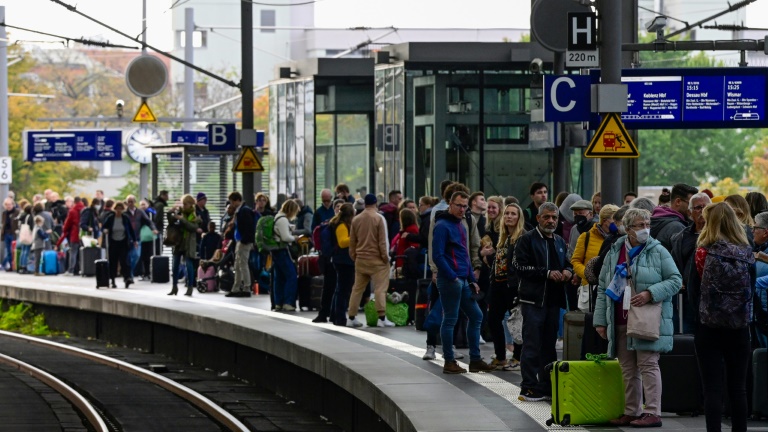
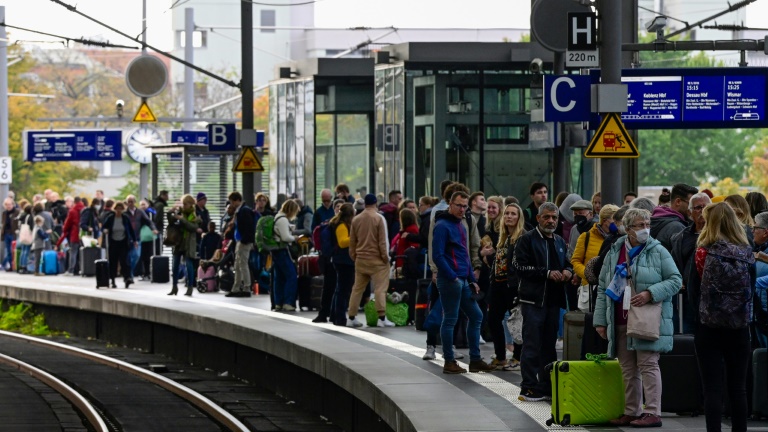
German police were on Sunday probing an act of “sabotage” on the country’s rail infrastructure, with some officials pointing the finger at Russia in the wake of the Nord Stream pipeline explosions.

Important communications cables were cut at two sites on Saturday, forcing rail services in the north to be halted for three hours and causing travel chaos for thousands of passengers.

Rail operator Deutsche Bahn blamed the travel disruptions on “sabotage”, while Transport Minister Volker Wissing spoke of “a targeted and deliberate action”.

Germany’s top-selling daily Bild cited an internal document from the Federal Criminal Police Office (BKA) as saying, in an early analysis of the incident, that an act of “state-ordered sabotage would be conceivable”.

The document pointed to the “widely separated crime scenes” where the cables were severed, in Herne in the western state of North Rhine-Westphalia and in Berlin in the east, some 540 kilometres (335 miles) away.

The BKA also noted that the incident comes not long after last month’s undersea blasts on Nord Stream 1 and 2 gas pipelines between Germany and Russia.

The pipeline sabotage further raised tensions between Russia and the West, already sky-high over the Ukraine war, but Moscow denies any involvement in the blasts.

Anton Hofreiter, a Green party lawmaker and chairman of the German parliament’s European affairs committee, said Russia could have been behind the train disruptions.

“To pull this off, you have to have very precise knowledge of the railway’s radio system. The question is whether we are dealing with sabotage by foreign powers,” Hofreiter told the Funke newspaper group.

Given that the Nord Stream leaks “pointed to the Kremlin”, “we can’t rule out that Russia could also be behind the attack on the rail services,” he said.

“Maybe both are warning shots because we support Ukraine.”

Police have said the investigation into Saturday’s incident is still wide open and they have not publicly mentioned any suspects. According to local media, authorities are also looking into whether far-left extremists could be to blame.

– ‘Hybrid threats’ –

With concern growing about the vulnerability of Germany’s critical infrastructure, Hofreiter called for 20 billion euros ($19 billion) to be invested in the coming years to boost security, including cyber security.

A senior German military official warned that further attacks were possible.

“Every power station, every energy transport pipe is a potential target,” Major General Carsten Breuer told Bild, speaking of growing “hybrid threats”.

Germany’s conservative opposition CDU party also called for closer monitoring of key infrastructure.

“We must rethink the security architecture of Germany and the EU,” senior CDU lawmaker Thorsten Frei told the RND media group. “The modern age of hybrid warfare requires us to adapt,” he said.

Germany probes rail 'sabotage' amid Russia tensions

German police were on Sunday probing an act of “sabotage” on the country’s rail infrastructure, with some officials pointing the finger at Russia in the wake of the Nord Stream pipeline explosions.

Important communications cables were cut at two sites on Saturday, forcing rail services in the north to be halted for three hours and causing travel chaos for thousands of passengers.

Rail operator Deutsche Bahn blamed the travel disruptions on “sabotage”, while Transport Minister Volker Wissing spoke of “a targeted and deliberate action”.

Germany’s top-selling daily Bild cited an internal document from the Federal Criminal Police Office (BKA) as saying, in an early analysis of the incident, that an act of “state-ordered sabotage would be conceivable”.

The document pointed to the “widely separated crime scenes” where the cables were severed, in Herne in the western state of North Rhine-Westphalia and in Berlin in the east, some 540 kilometres (335 miles) away.

The BKA also noted that the incident comes not long after last month’s undersea blasts on Nord Stream 1 and 2 gas pipelines between Germany and Russia.

The pipeline sabotage further raised tensions between Russia and the West, already sky-high over the Ukraine war, but Moscow denies any involvement in the blasts.

Anton Hofreiter, a Green party lawmaker and chairman of the German parliament’s European affairs committee, said Russia could have been behind the train disruptions.

“To pull this off, you have to have very precise knowledge of the railway’s radio system. The question is whether we are dealing with sabotage by foreign powers,” Hofreiter told the Funke newspaper group.

Given that the Nord Stream leaks “pointed to the Kremlin”, “we can’t rule out that Russia could also be behind the attack on the rail services,” he said.

“Maybe both are warning shots because we support Ukraine.”

Police have said the investigation into Saturday’s incident is still wide open and they have not publicly mentioned any suspects. According to local media, authorities are also looking into whether far-left extremists could be to blame.

– ‘Hybrid threats’ –

With concern growing about the vulnerability of Germany’s critical infrastructure, Hofreiter called for 20 billion euros ($19 billion) to be invested in the coming years to boost security, including cyber security.

A senior German military official warned that further attacks were possible.

“Every power station, every energy transport pipe is a potential target,” Major General Carsten Breuer told Bild, speaking of growing “hybrid threats”.

Germany’s conservative opposition CDU party also called for closer monitoring of key infrastructure.

“We must rethink the security architecture of Germany and the EU,” senior CDU lawmaker Thorsten Frei told the RND media group. “The modern age of hybrid warfare requires us to adapt,” he said.

Jailed Duterte critic held hostage during deadly breakout attempt

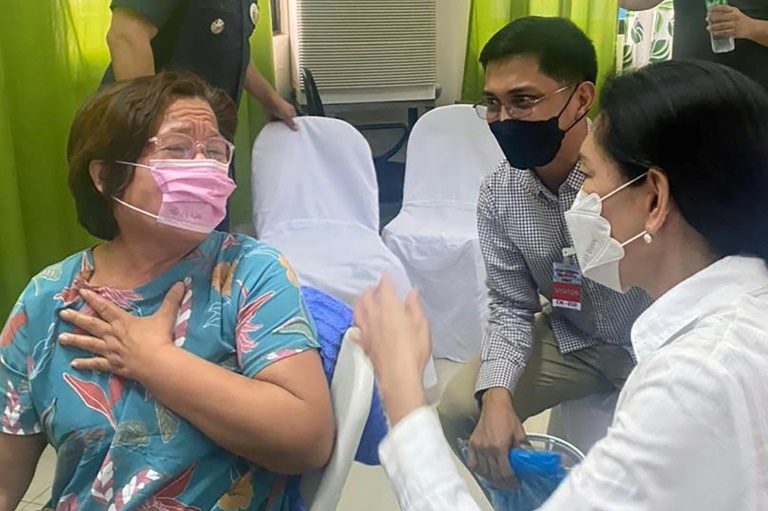
Jailed Philippine human rights campaigner Leila de Lima was briefly taken hostage Sunday during an attempted breakout by three detained militants who were shot dead by police, authorities said. 

The incident happened at the national police headquarters, where de Lima, a former senator, has been held for more than five years with other high-profile detainees.

A police officer handing out breakfast was stabbed with a fork by an inmate, who then freed two others from their cells.

Two of the prisoners were shot dead by a sniper, Interior Secretary Benjamin Abalos told reporters. 

The third prisoner ran to de Lima’s cell. He tied up and blindfolded the 63-year-old before a police officer shot him in the head, Abalos said. 

De Lima said the inmate held her at knifepoint and threatened to kill her. She credited the police with saving her life.

“Being so near death has only made me value life even more,” she said in a statement.

Police said the situation inside the detention facility had “returned to normal” and an investigation was underway. 

Police chief General Rodolfo Azurin said the three inmates were members of the militant group Abu Sayyaf, which has been accused of kidnapping and beheading several foreigners.

De Lima did not appear to have been the target, Azurin told local radio station DZBB.

“They saw her as an ideal cover. Their intention really was to escape,” he said.

De Lima was unhurt, Boni Tacardon, her lawyer, confirmed to AFP.

“She was brought to the hospital for the standard medical check-up,” Tacardon said.

“But based on the information given to us by our staff who’s with the senator now, she appears OK.”

– Calls to free de Lima –

De Lima, an outspoken critic of former president Rodrigo Duterte and his deadly drug war, is due to appear in court on Monday.

She has been behind bars since 2017 on drug trafficking charges that she and human rights groups have called a mockery of justice and payback for going after Duterte.

Since President Ferdinand Marcos Jr took power in June, there have been renewed calls from diplomats and rights defenders for de Lima to be released.

The latest incident underscored the need for her to be “freed immediately”, said Carlos Conde of Human Rights Watch.

Marcos tweeted that he would speak to de Lima “to check on her condition and to ask if she wishes to be transferred to another detention center”.

But Tacardon said de Lima did not want to be transferred.

For now, de Lima and her defence team were considering their options, including the hospital inside the national police headquarters. 

Before her arrest on February 24, 2017, de Lima had spent a decade investigating “death squad” killings allegedly orchestrated by Duterte during his time as Davao City mayor and in the early days of his presidency.

She conducted the probes while serving as the nation’s human rights commissioner, then from 2010 to 2015 as justice secretary in the Benigno Aquino administration that preceded Duterte’s rule.

De Lima won a Senate seat in 2016, becoming one of the few opposition voices as the populist Duterte enjoyed a landslide win.

But Duterte then accused her of running a drug trafficking ring with criminals inside the nation’s biggest prison while she was justice secretary.

De Lima lost her bid for re-election to the Senate in May and Duterte stepped down in June.

The lawyer and mother of two has been held in a compound for high-profile detainees, rather than one of the Philippines’ notoriously overcrowded jails.  

UK ministers urge party to back under-fire PM Truss

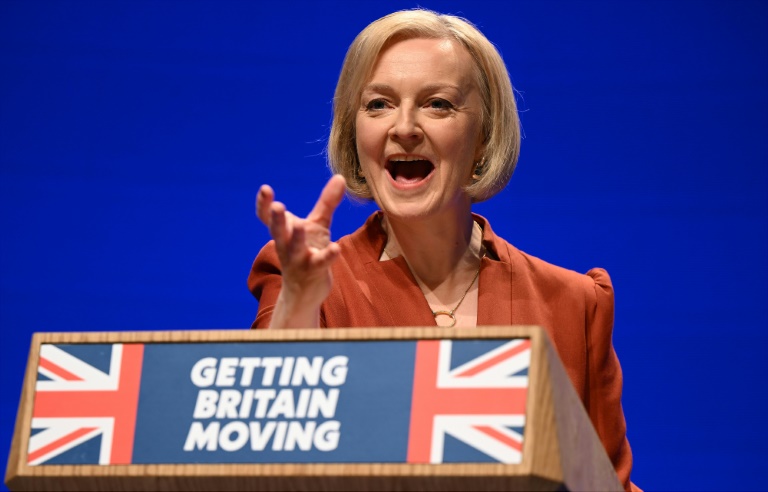
Four ministers in Liz Truss’s government on Sunday urged Conservative colleagues to back the embattled UK prime minister following a punishing week that exposed deep divisions within the party.

Interior minister Suella Braverman, former finance minister Nadhim Zahawi, Commons leader Penny Mordaunt and environment minister Ranil Jayawardena all wrote articles for Sunday newspapers warning that they would soon find themselves in opposition unless the party united quickly.

Braverman wrote in The Sun On Sunday, “Those working with Labour to undermine our prime minister are putting the Conservatives’ chance of victory at the next election in real danger.

“So the choice for my colleagues and for us is as party is simple — Back Liz or get (Labour leader) Keir Starmer, hand-in-hand with (SNP leader) Nicola Sturgeon.”

Braverman, however, was one of several ministers who went against Downing Street directions during her speech at the chaotic Tory Party conference this week.

Zahawi wrote in the Mail On Sunday that the government had made mistakes unrolling its fiscal policy, which led to a humiliating climbdown over a plan to cut income tax rates for the top earners.

But he said that “now is the time” to rally behind Truss, again warning that rebels risked ushering in a Labour government “propped up” by the SNP.

Fresh polling by Opinium for the Observer has put Truss’s personal approval rating at minus 47.

In a sign of her fallibility, cabinet ministers are reported to be joining forces to demand Truss rules out mooted plans to raise benefits in line with wages rather than inflation, The Sunday Times reported.

Former leadership rival Mordaunt was one of those who spoke out on the issue during the party conference. But she struck a conciliatory tone in a Sunday Telegraph article.

“You measure leaders when they are in the ring dazzled by the media lights taking punch after punch and taking the hard decisions required,” she wrote.

“All my colleagues have a part to play in delivering for the British people. Division will only play into the hands of those who would take our country in the wrong direction.”

Jayawardena meanwhile wrote in the Sunday Express that Tory MPs must “get behind” the PM.

“We need to back Liz Truss — or get Keir Starmer in Nicola Sturgeon’s pocket.”

Starmer has vowed not to make an electoral deal with the SNP, which favours Scottish independence from the rest of the UK, and said Labour would rather form a minority government.

Former culture secretary Nadine Dorries is one of those Conservatives taking aim at Truss’s government. 

She warned again on Sunday that the prime minister would have to change course on certain key policies or see the party’s polling deficit, currently sitting around 30 points behind Labour, worsen.

“I’m still one of Liz’s biggest supporters,” she told BBC on Sunday. “Now is the time, while we have a new PM and administration, to reflect on what’s gone wrong and reverse that poll deficit.

“What we don’t need is a disruptor. We need a unifier.”

Energy firm starts tests at sensitive Israel-Lebanon border gas field

London-listed firm Energean on Sunday began testing pipes between Israel and the Karish offshore gas field, a key step towards production from the eastern Mediterranean site, a source of friction between neighbours Israel and Lebanon. 

Israel has maintained that Karish falls entirely within its territory and is not a subject of negotiation at ongoing, US-mediated maritime border talks with Lebanon. The two countries remain technically at war.

Lebanon has reportedly made claims to parts of Karish and the Iran-backed Shiite group Hezbollah, which holds huge influence in Lebanon, has previously threatened attacks if Israel began production from the field.

In a statement Sunday, Energean said that “following approval received from the Israeli Ministry of Energy to start certain testing procedures, the flow of gas from onshore to the FPSO has commenced”, referring to the Karish floating production storage offloading facility.

The tests, set to take a number of weeks, were “an important step” towards extracting gas from the Karish, Energean said. 

Lebanon and Israel have engaged in on-off indirect talks since 2020 to delineate their Mediterranean border, which could allow both countries to boost offshore natural gas exploration.

A draft agreement floated by US envoy Amos Hochstein aims to settle competing claims over offshore gas fields and was delivered to Lebanese and Israeli officials in recent days.

Israel had welcomed the terms set out by Hochstein and said they would be subjected to legal review, but gave no indication it sought substantive changes.

Lebanon presented its response to Washington’s proposal on Tuesday.

Israel said two days later that it planned to reject Beirut’s proposed amendment, even if that jeopardises a possible agreement. 

Israel reiterated this week that production at Karish would begin as soon as possible, regardless of Lebanon’s demands. 

On Saturday, the French foreign ministry said Paris was “actively contributing to the American mediation”. 

Under the terms of the US draft agreement leaked to the press, all of Karish would fall under Israeli control, while Qana, another potential gas field, would be divided but its exploitation would be under Lebanon’s control.

French company Total would be licensed to search for gas in the Qana field, and Israel would receive a share of future revenue.

Iran state TV hacked with image of supreme leader in crosshairs

Hackers backing Iran’s wave of women-led protests interrupted a state TV news broadcast with an image of gun-sight crosshairs and flames over the face of supreme leader Ayatollah Ali Khamenei, in footage widely shared online on Sunday.

In other anti-regime messages, activists have spray-painted “Death to Khamenei” and “The Police are the Murderers of the People” on public billboards in Tehran.

“The blood of our youths is on your hands,” read an on-screen message that flashed up briefly during the TV broadcast Saturday evening, as street protests sparked by the death of Mahsa Amini, 22, again rocked Tehran and other cities.

“Police forces used tear gas to disperse the crowds in dozens of locations in Tehran,” state news agency IRNA reported, adding the demonstrators “chanted slogans and set fire to and damaged public property, including a police booth”.

Anger has flared since the death of Amini on September 16, three days after the young Kurdish woman was arrested by the notorious morality police for an alleged breach of the Islamic republic’s strict dress code for women.

“Join us and rise up,” read another message in the TV hack claimed by the group Edalat-e Ali (Ali’s Justice). 

It also posted pictures of Amini and three other women killed in the crackdown that has claimed at least 95 lives according to Norway-based group Iran Human Rights.

Another 90 people were killed in Iran’s far southeast, in unrest on September 30 sparked by the alleged rape of a teenage girl by a police chief in Sistan-Baluchestan province, said IHR, citing the UK-based Baluch Activists Campaign.

One Islamic Revolutionary Guards Corps member was killed Saturday in Sanandaj, Kurdistan province, and a member of the Guards’ Basij paramilitary force died in Tehran from “a serious head injury following an armed attack by a mob,” IRNA said — in killings that raised the death toll among security forces to 14.

– ‘So many protests’ –

Iran has been torn by the biggest wave of social unrest in almost three years, which has seen protesters, including university students and even young schoolgirls chant “Woman, Life, Freedom”.

“Videos coming out from Tehran indicate that there are so many protests, in every corner of the city, in small and big numbers,” said US-based campaigner and journalist Omid Memarian on Twitter.

In Amini’s hometown Saqez, Kurdistan, schoolgirls chanted and marched down a street swinging their hijab headscarves in the air, in videos the Hengaw rights group said were recorded on Saturday.

Gruesome footage has emerged from the state’s often bloody response, spread online despite widespread internet outages and blocks on all the major social media platforms.

One video shows a man who was shot dead at the wheel of his car in Sanandaj, Kurdistan’s capital, where the province’s police chief, Ali Azadi, later charged he was “killed by anti-revolutionary forces”.

Angry men then appear to take revenge on a member of the feared Basij militia, swarming him and beating him badly, in another widely shared video.

Yet another video clip shows a young woman said to have been shot dead in Mashhad in the country’s northeast. 

Many on social media said it evoked footage of Neda Agha Soltan, a young woman who became an enduring symbol of the Iranian opposition after she was shot dead at protests in 2009.

– ‘Not afraid anymore’ –

In the face of the violence and the online restrictions, protesters have adopted new tactics to spread their message of resistance in public spaces.

“We are not afraid anymore. We will fight,” read one large banner placed on an overpass of Tehran’s Modares highway, seen in images verified by AFP.

In other footage, a man with a spray can is seen altering the wording of a government billboard on the same highway from “The Police are the Servants of the People” to “The Police are the Murderers of the People”.

Several water features in the Iranian capital were said to have been coloured blood-red, but the head of city’s municipality parks organisation Ali Mohamad Mokhtari said: “This information is completely false and there isn’t any change in the colors of fountains in Tehran”.

Iran has accused outside forces of stirring up the protests, as solidarity protests have been held in scores of cities worldwide. The United States, European Union and other governments have imposed new sanctions on Iran.

On Amini’s death, Iran said Friday that a forensic investigation had found that she died as a result of a long-standing medical condition, rather than of blows to the head as claimed by activists.

Amini’s father told London-based Iran International that he rejected the official report: “I saw with my own eyes that blood had come from Mahsa’s ears and the back of her neck.”

burs/sjw-fz/jkb

Austrians vote in presidential election with incumbent set to win

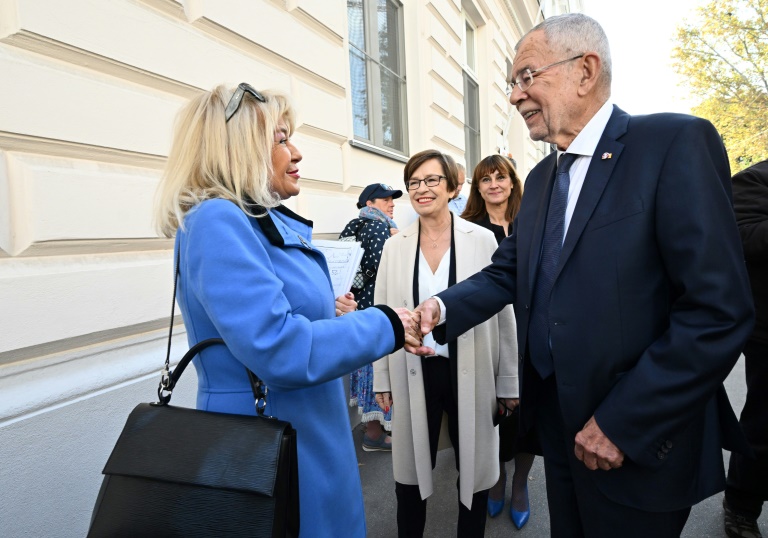
Austrians were voting on Sunday in a presidential election expected to return incumbent Alexander Van der Bellen, seen as a beacon of stability as the Alpine country struggles with an energy crisis and inflation.

Campaigning on a slogan of “clarity” and “stability”, Van der Bellen is widely tipped to clinch a second mandate, with his six challengers — all men — lagging far behind.

“It would be nice if we had clarity today — nice for Austria, nice for us –, if we can then fully concentrate on the diverse tasks ahead, the multitude of crises… that we in Austria, in Europe, are facing,” the 78-year-old economics professor said after casting his ballot in central Vienna.

Polls put the pro-European liberal as securing more than 50 percent of the vote, thus avoiding a run-off.

Some 6.4 million people are eligible to cast their ballots from the European Union country’s total population of nine million.

Polling stations opened at 7:00 am (0500 GMT) and close at 5:00 pm (1500 GMT), with early projections to be published shortly after they close.

– ‘Consistency’ –

“I am in favour of consistency,” 73-year-old retiree Monika Gregor told AFP outside a Vienna polling station, saying she had voted for Van der Bellen and thought he was “very clever”.

The former Greens leader is running again as an independent. Posters proclaim him to be “the safe choice in stormy times” as the ripple effects of Russia’s invasion of Ukraine push up inflation throughout Europe.

He has the explicit or implicit backing of Austria’s major parties except the far-right Freedom Party (FPOe). 

The latter has fielded its own candidate, Walter Rosenkranz, who is sitting in second place in the polls on 15 percent.

Also standing for the presidency is 35-year-old punk rocker Dominik Wlazny, founder of the Beer Party, named for its advocacy of the popular beverage. He polled at less than 10 percent ahead of Sunday’s vote.

Alexander Nittmann, 35, a software developer, said he had voted for Wlazny, hoping he would bring “a breath of fresh air”.

Van der Bellen — who supporters affectionately call “the professor” — faced an unexpectedly tough fight in 2016, only winning the race in a run-off against an FPOe politician.

But the FPOe’s ratings have plummeted since 2019, following a corruption scandal that brought down the government they were part of and led to the resignation of then-chancellor Sebastian Kurz himself in 2021.

Analyst Thomas Hofer said it was “crucial” for Van der Bellen to avoid a run-off such as that of 2016, when the campaign was “very divisive and hostile”.

– Trademark professorial manner –

“Van der Bellen stands for integrity and stability, which is very appreciated by voters given the multitude of crises that many European countries are currently facing,” Julia Partheymueller, a political analyst at the University of Vienna, told AFP.

Known for his trademark professorial manner, Van der Bellen will be Austria’s oldest head of state to be sworn in if he wins.

The presidential post, which has a term of six years, is largely ceremonial. 

Van der Bellen — also known as “Sasha”, a nickname that nods to his Russian roots — was born in Vienna during World War II to an aristocratic Russian father and an Estonian mother who fled Stalinism.

The arrival of the Red Army a year later forced the family to escape to the southern state of Tyrol, where Van der Bellen spent an “idyllic childhood”.

He studied economics at the University of Innsbruck and finished his PhD in 1970 before going on to become dean of economics at the University of Vienna.

Israeli forces hunt east Jerusalem checkpoint attacker

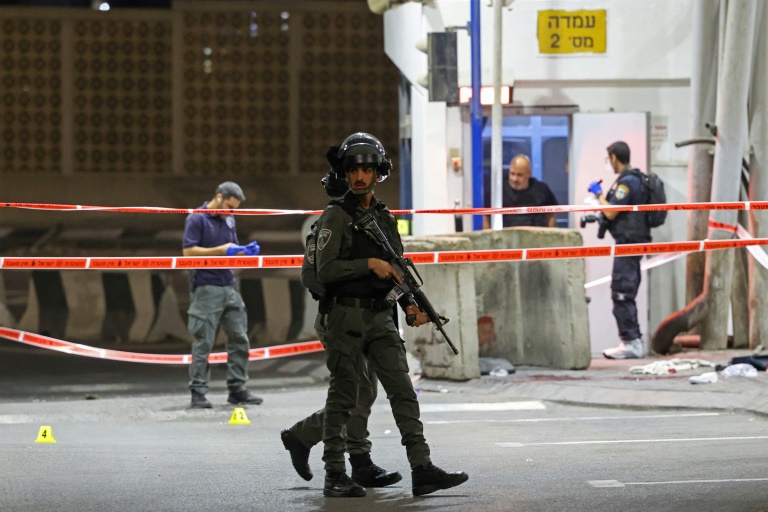
Israeli forces on Sunday hunted a Palestinian suspected of killing a 18-year-old military policewoman in east Jerusalem, an attack that left another Israeli in critical condition from a gunshot wound to the head.

The shooting at a checkpoint by the Palestinian refugee camp of Shuafat in Israeli-annexed east Jerusalem came amid spiralling violence in the Israeli-Palestinian conflict.

Hours earlier, two Palestinian teenagers were shot dead in an Israeli raid in the West Bank, as the United Nations warned that “mounting violence” in the occupied Palestinian territory was “fuelling a climate of fear, hatred and anger”.

Police said the alleged Shuafat gunman, a 22-year-old Palestinian resident of east Jerusalem, was driven to the checkpoint by an accomplice. He got out of the car, opened fire and ran into the camp as the driver sped away. 

The dead Israeli soldier was identified as Noa Lazar.

Prime Minister Yair Lapid said Sunday his “heart” was “broken” by her death.

“We won’t rest until bringing the despicable murderers to justice,” Lapid said before Israeli Jews were set to mark the Sukkot holiday.

Another Israeli, a 30-year-old man, was taken to Hadassah hospital in serious condition after being shot in the head, the medical centre said in a statement.

Two additional border officers were lightly wounded by shrapnel, police said.

Police cordoned off the area near the checkpoint and officers remained at the entrance and exit of east Jerusalem.

Three Palestinians in their 20s from east Jerusalem were arrested on suspicion of “involvement in the attack”, police said.

– ‘Devastating consequences’ –

Earlier Saturday, two Palestinian teenagers were shot dead in an operation by Israeli forces in Jenin, the northern West Bank flashpoint city.

The Palestinian health ministry announced the killing of “two citizens by occupation (Israeli) bullets in Jenin”, as Israeli troops carried out an arrest there. Eleven others were wounded.

The ministry named those killed as Ahmad Daraghmeh, 16, and Mahmud as-Sous, 18. The Islamic Jihad militant group praised the teenagers as “its martyrs”.

Israel’s military said troops had entered Jenin to detain a 25-year-old Palestinian it said was a member of Islamic Jihad and suspected of shooting at troops in the area.

“During the activity, dozens of Palestinians hurled explosive devices and Molotov cocktails at IDF (Israeli military) soldiers and shots were fired at them,” an army statement said, adding that soldiers had targeted “armed suspects”.

In response to attacks on Israeli civilians earlier this year, Israel’s army has been conducting near daily raids in the West Bank that have left dozens of both Palestinian fighters and civilians dead.

Following the latest deaths in Jenin, the Palestinian presidency called on Washington to “exert serious pressure on Israel to stop its all-out war against our Palestinian people”.

Israeli action “will push matters towards an explosion and a point of no return, which will have devastating consequences for all”, said Nabil Abu Rudeineh, spokesman for president Mahmud Abbas, in a statement published by the official Palestinian news agency Wafa.

The agency also reported Israeli forces had fired directly at journalists during the Jenin raid.

Two reporters were wounded Wednesday while covering a military operation witnessed by an AFP journalist near the West Bank city of Nablus, in which one Palestinian was killed.

In May, Palestinian-American journalist Shireen Abu Akleh was shot dead while covering an Israeli raid in Jenin.

– ‘Deteriorating situation’ –

Saturday’s violence in Jenin came a day after two other Palestinian teenagers were shot dead by Israeli forces, according to the health ministry — Adel Dawoud, 14, killed in the northern West Bank, and Mahdi Ladadweh, 17, killed near the city of Ramallah.

The UN envoy for Middle East Peace, Tor Wennesland, voiced alarm at “the deteriorating security situation”, saying at least 100 Palestinians had been killed in the West Bank this year, “including children, amid a significant increase in Israeli military operations”.

Israel has occupied the West Bank since the 1967 Six-Day War and around 475,000 Israelis now live in settlements across the territory, which are considered illegal by most of the international community.

They live alongside some 2.8 million Palestinians, who in different areas of the West Bank are subject to Israeli military rule or live under limited Palestinian governance.

Close Bitnami banner
Bitnami