World

Air France, Airbus face trial over 2009 Rio-Paris disaster

Air France and aircraft maker Airbus go on trial in Paris on Monday on charges of involuntary manslaughter in the 2009 crash of a flight from Brazil, killing all 228 people aboard.

The case focuses on alleged insufficient pilot training and a defective speed monitoring probe, which was quickly replaced on planes worldwide in the months after the accident.

Flight AF 447 from Rio de Janeiro to Paris plunged into the Atlantic Ocean during a storm in the early hours of June 1, 2009, when it stalled after entering a zone of strong turbulence.

The Airbus A330 was carrying 12 crew members and 216 passengers, including 61 French. It was the carrier’s deadliest crash.

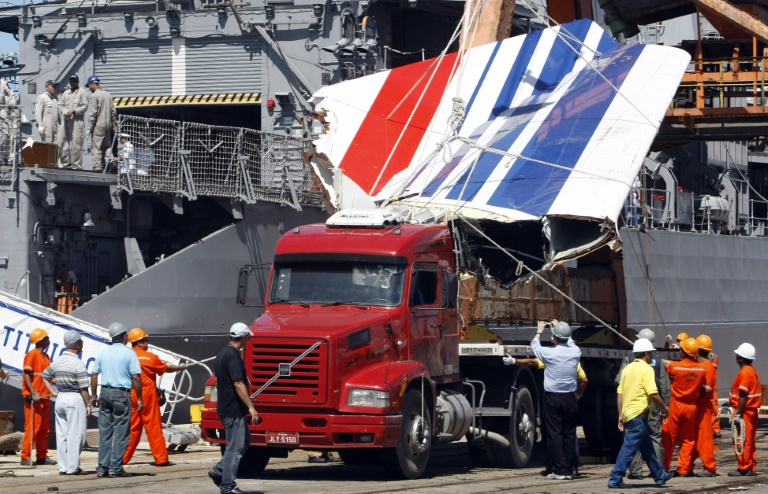
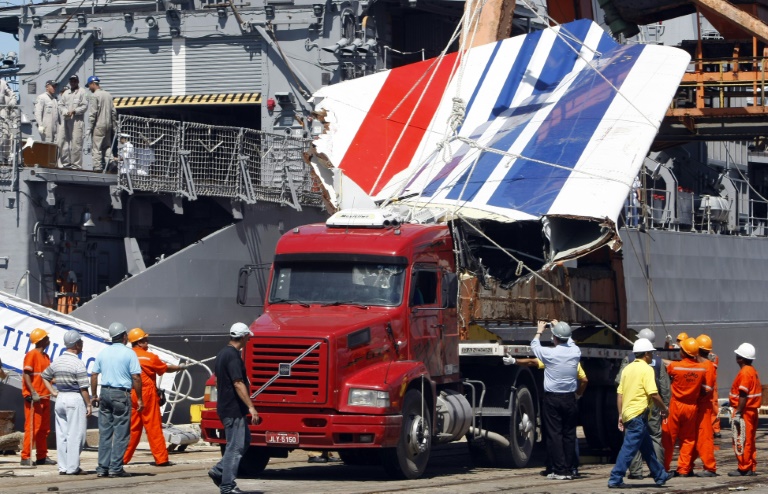
Debris was found in the following days but it took nearly two years to locate the bulk of the fuselage and recover the “black box” flight recorders.

Air France and Airbus were charged as the inquiry progressed, with experts determining the crash resulted from mistakes made by pilots disorientated by so-called Pitot speed-monitoring tubes that had frozen over in thick cloud.

Both companies have denied any criminal negligence, and investigating magistrates overseeing the case dropped the charges in 2019, attributing the crash mainly to pilot error.

That decision infuriated victims’ families, and in 2021 a Paris appeals court ruled there was sufficient evidence to allow a trial to go ahead. 

“Air France… will continue to demonstrate that it did not commit any criminal negligence that caused this accident, and will request an acquittal,” the airline said in a statement.

Airbus, maker of the A330 jet that had been put into service just four years before the accident, declined to comment ahead of the trial but has also denied any criminal negligence.

They each face a maximum fine of 225,000 euros ($220,000).

– ‘Lost our speeds’ –

The court will hear testimony from dozens of aviation experts and pilots, along with second-by-second details of the final minutes in the cockpit before the plane went into free-fall.

As it approached the Equator en route for Paris, the plane entered a so-called “intertropical convergence zone” that often produces volatile storms with heavy precipitation.

Around this time the captain, 58, handed over to his 32-year-old senior co-pilot and went to bed, with the second co-pilot sharing the controls.

To avoid the worst of the storm they veered off route to the left and slowed their speed, having warned the crew of coming turbulence.

Shortly after the automatic pilot functions stopped working, just as the Pitot tubes froze over, leaving the pilots with no clear speed readings.

“We’ve lost our speeds,” one co-pilot is heard saying in the flight recordings, before other indicators mistakenly show a loss of altitude, and a series of alarm messages appear on the cockpit screens. 

The pilots quickly point the nose of the plane higher to start climbing, but soon a “STALL” alert sounds once, then pauses, then sounds nonstop for 54 seconds.

The plane keeps climbing, engines at the max, and reaches 11,600 metres (38,060 feet) before the stall begins. “I don’t know what’s happening,” one of the pilots says.

At this point the captain is back in the cockpit trying to help but the plane is falling rapidly, at 3,000 metres per minute. “Am I descending?” the senior co-pilot asks. “No, now you’re climbing,” the captain answers.

The recordings then stop, four minutes and 30 seconds after the Pitot tubes froze.

– ‘The human element’ –

Testimony will also be heard from some of the victims’ family members, 476 of whom are civil plaintiffs in the case.

“It’s going to be a very technical trial… but our goal is also to re-introduce the human element,” said Alain Jakubowicz, a lawyer for the victims’ group Entraide et Solidarite (Mutual Aid and Solidarity).

Its president, Daniele Lamy, said that instead of trying to pin the blame on the pilots, “We want this trial to be that of Airbus and Air France.”

“We expect an impartial and exemplary trial so that this never happens again, and that as a result the two defendants will make safety their priority instead of only profitability,” she said.

But Nelson Faria Marinho, president of the Brazilian association of victims’ relatives, said, “I’m not expecting anything from this trial.”

His 40-year-old son, also named Nelson, perished on his way to an oil industry job in Angola.

“Even if there is a conviction, who will be punished? The CEOs? They were changed at Airbus and Air France a long time ago,” he told AFP during an interview at his Rio home.

Despite having travelled to France 18 times to meet authorities and investigators, Faria Marinho will not be at the trial.

He will be represented by former French pilot Gerard Arnoux, who has advised several of the victims’ families and wrote a book titled “Rio-Paris Is Not Responding: AF447, the Crash that Should Not Have Happened”.

“The French government isn’t going to pay for the trip, and the tickets are much too expensive. I’m retired and don’t have the resources,” he said. “But if I could, I would.”
Air France, Airbus face trial over 2009 Rio-Paris disaster

Air France and aircraft maker Airbus go on trial in Paris on Monday on charges of involuntary manslaughter in the 2009 crash of a flight from Brazil, killing all 228 people aboard.

The case focuses on alleged insufficient pilot training and a defective speed monitoring probe, which was quickly replaced on planes worldwide in the months after the accident.

Flight AF 447 from Rio de Janeiro to Paris plunged into the Atlantic Ocean during a storm in the early hours of June 1, 2009, when it stalled after entering a zone of strong turbulence.

The Airbus A330 was carrying 12 crew members and 216 passengers, including 61 French. It was the carrier’s deadliest crash.

Debris was found in the following days but it took nearly two years to locate the bulk of the fuselage and recover the “black box” flight recorders.

Air France and Airbus were charged as the inquiry progressed, with experts determining the crash resulted from mistakes made by pilots disorientated by so-called Pitot speed-monitoring tubes that had frozen over in thick cloud.

Both companies have denied any criminal negligence, and investigating magistrates overseeing the case dropped the charges in 2019, attributing the crash mainly to pilot error.

That decision infuriated victims’ families, and in 2021 a Paris appeals court ruled there was sufficient evidence to allow a trial to go ahead. 

“Air France… will continue to demonstrate that it did not commit any criminal negligence that caused this accident, and will request an acquittal,” the airline said in a statement.

Airbus, maker of the A330 jet that had been put into service just four years before the accident, declined to comment ahead of the trial but has also denied any criminal negligence.

They each face a maximum fine of 225,000 euros ($220,000).

– ‘Lost our speeds’ –

The court will hear testimony from dozens of aviation experts and pilots, along with second-by-second details of the final minutes in the cockpit before the plane went into free-fall.

As it approached the Equator en route for Paris, the plane entered a so-called “intertropical convergence zone” that often produces volatile storms with heavy precipitation.

Around this time the captain, 58, handed over to his 32-year-old senior co-pilot and went to bed, with the second co-pilot sharing the controls.

To avoid the worst of the storm they veered off route to the left and slowed their speed, having warned the crew of coming turbulence.

Shortly after the automatic pilot functions stopped working, just as the Pitot tubes froze over, leaving the pilots with no clear speed readings.

“We’ve lost our speeds,” one co-pilot is heard saying in the flight recordings, before other indicators mistakenly show a loss of altitude, and a series of alarm messages appear on the cockpit screens. 

The pilots quickly point the nose of the plane higher to start climbing, but soon a “STALL” alert sounds once, then pauses, then sounds nonstop for 54 seconds.

The plane keeps climbing, engines at the max, and reaches 11,600 metres (38,060 feet) before the stall begins. “I don’t know what’s happening,” one of the pilots says.

At this point the captain is back in the cockpit trying to help but the plane is falling rapidly, at 3,000 metres per minute. “Am I descending?” the senior co-pilot asks. “No, now you’re climbing,” the captain answers.

The recordings then stop, four minutes and 30 seconds after the Pitot tubes froze.

– ‘The human element’ –

Testimony will also be heard from some of the victims’ family members, 476 of whom are civil plaintiffs in the case.

“It’s going to be a very technical trial… but our goal is also to re-introduce the human element,” said Alain Jakubowicz, a lawyer for the victims’ group Entraide et Solidarite (Mutual Aid and Solidarity).

Its president, Daniele Lamy, said that instead of trying to pin the blame on the pilots, “We want this trial to be that of Airbus and Air France.”

“We expect an impartial and exemplary trial so that this never happens again, and that as a result the two defendants will make safety their priority instead of only profitability,” she said.

But Nelson Faria Marinho, president of the Brazilian association of victims’ relatives, said, “I’m not expecting anything from this trial.”

His 40-year-old son, also named Nelson, perished on his way to an oil industry job in Angola.

“Even if there is a conviction, who will be punished? The CEOs? They were changed at Airbus and Air France a long time ago,” he told AFP during an interview at his Rio home.

Despite having travelled to France 18 times to meet authorities and investigators, Faria Marinho will not be at the trial.

He will be represented by former French pilot Gerard Arnoux, who has advised several of the victims’ families and wrote a book titled “Rio-Paris Is Not Responding: AF447, the Crash that Should Not Have Happened”.

“The French government isn’t going to pay for the trip, and the tickets are much too expensive. I’m retired and don’t have the resources,” he said. “But if I could, I would.”
UK train commuters hit by further strikes over pay

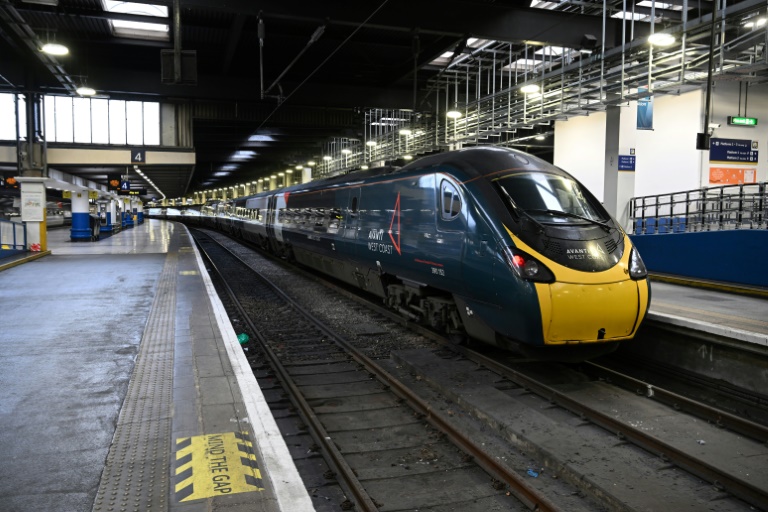
Train passengers in Britain faced severe disruption on Saturday, with only one in five services running as railway workers staged another walkout over wages.

People were urged to “only travel by train if absolutely necessary on Saturday” as 40,000 members of the Rail, Maritime and Transport (RMT) union at Network Rail and 15 train operating companies took action demanding higher pay and better working conditions.

Those affected include thousands of football fans travelling to support their teams.

Railway workers are demanding wage increases to keep pace with decades-high inflation amid a cost-of-living crisis. 

The sector has spearheaded a wave of industrial action in recent months.

Tens of thousands of staff in various industries — from the postal and legal systems to ports and telecommunications — have also gone on strike across Britain since the summer.

RMT General Secretary Mick Lynch urged the government to “unshackle” the railway companies and allow them to negotiate a deal with the unions.

“I am also hopeful that a negotiated settlement between the RMT and the employers can be reached,” he wrote to the government.

For this to be achieved, the government “must unshackle the train operators who currently take their mandate directly from yourself,” he added.

Railway workers staged another walkout on Wednesday and also took strike action last Saturday, resulting in only 11 percent of trains running nationwide.

Some parts of the country were left without any services.

The strikes come as workers face a huge hike in energy prices, rising interest rates and food costs. They have been the sector’s biggest stoppages in decades with more expected.

Prime Minister Liz Truss’s government on Wednesday vowed to take on “militant unions”, characterising them as part of an “anti-growth coalition” holding the country back.

Thai massacre families pray as king says 'I share your grief'

Heartbroken families prayed Saturday for the victims of a Thai nursery massacre as the king offered his support, telling relatives he “shares their grief” in a rare public interaction with his subjects.

King Maha Vajiralongkorn met survivors and relatives at a hospital in northeastern Nong Bua Lam Phu province late on Friday, a day after an ex-policeman murdered 24 children and 12 adults on a three-hour gun and knife rampage in a sleepy rural area.

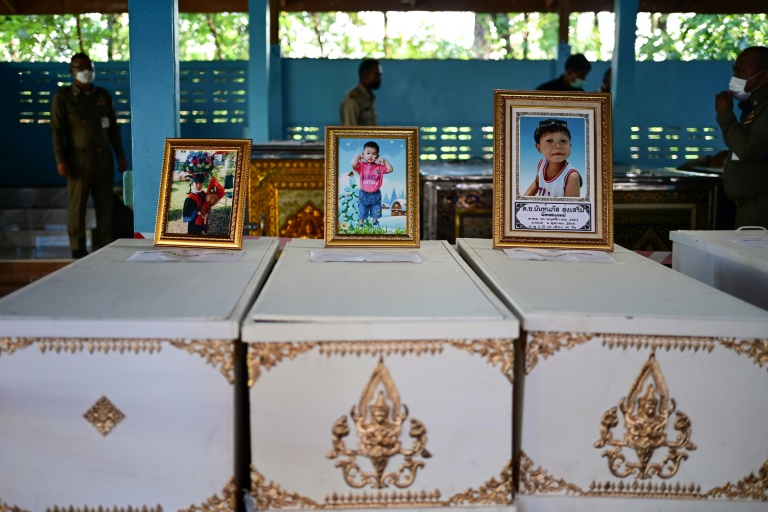
Families and well-wishers offered prayers at a Buddhist temple on Saturday, beginning three days of funeral rituals for the victims of one of the country’s worst ever mass killings.

Incense mingled with the smell of countless bouquets of flowers arrayed around the coffins, many topped with photos of the smiling chubby faces of children cut down by sacked police sergeant Panya Khamrab.

Flowers and toys offered as gifts to the departed youngsters piled up at the gates of the nursery as the close-knit community in rural Na Klang district struggled to comprehend the atrocity.

“I have son myself and he likes to play with toy cars, so I thought the children killed in the attack would love it as well — they were about the same age as my son,” Weerapol Sonjai, 38, told AFP after leaving an offering.

– Rare royal visit –

As the king offered his help and condolences during his hospital visit, grieving families knelt on the floor — as is Thai custom in the presence of the monarch, who is seen as semi-divine.

“I come here to give you support. I am extremely sad for what has happened. I share your sorrow, your grief,” he said in video footage published online on Saturday.

“There are no words that can express the sorrow. I support you all and wish you to be strong, so the spirits of the children can be at ease.”

The king, with Queen Suthida at his side, said he would pray for the dead.

“We have to do our best, the best that we can,” he said.

The royal visit came after a day of grief at the small yellow-walled nursery on the edge of a village some 500 kilometres (300 miles) north of Bangkok.

Weeping parents placed white roses one by one on steps of the nursery where their young children’s lives were cut short.

Duenphen Srinamburi, the grandmother of one of the victims, described the horror of the attack.

“The children were sleeping. He didn’t use a gun, only a knife,” she told AFP.

“My grandson’s face was slashed from here to here,” she added, gesturing diagonally across her face.

“His face was all mangled.”

The attack has stunned Thailand and caused horror around the world. On Saturday the Thai community in Melbourne, Australia, held a candlelit vigil to mourn the victims.

– Inconsolable families –

Prime Minister Prayut Chan-O-Cha joined mourners on Friday, laying flowers and handing out compensation cheques to grieving families. 

Some, struggling to comprehend the atrocity, wept inconsolably, clutching their children’s favourite toys or blankets — and in one case a half-full bottle of milk.

The dead include pregnant teacher Supaporn Pramongmuk, whose husband posted a poignant tribute on Facebook.

“I would like to say thank you for all the support for me and my family. My wife has fulfilled her every duty as a teacher,” Seksan Srirach wrote.

“Please be a teacher in heaven, and my child please take care of your mother in heaven.”

The attacker forced his way into the childcare centre at about 12:30 pm (0530 GMT) on Thursday to begin his murderous spree, opening fire with his own legally owned 9mm pistol and slashing with a knife.

Afterwards the 34-year-old went home to murder his wife and son before taking his own life, police said, ending the rampage at about 3 pm.

In total, he killed 24 children — 21 boys and three girls — and 12 adults. Most died from a combination of knife wounds and gunshots, according to police investigators.

PM Prayut has ordered a swift probe into the massacre, and police said they will question 180 witnesses. 

Senior officers have said Panya was sacked from the police for drug abuse, while several people in the close-knit community have told AFP he was known in the area as a methamphetamine addict.

Political paralysis in Iraq hampers economic growth

A year since Iraq’s last elections, it remains without not only a new government but a budget too, obstructing much-needed reforms and infrastructure projects in the oil-rich but war-ravaged country.

Iraq has raked in huge revenues from oil exports this year, but the profits are locked up in the central bank’s coffers, which have amassed a colossal $87 billion in foreign exchange reserves.

The government can’t invest that money without an annual state budget — which Prime Minister Mustafa al-Kadhemi is not authorised to submit to parliament in his capacity as caretaker.

“Infrastructure projects require years of steady financial planning by government,” said Yesar al-Maleki, Gulf analyst at the Middle East Economic Survey (MEES).

“The political situation has caused a massive disruption that has further weakened Iraq’s poor standing with investors.”

Iraqis voted on October 10, 2021 in an early election triggered by a wave of protests that began two years earlier, condemning endemic corruption, rampant unemployment and decaying infrastructure.

The country has been mired in a seemingly impenetrable political deadlock since then, with rival Shiite factions in parliament vying for power and the right to select a new prime minister and government.

The impasse pits the powerful cleric Moqtada Sadr, who wants snap elections, against the Iran-backed Coordination Framework, which has been pushing to appoint a new head of government before any new polls are held.

– ‘Highly volatile’ –

Tensions boiled over on August 29, and more than 30 Sadr supporters were killed in clashes with Iran-backed factions and the army in Baghdad’s fortified Green Zone, which houses government buildings and diplomatic missions.

“The situation remains highly volatile,” the United Nations envoy to Iraq, Jeanine Hennis-Plasschaert, told the Security Council on Tuesday.

“Too many Iraqis have lost faith in the ability of Iraq’s political class to act in the interest of the country and its people.”

While the World Bank has offered projections of average annual growth of 5.4 percent between 2022 and 2024, it has also warned of the many challenges ahead.

“Further delays in government formation and in the ratification of the 2022 budget could restrict the use of the country’s revenue windfall from oil,” it said in a report issued in June, stressing that “new investment projects are put on hold”.

Without a budget for 2022, the government is bound by the provisions and rates set out in the 2021 budget, meaning public spending is extremely limited.

An emergency finance bill totalling 25 trillion Iraqi dinars (about $17 billion) was approved by parliament in June to ensure gas supplies and purchase grain for “food security”.

– ‘There’s money and gold’ –

But the ongoing deadlock hinders “the creation of opportunities for economic growth”, Mazhar Saleh, the prime minister’s financial adviser, told AFP.

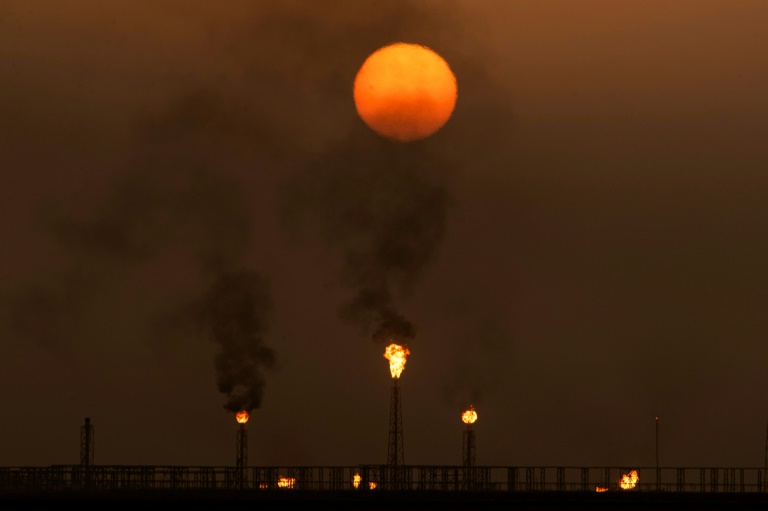
Still, some gas flaring projects launched by the oil ministry together with foreign companies are “moving at a slow pace”, economist Maleki said.

A $10-billion contract signed last year with French giant TotalEnergies is still in its early stages.

“The government is working to accelerate the work and remove obstacles” for the project, which includes processing facilities for flared gas and a solar power plant, said a source close to the project.

Former finance minister Ali Allawi, who had prepared a reform plan that never materialised, blamed the “political framework” for obstructing progress.

“The government’s plans and programmes were always constrained by the need to have broad agreement from a fractured political class,” said Allawi, who resigned in August.

Much of Iraq’s population of 42 million — a third of whom live in poverty, according to the United Nations — is left hanging.

Thousands of people took to the streets last week to mark three years since the October 2019 anti-government protests.

Amin Salman, who retired after a career in the army, had joined them. His two sons are unemployed and Salman, in his 60s, receives a monthly pension equivalent to $274.

“There are billions in Iraq. There’s money and there’s gold,” he said.

“But the politicians only worry about their own parties and their own pockets.”

Tunisia coastguard struggles to rein in migrant boats

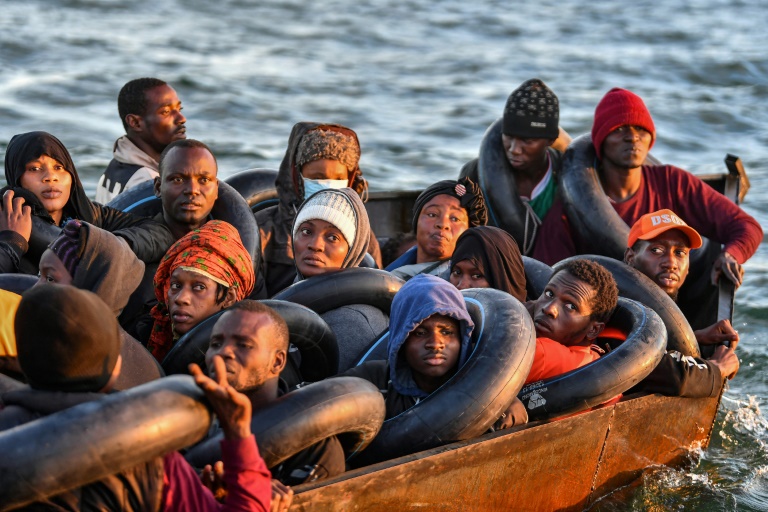
As dawn breaks over the Mediterranean, Tunisian coastguards intercept a flimsy craft packed with migrants, bringing their dream of reaching Europe to an end — for now.

“This is your final warning: stop!” an officer shouts.

Some two dozen migrants, wearing inflated inner tubes as makeshift life preservers, look downcast as they realise the game is up.

But Fatim, an 18-year-old from the Ivory Coast who spent a year working as a cleaner in Tunis to raise 1,250 euros in smugglers’ fees, says she will try again.

She sobs as she clambers from the rusty home-made vessel onto the coastguards’ modest speedboat.

“I don’t want to stay in Tunisia,” she says. “Life here is hard.”

The North African country, just 130 kilometres (80 miles) from Italy’s Lampedusa island, has long been a launchpad for people fleeing violence and poverty across the continent and seeking refuge in Europe.

In May last year Tunis signed a deal with Rome, which agreed to supply economic aid in exchange for Tunisian efforts to stem clandestine migration.

But while the Tunisian authorities intercept thousands of migrants a year, most are released once they are back on Tunisian soil, where few want to stay.

“If I found another boat I’d leave again straight away — I’ll never give up,” said Guinean migrant Ali, 20, after he was released at Sfax port.

In just one night early this week, the coastguard intercepted 130 African migrants, including children and babies, on four craft attempting the crossing from the central region of Sfax.

Idia Sow, a 26-year-old Guinean suffering the after-effects of a stroke, said she had paid smugglers 1,560 euros for places for herself and her three-month-old baby on an inflatable boat headed for Lampedusa.

– Recorded and released –

The migrants are taken back to the port in the provincial capital of the same name, their details are recorded — and then they are released.

Officials say the coastguard lacks the resources to halt the flow.

“We’re in a vicious cycle. We make enormous efforts to stop these migrants, but in the end they’re released and then we find them trying again,” said the patrol’s commander, Colonel Major Brahim Fahmi.

Hours earlier, AFP journalists saw police officers brandishing batons and pistols clear more than 100 migrants from an area of scrubland 30 kilometres (18 miles) along the coast from Sfax.

Some said they had been waiting two weeks for boats.

“This summer we hit a record of more than 17,000 migrants (intercepted off Sfax), almost double the figure in recent years,” said coastguard official Saber Younsi.

“This our role,” he said. “We have to keep doing it, but there’s been a worrying evolution.”

The demand has created one of the few thriving new industries in Tunisia: clandestine boat manufacture.

Younsi said new smuggling networks were emerging to cash in on the surging market, with demand also coming from Tunisians who have given up hope of finding decent jobs and in some cases are emigrating as entire families.

As he spoke at Sfax port, Younsi was surrounded by piles of hundreds of captured migrant boats.

According to official figures, more than 22,500 migrants have been intercepted off the Tunisian coast since the start of the year, around half of them from sub-Saharan Africa.

Some 536 people, mostly Tunisians, have been arrested on suspicion of people smuggling.

Younsi said the authorities were struggling with limited means.

“If the same trend continues, we’ll hit a point where this phenomenon gets out of control,” he said.

Russia says truck blast behind Crimea bridge damage

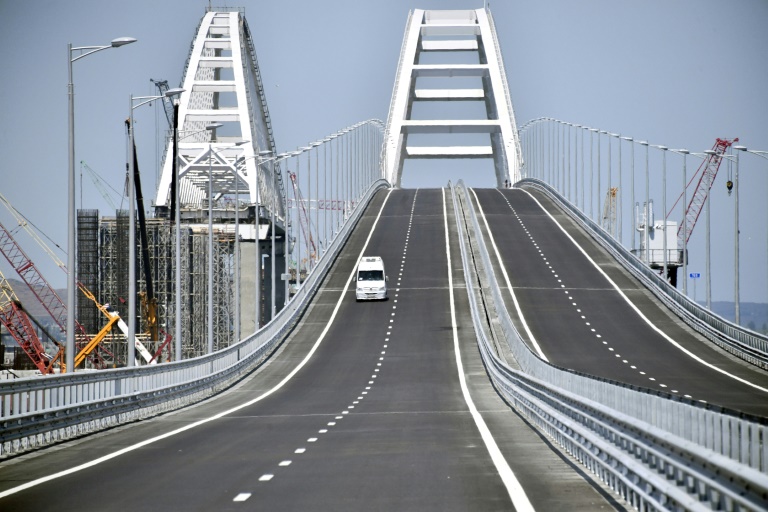
Moscow announced Saturday that a truck exploded igniting a huge fire and damaging the key Kerch bridge — built as Russia’s sole land link with annexed Crimea — and vowed to find the perpetrators, without immediately blaming Ukraine. 

Russia said the blast set ablaze seven oil tankers by transported by train and collapsed two car lanes of the giant road and rail structure.

Dramatic social media footage showed the bridge on fire with parts plunging into the sea. 

“Today at 6:07 am (0307 GMT) on the road traffic side of the Crimean bridge … a car bomb exploded, setting fire to seven oil tankers being carried by rail to Crimea,” Russian news agencies cited the national anti-terrorism committee as saying. 

The bridge, personally inaugurated by President Vladimir Putin in 2018, is a vital transport link for carrying military equipment to Russian soldiers fighting in Ukraine.

Moscow had maintained the bridge crossing was safe despite the fighting.

The Kremlin spokesman said Putin had ordered a commission to be set up to look into the blast, Russian news agencies reported.

Russia’s powerful investigative committee opened a criminal probe into the explosion and sent detectives to the scene. 

It said a truck exploded “on the automobile part of the Crimean bridge from the side of the Taman Peninsula”. 

This “caused seven fuel tanks to ignite on a train heading towards the Crimea Peninsula. As a result, two lanes partially collapsed.”

While officials in Moscow stopped short of blaming Kyiv, an official in Russian-installed Crimea pointed the finger at “Ukrainian vandals”.  

The head of the office of Ukraine’s presidency, Andrii Podolyak, took to Twitter posting a picture of a long section of the bridge half-submerged in the waters.

– ‘Crimea… the beginning’ –

“Crimea, the bridge, the beginning,” he wrote.

“Everything illegal must be destroyed, everything stolen must be returned to Ukraine, everything occupied by Russia must be expelled.”

There have been several explosions at Russian military installations in the Crimean peninsula and if it is established that Ukraine was behind the latest blast, alarm bells may sound with the bridge so far from the front line.

The blasts come after Ukraine’s recent lightning territorial gains in the east and south that have undermined the Kremlin’s claim that it annexed Donetsk, neighbouring Lugansk and the southern regions of Zaporizhzhia and Kherson. 

Russian forces said Friday they had captured ground in Donetsk in east Ukraine, their first claim of new gains since a Kyiv counter-offensive rattled Moscow’s war effort.

The announcement came as Russia’s Orthodox leader said President Vladimir Putin’s rule had been mandated by God, congratulating him on his 70th birthday, and as the Nobel Committee awarded the Peace Prize to rights defenders in Russia, Ukraine and Belarus.

– Russian gains –

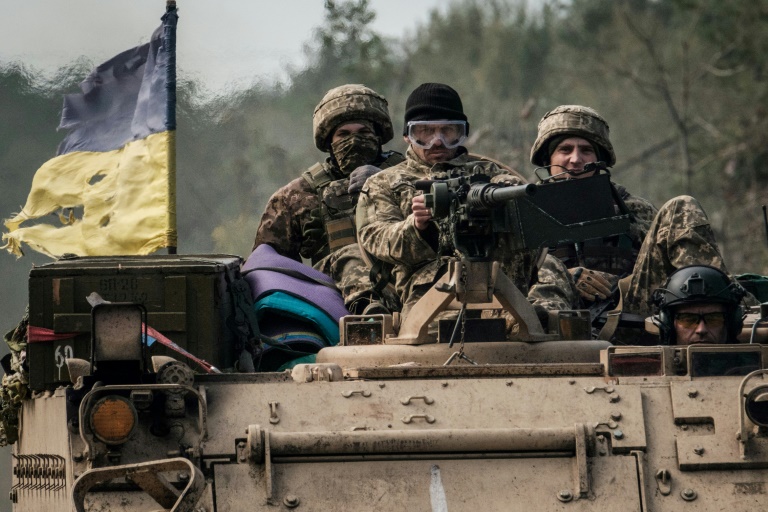
Separatist forces in the war-battered Donetsk region said they had retaken a series of villages near the Ukraine-controlled industrial town of Bakhmut, which has been under Russian shelling for weeks.

AFP journalists in the centre of Bakhmut heard the sound of heavy artillery and multiple rocket launch systems near the remains of a smashed bridge over the Bakhmutka river.

“On the territory of the Donetsk People’s Republic, a grouping of troops of the Donetsk and Lugansk republics, with fire support from Russian forces, liberated Otradovka, Veselaya Dolina and Zaitsevo,” separatist forces said on social media.

The Donetsk region, which has been partially controlled by Kremlin-backed separatists for years, is a key prize for Russian forces, which invaded Ukraine in February.

But Ukraine’s troops in recent weeks have been pushing back against Russian soldiers across the front lines in the south and in the east, including in parts of Donetsk.

Ukrainian President Volodymyr Zelensky said late Friday  his forces had recaptured nearly 2,500 square kilometres (965 square miles) in the counter-offensive that began late last month.

“This week alone, our soldiers liberated 776 square kilometres of territory in the east of our country and 29 settlements, including six in Lugansk region,” he said.

But Ukraine continues to suffer serious losses. Fourteen people died Thursday when Russian missiles struck the industrial town of Zaporizhzhia, the local council’s secretary announced late Friday.

Thirty people were killed last week when a convoy of civilian cars in the Zaporizhzhia region was shelled in an attack Kyiv blamed on Moscow. 

Zelensky has pushed to punish Russia in other areas, urging Brussels to ramp up pressure on its energy sector — a day after the EU imposed a fresh round of sanctions on Moscow.

The International Monetary Fund also announced Friday it would provide $1.3 billion in emergency aid to Ukraine.

In the more than seven months since Russia’s offensive, Putin has made thinly veiled threats of using nuclear weapons. 

US President Joe Biden on Thursday warned the world was facing “Armageddon” as Putin may use his atomic arsenal.

But by Friday the White House dialled back the alarm, saying the president’s comments did not reflect new intelligence. 

Phony heiress Anna Sorokin released from US immigration detention

Fake heiress Anna Sorokin, whose breathtaking deception of New York’s financial elite inspired a hit Netflix series, was released Friday from an immigration detention center but still faces deportation from the United States.

Sorokin, who used the name Anna Delvey while scamming more than a quarter of a million dollars from hotels, banks and friends, was granted conditional release by a judge after posting a bond, a spokesperson for the US Immigration and Customs Enforcement agency (ICE), told AFP.

The 30-year-old German national was released in February 2021 for good behavior after serving a portion of a four-to-12-year prison sentence, only to be arrested again the next month for overstaying her visa.

Sorokin will be confined to her home in New York City for a time after posting a $10,000 bond, will have to wear an electronic bracelet and is prohibited from using social media, US media reported.

Sorokin has spent the past 18 months fighting her deportation order to Germany, lodging a series of appeals.

Last November, the Board of Immigration Appeals (BIA) granted Sorokin an emergency request to remain in the United States while her removal was being processed, something she will now be able to do outside the walls of the detention center.

Born near Moscow, Sorokin is the daughter of a Russian truck driver who emigrated to Germany.

She assumed the name Anna Delvey and posed as the heiress to a fortune of $60 million to open the door to New York high society after arriving for Fashion Week in 2013.  

Instantly recognizable thanks to her large designer glasses, Sorokin used her extraordinary ability to weave skillful lies to obtain tens of thousands of dollars in bank loans, travel free by private jet and live on credit in Manhattan hotels.

Arrested in 2017 and convicted two years later, she inspired television producer Shonda Rhimes (“Grey’s Anatomy”, “Scandal”) to make her the subject of the hit Netflix mini-series “Inventing Anna”, with Julia Garner in the title role.

Thai massacre families pray as king says 'I share your grief'

Heartbroken families prayed Saturday for the victims of a Thai nursery massacre as the king offered his support, telling relatives he “shares their grief” in a rare public interaction with his subjects.

King Maha Vajiralongkorn met survivors and relatives at a hospital in northeastern Nong Bua Lam Phu province late on Friday, a day after an ex-policeman murdered 24 children and 12 adults on a three-hour gun and knife rampage in a sleepy rural area.

Families and well-wishers offered prayers at a Buddhist temple on Saturday, beginning three days of funeral rituals for the victims of one of the country’s worst ever mass killings.

Incense mingled with the smell of countless bouquets of flowers arrayed around the coffins, many topped with photos of the smiling chubby faces of children cut down by sacked police sergeant Panya Khamrab.

Flowers and toys offered as gifts to the departed youngsters piled up at the gates of the nursery as the close-knit community in rural Na Klang district struggled to comprehend the atrocity.

“I have son myself and he likes to play with toy cars, so I thought the children killed in the attack would love it as well — they were about the same age as my son,” Weerapol Sonjai, 38, told AFP after leaving an offering.

– Rare royal visit –

As the king offered his help and condolences during his hospital visit, grieving families knelt on the floor — as is Thai custom in the presence of the monarch, who is seen as semi-divine.

“I come here to give you support. I am extremely sad for what has happened. I share your sorrow, your grief,” he said in video footage published online on Saturday.

“There are no words that can express the sorrow. I support you all and wish you to be strong, so the spirits of the children can be at ease.”

The king, with Queen Suthida at his side, said he would pray for the dead.

“We have to do our best, the best that we can,” he said.

The royal visit came after a day of grief at the small yellow-walled nursery on the edge of a village some 500 kilometres (300 miles) north of Bangkok.

Weeping parents placed white roses one by one on steps of the nursery where their young children’s lives were cut short.

Duenphen Srinamburi, the grandmother of one of the victims, described the horror of the attack.

“The children were sleeping. He didn’t use a gun, only a knife,” she told AFP.

“My grandson’s face was slashed from here to here,” she added, gesturing diagonally across her face.

“His face was all mangled.”

– Inconsolable families –

Prime Minister Prayut Chan-O-Cha joined mourners on Friday, laying flowers and handing out compensation cheques to grieving families. 

Some, struggling to comprehend the atrocity, wept inconsolably, clutching their children’s favourite toys or blankets — and in one case a half-full bottle of milk.

The dead include pregnant teacher Supaporn Pramongmuk, whose husband posted a poignant tribute on Facebook.

“I would like to say thank you for all the support for me and my family. My wife has fulfilled her every duty as a teacher,” Seksan Srirach wrote.

“Please be a teacher in heaven, and my child please take care of your mother in heaven.”

The attacker forced his way into the childcare centre at about 12:30 pm (0530 GMT) on Thursday to begin his murderous spree, opening fire with his own legally owned 9mm pistol and slashing with a knife.

Afterwards the 34-year-old went home to murder his wife and son before taking his own life, police said, ending the rampage at about 3 pm.

In total, he killed 24 children — 21 boys and three girls — and 12 adults. Most died from a combination of knife wounds and gunshots, according to police investigators.

PM Prayut has ordered a swift probe into the massacre, and it has emerged that Panya was sacked from the police for drug abuse.

Several people in the close-knit community have told AFP he was known in the area as a methamphetamine addict.

Russia-backed forces claim gains near Bakhmut in east Ukraine

Russian forces said Friday they had captured ground in Donetsk in east Ukraine, their first claim of new gains since a Kyiv counter-offensive rattled Moscow’s war effort.

The announcement came as Russia’s Orthodox leader said President Vladimir Putin’s rule had been mandated by God, congratulating him on his 70th birthday, and as the Nobel Committee awarded the Peace Prize to rights defenders in Russia, Ukraine and Belarus.

And on Saturday, a huge fire broke out on a key road and rail bridge linking Crimea and Russia, which Moscow reportedly blamed on a car bomb.

Separatist forces in the war-battered Donetsk region said they had retaken a series of villages near the Ukraine-controlled industrial town of Bakhmut, which has been under Russian shelling for weeks.

AFP journalists in the centre of Bakhmut heard the sound of heavy artillery and multiple rocket launch systems near the remains of a smashed bridge over the Bakhmutka river.

“On the territory of the Donetsk People’s Republic, a grouping of troops of the Donetsk and Lugansk republics, with fire support from Russian forces, liberated Otradovka, Veselaya Dolina and Zaitsevo,” separatist forces said on social media.

The Donetsk region, which has been partially controlled by Kremlin-backed separatists for years, is a key prize for Russian forces, which invaded Ukraine in February.

But Ukraine’s troops in recent weeks have been pushing back against Russian soldiers across the front lines in the south and in the east, including in parts of Donetsk.

Ukrainian President Volodymyr Zelensky said late Friday that his forces had recaptured nearly 2,500 square kilometres (965 square miles) in the counter-offensive that began late last month.

“This week alone, our soldiers liberated 776 square kilometres of territory in the east of our country and 29 settlements, including six in Lugansk region,” he said.

He has pushed to punish Russia in other areas, urging Brussels to ramp up pressure on its energy sector — a day after the EU imposed a fresh round of sanctions on Moscow.

The International Monetary Fund also announced Friday it would provide $1.3 billion in emergency aid to Ukraine.

– ‘Street battles’ –

In Bakhmut, columns of black smoke were seen after shells exploded in the city’s south, while whizzing projectiles sent residents ducking for cover.

Humanitarian volunteer Edvard Skoryk said he had not been able to return to his home in two months.

“That (eastern) part of town has been hit severely… There are street battles every night,” the 29-year-old told AFP. 

Ukraine’s lightning territorial gains in the east and south have undermined a claim from the Kremlin last week that it annexed Donetsk, neighbouring Lugansk and the southern regions of Zaporizhzhia and Kherson.

The four territories create a crucial land corridor between Russia and the Crimean peninsula, annexed by Moscow in 2014, and together make up around 20 percent of Ukraine.

Moscow built a bridge linking its territory with Crimea by road and rail after the annexation, and it became a key path for supplying equipment and ferrying soldiers following the invasion this year.

On Saturday, a huge fire broke out on the bridge.

“A car bomb exploded, setting fire to seven oil tankers being carried by rail to Crimea,” Russian news agencies cited the national anti-terrorism committee as saying.

Russia had threatened Ukraine with reprisals if the bridge was attacked.

In Kherson alone, Kyiv announced this week it had recaptured some 500 square kilometres — potentially trapping about 20,000 Russian troops on the western bank of the Dnieper River cutting through the region.

In the more than seven months since Russia’s invasion, Putin has made thinly veiled threats of using nuclear weapons. 

US President Joe Biden on Thursday warned the world was facing “Armageddon” as Putin may use his atomic arsenal.

But by Friday the White House dialled back the alarm, saying the president’s comments did not reflect new intelligence.

– ‘Foreign agents’ –

In Russia on Friday, a court ordered the seizure of Memorial’s Moscow headquarters, according to Interfax agency — a ruling delivered hours after the rights group was awarded the Nobel Peace Prize.

Memorial, which has long documented Stalinist crimes, is Russia’s most renowned rights group. Dissolved last year, it was co-awarded the prize along with jailed Belarusian activist Ales Bialiatski and Ukraine’s Center for Civil Liberties.

Meanwhile, Russian superstar rapper Oxxxymiron was labelled a “foreign agent” on Friday by the interior ministry.

The rapper is among the thousands of Russians who have left the country since the invasion began, and has organised concerts in support of Ukrainian refugees.

Also added to the list of “foreign agents” — language reminiscent of the Soviet-era term “enemy of the people” — were popular science fiction writer Dmitry Glukhovsky, feminist politician Alena Popova, and Irina Storozheva, a journalist for Radio Free Europe/Liberty.

Ukraine’s Defence Minister Oleksiy Reznikov on Friday urged Russian fighters to lay down their arms, promising their lives would be spared and they would be safe.

“You can still save Russia from tragedy and the Russian army from humiliation,” Reznikov said in Russian. 

“We guarantee life, safety and justice for all who refuse to fight immediately.”

Close Bitnami banner
Bitnami