World

Iran says Mahsa Amini died of illness rather than 'blows'

Iran said Friday an investigation into the death in custody of Mahsa Amini found she lost her life to illness rather than reported beatings that sparked three weeks of bloody protests.

Amini, 22, died on September 16, three days after falling into a coma following her arrest in Tehran by the morality police for allegedly breaching the Islamic republic’s strict dress code for women.

Anger over her death has sparked the biggest wave of protests to rock Iran in almost three years and a crackdown that has killed dozens of protesters and seen scores arrested.

Despite the security forces’ use of lethal force, the women-led protests have continued for 20 consecutive days and nights, according to online videos verified by AFP.

Iran’s Forensic Organization said Friday that “Mahsa Amini’s death was not caused by blows to the head and vital organs and limbs of the body”.

The death of Amini, whose Kurdish first name is Jhina, was related to “surgery for a brain tumour at the age of eight,” it said in a statement.

Amini’s bereaved parents have filed a complaint against the officers involved, and one of her cousins living in Iraq has told AFP she died of “a violent blow to the head”.

Other young girls have lost their lives at the protests, but Amnesty International says Iran has been forcing televised confessions out of their families to “absolve themselves of responsibility for their deaths”.

– ‘Suicide’ –

The mother of 16-year-old Nika Shahkarami, who died after going missing on September 20, insisted on Thursday she was killed by the state after joining an anti-hijab protest in Tehran.

Nasrin Shahkarami also accused the authorities of threatening her to make a forced confession over the death of her 16-year-old daughter Nika.

“I saw my daughter’s body myself… The back of her head showed she had suffered a very severe blow as her skull had caved in. That’s how she was killed,” she said in a video posted online by Radio Farda, a US-funded Persian station based in Prague.

Iran has since denied reports its security forces killed another teenage girl, Sarina Esmailzadeh, at a rally in Karaj, west of Tehran.

Its website quoted a prosecutor as saying an investigation showed Esmailzadeh, 16, had “committed suicide” by jumping from a building.

In a widening crackdown, Iran has blocked access to social media, including Instagram and WhatsApp and security forces have rounded up high profile supporters of the movement, including journalists and pop stars.

Protesters have sought ways to avoid detection, with schoolgirls hiding their faces while shouting “Death to the dictator” and defacing images of Iran’s supreme leader Ayatollah Ali Khamenei, in verified videos.

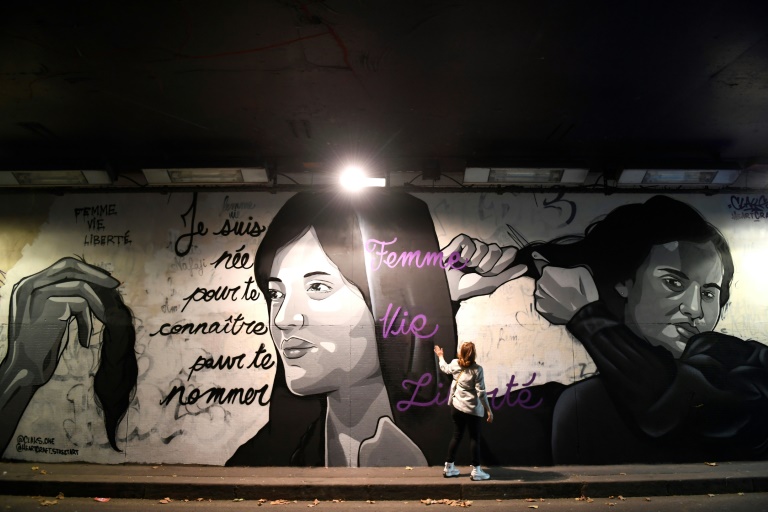
Other footage has shown people chanting the protest catchcry “Woman, Life, Freedom” from their apartment windows under the cover of night.

Another form of protest emerged on Friday morning, with fountains in Tehran appearing to pour blood after an artist turned their waters red to reflect the bloody crackdown.

– ‘Toll far higher’ –

The street violence that ensued across Iran, dubbed “riots” by the authorities, have led to dozens of deaths — mostly of protesters but also of members of the security forces.

Oslo-based group Iran Human Rights says at least 92 protesters have been killed so far in the crackdown.

Iranian security forces have rounded up high profile supporters of the movement, including activists, journalists and pop stars.

Despite such measures, the demonstrations have continued in cities and towns across the Islamic republic.

“Death to the dictator,” a group of young women can be heard chanting in the northern city of Rasht in a video posted online Thursday and verified by AFP.

Other verified footage shows women shouting “Azadi”, Persian for freedom, and clapping loudly as they march down a street in the city of Qods, west of the capital.

Amnesty International has verified the deaths of 52 people killed by Iran’s security forces, but says it believes the “real death toll is far higher”.

In a statement issued a week ago, it said Iran was intentionally using lethal force to crush the women-led protests.

It said it had obtained a leaked document issued to armed forces commanders in all provinces on September 21 ordering them to “severely confront” protesters.

Another leaked document showed the commander in Mazandaran province told forces to “confront mercilessly, going as far as causing deaths, any unrest by rioters and anti-revolutionaries”.

burs-dv/kir
Rights champions in Belarus, Russia, Ukraine win Nobel Peace Prize

A trio of human rights watchdogs from Belarus, Russia and Ukraine won the Nobel Peace Prize on Friday, a highly symbolic choice of laureates drawn from three nations at the centre of the war in Ukraine.

The honour went to detained activist Ales Bialiatski of Belarus, Russian rights group Memorial and Ukraine’s Center for Civil Liberties, which is recording the toll of the conflict on the nation.

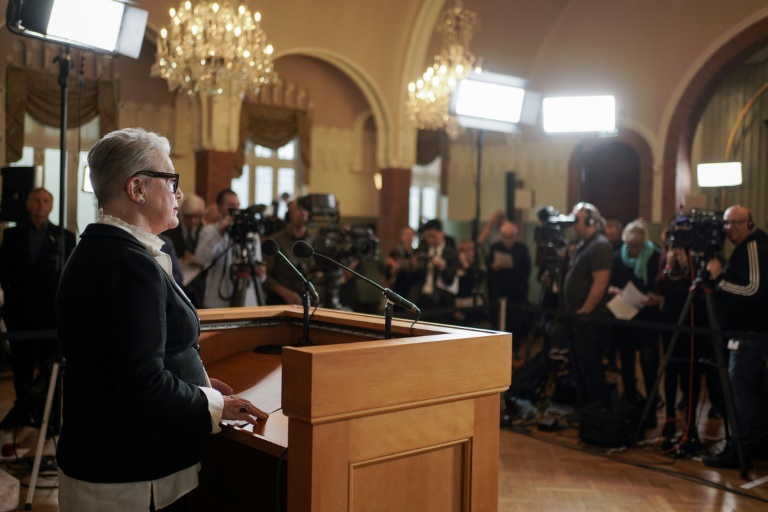
“They have made an outstanding effort to document war crimes, human right abuses and the abuse of power,” the head of the Norwegian Nobel Committee, Berit Reiss-Andersen, told reporters.

“Together they demonstrate the significance of civil society for peace and democracy,” she added.

As predicted by experts, the committee’s choice of laureates this year marked a stinging criticism of Moscow’s invasion of Ukraine, which has plunged Europe into its worst security crisis since World War II.

But the five-member committee stopped short of criticising Russian President Vladimir Putin directly.

Reiss-Andersen called his regime an “authoritarian government that is suppressing human rights activists”, stressing that the committee wanted to highlight the “way civil society and human rights advocates are being suppressed.”

The Nobel committee also called on Belarus to release Bialiatski, 60, the founder of rights group Viasna whose work has charted the increasingly authoritarian tendencies of President Alexander Lukashenko and his security forces.

Bialiatski has been jailed several times since 2011, including after large-scale demonstrations against the regime in 2020 when Lukashenko claimed victory in elections the international community deemed fraudulent.

Minsk cracked down hard on the mass protests, with at least 37,000 people detained in a matter of months according to the UN, and many alleging they were mistreated and tortured in detention.

Lukashenko, who has clung to power since 1994 and has long been backed by Russia, is one of Moscow’s rare allies in the war on Ukraine.

Bialiatski’s wife said she was “overwelmed with emotion” by the Peace Prize news.

– ‘Not yielded an inch’ –

Belarusian opposition leader Svetlana Tikhanovskaya — herself mentioned in Nobel speculation before Friday’s announcement — meanwhile said the prize was “recognition for all Belarusians fighting for freedom and democracy”.

Bialiatski was imprisoned from 2011 to 2014, in 2020, and again in July 2021.

“He is still detained without trial. Despite tremendous personal hardship, Mr. Bialiatski has not yielded an inch in his fight for human rights and democracy in Belarus”, the Nobel committee said.

Meanwhile, Memorial, founded in 1989 by 1975 Peace Prize laureate Andrei Sakharov, is the largest human rights organisation in Russia, compiling and systematising information on political oppression and human rights violations in Russia.

It has also established a centre of documentation on victims of the Stalinist era.

The country’s Supreme Court ordered it dissolved in December 2021, and the group on Friday denounced a new court hearing on the issue.

“Right now, as the whole world is congratulating us for the Nobel Prize, a court hearing is taking place at the (Moscow) Tverskoy district court over the seizure of Memorial’s assets,” the centre for human rights of the organisation said on social media. 

Both Bialiatski and Memorial have been mentioned in Nobel speculation in previous years.

Last year, the Peace Prize went to another Kremlin critic, Russian journalist Dmitry Muratov, whose newspaper Novaya Gazeta also had its licence revoked. 

He won together with Philippine journalist Maria Ressa for their fight for freedom of the press.

– ‘War crimes’ –

Meanwhile, Ukraine’s Center for Civil Liberties (CCL), founded in 2007, has since the invasion in February identified and documented “Russian war crimes against the Ukrainian civilian population”, the Nobel committee said.

It hailed the CCL’s “pioneering role with a view to holding the guilty parties accountable for their crimes”.

The head of Ukraine’s Center for Civil Liberties said Putin should face an “international tribunal”. 

Oleksandra Matviychuk said on Facebook the tribunal should be created to “give the hundreds of thousands of victims of war crimes a chance to see justice…”

UN investigators on September 23 accused Russia of committing war crimes on a “massive scale” in Ukraine, citing bombings, executions, torture and sexual violence on victims aged four to 82.

Moscow has also been accused of committing massacres after the bodies of dozens of civilians were found in Bucha, outside Kyiv, and the discovery of hundreds of others in Izium, a region liberated by Ukrainian troops last month.

Beyond the countless deaths and material destruction in Ukraine, Russia’s invasion has revived fears of a nuclear strike by Russia, which has struggled since Ukraine launched a counter-offensive in September.

The Peace Prize comes with a gold medal, a diploma and a prize sum of 10 million Swedish kronor (about $900,000).

The award will be presented at a formal ceremony in Oslo on December 10, the anniversary of the 1896 death of the prizes’ creator, Swedish inventor and philanthropist Alfred Nobel.

Meta warns of password stealing phone apps

Meta warned a million Facebook users Friday that they have been “exposed” to seemingly innocuous smartphone applications designed to steal passwords to the social network.

So far this year, Meta has identified more than 400 “malicious” apps tailored for smartphones powered by Apple or Android software and available at the Apple and Google app stores, director of threat disruption David Agranovich said during a briefing.

“These apps were listed on the Google Play Store and Apple’s App Store and disguised as photo editors, games, VPN services, business apps and other utilities to trick people into downloading them,” Meta said in a blog post.

The apps often ask people to login with their Facebook account information to use promised features, stealing usernames and passwords if entered, according to Meta’s security team.

“They are just trying to trick people into entering in their login information in a way that enables hackers to access their accounts,” Agranovich said of the apps.

“We will notify one million users that they may have been exposed to these applications; that is not to say they have been compromised.”

More than 40 percent of the apps Meta listed involved ways to edit or manipulate images, and some were as seemingly simple as using smartphones as flashlights.

“Our sense is these types of malicious app developers try to target multiple services,” Agranovich said, noting the app creators are likely after passwords to more than just Facebook accounts.

“The targeting here seemed to be relatively indiscriminate — get people to download the applications around the world in an attempt to get access to as many login credentials as possible.”

Meta said that it shared what it discovered with Apple and Google, who control what is offered at their respective app shops and each vet offerings.

Apple did not respond to questions regarding whether it took action against any of the apps Meta deemed malicious.

But Google said that most of the apps Meta flagged had already been identified and removed from the Play store by its own vetting systems.

“All of the apps identified in the report are no longer available on Google Play,” a spokesperson told AFP.

“Users are also protected by Google Play Protect, which blocks these apps on Android.”

Ireland voices hope of end to post-Brexit trade row in N.Ireland

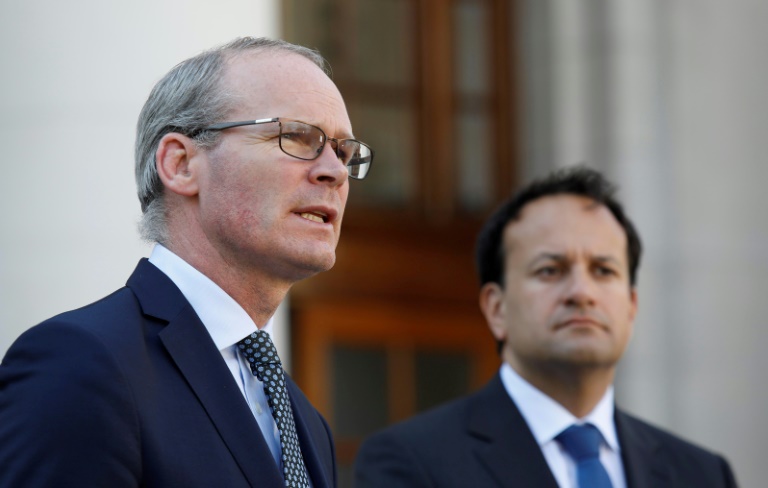
Ireland’s foreign minister Simon Coveney on Friday gave hope of an end to wrangling over post-Brexit trading rules in Northern Ireland, as talks resumed to break the impasse.

Coveney met his UK counterpart James Cleverly in London on Thursday night and said there was a “real focus” on making progress and a “new air of positivity”.

“There is a genuine effort coming from this new team in the British government to try to reach out to Dublin and indeed to Brussels,” he told Ireland’s national broadcaster RTE.

“But time will tell whether, of course, the compromises necessary to get a deal are possible.”

Relations between Ireland and the UK have been soured by long-running disagreements over the implementation of trade arrangements between London and Brussels known as the Northern Ireland Protocol.

The deal, signed separately from the Brexit trade agreement that took the UK out of the European Union, effectively keeps Northern Ireland within the European single market and customs union.

London and pro-UK unionist parties in Northern Ireland object to having checks on goods heading to the province from mainland Britain, arguing it impinges on the country’s sovereignty.

The UK is seeking to unilaterally overhaul the agreement, despite EU warnings it could spark reprisals.

But there are signs of a thaw in frosty relations: last week Steve Baker, a junior UK Northern Ireland minister, apologised for the effect of the hardline stance on relations with Ireland.

On Thursday, Ireland’s deputy prime minister Leo Varadkar, who will become prime minister in December under a coalition deal in Dublin, conceded that the protocol had been “a little too strict”.

Coveney echoed the statements, saying both the EU and Ireland as a member of the bloc were in agreement on the need for flexibility.

Talks between London and Brussels had been stalled since February but a month-end deadline for the restoration of the devolved assembly in Belfast appears to have focused minds.

Northern Ireland’s biggest pro-UK party, the Democratic Unionist Party, has vowed to stay away from the newly elected legislature unless the protocol is scrapped or substantially overhauled.

UK Northern Ireland Secretary Chris Heaton-Harris has said fresh elections would need to be called by October 28 unless power-sharing between unionists and pro-Ireland nationalists is restored.

Coveney said the prospect of that would “polarise opinion again, and make compromise a lot more difficult”.

Adidas puts partnership with Kanye West 'under review'

German sportswear giant Adidas said Friday it was reconsidering its partnership with Kanye West after the US rap star reportedly became disgruntled with how the brand was marketing his products. 

The artist now known as Ye has netted billions selling his Yeezy clothing range through the German company since 2015, but the collaboration had recently been dogged by tensions.

“After repeated efforts to privately resolve the situation, we have taken the decision to place the partnership under review,” Adidas said in a statement.  

In a recent Instagram message cited by US media outlets, West had accused Adidas of arranging marketing events and bringing back older styles without his approval.

He also said the brand had hired staff to work under him and organised a “Yeezy Day” without his involvement.

West also sparked controversy this week when he was pictured wearing a “White Lives Matter” T-shirt at Paris Fashion Week.

The artist was associated with Nike for years but broke away in 2013, lending his name to Adidas as they launched their first Yeezy shoe together in 2015 — a partnership that went on to make him a billionaire. 

Along with Beyonce, Stella McCartney and Pharrell Williams, West’s has been one of the top names used by Adidas to boost sales, especially online.

Announcing the review, Adidas did not mention recent tensions, but said its partnership with the rapper had been “one of the most successful collaborations in our industry’s history” and was “rooted in mutual respect and shared values”.

West has made headlines in recent years for his psychiatric problems, controversial comments about slavery and support for former US president Donald Trump.

– ‘White Lives Matter’ –

He was widely criticised for wearing the “White Lives Matter” T-shirt, which was also shown as part of his collection in Paris.

The phrase “Black Lives Matter” became a rallying cry for protests against racism and police brutality sparked by the 2020 murder of George Floyd.

Asked why he wore it, West said in a Fox News interview Thursday: “I do certain things from a feeling, I like, just channel the energy, it just feels right.”

The Chicago-born star was for years part of one of the world’s most famous power couples thanks to his marriage to reality TV star Kim Kardashian.

But Kardashian filed for divorce last year after US media reported the pair were living separately and dealing with “regular relationship issues”.

West and retail brand Gap also announced an end to a partnership last month, with the artist saying he had plans to open his own stores.

The announcement capped months of social media complaints from West, which included accusations that he had been left out of the creative process and criticisms of marketing delays.

“GAP left Ye no choice but to terminate their collaboration agreement because of GAP’s substantial noncompliance,” wrote the artist’s lawyer, Nicholas Gravante, in a letter.

However, the controversy around his business ventures has not dimmed West’s success in the music world, as the star continues to enjoy hits and praise from critics.

His album “Donda” was nominated for Album of the Year and Best Rap Album at the 2022 Grammys.

UK climate protesters undeterred despite govt threats

Britain’s Home Secretary Suella Braverman had a stark warning this week for direct-action protesters who use “guerilla tactics” to bring “chaos and misery” to the public.

“Whether you’re Just Stop Oil, Insulate Britain or Extinction Rebellion, you cross a line when you break the law — and that’s why we’ll keep putting you behind bars,” she said.

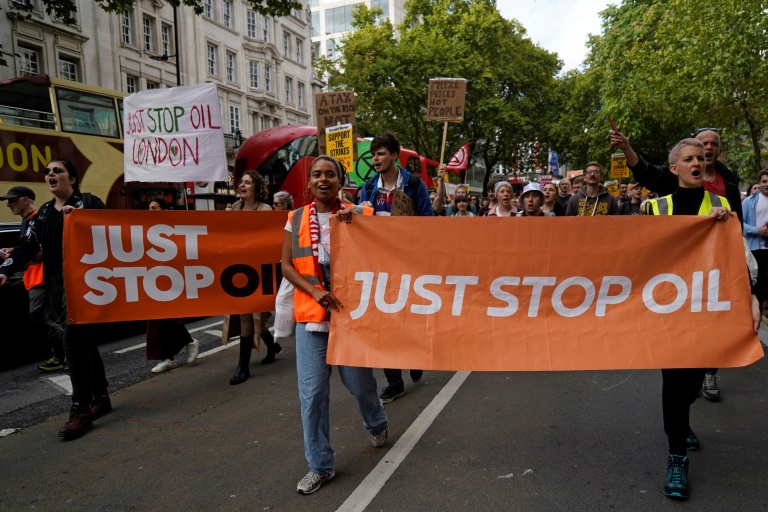
Braverman’s threat came as the Just Stop Oil coalition group, which wants an end to new fossil fuel licensing and production, embarked on a month-long series of protests in central London.

Dozens have been arrested this week for blocking roads and bridges, after similar protests that have brought gridlock to Britain’s motorways, blocked oil refineries and seen petrol pumps damaged.

Two Greenpeace protesters interrupted a speech by Prime Minister Liz Truss’s on Wednesday, accusing the government of backsliding on its commitments to reduce fossil fuel use and ban fracking.

Truss said Greenpeace and Extinction Rebellion were part of an “anti-growth coalition” with trade unions and the main opposition Labour party determined to derail her economic reforms.

“The fact is they prefer protesting to doing. They prefer talking on Twitter to taking tough decisions,” she told the Conservative party conference. 

But activists insist they are also taking action to highlight the climate emergency, which was blamed for pushing temperatures above 40 Celsius (104 Fahrenheit) in Britain this year for the first time

In London this week, threats of arrest — and tougher laws to come — failed to discourage protesters, many of whom took time off work and travelled from outside London.

“I’m prepared to be arrested because the thought of absolute social destruction is a lot worse,” retail worker Theresa Higginson, 24, who locked herself onto another protestor via a metal tube as they blocked a road at Trafalgar Square, told AFP on Thursday.

“We don’t want to do this,” added animal rights activist Gemma Barnes, 32. “We don’t want to be here. 

“But they (the government) have left us no other choice. We believe at this point that the only way to enact change is through civil resistance.”

– ‘They did nothing’ –

Direct-action protests about climate change have escalated in Britain in recent years, led by Extinction Rebellion and allied groups. 

Insulate Britain, which campaigns for more energy efficient homes, first came to public attention by blocking London’s busy M25 orbital motorway last year.

Just Stop Oil protesters have tried to disrupt an English Premier League football match by tying themselves to goalposts and got onto the track at the Silverstone circuit during the Formula One British Grand Prix.

Activists have glued themselves to the frames of well-known works of art at galleries around Britain and targeted the red carpet of the BAFTA awards.

The right-wing tabloid press regularly labels the protesters “eco-anarchists” and “eco-zealots”.

But in London this week, protesters said they were far from being stereotypical activists.

Instead they said they were normal people voicing public concern about climate change in Britain and around the world and “terror” about the future.

“It’s a luxury for us to be able to ignore it, to get on with our everyday life,” said former art school librarian Emma Brown, 30, referring to devastating recent floods in Pakistan.

Retiree Kris Welsch, 69, said police called in to deal with the protests were sympathetic and polite, giving multiple opportunities to abandon their roadblocks before they moved in to arrest them.

“They treat us with respect and we treat them with respect. They understand that they might have to deal with food insecurity and civil unrest in the coming years,” she added.

“This is the least I can do for the up and coming generations,” she said.

The government’s new Public Order Bill is winding its way through parliament, proposing to criminalise “lock-on” tactics and ban the obstruction of major transport work.

Just Stop Oil likened itself to the Suffragettes who campaigned for votes for women, Nelson Mandela’s anti-Apartheid struggle and Russians speaking out against the war in Ukraine.

“We are undeterred. Oil is killing people, now,” it said.

Gabriella Ditto, a 28-year-old mobiliser for the group, told onlookers at Thursday’s roadblock that they had no choice.

“Before we got to this point, we sent some petitions, we sent some strongly worded emails and we wrote to our MPs,” she said. 

“And they did nothing.”

Stocks steady, dollar down before US jobs data

Equity markets steadied and the dollar fell Friday before all-important US jobs data that should offer clues on the pace of future interest rate hikes from the Federal Reserve.

Further US interest rate hikes are expected in the coming months to try and cool decades-high inflation.

However, markets are starting to price in a less aggressive pace of rate tightening than seen so far this year, easing fears of a global recession.

“Investors are turning more concerned about the aggressive Fed tightening and are ready to bet that the rate hikes would slow down in the next few meetings,” Swissquote analyst Ipek Ozkardeskaya noted before Friday’s jobs data.

Analysts expect the monthly report to show 250,000 posts were created in September, which would be the weakest since late 2020 but still a healthy figure suggesting a strong labour market. 

There is a fear that a result higher than expectations could spark another sell-off across risk markets as investors bet on more bumper rate hikes.

Fed officials have consistently warned that they are determined to ramp up borrowing costs to fight inflation, even at the expense of a recession — feeding worries among traders that the world economy is heading for such a scenario.

OANDA analyst Edward Moya said a consumer price index report next week was also on traders’ radars.

“Economists are not expecting a significant drop in pricing pressures, but many traders think that a cool report could happen and that will force the Fed to change their tune next week.”

While major European stock markets steadied Friday, Asian indices and Wall Street dropped overnight.

Adding to the unease was a warning from US President Joe Biden that the world faced nuclear “Armageddon” for the first time since the 1962 Cuban missile crisis.

He told a Democratic Party fundraiser in New York that Russian President Vladimir Putin was “not joking” when he threatened to use nuclear weapons over the Ukraine war.

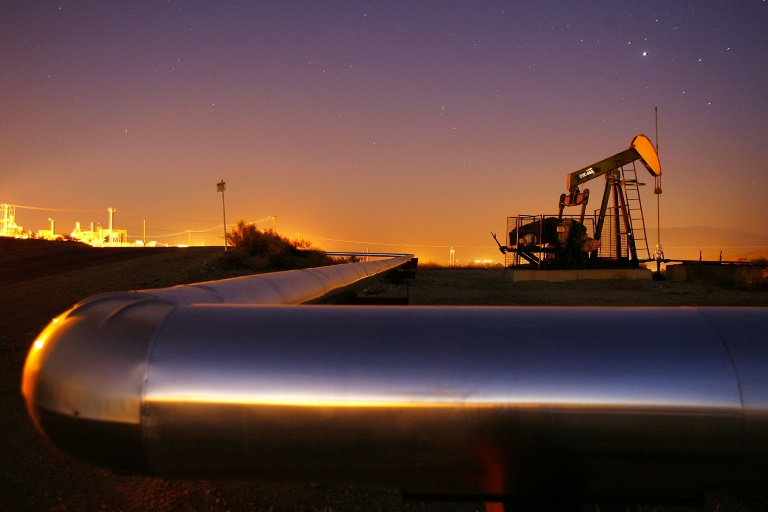
Elsewhere, oil prices jumped and were set for their biggest weekly gain since March after OPEC and other major producers led by Russia agreed to slash daily output by two million barrels.

– Key figures around 1045 GMT –

London – FTSE 100: UP 0.1 percent at 7,006.14 points

Frankfurt – DAX: DOWN 0.1 percent at 12,459.38

Paris – CAC 40: UP 0.1 percent at 5,941.65

EURO STOXX 50: DOWN 0.2 percent at 3,426.51

Tokyo – Nikkei 225: DOWN 0.7 percent at 27,116.11 (close)

Hong Kong – Hang Seng Index: DOWN 1.5 percent at 17,740.05 (close)

Shanghai – Composite: Closed for a holiday

New York – Dow: DOWN 1.2 percent at 29,926.94 (close)

Pound/dollar: UP at $1.1190 from $1.1161 on Thursday

Euro/dollar: UP at $0.9796 from $0.9794

Euro/pound: DOWN at 87.53 pence from 87.74 pence

Dollar/yen: DOWN at 144.92 yen from 145.11 yen

Brent North Sea crude: UP 1.1 percent at $95.41 per barrel

West Texas Intermediate: UP 1.2 percent at $89.49 per barrel

Families mourn Thai nursery dead ahead of king's visit

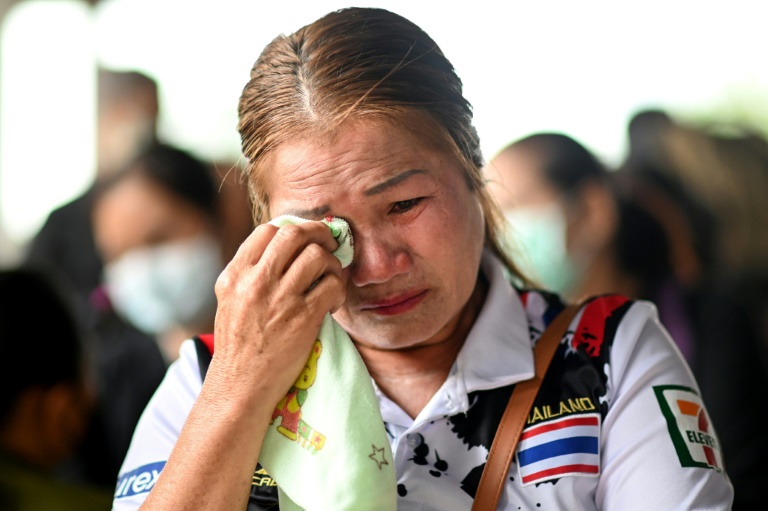
Grief-stricken families prepared to begin funeral rites Friday for 36 people murdered by a sacked policeman who rampaged through a nursery armed with a gun and knife in one of Thailand’s worst mass killings.

After a day of mourning at the scene of the bloodshed, coffins bearing the bodies of the victims — 24 of them children — were transported to temples on flat-bed trucks to be handed over to relatives.

King Maha Vajiralongkorn will later visit survivors in hospital — a rare direct interaction with the public for the Thai monarch, who is officially regarded as a semi-divine figurehead.

Prime Minister Prayut Chan-O-Cha laid flowers at the nursery in rural northeastern Nong Bua Lam Phu province and handed out compensation cheques to grieving families. 

At the small, low-slung building officials in white uniforms laid a large floral wreath on behalf of the king earlier in the day.

A line of heartbroken parents placed white roses on the steps of the nursery as the baking sun bore down.

The dead include pregnant teacher Supaporn Pramongmuk, whose husband posted a poignant tribute on Facebook.

“I would like to say thank you for all the support for me and my family. My wife has fulfilled her every duty as a teacher,” husband Seksan Srirach wrote.

“Please be a teacher in heaven, and my child please take care of your mother in heaven.”

– Knife the ‘main weapon’ –

Armed with his own legally purchased 9mm pistol and a knife, former police sergeant Panya Khamrab began his murderous spree at the childcare centre at about 12:30 pm (0530 GMT) on Thursday.

Following the attack, 34-year-old Panya fled the scene in a pickup truck to head home and murder his wife and son before taking his own life, police said, ending the rampage at about 3:00 pm.

In total, he killed 24 children — 21 boys and three girls — and 12 adults.

Pitak Kongtapthai, head of the police investigations unit in the province, said most of the deaths were caused by a combination of knife wounds and gunshots.

Panya joined the police in 2012 and rose to the rank of sergeant but was suspended from the force in January and sacked in June for drug use, National Police Chief Damrongsak Kittiprapat told reporters.

Damrongsak said initial tests found no drugs in Panya’s body after the attack, though several locals said Panya was known in the area as a methamphetamine user.

The police chief said the attacker used his knife as the “main weapon” in the nursery.

He had an argument with his wife hours before the attack, Damrongsak said, but “nothing irregular” was noted when he appeared in court that morning on a drugs possession charge. 

Flags on government buildings flew at half-mast on Friday in a gesture of mourning for one of the deadliest days in recent Thai history.

Buarai Tanontong’s two three-year-old grandsons were among those killed at the nursery.

“I couldn’t sleep. I didn’t think that it would be my two grandsons,” she said, clutching her inconsolable daughter’s shoulder.

Nanthicha Punchum, acting chief of the nursery, described harrowing scenes as the attacker barged into the building in the rural Na Klang district.

“There were some staff eating lunch outside the nursery and the attacker parked his car and shot four of them dead,” she told AFP.

She said the attacker smashed down the door with his leg and then started stabbing the children.

Local media reported that one child survived because they were sleeping hidden by a blanket when the attacker struck.

– PM orders probe –

Witness Pranom Innurak described how her sister, now recovering in hospital, was injured.

“He (Panya) was driving a car on his way back home and he rammed into everyone on his way,” she told AFP, adding that her sister’s daughter was among the dead.

“When my sister got hit, she wasn’t that hurt yet. She flew out from her food stall. He then used a knife to attack her.”

Thai leader Prayut has ordered a rapid probe into the attack, and on Friday police interviewed witnesses and families.

The tragedy came less than three years after a soldier in the northeastern city of Nakhon Ratchasima gunned down 29 people and wounded scores more in a 17-hour rampage, before he was shot dead by commandos.

And less than a month ago an army officer shot dead two colleagues at a military training base in the capital Bangkok.

France under fire over Ukraine weapons deliveries

France has repeatedly been in critics’ sights over its lower level of military support to Ukraine compared with allies, but officials and experts say capacity rather than political will is at the root of the differences.

According to an August ranking by the Kiel Institute for the World Economy, France’s 233 million euros ($230 million) of military aid place it 11th in the world, well behind the US (25 billion euros), Britain (four billion euros) and Poland (1.8 billion euros).

Even neighbouring Germany, historically leery of military entanglements following World War II, has committed more than four times as much as France.

Such rankings “don’t fully reflect reality”, the defence ministry told AFP, because they “only take into account what has been promised, not what has actually been delivered”.

What’s more, some countries might report only arms deliveries as military aid, while others might count in training or the cost of transporting ammunition.

Defence Minister Sebastien Lecornu on Monday made a virtue of Paris’ “relative discretion” in aiding Kyiv in an address to MPs, saying that “France has been giving and supporting Ukraine since the beginning”.

Publicly-known shipments include anti-tank and anti-aircraft missiles, armoured personnel carriers, fuel, infantry gear and towed artillery cannons.

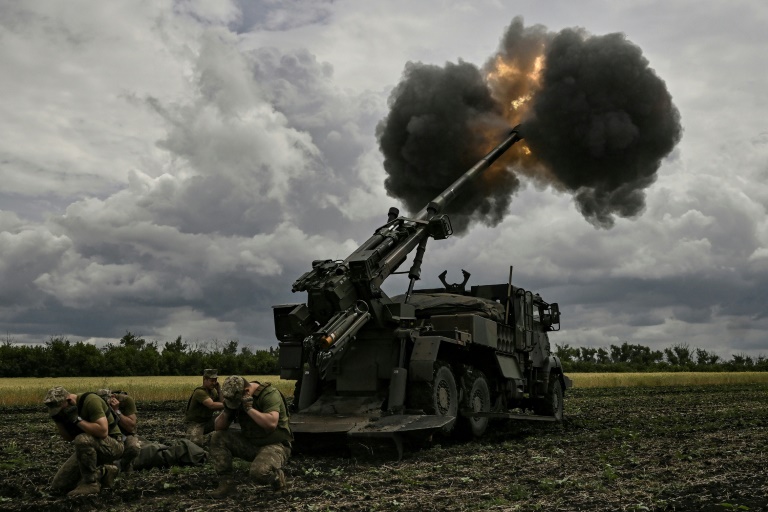
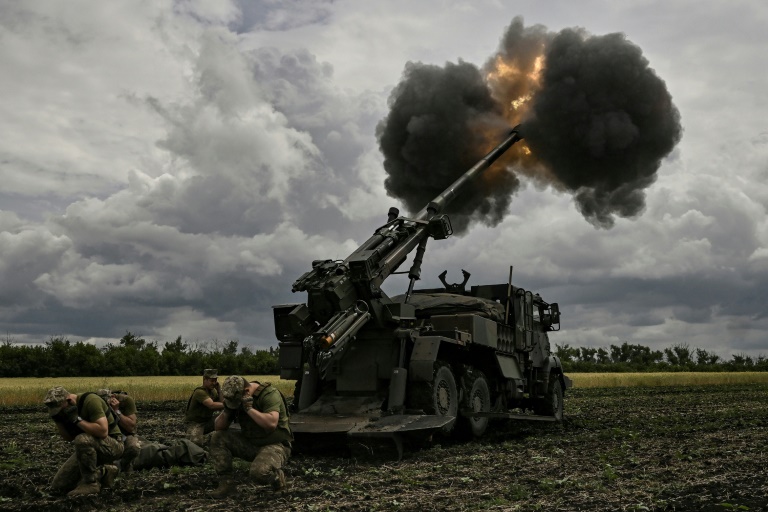
It has also sent 18 of its prized truck-mounted CAESAR cannons, which are able to set up, fire a highly-accurate volley at ranges of up to 40 kilometres (25 miles) and shift position before the enemy can locate them and fire back.

President Emmanuel Macron said Thursday at a European gathering in Prague that France plans to deliver more of the mobile artillery pieces.

Further guns could be diverted to Ukraine from a Danish order, a source familiar with the deal told AFP.

– Limited capacity –

Initial fears that arms deliveries might make Russia see Ukraine’s backers as parties to the war have faded, said Sylvie Matelly, deputy director of France’s Institute for International and Strategic Studies (IRIS).

Meanwhile the Ukrainians have shown they can quickly learn to use Western-made arms, rather than the Soviet stocks from former Warsaw Pact countries prioritised early in the conflict.

But that leaves the fact that “the weapons we have here ready to use are the weapons supposed to ensure our national defence,” Matelly said.

“If we give them away, if we tap into our reserves, we’re causing big headaches for ourselves,” she added.

“It’s not a lack of political will, perhaps it’s political prudence about our own security, our own defence.”

Several high-ranking French officers said that although Paris has boosted military spending in recent years, set to reach 44 billion euros in 2023, its stocks of equipment remain limited.

Handing off vital weapons systems like the CAESAR — the 18 delivered to Kyiv made up a quarter of the French fleet of the mobile artillery platforms — reduces the army’s own ability to fight the kind of high-intensity war now raging in Ukraine.

And with the war on the European Union’s doorstep, “we can’t compare (arms deliveries by) France and the US”, Matelly said.

Washington “has less need of weapons to defend its national territory” directly, rather than protecting its interest abroad, she added.

Even with its far higher stocks and productive capacity, “there is starting to be concern among US military leaders about weapons reserves” given the level delivered to Ukraine and the parallel commitment to defend Taiwan in case of Chinese attack.

– Complex production –

Modern weapons like high-precision artillery pieces and missiles can take years to roll off production lines, especially with disruption to supply chains affecting certain parts and raw materials.

That means that simply committing more cash is not an instant fix — although a parliamentary report published in February found that up to six billion euros were needed to replenish France’s arsenals, well above the two billion announced this week for 2023.

“We don’t have significant reserves. At the heart of talks (with the defence ministry) is how to scale up the way we work, to refill our reserves as quickly as possible,” one French defence industry insider said on condition of anonymity.

“Deploying military capacity means having the whole ecosystem that allows it to be deployed,” Matelly said.

“It’s industry, it’s technology, human capital.”

Figures such as French President Emmanuel Macron have pushed for greater defence integration among EU nations to hack back the duplication of effort that still characterises member states’ armed forces and arms industries.

“It’s moving forward, progress is being made, but today we’re more in cooperation mode,” Matelly said, with further steps “requiring total confidence in your counterparts, and we’re still quite far from that”.

France under fire over Ukraine weapons deliveries

France has repeatedly been in critics’ sights over its lower level of military support to Ukraine compared with allies, but officials and experts say capacity rather than political will is at the root of the differences.

According to an August ranking by the Kiel Institute for the World Economy, France’s 233 million euros ($230 million) of military aid place it 11th in the world, well behind the US (25 billion euros), Britain (four billion euros) and Poland (1.8 billion euros).

Even neighbouring Germany, historically leery of military entanglements following World War II, has committed more than four times as much as France.

Such rankings “don’t fully reflect reality”, the defence ministry told AFP, because they “only take into account what has been promised, not what has actually been delivered”.

What’s more, some countries might report only arms deliveries as military aid, while others might count in training or the cost of transporting ammunition.

Defence Minister Sebastien Lecornu on Monday made a virtue of Paris’ “relative discretion” in aiding Kyiv in an address to MPs, saying that “France has been giving and supporting Ukraine since the beginning”.

Publicly-known shipments include anti-tank and anti-aircraft missiles, armoured personnel carriers, fuel, infantry gear and towed artillery cannons.

It has also sent 18 of its prized truck-mounted CAESAR cannons, which are able to set up, fire a highly-accurate volley at ranges of up to 40 kilometres (25 miles) and shift position before the enemy can locate them and fire back.

President Emmanuel Macron said Thursday at a European gathering in Prague that France plans to deliver more of the mobile artillery pieces.

Further guns could be diverted to Ukraine from a Danish order, a source familiar with the deal told AFP.

– Limited capacity –

Initial fears that arms deliveries might make Russia see Ukraine’s backers as parties to the war have faded, said Sylvie Matelly, deputy director of France’s Institute for International and Strategic Studies (IRIS).

Meanwhile the Ukrainians have shown they can quickly learn to use Western-made arms, rather than the Soviet stocks from former Warsaw Pact countries prioritised early in the conflict.

But that leaves the fact that “the weapons we have here ready to use are the weapons supposed to ensure our national defence,” Matelly said.

“If we give them away, if we tap into our reserves, we’re causing big headaches for ourselves,” she added.

“It’s not a lack of political will, perhaps it’s political prudence about our own security, our own defence.”

Several high-ranking French officers said that although Paris has boosted military spending in recent years, set to reach 44 billion euros in 2023, its stocks of equipment remain limited.

Handing off vital weapons systems like the CAESAR — the 18 delivered to Kyiv made up a quarter of the French fleet of the mobile artillery platforms — reduces the army’s own ability to fight the kind of high-intensity war now raging in Ukraine.

And with the war on the European Union’s doorstep, “we can’t compare (arms deliveries by) France and the US”, Matelly said.

Washington “has less need of weapons to defend its national territory” directly, rather than protecting its interest abroad, she added.

Even with its far higher stocks and productive capacity, “there is starting to be concern among US military leaders about weapons reserves” given the level delivered to Ukraine and the parallel commitment to defend Taiwan in case of Chinese attack.

– Complex production –

Modern weapons like high-precision artillery pieces and missiles can take years to roll off production lines, especially with disruption to supply chains affecting certain parts and raw materials.

That means that simply committing more cash is not an instant fix — although a parliamentary report published in February found that up to six billion euros were needed to replenish France’s arsenals, well above the two billion announced this week for 2023.

“We don’t have significant reserves. At the heart of talks (with the defence ministry) is how to scale up the way we work, to refill our reserves as quickly as possible,” one French defence industry insider said on condition of anonymity.

“Deploying military capacity means having the whole ecosystem that allows it to be deployed,” Matelly said.

“It’s industry, it’s technology, human capital.”

Figures such as French President Emmanuel Macron have pushed for greater defence integration among EU nations to hack back the duplication of effort that still characterises member states’ armed forces and arms industries.

“It’s moving forward, progress is being made, but today we’re more in cooperation mode,” Matelly said, with further steps “requiring total confidence in your counterparts, and we’re still quite far from that”.

Close Bitnami banner
Bitnami