World

Sahel military coups only help jihadists: analysts

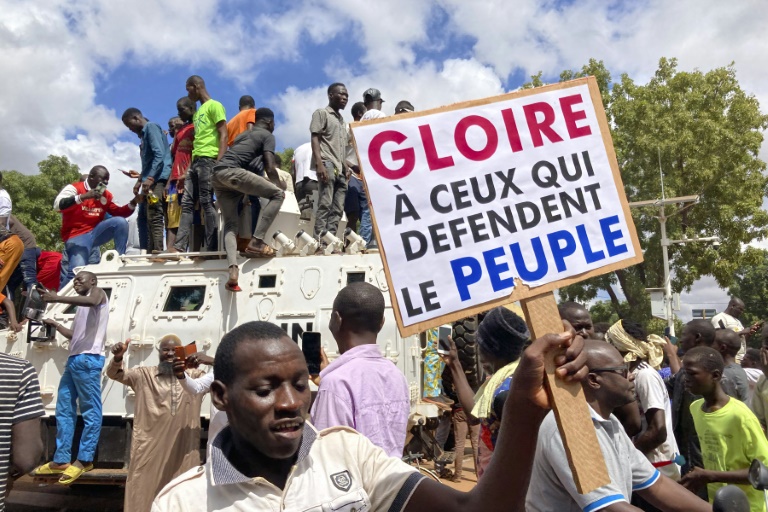
Burkina Faso’s new rulers say they seized power to better fight jihadists, but history in the Sahel suggests the coup will merely stoke turbulence and division, benefitting the insurgents, analysts say.

The poor, arid region has been wracked by jihadist insecurity since 2012.

It began in northern Mali then in 2015 spread to its centre and neighbouring Niger and Burkina Faso, claiming thousands of lives and prompting more than two million people to flee their homes.

A new junta led by 34-year-old Captain Ibrahim Traore seized power in Burkina Faso last week, in the second such power grab since January blamed on failures to quell jihadist attacks. 

It followed two similar coups in Mali in 2020 and 2021.

The latest takeover comes during a struggle for influence between France and Russia in the former French colonies, whose leaders appear to be increasingly turning to Moscow to help battle the jihadists.

But analyst Yvan Guichaoua said the coup would only serve the interests of the jihadists — the Al-Qaeda-linked Group to Support Islam and Muslims (GSIM) and the local branch of the Islamic State group.

“The big winners are not the Russians or the French, but GSIM and IS,” said Guichaou, an expert at the Brussels School of International Studies. “What a disaster.”

Organisers of coups in the Sahel typically promise improved security, but these pledges are misleading, analysts say.

A putsch typically “destabilises the army structure and divides members of the military into supporters and opponents of the coup,” said Djallil Lounnas at Morocco’s Al-Akhawayn University.

“It means instability, division and purges.”

Coups only compound problems in countries where the armed forces are already accused of inefficiency and mismanagement, and security forces are often under-equipped, he and others said.

– Army problems –

Alain Antil, a Sahel expert at the French Institute of International Relations, gave the example of more than 50 Burkinabe gendarmes killed by jihadists in November last year.

Two weeks earlier, they had warned headquarters they were running short of supplies.

“They were hunting gazelles in the scrubland to eat,” he said, and were in no position to take on the insurgents.

“You can’t go and fight such determined adversaries with this kind of logistics problem.”

Disgruntled junior officers led by Traore forced out junta leader Lieutenant-Colonel Paul-Henri Sandaogo Damiba, whom they accused of failing his country. 

Traore was declared president on Wednesday, three days after Damiba fled to neighbouring Togo following a prolonged standoff at the weekend.

But, said Antil, nothing indicates Traore will be any more successful.

“The myth of the enlightened military man able to fix problems… very rarely holds up,” he said.

Soldiers are “often less well-equipped than the civilians they replace to understand” non-security aspects of a crisis.

GSIM this week mocked Burkina’s latest change of leader.

“Let the tyrants know that the repeated coups will not avail them,” it said in a statement.

Mauritanian journalist Lemine Ould Salem, who has written a book on jihadism, said political turmoil gives credibility to extremist talk that “delegitimises state institutions.”

“They say, ‘look, there is no democracy, no state, no constitution’,” he said.

– Regional impact –

Military coups in the Sahel have also weakened regional cooperation in the fight against the jihadists.

Since its takeover, Mali had a bustup with France, the country’s strongest foreign ally, which withdrew its last troops from the country in August.

The junta has brought in Russian operatives it describes as military trainers, but which western countries say are mercenaries from the Wagner group.

Mali has also quit a regional anti-jihadist force dubbed the G5 Sahel and antagonised its southern neighbour, Ivory Coast, by detaining 46 Ivorian soldiers in July.

Bamako “risks ruining all cooperation, including for security,” Antil said.

The Soufan Center think tank in a note this week said France had “served as somewhat of a ‘bogeyman’, or an excuse to account for the growing strength of jihadists in Burkina Faso and the Sahel more broadly”. 

Michael Shurkin, a US historian specialised in the French army, said there were also “many who believe in conspiracy theories according to which the French arm the jihadists”. 

They “simplify a complex reality and enable people to avoid having to understand their own responsibility and find their own solutions,” he said.

Putin, the leader dreaming of Russian grandeur at any cost

Restoring Russia to its rightful place among the world’s great powers has obsessed President Vladimir Putin, whose offensive in Ukraine was to be the culmination of over 20 years of iron-willed leadership.

But Putin, who turns 70 on Friday, has seen his army depleted by seven months of gruelling military action and his country diplomatically isolated.

The Russian leader has even brandished veiled threats of using nuclear weapons, dialling up geopolitical tensions over his campaign in Ukraine.

It is a far cry from the turn of the millennium, when a fresh-faced 47-year-old Putin replaced the ailing Boris Yeltsin in the Kremlin promising friendship and cooperation with the West.

US president George W. Bush hailed him as a “remarkable leader”, while Germany’s Gerhard Schroeder and Italy’s Silvio Berlusconi were among his friends, even as he clamped down on Russian media and waged war in Chechnya.

But things have changed. Joe Biden — the fifth US president of the Putin era — looked into his soul and instead saw a “killer”, even before the military intervention in Ukraine and the ensuing avalanche of unprecedented sanctions.

On the other hand, his popularity at home seems untouchable, with Russians grateful for their relative prosperity and Moscow’s return to the world’s top table after the economic and political chaos that followed the collapse of the Soviet Union.

To foes, however, Putin has dragged his homeland further from democracy, presided over a seizure of the state by a new elite of former secret police cronies and stoked nationalism in a bid to restore Moscow’s lost empire.

– ‘Shadow army’ –

This alleged cronyism is embodied by the Rotenberg brothers and Yevgeny Prigozhin, the founder of the Wagner paramilitary group that acts as Russia’s “shadow army” in conflict zones across the world.

A referendum on constitutional change held at the height of the Covid-19 pandemic in 2020 allowed him to stay in power until 2036, while the opposition has been decimated, with leading critic Alexei Navalny in jail after being poisoned.

For Putin and many of his generation, the demise of the USSR and its sphere of influence remains a painful wound. The rancour was especially bitter for Putin, a former KGB agent in East Germany.

The upheaval in post-Soviet Russia unleashed hardship that contrasted with Western triumphalism. Years later, Putin said he was forced to work as a taxi driver to make ends meet.

He famously in 2005 described the Soviet collapse as the “greatest geopolitical catastrophe” of the 20th century and made little attempt to back away from this claim, repeatedly emphasising the “historic mission” of Russians.

That narrative bred resentment against the perceived encroachment of NATO and the European Union in Moscow’s backyard.

Convinced that the West sought to subordinate Russia, Putin made Ukraine his red line. 

When crowds in Kyiv ousted Russia-backed leader Viktor Yanukovych in February 2014, the Kremlin faced losing its dominance over a key neighbour.

Within days, Putin ordered special forces to seize the strategic Crimea peninsula and — after a hasty, internationally rejected referendum — signed off on the region’s annexation.

– Genocide and nationalism –

The redrawing of Russia’s border sparked the worst standoff with the West since the Cold War and unleashed a wave of nationalism at home that saw Putin’s popularity soar.

Then, using claims of a “genocide” perpetrated by the Ukrainian government against the Russian-speaking population of eastern Ukraine, he sent Russian tanks into his pro-Western neighbour on February 24, 2022, a first in Europe since World War II.

In 2015, Putin summed up his philosophy as: “If fighting is inevitable, you must strike first.”

“In his mind… if this war in Ukraine or for Ukraine is lost, then the Russian state will soon no longer exist,” said Tatiana Stanovaya, founder of the R.Politik analysis firm.

The military operation was to have been a resounding success — after 22 years of Putin at its helm, Russia’s army has been modernised under a seasoned command fresh from experience in Syria.

But plagued by corruption and taken aback by the Ukrainians’ determination, Moscow was forced to give up on Kyiv by spring.

Taking the east and the south proved costly in troops and ammunition.

Autumn saw a series of military setbacks. On September 21, Putin announced a mobilisation drive recruiting hundreds of thousands of reservists.

Slapped with Western sanctions, Russia is cut off from international finance and advanced technology.

And its diplomatic isolation was made blatantly clear when Putin was not invited to attend the state funeral of Queen Elizabeth II.

– Russians fleeing –

And tens of thousands of Russians, likely hundreds of thousands, are fleeing mobilisation and repression.

In the West, some evoke the “drifting away” of this president, who spent two years largely cut off from the world to protect himself from Covid-19.

Just days before the launch of the Ukraine offensive, French President Emmanuel Macron worried of a Putin “more unbending, more isolated.”

He was no longer the person who went horseback riding bare-chested or explored the Baikal Lake in a sort of submarine, but someone who sits metres from his guests on the opposite ends of a giant table.

On television, he has appeared fierce against a West in a moral decline, rotting from its liberal ideas and the LGBT movement. At the end of September, he saw the coming of “satanism”.

“Macron or (German Chancellor Olaf) Scholz need to choose their words, but not Vladimir Vladimirovich. He says what he thinks, does what he wants,” said Russian political analyst Konstantin Kalachev. “He has complete freedom, nothing is holding him back.”

With this same conviction, he repeats that Ukraine is not a nation, that its independence is a bad turn of history.

Following this logic, on September 30 he announced the annexation of four more Ukrainian regions, even as his army was suffering setbacks there. 

“Victory will be ours,” he shouted to a crowd gathered on Red Square in Moscow.

Stanovaya, the political analyst, said: “He truly believes that he is the one to reunify Russian lands. And from my point of view, this could end badly.”

As Putin himself has said, “this is not a bluff.”

EU leaders struggle for common response to energy crisis

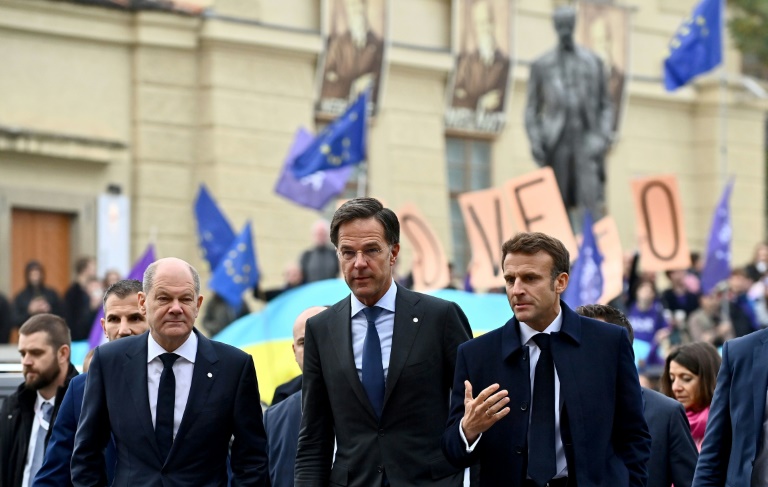
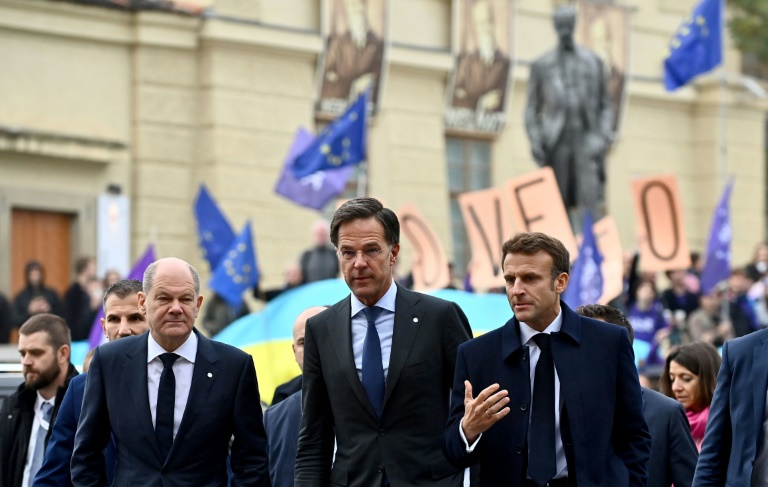
EU leaders meeting in Prague on Friday looked to bridge divisions on how to tackle soaring energy prices as they grapple with the fallout from Russia’s war on Ukraine.

President Volodymyr Zelensky was dialling in from Kyiv as the bloc looks to maintain its economic and military support for Ukraine and hold a tough line against Moscow.

EU leaders were also discussing how to better protect their critical infrastructure in the wake of leaks from the Russia-Europe Nord Stream gas pipelines that have been blamed on “sabotage”.

But it was the sharp disagreements over how to tackle the energy crisis that were the major focus of attention as the 27 nations wrangled over the best plan to try to bring down prices.

Europe is facing an energy crunch as the price of electricity generation skyrockets because of a massive surge in gas prices caused by Russia turning off the taps.

Governments across the bloc are scrambling to lower the costs for their consumers, but they rely on different sources for their energy and are split over the solutions.

EU executive head Ursula von der Leyen is proposing a “roadmap” of measures to help ease the burden — including potential moves to cap the price of gas. 

However, there is no consensus on how any caps could work and leaders are not set to take a firm decision until a summit in Brussels later this month.  

“Now, it is time to discuss how we can limit the peaks in the energy prices and the manipulation of energy prices by (Russian President Vladimir) Putin,” von der Leyen told journalists. 

“This will be the discussion about price caps, the question where to put them and how to put them.”

– ‘Common denominator’ –

More than half of the bloc have pushed for the EU to impose a price ceiling on how much it would pay for gas piped or shipped in, as the northern hemisphere winter sets in.

But Germany has so far stood in the way over fears that the move could divert precious supplies away from Europe.

“A price cap on gas if that could be achieved would be grand, with the caveat that we cannot endanger security of supplies,” said Latvian Prime Minister Krisjanis Karins.

“We cannot set the price so that no one would sell gas into Europe.”

Berlin has come under fire from other EU members for dragging its feet on the issue while announcing a 200-billion-euro ($199-billion) fund to subsidise gas purchases at home.

“My message to Germany is be united with all the others because during difficult times everybody has to agree on a common denominator,” Polish Prime Minister Mateusz Morawiecki said.  

The difficulty of trying to curb prices from energy suppliers was highlighted Wednesday by the OPEC+ cartel’s agreement to cut oil production in defiance of Western efforts to starve Moscow of revenue.

That decision appeared to undermine a G7 push for a cap on the price of Russian oil that was backed by the EU in its latest package of sanctions agreed this week.

Despite some discontent from Hungary, the bloc has managed to remain largely united in its opposition to the Kremlin as Putin has escalated the conflict by claiming four occupied regions.

A broader summit of 44 nations from across Europe held in Prague on Thursday highlighted Moscow’s isolation.

The EU is looking to maintain its backing for Kyiv as Zelensky’s troops push Russian forces back on several fronts over seven months into the war. 

Ukraine is urging the EU to speed up much needed economic support after Brussels on Monday signed a memorandum of understanding to provide five billion euros.

On the military front, the bloc is looking to launch a training mission for Ukrainian forces later this month.

It is also eyeing a possible fresh tranche of funding for arms for Ukraine that would take its overall spending on weaponry to three billion euros.

“Ukraine needs our support not tomorrow, Ukraine needs support today, right now,” said Lithuanian President Gitanas Nauseda. 

EU leaders struggle for common response to energy crisis

EU leaders meeting in Prague on Friday looked to bridge divisions on how to tackle soaring energy prices as they grapple with the fallout from Russia’s war on Ukraine.

President Volodymyr Zelensky was dialling in from Kyiv as the bloc looks to maintain its economic and military support for Ukraine and hold a tough line against Moscow.

EU leaders were also discussing how to better protect their critical infrastructure in the wake of leaks from the Russia-Europe Nord Stream gas pipelines that have been blamed on “sabotage”.

But it was the sharp disagreements over how to tackle the energy crisis that were the major focus of attention as the 27 nations wrangled over the best plan to try to bring down prices.

Europe is facing an energy crunch as the price of electricity generation skyrockets because of a massive surge in gas prices caused by Russia turning off the taps.

Governments across the bloc are scrambling to lower the costs for their consumers, but they rely on different sources for their energy and are split over the solutions.

EU executive head Ursula von der Leyen is proposing a “roadmap” of measures to help ease the burden — including potential moves to cap the price of gas. 

However, there is no consensus on how any caps could work and leaders are not set to take a firm decision until a summit in Brussels later this month.  

“Now, it is time to discuss how we can limit the peaks in the energy prices and the manipulation of energy prices by (Russian President Vladimir) Putin,” von der Leyen told journalists. 

“This will be the discussion about price caps, the question where to put them and how to put them.”

– ‘Common denominator’ –

More than half of the bloc have pushed for the EU to impose a price ceiling on how much it would pay for gas piped or shipped in, as the northern hemisphere winter sets in.

But Germany has so far stood in the way over fears that the move could divert precious supplies away from Europe.

“A price cap on gas if that could be achieved would be grand, with the caveat that we cannot endanger security of supplies,” said Latvian Prime Minister Krisjanis Karins.

“We cannot set the price so that no one would sell gas into Europe.”

Berlin has come under fire from other EU members for dragging its feet on the issue while announcing a 200-billion-euro ($199-billion) fund to subsidise gas purchases at home.

“My message to Germany is be united with all the others because during difficult times everybody has to agree on a common denominator,” Polish Prime Minister Mateusz Morawiecki said.  

The difficulty of trying to curb prices from energy suppliers was highlighted Wednesday by the OPEC+ cartel’s agreement to cut oil production in defiance of Western efforts to starve Moscow of revenue.

That decision appeared to undermine a G7 push for a cap on the price of Russian oil that was backed by the EU in its latest package of sanctions agreed this week.

Despite some discontent from Hungary, the bloc has managed to remain largely united in its opposition to the Kremlin as Putin has escalated the conflict by claiming four occupied regions.

A broader summit of 44 nations from across Europe held in Prague on Thursday highlighted Moscow’s isolation.

The EU is looking to maintain its backing for Kyiv as Zelensky’s troops push Russian forces back on several fronts over seven months into the war. 

Ukraine is urging the EU to speed up much needed economic support after Brussels on Monday signed a memorandum of understanding to provide five billion euros.

On the military front, the bloc is looking to launch a training mission for Ukrainian forces later this month.

It is also eyeing a possible fresh tranche of funding for arms for Ukraine that would take its overall spending on weaponry to three billion euros.

“Ukraine needs our support not tomorrow, Ukraine needs support today, right now,” said Lithuanian President Gitanas Nauseda. 

More than 1 million displaced since Myanmar coup: UN

More than one million people have been displaced in Myanmar since the military coup last year, the United Nations children’s agency has said.

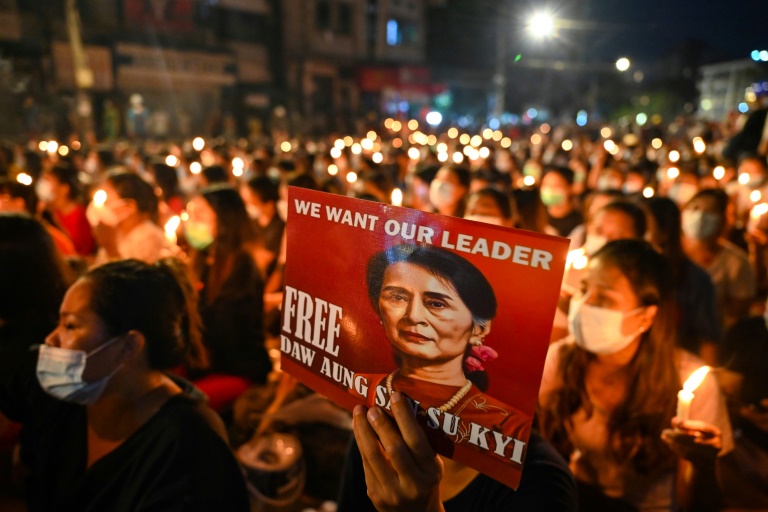
The Southeast Asian nation has been in turmoil since the military ousted Aung San Suu Kyi’s government last year, sparking widespread armed resistance.

The junta has responded with a crackdown that rights groups say includes razing villages, mass extrajudicial killings and airstrikes on civilians.

Since the coup and as of last month, 1,017,000 people have been internally displaced, UNICEF said in a statement on Thursday.

It added that more than half of those forced to flee are in the country’s northwest Sagaing region, which has seen some of the fiercest fighting.

There were “significant challenges” to delivering humanitarian assistance in the region, UNICEF said.

Sagaing is crisscrossed by junta troops, pro-military militias and anti-coup fighters and where authorities regularly cut internet access.

More than 12,000 civilian properties were thought to have been burned or destroyed across Myanmar since the coup, the UN humanitarian agency UNOCHA said in May.

Last month, at least 11 schoolchildren died in an airstrike and firing on a village in Sagaing, an attack the junta said targeted rebels hiding in the area.

Diplomatic efforts to end the crisis are moribund.

A “consensus” brokered last year by the Association of Southeast Asian Nations (ASEAN) aimed at facilitating dialogue between the military and its opponents and the delivery of humanitarian aid has been largely ignored by the junta.

Chipmaker TSMC's sales buck estimates, competition slowdown

Taiwanese semiconductor giant TSMC posted better-than-expected third-quarter profits on Friday as rivals warn that demand for consumer electronics is being hit by the global economic downturn.

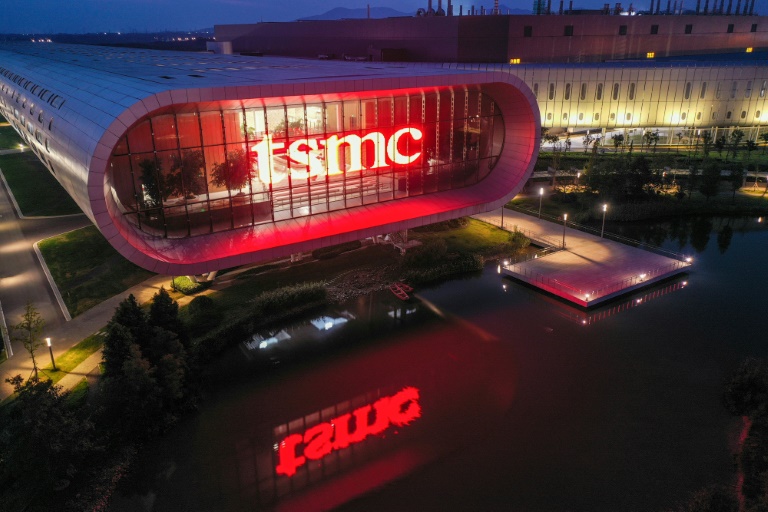
Taiwan Semiconductor Manufacturing Company operates the world’s largest silicon wafer factories and produces some of the most advanced microchips used in everything from smartphones and cars to missiles.

Revenue for September was approximately TW$208.25 billion ($6.6 billion), down 4.5 percent from the month before but an increase of 36 percent from September last year. 

Third-quarter revenue at the world’s largest contract chipmaker also rose 48 percent on-year to about TW$613 billion ($19.4 billion), according to Bloomberg News calculations. 

TSMC’s results came the same day biggest rival Samsung Electronics warned it expects operating profits in the third quarter to fall 32 percent.

They also came as preliminary third-quarter sales at US chipmaker Advanced Micro Devices (AMD) missed projections by more than $1 billion.

TSMC’s results did not contain a forecast but the company is more shielded from a downturn in part because it produces some of the most advanced and smallest chips which are still highly sought after and in short supply.

The Taiwanese firm controls more than half of global foundry output, with clients including Apple and Qualcomm.

Stocks drop, dollar holds gains as US jobs report looms

Equity markets fell and the dollar held gains as the optimism that coursed through trading floors earlier this week gave way to nervousness ahead of a massive US jobs report later Friday that could determine Federal Reserve rate hike plans.

Soft economic data out of Washington sent equities surging at the start of the week and dragged the greenback on hopes that the readings could allow the US central bank to slow its strict monetary tightening programme.

However, the uncertainty that has characterised the year so far has slowly returned and Wall Street’s three main indexes ended Thursday with fresh losses, with sights firmly on the non-farm payrolls (NFP) figures.

Analysts expect the monthly report to show 250,000 posts were created in September, which would be the weakest since late 2020 but still a healthy figure suggesting a strong labour market. 

There is a fear that a result higher than expectations could spark another sell-off across risk markets as investors bet on more bumper rate hikes.

Fed officials have consistently warned that they are determined to ramp up borrowing costs to fight four-decade-high inflation, even at the expense of a recession — feeding worries among traders that the world economy is heading for such a scenario.

“The pivot party gang dialled down their new-found enthusiasm overnight after hawkish central bankers expressed concerns over sticky inflation,” said SPI Asset Management’s Stephen Innes.

He pointed out that other central banks, including in Europe and Canada, had also flagged further tough measures.

Still, OANDA’s Edward Moya added that a consumer price index report next week was also on traders’ radars.

“Economists are not expecting a significant drop in pricing pressures, but many traders think that a cool report could happen and that will force the Fed to change their tune next week,” he said in a note.

“Fed messaging has been consistent and it will likely stay that way post-NFP. Rate hike and cut bets will likely have significant swings after next Thursday’s inflation report.”

Asian markets extended the New York retreat, with downbeat earnings from chipmakers — and a warning from South Korean titan Samsung — owing to a drop in demand that raised worries about the upcoming corporate reporting season.

Hong Kong led the losses in Asia after surging almost six percent Wednesday, while Tokyo, Sydney, Seoul, Wellington, Taipei, Mumbai, Bangkok and Jakarta were all in negative territory.

London, Paris and Frankfurt dipped and US futures were also in the red.

Adding to the unease was a warning from US President Joe Biden that the world faced nuclear “Armageddon” for the first time since the 1962 Cuban missile crisis and that he was trying to find Russian counterpart Vladimir Putin’s “off-ramp”.

He told a Democratic Party fundraiser in New York that Putin was “not joking” when he threatened to use nuclear weapons as his army faces a series of defeats in eastern Ukraine following his invasion in February.

The risk-off mood saw the dollar bounce Thursday after days of losses caused by traders lowering their rate expectations, and it built on the advance against most other units Friday.

The standout was sterling, which remained wedged below $1.12 and continued a rollercoaster that saw it hit a record low last week before recovering thanks to a Bank of England lifeline.

However, observers warned of more volatility in the pound as the government presses ahead with a debt-funded tax-cutting mini-budget, while the promised support from the BoE is due to end soon.

Oil prices edged up and were set for their biggest weekly gain since March after OPEC and other major producers led by Russia agreed to slash output by two million barrels, leading some analysts to predict a return to $100 a barrel by the end of the year.

– Key figures around 0810 GMT –

Tokyo – Nikkei 225: DOWN 0.7 percent at 27,116.11 (close)

Hong Kong – Hang Seng Index: DOWN 1.5 percent at 17,740.05 (close)

Shanghai – Composite: Closed for a holiday

London – FTSE 100: DOWN 0.1 percent at 6,988.31

Pound/dollar: DOWN at $1.1155 from $1.1161 on Thursday

Euro/dollar: UP at $0.9798 from $0.9794

Euro/pound: UP at 87.75 pence from 87.74 pence

Dollar/yen: DOWN at 144.90 yen from 145.11 yen

West Texas Intermediate: UP 0.3 percent at $88.72 per barrel

Brent North Sea crude: UP 0.3 percent at $94.66 per barrel

New York – Dow: DOWN 1.2 percent at 29,926.94 (close)

French motorists scramble for fuel as strike cuts supply

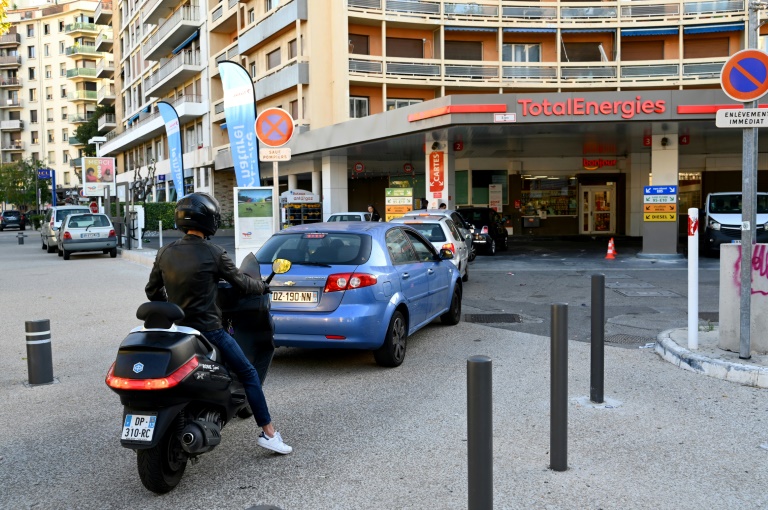
Frustrated motorists faced more chaos at petrol pumps across France on Friday as a strike at energy giant Totalenergies entered its 12th day.

Totalenergies, among the world’s biggest oil companies, runs a network of around 3,500 stations in France, nearly a third of the total, with most of them low on fuel.

“Does anyone know of a petrol station around here that’s been re-supplied?”, read a post in a local Facebook post Friday morning. “Where can I get ethanol?” posted another motorist in the hope of filling the tank before the weekend.

Several of Totalenergies’s oil refineries have been blocked by striking workers.

“We’ve been dry since Sunday,” a manager at a station in central Paris said on Thursday.

TotalEnergies has, since the start of September, cut petrol prices by 20 euro cents ($0.19) per litre to help vehicle owners cope with sharp rises in energy prices triggered by the war in Ukraine.

The average price for E5-type unleaded petrol is now 1.62 euros per litre, or 6.19 euros per gallon, up around four percent from only a week ago.

“Everybody wants to buy from us because we’re cheaper,” said the station manager.

Bottlenecks due to strong demand have been exacerbated by strike action over pay, which has cut the frequency of fuel deliveries in half, he said.

The government has responded by releasing fuel from strategic stocks to relieve the shortage, Energy Transition minister Agnes Pannier-Runacher told the broadcaster BFMTV late Thursday.

In addition, more supplies were being brought in from neighbouring Belgium and elsewhere, she said.

The supply situation would improve “within two or three days”, she predicted, adding that just 15 percent of all petrol stations in France had been affected.

But Thierry Defresne, head of the European works council at TotalEnergies, told AFP that “every site” at the company had announced their intention to extend strike action.

burs/jh/yad

After the floods, a wave of disease plagues Pakistan

His head haloed by a whirlwind of mosquitoes, Aamir Hussain stands on the roof of his home in southern Pakistan surveying the fetid floodwaters all around.

Four months after the start of record monsoon rains linked to climate change, the standing water has curdled into a pestilent soup breeding malaria, cholera and dengue.

The UN has warned of a “second wave” of catastrophe, with the risk that deaths from water-borne disease and malnutrition will outstrip the 1,700 drowned and electrocuted in the initial cascade.

As dusk arrives in Hussain’s submerged village in Dadu district of Sindh province, so do the bugs, and the gamble that they will infect his wife and two children.

“The mosquitoes bite a lot and we fall sick,” said the 25-year-old, atop a brickwork compound framing a courtyard awash with putrid, sucking mud.

His brother, who shares this home, has already ventured off the roof to treat his sick children at hospital with borrowed cash.

“Some of our nets are torn now so we are worried,” said Hussain, whose infant son has fallen ill.

Sindh has been worst-hit by the catastrophic flooding which put a third of Pakistan underwater, displaced eight million, destroyed or damaged two million homes, crippled 1,500 hospitals and clinics and caused an estimated $28 billion in damages.

– Cascading disaster –

Climate change minister Sherry Rehman said this week that more than 20 million people are still in need “with futures that are entirely precarious”. Eight million of those require “urgent medical services”, she said.

Zahida Mallah has already been tipped over the edge.

In a bleak camp south of Dadu, outside the city of Hyderabad, the 35 year-old explained she is in mourning for her twin two-month-old sons.

One died on the day AFP visited, the other around two weeks ago at a separate camp. 

They were killed by “colds”, she said, after sleeping out in the open. She was offered a tent only after it was too late.

“We just keep floundering,” she lamented.

Nearby, the city of Johi is corralled by water, accessible via a ramshackle flotilla of canoes powered by greasy petrol engines.

Residents rallied to save the city as the rains lashed down, heaving sandbags into a snaking makeshift levee. But it cannot hold back the disease.

In a desperately rundown emergency clinic, a doctor treats unresponsive seven year-old Kashaf, a suspected malaria patient lying on dirty sheets with a clutch of pharmaceuticals at her feet.

“Perhaps it’s a natural disaster, or perhaps we are being tested by God, but whatever it is we are the victims,” said her father, 20 year-old Dildar Mastoi.

Under a black scarf his daughter’s eyes have rolled back into her head. She no longer recognises her parents — doctors say a fever has affected her brain.

Barely adults themselves, her mother and father fled rising waters twice before settling in a camp where they drink from a well they suspect is contaminated by flood water.

“From early evening until dawn, throughout the whole night, the mosquitoes are overwhelming,” said Kashaf’s mother, 19 year-old Bashiran Mastoi. “When the night approaches we start to worry.”

“Life at the camp is immensely miserable,” she said in a vigil on her child’s sickbed.

Medic Manzoor Shahani said there has been a “surge” in malaria, gastro illnesses, and dengue while “most of the patients are children and pregnant women”.

– ‘The hidden fever’ –

Before the floods southern Pakistan was already devastated by grinding poverty. Now aid only sporadically penetrates the patchwork swampland, while the true number of those in need has yet to even be discovered.

Doctors and officials offer contradicting figures, as they grapple to understand the scale. In Dadu the official death toll is just 23, but everyone privately agrees the real figure must be far higher.

“This is devastation beyond the government’s approach,” said provincial health monitor Faheem Soomro, as young doctors tally the day’s fresh patients at a boardroom table.

Half of malaria tests are coming back positive and most homes have suspected cases. 

Sindh has recorded 208,000 cases of malaria so far this year, a dramatic rise from 2021, when cases were reported.

Left untreated — as it certainly is in the stranded swathes of Sindh — malaria can quickly turn fatal. In a normal year there are 50,000 deaths from malaria in Pakistan.

Soomro describes it as “the hidden fever”. It has vague flu-like symptoms — as the mosquito-borne parasite enters the liver and bloodstream, in severe cases swelling the brain.

The healthcare disaster is most easily monitored in camps — there are 19 in Dadu — where the luckiest of the displaced live in row upon row of hundreds of simple A-frame tents.

In one of the “tent cities” home to around 5,000, residents clamour for treatment in a blustery gazebo where doctors test them for malnutrition and malaria, as others offer vaccinations and female health advice.

Soomro estimates 60 percent of the displaced once stayed in camps like this, but three quarters of those have scattered back to the sodden hinterlands to remake their lives, often out of reach of aid efforts.

Outside the camps the dispersed can be seen everywhere — in tents and on daybeds clustered by highways and near scummy stagnant lakes.

– ‘Unaware’ victims –

The monsoon torrent came after Pakistan was seared by a spring heatwave, with pockets of Sindh sporadically suffering temperatures of 50C (122F). 

Extreme weather events are increasing in severity as a result of climate change, scientists say.

Pakistan — the world’s fifth largest population — is responsible for only 0.8 percent of global greenhouse emissions but it’s one of the most vulnerable to extreme weather caused by global warming.

In Johi, community activist Ali Pervez laments how the worst affected Pakistanis are unable to advocate for climate justice.

“They are totally unaware,” he said.

“There is not any quality education [so] that we can easily make aware, empower our people.”

After the floods, a wave of disease plagues Pakistan

His head haloed by a whirlwind of mosquitoes, Aamir Hussain stands on the roof of his home in southern Pakistan surveying the fetid floodwaters all around.

Four months after the start of record monsoon rains linked to climate change, the standing water has curdled into a pestilent soup breeding malaria, cholera and dengue.

The UN has warned of a “second wave” of catastrophe, with the risk that deaths from water-borne disease and malnutrition will outstrip the 1,700 drowned and electrocuted in the initial cascade.

As dusk arrives in Hussain’s submerged village in Dadu district of Sindh province, so do the bugs, and the gamble that they will infect his wife and two children.

“The mosquitoes bite a lot and we fall sick,” said the 25-year-old, atop a brickwork compound framing a courtyard awash with putrid, sucking mud.

His brother, who shares this home, has already ventured off the roof to treat his sick children at hospital with borrowed cash.

“Some of our nets are torn now so we are worried,” said Hussain, whose infant son has fallen ill.

Sindh has been worst-hit by the catastrophic flooding which put a third of Pakistan underwater, displaced eight million, destroyed or damaged two million homes, crippled 1,500 hospitals and clinics and caused an estimated $28 billion in damages.

– Cascading disaster –

Climate change minister Sherry Rehman said this week that more than 20 million people are still in need “with futures that are entirely precarious”. Eight million of those require “urgent medical services”, she said.

Zahida Mallah has already been tipped over the edge.

In a bleak camp south of Dadu, outside the city of Hyderabad, the 35 year-old explained she is in mourning for her twin two-month-old sons.

One died on the day AFP visited, the other around two weeks ago at a separate camp. 

They were killed by “colds”, she said, after sleeping out in the open. She was offered a tent only after it was too late.

“We just keep floundering,” she lamented.

Nearby, the city of Johi is corralled by water, accessible via a ramshackle flotilla of canoes powered by greasy petrol engines.

Residents rallied to save the city as the rains lashed down, heaving sandbags into a snaking makeshift levee. But it cannot hold back the disease.

In a desperately rundown emergency clinic, a doctor treats unresponsive seven year-old Kashaf, a suspected malaria patient lying on dirty sheets with a clutch of pharmaceuticals at her feet.

“Perhaps it’s a natural disaster, or perhaps we are being tested by God, but whatever it is we are the victims,” said her father, 20 year-old Dildar Mastoi.

Under a black scarf his daughter’s eyes have rolled back into her head. She no longer recognises her parents — doctors say a fever has affected her brain.

Barely adults themselves, her mother and father fled rising waters twice before settling in a camp where they drink from a well they suspect is contaminated by flood water.

“From early evening until dawn, throughout the whole night, the mosquitoes are overwhelming,” said Kashaf’s mother, 19 year-old Bashiran Mastoi. “When the night approaches we start to worry.”

“Life at the camp is immensely miserable,” she said in a vigil on her child’s sickbed.

Medic Manzoor Shahani said there has been a “surge” in malaria, gastro illnesses, and dengue while “most of the patients are children and pregnant women”.

– ‘The hidden fever’ –

Before the floods southern Pakistan was already devastated by grinding poverty. Now aid only sporadically penetrates the patchwork swampland, while the true number of those in need has yet to even be discovered.

Doctors and officials offer contradicting figures, as they grapple to understand the scale. In Dadu the official death toll is just 23, but everyone privately agrees the real figure must be far higher.

“This is devastation beyond the government’s approach,” said provincial health monitor Faheem Soomro, as young doctors tally the day’s fresh patients at a boardroom table.

Half of malaria tests are coming back positive and most homes have suspected cases. 

Sindh has recorded 208,000 cases of malaria so far this year, a dramatic rise from 2021, when cases were reported.

Left untreated — as it certainly is in the stranded swathes of Sindh — malaria can quickly turn fatal. In a normal year there are 50,000 deaths from malaria in Pakistan.

Soomro describes it as “the hidden fever”. It has vague flu-like symptoms — as the mosquito-borne parasite enters the liver and bloodstream, in severe cases swelling the brain.

The healthcare disaster is most easily monitored in camps — there are 19 in Dadu — where the luckiest of the displaced live in row upon row of hundreds of simple A-frame tents.

In one of the “tent cities” home to around 5,000, residents clamour for treatment in a blustery gazebo where doctors test them for malnutrition and malaria, as others offer vaccinations and female health advice.

Soomro estimates 60 percent of the displaced once stayed in camps like this, but three quarters of those have scattered back to the sodden hinterlands to remake their lives, often out of reach of aid efforts.

Outside the camps the dispersed can be seen everywhere — in tents and on daybeds clustered by highways and near scummy stagnant lakes.

– ‘Unaware’ victims –

The monsoon torrent came after Pakistan was seared by a spring heatwave, with pockets of Sindh sporadically suffering temperatures of 50C (122F). 

Extreme weather events are increasing in severity as a result of climate change, scientists say.

Pakistan — the world’s fifth largest population — is responsible for only 0.8 percent of global greenhouse emissions but it’s one of the most vulnerable to extreme weather caused by global warming.

In Johi, community activist Ali Pervez laments how the worst affected Pakistanis are unable to advocate for climate justice.

“They are totally unaware,” he said.

“There is not any quality education [so] that we can easily make aware, empower our people.”

Close Bitnami banner
Bitnami