World

Who is China's President Xi Jinping?

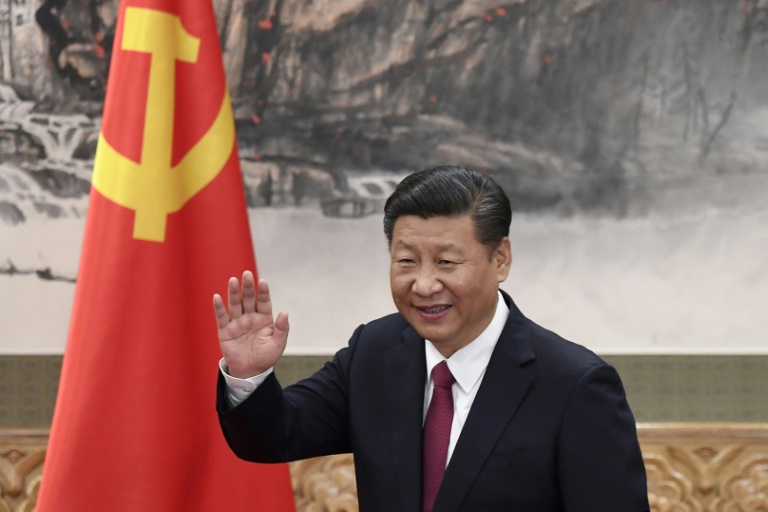
When Xi Jinping took power in 2012, some observers predicted he would be the most liberal Communist Party leader in China’s history, based on his low-key profile, family backstory and perhaps a degree of misguided hope.

Ten years later, those forecasts lie in tatters, proving only how little was understood of the man who looks set to become China’s most powerful ruler since Mao Zedong at a major party congress this month.

Xi has shown himself to be ruthless in his ambition, intolerant of dissent, with a desire for control that has infiltrated almost every aspect of life in modern China.

He has gone from being primarily known as the husband of a celebrity singer to someone whose apparent charisma and aptitude for political storytelling have created a personality cult not seen since Mao’s day.

The colourful details of his early life have been rinsed and repackaged in official party lore, but the man himself — and what drives him — remain somewhat more of an enigma.  

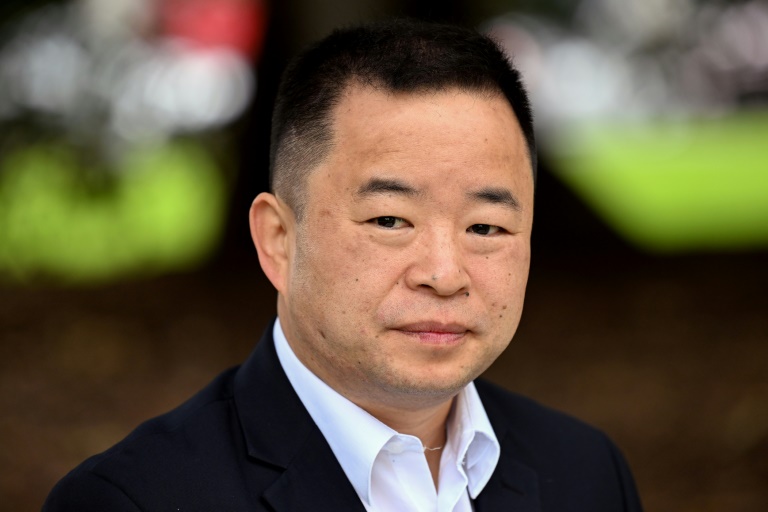
“I dispute the conventional view that Xi Jinping struggles for power for power’s sake,” Alfred L. Chan, author of a book on Xi’s life, told AFP.

“I would suggest that he strives for power as an instrument… to fulfil his vision.”

Another biographer, Adrian Geiges, told AFP that he did not think Xi was motivated by a desire for personal enrichment, despite international media investigations having revealed his family’s amassed wealth.

“That’s not his interest,” Geiges said.

“He really has a vision about China, he wants to see China as the most powerful country in the world.”

Central to that vision — what Xi calls the “Chinese Dream” or “great rejuvenation of the Chinese nation” — is the role of the Communist Party (CCP). 

“Xi is a man of faith… for him, God is the Communist Party,” wrote Kerry Brown, author of “Xi: A Study in Power”. 

“The greatest mistake the rest of the world makes about Xi is to not take this faith seriously.”  

– ‘Traumatised’ – 

Xi might not seem an obvious candidate to become a CCP diehard, though he grew up as a “princeling”, or member of the party elite. 

His father Xi Zhongxun was a revolutionary hero turned vice premier, whose “strictness toward his family members was so serious that even those close to him believed it bordered on the inhuman”, according to the elder Xi’s biographer Joseph Torigian.

But when Zhongxun was purged by Mao and targeted during the Cultural Revolution, “(Jinping) and his family were traumatised”, said Chan. 

His status vanished overnight, and the family was split up. One of his half-sisters is reported to have killed herself because of the persecution.

Xi has said he was ostracised by his classmates, an experience the political scientist David Shambaugh suggests contributed to a “sense of emotional and psychological detachment and his autonomy from a very young age”.

At just 15, Xi was ordered to the countryside in central China where he spent years hauling grain and sleeping in cave homes. 

“The intensity of the labour shocked me,” he later said.

He also had to take part in “struggle sessions” in which he had to denounce his father. 

“Even if you don’t understand, you are forced to understand,” he said, describing the sessions to a Washington Post reporter “with a trace of bitterness” in a 1992 interview.

“It makes you mature earlier.”

Biographer Chan said the experiences of his youth had given him “toughness”.  

“He tends to go for broke. He tends to use a two-fisted approach when he approaches problems. But he also has a certain appreciation of the arbitrariness of power and that’s why he also emphasises law-based governance.”

– Systematic, low profile –

Nowadays, the cave Xi slept in is a domestic tourist draw, used to emphasise traits such as his concern for China’s poorest.

When AFP visited in 2016, one local painted a picture of an almost legendary figure, reading books between breaks in hard labour “so one could see he was no common man”.

That does not seem to have been obvious at the time though. Xi himself said he was not even rated “as high as the women” when he first arrived.

His application for CCP membership was rejected multiple times because of the family stigma, before it was finally accepted.

Beginning as a village party boss in 1974, Xi climbed to the governorship of coastal Fujian province in 1999, then party chief of Zhejiang province in 2002 and eventually Shanghai in 2007.

“He was working very systematically… to get experience by starting at a very low level, in a village, then in a prefecture… and so on,” said biographer Geiges.

“And he was very clever by keeping a low profile.”

Xi’s father was rehabilitated in the late 1970s following the death of Mao, massively boosting his son’s standing.

Following a divorce from his first wife, Xi married superstar soprano Peng Liyuan in 1987, at a time when she was much better known than him.

Even so, his potential was not apparent to all, exemplified by comments made by his host on a trip to the United States in 1985.

“No one in their right mind would ever think that that guy who stayed in my house would become the president,” Eleanor Dvorchak was quoted as saying years later in the New Yorker magazine.

Cai Xia, a former high-ranking CCP cadre who now lives in exile in the United States, believes Xi “suffers from an inferiority complex, knowing that he is poorly educated in comparison with other top CCP leaders”.

As a result, he is “thin-skinned, stubborn, and dictatorial”, she wrote in a recent article in Foreign Affairs.

– ‘Heir of the revolution’ –

But Xi has always regarded himself “as an heir of the revolution”, said Chan.

In 2007, he was appointed to the Politburo Standing Committee, the party’s highest decision-making body.

When he replaced Hu Jintao five years later, there was little in Xi’s past administrative record that foreshadowed his actions once installed as leader.

He has cracked down on civil society movements, independent media and academic freedoms, overseen alleged human rights abuses in the northwest Xinjiang region, and promoted a far more aggressive foreign policy than his predecessor.

In the absence of access to either Xi or any of his inner circle, scholars are left to survey his earlier writings and speeches for clues to his motivations.

“The absolute centrality of the party’s mission to make China a great country again is evident from Xi’s earliest recorded statements,” wrote Brown.

Xi has harnessed that narrative of an ascendant China to great effect, using nationalism as a tool for his own and the party’s legitimacy among the population. 

But there is also evidence he fears that grasp on power might decline.

“The fall of the Soviet Union and of socialism in eastern Europe was a big shock,” said Geiges, adding Xi blames the collapse on its political opening up. 

“So he decided that something like this shall not happen to China… that’s why he wants strong leadership of the Communist Party, with one strong leader.”
Xi's 'final purge' ahead of Chinese Communist Party congress

President Xi Jinping has embarked on a “final round of purges” ahead of a major Chinese Communist Party congress, wielding his long-running anti-corruption campaign to cement his grasp on power, analysts say.

When he became leader a decade ago, Xi vowed to root out dishonest officials, both senior “tigers” and low-ranking “flies”.

More than 1.5 million officials have been punished since then, according to data from the party disciplinary body, and China’s ranking on Transparency International’s Corruption Perception Index has improved.

But critics say the campaign is also a thinly veiled political tool that has helped Xi eliminate his rivals — and the build-up to this year’s congress has seen more heads roll. 

About 1,100 officials have been caught in the party dragnet since the beginning of this year, according to party data.

Among them are former deputy public security minister Sun Lijun and former justice minister Fu Zhenghua, who will now spend the rest of their lives behind bars.

“This final round of purges, masquerading as an anti-corruption campaign, will ensure that Xi will have tighter if not absolute control over personnel and policy issues (at the Congress),” said Willy Lam, a political analyst at the Chinese University of Hong Kong.

Xi is widely expected to secure a third term as party leader at the meeting, upending the succession norms in place since the 1990s.

“Despite all signs that his major goal of a third term is pretty much guaranteed, Xi is still paranoid about his control over appointments to key decision-making bodies within the party,” Lam added.

– ‘Damaging party unity’ –

Once a trusted lieutenant of Xi, Sun oversaw security in Hong Kong during months of unrest in 2019 and was even sent to Wuhan at the start of the Covid pandemic.

But he reportedly fell from grace because of his political ambitions, and was officially accused of “seriously damaging the unity of the party”.

Sun confessed on national television in January to taking bribes worth $14 million, hidden inside boxes of what appeared to be seafood.

Others allegedly in his “political clique”, including Fu and three former police chiefs, were also rounded up and given harsh sentences.

“Sun Lijun’s case is linked to Xi’s absolute control of the security apparatus, which is indispensable for his political agenda,” said Yun Sun, director of the China programme at the Stimson Center think tank in Washington.

“It also sends a stern message to anyone with dissenting views about Xi’s leadership.”

Chinese Communist Party politics — despite the facade of unity — has always been deeply factional with different groups vying for influence. 

“There are some who are anti-Xi but very pro-party. They don’t like where the party is heading under him,” Alex Payette, chief executive of consultancy Cercius Group, told AFP. 

The congress presents an opportunity for Xi to reduce that threat by promoting close allies to positions on the Politburo’s seven-person standing committee, the apex of power.

– ‘Absolute loyalty’ –

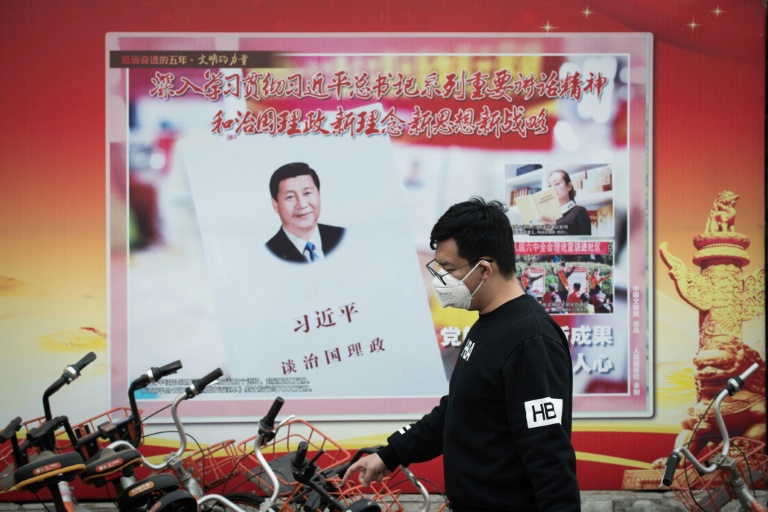
More than any other Chinese leader since Mao Zedong, Xi has built a strong personality cult, with children as young as 10 required to take lessons in “Xi Jinping Thought”.

And according to Wu Muluan, a Chinese politics expert at the National University of Singapore, he has used the anti-corruption campaign to turn the Communist Party “from a collective dictatorship to a personalist dictatorship”.

He has already brought under his wing the three critical power centres of the party — the military, the propaganda machine and the internal security apparatus — by rooting out dissenting voices and replacing them with his proteges. 

For example, the recently appointed minister of public security Wang Xiaohong has known Xi at least since the mid-1990s, when they were both working in southeastern Fujian province. 

“Xi is cherry-picking people who have shown absolute loyalty to him for decades,” Wu said.

Surrounding himself with allies going into his next term has become even more important given the significant political headwinds Xi faces, including an ailing economy, deteriorating relations with the United States and a strict zero-Covid policy that has accelerated China’s inward turn from the world.

“The anti-corruption card is a potent tool for Xi to send a message to the still-considerable number of opponents in the upper echelon of the party,” analyst Lam said.

“Any opposition could mean a jail term… or at least ugly harassment by the anti-graft agencies such as 24-hour surveillance.” 

Families mourn Thai nursery dead ahead of king's visit

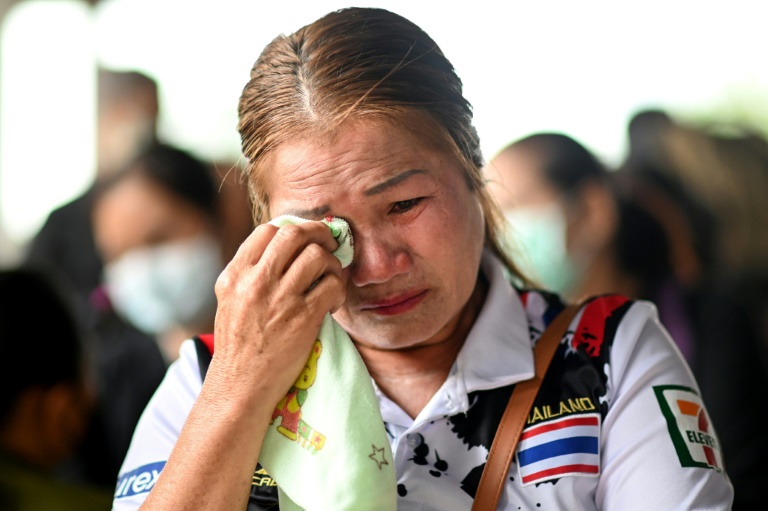
Weeping, grief-stricken families gathered Friday outside a Thai nursery where an ex-policeman murdered nearly two dozen children in one of the kingdom’s worst mass killings.

Thai King Maha Vajiralongkorn and Prime Minister Prayut Chan-O-Cha will later visit survivors of the attack that left at least 37 people dead, including the attacker’s wife and child.

Around the small low-slung building, where only two days ago scores of preschool children played, officials in white uniforms with black armbands laid a red carpet for the king’s visit.

A line of heartbroken parents placed white roses on the steps of the nursery as the baking sun bore down on them Friday morning.

Buarai Tanontong’s two three-year-old grandsons were among those killed at the nursery when the attacker burst through the door.

“I couldn’t sleep. I didn’t think that it would be my two grandsons,” she said, clutching her inconsolable daughter’s shoulder.

Earlier a palace representative laid a wreath from the royal family at the entrance of the nursery.

Overnight, coffins carrying the bodies of the victims — who include 23 children — arrived at a morgue in Udon Thani, the closest city to the rural district ripped apart by Thursday’s three-hour rampage.

Armed with a 9mm pistol and a knife, sacked police sergeant Panya Khamrab opened fire on the childcare centre in the northeastern Nong Bua Lam Phu province at about 12:30 pm (0530 GMT).

Following the attack, 34-year-old Panya fled the scene in a pickup truck to head home and murder his wife and child before taking his own life, police said, ending the killing spree around 3:00 pm. 

– Drug addict –

Flags on government buildings flew at half-mast on Friday in a gesture of mourning for one of the deadliest days in recent Thai history.

Nanthicha Punchum, acting chief of the nursery, described harrowing scenes as the attacker barged into the building in the rural Na Klang district.

“There were some staff eating lunch outside the nursery and the attacker parked his car and shot four of them dead,” she told AFP.

“The shooter smashed down the door with his leg and then came inside and started slashing the children’s heads with a knife.”

Local media reported that the dead included a school teacher who was eight months pregnant, and that one child survived because they were sleeping hidden by a blanket when the attacker struck.

National Police Chief Damrongsak Kittiprapat told reporters that Panya, a former police sergeant, was suspended in January and sacked in June for drug use.

He said the attacker — who used a legally purchased pistol — had been due in court on a drugs charge, adding that Panya was in a manic state but it was unknown whether it was drug-related.

Witness Paweena Purichan, 31, said the attacker was well-known in the area as a drug addict.

She told AFP she encountered Panya driving erratically as he fled the scene.

“The attacker rammed a motorbike into two people who were injured. I sped off to get away from him,” she said.

“There was blood everywhere.”

Video footage that Paweena posted online showed a woman lying injured in a roadside bush after apparently being knocked off her motorbike by Panya.

Thai PM Prayut has ordered a rapid probe into the attack, which came less than three years after a soldier gunned down 29 people in a 17-hour rampage and wounded scores more before he was shot dead by commandos.

And less than a month ago an army officer shot dead two colleagues at a military training base in the capital Bangkok.

But while Thailand has high rates of gun ownership, mass shootings such as Thursday’s are rare.

Biden warns of nuclear 'Armageddon' after Russian threats on Ukraine

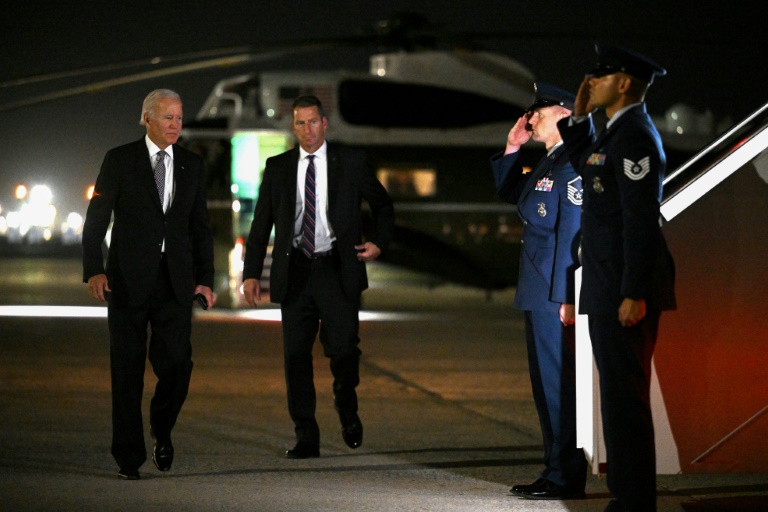
US President Joe Biden said Thursday the world is facing nuclear “Armageddon”, warning that Vladimir Putin may use his atomic arsenal as Russian troops struggle against a Ukrainian counteroffensive.

After Russia’s invasion eight months ago, Putin has made thinly veiled threats to use nuclear weapons if he feels he has run out of options in his bid to seize swaths of Ukrainian territory in the face of stiff resistance by Western-back Kyiv.

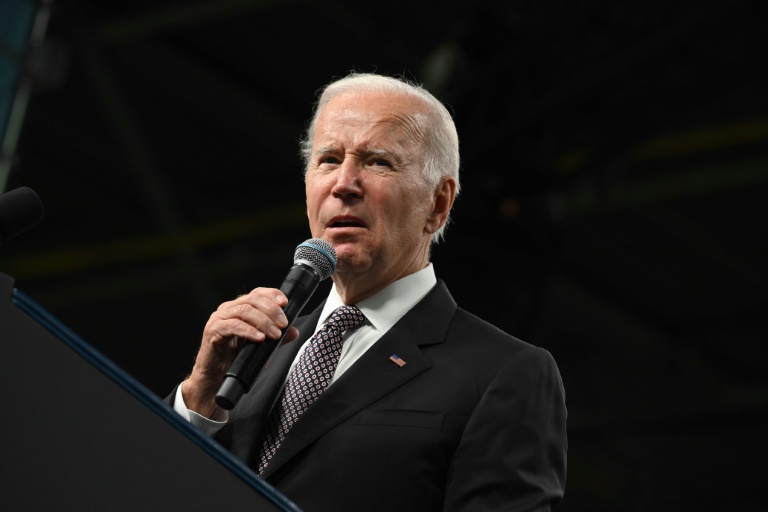
“We have not faced the prospect of Armageddon since Kennedy and the Cuban missile crisis” in 1962, Biden said Thursday in New York, adding that “we’re trying to figure out what is Putin’s off-ramp”.

While experts say any nuclear attacks would likely be relatively small, Biden warned that even a tactical strike in a limited area would still risk triggering a wider conflagration.

Putin is “not joking when he talks about potential use of tactical nuclear weapons or biological or chemical weapons, because his military is, you might say, significantly underperforming,” he said.

Ukraine’s proclaimed wins in the southern region of Kherson are the latest in a series of Russian defeats undermining the Kremlin’s claim to have annexed around 20 percent of Ukraine.

“More than (500 square kilometres) have been liberated from Russian occupiers in the Kherson region alone” since the start of October, President Volodymyr Zelensky announced late Thursday in his nightly address.

The recaptured territory was home to dozens of towns and villages that had been occupied by Russian forces for months, southern army command spokeswoman Natalia Gumeniuk said. 

Kherson, a region with an estimated pre-war population of around one million people, was captured early and easily by Moscow’s troops after their invasion launched on February 24. 

Russian-installed officials have renewed a call for residents to remain calm, with deputy pro-Moscow leader Kirill Stremousov saying Kremlin forces were holding back the advance.

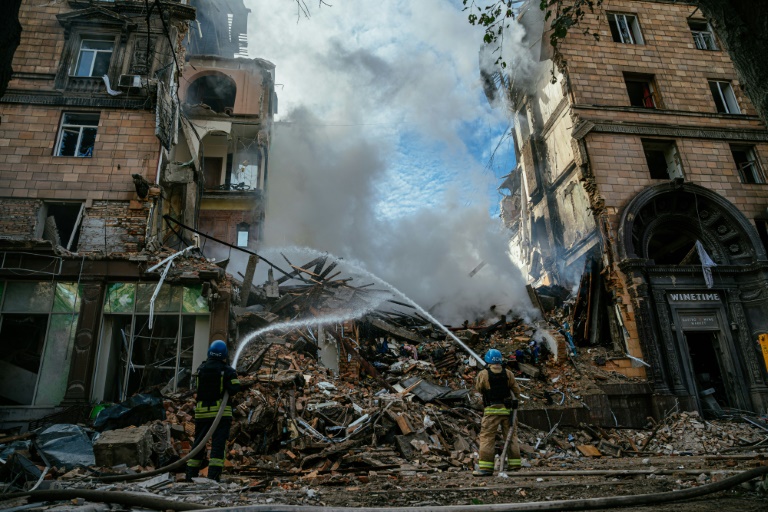
But the Kremlin has pushed on — Russian missiles struck the central industrial city of Zaporizhzhia early on Thursday, killing several civilians. Rescue workers clawed through the rubble with their bare hands searching for survivors, AFP journalists saw.

Addressing a meeting in Prague of European heads of state, Zelensky called on Western capitals to supply his army with more weapons “to punish the aggressor”.

Ukraine must fend off Moscow’s invasion “so that Russian tanks do not advance on Warsaw or again on Prague”, he said.

– ‘Pure hatred’ –

The EU imposed its latest round of sanctions on Russia, expanding bans on trade and individuals over Moscow’s formal annexation last Friday of four Ukrainian regions.

The Russian foreign ministry said it had summoned the French ambassador to Moscow, pointing to the “threats posed” by the increased military support Paris offered to Kyiv.

On Thursday, just 40 kilometres (25 miles) from the artillery battles of the southern front, seven Russian missiles struck downtown Zaporizhzhia. 

“The deaths of seven residents… have been confirmed and at least five more people are considered missing,” said Oleksandr Starukh, Zaporizhzhia’s regional governor. 

“Currently the dismantling of the rubble continues.”

A woman, whose body was carefully removed from the rubble by rescuers, looked as though she had been asleep in bed when the building around her was destroyed.

“For the first time in my life, I feel pure hatred,” said Igor Osolodko, a 25-year-old musician, one of the dozens of volunteer rescuers.

Ukraine’s military has also said it is reclaiming territory in the eastern Lugansk and Donetsk regions, which have been partially controlled by Kremlin proxies since 2014.

Ukrainian forces have made gains on the west bank of the river Dniepr that cuts through Kherson, but the Russian military in a Thursday briefing said its forces rebuffed “repeated attempts to break through our defences” in the area.

Further west, on Ukraine’s contact line with Russian forces from the Mykolaiv region — where Kyiv’s forces had been hunched in foxholes for months and pounded by Russian artillery — the mood was shifting along with frontlines.

– ‘End of the tunnel’ –

Bogdan, 29, from northwest Ukraine who re-enlisted in the military this year, has spent most of the summer holding the line in Mykolaiv some four kilometres from the Russians.

“We see their successes and it inspires us,” he said of Ukrainian advances elsewhere in the country.

The Ukrainian push deeper into Kherson is putting further strain on the Kremlin’s announcement last week that it had annexed the territory — alongside three others — and that its residents were Russian “forever”.

The four territories — Donetsk, Kherson, Lugansk and Zaporizhzhia — create a land corridor between Russia and the Crimean peninsula, which was annexed by Moscow in 2014.

Together, the five regions make up around 20 percent of Ukraine.

Ukrainian Foreign Minister Dmytro Kuleba accused Russian forces of “deliberately striking civilians to sow fear”.

In Russia, opposition figure Vladimir Kara-Murza — jailed in April for denouncing the war — has been charged with high treason, his lawyer told the TASS news agency.

The UN nuclear agency chief was meanwhile in Kyiv to discuss creating a security zone around Ukraine’s Zaporizhzhia atomic plant — the largest in Europe — after Putin ordered his government to impound it.

Rafael Grossi said Thursday it was “obvious” the Russian-controlled plant belonged to Ukraine. 

Shelling has hit its vicinity in recent months, with Ukraine and Russia blaming each other for the attacks that have raised fears of a nuclear disaster.

Grossi is visiting the Ukrainian capital ahead of a visit to Russia.

'Nobody dares speak out': Exiled Chinese writer decries censorship

Murong Xuecun was one of the brightest stars of China’s literary scene, his novels offering searing critiques of contemporary social issues that few other writers dared to imitate. 

But after a decade of diminishing freedom of speech under President Xi Jinping, he could not publish in his own country and was eventually forced into exile.

His fate mirrors that of many liberal Chinese intellectuals who tried to shine a light on the system and then fled abroad, were imprisoned or fell silent. 

The 48-year-old writer, whose real name is Hao Qun, left China in August last year after writing “Deadly Quiet City”, a non-fiction account of the 2020 Wuhan coronavirus lockdown released in March.

His Australian publisher believed he would “definitely get arrested” after the book’s release, Murong told AFP from his home in Melbourne.

“They urged me to leave immediately.”

Murong got to Wuhan in April 2020, taking huge risks to interview the relatives of people lost to a mysterious and deadly virus ravaging the city, and residents who faced food and medical shortages because of the lockdown.

Independent citizen journalists who reported on conditions in Wuhan were later imprisoned, while state propaganda spun the lockdown as a triumph.

“I received constant phone calls from state security trying to harass and threaten me,” he said.

“I was terrified throughout the whole process. When I started writing, (citizen journalist) Zhang Zhan was arrested. Twenty days before, I had conducted a very detailed interview with her.”

Fearing imminent arrest, Murong sent each page as he wrote it to a friend overseas using encryption software, before deleting it from his computer.

“I told my friend: ‘No matter what happens to me, this book must be published.'”

– Changing climate –

Murong became an overnight sensation when his first novel was serialised online in 2002, winning plaudits for its gritty portrayal of urban life with nihilistic characters who pursue drink, sex and drugs.

The relatively permissive climate of the 2000s under former leader Hu Jintao was also a time when raucous social media debate and independent media blossomed.

More Chinese writers gained international acclaim, with Mo Yan winning the Nobel Prize for Literature in 2012.

Online and in print, a multitude of voices flourished –- although publishers played a delicate balancing act with censors. 

But when Xi came to power, voices calling for social change were muzzled, as he sought to eliminate any threats to the Communist Party.

One by one, Murong’s friends — formerly outspoken journalists, intellectuals and writers — were arrested or fell silent.

“Just because they did or said something the Communist Party doesn’t like, the regime threw them in jail,” he said.

Murong himself was summoned to a Beijing police station in 2019 for retweeting a Xi cartoon three years prior.

Cultural censorship increased exponentially under Xi, with even tattoos and earrings worn by men blurred out on television, as the Communist Party sought to emphasise what it deems “healthy” social values.

Now films, TV series and musical works are abruptly pulled if they cross undefined political red lines.

Primary school curriculums contain textbooks on “Xi Jinping Thought”.

Murong’s account on China’s Twitter-like Weibo platform once boasted more than 1 million followers. It was banned in 2013.

Work slowly dried up.

“Although I call myself a writer, it was almost impossible for me to publish essays or books. All I could do was be an anonymous screenwriter,” he said. 

As Xi prepares to secure a norm-breaking third term at October’s party congress, Murong likens the current situation to the Cultural Revolution under Mao Zedong — Communist China’s founder — when fervent mass campaigns mobilised against imaginary social threats.

“China is very likely to become like it was in the Mao era, a country where nobody dares to speak out openly,” he said.

“Perhaps only when the Communist Party’s censorship and oppression are gone can China’s literature and arts truly flourish.”

Nuclear 'Armageddon' threat back for first time since Cold War: Biden

US President Joe Biden said Thursday the world risks nuclear “Armageddon” for the first time since the Cold War and that he is trying to find Russian President Vladimir Putin’s “off-ramp” in the Ukraine conflict.

“We have not faced the prospect of Armageddon since Kennedy and the Cuban missile crisis” in 1962, Biden said at a Democratic Party fundraising event in New York, referring to former US president John F Kennedy.

Putin is “not joking” when he threatens to use nuclear weapons to pursue his invasion of Ukraine, Biden said.

The president made his unusually strong comments about the risks created by Putin’s nuclear threats while speaking to party supporters at an event hosted in the Manhattan home of James Murdoch, son of newspaper mogul Rupert Murdoch.

Referring to the nuclear standoff 60 years ago triggered by the Soviet Union stationing missiles in Cuba, within easy range of the United States, Biden said that for the “first time since the Cuban missile crisis, we have a direct threat from the use of nuclear weapons if in fact things continue down the path they are going.”

“We’re trying to figure out what is Putin’s off-ramp,” Biden said.

Putin has made thinly veiled threats to use nuclear weapons if he feels he has run out of options in his bid to seize swaths of Ukrainian territory in the face of stiff resistance by Western-back Kyiv.

Experts say these would most likely be relatively small, tactical strikes. But Biden warned such strikes in a limited area would still risk triggering a wider conflagration.

“We’ve got a guy I know fairly well,” Biden said. Putin’s “not joking when he talks about potential use of tactical nuclear weapons or biological or chemical weapons, because his military is, you might say, significantly underperforming.”

But “I don’t think there’s any such thing as the ability to easily (use) a tactical nuclear weapon and not end up with Armageddon,” Biden said.

The president’s comments come as Ukraine has recaptured fresh territory from Russian troops, the latest in a series of Moscow defeats undermining the Kremlin’s claim to have annexed around 20 percent of Ukraine.

But with Russian’s once-vaunted military faltering, Washington and its Western allies have grown concerned about what Putin might be planning on the battlefield.

“Where does he find a way out?” Biden asked. 

“Where does he find himself in a position that he does not, not only lose face, but lose significant power within Russia?”

Asian stocks drop, dollar holds rally as US jobs report looms

Asian markets fell and the dollar held an advance as the optimism that coursed through trading floors earlier this week gave way to nervousness ahead of a massive US jobs report later Friday that could determine Federal Reserve rate hike plans.

Soft economic data out of Washington sent equities surging at the start of the week and dragged the greenback on hopes that the readings could allow the US central bank to pivot and slow down its strict monetary tightening programme.

However, the uncertainty that has characterised the year so far has slowly returned and Wall Street’s three main indexes ended Thursday with fresh losses, with sights firmly on the non-farm payrolls (NFP) figures.

Analysts expect the monthly report to show 250,000 posts were created in September, which would be the weakest since late 2020 but still a healthy figure suggesting a strong labour market. 

There is a fear that a result higher than expectations could spark another sell-off across risk markets as investors bet on more bumper rate hikes.

Fed officials have consistently warned that they are determined to ramp up borrowing costs to fight four-decade-high inflation, even at the expense of a recession — feeding worries among traders that the world economy is heading for such a scenario.

“The pivot party gang dialled down their new-found enthusiasm overnight after hawkish central bankers expressed concerns over sticky inflation,” said SPI Asset Management’s Stephen Innes.

He pointed out that other central banks, including in Europe and Canada, had also flagged further tough measures.

Still, OANDA’s Edward Moya added that a consumer price index report next week was also coming on traders’ radars.

“Economists are not expecting a significant drop in pricing pressures, but many traders think that a cool report could happen and that will force the Fed to change their tune next week,” he said in a note. 

“Fed messaging has been consistent and it will likely stay that way post-NFP. Rate hike and cut bets will likely have significant swings after next Thursday’s inflation report.”

Asian markets extended the New York retreat, with downbeat earnings from chipmakers — and a warning from South Korean titan Samsung — raising worries about the upcoming corporate earnings season.

Tokyo, Hong Kong, Sydney, Seoul, Wellington, Taipei, Manila and Jakarta were all in negative territory.

Adding to the unease was a warning from US President Joe Biden that the world faced nuclear “Armageddon” for the first time since the 1962 Cuban missile crisis and that he is trying to find Russian counterpart Vladimir Putin’s “off-ramp”

He told a Democratic Party fundraiser in New York that Putin was “not joking” when he threatened to use nuclear weapons as his army faces a series of defeats in eastern Ukraine following his invasion in February.

The risk-off mood saw the dollar bounce Thursday after days of losses caused by traders lowering their rate expectations, and it held the advance in early Asian business.

The standout was sterling, which remained wedged below $1.12 and continued a rollercoaster that saw it hit a record low last week before recovering thanks to a Bank of England lifeline.

However, observers warned of more volatility in the pound as the government presses ahead with a debt-funded tax-cutting mini-budget, while the promised support from the BoE is due to end soon.

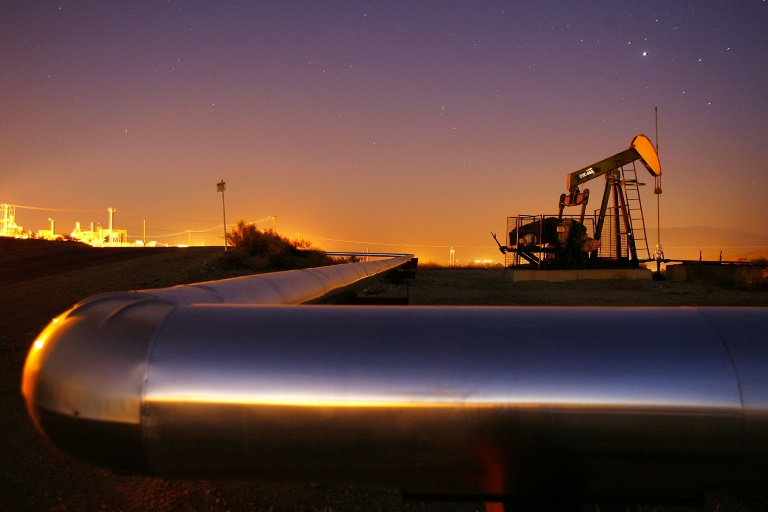
Oil prices edged down but are set for their biggest weekly gain since March after OPEC and other major producers led by Russia agreed to slash output by two million barrels, leading some analysts to predict a return to $100 a barrel by the end of the year.

– Key figures around 0230 GMT –

Tokyo – Nikkei 225: DOWN 0.6 percent at 27,149.76 (break)

Hong Kong – Hang Seng Index: DOWN 0.9 percent at 17,836.92

Shanghai – Composite: Closed for a holiday

Pound/dollar: UP at $1.1164 from $1.1161 on Thursday

Euro/dollar: UP at $0.9797 from $0.9794

Euro/pound: UP at 87.77 pence from 87.74 pence

Dollar/yen: DOWN at 145.04 yen from 145.11 yen

West Texas Intermediate: DOWN 0.1 percent at $88.40 per barrel

Brent North Sea crude: DOWN 0.2 percent at $94.28 per barrel

New York – Dow: DOWN 1.2 percent at 29,926.94 (close)

London – FTSE 100: DOWN 0.8 percent at 6,997.27 (close) 

Samsung Electronics forecasts 31.7% fall in Q3 profit

Samsung Electronics expects operating profits in the third quarter to fall 31.7 percent, the South Korean tech giant said in a statement Friday, after a global economic downturn hit demand for consumer electronics.

The latest forecast is the company’s first projection of a year-on-year decline in profit for nearly three years. 

Operating profit for July to September was predicted to reach 10.8 trillion won ($7.7 billion), down 31.7 percent from 15.8 trillion won a year earlier, the world’s major maker of smartphones and memory chips said in a statement.

But the company said it expected sales to increase by 2.7 percent from the same period last year to 76 trillion won.

The firm is the flagship subsidiary of the giant Samsung Group, by far the biggest of the family-controlled conglomerates that dominate business in Asia’s fourth-largest economy, and is crucial to South Korea’s economy.

Until the second quarter of this year, Samsung, along with other tech companies, significantly benefitted from strong demand for electronic devices — as well as chips that power them — during the pandemic.

But the global economy is now facing multiple challenges, including soaring inflation, rising interest rates and a growing threat of a broad debt crisis.

The situation has been exacerbated by Russia’s invasion of Ukraine — which spurred a surge in energy prices and pushed global food prices up — along with China’s adherence to a strict zero-Covid policy.

“If you look at the current macroeconomic environment, the demand for consumer segment such as smartphones, PCs remains weak,” Neil Shah, an analyst at Counterpoint research, told AFP. 

And “almost a third of the Samsung’s revenues and almost 70 percent of operating profits comes from semiconductor divisions and particularly memory,” he added.

The company is expected to release its final earnings report at the end of this month.

Families of detainees appeal to US to kick up pressure in Mideast

Relatives of imprisoned or recently released activists in the Middle East, including in Egypt and Saudi Arabia, urged the United States this week to use its influence to secure progress on human rights in those countries.

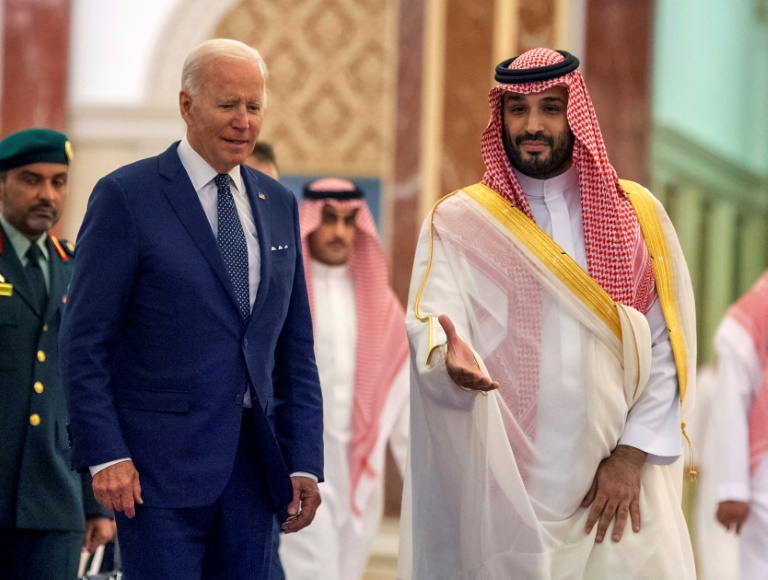
Their talks in Washington with White House, State Department and congressional officials, led by the NGO Freedom Initiative, came almost three months after President Joe Biden’s much-criticized visit to Jeddah, where he met with Crown Prince Mohammed bin Salman and Egyptian President Abdel Fattah al-Sissi.

The visit brought focus to Biden’s back-and-forth posture toward US allies like Saudi Arabia and Egypt. Before Biden was elected, he pledged to treat Saudi Arabia as a “pariah” because of the murder of journalist Jamal Khashoggi, dismembered in 2018 in the Saudi consulate in Istanbul, and to be a herald of democracy.

But his cordial “fist bump” greeting with Prince Mohammed in July left a bitter taste for some activists and their families, and their visit to Washington was tinged with both disillusionment and determination to keep the pressure on.

Sanaa Seif, sister of Alaa Abdel Fattah, Egypt’s most notorious detainee who has been on hunger strike for more than six months, told AFP she was “disappointed” that while US officials were “very sympathetic… it doesn’t translate to anything tangible.”

Pressure from Washington could, however, have an impact on the Egyptian government as well as on the British authorities and push them to act more forcefully, she argued. From his cell, her brother, sentenced to five years in prison for “spreading false information,” became a British citizen this year.

– ‘Imprisoned for tweets’ –

In the run-up to the global climate summit known as COP27 next month in Egypt, Palestinian Ramy Shaath, who was imprisoned for more than 900 days in Egypt, has called on the United States to ensure that this climate conference does not serve as “greenwashing” for the regime.

“The level of oppression is becoming devastating” in Egypt, he said, noting that NGOs say the country holds some 60,000 political prisoners.

Yet al-Sissi remains susceptible to foreign pressure.

“He definitely looks at the US and the European Union as the main source of support, the main source of income, main source of weaponry, and he’s susceptible to their small criticism,” Shaath said, adding that he wishes such criticism would become “more vocal.”

Egypt receives more than $1 billion a year in direct US military aid.

Lina al-Hathloul, the sister of Loujain al-Hathloul, a Saudi women’s rights activist released from prison in 2021 but still banned from leaving the country, also told US officials that “the only concrete solution (was) to stop encouraging a dictator,” referring to the crown prince.

“You have leverage,” she urged them.

Before Biden’s trip to Jeddah in mid-July, “we were clear with our message: If the administration is going to visit our countries without putting clear conditions when it comes to human rights, it will get worse and our oppressors will feel emboldened,” Lina al-Hathloul told AFP.

“They promised us that it was not going to happen” in this way, she added, but the situation in Saudi Arabia is “clearly worse than before.”

“Everyone is afraid,” she said. “People are imprisoned for tweets.”

In September, in front of the United Nations General Assembly, Biden assured that “the United States will always promote human rights… around the world,” and that “the future will be won by those countries that unleash the full potential of their populations.”

But his “fist bump” diplomacy, which was supposed to mark a new beginning with Riyadh, showed its limits in another area Wednesday with the announcement that Saudi-led oil exporters group Opec+ was going to cut its production.

“Biden sold his human rights principles for the Saudi crown prince’s promise to increase oil production,” blasted Kenneth Roth, the former head of non-governmental organization Human Rights Watch. “So Joe Biden, was it worth it?”

Biden pardons thousands for cannabis possession

US President Joe Biden pardoned thousands of Americans convicted of marijuana possession Thursday in a major new step towards destigmatizing the drug — and fulfilling a promise to his supporters a month before midterm elections.

“I am announcing a pardon of all prior federal offenses of simple possession of marijuana,” Biden said.

Biden did not call for fully decriminalizing cannabis, saying that “limitations on trafficking, marketing and under-age sales should stay in place.”

Instead, he homed in individual possession of a substance that the government health authorities estimate was used by at least 18 percent of the population in 2019 — and which is already permitted by multiple state governments for recreational or medical purposes.

In addition to the pardons, Biden instructed the departments of justice and health to determine whether cannabis should be reclassified as a less dangerous substance.

Officials told reporters that about 6,500 people are directly affected by convictions under federal marijuana statutes. Clemency will extend to thousands more convicted under laws in the federal capital, Washington.

However, Biden’s gesture aims to take the shift much further, putting pressure on state authorities everywhere to follow suit.

“I am urging all governors to do the same with regard to state offenses. Just as no one should be in a federal prison solely due to the possession of marijuana, no one should be in a local jail or state prison for that reason, either,” Biden said.

– Political impact –

The move was announced abruptly by video and in a written statement, with no previous build-up by the White House.

However, the impact is expected to be significant, both legally and politically, allowing Biden to seize the narrative on a trend toward decriminalization that swaths of the country have already embraced.

Ahead of the November 8 midterms, where his Democrats are struggling to hold onto even partial control of Congress, Biden has now satisfied a key demand from racial justice activists angered at the way enforcement of cannabis laws often targets ethnic minorities.

“As I often said during my campaign for president, no one should be in jail just for using or possessing marijuana. Sending people to prison for possessing marijuana has upended too many lives and incarcerated people for conduct that many states no longer prohibit,” Biden said.

He noted that non-white people are disproportionately affected by marijuana possession convictions, which in addition to sometimes including jail time can unleash years of legal fallout, creating difficulties in getting work and education.

The third measure announced was an instruction for federal health and justice officials to “review expeditiously how marijuana is scheduled under federal law.”

Currently, federal law lumps marijuana alongside what are widely accepted to be far more dangerous narcotics such as heroin and LSD. It is in a group higher than the relatively modern — and hugely addictive — drugs fentanyl and methamphetamine.

Senate leader Chuck Schumer, a key Biden ally who is fighting to try and keep the chamber under Democratic control in November, said the president’s move recognized that the so-called “war on drugs” has been “a war on people and particularly people of color.”

Derrick Johnson, president of the NAACP, a leading civil rights organization, said on Twitter: “We applaud President Biden.”

“Correcting unequal treatment — including marijuana reform — has been a priority issue for the NAACP for decades.”

Close Bitnami banner
Bitnami