World

IMF chief says world better prepared for this crisis

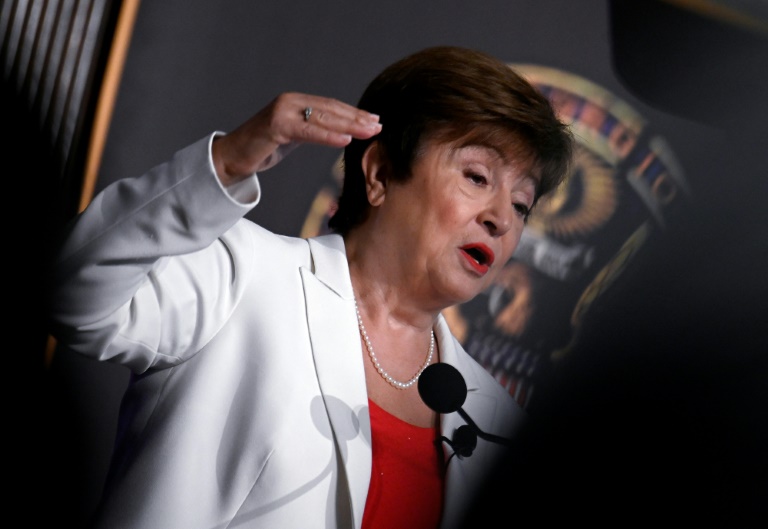
The global economy is at a difficult crossroads, buffeted by multiple shocks including soaring inflation, rising interest rates and a growing threat of broad debt crisis, but IMF Managing Director Kristalina Georgieva told AFP that institutions are better prepared to weather this storm.

Below is an excerpt from an interview conducted ahead of the IMF and World Bank annual meetings in Washington next week:

Could the fallout in 2023 be worse than the 2008 global financial crisis?

What we had today is (a) much stronger banking sector than we had then, and that has proven to be a source of resilience for the world economy. We also have something very important: stronger central banks, truly independent with the experience that they have built since the global financial crisis. And that shows in how central banks are reacting to the signs of inflation.

Does the IMF have enough tools and financial resources?

During the last year since Covid, we have extended lending of about $270 billion. We have a lending capacity of $1 trillion. So we have space to continue to support the members. We do see an increase in requests for fund programs, not surprisingly. Just since Russia invaded Ukraine, we have provided financial support to 16 countries of about $90 billion and we are currently looking at some 21 requests… My message to countries: act early. Come to us for precautionary instruments so you can build your position in this very difficult time to sustain your economy against the risks to come.

China is a major creditor, are they doing enough to help with debt relief?

We have got… very substantive engagement with China in the context of the countries that ask for treatment under the Common Framework. And we have made good progress with China stepping up to co-chair the creditors committee for Zambia and to reach an agreement on Zambia, and now we expect the same for Chad. What we need to recognize is that the Chinese institutions are still working their way through debt issues. There are many lenders in China. Only recently the Ministry of Finance and central bank, the People’s Bank of China, got the mandate to coordinate, and it takes some time to reach that coordination. 

But time is not our friend. And this is what we have conveyed clearly, that we do not want to see individual defaults turning into opening a gateway for a debt crisis. And it is not in China’s interest. 
World Bank spent almost $15 bn on fossil fuel projects since Paris deal: report

The World Bank has pumped $14.8 billion into fossil fuel projects globally in the period following the landmark Paris climate accord, a report said Thursday.

Though the multilateral lender pledged in 2018 to end financing for upstream oil and gas, the move failed to include indirect financing via intermediaries, according to the report compiled by an NGO coalition called The Big Shift Global.

It comes amid growing pressure on US President Joe Biden to fire World Bank chief David Malpass, a Trump appointee who has dodged questions about the reality of human-driven climate change.

“Each time the World Bank invests in another fossil fuel project, it fuels more climate disaster,” said Sophie Richmond of the Big Shift Campaign. “There is no justification for using taxpayers’ money to exacerbate the climate crisis.”

Under the 2015 Paris deal, world leaders committed to limiting long-term warming to 1.5 Celsius (2.7 degrees Fahrenheit) to avert devastating outcomes for the planet’s future habitability. 

The biggest project listed in the report, called “Investing in Climate Disaster: World Bank Finance for Fossil Fuels,” was the Trans-Anatolian Pipeline in Azerbaijan, funded in 2018 to the tune of $1.1 billion.

“It serves to perpetuate on-going use of fossil gas in Europe,” the report said, while noting that while the pipeline may increase gas export revenues, market volatility makes it an unreliable source of income.

The World Bank Group’s own assessment stated the project was “expected to have potentially significant adverse social and environmental impacts that are diverse, irreversible, or unprecedented.”

These impacts included “landscape, water quality, air quality, noise levels, waste water, solid waste, hazardous waste, biodiversity, worker health and safety and communities health and safety during construction and operation and physical and economic resettlement.”

Despite this, the project was given the green light. 

Another project highlighted was the construction of two coal plants in Indonesia called Java 9 and 10, where the Bank supplied $65 million in indirect funds — despite the fact that the Java and Bali grid is already experiencing 40 percent oversupply of electricity.

“It is obvious that the new Java 9 & 10 coal-fired power plants will bring more disaster in terms of environmental, social and health issues, in an area already covered with coal plants and industries,” said Yuyun Indradi of Trend Asia, an NGO that promotes clean energy. 

The report’s authors also rejected the Bank’s treatment of natural gas as a “bridge” between fossil fuels and renewable energy, saying it crowded out needed investments in clean energy.

In a statement to AFP, the World Bank said, “We dispute the findings of the report: it makes inaccurate assumptions about the World Bank Group’s lending. 

“In fiscal year 2022, the Bank Group delivered a record $31.7 billion for climate-related investments, to help communities around the world respond to the climate crisis, and build a safer and cleaner future.”

World Bank spent almost $15 bn on fossil fuel projects since Paris deal: report

The World Bank has pumped $14.8 billion into fossil fuel projects globally in the period following the landmark Paris climate accord, a report said Thursday.

Though the multilateral lender pledged in 2018 to end financing for upstream oil and gas, the move failed to include indirect financing via intermediaries, according to the report compiled by an NGO coalition called The Big Shift Global.

It comes amid growing pressure on US President Joe Biden to fire World Bank chief David Malpass, a Trump appointee who has dodged questions about the reality of human-driven climate change.

“Each time the World Bank invests in another fossil fuel project, it fuels more climate disaster,” said Sophie Richmond of the Big Shift Campaign. “There is no justification for using taxpayers’ money to exacerbate the climate crisis.”

Under the 2015 Paris deal, world leaders committed to limiting long-term warming to 1.5 Celsius (2.7 degrees Fahrenheit) to avert devastating outcomes for the planet’s future habitability. 

The biggest project listed in the report, called “Investing in Climate Disaster: World Bank Finance for Fossil Fuels,” was the Trans-Anatolian Pipeline in Azerbaijan, funded in 2018 to the tune of $1.1 billion.

“It serves to perpetuate on-going use of fossil gas in Europe,” the report said, while noting that while the pipeline may increase gas export revenues, market volatility makes it an unreliable source of income.

The World Bank Group’s own assessment stated the project was “expected to have potentially significant adverse social and environmental impacts that are diverse, irreversible, or unprecedented.”

These impacts included “landscape, water quality, air quality, noise levels, waste water, solid waste, hazardous waste, biodiversity, worker health and safety and communities health and safety during construction and operation and physical and economic resettlement.”

Despite this, the project was given the green light. 

Another project highlighted was the construction of two coal plants in Indonesia called Java 9 and 10, where the Bank supplied $65 million in indirect funds — despite the fact that the Java and Bali grid is already experiencing 40 percent oversupply of electricity.

“It is obvious that the new Java 9 & 10 coal-fired power plants will bring more disaster in terms of environmental, social and health issues, in an area already covered with coal plants and industries,” said Yuyun Indradi of Trend Asia, an NGO that promotes clean energy. 

The report’s authors also rejected the Bank’s treatment of natural gas as a “bridge” between fossil fuels and renewable energy, saying it crowded out needed investments in clean energy.

In a statement to AFP, the World Bank said, “We dispute the findings of the report: it makes inaccurate assumptions about the World Bank Group’s lending. 

“In fiscal year 2022, the Bank Group delivered a record $31.7 billion for climate-related investments, to help communities around the world respond to the climate crisis, and build a safer and cleaner future.”

World Bank spent almost $15 bn on fossil fuel projects since Paris deal: report

The World Bank has pumped $14.8 billion into fossil fuel projects globally in the period following the landmark Paris climate accord, a report said Thursday.

Though the multilateral lender pledged in 2018 to end financing for upstream oil and gas, the move failed to include indirect financing via intermediaries, according to the report compiled by an NGO coalition called The Big Shift Global.

It comes amid growing pressure on US President Joe Biden to fire World Bank chief David Malpass, a Trump appointee who has dodged questions about the reality of human-driven climate change.

“Each time the World Bank invests in another fossil fuel project, it fuels more climate disaster,” said Sophie Richmond of the Big Shift Campaign. “There is no justification for using taxpayers’ money to exacerbate the climate crisis.”

Under the 2015 Paris deal, world leaders committed to limiting long-term warming to 1.5 Celsius (2.7 degrees Fahrenheit) to avert devastating outcomes for the planet’s future habitability. 

The biggest project listed in the report, called “Investing in Climate Disaster: World Bank Finance for Fossil Fuels,” was the Trans-Anatolian Pipeline in Azerbaijan, funded in 2018 to the tune of $1.1 billion.

“It serves to perpetuate on-going use of fossil gas in Europe,” the report said, while noting that while the pipeline may increase gas export revenues, market volatility makes it an unreliable source of income.

The World Bank Group’s own assessment stated the project was “expected to have potentially significant adverse social and environmental impacts that are diverse, irreversible, or unprecedented.”

These impacts included “landscape, water quality, air quality, noise levels, waste water, solid waste, hazardous waste, biodiversity, worker health and safety and communities health and safety during construction and operation and physical and economic resettlement.”

Despite this, the project was given the green light. 

Another project highlighted was the construction of two coal plants in Indonesia called Java 9 and 10, where the Bank supplied $65 million in indirect funds — despite the fact that the Java and Bali grid is already experiencing 40 percent oversupply of electricity.

“It is obvious that the new Java 9 & 10 coal-fired power plants will bring more disaster in terms of environmental, social and health issues, in an area already covered with coal plants and industries,” said Yuyun Indradi of Trend Asia, an NGO that promotes clean energy. 

The report’s authors also rejected the Bank’s treatment of natural gas as a “bridge” between fossil fuels and renewable energy, saying it crowded out needed investments in clean energy.

In a statement to AFP, the World Bank said, “We dispute the findings of the report: it makes inaccurate assumptions about the World Bank Group’s lending. 

“In fiscal year 2022, the Bank Group delivered a record $31.7 billion for climate-related investments, to help communities around the world respond to the climate crisis, and build a safer and cleaner future.”

Prince Harry launches legal action against UK media group

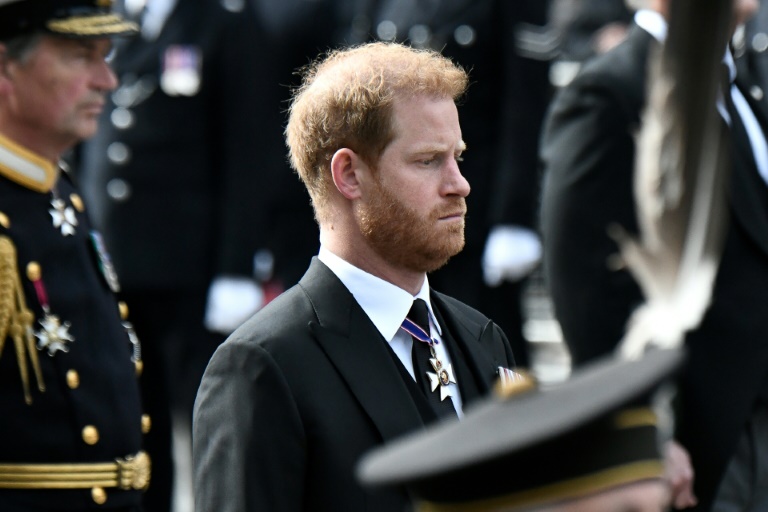
Britain’s Prince Harry and singer Elton John are among six public figures suing the publisher of the Daily Mail over alleged unlawful information-gathering at its titles.

The others taking part in the legal action are actresses Liz Hurley and Sadie Frost, John’s husband David Furnish and Doreen Lawrence, the mother of murder victim Stephen Lawrence, the domestic PA news agency said in a report.

The six had “become aware of compelling and highly distressing evidence that they have been the victims of abhorrent criminal activity and gross breaches of privacy” by Associated Newspapers Limited (ANL), a statement by law firm Hamlins acting for the group said.

ANL, also the publisher of The Mail On Sunday and MailOnline, said on Thursday it “utterly and unambiguously” rejected the allegations.

Lawrence, whose son was killed in a racially-motivated attack in south London in 1993, had also lodged a claim against Rupert Murdoch-owned News Group Newspapers, publisher of various titles including The Sun and the now-defunct News Of The World.

The details of that claim are not known, but it is understood also to relate to misuse of private information.

The statement about the legal action against ANL released by Hamlins claimed that the unlawful acts alleged to have taken place included the hiring of private investigators to secretly place listening devices inside cars and homes and the recording of private phone conversations.

It also alleged that payments were made to police “with corrupt links to private investigators” for sensitive information, that medical information was “obtained by deception” and that bank accounts and financial information was accessed “through illicit means and manipulation”.

Hamlins is representing Harry and Frost, while the other claimants are represented by law firm Gunnercooke.

There have been a number of damages claims over unlawful activity at newspapers in the wake of Britain’s phone-hacking scandal.

That resulted in the closure of the Murdoch-owned News of the World.

While most of those claims have now been settled, this is the first claim to be brought against ANL.

News Group Newspapers (NGN) settled claims relating to the News Of The World, while never admitting any liability over claims made in relation to The Sun.

Mirror Group Newspapers (MGN) has settled claims relating to its titles, including The People and The Sunday Mirror.

Both publishers are currently facing further claims, and have recently made attempts to bring the long-running litigation to an end.

A spokesman for Associated Newspapers said it “utterly and unambiguously” refuted “these preposterous smears which appear to be nothing more than a pre-planned and orchestrated attempt to drag the Mail titles into the phone hacking scandal concerning articles up to 30 years old.

“These unsubstantiated and highly defamatory claims, based on no credible evidence, appear to be simply a fishing expedition by claimants and their lawyers, some of whom have already pursued cases elsewhere.”

Biden hails IBM's $20 bln investment announcement

IBM hosted US President Joe Biden Thursday to celebrate the announcement of a $20-billion investment in semiconductors, quantum computing and other cutting-edge technology in New York state.

CEO Arvind Krishna unveiled the spending, which will take place over a decade, in a speech alongside Biden in the tech giant’s Poughkeepsie facility.

“We are proud to announce that IBM is pledging to invest $20 billion across the region,” he told cheering workers.

“This investment includes breakthroughs in semiconductor technology, mainframe computers, quantum computers and artificial intelligence,” Krishna said.

Biden, who flew in to Poughkeepsie earlier for a tour of the site, hailed the pledge from the “iconic American company” as another sign that his strategy of rebuilding the US innovative edge is working.

“It’s here at this factory and the factories of other companies across America where America’s future is literally being built,” he said.

The Democrat has made a priority of encouraging growth in high-tech manufacturing, hoping to rebuild domestic supply chains in crucial components such as microchips that for years have been left to foreign companies based as far away as Taiwan.

Other major projects currently underway include Micron’s announcement of a $100-billion investment to manufacture semiconductors in New York and Wolfspeed’s pledge to spend $5 billion on a new semiconductor plant in North Carolina.

In early September, Biden visited the nascent site of Intel’s future $20-billion facility in Ohio.

“We’re better positioned globally than any time in a long time,” Biden said, hailing the US investment climate created by “the most productive workers in the world,” the “best research universities,” dynamic venture capitalists and his administration’s pushing through of the biggest federal infrastructure spending plans in decades.

Mexico town hall massacre leaves at least 20 dead

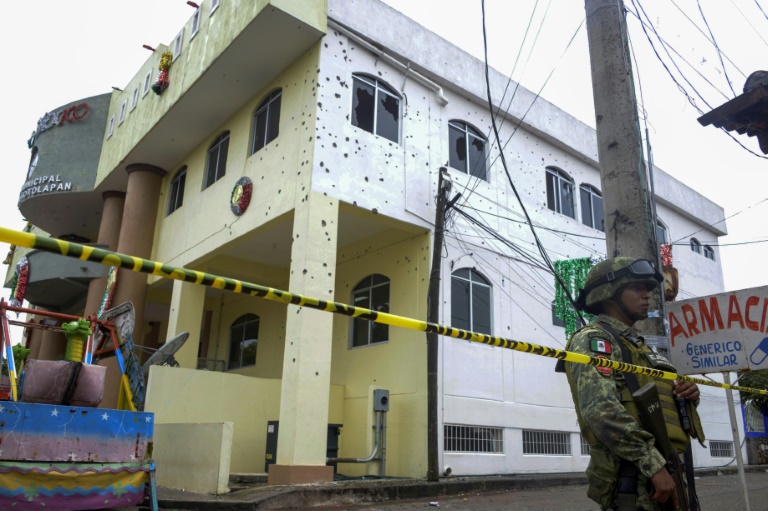
Gunmen attacked a town hall and murdered at least 20 people, including a mayor, in a southern Mexican state riven by turf wars between rival drug cartels, authorities said Thursday.

Soldiers guarded the bullet-riddled building in San Miguel Totolapan following Wednesday’s massacre, in which Mayor Conrado Mendoza and his father, who held the job before him, were killed in broad daylight.

The mayor was in a work meeting when he was shot dead, municipal official Freddy Vazquez told reporters.

“At first we couldn’t believe it. Our municipality is peaceful. We thought they were fireworks… but little by little we listened more closely and realized that they were gunshots,” he said.

Police officers and city council workers were reported to be among the victims.

The attack came amid disputes between criminal groups operating in Guerrero state, including one known as Los Tequileros and another called La Familia Michoacana, Deputy Security Minister Ricardo Mejia said.

Located in the violence-wracked Tierra Caliente region, San Miguel Totolapan sits along a drug trafficking route disputed by different cartels.

“It’s possible that the murders were due to a dispute between Los Tequileros and La Familia Michoacana for control of the municipality,” security analyst David Saucedo told AFP.

Los Tequileros were previously active in San Miguel Totolapan for several years, mainly staging kidnappings for ransom.

But the group’s influence dwindled after the death of one of its leaders in 2018 in a gunfight with police.

Just days before Wednesday’s attack, alleged members of Los Tequileros had made threats to return to the town, local press reported.

– ‘Cowardly murder’ –

Guerrero, one of Mexico’s poorest states, has endured years of violence linked to turf wars between drug cartels fighting for control of marijuana and opium production and drug trafficking.

“These are organizations that have been around for a long time. They did not emerge during this government, and we are trying to address the causes,” President Andres Manuel Lopez Obrador told reporters.

Guerrero state attorney general Sandra Luz Valdovinos said that nobody had yet been arrested for the attack.

“There isn’t yet enough evidence to determine who’s likely responsible,” she told local television.

Criminal gangs have cultivated close links to regional politicians, complicating efforts to pacify Guerrero despite the deployment of federal forces.

“Drug traffickers control various areas of the state and, instead of fighting them, the political parties have relied on them to win elections,” Saucedo said.

More than 340,000 people have been killed across Mexico in a spiral of bloodshed since the government deployed the army to fight drug cartels in 2006.

Local-level politicians frequently fall victim to violence connected to corruption and the multibillion-dollar narcotics trade.

Mendoza is one of 94 mayors who have been murdered in Mexico since 2000, according to data from consulting firm Etellekt.

His party, the left-wing opposition PRD, condemned the “cowardly murder.”

“We demand justice, enough of impunity,” it wrote on Twitter.

Guerrero Governor Evelyn Salgado, of the ruling Morena party, said she had ordered a swift investigation into the massacre.

“There will be no impunity for the vicious aggression,” she tweeted.

Demonstrators rally in support of new Burkina Faso leader

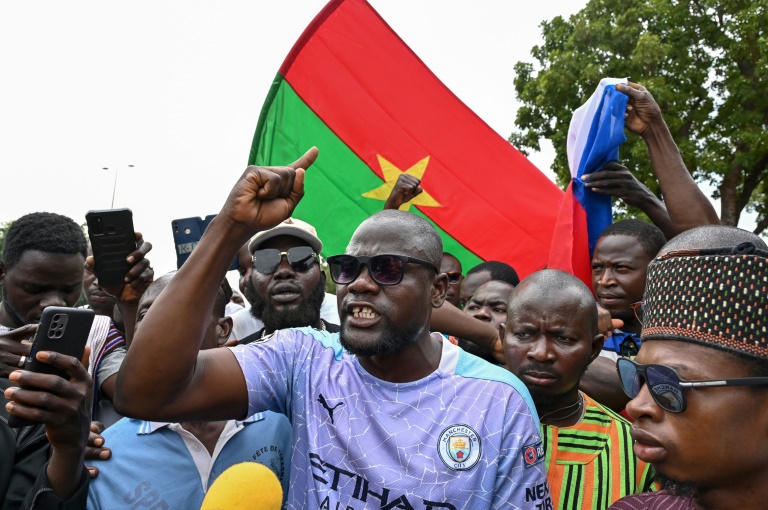
Demonstrators gathered in the capital of Burkina Faso on Thursday to show their support for the country’s new junta leader, as rumours swirled of internal divisions in the army. 

Ibrahim Traore was declared president on Wednesday after a two-day standoff that ousted Lieutenant-Colonel Paul-Henri Damiba, who had seized power only in January. 

Traore was at the head of a core of disgruntled junior officers — but there were rumours just a few days later of discussions among some other army generals over potentially replacing him.

A crowd of several hundred people, mostly young men, gathered in front of the national radio and television centre in the city.

“We have learned that the generals are in consultation to appoint one of them in place of Captain Traore. It will not do! Not today, not tomorrow,” said one of those rallying, trader Amadou Congo.

Rumours circulating in Ouagadougou claimed there was a division between the junior officers represented by Traore and the high-ranking officers who moved in the same circles as Damiba.

After an hour of protesting a soldier sought to calm the crowd, and the new government denied rumours of a split.

“Information which has been circulating since this morning on social networks about generals meeting… is unfounded” according to a statement released by the communication ministry.

Calm has generally returned to the streets of Ouagadougou since last Friday’s coup and turbulent weekend that followed.

Traore graduated as an officer from Burkina Faso’s Georges Namonao Military School — a second-tier institution compared to the prestigious Kadiogo Military Academy of which Damiba and others in the elite are alumni.

Some of the protesters were waving Burkina or Russian flags — with speculation rife that Burkina’s new leader may follow other fragile regimes in French-speaking Africa and forge close ties with Moscow at the expense of France.

UN Human Rights Council rejects debate on Xinjiang

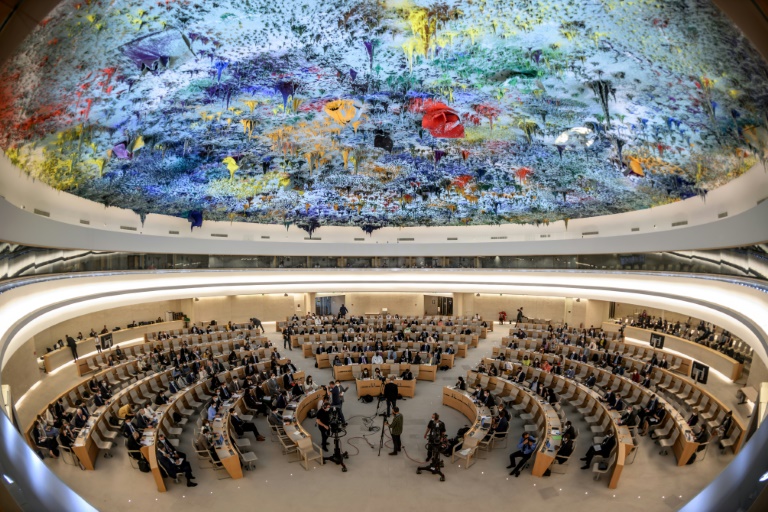
The UN Human Rights Council on Thursday voted against debating alleged widespread abuses in China’s Xinjiang region after intense lobbying by Beijing, in a heavy setback for Western nations.

The United States and allies last month brought a draft decision targeting China to the UN’s top rights body, seeking as a bare minimum a discussion on Xinjiang.

The move came after former UN rights chief Michelle Bachelet released her long-delayed Xinjiang report, citing possible crimes against humanity against Uyghurs and other Muslim minorities in the far-western region.

Western countries thought that by going no further than simply seeking to talk about the findings, enough other nations would not block putting it on the agenda.

But in a moment of knife-edge drama, countries on the 47-member council in Geneva voted 19-17 against holding a debate on human rights in Xinjiang, with 11 nations abstaining.

“This is a victory for developing countries and a victory for truth and justice,” tweeted Chinese foreign ministry spokeswoman Hua Chunying.

Amnesty International branded the vote farcical, while Human Rights Watch (HRW) said it betrayed abuse victims.

“The United States condemns today’s vote preventing a discussion about Xinjiang,” US ambassador to the council Michele Taylor tweeted.

Inaction “shamefully suggests some countries are free from scrutiny and allowed to violate human rights with impunity”.

– ‘Western plot failed’ –

The nations voting against a debate were Bolivia, Cameroon, China, Cuba, Eritrea, Gabon, Indonesia, Ivory Coast, Kazakhstan, Mauritania, Namibia, Nepal, Pakistan, Qatar, Senegal, Sudan, the United Arab Emirates, Uzbekistan and Venezuela.

Argentina, Armenia, Benin, Brazil, The Gambia, India, Libya, Malawi, Malaysia, Mexico and Ukraine abstained.

Washington and some Western countries have used Xinjiang “to spread rumours and cause trouble, engaging in political manipulation under the guise of human rights, attempting to smear China’s image,” a Chinese foreign ministry spokesperson said in a statement.

“The plot by the US and some Western countries has once again failed.

“Xinjiang-related issues are fundamentally not human rights issues, but are counter-terrorism, deradicalisation and anti-separatism issues.”

The draft decision was put forward by the United States, Australia, Canada, France, Germany, Norway, Sweden and Turkey, among others.

One Western diplomat stressed that regardless of the outcome, “the number one objective has been fulfilled” in putting Xinjiang in the spotlight.

– ‘Dreadful message’ –

Bachelet’s report, published minutes before her term ended on August 31, highlighted “credible” allegations of widespread torture, arbitrary detention and violations of religious and reproductive rights.

It brought UN endorsement to long-running allegations that Beijing detained more than one million Uyghurs and other Muslims and forcibly sterilised women.

Beijing vehemently rejected the charges, insisting it was running vocational training centres in the region to counter extremism.

Amnesty secretary general Agnes Callamard said Thursday’s vote put the council in “the farcical position of ignoring the findings of the UN’s own human rights office”.

“For council member states to vote against even discussing a situation where the UN itself says crimes against humanity may have occurred makes a mockery of everything the Human Rights Council is supposed to stand for.”

HRW’s China director Sophie Richardson called it an “abdication of responsibility and a betrayal of Uyghur victims”.

The International Service for Human Rights’ China advocate Raphael Viana David said: “Council members sent today a dreadful message: China remains so far untouchable.”

– Muslim countries’ position ‘shameful’ –

ISHR executive director Phil Lynch said it was “shameful” that “Muslim countries… have overwhelmingly failed to even support a UN discussion on rights abuses against Uyghurs.”

Indonesian ambassador Febrian Ruddyard said: “As the world’s largest Muslim country and a vibrant democracy, we cannot close our eyes to the plight of our Muslim brothers and sisters.”

But, as China did not consent, a discussion “will not yield meaningful progress”, hence Indonesia voted ‘no’.

The sentiment was echoed by Qatari ambassador Hend Al-Muftah.

China launched an all-out offensive to dismiss Bachelet’s report.

African countries, where China is the leading creditor after making massive infrastructure investments, faced particularly heavy lobbying, observers said.

In the end, only Somalia voted ‘yes’ out of 13 countries.

Britain’s ambassador Simon Manley said the close result nonetheless showed Beijing that “a significant number of countries will not be silenced when it comes to egregious human rights violations”, whoever the perpetrator.

Ukraine town fearful after sudden shifts in control

The people of Lyman, emerging from cellars after Ukraine recaptured the town from Russian forces, have been left confused and fearful by both the battle and the shifting political map.

An industrial town in the Donetsk region of eastern Ukraine, Lyman at first remained in Kyiv’s control after Russia’s February 24 invasion, only falling to Moscow’s troops three months later on May 27.

Last Friday, Russian President Vladimir Putin sought to cement his fragile victories by declaring Donetsk, and thus Lyman, to be forever annexed to Russia. A few hours later, Ukraine retook the town.

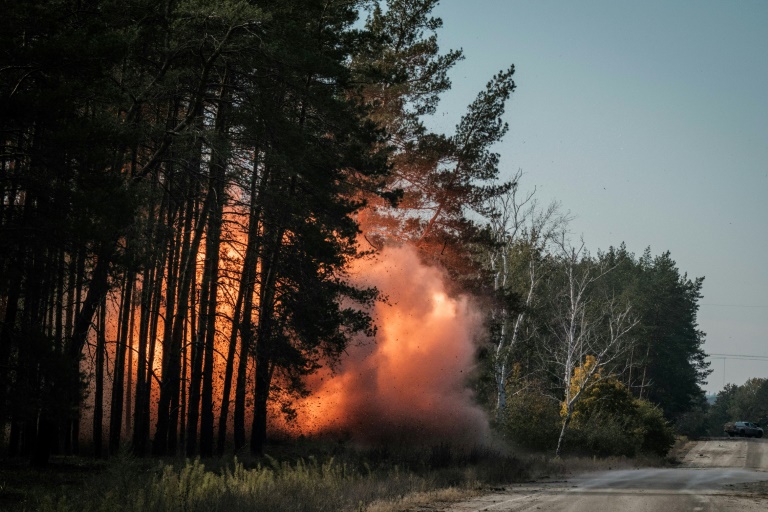
Today, Lyman is in Ukrainian hands and the sounds of explosions come from de-mining teams performing controlled detonations in the pine forests that surround Lyman, polluted by the debris of war.

“There is only pet food in the shops and we have no money for pet food,” snapped a middle-aged woman in a blue duvet coat under a faux sheepskin jacket, angrily refusing to give her name.

A small group of residents gathered under a five-storey housing block with a gaping shell hole in the roof, on the steps to a cellar where seven families shelter from the intense back-and-forth battles.

The wood to heat their water for tea is hard to light. “It’s easier in summer,” muttered the woman, anticipating a cruel winter ahead.

– Upended lives –

For Ukraine to recapture a key town in Donetsk that Russia fought so hard to take — and to do so immediately after Putin’s annexation decree — was a great symbolic victory for Kyiv.

But Lyman’s citizens are not yet celebrating.

Without water and gas, they come up from their cellar bunkers to cook scarce food on outdoor fires, wary as Ukrainian soldiers search for unexploded shells and suspected Russian collaborators.

Many refuse to talk to reporters, resentful that the international media arrived in Lyman even before humanitarian deliveries reached them.

But those who did talk told stories that reflect how the geopolitical convulsions of the war have upended the lives of the residents.

Viktor, a 75-year-old retired worker on Lyman’s electrified railway, told AFP he had travelled to visit his daughter living in Germany by passing through the central Ukrainian city of Dnipro.

When he returned home 20 days ago he had to pass through Russia to get safely to Lyman without crossing the frontline — only to find two weeks later that he was once again in Ukrainian-held territory.

“So far it’s quiet,” he said, smiling faintly and a little uncertainly. “We will see what the next days will bring us. It’s how it is. It’s life. It changes all the time. There are only old people here.”

A tearful widow told reporters about her husband, 69-year-old Alexander Yevko, who was killed by a mine explosion as he cut wood in the pine forest around the town. Russian soldiers buried him in a garden.

“A man came and told me that my husband was missing, and then they found his body lying in the woods. So the soldiers went and helped,” she said.

“I couldn’t go, I wasn’t there, I am sick, I have diabetes. And it was them who buried him, right in the back yard.”

The pine forest that hid the mines also concealed trenches and bunkers manned by the besieged Russian forces, and the soft, sandy soil still holds unexploded shells while mines scatter the roadsides.

– Pontoon bridges –

“It’s impossible to go to the forest because it’s a combat zone, there might be mines, so where can I go to get wood?” demanded 72-year-old Oleksandr Korniyenko, who lives in Yampil, just outside Lyman.

Many road bridges in Donetsk were demolished to slow the Russian advance. Now that the tables have turned and Ukrainian forces are advancing they in turn can only access Lyman by pontoon crossings.

This brings them through the woods on dirt tracks, in long convoys of American-supplied M113 armoured cars and battered civilian Lada cars pressed into service as troop carriers.

As they pass by they wave to salute the Ukrainian police de-mining teams who have deployed to clear their way.

Senior Lieutenant Yevgen Sagayda’s team blocked the road with their Kozak, a Ukrainian MRAP armoured car, and placed small tablets of plastic explosive on a pile of Russian anti-tank mines.      

They ran a cable 100 metres back along the verge and attached it to an electric trigger. The men braced and a radio order was given. Seconds later there was another huge detonation and a plume of dirt and smoke.   

Close Bitnami banner
Bitnami