World

Hong Kong's Tony Leung says acting gets more rewarding with age

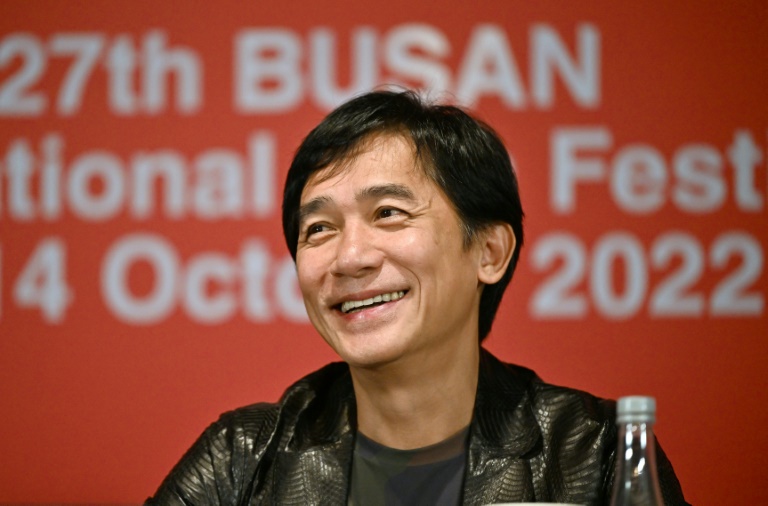
Legendary Hong Kong film star Tony Leung said that after 40 years in the business, he’s having more fun than ever playing diverse roles — though he’s still hoping to be cast as a serial killer.

Leung, who was awarded the “Asian Cineaste of the Year” prize at South Korea’s Busan International Festival, is best known for his work with famed director Wong Kar-wai. 

Half a dozen of his films, including Wong’s “In the Mood for Love” (2000) and “Happy Together” (1997), will be screened at the festival, which is Asia’s largest and runs until October 14. 

The 60-year-old actor, who made his debut on television in 1981, told reporters in Busan that he loved complex roles that made him think — and said he has had more chances to play them later in his career.

“I think the first 20 years were about learning, and the second 20 years were about showing what you have learned,” Leung said Thursday.

He said he was “at a point where I can enjoy being an actor without being stressed. It’s a lot of fun as I can now play more diverse roles, and characters I can act as I get older.”

Some of Leung’s best-known roles include a ruthless Chinese politician collaborating with the invading Japanese in Ang Lee’s 2007 period drama “Lust, Caution”, and an undercover policeman in Andrew Lau and Alan Mak’s “Infernal Affairs” series.

He made his Hollywood debut in 2021 by playing a well-layered supervillain in “Shang-Chi and the Legend of the Ten Rings”, a superhero film based on Marvel Comics.

“Personally, I would like to try playing a serial killer,” he said, adding he’s also interested in returning to television, which is experiencing something of a golden age thanks to streaming money.

– ‘Masterpieces’ –

Busan Film Festival director and acclaimed film critic Huh Moon-young said Leung is incomparable with other actors of his generation.

Among Leung’s works are “many masterpieces that will long remain in the history of world cinema”, Huh told reporters.

Leung has long been a well-liked figure in South Korea — where Hong Kong cinema enjoyed peak popularity in the early 1990s — and first appeared at the Busan festival in 1997.

Since then, South Korea has cemented its status as a global cultural powerhouse, thanks in part to the explosive success of the Oscar-winning film “Parasite” and the Netflix series “Squid Game”.

Leung said the festival has come a long way since his first experience in Busan.

“When I first visited the Busan festival, the opening ceremony was held after the organisers set up a small stage on a narrow road,” Leung said, adding that he lost a shoe during the chaos.

“It seems like things have been changed as I got to see such a grand opening ceremony yesterday. It was very nice to see.”

Leung said he would like to work with two of South Korea’s top stars — actor Song Kang-ho of “Parasite” fame, and actress Jeon Do-yeon.

“I’m willing to go anywhere, including South Korea, Japan and Taiwan, as long as things are meant to be,” he said.

“It’s the connections and timing that make projects appear.”
Sydney smashes annual rainfall records

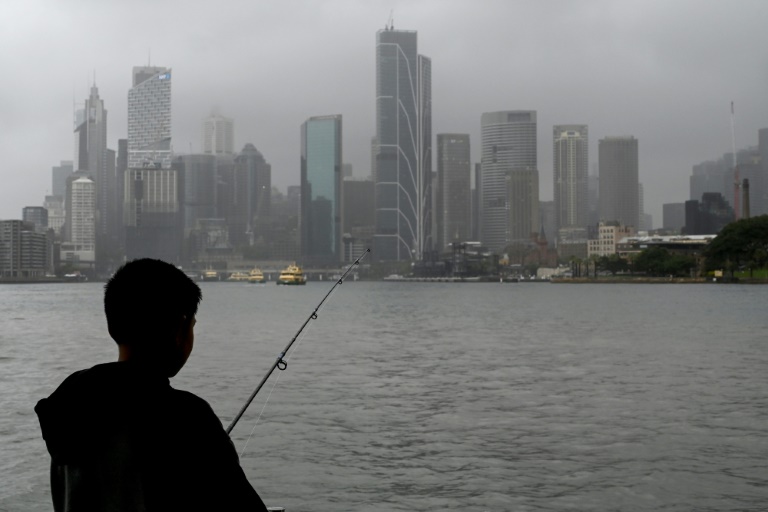
Australia’s most populous city Sydney smashed a 70-year annual rainfall record Thursday after a year marked by devastating east coast floods.

By early afternoon, Sydney had registered its highest annual rainfall total on record — 2,216 millimetres — with some 86 days still left until the end of the year. 

Sydney’s previous wettest year was 1950, when there were 2,194 millimetres of rain.

It was the highest figure recorded since annual rainfall data for the city of Sydney were first collected in 1858.

With a La Nina weather pattern forecast to bring a wetter-than-average summer, it is likely the final 2022 tally will be significantly higher.

Sydney, along with the broader state of New South Wales, is bracing for another heavy deluge this weekend.

State emergency services minister Steph Cooke said Thursday that more rain could have a severe impact. 

“We know that our catchments are saturated, our dams are full, and our rivers are already swollen. So any additional rainfall, no matter how minor, is likely to exacerbate flooding circumstances,” she said.

“Any additional rainfall has the potential to cause flash flooding.”

The annual rainfall data comes from a weather station in Sydney’s central business district. 

Australia’s Bureau of Meteorology said Thursday that flood warnings were in place for large sections of eastern Australia, including parts of Queensland, New South Wales, and northern Victoria.

– Extreme weather – 

The east coast flooding catastrophe in March — caused by heavy storms that devastated parts of Queensland and New South Wales — claimed more than 20 lives. 

Tens of thousands of Sydney residents were ordered to evacuate in July when floods again swamped suburbs on the city’s fridge.

Australia has been at the sharp end of climate change, with droughts, deadly bushfires, bleaching events on the Great Barrier Reef and floods becoming more common and intense as global weather patterns change. 

Australia’s east coast has been repeatedly lashed by heavy rainfall in the past two years, driven by back-to-back La Nina cycles.

A rare third consecutive La Nina was recently declared, prompting further rain and flood warnings for the coming summer. 

Higher temperatures mean the atmosphere holds more moisture, unleashing more rain. 

Australia’s Insurance Council has previously estimated more than Aus$5 billion ($3.2 billion) worth of catastrophe claims were made in 2022.  

Catastrophic bushfires swept through huge chunks of New South Wales in the “Black Summer” of 2019 and 2020, scorching 5.5 million hectares — about seven percent of the state’s total landmass.

Myanmar junta jails Japanese filmmaker for 10 years

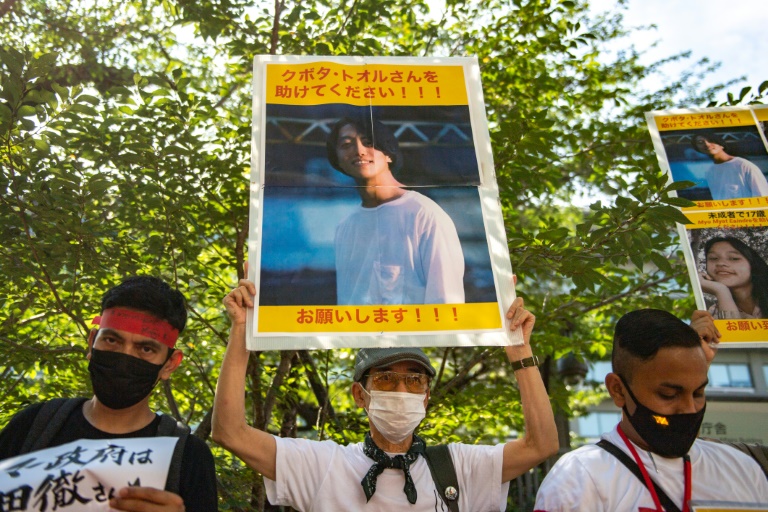
Myanmar’s junta has jailed a Japanese filmmaker for 10 years, more than two months after he was arrested while filming an anti-coup protest, a military spokesman said Thursday.

The military has clamped down on press freedoms since its coup last year, arresting reporters and photographers as well as revoking broadcasting licences while the country plunged into chaos.

Toru Kubota, 26, was detained near an anti-government rally in commercial hub Yangon in July along with two Myanmar citizens.

He was sentenced on Wednesday to seven years in jail for breaching a law that criminalises spreading information detrimental to state security and peace and tranquility, a junta spokesman said in a statement.

It added he had also received a three-year sentence for encouraging dissent against the military — a charge that has been widely used in the crackdown.

The sentences would be served concurrently, the junta statement added.

A diplomat at Japan’s embassy in Myanmar said Kubota also faces a charge of breaching immigration law, with the next hearing expected on October 12.

Japan’s foreign ministry said it had been providing consular support and would “continue to appeal to the Myanmar authorities for the early release of Mr Kubota.”

The filmmaker had arrived in Myanmar in July and was filming a “documentary featuring a Myanmar person”, his friend Yoshitaka Nitta told a press conference in Tokyo in August.

According to a profile on the FilmFreeway website, Kubota has previously made documentaries on Myanmar’s Muslim Rohingya minority and “refugees and ethnic issues in Myanmar”.

– ‘Slap in the face’ – 

Japan is a top donor to Myanmar and has long-standing relations with the country’s military.

After the coup, Tokyo announced it would halt all new aid, though it stopped short of imposing individual sanctions on military and police commanders.

Kubota’s jailing is a “slap in the face” for Tokyo, said Phil Robertson of Human Rights Watch. 

“It’s time for Japan to stop playing games, and move to support real international sanctions that will squeeze the junta’s revenue sources.”

In September, Japan’s defence ministry said it would halt a training programme for members of Myanmar’s military from next year over the junta’s executions of four political prisoners.

The junta’s execution of the four in July, in the face of international calls for clemency, was Myanmar’s first use of capital punishment in decades and sparked international outrage. 

Kubota is the fifth foreign journalist to be detained in Myanmar, after US citizens Nathan Maung and Danny Fenster, Robert Bociaga of Poland and Yuki Kitazumi of Japan — all of whom were later freed and deported.

Fenster, who was held in May last year as he attempted to leave the country, faced a closed-door trial inside Insein on charges of unlawful association, incitement against the military and breaching visa rules.

He was sentenced to 11 years in prison before being pardoned and deported.

As of March this year, 48 journalists remain in custody across the country, according to the monitoring group Reporting ASEAN.

The military’s crackdown on dissent since it ousted Aung San Suu Kyi’s government has left more than 2,300 civilians dead, according to a local monitoring group. 

The junta says blames anti-coup fighters for the deaths of almost 3,900 civilians.

Lebanon years away from gas riches despite Israel deal: analysts

Lebanon is nearing agreement with Israel over a maritime dispute involving offshore gas fields, but the cash-strapped country still faces an uphill struggle towards unlocking potential hydrocarbon riches, analysts say.

“A deal would mark one step forward but it does not mean that Lebanon has become a gas- or oil-producing country,” said Marc Ayoub, an associate fellow at the American University of Beirut’s Issam Fares Institute.

“We are talking of a timeline of five to six years… before the first gas” if commercially viable reservoirs are in fact found, the energy expert told AFP, describing the timeframe as “optimistic”.

With the demand for gas rising worldwide because of an energy crisis sparked by Russia’s invasion of Ukraine, Lebanon hopes that an offshore discovery would ease its current unprecedented financial downturn.

But more than a decade since it declared its maritime boundaries and an Exclusive Economic Zone, it still has no proven natural gas reserves.

One well drilled in 2020 by a consortium of energy giants TotalEnergies, Eni and Novatek showed only traces but no commercially viable gas deposits.

Further test drilling, in a block near the border, has been hampered by the maritime border dispute between Lebanon and Israel, which are technically still at war.

Following years of US-mediated negotiations, the rival states now appear to be nearing agreement after a draft proposal from Washington at the weekend was welcomed by both sides.

A deal would allow “offshore exploration activities to continue, but that doesn’t mean that Lebanon has become rich… or that its crisis has been solved”, Ayoub said. 

– ‘First gas’ –

A 2012 seismic study of a limited offshore area by the British firm Spectrum estimated recoverable gas reserves in Lebanon at 25.4 trillion cubic feet (tcf).

The authorities in Lebanon have announced higher estimates.

Block 9 near the border with Israel contains the so-called Qana field or Sidon reservoir, and will be a major zone for offshore exploration by TotalEnergies and Eni that were awarded a contract in 2018.

After being partly claimed by Israel, the Qana field is expected to fall entirely to Lebanon as part of the maritime border agreement, according to Lebanese officials.

“This time next year, we should know if there is a commercial discovery in Qana or not,” Ayoub said.

“If we have a discovery, it will take… no less than three to five years after exploration” before production could start.

This time frame, according to Ayoub, assumes there are no delays by Lebanese authorities who are widely blamed for the corruption and mismanagement behind the country’s financial crash.

It took months for the Lebanese Petroleum Administration (LPA) regulatory body to name its board after it was formed in 2012, because of political disputes over nominations.

Several bidding rounds for offshore gas and oil licences have been hit by delays since they began in 2013.

Already, Lebanon lags far behind Israel which has been investing in the offshore Karish field for years and is expecting its first gas within weeks.

Cyprus and Egypt have also started to discover major reservoirs.

– Risky investment –

Roudi Baroudi, an energy consultant, said that gas or oil production could start within three years if commercially viable reservoirs are found.

But to attract energy firms and benefit from potential discoveries, Lebanon desperately needs to undergo reforms, he told AFP.

“Lebanon is not a good investment unless the government implements reforms,” the energy expert said.

Reforms would provide “the basic assurances that international companies need to work with less risk”.

State institutions in Lebanon have collapsed under the weight of the crisis, with strikes by civil servants adding to the paralysis.

An economic recovery plan has yet to take off more than three years since the financial downturn began, despite mounting pressures from foreign donors and the International Monetary Fund.

And political gridlock has caused a months-long delay in forming a new government amid fears of a presidential vacuum after Michel Aoun’s mandate expires at the end of October.

With a bankrupt state unable to deliver more than an hour or two of mains electricity a day, energy firms may choose to work on their Lebanon projects out of Cyprus, according to Baroudi.

“With no rule of law, Lebanon is a jungle,” he said. 

“It’s absolute chaos, whether judicially, financially or in terms of regulatory” bodies.

Lebanon years away from gas riches despite Israel deal: analysts

Lebanon is nearing agreement with Israel over a maritime dispute involving offshore gas fields, but the cash-strapped country still faces an uphill struggle towards unlocking potential hydrocarbon riches, analysts say.

“A deal would mark one step forward but it does not mean that Lebanon has become a gas- or oil-producing country,” said Marc Ayoub, an associate fellow at the American University of Beirut’s Issam Fares Institute.

“We are talking of a timeline of five to six years… before the first gas” if commercially viable reservoirs are in fact found, the energy expert told AFP, describing the timeframe as “optimistic”.

With the demand for gas rising worldwide because of an energy crisis sparked by Russia’s invasion of Ukraine, Lebanon hopes that an offshore discovery would ease its current unprecedented financial downturn.

But more than a decade since it declared its maritime boundaries and an Exclusive Economic Zone, it still has no proven natural gas reserves.

One well drilled in 2020 by a consortium of energy giants TotalEnergies, Eni and Novatek showed only traces but no commercially viable gas deposits.

Further test drilling, in a block near the border, has been hampered by the maritime border dispute between Lebanon and Israel, which are technically still at war.

Following years of US-mediated negotiations, the rival states now appear to be nearing agreement after a draft proposal from Washington at the weekend was welcomed by both sides.

A deal would allow “offshore exploration activities to continue, but that doesn’t mean that Lebanon has become rich… or that its crisis has been solved”, Ayoub said. 

– ‘First gas’ –

A 2012 seismic study of a limited offshore area by the British firm Spectrum estimated recoverable gas reserves in Lebanon at 25.4 trillion cubic feet (tcf).

The authorities in Lebanon have announced higher estimates.

Block 9 near the border with Israel contains the so-called Qana field or Sidon reservoir, and will be a major zone for offshore exploration by TotalEnergies and Eni that were awarded a contract in 2018.

After being partly claimed by Israel, the Qana field is expected to fall entirely to Lebanon as part of the maritime border agreement, according to Lebanese officials.

“This time next year, we should know if there is a commercial discovery in Qana or not,” Ayoub said.

“If we have a discovery, it will take… no less than three to five years after exploration” before production could start.

This time frame, according to Ayoub, assumes there are no delays by Lebanese authorities who are widely blamed for the corruption and mismanagement behind the country’s financial crash.

It took months for the Lebanese Petroleum Administration (LPA) regulatory body to name its board after it was formed in 2012, because of political disputes over nominations.

Several bidding rounds for offshore gas and oil licences have been hit by delays since they began in 2013.

Already, Lebanon lags far behind Israel which has been investing in the offshore Karish field for years and is expecting its first gas within weeks.

Cyprus and Egypt have also started to discover major reservoirs.

– Risky investment –

Roudi Baroudi, an energy consultant, said that gas or oil production could start within three years if commercially viable reservoirs are found.

But to attract energy firms and benefit from potential discoveries, Lebanon desperately needs to undergo reforms, he told AFP.

“Lebanon is not a good investment unless the government implements reforms,” the energy expert said.

Reforms would provide “the basic assurances that international companies need to work with less risk”.

State institutions in Lebanon have collapsed under the weight of the crisis, with strikes by civil servants adding to the paralysis.

An economic recovery plan has yet to take off more than three years since the financial downturn began, despite mounting pressures from foreign donors and the International Monetary Fund.

And political gridlock has caused a months-long delay in forming a new government amid fears of a presidential vacuum after Michel Aoun’s mandate expires at the end of October.

With a bankrupt state unable to deliver more than an hour or two of mains electricity a day, energy firms may choose to work on their Lebanon projects out of Cyprus, according to Baroudi.

“With no rule of law, Lebanon is a jungle,” he said. 

“It’s absolute chaos, whether judicially, financially or in terms of regulatory” bodies.

In Spain, the long fight to find Franco era's 'stolen babies'

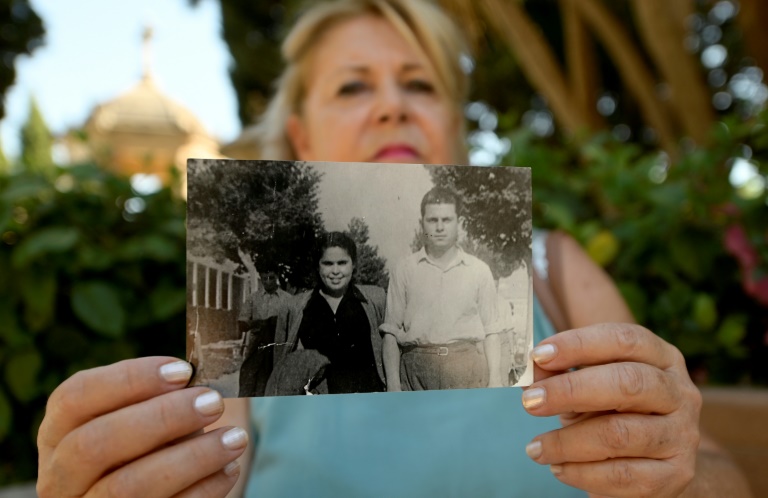
When the bones of her twin sister who died at birth were exhumed, Maria Jose Robles’s worst fears were confirmed: their DNA didn’t match, suggesting she was one of the newborns snatched during the Franco dictatorship.

Over the course of five decades, hundreds, possibly thousands, of babies were taken from their mothers, who were told their child hadn’t survived — with the infants given to others to adopt. 

“It was here,” says Robles, fighting back tears as she points at the place where she thought her sister was buried in a cemetery in the southeastern Spanish city of Alicante.

“My twin sister was just two days old when she died, that’s what they told my mother in hospital,” she told AFP, referring to events that happened in 1962, her voice breaking. 

“But they never let her see the body, nor did they let her take the baby home to bury her in Elche where we’re from,” says this 60-year-old who works in a chiropody clinic. 

When the news first broke about the “stolen babies” scandal some 10 years ago, there were some uncanny similarities with her twin’s death which left Robles and her parents with “doubts” and a sense of “anguish”, she says. 

They began gathering paperwork and found it was full of inconsistencies, prompting them to approach the courts which in 2013 ordered the exhumation of her sister’s remains. 

Since then, Robles — who runs an organisation dedicated to finding stolen babies — has been tirelessly searching for her sister. 

Her DNA is registered with several databases and she is hoping her sister has done the same. 

“It’s the DNA which is our hope,” she told AFP, saying she dreams of the day when one of the laboratories contacts her to say they’ve found her sister. 

Known as “stolen babies”, these trafficked infants would have been too young to know of their fate, with estimates suggesting there could be many thousands of victims. 

– ‘The Marxist gene’ –

Spain’s Senate on Wednesday passed a law honouring victims of the Francisco Franco era and recognising for the first time that the “stolen babies” were also victims of his dictatorship. 

In the immediate aftermath of the 1936-1939 Spanish Civil War won by Franco’s Nationalists, babies were initially taken from left-wing Republican opponents of the regime to prevent them from passing on the Marxist “gene” to their children. 

But from the 1950s onwards the scheme was expanded to include children born out of wedlock or into large or poor families. 

Doctors played a key role, with women told their babies had died shortly after delivery but never given any proof. 

Then the newborns were passed on to couples unable to have children, many of them close to Franco’s National Catholic regime.

The Catholic Church was often complicit in the scheme which aimed to ensure the children would be raised by affluent, conservative and devout Roman Catholic families. 

This trafficking occurred throughout the dictatorship and even beyond Franco’s death in 1975, largely for financial reasons, until a new law strengthening adoption laws was passed in 1987. 

Similar thefts also took place under the military dictatorship in Argentina (1976-1983) as well as under the regime of Chilean dictator Augusto Pinochet (1973-1990). 

Argentinian rights organisation the Grandmothers of Plaza de Mayo believes some 400 babies were born in captivity and illegally handed over to other people.

In Spain, there is no official estimate of the number of babies that were seized but victims’ associations believe there may have been several thousands. 

In 2008, the Spanish courts estimated that more than 30,000 children were taken from Republican families or jailed left-wing opponents and taken into state custody between 1944 and 1954 alone. 

Some died while others may have been passed on to “approved” families. 

– Sold for 725 euros – 

Between 2011 and 2019, prosecutors across Spain opened 2,136 “stolen baby” cases but none have been successfully resolved, the latest justice ministry figures show. 

But if answers through the justice system are rare, a handful of Spaniards have somehow managed to do it, such as Mario Vidal, a 57-year-old architect from the southeastern town of Denia.

“It was my adoptive father who told me they had paid 125,000 pesetas to adopt me,” he told AFP, referring to a sum that would amount to 725 euros ($715) in today’s money. 

He started looking for his biological parents in 2011. 

After three years of hunting through archives in the Madrid region where he was born, Vidal was able to identify his mother — only to realise she had died 16 years earlier. 

“That was one of the hardest days of my life,” he admitted, saying he was torn between “the sense of excitement” of realising where he was from, and the shock of learning of her death. 

When she had him, she was an unmarried 23-year-old from a very conservative family.  

Although an official document stated she had abandoned him, she tried several times to get him out of an orphanage before he was adopted, a relative told him, saying she was even arrested for doing so. 

He later found his half-brother, who died three years later, but still hasn’t discovered who his biological father is.

“We are children of an era in which those in power did whatever they wanted,” said Vidal, who has two children of his own. 

Inflation puts squeeze on Spain's legendary lunch menu

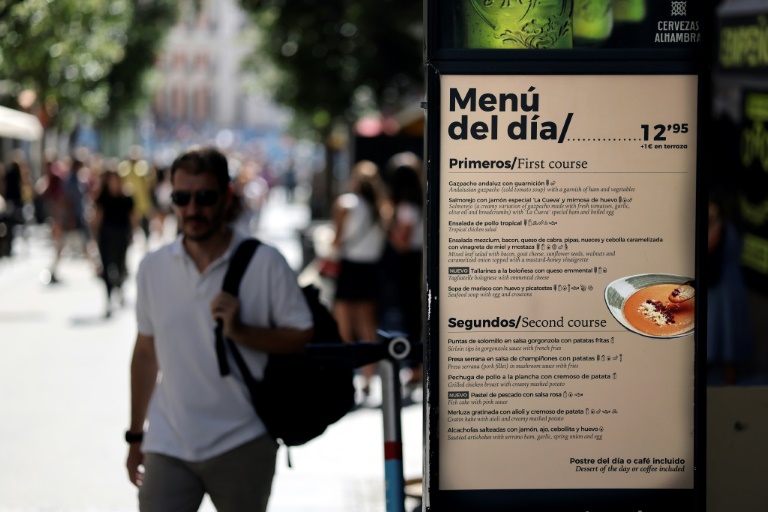
Dreamt up in the 1960s to attract tourists, Spain’s three-course “menu del dia”, or set lunch menu, has long been seen as the best deal in town. 

But with inflation hovering around 10 percent, its affordability is under threat as restaurants seek ways to economise.

For a starter, main course and dessert or coffee (or both), bread and a drink, the average price is around 12.8 euros ($12.60), according to figures from Hosteleria de Espana, Spain’s main hostelry association representing the hotel and restaurant industry.

Offered by almost every Spanish restaurant, its price makes it a popular option in a country where people frequently eat out. 

“Everyone chooses it,” says Sara Riballo, who is in her 30s, sitting on a terrace in central Madrid. 

“We eat out several times a week and we usually go for the set menu because it’s better value for money, it’s quicker and it’s quite varied,” agrees her colleague Estefania Hervas.

Spanish restaurants serve up on average four million “menus del dia” every day in the country of 47 million people, the hostelry association says. 

The idea was first cooked up nearly six decades ago when Spain was under the dictatorship of Francisco Franco.

A ministerial order was issued that all restaurants must offer a “tourist menu” to cater to the growing waves of foreign visitors to the Spanish coast. 

The decree was written into Spain’s official state bulletin, stating that the menu must from August 1, 1964 include, as a “minimum”, a soup, a main course, a dessert, a glass of wine and some bread. 

– ‘Extremely worried’ –

The tradition has lasted until today, where it acts as a sort of barometer for the Spanish economy, says Emilio Gallego, secretary-general of the hostelry association. 

“It’s a very, very popular way of eating lunch with millions sold every day across the country. It’s something we are constantly tracking,” he said.

Describing itself as “extremely worried by the effects of inflation and the price rises of recent months,” the association found three-quarters of its restaurants had raised the price of their menu del dia between November 2021 and April 2022. 

And that was before inflation peaked in July at 10.8 percent. 

In recent months, the price of olive oil has risen by 42.5 percent alongside the cost of bread, milk, eggs, meat and pasta, not to mention the spiralling bills for electricity, refrigeration or gas for stoves and ovens. 

With the industry “badly hit by rising energy and raw material costs at a time when it was still recovering from the health crisis”, it has had little choice but to raise prices, Gallego said. 

In most cases, restaurants have raised the price of their menu del dia by 10 to 15 percent, an increase of between 1.0 and 1.5 euros.

– ‘We won’t survive’ –

At Cafe Gijon, a landmark restaurant on Madrid’s central Castellana boulevard, they serve up 250 set meals a day, priced at 15 euros each. 

But manager Jose Manuel Escamilla said the prices are likely to rise in the coming weeks. 

“Everything’s going up: the price of electricity and mortgage costs have shot through the roof. If things carry on like this, we won’t survive.”

“It’s difficult because it will affect our customers but at the end of the day, if we don’t do it, we won’t be able to function,” he said.

Many restaurants are searching for other ways to save money and protect their margins. 

At a restaurant in one of Madrid’s chic neighbourhoods, they are now ordering meat in bulk and whole fish rather than pre-cut portions because the price is lower, admitted one of its buyers, speaking on condition of anonymity.

Gallego believes other restaurants will adapt by creating other formats, such as a two-course option of a main course with either a starter or dessert.

At Valgame Dios in Madrid’s Chueca neighbourhood, the number of dishes on offer has already been slimmed down.

“Instead of three or four starters, we have two,” explains waitress Laura Rubio, who says she’s just “waiting to see what will happen” and whether it will put off diners.

Like other customers, 47-year-old scriptwriter Helio Mira is putting a brave face on things. 

“It’s not only the price of the menu del dia that is going up but the price of life in general but what can we do?” he said.

“We just have to ride out the storm.”

Month before COP27, host Egypt faces heat over rights, climate action

A month before Egypt hosts the UN climate change conference, Cairo is finalising the list of world leaders coming as it weathers criticism over its human rights and environmental records.

Cairo voiced disappointment that King Charles III, a long-time champion of the environment, cancelled a plan to attend and speak at COP27 after Britain’s Prime Minister Liss Truss reportedly objected.

“We hope this does not signal Britain stepping back from the global climate change movement” after it chaired last year’s COP in Glasgow, a COP spokesman was quoted as saying by the Guardian daily.

Egypt will from November 6 host the 27th Conference of the Parties to the UN Framework Convention on Climate Change, in the Red Sea resort town of Sharm el-Sheikh.

Critics have questioned the choice of venue, pointing to Egypt’s mixed record on the environment and on civil rights, with thousands of dissidents in jail, including Egyptian-British activist Alaa Abdel Fattah, who has been on a hunger strike for months.

Human Rights Watch warned that Egypt may “try to use its role as the COP27 presidency to promote an image of openness and tolerance, although political oppression under President Abdel Fattah al-Sisi’s government has caused one of the country’s worst human rights crises in decades”.

Protests of the kind that have sought to spur action at past climate summits are expected to be muted, and civil society groups have been relegated to a building away from the main venue.

“We have already been told that only registered protests are allowed,” said Patience Nabukalu, of the Ugandan branch of activist group Fridays For Future. 

High room rates for hotels in the resort town will keep away many activists, especially from Africa, she said, adding: “Where are the victims in this COP?” 

– ‘Far too little, far too late’ –

The conference will once more seek to boost global efforts to slow the climate crisis that is intensifying natural disasters, from wildfires to severe storms such as Hurricane Ian that just hit Florida.

Egypt itself faces major threats, from soaring temperatures in its vast desert areas to rising seas flooding its breadbasket the Nile River delta.

But the summit comes as global attention is focused on other turmoil, from Russia’s war in Ukraine, which is driving sky-high food and energy prices, to crises from Iran to Taiwan to North Korea.

UN chief Antonio Guterres, in his latest warning to the Group of 20 nations, charged that their collective commitments on climate change are “far too little and far too late”.

COP26 last year ended with a pledge to keep global warming at 1.5 degrees Celsius over pre-industrial levels — a goal the world is set to miss on current emission trends.

Egypt has said it will champion the plight of poorer countries, in Africa and beyond, which are least to blame for climate change but suffer its worst effects.

Poor countries are now demanding funding to compensate them for the “losses and damages” of climate change, an issue expected to be fiercely discussed.

The debate takes place in a climate of mistrust, as rich countries have yet not fulfilled their commitment to give poorer countries $100 billion a year for emissions reduction and adaptation.

– Vanishing green spaces –

Questions have also been raised about Egypt’s own climate and other environmental policies.

Egypt’s Environment Minister Yasmina Fouad has told AFP that until recently, worrying about the environment was considered “a luxury” in the country of 104 million people, the Arab’s world’s most populous.

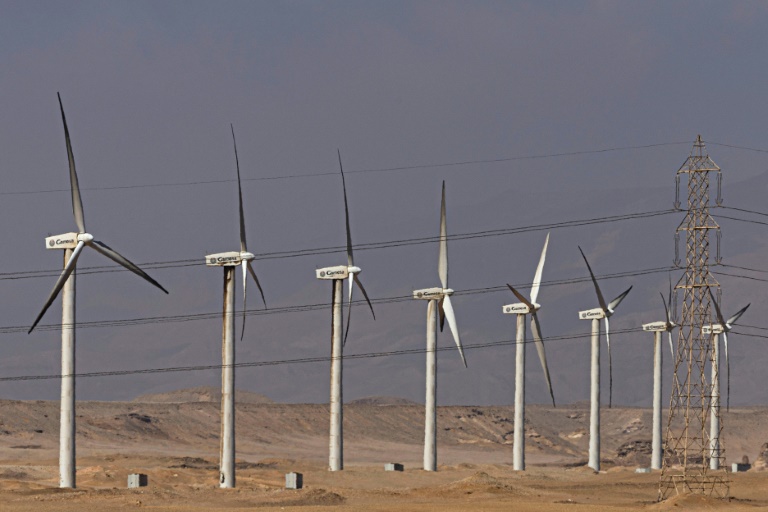
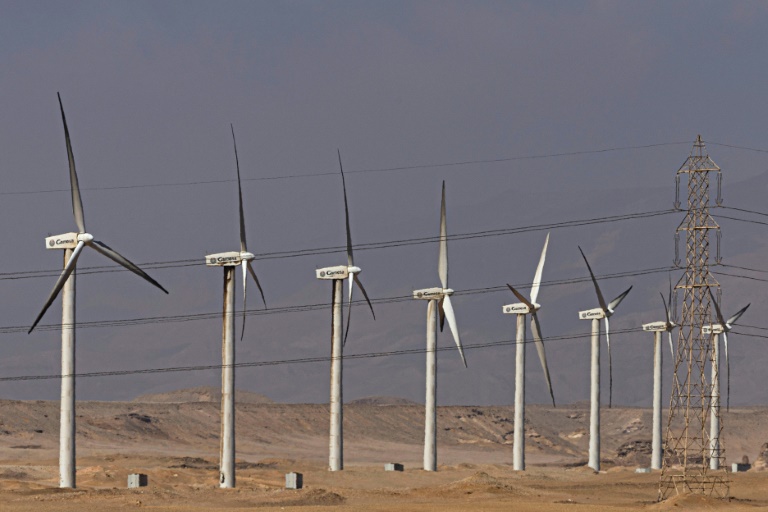
Its goal now is to produce 42 percent of its electricity from renewable energy by 2035, in part by building large solar plants.

But Egypt is also Africa’s second largest gas producer and actively scaling up oil and gas production and exports, especially of liquefied natural gas.

The group Climate Action Tracker rates as “highly insufficient” the overall climate policies of Egypt.

Egyptians have also criticised the destruction of green spaces, especially in the sprawling metropolis Cairo. 

Recent months have seen the disappearance of the Happyland parks in the Nile Delta and much of Merryland in Cairo, while the International Garden in Nasr City has been turned into a car park.

Greenpeace has, meanwhile, slammed Egypt’s “appalling” choice of Coca-Cola as an official sponsor of COP27, blaming the soft drink giant for much of the “plastic pollution in the world”.

Month before COP27, host Egypt faces heat over rights, climate action

A month before Egypt hosts the UN climate change conference, Cairo is finalising the list of world leaders coming as it weathers criticism over its human rights and environmental records.

Cairo voiced disappointment that King Charles III, a long-time champion of the environment, cancelled a plan to attend and speak at COP27 after Britain’s Prime Minister Liss Truss reportedly objected.

“We hope this does not signal Britain stepping back from the global climate change movement” after it chaired last year’s COP in Glasgow, a COP spokesman was quoted as saying by the Guardian daily.

Egypt will from November 6 host the 27th Conference of the Parties to the UN Framework Convention on Climate Change, in the Red Sea resort town of Sharm el-Sheikh.

Critics have questioned the choice of venue, pointing to Egypt’s mixed record on the environment and on civil rights, with thousands of dissidents in jail, including Egyptian-British activist Alaa Abdel Fattah, who has been on a hunger strike for months.

Human Rights Watch warned that Egypt may “try to use its role as the COP27 presidency to promote an image of openness and tolerance, although political oppression under President Abdel Fattah al-Sisi’s government has caused one of the country’s worst human rights crises in decades”.

Protests of the kind that have sought to spur action at past climate summits are expected to be muted, and civil society groups have been relegated to a building away from the main venue.

“We have already been told that only registered protests are allowed,” said Patience Nabukalu, of the Ugandan branch of activist group Fridays For Future. 

High room rates for hotels in the resort town will keep away many activists, especially from Africa, she said, adding: “Where are the victims in this COP?” 

– ‘Far too little, far too late’ –

The conference will once more seek to boost global efforts to slow the climate crisis that is intensifying natural disasters, from wildfires to severe storms such as Hurricane Ian that just hit Florida.

Egypt itself faces major threats, from soaring temperatures in its vast desert areas to rising seas flooding its breadbasket the Nile River delta.

But the summit comes as global attention is focused on other turmoil, from Russia’s war in Ukraine, which is driving sky-high food and energy prices, to crises from Iran to Taiwan to North Korea.

UN chief Antonio Guterres, in his latest warning to the Group of 20 nations, charged that their collective commitments on climate change are “far too little and far too late”.

COP26 last year ended with a pledge to keep global warming at 1.5 degrees Celsius over pre-industrial levels — a goal the world is set to miss on current emission trends.

Egypt has said it will champion the plight of poorer countries, in Africa and beyond, which are least to blame for climate change but suffer its worst effects.

Poor countries are now demanding funding to compensate them for the “losses and damages” of climate change, an issue expected to be fiercely discussed.

The debate takes place in a climate of mistrust, as rich countries have yet not fulfilled their commitment to give poorer countries $100 billion a year for emissions reduction and adaptation.

– Vanishing green spaces –

Questions have also been raised about Egypt’s own climate and other environmental policies.

Egypt’s Environment Minister Yasmina Fouad has told AFP that until recently, worrying about the environment was considered “a luxury” in the country of 104 million people, the Arab’s world’s most populous.

Its goal now is to produce 42 percent of its electricity from renewable energy by 2035, in part by building large solar plants.

But Egypt is also Africa’s second largest gas producer and actively scaling up oil and gas production and exports, especially of liquefied natural gas.

The group Climate Action Tracker rates as “highly insufficient” the overall climate policies of Egypt.

Egyptians have also criticised the destruction of green spaces, especially in the sprawling metropolis Cairo. 

Recent months have seen the disappearance of the Happyland parks in the Nile Delta and much of Merryland in Cairo, while the International Garden in Nasr City has been turned into a car park.

Greenpeace has, meanwhile, slammed Egypt’s “appalling” choice of Coca-Cola as an official sponsor of COP27, blaming the soft drink giant for much of the “plastic pollution in the world”.

For Saudi fan, road to World Cup is a desert trek

The idea hit Abdullah Alsulmi earlier this year, while he was watching a television show in which a senior Qatari official promised an “exceptional” experience at the upcoming World Cup.

His excitement building, the 33-year-old Saudi recalls thinking: “I will go to Doha no matter what, even if I have to walk!” 

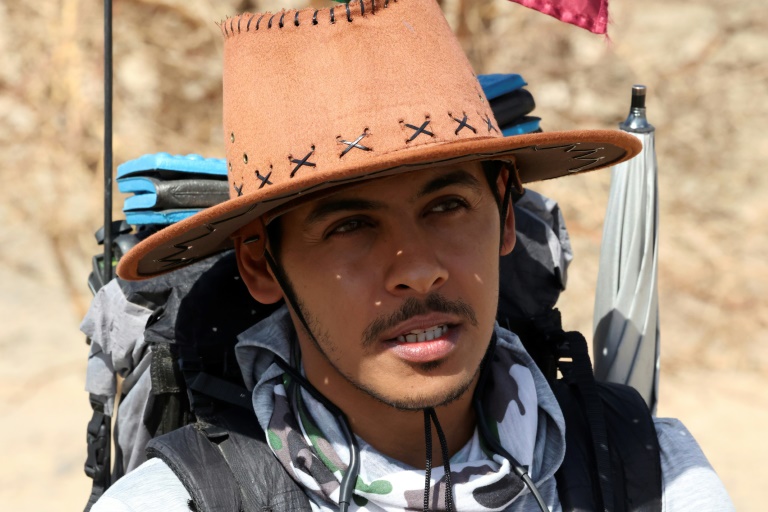
It was an unlikely beginning to what has become an audacious adventure dismissed by some of Alsulmi’s own relatives as “crazy”: a two-month, 1,600-kilometre (1,000-mile) solo trek from his native Jeddah to the Qatari capital. 

Alsulmi says the journey, faithfully documented for his thousands of Snapchat followers, is meant to highlight regional enthusiasm for the first World Cup in the Middle East –- which Saudi officials have pitched as a milestone “for all Arabs”. 

“We want to support the World Cup,” Alsulmi told AFP one day last week as he sheltered from the midday sun near roadside shrubs in the town of Al-Khasrah, 340 kilometres southwest of Riyadh.

Wearing a wide-brim hat and a backpack to which he’d affixed Saudi and Qatari flags, he said: “I consider myself like a Qatari who is very interested in this World Cup and its success.”  

– Sun and scorpions –

Alsulmi has experience with extended treks in Canada and Australia, where he used to live, yet those pale in comparison to the rigours of traversing the Arabian Peninsula. 

He typically sets out at sunrise and walks until 10 or 10:30 am, but then the heat forces him to break for a few hours before resuming in the afternoon and continuing until sundown. 

Occasionally he walks at night to maintain his goal of around 35 kilometres per day. 

To keep his load light, Alsulmi subsists on food he can buy at petrol stations, often chicken and rice, while showering and washing his clothes at mosques. 

His social media posts capture details of life on the trail, from the mundane to the menacing: his nightly search for a spot to sleep, and the time he eyed a scorpion dozing dangerously close to his tent. 

He also records conversations with Saudis he meets along the way, many of whom offer snacks and juice to keep him going. 

“There are moments of ups and downs, but when I meet people and hear these sweet words –- ‘We will follow you on your account and support you’ –- this encourages me to finish,” he said. 

Straying from the main roads as often as he can, he says he has been rewarded with a taste of the varied scenery on offer in the kingdom — something he didn’t fully appreciate before. 

“Walking from Jeddah to Doha, every 100 kilometres is different. I mean, the first 100 kilometres there are sand dunes, then mountains, and then comes empty land, then farms,” he said. 

“I am going through all terrains in one country in two months. This is a beautiful thing.” 

– A ‘simple’ sport –

Alsulmi hopes that by posting about his experience, he can inspire other Saudis to consider trekking through their homeland. 

“When I do this, I want to convey to people that hiking and walking is a beautiful sport, even if the weather is difficult here in Saudi Arabia, even if the terrain is difficult. We can do it,” he said. 

“It is a sport for simple people. You only need a bag and a few simple things, and a tent and nature.” 

If all goes according to plan, Alsulmi will arrive in Doha in time for Saudi Arabia’s opening showdown against Argentina on November 22. 

It will be a moment of divided loyalty, since Argentina is his favourite team. 

Four days later, he has a ticket for the Green Falcons’ match against Poland. 

His hopes are high for a Saudi squad that has now qualified for six World Cups but advanced to the knockout stage just once, during its 1994 debut.

“This year we have good players. The coach is the great French coach (Herve) Renard,” he said. 

“We expect and hope that this year the team will deliver an exceptional performance.”

Close Bitnami banner
Bitnami