World

Iran schoolgirls lead protests over Mahsa Amini death

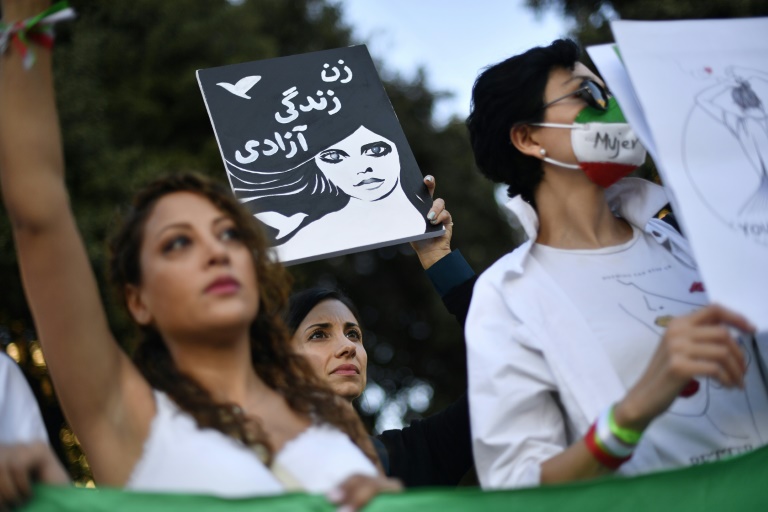
Iranian schoolgirls have come to the fore in protests over the death of Mahsa Amini, removing their hijabs and staging sporadic rallies in defiance of a lethal crackdown by the security forces.

Amini, 22, was pronounced dead days after the notorious morality police detained the Iranian Kurd last month for allegedly breaching the Islamic republic’s strict dress code for women.

Anger flared at her funeral and spread to become the biggest wave of protests to rock Iran in almost three years, despite the backlash by the security forces that has killed scores and seen hundreds arrested.

Students rallied at the weekend before being confronted by riot police who cornered them in an underground car park of Tehran’s prestigious Sharif University of Technology before hauling them away.

Schoolgirls have since taken up the baton around the country, removing their hijabs, shouting anti-regime slogans and defacing images of the clerical state’s leaders.

“Death to the dictator,” a group of bare-headed girls is seen chanting in reference to supreme leader Ayatollah Ali Khamenei as they force a man, reportedly the principal, out of a school in Karaj, west of Tehran, on Monday in a video verified by AFP.

Another group of girls is seen chanting “Woman, life, freedom”, as they march down a street of the Karaj neighbourhood of Gohardasht.

“These are really extraordinary scenes. If these protests are going to achieve anything, it will be because of the schoolgirls,” Esfandyar Batmanghelidj of the Bourse & Bazaar news and analysis website tweeted in response.

Schoolgirls are also seen emptying classrooms and appearing at flash-mob protests to avoid detection, in other footage shared online.

A boisterous group of girls are seen yelling “Get lost, Basiji”, in reference to the paramilitary force, at a man standing at a podium in the southern city of Shiraz, in a video shared by the 1500tasvir social media channel. 

AFP has been unable to independently verify the footage.

– Singer silenced –

As the women-led protests stretch into a fourth week, Iran has widened its crackdown, rounding up high profile supporters of the movement and imposing internet restrictions that limit access to social media.

On Tuesday night, Iranian pop singer Shirvin Hajipour, who was arrested after his song in support of the protests went viral and became an anthem for the movement, was released on bail.

“I’m here to say I’m okay. But I am sorry that some particular movements based outside of Iran — which I have had no relations with — made some improper political uses of this song,” he told his 1.9 million Instagram followers shortly after his release.

Iran’s judiciary meanwhile opened an investigation into the death of teenage girl Nika Shakrami who was reportedly killed during the protests.

BBC Persian and Iran Wire had reported that authorities had taken possession of her body and secretly buried her on Monday to avoid a funeral that could spark more protests.

At least 92 protesters have been killed so far in the unrest, according to Oslo-based group Iran Human Rights (IHR).

Amnesty International has confirmed 53 deaths, while Fars news agency put the death toll at “around 60” last week. At least 12 members of the security forces have been reported killed.

Another 63 people were killed last week when security forces “bloodily suppressed” a protest in Zahedan, near Iran’s southeastern border with Pakistan, said IHR.

The clashes erupted after Friday prayers during protests sparked by accusations a police chief in the region had raped a teenage girl of the Baluch Sunni minority, it said.

– Sanctions loom –

The crackdown has drawn global condemnation.

On Tuesday the European Union joined the United States in warning that it was looking to impose tough new sanctions on Iran over the bloody crackdown.

Proposed sanctions targeting senior Iranian officials include “freezing their assets and their right to travel”, French Foreign Minister Catherine Colonna said.

Iran has repeatedly accused outside forces of stoking the protests and last week said nine foreign nationals — including from France, Germany, Italy, the Netherlands and Poland — had been arrested.

The unrest has overshadowed diplomatic efforts to revive a 2015 nuclear deal between Iran and major powers which had come close to a breakthrough in recent months before stalling again.

But the White House said the “problems with Iran’s behaviour” are separate from efforts to revive the nuclear deal.

burs/dv/kir
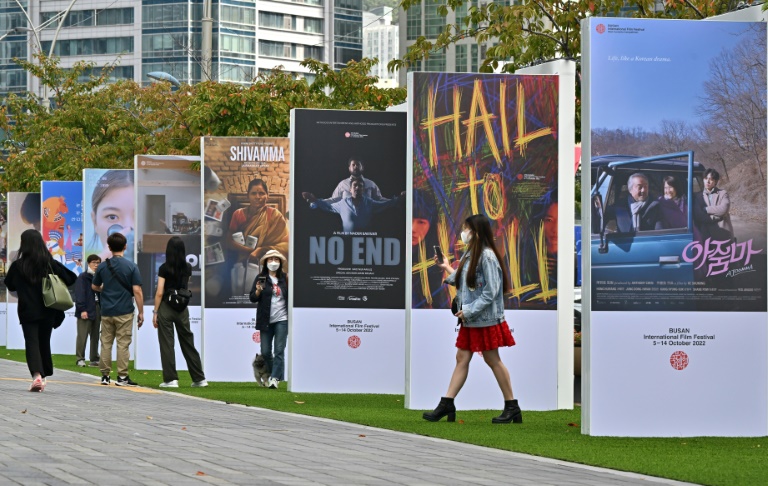
Asia's biggest film festival back in top form in 2022

Movie stars, directors and fans descended on South Korea’s port town of Busan Wednesday as Asia’s largest film festival returned at full power post-pandemic, with an Iranian film opening the event.

Top Korean actors and Asian stars including Hong Kong’s legendary Tony Leung are set to attend the Busan International Film Festival, which opened with a red carpet event and will run until October 14.

South Korea has cemented its status as a global cultural powerhouse in recent years, thanks in part to the explosive success of the Oscar-winning film “Parasite” and the Netflix series “Squid Game”.

But due to the Covid-19 pandemic, the Busan festival was reduced to a fraction of its usual scale in 2020, while last year’s edition took place with a number of social distancing measures.

But the festival is back with no restrictions for 2022, with high-profile guests such as Japan’s famed filmmaker Hirokazu Kore-eda flying in to discuss their latest projects. 

“We feel fortunate to be able to play the role of Asia’s best film festival again,” festival director Huh Moon-young told reporters last month.

The festival will feature 243 movies from 71 countries, including 89 that will have their world premiere.

Hosts South Korea are well-represented, with K-pop megastar and actress IU joining Kore-eda to discuss their film “Broker” — which was featured at the Cannes film festival earlier this year. 

The festival opened with Iranian filmmaker Hadi Mohaghegh’s “Scent of Wind”, which tells the story of a father and a son — both of whom have disabilities — living in a remote village. 

– Celebrating Tony Leung –

Hong Kong’s acclaimed actor Tony Leung has been selected as the recipient of Busan’s “Asian Cineaste of the Year” prize. 

The festival will screen six films featuring Leung, who will be in Busan to receive the award and meet with festival goers.

Leung, 60, is best known for his collaborations with famed director Wong Kar-wai, and picked the six films himself — which include Wong’s “In the Mood for Love” (2000) and “Happy Together” (1997).

Other anticipated screenings include Korean-Canadian director Anthony Shim’s “Riceboy Sleeps,” which tells the story of a Korean immigrant single mother, said the festival’s programmer Nam Dong-chul.

“The movie is expected to become the next ‘Minari’,” Nam said, referring to a 2020 drama about South Korean immigrants in the United States, which received rave reviews and a slew of awards, including the best supporting actress Oscar.

Four South Korean top stars — Kang Dong-won, Han Ji-min, Lee Young-ae and Ha Jung-woo — will meet with fans in Busan to talk about their life and work.

Japanese director Kei Ishikawa’s drama “A Man” — about a widow who discovers unexpected truths about her late husband — will close the edition.

EU signals shifts towards price cap on imported gas

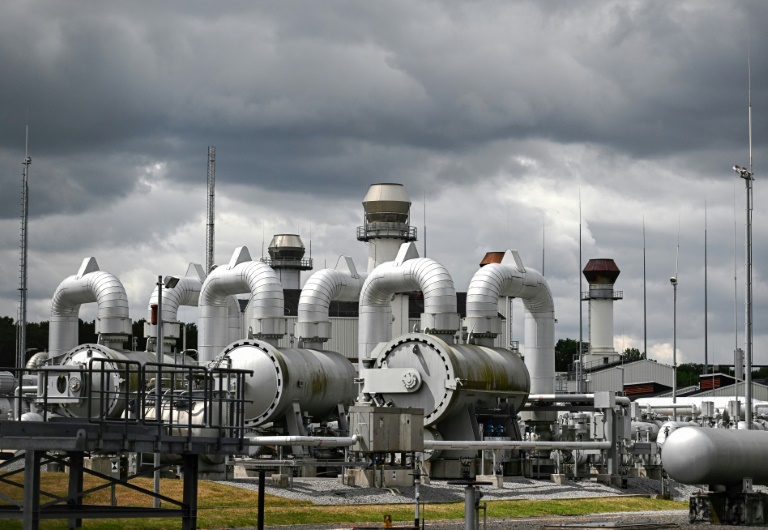
The EU is “ready to discuss” a price cap on imported gas to bring down soaring energy costs, European Commission chief Ursula von der Leyen said Wednesday.

Her comment, to the European Parliament, signalled a shift in tone in Europe after powerhouse EU country Germany had expressed worries that a broad price cap might divert supplies for Europe.

It comes after 15 EU countries — more than half the bloc — made a joint call for the EU to impose a price ceiling on how much it would pay for gas piped or shipped in, as the northern hemisphere winter bears down.

Europe is facing an energy crunch as the price of electricity generation skyrockets because of a massive surge in the price for gas.

Russia, which used to be Europe’s main gas supplier, has turned off the taps after being hit by EU sanctions over the war in Ukraine that, while not touching gas, crimped sales of its more lucrative oil exports.

“We are ready to discuss a cap on the price of gas that is used to generate electricity,” von der Leyen told MEPs sitting in Strasbourg, France.

“This cap would also be a first step on the way to a structural reform and overall reform of our electricity market.”

She added that “we also have to look at gas prices beyond the electricity market”.

– ‘Drawbacks’ on supply –

Von der Leyen did not specify whether the mooted price cap would cover all gas imports — not only the gas that arrives mainly by pipeline from Russia, but also liquified natural gas (LNG) that can be shipped around the world.

Brussels has been amenable to a cap on pipeline gas to hurt Russia and rob it of cash for its Ukraine invasion.

But it has resisted a cap on LNG, fearing that sellers might simply divert to higher-paying markets, further starving Europe of gas.

Germany, traditionally the biggest beneficiary of Russian gas, had also rebuffed the idea. But it has come under pressure from other EU countries after it announced a 200-billion-euro ($199-billion) fund to shield its own consumers from soaring prices.

Von der Leyen admitted a price cap “entails drawbacks in terms of security of supply of gas”.

But she argued that “the situation has critically evolved” and, now, “more member states are open for it and we are better prepared”.

She did not detail what had changed, beyond noting that Europe’s stockpile of gas for winter had reached 90 percent of capacity, exceeding a target set.

She also said any price cap would be “a temporary solution” and that “exceptional times require exceptional emergency measures”.

Indonesian president to order stadium audit after deadly stampede

Indonesian President Joko Widodo said Wednesday he would order an audit of all football stadiums in the country, vowing to find the “root” cause of one of the deadliest disasters in the sport’s history.

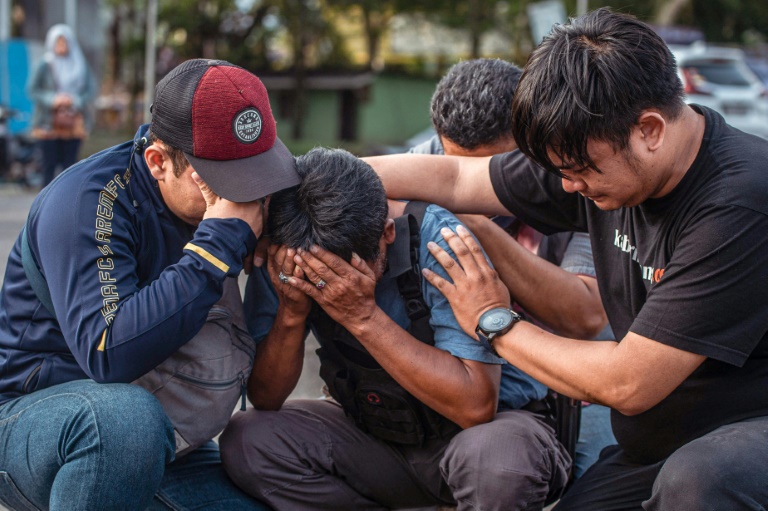
He was in the city of Malang to visit relatives of the victims and those wounded in a stampede that killed at least 131 people on Saturday, and to see the stadium where the tragedy took place.

The Indonesian leader’s trip came as anger grew over the police response to a pitch invasion during which officers fired tear gas into packed stands as fans of Arema FC tried to approach players following their defeat to fierce rivals Persebaya Surabaya.

“I want to know the root of the problem that caused this tragedy so that we can get the best solution,” he told reporters outside Saiful Anwar Hospital in Malang.

“I will order the Public Works and Public Housing Ministry to audit all stadiums used for the (football) league,” he said.

Widodo added that he had spoken with FIFA president Gianni Infantino on Monday about improving Indonesia’s “football management” and possible assistance from the world football governing body.

He had earlier entered the hospital to speak with several wounded patients, saying he told them to “keep up their spirits”, and asked them about what happened on the night of the match.

He then travelled to the Kanjuruhan stadium, scene of the disaster.

“We need… improvements in the whole management, management of stadium spectators, time, security. It must all be fully audited so that this tragedy won’t happen again,” the president said.

Police described the pitch invasion as a riot and said two officers were killed, but survivors accused them of overreacting.

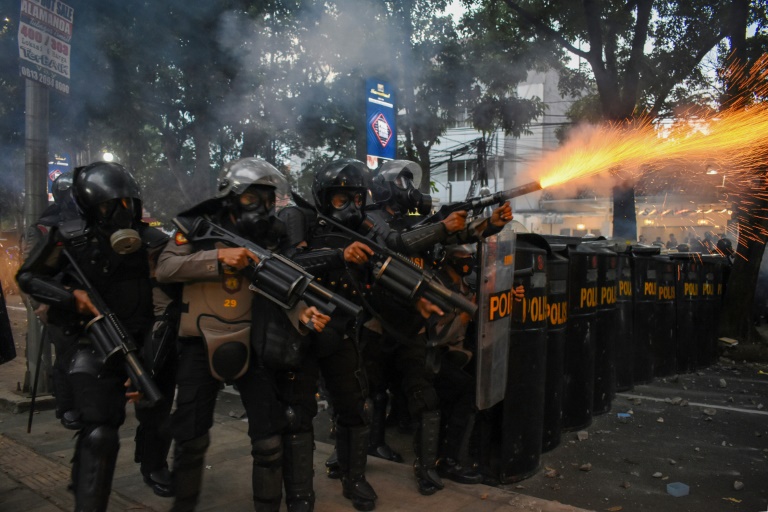
Officers responded with force, kicking and hitting fans with batons, according to witnesses and footage, pushing the spectators back into the stands where many were trampled or suffocated to death after tear gas was fired.

– ‘Late commands’ –

In response to the tragedy, Widodo has ordered all matches suspended, an investigation into what happened, and compensation for victims. 

Indonesia’s chief security minister said a task force had been created and that the probe would take two to three weeks.

Police said the investigation was focusing on six gates at the stadium using CCTV footage from cameras placed outside them. They said the exits were open but too small for the crowds attempting to pass through them.

But Indonesia’s football association spokesperson said Tuesday that some gates which should have been opened 10 minutes before the final whistle remained closed.

They stayed shut “because of late commands” and officers “had not arrived”, he told a press conference.

The Malang police chief was replaced Monday, nine officers were suspended and 19 others were put under investigation, according to police.

– ‘Not going there’ –

Witnesses described being shrouded in smoke, their eyes stinging as they rushed for small exit doors. Several said police stood by and refused to help victims.

“The place looked like a mass cemetery. Women and children were piling on top of one another,” Eko Prianto, 39, told AFP.

Indonesia’s football association also moved Tuesday to sanction Arema FC, banning its organising committee chairman and a security officer from football for life and fining the club 250 million rupiah ($16,500).

Maike Ira Puspita, the association’s deputy secretary-general, told AFP that away fans had been banned due to fears of violence and said the match passed without incident until spectators entered the pitch after the final whistle.

She said the association had sanctioned the club and its officials “due to the… negligence of the whole situation”. 

But the actions of police were outside of the association’s scope, the official said.

“We are not going to go there,” she said, refusing to answer questions about their conduct.

Asia markets extend rally on rate hopes, OPEC in focus

Asian investors joined their Wall Street counterparts in an equity buying spree Wednesday as more data pointing to weakness in the US economy further fanned hopes the Federal Reserve could temper its rate hike campaign.

The much-needed dose of optimism has also put pressure on the dollar, pushing it down against most of its peers and adding to the upward march in oil prices fuelled by expectations OPEC will announce a massive output cut later in the day.

The mood on trading floors was lightened Monday by data showing US factory activity slowed more than forecast in September to a two-year low, suggesting the Fed’s rate hike campaign against decades-high inflation could be kicking in.

That was followed Tuesday by news that US job openings had also dropped by almost 10 percent in August, its fastest fall since April 2020.

“Rate hikes are really beginning to take a bite out of the US employment numbers,” said Matt Simpson, of City Index.

He added that the figures put more emphasis on jobs reports out later in the week, with weak readings likely to provide more support to stocks as investors bet the Fed will temper its tightening campaign.

However, officials at the central bank continue to flag their determination to crush inflation, even if that means sparking a recession.

“For the market to continue higher, the jobs data will have to be in-line with, or short of expectations,” said Lindsey Bell, of Ally Financial.

The market is currently anticipating a “Goldilocks” labour market report that’s “not too hot and not too cold”.

All three main indexes on Wall Street rallied Tuesday, with the S&P 500 and Nasdaq up more than three percent. European markets also thundered higher Tuesday, though they gave back some of those gains in early trade Wednesday.

And Asia continued the run, with Hong Kong rocketing almost six percent as investors there returned from a one-day break, while there were also healthy performances in Tokyo, Singapore, Sydney, Wellington, Bangkok, Seoul, Taipei, Jakarta and Manila.

– ‘No time to get carried away’ –

“It’s been a very impressive relief rally, albeit one aided by a rose-tinted interpretation of certain economic indicators and a terrible plunge in the weeks before,” said OANDA’s Craig Erlam. 

“This isn’t the time to get carried away but it is understandable that we’re seeing some relief. It all hangs on whether the data is the start of a weakening trend or just a blip, as with the July inflation drop.”

The gains in Asia were also helped by a smaller-than-expected rate hike by the Reserve Bank of Australia.

That came after the Bank of England last week pledged to pump billions of dollars into supporting financial markets after they were hammered by the UK government’s big-borrowing mini-budget.

The BoE pivot “seems to have convinced investors that the Fed now must give more weight to financial stability, which means that the current monetary tightening cycle might end sooner rather than later”, Ed Yardeni, president of Yardeni Research, said.

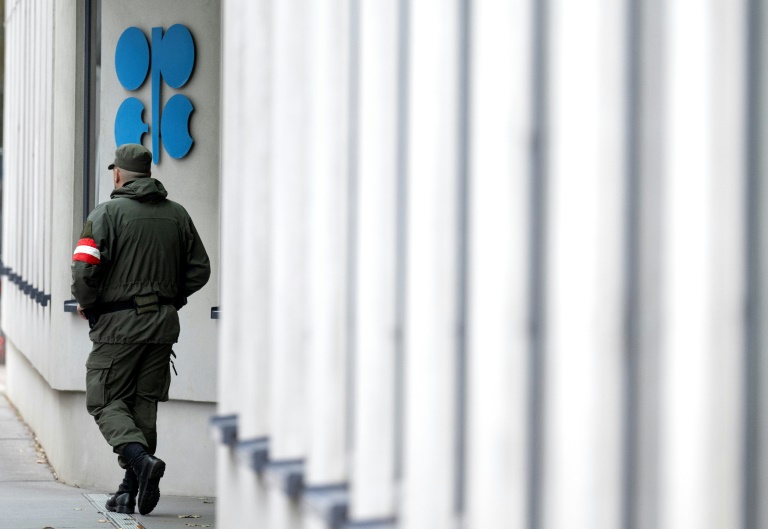
Focus is now on the meeting later Wednesday of OPEC and other major producers, who are reportedly considering a two million barrels cut in output — double what had earlier been flagged — after prices plunged to their January lows owing to recession concerns.

But such a large reduction would likely annoy the United States, which has joined several other countries in releasing crude from their emergency supplies to help tamp down the cost of energy, which is a key driver of inflation.

Both main contracts have bounced this week on talk of the reductions, while the weaker dollar makes the commodity cheaper for buyers using other currencies.

WTI and Brent edged down slightly Wednesday with downward pressure coming from news that Russia will resume gas deliveries to Italy after suspending them over a transport problem in Austria.

However, analysts said the commodity may have more road to run up as supplies tighten and the dollar softens.

– Key figures around 0810 GMT –

Tokyo – Nikkei 225: UP 0.5 percent at 27,120.53 (close)

Hong Kong – Hang Seng Index: UP 5.9 percent at 18,087.97 (close)

Shanghai – Composite: Closed for a holiday

London – FTSE 100: DOWN 0.4 percent at 7,058.05

Pound/dollar: DOWN at $1.1423 from $1.1477 on Tuesday

Euro/dollar: DOWN at $0.9961 from $0.9992

Euro/pound: UP at 87.15 pence from 87.03 pence

Dollar/yen: UP at 144.44 yen from 144.09 yen

West Texas Intermediate: DOWN 0.2 percent at $86.31 per barrel

Brent North Sea crude: DOWN 0.2 percent at $91.63 per barrel

New York – Dow: UP 2.8 percent at 30,316.32 (close)

— Bloomberg News contributed to this story —

UK's Truss rejects 'drift and delay' in defiant speech to Tories

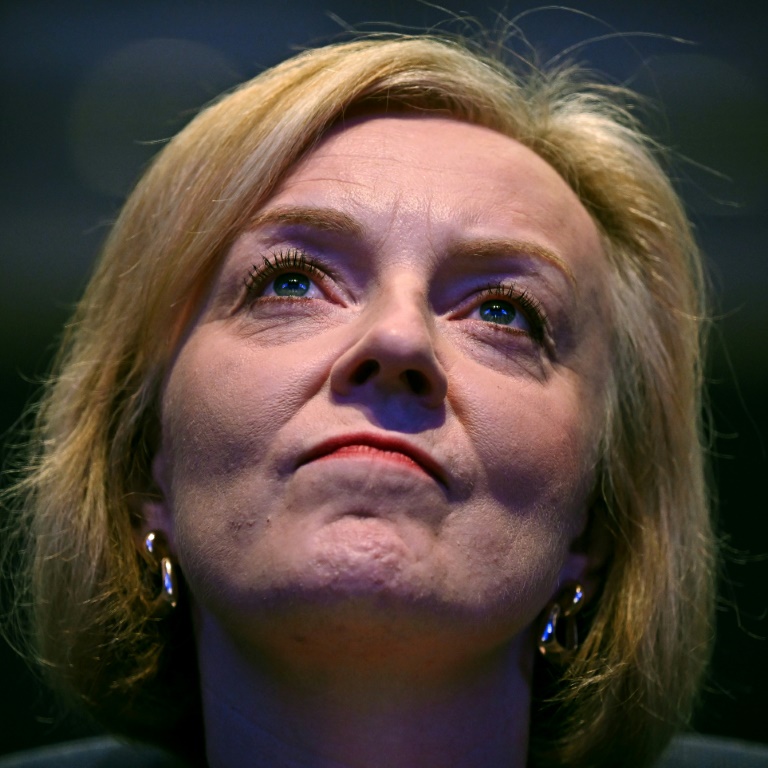
Britain’s Prime Minister Liz Truss is set Wednesday to close her party’s tumultuous annual conference with an unabashed defence of “disruption” to counter economic “drift and delay”.

Just a month since she succeeded Boris Johnson, Truss has alienated voters, financial markets and many in the Conservative party with a crash programme of debt-fuelled tax cuts to revitalise growth.

Former minister Grant Shapps, who supported Truss’s leadership rival Rishi Sunak, said she could face a no-confidence vote by MPs if her keynote speech to the Tory conference in Birmingham does not start reviving the party’s dismal standing in opinion polls.

“In the end, I don’t think members of parliament, Conservatives, if they see the polls continue as they are, are going to sit on their hands,” he told Times Radio.

“A way would be found to make that change.”

But in her speech, expected from 1005 GMT, Truss will argue that the status quo is not an option, according to a preview released by the party.

“The scale of the challenge is immense,” she is to say, stressing Russia’s invasion of Ukraine and the economic crisis in the wake of the Covid-19 pandemic.

“That is why in Britain we need to do things differently. Whenever there is change, there is disruption. Not everyone will be in favour. 

“But everyone will benefit from the result — a growing economy and a better future,” she will say, vowing a “clear plan” to end the “high-tax, low-growth cycle”. 

Truss is set to defy critics, including allies of Johnson, who have accused her of lacking a national mandate for her unpopular reforms after she won the Tory leadership.

“We have huge talent across the country. We’re not making enough of it. To deliver this, we need to get Britain moving,” Truss is expected to say. 

“We cannot have any more drift and delay at this vital time.”

– ‘Keep faith’ –

Whether the speech has the effect 10 Downing Street wants remains to be seen. 

Truss is a wooden speaker, and her media interviews in the build-up to Wednesday have focussed unrelentingly on the U-turn she was forced to stage on a signature element of her reform overhaul.

Truss and Chancellor of the Exchequer Kwasi Kwarteng reversed course on their plan to cut income tax for the richest, as ordinary Britons suffer a painful cost-of-living crisis.

Cabinet splits emerged in Birmingham on indications that despite the impact of the crisis on the poor, the pair will next cut welfare benefits.

Truss denied that she had lost control of her cabinet after putting on a show of unity with the beleaguered Kwarteng on a visit Tuesday to a construction site in Birmingham.

“We are working with our MPs, this is a team, this Conservative team, putting forward our policies for the country and delivering for the country,” she told ITV.

But there was little team spirit on display from Home Secretary Suella Braverman, who accused party critics of seeking to stage a “coup” against Truss.

Dissident ringleader Michael Gove was one of Braverman’s targets. But he kept up his running criticism of Truss, stressing all Conservative MPs had been elected on Johnson’s manifesto of 2019.

“We’ve got to keep faith with what Boris wanted,” Gove said, underlining the point that Truss has yet to face the UK electorate herself.

But asked by reporters if Truss would survive beyond the end of the year, the former minister said: “Yes.”

Foreign minister James Cleverly also distanced himself Braverman’s comments, though he did urge colleagues to air their disagreements in Cabinet.

“Anything to do with policy or the relationship with other ministers — always better to feed straight into the boss”.

Opinion polls have shown the main opposition Labour party breaching 50 percent as the Tories slump under Truss, fraying nerves in Birmingham over the four days of the conference.

“Polls do move up and down,” Kwarteng said Tuesday, stressing the two years remaining to the next election was an “eternity in politics”. 

'Above the law': Indonesia stampede puts focus on police force

The Indonesian stadium stampede that left 131 people dead has sparked anger against the nation’s police, whom critics have long accused of using excessive violence.

Police, who described the unrest on Saturday night as “riots”, said they tried to force supporters to return to the stands and fired tear gas after they invaded the pitch.

But survivors — who had described the police as wielding batons and firing tear gas at helpless spectators — accuse them of overreacting, which led to a crush that became one of the deadliest disasters in football history.

Indonesia’s police has, along with the military, been involved for decades in suppressing dissent, quelling riots, crushing radical Islamist groups and anchoring the government’s bloody fight against separatists in Papua, Aceh and East Timor.

The police force has grown in power as an institution used for the security of the state since the fall of Indonesia’s military dictatorship under Suharto in the late 1990s.

Data reviewed by AFP shows a force heavily armed and funded to the tune of hundreds of millions of dollars for tactical riot equipment since Joko Widodo rose to the presidency in 2014.

Spending on crowd control tactical gear — batons, tear gas, gas masks, shields and vehicles — has jumped in recent years, according to figures collected by Andri Prasetiyo, a researcher at NGO Trend Asia who analyses government purchases.

They have spent close to a quarter of a billion dollars in less than a decade, he said, to kit out officers who use what experts say is often excessive force that almost always goes unpunished.

In 2014, the national police spent $6 million on tear gas. In 2022, that figure rose to $10 million. In the period between, it spent more than $68 million to procure tear gas.

In East Java, where the site of tragedy in the city of Malang is located, police spent $3.2 million on batons in January 2022 alone.

“They use our tax money to kill us,” said Prasetiyo.

The nine elite officers suspended after the incident remain under investigation and come from a unit notorious for its aggressive crowd control tactics.

All are commanders in the Mobile Brigade Corps, or Brimob, a unit that acts as the special operations paramilitary unit for the Indonesian police force.

Since the election of Widodo, they have been used to crush government opponents, activists say. Their coffers have since been heavily buffeted to militarise the force.

“In the past the most brutal force in the military were the special forces. I think they (Brimob) are now getting more notoriously known as a special force of the military,” said Usman Hamid, director of Amnesty International Indonesia.

“They are being used as a stick.”

A national police force spokesman was not immediately available for comment.

– Souring public sentiment –

While Saturday’s stampede appeared to have little to do with politics, the displeasure of a society with its leaders can often be heard on the football terraces and some Arema FC fans were yelling obscenities at police as the chaos began.

Indonesia’s Commission for Disappeared and Victims of Violence, or Kontras, recorded 677 incidents of violence by police between July 2021 and June this year that left 59 people dead and 928 injured.

In the years before the Covid-19 pandemic, such incidents spiked. In 2018 to 2019, Kontras recorded 643 cases of violence. In the following year, it recorded 921 cases.

At least 10 protesters were unlawfully killed in post-election riots in 2019, most of them by gunshot, in cases that were not brought to justice, according to rights groups. 

“The police feel like they are above the law and can do anything they deem necessary,” Ardi Manto Adiputra, deputy director of human rights group Imparsial, told AFP.

– ‘Not fair or just’ –

Many Indonesians fear this cycle of violence will never end without punishment for officers.

A key problem in bringing them to justice is little oversight inside or outside the force and close ties between the police and the government, Fatia Maulidiyanti, coordinator for Kontras, told AFP.

Experts say Widodo has helped place police allies in key positions after the force supported his most recent election bid, and the officers’ presence within the Indonesian elite is blurring the lines.

It means little action is taken against officers who commit alleged crimes, said Maulidiyanti.

“The sanctions against guilty officers are not fair or just. They are rarely brought to the criminal court,” she said.

Transparency International ranks the national police force as one of the most corrupt institutions in Indonesia.

Mochamad Iriawan, the president of Indonesia’s football association — which has refused to criticise the police over the stampede — is the former police chief of Jakarta.

The country’s intelligence chief was deputy of the national police force. 

And the head of the country’s anti-graft commission was chief of the national police’s security maintenance agency.

“If we don’t do something, I think Indonesia is going to become a police state,” said Amnesty International’s Hamid.

Indonesian president visits city where stadium stampede killed 131 people

Indonesian President Joko Widodo arrived on Wednesday in the city of Malang, where a stadium stampede killed at least 131 people in one of the deadliest disasters in football history.

He greeted relatives of the victims after arriving at the Saiful Anwar hospital in the East Javan city.

He will then travel to the Kanjuruhan stadium, the scene of the disaster on Saturday evening, according to an official from the presidential office.

The Indonesian leader’s visit came as anger grew over police officers’ response to a pitch invasion after fans of Arema FC tried to approach players following their defeat to fierce rivals Persebaya Surabaya.

Police described the incident as a riot and said two officers were killed, but survivors accused them of overreacting.

Officers responded to the pitch invasion with force, kicking and hitting fans with batons, according to witnesses and video footage, pushing fans back into the stands where many were trampled or suffocated to death after tear gas was fired.

In response to the tragedy, Widodo ordered all matches suspended, an investigation into what happened, and compensation for victims. 

Indonesia’s chief security minister said a task force had been created and that the probe would take two to three weeks.

Police said the investigation was focusing on six gates at the stadium using CCTV footage from cameras placed outside them. It said the exits were open but too small for the crowds attempting to pass through them.

But Indonesia’s football association spokesperson said Tuesday some gates that should have been opened 10 minutes before the final whistle remained closed.

They stayed shut “because of late commands” and officers “had not arrived”, he told a press conference.

The Malang police chief was replaced Monday, nine officers were suspended and 19 others were put under investigation over the disaster in the stadium, according to police.

– ‘Not going there’ –

Witnesses described being shrouded in smoke, their eyes stinging as they rushed for small exit doors. Several present said police stood by and refused to help victims.

“The place looked like a mass cemetery. Women and children were piling on top of one another,” Eko Prianto, 39, told AFP.

Indonesia’s football association also moved Tuesday to sanction Arema FC, banning its organising committee chairman and a security officer from football for life and fining the club 250 million rupiah ($16,500).

Maike Ira Puspita, the association’s deputy secretary-general, told AFP the away fans were banned due to fears of fan violence and said the match passed without incident until fans entered the pitch after the final whistle.

She said the association sanctioned the club and its officials “due to the… negligence of the whole situation”. 

The actions of the police were outside of the association’s scope, the official said.

“We are not going to go there,” she said, refusing to answer questions about their conduct after the match.

Amid Ukraine war, US set to fly Russian cosmonaut to ISS

The United States will on Wednesday carry a Russian to the International Space Station aboard a SpaceX ship, in a voyage that carries symbolic significance amid the Ukraine war.

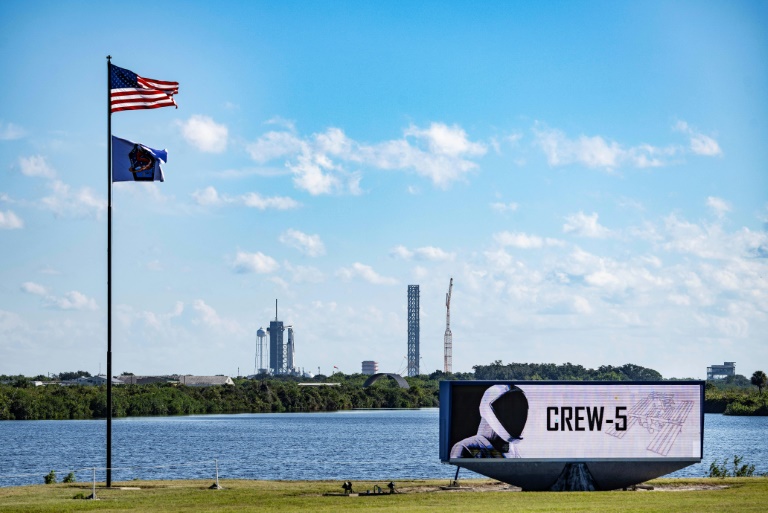
Anna Kikina, the only female cosmonaut in service, is part of the Crew-5 mission, which also includes one Japanese and two American astronauts.

Blast-off is set for noon from the Kennedy Space Center, with the weather forecast so far promising.

Two weeks ago, an American astronaut took off on a Russian Soyuz rocket for the orbital platform.

The long-planned astronaut exchange program has been maintained despite soaring tensions between the two countries since Moscow’s invasion of Ukraine in February.

Ensuring the operation of the ISS has become one of the few remaining areas of cooperation between the United States and Russia.

“When you each are flying other’s crew members, you know that you have a huge responsibility that you’re promising to the other country,” NASA associate administrator Kathy Lueders told reporters in a recent press conference.

“At a working level, we really appreciated the constancy in the relationship, even during some really, really tough times geopolitically.”

– Fifth female cosmonaut – 

Kikina, 38 and an engineer by training, will become the fifth Russian female professional cosmonaut to go into space.

“I hope in the near future we have more women in the cosmonaut corps,” the Novosibirsk native told AFP in August.

The Soviet Union put the first woman in space, Valentina Tereshkova, in 1963, nearly 20 years before the first American woman Sally Ride. Since then, America has flown dozens more women.

It will also be the first spaceflight for American astronauts Nicole Mann and Josh Cassada, but the fifth for Japan’s Koichi Wakata.

After a journey of about 30 hours, their ship will dock with the station on Thursday, ready to begin a five-month science mission and relieve the four members of Crew-4, who will stay a few days for handover.

Crew-5’s arrival will bring the total number of astronauts on the ISS to 11, including two other Russians and an American who arrived on the recent Soyuz.

– ISS future unclear – 

Kikina will be the first Russian to fly with Elon Musk’s SpaceX which, along with Boeing, has a “taxi service” contract with NASA.

Musk himself waded into the conflict Thursday by proposing a peace deal that involved re-running, under UN supervision, annexation referendums in Moscow-occupied regions of Ukraine and acknowledging Russian sovereignty over the Crimean peninsula. 

The post enraged Ukrainians, including the country’s envoy to Germany, who responded with an expletive. 

Tensions between Moscow and Washington have increased considerably in the space field after the announcement of American sanctions against the Russian aerospace industry, in response to the invasion of Ukraine.

Russia thus announced this summer that it wanted to leave the ISS “after 2024” in favor of creating its own station, albeit without setting a precise date.

The director of manned flights at Roscosmos, Sergei Krikaliov, declared Monday he hoped the Russian government agrees to extend participation in the ISS after 2024.

The United States, for its part, wants to continue operating until at least 2030, then transition to commercially run stations.

As things stand, the ISS cannot function without joint cooperation, as the US side is responsible for power and life support and the Russian side for propulsion and maintaining orbit.

Between 2011 — when the Space Shuttle program ended — and SpaceX’s first flight to the ISS in 2020, the United States was dependent on Russia for flying its crew to the station, paying tens of millions of dollars per seat.

The loss of this monopoly represents a significant income reduction for the Russian space program. The current crew exchange program, by contrast, is a barter-based agreement with no exchange of money.

Amid Ukraine war, US set to fly Russian cosmonaut to ISS

The United States will on Wednesday carry a Russian to the International Space Station aboard a SpaceX ship, in a voyage that carries symbolic significance amid the Ukraine war.

Anna Kikina, the only female cosmonaut in service, is part of the Crew-5 mission, which also includes one Japanese and two American astronauts.

Blast-off is set for noon from the Kennedy Space Center, with the weather forecast so far promising.

Two weeks ago, an American astronaut took off on a Russian Soyuz rocket for the orbital platform.

The long-planned astronaut exchange program has been maintained despite soaring tensions between the two countries since Moscow’s invasion of Ukraine in February.

Ensuring the operation of the ISS has become one of the few remaining areas of cooperation between the United States and Russia.

“When you each are flying other’s crew members, you know that you have a huge responsibility that you’re promising to the other country,” NASA associate administrator Kathy Lueders told reporters in a recent press conference.

“At a working level, we really appreciated the constancy in the relationship, even during some really, really tough times geopolitically.”

– Fifth female cosmonaut – 

Kikina, 38 and an engineer by training, will become the fifth Russian female professional cosmonaut to go into space.

“I hope in the near future we have more women in the cosmonaut corps,” the Novosibirsk native told AFP in August.

The Soviet Union put the first woman in space, Valentina Tereshkova, in 1963, nearly 20 years before the first American woman Sally Ride. Since then, America has flown dozens more women.

It will also be the first spaceflight for American astronauts Nicole Mann and Josh Cassada, but the fifth for Japan’s Koichi Wakata.

After a journey of about 30 hours, their ship will dock with the station on Thursday, ready to begin a five-month science mission and relieve the four members of Crew-4, who will stay a few days for handover.

Crew-5’s arrival will bring the total number of astronauts on the ISS to 11, including two other Russians and an American who arrived on the recent Soyuz.

– ISS future unclear – 

Kikina will be the first Russian to fly with Elon Musk’s SpaceX which, along with Boeing, has a “taxi service” contract with NASA.

Musk himself waded into the conflict Thursday by proposing a peace deal that involved re-running, under UN supervision, annexation referendums in Moscow-occupied regions of Ukraine and acknowledging Russian sovereignty over the Crimean peninsula. 

The post enraged Ukrainians, including the country’s envoy to Germany, who responded with an expletive. 

Tensions between Moscow and Washington have increased considerably in the space field after the announcement of American sanctions against the Russian aerospace industry, in response to the invasion of Ukraine.

Russia thus announced this summer that it wanted to leave the ISS “after 2024” in favor of creating its own station, albeit without setting a precise date.

The director of manned flights at Roscosmos, Sergei Krikaliov, declared Monday he hoped the Russian government agrees to extend participation in the ISS after 2024.

The United States, for its part, wants to continue operating until at least 2030, then transition to commercially run stations.

As things stand, the ISS cannot function without joint cooperation, as the US side is responsible for power and life support and the Russian side for propulsion and maintaining orbit.

Between 2011 — when the Space Shuttle program ended — and SpaceX’s first flight to the ISS in 2020, the United States was dependent on Russia for flying its crew to the station, paying tens of millions of dollars per seat.

The loss of this monopoly represents a significant income reduction for the Russian space program. The current crew exchange program, by contrast, is a barter-based agreement with no exchange of money.

Close Bitnami banner
Bitnami