World

Amid Ukraine war, US set to fly Russian cosmonaut to ISS

The United States will on Wednesday carry a Russian to the International Space Station aboard a SpaceX ship, in a voyage that carries symbolic significance amid the Ukraine war.

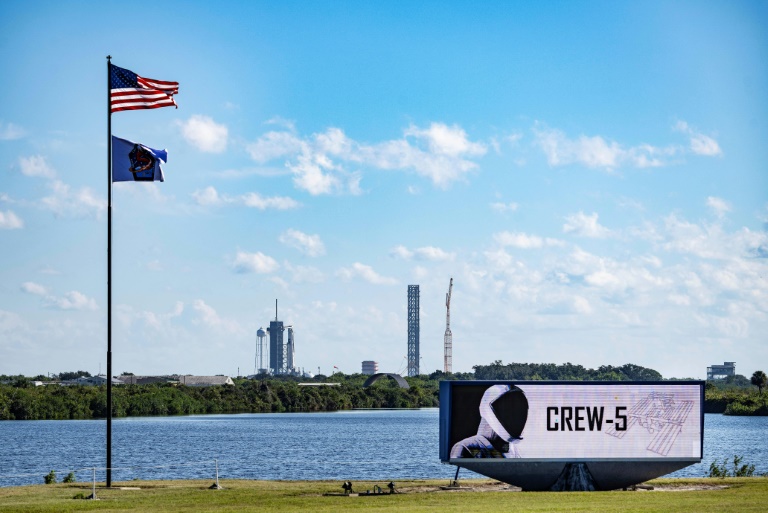
Anna Kikina, the only female cosmonaut in service, is part of the Crew-5 mission, which also includes one Japanese and two American astronauts.

Blast-off is set for noon from the Kennedy Space Center, with the weather forecast so far promising.

Two weeks ago, an American astronaut took off on a Russian Soyuz rocket for the orbital platform.

The long-planned astronaut exchange program has been maintained despite soaring tensions between the two countries since Moscow’s invasion of Ukraine in February.

Ensuring the operation of the ISS has become one of the few remaining areas of cooperation between the United States and Russia.

“When you each are flying other’s crew members, you know that you have a huge responsibility that you’re promising to the other country,” NASA associate administrator Kathy Lueders told reporters in a recent press conference.

“At a working level, we really appreciated the constancy in the relationship, even during some really, really tough times geopolitically.”

– Fifth female cosmonaut – 

Kikina, 38 and an engineer by training, will become the fifth Russian female professional cosmonaut to go into space.

“I hope in the near future we have more women in the cosmonaut corps,” the Novosibirsk native told AFP in August.

The Soviet Union put the first woman in space, Valentina Tereshkova, in 1963, nearly 20 years before the first American woman Sally Ride. Since then, America has flown dozens more women.

It will also be the first spaceflight for American astronauts Nicole Mann and Josh Cassada, but the fifth for Japan’s Koichi Wakata.

After a journey of about 30 hours, their ship will dock with the station on Thursday, ready to begin a five-month science mission and relieve the four members of Crew-4, who will stay a few days for handover.

Crew-5’s arrival will bring the total number of astronauts on the ISS to 11, including two other Russians and an American who arrived on the recent Soyuz.

– ISS future unclear – 

Kikina will be the first Russian to fly with Elon Musk’s SpaceX which, along with Boeing, has a “taxi service” contract with NASA.

Musk himself waded into the conflict Thursday by proposing a peace deal that involved re-running, under UN supervision, annexation referendums in Moscow-occupied regions of Ukraine and acknowledging Russian sovereignty over the Crimean peninsula. 

The post enraged Ukrainians, including the country’s envoy to Germany, who responded with an expletive. 

Tensions between Moscow and Washington have increased considerably in the space field after the announcement of American sanctions against the Russian aerospace industry, in response to the invasion of Ukraine.

Russia thus announced this summer that it wanted to leave the ISS “after 2024” in favor of creating its own station, albeit without setting a precise date.

The director of manned flights at Roscosmos, Sergei Krikaliov, declared Monday he hoped the Russian government agrees to extend participation in the ISS after 2024.

The United States, for its part, wants to continue operating until at least 2030, then transition to commercially run stations.

As things stand, the ISS cannot function without joint cooperation, as the US side is responsible for power and life support and the Russian side for propulsion and maintaining orbit.

Between 2011 — when the Space Shuttle program ended — and SpaceX’s first flight to the ISS in 2020, the United States was dependent on Russia for flying its crew to the station, paying tens of millions of dollars per seat.

The loss of this monopoly represents a significant income reduction for the Russian space program. The current crew exchange program, by contrast, is a barter-based agreement with no exchange of money.
Nobel Peace Prize could sound alarm over Ukraine war or climate

As speculation mounts ahead of Friday’s much-anticipated Nobel Peace Prize announcement, observers suggest the committee may sound the alarm over the war in Ukraine or climate change.

Prize experts are split over who will get it. 

One camp thinks this year’s award winner will be a critique of Russian President Vladimir Putin’s invasion of Ukraine.

The other believes it will highlight the urgent need to combat global heating.

With a total of 343 top-secret nominations this year, the five members of the Norwegian Nobel Committee could also surprise experts and go with a completely different pick.

Henrik Urdal, director of the Peace Research Institute Oslo (PRIO), said the Belarusian opposition leader Svetlana Tikhanovskaya and jailed Kremlin critic Alexei Navalny deserved to win the prestigious honour together.

“These are both champions of non-violent pro-democracy activities within their own countries,” he said.

“And both Navalny and Tikhanovskaya have also been very strong opponents of the war in Ukraine”.

Not since World War II has a conflict raged between two countries so close to Oslo, the home of the Peace Prize.

The committee could also make a statement against Putin’s war by giving the Nobel to those documenting suspected war crimes in Ukraine, such as the International Criminal Court (ICC) or digital investigative group Bellingcat.

– ‘Now or never’ –

And what about Ukrainian President Volodymyr Zelensky, the symbolic figure of his country’s resistance and one of the favourites to win among bookies?

“The committee would likely be extremely careful about giving the prize to a president at war… even if Ukraine is at the receiving end of this war and hasn’t deserved it,” said Urdal.

“There will always be atrocities, even on the Ukrainian side.”

Thousands of people around the world are eligible to nominate candidates for the prize before the January 31 deadline, including members of parliament and cabinet ministers from all countries, former laureates and some university professors.

The Nobel committee members are also free to submit their own choices during their first meeting, this year held shortly after the start of the Russian invasion of Ukraine on February 24.

Other observers say efforts to fight climate change would be worthy of a Nobel after another year marked by extreme weather events, including Europe’s record-breaking heatwave and devastating floods in Pakistan.

United Nations climate experts issued a clear warning in a deeply sombre report in April. 

“It’s now or never, if we want to limit global warming to 1.5 degrees Celsius,” said Jim Skea, co-chair of the working group behind the report.

– No prize? –

“By giving the Peace Prize to climate change, the Nobel committee would have the unique possibility to say that the multiple crises the world is facing must be resolved together,” said Oda Andersen Nyborg, head of the Norwegian Peace Council.

Among the names mentioned for a possible climate prize are Swedish campaigner Greta Thunberg and/or her Fridays for Future movement, tireless British naturalist David Attenborough and other activists. 

Yet others include United Nations Secretary-General Antonio Guterres, the UN Framework Convention on Climate Change (UNFCC) and Tuvalu Foreign Minister Simon Kofe, whose country’s existence is threatened by rising sea levels.

If the committee were to honour work in other fields, human rights activists from China, Afghanistan and Iran could get the nod, as could anti-corruption organisation Transparency International or the International Court of Justice.

According to Sverre Lodgaard, researcher at the Norwegian Institute of International Affairs (NUPI), the committee could also choose to not award the prize at all this year.

The last time it did so was 50 years ago.

“Nobody can claim to have made any great breakthroughs in the field of peace, the conflicts seem never-ending, and treaties seem to be there to be violated,” he told AFP.  

Last year, the Nobel Peace Prize was awarded to two champions of press freedom — Maria Ressa of the Philippines, whose news outlet is under threat of being shut down, and Russia’s Dmitry Muratov, whose media organisation has had its licence revoked.

Biden heads into Florida hurricane clean-up zone — and opponent's territory

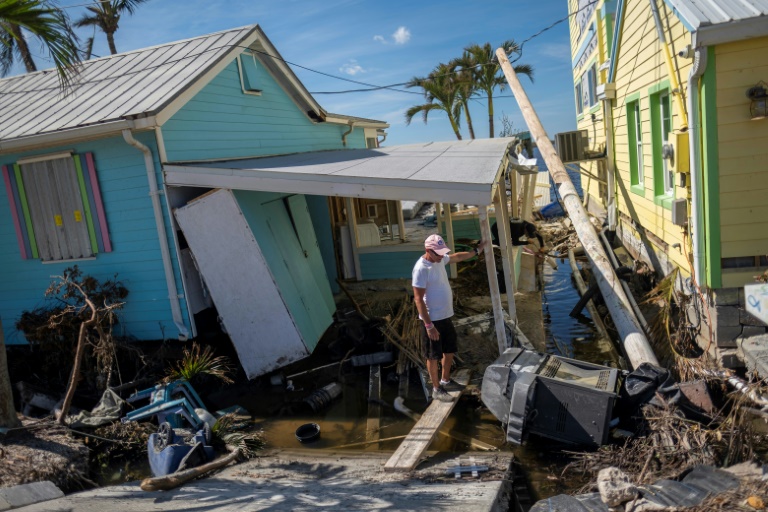
President Joe Biden makes a politically charged visit Wednesday to inspect the aftermath of deadly Hurricane Ian in Florida while also presenting a united front despite bitter disagreements with Republican critic and potential 2024 opponent, Governor Ron DeSantis.

Authorities say at least 76 people —  more than 100 according to US television networks citing local officials — died in one of the most powerful storms to hit the United States.

The Category 4 hurricane flattened whole neighborhoods on the Sunshine State’s west coast, knocking out power for millions of people, with hundreds of thousands still waiting for electricity to be restored Tuesday, and then tore up into North Carolina.

For Biden, who visited hurricane-hit Puerto Rico on Monday, the Florida trip also has an inescapable political dimension, taking him into the stronghold of both DeSantis and Biden’s scandal-plagued predecessor in the White House, Donald Trump.

The Democrat, who says he wants to seek a second term despite already being the oldest man ever in the job at 79, could realistically end up facing a rematch with Trump in two years or a challenge from the up-and-coming DeSantis.

DeSantis has been a caustic critic, as he builds his brand of muscular right-wing politics in a bid to replace Trump as the biggest name in the Republican party. Biden has returned fire, painting DeSantis as part of what he says in an increasingly extreme right.

The hurricane, however, has prompted a truce, with phone calls between the two men and acknowledgement from DeSantis that the federal government was quick to provide assistance.

The visit is “above politics,” White House press secretary Karine Jean-Pierre said.

“There will be plenty of times, plenty of time to discuss differences between the president and the governor,” she said. “Now is not the time.”

– Disaster briefing –

Biden’s main goal, Jean-Pierre said, is to check that “the people of Florida have what they need.”

Biden is set to view ravaged areas in southwestern Florida from a helicopter, then receive a briefing from federal emergency management chief Deanne Criswell and DeSantis, among other officials.

Biden, accompanied by First Lady Jill Biden, will also meet with small business owners and local survivors of the storm, before making a televised address at Fishermans Wharf, Fort Myers.

He will “confirm his commitment to the people of Florida as they recover and rebuild,” Jean-Pierre said.

Biden’s visit to Puerto Rico covered similar ground, although there he was updated on recovery from Hurricane Fiona, which hit the island last month.

Again, Biden stressed the unity message, telling the territory — which often feels overlooked by the mainland and the federal government — that “all of America’s with you.”

The disagreements with DeSantis, however, are many and will likely resurface as soon as Floridians recommence a semblance of their previous lives.

DeSantis opposed Biden on many of his Covid-19 policies during the pandemic, accusing the president of overreach. He has likewise made himself the standard bearer of the conservative backlash to growing tolerance for LGBT issues — something Biden has championed.

Hadis, Minoo and Ghazaleh: the women victims of Iran's crackdown

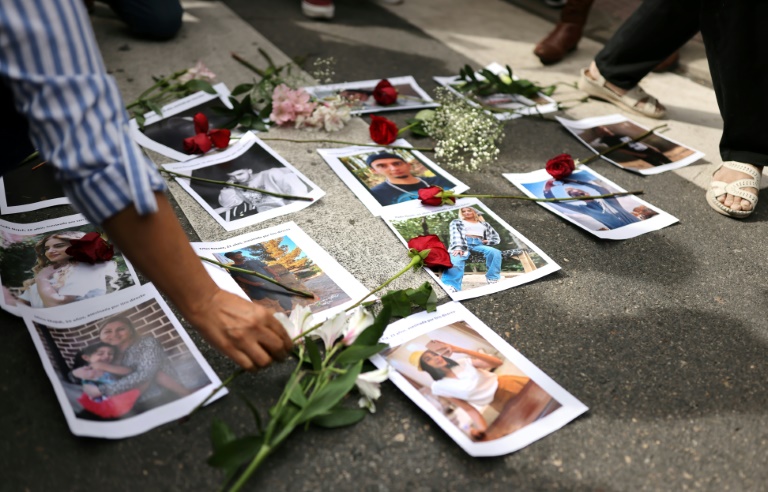
“I am really hoping that in some years from now, after everything has changed, I will be happy to have been involved by taking part in this protest,” Iranian woman Hadis Najafi, 22, said in a self-recorded video as she prepared to take to the streets.

Shortly after recording the message to her phone, Najafi was killed while participating in a street protest on September 21 in Karaj, outside Tehran.

According to Amnesty International, she was shot by security forces several times at close range, with birdshot wounds to the face, neck and chest.

Najafi was one of dozens of people who rights groups say have been killed in the Iranian security forces’ crack down on protests that erupted over the death of Mahsa Amini in morality police custody.

The protests have broken taboos in Iran, with slogans shouted against the regime and women removing their headscarves. But security forces have hit back with a lethal force that Amnesty says raises concerns of an intent to kill demonstrators.

In a video recorded by her grieving family, Najafi’s sister showed the backpack, covered in blood, that was recovered after she was shot.

“It was because of Mahsa Amini that she stood up tall and went out,” she said. “We lost Hadis and we are not afraid of anything.”

Her distraught mother added: “My daughter was murdered for hijab, for Mahsa Amini. She lost her life for Mahsa. She wanted to keep Mahsa’s name alive.”

– ‘At the forefront’ –

Norway-based group Iran Human Rights (IHR) says over 90 people have been killed in the crackdown, including seven women, while Amnesty says it has confirmed 52 names of those killed, including five women, one girl and five boys.

The women killed had no previous experience of political activism and, according to relatives, went to the streets for a movement that they believed offered an unprecedented glimpse of hope.

“Women have been at the forefront of this movement and the very first protest was organised by Kurdish women,” Roya Boroumand, executive director of the Washington-based Abdorrahman Boroumand Center, told AFP. 

The funeral of Amini, an Iranian Kurd, in her home town of Saqqez in Kurdistan province, was marked by the initial protests as women took off their headscarves in defiance of the Islamic republic’s strict dress rules. 

“And they (the security forces) have killed with no hesitation. They did not even wait for the movement to get out of control to shoot,” Boroumand added.

Minoo Majidi, 62, was killed by a shot fired by security forces during a protest on September 20 in the Kurdish-populated city of Kermanshah in northwestern Iran, according to the Norway-based Hengaw rights group.

In a striking image of defiance, one of Majidi’s daughters posed beside her mother’s flower-covered grave bare-headed, dressed in black with a white scarf around her neck, according to an image that has gone viral on social media. 

Her hair was cropped to the skull and in her left hand she held the long locks of hair she had cut off, an apparent tribute to her mother and Mahsa Amini.

Ghazaleh Chelavi, 32, a keen mountain climber, was shot and killed on September 20 in the northern Caspian Sea city of Amol, according to social media channels, which published harrowing footage of the distress of her family at her funeral.

Hannaneh Kia, 23, was killed the same day in the city of Nowshahr, according to family sources and activists. Amnesty reported that two friends had said she was shot on her way home from a doctor’s visit.

– ‘They will keep shooting’ –

Activists say nearly all the victims died after being shot at close range. 

But Sarina Esmailzadeh, aged just 16 and like Hadis Najafi also from Karaj, died as result of blows to the head when security forces beat her with batons on September 23, according to Amnesty.

It also alleged that in a frequently used tactic, Iranian security and intelligence agents have subjected the girl’s family to “intense harassment” to coerce them into silence.

Nika Shahkarami went missing on September 20 after heading out to join a protest in Tehran, two weeks before she was due to celebrate her 17th birthday, her aunt Atash Shahkarami wrote on social media.

Her family was finally allowed to see the body on October 1 and were due to bury her in her home city of Khorramabad in Lorestan province on what would have been her 17th birthday, Atash Shahkarami wrote.

But both BBC Persian and Iran Wire reported that the authorities had taken possession of the body and secretly buried it on Monday in another village, to avoid a funeral that could spark a protest.

Meanwhile, Atash Shahkarami was herself arrested, the reports said. She has been inactive on social media since October 2.

“This is not the end. They will keep arresting people and keep shooting as long as people take to the streets. And people have no other venue to express dissent,” Boroumand said.

Beaten and robbed: Vietnamese fisherman recounts China attacks

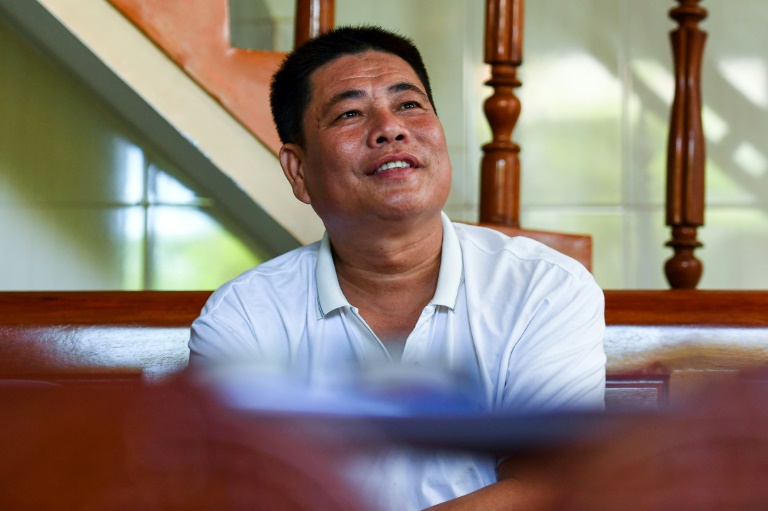
Vietnamese fisherman Nguyen Van Loc has been attacked by Chinese coast guard vessels so many times, he has lost count.

One summer day in 2020, while sailing through the Paracel Islands — resource-rich waters in the South China Sea claimed by both Hanoi and Beijing — his boat was rammed by a Chinese ship repeatedly until it capsized.

Thirteen of his crewmen were left clinging to a fishing basket in the water, desperately awaiting help.

Loc, 43, was beaten over and over, while his boat was stripped of their catch, tools and fishing gear.

Some years before that, two Chinese vessels with large machine guns — and crew armed with axes — slammed into Loc’s boat and followed them closely as they tried to make their way home.

Now swathes of the disputed sea – where he began fishing as a boy aged 15 — are no-go zones, while other parts are so overfished that he spends just an hour where he used to pass the whole day.

“We used to get scared,” Loc told AFP. “But now this is just our normal life.”

Vietnam’s ministry of foreign affairs asked Beijing to investigate the incident — widely reported in Vietnamese media — at the time, and other fishermen from Ly Son island told AFP of similar experiences of harassment at sea.

Since 2014, 98 Vietnamese boats have been destroyed by Chinese vessels, according to figures from the local fishing association on Ly Son, home to hundreds of fishermen and their families whose livelihoods depend on trips out to sea.

Beijing claims almost the entirety of the South China Sea, a waterway of immense strategic importance through which trillions of dollars worth of trade transits every year.

There are rival claims to part of the sea from neighbours including Vietnam, but China has become increasingly aggressive in asserting itself in the area under President Xi Jinping, who is expected to secure a record third consecutive term this month.

– Flags shot down –

Close to the water’s edge, where a line of women wearing traditional conical hats sorts the day’s catch, lies Ly Son’s ship repair yard. But it is ill-equipped to handle the hefty damage inflicted on the boats.

Many are forced to sail to the mainland, putting them out of action for days.

Beijing gained control of the Paracel Islands in 1974 after clashes with the South Vietnamese Navy that left 75 Vietnamese troops dead.

Today, Chinese coast guard vessels shoot down the Vietnamese flags that flutter over the cabin of each fishing boat, according to Ly Son’s fishing association, and mostly the crew have no choice but to sail away, fearful of the consequences if they stand their ground. 

Over the last three decades, 120 fishermen from Ly Son have died due to attacks by Chinese vessels or because boats from China refused to come to their aid during poor weather, the local fishing association said.

“Our vessels are small,” said Loc. “If we are chased, then we run.”

But Loc, like many of his fellow fishermen, remains committed to the waters, where his grandfather and father fished before him. 

“This fishing ground belonged to our ancestors, we will never give it up.”

OPEC+ expected to slash oil output

Major oil producers led by Saudi Arabia and Russia were set to meet Wednesday as reports said they were mulling an output cut of up to two million barrels per day in a bid to prop up slumping prices.

If implemented, it would be the first such major cut since a landmark curb on production at the start of the Covid pandemic.

Energy prices soared after Russia invaded Ukraine earlier this year, pushing inflation to decades-high levels that have put pressure on economies across the world.

But they have fallen in recent months on concerns over dwindling demand and a slowdown in the global economy.

The 13 members of the Organization of the Petroleum Exporting Countries (OPEC), led by Saudi Arabia, and their 10 allies headed by Russia will hold their first in-person meeting since March 2020 at the group’s headquarters in Vienna.

Collectively known as OPEC+, the alliance drastically slashed output by almost 10 million barrels per day (bpd) in April 2020 to reverse a massive drop in crude prices caused by Covid lockdowns.

OPEC+ began to raise production last year after the market improved. Output returned to pre-pandemic levels this year, but only on paper as some members have struggled to meet their quotas.

The group agreed last month on a small, symbolic cut of 100,000 bpd from October, the first in more than a year.

– ‘Sizeable cut’? –

Most oil ministers were reluctant to divulge information on possible output cuts as they started to arrive in Vienna.

UAE Energy Minister Suhail al-Mazrouei said Tuesday that the group was still reviewing market data.

“Let’s wait… We will have to listen to the technical team,” he told journalists.

But Bloomberg said officials were discussing the removal of about two million bpd out of the market from November, twice as much as earlier predictions.

“A sizeable cut now looks on the cards, the question is whether it will be large enough to offset the demand destruction caused by the impending economic downturn,” said Craig Erlam, an analyst at trading platform OANDA.

After soaring close to $140 per barrel in the aftermath of Russia’s invasion of Ukraine in late February, oil prices have dropped below the $90 mark.

According to the UBS bank, a cut of at least 500,000 bpd would be necessary to stop the price plunge.

In anticipation of Wednesday’s meeting, oil prices jumped further on Tuesday, with Brent above $90 and WTI around $86, though still far below their March peak.

– Tighter taps ‘unwelcome’ –

Consumer countries have pushed for OPEC+ to open taps more widely to bring down prices — calls that the group has largely ignored.

US President Joe Biden made a controversial trip to Saudi Arabia in July in part to convince the kingdom to loosen the production taps. The trip saw Biden meet Crown Prince Mohammed bin Salman despite his promise to make Riyadh a “pariah” following the 2018 killing of journalist Jamal Khashoggi.

“Any cut would be unwelcome as it’s not the right time for cutting oil supplies to push prices higher,” said Ipek Ozkardeskaya, a Swissquote analyst.

“The global energy crisis, soaring inflation and looming recession already worry the Western leaders,” she said ahead of the Vienna gathering.

“Knowing that Russia is willing to cut output, the move could also be perceived as another escalation of the geopolitical tensions” between Moscow and the West.

Observers have cast doubt on how much more OPEC+ could possibly pump, with some of its members already struggling to meet quotas.

Bjarne Schieldrop, chief commodities analyst at SEB research group, predicted it would be “very easy for the group to implement cuts given that most members are stretched to the limit of what they can produce”.

He said Saudi Arabia was currently producing 11 million bpd.

“It hasn’t maintained such a high production more than twice in history and then only for 1-2 months,” he said.

OPEC+ expected to slash oil output

Major oil producers led by Saudi Arabia and Russia were set to meet Wednesday as reports said they were mulling an output cut of up to two million barrels per day in a bid to prop up slumping prices.

If implemented, it would be the first such major cut since a landmark curb on production at the start of the Covid pandemic.

Energy prices soared after Russia invaded Ukraine earlier this year, pushing inflation to decades-high levels that have put pressure on economies across the world.

But they have fallen in recent months on concerns over dwindling demand and a slowdown in the global economy.

The 13 members of the Organization of the Petroleum Exporting Countries (OPEC), led by Saudi Arabia, and their 10 allies headed by Russia will hold their first in-person meeting since March 2020 at the group’s headquarters in Vienna.

Collectively known as OPEC+, the alliance drastically slashed output by almost 10 million barrels per day (bpd) in April 2020 to reverse a massive drop in crude prices caused by Covid lockdowns.

OPEC+ began to raise production last year after the market improved. Output returned to pre-pandemic levels this year, but only on paper as some members have struggled to meet their quotas.

The group agreed last month on a small, symbolic cut of 100,000 bpd from October, the first in more than a year.

– ‘Sizeable cut’? –

Most oil ministers were reluctant to divulge information on possible output cuts as they started to arrive in Vienna.

UAE Energy Minister Suhail al-Mazrouei said Tuesday that the group was still reviewing market data.

“Let’s wait… We will have to listen to the technical team,” he told journalists.

But Bloomberg said officials were discussing the removal of about two million bpd out of the market from November, twice as much as earlier predictions.

“A sizeable cut now looks on the cards, the question is whether it will be large enough to offset the demand destruction caused by the impending economic downturn,” said Craig Erlam, an analyst at trading platform OANDA.

After soaring close to $140 per barrel in the aftermath of Russia’s invasion of Ukraine in late February, oil prices have dropped below the $90 mark.

According to the UBS bank, a cut of at least 500,000 bpd would be necessary to stop the price plunge.

In anticipation of Wednesday’s meeting, oil prices jumped further on Tuesday, with Brent above $90 and WTI around $86, though still far below their March peak.

– Tighter taps ‘unwelcome’ –

Consumer countries have pushed for OPEC+ to open taps more widely to bring down prices — calls that the group has largely ignored.

US President Joe Biden made a controversial trip to Saudi Arabia in July in part to convince the kingdom to loosen the production taps. The trip saw Biden meet Crown Prince Mohammed bin Salman despite his promise to make Riyadh a “pariah” following the 2018 killing of journalist Jamal Khashoggi.

“Any cut would be unwelcome as it’s not the right time for cutting oil supplies to push prices higher,” said Ipek Ozkardeskaya, a Swissquote analyst.

“The global energy crisis, soaring inflation and looming recession already worry the Western leaders,” she said ahead of the Vienna gathering.

“Knowing that Russia is willing to cut output, the move could also be perceived as another escalation of the geopolitical tensions” between Moscow and the West.

Observers have cast doubt on how much more OPEC+ could possibly pump, with some of its members already struggling to meet quotas.

Bjarne Schieldrop, chief commodities analyst at SEB research group, predicted it would be “very easy for the group to implement cuts given that most members are stretched to the limit of what they can produce”.

He said Saudi Arabia was currently producing 11 million bpd.

“It hasn’t maintained such a high production more than twice in history and then only for 1-2 months,” he said.

Energy crisis feared by Europe long a reality in Iraq

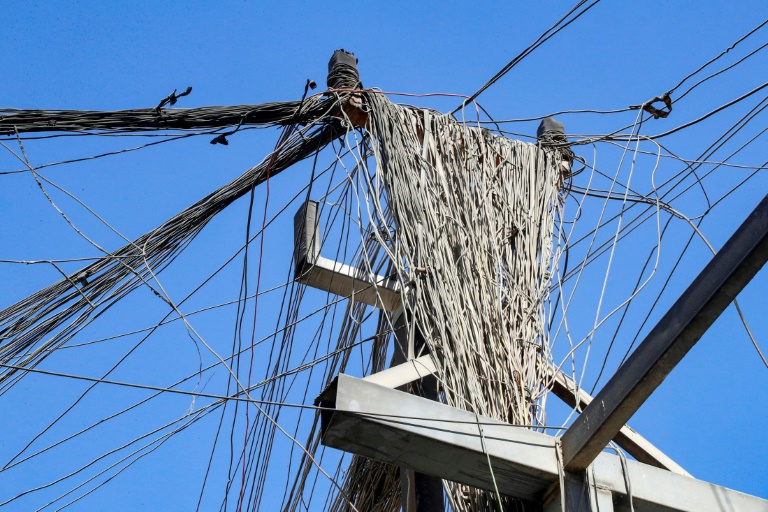
Europe may fear an energy crisis over the coming winter, but for Iraqis an unstable power supply and frequent blackouts have been a reality during decades of war and turmoil.

The Middle Eastern country is rich in oil, but endemic corruption and devastating conflict have taken a heavy toll on its infrastructure and forced most of its 42 million people to adapt. 

The noise of privately owned generators can be heard all over the country as households and businesses try to make up for supply shortfalls from the national electricity company.

“Without generators, Iraq would go completely dark,” Mohammed Jabr, a retired public servant, told AFP in his yard in Sadr City, a working-class district of the capital Baghdad.

Ensuring a stable power supply, he said, requires resourcefulness and money when the national grid can go down for four to 10 hours a day in peak summer consumption, according to electricity ministry data.

Generators “provide the electricity we need for the television, fridge, air cooler”, said the 62-year-old former accountant.

He pays $50 a month in generator subscription fees — but even that isn’t always enough to keep a whole house running.

“A client may have to turn the fridge off to keep the air conditioner on,” explained Khaled al-Shablawi, who has worked for a generator service for 13 years.

– ‘Plunged into darkness’ –

Soaring energy prices fuelled by Russia’s war in Ukraine have forced a new reality upon European nations, where people are asked to limit the electricity they use for heating, lighting and cooking.

Some cities keep street lights on for shorter lengths of time, and in Paris, the lights illuminating the Eiffel Tower are switched off an hour earlier now to save energy.

But to Jabr, such a step “is normal”. 

“When there’s a technical problem, the whole area could be left without power for a day or two before they fix it,” he said.

Jabr recalled how immediately after the 2003 US-led invasion that toppled longtime dictator Saddam Hussein, “houses were plunged into darkness” after fighting destroyed infrastructure.

“There was very little electricity, only two or three hours” a day, he said. “People had their own generators. They would buy fuel and it would last a day or two.”

In Iraq’s long summer months, when temperatures can peak around 50 degrees Celsius (122 degrees Fahrenheit) and air-conditioner use surges, overloaded generator providers hike up prices.

Some regions were deprived of power altogether in the summer of 2021, triggering sporadic street protests by frustrated residents.

– Europe ‘destabilised’ –

Despite its oil wealth, the country relies heavily on energy supply from neighbouring Iran. 

With its mighty Tigris and Euphrates rivers, Iraq has some hydro-electric power but no nuclear plants, and is just beginning to explore renewable energy options such as solar panels.

In a bid to overcome the common blackouts, Baghdad has nonetheless moved to increase domestic power production. 

It now generates more than 24,000 megawatts per day, said electricity ministry spokesman Ahmed Moussa.

To secure stable nationwide power supply, however, 32,000 megawatts would be needed daily, he said.

For now, the national grid provides most regions with 14-20 hours of electricity a day in summer, Moussa added.

In one Sadr City avenue, private generators line the street, each feeding electricity to some 300 homes and a similar number of shops.

Ali al-Aaraji, who owns a private college for around 300 students, decried “astronomical” generator costs, which he estimated at $600 a month.

“Electricity is a constant problem for Iraqis,” said Aaraji, 58, pinning the blame on “the American occupation” of years past.

“Iraqis have managed to put up with the situation for three decades,” he added, questioning how Europe would cope with its looming power problem.

“Energy is the source of economic prosperity,” Aaraji said. 

“Europe is now destabilised. It’s going to impact their economy, industry and commerce. They’ll go backwards.”

Spotlight on synthetic tissues and mRNA for chemistry Nobel

The development of mRNA vaccines, “bioorthogonal chemistry” or even artificial skin are some of the discoveries tipped for the Nobel Chemistry Prize announced Wednesday, which experts see as a toss-up.

The winner — or winners — of the prestigious award will be unveiled at 11:45 am (0945 GMT) “at the earliest” by the Royal Swedish Academy of Sciences in Stockholm. 

Last year, the academy honoured Germany’s Benjamin List and US-British dual national David MacMillan for their development of a precise tool for molecular construction known as asymmetric organocatalysis.

Thought to be among the favourites for the medicine prize that was announced on Monday — which went to Swedish paleogeneticist Svante Paabo — the pioneers of the Covid-19 mRNA vaccines could see their work instead snatching the chemistry category.

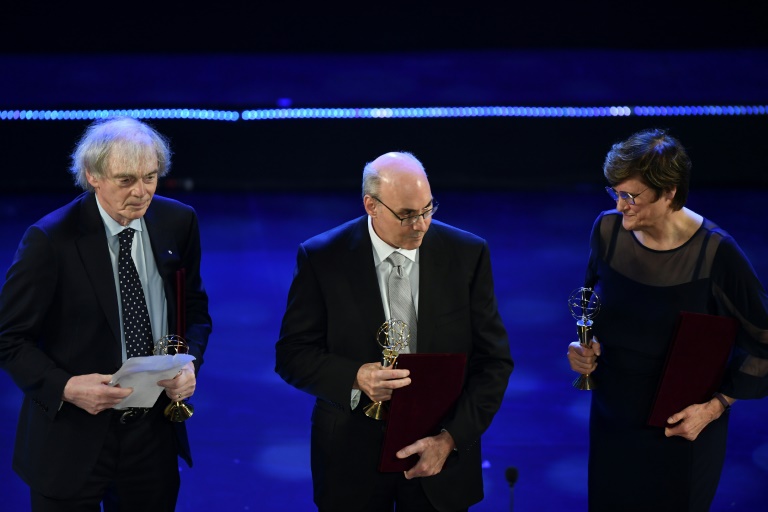
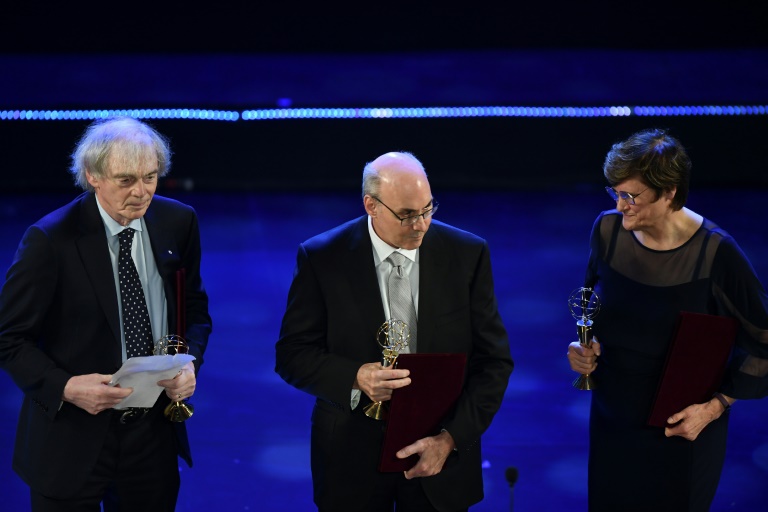
Hungarian biochemist Katalin Kariko and US immunologist Drew Weissman — whose work served as a basis for the Pfizer/BioNTech and Moderna Covid-19 mRNA vaccines — are also favourites for the chemistry prize.

They could be honoured alongside Canada’s Pieter Cullis, another mRNA expert.

– Long wait –

While many hope to see the mRNA vaccines, of which billions of doses have already been administered, receive a Nobel Prize, it is unlikely, according to Linus Brohult, editor of the science desk at Swedish public broadcaster SVT.

“Nobel committees tend to wait a long time before awarding a prize,” he told AFP.

Brohult also noted that mRNA vaccines are under development and could be used in other fields such as cancer prevention.

“mRNA vaccines might be an even bigger thing in a few years, and then they will want to include those who have been part of that development,” Brohult said. 

While under-represented among Nobel science prizes, and after no woman was crowned in the science categories last year, experts queried by AFP nonetheless cite a number of female researchers as potential Nobel candidates, including Kariko.

David Pendlebury, head of research analysis at the Institute for Scientific Information at Clarivate — an organisation which closely monitors potential science laureates — said American Carolyn Bertozzi was a likely winner for chemistry this year. 

Pendlebury told AFP that “she coined the term and helped develop what is today known as bioorthogonal chemistry,” which refers to chemical reactions occurring inside of living systems without interfering with biochemical processes.

Bertozzi could potentially share the prize with American Stephen J. Lippard, an expert in the role of metal ions in biology, which for instance is used in the development of cancer treatments.

Brohult also thinks American molecular biologist Bonnie Bassler, a specialist in intercellular communication, has a good chance of earning a Nobel medal this year. 

– Artificial skin –

Stanford University chemical engineering professor Zhenan Bao could also be awarded this year’s Nobel Prize in Chemistry, according to Brohult.

The Chinese-American and her team have invented an “artificial electronic skin” by developing materials for stretchable circuits and flexible batteries.

Another skin-related field that may get the nod is that of tissue engineering thanks to the American trio of Cato Laurencin, Kristi Anseth and Robert Langer. 

The latter is known for developing technologies that allow the delivery of drugs directly to diseased tissues without the use of needles or other invasive measures.

One man believed to be in the race is American Barry Sharpless, who is also in a position to achieve the rare feat of grabbing a second Nobel after first winning in 2001.

Not counting organisations, only four people have done so, starting with Polish-born Frenchwoman Marie Curie.

He could be awarded the prize for so-called “click” chemistry, a term he coined which refers to the use of molecules that are easily joined together.

Also speculated to be in the running in recent years are Japan’s Susumu Kitagawa and Makoto Fujita and American-Jordanian Omar Yaghi, considered to be pioneers of metal-organic frameworks which allow for the storage of large quantities of gas without requiring high pressure.

On Monday, the medicine prize went to Paabo for his discoveries on the genomes of extinct hominins and human evolution.

Then on Tuesday, physicists Alain Aspect of France, John Clauser of the United States and Austria’s Anton Zeilinger were given the physics prize for developing experimental tools that helped prove quantum entanglement — a phenomenon Albert Einstein dismissed as “spooky action at a distance”.

The chemistry prize will be followed by the highly watched literature and peace prizes, announced on Thursday and Friday respectively.

The peace prize is expected to hold a special significance this year given the Russian invasion of Ukraine.

Spotlight on synthetic tissues and mRNA for chemistry Nobel

The development of mRNA vaccines, “bioorthogonal chemistry” or even artificial skin are some of the discoveries tipped for the Nobel Chemistry Prize announced Wednesday, which experts see as a toss-up.

The winner — or winners — of the prestigious award will be unveiled at 11:45 am (0945 GMT) “at the earliest” by the Royal Swedish Academy of Sciences in Stockholm. 

Last year, the academy honoured Germany’s Benjamin List and US-British dual national David MacMillan for their development of a precise tool for molecular construction known as asymmetric organocatalysis.

Thought to be among the favourites for the medicine prize that was announced on Monday — which went to Swedish paleogeneticist Svante Paabo — the pioneers of the Covid-19 mRNA vaccines could see their work instead snatching the chemistry category.

Hungarian biochemist Katalin Kariko and US immunologist Drew Weissman — whose work served as a basis for the Pfizer/BioNTech and Moderna Covid-19 mRNA vaccines — are also favourites for the chemistry prize.

They could be honoured alongside Canada’s Pieter Cullis, another mRNA expert.

– Long wait –

While many hope to see the mRNA vaccines, of which billions of doses have already been administered, receive a Nobel Prize, it is unlikely, according to Linus Brohult, editor of the science desk at Swedish public broadcaster SVT.

“Nobel committees tend to wait a long time before awarding a prize,” he told AFP.

Brohult also noted that mRNA vaccines are under development and could be used in other fields such as cancer prevention.

“mRNA vaccines might be an even bigger thing in a few years, and then they will want to include those who have been part of that development,” Brohult said. 

While under-represented among Nobel science prizes, and after no woman was crowned in the science categories last year, experts queried by AFP nonetheless cite a number of female researchers as potential Nobel candidates, including Kariko.

David Pendlebury, head of research analysis at the Institute for Scientific Information at Clarivate — an organisation which closely monitors potential science laureates — said American Carolyn Bertozzi was a likely winner for chemistry this year. 

Pendlebury told AFP that “she coined the term and helped develop what is today known as bioorthogonal chemistry,” which refers to chemical reactions occurring inside of living systems without interfering with biochemical processes.

Bertozzi could potentially share the prize with American Stephen J. Lippard, an expert in the role of metal ions in biology, which for instance is used in the development of cancer treatments.

Brohult also thinks American molecular biologist Bonnie Bassler, a specialist in intercellular communication, has a good chance of earning a Nobel medal this year. 

– Artificial skin –

Stanford University chemical engineering professor Zhenan Bao could also be awarded this year’s Nobel Prize in Chemistry, according to Brohult.

The Chinese-American and her team have invented an “artificial electronic skin” by developing materials for stretchable circuits and flexible batteries.

Another skin-related field that may get the nod is that of tissue engineering thanks to the American trio of Cato Laurencin, Kristi Anseth and Robert Langer. 

The latter is known for developing technologies that allow the delivery of drugs directly to diseased tissues without the use of needles or other invasive measures.

One man believed to be in the race is American Barry Sharpless, who is also in a position to achieve the rare feat of grabbing a second Nobel after first winning in 2001.

Not counting organisations, only four people have done so, starting with Polish-born Frenchwoman Marie Curie.

He could be awarded the prize for so-called “click” chemistry, a term he coined which refers to the use of molecules that are easily joined together.

Also speculated to be in the running in recent years are Japan’s Susumu Kitagawa and Makoto Fujita and American-Jordanian Omar Yaghi, considered to be pioneers of metal-organic frameworks which allow for the storage of large quantities of gas without requiring high pressure.

On Monday, the medicine prize went to Paabo for his discoveries on the genomes of extinct hominins and human evolution.

Then on Tuesday, physicists Alain Aspect of France, John Clauser of the United States and Austria’s Anton Zeilinger were given the physics prize for developing experimental tools that helped prove quantum entanglement — a phenomenon Albert Einstein dismissed as “spooky action at a distance”.

The chemistry prize will be followed by the highly watched literature and peace prizes, announced on Thursday and Friday respectively.

The peace prize is expected to hold a special significance this year given the Russian invasion of Ukraine.

Close Bitnami banner
Bitnami