World

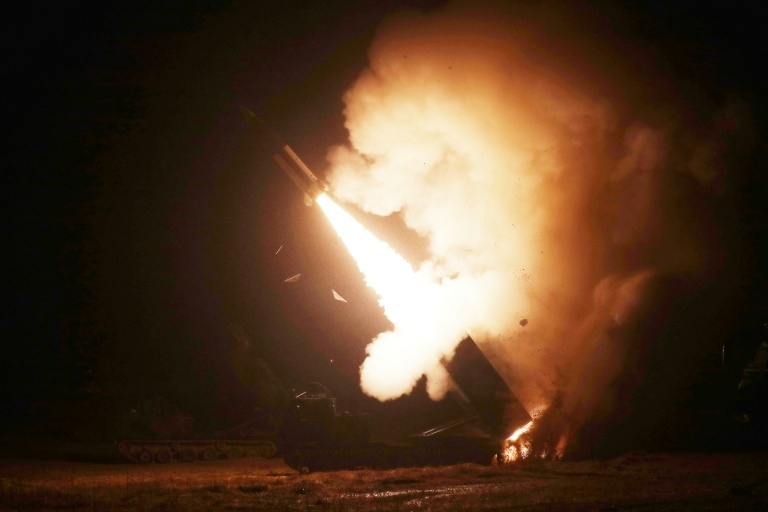
South Korea, US fire missiles in response to North Korea test

The South Korean and US militaries fired a volley of missiles into the sea in response to North Korea firing a ballistic missile over Japan, Seoul said Wednesday, as global condemnation mounted over Pyongyang’s likely longest-ever test.

Nuclear-armed North Korea fired an Intermediate-Range Ballistic Missile (IRBM) over Japan for the first time in five years on Tuesday, prompting Tokyo to issue evacuation warnings for some residents.

South Korea and the United States staged a drill of their own in response, firing ground-to-ground missiles into the East Sea, also known as the Sea of Japan, Seoul’s military said.

Both militaries fired two ATACMS short-range ballistic missiles into the water “to precisely strike a virtual target,” the Joint Chiefs of Staff said.

The military also confirmed that a South Korean missile failed soon after it was launched and crashed, without causing any casualties.

South Korean and US fighter jets had carried out a bombing drill at a virtual target in the Yellow Sea on Tuesday.

The joint drills aim to “make sure that we have the military capabilities at the ready to respond to provocations by the North if it comes to that,” US National Security Council spokesman John Kirby told CNN.

South Korea’s military also announced Wednesday that the nuclear-powered USS Ronald Reagan aircraft carrier would return to the area, having already conducted joint drills with Seoul’s navy last month.

Pyongyang’s Tuesday launch is part of a record year of sanctions-busting weapons tests by the isolated regime, which recently revised its nuclear laws, with leader Kim Jong Un declaring his country an “irreversible” nuclear power.

US President Joe Biden and Japanese Prime Minister Fumio Kishida decried the launch “in the strongest terms” while South Korean President Yoon Suk-yeol called it a “provocation”.

The United Nations Security Council was set to meet on Wednesday to discuss the matter.

The IRBM flew about 4,600 km (2,900 miles), Seoul and Tokyo said, likely the longest-ever distance for a North Korean test, which are typically fired on a “lofted” trajectory to avoid flying over neighbouring countries.

Officials and experts said it was likely a Hwasong-12 IRBM, a nuclear-capable missile that North Korea likely first tested in 2017, which has a range that could put US bases on Guam within reach. 

North Korea has not commented on the launch in state media.

– ‘Ridicule’ response –

“Regardless of today’s missile launch by the US and South Korean military, North Korea’s plan to carry out its next nuclear test will not change,” Yang Moo-jin, a professor at the University of North Korean Studies, told AFP. 

“It’s likely that Pyongyang’s going to ridicule today’s missile launch — especially since one of the launches failed — and proceed with their next nuclear test, given the law changes they made on the nuclear use in September.”

The Tuesday test was Pyongyang’s fifth missile launch in 10 days.

The spate of launches comes as Seoul, Tokyo and Washington have been ramping up joint military drills to counter Pyongyang’s growing threats, staging the first trilateral anti-submarine drills in five years on Friday.

That came just days after the US and South Korean navies conducted large-scale exercises.

Such drills infuriate North Korea, which sees them as rehearsals for an invasion.

US Vice President Kamala Harris visited Seoul last week and toured the heavily fortified Demilitarized Zone that divides the Korean peninsula, on a trip to underscore her country’s commitment to South Korea’s defence.

About 28,500 US troops are stationed in South Korea to help protect it from the North.

South Korean and US officials have been warning for months that Kim is preparing to conduct another nuclear test, saying last week that this could happen soon after Pyongyang’s key ally China holds a Communist Party congress from October 16.

Pyongyang has tested nuclear weapons six times since 2006, most recently in 2017.
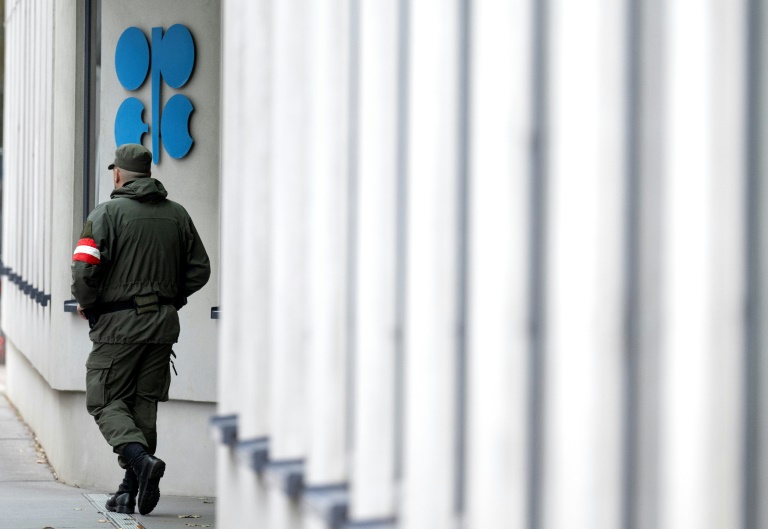
Equities extend rally on rate hopes, traders await OPEC decision

Asian investors joined their Wall Street and European counterparts in an equity buying spree Wednesday as more data pointing to weakness in the US economy further fanned hopes the Federal Reserve could temper its rate hike campaign.

The much-needed dose of optimism has also put pressure on the dollar, pushing it down against most of its peers and adding to the upward march in oil prices fuelled by expectations OPEC will announce a massive output cut later in the day.

The mood on trading floors was lightened Monday by data showing US factory activity slowed more than forecast in September to a two-year low, suggesting the Fed’s rate hike campaign against decades-high inflation could be kicking in.

That was followed Tuesday by news that US job openings had also dropped by almost 10 percent in August, its fastest fall since April 2020.

“Rate hikes are really beginning to take a bite out of the US employment numbers,” said Matt Simpson, of City Index.

He added that the figures put more emphasis on jobs reports out later in the week, with weak readings likely to provide more support to stocks as investors bet the Fed will temper its tightening campaign.

However, officials at the central bank continue to flag their determination to crush inflation, even if that means sparking a recession.

“For the market to continue higher, the jobs data will have to be in-line with, or short of expectations,” said Lindsey Bell, of Ally Financial.

The market is currently anticipating a “Goldilocks” labour market report that’s “not too hot and not too cold”.

All three main indexes on Wall Street rallied Tuesday, with the S&P 500 and Nasdaq up more than three percent, while European markets also thundered higher.

And Asia continued the run, with Hong Kong rocketing more than five percent as investors there returned from a one-day break, while there were also healthy performances in Tokyo, Singapore, Sydney, Taipei, Jakarta and Manila.

The gains were also helped by a smaller-than-expected rate hike by the Reserve Bank of Australia.

That came after the Bank of England last week pledged to pump billions of dollars into supporting financial markets after they were hammered by the UK government’s big-borrowing mini-budget.

The BoE pivot “seems to have convinced investors that the Fed now must give more weight to financial stability, which means that the current monetary tightening cycle might end sooner rather than later”, Ed Yardeni, president of Yardeni Research, said.

Focus is now on the meeting later Wednesday of OPEC and other major producers, who are reportedly considering a two million barrels cut in output — double what had earlier been flagged — after prices plunged to their January lows owing to recession concerns.

Both main contracts have bounced this week on talk of the reductions, while the weaker dollar makes the commodity cheaper for buyers using other currencies.

While WTI and Brent dipped slightly, analysts said they may have more road to run up as supplies tighten and the dollar softens.

– Key figures around 0230 GMT –

Tokyo – Nikkei 225: UP 0.4 percent at 27,085.97 (break)

Hong Kong – Hang Seng Index: UP 5.2 percent at 17,960.10

Shanghai – Composite: Closed for a holiday

Pound/dollar: DOWN at $1.1430 from $1.1477 on Tuesday

Euro/dollar: DOWN at $0.9961 from $0.9992

Euro/pound: UP at 87.26 pence from 87.03 pence

Dollar/yen: UP at 144.26 yen from 144.09 yen

West Texas Intermediate: DOWN 0.5 percent at $86.10 per barrel

Brent North Sea crude: DOWN 0.4 percent at $91.44 per barrel

New York – Dow: UP 2.8 percent at 30,316.32 (close)

London – FTSE 100: UP 2.6 percent at 7,086.46 (close)

— Bloomberg News contributed to this story —

Filipinos fishing on frontline of China's battle for disputed sea

Filipino fisherman Mariel Villamonte had spent years plying the turquoise waters of Scarborough Shoal in the South China Sea for snapper and grouper — until a Chinese coast guard vessel water cannoned his boat.

That was in 2012, around the time China snatched control of the small ring of reefs from the Philippines, and he has not dared go back. 

“Their ships are made of steel, ours are made of wood,” said Villamonte, now 31, recalling how two Chinese vessels chased his outrigger before blasting it with high-pressure water.

The fishing ground, tapped by generations of Filipinos, is one of many potential flashpoints for military conflict over the South China Sea.

China and Taiwan both claim sovereignty over almost the entire sea, while the Philippines, Vietnam, Malaysia and Brunei have competing claims to parts of it.

Trillions of dollars worth of ship-borne trade passes through the waterway annually and naval vessels from the United States and Western allies sail through it regularly.

Of all the claimants, China has in recent years forced its stance most aggressively. 

Hundreds of Chinese coast guard and maritime militia vessels prowl the waters, swarming reefs, harassing and attacking fishing and other boats, and interfering in oil and gas exploration, and scientific research.

Analysts say Beijing’s aim is regional supremacy and control over all activity in the waters — and it is using its might to bully smaller rivals into submission.

“They really envision themselves to be the centre of this region, economically, politically and militarily,” said Jay Batongbacal, director of the University of the Philippines’s Institute for Maritime Affairs and Law of the Sea.

“What they want is that eventually the weaker nations simply give up and leave them there just to avoid a problem.” 

– ‘Chinese Dream’ –

China often invokes the so-called nine-dash line, a vague delineation based on maps from the 1940s, to justify its claims over the South China Sea.

The Philippines brought a case before an international court disputing China’s stance. The tribunal ruled in 2016 that Beijing’s claims have no legal basis.

China has since ignored the ruling, and tensions with the Philippines eased after former president Rodrigo Duterte set aside his country’s legal victory and courted Chinese businesses instead.

Ferdinand Marcos Jr, who took over from Duterte in June this year, has pledged to uphold the court decision and insisted he would not let China trample on Manila’s maritime rights.

But in the decade under President Xi Jinping, who is expected to secure a record third consecutive term in office this month, China has dramatically expanded its presence in the sea.

Xi’s desire for control of the waters is not about fish or fossil fuels, said Greg Poling, director of the US-based Asia Maritime Transparency Initiative (AMTI).

His main objectives are realising the “Chinese Dream” of national rejuvenation — Xi’s vision of restoring the country to perceived past glory — and securing his political legitimacy.

Poling said generations of Chinese leaders had made increasingly “absurd” claims to the sea, leaving Xi with no choice but to “assert claims to everything”.

Satellite images published by AMTI show China’s land-reclamation efforts in the waters have vastly outstripped those of all other claimants combined.

Since 2013, it has ripped up roughly 6,000 hectares (15,000 acres) of reef to create about 1,300 hectares of new land for artificial islands in the Spratly archipelago, said Poling.

The militarised islands — complete with runways, ports, and radar systems — enable Chinese vessels to patrol as far south as Indonesia and Malaysia.

Apart from destroying fish breeding grounds and smothering marine life with sediment, experts say Beijing’s actions contravene international law.

Under the 1982 United Nations Convention on the Law of the Sea, which China helped negotiate, countries have exclusive rights to natural resources within about 200 nautical miles of their shore.

China’s claims extend as far as a thousand nautical miles, which Poling said was “wildly inconsistent” with the law.

“The rules that protected China as a developing coastal state now seem like an unfair constraint on a China that believes that it should be able to impose its will on its neighbours,” he said.

– ‘Thief in your backyard’ – 

China’s seizure of Scarborough Shoal has robbed Villamonte and other fishermen in Cato village, in the northern province of Pangasinan, of a key source of income.

Their families began fishing there in the 1980s when bigger boats enabled them to make the 500-kilometre round trip. It was full of fish and offered life-saving shelter during storms.

Now, the fishermen say they mainly rely on “payaos”, floating devices that attract yellowfin tuna, anchored away from the shoal and left alone by Chinese boats. 

After decades of overfishing by countries surrounding the waters, the men have to spend longer at sea and resort to catching smaller fish.

Even then, they sometimes struggle to break even.

Despite the risks, Filipino fishermen still try to enter the shoal to top up their catch.

Christopher de Vera, 53, said members of his crew have gone inside under the cover of darkness, leaving them feeling like “a thief in your own backyard”.

But he said the shallow waters no longer teem with fish after the coral was “decimated” by Chinese giant clam harvesters.

– ‘Worst nightmare’ – 

China’s growing assertiveness has not been seriously challenged by Southeast Asian countries due to deep divisions over how to respond and fear of retaliation if they do, according to analysts.

The 10-member Association of Southeast Asian Nations (ASEAN) is split between those with close ties to China, such as Myanmar, Cambodia and Laos, and others that are warier of Beijing. 

Their differences have hampered negotiations between China and ASEAN for a “code of conduct” that would govern behaviour in the sea.

Talks have dragged on for 20 years as Beijing, which prefers to deal directly with its smaller neighbours, went on an island-building spree.

The United States is widely seen as the only nation powerful enough to push back, but there are concerns about its reliability.

President Joe Biden hosted ASEAN leaders in May to signal Washington’s long-term commitment to the region in the face of China’s growing clout.

But decades of inconsistent policies and perceived neglect of the region have damaged Washington’s image.

“Southeast Asian countries are simply not willing to place their bets on the United States,” said Shahriman Lockman of the Institute of Strategic and International Studies in Malaysia. 

China has previously used deadly force to back its claims and its recent war games around Taiwan, which it considers part of its own territory, rang alarm bells across the region.

Chinese and Vietnamese forces engaged in clashes in 1974 and 1988 in which dozens of troops died.

For now, Beijing appears keen to avoid war while pursuing its expansionist drive.

“They are masterful at avoiding crossing that threshold by being shrill about their protestations, this wolf warrior diplomacy, that is designed to intimidate and get you to give in without fighting,” said John Blaxland, an international security and intelligence expert at the Australian National University.

And its tactics are working.

Poling said the sea could become a “Chinese lake” as the growing risk and cost of operating there forces out Southeast Asian fishermen, oil and gas companies and coast guard.

Villamonte used to regularly make 6,000 pesos ($105) per trip when he could fish at Scarborough Shoal. Now it can be as little as 2,000 pesos, or nothing at all. 

Fishing is all he knows — his father and grandfather were fishermen — and his “worst nightmare” is losing access to the rest of Philippine waters. 

“My family will go hungry,” he said.

burs-amj/ser/qan

UK's Truss rejects 'drift and delay' in defiant speech to Tories

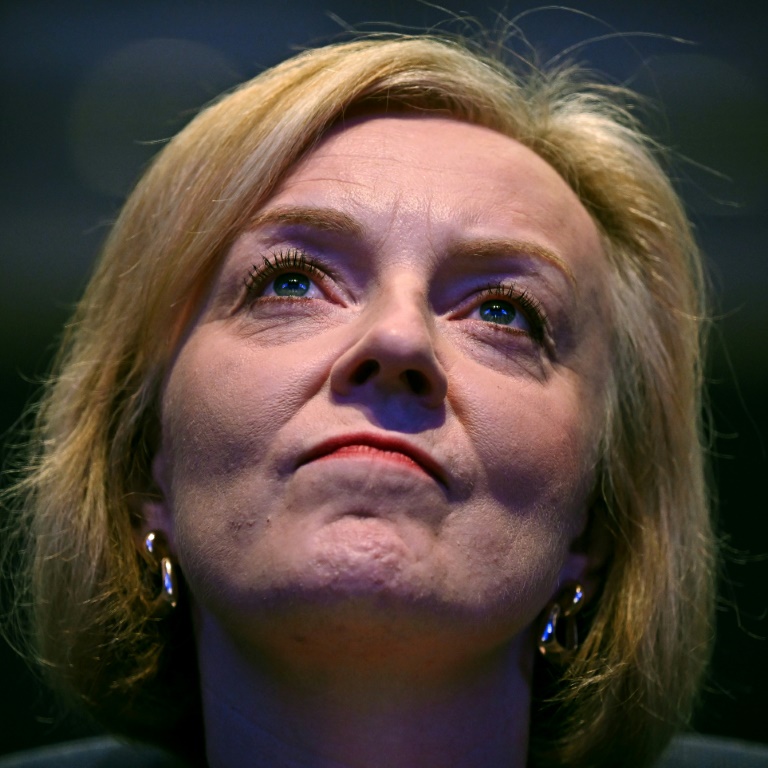
Britain’s Prime Minister Liz Truss is set Wednesday to close her party’s tumultuous annual conference with an unabashed defence of “disruption” to counter economic “drift and delay”.

Just a month since she succeeded Boris Johnson, Truss has alienated voters, financial markets and many in the Conservative party with a crash programme of debt-fuelled tax cuts to revitalise growth.

Former minister Grant Shapps, who supported Truss’s leadership rival Rishi Sunak, said she could face a no-confidence vote by MPs if her keynote speech to the Tory conference in Birmingham does not start reviving the party’s dismal standing in opinion polls.

“In the end, I don’t think members of parliament, Conservatives, if they see the polls continue as they are, are going to sit on their hands,” he told Times Radio.

“A way would be found to make that change.”

But in her speech, expected from 1005 GMT, Truss will argue that the status quo is not an option, according to a preview released by the party.

“The scale of the challenge is immense,” she is to say, stressing Russia’s invasion of Ukraine and the economic crisis in the wake of the Covid-19 pandemic.

“That is why in Britain we need to do things differently. Whenever there is change, there is disruption. Not everyone will be in favour. 

“But everyone will benefit from the result — a growing economy and a better future,” she will say, vowing a “clear plan” to end the “high-tax, low-growth cycle”. 

Truss is set to defy critics, including allies of Johnson, who have accused her in Birmingham of lacking a national mandate for her unpopular reforms after she won the Tory leadership with the votes of 81,326 party members.

“We have huge talent across the country. We’re not making enough of it. To deliver this, we need to get Britain moving,” Truss is expected to say. 

“We cannot have any more drift and delay at this vital time.”

– ‘We’re all finished’ –

Whether the speech has the effect 10 Downing Street wants remains to be seen. 

Truss is a wooden speaker, and her media interviews in the build-up to Wednesday have focussed unrelentingly on the U-turn she was forced to stage on a signature element of her reform overhaul.

Truss and Chancellor of the Exchequer Kwasi Kwarteng reversed course on their plan to cut income tax for the richest, as ordinary Britons suffer a painful cost-of-living crisis.

Cabinet splits emerged in Birmingham on indications that despite the impact of the crisis on the poor, the pair will next cut welfare benefits.

Truss denied that she had lost control of her cabinet after putting on a show of unity with the beleaguered Kwarteng on a visit Tuesday to a construction site in Birmingham.

“We are working with our MPs, this is a team, this Conservative team, putting forward our policies for the country and delivering for the country,” she told ITV.

But there was little team spirit on display from Home Secretary Suella Braverman, who accused party critics of seeking to stage a “coup” against Truss.

Dissident ringleader Michael Gove was one of Braverman’s targets. But he kept up his running criticism of Truss, stressing all Conservative MPs had been elected on Johnson’s manifesto of 2019.

“We’ve got to keep faith with what Boris wanted,” Gove said, underlining the point that Truss has yet to face the UK electorate herself.

But asked by reporters if Truss would survive beyond the end of the year, the former minister said: “Yes.”

Opinion polls have shown the main opposition Labour party breaching 50 percent as the Tories slump under Truss, fraying nerves in Birmingham over the four days of the conference.

“Polls do move up and down,” Kwarteng said Tuesday on the conference fringes, stressing the two years remaining to the next election was an “eternity in politics”. 

“I never predict victory, but I do think we can be very competitive and have a compelling story to tell.”

Judith Donovan, a 71-year-old party member from Yorkshire in northern England, urged the rookie prime minister to “stick to her guns”.

“We can’t keep killing prime ministers. If she’s finished, we’re all finished,” she told AFP.

Musk offers to close Twitter buyout deal at original price

Elon Musk on Tuesday offered to push through with his buyout of Twitter at the original agreed price, as a trial over his efforts to withdraw from the deal loomed.

The world’s richest man said in a filing with the Securities and Exchange Commission that he sent Twitter a letter vowing to honor the contract.

The latest twist in the long-running saga came ahead of the high-stakes court battle launched by Twitter in an attempt to hold the Tesla chief to the deal he signed in April.

Musk’s potential stewardship of the influential social media site has sparked worry from activists who fear he could open the gates to more abusive and misinformative posts.

“We write to notify you that the Musk Parties intend to proceed to closing of the transaction,” read a copy of the letter to Twitter filed with the SEC.

Twitter confirmed to AFP that it received the letter from Musk, and said it intends to close the buyout deal at the agreed-on price of $54.20 per share.

Conditions noted in Musk’s letter included that the court halt action in the lawsuit against him. He had been slated to be questioned under oath by Twitter attorneys later this week.

The 51-year-old tweeted that buying Twitter “is an accelerant to creating X, the everything app,” offering no details.

During an annual shareholders meeting in August, Musk said Twitter could add momentum to a vision he had for the X.com company he founded in 1999.

X.com merged with Confinity, whose co-founders include Peter Thiel, and the entity went on to become PayPal.

“I do sort of have a grander vision for what I thought X.com, or X corporation, could have been back in the day,” Musk said at the shareholder meeting.

“I think Twitter would help accelerate that by three to five years.”

– Buyer’s remorse? –

A serial entrepreneur made rich through his success with Tesla electric cars, Musk began to step back from the Twitter deal soon after it was agreed.

But “I think that Musk realized he was not going to win that trial” next week, University of Richmond law professor Carl Tobias told AFP.

“Ever since he had buyer’s remorse, the problem has been why, and why had he not done due diligence up front.”

Musk said in July he was canceling the purchase because he was misled by Twitter concerning the number of fake “bot” accounts, allegations rejected by the company.

Twitter meanwhile has sought to prove Musk was contriving excuses to walk away because he changed his mind.

In July, a Delaware judge agreed to fast-track a trial on Twitter’s allegations.

Wedbush analyst Dan Ives said in an email that Musk’s pivot showed he recognized “this $44 billion deal was going to be completed one way or another.”

Musk made his unsolicited bid to buy Twitter without asking for estimates regarding spam or fake accounts, and even sweetened his offer to the board by withdrawing a diligence condition, the lawsuit said.

“Ultimately, we will not know why Elon elected to change course ahead of trial, though we speculate that there are details of the negotiation or legal process that he preferred remain private — including deposition,” Baird Equity Research analysts said in a note to investors.

– Free speech –

Seen by his champions as an iconoclastic genius and by his critics as an erratic megalomaniac, Musk surprised many investors with his pursuit of Twitter.

Claiming to be a free speech advocate, he has said he favored lifting the site’s ban on Donald Trump, who was kicked off shortly after the former president’s efforts to overturn his election defeat led to the January 6, 2021 assault on the US Capitol by his supporters.

“Musk made it clear that he would roll back Twitter’s community standards and safety guidelines, reinstate Donald Trump along with scores of other accounts suspended for violence and abuse, and open the floodgates of disinformation,” said Angelo Carusone, president of watchdog group Media Matters for America.

“In effect, Musk will turn Twitter into a fever swamp of dangerous conspiracy theories, partisan chicanery, and operationalized harassment.”

Musk’s norm-defying conduct over Twitter come after the Tesla and SpaceX chief’s past record of statements that flout or test convention and sometimes provoke a crackdown from regulators.

On Monday he was embroiled in a Twitter spat with Ukrainian President Volodymyr Zelensky over his ideas on ending Russia’s invasion.

Musk offers to close Twitter buyout deal at original price

Elon Musk on Tuesday offered to push through with his buyout of Twitter at the original agreed price, as a trial over his efforts to withdraw from the deal loomed.

The world’s richest man said in a filing with the Securities and Exchange Commission that he sent Twitter a letter vowing to honor the contract.

The latest twist in the long-running saga came ahead of the high-stakes court battle launched by Twitter in an attempt to hold the Tesla chief to the deal he signed in April.

Musk’s potential stewardship of the influential social media site has sparked worry from activists who fear he could open the gates to more abusive and misinformative posts.

“We write to notify you that the Musk Parties intend to proceed to closing of the transaction,” read a copy of the letter to Twitter filed with the SEC.

Twitter confirmed to AFP that it received the letter from Musk, and said it intends to close the buyout deal at the agreed-on price of $54.20 per share.

Conditions noted in Musk’s letter included that the court halt action in the lawsuit against him. He had been slated to be questioned under oath by Twitter attorneys later this week.

The 51-year-old tweeted that buying Twitter “is an accelerant to creating X, the everything app,” offering no details.

During an annual shareholders meeting in August, Musk said Twitter could add momentum to a vision he had for the X.com company he founded in 1999.

X.com merged with Confinity, whose co-founders include Peter Thiel, and the entity went on to become PayPal.

“I do sort of have a grander vision for what I thought X.com, or X corporation, could have been back in the day,” Musk said at the shareholder meeting.

“I think Twitter would help accelerate that by three to five years.”

– Buyer’s remorse? –

A serial entrepreneur made rich through his success with Tesla electric cars, Musk began to step back from the Twitter deal soon after it was agreed.

But “I think that Musk realized he was not going to win that trial” next week, University of Richmond law professor Carl Tobias told AFP.

“Ever since he had buyer’s remorse, the problem has been why, and why had he not done due diligence up front.”

Musk said in July he was canceling the purchase because he was misled by Twitter concerning the number of fake “bot” accounts, allegations rejected by the company.

Twitter meanwhile has sought to prove Musk was contriving excuses to walk away because he changed his mind.

In July, a Delaware judge agreed to fast-track a trial on Twitter’s allegations.

Wedbush analyst Dan Ives said in an email that Musk’s pivot showed he recognized “this $44 billion deal was going to be completed one way or another.”

Musk made his unsolicited bid to buy Twitter without asking for estimates regarding spam or fake accounts, and even sweetened his offer to the board by withdrawing a diligence condition, the lawsuit said.

“Ultimately, we will not know why Elon elected to change course ahead of trial, though we speculate that there are details of the negotiation or legal process that he preferred remain private — including deposition,” Baird Equity Research analysts said in a note to investors.

– Free speech –

Seen by his champions as an iconoclastic genius and by his critics as an erratic megalomaniac, Musk surprised many investors with his pursuit of Twitter.

Claiming to be a free speech advocate, he has said he favored lifting the site’s ban on Donald Trump, who was kicked off shortly after the former president’s efforts to overturn his election defeat led to the January 6, 2021 assault on the US Capitol by his supporters.

“Musk made it clear that he would roll back Twitter’s community standards and safety guidelines, reinstate Donald Trump along with scores of other accounts suspended for violence and abuse, and open the floodgates of disinformation,” said Angelo Carusone, president of watchdog group Media Matters for America.

“In effect, Musk will turn Twitter into a fever swamp of dangerous conspiracy theories, partisan chicanery, and operationalized harassment.”

Musk’s norm-defying conduct over Twitter come after the Tesla and SpaceX chief’s past record of statements that flout or test convention and sometimes provoke a crackdown from regulators.

On Monday he was embroiled in a Twitter spat with Ukrainian President Volodymyr Zelensky over his ideas on ending Russia’s invasion.

Saudi prince's lawyers says PM title ensures legal immunity

Lawyers for Saudi Crown Prince Mohammed bin Salman have argued that his appointment as prime minister qualifies him for immunity from lawsuits in US courts, including one related to the 2018 killing of journalist Jamal Khashoggi.

Prince Mohammed, who previously served as deputy prime minister and defence minister, was named prime minister by royal decree last week, sparking concern from human rights activists and government critics that he was looking to skirt exposure in cases filed in foreign courts.

His lawyers had previously argued that he “sits at the apex of Saudi Arabia’s government” and thus qualifies for the kind of immunity US courts afford foreign heads of state and other high-ranking officials.

Last week’s royal decree “leaves no doubt that the Crown Prince is entitled to status-based immunity”, his lawyers said in a filing Monday in a case brought in 2020 by Khashoggi’s fiancee, Hatice Cengiz.

The 2018 killing of Khashoggi, a Saudi insider turned critic, in the kingdom’s Istanbul consulate temporarily turned Prince Mohammed into a pariah in the West.

But he has been welcomed back on the world stage this year, notably by US President Joe Biden, who travelled to Saudi Arabia in July despite an earlier pledge to make the kingdom a “pariah”.

Last year, Biden declassified an intelligence report that found Prince Mohammed had approved the operation against Khashoggi, an assertion Saudi authorities deny.

The Biden administration has yet to weigh in on whether it believes Prince Mohammed qualifies for immunity.

A judge had given US lawyers a deadline of October 3 to file a “statement of interest” on the question.

But on Friday, citing Prince Mohammed’s new position, the administration requested an additional 45 days to make up its mind.

That request was granted and the new deadline is November 17.

The legal threats to Prince Mohammed in US courts go beyond Khashoggi.

He was also named in a lawsuit filed by Saad al-Jabri, a former top intelligence official who fell out of favour as Prince Mohammed manoeuvred to become first in line to the throne in 2017. 

That complaint accuses Prince Mohammed of trying to lure Jabri back to Saudi Arabia from exile in Canada — then, when that didn’t work, “deploying a hit squad” to kill him on Canadian soil, a plot foiled when most of the would-be assailants were turned back at the border.

However on Friday a judge granted a motion to dismiss the case, saying his court did not have jurisdiction over nearly all of the defendants listed by Jabri — a group that includes Prince Mohammed, other Saudi officials and “several US-based individuals”.

Prince Mohammed’s father, 86-year-old King Salman, has been hospitalised twice this year, but he chaired the weekly cabinet meeting Tuesday, just as he did the day Prince Mohammed’s promotion was announced.

In July, a group of NGOs filed a complaint in France alleging that Prince Mohammed was an accomplice to Khashoggi’s torture and enforced disappearance.

They said the charges could be prosecuted in France, which recognises universal jurisdiction.

Prince Mohammed “does not have immunity from prosecution because as crown prince he is not head of state”, they said.

Argentine scientists worried after spate of whale deaths

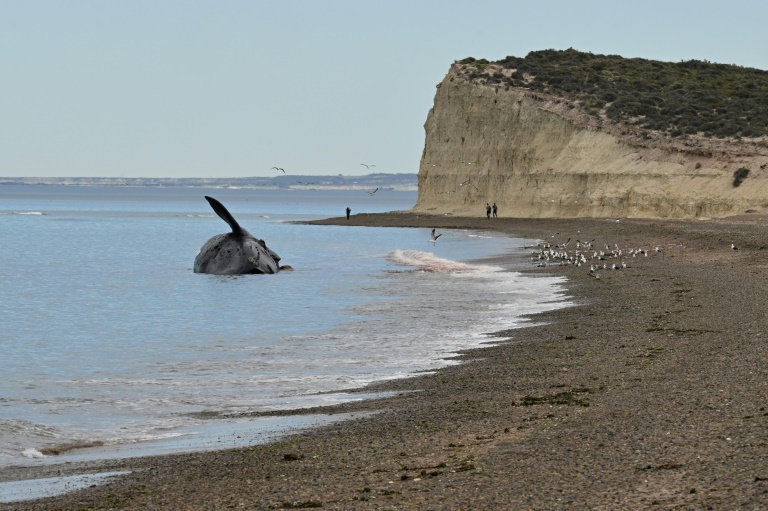
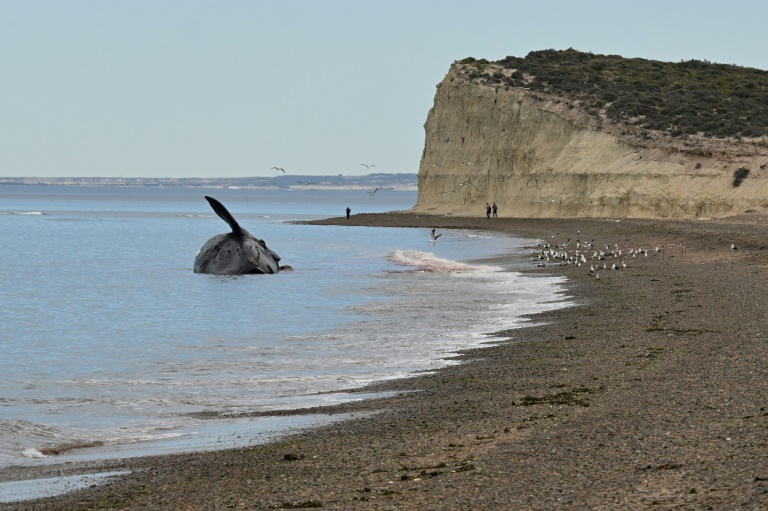
A string of whale deaths in recent days in southern Argentina have worried scientists, who think a micro-algae could be to blame.

From September 24 to October 2, at least 13 southern right whales died in the Nuevo Gulf close to the Valdes Peninsula in Argentine Patagonia, an area that is a sanctuary and breeding ground for the huge mammals, the Whale Conservation Institute (ICB) said.

Authorities have started performing autopsies on the whales that have been recovered and have begun testing the water and mollusks “to determine the presence of possible biotoxins linked to the proliferation of harmful algal blooms known as red tides,” said whale program coordinator Agustina Donini in an ICB statement released Monday.

None of the whales observed so far have displayed any signs of injuries or trauma, and all were well-fed, the ICB said.

The deaths come at a time when authorities have been celebrating a 50-year-high number of cetaceans for the season in an area that attracts whale watching tourists.

The large number of dead whales in such a short space of time suggests that “a local environmental variable” is to blame, said Marcella Uhart, another whale program director

Algal blooms produce natural toxins that can be harmful to other organisms living in the water.

Their pigment can make the surface of the water look red, giving the phenomenon the name “red tide.”

Fabian Gandon, mayor of the nearby town of Puerto Piramides, told reporters there had been “an unusual increase in… red tides” in the Nuevo and San Jose gulfs.

The local population has been advised to avoid eating mollusks, which can store the toxins created by the algal blooms.

Despite the recent deaths, authorities have recorded more than 1,400 whales in the Nuevo and San Jose gulfs, the largest number in more than 50 years.

Argentine scientists worried after spate of whale deaths

A string of whale deaths in recent days in southern Argentina have worried scientists, who think a micro-algae could be to blame.

From September 24 to October 2, at least 13 southern right whales died in the Nuevo Gulf close to the Valdes Peninsula in Argentine Patagonia, an area that is a sanctuary and breeding ground for the huge mammals, the Whale Conservation Institute (ICB) said.

Authorities have started performing autopsies on the whales that have been recovered and have begun testing the water and mollusks “to determine the presence of possible biotoxins linked to the proliferation of harmful algal blooms known as red tides,” said whale program coordinator Agustina Donini in an ICB statement released Monday.

None of the whales observed so far have displayed any signs of injuries or trauma, and all were well-fed, the ICB said.

The deaths come at a time when authorities have been celebrating a 50-year-high number of cetaceans for the season in an area that attracts whale watching tourists.

The large number of dead whales in such a short space of time suggests that “a local environmental variable” is to blame, said Marcella Uhart, another whale program director

Algal blooms produce natural toxins that can be harmful to other organisms living in the water.

Their pigment can make the surface of the water look red, giving the phenomenon the name “red tide.”

Fabian Gandon, mayor of the nearby town of Puerto Piramides, told reporters there had been “an unusual increase in… red tides” in the Nuevo and San Jose gulfs.

The local population has been advised to avoid eating mollusks, which can store the toxins created by the algal blooms.

Despite the recent deaths, authorities have recorded more than 1,400 whales in the Nuevo and San Jose gulfs, the largest number in more than 50 years.

Stocks surge on hopes interest rate hikes will slow

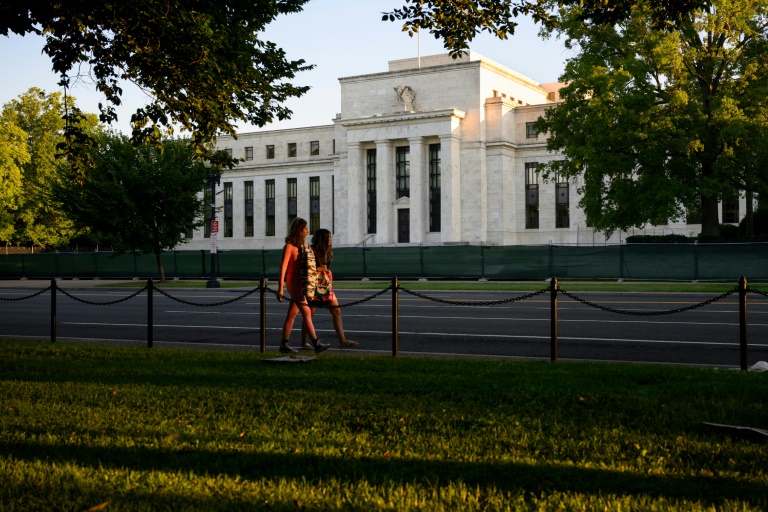
Global stocks gained on Tuesday and the dollar slid amid growing hopes the Federal Reserve could ease its interest-rate hiking plans.

Frankfurt and Paris equities each soared around four percent in value after Tokyo gained 3.0 percent, while London won 2.6 percent.

Wall Street’s surged higher for the second straight day, with the Dow rising 2.8 percent. The S&P 500 jumped 3.1 percent and the Nasdaq Composite 3.3 percent.

The Federal Reserve and other central banks have raised interest rates rapidly to tame soaring inflation, but the monetary tightening has raised fears it could plunge countries into recession.

Those concerns fueled sharp drops in stocks in recent weeks, especially since the Fed has said it will continue to raise interest rates this year and possibly early next year as well to get on top of inflation.

But Wall Street enjoyed a bumper start to the fourth quarter after an industry survey released Monday showed US manufacturing growth slowed more than expected in September to its weakest in more than two years, and pricing pressures eased.

The buoyant trend equities continued on Tuesday after the Reserve Bank of Australia (RBA) raised its policy interest rate just 0.25 percentage point, half the expected increase.

“Weaker-than-expected manufacturing data from the US was taken as a signal that rising interest rates may be having some effect on cooling demand for goods,” said Interactive Investor analyst Richard Hunter.

“This in turn led to hopes of a Federal Reserve pivot, even though the spectre of inflation remains firmly at the top of their stated to-do list.”

The yield on the 10-year US Treasury, a proxy for interest rates expectations, retreated further as investors bet that weakening economic data will prompt a similar pullback from the Fed.

Earlier, Asian markets built on the Wall Street surge. Tokyo and Seoul were among the leaders, despite news that North Korea had fired a missile over Japan for the first time since 2017.

Sydney soared 3.8 percent after the Reserve Bank of Australia lifted interest rates by less than expected.

Hong Kong and Shanghai were closed for holidays.

Investors will focus later this week on Friday’s all-important US employment report for the latest reading on the health of the world’s biggest economy, but new data Tuesday showed a dramatic decline in job openings in August.

That decline lowered the ratio of US openings to unemployed workers — a key indicator of strains in the labor market — to 1.7, from 2.0 in the prior month.

– Sterling extends gains –

Oil also continued to push higher on expectations OPEC and other major producers will slash output this week, having become spooked by a plunge in the price of the commodity on recession fears.

The 13 members of the Organization of the Petroleum Exporting Countries (OPEC), led by Riyadh, and their 10 allies headed by Moscow will hold Wednesday their first in-person meeting at the group’s headquarters in Vienna since March 2020.

The rally in equities came as the US dollar weakened owing to moderating expectations for interest rate hikes, with the pound also supported by the UK government’s decision to scrap a planned cut in the top rate of income tax.

The pound extended gains after breaking back above $1.14, having last Monday tanked to a record low $1.0350. The euro rose around 1.7 percent against the greenback.

– Key figures around 2050 GMT –

New York – Dow: UP 2.8 percent at 30,316.32 (close)

New York – S&P 500: UP 3.1 percent at 3,790.93 (close)

New York – Nasdaq: UP 3.3 percent at 11,176.41 (close)

Paris – CAC 40: UP 4.2 percent at 6,039.69 (close)

Frankfurt – DAX: UP 3.8 percent at 12,670.48 (close)

London – FTSE 100: UP 2.6 percent at 7,086.46 (close)

EURO STOXX 50: UP 4.3 percent at 3,484.48 (close)

Tokyo – Nikkei 225: UP 3.0 percent at 26,992.21 (close)

Hong Kong – Hang Seng Index: Closed for a holiday

Shanghai – Composite: Closed for a holiday

Pound/dollar: UP at $1.1477 from $1.1323 on Monday

Euro/dollar: UP at $0.9992 from $0.9826

Euro/pound: UP at 87.03 pence from 86.77 pence

Dollar/yen: DOWN at 144.09 yen from 144.55 yen

Brent North Sea crude: UP 3.4 percent at $91.80 per barrel

West Texas Intermediate: UP 3.5 percent at $86.52 per barrel

burs-jmb/hs

Close Bitnami banner
Bitnami