World

Musk offers to close Twitter buyout at original price: report

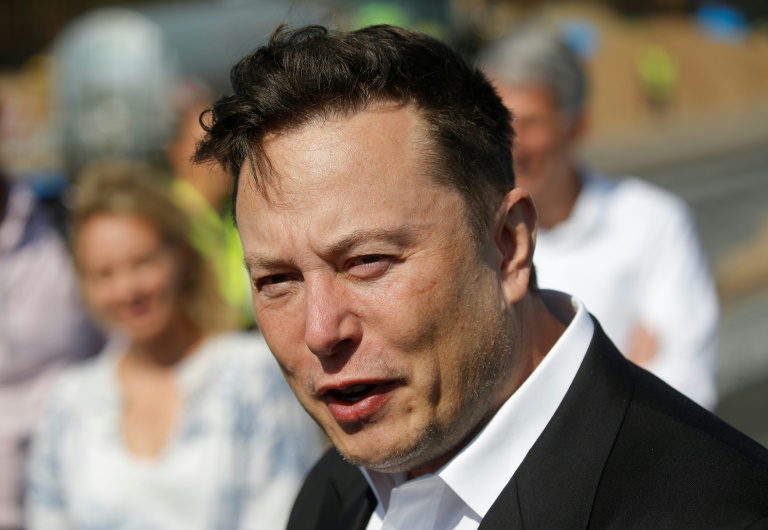
Elon Musk has offered to push through with his buyout of Twitter at the original agreed price, reports said Tuesday, just weeks before the opening of a bitter court case over his effort to withdraw from the deal.

US media said the world’s richest man had sent a letter to Twitter vowing to honor the takeover price of $54.20 a share — prompting a surge in the share value of the social network that triggered a suspension of trading.

The latest twist in the long-running buyout saga comes less than two weeks before the start of the high-stakes trial instigated by Twitter in an effort to hold the Tesla chief to the $44 billion deal he signed in April.

Musk was slated to be deposed by Twitter attorneys later this week in preparation for the trial.

A serial entrepreneur made rich through his success with Tesla electric cars, Musk began to step back from the Twitter deal soon after it was agreed.

He said in a letter in July that he was canceling the purchase because he was misled by Twitter concerning the number of fake “bot” accounts, allegations rejected by the company.

Twitter, meanwhile, has been seeking material or testimony to prove Musk is contriving excuses to walk away because he changed his mind.

In July, a Delaware judge agreed to fast-track a trial on Twitter’s allegations, which the company argued is impeding its financial performance.

– Free speech or abuse? –

Wedbush analyst Dan Ives said in an email that Musk’s apparent pivot shows that he recognized his chance of winning in court was “highly unlikely, and this $44 billion deal was going to be completed one way or another.”

Shares in Twitter were up 12.7 percent at $47.95, having been halted by the New York Stock Exchange following a Bloomberg report on a possible new takeover offer.

Musk made his unsolicited bid to buy Twitter without asking for estimates regarding spam or fake accounts, and even sweetened his offer to the board by withdrawing a diligence condition, the lawsuit against him said.

Seen by his champions as an iconoclastic genius and by his critics as an erratic megalomaniac, Musk surprised many investors with his pursuit of Twitter.

His potential stewardship of the social media site hit several bumps since the takeover attempt was made public, and sparked worry from activists over lifting of the ban on Donald Trump — as well as the possibility the new owner would open the gates to abusive and misinformative posts.

Musk — who sees himself as a free speech advocate — has said he favored lifting the ban on Trump, who was kicked off the platform in January 2021 shortly after the former US president’s efforts to overturn his election defeat led to the January 6 assault on the US Capitol.

Musk’s norm-defying conduct has come as little surprise to watchers of the Tesla and SpaceX chief after years of statements that flout or test convention and sometimes provoke a crackdown from regulators.

Only on Monday he was embroiled in a Twitter spat with Ukrainian President Volodymyr Zelensky over his ideas on ending Russia’s invasion.
Moroccans protest 'racist' French, EU visa policies

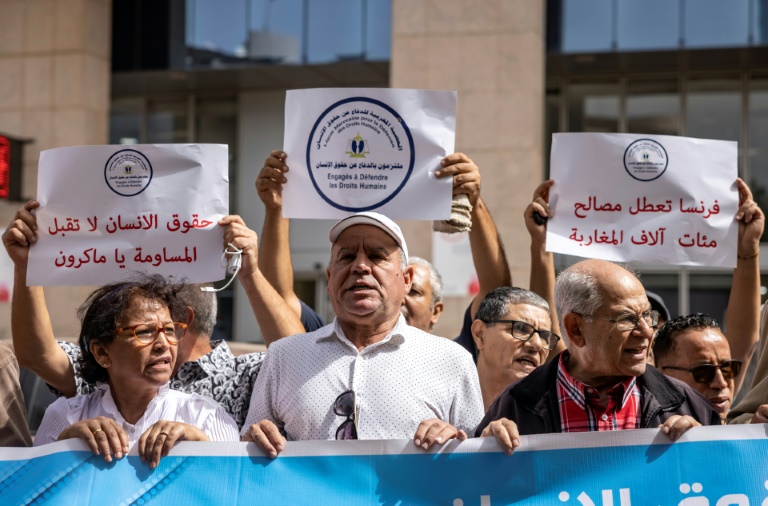
Dozens of Moroccans demonstrated outside the European Union’s office in Rabat on Tuesday in protest at “racist” and “humiliating” treatment over visa applications, particularly by former colonial ruler France.

“We’re here to express our anger at the humiliation, arrogance and racism endured by many of our compatriots whose visa requests have been rejected by EU states,” said Aziz Ghali, one of the organisers and head of the AMDH rights group.

Ghali accused EU states of limiting the number of visas issued and rejecting applicants despite the fact they met the criteria.

“Depriving visas is discriminatory and racist,” one placard read.

Protesters also criticised policies such as refusing to justify rejections or refund processing fees.

Following a call by the AMDH and the LMDDH rights group, around 50 people attended the protest, many chanting: “Yes to freedom of movement, no to colonial agreements!”

Schengen visas issued to non-EU citizens allow the holder to travel freely among 26 EU countries.

AMDH activist Khadija Ryadi said Moroccan applicants for the visas faced “unacceptable and unjustified” rejections, despite having legitimate reasons to travel to EU countries, “particularly France”.

In 2021, France decided to halve the number of visas it issues to Moroccans and Algerians, citing those countries’ reluctance to repatriate their citizens living clandestinely in France.

The decision has sparked ongoing public anger in both countries and tensions between Paris and their governments.

A French official however accused Moroccan media and social media users of exaggerating the rate of rejected applications, insisting that the number of student visas issued in 2022 was similar to that of last year.

UK's Truss says 'no shame' in climbdown amid Tory tensions

Britain’s Prime Minister Liz Truss insisted Tuesday she felt “no shame” and vowed to press on with unpopular economic reforms despite lurching into a self-inflicted crisis just a month into her term.

Despite Truss’s attempts to move on, cabinet splits emerged as the ruling Conservatives endured another stormy day at their annual conference in Birmingham, central England.

Truss and Chancellor of the Exchequer Kwasi Kwarteng have been forced to climb down on their plan to cut income tax for the richest, as ordinary Britons suffer the worst cost-of-living crisis in generations.

The plan met with uproar from Tory critics, deep disapproval in opinion polls, and destabilised financial markets given its reliance on billions extra in government borrowing.

“I think there’s absolutely no shame in a leader listening to people and responding, and that’s the kind of person I am,” Truss told Sky News.

Reiterating that the tax cut had proved a “distraction”, she added on the BBC: “I want to take people with me. Yes, we are going to have to make tough decisions.”

“I’m determined to carry on with this growth package,” she told LBC radio, stressing another component of the plan to cap soaring energy bills.

– Budget confusion –

Truss and Kwarteng were widely reported as bringing forward a major debt reduction plan to later this month, having insisted previously that it would only come on November 23.

Its unveiling will be accompanied by independent forecasts from the Office for Budget Responsibility (OBR), in a bid to calm febrile financial markets.

But the two politicians both insisted November 23 remained the date, with Kwarteng telling GB News that the media had been “reading the runes” incorrectly.

Mel Stride, the Tory chairman of the powerful Treasury committee in the House of Commons, had welcomed the reporting of an earlier date to show how the government intends to fix its finances.

Acting in advance of the Bank of England’s next rate-setting meeting on November 3 could “reduce the upward pressure on interest rates to the benefit of millions of people up and down the country”, he added.

Potential cuts to the welfare budget are shaping up as the next battle with dissident Tory MPs after the aborted tax cut.

“We have to look at these issues in the round. We have to be fiscally responsible,” Truss told BBC radio.

– ‘Coup’ –

But senior minister Penny Mordaunt, one of the candidates Truss beat in the Tory leadership race, stepped out of the cabinet line.

It “makes sense” that welfare should still rise in line with soaring rates of inflation, she told Times Radio.

“That’s what I voted for before, and so have a lot of my colleagues.”

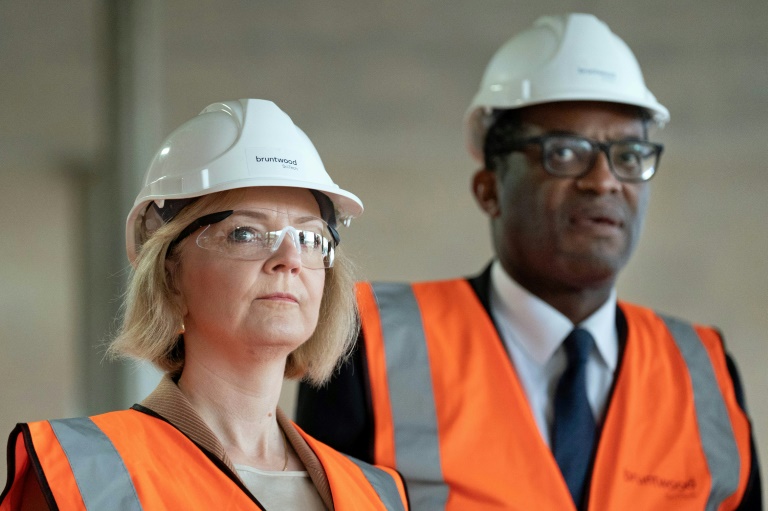
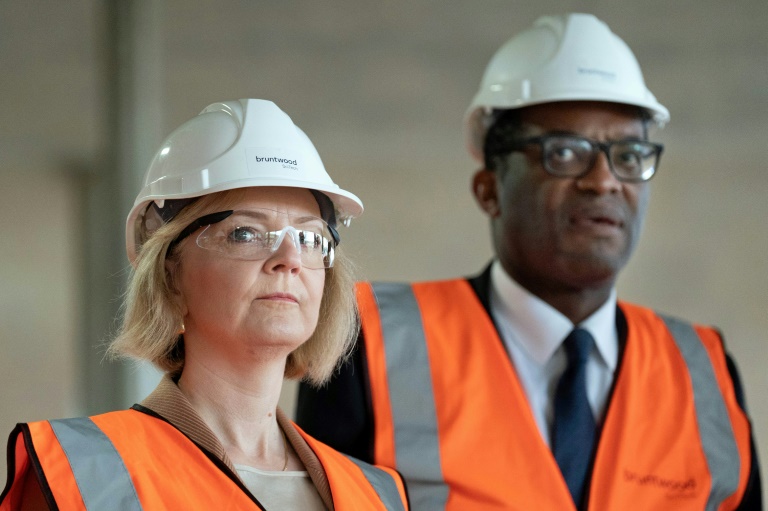
Truss said she did not intend to fire Mordaunt, and denied that she had lost control of her cabinet after putting on a show of unity with Kwarteng on a visit to a construction site in Birmingham.

There was little team spirit on display from Home Secretary Suella Braverman, however, as she accused party critics of seeking to stage a “coup” against Truss.

Braverman herself later set up the government for further strife by promising to deport all asylum seekers who do not enter Britain via a safe and legal route, which unions pointed out would be in breach of international conventions. 

Many commentators argue that Truss’s credibility was already in tatters not long after she succeeded Boris Johnson on September 6.

The Daily Mail newspaper, normally a trenchant voice in support of the new leader’s right-wing agenda, headlined its main story: “Get a grip!”

– Honouring Boris –

Dissident ringleader Michael Gove kept up criticism of Truss, stressing all Conservative MPs had been elected on Johnson’s manifesto of 2019. 

It included a pledge to end arbitrary evictions of tenants by private landlords, he noted at a conference fringe event held by the housing charity Shelter. 

“We’ve got to keep faith with what Boris wanted, we’ve got to make sure that manifesto commitment is honoured,” Gove said, after Truss reneged on a Johnson commitment to ban fracking. 

But asked by reporters if Truss would survive past the end of the year, the former minister said: “Yes.”

Shelter presented poll findings that suggested private renters who voted Tory in 2019 are deserting the party in droves for Labour and other opposition parties. 

Wider opinion polls in recent days have shown Labour breaching 50 percent as the Tories slump under Truss, fraying nerves in Birmingham as she prepares to close the conference on Wednesday.

UK's Truss says 'no shame' in climbdown amid Tory tensions

Britain’s Prime Minister Liz Truss insisted Tuesday she felt “no shame” and vowed to press on with unpopular economic reforms despite lurching into a self-inflicted crisis just a month into her term.

Despite Truss’s attempts to move on, cabinet splits emerged as the ruling Conservatives endured another stormy day at their annual conference in Birmingham, central England.

Truss and Chancellor of the Exchequer Kwasi Kwarteng have been forced to climb down on their plan to cut income tax for the richest, as ordinary Britons suffer the worst cost-of-living crisis in generations.

The plan met with uproar from Tory critics, deep disapproval in opinion polls, and destabilised financial markets given its reliance on billions extra in government borrowing.

“I think there’s absolutely no shame in a leader listening to people and responding, and that’s the kind of person I am,” Truss told Sky News.

Reiterating that the tax cut had proved a “distraction”, she added on the BBC: “I want to take people with me. Yes, we are going to have to make tough decisions.”

“I’m determined to carry on with this growth package,” she told LBC radio, stressing another component of the plan to cap soaring energy bills.

– Budget confusion –

Truss and Kwarteng were widely reported as bringing forward a major debt reduction plan to later this month, having insisted previously that it would only come on November 23.

Its unveiling will be accompanied by independent forecasts from the Office for Budget Responsibility (OBR), in a bid to calm febrile financial markets.

But the two politicians both insisted November 23 remained the date, with Kwarteng telling GB News that the media had been “reading the runes” incorrectly.

Mel Stride, the Tory chairman of the powerful Treasury committee in the House of Commons, had welcomed the reporting of an earlier date to show how the government intends to fix its finances.

Acting in advance of the Bank of England’s next rate-setting meeting on November 3 could “reduce the upward pressure on interest rates to the benefit of millions of people up and down the country”, he added.

Potential cuts to the welfare budget are shaping up as the next battle with dissident Tory MPs after the aborted tax cut.

“We have to look at these issues in the round. We have to be fiscally responsible,” Truss told BBC radio.

– ‘Coup’ –

But senior minister Penny Mordaunt, one of the candidates Truss beat in the Tory leadership race, stepped out of the cabinet line.

It “makes sense” that welfare should still rise in line with soaring rates of inflation, she told Times Radio.

“That’s what I voted for before, and so have a lot of my colleagues.”

Truss said she did not intend to fire Mordaunt, and denied that she had lost control of her cabinet after putting on a show of unity with Kwarteng on a visit to a construction site in Birmingham.

There was little team spirit on display from Home Secretary Suella Braverman, however, as she accused party critics of seeking to stage a “coup” against Truss.

Braverman herself later set up the government for further strife by promising to deport all asylum seekers who do not enter Britain via a safe and legal route, which unions pointed out would be in breach of international conventions. 

Many commentators argue that Truss’s credibility was already in tatters not long after she succeeded Boris Johnson on September 6.

The Daily Mail newspaper, normally a trenchant voice in support of the new leader’s right-wing agenda, headlined its main story: “Get a grip!”

– Honouring Boris –

Dissident ringleader Michael Gove kept up criticism of Truss, stressing all Conservative MPs had been elected on Johnson’s manifesto of 2019. 

It included a pledge to end arbitrary evictions of tenants by private landlords, he noted at a conference fringe event held by the housing charity Shelter. 

“We’ve got to keep faith with what Boris wanted, we’ve got to make sure that manifesto commitment is honoured,” Gove said, after Truss reneged on a Johnson commitment to ban fracking. 

But asked by reporters if Truss would survive past the end of the year, the former minister said: “Yes.”

Shelter presented poll findings that suggested private renters who voted Tory in 2019 are deserting the party in droves for Labour and other opposition parties. 

Wider opinion polls in recent days have shown Labour breaching 50 percent as the Tories slump under Truss, fraying nerves in Birmingham as she prepares to close the conference on Wednesday.

Alain Aspect, Nobel-winning father of quantum entanglement

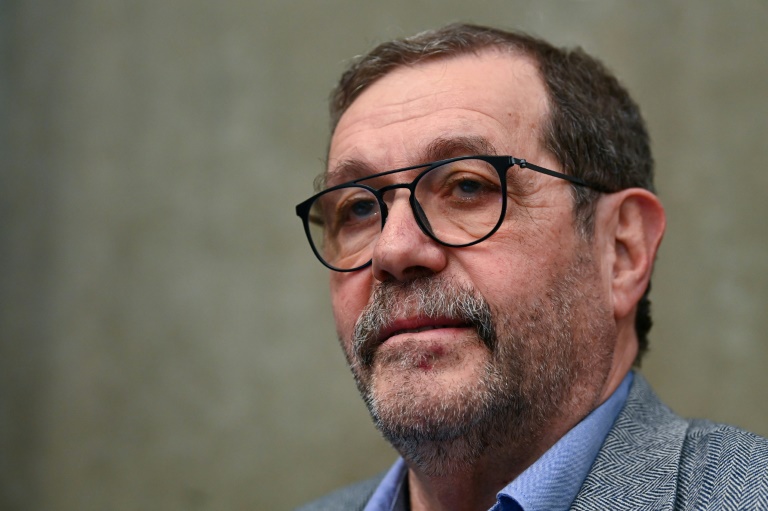
Alain Aspect, who won a long-expected Nobel Physics Prize on Tuesday, not only helped prove the strange theory of quantum entanglement but also inspired a generation of physicists in his native France, according to former students and colleagues.

Quantum entanglement is the theory — famously dismissed by Albert Einstein — that when a particle is split into two, the properties of the two new particles remain connected, as if by an invisible piece of string, regardless of how far apart they are.

It remained a theory until Aspect and his team proved the phenomenon in a laboratory experiment for the first time in 1981, entangling two photons — units of light — at a distance of 12 metres (40 feet).

The experiment helped pave the way for what Aspect has called the “second quantum revolution”, which has led to a range of new technologies including quantum computing, encryption and more.

“Quantum strangeness has dominated my whole life as a physicist,” Aspect told AFP in a 2010 interview.

His experiment finally settled a debate from more than 60 years earlier between Einstein and one of the fathers of quantum physics, Denmark’s Niels Bohr. 

Bohr believed in quantum entanglement but Einstein — whose work helped predict the phenomenon — famously argued against it, calling it “spooky action at a distance”.

“Bohr wins from a certain point of view,” Aspect said in an interview published by the Nobel Foundation after his win on Tuesday.

“But Einstein wins because he spotted something extraordinary,” he added.

Aspect said he was proud to be on the same list of Nobel-winners who have “totally changed physics”.

Awarded along with Austrian physicist Anton Zeilinger and John Clauser from the United States, Aspect emphasised the importance of international scientific collaboration “at a time when the world is not so nice, and where nationalism is taking over in many countries”.

– ‘Tireless teacher’ –

Aspect, the son of a teacher, was born in Agen in southwest France in 1947.

He came second in the French education physics exam, and is currently professor at Paris-Saclay University and at Ecole Polytechnique. Now 74, he is married and has two children.

Aspect has already racked up many awards, including the gold medal from France’s CNRS research institute, as well as sharing the 2010 Wolf Prize in physics with Zeilinger and Clauser.

Aspect had been expected to win the Nobel for years, with Chris Phillips, a physicist at Imperial College London, saying “the prize was long overdue”.

“It’s one of the most deserved prizes we’ve had for a while,” he added.

“We have all been waiting for this for a long time! We are very proud,” said France’s minister for higher education and research, Sylvie Retailleau, who knew Aspect from her time as a physicist.

“He is one of those mentors in physics. A whole community today works under his leadership,” said Retailleau, a former president of Paris-Saclay University.

Aspect is also a “tireless teacher” who gives acclaimed lectures, she added.

Former student Georges-Olivier Reymond, who is now the head of French start-up Pasqal which is working on developing a quantum processor, said it was “fantastic” that Aspect had won the Nobel.

“Everything I have done in my career is thanks to him,” Reymond said. 

With his experiment, “Aspect pulled off a feat that surprised us all,” Reymond said. “It was so different from what we learned at school… it inspired generations of students.”

As well as passing his passion for physics on to his students, Aspect is also a “bon vivant who will tell you all about his foie gras recipes”, Reymond said.

“I can still hear him saying, when I was just 20 years old… ‘you have to create quantum start-ups — it’s the future’,” Reymond said.

“He was right.”

North Korea fires ballistic missile over Japan

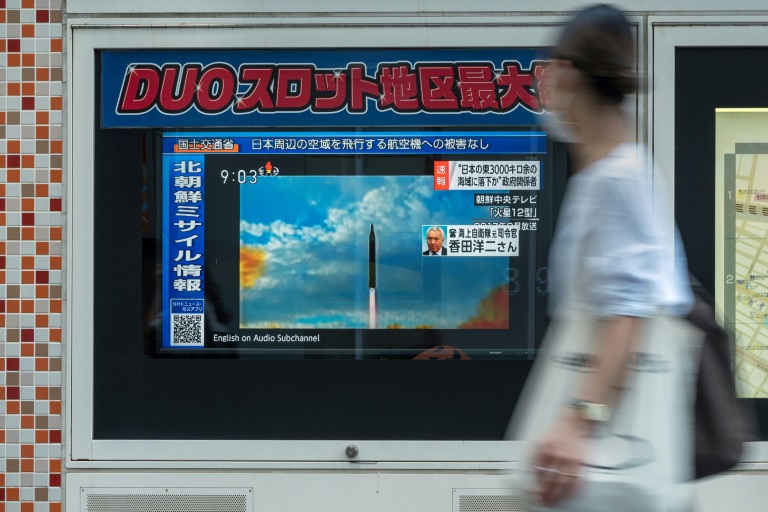
North Korea fired a ballistic missile over Japan for the first time in five years Tuesday, prompting Tokyo to activate its missile alert system and issue a rare warning for people to take shelter.

The latest launch comes in a record year of sanctions-busting weapons tests by North Korea, which recently revised its laws to declare itself an “irreversible” nuclear power.

United Nations chief Antonio Guterres condemned the test as “clearly an escalation”, while US President Joe Biden and Japanese Prime Minister Fumio Kishida decried it “in the strongest terms”.

The launch was “destabilizing to the region, and a clear violation of United Nations Security Council resolutions,” Biden and Kishida said in a joint statement.

Biden also reiterated the United States’ “ironclad commitment to Japan’s defense”.

The last time Pyongyang fired a missile over Japan was in 2017, at the height of a period of “fire and fury” when North Korean leader Kim Jong Un traded insults with then US president Donald Trump.

South Korea said the intermediate-range ballistic missile (IRBM) flew some 4,500 kilometres (2,800 miles) — possibly a new distance record for North Korean tests, which are usually conducted on a lofted trajectory to avoid flying over neighbouring countries.

South Korean President Yoon Suk-yeol called the launch a “provocation”, and vowed a “stern response”.

Later Tuesday, South Korean and US fighter jets carried out a “precision bombing drill” in response, Seoul’s military said, with South Korean F-15Ks dropping joint direct attack munitions (JDAMs) at a target in the Yellow Sea.

The drills aimed to demonstrate the allies’ “capabilities to conduct a precision strike at the origin of provocations”, South Korea’s Joint Chiefs of Staff said.

On the same day, eight Japanese and four US fighter jets carried out a joint drill in airspace west of the country’s Kyushu region, according to Japan’s Joint Staff.

The forces “confirmed their readiness and demonstrated domestically and abroad the strong determination of Japan and the United States to deal with any situation”, it said in a statement.

Japanese Defence Minister Yasukazu Hamada said the missile could have been a Hwasong-12.

Pyongyang used Hwasong-12s the last two times it fired missiles over Japan — in August and September 2017 — tweeted Chad O’Carroll of specialist site NK News.

Japan activated its missile warning system and urged people in two northern regions of the country to take shelter early Tuesday.

– Nuclear message –

The Tuesday test is Pyongyang’s fifth missile launch in 10 days and sends a clear message to the United States, Park Won-gon, professor of North Korean Studies at Ewha University in Seoul, told AFP.

The missiles “put South Korea, Japan, and Guam within range” and show that Pyongyang could hit US bases with nukes if war broke out on the Korean peninsula, he said.

“As these are missiles that can carry nuclear warheads, the launch also has a political goal of once again declaring North Korea a de facto nuclear power and showing its complete denuclearisation is impossible,” Park added.

Seoul, Tokyo and Washington have been ramping up joint military drills to counter Pyongyang’s growing threats, staging the first trilateral anti-submarine drills in five years Friday.

That came just days after the US and South Korean navies conducted large-scale exercises.

Such drills infuriate North Korea, which sees them as rehearsals for an invasion.

US Vice President Kamala Harris visited Seoul last week and toured the heavily fortified Demilitarized Zone that divides the Korean peninsula, on a trip to underscore her country’s commitment to South Korea’s defence.

About 28,500 US troops are stationed in South Korea to help protect it from the North.

– ‘Very aggressive’ –

Firing a missile over Japan represented a “significant escalation” by North Korea, said Leif-Eric Easley, a professor at Ewha University.

“Pyongyang is still in the middle of a provocation and testing cycle,” he added.

South Korean and US officials have been warning for months that Kim is preparing to conduct another nuclear test, saying last week that this could happen soon after Pyongyang’s key ally China holds a Communist Party congress from October 16.

Pyongyang has tested nuclear weapons six times since 2006, most recently in 2017.

“North Korea always starts with a low-level provocation and gradually raises the level to attract media attention from all over the world,” said Go Myong-hyun, a researcher at the Asan Institute for Policy Studies.

“Their final provocation will probably be a nuclear test,” he said, adding that North Korea had taken the unusual and “very aggressive” step of overflying Japan to attract more attention.

“By launching the missile over Japan, they are showing that their nuclear threat is not just targeting South Korea.”

Power blackouts hit 130 million people in Bangladesh

An unexplained grid failure left over 80 percent of the population of Bangladesh, or 130 million people, without power for several hours on Tuesday, officials said.

Bangladesh has suffered a major power crisis in recent months as a result of higher global energy prices following Russia’s invasion of Ukraine, and has imposed regular cuts to conserve electricity.

But it remained unclear what caused Tuesday’s unscheduled blackout, which hit more than 80 percent of the country shortly after 2:00 pm (0800 GMT), according to the Power Development Board.

Spokesman Shamim Ahsan told AFP said that apart from some locations in Bangladesh’s northwest, “the rest of the country” was without power, affecting at least 130 million people.

As night fell, the normally brightly lit streets of central Dhaka, home to more than 22 million people, and other cities were in the dark on Tuesday evening.

Another official said later that only 60 percent of the poor country, which is home to factories supplying garments for Western brands, had been affected.

“By 9:00 pm power had been restored in the entire country,” A.B.M Badruddoza, spokesman of the state-run power grid company, told AFP.

Ahsan said it remained unclear what had caused the fault.

“It is still under investigation,” he said, adding that a technical malfunction was the probable cause. 

– Energy crisis –

Prices of energy as well as food as other staples have soared worldwide in the wake of Russia’s invasion of Ukraine in February, including in Asia. 

This has wrought havoc on Bangladesh’s electricity grid, with utilities struggling to source enough diesel and gas to meet demand.

A depreciating currency and dwindling foreign exchange reserves left Bangladesh unable to import sufficient fossil fuels, forcing it to close diesel plants and leave some gas-fired power stations idle.

The government imposed lengthy power cuts to conserve existing stocks in July, with outages lasting up to 13 hours a day at their peak. 

Tens of thousands of mosques around the Muslim-majority South Asian country have been asked to curtail the use of air conditioners to ease pressure on the electricity grid.

The blackouts sparked widespread public anger and helped mobilise large demonstrations on the streets of Dhaka.

At least three protesters were killed by security forces during the rallies, partly motivated by rising cost-of-living pressures.

Around 100 others were injured during a police crackdown on one demonstration, according to the opposition Bangladesh Nationalist Party. 

Consumer inflation has hit household budgets hard and the government recently pledged to cap the price of several staple foods, including rice, to quell public discontent. 

Bangladesh last witnessed a major unscheduled blackout in November 2014, when around 70 percent of the country went without power for nearly 10 hours.

EU pushes to impose Iran sanctions over Mahsa Amini 'killing'

The European Union said Tuesday it was weighing tough new sanctions on Iran over a lethal crackdown on protests sparked by the “killing” of Mahsa Amini, after a similar move by the United States.

Amini, 22, was pronounced dead on September 16, days after the notorious morality police detained the Kurdish Iranian for allegedly breaching rules requiring women to wear hijab headscarves and modest clothes.

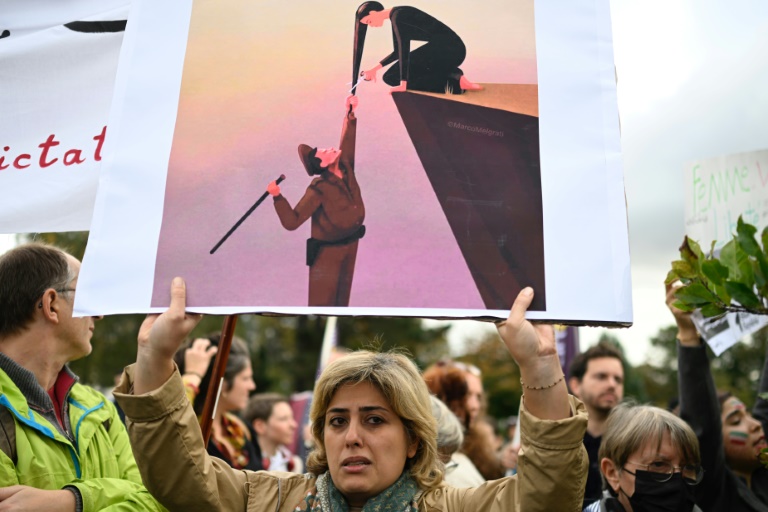
Anger over her death has sparked the biggest wave of protests to rock Iran in almost three years and a crackdown that has seen scores of protesters killed and hundreds arrested.

EU foreign policy chief Josep Borrell said the bloc was considering “all the options at our disposal, including restrictive measures, to address the killing of Mahsa Amini and the way Iranian security forces have been responding to the demonstrations”.

It came after President Joe Biden said the United States would impose “further costs” this week on “perpetrators of violence against peaceful protesters” in Iran.

Rights groups voiced deep concern after Iranian riot police used tear gas and paintball guns against hundreds of students at Tehran’s Sharif University of Technology on Sunday night, with video footage showing detainees being taken away with fabric hoods over their heads.

Protests also spread to schools, with video footage shared by Kurdish rights group Hengaw showing schoolgirls demonstrating in two cities in Amini’s native Kurdistan province.

“Women, Life, Freedom,” the young female protesters chanted as they marched down the central strip of a busy highway in Marivan, in footage that AFP has not independently verified.

– ‘Hypocrisy’ –

Biden gave no indication of what measures he was considering against Iran, which is already under crippling US economic sanctions largely related to its controversial nuclear programme.

Iran on Tuesday accused the US leader of “hypocrisy” in invoking human rights to impose fresh punitive measures.

“It would have been better for Mr Joe Biden to think a little about the human rights record of his own country before making humanitarian gestures, although hypocrisy does not need to be thought through,” foreign ministry spokesman Nasser Kanani said in an Instagram post, reported by Iranian media.

Iran’s supreme leader Ayatollah Ali Khamenei had on Monday accused arch foes the United States and Israel of fomenting the protests.

The riots “were engineered by America and the occupying, false Zionist regime, as well as their paid agents, with the help of some traitorous Iranians abroad”, Khamenei said.

– Nuclear talks –

The unrest has overshadowed diplomatic efforts to revive a 2015 nuclear deal between Iran and major powers which had come close to a breakthrough in recent months before stalling again.

But White House press secretary Karine Jean-Pierre stressed the “problems with Iran’s behaviour” are separate from efforts to revive the nuclear deal, which Washington will pursue “as long as we believe” it is in US national security interests.

In his first public comments on Amini’s death, 83-year-old Khamenei stressed on Monday that Iranian police must “stand up to criminals”.

Khamenei said “some people, without proof or an investigation, have made the streets dangerous, burned the Koran, removed hijabs from veiled women and set fire to mosques and cars”.

He added that “this is not about hijab in Iran”, and that “many Iranian women who don’t observe the hijab perfectly are among the steadfast supporters of the Islamic republic”.

On Tuesday, an official said singer Shervin Hajipour — arrested after his song “Baraye” (“For”), with lyrics taken from social media posts about the reasons people were protesting, went viral — had been released on bail.

Another 400 people arrested in the crackdown were released Tuesday “on condition of not repeating their actions”, Tehran prosecutor Ali Salehi said, quoted by state news agency IRNA. 

Iran has repeatedly accused outside forces of stoking the protests and last week said nine foreign nationals — including from France, Germany, Italy, the Netherlands and Poland — had been arrested.

At least 92 protesters have been killed so far in the Mahsa Amini rallies, said Oslo-based group Iran Human Rights, which has been working to assess the death toll despite internet outages and blocks on WhatsApp, Instagram and other online services. 

Amnesty International said earlier it had confirmed 53 deaths, after Iran’s semi-official Fars news agency said last week that “around 60” people had died.

At least 12 members of the security forces have been reported killed since September 16.

bur/dv/pjm

New role for Uganda's 'first son' after social media uproar

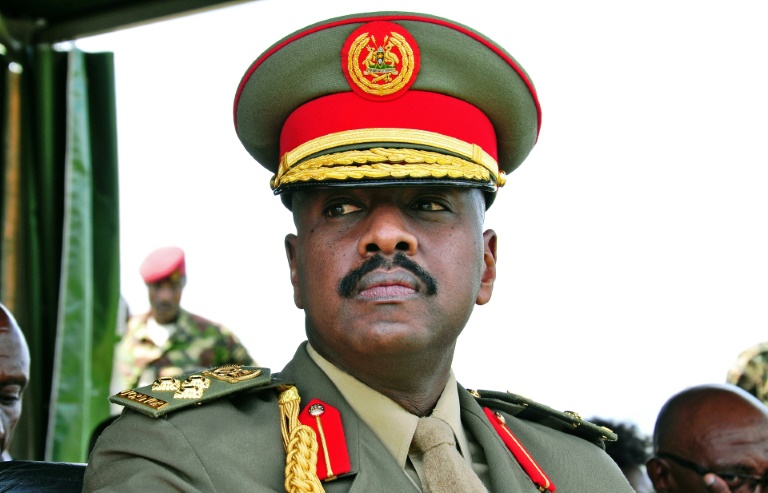
Uganda’s defence ministry on Tuesday announced that the president’s powerful son Muhoozi Kainerugaba would no longer lead the country’s land forces, hours after a social media tirade by the outspoken scion caused uproar in Kenya.

The ministry said that President Yoweri Museveni had also promoted his 48-year-old son to the rank of general, but analysts said the elevation was likely a cosmetic move aimed at lowering his profile in the region.

“According to the powers entrusted to him as the president and commander in chief, President Yoweri Museveni has promoted Lt. Gen. Muhoozi Kainerugaba to the rank of general,” the ministry said in a statement.

Although Kainerugaba has repeatedly denied claims he intends to succeed his 78-year-old father — one of Africa’s longest-serving leaders — he has enjoyed a rapid rise through Uganda’s army ranks and has often sparked controversy on social media.

The move followed an endorsement on the weekend by some senior officials from the ruling National Resistance Movement (NRM) who selected Museveni as their candidate in the country’s 2026 presidential elections.

Soon after, Kainerugaba triggered a firestorm on Twitter with tweets discussing plans to invade Kenya.

“It wouldn’t take us, my army and me, 2 weeks to capture Nairobi,” he said on Monday evening, before making an about-turn.

“I would never beat up the Kenyan army because my father told me never to attempt it! So our people in Kenya should relax!”

The social media fracas forced Uganda’s foreign ministry to wade in and release a statement expressing its “commitment to good neighbourliness (and) peaceful coexistence” with Kenya.

As a serving soldier, Kainerugaba is prohibited from discussing political matters in public.

But this has not stopped him from airing his views on sensitive foreign policy issues, offering up opinions on subjects ranging from last year’s coup in Guinea to the brutal war in northern Ethiopia.

– ‘Lower his profile’ –

“One potential explanation of Muhoozi’s Twitter storm over the last days is the endorsement of his father for the 2026 elections by top NRM officials over the weekend,” said Kristof Titeca, an expert on Central African affairs at the University of Antwerp.

“This could have triggered him, as he might also be eyeing the 2026 elections,” Titeca told AFP.

“It can be questioned whether this promotion effectively entails more power. It could be perceived as a way to lower his profile, and reduce his real power.”

A Ugandan political analyst who spoke to AFP on condition of anonymity agreed, saying “the elevation to general was a cosmetic move (by Museveni) to avoid upsetting” his son.

Kainerugaba said Tuesday’s announcement was grounds for “a celebration”.

“I thank my father for this great honour,” he said on Twitter.

Kainerugaba will continue to serve as a high-profile presidential adviser on special operations — a role that extends to the political sphere. 

His foreign policy interventions have not been limited to social media. 

He is said to have been instrumental in the recent rapprochement between Uganda and Rwanda and was involved in a joint operation launched last year by Ugandan and Congolese forces against the Allied Democratic Forces rebel group in the eastern Democratic Republic of Congo.

The prospect of Kainerugaba’s elevation to the presidency has aroused the ire of opposition politicians and government critics, forcing some into exile.

Prominent author Kakwenza Rukirabashaija fled to Germany in February this year, alleging that he was tortured in custody on charges of insulting Museveni and Kainerugaba, who he has described as “obese”, a “curmudgeon” and a “baby despot”. 

Stocks surge on interest rate hopes

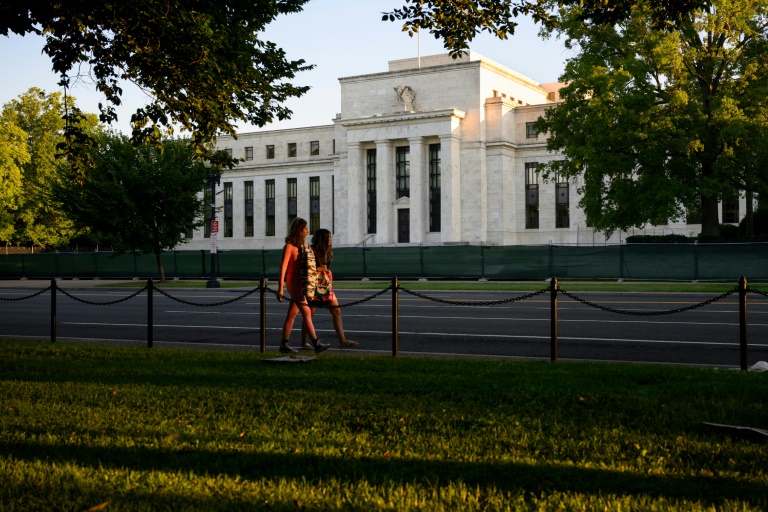
Global stocks rallied Tuesday and the dollar mostly slid as weak US data sparked hopes the Federal Reserve could ease its interest-rate hiking plans.

Frankfurt and Paris equities both soared around four percent in value after Tokyo gained 3.0 percent, while London won 2.6 percent.

Wall Street’s surged higher for the second straight day, with the Dow rising 2.7 percent. The S&P 500 jumped 2.9 percent and the Nasdaq Composite 3.4 percent.

“Weaker-than-expected manufacturing data from the US was taken as a signal that rising interest rates may be having some effect on cooling demand for goods,” said Interactive Investor analyst Richard Hunter.

“This in turn led to hopes of a Federal Reserve pivot, even though the spectre of inflation remains firmly at the top of their stated to-do list.”

The Fed and other central banks across the world have raised interest rates in efforts to tame runaway inflation, but the monetary tightening has raised fears that it could plunge countries into recession.

Those concerns have fed into sharp drops in stocks in recent weeks, as have expectations that the Fed will have to raise interest rates by a couple more percentage points through much of next year to get on top of inflation.

But Wall Street had enjoyed a bumper start to the fourth quarter on Monday after data showed US manufacturing growth slowed more than expected in September to its weakest in more than two years.

The Institute for Supply Management said its manufacturing index dropped 1.9 points to 50.9 percent, just barely above the 50-percent threshold indicating expansion, as the prices index fell to the lowest in more than two years.

Eurozone manufacturing survey data out Monday showed a contraction on the back of the region’s ongoing energy crisis.

“The turnaround in risk appetite appears to have been driven by another deterioration in PMI surveys as traders speculate that such weakness could be a precursor to slower monetary tightening,” noted OANDA market analyst Craig Erlam.

Asian markets built on the Monday Wall Street surge. Tokyo and Seoul were among the leaders, despite news that North Korea had fired a missile over Japan for the first time since 2017.

Sydney soared 3.8 percent after the Reserve Bank of Australia lifted interest rates by less than expected.

Hong Kong and Shanghai were closed for holidays.

Investors will focus later this week on Friday’s all-important US jobs figures for the latest reading on the health of the world’s biggest economy.

“The specter of the September employment report on Friday, however, is still hanging out there as a potential spoiler,” said Briefing.com analyst Patrick O’Hare.

“By the same token, it could also provide more interest rate relief if it is on the weaker side of things,” he added.

– Sterling extends gains –

Oil also continued to push higher on expectations OPEC and other major producers will slash output this week, having become spooked by a plunge in the price of the commodity on recession fears.

The 13 members of the Organization of the Petroleum Exporting Countries (OPEC), led by Riyadh, and their 10 allies headed by Moscow will hold Wednesday their first in-person meeting at the group’s headquarters in Vienna since March 2020.

The rally in equities came as the dollar weakened owing to lower expectations for US monetary tightening, with the pound also supported by the UK government’s decision to scrap a planned cut in the top rate of income tax.

The pound extended gains after breaking back above $1.14, having last Monday tanked to a record low $1.0350. The euro rose around 1.5 percent against the greenback.

– Key figures around 1530 GMT –

New York – Dow: UP 2.7 percent at 30,273.78 points

EURO STOXX 50: UP 4.3 percent at 3,484.48

Paris – CAC 40: UP 4.2 percent at 6,039.69 (close)

Frankfurt – DAX: UP 3.8 percent at 12,670.48 (close)

London – FTSE 100: UP 2.6 percent at 7,086.46 (close)

Tokyo – Nikkei 225: UP 3.0 percent at 26,992.21 (close)

Hong Kong – Hang Seng Index: Closed for a holiday

Shanghai – Composite: Closed for a holiday

Pound/dollar: UP at $1.1440 from $1.1323 on Monday

Euro/dollar: UP at $0.9976 from $0.9826

Euro/pound: UP at 87.16 pence from 86.77 pence

Dollar/yen: DOWN at 144.39 yen from 144.55 yen

Brent North Sea crude: UP 3.5 percent at $91.94 per barrel

West Texas Intermediate: UP 3.4 percent at $86.48 per barrel

burs-rl/cdw

Close Bitnami banner
Bitnami